Two Valley Rail Studies
The following are two studies that have been done concerning ‘rail’ transit in the Fraser Valley.
http://www.scribd.com/doc/2527465/City-of-Surrey-Community-Rail-Proposal
http://www.scribd.com/doc/515139/DRL-Solutions-Interurban-Report
Rail For The Valley puts squeeze on city

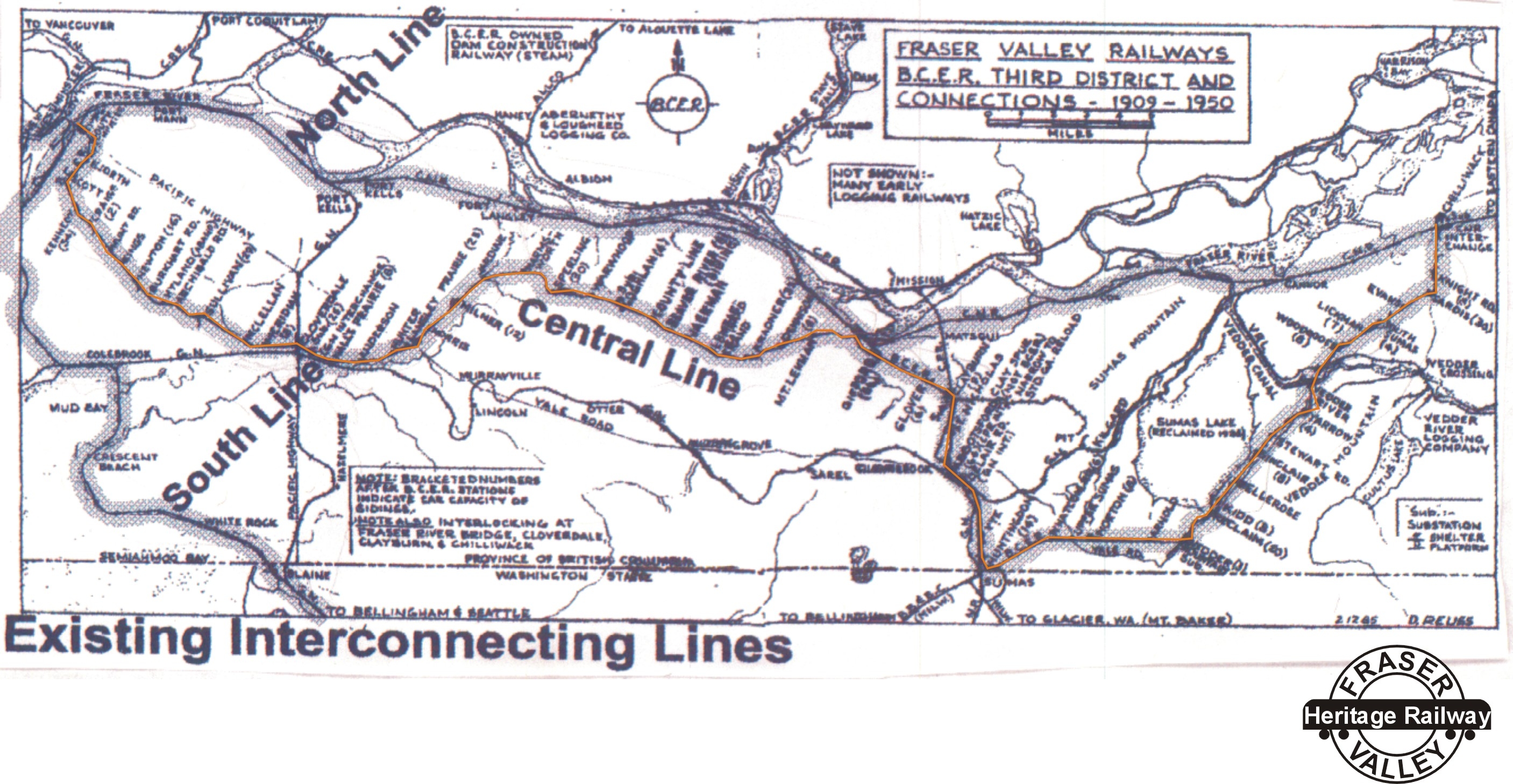
I find it very strange that The municipality of Chilliwack is not involved with the South of Fraser Community Rail Task Force andAi??Ai??many local residentsAi??Ai??would like to know the reason why? Certainly having a direct rail connection to Vancouver would be a bonus for both local businesses,Ai??Ai??especially tourist oriented businessesAi??Ai??and for local residents, with reliable and timely communication with Abbotsford, Langley, Surrey and Vancouver.Ai??Ai??Being involved withAi??Ai??the South of Fraser Community Rail Task Force would dispel the many myths about ‘rail’ transit and TramTrain, especially the assertion of mayor Gaetz, that trains can’t travel faster than 10 kph on the former BCE route.
Not so, as Rail for The Valley envisions a 90 kph service along the line, not unlike the express interurban trains that once raced along the route for 50 years. The geometry of the track was designed for short wheelbase interurbans (not unlike modern TramTrain) not today’s heavy freight trains, with freight cars up to 25 metres in length on less than adequately maintained track.
It is time for Chilliwack politicians to get involved, as their indifference could be inferred that they don’t care for 21st century public transportation and could mean that the Valley interurban would only go as far as Langley or Abbotsford. Such short sightedness, especially in an age of high fuel prices, global warming,Ai??Ai??trafficAi??Ai??congestion, and pollution,Ai??Ai??theAi??Ai??City of Chilliwack Council could very ‘miss the train’.
Rail For The Valley puts squeeze on city
By Robert Freeman – Chilliwack Progress
Chilliwack is the only municipality in the Lower Mainland not on board a task force lobbying for a community rail system.
A?ai??i??Ai??For the last three years, Rail For The Valley has been pressing the issue of a passenger rail service that would run from Chilliwack to Surrey,A?ai??i??A? said RFTV spokesman Paul Gieselman.
A?ai??i??Ai??Much progress has been made … however, this has not been a unified movement,A?ai??i??A? he said.
The South of Fraser Community Rail Task Force includes representatives from Delta, Langley and Abbotsford – but not Chilliwack.
A?ai??i??Ai??Chilliwack has been invited, but has not decided to get on board,A?ai??i??A? Gieselman said.
An open house is being held in Chilliwack July 8 to inform the public about the work of the task force, and A?ai??i??Ai??put pressure on the cityA?ai??i??A? to join, he said.
Chilliwack Mayor Sharon Gaetz has balked at committing the city to passenger rail until a transportation study by the provincial government is completed.
She is also concerned about the potential cost of restoring the old Inter-Urban rail line that once ran from Chilliwack to New Westminster.
Just upgrading the 17 or 18 rail crossings could cost $500,000 each, according to an estimate by city staff.
But Gieselman said the mayor is getting hung up on the costs instead of the potential benefits.
The Chilliwack open house starts at 5 p.m. at Evergreen Hall on Corbould Street.
http://www.bclocalnews.com/fraser_valley/theprogress/news/97943464.html
More Light Rail Links
More links for research and general information.
http://www.metromodemedia.com/features/Transitdensity0020.aspx
http://netdensity.net/tag/lrt/
http://kiat.net/malaysia/KL/transit.html
http://forum.skyscraperpage.com/showthread.php?p=4358531
http://southwestlrt.wordpress.com/
http://lightrailjacksonville.webs.com/whylrti.htm
http://www.raisethehammer.org/article/851/main-king_lrt_split_may_be_a_good_idea
http://www.thespec.com/article/716331
http://www.lightrailnow.org/news/n_kc_2007-05a.htm
Research.
http://tris.trb.org/view.aspx?id=909553
Ai??Ai??http://ideas.repec.org/p/wiw/wiwrsa/ersa01p118.html
Ai??Ai??www.britchammacao.org/download/201003MacauLRTintro.pdf
Ai??Ai??http://www.jstor.org/pss/3551027
Ai??Ai??http://canadianaffairs.suite101.com/article.cfm/edmontons_light_rail_transit_issues
Ai??Ai??www.edmonton.ca/…/LRTRouteEvaluationcriteriaMarch2009.pdf
http://www.coyoteblog.com/coyote_blog/2008/09/why-phoenix-lig.html
Ai??Ai??http://en.wikipedia.org/wiki/Politics_of_light_rail_in_North_America
Shameful Media Reporting
The real story is, not the ever promised Evergreen Line, but the totally lack of research done by the reporter.
If the reporter in question had any knowledge at all about transit, should would have known that SkyTrain was indeed onceAi??Ai??marketed asAi??Ai??ALRT or Advanced Light Rail Transit in 1980. TheAi??Ai??acronym ALRT was the second given to the UTDC’s proprietary light-metro system after a complete lack of sales for their earlier named Intermediate Capacity Transit System or ICTS. ALRT sales were even poorer than ICTS’s and the acronym ALRT fell out of use by 1990! Ai??Ai??SkyTrain’s nameAi??Ai??was again changed to Automated Light Metro (ALM) andAi??Ai??today SkyTrain is marketed as ART or Advanced Rapid Transit.
Sadly, even regional planners fall into the ALRT trap, as many still call SkyTrain ALRT and advise their political masters of the same. All this indicates is a gross ignorance of local transit issues and gives Translink and the SkyTrain lobbyAi??Ai??ample opportunity to misinform everyone (deliberately or by accident) about ‘rail’ transit issues.
If the media can’t get the story straight, how then can the average citizen come to honest conclusions about transit issues?

Evergreen situation shameful: Burnaby
By Janaya Fuller-Evans, Coquitlam NOW
Politicians in the Tri-Cities have been pushing for years to get funding for the Evergreen Line. Monday, Burnaby Mayor Derek Corrigan, also an outspoken advocate for rapid transit in the northeast sector, called the current funding situation “shameful.”
The province has to secure funding if the project is ever going to be completed, Corrigan said in an interview before Monday’s Burnaby city council meeting.
“I think it’s shameful,” he said. “It’s not possible to build it with TransLink’s budget.”
Burnaby city council is continuing to press the province to secure funding for the line. Council discussed the issue at Monday’s meeting, just days after TransLink presented its draft 2011 Base Plan and Outlook report to Metro Vancouver. The report indicates that funding will not be available for major expansions, including the Evergreen Line, between 2011 and 2013.
The line is expected to cost $1.4 billion, according to a 2009 news release from the province. The federal government would contribute $417 million, the provincial government would contribute $410 million, project partners would contribute $173 million and TransLink would contribute $400 million.
However, TransLink’s budget only allows it to maintain the current system, not fund major projects. Also, the province has not secured additional project partners to cover the $173 million, according to a report prepared by Burnaby city staff.
Corrigan suggested the government had only agreed to install the Evergreen Line, set to run from Lougheed Town Centre to Coquitlam Town Centre, to get municipal governments in the northeast part of the Lower Mainland to back the Millennium Line project. In 2000, the province decided to build the Millennium Line, but omitted the proposed Evergreen Line from project plans.
The province’s decision to go with a SkyTrain system, instead of one using advanced light rail technology (ALRT), increased the costs exponentially, Corrigan said, adding the decision was made despite studies recommending an ALRT system.
“I think that the province has interfered so drastically in the abilities of local government, in terms of transportation,” Corrigan said.
The project includes fewer stations than originally proposed, and Burnaby council is pressing to have the optional Cameron Station included, since there are physical requirements that would make it impossible to add it to the system at a later stage.
The six primary stations are Lougheed Town Centre, Burquitlam Plaza, the Port Moody West Coast Express station, the Coquitlam West Coast Express station and a station at Coquitlam City Hall, with access to Douglas College. There were four additional spots being considered for two optional stations: Cameron in Burnaby, Queens Street in Port Moody and Falcon Drive and Lincoln Avenue in Coquitlam.
Corrigan spoke out against the “massive deletion of stations,” saying Burnaby would continue to press to have Cameron added to the initial project. City staff prepared the report, requesting that the government secure funding for the project, go with an ALRT system instead of SkyTrain and add Cameron to the plans.
Corrigan said it looks as if construction won’t begin before 2013, adding that it would take “a miracle” to get it done at this point.
The preliminary project schedule estimated construction would begin in the fourth quarter of 2010, to be completed by the third quarter of 2014. However, the project isn’t completely off the books until 2013, according to TransLink spokesman Ken Hardie.
“There is nothing in our plan for 2011 currently,” Hardie said, adding that that could change if funding becomes available. It is up to the province to decide when to begin, he added, pointing out that the province is in charge of the project and its timeline.
Shirley Bond, B.C.’s minister of transportation and infrastructure, was not available for comment by press time.
The government is conducting public consultations in advance of the environmental assessment certificate application for the project. According to the Burnaby city staff report, the project is already behind schedule, as the environmental certificate was to be issued by the third quarter of 2010. As the environmental assessment office usually conducts a 180-day public review, followed by a 45-day ministerial review, it looks as though the project is about six months behind.
– A public open house is set for Tuesday, July 6 at Coquitlam City Hall, another at Cameron Recreation Centre in Burnaby on Wednesday, July 7, and a final one in Port Moody, at the Inlet Theatre and Galleria, on Thursday, July 8. All three open houses are set to run from 5:30 to 8:30 p.m.
http://www.thenownews.com/news/Evergreen+situation+shameful+Burnaby/3227532/story.html
Rail for the Valley Open House – Thursday July 8 – Chilliwack
Hi everyone
Rail For the Valley is holding an open house in Chilliwack this Thursday to showcase the issue of passenger rail service in the Fraser Valley. The goal is to inform the public as to the current state of activities and to gain additional support. This event is open to the public and directed towards the City of Chilliwack.
The open house will offer a chance for the public to see details of the campaign including track details, benefits, and ways to help with the movement. If you have any questions regarding this event, please email rftvfriends@gmail.com.
Refreshments will be served. We hope you can stop by for a few minutes.
Thank you!
http://rftv.wordpress.com/2010/06/20/open-house-july-8th/
Krugman: Lost Decade, Here We Come – Sent by the Light Rail Now Folks

Paul Krugman’s article from several days ago (see below) drives home the point that “deficit hawkism” is NOT just an American lunacy – it’s somehow ascended to the prevailing “conventional wisdom” globally. As I pointed out in a previous recent post, “This has some very bad implications for public transportation funding, the transit budget crisis, public transit services and ridership, and development of crucial improvements such as new rail starts.”
It’s also important for public transportation professionals and advocates to perceive that public transport budget problems – at the agency level and the industry level, in country after country – are occurring in this context of GLOBAL crisis and GLOBAL austerity policies. Public transport supporters need to get this across to the public, in particular to respond to the campaign by transit adversaries to pillory each individual transit system, making it appear that its budget difficulties are the result of incompetent management and planning, budgetary wastefulness, and, most of all, the demon rail.
Lyndon Henry
————————————————————————-
New York Times
June 6, 2010Lost Decade, Here We Come
Paul Krugman
The deficit hawks have taken over the G20:
Those countries with serious fiscal challenges need to accelerate the pace of consolidation, it added. We welcome the recent announcements by some countries to reduce their
deficits in 2010 and strengthen their fiscal frameworks and institutions.These words were in marked contrast to the G20s previous communiquA?Ai?? from late April, which called for fiscal support to be maintained until the recovery is firmly driven by the private sector and becomes more entrenched.
Its basically incredible that this is happening with unemployment in the euro area still rising, and only slight labor market progress in the US.
But don’t we need to worry about government debt? Yes but slashing spending while the economy is still deeply depressed is both an extremely costly and quite ineffective way to reduce future debt. Costly, because it depresses the economy further; ineffective, because by depressing the economy, fiscal contraction now reduces tax receipts. A rough estimate right now is that cutting spending by 1 percent of GDP raises the unemployment rate by .75 percent compared with what it would otherwise be, yet reduces future
debt by less than 0.5 percent of GDP.The right thing, overwhelmingly, is to do things that will reduce spending and/or raise revenue after the economy has recovered specifically, wait until after the economy is strong enough that monetary policy can offset the contractionary effects of fiscal austerity. But no: the deficit hawks want their cuts while unemployment rates are still at near-record highs and monetary policy is still hard up against the zero bound.
But what about Greece and all that? Look, right now sovereign debt problems are taking place in countries with a very specific problem: theyAi??ai??i??re part of the euro zone, AND they’re badly overvalued thanks to huge capital inflows in the good years; as a result theyAi??ai??i??re facing years of grinding deflation. Counties not in that situation are not facing any pressure from the markets for immediate cuts; as of this morning, 10-year bonds were yielding 3.51 in Britain, 3.21 in the US, 1.27 in Japan.
Yet the conventional wisdom now is that these countries must nonetheless cut not because the markets are currently demanding it, not because it will make any noticeable difference to their long-run fiscal prospects, but because we think that the markets might demand it (even though they shouldn’t) sometime in the future.
Utter folly posing as wisdom. Incredible.
http://krugman.blogs.nytimes.com/2010/06/06/lost-decade-here-we-come/
Late Friday Night’s Musings For Saturday Reading
Zwei, with a cup of tea in hand, has been reading the various transit blogs and answering emailsAi??Ai??from interested parties around the world, trying to get a read onAi??Ai??what direction public transit is going in the near and not so near future. Sadly, I see a trend in North America towards supporting building hugely expensive heavy-rail subway metro systems, without any consideration for the cost of such a venture. This unrealistic view has tainted our transit planning on this side of the pond to such an extent, that tens of billions of dollars will be wasted on gold plated, over engineered transportation projects, when far cheaper and just as efficient transit solutions would have worked just as well.
The sillinessAi??Ai??I see from professionals supporting hugely expensive, to install and maintain, automatic train control signaling on new rapid transit (LRT is  not rapid transit) lines, demonstrates a gross naivety on the subject of railway signaling. Has anyone who promotes or supports automatic train control (ATC) ever talked to a signaling engineer? I don’t thinks so by the endless cheer-leading for ATC.
Has anyone compared the operating costs of Vancouver’s SkyTrain with Calgary’s LRT? If they had, they would have found that just the SkyTrain Expo Line costs 60% more to operate (2006) than the Calgary’s C-Train LRT, yet the C-Train carried more customers!
Has anyone thumping the desk for ATC ever stopped and considered that transit systems which include ATC are seldom built and ATC is only used on the heaviest used metro lines where automatic (driverless) operation does save operating costs over older manually operated block signaling?
LRT’s Renaissance started in France in the mid 1980’s, when modern low-floor cars, operating on dedicated or Reserved Rights of Ways, were found to be cheaper to build and operate than France’s home grown automatic VAL mini-metro. In the 1970’s France only had a handful of elderly tram or streetcar systems, but in 2010, the country boasts 16 operating tram/LRT systems; 9 more under construction; and 5 in later stages of planning!
In the mid 1980’s, metro or subway construction was bankrupting scores of transportation authorities in many countriesAi??Ai??and at one time, there was over 100 km of uncompleted or semi-abandoned subway tunnels throughout Europe! The Chaleroi in BelgiumAi??Ai??being aAi??Ai??Ai??Ai??good example. Though building subways on heavily used transit routes still continues and rightly so, European transit planners have reduced public transitAi??Ai??construction costsAi??Ai??by buildingAi??Ai??new LRT/tram systems. The Germans take top prize for cost efficient public transit with the very successful TramTrain concept.
 TramTrain, where streetcars are so designed to track share with mainline railways, see total construction costs well under $10 million/km., a fraction the cost of subway or metro construction, where in some cases see construction costs exceed $500 million/km.!
Yet this is all lost by the many blogs and bloggist who support ATC and denounce LRT as some sort of 19th century folly. What is really sad, is that those supporting subways and ATC, seem completely removed from the real world of finance and financing expensive publicAi??Ai??transit schemes. The fairy tale land of subway planning always include new and higher taxes, yet proponents of subwaysAi??Ai??fail utterly to understand that there is precious little money to fund theirAi??Ai??ever costlier transit plans.
In the end, those supporting automatic metros and their kin, may seeAi??Ai??a line built, but with little chance of much needed expansion in the near or not so near future, while at the same time, much derided Portland keeps expanding its LRT network by about two lines every decade. In an age of peak oil, global warming, and massive urban congestion, it is completely foolish to keepAi??Ai??advocating ‘pie in the sky’ metro projects that in the end, may build one or two line at most (three lines in Vancouver),Ai??Ai?? financially exhausting the taxpayer and not providing a credible alternative to the car.
Those who spend hours condemning LRT with “Lies, Damned Lies, and Statistics“, fail to grasp historic lessons with light railAi??Ai??and have invented their own little world, where Tom Swift style $250 million/km.Ai??Ai??or more, driverlessAi??Ai??elevated railways or subways, with all the whistles and bangs,Ai??Ai??are easy to come by and the taxpayer is only too happy to pay more tax to fund transit mega projects.
Ai??
Ai??
Canada Day Fun! London Vintage Trams!
A vintage film of trams in London England.
http://www.dailymotion.com/video/xc2bsh_london-transport-trams_auto
Light Rail Fits In! Useful Links for LRT
A reader of this blog from the UK has sent Rail For The Valley some very useful links for those advocating for light rail.

Zweisystem send a a hearty thank you!
http://citytransport.info/Street.htm
http://citytransport.info/Zones.htm
http://www.citymayors.com/transport/trams-europe.html
http://www.etcproceedings.org/paper/trams-and-bikes-towards-good-practice-in-light-rail-planning
http://www.isocarp.net/Data/case_studies/1592.pdf
http://www.metrocouncil.org/media/CCLRTstreetscapeFeb09.pdf
http://www.vmwp.com/projects/leland-avenue-streetscape.php
http://www.pdc.us/ura/interstate/kenton.asp
http://lightrailjacksonville.webs.com/whylrti.htm
http://www.totallyriviera.com/nice/content/113
http://www.globalmasstransit.net/archive.php?id=1293
http://www.cityofsacramento.org/dsd/planning/environmental-review/eirs/documents/Appendix_B.pdf
http://www.metro.net/news/simple_pr/metro-hold-streetscape-design-workshop-crenshawlax/
Canada Unveils $1.9bn Public Transit Programme
Edmonton's envisioned light rail network. Does TransLink have the the same vision?
Canada Unveils $1.9bn Public Transit Programme
25 June 2010
Railway technology.com
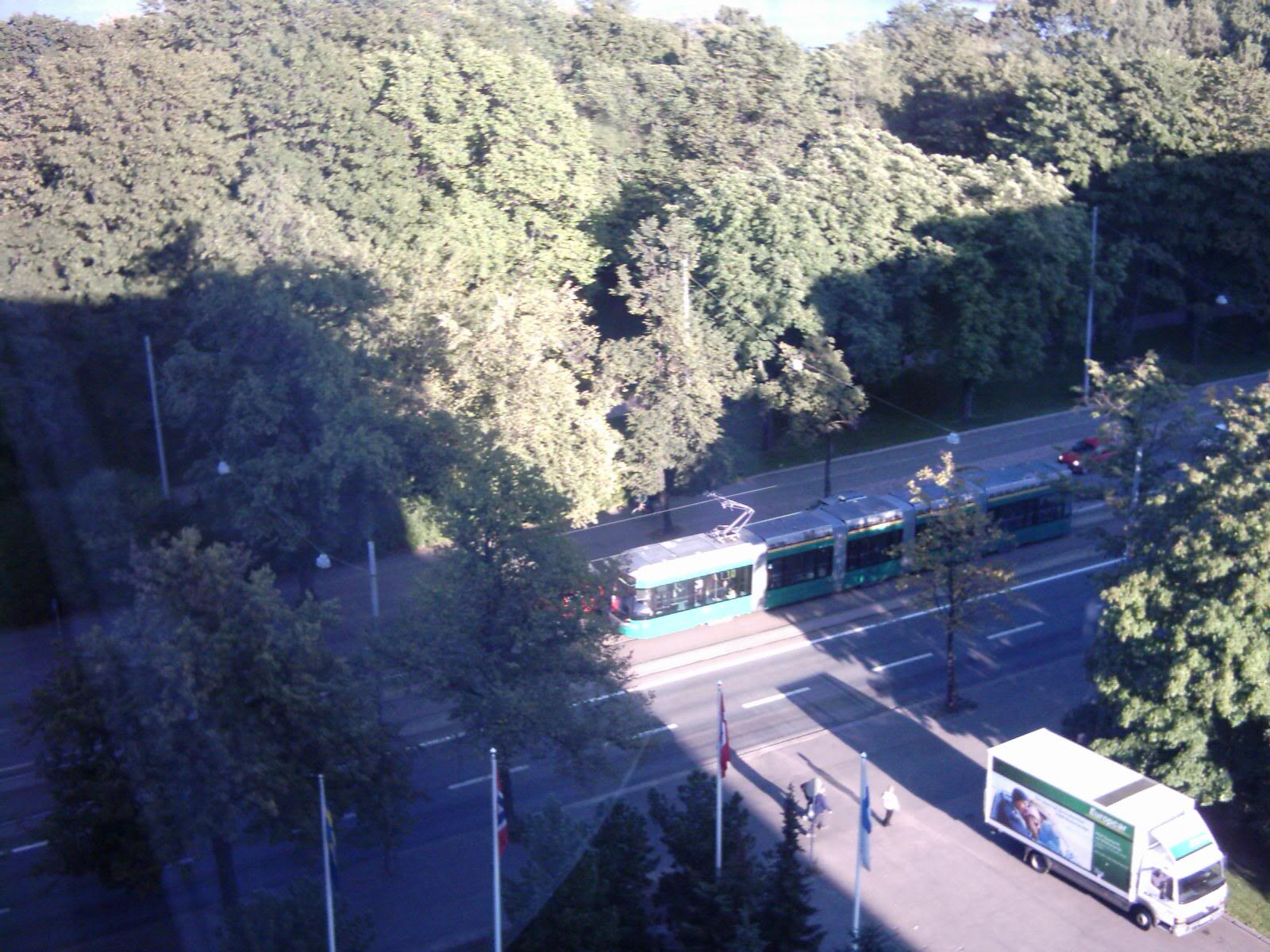
The Canadian State (Zwei commnets – We do note have states in Canada, we have provinces!) of Alberta has unveiled a C$2bn (US$1.9bn) public transport plan to boost public transit systems in cities and towns to cut down greenhouse gases in the province.
Under the green transit incentives programme (GreenTRIP), the government has earmarked C$800m (US$775m) for Edmonton, C$800m (US$775m) for Calgary and C$400m (US$387m) for other municipalities.
The multiyear programme is expected to make public transport systems more accessible in cities, towns and municipalities.
It also aims to reduce the number of vehicles on roads, consequently reducing the carbon footprint
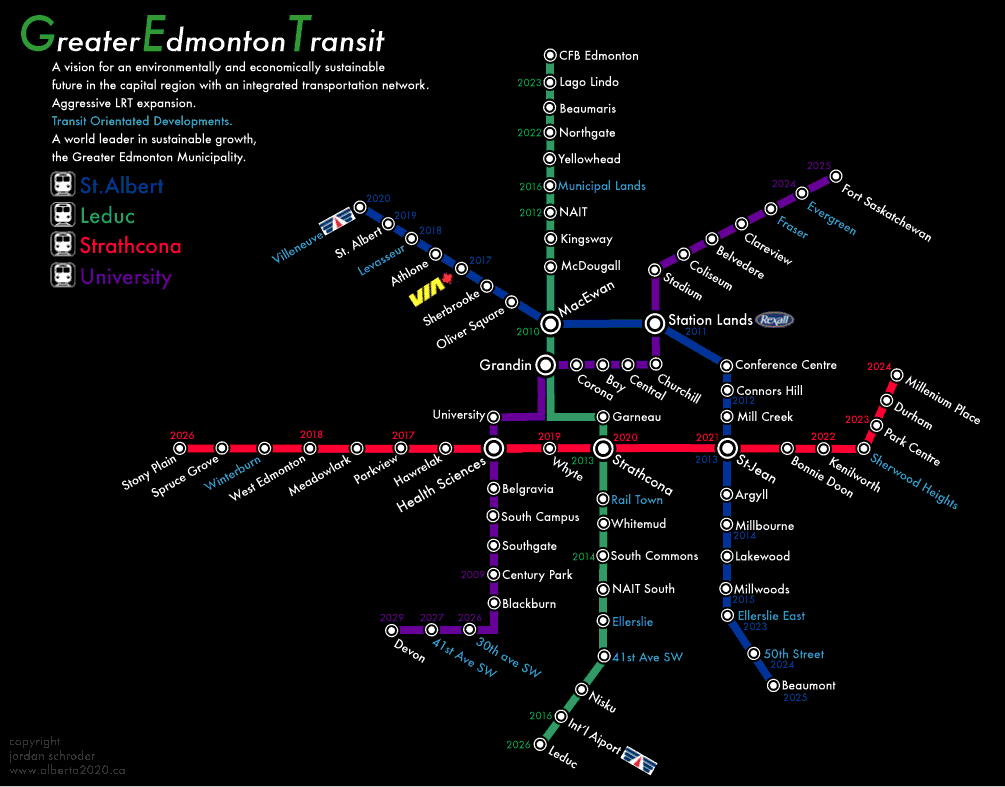
Edmonton's envisioned light rail network. Does TransLink have the the same vision?
Canada Unveils $1.9bn Public Transit Programme
25 June 2010
Railway technology.com
The Canadian State (Zwei commnets – We do note have states in Canada, we have provinces!) of Alberta has unveiled a C$2bn (US$1.9bn) public transport plan to boost public transit systems in cities and towns to cut down greenhouse gases in the province.
Under the green transit incentives programme (GreenTRIP), the government has earmarked C$800m (US$775m) for Edmonton, C$800m (US$775m) for Calgary and C$400m (US$387m) for other municipalities.
The multiyear programme is expected to make public transport systems more accessible in cities, towns and municipalities.
It also aims to reduce the number of vehicles on roads, consequently reducing the carbon footprint



Recent Comments