Commuting is harder now – A letter to the Vancouver Sun

Vancouver SunSeptember 16, 2009Ai??Ai??The new commuting patterns have added 15 to 20 minutes each way to my commute from Ladner to the University of B.C. Most of this is due to poor connections, especially to the east-west lines on 41st and King Edward. The early 480 bus to UBC is jam-packed when it arrives at Bridgeport.As for columnist Pete McMartin’s pleasant trip from Tsawwassen to Vancouver (Commute goes smoothly – anticipated chaos fails to show, Sept. 9), he travels at rush hour, rides for almost the full length of the line and doesn’t connect outside the downtown area. His situation is perfectly suited for the train.
Unfortunately, I am resigned to that fact that a longer commute is my sacrifice on the altar of the Olympics.
http://www.vancouversun.com/opinion/letters/Commuting+harder/1998674/story.html
Elevated or at-grade; let’s look at both!
A post to RFV’s blog moaned that; “you always show ugly pictures of elevated transit rather than the wonderful job Richmond did on #3 Road or sections of the Central Valley Greenway…………...”, well let’s compare elevated transit with at-grade/on-street light rail.

or

It seems that the vast majority of transit planners would rather be associate with:

Rather than this:

The overAi??Ai??one hundredAi??Ai??year old Wuppertal Schwebebahn monorail is one of the oldestAi??Ai??public transit systems in the world, even though the route is 100% grade separated it wasn’t copied in other cities where tramway’s flourished instead. Could it be that even one hundred years ago transit planners found the a transit system being fully grade separated, wasn’t a viable transit solution except in the most unusual circumstances?
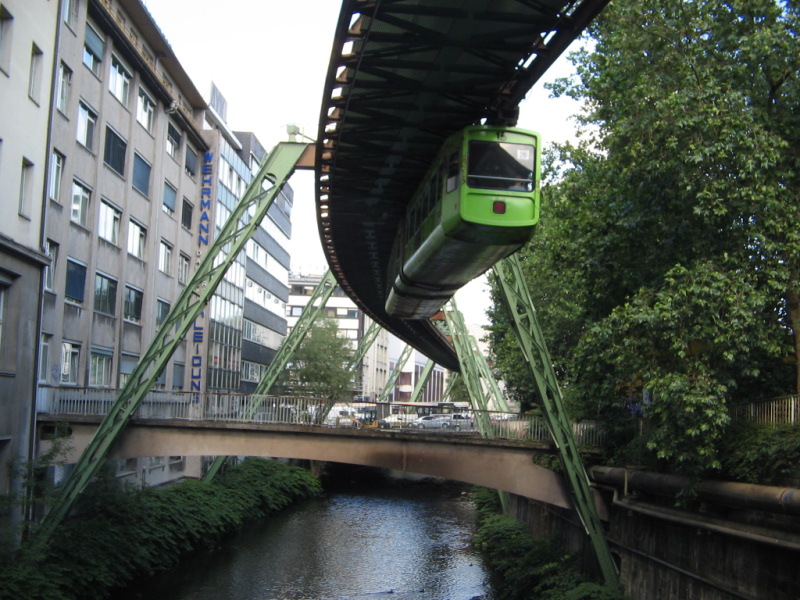
Elevated guideways are more expensive to build and maintain than at grade transit lines and though transit using elevated guideways may provide faster commercial speeds, the faster commercial speeds comes more from sacrificing stations, rather than being elevated.Ai??Ai??Sacrificing stations, sacrifices customer convenience. Ai??Ai??Cities using expensive grade separated transit systems, tend to have smaller, more expensive to use transit systems than cities opting for at-grade/on-street light rail.Ai??Ai??Extremely fewAi??Ai??cities in Europe or North America have copied Vancouver’s penchant for light-metro; evidence enough that our transit planning maybe on the wrong track.
Ai??Ai??
From the BBC News – 70% ‘back rail renationalization’. Privitization of British Railways has not been as successful as one would think.

The privatization of British Railways has not been as successful as many would have wished. The complicated and bureaucratic nature of the privatization of British Railways has cost the taxpayer dearly and now 70% of the people polled wants the railways back under public ownership. The sheen of the privatized B.R. has long gone after several major fatal train crashes and finally when the track literally disintegrated due to lack of maintenance. In the UK, profits from theAi??Ai??company owning the ‘track’Ai??Ai??were directed to shareholders instead of track maintenance; with the privatized Bostitch Rail, corporate profitsAi??Ai??became more important than passenger safety.
Today the ‘track’ has been effectivelyAi??Ai??renationalized and many of the Train Operating Companies or TOC’s are in financial or operational trouble, the British public has lost faith in Maggie Thatcher’s great adventure. To date, the British Taxpayer has paid far more for railway privatization than if paid to British Railways instead. It seems railway privatization in the UK has been a failure, a lesson which has lost its meaning on this side of the pond.
70% ‘back rail renationalization’.
Most people are in favour of returning the railways to public ownership, with just 23% supporting privatization, according to a poll.
A survey of more than 1,000 people for the Rail Maritime and Transport union (RMT), found seven out of 10 of those questioned backed nationalization.
The state of the railways will be debated by the TUC conference in Liverpool later this week.
The RMT will be calling for support for full rail nationalization.
RMT General Secretary Bob Crow said the poll showed the government is “out of step with the voters” on who owns and runs the rail network.
He said: “If Labour are serious about re-engaging with their core supporters, they can prove it by making a bold statement on public ownership of the railways.”
Tramway Line 3 in Paris – Let’s have a look!
A post inAi??Ai??today’s blog about Portland’s new light rail line mentioned Paris’s newAi??Ai??Tramway Line 3, so let’s explore Tramway Ligne 3 in Paris. If TransLink ever showed the public true images of modern light rail, instead of their stock of dated and altered photos, there would be much more public support for modern light rail transit in the region!

Tramway line T3 is the first modern tramway in Paris proper. Opened on December 16, 2006 it is known as the Tramway des MarA?Ai??chaux because it follows the boulevards that were built on the route of Thiers’s fortifications around Paris (built 1841-45) named after many of Napoleon’s marshal (marA?Ai??chaux). It connects Boulevard Victor – Pont du Garigliano RER station in the western part of the XVe arrondissement with Porte d’Ivry metro station in the XIIIe arrondissement.
The line nowAi??Ai??carries over 120, 000 customers a day, exceeding ridership projections. Planned extensions include a link to Porte de Charenton in 2011 and eventually Porte de la Chapelle.

Planned extensions include a link to Porte de Charenton in 2011 and eventually Porte de la Chapelle.

From the Seattle Times – TriMet opens MAX Green Line in Oregon
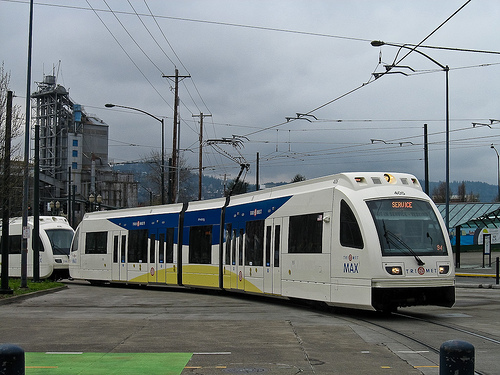
Portland continues to expand its light rail network with the opening of the Green Line. The Green line is 13.35 km. long and cost CAD $619.45 million or CAD $46.4 million per km. The higher cost of Portland’s Green line can be attributed to the fact that the new light rail-line parallels Highway 205 and much heavy engineering had to be done including building earthworks viaducts,Ai??Ai??several bridges and short tunnels.
The Green line marks Portland’s fifth light rail line and already planning is under way for a sixth light rail line and new streetcar lines.
TriMet has opened its new MAX Green Line to the public. The line is TriMet’s fifth and extends from Portland to Clackamas County, running…
The line is TriMet’s fifth and extends from Portland to Clackamas County, running a total of 8.3 miles. The line runs through the Portland State University campus, already the top destination for TriMet riders.
TriMet began construction on the $575.7 million project in early 2007.
About 60 percent of the tab was paid for with federal funds. The rest was paid for by the city of Portland, Metro, TriMet, Clackamas County and the Oregon Department of Transportation.
The Green Line will begin regular service today, with trains running every 15 minutes most hours and every 20 minutes in the early morning and late evenings.
Seattle Times news services
http://seattletimes.nwsource.com/html/localnews/2009855351_trimet13.html
From Radio 1130 – Cambie merchants still waiting for Canada Line business boom. Not coming? Yes, Zweisystem told you so!

Well the RAV/Canada line has been open for some time now and now one wonders where is all those subway passengers that were dying to shop on Cambie St., as promised by RAVCo. and InTransit BC?
Didn’t come? Well don’t hold your breathe, they’re not. It has been found in other jurisdictions where cut-and-cover subway construction has been done that it takes ten years for businesses to recouver financially. Unlike new light-rail lines, where adjacent business see about a 10% increase in revenue, businesses on top of a subway do not. The reason is simple; on-street/at-grade LRT transit customers see local businesses and with convenient stops can access them with little interruption of their journey. All subway passengers see is dank concrete and with widely spaced stations, seldom venture forth and patronize local businesses.
Zweisystem knew this, then why didn’t Gordon Campbell, Kevin Falcon, Susan Anton, Larry Campbell, TransLink’s planners, radio talk show hosts,Ai??Ai??reporters,Ai??Ai??and the rest who vaguely promised and/or spoke of a great upsurge in local business whence the RAV/Canada Line opened?
Dave White VANCOUVER (NEWS1130) | Saturday, September 12th, 2009 1:00 pmAi??Ai??
Ai??Ai??It’s been nearly a month since the Canada Line opened, connecting downtown with Richmond and YVR. But Cambie Street business owners are still evaluating just what the line will meanAi??Ai??for their businesses after enduring years of construction.
Leonard Schein with the Cambie Street Business Association says so far there hasn’t been a major spike in business. A?ai??i??Ai??We were looking forward to it, but the city is still doing some work and school is just back, and we’ll see over time how that does happen.”
Yip says her business is more likely to be successful with a solid customer base and community advertising.
Karyee Yip, who owns Honey Gifts on Cambie, isn’t expecting a boost because a station was never built in the Cambie Village. ‘ItA?ai??i??ai???s kind of disappointing that we lost a lot of business to build this line but we’re not really reaping a lot of benefits once the line is built.”
From Transit & Urban Tramways – Alstom and Dalkia win five-year, CAD $41.7 million, Luas (Dublin’s LRT) extension

There has been much ‘bumf’ in local blogs that light rail is expensive to maintain, even more expensive to maintain than metro. The following news item from T & UT gives a good example of theAi??Ai??annual operating costs of a modern light rail system. Dublin’s LUAS LRT does operate at a profit, even after paying its debt (bank) servicing charges and the operating authority has signed a five year CAD $41.7 million maintenance contract with Alstom & Dalkia, even though the transit system will expand by almost 13 km. during the course of the contract! $41.17 million over five years means that the annual maintenance costs of Dublin’s LUAS LRT is about $8.23 million a year, far less than any metro system in existence today, including both Vancouver’s RAV/Canada Line and SkyTrain’s Expo and Millennium Lines!
Ai??Ai??Alstom and Dalkia win five-year Luas extension
Ireland’s Railway Procurement Agency has awarded a five-year extension to Alstom and Dalkia’s infrastructure maintenance contract for Dublin’s Luas light rail system.
Alstom and Dalkia have maintained the infrastructure since Luas’ opening in 2004 and the new five-year contract that begins on 1 October is worth EUR30m(CAD $41.17m) Alstom EUR24m (CAD $37.75) and Dalkia EUR6m (CAD $9.45m)Ai??Ai??and has an option for a further five years, depending on performance.
During the course of the contract the Luas system will extend by almost 13km with extensions of the Red Line to Docklands (approx 4km) and Saggart (1.7km) due to open in late 2009 and early 2010 respectively. The Green Line extension to Cherrywood (7.2km) is also due to open in 2010.
Some balance please! An independant view of the RAV/Canada line.

The following Email came Zweisystem’s way today and is certainly contrary to the hype and hoopla of other blogs claiming that the RAV Line is almost at capacity. The author of the item, who wishes to remain anonymous, is a party who worksAi??Ai??in local transit planning. Yes, the RAV/Canada line is up and running, but so is RAV’s debt clock and the ludicrous number of 100,000 passengers a day, claimed by TransLink, for the RAV line to ‘break even’, doesn’t take into account apportioning fares between RAV and bus, discount fares and the U-pass.
Yes the U-Pass, sounds good but it is the taxpayer who will be left with higher taxes and fees to subsidies deep discounted student fares enabling them to use premium priced metros!
Ai??Ai??A complete transportation financial fiasco is just around the corner.
Imagine, not knowing what impacts a project you have been working on for 7 years would have on the other adjoining transit corridors.Ai??Ai?? Despite an administration staff of over 350 people, TransLink and its subsidiaries still can’t run a transit system.
During the last three days I have driven from White Rock to downtown Vancouver, taken the bus/train from White Rock to downtown Vancouver and today took the train to the airport and to Brighouse from the Bridgeport Station.Ai??Ai?? I did this during the am peak period.
My initial observations…it took 6 minutes longer to go from White Rock to Granville or City Centre Station with the bus/train journey (66 minutes).Ai??Ai?? Prior to the summer, I took the 351 from White Rock to Granville and Seymour during the am peak and it took 60 minutes.Ai??Ai?? My car trip on Wednesday took 43 minutes.
I witnessed very little congestion, unlike other Expo Line stations, and found ample room to stand, unlike the Expo Line cars during the am peak.Ai??Ai?? The journey in the tunnel was as expected dull.Ai??Ai?? I was looking for leaks along Cambie Street, but I guess we will have to wait for the real rains to arrive.Ai??Ai?? Most of the people on the train were young and appeared to be students and most of them got off downtown.Ai??Ai?? Very few passengers got off at the 49th ave station and very few got off at City Hall station.Ai??Ai?? Only two people wearing suits were on board and they came on at 12th, City Hall and going downtown.Ai??Ai?? Very few people got on the train in Vancouver.Ai??Ai?? Some at Broadway heading downtown but the train had ample room for them.
The return journey from downtown Vancouver to Bridgeport in Richmond was very comfortable as only 1/4 of the seatsAi??Ai?? were occupied…this is till during the am peak period.Ai??Ai?? Two people had small bags heading to the airport.
Today, I rode into Richmond Centre or Brighouse.Ai??Ai?? The line is single track after the Landsdowne Mall.Ai??Ai?? Most people got off at either Aberdeen or Landsdowne Mall.Ai??Ai?? Returning back to Bridgeport station we waited two minutes after boarding before beginning the journey.Ai??Ai?? The problem with single track guideways.Ai??Ai?? At no time were the cars full or congested and at no time did I see more than a B-Line bus load on any of the Rmd trains.Ai??Ai?? The airport mainly had sightseers who were going on a round trip to and from the airport.Ai??Ai?? Four people on board had luggage.
I began to wonder how Translink is going to find the $70 million it needs to pay for their portion of the debt and for what they need to pay Intransient BC (SNC Lavalin) for operating the line.Ai??Ai?? Each transit user that uses the train will be subsidized a minimum of $2,000 a year based on Translink’s boarding numbers of 77,000 per day!Ai??Ai??
It is still to early to guage the performance of this line.Ai??Ai?? Once the ‘tourist’ user has satisfied their curiosity and people settle into the Fall commuting season, we will see what is happening.
I have sent an email to two Vancouver councillors asking whether or not the City is going to do trip counts on all its southern entry points, Knight Street-Oak-Arthur Laing Bridges, to see if traffic is less or more than what it was in the past.Ai??Ai?? The City usually conducts traffic trip counts in November.Ai??Ai?? It would be good to get that data since number challenged Falcon believes the train will reduce daily vehicle trips by 200,000 or 40% of the entire am peak period vehicles commuting on our region’s roadways.
I have also contacted the taxi association to find out how the line is impacting their business.Ai??Ai?? They will not know until mid October or after the Cruise Ship season.Ai??Ai?? The airport passenger stats show that from January to June of this year, passenger numbers are down by 15% or 1.2 million passengers from last year.Ai??Ai?? All segments, domestic, transborder and international numbers are down.Ai??Ai?? However, the cruise ship numbers are up from last year, increased by 8%, despite less sailings.
When I asked one of the execs with the London Underground just who takes the tube from Heathrow to Piccadilly (London) he answered, the budget traveller.
A friend who recently took the train from YVR to get to his home near Trout Lake in Vancouver was happy that his journey took only 45 minutes.Ai??Ai?? I said that if he had taken a taxi he would have been home in 20 minutes.Ai??Ai?? So perhaps if we are talking about efficiency, we should have more taxis or even vans for multiple passengers taking people to their destinations like they do in a lot of other cities in the world.Ai??Ai?? Perhaps fares for taxis could be subsidized, it would be cheaper.
Just one final note…my car journey into Vancouver was amazingly fast.Ai??Ai?? I don’t know why that is.Ai??Ai?? One thing I did notice…Granville Street was without buses, it was so quiet I thought I might be someplace else.Ai??Ai?? However, the golden rule states, if there is capacity on a roadway, it will be filled.
TransLink hunts for money – From the Georgia Straight.
 Ai??Ai??
Charlie Smith continues toAi??Ai??be Vancouver’s leading reporter on local and regional transit issues. Simply, he actually does research on the subject, unlike reporters in Vancouver’s mainstream media who have been reduced to printing well crafted TransLink and/or The Provincial Ministry of Transportation mews releases as facts. WhenAi??Ai?? it comes to a good analysis of transit issues, Smith and the Straight can be regarded as one of the best sources of transit and transportation information one can get!
The issue of TransLink financial dilemma was predictable and has been for a long time. Thirty years ago, when SkyTrain was forced upon the region, transit experts warned that this was leading the Vancouver region into a very expensive era. Local politicians and transportation engineers ignored those warnings and continued to plan for unaffordable metro and even more unaffordable subway. Well the chickens have come home to roost, TransLink is mired in a financial quicksand of a horribly expensiveAi??Ai??transit system that needs an ever growing tax base to support it. With every new metro line that opens, on transit routes that do not have the ridership to support it, the deeper TransLink sinks into a financial abyss, yet because the monies to support TransLink is considered free cash (all taxpayers money is considered free cash), bureaucrats continue to plan for the same, leading TransLinkAi??Ai??on an ever steeperAi??Ai??downward path to financial bankruptcy.
By turning off the money taps, will TransLink be forced to deal with the realities of providing an affordable andAi??Ai??efficient transit service that puts the transit customer first; the question is and always has been, what politicians are not afraid to bell the TransLink cat.
See also:
http://railforthevalley.wordpress.com/2009/09/04/fares-fair-translinks-fares-compared/
TransLink hunts for money
By Charlie Smith
http://www.straight.com/article-255498/translink-hunts-money
More than five years ago, TransLink brought forward a three-year strategy and 10-year outlook. The document included $4-billion worth of capital projects that were to be built by 2013.
On February 27, 2004, the Metro Vancouver board of directors narrowly approved the plan. TransLink documents showed that after spending this money, the percentage of rush-hour trips taken by transit was expected to increase from 11 percent in 2004 to 13 percent in 2013. At the time, some COPE councillors criticized the plan for not substantially increasing transit ridership in the region.
The three-year strategy and 10-year outlook explicitly acknowledged that spending vast sums of money wasnA?ai??i??ai???t going to get many more people out of their cars and on the transit system. Large sums of money were directed toward road and bridge construction and the Canada Line. A previous TransLink plan had called for 1,800 buses by 2006. The 2004 three-year strategy and 10-year outlook scaled that back to 1,600 buses by 2013.
In 2009, according to TransLink spokesperson Ken Hardie, there are 1,694 buses, not counting HandyDart vehicles. Between 11 and 12 percent of trips in the region are taken by transit, which means that little has changed five years later. The number of service hours on the transit system has increased from 5.2 million in 2004 to 6.2 million in 2008, according to TransLinkA?ai??i??ai???s annual report, but ridership as a percentage of trips taken during rush hour has remained stable.
Regional transportation commissioner Martin Crilly identified some of the reasons for this in his August 31 report on TransLinkA?ai??i??ai???s 2010 10-year plan. He wrote that over the last several years, TransLink A?ai??i??Ai??expanded service and invested in capital projects that it knew to be unaffordable under its existing funding constraintsA?ai??i??A?.
A?ai??i??Ai??These investments were made with the hope and expectation that senior governments would agree to bear a large portion of the operating costs, which they have not done,A?ai??i??A? Crilly wrote. A?ai??i??Ai??This expansion of service has reduced the productivity of the bus network, with each increment of service costing more and carrying fewer riders, while fares increase. There is now available capacityA?ai??i??ai???that is empty seatsA?ai??i??ai???on much, but not all, of the bus network which can accommodate future growth in ridership.A?ai??i??A?
He noted that the Expo Line is being constrained by capacity, and called for upgrades to the existing system to take priority over new investments, such as the proposed Evergreen Line to Coquitlam. Crilly allowed TransLink to raise short-term fares by 3 to 3.5 percent per year over a three-year period starting April 1, 2010.
A?ai??i??Ai??TransLinkA?ai??i??ai???s view, judged realistic, is that the slow process of urban densification will not lift ridership much by 2019,A?ai??i??A? he wrote.
The 2010 10-year plan includes three options, with an overall goal, according to Crilly, of increasing the supply of transit service A?ai??i??Ai??at a rapidly escalating incremental (and less affordable) cost for each extra riderA?ai??i??A?. The base plan is called A?ai??i??Ai??Drastic CutsA?ai??i??A?. It would only be implemented if the MayorsA?ai??i??ai??? Council on Regional Transportation doesnA?ai??i??ai???t approve a supplement, and would result in a 40-percent reduction in bus service, no new rapid-transit expansion, and sharp reductions to road-maintenance funding and cycling programs.
A second option, called the A?ai??i??Ai??Funding StabilizationA?ai??i??A? supplement, would generate an additional $130 million per year by increasing the fuel tax by three cents a litre, tripling the parking sales tax to 21 percent, and raising transit fares beyond the inflation rate. It assumes that property taxes would rise by three percent per year.
The third option, called the A?ai??i??Ai??On Track to a Sustainable RegionA?ai??i??A? supplement, would require an additional $450 million per year by 2013 and it would fund the Evergreen Line to Coquitlam. Under the category of A?ai??i??Ai??demand-side managementA?ai??i??A?A?ai??i??ai???which refers to measures to discourage people from drivingA?ai??i??ai???the plan states: A?ai??i??Ai??TransLink will undertake research and technical studies on road pricing, a broad concept in which motorists pay directly for using a road, bridge or tunnel, or for driving in a defined part of a city.A?ai??i??A?
The mayorsA?ai??i??ai??? council includes representatives from each of the regionA?ai??i??ai???s 21 municipalities as well as the Tsawwassen First Nation. ItA?ai??i??ai???s facing an October 31 deadline to respond to TransLinkA?ai??i??ai???s three funding scenarios.
Who has the fairest fares of them all?
> Adult and child cash fares in Calgary: $2.50/$1.75
> Adult and child cash fares in Montreal: $2.75/$1.75
> Adult and child cash fares in Toronto: $2.75/70 cents
> Adult and child cash fares in Vancouver: $3.75/$2.50 (two zone)
> Adult and child cash fares in Vancouver: $2.50/$1.75 (one zone)
> Day and monthly passes in Calgary: $7.50/$83
> Day and monthly passes in Montreal: $9/$68.50
> Day and monthly passes in Toronto: $9/$109
> Day and monthly passes in Vancouver: $9/$99 (two zone)
> Day and monthly passes in Vancouver: $9/$73 (one zone)
Sources: Calgary Transit, SociA?Ai??tA?Ai?? de transport de MontrA?Ai??al, Toronto Transit Commission, TransLink
And we thought TransLink had problems – the Ottawa Light Rail Lawsuit.

Plan for light rail – Federal government intrigue – sign contracts – renege on contracts – the result: a massive lawsuit.
Of course what civic, provincial and federal politicians all seem to forget is that there is one taxpayer and the monies awarded to the plaintiffs would go a long way to help build a light rail network in Ottawa.
From the Ottawa Sun
Light rail lawsuit discussion behind closed doors
By DEREK PUDDICOMBE, City Hall Bureau
City council is ready to offer $36.7 million to settle its outstanding $217-million lawsuit stemming from the north-south light rail plan that was cancelled in 2007.
Councillors and the city solicitor remained silent about the deal after a five-hour closed-door briefing ended Wednesday afternoon.
“I can’t discuss a matter before the court”, said city solicitor Rick O’Connor.
Combined with the money the city has already spent on legal bills defending the cancelled light rail transit project the bill could reach about $40 million.
Council may deal with the settlement offer during an emergency council meeting Friday morning.
Siemens and subcontractor St. Lawrence Cement launched the lawsuit over the cancellation of the $1-billion north-south light rail system they had been contracted to build in April of 2006. In a letter sent to city Councillors and staff in February, 2007, Siemens said it was out of pocket about $25 million due to the cancellation.
The settlement would be the equivalent of about an increase of about 4% on property taxes, and one Councillor who did not want to be identified said the money may have to come from taxpayers because the city can’t borrow to pay it. An alternative would be to sell off city assets to pay for the settlement.
“I think there could be a special LRT lawsuit levy on the property tax bill”, said the Councillor.
If accepted, the city may ask if the $36.7 million can be paid in instalments.
The Councillor also suggested that perhaps the money should come from the wards of Councillors who voted against the project two years ago.
Innes Coun. Rainer Bloess was the only Councillor who spoke after the meeting finished but fell short of mentioning any details of the potential settlement.
“We are all looking forward to some settlement”, he said.
When the city council meeting reconvened at about 6 p.m. council refused to discuss any of the details pertaining to the lawsuit, but staff forgot to take the details of the briefing, including the settlement offer off the big screen before some reporters noticed the plaintiff’s offer.
“I’m glad it’s over, but we didn’t learn anything from this”, said one city Councillor.
Since the cancellation, city council has voted in favour of a new $5-billion transit plan, which essentially includes the same north-south route, but won’t see light rail anywhere in the city for at least 10 years.



Recent Comments