It’s So Simple, The Expo and Millennium Lines Operate Movia Automatic Light Metro Not SkyTrain
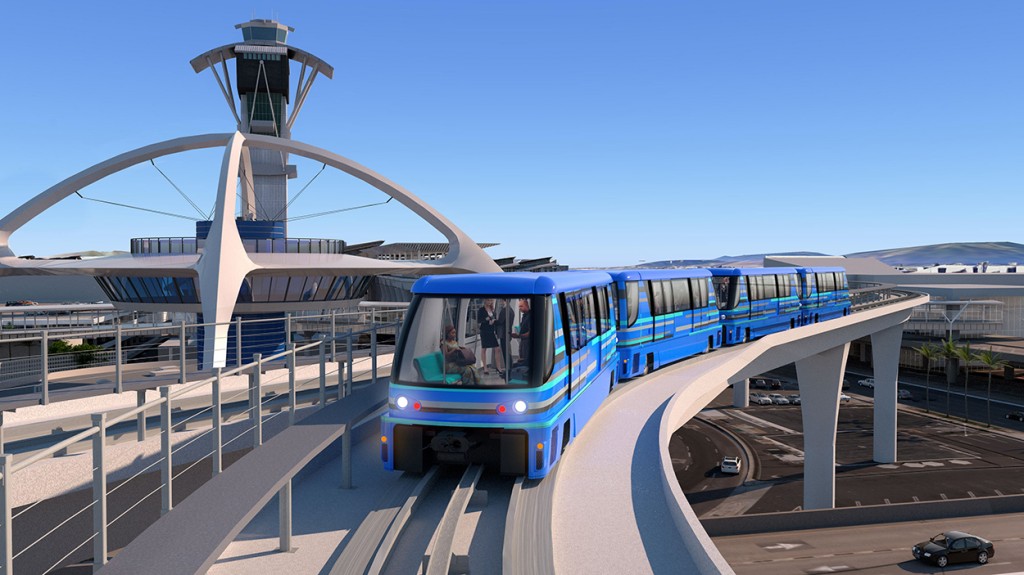
- Bombardier’s SkyTrain, a rubber tired people mover system.
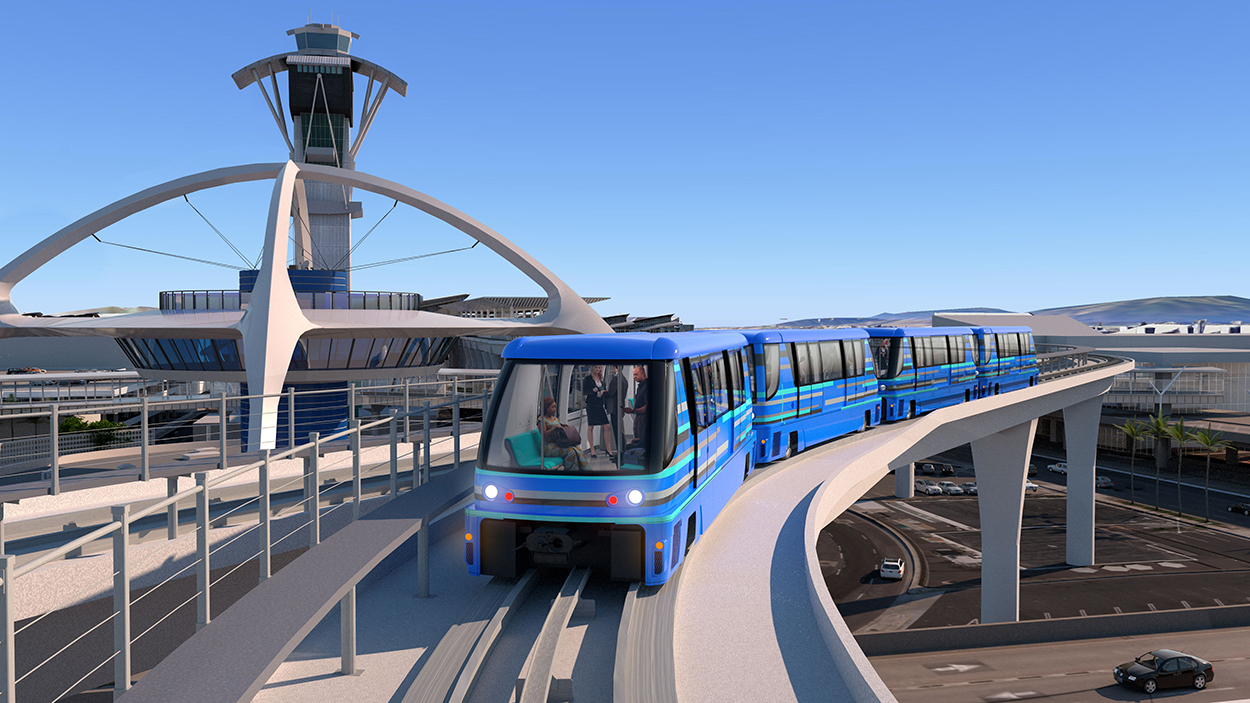
Originally posted March 19, 2019.
So many politicians and members of the media still keep referring SkyTrain as a transit product. It is not, it is the name of Metro Vancouver’s regional light-metro system which comprises of a conventional railway, the Canada Line and an unconventional, proprietary railway used on the Expo and Millennium Lines, which is now called Movia Automatic Light Metro. The patents or the now called MALM system are owned by Bombardier Inc. and SNC Lavalin. Even the CEO of TransLink, Kevin Desmond doesn’t know the difference, which leaves one quite gobsmacked that he has the competence to be CEO of TransLink, especially when we are spending $4.6 billion to build 12.8 km more of it!
The Canada Line is not compatible in operation with the Expo and Millennium Lines and visa versa!
To be blunt; the Canada Line operates conventional electrical multiple unites produced by ROTEM but can also operate comparable EMU’s built by other companies.
The Expo and Millennium Lines operate the unconventional and proprietary Movia Automatic Light Metro, produced by Bombardier Inc. and are not compatible with any other railway except their own family of seven lines.
SkyTrain is a rubber tired airport people mover marketed by Bombardier Inc. and has no relation to the MALM system also marketed by Bombardier Inc.
Bombardier Is Building SkyTrain at LAX…..But, It Ain’t Our SkyTrain!
Los Angeles Airport (LAX)t is building a $5 billion SkyTrain system, which may cause confusion because in Bombardier’s line of transit systems, SkyTrain is a rubber tired people mover system and not the trains used on the Canada, Expo, and/or Millennium lines.
Cries of shock and disbelief!
The name SkyTrain, which was chosen by contest, is the name for the Metro Vancouver regional rail system and not the vehicles.
Bombardier’s proprietary ART/Movia Metro is now the official name of the Expo and Millennium Line’s cars and ROTEM, a subsidiary of Hyundai, supply the electric multiple units (EMU’s) for the Canada Line.
So calling the actual trains SkyTrain is wrong as the SkyTrain regional rail system operates two distinct railways, the conventional Canada Line and the unconventional proprietary ART/Movia lines.
They are not compatible in operation.
I would surmise that Bombardier Inc. liked the name SkyTrain so much that they use it for their airport people mover system, which is far more marketable than their now obsolete ART/Movia metro system of which only seven have been built in the past 40 years!
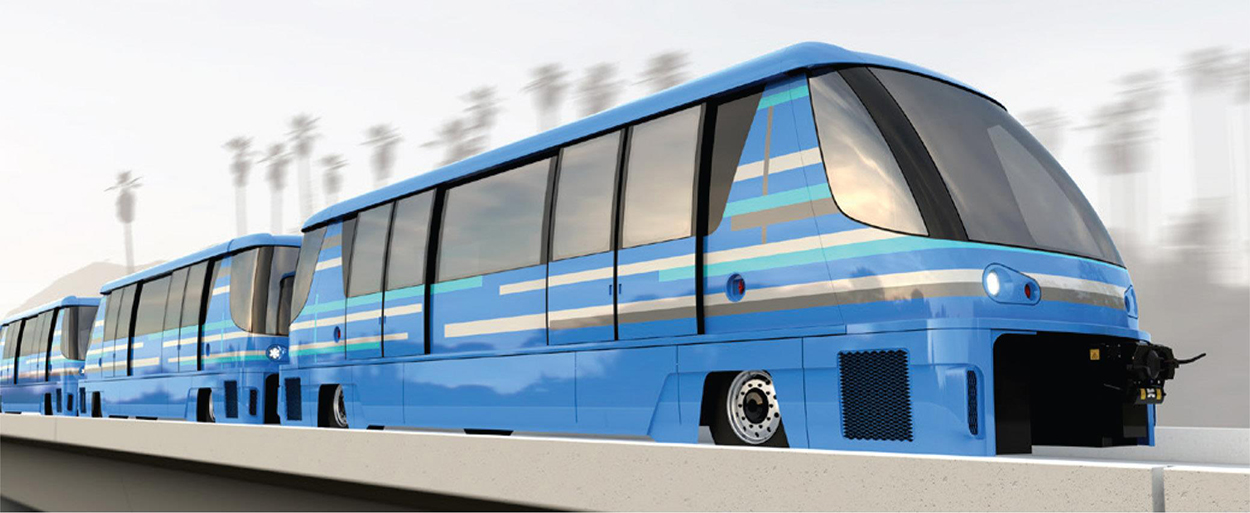
Smoking Dope In Abby

Really, the mayor of Abbotsford is just another politician which thinks the taxpayer has deep pockets to finance dream projects.
Mayor Braun is completely out of touch about regional transit issues and wants someone else to ante up $8 billion for a rapid transit line which in fact will attract not many people.
The estimated cost to extend the Expo Line from Fleetwood to Langley will be a minimum of $1.6 billion and a rough guesstimate of $7 billion to extend it to Abbotsford. But wait, the Expo line will definitely need a $3 billion rehab to increase capacity, so the cost to extend the MALM proprietary railway to Abbotsford will not be $8 billion, rather closer to $12 billion!
So let that sink in for a while, $12 billion to extend a dated light metro system, that is not at all well designed in the first place and certainly not designed for long haul services, that does not operate in the snow.
A new rapid transit line from Vancouver to Abbotsford, using the Number one hwy, route would cost an astounding $14 billion or more!
Commuter rail is more of a joke because it would be too unwieldy and restricted to the CPR or CNR mainlines.
Rail for the Valley’s Leewood Study, shows the right direction, use the former and existing BC Electric rights-of-way, and provide a regional passenger rail service from downtown Vancouver to Chilliwack, via New Westminster, North Delta/Surrey, Cloverdale, Langley, Abbotsford, Sardis and Chilliwack.
The cost for a 30 minute service per direction would be about $1.5 billion and would offer the right capacity to start with and can economically grow with demand.
The answer seems to simple for tax and spend politicians to understand; it isn’t an unnaffordable $12 to $14 billion rapid transit line to Abbotsford, rather an affordable $1.5 regional rail line servicing many important destinations from Vancouver , up the Fraser Valley to Chilliwack.

Borrow $8 billion for Fraser Valley rail link, Abbotsford mayor urges province
Henry Braun urges province to borrow billions to connect Abbotsford & Chilliwack to Metro Vancouver
- Tyler Olsen
- Jan. 22, 2020
All Abbotsford’s mayor wants from the provincial government is up to $8 billion for transportation in the Fraser Valley.
That sum sounds like a lot of money because, again, it’s $8 billion. But Mayor Henry Braun told council Monday that he thinks a rapid transit link to Abbotsford is (relatively) affordable and can be done if the province is as ambitious as a pair of legendary British Columbia politicians.
“WAC Bennett and Phil Gaglardi were some people who made some bold moves. I think the present provincial government needs to make some bold moves and one of them would be commuter rail,” Braun said after a council discussion on feedback that Abbotsford will send to TransLink as that body shapes its plans for the next 30 years.
“I do think the day has come for lots of reasons … that it’s perhaps time that the province needs to look at borrowing $7 (billion) to $8 billion – with a B,” he said. “It should come out to Abbotsford and eventually to Chilliwack as well because there are 300,000 people that live east of the Langley border.”
Braun has regularly and repeatedly called for the widening of Highway 1 between Langley and Abbotsford, and the city has listed that project as its top transportation priority. But the province has focused more on rapid transit projects, and in December the premier’s chief of staff, Geoff Meggs, promised to meet with Braun soon to discuss the subject.
Braun said the time is right for a commuter-rail transit link between Metro Vancouver and Abbotsford and Chilliwack. Braun doesn’t believe the existing Interurban freight line through the valley will work, but said the time is right for the province to lay its own tracks out to Abbotsford.
“Interest rates are at historic lows,” he said. “There is good debt and bad debt. That would be a good debt, because that infrastructure would be built to last 100-plus years.”
Braun, who previously ran a rail construction business, said he is confident that the province could borrow such a sum and still maintain its AAA credit rating because B.C.’s debt-to-GDP ratio would still be reasonable.
“As I’ve looked at the numbers, borrowing $7 (billion) to $8 billion is doable and would not push up the provincial debt-to-GDP ratio to the levels where the rating agencies would get exercised. It’s manageable and I think that has to happen.
“The Fraser Valley can solve a lot of problems to the west of us,” he added.
Braun pointed to the lack of available industrial land in Metro Vancouver and repeated Abbotsford’s desire to remove two blocks of farmland from the Agricultural Land Reserve for such purposes.
“You have to develop regional hubs. We have a university and airport … I think we need to get a little more vocal about investing significant funds in this valley.”
Canada Line Hype and Hoopla
One wonders why all the hype and hoopla is about with the new cars for the Canada Line?
The recently delivered cars are standard ROTEM electrical multiple units, used by several transit systems, unlike the proprietary Movia Automatic Light Metro cars, used on the Expo and Millennium Lines.
Also, very explicit is that there are no plans to extend the Canada Line, which will quieten the armchair specialists wanting it extended south of the Fraser River.
It is also clear, TransLink CEO, Kevin Desmond, is woefully uninformed about rail transit, which is probably why he was hired.
The claims of high ridership comes from the vast majority of bus customers, who used to enjoy a direct bus service to Vancouver , that are now forced to transfer from bus to metro, by signed agreement with SNC Lavalin, thus much of the ridership is from customers that have no choice but to take the metro.
Not mentioned is that the Canada Line caused a collapse of bus ridership in South Delta/Ladner, where transit customers, especially the elderly, refused to play TransLink’s game of forced transfers and want their direct buses to downtown Vancouver back. The current bus schedule is worse than the bus scheduled offered before the Canada line opened.
In the end, the Canada Line, will remain a politically inspired faux P-3, forced on TransLink by the extremely dishonest Gordon Campbell Liberal government, costing the taxpayer’s over $100 million annually to subsidize the SNC Lavalin lead consortium operating the line. The Canada Line remains woefully under built and grossly over engineered for what it does and as built, even with 12 new cars, still has less capacity than a simple tramway, at a cost up to ten times more to build than light rail.
Despite TransLink’s hype and hoopla, the mainstream media’s Goebbels Gambit of repeating TransLink’s “porkies” ad nauseaum, the Canada line is still considered a classic white elephant by transit planners outside the metro Vancouver bubble; no one has copied it.

New trains, more space on Canada Line
Posted Jan 21, 2020
TransLink says four new trains go online Tuesday, increasing capacity by 15 per cent during peak hours
The trains are the first group of 12 new trains that will eventually be running this year
RICHMOND (NEWS 1130) — Your commute on the Canada Line may be less cramped from now on.
TransLink says four new trains go online Tuesday, increasing capacity by 15 per cent during peak hours.
The transit authority says the trains are the first group of 12 new trains that will eventually be running as part of the Mayors’ 10-year transit expansion plan.
The additions scheduled for later this year will boost capacity by about 35 per cent compared to last year’s service.
Extra escalators will also be installed to keep up with an increase in service.
In 2019, an average of more than 150,000 trips were taken on the Canada Line daily.
Track Issues
Really, TransLink’s “TransLink Speak” is getting tiresome.
“Medical emergency” means another poor soul has committed suicide by throwing ones self in front of a train.
“Track issues“, translates into a host of problems, but in TransLink’s lexicon, it generally means we don’t care and any excuse is a good excuse.
What was the track issue?
Frozen/broken switch? Damage to the inductive loops? Ice build up on the reaction rail? Or?
TransLink treats its customers as cattle, generally thinking that customers are to stupid and cannot understand the reasons for the delay.
This must stop, as the public is growing very tired of it and except for a brainwashed cadre of the SkyTrain Lobby, who saturates social media with rah,rah, SkyTrain to here and there, maybe its time to demand TransLink to keep the damn train operating in winter conditions or fire senior management and find people who can.

Serious delays to downtown SkyTrain service after ‘track issue’ leads to overcrowding
By Sean Boynton Global NewsPosted January 16, 2020
A “track issue” on the Expo Line system in downtown Vancouver caused serious delays to SkyTrain service Thursday in the midst of the evening commute.
TransLink said the issue, which was first reported around 4 p.m., was affecting the track near Stadium-Chinatown Station, forcing trains to single track between Main Street and Commercial-Broadway stations.
A bus bridge was also been set up between Waterfront and Commercial-Broadway.
The Millennium and Canada lines were not affected by the issue.
TransLink has not explained what the specific track issue was.
It’s not yet clear if it was related to the heavy snow that fell on the Lower Mainland between Wednesday evening and Thursday morning, or ice or flooding created by that snow.
The delay came as the evening commute ramped up, along with hockey fans descending on Rogers Arena for a Vancouver Canucks game set to start at 7 p.m.
Passengers at Main Street Station said they were frustrated by the long wait, some standing on the platform for longer than half an hour.
“There’s no one from TransLink here to tell us what’s actually happening,” one man said. “People are screwed getting home.”
Attendants were seen on platforms explaining the issue to passengers.
When trains finally did arrive at Main Street, they were too crowded for many people to get on.
The issue was finally cleared just before 6 p.m., with TransLink warning long wait times will continue as the crowds disperse and service gets back to normal.
TransLink is asking customers to be patient and follow the latest information on its website and Twitter account.

News Flash
More problems for SkyTrain due to track issue
VANCOUVER (NEWS 1130) Friday Jan. 17 2020 – It’s been a problem-filled few days for TransLink.
After major weather- and switch-related delays on Wednesday, and significant problems with tracks on Thursday, it appears the SkyTrain has taken yet another hit.
A shuttle train is in effect on the Expo Line between Burrard and Stadium-Chinatown SkyTrain stations due to another track issue.
“There is currently no Expo Line service in or out of Waterfront Station,” TransLink says in a statement. “We will be deploying additional bus services to assist passengers.”
Bombardier In Trouble
Though TransLink will not admit it, and the Mayor’s Council Transit, claims its not true, the truth is, the Expo and Millennium Lines operate with the proprietary MALM light metro system.
Bombardier Inc. is the sole source manufacturer of MALM and no other company offers an off the shelf product that can run on the MALM lines.
If Bombardier dropped the MALM product, it means much higher costs for cars, which translates in the continued use of the aging MK.1 cars and higher maintenance costs as spare parts will become hard to find.
TransLink’s “What Me Worry” attitude with the regional light metro system is more than worrying as the CEO and senior manager think the taxpayer will forever pay more and more subsidizing the aging system.
If Bombardier Inc. abandons the poorly selling MALM (only seven such system sold in 40 years) as a cost cutting measure, watch for cost increases with the $4.6 billion, 12.8 km SkyTrain building program.

Bombardier Shares Plunge 30% As Analysts Question Its Future
The company faces lower-than-expected earnings as it struggles with staggering debt.
The future of Bombardier Inc. is being called into question after the company said it was actively considering alternatives to reduce its staggering debt.
After exiting the commercial aircraft business, selling its aerostructures unit and unloading a large tract of land in Toronto, the company said it is working to reduce debt and “solve its capital structure.” Bombardier’s long-term debt stood at more than US$9 billion as of Dec. 31, 2018.
“We are actively pursuing alternatives that would allow us to accelerate our debt paydown. The objective is to position the business for long-term success with greater operating and financial flexibility,” it said in a news release Thursday that warned about weaker financial results for 2019.
What that means is unclear, says Walter Spracklin of RBC Capital Markets.
“The company’s rather opaque language about accelerating its strategic review to ‘solve’ its capital structure will require further clarity,” he wrote in a report.
The language suggests some urgency and not just pushing out debt maturities, added Seth Seifman of JP Morgan.
“This suggests to us the potential to pursue strategic options, including a breakup and sale of all or part of the company,” he wrote. “It may include one or both of Bombardier’s two major businesses: bizjets and trains.”
Bombardier’s shares plunged more than 30 per cent to their lowest level in nearly four years following its release which pointed to a possible withdrawal from a partnership with Airbus in the commercial aircraft previously called the C Series.
The company said its financial miss is mainly due to actions taken to resolve challenging rail projects, the timing of milestone payments and new orders and the delivery of four business jets slipping into the first quarter of 2020.
The stock was down 54 cents at $1.25 in afternoon trading on the Toronto Stock Exchange.
The Montreal-based company said it is reassessing its ongoing participation in the Airbus partnership about two years after giving up a controlling stake in the program to Europe-based Airbus SE.
Airbus owns 50.06 per cent of the joint venture, Bombardier 33.58 per cent and Quebec 16.36 per cent after injecting US$1 billion in 2016.
While the A220 program is gaining orders as it proves its value, additional cash will be required to support the ramp-up of production, a delay in reaching break-even and lower returns over the life of the program, it said in a preliminary announcement of its fourth-quarter and 2019 results set to be released Feb. 13.
“This may significantly impact the joint venture value,” Bombardier said, adding it will disclose any writedown next month.
Bombardier said it expects consolidated revenue for 2019 to total about US$15.8 billion and consolidated adjusted earnings before interest, taxes, depreciation and amortization of about US$830 million.
In October, the company, which reports in U.S. dollars, had said it expected revenue between $16.5 billion and $17 billion for the year and adjusted earnings before interest, taxes, depreciation and amortization between $1.2 billion and $1.3 billion.
The company said it expects to earn zero adjusted EBITDA in the fourth quarter on about $4.2 billion in revenues with losses in transportation offset by earnings in aviation.
Consolidated free cash flow is expected to be around $1 billion in the fourth quarter, about $650 million lower than anticipated. However, the shortfall is expected to be recovered in 2020.
A total of 58 aircraft were delivered in the fourth quarter and 175 for the full year, including 11 Global 7500s.
Industry analysts called the financial warning negative with some cutting their price target for Bombardier’s shares.
“The key question is how much closer is the company to solving these issues, and what comfort can we get that new issues of similar scope and magnitude will not recur,” added Spracklin.
The operational issues of transportation and update on the A220 are disappointing, said Benoit Poirier of Desjardins Securities.
“Nevertheless, we note that the value of the A220 program is not currently reflected in Bombardier’s stock and therefore management’s decision to review its strategic options for the program should unlock value through deleveraging ― even at a depressed valuation,″ he wrote.
Embarrassment! TransLink Tells SkyTrain Customers To Go Home.
Once again, TransLink demonstrates to all that it can’t operate a popcorn stand, let alone a transit system.
TransLink has known since 1986 that the mini-metro performs poorly in the snow, yet they do little or nothing to rectify the situation.
At the same time, the bus system is reduced to shambles in snow, yet TransLink’s lethargy and incompetence takes over, such as continuing to operate articulated buses, even though they do not operate in the snow.
It seems snow is the Achilles heel of the proprietary light metro and is the leading reason Toronto wants to retire their system when it soon becomes “life-expired”. Similar complaints from the JFK/Port Authority, who operate one as well, and it to will be retired when it becomes life expired, replaced by a regular subway line.
TransLink blunders on and on, refusing to accept that there is a problem and today, actually told people on the train platforms to go home.
Sadly, TransLink, its CEO and senior management remain ignorant about user friendliness or customer needs; same as the Mayor’s Council on Transit, who could not care less.
It is time Premier Horgan to show some moral courage and abandon TransLink and start over. Managerial rot and political ennuihas taken over and unless swift action it taken, the regional transit system will become more than a joke, it will be a provincial embarrassment!

Jan 15 2020
Tuesday night’s heavy snowfall has caused significant, system-wide delays across Metro Vancouver’s transit system.
In a statement, TransLink spokesperson Ben Murphy said to expect “significantly slower service on the transit system today.”
“Customers are asked to consider whether they need to travel today,” writes Murphy in an email. “And, if there is a need, whether they could consider travelling outside of rush hours, as commutes will take significantly longer than usual.”
Now, beyond just the buses, SkyTrain stations are experiencing closures due to the snow.
Other closures included Sapperton and Braid stations.
It’s gotten so bad, in fact, that TransLink is advising SkyTrain customers who are already waiting at stations to go home.
Earlier on Tuesday morning, TransLink announced that the Expo and Millennium Lines were facing system-wide delays due to freezing door and train issues.
A Snowfall Warning remains in effect for the region, as total amounts of 10 to 15 cm are expected.
The snow is expected to ease by late morning, according to Environment Canada.
News Flash!
TransLink didn’t bother to maintain station platforms. Photo of Gillmore Station
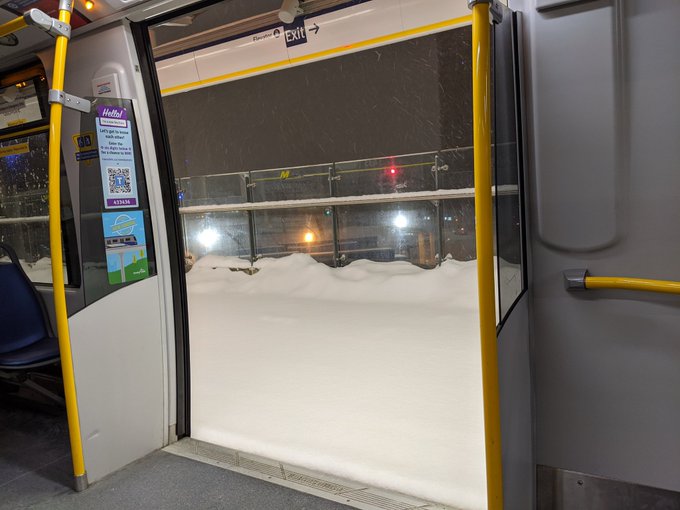
Oxymoron

TransLink advisory:
In anticipation of bad weather Millennium Line is operating with 4 car trains so increased capacity but reduced frequency.
Memo to TransLink:
2 car trains, operating at 2 minute headway’s (30 trips per hour), capacity equals 6,000 pphpd.
4 car trains operating at 4 minute headway’s (15 trips per hour), capacity equals 6,000 pphpd.
Capacity is a function of headway.
A Comment Worth Reading – Costs!
The chap who uses the avatar Haveacow is a transit and transportation expert and it is a must, reading his comments; I certainly do!
I have been in this game for almost 35 years and the song sung by the SkyTrain lobby never changes.
Those defending light metro in Metro Vancouver never deal with costs.
Current politicians defend the Broadway subway because they say all infrastructure investment is good, while ignoring the costs. Using Toronto Transit Commissions numbers, the annual cost to operate and maintain a 5.8 km subway is around $40 million annually. That is $40 million added to the current operating costs of the light metro system.
Where is the money coming from?
From fares?
I doubt it as the subway is right on the main transit route to UBC where the deep discounted U-Pass is used by students and anyone else working at UBC.
So where is this funding coming from.
Higher taxes, higher fares and a diminished bus service south of the Fraser.
But the local taxpayer is on or near his/hers breaking point paying ever higher taxes, with many older pensioners fleeing the TransLink tax zone, creating even more congestion throughout the Fraser Valley. Zwei is soon to do this as well.
So it is important to consider tempering TransLink’s claims and start worrying about costs.
We build with a light metro system that costs up to ten times more to install than LRT (TTC ART Study)
We operate a light metro system that costs more to operate and maintain than LRT
We operate a light metro system that desperately needs refurbishing, yet TransLink remains mute on the subject.
Costs is a dirty word in TransLink’s lexicon.

Graph prepared by Metrolinx to inform the debate on choice of modes
In its entirety.
@Fredinno,
The figure is 15,000 not 1500 passengers per hour per direction for the maximum theoretical capacity of the Skytran network. .
@Rico,
The actual figure given to C.U.T.A. by Translink for 2018 is 14200. I have no doubt that it can vary quite widely day to day (most systems do have a wide variation in daily traffic) up to14800 or even higher, however your the power system and existing track turnouts (switches) and track configuration make operations consistently above that level problematic. New higher speed turnouts need to be installed because the ones used now require the trains to slow down dramatically. Higher speed turnouts are longer with frogs (turnout points) that are at a longer angle, which means all your track geometry has to change as well as having to relocate signalling and power equipment.
Yes, you can even operate for short periods above 15,000 p/h/d but it is not recommended. Any changes to that will also require new signaling and communication equipment and signal processors. The current communication equipment can’t react fast enough if you are operating at or beyond its limit. Legally, 1 train every 109 seconds is the operational limit.. This limit is set by Transport Canada and the Transportation Safety Agency. If you want to lower the operating frequency a new proving test and schedule has to be approved. This can take 2 years as long as Translink has the improvements in place so that the testing can begin. One major problem, the existing electrical power system for the entire network is at its limits. More trains increases the electrical resistance on the system that ,lowers the electrical current level, its the electrical current or flow that actually moves the trains.
Most of the cabling that attaches all this track and signaling infrastructure to the power system and the operating system is old and also in desperate need of replacement. The fires you have along the tracks are because animals and birds are building nests on top of or traveling along the cables. Their claws, talons and beaks have cut into the now aging and probably non-pliable overly rigid cable sheaths and are causing shorts. Many of the cable connectors and brackets are also in need replacement.
Can you increase the capacity of each train by increasing the size of the trains (which is exactly what they are doing) yes but again, there are conditions to this. The more you go over the limit of 15,000 p/h/d you severely tax the Citiflo 650 operating system. Bombardier is now no longer updating the Citiflo 650 and Bombardier is switching to a new automation operating system, which means knowing Bombardier, all new equipment will need to be purchased. Bigger trains increase the electrical resistance on the power system, which lowers the current available. Drop the current too low and everything stops. Can you fix this sure, but that requires more new electrical infrastructure, that costs big money!
Much of the existing infrastructure on the core part of the Expo Line is 33-36 years old depending on the construction date, remember it opened in 1986, much of the bridges and concrete could be at least 36 or even 37 years old now. Concrete ages geometrically, the longer you put off refurnishing said concrete, the more the costs grow above just inflationary pressure. I saw much concrete patch work on the underside of the viaducts during my last visit but no rebuilt new concrete sections. The concrete base plate that the track actually sits on needs work and isn’t getting it..
@Rico and @Fredinno,
Passenger flows of 25,700 are possible but will require 5 car trains, an updated and new automation operating system, major overhauls of electrical and signaling infrastructure. Track work will also have to be done, base plate and viaducts will require refurbishment to the steel reinforcement and concrete. This sounds simple but it is very expensive and time consuming. Very, very time consuming on an operating line. The existing infrastructure just can’t do the passenger flows you want . The vast majority of this work hasn’t even been budgeted yet by Translink.
$860 million in brand new signaling infrastructure as well as some tunnel reinforcement and track upgrades have been happening on Subway Line #1 in Toronto. This is the 66 year old, Yonge-University-Spadina-York subway line which is the busiest in the country. The TTC has been shutting down sections of the line on weekends for 7 and half years now to do all the work required. This was the preferred choice compared to shutting the whole line down for 1.5-2 years. It appears they will still be doing work on it well into 2020.After that, they have to do line #2, the Bloor-Danforth Subway Line.
Lastly, more new and larger trains mean a new yard for. You guys are out of yard space. A new maintenance and storage yard for Skytrains was planned in the follow on extension of the Expo Line to Langley. However, a spy of mine just told me that, due to ever increasing land costs in the Lower Mainland of B.C., the yard may have to be built as part of an interim extension because the cost of going all the way to Langley and building a new maintenance and storage yard at the same time is not affordable, unless senior levels of government pay for the whole line. Translation, Translink can’t afford its 33% and in this case, even 20% of the expected cost of the line is to high to get to Langley as well as build any other extensions at the same time. Like the extension of the Millennium Line to UBC from Arbutus.
The Peanut Gallery
Peanut Gallery: a group of people who criticize someone, often by focusing on insignificant details.

After 35 years of advocating for better transit, I have come to understand the transit peanut gallery. Our local variety has become more and more disjointed from the realities of providing affordable public transport in the Metro Vancouver area.
They don’t want light rail and I get that; but and it is a big but, the financial realities of of a usable light metro network is staggering, currently we are spending $4.6 billion to extend the MALM a mere 12.8 km, with no thought given to the added operating costs that must be paid.
Please note: Movia Automatic Light Metro (MALM) is the sixth name given to the proprietary railway that is used on the Expo and Millennium Lines.
The peanut gallery has vague knowledge of operating and maintenance costs and pretend the the light metro system is paying for itself, yet after numerous times telling the peanut gallery that in 1992, the Expo line, just to new Westminster, was subsided at a $157 million annually, MORE than the trolley and diesel buses. Yet, they remain deaf and blind to this.
What this subsidy is today is largely unknown, but adding the onerous operational fees paid to the SNC Lavalin lead P-3 consortium operating it, the total annual subsidy is around $400 million! This is more than the cost of the newly opened Caen LRT/tramway, which cost $373 million!
Imagine a new 16 km tramway/LRT line built annually for the cost of the light metro subsidy!
The peanut gallery, in full delusion mode, continues with the old memes that SkyTrain is not proprietary; LRT is not safe; LRT is slow; LRT has no capacity, yet over and over again these memes have proven untrue. If it were as good as the peanut gallery says, then why does no one builds with it?
The recent revelations that the MALM lines have over 900 workers and that only around 150,000 actual people use the MALM is ignored and like Orwell’s sheep, keep bleating “SkyTrain good – LRT bad”.
The peanut gallery, as well as members who work in the mainstream media never, ever answer the main question:
After 40 years of unprecedented investment in urban and regional transport, only seven of the six times renamed and now called MALM proprietary transit system has been sold and not one was ever allowed to compete directly against LRT: WHY?”
I am still waiting for an answer.
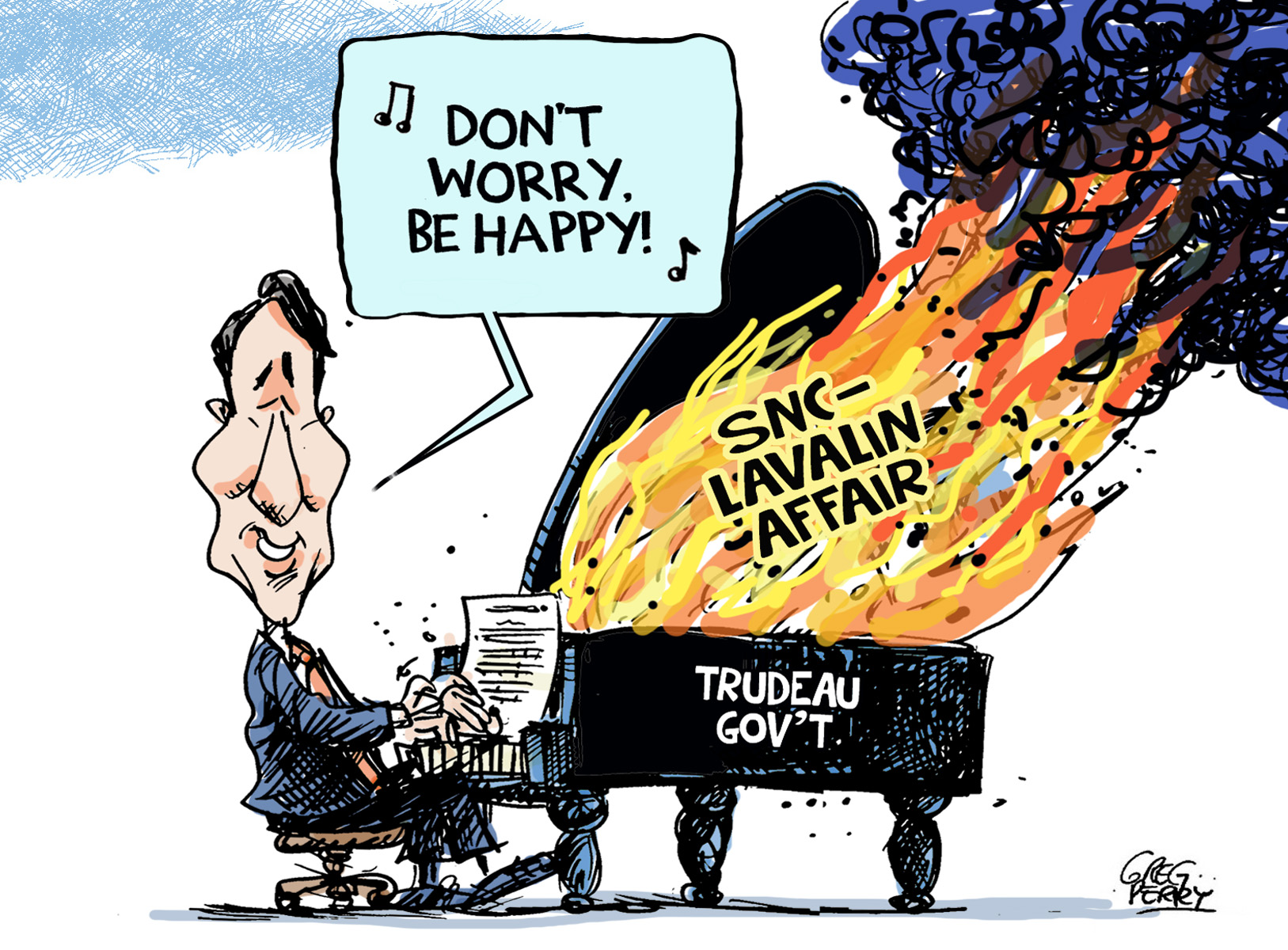
SNC Lavalin Back In The Game
SNC Lavalin is back in the game after a wrist slap from the Canadian courts.
The following is from Randy Chatterjee, who has been following the financial paper-trail from the RAV/Canada Line project; and it ain’t pretty.
The SNC Lavalin/Caisse/ROTEM consortium won the faux BC Liberal P-3 contract and by doing so, made the Canada Line a pseudo private line, which means it is extremely difficult to get financial particulars via FOI. Mr. Chatterjee has persisted for over a decade and a half to find the truth, something which the BC Liberals and the NDP are loath to do
One just has to ask;
Where is the mainstream media?
It appears to me that SNC received everything they wanted.
Rule of law? The law was clearly broken, multiple elected and senior government officials tried to cover it up, a felony offence was admitted—one that normally carries a jail term—and then everyone involved is given a bye.*So this means the penalty in Canada for government contracting fraud involves not even a slap on anyone’s wrist, but only a trivial $280 million fine for a company with an historical gross profit margin in the double digits on current revenues of over $10 billion.*The fine might amount to 10-15% of their longterm average annual profit.*Welcome to a corporate kleptocracy, where SNC, its Board, officers, employees, and/or co-conspirators in government and quasi-government entities like RAVCO (the “proponent” of the RAV aka Canada Line) defraud taxpayers worldwide and NOT ONE SINGLE PERSON is held to account criminally.*At some point a very dogged investigative reporter will manage to FOI the total annual payments from Translink, and possibly the Province separately via a back door, to an entity called IntransitBC LLP. Then one needs to net out the bare operating costs of running the subway line, calculate a net present value of these “P3 capital recapture payments”, plus the total dollars paid by our governments from 2005 to 2010 for construction of the RAV Line, and then compare this total to the actual amount authorized by Translink to be spent from the public purse.*The Translink Board, the “Responsible Agency” for approving all RAV costs, authorized no more than $2.3 billion for all capital expenses. We know Translink was paying IntransiyBC LLP over $120 million per year in the first few years of the subway’s operation. At that payment rate over 30 years, given reasonable assumptions of costs to run an 18-km driverless line, the capital cost of the subway would be between $4 and 6 billion, likely over double what was authorized for a project PriceWaterhouse Coopers estimated should have cost $1.7 billion if bid out in a non-P3 competitive tender.*The recent fine for admitted fraud is a rounding error in just the profit from this one SNC project alone.*And we also know that, in building the RAV Line, 10 million cubic meters of polluted urban soils known to contain PCBs were dumped into the Georgia Strait with no independent testing. PCBs are the second most virulent and persistent carcinogen and are known to bio-accumulate in the Southern Resident Orca population to levels considered many times a fatal dose in humans.*Criminality left unchecked multiplies boundlessly. It can now only get worse.*Randy Chatterjee



Recent Comments