The following is from the Urbansit from Seattle and is quite interesting.
First of all, for those who care to know, Seattle’s LRT is indeed a light-metro, which ultimate capacity is over 32,000 pphpd (today, itai??i??s 16,000″on the existing line before ventilation and emergency escape upgrades are made.”) True light rail operates mainly at-grade and doesn’t need ventilation and emergency escape upgrades.
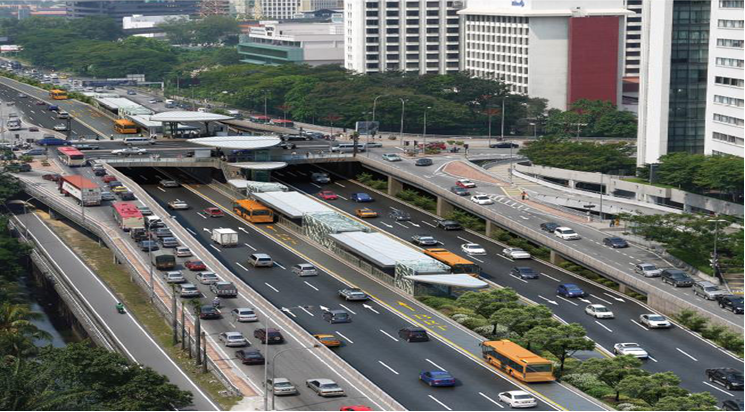
Secondly, real Bus Rapid Transit costs more than LRT, something that TransLink and regional politicians are blind to. Of course, TransLink speak for “BRT” is just a tarted up B-Line express bus and not real BRT.
In Europe, real BRT or guided bus has fared poorly when compared to light rail and except for some niche applications and forced political decisions, it is not built because in the end it costs almost the same as LRT, but without any advantages of LRT.
A bus, is a bus, is a bus, no matter what it is called.
Again, transportation planning honesty just does not exist at TransLink or with the province and the taxpayer and transit customer are greatly ill served.
Bus rapid transit is common in third world countries because of cheap labour costs
but in Canada the costsAi?? for the larger land take needed for BRT and realistic labour costs
make light rail the cheaper option to move large numbers of customers.
A common criticism of the upcoming ST3 ballot measure is that light rail is too expensive and weai??i??d be better off with bus rapid transit (BRT), especially in the suburbs. This article looks at the economics behind such statements to see if ST3 is worth it or not.
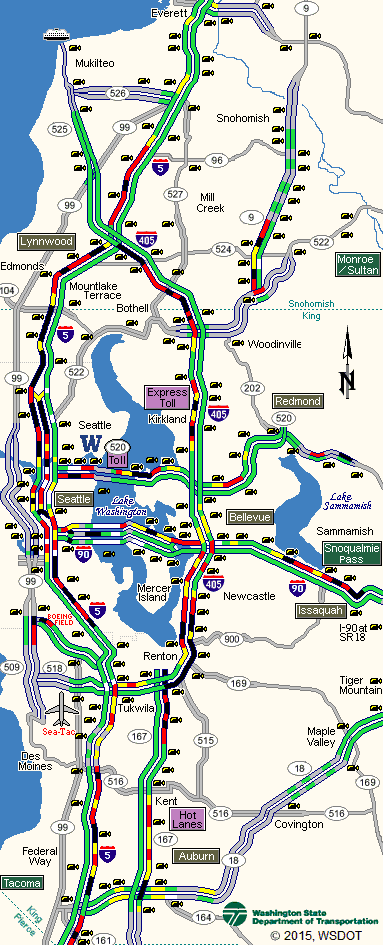
Just an average morning on the regional highways. (Washington State Department of Transportation)
First, we start with the rush-hour congestion map on the left (from October 4th at 8am). We can see that congested stretches of I-5 exist all the way from Everett to Tacoma and the same is true for local Seattle roads from Ballard and West Seattle. What this means is that more people are trying to travel on the freeway than its available capacity.
So how do we accommodate the extra people?
Why not widen freeways?
Before we do so itai??i??s important to understand the concept of induced demand. This is really latent demand that only materializes once extra freeway capacity comes online. When congestion improves, people who were previously dissuaded from making certain trips now start making them. Moreover, as commutes shorten, new real estate development in areas previously deemed too far becomes possible, which in turn also creates new demand. So the new ai???emptyai??? road space is quickly filled and consumed with traffic.
Now to be as fair as possible, travel demand is not infinite and it is possible to satisfy it with more lanes. The metric we are looking for is lane-miles per capita. Based on this, Kansas City, MO is #1 in the United States with 1.241 lane-miles per 1,000 people (1999 data) and experiences some of the lowest traffic delays for a major metropolitan area. Peak-time trips experience about a 20% increase in travel time (e.g., a 30-minute trip taking 36 minutes).
Seattle, however, only has half the number of lane-miles per capita at 0.652 per 1,000 people. If we want to have only a 20% delay in peak-hour trips weai??i??d have to literally double all of our freeways and major arterials. Can you imagine a 22-lane I-405, a 20-lane I-5, and a 16-lane I-90 bridge? Even if you didnai??i??t care about the impact on surrounding neighborhoods, building this across the region would cost hundreds of billions just for property acquisition. The cost would be at least one order of magnitude higher than what Sound Transit is proposing.
TransLink’s CEO, Kevin Desmond is an ignorant man and as such, makes a perfect CEO of TransLink, where ignorance is a prerequisite for employment.
I have kept silent about Mr. Desmond for over six months, just to see how he would fit into TransLink, but when I heard him on CKNW recently, he demonstrated that he was nothing more than a worm tongued bureaucrat, doing what worm tongued bureaucrats do best, deceive the public.
In other words he fits into TransLink very well
He suffers from the American “Metro” disease, which is the philosophy that “the more money one spends on transit the better it must be.”
His stand on SkyTrain to Langley is bizarre and underlines the fact he hasn’t a clue, but what is even more bizarre is his plan for LRT from Arbutus to UBC. His actions belies his ignorance of transit mode, which seems almost universal with those who come from south of the boarder where LRT is regarded poorly and streetcars are in the vogue.
As mentioned before, Desmond comes from the Seattle area and Seattle is building light-metro, using light rail vehicles and it is Seattle’s adherence to light metro that opened the door for Desmond to be CEO of TransLink, no others had needed to apply.
Let us hearken back to the era of Tom Prendergast, former CEO of TransLink, before he was “sent to Coventry” by TransLink management.
From 2008:
Prendergast is a consummate transit professional, as his more than 30 years in the business suggests. His previous posts include senior vice-president of New York Cityai??i??s subway system and president of the Long Island Rail Road, which is the largest commuter railroad in the U.S.
Yes, the man knows his rails and, as he said yesterday, heai??i??s not about to dismiss either light rail or the existing Interurban right-of-way options as TransLink plans its options for south of the Fraser.
Nor is he convinced that SkyTrainai??i??s extension in Surrey has to be a continuation of the elevated system.
In fact, when TransLink announces today that itai??i??s embarking on two new major studies ai??i?? one covering a westward, rapid-transit extension to the University of B.C. and the other focusing on Surrey ai??i?? the latter study will look at all options, Prendergast told me yesterday.ai???
Prendergast’s last words as he was forced out of TransLink, because he knew and understood LRT, was a question on the potential to extend LRT up the valley.
ai???Thereai??i??s really no impediment,ai??? Prendergast responded. ai???Itai??i??s overcoming the cultural embracement of SkyTrain that has existed to date.ai???
He said TransLink is seeking to cut through the pro-SkyTrain ai???cultural biasai??? as it embarks on a careful examination of rapid transit technologies for line extensions west along Broadway and south of the Fraser.
Prendergast predicted the first light rail line that comes to the Lower Mainland will lead to much greater appreciation of its potential.
It seems that Mr. Desmond, knows how toAi?? embrace the cultural of SkyTrainAi?? at TransLink as he tows the line line as he blunders along in willful ignorance.
TransLink just didn’t rearrange the deckchairs on the Titanic, but they seem to have hired the Captain of the Costa Concordia to run the show and I hope his tenure at TransLink is a short one.
An interesting read for those who want free transit, but remember, free transit comes at a price.
The Tallinn experiment: what happens when a city makes public transport free?
Since Estoniaai??i??s capital started providing free public transport for residents in 2013, it claims to have turned a ai??i??20m a year profit each year. But has the scheme achieved its ambitions of reducing traffic and saving people money?
Since the scheme launched, thousands more people have registered as residents to qualify for free transport. Photograph: EPA
In London a monthly travel card for the whole city costs almost A?200. InCopenhagen, a city a fraction of the size, youai??i??ll pay A?160. So when you ask the residents of Tallinn about the benefits of free travel across the city, itai??i??s a surprise to be met with a roll of the eyes or a sarcastic smile.
The capital of Estonia introduced free public transport at the beginning of 2013 after their populist mayor Edgar Savisaar called a referendum on the decision, dismissed by critics at the time as a political stunt that the city couldnai??i??t afford.
Three years on Savisaar has been suspended amid allegations of corruption, but the city remains committed to the programme ai??i?? claiming that instead of it costing them money, they are turning a profit of ai??i??20m a year.
To enjoy Tallinnai??i??s buses, trams, trolley buses and trains for free you must be registered as a resident, which means that the municipality gets a ai??i??1,000 share of your income tax every year, explains Dr Oded Cats, an expert who has conducted a year long study on the project. Residents only need to pay ai??i??2 for a ai???green cardai??? and then all their trips are free.
Since the scheme launched, an additional 25,000 people have registered in the city that previously had a population of 416,000, but this is where the tension lies. The more money for the city of Tallinn, the less there is for the places they leave behind, explains Cats, ai???so itai??i??s not hard to see why the government and the mayorai??i??s office might see things differentlyai???.
Allan Alakula, the official spokesperson for the project, admits boosting the popularity of the mayorai??i??s office was one of the key motivations for rolling out the project ai??i?? but insists that it was primarily about easing the burden on peopleai??i??s wallets, and the cityai??i??s roads.
The project took a year from inception to reality in which time Alakula and his team struggled to find cities to learn from. The city of Hasselt in Belgium had free transport for 16 years but they had to reintroduce fares when it became financially unsustainable. It is also free in the town of Aubagne near Marseille in France, but neither were on the scale of Tallinnai??i??s ambitions.
Three years later the project has been inundated with requests ai??i?? from the Chinese city of Chengdu, home to 14 million and desperate to ease traffic congestion, to Romaniaai??i??s capital Bucharest. ai???We would be happy to hand over the title of the free public transport capital of the world,ai??? Alakula laughs.
Tallinn is not a crowded or a big city, most journeys donai??i??t take longer than 15 minutes, and transport feels like itai??i??s part of the cityai??i??s furniture rather than something to be braved.
Drivers wait patiently as passengers cross their path to board a tram near Vabadus square in the centre of the city. It is nearing rush hour but everyone who needs a seat gets one. The trams and trains are clean and Tallinners have been enthusiastic about using them for free, with early polls delivering a 90% approval rating for the scheme.
Dr Cats, who is based at Delft University of Technology in the Netherlands, found that the number of people in Tallinn using public transport instead of cars was up by 8%, but at the same time the average length of a car journey had gone up by 31%, which he said meant there were more, not fewer, cars on the road in the time they tested.
He puts the increase down to a change in ai???shopping and leisure habitsai??? rather than limitations of the scheme itself, and suggests that making driving more expensive, through parking fees and other taxes, could be more effective at cutting back on traffic.
Early polls showed a 90% approval rating for the scheme among Tallinners. Photograph: EPA
So could cycling, which Alakula admits the city hasnai??i??t done enough to promote: ai???less than 1% of people make their journey by bike, which basically means that cycle commuting doesnai??i??t exist,ai??? he says.
Cats also found ai???mixed evidenceai??? whether the scheme has ai???improved mobility and accessibility of low-income and unemployed residents ai??i?? [and] no indication that employment opportunities improved as a result of this policyai???.
According to Cats, free public transport is not the no-brainer everyone might initially think it to be. ai???The idea still faces political opposition and visitors who use public transport are less satisfied with having to pay more for it than locals.ai??? But in the case of Tallinn it is almost exclusively used by residents, not tourists ai??i?? who rely on private buses, taxis and most recently Uber.
There is also a risk, says Cats, that free public transport could lead to less investment in the service. ai???In the event of an economic depression, investment in public transport will be more exposed to potential budget cuts if they are not earmarked,ai??? he says.
Tallinn also canai??i??t rely on increasing tax revenues by attracting new residents forever. Before the scheme started, 6,000 new residents registered annually. And while the numbers shot up to about 10,000 new registrations in the immediate years after the scheme launched, early figures Alakula has seen suggest that only 3,000 to 4,000 have registered in 2016 so far.
But Alakula is positive about its longevity and says they have also been able to funnel money back to improve their networks. ai???We are also in the process of building a tramline in to the airport that will get you there in 15 minutes.ai???
Everyone wants tunnels and subways. Victorian railway companies in the UK, bankrupted themselves with needless and over engineered tunnels because they were in vogue.
Calgary’s LRT was designed more as a light metro than light rail, but that still did not stop transit planners from putting the C-Train mostly at grade, with on-street operation in the city centre.
The C-Train is now operating four car trains, with growth projections exceeding 15,000 pphpd for the ‘Belt Line’, building a subway becomes a viable option, but please note, Calgary’s politicos are much more fiscally prudent than those in Vancouver.
In Calgary, the $2 billion subway option is being considered (“councilors were careful to addAi??a two-word caveat ai??i?? “in principle”Ai??ai??i??Ai??to their recommendation to city staff to pursueAi??the tunnel option“), while in Vancouver, city council is gung-ho on a $3 billion SkyTrain subway on a route with traffic flows projected to be less than 5,000 pphpd, past Cambie St.!
The only conclusion one can make is that the term “financial prudence” is not in the lexicon at Vancouver City Hall!
Green Line tunnel option approved in principle by Calgary city council
Councillors see underground route from north-central Calgary to Beltline as best, but worry about $2B cost
ByAi??Robson Fletcher,Ai??CBC NewsAi??Posted: Oct 04, 2016 4:05 PM MTAi??Last Updated: Oct 04, 2016 4:05 PM MT
Calgary city council voted TuesdayAi??in favour of what’s seen as the best butAi??most expensive option for the eventual new Green Line of the LRTAi??ai??i?? a $2-billion tunnel beneath Crescent Heights, the Bow River and downtown.
But, hedging slightly, councillorsAi??were careful to addAi??a two-word caveat ai??i?? “in principle”Ai??ai??i??Ai??to their recommendation to city staff to pursueAi??the tunnel option, which was one of several proposed to get the futureAi??light-rail line from a point north of 16th Avenue North all the wayAi??to 10thAi??Avenue South.
Coun. PeterAi??Demong, in particular,Ai??worried about the price tag of the tunnel and whether it would break the still-uncertain budget for the megaproject.
“The underground option is, more than likely and from everything I’ve read,Ai??the best option,” he said.
“But just because it’s the best option, if we can’t afford it, when we look at the entire line or at least a good portion of line in its entirety, what’s the point of making something,Ai??if you can’t make it a usable option?”
The federal government has committed $1.5 billion to the Green Line,Ai??which is to run all the way from the city’s northern periphery to the deep southeast community of Seton, and the city has earmarked $1.5 billion of its own to be accrued over a period of 30 years.
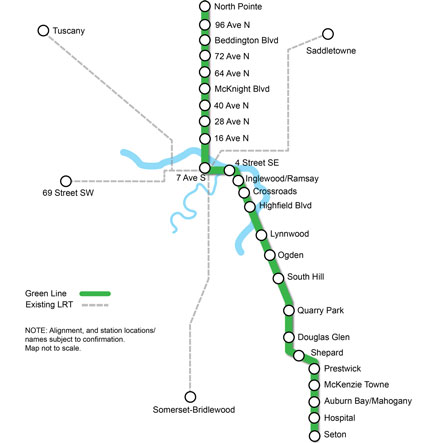
The planned route of the Green Line is indicated by the green line on this map. (City of Calgary)
But the Alberta government has yet to make a formal commitment to the project and, even if the province kicks in matching funds, councillors expressed worries that the combined $4.5 billion will fall well short of what’s needed to build the entire Green Line.
Coun. Shane Keating acknowledged that major funding questions remain, but said that shouldn’t stop the city from pursuing the tunnel as a serious and leading choice for the north-central section.
“Let’s build the strongest possible skeleton for the future development of the Green Line,” he said. “As the funding picture becomes clearer, we can decide on how this project will take shape.”
At an estimated $1.95 billion, the tunnel was more expensive than four other options being considered for the north-central stretch of the Green Line, which ranged fromAi??$1.5 to $1.8 billion.
All those price tagsAi??are “Class 3” estimates, meaning they are believed to be accurate in a range of -30 per cent to +50 per cent.
The full-tunnel route would see the LRT line run underground from a point north of 16th Avenue North all the way south to the Beltline in a tunnel beneath both the Bow River and downtown Calgary. (City of Calgary/Screenshot)
Other options for crossing the Bow RiverAi??included running the LRT line down the existing Centre Street Bridge andAi??building a new bridge that would run over Prince’s Island Park into Eau Claire.
To get through downtown, meanwhile, the other options included a shorter tunnel beginning atAi??Eau Claire and an elevated LRT line that would run from Eau Claire down Second Street S.W., over top of +15 walkways along the way.
A consultant’s report suggested the elevated platform would hurt property values along Second Street, however,Ai??and cost the city an estimated $680 million in lost property taxes over 30 years.
For the section of the Green Line that would run through the Beltline south of downtown, council also voted Tuesday to instruct city staff to continue investigating an underground tunnel beneath 12th Avenue South as an option for moving trains to the east and connecting to the eventual southeast leg of the line.
That option had initially been ruled out by city staff but numerous area residents said they wanted it back on the table.
Unfortunately financial reality is now setting in in Toronto and building subways are a very expensive proposition..
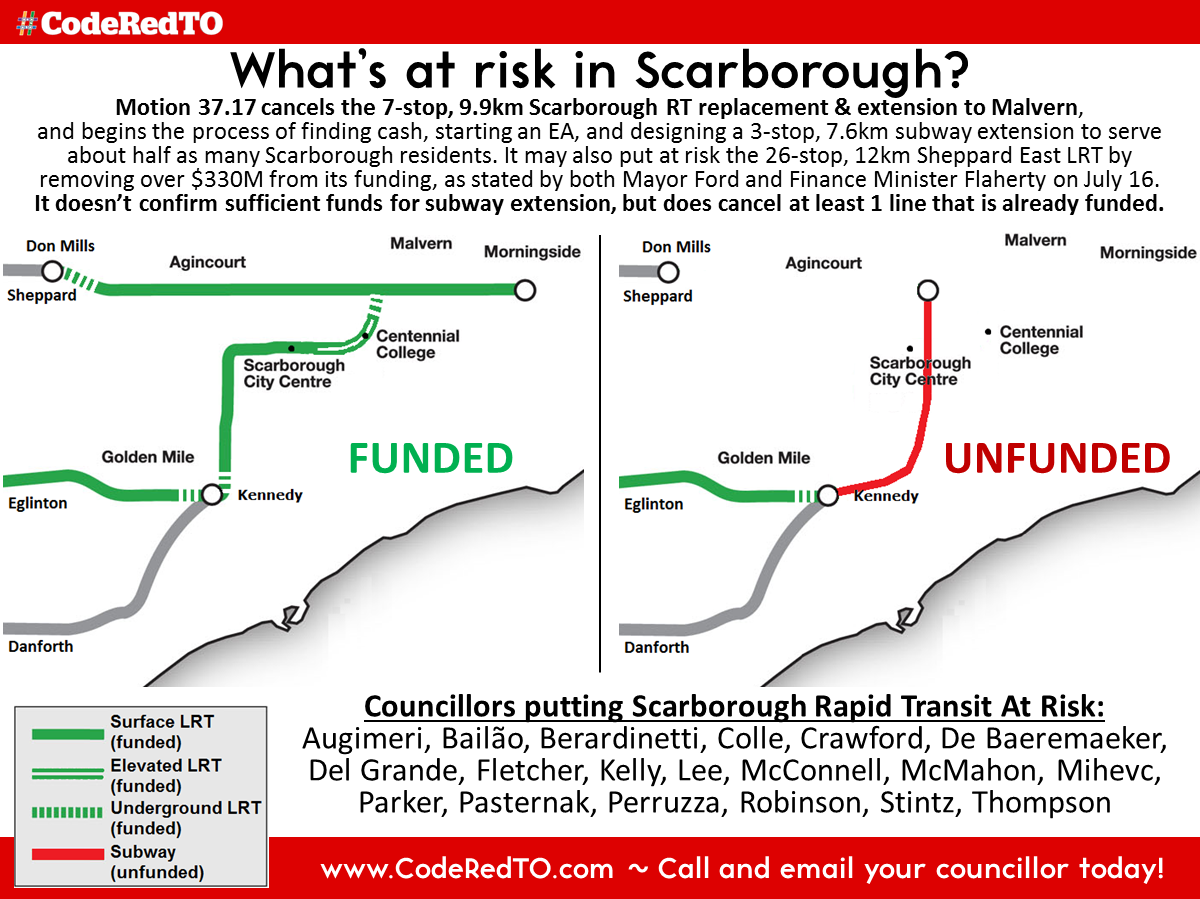
The cost to replace the aging Scarborough ICTS mini-metro with a one stop, 6 km. subway (about the same length as a Broadway subway to Arbutus!) is now put at $3.2 billion and rising. Plans to revive a much cheaper, yet more effective LRT line with 7 stops were rejected by the mayor and council who campaigned for the Scarborough subway!
Metro madness, the legacy of former Toronto mayorAi?? ‘mad’ Rob Ford has now gripped the city. Cost effective solutions are rejected for massively expensive ‘vanity’ subway projects, which sadly, Toronto has seem to have caught from Vancouver, where ‘metro’ madness has a firm grip on metro mayors, the Premier and TransLink.
So here is the problem we have with a Broadway subway: Which would better serve transit customers and the taxpayer, a $300 plus/km. plus,Ai?? limited stop (6 stops) and limited capacity light-metro SkyTrain subway or an at-grade LRT, with stops every 500 metres or so costing around $35 million/km.?
Scarborough subway might already be off track
TTC boss warns $3.2-billion budget and timetable are in danger as city works to finalize route.
The head of the TTC is warning that the Scarborough subway project that council voted for less than three months ago is already at risk for delays and cost increases.
In an exclusive interview with the Star, Andy Byford said itai??i??s still possible to complete the one-stop extension by 2025 and at a cost ofAi??$3.2 billion, ai???but weai??i??re flagging itai??i??s a red, as in danger.ai???
ai???Iai??i??m still confident that weai??i??ll meet the deadline,ai??? Byford said, stressing that the transit commission is working daily with city planners to hit the projectai??i??s targets. But he added that ai???the window of opportunity is closing. We have to pin down the exact alignment and stick to it.ai???
The latest edition of the TTC CEOai??i??s report listed the Scarborough extensionai??i??s 2025 in-service date as at-risk, and deadlines for completing an environmental assessment and having council OK the final routing were ai???tracking behind schedule.ai??? The report says geotechnical, survey, and some design work has been halted pending approval of the final route.
Mayor John Tory has backed the subway extension despite increasing costs and questions about whether itai??i??s the right technology to serve Scarborough. Asked whether Tory believed the project would be built by 2025 for $3.2 billion, his office stated via email: ai???We are confident that city staff and the TTC are working together to deliver this project on the timetable presented.ai???
In July, council voted 27-16 to reaffirm its support for a six-kilometre extension of the Line 2 (Bloor-Danforth) subway from Kennedy station to the Scarborough Town Centre, rejecting an attempt to revive plans to build a seven-stop LRT line instead.
The report that informed the vote was authored by the TTC and city planners and estimated that building the subway along a route beneath McCowan Ave. would cost $3.2 billion and could be completed in nine years.
But those targets were already in jeopardy when council voted for the subway. The same report noted that the estimates were based on council picking a route by July, and that any delay could endanger the opening date and lead to extra costs.
Councillors werenai??i??t asked to choose an alignment at the July meeting, and the route is still being studied. Although the report determined that the McCowan alignment scored high on many city criteria, according to chief city planner Jennifer Keesmaat, since July planning staff have been working in conjunction with the TTC to assess alternate routes, including one along Midland Ave. and another along Brimley Rd.
She said that the review of alternatives, which was authorized by council, was motivated by higher-than-expected cost estimates for the McCowan alignment.
In an interview Tuesday, Keesmaat said staff was ai???still working through the final detailsai??? and she couldnai??i??t say which route they would recommend. But she noted that the cheaper Brimley option likely wouldnai??i??t support the cityai??i??s objectives, and the Midland alternative appeared too costly.
Keesmaat said staff intends to report back to council in December with a recommended route, which is in line with the TTCai??i??s schedule for the project. Asked whether she believed that the subway extension would be built for $3.2 billion, Keesmaat responded the cost estimate had been provided by the TTC.
ai???Those arenai??i??t our numbers,ai??? she said, adding that estimates for the price of the subway are currently being reviewed by an independent engineering firm. As for whether the 2025 completion date was realistic, Keesmaat said staff have ai???been expediting this project at an exceptional paceai??? and ai???we have no reason to believe that timeline is not accurate.ai???
But she added that ai???the reality is there is a whole series of incremental decisionsai??? that council needs to make to complete the project. ai???Does that affect timelines? Absolutely.ai???
Councillor Josh Matlow, who introduced the unsuccessful motion to revive the LRT plan, argued that based on the information presented to council, completing the Scarborough extension by 2025 was never achievable.
ai???We knew that then, it shouldnai??i??t come to anyone as a surprise now,ai??? said Matlow, who represents Ward 22 (St. Paulai??i??s).
He expressed frustration that the report from the TTC and city planning didnai??i??t spell out more clearly that the cost and timeline for the project were based on confirming a preferred route in July.
ai???I just question why that (2025) timeline would have even been in the report in the first place given that it was impossible to ever achieve,ai??? he said. ai???Staffai??i??s most important role is to provide clear, objective, factual, evidence-based advice to the mayor and council . . . I think itai??i??s fair to say in this case, that wasnai??i??t done.ai???
The estimated cost of the one-stop Scarborough extension has alreadyAi??balloonedAi??from an earlier projection of $2 billion. In June, the mayorai??i??s office announced that the price had jumped to $2.9 billion, and it was later revealed that the cost of maintaining the Scarborough RT during the subwayai??i??s construction would add almost $300 million to the bill.
Byfordai??i??s warnings about the Scarborough extension come on the heels of a consultant report that found the TTCai??i??s oversight of capital projects was below the standards of a public sector organization.
Byford said that he accepts that the TTC has to improve its management of capital work and is already taking steps to do so. But he also argued that in the past the agency has been unfairly criticized for cost overruns that are outside of its control, including instances in which politicians have added expensive elements to transit projects after their initial approval.
As an example, he cited to the Yonge-University-Spadina subway extension, whose original budget of $1.5 billion eventually soared to $3.2 billion. While there were overruns related to delays and contractor claims, most of the higher cost was a result of governments vastly increasing the projectai??i??s scope by adding 2.4 kilometres and three stops to the extension.
Byford said that if the planning process delays the Scarborough projectai??i??s completion and leads to higher costs, he wanted to avoid another instance in which the TTC is left ai???carrying the canai??? for overruns that were not its fault.
This article should give a good indication of the cost of modern light rail being built today.
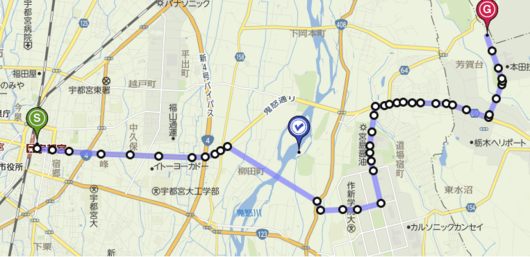
The proposed Utsunomiya LRT, is of course narrow gaugeAi?? and will have somewhat narrower trams, with a reduced capacity than LRT built inAi?? Canada, but it is the cost of construction which is important.
The 14.6 km., 19 station LRT line, which operates mostly in a central reservation will cost an estimated USD $451 (CAD $594) to build.
Thus the Utsunomiya LRT will cost about CAD $41 million/km to build, within today’s cost range of between $25m/km to $45m/for new build LRT.
As well, two cities and three private companies are paying a large share of construction costs, which gives the public the assurance that the project is both well designed and a good investment.
Compare with Surrey’s proposed LRT, with construction costs now over $100 million/km and absolutely no private funding is forthcoming, including the City of Surrey which the project is to serve.
The “Shambles in Surrey” is an apt name for current transit planning (both SkyTrain and LRT) which is obviously being done by amateurs with absolutely no knowledge of modern light rail or modern public transit practice!
JAPANai??i??s Ministry of Land, Infrastructure and Transport (MILT) announced on September 26 that it has approved plans for the construction of a 14.6km light rail line in Utsunomiya, the capital of Tochigi prefecture north of Tokyo.
Running largely on the central reservation of highways, the double-track east-west line will link the Honda research and development facility in the town of Haga with JR Eastai??i??s Utsunomiya station, which is served by the Tohoku Shinkansen, Tohoku Main Line and Nikko Line.
The line will have 19 stations, four of which will be located in Haga with the remainder in Utsunomiya. Passing loops will be constructed at two stations to enable express services to overtake all-stations local services. The journey time between the terminus stations will be 38 minutes for express services and 44 minutes for locals.
Services will be operated by a fleet of 17 30m-long, 2.65m-wide low-floor LRVs, each capable of accommodating up to 155 passengers. The 1067mm-gauge line will be electrified at 750V dc and trams will operate at up to 70km/h on segregated sections of the route.
The Yen 45.8bn ($US 451m) project is being funded by the city of Utsunomiya (40.8%), the town of Haga (10.8%), Tochigi Light Rail (22.8%), Kanto Auto Works (10%), and Tobu Railway Company (4%), with the remainder coming from other sources.
It now seems Ontario’s big subway plans are costing more, a lot more to build than what was first proposed as exampled by the Toronto York Spadina Subway Extension, whose cost soared over from $1.5 billion to $3.2 billion!
TransLink is blithely planning away for both a hugely expensive SkyTrain subway under Broadway and an equally expensive, yet extremely ill-planned LRT for Surrey, oblivious to the extremely high costs and dubious outcomes for both projects.
But what would one expect from the career bureaucrats, who are afraid to come clean on the real cost of both projects, TransLink is afraid to come clean on the real costs of the proprietary SkyTrain light-metro!
With TransLink, it is never about providing good transit planning, rather it is to make the taxpayer’s poor as those in TransLink, earning six figured salaries, don’t have any concept on those who cannot afford to pay more taxes for their ill planned excesses.
Toronto is sounding alarm bells, but on the West Coast, TransLink remains deaf.
Workers at the York University stop of the Spadina subway extension during a media tour in January. The project’s budget has been exceeded by over a billion dollars and KPMG’s report offers ideas on how to avoid that familiar phenomenon in future.Ai??Ai??(Andrew Francis Wallace / Toronto Star)
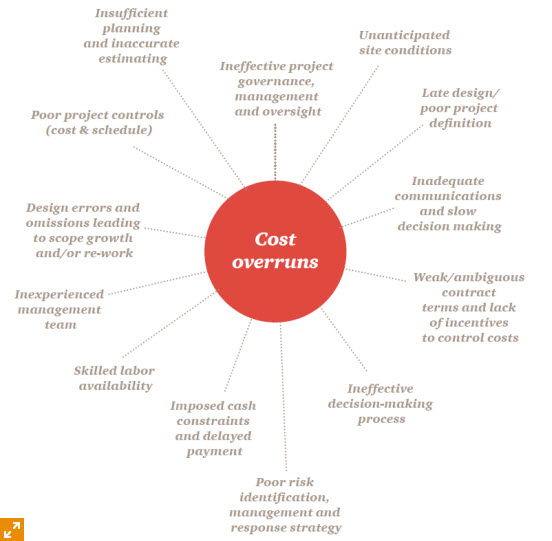
A review of the TTCai??i??s procurement policies is raising red flags about the transit agencyai??i??s ability to manage expensive capital projects, detailing billions of dollars in cost overruns and oversight practices that fall below public-sector standards.
The report, which will be debated at Wednesdayai??i??s TTC board meeting, was authored by consulting firm KPMG. The company examined nine capital projects that the TTC launched over the past decade-and-a-half and had combined initial estimated costs of $5.1 billion. Of the nine, six incurred inflated expenses that together totalled $2.9 billion more than original estimates.
They included the Toronto York Spadina Subway Extension, whose cost soared over from $1.5 billion to $3.2 billion, and the Leslie Barns streetcar facility, whose price jumped from $345 million to $507 million. Three of four smaller-scale capital projects KPMG studied also saw budgets rise above initial projections.
The report, which council commissioned in March 2015, determined that the TTC is operating at a ai???low-standardized level of maturityai??? in the delivery of capital projects. Thatai??i??s below KPMGai??i??s benchmark for public-sector organizations. KPMG scored one TTC department as operating at an ai???informalai??? level, which means the consultant found that projects lacked documentation and standardized policies.
The truth is very simple, subways are very expensive to build, as TransLink found out with the Canada Line.
We have to remember that the cost of the Canada Line soared past the first estimated cost of $1.3 billion, to around $2.7 billion. The Gordon Campbell Liberal government then forced TransLink to reduce the scope of the project, resulting in a peewee rapid transit system, with 40 metre long station platforms and able only to operate two car trains. Even then, the cost of construction the Canada Line, which has been craftily obscured by the P-3 contract, is around $2.2 to $2.4 billion.
Added to this, the P-3 consortium operating the Canada Line receives over $110 million annually from TransLink to operate the midget metro, three to four times more than comparable light-rail operations.
As reported here, the Vancouver Sun estimated that the Canada Line cost five times as much per hour to operate than the rest of the ALRT/ART SkyTrain system,
I repeat once more, the Canada line is the only heavy rail metro in the world, built as a light metro and has less capacity than a simple streetcar.
The cost of the Broadway subway today in all likelihood is now past $3 billion and like the Canada Line, the scope of the project is being reduced to reduce costs.
There is the fear, that the Broadway subway may be like the Canada Line, with greatly reduced capacity to save money.
This graph is about 10 years old, but certainly shows that subway construction is very expensive indeed.
The graph is in miles, not kilometres and US Dollars. Today the costs would be much, much more in Canadian dollars
After its Mayorsai??i?? Council endorsed a plan to raise property taxes and hike transit fares to begin its expansion, TransLink is refusing to provide the …
A week after its Mayorsai??i?? Council endorsed a plan to raise property taxes and hike transit fares to begin its expansion, TransLink is refusing to provide the latest cost estimates for the biggest items on its long-term wish list.
*
The Broadway subway and Surrey light rail were estimated in 2014 to cost $1.98 billion and $2.14 billion, respectively. Last March, City of Surrey rapid transit project manager Paul Lee admitted rising real estate prices had pushed the Surrey proposalai??i??s estimated budget to $2.6 billion.
*
The public portion of the Sept. 23 quarterly meeting contained no mention about either project. Business in Vancouver asked TransLink CEO Kevin Desmond at a post-meeting news conference for an update and whether the cost estimates had increased by a billion dollars each.
*
ai???Weai??i??re not prepared to talk about what the estimates are,ai??? Desmond said. ai???Itai??i??s during that period of time in the months ahead that we [will] further will pin down the cost estimates going forward. By the time weai??i??re ready to proceed with the investment plan on phase two, weai??i??ll be in a much better position to have more accurate estimates associated.ai???
*
On March 30, TransLink CFO Cathy McClay admitted the cost estimates had gone up, but she wouldnai??i??t provide numbers. She said consultants were given extra time, until June 30, to deliver their reports. She blamed the high cost of real estate and the decrease in the loonieai??i??s buying power for materials.
*
In early 2015, Steer Davies Gleave and Hatch Mott MacDonald were hired on a $1.56 million conceptual design and cost estimate study for the Surrey proposal. They subcontracted Stantec (TSX:STN), Via Architecture, Anthony Steadman and Associates and the Stewart Group. Stantec is leading the $1.4 million study on the Broadway proposal with subcontractors Jacobs Associates, Golder Associates, Allen Parker Consulting, Site Economics, Westco Consulting, Edward LeFlufy Urban Design & Architecture, Locke & Locke, Dessau, BTY Group and Anthony Steadman and Associates.
*
ai???These are both very, very complicated projects and you go thorough a design process that is highly iterative,ai??? Desmond said. ai???During a prolonged design and engineering process for very complicated public works projects you go through eventually value engineering exercise as well, and weai??i??re not there yet.ai???
A September 8 report that was not tabled or mentioned at the meeting, but released online afterward, said TransLink ai???is targetingai??? the fourth quarter of 2016 to submit business cases to the federal and B.C. governments to fund the two projects.
The Rapid Transit Projects Update by Sany Zein, acting vice-president of infrastructure managing and engineering, referred to the projects as the South of Fraser Rapid Transit (Phase 1) and Millennium Line Extension (Broadway).
The June 2016 federal and B.C. agreement on funding the first phase of TransLink expansion includes $157 million for project development and advancement works on the two megaprojects.
ai???Federal government representatives indicate that the second phase of [funding] may include the balance of senior government funding required for implementation,ai??? Zein wrote.
TransLink has set up project boards including representatives of PartnershipsBC, Ministry of Transportation and Infrastructure, Ministry of Community, Sport and Cultural Development and TransLink, along with Vancouver and Surrey staff. But communicating with the public is not in the cards, meaning the Mayorsai??i?? Council is likely to approve fare hikes and property tax increases later this fall without disclosing the latest cost estimates to the public.
ai???Rapid transit project teams follow a communications protocol developed jointly with the City of Vancouver and City of Surrey,ai??? Zein wrote. ai???No significant public communications are anticipated in the current phase of work. The individual projects are developing forward-looking plans for consultation and communications activities in later phases in the development of the projects.ai???
Meanwhile, Desmond declined to comment on the impending sale of the Oakridge Transit Centre to Intergulf Development Group. BIV sources say the transaction for the 13.8 acre, mixed-use residential building opportunity could be worth as much as $400 million.
ai???We have no further information on that property transaction at this point in time,ai??? Desmond said.
The world’s first crowd-funded train route is about to be launched in Germany.
ai???We are all ready to roll,ai??? Derek Ladewig, CEO and founder of Locomore, told E&T on the closing day of Innotrans, the worldai??i??s largest railway exhibition, in Berlin last Friday.
Founded in 2007 with the aim to provide an alternative to the Deutsche Bahn, it took Locomore nine years to reach its fundraising target of 780,000 euros ai??i?? the sum that will allow to run trains on the route between Berlin and Stuttgart (via Frankfurt and Hannover).
Locomore made history by successfully using crowdfunding – asking a large number of people to donate a small amount of money each – as a way of financing a new rail line.
In this case, the funds were raised primarily by selling ticket and catering vouchers, T-shirts, mugs and other travel-related goodies.
Unlike many other train operators, Locomore is going to sacrifice high speeds to the commitment of being greener than most. It says the route will be powered by high-quality renewable energy. Its locomotivesai??i?? maximum speed will be 200km/h, and lower energy consumption will result in lower running costs and consequently lower fares, with free seat reservations, insignificant cancellation fees and free travel for children under 14 accompanied by an adult.
The standard starting prices will be sevenAi??euros for short journeys, 13 euros for mid-range journeys and 20 euros for longer distances. Depending on the number of bookings, those could vary, but the maximum fare will always be less than half of what is charged for the same journey by Deutsche Bahn, which dominates the German market at present as the countryai??i??s virtually sole provider of long-distance passenger services.
Locomore makes an emphasis on passengersai??i?? comfort, and its trains will all have spaces for bicycles, special childrenai??i??s and family compartments, as well as spacious business sections. The food served on the trains will be organic and fair trade.
At Innotrans in Berlin, Ladewig showed E&T a sample Bmz passenger coach ai??i?? a former Bm-235, specially refurbished by Atelierele CFR Grivita, Bucharest to fit the product design of Locomore. The bright orange car is equipped with emergency brake bypass, vacuum toilets and a new Icomera Wi-Fi System.
ai???We are confident of success due to our moving prices and all the new comforts,ai??? said Ladewig.
The first Locomore trains will start running between Stuttgart and Berlin on 14 December 2016.
John Horgan and the NDP just do not get it and they never will and by only consulting with the party faithful, all they have is a self-serving transit and transportation policy that is both unaffordable but unworkable.
TransLink does not have an income problem, they have a spending problem; the spend far too much on extremely expensive light metro construction and operation, draining monies from other transit projects. Throwing more money at transitAi?? and transportation will fail miserably.
What is needed is a fresh look at the transit issue and the NDP seem utterly incapable of doing this, lest they upset a special interest group.
Sorry John, you have blown it on the transit ticket and you and your party’s gross ignorance of modern public transport practice is a damning indictment of the provincial NDP!
NDP leader John Horgan vows to boost transit in Metro Vancouver
UBCM 2016 address by the Leader of the Opposition John Horgan on Sept. 29, 2016. [PNG Merlin Archive] UBCM
Provincial NDP leader John Horgan recommitted Thursday to a massive transit plan to get goods and people moving across the province, particularly in traffic-heavy Metro Vancouver.
HorganAi??told delegates at the annual Union of B.C. Municipalities convention that if in powerAi??he would work with mayors and councils and ai???not pick fightsai??? with them over local priorities, such as Metro Vancouverai??i??s 10-year transportation plan. He added that his governmentAi??wouldnai??i??t tell municipal politicians to ai???suck it upai??? when it comes to funding orAi??build ai???one offai??? pet projects. He gave as an example the $3.5-billion Massey Bridge.
ai???(The B.C. LiberalsAi??are) a government that doesnai??i??t get it,ai??? Horgan said in an election-style speech.Ai??ai???Weai??i??re expecting a million more people by 2040. Every community benefits from transit expansion in Metro Vancouver.Ai??Itai??i??s not urban versus rural or us and them.ai???
Horgan said his party will launch a 20-year infrastructure strategy to get goods moving across the province, create jobs and ai???break the B.C. Liberal roadblockai??? when it comes to transportation. The NDPAi??will alsoAi??boostAi??B.C.ai??i??s capital share of projects from 33 per cent to 40 per centAi??and reduce local governmentai??i??s contribution from 17 per cent toAi??10 per cent. He promised to create 43,000 job and $4.5 billion in investment across the province with projects likeAi??four-laning the highway from Kamloops to the Alberta border.
Horgan estimates the strategy will cost the province an extraAi??$50 million a year, but will beAi??ai???good news to those in small towns stuck in their cars.ai???
ai???The B.C. Liberals put their priorities ahead of the community,ai??? HorganAi??said. ai???I want to make it absolutely clear to mayors and councils in all corners of B.C. that I will be on their side and not picking fights.ai???










 Kelly Sinoski
![UBCM 2016 address by the Leader of the Opposition John Horgan on Sept. 29, 2016. [PNG Merlin Archive]](http://wpmedia.vancouversun.com/2016/09/ubcm-2016-address-by-the-leader-of-the-opposition-john-horga.jpeg?quality=55&strip=all&w=840&h=630&crop=1)



Recent Comments