Unlike Toronto, TransLink Can’t Cancel A SkyTrain Contract
Toronto is cancelling its contract with Bombardier, which would have provided light rail vehicles for Toronto’s planned LRT network and the TTC is also looking at dumping Bombardier as the supplier for their tram replacement program due to non delivery of new trams as per the contract schedule
This is why Bombardier Inc. love proprietary railways like our ALRT/ART (SkyTrain) system because the customer is tied to one supplier and it is far too expensive for the competition to design a new rail vehicle, for a small order, to operate on another’sAi?? proprietary railway.
The Canada Line is a good example because it is in reality a heavy-rail metro dumbed down as a light metro but it is also a generic railway vehicle and can operate on almost any railway and metro system around the world, but it cannot operate in conjunction with our proprietary ALRT/ART mini-metro.
This means through running is impossible and now the Canada line has become a stand alone mini-metro line and being so, is slowly becoming more and more apparent with politicians that it is a “white elephant”.
Back to Toronto; Siemens, Alstom, Stadler, and more are waiting to pick up the Toronto LRV contract, something that would not happen in Vancouver.
 The proprietaryAi?? LIM powered ALRT/ART SkyTrain system is
not compatible in operation with conventional railways.
Bombardierai??i??s arrogance costs commuters in light-rail setback
Bombardier reaped what it sowed when it lost the Toronto LRT contract, writes David Olive.

Bumai??i??s rush for Bombardier
The pressure will soon be on Bombardier Inc. to get serious about splitting the company into its rail and aerospace operations.
Each are troubled, but might fare better on its own, solely focused on their respective businesses.
Ontario last week told the Montreal-based Bombardier it is terminating its $770-million contract to buy all 182 light-rail vehicles (LRVs) needed for extensive expansion to Torontoai??i??s public transit network.
A pilot Bombardier LRV to have arrived in Toronto three years ago missed its latest delivery deadline last week. By the time it does arrive, Ontario will have given part of the LRT contract to eager bidders Siemens AG of Germany and Franceai??i??s Alstom S.A.
In a separate fiasco, Bombardier has been a chronic annoyance for Toronto Transit Commission commuters, made to cope with unreliable and late Bombardier equipment.
Post-Nortel and the halcyon days of BlackBerry, Bombardier is Canadaai??i??s biggest tech champion. It has long been nurtured by corporate welfare, and informal but real Buy Canada practices, notably in Ontario.
Squandering those advantages, Bombardier has worked hard to exemplify what a customer-unfriendly enterprise looks like. It deserves its bumai??i??s rush, which might finally teach Bombardier to shed the arrogance that drove Nortel to an early grave.
Broadway Subway Is Luxury Wrapped In Opulence – Designed To Sell A Mock P-3?
It did not take long for the Liberal fixers in Ottawa to hatch a scheme to keep their political friends awash in taxpayer`s dollars.
Public transit schemes are generally not money makers, in fact the vast majority of public transit operations around the globe are subsidized, many heavily subsidized.
A few light rail transit lines operate in what is called a P-3 or a Public, Private, Partnership, which has different meanings in different countries.
In the UK and Europe a P-3 ensures a well designed transit system, with complete public input and full disclosure. An integral part of a P-3 is that the operating consortium undertakes risk and by doing so also enables the operating consortium to enjoy the proceeds of an operating profit.
By undertaking risk, the P-3 consortium is entitled to make a profit from revenue generated from the transit line: including debt servicing! This type of P-3 generally results in a well designed, well run and user friendly transit system.
Because of the nuances of a P-3, expensive metros, light-metros and subways are almost never considered and instead LRT is considered a good vehicle for a P-3, with Dublin’s LUAS and Nottingham’s LRT operations being a good example.
Not so in BC and now Canada it seems as a P-3 tends to be a taxpayer subsidized payoff to friends in government. In fact it can be called a money laundering scheme!
The RAV/Canada line is a good example.
The RAV/Canada Line was supposed to be a BC Liberal showcase P-3 and with a compliant mainstream media the real story of the P-3 has never been told.
The then Premier Gordon Campbell and Minister of Transportation, Kevin Falcon were so ignorant of rapid transit they tried to make the planned RAV (Richmond, Airport, Vancouver) ALRT/ART proprietary SkyTrain Line a P-3.
To their combined shock and horror, they found out that SkyTrain was a “proprietary” transit system and incompatible in operation with other transit systems. It would be impossible to have a ALRT/ART SkyTrain P-3 because there could be only one bidder, thus the government held a mock P-3 where ART/ALRT (SkyTrain) patent holder SNC lavalin, in consortium with Bombardier pretended to bid against an SNC Lavalin/Hyundai, Siemens and Alstom. Siemens and Alstom were tossed out of the bidding process because they dared to use LRT vehicles (like Seattle) instead of a light/heavy rail metro vehicles.
The P-3 had turned into nothing more than a conspiracy to enrich SNC Lavalin at the taxpayer’s expense.
In the end the SNC/Hyundai consortium won, but the proposed RAV light-metro costs escalated from $1.3 billion to now over $2.4 billion and in order to SNC Lavalin/Hyundai consortium to build the RAV Line, they refused to except risk. Thus the RAV/Canada Line is nothing more than a taxpayer fed money laundering scheme designed to enrich SNC Lavalin lead consortium, now receiving over $110 million annually in taxpayer funded subsidies as the now named Canada Line does not have an operating profit.
Judge Pittfield, presiding over the failed Susan Heyes lawsuit and against TransLink, called the RAV/Canada line bidding process a “charade“!
And what did the taxpayer get for his/hers $2.4 billion? The only heavy rail metro in the world, build as a light metro, with less capacity than a simple streetcar costing a fraction to build.
What the BC Liberals have done in BC, has now been refined by the federal Liberals to ensure their political friends and insiders are able to slurp at the mock P-3 trough for generations to come!
The Canada Line, the model for federal Liberal corruption to come!
Liberals redirect $15B to infrastructure projects that ‘generate revenue’ for private investors
Finance Minister Bill Morneau delivered his fall fiscal updateTuesday afternoon.
The good news is Morneau announced the creation of a new “Canadian Infrastructure Development Bank” that will invest billions of dollars into infrastructure.
The bad news is Morneau is funding the new bank with $15 billion in previously announced spending earmarked for “socially useful, non-commercial projects like child care or affordable housing to cash-strapped cities.”
The other bad news is the only projects that will see a dime from the new bank are projects that have “revenue-generating potential” for the government’s private sector partnersAi??ai??i??Ai??a scheme to use public funds to subsidize and finance private infrastructure, in other words.
According to Finance Canada, much of the infrastructure spending will be privately-financed, with federal, provincial and municipal governments making up the difference.
Details show the federal government’s contribution will be $35 billion, although since the bank will only invest in “revenue-generating” projects, Canadians will possibly pay tolls and other fees to use infrastructure their tax dollars helped finance.
At the same time, the Liberal government says it will redirect $15 billion in previously announced spending that had been specifically earmarked for infrastructure projects relating to public transit, climate change, affordable housing and indigenous communities to projects that generate revenues for private investors.
Other recent reports have suggested theAi??Liberal government is also considering auctioning off public assets, like airports, to recoup costs.


SkyTrain Ka-Put Again. Is TransLink Out Of It’s Depth?
It is becoming all to regular, the Expo and Millennium Lines go down; TransLink can’t cope with the problem and transit customers are badly dealt with.
I think new TransLink CEO, Kevin Desmond is out of his league and if these frequent stoppages do not cease, he must resign.
What is even more disturbing is one TransLink spokesperson states that the problem is “mechanical”, while another spokesperson states the problem is “communications”.
TransLink, it seems, can’t even get their story straight, yet regional mayors want more and more taxes to keep this “ship of fools” in operation.
A “Ship of fools” indeed!
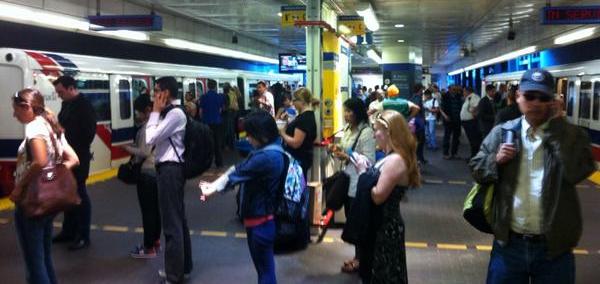
SkyTrain service resumes after multiple trains fail
Vancouver, BC, Canada / News Talk 980 CKNW | Vancouver’s News. Vancouver’s TalkPosted: November 01, 2016
Ai??Good news if youai??i??re getting ready to head home for the evening commute.
TransLink says itai??i??s cleared a backlog of disabled trains and regular service is resuming after after a mid-afternoon meltdown left a dozen trains out of commission.
TransLink spokesperson Ann Drennan says a technical issue around 1Ai??p.m.Ai??impacted service on the Expo Line in both directions from Waterfront to King George.
ai???There were 12 trains are impacted by the issues and those trains have to be manually driven back to the stations, six of them have already been brought back in.ai???
From News 1130 Radio
Mechanical issues cause SkyTrain delays
Posted Nov 1, 2016 1:46 pm PDT


VANCOUVER (NEWS 1130) ai??i?? Service is slowly returning to normal after major delays on the Expo and Millenium Lines this afternoon.
TransLink says there were temporary service delays due to mechanical issues on several trains across both lines. TransLink says the trains lost communication with computer systems.
Some SkyTrain users say the trains were stopped between stations for over an hour. Many people on Twitter were expressing their outrage and panic, calling on on TransLink to tell them what was going on and to make more announcements on the train. One person tweeted they were stuck on a train in the middle of the tracks for nearly 90 minutes before the train moved again.
Millennium Line wasAi??temporarily extended to Edmonds, while the Expo Line wasAi??running between King George and Edmonds stations only, with service to downtown paralyzed.
Drennan says the problem was a ai???train control communications issue,ai??? in which the 12 impacted trains lost contact with the main computer system and froze.
The Canada Line wasAi??unaffected.
The Railway for the Dead – Halloween Special
For Halloween

Devoted to carrying corpses, the London Necropolis Railway was the spookiest, strangest train line in British history ai??i?? but also possibly the most useful.
- By Amanda Ruggeri
18 October 2016
For 87 years, nearly every day, a single train ran out of London and back. It left from a dedicated station near Waterloo built specifically for the line and its passengers. The 23-mile journey, which had no stops after leaving London, took 40 minutes. Along the way to their destination, riders glimpsed the lovely landscapes of Westminster, Richmond Park and Hampton Court ai??i?? no mistake, as the route was chosen partly for its ai???comforting sceneryai???, as one of the railwayai??i??s masterminds noted.
How much comfort a route gives passengers isnai??i??t a usual consideration for a train line. But this was no normal train line.
Many of the passengers on the train would be distraught. The others ai??i?? those passengersai??i?? loved ones ai??i?? be dead. Their destination: the cemetery.
A rare view of the first London Necropolis Railway station, built in 1854; it was demolished after the new station was built in 1902 (Credit: SSPL)
In operation from 1854 to 1941, the London Necropolis Railway was the spookiest, strangest train line in British history. It transported Londonai??i??s dead south-west to Brookwood Cemetery, near Woking, in Surrey, a cemetery that was built in tandem with the railway. At its peak, from 1894 to 1903, the train carried more than 2,000 bodies a year.
It also transported their families and friends. Guests could leave with their dearly departed at 11:40am, attend the burial, have a funeral party at one of the cemeteryai??i??s two train stations (complete with home-cooked ham sandwiches and fairy cakes), and then take the same train back, returning to London by 3:30pm.
I consider it improper” ai??i?? Bishop of London, 1842
The pairing of grief and efficiency may seem a little jarring. It did then, too. ai???I consider it improper,ai??? sniffed the Bishop of London, testifying on the proposal before a House of Commons Select Committee in 1842. ai???At present we are not sufficiently habituated to that mode of travelling not to consider the hurry and bustle connected with it as inconsistent with the solemnity of a Christian funeral.ai???
But people became accustomed to it, says John Clarke, a historian who has written a book on the railway ai??i?? so much so, some failed to see what was odd about it at all. During his research, Clarke says, he asked one of the railway companyai??i??s former stonemasons if he had any photographs of the train. The stonemason, surprised, asked, ai???No ai??i?? why would I have that?ai???
Clarke explains: ai???For the people who worked at the cemetery, and for the [railway] company, it was what they did ai??i?? and it wasnai??i??t unusual.ai???
Still, thatai??i??s not to say that the idea of operating a train that exclusively transported dead bodies and mourners to a cemetery seemed ai???normalai??i?? when it was first proposed. Critics claimed that a train was too mechanical, too perfunctory, for the delicate work of funeral rites. They also worried that trains carrying corpses would later carry passengers ai??i?? a mix of living and dead riders would make for an unpalatable commute. That was one reason that the line had its own dedicated train stock.
Others expressed concern that different social classes would mix. There were separate carriages for each class, as was the custom at the time ai??i?? and continues to be the case on many British trains today. Even so, the fact that both banker and beggar would ride the same train and alight at the same cemetery station was somewhat egalitarian. So was the cemetery itself, which was divided not by class or status, but by religion ai??i?? Anglican burials, for example, were separated from other Christian denominations.
Opened in 1854, Brookwood Cemetery, also called the London Necropolis, remains the largest cemetery in Western Europe today (Credit: Peter Lane/Alamy)
Despite trepidation, the government went ahead with the plan anyway. In many ways, it had to.
By mid-19th Century, Londonai??i??s cemeteries were notoriously overcrowded. And as the cityai??i??s population grew, more than doubling from 1801 to 1851, the situation only worsened. Every year, London was burying another 50,000 dead ai??i?? but burial space remained less than 300 acres. That left gravediggers to turn to some particularly distasteful solutions, like digging up previously-buried bodies and cremating them at night. (Find out more about Londonai??i??s abundance of human remains and how they affect even modern train lines in our recent story about London rail and mass graves of plague victims). Only those who could afford spots in new, exclusive burial grounds like Highgate Cemetery, Londonai??i??s most famous cemetery, were exempt from possibly being exhumed and unceremonially cremated.


Stupid Is As Stupid Does – I Expect Nothing More From TransLink

So, what do the three new board members know about transit?
Zilch, nada, nothing.
But, I bet they all know how to cash a stipend.
Thus the farce we call TransLink, continues.
This is pork barrel politics at its very worst!
Three new members appointed to TransLink Board
Vancouver, BC, Canada / News Talk 980 CKNW | Vancouver’s News. Vancouver’s TalkPosted: October 26, 2016Ai??Ai??| Last Updated: October 26, 2016 10:19 am

There are three new members on the TransLink Board.
The Mayorsai??i?? Council has appointed Janet Austin, Sarah Clark, and Anne Giardini.
Austin is the CEO of YWCA Metro Vancouver, Clark is the COO of Fraser River Pile and Dredge, and Giardini is a lawyer, director and chancellor of Simon Fraser University.
Outgoing board members are Brenda Eaton, Barry Forbes, and current board chair Don Rose.
They will have completed their terms at the end of 2016.
Do The SkyTrain MK.3 Cars Have A Fatal Flaw?
Really. No, really, can’t TransLink come up with a better excuse than a “high tech glitch” for the recent embarrassing problems with the brand new MK.3 cars?
Evidently not.
Mk.3 cars high tech? No.
What the Mk.3 car is a new universal body shell to fit all of Bombardier’s ‘rail’ light-metros or other like light-metros that are in operation today.
The only real difference with a MK.3 car and a Mk.2 car, other than fewer seats, is that the light metro line now has coaches or cars that are gangwayed at both ends. Nothing high tech about that as railways have been doing that for over 100 years.
What the problem could be is that the new body shells are too heavy for the LIM’s and with heavier trains, the LIM’s overheat.
According to a letter, written to the late Des Turner, from the UK Professor Eric Laithwaite (who won a gold medal for his work on Linear Induction Motors) in the 1980’s , ALRT SkyTrian’s LIM’s were the wrong sort, as they were attractive LIM’s and not the more efficient repulsive LIM’s.
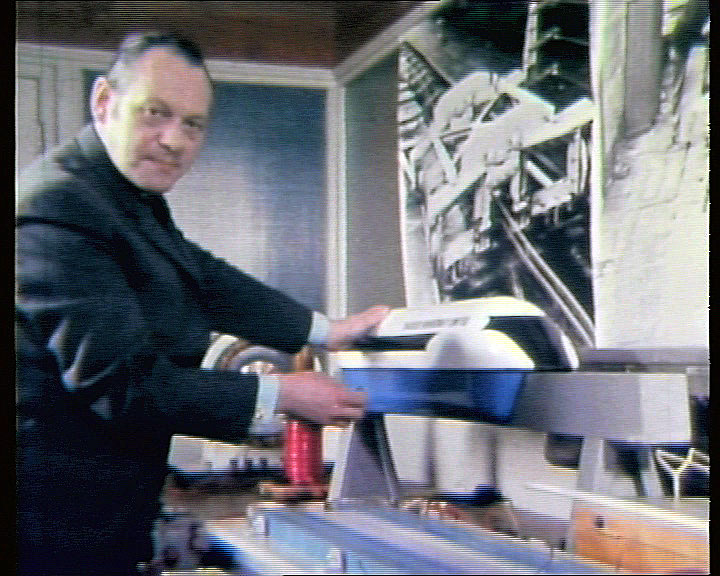 Professor Laithwaite
Being “attractive LIM’s” it was essential to maintain the almost impossible to maintain 1 cm air-gap between the LIM and the reaction rail. If not, the LIM would consume more power and generate more heat than it was designed for.
The LIM patents used by the UTDC on their ICTS/ALRT proprietary railway came from the Krause Maeffi MAGLEV which was once demonstrated at Toronto’s CNE and had a notorious reputation for not being able to operate on anything but a straight track.
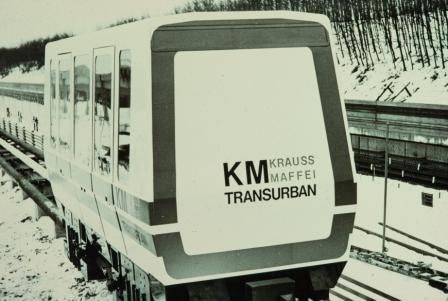 The Krause Maeffi MAGLEV
From the start, SkyTrain’s LIM’s caused overheating problems and fans were added to cool the motors, which in turn cause problems in snowy weather where the fans blew we snow on the LIM’s causing short circuits.
The MK.2 cars or Bombardier’s ART cars used bigger LIM’s, to counter the problems of the heavier cars, which caused problems but most problems were “kept in trade” with but with TransLink replacing LIM’s at a high rate, which in turn drove up operating costs.
So, based on an educated guess, the new MK.3 cars are too heavy for the LIM’s; the LIM’s overheat; and the car stops. That is not a high tech problem, rather a production problem and it could be that the MK.3 cars have a fatal flaw for operation on LIM powered railways.
New Mark III SkyTrains so high-tech theyai??i??re glitching up
Vancouver, BC, Canada / News Talk 980 CKNW | Vancouver’s News. Vancouver’s TalkPosted: October 25, 2016
It was a ai???cooling fanai??i?? issue that sidelined one of the new SkyTrain cars during this morningai??i??s rush hour, causing commuter gridlock for a brief time, mainly at the Surrey stations.
The President and CEO of the BC Rapid Transit Company, which is responsible for the SkyTrain lines, says the new Mark III trains which were recently added to the system are so technically advanced theyai??i??re highly sensitive.
That increased sensitivity is whatai??i??s causing them to shut down when they detect what they see as a problem on the tracks.
Vivienne King says engineers are now working to re-calibrate the computers.
ai???What Iai??i??m doing is working with my engineers and because of this sensitivity of the calibration with the computers Iai??i??m going to put more techsAi??around the system so that when these things do happen we can get in quickly, we can correct it, we can learn and start to adjust this calibration.ai???
She adds that glitches are bound to arise as the new technology is pressed into service.
ai???New trains will have bugs in them no matter how much we work and we test and we re-test. Ai??Iai??i??ve commissioned a number of trains in my career and you will get those things happening in the beginning of running them.ai???
King will also be looking into how TransLink communicated the delays with commuters.
READ MORE:Ai??SkyTrain delays as another Mark III train fails
This morningai??i??s disruption is at least the third time one of the new Mark III trains has failed.
Yesterday, another Mark III went down, due to a power surge.
And back in September, one was sidelined after losing power.
Seven of the new Mark III cars have been budgeted at $91 million, with 28 in total expected over the next three years.

In Metro Vancouver……
The subway lobby seem hard at it in Toronto and have been caught out by an independent public watchdog, set up to protect the taxpayer.
Metro Vancouver and its member municipalities has no such watchdog to watch for bureaucratic or political malfeasance and with the media well in bed with Metro Vancouver politicians, the taxpayer is greatly ill served!
In Metro Vancouver, Subway fantasies are taken for fact as are lies about LRT.
In Metro Vancouver, professionals are immune to professional misconduct charges and investigations.
In Metro Vancouver, the mainstream media myopia on current transit planning is based on who buys the advertising.
In Metro Vancouver taxpayers are being held to ransom by dishonest politicians and their enablers, dishonest bureaucrats and the provincial government, which just loves it that way.
Honesty is not a word used in Metro Vancouver, either by civic politicians and bureaucrats and no one gives a damn about the taxpayer.

Watchdog says city staff may have violated public service code over Scarborough subway advice
Ombudsman should investigate whether staff was serving the public interest, Democracy Watch co-founder says.

By Jennifer PagliaroCity Hall reporterMon., Oct. 24, 2016
An independent public watchdog says city staff who contributed to and distributed information in the midst of a key Scarborough subway debate may have violated the cityai??i??s public service bylaw.
A Star analysis earlier found that a briefing note produced by the TTC was used by the mayor and allied councillors to kill any return of a light-rail plan in Scarborough and that staff discredited the LRT while advancing a one-stop subway now estimated to cost more than $3.2 billion.
ai???It says act with integrity,ai??? Democracy Watchai??i??s Duff Conacher said of the values set out in the bylaw, which are not clearly defined in the municipal code itself.
Spokespeople for the TTC and the city rejected Conacherai??i??s characterization, repeating that staff provided their best professional advice.
Itai??i??s not clear who is responsible for enforcing the bylaw, but Conacher, who co-founded the advocacy group, said any investigation should be handled by the cityai??i??s ombudsman, who hears public complaints, not by city managers.
The ombudsman does not have the ability to discipline staff, only to respond to and report on complaints. If an investigation is initiated, the ombudsman can report to council with recommendations.
Failing to comply with the cityai??i??s bylaw, which came into effect in December 2015, means a staff member could be ai???subject to disciplinary action up to and including dismissal.ai???
ai???These are incredibly serious allegations that, on the face of it, appear to attack staffai??i??s integrity and professionalism,ai??? TTC spokesperson Brad Ross wrote in an email. ai???We refute such characterizations strongly. Staff stand by the process, the briefing note and the answers provided to city council.ai???
Trams for Kuala Lumpur? Evidently Light Metro Did Not Reduce Congestion!
Interesting news from Kuala Lumpur, transit experts urge that trams be used.
Kuala Lumpur already has an elevated RT line; a ART (SkyTrain) Line and an monorail, now transit authorities urge trams!
The key phrase; “…….the mode of transportation could also reduce vehicles on the road and simultaneously solve traffic congestion in Kuala Lumpur especially in city centres which are areas of focus.“. Interesting because the grade separated, mostly elevated light-metro evidently have not!
Planners in Kuala Lumpur have now found that the only way to reduce congestion is to reduce road space and by using tram or LRT operating at grade, reduces road space with quality transit.
How many billions of dollars must be spent in metro Vancouver before our politicians and planning bureaucrats come to the same conclusion!
 The puny Bombardier ART mini-metro just doesn’t have the
right stuff to curb congestion!
Experts back proposed tram service in KL
KUALA LUMPUR, Oct 23 ai??i?? Town planning experts have voiced support for the proposed tram service in Kuala Lumpur for which the Land Public Transport Commission (SPAD) will conduct a feasibility study.
The new mode of transport, they said, would encourage more city folks to use public transportation and help ease congestion in the nationai??i??s capital.
Malaysian Institute of Planners (MIP) vice president Noraida Saludin said tram rails which are built on roads do not use any structure so surrounding areas will not be affected during construction work.
ai???We do not want any more constructions of elevated structures as they interfere with the strength of existing buildings as well as affect the aesthetics of an area,ai??? she told Bernama.
She said with the current sophisticated technology available, trams need not use cables such as the modern trams in Copenhagen, Denmark and Paris, France and are environment-friendly as they had low carbon emissions.
Noraida said the mode of transportation could also reduce vehicles on the road and simultaneously solve traffic congestion in Kuala Lumpur especially in city centres which are areas of focus.
She added, the moderate speed limit of trams is also suitable with the busy city conditions and can lead to more pedestrian facilities.
However, she said a detailed study about it must be conducted by taking into account the technical aspect, ridership, geography, soil conditions, geometric and others.
Echoing Noraidaai??i??s views was Universiti Malayaai??i??s Department of Urban and Regional Planning Programme coordinator Dr Nikmatul Adha Nordin who said that the authorities must have a proper strategy to include trams into the existing city ecosystem.
ai???Factors like safety, accessibility, crowd management, comfort and environmental impact need to be taken into account to ensure the scheme works well in the city,ai??? she said.
Dr Nikmatul said it could also be a strategy to revitalise inner city areas as better connectivity would boost commercial activity in the vicinity of tramlines.
The service should complement existing Light Rail Transit (LRT) and bus services, she said.
SPAD chief executive Mohd Azharuddin Mat Sah said input from other stakeholders such as the Kuala Lumpur City Hall, Road Transport Department and the public would be factored in as the implementation of the tram service would involve several authorities.
According to the Land Public Transport Transformation Journey 2010-2015, the study would be completed next year.
This initiative was stated in the Urban Rail Development Plan, which was a part of the Greater Kuala Lumpur Land Public TransAi??port Master Plan, to enhance travel experience using the rail system. ai??i?? Bernama
What – SkyTrain Ka-Put Again?
For a transit system that it’s supporters claims to be almost problem free, the proprietary ART/ALRT mini-metro has stopped working several times in the past week, mostly during the rush hour.
There is a new word in TransLink’s lexicon and it is “timed out”, what ever that means.
As for smooth talking Drennan’s claim thatAi?? “this delay has nothing to do with the changes to the SkyTrain system“, I wouldn’t believe a word of it as truth and honesty has “timed out” at TransLink.

SkyTrain problem solved but backlog will take time to ease
Vancouver, BC, Canada / News Talk 980 CKNW | Vancouver’s News. Vancouver’s TalkPosted: October 24, 2016 08:25 amAi??Ai??| Last Updated: October 24, 2016 08:43 am
TransLink says normal service has resumed on the Expo and Millennium SkyTrain lines, after a problem with a train at the Lougheed Town Centre Station earlier Monday morning.
Spokesperson Anne Drennan:
ai???We had a timed-out train on the Millennium line in the Lougheed Town Centre Station area. That train had to be driven manually into the platform. All normal service has resumed. People will notice some delays for a short period of time with some crowding on the platforms.ai???
Drennan expects that to clear up shortly.
She says this delay has nothing to do with the changes to the SkyTrain system that went into effect on Saturday.
INFRASTRUCTURE
One politicians “infrastructure” is another one’s waste.
It’s not transit or transportation projects we build, rather it is infrastructure.
The SkyTrain Broadway subway is deemedAi?? by Vancouver politicians to be a good investment of the taxpayer’s money because it is “infrastructure” , but the subway is not based on sound transit and transportation planning, thus will cost the taxpayer dearly in the future. This is OK it seems as it is infrastructure.
The George Massey tunnel replacement bridge is called needed “infrastructure”, yet there is no coherent transportation plan that supports the bridge as designed and the government hides the true cost of the bridge.
It now seems, “investment in infrastructure” is the new key phrase in the upcoming election, replacing LNG chant from the last election; and we all know how that turned out.
Sadly in BC, and especially Metro Vancouver, sound transit and transportation planning has been thrown out with the dishwater and all major mega-projects in the region (Massey Tunnel replacement, Broadway subway and Surrey’s LRT) are not being built not to serve the public at large, rather they are investments in infrastructure and massive infrastructure investments means friends of the government will get very lucrative contracts indeed.

Andrew Coyne: Keep tax dollars and public pension plans away from infrastructureAi??spending
 THE CANADIAN PRESS/Andrew VaughanSpectators watch as workers place a new section on the Angus L. Macdonald Bridge in Halifax last year
Once upon a time there were things called roads and bridges. Sometimes they were built by private capital, sometimes by government, but nobody pretended they were more than what they were: services, like any other, useful for getting from one place to another.
But then someone got the idea of calling them infrastructure, and suddenly they were endowed with all sorts of miraculous powers: as short-term economic stimulus, as a longer-term spur to productivity, and beyond. Infrastructure was a jobs policy one day, an environmental policy the next, a national unity policy the day after that.
So I suppose one should be gentle with the first report of the federal Advisory Council on Economic Growth, the group of money managers and corporate executives the Trudeau government assigned to give it an economic policy. It is a product of its time, and it is very much a product of its sponsors.
There is, indeed, much good sense in the councilai??i??s initial outing. If Canada is to grow at a faster clip than it has, it will not be from injecting larger and larger doses of deficit-funded demand ai??i?? the current experiment in something-for-nothingism having failed as spectacularly as past efforts ai??i?? but from expanding its productive capacity: the supply, in other words.
That will require, first, more labour: hence the councilai??i??s call for an increase in annual immigration from 300,000 to 450,000. Second, it will require more capital: hence the councilai??i??s call for an aggressive courtship of foreign investment to supplement our meagre domestic savings.
And it will require combining labour and capital in more productive ways: the theme, one hopes, of a promised subsequent report on improving Canadaai??i??s ai???competitive market environment.ai??? For there is no better stimulus to raising productivity than the fear that a competitor will eat your lunch otherwise.
So far so good. It is when the council turns to the subject of infrastructure that things start to go a bit off. The language becomes even denser with management consultant buzzwords, the ai???studies showai??? hand-waving more agitated.
Especially alarming is the councilai??i??s endorsement of the absurd, economically illiterate concept of an ai???infrastructure gapai??? ai??i?? the difference, supposedly, between the economyai??i??s infrastructure ai???needsai??? and how much governments are spending on it. To appreciate how utterly meaningless this is, note that estimates of the ai???gapai??? range from $150 billion to $1 trillion.
Well of course they do. You might as well say itai??i??s $10 trillion, since the list of ai???needsai??? a province or city might think up is essentially limitless. Itai??i??s a wishlist, nothing more, with about as much economic relevance as a letter to Santa. In a world of finite resources, it is not enough to say you would like a pony. You have to weigh the return on any given use of funds against their other possible uses.
Economists do not like to speak of the ai???needai??? for something, but rather its demand, which is itself only meaningful as a function of price. Is an investment in x worthwhile? Only if its value to society exceeds its cost: that is, if enough people are willing to pay enough for it to cover its costs, including the cost of capital. Some costs, it is true, are hard to capture in price ai??i?? the dreaded ai???externalities.ai??? And sometimes itai??i??s impossible even to charge a price: what are known as ai???public goods.ai???
But where itai??i??s possible to charge a price, itai??i??s usually good policy: as a test of demand; as an incentive for careful resource use; as a way of reserving scarce tax dollars for things that can only be paid for through taxes. So itai??i??s good news that the council endorses pricing ai??i?? what it calls ai???attaching revenue streamsai??? ai??i?? not only for new projects, but also, potentially, for existing public works.
Of course, if itai??i??s possible to pay for infrastructure from user charges, then itai??i??s equally possible to get private capital to finance it, in anticipation of those lovely ai???revenue streams.ai??? Here again, the council gets it right: four of five dollars to be invested through its proposed ai???infrastructure bankai??? would come (it hopes) from private sources.
The question is: why only 80 per cent? Why not all of it? Large infrastructure projects carry large political risks, to be sure, and governments will need to do what they can to minimize those if they are to attract investors. But wherever public and private funds are commingled, the risk is of another kind ai??i?? of privatized gains and public losses.
Thatai??i??s not my major concern, however. For among the private capital sources the council envisages tapping are Canadaai??i??s public pension plans. Iai??i??ve written often enough of the problems at the Canada Pension Plan Investment Board, but the issue is more general. As a report in last Saturdayai??i??s Financial Post made clear, the funds are quite literally out of control, answerable neither to investors (contributions are obligatory), nor regulators (they have none), nor even their proprietors.
The result: a handful of managers in charge of gargantuan concentrations of capital, building empires, taking extravagant risks, buying up half the country. And now we want them to partner up with governments? With all the potential for mutual mischief this entails ai??i?? taxpayersai??i?? money subsidizing the pension plans, pensionersai??i?? money underwriting governments and three levels of politicians hovering nearby, albeit ai???at armai??i??s-lengthai????
No thanks. If the infrastructure bank wants foreign pension plans to invest, godspeed. But keep the Canadian funds a thousand miles away from it.




Recent Comments