The Federal Budget – LRT Mentioned, But Not A Subway
The Federal budget did not hold any transit surprises, with $370 million to be spent over five years for transit project support.
Well, $370 million will buy you about one kilometre of a Broadway subway or put another way, 200 metres a year spread over five years, big deal!
We could build 2 km of light rail a year for the same price.
Lots of bumf from the regional mayors, but despite brave faces and vague promises, there was no extra cash for Vancouver’s cherished subway yet, light rail was mentioned in the budget.
One did get the impression from the language, that the Trudeau Liberals did not want to fund vanity projects. We will wait and see.

5 wins for B.C. in the federal budget
Felicity Stone | Mar 22, 2016
THE#BCBIZDAILY
The budget we’ve all been waiting forFederal Finance Minister Bill Morneau released the Trudeau Liberal governmentai??i??s first budget on Wednesday. Hereai??i??s some of whatai??i??s in it for B.C.
1. $460 million for transit
$3.4 billion over three years to upgrade and improve public transit systems across Canada; B.C will receive $460 million.Ai??The budget specifies light rail in Greater Vancouver, but no mention of the proposed Broadway subway lineFor the rest of the story……
Vancouver traffic congestion is worse than in Toronto or Montreal, according to the latest Tom Tom survey. (Globe and Mail)
Trams for Vegas?
Las Vegas has a monorail, but due to political intrigue, it doesn’t service the main airport and is next to useless.
I would surmise that the powers that be do not know enough about modern LRT and do not worry about competition from a “tram”
What I find interesting is the USD $460 million cost for 8.7 mile (14 km.), (CAD$600 million) which is certainly much cheaper at $43 million/km than the $80 million/km for the proposed Surrey LRT.
I wonder if the trams will feature slot machines?
 Other than being an elevated billboard, the Las Vegas monorail
is next to useless as a people mover.
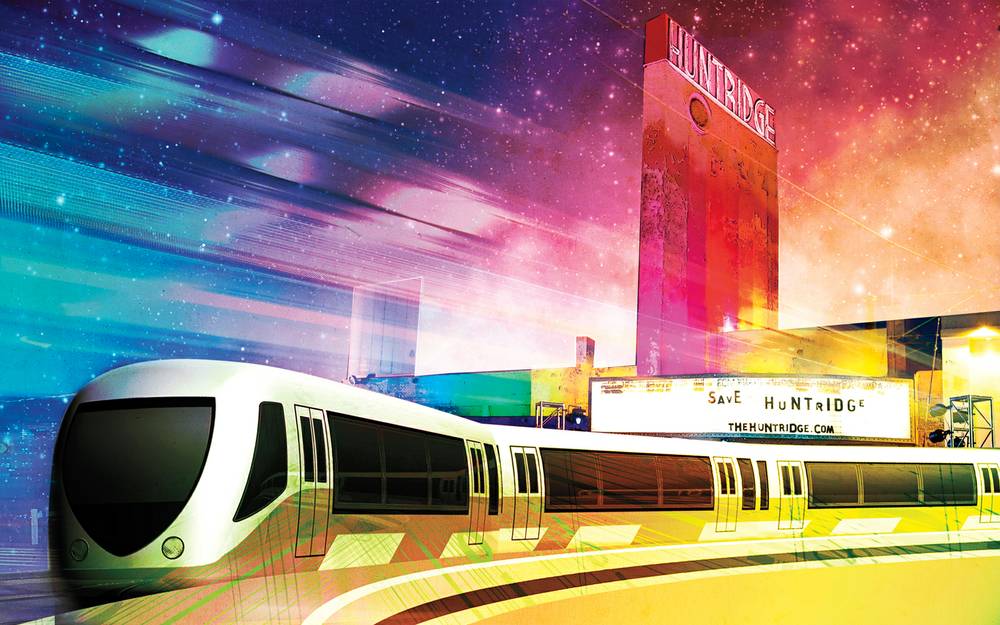
The proposed Maryland Parkway 8.7-mile (14 km.) , $460 million light rail route at LAS VEGAS, the southern Nevada casino-resort city, would have LRT tracks flanking the roadway inside of running in the center, The Las Vegas Review-Journal reports. Maryland Parkway LRT would extend east from downtown and then head south more or less parallel to the “Strip” of casinos on Las Vegas Boulevard and wind up at the southern end at McCarran International Airport. It would be entirely at grade and would be a “streetcar” similar to LRT services at Phoenix, Salt Lake City and Denver. Public meetings will be held March 15 and 16, preparing the way for an environmental assessment study:
Of Trains, Station Platforms, and Capacity
Zwie has got wind of a local transit advocate getting a nasty phone call a few evenings back from a chap incensed over a blog post on Facebook that went like this: The Canada line has station platforms 40m to 50 m long and operates 41 m long coupled sets of EMU’s, has about one half the capacity of the Expo and Millennium Lines, which stations have 80m long platforms and operate two; four; and six car trains up to 76m long.
The following is a list of Canadian Cities that operate metro, modern light rail, and trams and compare train and station platform sizes.
Thus it can be said in complete honesty:
” The Canada line is the only heavy-rail metro in the world, built as a light metro and has less capacity than a tram.”
For those who do not agree, may I suggest taking out memberships in the Flat Earth Society.
Vancouver

Edmonton & Calgary

Ottawa

Toronto

Has Trudeau “Caved-In” To Bombardier?
Bombardier Inc. is in trouble with their aircraft program; are near bankruptcy and need cash.
So what is the Federal government going to do?
Simple buy Bombardier’s light-metro and call it light rail.Ai?? The same ruse certainly fooled the Social Credit Party in BC in 1980 by renaming the unsellable Urban Development Transportation Corporation (UDTC a Ontario Crown Corporation) Intermediate Capacity Transit System (ICTS or light-metro) to Advanced Light Rail Transit (ALRT).
Sad fact is, this name change ruse still fools TransLink, as well as MLA’s!
What ever the City of Montreal want to call the dated and now obsolete SkyTrain, it is definitely not light rail.
To quote Quebec transit advocate Avron Shtern: “This is scandalous. Everything will be done in secrecy. No public consultationAi?? when it matters. Public pension money is being used and is being framed as private enterprise. If Quebec were in Latin America, it would be run like a Venezuela, etc… “
And the federal Liberals? Well, they are paying for this and have certainly given Quebec a “wink and a nod” to go ahead and are no better than their BC provincial namesakes.
 Good old SkyTrain Mk.2 cars with coaches (Mk.3) and pantograph – definitely not LRT.
Montreal May Get ai???Light Rail Linesai??? From Downtown To The West Island
On the Champlain bridge, too.
by Michael D’Alimonte Ai?? March 17, 2016
People have had plenty of gripes with the new Champlain bridge (the overall budget, tolls) but one feature may make up for all of the woes accompanying the major building project:
Two special light-rail lines may be built on the bridge that will allow Montrealers to easily reach both the West Island and the Pierre Elliott Trudeau International Airport from Downtown, according to the Gazette.
Talks are set to begin on the feasibility of creating such a public transit service, with the the light-rail project headed by institutional funds manager La Caisse de dAi??pA?t et placement du QuAi??bec and the City of Montreal.
An estimated cost for the construction of the light rail lines is set at $5 billion, with the project inspired by a public transit study carried out by the AMT and the City of Montreal.
Modular Trams Just Keep On Growing!

Urbos 100
With its 100% low floor in the entire passenger saloon, the Urbos 100 is a solution that guarantees ease of access for all types of passengers. The Urbos comprises 5-car sets on 3 bogies, although 3-car up to 9-car versions are also available.
*
3 cars: Total capacity*: 129

5 cars: Total capacity*: 221
*

7 cars: Total capacity*: 306
*

*
9 cars: Total capacity*: 397

Light Rail, Streetcars & Light-Metro – A Primer.

First published in the RftV blog in 2011, it is still pertinent today.
Updated and edited for March 2016.
Due to many people posting, on various blogs, absolute rubbish about light rail, it is time again for a quick primer on streetcars, LRT and SkyTrain.
Question: What is the difference between LRT and a Streetcar or tram?
Answer: Today the difference between LRT and a streetcar/tram is the quality of rights-of-way, where a streetcar operates on-street in mixed traffic, light rail operates on a reserved rights-of-way (R-O-W), such a boulevard or a streetcar/tram only HOV lane on-street, which gives LRT an unimpeded transit route and faster commercial speeds. Today, there is little difference between a modular tram or streetcar and light rail vehicle except for motor size.
Q: What is SkyTrain?
A: SkyTrain is a proprietary unconventional light-metro system system first designed and marketed by the Urban Transit Development Corporation ICTS/ALRT), a once Crown Corporation of the Province of Ontario, which is now marketed by Bombardier Inc. (ART) , who hold the technical patents; the engineering patents are held by SNC Lavalin.
SkyTrain is considered an unconventional railway because it is powered by Linear Induction Motors and is incompatible to operate with any other transit system, save itself. The Canada Line light-metro and SkyTrain are incompatible in operation. There are only 7 ai???SkyTrainai??? type systems in operation around the world, despite being first marketed in the late 1970ai???s and the number will be reduced to 6 when the TTC will soon replace the Scarborough RT, with either LRT or a subway.
Q: What is light metro?
A: Light-metro was originally supposed to bridge the gap of what old streetcars could carry and what ridership would justify a heavy-rail metro. Modern LRT has made light-metro almost obsolete by bridging the bus ai??i?? metro gap at a far cheaper cost.
Automatic (driverless) light-metros, with its higher construction and operating costs just canai??i??t compete against modern LRT and the mode is now a niche transit system, on the verge of total obsolescence.
Q: Is SkyTrain cheaper to operate than LRT?
A: No, SkyTrain costs about 40% to 60% more to operate than comparable LRT operations. A recent example of costs not borne by light rail is the now over $6 million annual maintenance costs just for escalators and elevators at SkyTrain stations.
SkyTrain does notAi?? pays its operating costs from fares.
The provincial government subsidies the SkyTrain network by about $250 million annually.
Q: How fast can LRT operate?
A: Generally speaking, LRT can operate as fast as its R-o-W will permit. Streetcars or trams, with stops every 300 to 5oo metres generally have smaller motorsAi?? (there is no need for larger, more expensive motors) giving maximum speeds of 60 to 70 kph, while light rail vehicles has larger motors, giving speeds of 80 to 110 kph.
Q; What about the claim that Skytrain is faster than LRT?
A: SkyTrain seems to be faster than LRT because TransLink has designed SkyTrain to be faster by having fewer stations per route km. Fewer station on a transit route attracts fewer customers. Studies have shown that over all journey times for trips under 7 km. are actually faster by streetcar, than by a metro.
Q: How much does LRT cost to build?
A: Light rail can be built as cheaply as under $10 million/km using TramTrain; $25 to $35 million/km. for a streetcar; $30 million/km + for light rail. TransLink has always gold-plated light rail with all sorts of added costs to drive up the cost of construction to be as close to Skytrain it can.
Q: What is the capacity of a light rail vehicle (LRV)?
A: Today, the capacity of a transit vehicle in North America is put at 5 persons per metre length of vehicle. In the past a transit vehicles capacity was put at all seats filled and 4 persons per metre/sq., but this calculation doesnai??i??t address the fact that in North America people are bigger; that there is a constant movement of people entering and exiting the vehicle; and that most North American customers demand seats.
Q: What is the capacity of LRT and/or streetcar line?
A: The capacity of a tram/streetcar line is dependent on vehicle size and headway’s. In Karlsruhe Germany, the main tram route through the city was seeing peak hour capacities in excess of 30,000 persons per hour per direction, which is 15,000 more than the maximum capacity ofAi?? the present Expo/Millennium Lines! The line is now being relocated in a subway, but it does show the threshold that demands a subway today. Today, most light rail lines are able to handle 20,000 pphpd.
Q: What is TramTrain?
A: TramTrain is a tram/LRT vehicle that has the ability to both operate on mainline railways or streetcar track. Since being introduced in 1994, there are now 3 times as many TramTrains in service that SkyTrain type systems.
Q: What is BRT?
A: BRT or bus rapid transit is a bus that operated on its own guideway or bus way, either guided or not. True BRT costs about 30% less to build than modern LRT, yet has not demonstrated any real advantage over LRT. BRT lines mainly seem the political way of tarting up express bus service and trying to sell it to the public as rapid transit. in most cases, the public are not fooled.

A reserved rights-of-way enables LRT to obtain commercial speeds of that of a metro.
Bombardier “Stuffed It Up” in London. Is Transit Planning “Stuffed Up” In Metro Vancouver?
Not all is well with Bombardier Inc.
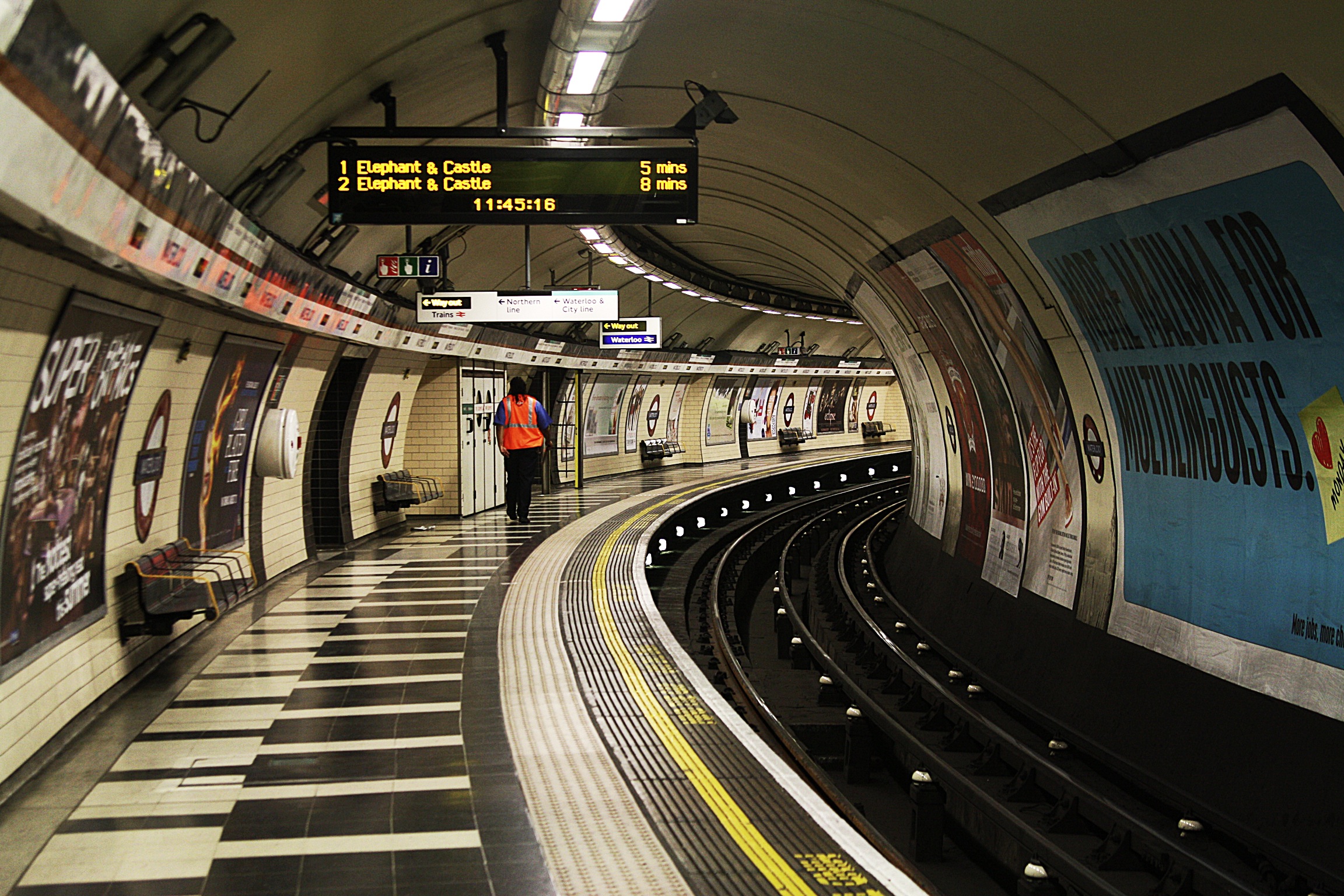
The massive transit conglomerate has had too easy for too long and now is accused ofAi?? “‘duping’ the British capital into awarding it a train-signalling contract that it was incapable of delivering, creating ai???nothing short of a disasterai??? for the London Underground.”
I would like to remind everyone that Bombardier’s influence on TransLink in the past being the sole supplier of ALRT/ART SkyTrain, is now affecting our present transit planning with a $3 billion subway under Broadway to Arbutus and the $2.5 poor man’s SkyTrain disguised as LRT in Surrey.
Is Bombardier’s legacy helping to “stuff it up” in Metro Vancouver?
Bombardier Inc slammed by London for ai???shamefulai??i?? Tube project: ai???Nothing short of aAi??disasterai??i??
Republish
ReprintKristine Owram | March 14, 2016 |
Londonai??i??s city council has lambasted Bombardier Inc. for ai???dupingai??? the British capital into awarding it a train-signalling contract that it was incapable of delivering, creating ai???nothing short of a disasterai??? for the London Underground.


Bombardier Inc. has gone to great lengths to suppress the release of information about the government funding it receives, heading to court 10 times in nine years, often citing competitive concerns
The scathing report, prepared by the London Assemblyai??i??s Budget & Performance Committee, doesnai??i??t mince words in its criticism of Bombardier and Transport for London (TfL), the government body that awarded the contract.
London Mayor Boris Johnson also didnai??i??t equivocate, telling the committee that Bombardier ai???totally stuffed it up.ai???
In June 2011, Bombardierai??i??s transportation division was awarded a contract to upgrade the London Undergroundai??i??s automatic train control, or signalling system.
The company said it could do the job by 2018 for 354 million pounds (about $670 million) but it quickly became apparent that it wouldnai??i??t be able to deliver on time or on budget, according to the report, which calls Bombardierai??i??s performance ai???shameful.ai???
Real Light Rail For Surrey – The WKW Line

It has has been five years year since I entertained the idea of the Whalley ai??i?? King George ai??i?? White Rock LRT Line and in 2016 the WKW Line is still superior to what TransLink is planning for Surrey.
Surrey needs a bold new vision for modern LRT and I believe the Whalley ai??i?? King George ai??i?? White Rock or WKWAi?? LineAi?? would provide the vision to implement a strategic and affordable light rail network for Surrey and communities south of the Fraser river. Failure to plan and build sustainable light rail and to continue to plan and build with the hugely expensive SkyTrain light-metro, will beggar the region with ever escalating taxes, driving out business and residents out of the region.
The goal of the new light rail line is to serve customer needs and offer the ability to provide an attractive alternative to the car, it also must serve a multitude of destinations. Building LRT as an extension of the SkyTrain light-metro system will fail to meet expectations as LRT will not be designed to its best advantage. It is not ai???rocket scienceai??i?? to design a transit line to be an attractive alternative to the car.
The Light Rail Line
The 22 to 24 kilometer Whalley ai??i?? King George ai??i?? Rail for the Valley ai??i?? White Rock line (WKW Line for short) would be a solid foundation for an attractive light rail system in Surrey. The proposed light rail would be a classic LRT, operating on a ai???reserved rights-of-wayai??i?? (RoW) in the median of the roads involved.
The route of the WKW Line would start at at 108th Ave. & the King George Hwy. and would continue South to the Southern RR of BC (formerly the BC Hydro R.R.)Ai?? This portion of the route would service the Central City shopping district; Surrey Memorial Hospital; Queen Elizabeth Secondary School; Bear Creek Park; and the Newton shopping district.
The WKW Line would then network south-east along 4 km of the former BCE interurban line and proposed Valley Rail Vancouver to Chilliwack TramTrain route to 152nd. Traveling mainly through industrial lands, which would provide the ideal location for the Light Rail storage and maintenance yards. This portion of track would be double tracked and adequately signaled for safe freight/Interurban/tram operation.
There is the possibility of futureAi??joint operation with the RftV/Leewood interurban, enabling South Surrey and White Rock transit customers the option of a direct or no-transfer service to downtown Vancouver.
From 152nd Street, the KWK Line would go straight south to White Rock crossing the Nicomakle /Serpentine River valley basin. Along here, the line must be raised above flood plain and three new bridges across the Super Port Railway Line, and the Serpentine and Nicomakle rivers must be built. It is this portion of line that will be the most expensive.
Rising out of the small river valley the KWK Line would continue south along 152nd Ave., terminating in downtown White Rock
In the summer, the light rail line would bring congestion relief to White Rock by providing a quality transit alternative for the many thousands of people who come in cars to the popular beaches. Also close to the KWK Line is the South Surrey Athletic fields, which many fields and arenas are constantly busy with hockey, baseball, soccer, rugby, and football games, twelve months of the year. The KWK Line would also provide an excellent transportation access for the burgeoning housing estates, such as Morganai??i??s Crossing in South Surrey and White Rock.
An approximate map of the WKW route as Google maps do not use existing rail lines.
http://goo.gl/maps/jbOmS
The Cost
The the total cost of the KWK Line, including bridges and/or viaducts should cost no more than $1 billion, based on comparative LRT lines now being built The high cost of major engineering in the Nicomakle/Serpentine valley, would be mitigated by simple on-street construction on 152nd and the King George Highway and track sharing for 4 km on the Southern Railway of BC Line bisecting Surrey .
It is interesting to note that the total cost for the 98 km RftV/Leewood Chilliwack to Scott Road Interurban using Diesel LRT and the 23 km KWK Line would be about $1.6 billion or put another way we could build 121 km of modern LRT lines in the Fraser Valley for just a little more than the 11 km Evergreen Line!
Unlike present light rail planning, where development is encouraged to take place along a LRT/SkyTrain route, the KWK Line can pass through sensitive agriculture and ecological areas, without the need for land development. Building the KWK Line would provide a potential capacity ofAi?? around 20,000 persons per hour per direction on the route, well able to handle future passenger demands, yet still can be built much cheaper than its SkyTrain/light-metro competitors. The cost for a SkyTrain along the KWK Line? About $3 billion at a conservative cost of $130 million per km to build!
A modern LRT Line in Madrid, Spain ai??i?? A template for the WKW Line?

Using low-floor trams, with convenient stops, ensures an obstacle free journey for all transit customers including the mobility impaired, without the need of expensive stations and equally expensive to maintain elevators and escalators.
The KWK Line can provide traffic calming where needed, yet still supply ample capacity for future transit needs. By providing a regular and efficient transit service from White Rock to Surrey Central and by servicing many destinations along its route the proposed LRT line would attract ample ridership, including the all important motorist from the car. The KWK Line would also easily integrate with the RftV TramTrain interurban service from Vancouver to Chilliwack and could provide in the not too distant future a direct White Rock to Vancouver TramTrain service, faster than the present bus and Canada line service.
The WKW Line would bring 21st century transit solutions to Surrey, transit solutions that are too long overdo.
Toronto Signalling Study Of Great Import For Rail for The Valley

With thanks to Mr.Cow!
Signalling, the fine art of keeping trains from crashing into each other, is very important for the Fraser Valley TramTrain project and developments in Ontario are very relevant here.
Toronto, is now planning to have GO Train’s new RER system integrating with the new Smart Track surface subway proposal. The report was done by City of TorontoAi??Transit Planning Staff & MetrolinxAi??presented andAi??delivered to the City’s of Toronto’s Executive Committee. This is a very important study because this will most likely be the test case for theAi??eventual choice of how the interlining and scheduling of two different transit operating technologies operating in the same corridor should be done. This will greatly determine the structure and how the TramTrain concept must be planned, if it is to be legal for Transport Canada. If they can get this to work in Toronto, this will be the planning model the Valley TramTram must follow.
Must see videos
 This is one of Zwei’s favourite tram photos.
Lawned rights-of-way; simple stations; and pedestrian friendly light rail in Grenoble.
Reprinted and re edited from 2009.
The two videos from Karlsruhe are a must see, to fully understand TramTrain!
All the links work, unfortunately the few that no longer exist, have been deleted.
Trams climbing grades –
http://www.youtube.com/watch?v=xWMaCGnLKCE
http://www.youtube.com/watch?v=_YiHO5jZYY4
Diesel LRT
http://www.youtube.com/watch?v=TizfWStIy-M
http://www.youtube.com/watch?v=VWATecifoFQ
Karlsruheai??i??s TramTrains
http://www.youtube.com/watch?v=LXsIRUEeZts
http://www.youtube.com/watch?v=NsdJPaih0Fw
Lawned rights-of-ways
http://www.youtube.com/watch?v=y6ucG-9fGU4
http://www.youtube.com/watch?v=MgzuarkGTYA
Tram/streetcars ai??i?? on-street operation
http://www.youtube.com/watch?v=gckN2ANG_zc
LRT in the snow
http://www.youtube.com/watch?v=IJ-0MlxWSEk



Recent Comments