When Idiots Run For Election, They Promice Anything!

So the Federal Liberals are promising $2.1 billion for Surrey’s ill designed and poorly thought out proposed LRT and the Conservatives are planning to do the same as well.
Don’t these idiots realize that the regional taxpayer rejected this very same LRT line in the plebiscite held last spring? I doubt it as both federal Liberal and Conservative parties desperate to win seats and will sell their first both, or in this case an ill designed LRT for Surrey, to be elected.
The Surrey LRT is in reality a poor man’s SkyTrain in drag, poorly thought out, poorly planned and will not offer the transit customer any benefit, except higher transit fares and a consumer unfriendly transit system. That is why the TransLink vote failed, TransLink is held in such high odor, the taxpayer wants to be rid of it.
By promising to fund Surrey’s LRT without anyone actually vetting the project to see if it is at least cost effective, is like throwing money into a fire, but then federal politicians never cared much about the taxpayer.
Please don’t point to a business case, because business cases for transit projects are a dime a dozen in BC.
Sadly, once again a political vanity project becomes transit policy; no wonder TransLink is held in such high disrepute.
A pox on both their houses.
Federal Liberals pledge $2.1 billion for Surrey light rail
Conservatives had been expected to make a similar promiseBy Kelly Sinoski, Vancouver Sun September 9, 2015
Surrey-Newton Liberal candidate Sukh Dhaliwal said the Liberals were committed to providing an additional $20 billion in public transportation funding over the next decade for the countryai??i??s top regional priorities.
Photograph by: DARRYL DYCK, THE CANADIAN PRESS

The federal Liberals rushed to announce transit funding for Surreyai??i??s $2.1-billion light rail project Wednesday, beating out Stephen Harperai??i??s Conservatives, who were expected to make a similar pledge last week before they were derailed by the Syrian refugee crisis.
The move, made by Surrey-Newton Liberal candidate Sukh Dhaliwal, said the Liberals were committed to providing an additional $20 billion in public transportation funding over the next decade for the countryai??i??s top regional priorities, and ai???Surrey is well placed to secure B.C.ai??i??s first funding commitment under the Liberal plan.ai???
ai???Under a Liberal government, Surrey would receive more attention and consideration than has ever been offered by the Conservatives,ai??? Dhaliwal said in a news release.
The announcement comes a day before Liberal leader Justin Trudeau was slated to hold a press conference on Vancouverai??i??s West Broadway, which is earmarked for a $2.1-billion subway line to Arbutus Street. Both Vancouver and Surrey have been championing the transit projects, which are cited as priorities in TransLinkai??i??s 10-year transportation plan.
Dhaliwal noted the City of Surrey in 2013 applied to the federal government for funding under the Building Canada Plan to build three LRT lines and in 2014, the request was designated with a ai???screened inai??? status, meaning that the project had been shortlisted.
Yet Surrey has still not received any further word on receiving federal funding, he said.
ai???For two years now, the Conservative government has ignored Surreyai??i??s requests, even though the city will become B.C.ai??i??s largest city over the next 30 years,ai??? Dhaliwal said. ai???We have 1,000 new residents moving to Surrey every month, and effective public transit is an important part of ensuring that our local economy continues to grow.ai???
Dianne Watts, former Surrey mayor and Conservative candidate, would not say whether Harper had planned to announce transit funding in Surrey last week, or if he expected to do so, saying it was up to him.
However, she maintains the federal government has invested heavily in infrastructure in B.C. in the past and Surrey has been a significant recipient of that money. As mayor, she said, she worked hard to get federal dollars for the city.
ai???I wouldnai??i??t presume to speak for the prime minister,ai??? Watts said. ai???Suffice to say the plan is to invest more dollars in infrastructure. We will continue to work on investing those dollars in infrastructure, as we have before.ai???
The Boarders Railway Reopens After 47 Years! Leewood/RftV Interurban Is a Bargain!
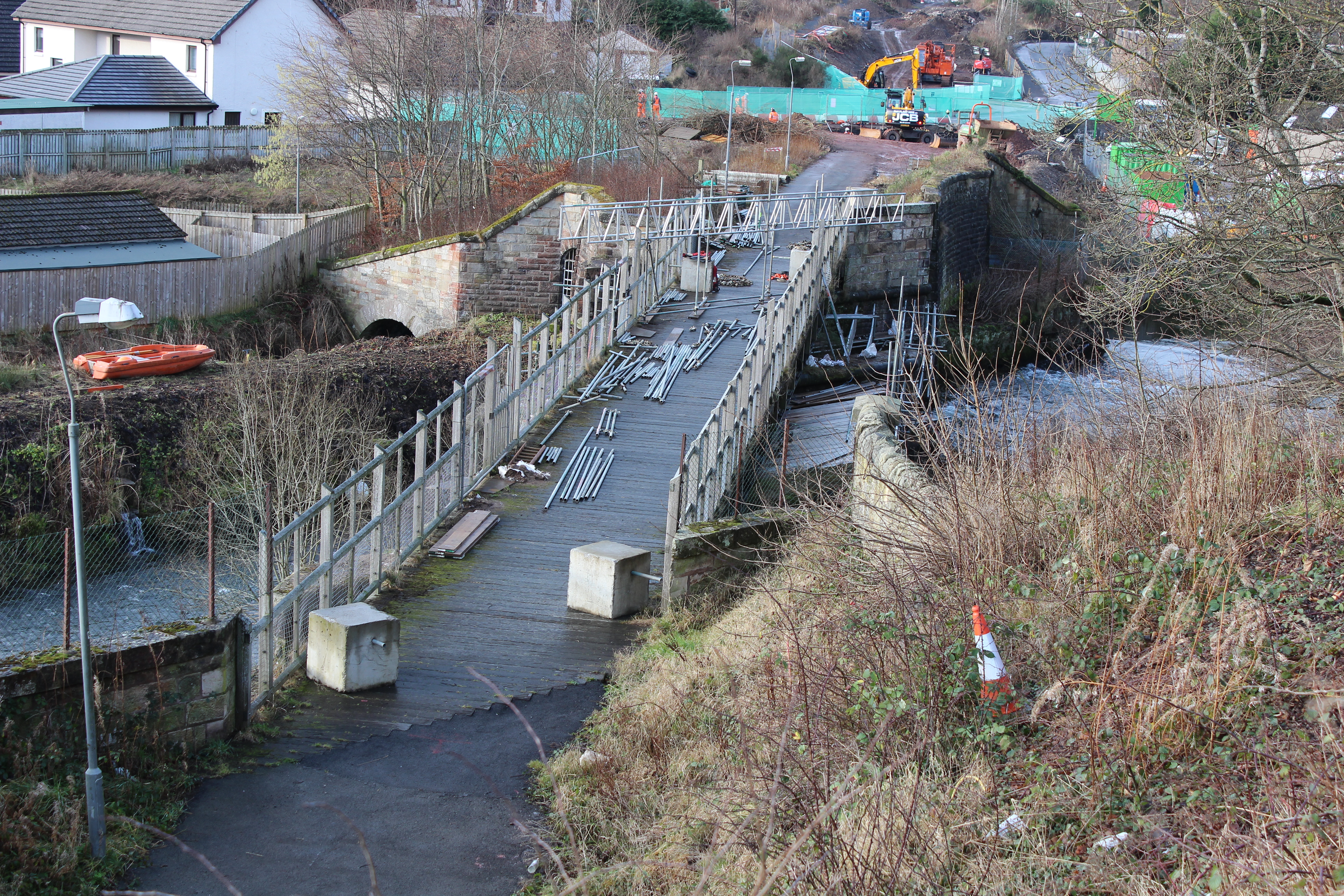
The Beaching era in the UK saw the dismantling and the run down of Britain’s extensive railway network. Though some railway lines deserved to be abandoned, many did not. The Beaching philosophy was that railways were obsolete, with the exceptions of two trunk lines running North/South and one East/West, all other railway lines, except for local urban transit needs, were to be abandoned by the turn of the century!
As an aside, the Beaching philosophy is alive and well in Canada.
The Boarders Railway saw the partial reopening of the Waverly Route from Edinburgh to Carlisle, with passenger service from Edinburgh Waverly to Tweedbank.
The cost to rebuild the 56.8 line to Tweedbank, including rebuilding or refurbishing two hundred bridges and several km. of greenfields construction was A?294 million (CAD$600).
By comparison the cost to upgrade the 136 km Vancouver/Richmond to Chilliwack Leewood/RftV interurban, including electric operation was around $1 billion, with a cheaper diesel LRT option costing about $750 million.
The Leewood/RftV Valley Interurban is a bargain, when compared to reinstated railway operation, such as the Boarders Railway and very much a bargain when compared to pure ‘Greenfields’ railway construction.
Bad Planning in Edmonton

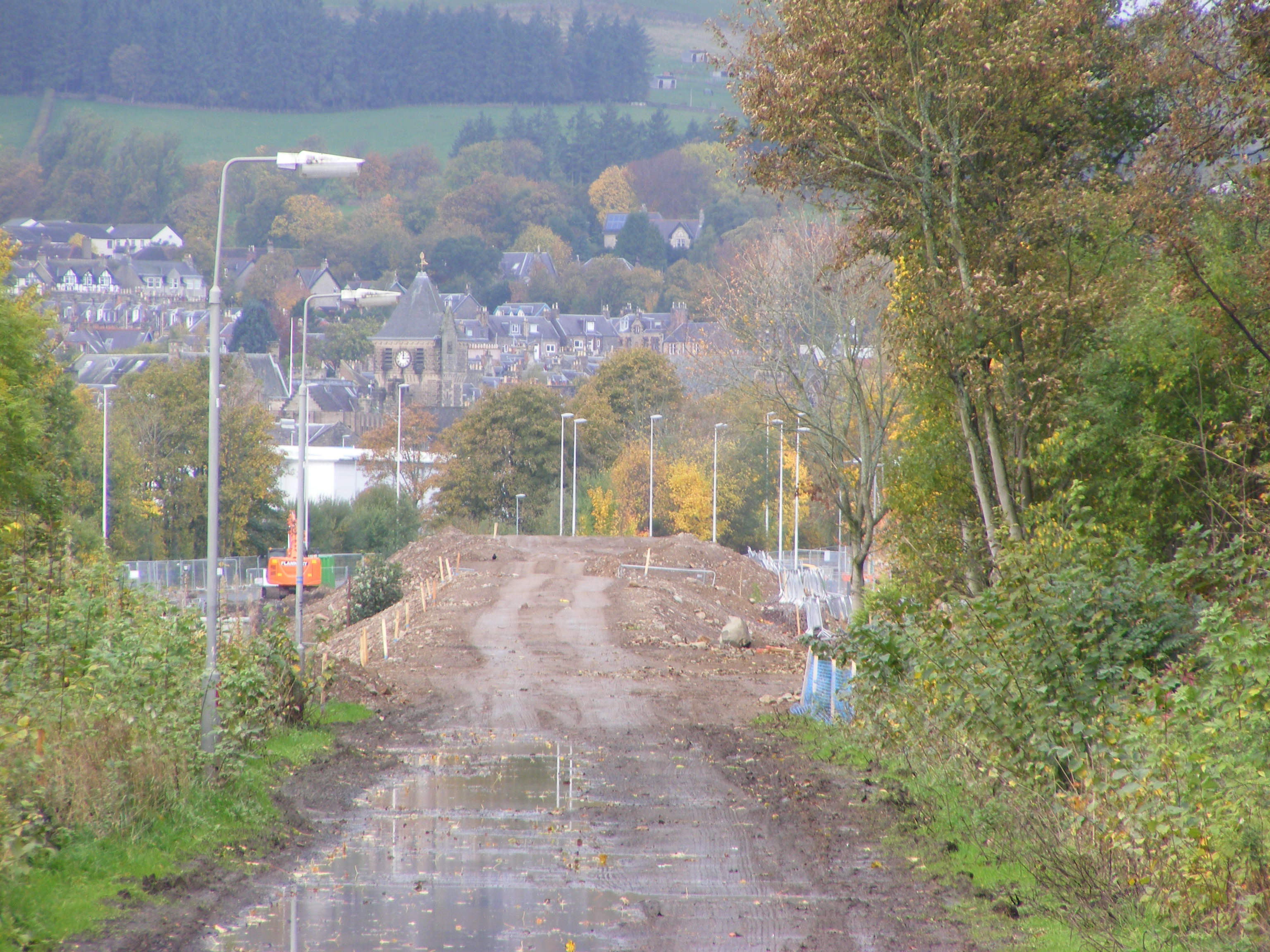
The people designing Edmonton’s LRT extension must take first prize for “botching it”, when drivers will have to wait 16 minutes for a tram to cross a series of intersections.
Does anyone do any research at all?
I know that public transit should supersede auto traffic in revenue operation, but this is far too extreme.
In the real world, it takes a tram about 3 to 7 seconds to clear an intersection and about 10 to 15 seconds for a light to change from green phase to red phase, as done in hundreds of cities around the world.
There is no difference between a light controlled road/rail intersection and a light controlled road/road intersection, so why the long wait?
Really, a little bit of research and proper design, would have eliminated this 16 minute wait and as it stands it is nothing than an example of very poor planning.
Again, Canada becomes an international joke with its transit planning and I for one, am tired of it.
Drivers could be stuck at LRT crossing for up to 16 minutes: Metro LRT update
By Emily Mertz Web Producer Ai??Global News
EDMONTON ai??i?? Testing results of the Metro LRT Line found there could be ai???significantai??? traffic delays on key routes during peak rush hours and that some delays could be permanent.
At some crossings, aAi??report estimates drivers might wait only two minutes while LRT trains operate on a 15-minute frequency.
However, for two specific intersections being impacted by the LRT line, the wait could be as long as 16 minutes. The report said, ai???Princess Elizabeth Avenue/106 Street and 111 Avenue/Kingsway Avenue will be particularly busy and traffic will queue in all directions. The addition of regular LRT service will create situations where queuesAi??will persist and lengthen until a train cycle has cleared and vehicle traffic cycles through for the intervening 15 minutes.
ai???Motorists are being advised to expect delays and be patient as during peaks hours it may take up to four cycles for a vehicle to have the opportunity to clear one of these intersections and that means up to 16 minutes waiting in a queue that extends multiple blocks.ai???
ai???This is very disappointing,ai??? said Mayor Don Iveson.Ai??ai???I didnai??i??t expect the numbers to be like this.ai???
ai???Council feels a little hoodwinked,ai??? added Councillor Bev Esslinger.
The Transportation Committee was told those two intersections currently clear within one traffic cycle.
ai???Iai??i??m honestly so gob-smacked I almost donai??i??t know what to ask,ai??? said Councillor Scott McKeen.
Trains may wait up to five minutes at MacEwan station to deal with traffic issues.
The intersections that will be most significantly impacted by the Metro LRT Line.
Tonia Huynh/Global News
The committee was toldAi??the Metro LRT Line is set to open on Sept. 6.
Part of the issue with the delays at intersections is because, at first, LRT trains will be travelling at a slower speed, so crossing gates will be down for longer periods of time.
However, once the trains are operating at a higher speed, the service will increase in frequency. The crossing gates will then come down more frequently but for shorter durations.
ai???Weai??i??re going a little slower but weai??i??re going less frequently right now,ai??? said theAi??cityai??i??s Transportation Services GM Dorian Wandzura.
Wandzura said the public education campaign had already started to prepare riders and drivers for the start of the Metro Line on Sept. 6.
Transit staff will be stationed at all crossings for the first week of operations.
Training started four weeks ago and train simulations have been done during non-peak hour service.
ai???I think the delays will go down as we settle into the system,ai???Ai??Wandzura said.
The Transportation Committee heard that even when the Metro Line is operating normally, there may only be a 15 per cent improvement to traffic flows in some areas.
Esslinger said she thought the city should increase public communication about the traffic impacts.
Iveson thought drivers should be made aware of the changes and expected delays so they could choose other routes if possible.
ai???Iai??i??m concerned this will kill the sentiment for the LRT,ai??? said Councillor Michael Oshry.
Late Wednesday, in a motion, the committee asked city administration to:
- report on the feasibility of moving the NAITAi??LRT Station to east of 106 Street;
- bring a report on other possible measures to mitigate issues identified with the Metro Line;
- report on the feasibility of grade separating the Princess Elizabeth Avenue crossing as part of the next phase of NW Extension through Blatchford and beyond.
ai???This council needs to take control of these projects and that the info weai??i??re getting can be relied upon,ai??? said Iveson, stressing problems like this cannot happen again.

Out of Touch
The Vancouver Board of Trade, think themselves transit experts; nope, nada, not a chance as the VBoT is absolutely clueless when it comes to public transit, but they certainly glad hand any transit initiative that will enrich BoT members, such as cement companies, with absolutely no care for the transit consumer or taxpayer.
The main problems facing TransLink is:
- The cost per revenue passenger is one third higher than Calgary, Edmonton, and Toronto.
- Is consumer unfriendly.
- Uses dated “hub to hub” transit philosophy, with the equally dated light-metro.

I see no sign of TransLink or The Vancouver Board of Trade dealing with the real issues plaguing TransLink and instead just doing the same thing over agian, spending huge sums of money on nebulous transit projects that will do little improving regional public transit.
When one remembers that the Vancouver Board of Trade vehemently supported the Canada Line, even though it went over $1 billion over budget; bankrupted scores of merchants along Cambie St. and the end product had less capacity than modern LRT or even a modern streetcar!
Am am very sorry, but I just do not see why the VBoT, should have its opinion printed in the Sun, as they are simply out of touch with the situation.

Opinion: No regrets, and a key lesson from transit vote
By Iain Black, Special to the Vancouver Sun September 3, 2015
Iai??i??ve been asked many times in recent months whether the Vancouver Board of Trade regrets taking a leading role in the Yes campaign during the transit plebiscite.
With the benefit of nearly two months to digest the experience, I continue to respond with an emphatic ai???No regrets at all.ai??? So, too, do the business leaders on our elected board of directors, who unanimously voted to throw our weight behind the Yes campaign in a high-profile manner. This led to me assuming a co-chair role in the historic, diverse coalition that formed to support the mayors plan.
It has been our tradition for over a century to weigh in on (and often lead) complex and sometimes controversial conversations, particularly when the outcomes could transform the cities of this region. But beyond responding to that historic calling and taking a position on the matter, the plebiscite revealed a unique and compelling challenge facing our community in the long term.
That challenge involves the unity of our voice as community-building business people across Greater Vancouver. Of all the lessons I learned from the plebiscite (and there were many), the need for a regional perspective from the business community stands head and shoulders above the rest.
The great irony is that personally I chose to support the Yes campaign in large part due to Metro Vancouverai??i??s mayors agreeing to a broad, region-wide plan. This historic moment of agreement ai??i?? and with it the opportunity for transformative change ai??i?? will likely not happen again for many years. Unfortunately, Metro Vancouverai??i??s regional governance structure is arranged in a way that often pits mayors ai??i?? and their communitiesai??i?? interests ai??i?? against one another. The current structure makes it challenging for our municipal leaders to act cohesively in the best interests of our entire region.
This lack of regional political vision evolved into a poignant and humbling observation for the Vancouver Board of Trade during the plebiscite process, because we lived through our version of it as business leaders. Although the diverse coalition we helped form worked remarkably well, the business community was neither united in its view nor well-co-ordinated in its execution.
That said, the inability of Metro Vancouverai??i??s elected leaders to speak with one voice regarding the future of our region leaves others ai??i?? notably including the business community ai??i?? to step into that role. So we must step up, lean in, and take a new perspective, one that rises across municipal boundaries, across industries, across company size, and remains independent of the current municipal and regional government structure.
This idea of establishing a better defined, stronger, and broader business voice across the region is appealing to our organizationai??i??s members, if not essential. It will be key to not only future debates on transit and transportation, but also many other regional issues that require bigger thinking than our municipal leaders and fragmented organizations (including us business organizations) are typically structured or motivated to embrace.
Thus, investigating options for a regional approach is something weai??i??re going to look at over the coming months. Similar thinking is already driving a pivotal new research initiative we are working on with the Conference Board of Canada. That milestone report, which will be presented at our annual economic outlook forum in January, will use international comparators to establish a comprehensive economic and livability benchmark, with the end goal of creating a regional economic development strategy.
In addition, we are also embarking on a process of outreach across Greater Vancouver, seeking advice and direction from the men and women who make the capital investment and job-creating decisions that drive our regional and national economy and, ultimately, have a profound role in shaping our evolving communities.
We know from our 128-year history of leading region-defining conversations that it wonai??i??t be long before we are obliged to participate in another one. We must be better prepared when that moment arises.
Iain Black is president and CEO of The Vancouver Board of Trade. He is a former technology industry executive, MLA and provincial cabinet minister.
Ai?? Copyright (c) The Vancouver Sun
The Great Storm of 2015

One of the big concerns of driverless transit systems is that there is no driver or attendant who can foresee danger on the track. Well TransLink found out in the “Great Storm of 2015” that driverless transit system are at peril with mother nature.
TransLink put its passengers in danger during the storm and are very lucky no one was injured, but reckless operation will cost the taxpayer a lot of money for repairs. A more prudent operation of the driverless mini-metro in adverse weather conditions would be desirable, but then, TransLink has never been a consumer oriented organization and senior staff really don’t care about passenger safety.
Expo Line note: TransLink is replacing rail on the Expo line and reduce operations are in the order, due to single track operation. This is now the second tine in the Expo lines history that track is being replaced, which means track replacement happens every 15 years or so. By comparison, LRT track needs replacing about every 40 years.
Damage to the Mark 2 SkyTrain unit – Anonymous Photographer.29 August 2015Branch Hits TrainVancouver British Columbia– The massive windstorm that continues to rip through the Lower Mainland this afternoon has caused major service disruptions on SkyTrain’s Expo and Millennium lines.Due to debris on the tracks, including fallen trees, trains are moving from Waterfront to Metrotown stations and New Westminster to King George and VCC-Clark stations.The current issue is with a tree falling across the tracks near Royal Oak Station.According to Transit Police, a bus bridge has been set up between Metrotown and New Westminster stations.Transit users should board the number 106 bus at Metrotown for the bus bridge, although long lines should be expected.
Train service between VCC-Clark and Sapperton stations was halted earlier in the day, but the span has since resumed service.
A Mark 2.5 train purchased before the Olympics was also hit by a large branch, with photos showing substantial damage to the front of the train.
Passengers on the damaged train were seen leaving the vehicle and walking on the tracks, it is unclear whether they were assisted by transit staff.
The Canada Line is still running normally as much of the system runs underground.
Some bus services are taking detours due to downed trees on their usual routes.
B.C. Hydro says 500,000 customers are currently without power.
Traffic lights in many areas are not working and trees have fallen onto roads, bringing traffic to a standstill.
TransLink had previously said that scheduled delays on SkyTrain would occur all day this weekend to allow maintenance crews to perform a rail replacement project.
At this time, it is unclear whether the scheduled timeline for the project will be prolonged.
Kenneth Chan.
Damage to the SkyTrain unit – Anonymous Photographer.


On Building The Wrong Type of Transit
An interesting item from Toronto; maybe some TransLink types should read this, or even regional, provincial and federal politicians as well.
Investing massive sums of money on dubious subway “vanity projects” pretending that that any investment in public transit is good investment, is a fools game. It is time to design consumer oriented transit, transit the the transit customer wants and will use.
In simple terms, design affordable transit solutions, that the transit consumer will use.
The costs are in US dollars.

Now Toronto
Sheppard subwayAi??The 5.5-kilometre stub running east from Yonge to Don Mills serves just 48,250 trips on an average weekday (6.6 per cent of what the Yonge-University line gets), only 2,530 of which take advantage of Bessarion – it’d be the TTC’s least-used station if not for Ellesmere on the Scarborough RT line. Like every transit project in Toronto, its genesis was convoluted, but it was the darling of former North York (then Toronto) mayor Mel Lastman, who managed to keep the dream alive even as the Mike Harris government kiboshed other lines. “Without [Sheppard], we might as well go out of business,” Lastman said in 1995. When, the next year, Metro council surprised even itself by voting to spend $130 million to dig tunnels without stations or tracks, the Star ran one of those perfect Toronto transit headlines: Chaos As Council Approves A Train To Nowhere. Luckily for Metro, the province considered this a demonstration of sufficient commitment and gave them the rest of the money.
Toronto-York Spadina Subway ExtensionAi??The density around Downsview Park, York University and the line’s terminus in York Region didn’t, still doesn’t and may never support a subway. So why are we getting it? “A senior TTC official describes the planned Spadina subway extension into York Region as purely political, adding an expletive describing horse excrement for effect,” reported the Globe. The line was the baby of former provincial finance minister Greg Sorbara, a York alumnus whose Vaughan riding would be at the route’s edge. Originally announced with a 2015 opening at a cost of $1.5 billion, it’s now set to be finished at the end of 2017, at a cost of a billion more.
Union Pearson ExpressAi??Not a subway, of course, and barely even public transit, the UP Express remains a tribute to bizarre transportation priorities. Envisioned as a private project called Blue 22 to be built and run by SNC-Lavalin, the train was announced in 2003 with an opening date of 2008. It would cost $20 for a 22-minute ride from Union Station to Pearson Airport. That didn’t happen. By 2010, the province wanted something ready for the Pan Am Games and decided that it should be a public project instead; they handed responsibility to Metrolinx, which spent $456 million on the service, including – as the Star revealed -Ai??$4.5 million to commission branding that would “lure choice riders.” It opened earlier this year, with a $27.50 fare for a 25-minute trip (cheaper if you get on or off at Bloor or Weston).
The train is officially hitting its modest ridership goals, but there’s a very long way to go before it could possibly break even on its operating costs. In the meantime, we can dream about how half a billion dollars could have built transit for underserved Torontonians rather than the premium class of business travellers who are now saved the embarrassment of taking a cab.
THE LINE ON DOWNTOWN RELIEF
The problemAi??The Yonge subway line is crowded, especially during rush hour and especially south of Bloor. Holy crap, is it crowded. In peak periods, it’s actually running 11 per cent above its current capacity of 28,000 passengers per hour per direction (pphpd).
The bigger problemAi??A number of short-term solutions are being implemented to squeeze in more capacity (including automatic train control that will allow the trains to run closer together), increasing it to 36,000 pphpd in a few years. The Toronto-York Spadina Subway Extension will ease pressures a bit, as will the province’s Regional Express Rail (RER) plan to run trains along GO corridors more frequently. But with expected population growth, the Yonge line will once again be flirting with disaster by 2031, and there won’t be any quick fixes left.
The false solutionAi??SmartTrack may have its merits, but it wouldn’t relieve pressure on the Yonge line to any significant extent. Metrolinx looked at the effect that an enhanced RER (essentially SmartTrack) would have and determined it’d pull away only 400 southbound riders per hour in the morning peak.
The real solutionAi??A proper relief line downtown. The city is studying a subway that would connect King or Queen (and maybe St. Andrew or Osgoode) to Broadview or Pape station on the Danforth. Metrolinx estimates such a route would suck 6,000 passengers away from the Yonge subway and another 6,100 from the Bloor-Danforth line during the morning peak. And if the relief line continued past Danforth all the way up to Sheppard and Don Mills, that’d divert 11,600 riders off Yonge.
The bigger problem, part 2Ai??A relief line would cost $3.5 billion if it connected downtown to the Danforth or $7.8 billion if it went up to Sheppard. And there’s no money for the project, despite its officially being a top priority for the city, TTC and Metrolinx. At the moment, it stands behind both the Scarborough Subway Extension and SmartTrack in the funding line. Given how long it takes to build a subway, we have to get this shit sorted out soon.
Sources: Metrolinx, City of Toronto, TTC
Don’t miss:Ai??Train wreck: Why Toronto doesn’t get the transit it deserves
So, Who Says That No One Builds With LRT Anymore
Over the weekend, I happen to hear a federal politician wannabe claim that; “No ones builds with light rail anymore” and went on to prattle about BRT and how it could carry impossible loads of people and subways because “everyone else builds them”. Did every politician running for office sleep through their math classes? It seems so, because they constantly back very expensive transit alternatives, yet nay-say the worlds most popular urban rail mode, modern LRT.
Oh, by they way, just how many buses are needed to move 15,000 persons per hour per direction and you really need more trams to accomplish the same thing?
Read a book my friend, read a book on the subject; fact is indeed stranger than fiction when it comes to public transit in Metro Vancouver.

Monday, August 24, 2015
Light rail market set to grow by 4%
WITH an increasing number of cities constructing light rail networks in response to growing urbanisation, and ageing fleets up for renewal, the market for LRVs is expected to grow at 4% per annum over the next five years, according to the latest market study by SCI Verkehr.
The regions contributing most to this growth are North America, Asia, and Africa and the Middle East, where many cities do not have light rail systems and where the construction cost of metro networks is deemed too expensive, with the United States and China in particular experiencing high growth.
SCI Verkehr expects that around 1300km of new lines will open up to 2020 compared with 2014 and a further 1000km by 2024.
The replacement of ageing fleets rather than new line construction is expected to sustain growth in Europe and the Commonwealth of Independent States (CIS). The current market volume for new vehicles is ai??i??2.5bn per year and around ai??i??3bn for after-sales service. The European market is expected to grow by less than 2% per year, while impressive growth rates of 7-17% are expected in North America, Asia, Africa/Middle East and the CIS up to 2019.
Bombardier, Alstom and Siemens continue to lead the supply market. However, their cumulative share has fallen to 44% in 2010-14 compared with more than 60% from 2000 to 2007 as medium-sized and local companies pick up more and more orders. In particular, CRRC has secured significant market share due to orders from its domestic Chinese market, while Pesa and CAF have won notable international contracts.
To order the full report, visit www.sci.de.
Chemnitz receives electro-diesel tram-train
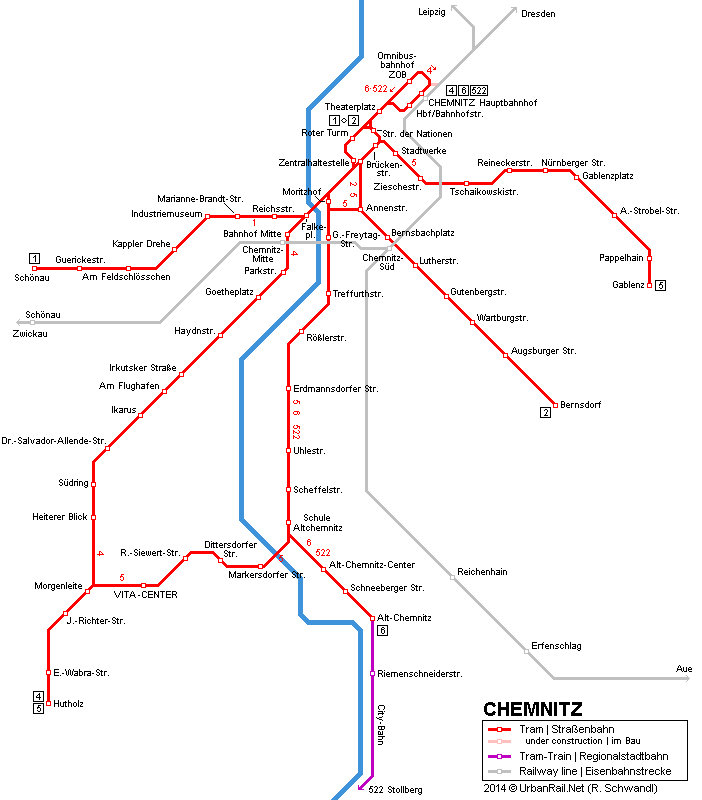
Chemnitz receives electro-diesel tram-train
21 Aug 2015

GERMANY: The first Vossloh CityLink electro-diesel tram-train for Chemnitz was presented to transport authority Verkehrsverbund Mittelsachsen on August 21. The second vehicle is currently at the Wildenrath test track.
In 2012 Vossloh won a ai??i??42Ai??3m contract to supply eight tram-trains for the network being developed around Chemnitz. This was followed by a ai??i??23Ai??7m order for four more earlier this year.
The tram-train is 37Ai??2Ai??m long and 2Ai??650Ai??mm wide. It has two entrance heights, with a mix of steps and ramps to suit the interior floor arrangement. Vossloh Rail Vehicles is providing the welded Duplex steel body shells, bogies and interior fittings, and Vossloh Kiepe is supplying the traction and control equipment and air-conditioning. In addition to the 600 V DC inverters, the vehicle has an MTU Powerpack with Stage IIIB-compliant 6H1800 water-cooled diesel engine rated at 390Ai??kW. The car can reach a maximum speed of 100Ai??km/h.
The tram-trains will operate from the existing tram networkai??i??s 600Ai??V and 750Ai??V DC overhead electrification, changing to diesel to reach BurgstAi??dt, Mittweida and Hainichen along railway lines. These three routes form the first stage of a project to develop 226 route-km of light rail by 2020.
Pork Barrel Alert!
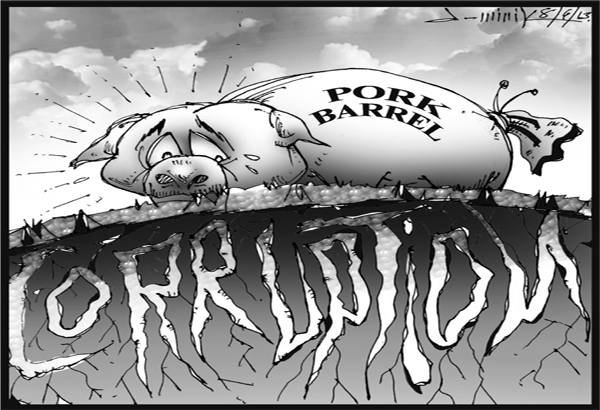
Well the TransLink pork barrel continues unabated and the real message this conveys is that the premier only regards TransLink as a dumping ground for Liberal lickspittles. The two appointees have absolutely “0” knowledge about public transit and like good little puppies, will do as they are told. Something like the “Duffy Affair”.
Expect no change in TransLink’s direction; it is a vehicle from which the Premier’s Office rewards friends and insiders, with the transit customer, again being left at the station.
If anyone thought that Fassbender had the courage to change TransLink, dispel those illusions now, because at TransLink, it is business as usual.
Former Vancouver police chief, former Surrey city manager appointed to TransLink board
By Keven Drews, THE CANADIAN PRESS August 20, 2015
The B.C. government has appointed Vancouver’s former police chief Jim Chu (left) and ex-Surrey city manager Murray Dinwoodie (right) to the board of directors of TransLink.
Photograph by: PNG files, …

Vancouverai??i??s former top cop and the past manager for British Columbiaai??i??s second-largest city have been named the newest board members of the regionai??i??s beleaguered transit authority.
Jim Chu and Murray Dinwoodie, from the City of Surrey, were appointed by the provincial government to TransLinkai??i??s board of directors on Thursday, a month and a half after voters rejected a plebiscite plan to raise $7.5 billion for transit upgrades.
TransLink chairman Barry Forbes welcomed Chu and Dinwoodie as he announced a ai???pauseai??? in the search for a new chief executive officer, a position left vacant following a post-plebiscite shakeup at the authority.
ai???We will resume the recruitment once the new board members have had time to get up to speed,ai??? Forbes said in a news release.
He said the board has ai???full confidenceai??? in acting CEO Cathy McLay to keep TransLink focused on getting commuters to their destinations.
The plebiscite resulted in 62 per cent of voters rejecting a half-per-cent tax hike to pay for transit upgrades amid allegations that people didnai??i??t trust TransLinkai??i??s use of public money.
Two of the authorityai??i??s top managers, Doug Kelsey and Bob Paddon, lost their jobs. At the end of July, TransLink began advertising for a new CEO, announcing applications would be accepted until Nov. 19 for the job with an annual salary of $320,000.
In July, Premier Christy Clark shuffled her cabinet to move Peter Fassbender from education to minister in charge of TransLink as well as the Ministry of Community, Sport and Cultural Development.
ai???Mr Chu and Mr. Dinwoodie have extensive experience, not only at the civic level but at the regional, provincial and national levels as well,ai??? Fassbender said in a news release Thursday.
ai???I am confident their contributions will be invaluable to the board as TransLink works to secure the confidence of the regionai??i??s taxpayers, both in relation to its fiscal management and its delivery of the transportation system so important to the region.ai???
Chu served 36 years with the Vancouver Police Department, and eight of those were as the chief constable. He retired in May and now serves as vice-president of the Aquilini Investment Group.
Dinwoodie was employed as the City of Surreyai??i??s general manager of planning and development from 1998 to 2006 and then served as city manager until 2014, when he retired.
The TransLink board is one of two bodies responsible for governing the transit authority.
Sapperton – Sapperton Station.
Sapperton Station (New Westminster) on the old BCE Burnaby lake Interurban Line, C. 1930’s.
A full build, Vancouver to Chilliwack TramTrain, could once again have a Sapperton Station.




Recent Comments