Vancouver’s 2040 Transportaion Plan Will Fail
With great fanfare and hoopla, the Vision Vancouver controlled city council has approved a rather vision-less transportation plan for the future. The plan is fatally flawed as the one tool with a proven record of reducing traffic, light rail or LRT/streetcar (tram for our European friends) is absent.
Pretty pictures of people crossing on a pedestrianized Granville St. Bridge, just won’t sell in the winter months, where wind and snow, will force people back into cars.
By the way, in yesterday’s rainstorm, how many cyclists did one see?
Vancouver’s planners have convinced themselves that a $4.5 billion subway under Broadway to UBC will make the plan work only demonstrates that Vancouver and its politicians are wearing a very deep shade of rose coloured glasses.
For a cost of a $4.5 billion SkyTrain subway under Broadway, we could easily build a 50 km. LRT/tram network for both Vancouver and Surrey, plus the RftV/Leewood full-build Vancouver to Chilliwack TramTrain and still have money left over!
But don’t mention this to Vancouver types as they believe that in Lotus land, they are the centre of the universe and that allAi??regional taxpayers should pay homage (as well as taxes) to Vancouver’s subway planning
2040 is doomed to failure, brought to you by a city and a city council that lives in a bubbleAi??which a transportation reality will soon burst.
Ai??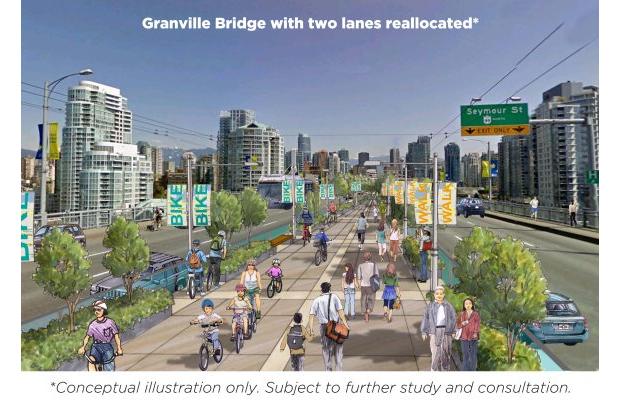 Instead of a pedestrianized walkway that would only be used about 6 months a year
at best, would not a LRT/streetcar line be better providing service all year long?
http://www.news1130.com/news/local/article/417592–council-passes-ambitious-transportation-plan
People love their cars or do they?
Portland sometimes struggles to find the right balance between car use and alternative modes of transportation. Striking the balance will require tough choices as population and housing density increase. Michael Lloyd/The Oregonian
http://www.oregonlive.com/opinion/index.ssf/2012/10/people_like_their_cars_a_fact.html
Funny, people love cars. That may be why data released last week by researchers at Metro, the regional government, showed as much. But don’t tell that to Metro’s elected councilors.
The Oregonian’s Joseph Rose reported they openly worried the public narrative arising from the data would spoil an urban planning party that contains the use of automobiles and promotes mass transit, bicycling and walkingAi??
Somewhere along the way, evil was assigned to the automobile. Cars belched smoke and created smog, guzzled gasoline, tore up expensive roads, hogged valuable road and yard space, warmed the Earth and alone made possible the concentric rings of prosperity sucking life from any city: the suburbs.
People like their cars”, here is a contra viewpoint which quotesAi?? figures
and some local background:
http://www.smh.com.au/nsw/highways-give-way-to-air-waves-as-the-young-opt-to-forgo-a-set-of-wheels-20121029-28fpo.html
-
Sydney has always had steady inner city population, as the city’sAi??
population grew the inner suburbs have continued to increase in value.
-
Sydney has always had a high proportion of car ownership.
Sydney is a larger city (5 million + population) and their has beenAi??a huge underspend in recent decades in public transport infrastructure.
There has not been a recession in Sydney.
Petrol (gas) prices have remained relatively stable thanks to theAi??
appreciation of the Australian $ making our imports cheaper.
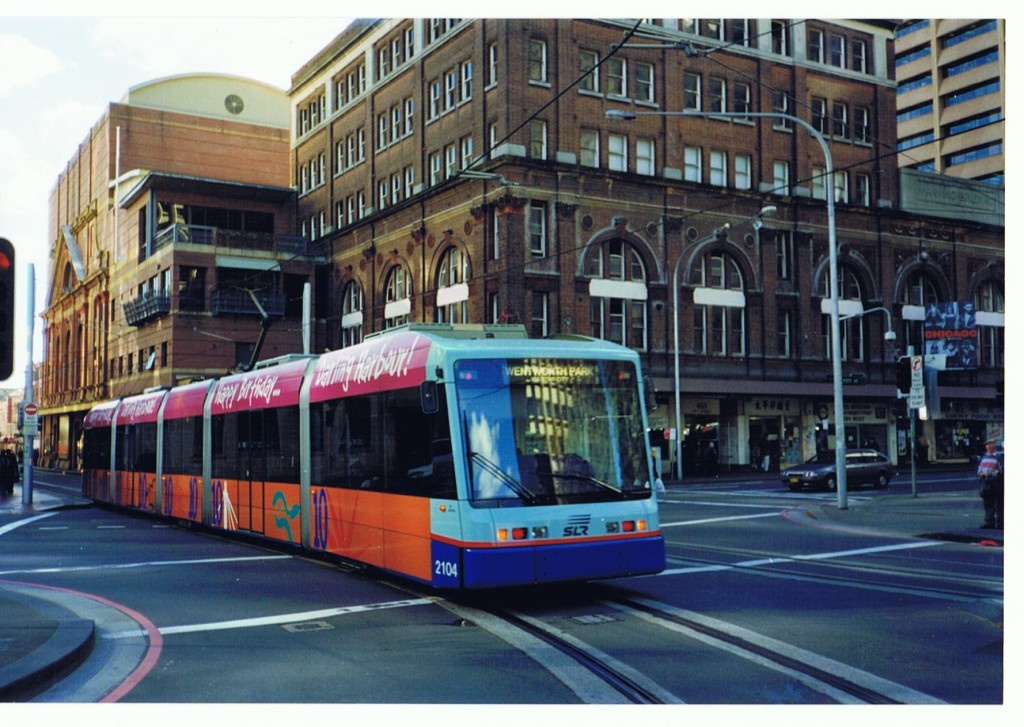
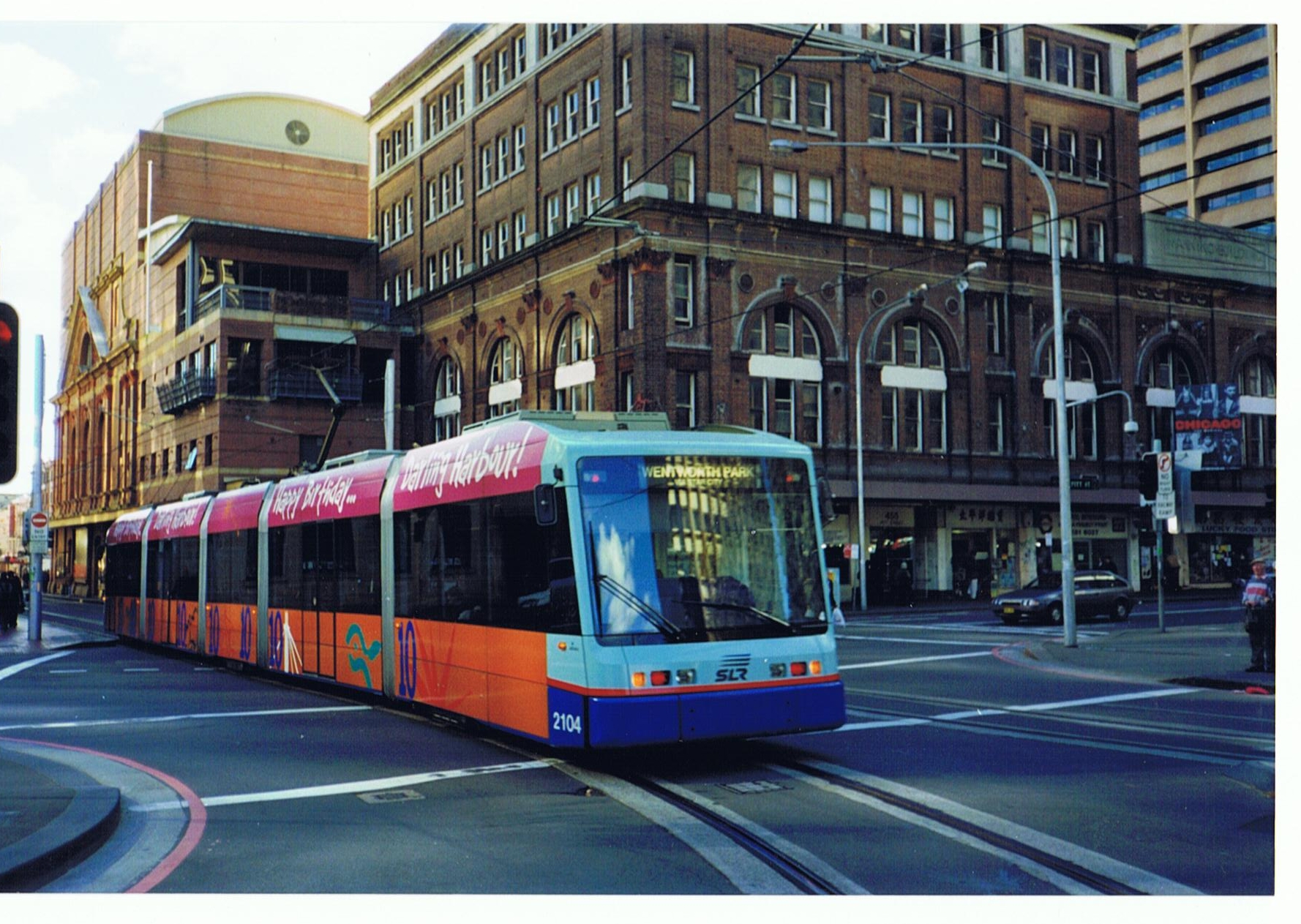
Sydney Light Rail
Ed Tennyson writes on the LRPPro e-group:
MORE GROSS DISHONESTY IN MEDIA
Auto people do love their cars but they also love Light Rail when
it helps them traval easier,faster and / ot at less cost.
I have no way to know, but I am preetty sure that oil company
advertising in the media permits them to demand such write-ups
in exchange for the ad revenue. I do not read the Oregonian buy
I see many full page and half-page ads by energy companies in
the Washington POST. I assume the OREGONIAN gets them, also.
Newspapers are hurting for money so will sell their soul to get it.
Back to the realities of life on earth.
Too many automobiles do pollute and fill the air with global
warming making hurricanes with record low barometric
pressure.
“the road to Hell is paved with good intentions”.
The Bible says “wide is the road that leadeth to destruction.
But, What About Hard Numbers?
In classic fashion, a TransLink news release to the mainstream media claims that, “there was a 17-per cent increase in the total number of trips taken on transit from 2008 to 2011.”, yet no hard numbers are used, and why not?
TransLink wants money, a lot of money and how better to groom the taxpayer into paying higher taxes, faresAi??and/or user charges/road pricing for general traffic, by releasing a golly gee whiz good news release claiming a 17% increase in ridership over a three year period; including, of course, the ridership spike during the 2010 Winter Olympicsai???.
Zwei has been around on the transit scene for over 30 years and this claim is just another from a long list of ridership bumf that TransLink releases to the media to counter claims by certain letters to the editor bad press in general.
Ridership claims given in percentages only and not includingAi??hard numbers mean absolutely nothing and until TransLink establishes a criteria for how it measures ridership and until then, any figures from TransLink must be treated as gravely suspect.

More using Transit
Vancouver/CKNW(AM980)People in Metro Vancouver are making more trips in a day and are more often choosing transit and cycling to get around.
The results are from the “trip diary survey” which draws data from over 22-thousand households.
The survey’s done every three to four years to get a ‘snapshot’ of a day of Metro Vancouver transportation.
Translink’s Drew Snider says there was a 17-per cent increase in the total number of trips taken on transit from 2008 to 2011.
The goal is to get 51-per cent of all trips to be made by transit, cycling or walking by the year 2040.
SkyTrain Is At The Centre Of TransLink’s Finacial Woes
 SkyTrain, the sum of TransLink’s financial evils.
Long time transit advocate, Malcolm Johnston has had a very good letter printed in the weeklies and at least one daily newspaper, pointing out that the SkyTrain and light-metro are at the root of TransLink’s financial ills.
No doubt the SkyTrain lobby will react negatively to Mr. Johnston’s letter, but their time is presently occupied chirping at TransLink because of the proposal to reduce headways by two minutes at slack times.
http://www.surreyleader.com/news/175694591.html
In 1980, SkyTrain was sold on the basis of being a ‘wonder system’ costing almost nothing to operate because it was driverless, while real experts predictedAi??a futureAi??of very largeAi??fiscal problems with the very expensive light-metro. Today those predictions have come true and in 1993, the study, “The Cost of Transporting……..”, firmly showed, with hard figures, that one SkyTrain line (the Expo Line) cost more to subsidize than all of BC Transit’s diesel and trolley bus linesAi??in the then GVRD.
It seems our current batch of so called transit experts promoting SkyTrain do not read nor want to read our local transit history and by doing so are leading local and BC taxpayer’s into financial Armageddon with road pricing.
Road pricing all about keeping status quo
Published: October 24, 2012 2:00 PM
The real reason for the newest flavour of taxation policies ai??i?? road pricing, to further fund a decrepit regional transit authority, can be laid squarely at the feet of both the SkyTrain light metro and the BC Liberal government pilfering of gas/carbon tax monies for general revenue.
Despite the hype and hoopla about SkyTrain, the proprietary light-metro is just too expensive to build and operate, as evidenced by the Canada Line which is not SkyTrain at all, but a cheaper off the shelf knock-off. SkyTrain was too expensive for the Canada Line.
On page 15, in the 1993, joint GVRD/Min. of Transportation report, ai???The Cost of Transporting People in the BC Lower Mainlandai???, it was revealed that the annual provincial subsidy for SkyTrain was $157.6 million; the combined subsidy for the diesel and trolley buses was just $132.4 million. With the addition of the Millennium Line, this subsidy increased to over $200 million and with the Canada line, this annual subsidy has now surpassed $300 million.
It becomes easier to see why there is no extra money for TransLink, because TransLink is already quietly getting a big chunk of transit cash from the province.
The Evergreen Line will only add to this annual subsidy, further exacerbating problems with TransLinkai??i??s dubious finances.
When the Gordon Campbell Liberals gained office, they instantly reduced taxes and greatly increased user fees and levies. To maintain revenue, the BC Liberals diverted gas tax and carbon tax monies into general revenue, to balance the books. Tax monies earmarked for regional transportation just disappeared into the black hole of general revenue.
TransLink is deliberately hiding the real truth about their ongoing financial malaise because they have compliant regional mayors who seem to be ever so willing to destroy their political careers to force yet another onerous tax on the taxed-out local taxpayer.
Road pricing is all about keeping the status-quo with the bloated bureaucrats at TransLink, who like alcoholics refusing to accept that they are addicted booze, are addicted to dated and transit planning and continue to squander huge sums of tax monies on SkyTrain such as the UBC SkyTrain subway in Vancouver. Road pricing is all about once again screwing the taxpayer to pay for bureaucratic and political hubris.
Malcolm Johnston, Delta
http://www.surreyleader.com/opinion/letters/175682541.html
As well an edited version was also printed in the Vancouver Sun
Federal Government Forces Transit P-3’s

In Europe, a P3 is a tool where by a private consortium is involved in the planning, design, building, and operation of a transit project, then ‘hires‘ money, in a form of a loan,Ai??from a bank or institution and assumes risk in the building and operation of a transit project.Ai??The P-3 consortium thenAi??pays back theAi??loan with the profit of the successful operation of the transit project. In Europe, a P-3 reduces the public’s cost for a transit projects.
In Canada, P’s are a sort of money laundering scheme, designed to spread and hide the real cost of a transit project over time,Ai??from the taxpayer. P-3’sAi??are also used as aAi??tool to protect corporate revenue streams, to the detriment of the local taxpayer. In Canada, for little investment the return on a P-3 can be many times higher than other investments and to top it all off, in Canada, those investing in a p-3 assumes little or no risk!
The Canada Line is a perfect example of a Canadian P-3, where the winning consortium, as a bit player,‘hired’ investment money both from banks and provincial retirement funds for the Canada Line P-3Ai??for aAi??fraction of theAi??total advertisedAi??cost of building the light-metro, assumed no risk, yet receives anywhere from $90 million to $100 million annually from TransLink and/or the provincial government or both. As the project is a P-3, exempt from Freedom of Information requests, the taxpayer does not know the true cost of the Canada line, which ranges anywhere between $1.8 billion to $2.8 billion, nor does the taxpayerAi??know the actual cost to operate the Canada Line.
It seems the Harper Government is forcing a P-3 on Edmonton’s newAi??LRT project, in a sort of Ponzi scheme investment,Ai??to insure healthy revenue streams for its corporate friends.
Public Right Yes! Monopoly Right No!
NoAi??to Secret Edmonton Transit Privatization Deal
– Jim Nugent –
OnAi??October 15 it was revealed that a secret deal has been made between EdmontonAi??City Council and the Harper government that seriously violates publicAi??interests in Edmonton’s transit system. Under this deal, the operation andAi??maintenance of the 13.8 km south-east light rail transit (LRT) line will beAi??handed over to a private for-profit operator under the most onerousAi??conditions. The deal was approved during anin camera meeting of City CouncilAi??held on August 29 and kept secret until now. It only became known when theAi??advocacy group Public Interest Alberta obtained information about the secret Council decision and released this information to the public.
AtAi??that August 29 meeting, Council went in camera to review terms dictated byAi??the Harper government as conditions for a federal funding contribution toAi??the $1.8 billion cost of the LRT
project. In return for funding, the HarperAi??government demanded that the LRT must also be operated and maintained by aAi??Ai??private operator. All but two councillors voted to accept Harper’sAi?? terms.
Prior to the August 29 meeting, Council had decided to use aAi??private-public-partnership (P3) arrangement to design and build the LRT,Ai??while operational control of this important public service would be kept inAi??Ai??Ai??Ai?? City hands. Under the rules and criteria of the federal infrastructure funding body P3 Canada, this would make the Edmonton LRT project eligible for federal funding. The Harper government though had changed its own rules.
InternationalAi??infrastructure monopolies prefer P3 arrangements that include the operationAi??and maintenance of infrastructure because this arrangement yields multi-year guaranteed revenue streams. Harper changed the rules to accommodate these monopoly interests.
When the city made an application to P3 Canada for $300-400 million in federal funding, even though the LRT project as it was set up was eligible under P3 Canada’s rules, the City’s plan was arbitrarily rejected. The Harper government told Edmonton that the project would have to be P3 all the way toAi??get any federal funding. The City would have to abandon its plan to keepAi??operation and maintenance under City control. It would have to hand theAi??whole project over to private for-profit operators.
AllAi??across the country, the Harper government has been using funding through P3Ai??Canada to impose similar private-public-partnership arrangements onAi??municipalities. For every type of infrastructure project requiring a federalAi??contribution, from water-treatment plants to LRTs, the Harper government is using funding blackmail to shove P3s down the throats of cities and towns.Ai??Elected municipal officials are often opposed to these arrangements,Ai??especially when they involve giving operational control of important urbanAi??services to for-profit operators and indebting municipalities in multi-yearAi??contracts. These arrangements are also opposed by workers building theAi??projects and providing services and by service users.
This interference in municipal affairs and dictate by the Harper government isAi??unacceptable, in Edmonton and elsewhere. The secret conniving of CityAi??Council with the Harper dictatorship to violate the public interest inAi?? transit services is also unacceptable.
SkyTrain & Canada Line Hubris At The Vancouver Sun

I see that the Vancouver Sun is continuing its propaganda campaign for the Canada Line with Saturday’s effort; “Future is bright for Cambie Corridor as development booms.”
http://www.vancouversun.com/news/Stories/813152/story.html#ixzz29rcrw1OW
What the article boils down to, is that the Canada Line was never about moving the public, nor reducing auto use (remember the 200,000 car journeys taken off the road that was restated ad nauseum, by Gordon Campbell and Kevin Falcon?) No, the Canada line is all about real estate and for land developers to make very big bucks. The article is almost desperate; “buyers lining up…..”, etc., but little or no mention about the subway itself.
The claim of 124,000 passengers a day can be taken with a grain of salt, as TransLink has always overstated ridership and with the media absent from any investigative reporting, Translink could get away with the claim that; “the moon was made of cheese.” TransLink has no way of calculating ridership and deduces ridership by an arcane formula which includes the U-Pass, car loading numbers at key points, and guesstimates.
Another question no one wants answered is how many $1.00 a day U-Pass users use the Canada line and is it true that over 25,000 U-pass users use the Canada line more than twice a day or even more? If it is true, then the Canada line is hemorrhaging huge amounts of money!
Still, the claim of 124,000 passengers a day for the metro, is very weak for a metro, which means the taxpayer has to make up the slack with higher subsidies and user fees. Read road pricing.
Zwei has stopped taking the delivery of the Sun years ago and whenAi??I read pap like this, I know I made the right decision!
Cities by the sea
A tale of two marine citiesai??i??
Bordeaux & Vancouver have much in common
-
Ocean location
-
Temperate climate
-
Situated on a major tidal river
-
A large natural seaport
-
Extensive transport links, river, rail, air & road to the hinterland
-
Comparable land area, both city & metropolitan areas
-
An outstanding urban and architectural ensemble
|
City |
Land Area Km2 |
Population |
Population Density /Km2 |
| Metro | Metro | Metro | |
| Vancouver | 2,878 | 2,314,000 | 5,249 |
| Bordeaux | 3,875 | 1,315,000 | 4,779 |
Ai??SkyTrain is a light rapid transit system in Metro Vancouver. SkyTrain uses fully automated trains on grade-separated tracks, running mostly on elevated guideways.
Lines Ai??Ai??Ai??Ai??Ai??Ai??Ai??Ai??Ai??Ai??Ai??Ai??Ai??Ai??Ai??Ai??Ai??Ai??Ai??Ai??Ai??Ai??Ai??Ai?? ai??i?? 3
Track Length Ai??Ai??Ai??Ai??Ai??Ai??Ai??Ai??Ai??Ai??Ai?? ai??i?? 88 Km
Daily RidershipAi??Ai??Ai??Ai??Ai??Ai??Ai?? – 400,000
The Bordeaux tramway is an at-grade Light Rail network, using five & seven segment articulated tram cars, running in dedicated ROWai??i??s.
Lines Ai??Ai??Ai??Ai??Ai??Ai??Ai??Ai??Ai??Ai??Ai??Ai??Ai??Ai??Ai??Ai??Ai??Ai??Ai??Ai??Ai??Ai??Ai??Ai?? ai??i?? 3
Track Length Ai??Ai??Ai??Ai??Ai??Ai??Ai??Ai??Ai??Ai??Ai?? ai??i?? 45 Km
Daily RidershipAi??Ai??Ai??Ai??Ai??Ai??Ai?? – 300,000
Ai??
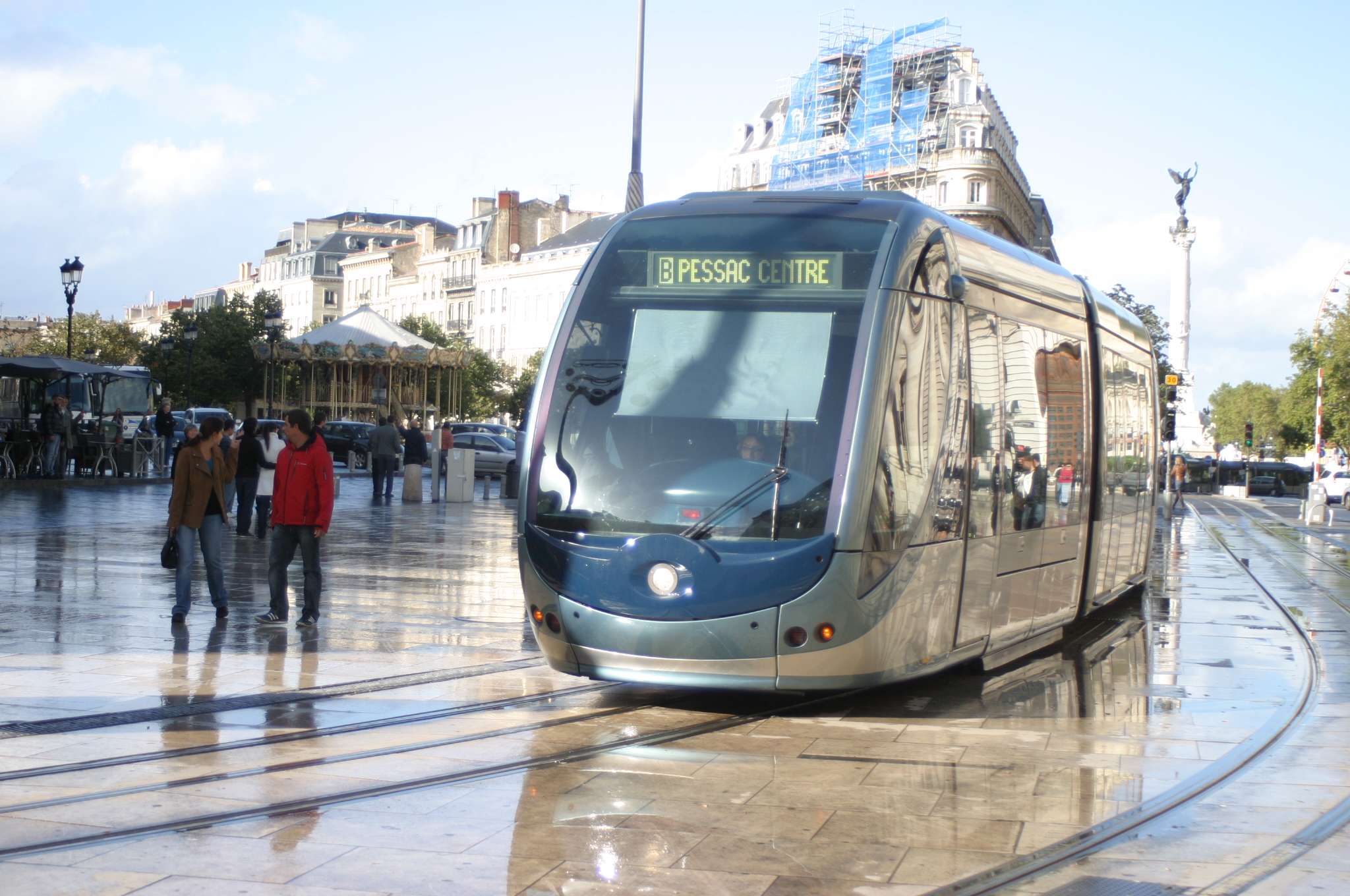
To Richard & those other Translink cheer leaders, whose mantra is:-
Trams/streetcars, at-grade LRT cannot possibly serve a comparably sized modern city ai??i?? you do not have any idea of what you are talking about ai??i?? look further than your city boundaries as others have got it right.
If your planners were not so hung up on accommodating the car, then you could have it right as well.
The Guru’s of Tax & Spend Are Grooming the Public for Road Pricing
Like a pervert on the Internet grooming children for lewd encounters, the powers that be in METRO Vancouver are grooming the public for “road pricing” for a very rude tax grab.
What is road pricing anyways?
Road pricingAi??and congestion charging are direct charges levied for the use of roads, including road tolls, distance or time based fees, congestion charges and charges designed to discourage use of certain classes of vehicle, fuel sources or more polluting vehicles.
Hard lobbying by the tax and spend crowd at TransLink, METRO Vancouver, and Simon Fraser UniversityAi??are trying to convince local taxpayers that road pricing is inevitable. Very few cities have road pricing or congestion charges and many pundits confuse road pricing with toll roads and bridges. Of course toll roads and bridges are a form of road pricing, in most cases the tolls collected were to fund and maintain a certain stretch of highway or a new bridge like the Golden Ears Bridge.
IfAi??politicians want to impose road pricing on the Vancouver METRO region, they region must provide an adequate transit alternative to the car and sorry for the bus crowd, this does not include buses or B-Line style express buses, otherwise known as BRT.
For the Vancouver METRO region to even consider road pricing, we should have a minimum of 300 km of rail transit, providing direct access to such destinations as downtown Vancouver and Stanley Park, SFU, UBC, BCIT, Whiterock, Tsawwassen Ferry terminal, Langley and Abbotsford (and YXX).
That current transit plans don’t include the majority of these destinations, road pricing will fail and those promoting such a scheme will be discredited and/or have their political careers terminated.
The reason of course why the road pricing debate is surfacing its ugly head is that we build with the very expensive SkyTrain light metro system or just slightly cheaper light metro such as the Canada Line, instead of much cheaper light rail. TransLink and many regional transit planners are stuck in the mud of 1980’s transit planning, where money was plentiful and all transit had to be grade separated to not to interfere with cars.
Today we live in the 21st century where money is hard to get and cities which seriously want to build affordable transit systems, build with LRT which has costs from one half to one tenth of that of light metro. Sadly, our local crop of politicians, planners and academics still believe we live in theAi??free spendingAi??80’s and refuse to accept the fiscal realities of today.
The likes of Gordon PriceAi??can blather on allAi??they want about road pricing, butAi??untilAi??the regionAi??actually provides a viable alternative toAi??extortion every time one drives, road pricing will remain aAi??wet dream for tax and spend bureaucrats and politicians.
Postscript: To see how SkyTrain has acted like a black hole for the taxpayers money, compare the RftV/Leewood TramTrain report for a 138 km. Vancouver to Chilliwack TramTrain (LRT) costing just under $1 billion with the 11.5 km. $1.4 billion Evergreen Line using SkyTrain.
Postscript 2: It seems the so called transit experts on the panel are not transit experts at all, rather engineers and salesmen for road pricing systems. Has anyone of the so called experts have a degree in urban transportation? I doubt it. This smells like the fare-gate fiasco, where shills for the fare-gate manufacturers convinced local politicos that the SkyTrain system needed faregates, despite the fact they will cost more to maintain and operate than fares lost to fare evasion!

Like it or not, regional tolling likely to happen: SFU prof
Local politicians gathering to talk about options today
Shane Bigham Oct 17, 2012
BURNABY (NEWS1130) – Local politicians are gathering today to discuss regional tolling options with a panel of experts from across North America.
Drivers might not be fond of the idea, but the head of Simon Fraser University’s City Program says it’s only a matter of time before it happens.
“It’s going to happen at some point in our future,” insists Gord Price. “Don’t know when, but now is not too soon to start thinking about it and at least getting approval in principle without having to go in and retroactively impose tolls on projects people think that they’ve already paid for.”
He notes tolling only bridges across the region probably wouldn’t work. “That just creates so many regional inequities that it’s going to be very tough to pull off.
“However, a road pricing system using new technologies does make a lot of sense,” he point out.
Mayors, councillors, and experts are gathering this afternoon at the Metro Vancouver offices in Burnaby to “open a dialogue” about road pricing.
Audit says TransLink could save $41 million by reducing SkyTrain frequency, taking other measures

The empty VCC/ClarkAi??SkyTrain, maybe a candidateAi??for closureAi??in non-peak hours.
This comes as no surprise.
As everyone knows, except for the most die-hard SkyTrain enthusiast, one tends to run driverless transit systems at close frequencies at times when there isn’t the demand for such a service. SkyTrain is a railway and like all other railways, the more one operates the service, the more wear and tear there is on the tracks, the vehicles, etc. and this comes at a cost.
Offering high capacity service at low demand times is a recipe for higher operational costs and SkyTrain is no different than LRT except, when there is reduced demand on an LRT system, less employees are used, not so for the automatic SkyTrain which requires almost the same number of employees during peak times and at slack times. It is already acknowledged that SkyTrain or light-metro is more expensive to operate than comparable LRT systems and is a very good reason why very few SkyTrain or light-metro systems are built today and those transit agencies who opt for light-metro having been well groomed by companies selling light metro.
One is intrigued by the phrase; “TransLink could find more than $41 million in potential savings by measures thatAi?? include reducing SkyTrain frequency during non-peak hours or converting toAi?? shuttles………..“
Does this mean that portions of the SkyTrain line do not have the ridership to justify ridership at off peak hours and a simple shuttle-bus service will suffice on portions of the light-metro line? If it does, it would be sound evidence that SkyTrain has been built on portions of route that did not justify such a service.
The VCC/Clark to Commercial Broadway portion of the Millennium Line comes to mind. Could this mean that service to VCC/Clark station maybe only a weekday service in the future?
Fiscal reality is not in TransLink’s lexicon and squandering the taxpayers money on bad or lazy management only underscores how unfit TransLink and the TransLink Board are for overseeing METRO Vancouver’s transit operations.
Transit reality is knocking at TransLink’s door, but is anyone listening?
Audit says TransLink could save $41 million by reducing SkyTrain frequency, taking other measures
By Kelly Sinoski, Vancouver SunOctober 16, 2012
METRO VANCOUVER — A provincial government audit suggests TransLink couldAi?? find more than $41 million in potential savings by measures that includeAi?? reducing SkyTrain frequency during non-peak hours or converting to shuttles ai??i?? orAi?? reducing or cancelling service ai??i?? on some of the lowest-performing routes.
The suggestions were among 27 recommendations in the audit, which wasAi?? released today, and recommends TransLink should also take a “less averse riskAi?? approach” to its conservative budgeting, which may help the organization reduceAi?? the need for future fare and tax increases.
Other recommendations include: freezing police and security hiring andAi?? conduct an efficiency review to determine the appropriate staffing levels afterAi?? the impact of the faregates and new ticketing legislation is known; using splitAi?? shifts to maximize cost efficiency; addressing absenteeism; and reviewing theAi?? bus maintenance work force.
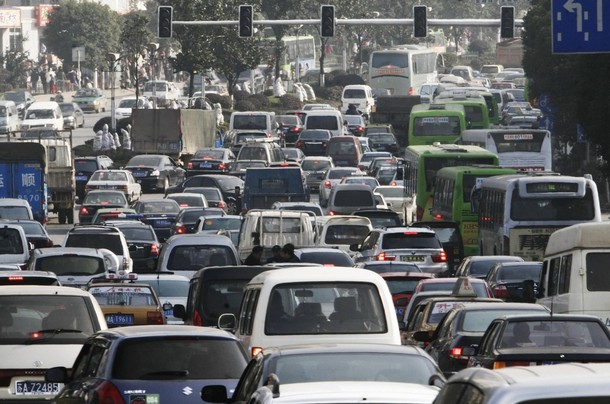
Vancouver second most traffic congested city in North America: report
Ha, ha, ha – or should I weep. I guess “rubber on asphalt” with a $8 billion SkyTrain Canada Line sweetener hasn’t worked. Does the taxpayer really want to throw more money at TransLink to carry on with their unworkable and unaffordable light-metro dreams?
The failure of the SkyTrain and the Canada Line light-metros to alleviate gridlock in the Vancouver METRO region should set off alarm bells with regional politicians, but it doesn’t. A very sad commentary indeed.
Vancouver second most traffic congested city in North America: report
By TIFFANY CRAWFORD, VANCOUVER SUNOctober 12, 2012
VANCOUVER – Traffic congestion in the Metro Vancouver area continues to be the second worst in North America after Los Angeles, according to a quarterly report by TomTom, a navigation and map supply company based in Amsterdam.
The congestion index of 26 cities in North America, released Thursday, also says Montreal and Toronto round out the Top 5 worst cities for congestion after San Francisco, in third place.
Vancouver has remained in second place since the last quarterly report was released in July. Ottawa, which was number 10 in July, was no longer in the Top 10.
To compile its list, TomTom monitored real travel time data captured by GPS equipment in customersai??i?? vehicles between April and June to compare the percentage change between non-peak times and rush hour.
The company, which also prepares a separate index for Europe, says that data show journey times in Vancouver are 33 per cent longer during the busy times than in non-peak times.
New Yorkers, in comparison, only wait 25 per cent longer in peak traffic times than do Vancouverites. New York is number 8 on the list, followed by Chicago and Miami.
In Metro Vancouver, the waiting times are longest during evening rush hour, according to the index, with a 69 per cent longer wait during the commute home in the car.
Metro Vancouverai??i??s congestion levels are worse on local and arterial roads than on highways, according to Nick Cohn, head of congestion research for TomTom.
Problem areas include roads leading to bridges such as the Knight Street, Oak and Lions Gate bridges, as well as downtown streets such as Georgia, Dunsmuir and Seymour.
The company says it aims to provide the public, industry and policy-makers with unbiased information about congestion levels in urban areas.
The top 10 most congested North American cities between April and June 2012, according to the TomTom congestion index:
1. Los Angeles 34 per cent
2. Vancouver 33 per cent
3. San Francisco 29 per cent
4. Montreal 28 per cent
5. Toronto 27 per cent
6. Washington 26 per cent
7. Seattle 26 per cent
8. New York 25 per cent
9. Chicago 23 per cent
10. Miami 22 per cent
Ai?? Copyright (c) The Vancouver Sun



Recent Comments