Rail for the Valley in the News!

The Rail for the Valley/Leewood TramTrain study has had region wide reporting, with most of the weekly papers featuring this historic news release.
Click here to download the full 84 page report
Surrey Leader, Langley Times & Chilliwack Progress, BC
http://www.bclocalnews.com/surrey_area/surreyleader/news/103467759.html
Valley light rail all go, twin groups claim
Vancouver Province
http://www.theprovince.com/life/Valley+light+rail+twin+groups+claim/3556678/story.html
Chilliwack Progress
http://www.bclocalnews.com/fraser_valley/theprogress/news/103467759.html
Ai??Ai??Report supports light rail
‘An honest accounting’ of the potential transit system
Chilliwack Times, BC
http://www.chilliwacktimes.com/news/Report+supports+light+rail/3555699/story.html
Ai??Ai??From the North Shore News
http://www.nsnews.com/columnists/Valley+residents+track+with+light+rail/3561755/story.html
Valley light rail all go, twin groups claim
Vancouver Province
http://www.theprovince.com/life/Valley+light+rail+twin+groups+claim/3556678/story.html
Even the Richmond Review and south Delta Leader has Jeff Nagel’s article!
http://www.bclocalnews.com/richmond_southdelta/richmondreview/news/103467759.html
CBC TV News
http://www.cbc.ca/video/#/News/Local_News/BC/ID=1596879406
Groundbreaking report on Interurban light rail
The Rail for the Valley/Leewood study is indeed historic, for it is the first time in over 30 years that a truly independent transit study, free of political and bureaucratic influence,Ai??Ai??has been done in the region. The studyAi??Ai??showsAi??Ai??that the region canAi??Ai??build a large ‘rail’ network cheaply, with an affordableAi??Ai??vision for future, cost effective extensions.
SkyTrain’s Achilles heel is cost and when one compares the per kilometer cost of the RftV TramTrain and SkyTrain, a full build TramTrain is less than 10% the cost per km. to build than SkyTrain light metro.
Click here to download the full 84 page report
Being affordableAi??Ai??to build, enables TramTrain to penetrate to areas, that would otherwise remain unserved by ‘rail‘. The ‘density’ argument, used successfully by TransLink and the provincial government to deterAi??Ai??’rail‘ expansion South of the Fraser, disappears as TramTrainAi??Ai??easily uses existing railway lines,Ai??Ai??without anyAi??Ai??any need for expensive ‘greenfields’ construction (like using the median of the Number 1 Hwy.). If on-street operation is desired in town centres, TramTrain can play the role of a streetcar or LRT, yet retaining the ability of cost effective operation to widely spaced population centres using existing rail lines.
The Evergreen Line has demonstrated that funding for SkyTrain is becoming harder and harder and if we look at the ‘full build’ RftV/Leewood Study, aAi??Ai??Vancouver/Richmond to Rosedale TramTrain would cost less than one billion dollars or put another way, for the over $1.4 billion Evergreen line, we could build the ‘full build’ TramTrain, plus a Vancouver to Port Moody TramTrain service as well! More rail service, servicing more customer destinations, is the best recipe for achieving a true modal shift from car to transit.
One hopes that the ‘powers that be’ understand that planning for expensive, ‘pie in the sky’ metro is becoming a fools gameAi??Ai??as there is just not the money to fund such grandiose schemes and in todays economy, TramTrain becomes a most viable option. The RftV/Leewood Study paves the way for a real and cost effective alternative for transit expansion in the METRO and Fraser Valley RegionsAi??Ai??and one hoped that the politicians will jump on board TramTrain, lest they be left at the station platform, waiting for a SkyTrain that will never come.

Groundbreaking report on Interurban light rail A?ai??i??ai??? released TODAY
Rail For The Valley is extremely excited to announce the release of a comprehensive independent analysis of the potential for light rail service on the existing and publicly owned Interurban Rail Corridor, connecting communities from Chilliwack to Vancouver with an affordable, sustainable public transportation system. The study, now complete, was performed by Leewood Projects.

About Leewood Projects:
Leewood Projects is a British-based company that has professional expertise in light rail solutions, providing comprehensive project management and planning services to the international railway industry. Leewood Projects has in the past had involvement in prestigious rail projects such as the Channel Tunnel.
Highlights of the the report:
- TramTrain technology: Track-sharing the existing Interurban rail line with freight operations.
- 20 minute (peak), 30 minute (off-peak) all-day service.
- An analysis of the track and needed upgrades.
- Railway stations designed as community gathering points. 10 full stations and 8 Tram Stops.
- A detailed Journey Time matrix for stops along the line.
- Total journey time between Surrey Scott Rd. SkyTrain Station and downtown Chilliwack: 90.5 minutes.
- Future proposed expansions of the line: Downtown Vancouver (Stage 2) and Rosedale (Stage 3).
- A detailed capital cost breakdown for the entire project.
This is the most comprehensive light rail study ever undertaken in this province, performed by a company with professional expertise in light rail solutions. This report at long last provides us with an honest accounting of the potential for light rail service on the Interurban corridor.
Groundbreaking report on Interurban light rail – released TODAY
UPDATE:
Major media coverage of the report
CBC News Video: Light rail recommended for Fraser Valley
Rail for the Valley – Breakfast Television on City TV
Langley Times editorial – Speed up transit decisions
Langley Advance: Study lauds light rail
Chilliwack Times: Report supports light rail: ‘An honest accounting’ of the potential transit system
Chilliwack Times: Mayor remains mum on latest rail system study
Abbotsford Times: Report supports valley light rail
Chilliwack Progress: Regional transportation needs ‘holistic’ approach
Surrey Leader Editorial: We should get on track (Frank Bucholtz)
North Shore News: Valley residents on track with light rail
Vancouver Province: Valley light rail all go, twin groups claim
News 1130: Commuter rail service to the Valley is affordable – study
Rail For The Valley is extremely excited to announce the release of a comprehensive independent analysis of the potential for light rail service on the existing and publicly owned Interurban Rail Corridor, connecting communities from Chilliwack to Vancouver with an affordable, sustainable public transportation system. The study, now complete, was performed by Leewood Projects.
About Leewood Projects:
Leewood Projects is a British-based companyAi??Ai??that has professional expertise in light rail solutions, providing comprehensive project managementAi??Ai??and planning services to the international railway industry. Leewood Projects has inAi??Ai??the past had involvement inAi??Ai??prestigious rail projects such as theAi??Ai??Channel Tunnel.
Highlights of the the report:
- TramTrain technology: Track-sharing the existing Interurban rail line withAi??Ai??freight operations.
- 20 minute (peak), 30 minute (off-peak) all-day service.
- An analysis of the track and needed upgrades.
- Railway stations designed as community gathering points. 10 full stations and 8 Tram Stops.
- A detailed Journey Time matrix for stops along the line.
- Total journey time between Surrey Scott Rd. SkyTrainAi??Ai??Station and downtown Chilliwack: 90.5 minutes.
- Future proposed expansions of the line: Downtown Vancouver (Stage 2)Ai??Ai??and Rosedale (Stage 3).
- A detailed capital cost breakdown for the entire project.
This is the most comprehensive light rail study ever undertaken in this province, performed by a company with professional expertise in light rail solutions. This report at long last provides us with an honest accounting of the potential for light rail service on the Interurban corridor.
A Must Read For Regional Mayors Before They Talk Transit Funding!

SinceAi??Ai??the spring of 2008, the Light Rail Committee has circulated an E-Mail sent by American transit and transportation expert, Gerald Fox to a Victoria transit group that wants to promote LRT and TramTrain in the Capital Region. Mr. Fox easily shreds TransLink’s business case for the Evergreen Line which shouldAi??Ai??forewarn transit groups and regional politiciansAi??Ai??in the Fraser Valley that TransLink easily manipulates statistics to favour SkyTrain to the detriment of light-rail and is not to be trusted with any transit study. The following is the text of the E-Mail and for those lobbying for the return of the Interurban, just substitute the Fraser Valley for Victoria.
The letter, first published in in this blog December 27th, 2008 is reprinted in light of this weeks meeting of regional mayors with Transportation Minister Shirley Bond and the Premier of BC, regarding funding for the Evergreen Line.
The question is basic: If TransLink’s business case for the Evergreen line is dishonest, then would a funding formula for the Evergreen line be equally dishonest?
From: A North-American Rail Expert (Gerald Fox)
Subject: Comments on the Evergreen Line “Business Case”
Date: February 6, 2008 12:15:22 PM PST (CA)
Ai??Ai??Greetings:
Ai??Ai??The Evergreen Line Report made me curious as to how TransLink could justify continuing to expand SkyTrain, when the rest of the world is building LRT. So I went back and read the alleged “Business Case” (BC) report in a little more detail. I found several instances where the analysis had made assumptions that were inaccurate, or had been manipulated to make the case for SkyTrain. If the underlying assumptions are inaccurate, the conclusions may be so too. Specifically:
Ai??Ai??Capacity. A combination of train size and headway. For instance, TriMet’s new “Type 4” Low floor LRVs, arriving later this year, have a rated capacity of 232 per car, or 464 for a 2- car train. (Of course one must also be sure to use the same standee density when comparing car capacity. I don’t know if that was done here). In Portland we operate a frequency of 3 minutes downtown in the peak hour, giving a one way peak hour capacity of 9,280. By next year we will have two routes through downtown, which will eventually load both ways, giving a theoretical peak hour rail capacity of 37,000 into or out of downtown. Of course we also run a lot of buses.
Ai??Ai??The new Seattle LRT system which opens next year, is designed for 4-car trains, and thus have a peak hour capacity of 18,560. (but doesn’t need this yet, and so shares the tunnel with buses). The Business Case analysis assumes a capacity of 4,080 for LRT, on the Evergreen Line which it states is not enough, and compares it to SkyTrain capacity of 10400.!
Ai??Ai??Speed. The analysis states the maximum LRT speed is 60 kph. (which would be correct for the street sections) But most LRVs are actually designed for 90 kph. On the Evergreen Line, LRT could operate at up to 90 where conditions permit, such as in the tunnels, and on protected ROW. Most LRT systems pre-empt most intersections, and so experience little delay at grade crossings. (Our policy is that the trains stop only at stations, and seldom experience traffic delays. It seems to work fine, and has little effect on traffic.) There is another element of speed, which is station access time. At-grade stations have less access time. This was overlooked in the analysis.
Ai??Ai??Also, on the NW alignment, the SkyTrain proposal uses a different, faster, less-costly alignment to LRT proposal. And has 8 rather than 12 stations. If LRT was compared on the alignment now proposed for SkyTrain, it would go faster, and cost less than the Business Case report states!
Ai??Ai??Cost. Here again, there seems to be some hidden biases. As mentioned above, on the NW Corridor, LRT is costed on a different alignment, with more stations. The cost difference between LRT and SkyTrain presented in the Business Case report is therefore misleading. If they were compared on identical alignments, with the same number of stations, and designed to optimize each mode, the cost advantage of LRT would be far greater. I also suspect that the basic LRT design has been rendered more costly by requirements for tunnels and general design that would not be found on more cost-sensitive LRT projects.
Ai??Ai??Then there are the car costs. Last time I looked, the cost per unit of capacity was far higher for SkyTrain. Also,it takes about 2 SkyTrain cars to match the capacity of one LRV. And the grade-separated SkyTrain stations are far most costly and complex than LRT stations. Comparing 8 SkyTrain stations with 12 LRT stations also helps blur the distinction.
Ai??Ai??Ridership. Is a function of many factors. The Business Case report would have you believe that type of rail mode alone, makes a difference (It does in the bus vs rail comparison, according to the latest US federal guidelines). But, on the Evergreen Line, I doubt it. What makes a difference is speed, frequency (but not so much when headways get to 5 minutes), station spacing and amenity etc. Since the speed, frequency and capacity assumptions used in the Business Case are clearly inaccurate, the ridership estimates cannot be correct either. There would be some advantage if SkyTrain could avoid a transfer. If the connecting system has capacity for the extra trains. But the case is way overstated.
Ai??Ai??And nowhere is it addressed whether the Evergreen Line, at the extremity of the system, has the demand for so much capacity and, if it does, what that would mean on the rest of the system if feeds into?
Ai??Ai??Innuedos about safety, and traffic impacts, seem to be a big issue for SkyTrain proponents, but are solved by the numerous systems that operate new LRT systems (i.e., they can’t be as bad as the SkyTrain folk would like you to believe).
Ai??Ai??I’ve no desire to get drawn into the Vancouver transit wars, and, anyway, most of the rest of the world has moved on. To be fair, there are clear advantages in keeping with one kind of rail technology, and in through-routing service at Lougheed. But, eventually, Vancouver will need to adopt lower-cost LRT in its lesser corridors, or else limit the extent of its rail system. And that seems to make some TransLink people very nervous.
Ai??Ai??It is interesting how TransLink has used this cunning method of manipulating analysis to justify SkyTrain in corridor after corridor, and has thus succeeded in keeping its proprietary rail system expanding. In the US, all new transit projects that seek federal support are now subjected to scrutiny by a panel of transit peers, selected and monitored by the federal government, to ensure that projects are analysed honestly, and the taxpayers’ interests are protected. No SkyTrain project has ever passed this scrutiny in the US.
Ai??Ai??Victoria
Ai??Ai??But the BIG DEAL for Victoria is: If the Business Case analysis were corrected to fix at least some of the errors outlined above, the COST INCREASE from using SkyTrain on the Evergreen Line will be comparable to the TOTAL COST of a modest starter line in Victoria. This needs to come to the attention of the Province. Victoria really does deserve better. Please share these thoughts as you feel appropriate.
Light Rail News Round Up
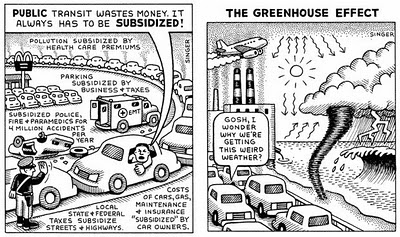
Some news about LRT and transit from the USA and Europe.
Houston
http://triptotheouthouse.files.wordpress.com/2009/07/metrorail-houston.jpg
Ai??Ai??http://www.flickr.com/photos/16638697@N00/186998827
Ai??Ai??Oslo
http://i46.tinypic.com/11j43s4.jpg
Ai??Ai??http://lh6.ggpht.com/_-sUKhyFR7PM/RrxuaQKw-FI/AAAAAAAABus/hVt9hZCtBaw/IMG_1897.JPG
TAMPA – More than a decade ago, Phoenix baseball officials showcased a video of their state of the art ballpark during a lavish Tampa Bay reception, overwhelming the home team’s introduction of Tropicana Field.
Local business and civic leaders that night yearned for a comparable facility, even before the Rays’ first season had begun.
Once again local officials are casting an envious eye toward Phoenix. This time they are studying a 20-mile light rail system that could serve as a model for a proposed system in Tampa.
WASATCH FRONT — The Utah Transit Authority says work on five new TRAX rail lines is steadily progressing. Riders are expected to be able to hop on light rail on the west side of the Salt Lake Valley by next fall.
All five lines are expected to be done by 2015, which will add 70 miles to UTA’s existing 64-mile rail network.
In the not-too-distant future, commuters on TRAX will have a lot more rail to ride.
http://www.ksl.com/?nid=148&sid=12455377
Toronto – letter: candidates have heads in asphalt Candidates’ transit ideas defy reality
http://www.thestar.com/opinion/letters/article/862432–candidates-transit-ideas-defy-reality
Ottawa’s largest independent business organization is jumping onboard Ottawa’s $2.1 billion Light Rail Transit Plan.
http://www.cfra.com/?cat=1&nid=75698
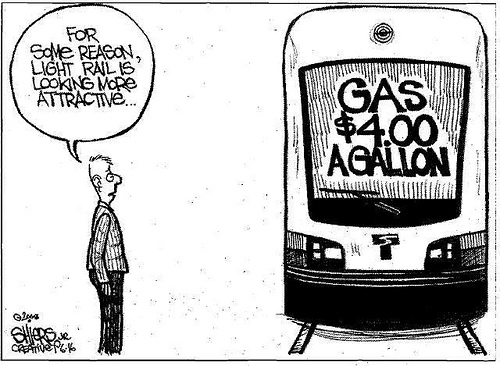
Transit Blogs

Well, if you are stuck inside due to our heavy rain, here are some interesting transit blogs to peruse.
You may not have come across some of these before:
http://www.andrewgrantham.co.uk/
Ai??Ai??http://www.cahsrblog.com/
Ai??Ai??http://capntransit.blogspot.com/2009/03/feds-relax-restrictions-for-light-rail.html
Ai??Ai??http://www.friendsoftheotrain.org/
Ai??Ai??http://urbanmilwaukee.com/2008/07/14/milwaukee-transit-the-technologies/
Ai??Ai??http://www.pdxtransit.com/index.php/2009/08/14/the-o-train-ottawas-light-rail/
Ai??Ai??http://theoverheadwire.blogspot.com/
Ai??Ai??http://melbpt.wordpress.com/tram-construction-costs/
Ai??Ai??http://stevemunro.ca/
Ai??Ai??http://transport514.wordpress.com/
As Predicted – "Mayors consider raising taxes to pay for TransLink"
Ai??Ai??As predicted yesterday:
TransLink is in a conundrum; there is no money for new metro expansion and the bureaucracy refuses to plan for much cheaper light rail. There is no way out, either taxes must increase to pay for metro constructionAi??Ai??or the transit system stagnates and becomes even more unattractive product for customers.
It seems Langley City Mayor and the rest of the regional mayors are going to take the cowards way out, by raising everyones municipalAi??Ai??taxes to build the Tri_Cities Millennium Line. Instead of questioning the need to build, yet again, another hugely expensive metro line on a route that doesn’t have the ridership to justify the investment, regional mayor should look at cheaper options. Instead of saying “NO” to TransLink and their dated andAi??Ai??cumbersome metro planning, they are going again to attack the taxpayer to fund political and bureaucratic metroAi??Ai??dreams.
Next week, Rail for the Valley will be releasing a document that shows that we can build ‘rail‘ transit cheaper, far cheaper than the planning mandarins, in their ivory towers, on Kingsway can plan for. Here is an example: for the cost of the $1.4 billion plus Evergreen Line, we can build 140 km. of TramTrain in the region plus a Vancouver to Maple Ridge TramTrain service!
Does Mayor Fassbender want a political reaction like the HST, by raising taxes for a transit mega project that in the past has failed to induce a modal shift from car to transit? Are regional mayors so insensitive to the effects of another tax hike to build something that can be achieved for a fraction of its price.
It is time regional mayors hire an independent transportation consultant to give an alternative opinion for transit solutionsAi??Ai??in the region than what the well heeled bureaucrats at TransLink want forced on the public. Rail For The Valley certainly canAi??Ai??suggestAi??Ai??one!

Mayors consider raising taxes to pay for TransLink
Funds needed to build Evergreen Line
By KELLY SINOSKI, Vancouver Sun – September 15, 2010Metro Vancouver mayors will likely consider a separate financial supplement to pay for TransLinkA?ai??i??ai???s $400-million share of the Evergreen Line by the end of the year.
Peter Fassbender, chairman of the mayorsA?ai??i??ai??? council on regional transportation, said Wednesday the mayors hope to fund their commitment for the rapid transit line, or the provincial government will come up with another way to make them pay for it.
A funding supplement would have to be approved by regional mayors, and could involve raising fuel or property taxes to bring in extra money for TransLink. The province has already said the Evergreen Line, the regionA?ai??i??ai???s top priority, will be built to connect Coquitlam to Vancouver via Port Moody. The provincial and federal governments have committed their share of the project.
A?ai??i??Ai??We have a window of time to either come up with our commitment or the government will have to do something else,A?ai??i??A? Fassbender said. A?ai??i??Ai??[A financial supplement] is the only way we can come up with our share. What it looks like I donA?ai??i??ai???t know yet because it hasnA?ai??i??ai???t been developed.A?ai??i??A?
Fassbender will meet Premier Gordon Campbell and Transportation Minister Shirley Bond next week to examine long-term issues of TransLinkA?ai??i??ai???s financial woes.
He said he canA?ai??i??ai???t A?ai??i??Ai??pre-supposeA?ai??i??A? what decisions will be made at the meeting but hopes A?ai??i??Ai??weA?ai??i??ai???ll be moving forward in a positive way.
A?ai??i??Ai??The purpose is to talk about working together to deal with sustainable funding and issues in transportation. ItA?ai??i??ai???s not going to be easy.A?ai??i??A?
A report this week by transportation commissioner Martin Crilly suggested TransLink is still struggling to pay for transit services and will have to look at other methods if itA?ai??i??ai???s to meet the ambitious goals in its 2040 plan.
A?ai??i??Ai??To gain ground on the background growth of the region, a greater portion of the regionA?ai??i??ai???s wealth will need somehow to be devoted to providing that capacity,A?ai??i??A? he said in the report. A?ai??i??Ai??TransLink has yet to solve the conundrum of funding for capacity expansion, and cannot do so alone.A?ai??i??A?
Crilly said Wednesday TransLink will have to move in the direction of a A?ai??i??Ai??user-payA?ai??i??A? system to continue to build transit infrastructure and operate it. Road pricing is just one example, he said, to get more people out of single vehicles and using transit or carpooling.
A?ai??i??Ai??That really is a more efficient use of space,A?ai??i??A? he said. A?ai??i??Ai??But in order to increase capacity itA?ai??i??ai???s going to mean people will end up spending less on private travel and more on collective travel.A?ai??i??A?
Mayors, Premier and Transportation Minister to meet next week – The Blind Leading the Blind
Talk about the blind leading the blind.
BC Transportation Minister, Shirley Bond (who knows little or nothing about transit), the besieged premier (who knows that building glitzy metro lines buys votes), and regional mayors (who are equally unread on transit) are going to have a private meeting regarding TransLink’s ongoing financial crisis. The first hing that must be done is to invite the public, simply because the public is public transit’s customers and politicians should value their input.Ai??Ai?? Secondly, TransLink and the Premier must understand that TransLink’s perennial financial malaise is due mainly to the SkyTrain light-metro system and our perverse penchant to build very expensive to build and operateAi??Ai??light-metro lines instead of modern light rail!
To date the taxpayer has unknowingly spent over $8 billion for our metro system, yet forAi??Ai??less than one Ai??Ai??half the cost, by building with modern LRT we could have had almost double the route mileage – more trams, serving more destinations providing more incentive for people to use transit! Now there is a clever thought!
Added to TransLink’s woes, is the singular fact that the SkyTrain light-metro systemAi??Ai??has failed toAi??Ai??attract the motorist from the car and it is just far too expensive to extend in lighter populated areasAi??Ai??and has not proven to beAi??Ai??a credible transit alternative for the car. TheAi??Ai??current hype and hoopla about the Canada LineAi??Ai??is merely self servingAi??Ai??window dressing to sell the public on building more metro, but in real terms, for about $2.8 billion costs to date, the new metro has attracted only about 4,000 to 5,000 new riders (which is about normal for a new ‘rail’ line) and the new riders are mainly the elderly going to the River Rock Casino or Asian shopsAi??Ai??in RichmondAi??Ai??most usingAi??Ai??discountedAi??Ai??concession faresAi??Ai?? and students using $1.00 a day U-Passes! The RAV/Canada line has yet to show that it has attracted the motorist from the car.
Yes, the airport is also garnering new ridership, but do not forget the 15 minute serviceAi??Ai??Airporter bus the Canada Line metro replaced.
TransLink is in a conundrum; there is no money for new metro expansion and the bureaucracy refuses to plan for much cheaper light rail. There is no way out, either taxes must increase to pay for metro constructionAi??Ai??or the transit system stagnates and becomes even more unattractive product for customers.
Next week, Rail for the Valley will present an affordable alternative to TransLink’s present grandiose metro and subway plans, the problem is: Will the premier, Ms. Bond and regional mayors listen!

In BC Rubber on Asphalt Rules!
Mayors, Premier and Transportation Minister to meet next week
A closed-door meeting between Metro Vancouver mayors, Premier Gordon Campbell and Transportation Minister Shirley Bond next week is expected to go a long way toward settling TransLinkA?ai??i??ai???s financial woes.Langley City Mayor Peter Fassbender, chairman of the Metro mayorsA?ai??i??ai??? council on transportation, canA?ai??i??ai???t presume to say exactly what will come out of the meeting.
But he and TransLink CEO Ian Jarvis will both speak at the Tri-Cities Chamber of Commerce luncheon that follows the meeting. Cambell and Bond will also be in attendance.
When asked if there will finally be some news about TransLinkA?ai??i??ai???s long-standing cash crunch, Fassbender replied: A?ai??i??Ai??We will at least be demonstrating where we need to go and how weA?ai??i??ai???re going to get there together.
A?ai??i??Ai??My hope is that Thursday will be a major step forward in finding the answer specifically to the question people have of A?ai??i??E?How are you going to do this?A?ai??i??ai???A?ai??i??A? said Fassbender
A?ai??i??Ai??TheyA?ai??i??ai???re not easy answers,A?ai??i??A? he said. A?ai??i??Ai??There isnA?ai??i??ai???t a quick fix here.A?ai??i??A?
The situation has come to a crossroads.
A?ai??i??Ai??WeA?ai??i??ai???re either going to move ahead or itA?ai??i??ai???s clear we canA?ai??i??ai???t work together,A?ai??i??A? said Fassbender. A?ai??i??Ai??But you know what? I believe we can.A?ai??i??A?
The problem of TransLink funding was highlighted again Monday night when transportation commissioner Martin Crilly gave his seal of approval to the transportation authorityA?ai??i??ai???s 2011 plans.
Crilly pointed out that TransLink doesnA?ai??i??ai???t have the money to do what its own long-range plans to 2040 call for or what the region needs according to Metro Vancouver.
A?ai??i??Ai??To gain ground on the background growth of the region, a greater portion of the regionA?ai??i??ai???s wealth will need somehow to be devoted to providing that [transportation] capacity,A?ai??i??A? said Crilly in a release.
A?ai??i??Ai??TransLink has yet to solve the conundrum of funding for capacity expansion, and cannot do so alone,A?ai??i??A? said Crilly.
European News
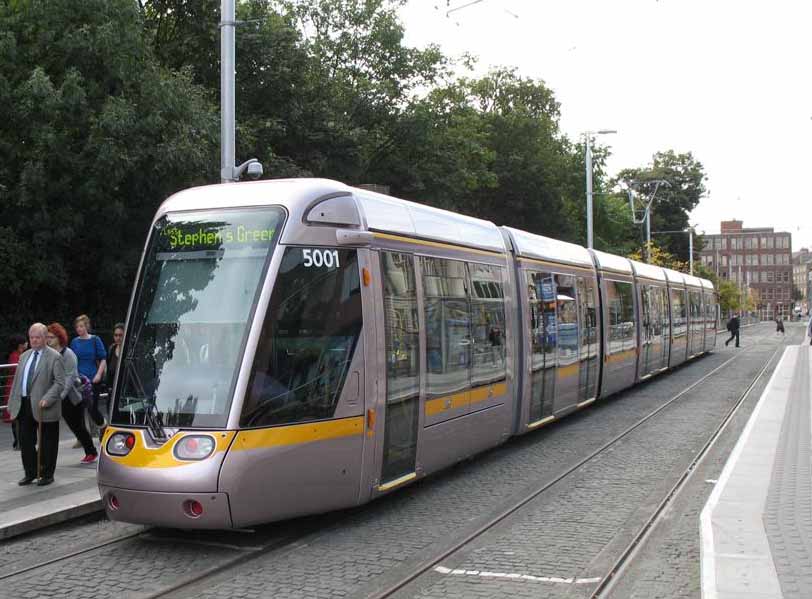
Dublin Citadis Tram
ALSTOM ORDER FOR RATP LINE T3
Alstom has received zamA?A?wnienie for 25 tramsAi??Ai??for Paris.Ai??Ai??Twenty-fiveAi??Ai??Citadis trams ordered a French Alstom RATP – the operator of public transport in Paris. Warehouses to be delivered in 2012.Ai??Ai?? The Alstom order was announced today an option agreement signed in December 2003 . Its value is EUR 77 million, along with tools and spare parts – 85 million.
Commissioned by the Paris tramway will be 44 meters in length and capacity of over 300 passengers, including 78 on the seats. T3 .
Alstom has confirmed the receipt of ordersfor tramsAi??Ai??from 34 cities including Citadis 1431 -s. The RATPAi??Ai??tramsAi??Ai??comes in two widths – 2.4 meters and 2.65 meters.
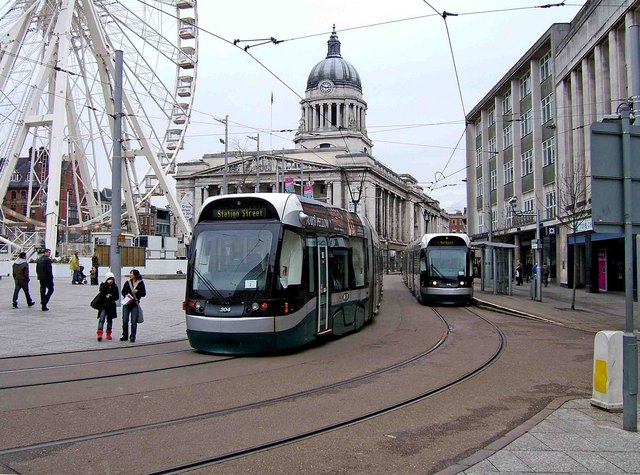
Nottingham
Nottingham named England’s least car-dependent city
Nottingham’s investment in cycle tracks, a tram network and buses made it the top ranking city for green transport
http://www.guardian.co.uk/environment/2010/sep/14/nottingham-named-least-car-dependent
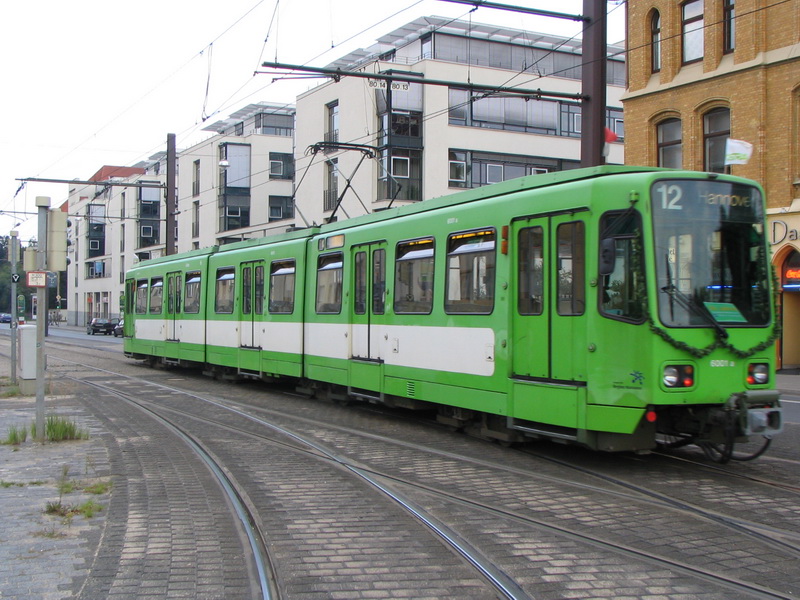
TW6000 tram
Budapest transport company to buy second-hand German trams
http://www.bbj.hu/?col=1000&id=54186
Ai??Ai??The Budapest transport company BKV will buy 16 second-hand TW6000 trams
http://img17.imageshack.us/my.php?image=20050925170456.jpg
for about HUF 160 million as a result of a public procurement tender, = CAD$740,960.00 or about CAD$46,300 per unit BKV told MTI on Thursday. The trams will replace some of the old Ganz trams from early next year.
Angers: first video from inside new tram



Recent Comments