First day passengers pay for Seattle light rail – From the Seattle PI
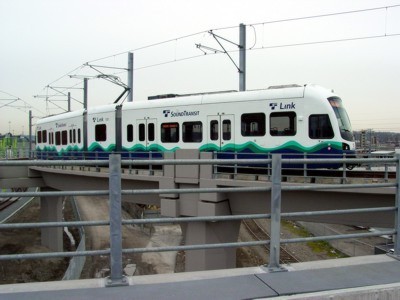
The costs for Seattle’s hybrid light-metro/rail system are about on par with Vancouver’s SkyTrain, indeed there was a lot of collaboration from Vancouver’s transit planners and Seattle’s planners on ‘rail’ transit. What Seattle has is an extremely expensive light rail system that resembles a ‘poor-man’s’ metro than light rail. The massive costs of expansion will retard Seattle’s LRT system until planners fully understand the modern light rail philosophy of build lots; built it cheap; and build it on the surface to attract customers.
I would have thought Seattle’s transit planners would have done better to listen to Portland’s light rail planners as their system goes from strength to strength. It will be the Seattle taxpayer that will have to reign in the extravagant transit planning to a more realistic level; of course METRO Vancouver’s taxpayers have never had a chance to vote on any transit initiative, with the provincial government commanding, “You will get SkyTrain whether you like it or not!”
SEATTLE — After 92,000 passengers tried out Seattle’s new light rail line over the weekend for fun, the first fare-paying commuters boarded trains Monday on the 14-mile line between downtown Seattle and Tukwila.
Fares range from $1.75 to $2.50. Riders buy tickets at vending machines or use pre-paid Orca smart cards. Bus passes and transfer slips are also recognized.
Construction of the city’s new mass transit system took five years and cost $2.3 billion. By the end of the year Sound Transit says light rail will reach Sea-Tac Airport.
By 2016, a $1.9 billion tunnel will reach the University of Washington. And voters have already approved spending $18 billion to extend lines to suburban stops in Lynnwood, Federal Way and Redmond.
The high cost of subway construction compared to LRT

Ai??Ai??The following excerpt from the UK House of Commons Select Committee on light rail, 2000, reported the following subway construction costs in 2004 Canadian dollars:Ai??ai??i??
Toulouse metro line B – CAD $161 million/km.
Turin metro extension – CAD $196 million/km.
Meteor Metro, Paris – CAD $290 million/km.
Singapore metro – CAD $420.7 million/km.
Jubilee Line extension, London – CAD $559 million/km.
Ai??Ai??
The average cost for three newly built LRT lines in the UK: $16. 1 million/km.
All aboard: Seattle’s Light rail service starts Saturday
Even though Seattle’s new light rail service has more in common with Vancouver’s SkyTrain, with many tunnels and viaducts, it still retains the all important ability to operate on lesser rights-of-ways or even trackshare with mainline railways. Seattle’s transit planners have much in common with Vancouver’s transit planners: the more costly the transit system is, the better it is. One hopes that transit planning matures in Seattle and that local transit planners learn from their mistakes.
All being said, one wishes Seattle’s ‘LINK’ LRT success!
Ai??

From the Seattle PI:
All aboard: Light rail service starts Saturday
By SCOTT GUTIERREZ
SEATTLEPI.COM STAFFSeattle, can you hear that train a-comin’?
Thirteen year after voters approved the taxes to build it, Sound Transit’s Central Link light rail opens for service Saturday. Trains will run every 71/2 minutes from stations along the 14-mile line between Westlake Center in Seattle and the massive, glass-encased station in Tukwila at South 154th Street and Tukwila International Boulevard.
Passengers can ride for free during the inaugural weekend. Sound Transit officials had no predictions on opening day ridership, but are ready for up to 100,000. Their best reference is Phoenix, Ariz., where the city’s new Metro light rail logged 90,000 riders when it opened last December, with some waiting in lines for two to three hours.
Still under construction is a 1.7-mile segment from Tukwila to SeaTac Airport, which is set for completion in December. On Monday, a bus shuttle will begin taking passengers from the Tukwila station to the airport until construction is finished. The shuttle service won’t be available on opening weekend.
This week, it came down to final details, including elevators and escalators at light rail stations passing final safety inspections, spokesman Bruce Gray said.
“Light rail is going to be great,” said Seattle Mayor Greg Nickels, who is Sound Transit’s board chairman and a longtime advocate for light rail. “It’s going to be a big step forward.”
It took seven years to build Seattle’s light rail, and several tries over the last century to build a rail transit system in Seattle. The Central Link is the most complex light rail line in the country because it runs in all different types of environments, with tunnels under downtown and Beacon Hill, elevated tracks in Tukwila, and 5 miles of grade-level tracks in the Rainier Valley, said Joni Earl, Sound Transit’s chief operating officer.
Plus, Seattle is the only place in the world where passenger rail and buses will share a tunnel simultaneously, Earl said.
“I just hope that when the public rides it — as the owners of this system — that they can take pride and feel pride that our region was able to bring this high-capacity transit system into being,” she said. “To me, it’s a regional pride, not just pride for Sound Transit.”
You should know
Here are a few things to keep in mind if you go this weekend:
Ai??
- Trains will run from 10 a.m. to 8 p.m. on Saturday and from 10 a.m. to 6 p.m. on Sunday. Normal Monday-Saturday service, from 5 a.m. to 1 a.m., begins next week. Regular Sunday hours are 6 a.m. to midnight.
- Fares, from $1.75 to $2.50 for adults, don’t go into effect until Monday. Loading platforms are “barrier-free,” so riders pay on an honor system with no turnstiles. Fare inspectors will soon be patrolling trains and platforms for violators. A fare-evasion ticket costs $124.
- Sound Transit will loop bus shuttles between light rail stations Saturday and Sunday for people who don’t want to wait to ride. The downtown transit tunnel, however, will not be running King County Metro bus routes in anticipation of large crowds, according to Metro Transit.
- Click here for more information on Metro bus routes that connect with light rail stations. Metro plans route changes in September to better accommodate light rail. Bus transfer slips can be used on light rail until the end of this year as transit officials phase in new ORCA cards.
- The city’s Restricted Parking Zones don’t take effect around light rail stations until Monday. After that, permits will be required to park for more than two hours within a quarter-mile of stations between 7 a.m. and 6 p.m. Tukwila is the only park-and-ride station with 600 spaces, although most of the space will be occupied this weekend for festivities.
- Sound Transit plans family-friendly music and entertainment at stations this weekend. Plenty of police will be on-hand, as well as volunteers to answer questions.
Ai??
What you voted for, what you’re getting
Link light rail was part of Sound Move, a $3.9 billion, 10-year regional transit package that voters in King, Snohomish and Pierce Counties approved in 1996. A $6.7 billion rail and transit proposal had failed the year earlier. Prior to that, Seattle voters had rejected rail transit three times, including the Forward Thrust initiatives of 1968 and 1970, and a plan in 1912 by city planning director Virgil Bogue to build a rail system with a central terminus in South Lake Union.
Initially, Link light rail’s first segment was planned as a 21-mile, $1.7 billion line from the University District to the City of SeaTac. But waning public confidence, and cost overruns and delays nearly derailed the entire project. A $500 million federal grant was temporarily withheld after an unfavorable report from the Office of the U.S. Inspector General.
Sound Transit retooled and brought in new management, with Earl taking over in 2001. The plans and schedule for the first segment were revised to the current 14-mile line and completeion date. Construction of a second phase, a 3.15 segment through twin tunnels to Capitol Hill and the U-District, was put off until this year.
Those were the “dark days,” Earl said, although she pointed out that the plan mapped out 8 years ago has since been on time and under budget.
“I don’t think we ever lost sight of where we were getting to, but I would say that was our riskiest time. I look back at that as a pretty defining time and it marks my view of how huge this accomplishment is,” Earl said.
Nowhere was construction as disruptive as Martin Luther King Jr. Way South in South Seattle, where roads were ripped up and utility lines moved underground to make room for trains to run in the median. Now, the street is repaved and lined with trees.
“We also hope that this will be a catalyst for redevelopment and transit-oriented density. Already, wer’re seing some tremendous changes in the Rainier Valley, which is an area that has been under-invested in, in my mind,” she said.
She credited the patience of businesses and residents during the construction.
“I’ll be forever grateful to the people who still talk to us now that it is finished,'” she said.
Take Transit Campaign to Province – From the Aldergrove Star
The following is a letter from VALTAC, published in many Fraser Valley newspapers and I believe sums up what the majority of residents think. Regional mayors should think twice before supporting any moreAi??Ai??TransLink inspired taxes, until the TransLink behemoth itself, cleans house.
Editor:
Re: TransLink Workshop Consultation Process, June 1-2.
Kicked off with a May 27 editorial in the Vancouver Sun by TransLink CEO Tom Prendergast and accompanied by a barrage of print, radio and TV advertising, the TransLink Community Consultation Workshops Showboat made eight stops in the GVRD.
Reports on attendance vary from 15-30 people per event, totaling less turnout than we had for the Mufford Crescent Overpass Open House hosted by the Township at Milner Community Hall on January 31 this year. Why such an abominable turnout despite the major advertising campaign promoting the event, depicting the upcoming challenges and begging for input?
We firmly believe the citizens of the GVRD are very concerned as to how we intend to cope with the 1 million-plus A?Ai??migrA?Ai??s anticipated over the next 20 years. However, the citizenry simply declined to attend because they are resigned to the fact that in the long run TransLink will do as it pleases and taxpayers will be turned upside down and the required funds to subsidize TransLink will be shaken from their clenched fists. The only question remains in which manner and how painfully will the funds be extracted.
We donA?ai??i??ai???t believe the boardgame used to delineate the options as tabled truly reflected the costs of the various levels of service. We would love to know what it cost for the media advertising blitz, board game development/production, etc. Was this the best use of funds considering the response from the public at large or must it be written off as the cost of the consultative process?
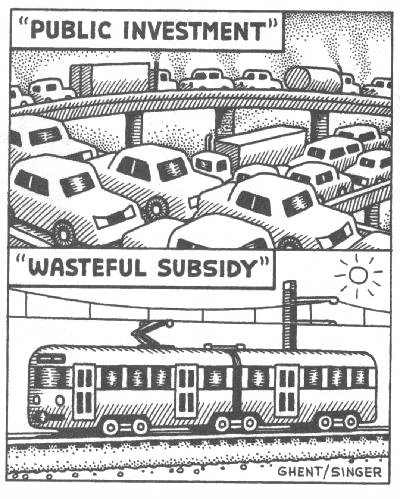
Joe and Mary 6-Pak can only be girding their loins for the inevitable shelling out of $800 per family of four in after-tax dollars, in perpetuity. The best they can hope for is it may possibly arrange for a bus to come closer to their front door with more frequent service or light rail will finally come to the South of the Fraser.
South of the Fraser, and in the Langleys specifically, we are third class citizens compared to North of the Fraser. We will reluctantly contribute the same dollars per capita, endure most of the population growth and continue to receive the least service. Unfortunately, plans I have seen for the future promise little more and guarantee nothing.
We want nothing but the best for South of the Fraser and only ask we somewhat receive in the proportion to what we will give. We await to see where the consultative process now takes us.
VALTAC will conclude by thanking the hundreds of citizens who stopped by our booth at the Langley Canada Day Celebrations. The interest and enthusiasm of the younger crowd (aged 16-23) who do not want to purchase a car and wish to avail themselves of light rail as a transportation alternate was overwhelming and encouraging. The 53-foot-long A?ai??i??Ai??mobile signA?ai??i??A? has been a truly effective outreach vehicle and was instantly tied to our booth display.
With BC Hydro committed to reconfirmation of passenger running rights on the BCER and all Mayors and Councils South of the Fraser supportive of same, we must now elevate our campaign to the provincial government.
Lee Lockwood, VALTAC Chairperson, Aldergrove
TransLink funding crunch has mayors worried about Evergreen – From the Tri-City News
This is not surprising at all, with very little ridership potential and massive costs, it is real challenge to make the Evergreen Line SkyTrain, light-metro line successful! Again, TransLink completely ignores the folly of building hugely expensive metro lines on transit lines with not nearly enough ridership to demand metro service. TransLink is bankrupt, yet the highly paid mandarins that run the show are completely oblivious to this andAi??Ai??plan to build even more expensive metro lines. Maybe we should do away with their $900 monthly car allowances and force the bureaucrats to take transit.
Postscript: For the cost of the Evergreen Line SkyTrain, we could have both a deluxe Vancouver to Chilliwack Interurban and a light-rail Evergreen line.
http://railforthevalley.wordpress.com/2009/07/14/time-to-bell-translinks-cat/
http://railforthevalley.wordpress.com/2008/12/26/can-translinks-business-cases-be-trusted/

By Janis Warren – The Tri-City News
Port Moody’s mayor continued to sound the alarm bell last week over the TransLink funding crunch and its potential to derail the Evergreen Line to Coquitlam.
Joe Trasolini told a sold-out crowd at the Tri-Cities Chamber of Commerce’s annual mayors’ barbecue that he believes the regional transportation authority’s board of directors will come up short when it presents its budget to the TransLink mayors’ council later this month (a vote is expected in October).
TransLink has promised to pay $400 million of the $1.4-billion cost of building the rapid transit line while the federal government has already committed $416.7 million and the province $410 million. Another $173 million is expected to come from private-public partnerships for the 11-kilometre route.
Earlier this year, during a pre-election speech to the local chamber, Premier Gordon Campbell said construction for the line, which is to run from Lougheed Town Centre in Burnaby, through Port Moody to Coquitlam Town Centre, would start in late 2010, with service starting in 2014.
“I have the greatest confidence in the design team,” Trasolini said Thursday about the Evergreen planners and engineers but urged caution about TransLink’s current operational budget deficit. “TransLink alone will not be able to come up with $400 million.”
Coquitlam Mayor Richard Stewart said his city’s plans for growth are contingent on the Evergreen Line being built.
And Port Coquitlam Mayor Greg Moore complained about TransLink governance, which was imposed by the provincial government in 2007 to yank control away from elected politicians and put in the hands of appointees who meet behind closed doors.
During the hour-long discussion, which was also attended by the Tri-Cities’ two BC Liberal MLAs, Iain Black and Douglas Horne, the mayors also talked about how their municipalities are strapped for cash as well as this year’s hikes in property taxes. Downloading pressures from senior governments to build non-market housing and fix regional roads are ongoing, they said. Moore said revenues from lottery, liquor and goods and services taxes would help pay for infrastructure renewal, including aging pipes and civic facilities.
Other questions from the floor focused on homelessness, measures to address immigration needs and the lack of affordable commercial space for Share programs.
Still, despite some heavy topics, the mayors kept it light by responding to a question on what other Tri-City municipality they would like to head.
“Coquitlam A?ai??i??ai??? for the first hour A?ai??i??ai??? to leverage the casino money, then Port Moody to get the Evergreen Line to come to PoCo,” Moore said, adding he wouldn’t mind briefly ruling Belcarra and Anmore for their parks.
“Coquitlam because the pay is higher,” Trasolini said.
Stewart quipped he wouldn’t mind being mayor of all five municipalities at once A?ai??i??ai??? an answer that delighted Coquitlam businessman and pro-amalgamation lobbyist Doug Stead, who cheered and applauded.
Wuppertal Schwebebahn – The 108 year old gadgetbahnen!

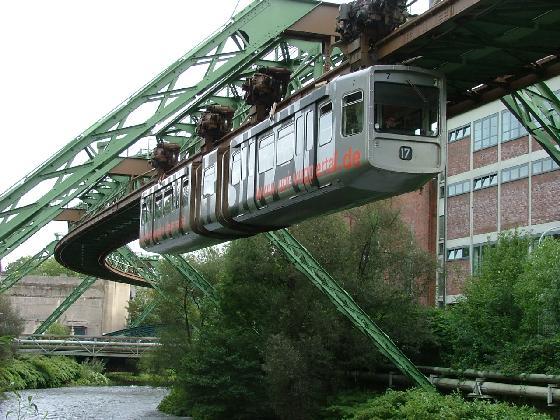
The Wuppertal Schwebebahn isAi??Ai??one of theAi??Ai??most unique public transit system in the world, a true monorail.Ai??Ai??Opened in 1901, the Schwebebahn operated overAi??Ai??98 years before it recorded itsAi??Ai??first fatal accident and thus quite correctly, can be called the safest public transit system in the world. What is also interesting is that the Schwebebahn was never copied as a model for ‘public transit’ anywhere else in the world, a singular fact that the monorail lobby wishes everyone to forget.
The Schwebebahn is a true monorail, unlike straddle-beam monorails such as Seattle’s vintage ALWEG monorail which is nearing its 50 year birthday.
The Schwebebahn survived World War Two, mainly because the majority of the route is suspended above the River Wupper, thus escaping serious bomb damage and was easy to get back into operation after the cessation of hostilities.
The lessons of the Schwebebahn and ALWEG monorails in generalAi??Ai??is that, indeed gadgetbahnen do work, but for many and varied reasons, have failed to become a recognized public transit system in the eyes of urban transit planners, a lesson that that TransLink and the SkyTrain lobby fail to understand.
Ai??Ai??
The Schwebebahn Wuppertal is a suspension railway in Wuppertal, Germany. Its full name is the “Eugen Langen Monorail Suspension Railway” (Einschienige HA??i??Ai??Ai??ngebahn System Eugen Langen). The people of Wuppertal know it, however, as the “Old Lady” or the “Iron Wyvern“. Designed by Eugen Langen, who originally planned to build it in Berlin, it was built in 1900, opened in 1901 and is still in use today as a local transport system in the city.
The suspension railway travels along a route 13.3 km long, about 12m above the bed of the river Wupper and approximately 8m above the city streets, between the districts of Oberbarmen and Vohwinkel. At one point the railway crosses the A46 motorway. The entire trip, including stops for people to get on and off, takes about 35 minutes.
The Schwebebahn operates within the VRR transport association and accepts tickets issued by the VRR companies
The Wuppertal Schwebebahn had one model: in 1824, Henry Palmer of England first presented the world with a railway system which differed from all previous construction forms. It was basically a small suspension railway on which suspended carriages were drawn by horses.
 |
| Ai??Ai?? |
Friedrich Harkort, a famous German industrialist and politician, loved the idea. He had a system of this type built as a trial in 1826 and ran it on the grounds of what is today the tax office at Elberfeld. He tried to interest the public in his scheme.
On September 9 1826 the town councillors of Elberfeld met to discuss the use of a “Palmer’s Railway” from the Ruhr to the Wupper river. Friedrich Harkort inspected the projected route with a surveyor and a member of the town council. The railway was to go from Elberfeld to Hinsbeck or from Elberfeld to Langenberg. The plan never went ahead, however, due to the owners of various pits who had not been included in it and felt disadvantaged at being left out.
The suspension railway which was finally built was planned and tested by the engineer Eugen Langen in Cologne during the 1880s. In 2003 the Rhenish Heritage Office (Rheinische Amt fA??i??Ai??A?r Denkmalpflege des Landschaftsverbandes Rheinland or LVR) published a press report announcing the discovery of an original section of the test route of the Wuppertal Schwebebahn.
In 1901, after a construction period of about three years overseen by the government’s master builder, Wilhelm Feldmann, the railway came into operation in Wuppertal. Around 19,200 tonnes of steel were worked to produce the supporting frame and the train stops. Construction cost 16 million gold marks. Since its first opening, the railway has remained in continuous use as an overground metro system. Every year about 23 million passengers travel on it (2003).
The Wuppertal Schwebebahn was considered one of the safest means of transport in the world, carrying up to 75,000 passengers a day through the town. Since 1995, the supporting frame has been largely modernised, and a large number of train stops have been reconstructed and brought up to date technically. The “Kluse” stop, at the theatre in Elberfeld had been destroyed during the Second World War; this too was reconstructed during the modernisation. Work was planned to be completed in 2001; however a serious accident took place in 1999 which left 5 people dead and 47 injured. This, along with delivery problems, meant that the completion date was delayed. In recent years (2004) the cost of the reconstruction work has nearly doubled from 225 million to 394 million euro.
Since 2004 many of the train stops have been fitted with CCTV cameras.
In 1950 Tuffi, the circus elephant, jumped from a train into the Wupper during a botched publicity stunt.
 |
| Ai??Ai?? |
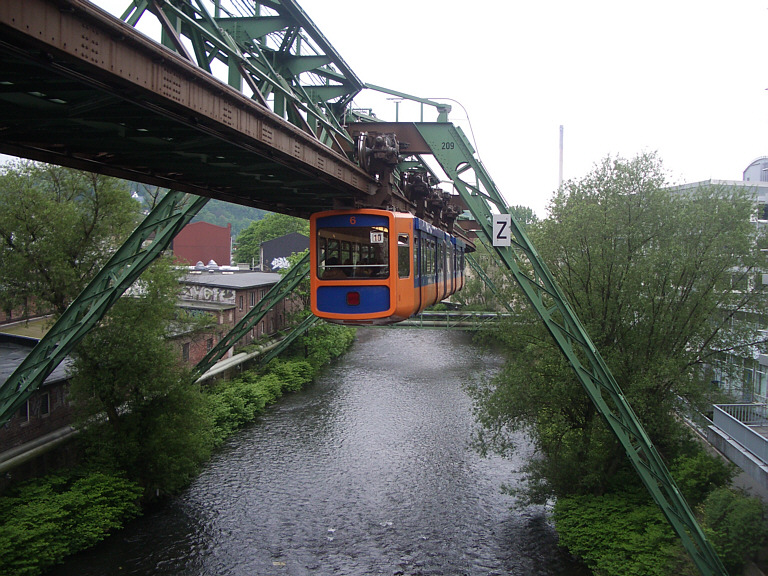
The suspension railway is a monorail suspended from a steel supporting frame with a rail built underneath it. It hangs on wheels which are driven by electric motor.
The supporting frame and tracks are made out of 486 pillars and bridgework sections. At the ends of the route there are turning points and parking spaces for the trains, which turn around so as to carry passengers there and back one after the other. This method of transport, without crossings, is similar to an overground metro system.
One carriage can carry about 200 passengers. The top speed is 60 km/h and the average speed is 26.6 km/h.Ai??Ai??
History
The Wuppertal Schwebebahn had one model: in 1824, Henry Palmer of England first presented the world with a railway system which differed from all previous construction forms. It was basically a small suspension railway on which suspended carriages were drawn by horses.
|
| Ai??Ai?? |
Friedrich Harkort, a famous German industrialist and politician, loved the idea. He had a system of this type built as a trial in 1826 and ran it on the grounds of what is today the tax office at Elberfeld. He tried to interest the public in his scheme.
On September 9 1826 the town councillors of Elberfeld met to discuss the use of a “Palmer’s Railway” from the Ruhr to the Wupper river. Friedrich Harkort inspected the projected route with a surveyor and a member of the town council. The railway was to go from Elberfeld to Hinsbeck or from Elberfeld to Langenberg. The plan never went ahead, however, due to the owners of various pits who had not been included in it and felt disadvantaged at being left out.
The suspension railway which was finally built was planned and tested by the engineer Eugen Langen in Cologne during the 1880s. In 2003 the Rhenish Heritage Office (Rheinische Amt fA??i??Ai??A?r Denkmalpflege des Landschaftsverbandes Rheinland or LVR) published a press report announcing the discovery of an original section of the test route of the Wuppertal Schwebebahn.
In 1901, after a construction period of about three years overseen by the government’s master builder, Wilhelm Feldmann, the railway came into operation in Wuppertal. Around 19,200 tonnes of steel were worked to produce the supporting frame and the train stops. Construction cost 16 million gold marks. Since its first opening, the railway has remained in continuous use as an overground metro system. Every year about 23 million passengers travel on it (2003).
The Wuppertal Schwebebahn was considered one of the safest means of transport in the world, carrying up to 75,000 passengers a day through the town. Since 1995, the supporting frame has been largely modernised, and a large number of train stops have been reconstructed and brought up to date technically. The “Kluse” stop, at the theatre in Elberfeld had been destroyed during the Second World War; this too was reconstructed during the modernisation. Work was planned to be completed in 2001; however a serious accident took place in 1999 which left 5 people dead and 47 injured. This, along with delivery problems, meant that the completion date was delayed. In recent years (2004) the cost of the reconstruction work has nearly doubled from 225 million to 394 million euro.
Since 2004 many of the train stops have been fitted with CCTV cameras.
In 1950 Tuffi, the circus elephant, jumped from a train into the Wupper during a botched publicity stunt.
|
| Ai??Ai?? |
The suspension railway is a monorail suspended from a steel supporting frame with a rail built underneath it. It hangs on wheels which are driven by electric motor.
The supporting frame and tracks are made out of 486 pillars and bridgework sections. At the ends of the route there are turning points and parking spaces for the trains, which turn around so as to carry passengers there and back one after the other. This method of transport, without crossings, is similar to an overground metro system.
One carriage can carry about 200 passengers. The top speed is 60 km/h and the average speed is 26.6 km/h.
Time to Bell TransLink’s Cat
A letter that appeared in several lower mainland weeklies.
Editor:
TransLink is bankrupt, but as every bureaucracy knows, the taxpayer can be forced to ante up; in Canada, higher taxes cures all ills.
TransLink may not know how to plan for affordable transit, but the ‘boys and girls in the ivory towers’ know how to spin a sad-sack story. Oh woe, we have to cut bus services to the bone, but never the bus services that very few use. Strange that.
“If we don’t get money, we will go back to the dark ages” is the wail from Mr. Prendergast, TransLink’s well paid CEO. Rubbish!
It was predicted nine years ago that TransLink would hit a financial ‘wall’, because planners insisted planning and building metro (SkyTrain) on routes that do not have the ridership to support them.
Funny, no one mentions that just the SkyTrain metro system is subsidized by over $200 million annually and more metro is being planned and built, which in turn will further increase the annual subsidy.
TransLink refuses to admit they are wrong (no one else builds with SkyTrain) and continue their bluff until they get a $150 annual car levy, to subsidize their incompetent and wastrel planning. It seems that regional mayors and politicians have been suckered by TransLink’s con-game.
Here is a solution.
A basic regional transit property tax of $150; cities with one metro line, the tax rises to $300; cities with two metro lines, the tax is $450 and cities with three metro lines, the transit tax would be $600. The higher property taxes for metro lines, reflects the investment in transit improvement enjoyed by those cities.
TransLink must do away with perks like car allowances and certainly rid themselves of their expensive spin doctors and other hangers-ons; in short, regional politicians must tell transonic to live within its means.
What politicians are not afraid to bell the cat?

Bogota TransMilenio ‘BRT’ selling ‘carbon credits’ – From the Light Rail now folks
This is an interesting article, but badly marred by very poor research by the author.Ai??Ai?? It also should be noted that bus ridership figuresAi??Ai??for South American BRT’s have proven to be greatly overstated. What also isAi??Ai??not mentioned isAi??Ai??that BRT has been disappointing in operation in North America, India, Australia and Europe, failing to achieve projected ridership numbers.
In the analysis by the Light Rail Now folks it seems that to build a TransMilenio BRT in North America would cost about 50% more than a standard two track light rail line!

New York Times
July 10, 2009By Degrees
Buses May Aid Climate Battle in Poor Cities
By ELISABETH ROSENTHAL
BOGOTA?A?, Colombia:Ai??Ai?? Like most thoroughfares in booming cities of the developing world, BogotA?A?’s Seventh Avenue resembles a noisy, exhaust- coated parking lot a gluey tangle of cars and the rickety, smoke-puffing private minibuses that have long provided transportation for the masses.
But a few blocks away, sleek red vehicles full of commuters speed down the four center lanes of Avenida de las AmA?Ai??ricas. The long, segmented, low-emission buses are part of a novel public transportation system called bus rapid transit, or B.R.T. It is more like an above-ground subway than a collection of bus routes, with seven intersecting lines, enclosed stations
that are entered through turnstiles with the swipe of a fare card and coaches that feel like trams inside.Versions of these systems are being planned or built in dozens of developing cities around the world. Mexico City, Cape Town, Jakarta, Indonesia, and Ahmedabad, India, to name a few providing public transportation that improves traffic flow and reduces smog at a fraction of the cost of building a subway.
But the rapid transit systems have another benefit: they may hold a key to combating climate change. Emissions from cars, trucks, buses and other vehicles in the booming cities of Asia, Africa and Latin America account for a rapidly growing component of heat-trapping gases linked to global warming. While emissions from industry are decreasing, those related to transportation are expected to rise more than 50 percent by 2030 in industrialized and poorer nations. And 80 percent of that growth will be in
the developing world, according to data presented in May at an international conference in Bellagio, Italy, sponsored by the Asian Development Bank and the Clean Air Institute.To be effective, a new international climate treaty that will be negotiated in Copenhagen in December must include a policy response to the CO2 emissions from transport in the developing world, the Bellagio conference statement concluded.
Bus rapid transit systems like BogotA?A?’s, called TransMilenio, might hold an answer. Now used for an average of 1.6 million trips each day, TransMilenio has allowed the city to remove 7,000 small private buses from its roads, reducing the use of Ai??Ai??bus fuel and associated emissions by more than 59 percent since it opened its first line in 2001, accordingAi??Ai?? to city officials.
In recognition of this feat, TransMilenio last year became the only large transportation project approved by the United Nations to generate and sell carbon credits. Developed countries that exceed their emissions limits under the Kyoto Protocol, or that simply want to burnish a “green” image, can buy credits from TransMilenio to balance their emissions budgets, bringing BogotA?A? an estimated $100 million to $300 million so far, analysts say.
Indeed, the city has provided a model of how international programs to combat climate change can help expanding cities the number of cars in China alone could increase sevenfold by 2030, according to the International Energy Agency pay for transit systems that would otherwise be unaffordable.
BogotA?A? was huge and messy and poor, so people said, “If BogotA?A? can do it, why canAi??ai??i??t we?” said Enrique PeA?Ai??alosa, an economist and a former mayor of the city who took TransMilenio from a concept to its initial opening in 2001 and is now advising other cities. In 2008, Mexico City opened a second successful bus rapid transit line that has already
reduced carbon dioxide emissions there, according to Lee Schipper, a transportation expert at Stanford University, and the city has applied to sell carbon credits as well.But bus rapid transit systems are not the answer for every city. In the United States, where cost is less constraining, some cities, like Los Angeles, have built B.R.T.’s, but they tend to lack many of the components of comprehensive systems like TransMilenio, like fully enclosed stations, and they serve as an addition to existing rail networks.
In some sprawling cities in India, where a tradition of scooter use may make bus rapid transit more difficult to create, researchers are working to develop a new model of tuk-tuk, or motorized cab, that is cheap and will run on alternative fuels or with a highly efficient engine. There are three million auto rickshaws in India alone, and the smoke is astonishing, so this could have a huge impact, said Stef van Dongen, director of Enviu, an environmental network group in Rotterdam, the Netherlands, that is sponsoring the research.
Bus rapid transit systems have not always worked well in cities that have tried them, either. In New Delhi, for example, the experiment foundered in part because it proved difficult to protect bus lanes from traffic. And a system that does not succeed in drawing passengers out of their cars just adds buses to existing vehicles on the roads, making traffic and emissions worse.
But with its wide streets, dense population and a tradition of bus travel, BogotA?A? had the ingredients for success. To create TransMilenio, the city commandeered two to four traffic lanes in the middle of major boulevards, isolating them with low walls to create the system’s so-called tracks. On the center islands that divide many of BogotA?A?’s two-way streets, the city
built dozens of distinctive metal-and-glass stations. Just as in a subway, the multiple doors on the buses slide open level with the platform, providing easy access for strollers and older riders. Hundreds ofAi??Ai?? passengers can wait on the platforms, avoiding the delays that occur when passengers each pay as they board.Mr. PeA?Ai??alosa noted that the negative stereotypes about bus travel required some clever rebranding. Now, he said, upscale condominiums advertise that they are near TransMilenio lines. People don’t say, Ai??ai???I’m taking the bus, they say, I’m taking TransMilenio, he added, as he rode at rush hour recently, chatting with other passengers.
Jorge Engarrita, 45, a leather worker who was riding TransMilenio to work, said the system had changed his life, reducing his commuting time to 40 minutes with one transfer from two or three hours on several buses. Free shuttle buses carry residents from outlying districts to TransMilenio terminals.
To the dismay of car owners, BogotA?A? removed one-third of its street parking to make room for TransMilenio and imposed alternate-day drivingAi??Ai?? restrictions determined by license plate numbers, forcing car owners onto the system.
With an extensive route system, TransMilenio moves more passengers per mile every hour than almost any of the world’s subways. Most poorer cities that have built subways, like Manila and Lagos, Nigeria, can afford to build only a few limited lines because of the expense.Ai??Ai??
(A note from Zweisystem: Poor research here. Manila doesn’t have subways, but elevated LRT. Daily ridership on the elevated LRT is now well over 550,000, far more than what could be accommodated by BRT! Lagos also doesn’t have subwaysAi??Ai??and LRT, is in the development stages! Poor research has ruined many a good article on transit in North America.)
Subways cost more than 30 times as much per mile to build than a B.R.T. system, and three times as much to maintain. And bus rapid transit systems can be built more quickly.Ai??Ai?? Almost all rapidly developing cities understand that they need a metro or something like it, and you can get a B.R.T. by 2010 or a metro by 2060, said Walter Hook, executive director
of the Institute for Transportation and Development Policy, in New York.Although TransMilenio buses run on diesel, their efficient engines mean they emit less than half the nitrous oxide, particulate matter and carbon dioxide of the older minibuses. Cleaner fuels were either too expensive or did not work at BogotA?A?’s altitude, 9,000 feet above sea level.
TransMilenio is building more lines and underpasses to allow the buses to bypass clogged intersections, but for the moment the real challenge is
overcrowding. Juan GA?A?mez, 21, a businessman, takes TransMilenio only on days when he cannot drive, and he griped that it was often hard to find
a seat.ItAi??ai??i??s O.K., but I prefer the car, Ai??Ai??he said.
And now an analysis by the Light Rail Now folks.
Ai??Ai??
Of particular interest is the following excerpt regarding “carbon credits”:
Bus rapid transit systems like BogotA?A?’s, called TransMilenio, might hold an answer. Now used for an average of 1.6 million trips each day, TransMilenio has allowed the city to remove 7,000 small private buses from its roads, reducing the use of bus fuel and associated emissions by more than 59 percent since it opened its first line in 2001, according to city officials.
In recognition of this feat, TransMilenio last year became the only large transportation project approved by the United Nations to generate and sell carbon credits. Developed countries that exceed their emissions limits under the Kyoto Protocol, or that simply want to burnish a “green” image, can buy credits from TransMilenio to balance their emissions budgets, bringing BogotA?A? an estimated $100 million to $300 million so far, analysts say.
Indeed, the city has provided a model of how international programs to combat climate change can help expanding cities ” the number of cars in
China alone could increase sevenfold by 2030, according to the International Energy Agency” pay for transit systems that would otherwise be unaffordable.I have several comments and questions in regard to this, and I would appreciate input from others.
(1) I wasn’t aware that individual TRANSIT SYSTEMS could apply for and receive UN certification to “generate” and sell such credits. Can anyone explain how this works? What does the buyer of these credits then do with them?
(2) On what basis did the TransMilenio system receive this authorization? It obviously has considerable value, since other countries – entire COUNTRIES – are willing to pay millions of dollars for these credits.
(3) Why aren’t ELECTRIC rail operations-especially light rail tramways – applying for and receiving such credits? Surely it can be demonstrated that new LRT/tramway startups have
reduced motor vehicle emissions in the corridors they serve?(4) The article suggests that part of the basis for the TransMilenio “achievement” was the reduction in smaller buses effected by the implementation of the TransMilenio system. Can it
not be shown that the installation of new rail lines elsewhere has also accomplished reductions in urban bus traffic and emissions? And even more than Bogota, since electric propulsion reduced GHG emissions proportionately more?(5) The NYT’s Bogota article appears to fit into the context of a major campaign currently under way to promote “BRT” for the NYC’s major corridors (i.e., mainly in Manhattan). This campaign appears to be driven by motor bus industry interests but with the collusion of elements within NYC’s public transit establishment, and it includes disparaging electric rail (including NY’s subway), presenting “BRT” as cheaper, more effective, and more environmentally friendly. It also fits into a larger nationwide pattern of bus system marketing attempting to disparage all forms of electric rail in the USA, including LRT/tramways, with the aim of diverting federal public transport policy away from investment in rail and into “BRT” development.
(6) Leaving aside the issue of TransMilenio’s GHG emissions reduction and “carbon credits” coup … It should be noted that TransMilenio requires FOUR (4) busway lanes in a GRADE-SEPARATED major arterial to provide capacity. The cost of the initial 38-km/24-mile system in 2001 was US $350 million; per adjusting for inflation to 2009 US dollars, and also adjusting for labor/living cost differentials, the equivalent cost of a system in a similar US corridor would be about $1.8 billion – about $73 million per mile, or roughly 50% more than the cost of a 2-track electric LRT/tramway system that could probably provide equivalent capacity with substantially lower GHG emissions and other environmental impacts.
NYC: Transport chief pushes more livable city, but faces anti-rail BRT "booby trap" – From the Light Rail Now Folks
Ominous news for the Fraser Valley efforts to reinstate the interurban, as it seems New York City’s transit plannersAi??Ai??are going against the world trend in building with LRT and instead is planning for Bus Rapid Transit or BRT. What a coincidence that TransLink’s new CEO,Ai??Ai??comes from New York City and its long established transit bureaucracy. Is the fix inAi??Ai??to buildAi??Ai??BRT into the valleyAi??Ai??instead of light rail?

Proposed BRT in New York City - compare with LRT grassed ROW's!
Light Rail Now! NewsLog
2 July 2009
Updated 2009/07/02NYC: New transport chief pushes more livable city, but anti-rail “BRT” campaign could be “booby trap”
New York City: For at least three-quarters of a century, this and other great American cities have catered to private automobile transportation at the expense of pedestrians, cyclists, and public transit riders. Now, in New York at least, this may be changing.
Janette Sadik-Khan, appointed head of the NYC Department of Transportation in 2007, is revolutionizing the way a city, and especially New York City, can approach transportation particularly by spearheading an effort to make the streets of New York livable by adding bike lanes throughout the city, setting aside areas for people to walk and sit, and designating lanes for bus transit.
Sadik-Khan created “Summer Streets”, whereby Park Avenue between 72nd Street and the Brooklyn Bridge was shut down for three weekends during the summer and completely taken over by … people. Amazing!
These measures are part of a strategic plan the department produced called “Sustainable Streets.” According to Sadik-Khan, transportation departments have traditionally been focused on moving vehicles around, and she believes their new goal should be to provide the highest quality of urban life. She says that we need to take a “fresh look” at our streets and streetscapes and how we use them.
All of the measures implemented so far have resulted in widespread enthusiastic response by the public.
Streetfilms has put together the following video interview to highlight what she has done.
http://bikeportland.org/2008/10/27/a-video-and-a-visit-from-nycs-dot-commissioner/
Ironically, although Sadik-Khan is chairman of the strongly pro-light rail/pro-streetcar orgainzation Reconnecting America, she’s gotten ensnared in a major offensive by the “Bus Rapid Transit” (“BRT”) wing of the highway/motor vehicle industry (and within the Metropolitan Transportation Authority) to push “BRT” throughout NYC to some extent, in opposition to rail transit alternatives, including the Second Avenue Subway project. Despite the solid successes of electric light rail transit (LRT) just across the Hudson River in Newark and the Hudson-Bergen LRT system serving New Jersey communities such as Bayonne, Jersey City, Hoboken, and Weehawken and, indeed, the phenomenal successes of new LRT starts in cities like Minneapolis, Charlotte, and Phoenix (in contrast to the comparatively lackluster performance of new “BRT” operations in several cities) a propaganda blitz has been under way in NYC to portray rail transit as largely a failure, and “BRT” as some kind of phenomenal savior of the American transit industry (a reverse-image fantasy backed by a barrage of fabricated claims and largely imaginary “facts”).
Thus, despite Sadik-Khan’s progressive roots and instincts, and her commendable efforts to “pedestrianize” New York’s streets and nudge the city toward a more human-friendly (as opposed to car-friendly) environment, this latest battleground in the Transit Wars could tarnish her reputation and compromise her vision. In other words, the”BRT” campaign might represent a serious booby trap. The bigger picture here is yet another confrontation between the old-line, Robert Moses-era ideologicial commitment to rubber tires and petroleum propulsion vs. the specific benefits and advantages offered by electric light rail, especially streetcarsAi??Ai??as Reconnecting America has communicated so well, with Sadik-Khan’s leadership.
Now, many transit advocates who recognize the proven capabilities of rail believe that, in NYC, Sadik-Khan needs to take a firm stand on the side of rational, 21st-century public transport planning. This means diplomatically or otherwise fingering the fatuous claims for “BRT” for what they are, acknowledging the drawbacks of “BRT” with respect to the heavy demands of a mega-city’s traffic corridors, and presenting both surface light rail/streetcar and grade-separated rail metro (i.e., subway) public transit as the right fit for NYC’s needs in these kinds of high-volume central-city applications.
Get ready, Seattle: You’re about to be a light-rail town – From the Seattle Times
Ai??Ai??Seattle’s LRT line is “four to six times costlier than other light-rail startups in western states“, as planners designed the light rail service as a light-metro, with miles of expensive viaducts and even more expensive subway tunnels. The same sort of nonsense happened with BC Transit’s LRT plans for Broadway and Translink’s light rail plans for the Evergreen Line. By designing LRT to be a light-metro negates most of the economical benefits of light rail operation!
That being said, Seattle is the newest American city to embrace light rail.

By Mike Lindblom – Seattle Times transportation reporter
At last, Seattle is about to become a light-rail town.
On Saturday, the first passengers will board the Sound Transit trains from Westlake Center through Rainier Valley to Tukwila A?ai??i??ai??? putting behind them nearly a century of failed proposals to build a big transit system through Seattle.
The initial $2.3 billion, 14-mile segment took five years to build and was filled with engineering challenges and political suspense.
The project features a unique deep station within the soft soils of Beacon Hill, and the nation’s only tunnel where buses and trains share the same stations A?ai??i??ai??? downtown. Managers coped with toxic soil, sinkholes, street protests seeking more jobs for African Americans and a couple of minor train-car collisions.
One worker died in a supply-train crash during Beacon Hill tunneling. That stretch was so difficult that it left no time to spare in the final construction schedule, and it spooked transit-board members into canceling a deep station they had promised for First Hill.
“Light-rail years are like cat years,” said Ahmad Fazel, director of the stressful light-rail effort.
On the upside, the project provided more than 4,000 short- and long-term jobs. And trains will serve riders every 7 Ai??A? minutes at peak times. Two more miles open later this year to Seattle-Tacoma International Airport.
But the line is four to six times costlier than other light-rail startups in western states. And with an estimated 26,600 average weekday trips predicted next year, the trains often will appear mostly empty, like the South Lake Union streetcar.
Ridership should grow by 2016, when a tunnel to Capitol Hill and Husky Stadium lets students and employees from the south suburbs ride 19 miles from the airport to the University of Washington campus. Eventually, it will connect to north Federal Way, Overlake and Lynnwood in a 53-mile network that Sound Transit says will attract 280,000 daily trips in 2030.
Transit: a history
If you lived in Seattle in 1891, you could ride the new electric streetcars that replaced horse-drawn trains. Cable cars climbed Madison Street and ran down to Lake Washington. A longer train turned into Rainier Valley toward Kent. Trestles in the mud flats supported elevated tracks to West Seattle.
Construction visionaries complained about traffic congestion as long ago as 1911, when engineer Virgil Bogue proposed underground and elevated trains to cope with the city’s tight “hourglass shape,” plus a tunnel beneath Lake Washington. Voters rejected his plan, saying it would cost too much. Again in 1926, a city committee urged fast rail to staunch the loss of customers on Seattle’s declining streetcar routes. Seattle asked the state in vain to put rails into the Interstate 5 express lanes, designed in the late 1950s. After the 1962 World’s Fair, experts studied stretching its one-mile tourist monorail to Shoreline.
Rail measures lost public votes in King County in 1968 and 1970. Federal aid shifted to Atlanta, and buses flourished here. Much later, Seattle voters passed monorail measures four times before canceling a line in 2005, due to a revenue shortage; the unbuilt project cost drivers $124 million in car-tab taxes.
Rails were embedded in the downtown bus tunnel in 1989, a symbolic commitment to try again. (They were installed incorrectly, and Sound Transit would replace them in 2007.)
Another regional transit package, including light rail to Tacoma, reached the ballot in 1995 but lost. A year later, Sound Transit won by offering a shorter line from the University District to SeaTac, and more express buses.
The agency claimed its cost figures were “extremely conservative,” but in fact they were too low by half. After a management shake-up and scolding by federal inspectors, the agency under new chief executive Joni Earl produced realistic, higher numbers by late 2001 A?ai??i??ai??? and those have held up. Sen. Patty Murray and Rep. Norm Dicks lobbied to save a $500 million federal grant.
Two clever moves prevented a collapse. A committee that included former Mayor Charles Royer and Jim Ellis, a leader in earlier pro-rail efforts, advocated breaking ground on a shorter south-end line. They guessed correctly the south line would help whet the public appetite for more. And years earlier, lawyers wrote an escape clause that let the agency shorten its line or extend taxes indefinitely, without a public revote that opponents demanded.
Politicians OK’d big landmark stations, tunnels, spans through Tukwila and a winding route to reach and redevelop Rainier Valley neighborhoods, while calling Link an investment in the next century.
The first line is being finished $100 million below the official federal figure of $2.4 billion, which included a financial cushion.
Light Rail on the ballot
Link has been deemed a “light-metro” hybrid by some transit wonks. In downtown Seattle, the trains go faster than downtown Portland’s surface trains, which move not much faster than a pedestrian. But with 28 street crossings in Rainier Valley, capacity and speed here are less than with a big-city subway.
Millions were spent for oversized 400-foot-long stations A?ai??i??ai??? a nod to the future when four-car trains will be needed if the Greater Seattle population grows 1.2 million as planners warn.
Over the years, a collection of budget hawks, bus supporters, monorailists and road warriors opposed the agency, saying fixed rail reaches too few places and people to justify its prodigious costs here.
But in 2008, Seattle Mayor Greg Nickels cajoled fellow transit-board members to put more rail on the ballot, after a combined roads-and-transit package tanked the year before. The $18 billion measure won decisively, buoyed by younger, pro-Obama voters.
Despite a campaign slogan of “Mass Transit Now,” the full lines are 15 years from completion and taxes will last at least through the 2030s.
To reach Tacoma and Everett, a third ballot plan would need to be approved, continuing this odyssey four decades beyond its 1996 launch.



Recent Comments