First, I must state that the elevated guideway for the Expo, Millennium, and Canada Lines are a completely different build than Mexico’s Metro system and such an accident would not happen, but there are several issues with concrete construction that should give pause for concern.
The quideways must be inspected at regular intervals, to check for structural issues. As TransLink is notorious for fudging maintenance inspections, one wonders how regular a full guideway inspection is?
The following from the New York Times give us plausible reasons for the metro’s guideway collapse.
The recent poll conducted by Mario Canseco ResearchCo, showed an 88% support for the reinstatement of a passenger rail service in the Fraser Valley.
The ongoing population shift to the upper Fraser Valley needs a transportation alternative to the highway, where local roads are now seeing Vancouver style congestion.
Foreseeing this, in 2009, the Rail for the Valley engaged Leewood Projects (UK) to do an independent feasibility study of using the former BC Electric railway route, reinstating the former interurban route from Vancouver to Chilliwack.
Released in September 2010, the Leewood Study showed that not only a passenger service feasible, reinstating a passenger rail service was affordable.
The Leewood Study can be accessed on the Rail for the Valley website at
In 2021, adjusting for inflation, a regional passenger rail service is still very affordable, when compared to extending the Expo Line light metro, which now has a base cost in excess of $200 million per km to build!
The Leewood Study found that a Scott Road Station to Chilliwack passenger service, adjusted for inflation for 2021 dollars, would be $594,847,133.00) or $6.07m per km).
Leewood Projects felt this would be a good starter service of two trains per hour per direction (a 30 minute service).
The more extensive and user-friendly, 138 km.Vancouver to Rosedale passenger service would cost $1,207,692,027.00) or$8.71 million per km in 2021 dollars
The service would see a maximum of three trains per hour per direction (20 minute service), with a total journey time of 90 minutes from Chilliwack to Scott Road.
Having a direct service to Vancouver would be faster than transferring to SkyTrain and the 45 minute trip to downtown Vancouver and the author of the report felt that by not going into Vancouver, would be detriment for attracting new customers.
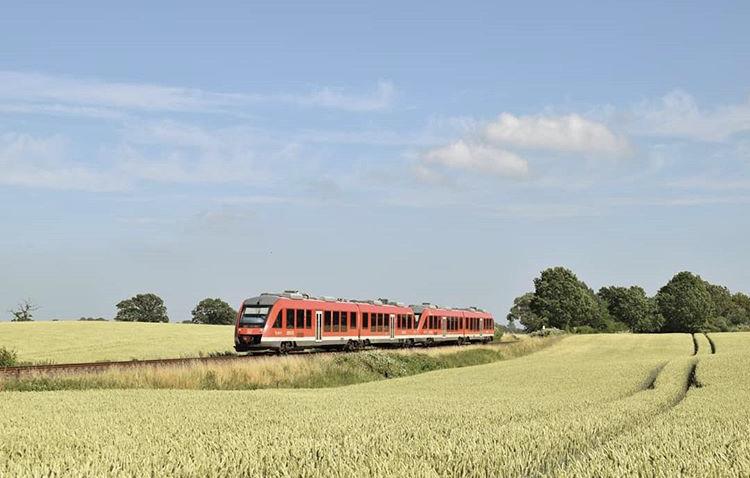
Rail for the Valley, upon advice from Leewood Projects, would use modern light diesel multiple units (DMU’s), as there are many suppliers, providing a wide range of product. Modern low-floor DMU’s have wheelchair accessible W.C.’s and some models also offer a “Bistro Car”, serving light refreshments for longer trips.
Those who propose extending the Expo line to Langley and beyond ignore serious problems with the linear induction motor (LIM) powered vehicles, used on the Expo Line and today’s higher costs of operating LIM powered trains.
Light metro was never conceived to be regional railway, but for only inner city use, designed to be a cheaper alternative to subway construction.
Light metro is very costly to operate and in 1992, the GVRD found that just the Expo Line, just from Vancouver to New Westminster was subsidized by $157 million annually, more than the combined diesel and electric bus operations!
Being driverless, the LIM powered transit systems operate extremely poorly in snow!
For many operational issues, only seven of the LIM powered proprietary light metro systems have been built since 1980 and the product has been rebranded six times and today is called Movia Automatic Light Metro or MALM.!
The French transportation giant, Alstom, has purchased Bombardier’s rail division, including MALM and the company has a record of abandoning transportation products that are poor sellers. As MALM has a rather dismal sales record and ongoing legal issues in Korea and Malaysia, it will be of no surprise that Alstom discontinues LIM powered MALM, leaving the remaining operators scrambling for expensive and ever more scarce spare parts!
Today’s modern DMU’s have many suppliers and most parts are interchangeable, greatly lowering maintenance costs.
A Vancouver to Chilliwack DMU service using existing railways is the affordable approach of providing a user-friendly transportation alternative to the car and the modern DMU has become the favoured mode of today’s transportation planner.
The choice facing regional politicians and planners is stark. A $1.7 billion, 7 km. extension of the Expo line in Surrey, which will not attract the motorist from the car and the vague political promise to spend another $1.7 billion to extend the Expo Line to Langley, sometime post 2030 for a total of $3.4 billion plus, if completed.
Or, a $1.21 billion regional DMU service from Chilliwack, connecting Sardis, Vedder Crossing, Abbotsford, Langley, Cloverdale, central Surrey, North Delta to New Westminster, Burnaby, and Vancouver and the many destinations (post secondary institutions and business parks) within easy walking distance from the route.
A regional DMU service will be a major tourist draw, giving easy access for those visiting Vancouver to explore the Fraser Valley, without need of a car.
The recent poll indicating a massive positive response in reestablishing a passenger rail service from Chilliwack to Vancouver cannot be ignored.
The daily congestion and gridlock on the Hwy. 1 cannot be ignored.
The pollution caused by road traffic cannot be ignored.
The need for a viable and affordable transportation alternative cannot be ignored.
Rail for the Valley’s Leewood Study provides the framework for an affordable and proven 21st century transportation solution, instead of bigger and wider highways, which will attract more cars, leading to even greater future congestion and gridlock.
Using existing railways, greatly reduces the cost of rail transit and by doing so, enables a larger rail network, providing more destinations, which has proven to attract new ridership, especially the motorist from the car.
Do not be left at the station, waiting for exotic solutions that will never come, but jump on board a modern 21st century DMU, calling at all stations to Vancouver!
Rail for the Valley
Addendum
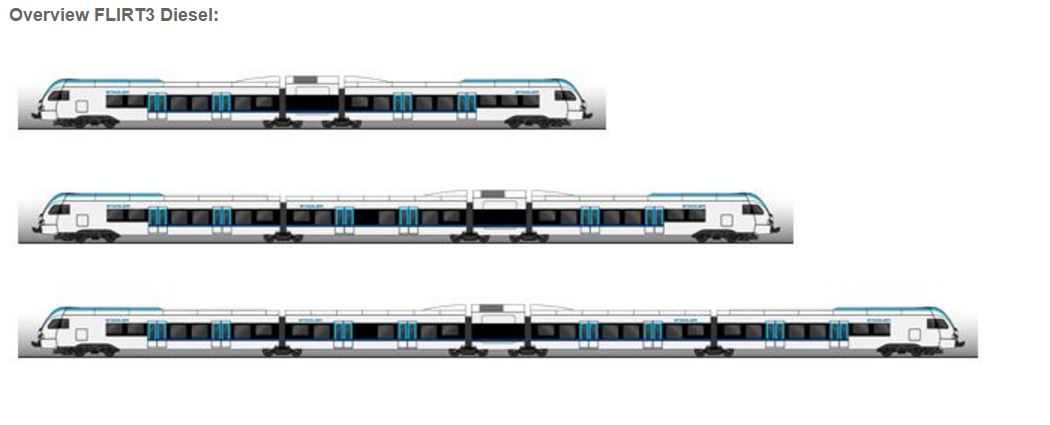
The Stadler Flirt DMU, now being used on Ottawa’s Trillium Line. The modular design allows the DMU to increase capacity affordably, by adding modules as ridership grows.
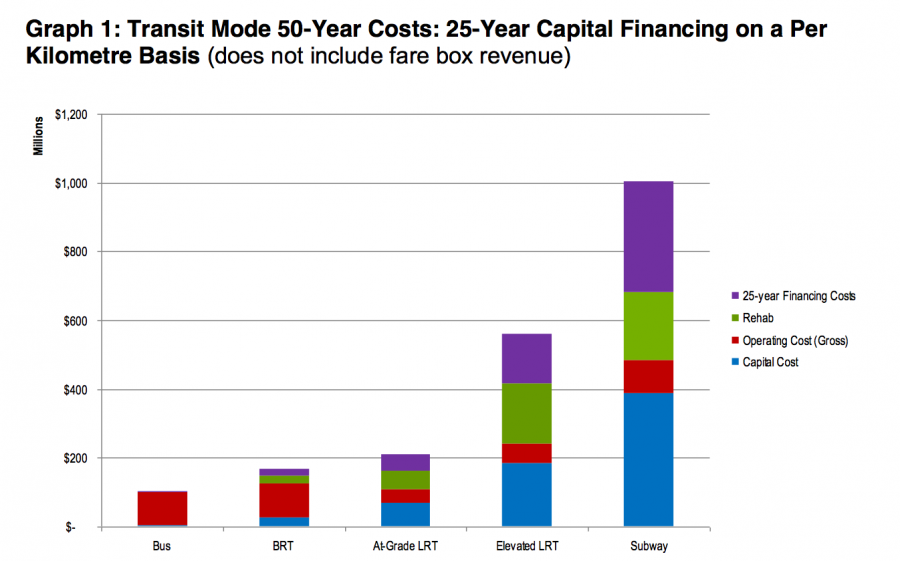
A 2020 cost 50 year cost comparison by Ontario’s Metrolinx showing the 50 year financing on a per kilometre basis. SkyTrain’s 50 year costs would be somewhat higher than elevated LRT and the proposed Valley Rail would be much less than that of a bus.
Facts do not change and with SkyTrain, the world understands the facts about this proprietary light metro system; unfortunately our politicians and bureaucrats do not.
We now live in an age of fake news and alternative facts and the SkyTrain lobby and TransLink with their well oiled propaganda machine exploit this extremely well.
Their most recent success is the claim that Broadway is the busiest transit corridor in Canada, if not North America, yet when faced with possible legal action over the claim, they backed down and merely claimed that “Broadway was the most congested transit corridor“.
The following was published in 2009 to try to add “fact” in the regional transit debate and “fact” is something sorely missing with TransLink’s and the Mayor’s Council on Transit’s utter stupid, yet hugely expensive transit planning.
For those who still want to believe in “sparkle ponies” and “pixie dust” SkyTrain planning, the proprietary light metro has now been rebranded six times, yet not one new build system has been sold in 15 years.
With Alstom now owning the proprietary SkyTrain system or more correctly called Movia Automatic Light Metro, the end of production and the abandonment of the proprietary railway will be much sooner than what many think.
First published in 2009.
Oh what tangled webs we weave, when we first practice to deceive!
Since 1980, when SkyTrain was imposed on the region, the SkyTrain lobby abetted by politicians, bureaucrats, and the media, have created a grand SkyTrain myth which is now taken as fact. Lenin’s quote, “A lie told often enough becomes the truth“, is certainly true of the SkyTrain lobby, when defending their beloved light-metro system. Despite plenty of evidence to the contrary, the SkyTrain light-metro system has found a very expensive niche in the ‘Metro Vancouver’ culture and with TransLink and the Minister of Transportation, Kevin Falcon, championing more SkyTrain construction for the region, let us now explore eight SkyTrain myths. A general warning must be issued: the following maybe harmful to the SkyTrain lobby.
Myth #1 – SkyTrain is faster than LRT.
Not true. LRT tram-trains, with speeds in excess of 100 kph, edge out SkyTrain for being faster mode. What is true is that most LRT lines have many more stops per route km., thus having lower commercial speeds than light-metro. Streetcar systems of course have low commercial speeds because they run in mixed traffic because of this, many streetcars or trams have smaller (cheaper) motors for such operation.
An identical LRT/SkyTrain line, having identical stops, would have identical commercial speeds.
The St. Louis LRT system actually has a higher commercial speed than SkyTrain.
Myth #2 – Speed of SkyTrain, alone, attracts people to transit.
Not true. The speed of the transit system is not as important as the SkyTrain lobby would have you think. What is true, if the total travel time (doorstep to doorstep) using transit, is equal to or even slightly more than alternatives, then public transit will attract customers. The actual speed of SkyTrain or LRT trip is only part of the complete ‘transit’ trip package, which would include walking time or taking a bus (if need be) and transfers. Recent studies (Hass-Klau) have concluded that even ‘speed’ is not as important as the over all ambiance of the transit system, ease of use, and ease of ticketing, for attracting customers, especially the motorist from the car.
Myth #3 – SkyTrain is safer than LRT.
Not true. Though this contentious topic sends many of the SkyTrain lobby into fits of apoplexy, the facts are completely opposite. The death rate on SkyTrain is about twice of that of Calgary’s LRT (both transit systems carry high volumes of traffic), yet TransLink and others would have us think differently. The SkyTrain lobby wrongly assumes that all deaths on SkyTrain are suicides and all deaths on LRT is not. Why suicides are supposed to be ignored and other deaths are not, is a sad reflection on those wanting to build with the light metro. According to the Light Rail Transit Association modern LRT/tram is the safest public transit mode in the world.
Myth #4 – SkyTrain attracts more customers than LRT.
Not true. There is no study comparing SkyTrain and LRT, that shows that ‘rail’ mode (light metro/light rail) alone is a determining factor in attracting transit customers. Calgary’s LRT has consistently attracted more customers than SkyTrain. What is true that all ‘rail’ transit modes are far better attracting new customers than buses.
Myth #5 – SkyTrain costs less to operate than LRT.
Not true. This old saw is repeated so often that it has been ingrained as a fact. Early on, it has been found that SkyTrain light-metro, despite being automatic and having no drivers, was much more expensive to operate than LRT systems the same size. As far back as 1990, it was found that SkyTrain cost over 80% more to operate than Calgary’s LRT system, despite the fact Calgary’s C-Train carried more people. Today the figure has dropped to about 60% more to operate.
Myth #6 – SkyTrain has a higher capacity than LRT.
Not true. The capacity game has been far overplayed by the SkyTrain lobby as capacity is a “function of headway“. Any dual tracked LRT/streetcar/tram line can carry over 20,000 persons per hour per direction, as true for SkyTrain. Studies, including Gerald Fox’s A Comparison of AGT and LRT Systems and the Toronto Transit Commission’s ART Study, have found that the capacities for SkyTrain and LRT are about the same.
Please note: The Expo and millennium Line’s maximum legal capacity as per Transport Canada’s Operating certificate is a maximum capacity of 15,000 pphpd.
Myth #7 – LRT delays traffic at intersections.
Not true. TransLink and the SkyTrain lobby become hysterical with the myth that LRT delays traffic at intersections. The fact is, there is less delay than a regular light controlled intersection and no delay for LRT. The logic is troublesome for if LRT delays traffic to such an extent, why don’t other light controlled intersections cause traffic chaos? Shall we ban all light controlled intersections because they delay traffic?
Myth #8 – SkyTrain pays its operating costs.
Not true. TransLink trots out this little gem every once in a while for some positive spin when things go wrong on SkyTrain. TransLink and the SkyTrain lobby quietly forgets that SkyTrain is subsidized by the provincial government at over $200 million annually! In the United States, where many transit initiatives are passed by referendum, the total cost of the project is told, as well as financing options. Example: Seattle’s LRT is said to cost over $10 billion, but that is the total cost of the project including debt servicing! To date, the taxpayer does not not know the total cost of SkyTrain or even RAV, nor how it is financed. The $200 million plus annual subsidy has now put the cost of SkyTrain at over $6 billion dollars. If SkyTrain was really paying its operating costs, it would not need a $200 million subsidy! Note: Dublin’s and Nottingham’s new LRT lines operate at a profit after paying their annual debt servicing charges.
All what Rail for the Valley wants is a ‘level playing field’ when planning for region ‘rail’ transit and not TransLink inspired pro SkyTrain nonsense. Isn’t it odd, that after being on the market for over 30 years, SkyTrain has failed to find a market in North America and Europe and that the owners of the proprietary SkyTrain have forbidden the system to compete in an open bidding process against modern light-rail. “Facts are stubborn things; and whatever may be our wishes, our inclinations, or the dictates of our passion, they cannot alter the state of facts and evidence.”
The trouble with TransLink, they promise the moon and the stars, but in the end, deliver the same old user unfriendly, expensive transit planning, ever hoping for different results.
Case in point, TransLink’s new CEO, from Baltimore. Well good old Zwei sent an email to Baltimore and what I got back was would be laughable if it wasn’t so sad.
You are about to get a new CEO of Translink in the person of Kevin Quinn. this is a good news/bad news situation. Good news is we are rid of him, bad news you are getting him.
Mr Quinn may be the nicest yes man you will ever meet. he is very personable and friendly but have yet to actually see him in 6yrs have an opinion of his own and if he has any use for light rail he has kept it well hidden.
Hopefully you will have better luck than Baltimore, ridership is off (before pandemic) 2% year over year since he took over.
Well, we can predict the outcome of Mr. Quinn’s appointment as CEO, he will be as useless as the last. With TransLink, things never change, except for mediocrity.
Letters: Just more poor transit planning
So the TransLink planning pantomime continues
Editor:
I see TransLink’s traveling dog and pony show has reached Delta, promising visions of rapid transit to cure our transportation needs. Well a few weeks back, they promised the same for the North Shore.
TransLink’s big problem is that their six-figure salaried bureaucracy (numbering almost 1,000) doesn’t really know what they are talking about, as well, slept through their math classes. Those billions of dollars for rapid transit add up, something well-heeled civil servants don’t like talking about, like the much needed $3 billion rehab for the Expo and Millennium Lines.
The base cost to extend SkyTrain (not including cars), is now over $200 million/km; triple it for subway construction!
TransLink can’t even define rapid transit and misinforms everyone what rapid transit is. Modern light rail is not rapid transit, but could be and rapid bus is nowhere close to be rapid transit and is merely a limited stop express bus.
Light rail is a modern tram, which operates not on streets like a streetcar, but on a reserved or dedicated rights-of-way, thus obtaining operational characteristics of rapid transit, but at far cheaper cost. LRT made SkyTrain rapid transit obsolete by the mid 1980’s, but no one told our politicians that as they squander billions of dollars on what are no more than prestige projects, for photo-ops at election time.
So the TransLink planning pantomime continues, selling snake oil to gullible politicians and the public, yet I have not heard one politician calling TransLink out on their expensive traveling road show and calling it for what it is, pixie dust and sparkle pony planning.
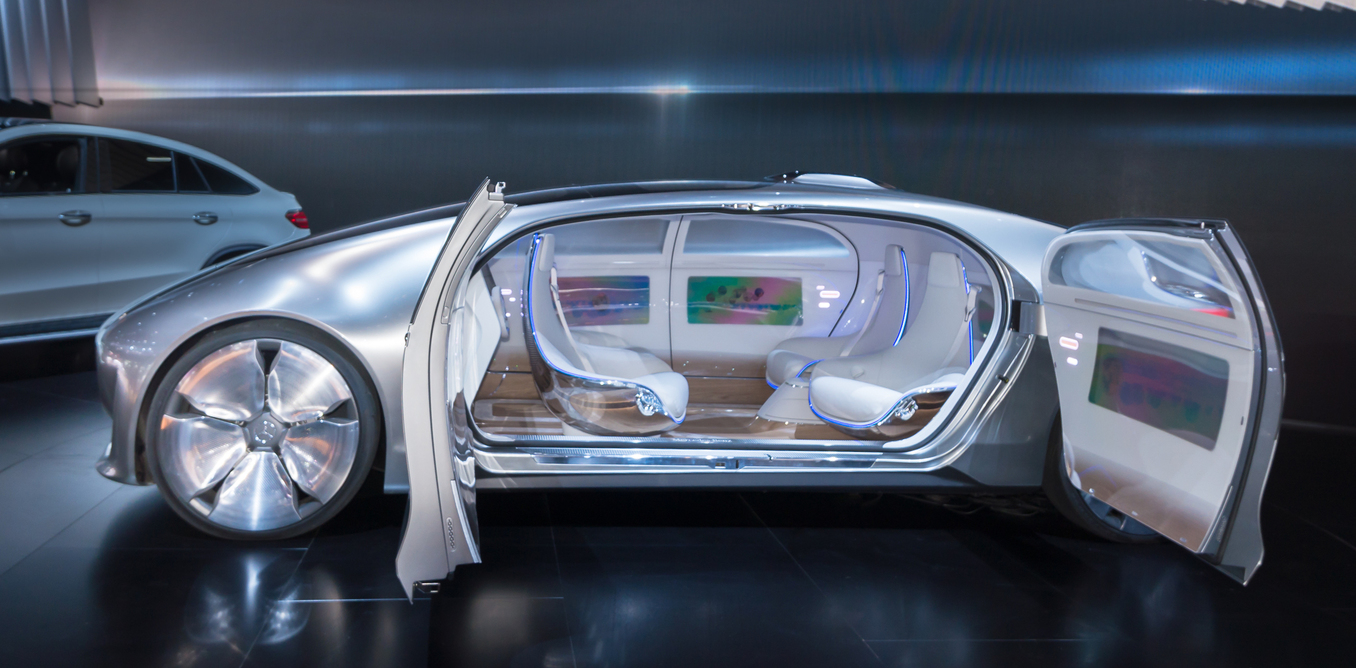
The current hype and Hoopla about driverless cars, tend to be a little naive on the facts.
Zwei remembers a meeting with TransLink Planners, back in the early 2000’s, where i was shown videos about guided and driverless buses.
Embarrassingly for TransLink I knew more about the subject than they; I knew that autonomous bus could operate, but in revenue service many severe problems arose.
History has shown that guided and/or autonomous buses have not fared well, being extremely problematic in operation.
China bought the now obsolete technology and tried to sell it to the gullible rubes in North America. The “trackless tram” was all the rage in the media for about six months and even those who should have known better, such as university professors, jumped on the autonomous bus band wagon.
Well, except for Facebook, where “johnny come lately types”, extols the virtues of the driverless bus, those in the know, just chuckled and quietly thought;
“There is a sucker born every minute.”
Driverless cars, buses and commercial vehicles will come eventually, but for now I am not holding my breathe.
The Costly Pursuit of Self-Driving Cars Continues On. And On. And On.
Many in Silicon Valley promised that self-driving cars would be a common
sight by 2021. Now the industry is resetting expectations and settling
in for years of more work.
*
By Cade Metz
May 24, 2021
*
It was seven years ago when Waymo discovered that spring blossoms made its self-driving cars get twitchy on the brakes. So did soap bubbles and road flares.
New tests, in years of tests, revealed more and more distractions for the driverless cars. Their road skills improved, but matching the competence of human drivers was elusive. The cluttered roads of America, it turned out, were a daunting place for a robot.
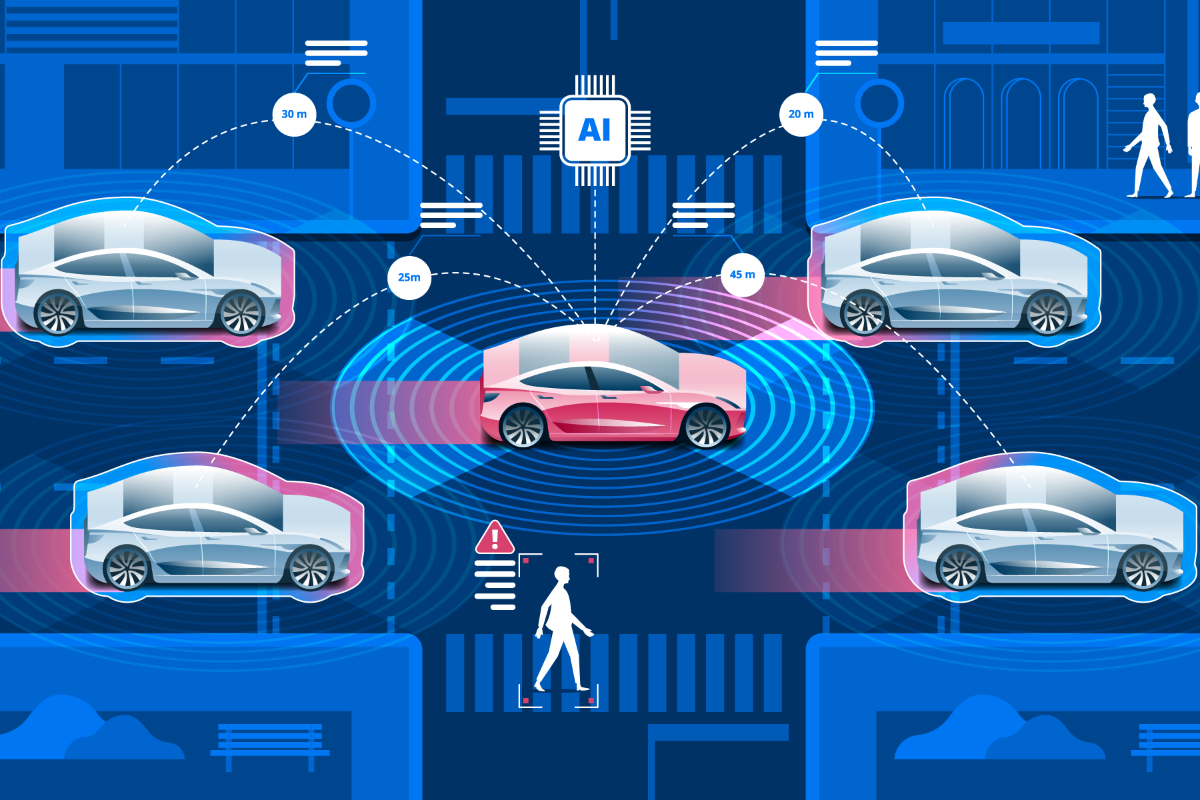
Slick graphics help sell the idea of autonomous cars. The reality is somewhat different.
The wizards of Silicon Valley said people would be commuting to work in self-driving cars by now. Instead, there have been court fights, injuries and deaths, and tens of billions of dollars spent on a frustratingly fickle technology that some researchers say is still years from becoming the industry’s next big thing
*
Now the pursuit of autonomous cars is undergoing a reset. Companies like Uber and Lyft, worried about blowing through their cash in pursuit of autonomous technology, have tapped out. Only the deepest-pocketed outfits like Waymo, which is a subsidiary of Google’s parent company, Alphabet; auto giants; and a handful of start-ups are managing to stay in the game.
*
Late last month, Lyft sold its autonomous vehicle unit to a Toyota subsidiary, Woven Planet, in a deal valued at $550 million. Uber offloaded its autonomous vehicle unit to another competitor in December. And three prominent self-driving start-ups have sold themselves to companies with much bigger budgets over the past year.
The tech and auto giants could still toil for years on their driverless car projects. Each will spend an additional $6 billion to $10 billion before the technology becomes commonplace — sometime around the end of the decade, according to estimates from Pitchbook, a research firm that tracks financial activity. But even that prediction might be overly optimistic.
*
“This is a transformation that is going to happen over 30 years and possibly longer,” said Chris Urmson, an early engineer on the Google self-driving car project before it became the Alphabet business unit called Waymo. He is now chief executive of Aurora, the company that acquired Uber’s autonomous vehicle unit.
*
So what went wrong? Some researchers would say nothing — that’s how science works. You can’t entirely predict what will happen in an experiment. The self-driving car project just happened to be one of the most hyped technology experiments of this century, occurring on streets all over the country and run by some of its highest-profile companies.
*
That hype drew billions of dollars of investments, but it set up unrealistic expectations. In 2015, the electric carmaker Tesla’s billionaire boss, Elon Musk, said fully functional self-driving cars were just two years away. More than five years later, Tesla cars offered simpler autonomy designed solely for highway driving. Even that has been tinged with controversy after several fatal crashes (which the company blamed on misuse of the technology).
*
Perhaps no company experienced the turbulence of driverless car development more fitfully than Uber. After poaching 40 robotics experts from Carnegie Mellon University and acquiring a self-driving truck start-up for $680 million in stock, the ride-hailing company settled a lawsuit from Waymo, which was followed by a guilty plea from a former executive accused of stealing intellectual property. A pedestrian in Arizona was killed in a crash with one of its driverless cars. In the
end, Uber essentially paid Aurora to acquire its self-driving unit.
*
But for the deepest-pocketed companies, the science, they hope, continues to advance one improved ride at a time. In October, Waymo reached a notable milestone: It started the world’s first “fully autonomous” taxi service. In the suburbs of Phoenix, anyone can now ride in a minivan with no driver behind the wheel. But that does not mean the company will immediately deploy its technology in other parts of the country.
*
Dmitri Dolgov, who recently took over as Waymo’s co-chief executive after the departure of John Krafcik, an automobile industry veteran, said the company considered its Arizona service a test case. Based on what it has learned in Arizona, he said, Waymo is building a new version of its self-driving technology that it will eventually deploy in other places and other kinds of vehicles, including long-haul trucks.
*
The suburbs of Phoenix are particularly well suited to driverless cars. Streets are wide, pedestrians are few, and there is almost no rain or snow. Waymo supports its autonomous vehicles with remote technicians and roadside assistance crews who can help get cars out of a tight spot, either via the internet or in person.
*
“Autonomous vehicles can be deployed today, in certain situations,” said Elliot Katz, a former lawyer who counseled many of the big autonomous vehicle companies before launching a start-up, Phantom Auto, that provides software for remotely assisting and operating self-driving vehicles when they get stuck in difficult positions. “But you still need a human in the loop.”
*
Self-driving tech is not yet nimble enough to reliably handle the variety of situations human drivers encounter each day. It can usually handle suburban Phoenix, but it can’t duplicate the human chutzpah needed for merging into the Lincoln Tunnel in New York or dashing for an offramp on Highway 101 in Los Angeles.
*
“You have to peel back every layer before you can see the next layer” of challenges for the technology, said Nathaniel Fairfield, a Waymo software engineer who has worked on the project since 2009, describing some of the distractions faced by the cars. “Your car has to be pretty good at driving before you can really get it into the situations where it handles the next most challenging thing.” Like Waymo, Aurora is now developing autonomous trucks as well as passenger vehicles. No company has deployed trucks without safety drivers behind the wheel, but Mr. Urmson and others argue that autonomous trucks will make it to market faster than anything designed to transport regular consumers.
*
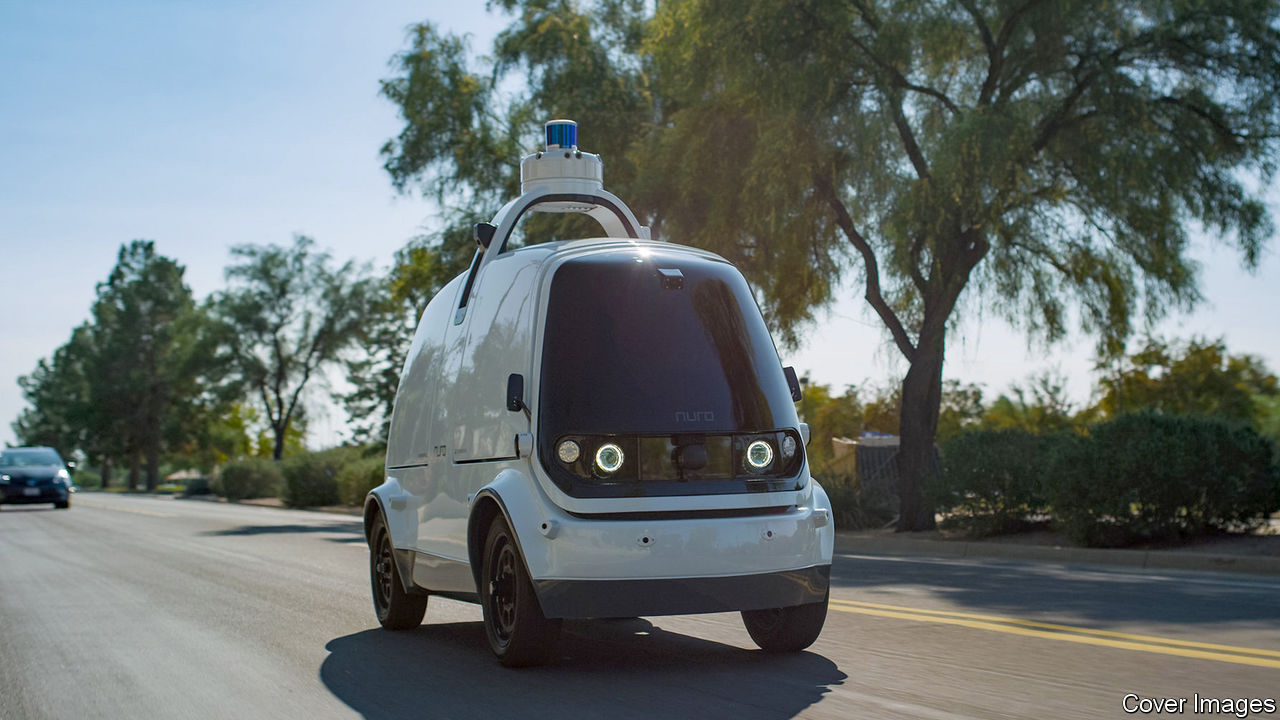
Long-haul trucking does not involve passengers who might not be forgiving of twitchy brakes. The routes are also simpler. Once you master one stretch of highway, Mr. Urmson said, it is easier to master another. But even driving down a long, relatively straight highway is extraordinarily difficult. Delivering dinner orders across a small neighborhood is an even greater challenge. “This is one of the biggest technical challenges of our generation,” said Dave Ferguson, another early engineer on the Google team who is now president of Nuro, a company focused on delivering groceries, pizzas and other goods.
*
Mr. Ferguson said many thought self-driving technology would improve like an internet service or a smartphone app. But robotics is a lot more challenging. It was wrong to claim anything else.
The first application of autonomous vehicles will be for niche applications, such a delivery vehicles in city centres.
“If you look at almost every industry that is trying to solve really, really difficult technical challenges, the folks that tend to be involved are a little bit crazy and little bit optimistic,” he said. “You need to have that optimism to get up every day and bang your head against the wall to try to solve a problem that has never been solved,
and it’s not guaranteed that it ever will be solved.” Uber and Lyft aren’t entirely giving up on driverless cars. Even though it may not help the bottom line for a long time, they still want to deploy autonomous vehicles by teaming up with the companies that are still working on the technology. Lyft now says autonomous rides could
arrive by 2023.
*
“These cars will be able to operate on a limited set of streets under a limited set of weather conditions at certain speeds,” said Jody Kelman, an executive at Lyft. “We will very safely be able to deploy these cars, but they won’t be able to go that many places.”
Cade Metz is a technology correspondent, covering artificial
intelligence, driverless cars, robotics, virtual reality, and other
emerging areas. He previously wrote for Wired magazine. @cademetz
A version of this article appears in print on May 25, 2021, Section B,
Page 1 of the New York edition with the headline: It Turns Out It’s a
This post is pertinent today with the $4.6 billion, 12.8 km extensions to the Expo and Millennium Lines.
One of great criticisms of old Zwei back in the day, was the claim that the Evergreen line was the unbuilt portion of the Millennium Line, which was piggybacked on the previous light rail plans for the Broadway/Lougheed Rapid Transit project. As the ART Millennium line was far more expensive to build than LRT, the project was divided into parts, with the Evergreen Line being the second part of the project.
Every jeer and barb made, basically pointed to the fact that the Evergreen Line was an independent transit line and anything else was, to put politely, talking through one’s hat.
Well today, there is no Evergreen Line, just the Millennium Line, which caters to traffic flows that only justifies a married pair of Mk.2 trains.
It is now very apparent that TransLink’s $4.6 billion extensions to the Expo and Millennium lines, including the 5.8 km Broadway subway, light-metro again, is being built to act as a driver for increased density, which in the end not provide the ridership to justify the expense.
The huge increased density, in the form of high rise condos, built around the Millennium Line in the past ten years, has not translated into transit ridership. The 2-car trains used on the Millennium Line certainly indicates light ridership and I am afraid the same will be true of the Broadway subway and the Fleetwood extension.
Just sayin.
Interesting news item, from all places, the SkyTrain friendly CKNW radio station.
VANCOUVER/CKNW(AM980)
10/7/2011
Just as the mayors vote today on funding for the Evergreen Line, a report by the transportation commissioner says TransLink’s ridership predictions may just be wishful thinking.
The Province newspaper reports commissioner Martin Crilly wrote last week that the growth predictions for ridership on the proposed Evergreen Line appear somewhat optimistic, and may not be based on logic.
His skepticism stems from the Evergreen Line being built in the relatively low-density Tri-Cities area.
The problem I have with Mr. Crilly is that he is stuck in the density trap and seems to be of the school that massive densification is needed to justify “rapid transit“, while forgetting the fact that modern LRT being much cheaper to build, would require much less of his cherished density to operate economically.
Being soundly criticized and booted from many so-called transit friendly blogs because I advocate a simple message that “Transit is to move people not create density.”, I have been amazed at the nonsense being passed as good transit philosophy.
Development will happen along transit lines but the massive densification advocated by the rapid transit/SkyTrain types maybe counter productive, especially if the populace of the newly densified areas do not work nor commute anywhere near where the rapid transit lines go and take the car instead.
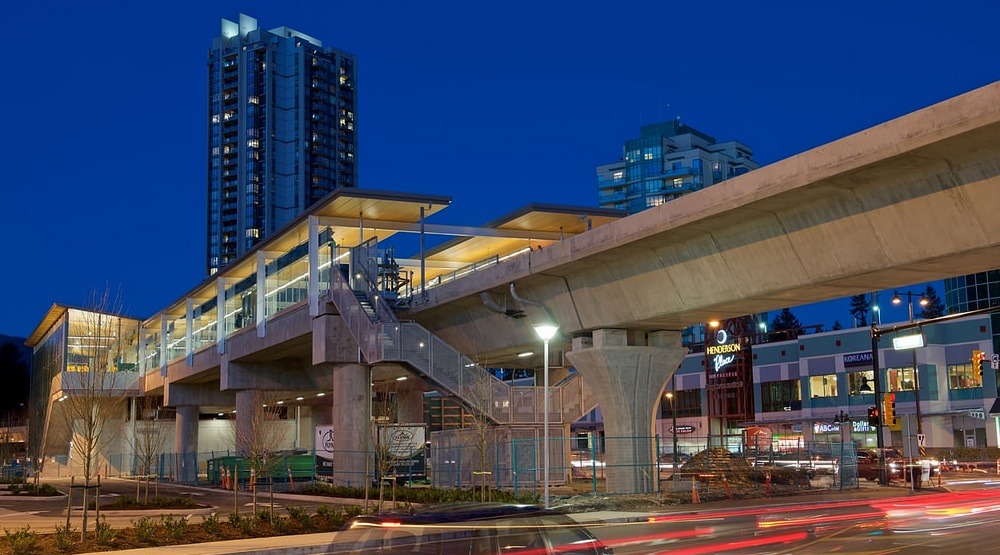
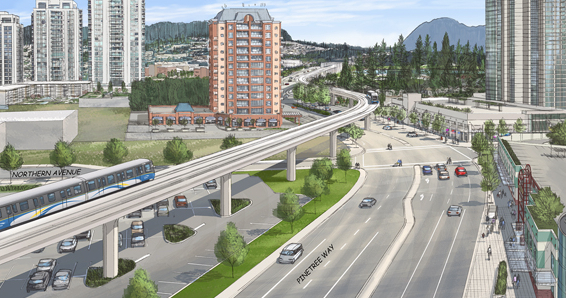
The (N)Evergreen Line is a forgotten spur line of the original Broadway-Lougheed LRT projects and was omitted because we could only afford a much smaller SkyTrain Millennium Line (same was true of the original Expo Line which originally terminated in New Westminster and was much smaller than the original 3 line LRT plan) and now another $1.4 billion is needed to complete it.
The problem with the Millennium Line is that TransLink has been telling ‘Porkies’ about ridership all along, first exposed by Gerald Fox’s 2008 letter –
From: A North-American Rail Expert (Gerald Fox)
Subject: Comments on the Evergreen Line aBusiness Case
Date: February 6, 2008
Greetings:
The Evergreen Line Report made me curious as to how TransLink could justify continuing to expand SkyTrain, when the rest of the world is building LRT. So I went back and read the alleged Business Caseai (BC) report in a little more detail. I found several instances where the analysis had made assumptions that were inaccurate, or had been manipulated to make the case for SkyTrain. If the underlying assumptions are inaccurate, the conclusions may be so too. Specifically:
Capacity. A combination of train size and headway. For instance, TriMet’s new Low floor LRVs, arriving later this year, have a rated capacity of 232 per car, or 464 for a 2- car train. (Of course one must also be sure to use the same standee density when comparing car capacity. I don’t know if that was done here). In Portland we operate a frequency of 3 minutes downtown in the peak hour, giving a one way peak hour capacity of 9,280. By next year we will have two routes through downtown, which will eventually load both ways, giving a theoretical peak hour rail capacity of 37,000 into or out of downtown. Of course we also run a lot of buses.
The new Seattle LRT system which opens next year, is designed for 4-car trains, and thus have a peak hour capacity of 18,560. (but doesnai??i??t need this yet, and so shares the tunnel with buses). The Business Case analysis assumes a capacity of 4,080 for LRT, on the Evergreen Line which it states is not enough, and compares it to SkyTrain capacity of 10400.!
Speed. The analysis states the maximum LRT speed is 60 kph. (which would be correct for the street sections) But most LRVs are actually designed for 90 kph. On the Evergreen Line, LRT could operate at up to 90 where conditions permit, such as in the tunnels, and on protected ROW. Most LRT systems pre-empt most intersections, and so experience little delay at grade crossings. (Our policy is that the trains stop only at stations, and seldom experience traffic delays. It seems to work fine, and has little effect on traffic.) There is another element of speed, which is station access time. At-grade stations have less access time. This was overlooked in the analysis.
Also, on the NW alignment, the SkyTrain proposal uses a different, faster, less-costly alignment to LRT proposal. And has 8 rather than 12 stations. If LRT was compared on the alignment now proposed for SkyTrain, it would go faster, and cost less than the Business Case report states!
Cost. Here again, there seems to be some hidden biases. As mentioned above, on the NW Corridor, LRT is costed on a different alignment, with more stations. The cost difference between LRT and SkyTrain presented in the Business Case report is therefore misleading. If they were compared on identical alignments, with the same number of stations, and designed to optimize each mode, the cost advantage of LRT would be far greater. I also suspect that the basic LRT design has been rendered more costly by requirements for tunnels and general design that would not be found on more cost-sensitive LRT projects.
Then there are the car costs. Last time I looked, the cost per unit of capacity was far higher for SkyTrain. Also,it takes about 2 SkyTrain cars to match the capacity of one LRV. And the grade-separated SkyTrain stations are far most costly and complex than LRT stations. Comparing 8 SkyTrain stations with 12 LRT stations also helps blur the distinction.
Ridership. Is a function of many factors. The Business Case report would have you believe that type of rail mode alone, makes a difference (It does in the bus vs rail comparison, according to the latest US federal guidelines). But, on the Evergreen Line, I doubt it. What makes a difference is speed, frequency (but not so much when headways get to 5 minutes), station spacing and amenity etc. Since the speed, frequency and capacity assumptions used in the Business Case are clearly inaccurate, the ridership estimates cannot be correct either. There would be some advantage if SkyTrain could avoid a transfer. If the connecting system has capacity for the extra trains. But the case is way overstated.
And nowhere is it addressed whether the Evergreen Line, at the extremity of the system, has the demand for so much capacity and, if it does, what that would mean on the rest of the system if feeds into?
Innuendos about safety, and traffic impacts, seem to be a big issue for SkyTrain proponents, but are solved by the numerous systems that operate new LRT systems (i.e., they cana’ be as bad as the SkyTrain folk would like you to believe).
I’ve no desire to get drawn into the Vancouver transit wars, and, anyway, most of the rest of the world has moved on. To be fair, there are clear advantages in keeping with one kind of rail technology, and in through-routing service at Lougheed. But, eventually, Vancouver will need to adopt lower-cost LRT in its lesser corridors, or else limit the extent of its rail system. And that seems to make some TransLink people very nervous.
It is interesting how TransLink has used this cunning method of manipulating analysis to justify SkyTrain in corridor after corridor, and has thus succeeded in keeping its proprietary rail system expanding. In the US, all new transit projects that seek federal support are now subjected to scrutiny by a panel of transit peers, selected and monitored by the federal government, to ensure that projects are analyzed honestly, and the taxpayer’s interests are protected. No SkyTrain project has ever passed this scrutiny in the US.
Victoria
But the BIG DEAL for Victoria is: If the Business Case analysis were corrected to fix at least some of the errors outlined above, the COST INCREASE from using SkyTrain on the Evergreen Line will be comparable to the TOTALCOST of a modest starter line in Victoria. This needs to come to the attention of the Province. Victoria really does deserve better. Please share these thoughts as you feel appropriate.
As one can see, TransLink’s business case is on very shaky ground and now Mr. Crilly is sounding alarm bells on the project. The problem with the Evergreen Line is that for transit customers wishing to go to Vancouver, the West Coast Express is a faster and seamless ride and those who wish to commute elsewhere, other than Metrotown or Lougheed Mall, will need to inconveniently transfer to another SkyTrain or bus.
Like the Canada Line, for many, the Evergreen Line will be inconvenient and taking the car will just be a better option.
Until we design our regional rail and transit system to cater to customer needs, instead of academic, bureaucratic and political needs, taking the car will be the option for those who can afford to, leaving the rest of the transit system to decay, mainly being for the poor, the elderly and students. Why should the taxpayer ante up two cents more a litre for that?
A never used section on the Belgium Charleroi pre-metro.
Over optimistic ridership numbers, doomed some completed lines to rust away, never seeing a paying customer.
An accident has happened on the fully automated (driverless) Advanced Rapid Transit (ART) system in Kuala Lumpur.
The Kelana Jaya line is a twin of Vancouver’s millennium line and uses MK.2 cars.
Being fully automatic, this accident should not have happened, but it did and should pose serious questions about safety on Vancouver’s SkyTrain light-metro system, especially the now aging Expo Line.
Kuala Lumpur metro train crash injures more than 200 passengers
More than 200 people have been injured in a train crash in the Malaysian capital Kuala Lumpur.
A metro train carrying 213 passengers collided with an empty one in a tunnel near the Petronas Towers, at about 20:45 (12:45 GMT), police said.
The empty train had just been repaired, and was going in the opposite direction on the same track as the full one.
District police chief Mohamad Zainal Abdullah told reporters there was no sign of foul play.
“We are still investigating the incident… but we suspect that perhaps there was a miscommunication from the trains’ operation control centre,” he said.
Of the 213 injured, 47 people are in a serious condition while the other 166 have sustained minor injuries, he added.
Images and footage posted on social media in the hours after the incident showed bleeding passengers lying on the floor of the train carriage, which was covered in broken glass.
image copyrightEPA
image captionPrime Minister Muhyiddin Yassin has ordered an investigation into the incident
In a statement posted on Facebook, Malaysian Prime Minister Muhyiddin Yassin said the crash, which happened near the city’s busy KLCC station, was “serious”.
He added that he had asked the train operator Prasarana Malaysia Berhad and the country’s transport minister “to conduct an in-depth probe to find out the cause of the accident”.
Transport Minister Wee Ka Siong said in a separate statement that the crash was the metro system’s first major accident in the 23 years it had been operating.
This has just happened and file it in “I told you so” department”.
When things go wrong, they go wrong very badly.
When aerial tramways fail, the result is catastrophic.
Those who promote exotic transit modes do not think about safety or the constant maintenance needed to keep the transit mode safe.
A recent comment by Mr. Cow has all of a sudden become very relevant:
The subject came up about the possibilities of urban sky gondola technology, like the planned one to Simon Fraser University. This technology doesn’t move a lot of people unless you spend a lot, on a truly grand and significantly complex 4 plus cable operation (2 or more suspension cables traveling in each direction). The huge operating and maintenance costs as well as the rate at which Translink wants to subsidize the operation has never really been made clear, I promise you it won’t ever make an operational profit. I guess the public is going to have to talk with ski resort operators to find out just how pricey these systems truly are.
And then, we have our resident cable car cable cutter, who has sabotaged the Sea to Sky cable car twice in as many years.
Do we really want to spend $300 million for a aerial tramway to SFU, with yet undetermined operating costs, instead of spending $30,000 for good snow tires for buses?
Italy cable car fall: Nine dead after accident near Lake Maggiore
image copyrightHandout via Reuters
image captionEleven people were on the Stresa-Alpine-Mottarone cable car when it crashed
Nine people have been killed after a cable car fell on a mountain near Lake Maggiore in northern Italy on Sunday.
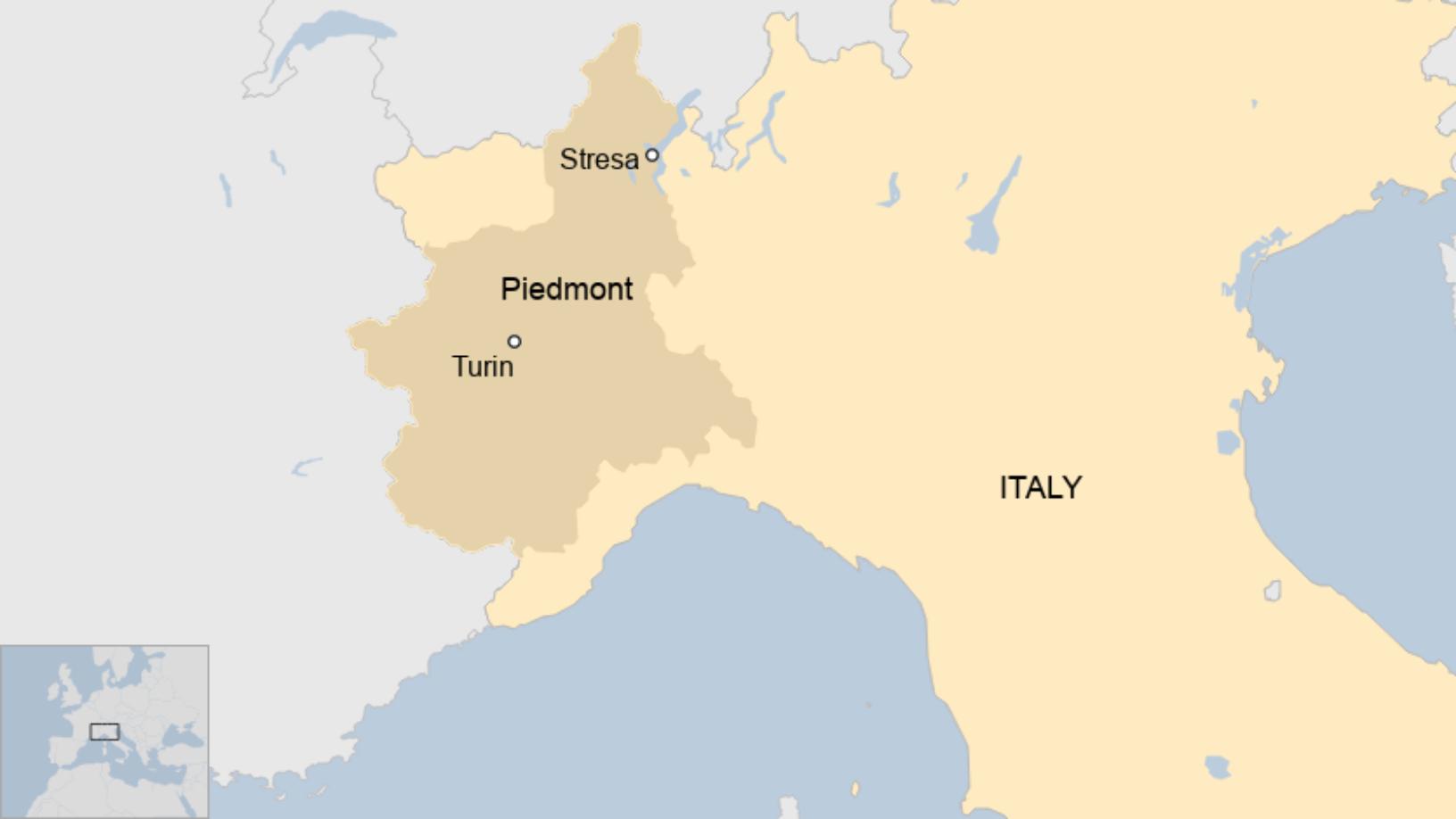
The accident happened on a service transporting passengers from the resort town of Stresa up the nearby Mottarone mountain in the region of Piedmont.
An image posted on social media by emergency services showed the wreckage of the car lying in a wooded area.
Officials say two children were taken from the scene by helicopter to a Turin hospital.
They are the only survivors of 11 passengers who had been on board when the cable car crashed, a spokesman for Italy’s alpine rescue service confirmed to the Reuters news agency.
Officials said a call to emergency services came just after 12:00 local time (11:00 BST) on Sunday.
Walter Milan, another alpine rescue spokesman, told RaiNews24 television that the cable car was left “crumpled” after falling from a high height.
The cause of the incident remains unclear, but local reports suggest the cable carrying it may have failed about 300m (984ft) from the top of the mountain.
image copyright@emergenzavvf
image captionEmergency services shared an image of the deadly crash on Sunday
image copyrightHandout Via Reuters
image captionPolice were among emergency service rescuers working at the scene
The website for the Stresa-Alpine-Mottarone cable car said it usually takes 20 minutes to transport passengers 1,491m above sea level.
Mottarone is situated between Lake Maggiore and Lake Orta, offering scenic views of the region for tourists.
The cable car service had recently reopened following the lifting of coronavirus restrictions, Reuters news agency reported.
If anyone who has traveled into the upper Fraser Valley, especially the Chilliwack/Sardis/Vedder areas and seen the huge growth and the associated congestion must realize that a rail connection from Vancouver to Chilliwack, via North Delta, Cloverdale, Langley, Abbotsford, Vedder, Sardis and Chilliwack is most needed.
*
Rail for the Valley , over a decade ago, engaged Leewood Projects (UK) to do a viability study on using the former BC Electric interurban route. Released in 2010, the Leewood Study found that establishing a passenger rail service from Vancouver was both doable and affordable.
*
Rail for the Valley also understands the desirability of the passenger service to reach downtown Vancouver, giving the transit customer a seamless journey from the upper Fraser Valley to Vancouver proper!
The following, from the Leewwwod Study gives the estimated cost in 2010 and updated to 2021 dollars.
Stage 1 Phase 1- Chilliwack to Scott Road [Diesel/hybrid option] summary capital cost.
CAD $491,819,424.00 (2021 CAD $594,847,133.00) or CAD $5.02 m per km (2021 CAD$6.07m per km)
For total 138 km route, Vancouver Central to Rosedale
CAD$ 998,519,424 (2021 CAD $1,207,692,027.00) or CAD $7.2 million per km (2021 CAD $8.71 million per km)
So let us compare: $1.7 billion to built a 7 km extension of the Expo line to Fleetwood in Surrey and a$1.3 billion for a 130 km regional passenger service connecting Vancouver to North Delta, Surrey, Cloverdale, Langley, Abbotsford, Sardis/Vedder and Chilliwack: Which would give a better transit service? Which one would reduce auto traffic on the #1 highway through the Fraser Valley?
It seems the taxpayer knows, the question is, do the politicians?
southfrasercommunityrail.ca image
Poll says 88% of South Fraser adults want passenger trains between Surrey, Chilliwack
The poll was conducted by Research Co. on behalf of the South Fraser Community Rail Project
A new poll suggests 88 per cent of the adults residing in six communities south of the Fraser River would like to see hydrogen-powered trains provide daily passenger service along a re-activated rail corridor in this region.
The poll was conducted by Research Co. on behalf of the South Fraser Community Rail Project. Mario Canseco, president of Research Co., said 83 per cent of respondents in North Surrey, 85 per cent in North Delta, 82 per cent in the Township of Langley, 76 per cent in the City of Langley, 93 per cent in Abbotsford and 89 per cent in Chilliwack gave the concept a thumb’s up.
The trains as proposed would run along 99 kilometres of publicly owned line known as the Interurban Corridor, from Scott Road Station to Chilliwack, connecting 16 cities and communities, eight First Nations communities, Abbotsford International Airport, 14 post-secondary institutions, and industrial parks along the way.
Today the line is used only for freight. The passenger train project would take about three years to get underway, at an estimated cost of $1.38 billion, and significantly reduce traffic congestion on Highway 1, by an estimated 49 per cent.
Research Co. polled 800 adults between on May 5 to May 8, with a margin of error at +/- 3.5 percentage points 19 times out of 20. The respondents were asked two questions. The first was “From what you have just seen, read and heard about the South Fraser Community Rail project, do you support or oppose it?”
Four per cent said they are not sure, seven per cent opposed it and 88 per cent supported it.
The second question was “If the South Fraser Community Rail project is reactivated to connect 16 cities and communities, eight First Nations communities, 14 post-secondary institutions, industrial parks and the Abbotsford International Airport, how likely are you to use it, either for work or leisure?”
Six per cent responded not sure, 16 per cent not too likely or not likely at all, and 78 per cent responded very likely or moderately likely.
In 1992, the region woke up to a GVRD study that exposed the deceit of many politicians of the day who claimed that SkyTrain operated without subsidy. The truth was just the Expo line to New Westminster was heavily subsidized, more than the combined diesel and trolley buses!
I add this because the old TransLink propaganda machine is up and running claiming “because SkyTrain is driverless, it’s cheap to operate.”
In 1993 the Greater Vancouver Regional District (GVRD), now known as metro Vancouver and the province of British Columbia released a report entitled “Transport 2021“, part of the 2021 study was the study, “The Cost of Transporting People in the British Columbia Lower Mainland“.
On page 15 of the “The Cost of Transporting People in the British Columbia Lower Mainland” study is a chart showing the breakdown of financial studies for public transit in 1991. The chart showed that the total subsidy for SkyTrain was $157.6 million. The huge subsidy for SkyTrain sent howls of “shock and disbelief” from BC Transit and the SkyTrain lobby, which until then maintained the myth that SkyTrain operated without subsidy and in fact suggested that SkyTrain paid its operating costs, a myth that remains today.
In early 2004, the late light rail campaigner, the late Des Turner, confirmed with TransLink that the annual SkyTrain subsidy, with the opening of the Millennium Line, surpassed $200 million a year! Alas, Mr Turner has since passed away and his meticulous records have been lost to the ages.
With the $100 million concessionaire’s fee for the Canada Line and adding provincial debt servicing charges for the metro, the annual subsidy for the mini-metro system has now surpassed $300 million!
When politicians or media types claim that “SkyTrain operates without subsidy“, or “pays its operating costs“, just remind those cheer-leading for mini-metro of “The Cost of Transporting People in the British Columbia Lower Mainland” and that the annual subsidy for mini-metro has surpassed $300 million annually! One can also add, that the $300 million pus annual subsidy has hamstrung financially TransLink and its public transit operations.
The following is reproduced from”The Cost of Transporting People in the British Columbia Lower Mainland“.
Exhibit III-1
Breakdown of financial subsidies for public transit in 1991 ($millions)




 The (N)Evergreen Line is a forgotten spur line of the original Broadway-Lougheed LRT projects and was omitted because we could only afford a much smaller SkyTrain Millennium Line (same was true of the original Expo Line which originally terminated in New Westminster and was much smaller than the original 3 line LRT plan) and now another $1.4 billion is needed to complete it.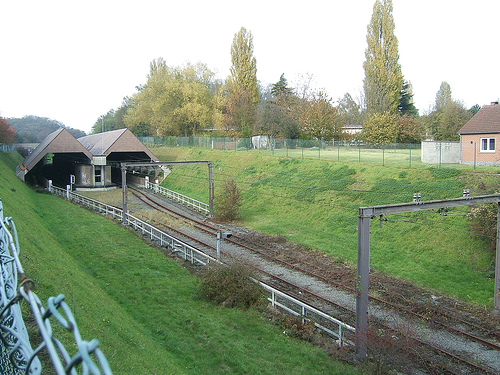

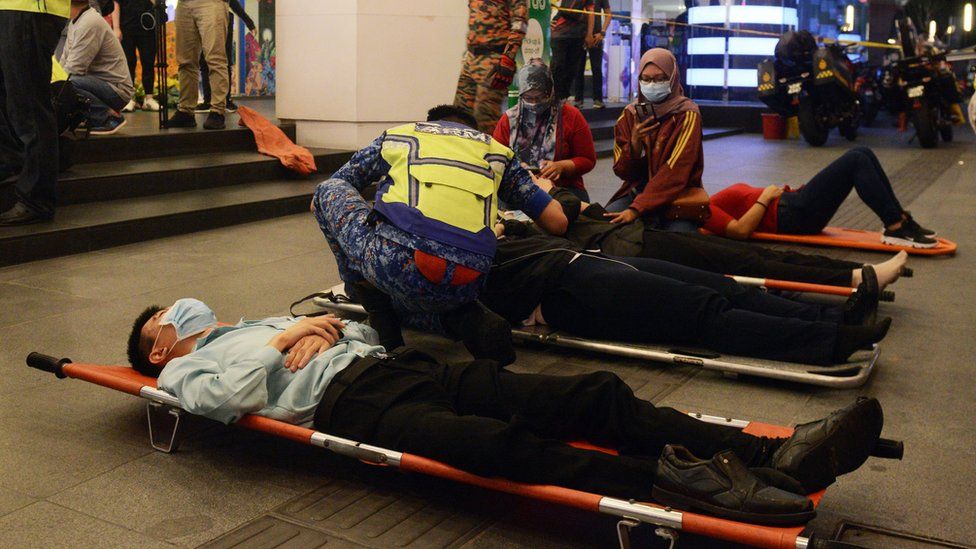
image copyrightHandout via Reuters
image copyright@emergenzavvf
image copyrightHandout Via Reuters

southfrasercommunityrail.ca image





Recent Comments