There is another reason why transit may not return to pre Covid-19 levels any time soon; a reason that TransLink would never admit to: the service provided by TransLink is deemed third rate by customers.
User friendliness is the number one reason people use transit and includes ease ticketing, lack of transfers, and the general ambience of the system. Sadly, TransLink does not provide a user friendly service and with Covid-19, the public are beginning to realize, after returning to the car for commuting, that the service is third rate.
Talking to several former transit users in the past month, all have stated that they will not go back to using transit. My wife is of the same opinion. After using transit to commute to Vancouver for the past 20 years, her commute time has greatly increased from under 70 minutes to over 90 minutes each way. Today, by car, it takes her 45 minutes each way to go from Tsawwassen to Broadway and Alma.
The transit users in my demographic hold TransLink and the Mayor’s Council on Transit in very high odor and all I have talked too want major reforms.
TransLink, trying to hide public discontent, use trickery to promote the idea that TransLink is very successful. They boast of “453 million boarding’s”, which seems impressive. Impressive to the uninformed, but TransLink has designed the transit system to force bus riders to take the mini-metro. Thus over 80% of SkyTrain’s ridership must make at least two boarding’s each direction or four boarding’s a day. My wife used to make six boarding’s a day.
Also, not factored in is that the widely distributed U-Pass, giving unlimited daily travel also is responsible for much higher boarding counts.
Thus it is easy to see that the actual number of individual people using transit in metro Vancouver is far lower than the boarding’s number used by TransLink!
Now, if TransLink used the unique use of the Compass Card to determine ridership, a far more accurate ridership number would emerge, but TransLink refuses to provide that data.
So here is the dilemma TransLink finds itself in, as ridership collapsed, those opting not to go back to transit, especially those who had to make two or more transfers per commute, TransLink’s boarding’s numbers will not rebound any time soon and may never attain the the numbers pre Covid.
This puts even more financial pressure on TransLink and the Mayor’s Council on Transit to rethink their present $4.6 billion expansion of the Millennium and Expo Lines, especially the Broadway subway.
This brings us back to the successful German Model of providing public transport;
Public transit to be successful, must be treated as a product and if the product is successful, people will use it and if not, people will not.
We will see how successful the TransLink product really is and how long can TransLink operate empty buses no one wants to use.
TransLink senior managers say it could be as long as three to five years before the system gets back to pre-pandemic ridership.
DARRYL DYCK/The Globe and Mail
In the world before COVID-19, Vancouver’s increasingly successful transit agency hit another new peak in 2019.
According to its just-released report for the year on ridership, the transit system – one of the star performers in the U.S. and Canada – saw a new record high of 453 million boardings and one more year in which the proportion of additional rides far exceeded population growth.
Now, TransLink senior managers say it could be as long as three to five years before the system gets back to those levels, with the region facing the potential for a second wave of shutdowns, a longer-term recession, and some degree of permanent work restructuring as office jobs and education shift online.
“It’s too early to tell exactly, but the preliminary thinking is that it will take several years. It could be three to five,” said Geoff Cross, TransLink’s vice-president of transportation planning.
And, while planners always knew that working from home is a growing phenomenon in many cities, the pandemic has wrenched that trend from a slow upward curve to a rocket launch.
“South of the Fraser, the numbers are 10 points higher – 51 per cent there,” said Mr. Cross.
In the region’s southeast, including Langley, Surrey and Delta, 29 of the 45 routes have gone back to seeing between 60 and almost 80 per cent of their normal ridership.
TransLink planners are not totally sure why some parts of the region are returning to transit faster, but it’s something they’re watching closely to see where the system is going. “It could be affordability issues, it could be the kind of work they’re doing.”
The system is still losing tens of millions a month, though not as much as the $75-million a month reported in the early weeks of the pandemic.
Ironically, the agency is gaining some revenue as people return to work and shopping but by private vehicle. The region’s gas-tax revenue, which earned $34.5-million for TransLink in February, dropped to $19.5-million in April, but was back to $22-million by May. Some of that is also because Vancouverites can no longer go over the U.S. border to buy cheaper gas.
There is going to be some money available from the $540-million that the federal government announced last week would go to help B.C. transit – both TransLink in the Lower Mainland and the B.C. Transit-run bus systems elsewhere in the province – cope with pandemic effects.
Mr. Cross said it’s not clear yet what that can be used for and how it will be distributed.
There might even be some benefits from the pandemic period if people spread out their work and errands more evenly, instead of piling on to commuter rush hours.
“We build all of our systems for the peak of the peak. If we can spread that out, we can have a more efficient system.”
“Working from home, school from home are trends we’ve been looking at for years. But that is accelerated,” Mr. Cross said.
Now, he said, TransLink planners need to use the information about the growth and trends in the system pre-pandemic to figure out what to do going forward.
One strong pattern in the 2019 numbers was the growth of ridership on lines that don’t necessarily convey commuters into downtown and that seem to be serving lower-paid workers who are travelling to jobs all over the region.
Bus lines in Surrey, Delta and Langley, along with those in Burnaby and New Westminster, saw some of the biggest increases: 22 per cent for the south-eastern region; 15 per cent for Burnaby/New West. That compares to the ridership increase in the region overall, which only averaged at 3.7 per cent, or 15.5 million boardings, from 2017 to 2018. (Lines that cross Vancouver east to west in the southern half of the city have also seen significant increases.)
The ridership in some of the suburban areas is also coming back a little more strongly than elsewhere. While the system average now is at about 40 per cent of pre-COVID ridership levels, or 450,000 boardings a day, it’s noticeably higher in some parts of the region.
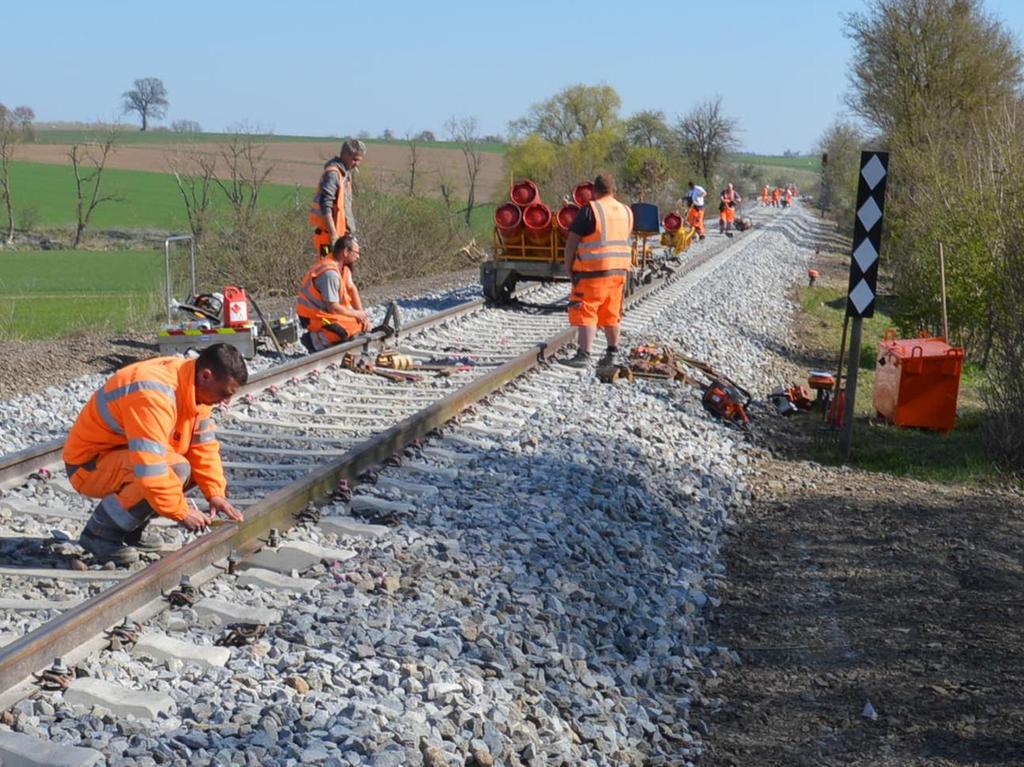
In B.C., we are spending $4.6 billion to extend the Expo and Millennium Line’s a mere 12.8 km, while in the UK, £1.2 billion (CAD $2.04 billion) is being spent t0 reopen four rail lines (this means completely rehabbing and re signalling the lines); upgrading three rail lines for improved passenger service; and double tracking a main line for improved passenger service.
In the UK, $2.04 billion will buy you almost 100 km of reinstated or new line; almost 100 km of upgrading of line for improved service; and 135 km of double tracking existing mainline. This adds up to around 335 km of passenger rail improvements!
For $4.6 billion, BC gets 12.8 km of an obsolete light metro system designed not to improve transit, rather to act as a driver for high rise and “tower” construction.
For less than half the money allocated, passenger rail services are getting a massive boost, while in metro Vancouver, $4.6 billion literally buys you nothing but political prestige and hopefully votes at election time.
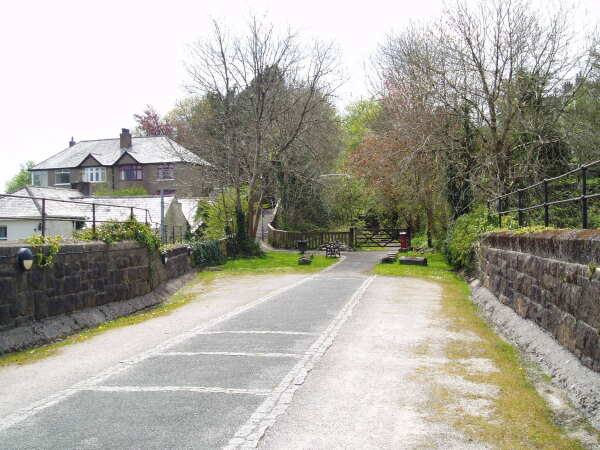
Brentor Station, soon to see a passenger service after more than 50 years, on the Okehampton Tavistock route.
£1.2bn rail upgrade proposed for southwest Britain
RAIL expert Lord Tony Berkeley and Mr Michael Byng, a chartered quantity surveyor and construction cost consultant, have published a £1.2bn plan to reopen lines and double-track existing lines in southwest Britain.
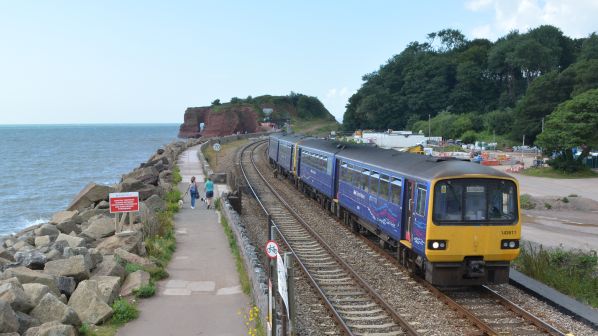
Network Rail is currently upgrading seawall at Dawlish to make the existing Exeter – Plymouth main line more resilient to storm damage.
The Great South West plan, which will be promoted to the government, Local Enterprise Boards, local authorities, Network Rail (NR) and train operators, is aimed at increasing the capacity of the southwestern rail network, providing more resilience to flooding and storm damage, plugging gaps in the network, stimulating growth and reducing carbon emissions by encouraging a switch from road to rail.
The authors say this is the first plan to be costed using NR’s new “rail method of measurement,” which is designed to improve cost certainty, and each scheme meets the “five case model” requirements set out by the British Treasury which cover the strategic, economic, commercial, financial and management dimensions for projects.
The plan is designed so that large schemes can be broken down into smaller elements which can be delivered quickly and at low risk. The authors say one sponsor and specification should be agreed at the outset and design and construct contractors should be used who can respond to specifications without having to go through multiple checks and approvals.
The schemes in the plan comprise:
reinstatement of double track between Exeter, Yeovil and Salisbury (£382.3m) – approx. 135 km.
reopening the railway between Okehampton, Tavistock and Bere Alston and upgrading existing sections to create an alternative to the storm-damage-prone Exeter – Plymouth main line (£426.5m) – approx. 40 km
upgrading the Exeter – Barnstable line (£17.25m) – approx. 60 km
reopening the Bodmin – Padstow line (£31.8m) – approx. 20 km
reopening the Lostwithiel – Fowey freight line to passenger trains (£5.25m) – approx. 8km.
reopening the direct link between Newquay and St Austell (£181.5m), – approx. 24 km
upgrading the Taunton – Minehead West Somerset Railway heritage line (£11.8m). – approx. 36 km.
“These schemes are ready to deliver and will provide many much-needed work opportunities in the southwest, providing immediate help to local small and medium enterprises (SMEs) in the design and construction sectors, creating a pool of skills to support future long-term development in region,” Byng says.
After driving in and around Metro Vancouver in the past few weeks, the standard of driving is just terrible. It seems that the Covid-19 debacle has made driving idiots out of us all.
I have witnessed not fewer than 10 incidents in the past week that would have lead to tragedy, by drivers who, for the sake of any other reason, want to drive fast.
Just today, driving to Rona, at Tsawwassen Mills (about 3 km from my house) to buy paint, a TransLink bus driver blew through a red light, almost T-boning the car in front of me! There was only 2 or 3 people on the bus and there was no reason to drive in such away.
On the Number 1, I was traveling, in the flow of traffic, at a speed around 110 km (any slower and I would have been impeding traffic) a car weaved in and out of traffic, almost causing not one, not two, but three accidents!
There was no need for such speed and maneuvering.
Then there was the person on Highway 99 going to the dump with his trailer filled with rubbish; well a lot of that rubbish ended up on the road and caused a lot of swerving to prevent contact with the debris!
The number one spot, must go to the two semi’s ‘rat-racing’ down Highway 17, coming from the Superport. They passed me going at least 100 kph (posted speed limit is 80 kph), bobbing in out of traffic and changing lanes five or six times as they disappeared onto HWY 99.
Just Damned dangerous!
We live in perilous times, but we do not need the added aggravation of dangerous driving by people who should know better.
Let’s take our driving down a notch, OK? We do not need to succumb to bad driving at this time, or at any other time for that matter.
When government wants to bury an embarrassing news release, they release it on a Friday and hopes no one notices.
Well, the BC government announced the preferred “proponent team” for the Broadway subway and the Surrey Expo Line extensions today, Friday, July 17.
Interesting!
I will not go into the pitfalls of the projects as readers of this blog know well the ills TransLink’s rapid transit project, but two items sticks out like a sore thumb.
The province will be liable for cost overruns on the Broadway Subway Project.
TransLink will be on the hook if there are cost overruns on the Surrey Langley SkyTrain project.
This is a red flag which indicates to me the certainty of cost overruns on both projects! With subways, this could mean very large cost over runs. It also opens the door for cut-and-cover subway construction, a la Cambie St.
With Covid-19, the public are beginning to question the $2.83 billion subway under Broadway and the Surrey extension and one wonders if the Horgan NDP are getting nervous with this project, especially when it has been pointed out that there isn’t the ridership on both routes to justify a $4.6 billion investment. TransLink even fired their two top planners for pointing this out publicly!
For the NDP, this project is all about good union jobs (just like the FastFerry debacle) and for the cities of Vancouver and Surrey, it is about using “rapid transit” as a driver to densify the corridors and build towers to satisfy Metro Vancouver’s politicians developer friends. Wealthy developer friends are very important at election time.
For the transit customer, higher fares and a more fragmented transit system, requiring even more transfers to get to ones destination and for the taxpayer, higher taxes, user fees and more.
The one item that this massive project is not about is designing an affordable, user-friendly transit system for the Metro Vancouver and is why the NDP wanted to bury this announcement on a Friday.
This is an artist’s rendering of South Granville Station, which is being built on the northeast corner of Granville Street and West Broadway.
The most expensive infrastructure project in Vancouver history has moved one step closer to being developed.
Today, the B.C. government announced that a preferred proponent team has been chosen to design, build, and partially finance the $2.83-billion Broadway Subway Project.
It’s a 5.7-kilometre westward extension of the Millennium Line from VCC-Clark Station to Arbutus Street.
According to a government news release, the Acciona-Ghella Joint Venture will enter into final contract negotiations with the Transportation Investment Corporation.
The TIC is a subsidiary of the B.C. Transportation Financing Authority.
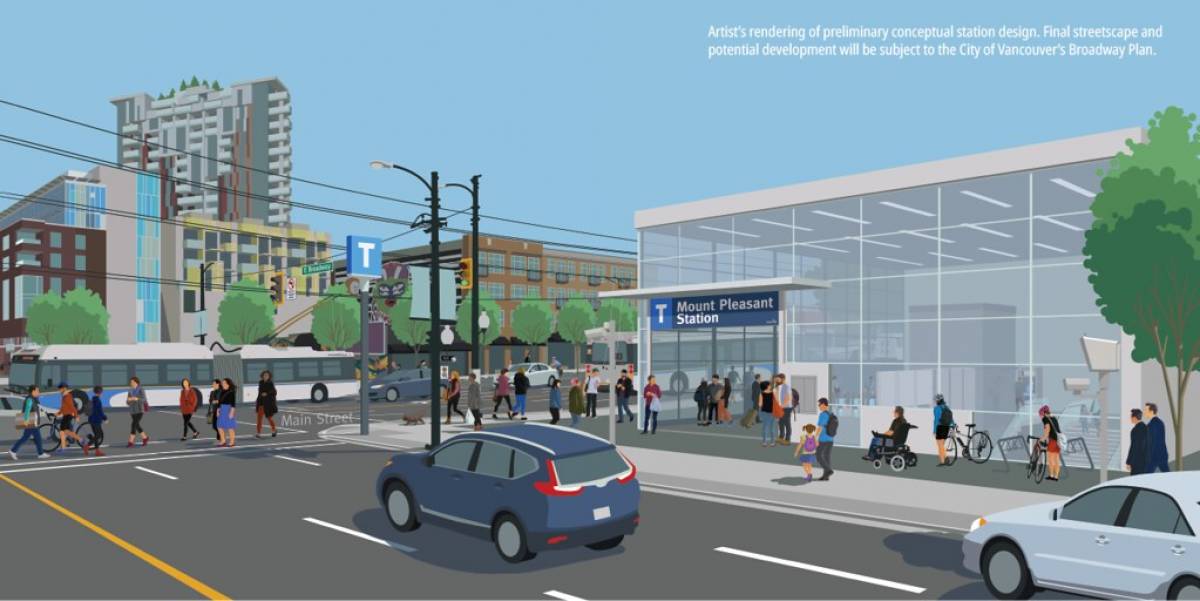
Mount Pleasant Station will be on the southwest corner of East Broadway and Main Street.
SNC-Lavalin not on finalist’s list
The Acciona-Ghella Joint Venture includes the following companies:
Design contractor: IBI Group Professional Services (Canada) Inc./Dialog BC Architecture Engineering Interior Design Planning Inc./Mott MacDonald Canada Ltd./Ingenieria Especializada Obra Civil e Industrial, S.A.
Systems integration contractor: Acciona Infrastructure Canada Inc./Ghella Canada Ltd./Parsons Inc.
Montreal-based engineering giant SNC-Lavalin Group has been a key player in four previous rapid-transit projects in Metro Vancouver.
SNC-Lavalin is a key partner in InTransit B.C., which built and operates the Canada Line. It also headed the consortium that developed the Evergreen Extension.
In addition, SNC-Lavalin took over the company that completed the Expo Line. And it was part of the team behind development of the Millennium Line.
However, its name does not appear on the list of companies released today.
Four SNC-Lavalin companies were all part of West 9th Partners, which was one of three finalists.
In December, SNC-Lavalin Construction Inc., a subsidiary of SNC-Lavalin Group, pleaded guilty to one count of fraud in connection with a bribery scandal in Libya from 2001 to 2011.
It paid a $280-million fine and was subject to a three-year probation order.
The other losing proponent was Broadway Connect, which included Dragados Canada Inc, Aecon Infrastructure Management Inc, Aecon Concessions, and Aecon Group.
Construction of the Broadway Subway Project is expected to begin later this year and will start carrying passengers in 2025.
Separate owners of two new SkyTrain lines
The Broadway Subway Project is one of two large rapid-transit projects being built in Metro Vancouver.
The other is the first phase of the Surrey Langley SkyTrain project. It will be built from King George Station alongside the Fraser Highway to 166 Street in the Fleetwood area of Surrey.
The first phase of that project is expected to cost $1.6 billion, with the final bill after the second phase tagged at $3.1 billion.
Even though the federal and provincial governments have provided funding to ensure that both projects can be built, they will each have separate owners.
The province will be liable for cost overruns on the Broadway Subway Project.
TransLink will be on the hook if there are cost overruns on the Surrey Langley SkyTrain project.
The funding deal for the Broadway Subway Project came together in September 2018, prompting the key decision makers (then Vancouver mayor Gregor Robertson, Justin Trudeau, then Surrey mayor Linda Hepner, Premier John Horgan, and TransLink CEO Kevin Desmond) to get on a transit vehicle for a photo-op.Fairview VGH-Station will provide easy access to Vancouver General Hospital and the central section of the Broadway Corridor.
What is happening elsewhere is not happening here.
Instead, in BC government is squandering billions of dollars on uneconomic ‘rapid transit‘ lines to suit their electoral and bureaucratic needs.
“Rapid Transit is needed infrastructure” is the claim by government, except the politicians making the decisions do not have a clue what rapid transit is or what type of infrastructure is needed.
Years of SkyTrain ‘rapid transit‘ propaganda in BC has lead to the present financially disastrous decisions being made for regional transit in metro Vancouver, Vancouver Island, Metro Vancouver and the Okanagan.
It is a no-brainier to use existing railways rights of ways or lightly used freight lines to extend transit into areas otherwise too expensive to service.
But, alas in BC, what is smart planning elsewhere, is ignored in here as the government and senior bureaucrats wants photo-ops in front of big ticket transit projects, that will eventually beggar the taxpayer.
Sadly, rapid transit has become a very expensive political tar-baby; an expensive addiction that grows more and more expensive with every new line built.
Have the NDP have forgotten the lessons of the “FastFerry” debacle making the same mistakes again?
It seems so!
The Germans understand the the issues very well and one would wish that our politicians would take the time and “read a book on the subject“!
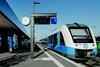
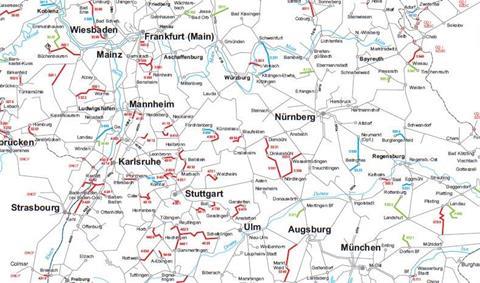
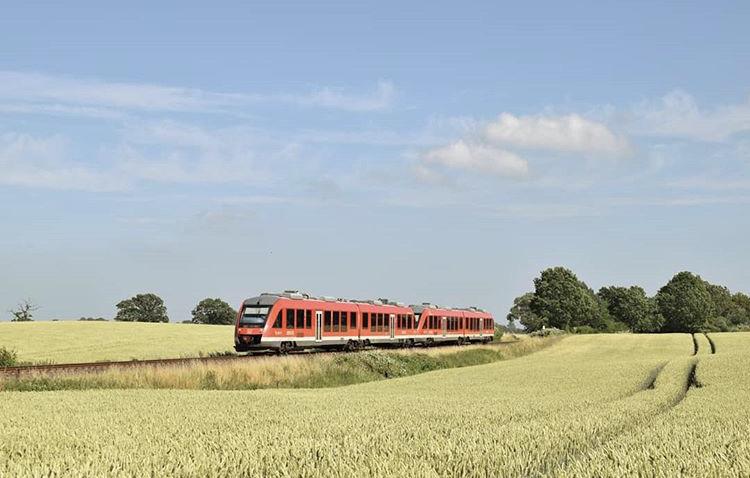
GERMANY: More than 200 closed, mothballed or freight-only lines could be reopened to serve 291 towns and a population of around 3 million people, according to proposals drawn up by the Association of German Transport Companies VDV and rail lobby group Allianz pro Schiene.
The two organizations have updated a list of routes proposed for reopening, which was originally drawn up in May 2019. Adding 55 projects with a combined length of 963 km brings the list to 238 lines with a total length of 4 016 km, about half of which they believe could be electrified.
Speaking at a conference on the ‘comeback of rail’ on July 9, Chairman of the VDV Committee for Railway Infrastructure Jörgen Bosse explained that ‘if rail is to be the transport mode of the 21st century then we must look at the whole country and not just at major cities and conurbations or long-distance travel. In Germany around 70% of people live in small or middle-sized towns or in the countryside. For this big majority of the population we need efficient and environmentally-friendly rail services. It’s about protection of the climate and also about equivalence of living conditions.’
Allianz pro Schiene Managing Director Dirk Flege suggested that by taking the opportunity to reactivate closed lines ‘we can halt the decades-long withdrawal of rail from rural areas and turn it round. That’s a recipe for success to achieve a better transport mix in the future’.
The associations reported that 933 km of route had been reopened for passenger traffic between 1994 and 2020, with 364 km reopened for freight. However, over the same period passenger services had been withdrawn from lines totaling 3 600 km, with freight lines also showing a negative balance. The national network had thus shrunk from 44 600 km to 38 500 km.
VDV and Allianz pro Schiene noted that reopening five lines in the most densely populated areas currently without rail service would provide access to trains for 300 000 people.
The two organizations point to changes in the Gemeindeverkehrsfinanzierungsgesetz (Municipal Transport Financing Law) that have improved the options for potential reopenings, stimulating activity at local and Land level to develop viable proposals. ‘We think that this will accelerate the reactivation of closed lines in the coming years’, Bosse predicted.
GERMANY: More than 200 closed, mothballed or freight-only lines could be reopened to serve 291 towns and a population of around 3 million people, according to proposals drawn up by the Association of German Transport Companies VDV and rail lobby group Allianz pro Schiene.
Rail for the Valley has been long warning the public about the costs of subway and light-metro construction costs, which fell on mainly deaf ears.
Rapid transit is a “ motherhood and apple pie” subject and the mainstream media will not report negative news about SkyTrain, light-metro and the real costs involved.
The “other guys” are finding out that fighting “motherhood and apple pie” is tough and the government, at all levels remain oblivious to the huge costs involved.
“What me worry?” is a common refrain from elected officials who have never even tried to study the subject. Fact is, most politicians think they are experts on transit planning. Sadly the truth is otherwise, as the term “rubes” come to mind.
Everyone knows spending more money on transit makes it better. NOT!
Zwei has been chastised many times for being blunt, but unfortunately being blunt is the last option when fighting a “motherhood and apple pie” issues and the “motherhood and apple pie” lie has been repeated so often the the public has come to believe it.
When the first proprietary ALRT light metro was built in Vancouver, politicians deluded themselves that because it had no drivers, it was cheap to operate.
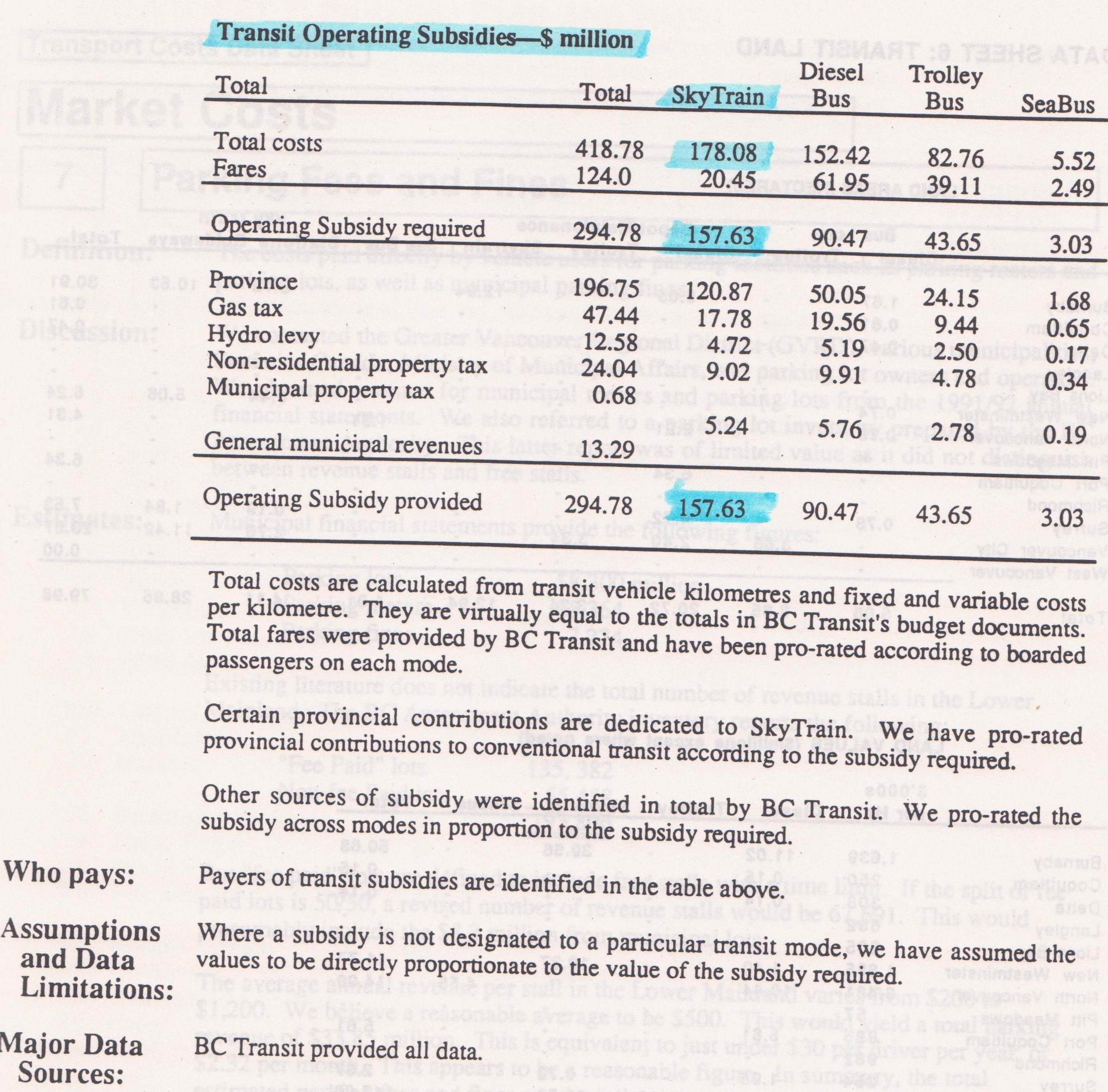
This naive assumption was not true, as the light-metro system was sucking up huge sums of money from the taxpayer’s pie. The exorbitant costs for light metro was so acute that in 1992, the GVRD commissioned a study of the cost of transporting people in the Fraser Valley and the results of the study were astounding.
The subsidy to operate the initial Vancouver to new Westminster light-metro line was more than the combined subsidy to operate the diesel and electric buses!
Politicians of the day ignored this and continued to increase taxes more and more to pay for light-metro and this continues today.
TransLink does not give clear and concise numbers for the SkyTrain subsidy, as it would prove embarrassing how expensive “motherhood and apple pie” transit costs.
Ontario’s Metrolinx found that the 50 year costs for heavily engineered transit projects is very high, burdening tomorrows taxpayer’s with today’s extravagance.
When will our politicians learn the lesson; when will they learn the lesson that throwing money at expensive transit projects only burdens future generations with debt.
“Motherhood and apple pie” has condemned the region to high taxes, which will soon explode upwards by building subways and extending the Expo Line a few km. in Surrey due to the dishonest claims by the now mayor of Surrey.
Regional taxpayers will soon wake up to the stench of rotten apples an little pie left for future generations.
**************************
South Fraser Community Rail Society
“Hydrogen iLink PassengerRail, Scott Rd. SkyTrain to Chilliwack” #connect the valley
The Hidden Cost of TransLink…. Did You Know?
TransLink once again has made a submission to our Provincial Government for access to MORE taxation sources in the region! This is Shorthand for taking more tax dollars out of your pocket, we say NO, until two things happen –
Determine the NET COVID-19 effect on Transit. What are our needs and priorities, for lower mainland inter-regional transit? What are the value options?
Hold TransLink to a stringent financial oversight review measuring value for money before considering any request for more tax dollars!
Let’s glance back in history – A short 5 years ago the people of Metro Vancouver went through a then provincial government mandated plebiscite on TransLink. The Mayors of the region wanted support for a $7.5 Billion regional transportation plan. They asked for support of a 0.5% sales tax to fund Metro Vancouver’s share of major infrastructure projects. A Mail in ballot was called – 759,696 votes were cast! The answer:
2015 Plebiscite –NO! 61.7% no / 38.4% yes
Comments, post plebiscite?
“There is a clear NO outcome, we must respect that” Doug Allen, interim TransLink CEO. Allen repeatedly characterized the results as a vote against higher taxes.
“I’m thrilled” “A tremendous victory for taxpayers” “Of course this was about TransLink” – Jordan Bateman then B.C. Director of the Canadian Taxpayers Federation.
NOTE: This vote was held in relatively good times, certainly compared to the times we have all been experiencing today into an unknown future, under the cloud of COVID-19.
What is the truth about TransLink Taxation today? Not change! They want more money!
TransLink Tax and Spend is out of control…. Why Commit to $3,200,000,000 when $252,500,000 (only 8%) provides better service, better value and serves more people South of the Fraser?
The Hidden Cost of TransLink…. Did You Know?
Parking Tax
Now 24% (adds 15 cents hr. to aver. $5/hr. per Parking Stall
Property Tax
7% (Incr. 3% per yr. of the TransL. Prop. Tax base per yr.)
Gas Tax
18.5 cents a litre (Highest gas taxes in North America)
Transit User Fees
Single use +5 cents to 10 cents/Day Pass +25 cents/monthly passes + $2 – $3.
BC Hydro Transit Levy
TransLink brought the regional trans. levy (utility tax on monthly B.C. Hydro Bill) back in 2006. Today that amount is $0.0624 cents per day for a regular single-family dwelling or $1.87 month. There are 960,890 occupied private dwellings in the region equaling $1,798,786. per month or $21,585,432. per yr.
Development Cost Charges (NEW Metro Vancouver)
effective Jan. 15th 2020 effective Jan. 1st, 2021
Single family $2,100 unit $2,975 unit
Duplex $1,900 unit $2,470 unit
Townhouse $1,900 unit $2,470 unit
Apartment $1,200 unit $1,545 unit
Retail/Serv $1.25 / ft2 $1.25 / ft2
Office $1.25 / ft2 $1.25 / ft2
Institutional $0.50 / ft2 $0.50 / ft2
Industrial $0.30 / ft2 $0.30 / ft2
NOTE – Introduced in 2018, rates come into effect Jan.15 2020 and increase in 2021. This Development Cost Charge fee is just another tax, which makes housing that much more unaffordable to hard working residents trying to afford their first home.
The approved parking tax funding increase approved last Spring were for major projects, the LRT in Surrey (Not SkyTrain to Langley which is under review for a Business Plan since last December, yet to be voted on.) and the Broadway extension.
And TransLink wants more?
We don’t have a revenue problem, we have a SPENDING problem!
TransLink want more of your money while their spending decisions are irresponsible and out of control –
To the latest presentation by the TransLink Mayors Council to the Provincial Government? “Township of Langley Mayor Jack Froese, TransLink Mayors Council vice-chairman put it in succinct terms last week and said everything is on the table, from mobility pricing — which was studied two years ago — and land-value capture, to sales tax, a vehicle levy, and carbon tax.” Really, after the region wide plebiscite was rejected a short 5 years ago?
It is interesting that they are making this move complaining about the drop in revenue in fare box, gas tax and parking BUT they said nothing about their recent approval for significant Transit “Development Cost Charge” revenue that just kicked in on January 1st, 2020 with a significant increase January 1st 2021 (above). This significant fee will be applied to single family, Duplex, Townhouses, Apartments, Retail, Office, Institutional, and Industrial property development. They have not yet been able to determine what revenue will be achieved through this new source, and yet they are looking for more!
They did not mention the monthly BC Hydro Transit Levy on your Hydro Bill! The amount? Over $21.5 million per year.
TransLink Losses – They claim it will be between $544 Million and $1.4 Billion by the end of next year and yet they claim all projects are moving ahead as planned? All of this and they just announced they are going ahead with a new $110 Million SkyTrain Control Center that will look after the NEW Broadway Subway Line and the Fraser Highway SkyTrain Line to Langley City despite the fact they are $2 Billion short in funding this project and it has yet been approved?
Summary on Taxation – One thing that cannot be challenged by looking at all of these real numbers, TransLink taxation and spending is out of control. When the Mayor of Surrey runs his election campaign under the Safe Surrey Coalition on two primary promises 1) A change to a City Police Force from the RCMP stating during the election campaign that it would only be a 10% increase to taxpayers (not going to happen) and 2) he promises a change from the approved and funded LRT, Guildford down 104th to Surrey Center South on King George Blvd. to Newton. In their first meeting of this term the Mayors Council changed the Surrey project to SkyTrain from Surrey Center to Langley City on his urging for the same price – $1.65 Billion, and not one penny more said Mayor McCallum.
TransLink has spent over $50 Million in LRT prep costs and Mayor McCallum dismisses it as irrelevant and then TransLink are going to buy into it? That is nothing short of irresponsible! The Mayors TransLink Council has got to put a brake on TransLink and their irresponsible taxation, planning and spending.
What are we hearing now – Gondolas up to SFU and now an on-call Bus system for Bowen Island. We are in serious need of Provincial Government intervention. We are in serious need of the TransLink Council to back off any more votes (no quorum) so that some common sense can be brought back into a responsible Inter-regional Transportation system.
Take a close look at the TransLink taxation and spending decisions that are currently in effect – we cannot continue in this direction! You are and will be paying handsomely for the Surrey / McCallum / SkyTrain debacle, all taxpayers in Metro Vancouver will be paying for this irresponsible decision. It is not too late to change, the Province has not given their final decision.
Again…
“We don’t have a revenue problem! We have a SPENDING problem!”
“I was a member of the Mayors TransLink Council, and I got to know and understand up close and personal who is really running things and it is not the Mayors Council but then again, they are allowing this to happen! Taxpayers should be concerned!” Rick Green
Sincerely,
Rick Green
Former Mayor Township of Langley
Former Alderman City of Delta
President, South Fraser Community Rail Society
Bill Vander Zalm
Former Premier of British Columbia
Former B.C. Minister for Municipal Affairs and Transit
Early advertising for the proprietary ICTS/ALRT rapid transit system. In the end, only seven were built, including Vancouver, all with huge government subsidies. Modern light rail made ALRT rapid transit obsolete overnight. Question: Why does TransLink plan for obsolete rapid transit?
From Wiki:
Rapid transit or mass rapid transit (MRT), also known as heavy rail, metro, subway, tube, U-Bahn, metropolitana or underground, is a type of high-capacity public transport generally found in urban areas.Unlike buses or trams, rapid transit systems are electric railways that operate on an exclusive right-of-way, which cannot be accessed by pedestrians or other vehicles of any sort, and which is often grade-separated in tunnels or on elevated railways.
Notice, no mention of light rail as LRT is not rapid transit.
This so called fact sheet is designed to misinform, yet the City of Vancouver, abetted by TransLink, continue to make false claims about SkyTrain and light rail without any government or media fact checking.
False claims include:
SkyTrain rapid transit has a limited capacity of 15,000 pphpd, as per Transport Canada’s Operational Certificate.
LRT can travel as fast or even faster than SkyTrain rapid transit, if designed to.
LRT has proven to obtain capacities in excess of 20,000 pphpd
Streetcars can obtain huge capacities; example Karlsruhe Germany, where one streetcar line obtain capacities in excess of 30,000 pphpd.
Speed for rapid transit is higher, because it has fewer stations per route km., thus overall travel times tend to be higher using rapid transit, rather than light rail.
What TransLink doesn’t mention is that light rail, offers all the benefits of rapid transit but, without the huge costs associated with subways and elevated construction.
TransLink’s planners should understand this, but it is not reflected in current transit planning.
Much of the success of urban transport in the past 40 years in weaning the car driver from his or hers car is due to light rail and not rapid transit.
This is TranLink’s rapid transit dirty little secret, by continually planning and building ruinously expensive rapid transit on routes that modern light rail would have been just as successful, if not more so, in attracting new ridership.
Our friend Haveacow raised five points about TransLink’s rejection of an interurban style passenger rail service from Vancouver to Chilliwack.
1. If Translink keeps to narrowly defined geographically limited rail planning corridors, and continually offers nothing but a hugely expensive, built from scratch rail lines that, travels the dead centre of the corridor, then that’s all you ever get and anything else always looses when comparing against it.
2. If the planning agency, in this case Translink, doesn’t do anything but this same approach you never get new ideas and all your rail planning and the lines you end up building will at some point suffer from the same basic flaw or series of flaws.
3. Arguing that Translink should use a different type of train doesn’t change their limited focus when planning. It’s their focus in design and planning that really needs to change. Things like operational cost vs. service scale, the geographic scale of the service area and passenger catchment areas are just a few the many issues that the endless horizontal expansion of the current rail technology makes worse.
4. A simple well designed rail system can make up for initially starting with a more limited capacity and operations by being more adaptable and cost effective. This is where Skytrain as a technology, isn’t anywhere as adaptable or cost effective compared to the planned operating technology for the Interurban Line, given the vast area it will operate in.
5. Translink doesn’t seem to understand that unless new ways of planning and especially in their case, implementation processes are looked at, new solutions never happen. Yes, the Interurban Line would require negotiations with railways. I don’t think there really against the Interurban Line, they just don’t want to ever have to negotiate operations agreements. It’s so much easier to just own everything they operate, they set the rules. They just don’t get many new ideas this way.
TransLink’s continued planning for light-metro has left the region in a transit deficit and the taxpayer paying much more than he/she should (an estimated three times more), to keep TransLink’s ossified planning continuing.
Metro Vancouver has now become immune to new ideas and new operating philosophy and instead keeps planning and building the same thing, ever hoping for different results. This has been designed as madness.
Reinstating a Vancouver to Chilliwack rail service using 21st century versions of the interurban, which has proven extremely successful elsewhere, is ignored.
The rot at TransLink has been there too long and sadly the entire operation is sinking into a planning and financial morass, where there is no escape and the the big question is is, how much taxpayer’s money will bleed from ill designed and dated transit projects before regional, provincial and federal politicians will take notice?
While the rest of the world has deemed light metro (including our SkyTrain light-metro system) obsolete because of cost and functionality, TransLink happily spends massive amounts of money planning and building more.
Hint: Only seven of the now called proprietary Movia Automatic Light Metro system (as used on the Expo and Millennium Lines) have been built in over fourty years and only three are seriously used for urban transport.
In the rest of the world, planners utilizing existing railway lines to affordably extend urban transport to areas otherwise too far away to service by building new railway lines.
The former BC Electric Interurban once traveled from Vancouver to Chilliwack and with current tracks still in use, the line can once again operate a passenger rail service at a starting cost of $800 million for a basic hourly service.
While TransLink is spending $4.6 billion to extend the MALM lines a mere 12.8 km, $800 million can provide 100 km of route, servicing sixteen communities and fourteen post secondary institutions. A 20 minute service would cost around $1.5 billion, still one third the cost of 12.8 km of
“rapid transit”.
TransLink claims they have studied the line, but so has the Rail for the Valley Group. Rail for the Valley engaged Leewood Projects (UK) to do a study of the old interurban route and found that such a service was viable.
Hint: The Leewood Study makes a mockery of TransLink’s studies.
The Leewood Study was done by a rail specialist and was vetted by engineers who did work in Canada and even has passed muster with Transport Canada.
TransLink’s studies are done by career bureaucrats wanting to continue their six figure annual salaries by pleasing politicians, who in turn want to please their political supporters.
Hint: Just look what happened to two of TransLink’s best planners, Tamin Raad and Brian Mills, who opined that there wasn’t the ridership on Broadway to justify a subway – they got fired within two weeks!
TransLink’s ossified planning is done strictly to please regional mayors and politicians in Victoria and has nothing to do with providing an affordable and user friendly regional transit service. Photo-ops and self congratulatory news releases are the order of the day.
Hint: Zwie has been told that TransLink’s great fear is that the Valley rail project will attract far more new customers to transit than TransLink’s and the Mayor’s council on Transit’s $4.6 billion, 12.8 km light metro extensions.
The paper pusher’s at TransLink know damn well that “rapid transit” cannot be affordably built in Surrey, nor in a subway under Broadway, but the CEO of TransLink does not have the moral fortitude to say so, as earning a very generous six figured salary is far more important.
As TransLink doubles down on “rapid transit” it maybe sowing the seeds of its own demise.
The real costs for "rapid transit" (subways and light-metro) are far higher than TransLink or the regional mayor's are telling the public and for good reason, because if the public knew the real cost of "rapid transit" they would revolt.
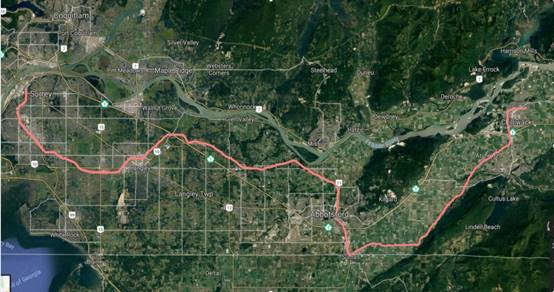
TransLink is throwing cold water on the proposal that would see interurban passenger rail on a 99-kilometre corridor that would run from the Pattullo Bridge to Chilliwack.
Photograph By Pixabay
Interurban passenger rail service is not rapid transit and is not the project the region needs today.
That’s according to TransLink, responding to former Delta councillor and Langley mayor Rick Green’s recent critical comments on the direction of the transit authority and Mayors’ Council.
In a letter to the current Delta council, Green poked holes in TransLink’s plan to move forward with a SkyTrain extension into Surrey, noting it’s not too late to go back to the original light rapid transit project.
Green, representing the South Fraser Community Rail Society, said it’s long past time the TransLink board of directors rethink and review their decisions and planning related to both SkyTrain, light rapid transit and the interurban south of the Fraser proposal.
His group is advocating interurban passenger rail by re-activating an old interurban line, a 99-kilometre corridor that would run all the way from the Pattullo Bridge to Chilliwack.
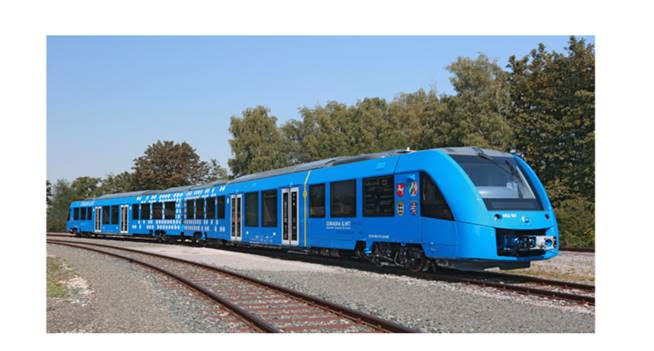
The proposed system would use hydrogen rail, a propulsion system that has a fuel cell device, converting the chemical energy contained within the hydrogen in order to generate electricity.
Ladner resident and former premier Bill Vander Zalm is also a member of the society and has been critical of the scrapping of a pervious light rail plan in favour of the SkyTrain extension.
In a previous interview, Vander Zalm noted that when the track rights were sold during his time in government, the freight rights were sold, the province ensured the right to have passenger service was reserved for the line.
However, TransLink in response is pointing to a “facts sheet” which outlines why the interurban rail idea wouldn’t work, stating the interurban corridor has been studied as a potential route for passenger rail service twice in the past ten years – first with the B.C. Ministry of Transportation’s strategic review of transit in the Fraser Valley in 2010 and then with TransLink’s Surrey Rapid Transit Study in 2012.
The results led to the interurban passenger service not being included on the list of regional priorities.
“However, our plans for the region identify the need to connect Surrey Centre and Langley with reliable, high capacity, high frequency transit. The Interurban community rail proposal is a different kind of project and meets a different set of goals and is not a comparable option to SkyTrain along Fraser Highway. TransLink is committed to exploring future options with municipalities and other partners,” TransLink states.
The South Fraser Community Rail Society said TransLink found it necessary to launch an attack on the interurban proposal by pulling out outdated and flawed reports
TransLink also notes, among other things, interurban passenger rail would provide less than 20 per cent of the capacity as SkyTrain, it does not connect key regional destinations like Surrey Central, thus reducing its potential ridership, and it would provide much slower travel times and much less frequency than rapid transit, and therefore attract much lower ridership than faster, more direct rapid transit along Fraser Highway.
The transit authority also notes Southern Railway holds the right-of-way for 85 per cent of the rail route, while CP holds the rights for 15 per cent, which means TransLink would have to negotiate with rail companies at a cost for any use of the line for passenger service.
TransLink also notes freight traffic is expected to increase and it will further increase once port expansion at Roberts Bank will be complete.
TransLink adds any viable passenger rail service would require the construction of at least one additional track at its expense
“There is no agreement allowing the provincial government passenger rail service rights for the entire line – this is simply false. Commercial agreements for passenger rail service would need to be negotiated and obtaining rights would come at a cost. A great deal of costly infrastructure would be required to run bi-directional service – much more than claimed by Interurban supporters. Higher capital costs and lower ridership would mean that the cost per ride would be 10 times higher than SkyTrain,” TransLink told the Optimist in a statement.
TransLink also noted switching Surrey Langley SkyTrain out for Interurban passenger rail will delay any rapid transit investment south of the Fraser for years at minimum.
“This project is not a part of the RTS or the Mayors’ Council’s 10-Year Vision, nor does it fit with the Metro Vancouver Regional Growth Strategy. A new investment plan and significant research would be required to conduct an independent study on the feasibility and business of this project. Pushing interurban as an alternative to SkyTrain, risks our ability to provide rapid transit for south of the Fraser. The argument that the Surrey Langley SkyTrain should not be built because it does not get to Langley fails to accept the fact that all of the existing SkyTrain lines have been built in phases.”
The South Fraser Community Rail Society has accused TransLink of flawed reports, assumptions, conclusions and misrepresentations.
The interurban corridor is not owned by CP Rail or Southern Rail, the group states, noting they only own the freight rights with significant restrictions, and that the corridor is owned by the people of B.C.
Passenger and freight service on the line legally must be shared equally, so if double tracking is required, CP Rail is legally bound to do so at their expense, the group contends.
“This is a positive community initiative which has unfortunately turned into a public fight against irresponsible governance by TransLink Staff over the past year. Our SFCR Group will not back down or be intimidated in the face of what we see as an out of control bureaucracy attacking a very legitimate option that should be properly considered and analyzed,” a letter to the Mayors’ Council and TransLink board stated.
South Fraser Community Rail Society is one of many groups, along with Rail for the Valley, working for a reinstatement of passenger rail service to Chilliwack.
South Fraser Community Rail Society
“Hydrogen Link PassengerRail, Scott Rd. SkyTrain to Chilliwack” #connect the valley
There is the reality…. a Better Choice!
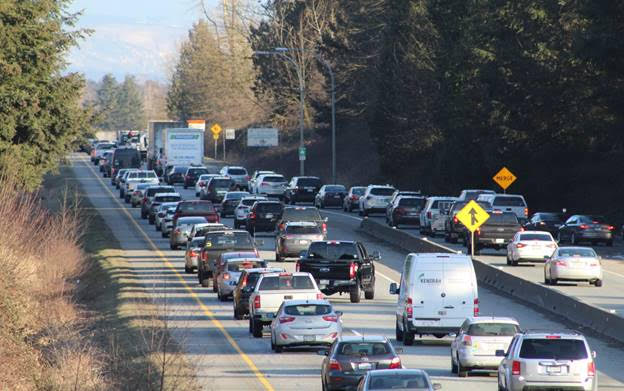
Widening Highway #1 will happen over time….
But it IS NOT the solution! Here is Why…. Unless you want to wait for 30 years!
Mayors, Councillors, MLAs and MPs past and present have promised Highway widening suggesting it is the priority and it will happen? This is a totally disingenuous argument! Two current examples on the realities of widening; first 202nd to 216th and second the just added 216th to 264th phase. All of the discussion has been about adding 1 HOV lane each way which is what my following calculation is about! IF it were about two lanes you could double the time and cost required.
The following is the time reality in terms of financial, planning and construction phases. These are real numbers and not a politicians dream! There promises are impossible! While we will continue to campaign for widening and it will happen over time, it will take a few decades and when finished we will be worse off than we are today unless we initiate an affordable and effective public transit option like Passenger Rail. Express Buses on Highway #1 do not work, they get tied up in the same congestion we are complaining about and trying to solve!
202nd to 264th = 13 kms at a total cost of $294 million (cost shared, Prov., Feds and TOL) started in 2017 due to finish in 2025 (8 Years).
Distance, Langley to Chilliwack is 56 kms @ 3.25 kms per 2 years equates to finishing an HOV lane each way by 2051, over 30 years from now!
The exponential increase in growth and traffic will out strip the benefits of widening by three times than what it is today! Based on projected growth, in 8 years, by 2025 (finish of latest project above) traffic will be worse than it is today!
The above suggests that all Provincial, Federal, and Municipal budgets align annually, planning started now and did not stop until finished. Estimated total cost of widening in 2018 dollars – over $1.2 Billion! It will not solve our problem!
NOTE: The Township of Langley contributed $41,433,000 on the two projects above, is a precedent now set for Provincial/Federal projects? What will it cost Abbotsford and Chilliwack? Are they prepared to commit those dollars?
Do you want to continue to put up with this?
OR the option of State-of-the-Art Hydrail Service!
Hydrail Passenger Rail…. Some Facts!
….1,000 Kms per full tank of fuel!
…. 15 minutes to refill a tank!
…. Up to 300 passengers per train!
…. A Green Alternative to heavy polluting diesel, completely emission free!
…. Perfect case, showing leadership with CleanBC; provincial legislation!
…. Incredibly quiet service!
…. Estimate 90 minutes travel time, Pattullo Bridge to Chilliwack or less!
…. Estimate 30 minutes travel time, Langley City to Pattullo Bridge or less!
…. Estimate 30 minutes travel time, City of Abbotsford to Langley City or less!
…. Estimate 45 minutes travel time, City of Abbotsford to Newton or less!
…. 99 KM Rail Corridor, protected for passenger use, at no cost for use!
…. Serves 16 Communities and 14 Post Secondary Institutions!
…. Serves Fraser Valley First Nations, Tourism and Agi-Tourism!
The Interurban Passenger Corridor….
Despite the fact Hydrail on the Interurban is a perfect environmentally friendly CleanBCsolution….
There is NO other reasonable and affordable option that provides access to affordable housing and supports an improved quality of family life!
Doing research for a group on the amenities a tram or TramTrain may bring to a region, I discovered an new sort of tram, the “Beer Tram”, a pub on wheels!
Helsinki, has one, Brno has one, as does Fukui, Nagasaki and several other cities in Japan have them. In fact several cities in Europe have these little gems.
Maybe a pub tramtrain service from Vancouver to Chilliwack, using a vintage interurban will, let’s say, lubricate the politicians to support reinstating a passenger interurban rail service!

/cloudfront-us-east-1.images.arcpublishing.com/tgam/5FIPOODLW5GNTBV6GMI26GR2CE.JPG)





When will our politicians learn the lesson; when will they learn the lesson that throwing money at expensive transit projects only burdens future generations with debt.

This so called fact sheet is designed to misinform, yet the City of Vancouver, abetted by TransLink, continue to make false claims about SkyTrain and light rail without any government or media fact checking.




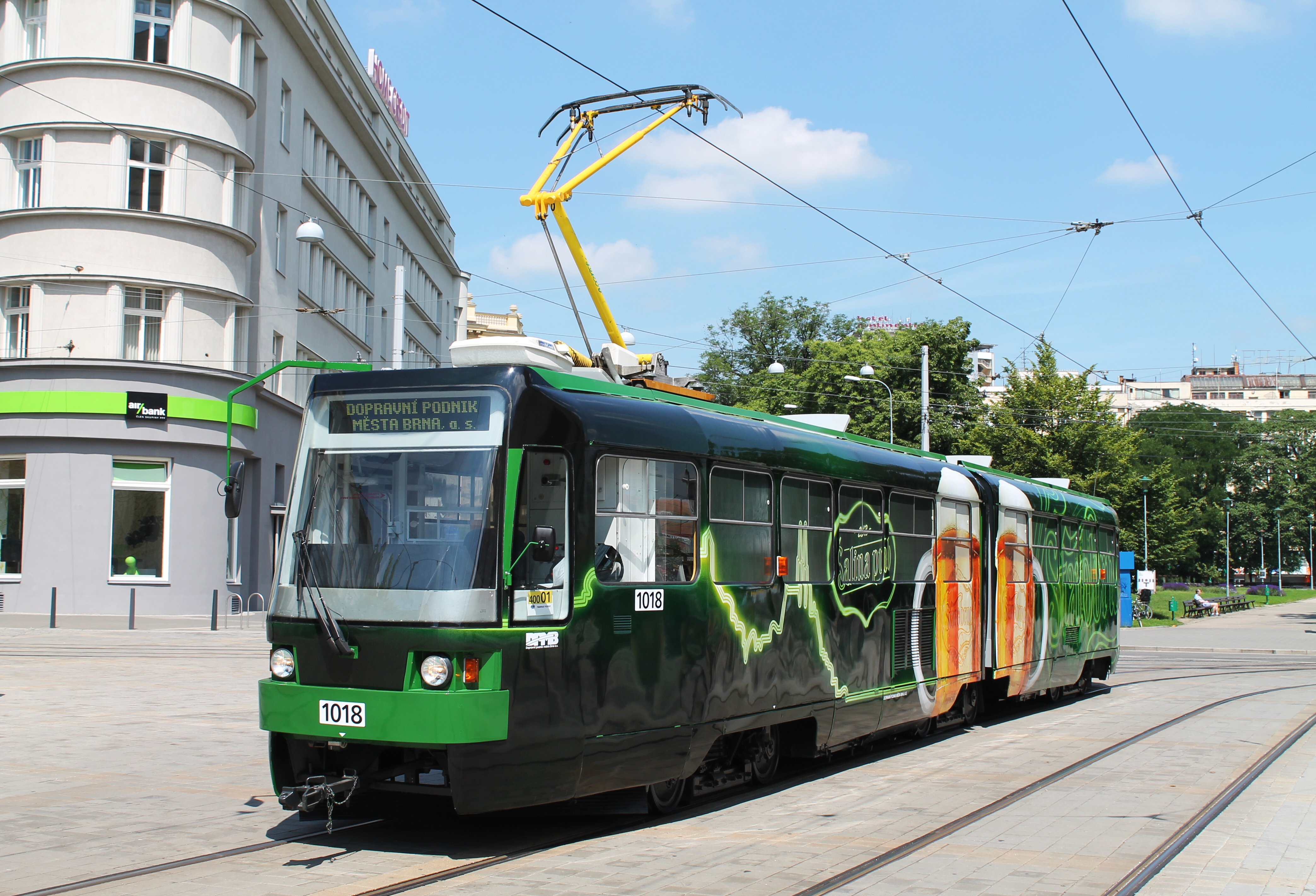

 Brno beer tram, salut!


Recent Comments