Covid-19 has sent a chilling economic message to TransLink; “can it afford the proposed $4.6 billion, 12.8 km extensions to the light-metro system?”
TransLink, through taxes, must ante up a sizable amount of cash to pay it’s share of the projects, but if TransLink’s income collapses and cannot pay, what then?
The aftermath for Covid-19 and a vastly escalating federal deficit will see higher taxes and user fees in Canada and there will be little stomach among metro Vancouver taxpayers to ante up more taxes to an outfit already held in high odor by the taxpayer.
TransLink has now collided with the financial iceberg and one wonders when senior bureaucrats start floating higher taxes and fees onto an already over burdened taxpayer to fund what is largely a prestige project.
Which politicians will stake their reelection by providing higher taxes to TransLink?
The trouble for TransLink, financing the $4.6 billion rapid transit scheme will be like rearranging the deckchairs on the Titanic.
Loss of $1.4 billion worst case revenue scenario for TransLink with COVID-19 pandemic
The worst of the four potential situations is referred to as the “Paradigm Shift”.
It involves “major new outbreaks”, forcing a return to lockdowns. Return to normal is years away, or sometime in January 2023.
Under this Paradigm Shift, a “high travel demand” setting means that TransLink is going to lose $1.2 billion in cumulative 2020-2021 revenues.
Most of the projected losses will be fares, at $795 million.
In a “low travel demand” situation under the Paradigm Shift, TransLink expects to lose $1.4 billion, which is the worst.
Most of the anticipated revenue losses will be fares, at $881 million.
The least dire of the four scenarios is called “Quick Recovery”.
This means a return to pre-COVID 19 conditions by July 2021.
Still, TransLink will be bleeding.
Under this scenario, the transportation authority expects to lose cumulatively between 2020 and 2021 revenues ranging from $544 million to $945 million.
The numbers are found in a report by Geoff Cross, vice president of transportation planning and policy with TransLink.
Cross’ report is in the agenda Thursday (June 25) of the Mayors’ Council on Regional Transportation.
As discussed before, TransLink’s ridership performance is reported in “boarding’s” and the transit system is so designed to force transit customers to “board” several times throughout their journey. This of course, greatly increases boarding’s.
Transit customers from South of the Fraser are forced to “board” four to six times a day to complete their journey, due to being forced to Transfer onto the Canada line and transfer again to a bus.
The high boarding’s numbers that TransLink releases to the media certainly makes them look good, which makes politicians look good. For those not in the know, seems that TransLink seemingly impressive numbers are akin to a shaky pyramid scheme.
During the Covid-19 crisis, the pyramid scheme collapsed, collapsing the revue stream as well.
The issue that TransLink keeps quiet about is that the light-metro system and trolleybus system are very expensive to operate and maintain and much of the operating costs are fixed costs, thus leading to huge financial shortfalls.
What really interests me is that TransLink did not have an emergency plan. This is odd because living in an earthquake zone, with the province telling everyone one should have a plan in case of an earthquake or similar disaster, TransLink does not.
That TransLink does not, is not surprising at all because they don’t even seem to have a coherent snow plan either as transit customers are rudely reminded of, with every snowfall.
There should be a plan that in case of emergency core bus routes remain open, such as a route from South Delta to Vancouver, without transferring to the Canada Line. The plan should include the gradual withdrawal of service on routes that are not carrying a meaningful number of customers.
These core routes, no more than ten, should be actual routes operating on schedule service that are deemed essential in an emergency and kept operating at all costs.
I admit, the Covid-19 crisis is different, but it showed TransLink’s naked underbelly of having no emergency plan, except coming cap in hand to the provincial and federal governments for more money, to operate buses with little or no customer demand.
Officials with Metro Vancouver’s transit agency are painting a clearer picture of how badly the organization’s finances have been hit by the COVID-19 pandemic.
At its annual general meeting Thursday, TransLink said daily ridership fell to about 223,000 people in April, and more than doubled to about 472,000 people by May.
That’s still only about a third of its pre-COVID daily ridership average of 1.5 million.
The steep decline in ridership has translated into major losses. TransLink said if Phase 3 of the province’s pandemic reopening plan were to start soon, it stands to lose about $500 million this year.
In a worst-case scenario, with a second wave of the virus, it said the losses could amount to $1.4 billion.
TransLink CEO Kevin Desmond said he still doesn’t know where funding to fill that gap would come from.
“We are working with the province, we’ve been working with the province very extensively for weeks now,” said Desmond.
“We’ve also had many many contacts with the federal government. We have a number of different ideas.”
Earlier this spring, TransLink issued about 1,500 layoff notices and proposed major service cuts to try and offset losses.
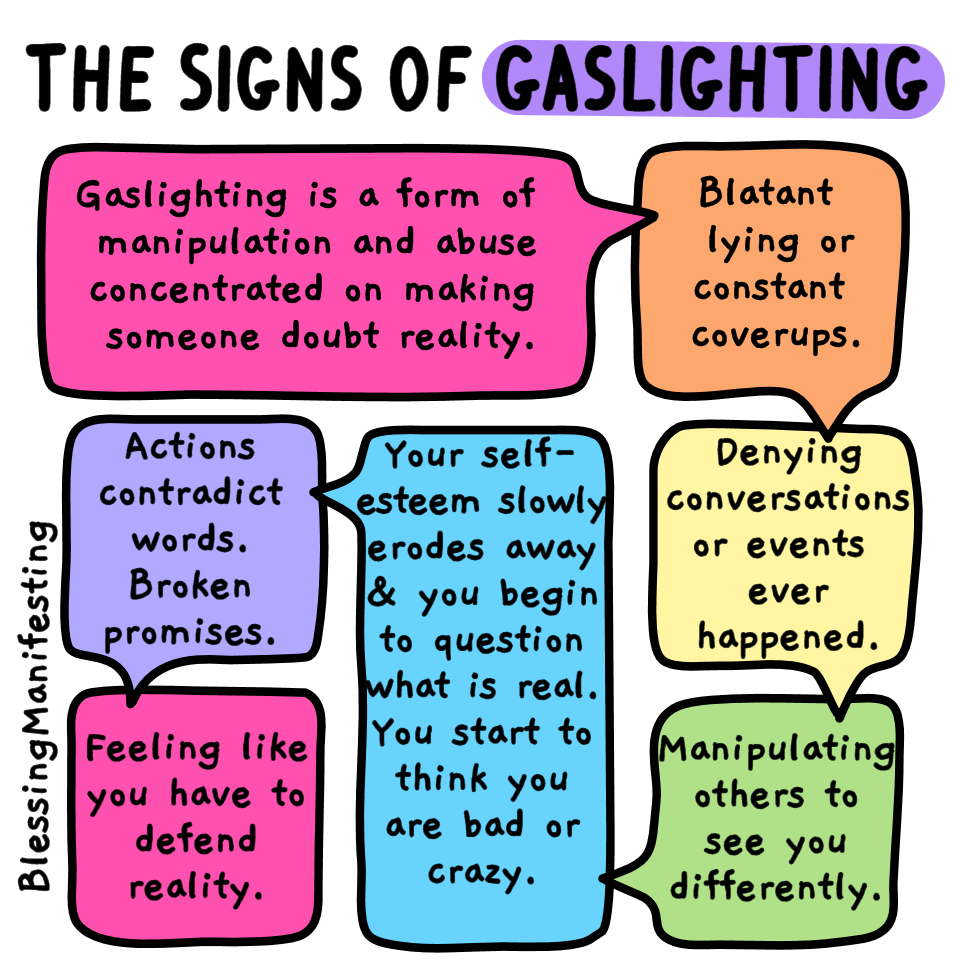
Gaslighting: a form of psychological manipulation in which a person or a group covertly sows seeds of doubt in a targeted individual or group, making them question their own memory, perception, or judgment, often evoking in them cognitive dissonance and other changes including low self-esteem. Using denial, misdirection, contradiction, and misinformation, gaslighting involves attempts to destabilize the victim and delegitimize the victim’s beliefs. Instances can range from the denial by an abuser that previous abusive incidents occurred, to the staging of bizarre events by the abuser with the intention of disorienting the victim.
When it comes to regional transit and regional transit planning, TransLink’s gaslighting rules.
Three issues which TransLink’s gaslighting has been a success.
SkyTrain is not a proprietary transit system.
Broadway is the most heaviest used transit route in Canada, no North America
LRT is in inferior
SkyTrain is a proprietary transit system.
The question those claiming that SkyTrain is not a proprietary transit system, would be restated to; Since when did the proprietary Movia Automatic Light Metro cease to be a proprietary transit system?
*
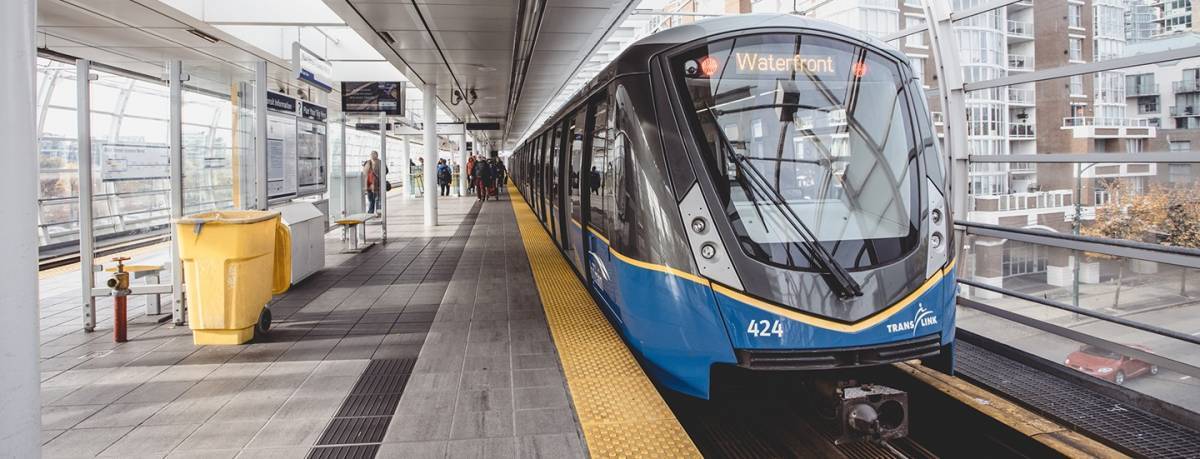
SkyTrain is the name of the regional light-metro network and not the commercial train used.
*
The Canada line uses EMU’s made by ROTEM.
*
The Expo Line used the the proprietary Advanced Light Rail Transit (ALRT) system, renamed from the original Intermediate Capacity Transit System (ICTS), developed by the Urban Transportation Development Corporation (UTDC), an Ontario Crown corporation. The later Advanced Rapid Transit (ART) cars (MK.2’s), which came with the Millennium Line, were produced by Bombardier after it acquired the remains of the UTDC after it was returned to the Ontario government when Lavalin went Bankrupt.
*
Lavalin briefly owned the proprietary railway, renaming the proprietary transit system Advanced Light Metro (ALM) but the UTDC was returned to the Province of Ontario, after Lavalin went bankrupt trying to sell the often renamed proprietary transit system to Bangkok.
*
The MK.3 cars so boasted about are just again renamed when Innovia line of light metros were cascaded into the Movia line metro systems.
*
Strangely enough Bombardier does produce a proprietary SkyTrain system, but it is a rubber tire proprietary airport people mover system.
Bombardier's real proprietary SkyTrain transit system.
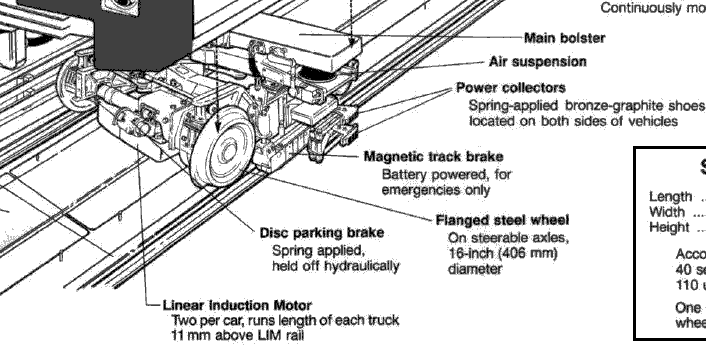
The key to the now called Movia Automatic light Metro (MALM) being proprietary is the use of Linear Induction Motors and the steerable axle trucks as no other company offers an “off the shelf” product compatible to operate son the MALM Lines.
As one German Engineer told me; “One just cannot slap on a pair of LIM’s on a conventional bogie (truck) and expect it to operate!“
The steerable axle truck, and LIM, the key to the proprietary light metro.
Broadway is not the busiest transit corridor in Canada.
The hype and hoopla that Broadway being the the heaviest used transit route in Canada, no North America is a common refrain one reads in the mainstream media and hears on the radio or TV, made by politicians and bureaucrats.
Sorry it’s not true.
According to a to letter I revived from TransLink:
Finally, on January 31, 2019, you contacted several news organizations and this Secretariat raising concerns
over TransLink’s assertion that the 99 B-Line is the busiest bus route in the US and Canada. TransLink is
confident in its data collection and peer comparisons, noting that the 99 B-Line route on the Broadway
Corridor moves 60,000 customers per day on articulated buses running every three minutes at peak times.
This is our region’s most overcrowded bus route. Pass ups are already common, as our regular riders on that
route are fully aware. TransLink projects that the 99 B-Line from Arbutus to UBC will be at capacity in the
peak when the Millennium Line extension from Commercial-Broadway to Arbutus opens.
Cutting through the TransLink speak of this reply, TransLink only admits to Broadway being “our region’s most overcrowded bus route” and nothing more. What seems to be causing overcrowding is not heavy use, rather poor management because the capacity offered by B-line buses is under 2,000 persons per hour per direction at 3 minute headway’s.
Why not offer peak hour 2 minute headway’s for the 99 B-Line and increase capacity by 50%; much simpler and affordable than a $3 billion subway.
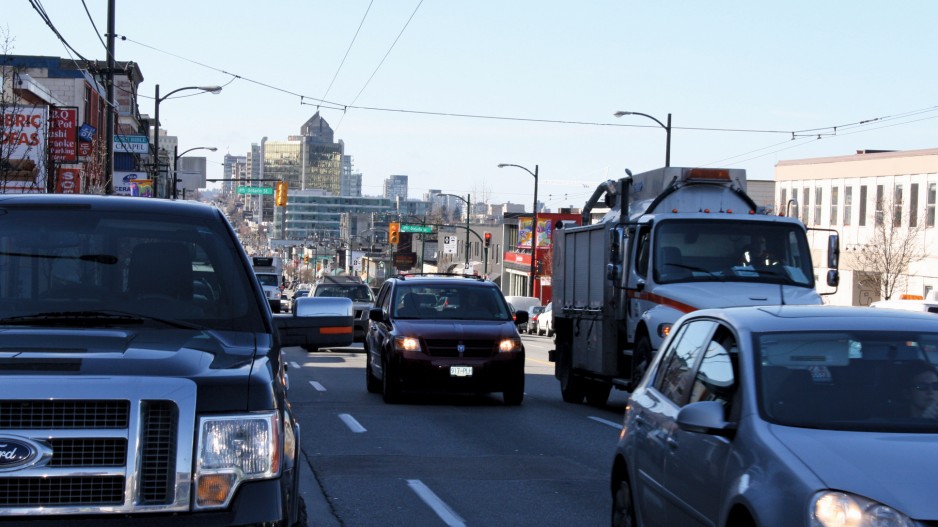
Broadway in the rush hour - Busy but not gridlocked.
Light rail is not inferior.
TransLink’s anti LRT screed is laughable and in the real world, they would be “thrown off the stage” with the drivel they peddle.
It seems TransLink’s six figured salaried bureaucrats can’t or won’t read transit history for if they had, they would know that only seven of the now called Movia Automatic Light Metro proprietary transit systems have been built over the past 40 years, under six different names. During the same period well over over two hundred new build Light rail systems have been built and most of the existing streetcar/ram systems have been upgraded or partially upgraded to light rail standards.
No MALM system has been sold in the past decade.
Modern trams, today can obtain capacities beyond 20,000 pphpd on portions of their routes at peak hours. This is why modern light rail has been so successful due in part for its ability to carry heavy passenger loads when need be. This is part of the flexibility of service inherent in modern light rail.
Today, the modern tram can operate as a mainline passenger train, a light-metro, light-rail and a streetcar all on the same route! Modern LRT has a proven record of attracting motorists from the car creating a viable modal shift from car to transit.
The last forty years has seen an unprecedented investment either building new or refurbishing existing transit systems around the world. It is a field where success is eagerly copied and what is deemed poor avoided. During this time, no other city has copied Vancouver’s transit planning, nor has copied Vancouver’s exclusive use of light-metro.
Sadly, Translink’s “gaslighting” has so perverted transit planning in the region, that there is absolutely no hope is any coherent transit planning for the foreseeable future, leaving Vancouver with a “museum piece” transit system, too expensive to deal with today’s transit ills.
It has always been a wonder to me that politicians, especially mayors do not work for the public’s interest, but for their cronies. Political friend’s interests come first.
The valley rail project is one project that makes sense, with a lot of people, yet regional mayor’s will not even try to help make such a rail service happen.
Abbotsford’s Mayor Braun seems to be working in the CPR’s interest and not the public’s or the taxpayers interests.
Instead of spending $800 million to $1 billion for an hourly Vancouver to Chilliwack rail service tracing the path of the former BC Electric interurban’s, he wants to spend $8 billion to $12 billion to extend SkyTrain to Abbotsford and to hell with the cities of Sardis and Chillwack to the East.
Such is today’s toxic and corrupt politics, where corporate friends are more important than voters.
A regional light DMU service could connect Vancouver to Cloverdale, Langley, Abbotsford, Sardis and Chilliwack for about the cost of 4 to 5 km of SkyTrain!
It was under Bill Vander Zalm’s direction that the public rights to this line were preserved for the future use by the people of BC (via BC Hydro) when the freight division was sold in 1988.
Many have raised questions about the nature of Abbtosford’s Mayor’s ongoing obstruction of the consideration of public use of the rail line, given his own history and ties to the private rail industry that has benefitted from their exclusive use of it.
We have since obtained a copy of Mayor Braun’s reply to Vander Zalm’s open letter, as well as the Former Premier’s response, which we have attached below.
As Bill Vander Zalm asks Henry Braun, WHY would the provincial government of the day publicly and legally, with all their lawyers, announce the protection of the rail corridor for future passenger use as a condition of the sale of freight rights to then Itel of Chicago (now CP Rail), but leave out the critical joint section?
Answer: They didn’t. We, and others, have had legal opinions that support our interpretation of the Master Agreement, which guarantees the right of public rail usage, as originally agreed.
Is it going to take a court to force CP to live up to its purchase obligations?
Full text of the reply and response:
March 24, 2020
Dear Mr. Vander Zalm:
Re: Proposed South Fraser Community Rail
Thank you for your letter of March 6th in regards to the proposed South Fraser Community Rail (SFCR) (formerly the BC Hydro/Southern Rail/interurban Rail).
I apologize for the delay in getting back to you, but the world has rapidly changed in the last few weeks, and as a City we’re working hard to respond appropriately to these events. Thank you for your patience.
Like you, I fully respect the work of the SFCR volunteer group and commend them for their efforts in seeking alternative, green transit in the Fraser Valley. However, I honestly feel that there are some challenges that will make this railway line unworkable as a commuter rail line.
As you are aware, one of my companies, back in 1987/1988, was one of the bidders to purchase the line, which at that time was one of the most successful short-line railroad in North America. As a result, I am very familiar with the agreements that were created and exist today.
I have specific concerns related to the “Master Agreement” between BC Hydro and CP Rail. Although the right of way (or land) is still owned by the province, the trackage above the subgrade (ballast, ties, tie-plates and rail) is owned and managed by CP Rail. Please note the following from the Master Agreement:
• There is a joint section of rail (7miles), also known as the Pratt Livingstone Corridor, of which: “CP Rail shall have the sole control, management and administration of the Joint Section.” (Annexure V Section 2.1, 1988 Master Agreement); and
• “This agreement does not contemplate the operation of passenger trains upon the Joint Section by any railway company other than Hydro.” (Annexure V Section 2.7, 1988 Master Agreement)
Based on this agreement, CP Rail is free to operate on the joint section in a way that maximizes their benefit. They can, indeed, double track the joint section, as you have mentioned, but their priority would be for freight use. There are already dozens of freight trains currently running along this 7-mile line daily, thus the viability of running a regular passenger transit service is not feasible, particularly as freight traffic continues to Delta Port through the Roberts Bank Rail Corridor. In fact, TransLink’s 2019 Report on Interurban Passenger Rail estimates that freight service would increase by “up to 28-38 trains per day by 2021, with some train lengths up to 3,660 metres.”
Furthermore, this agreement between BC Hydro and CP Rail is granted in perpetuity and would require the two parties to re-open this agreement.
TransLink’s 2019 Report also indicates concerns that I share related to directness and connection to population centres, travel times, the substantial infrastructure investment that would be required in order to meet standards for passenger safety and other construction challenges, and environmental risks as the line travels through the Agricultural Land Reserve. I understand, however, that Translink is recommending that the concept of interurban rail will be further examined through the Transport 2050 process.
I think that it is important to emphasize that the line flows through a number of agricultural communities that do not have the densification to sustain a viable rail transit system. Municipal plans would have to be made to increase density in these areas within the Agricultural Land Reserve and would require significant infrastructure investment. The City of Abbotsford is focused on building “up” and not “out” to create a sustainable community within our urban core.
I appreciate the work done by South Fraser Community Rail. However, with the challenges this concept presents, I believe it is necessary to find other options so we can create the best long-term plan, based on current and forecasted population growth, that will link our region in a sustainable way. A very important regional investment like this would continue to build a thriving region with a strong economy and quality of life for all of our residents.
Yours truly,
Henry Braun
Mayor
Response from Bill Vander Zalm:
April 6, 2020
Dear Mr. Mayor:
Thank you for the detailed response to my letter of March 6 th, re: the proposed South Fraser Community Rail. I respect your opinion, but we can only agree to disagree.
We’ve had several legal opinions on the Master Agreement, and those opinions concur with the interpretation we have held from the beginning. We hope a Court of Law will not be necessary to confirm this. Even when considered from a practical perspective, it is logical that an agreement designed to protect the right of use for public transportation in the Fraser Valley along this corridor would not be concluded, leaving a key section, the joint section required, completely out of long term planning.
I understand your desire for Abbotsford “to go up, not out”, but if we agree with the need to provide affordable housing for young people today and in future, there are good locations near old time Station locations perfect for this. Locations such as Kennedy, Sullivan, Newton/S. Surrey, Cloverdale, Langley City, Township of Langley, Fort Langley/Trinity, Gloucester/Aldergrove, Bradner, Mt. Lehman/Abbotsford Airport, City of Abbotsford/Downtown, Huntington, Sumas, Yarrow, Sardis and City of Chilliwack that would allow for higher density use and still allow space for young families.
I will continue to oppose spending a huge amount of taxpayer money on a short 7 km stretch of Sky-Train from Surrey Centre, through Green Timbers, to Fleetwood, when about the same amount of money could be responsibly spent, using a pollution free Hydrogen (LRT) train, on existing rail all the way from “the Vancouver Hook-up” at the Pattullo Bridge Sky-train station to Chilliwack.
So, the facts are, contrary to the 7 Km. Fleetwood Sky-train population catchment, the 99 Km South Fraser Community Rail will serve 10 times more taxpayers/residents, industrial parks, 14 Post Secondary Institutions and the Abbotsford International Airport at the same cost.
Mr. Mayor, the dedicated tax paying volunteers, that give freely of their time and resources, are not prepared to see well over 1,200,000 South of Fraser, Fraser Valley residents, and taxpayers, wait until 2050 before the Vancouver Regional District and the Fraser Valley Regional District decide if they have the time and resources to consider transit for the Valley. Many I am sure, are your taxpayers.
“If you tell a subway lie big enough and keep repeating it, people will eventually come to believe it. The subway lie can be maintained only for such time as the City of Vancouver and TransLink can shield the people from the political, economic and/or environmental consequences of the lie. It thus becomes vitally important for the City of Vancouver and TransLink to use all of its powers to repress dissent, for the truth is the mortal enemy of the subway lie, and thus by extension, the truth is the greatest enemy of the City of Vancouver and TransLink.”
The Vancouver Sun keeps publishing TransLink’s propaganda as a true booster for the city of Vancouver because to be a world class city, it must have subways.
There are three issues to deal with.
Broadway is not the busiest Transit corridor in North America.
Contrary to the often repeated statement that ” TransLink calls the busiest transit route in North America” Broadway is not, not even close. When faced with a possible legal action, TransLink revised the claim and stated in Feburary 2019, “the 99 B-Line route on the Broadway Corridor moves 60,000 customers per day on articulated buses running every three minutes at peak times. This is our region’s most overcrowded bus route. ”
And again TransLink fudges the actual numbers of customers using Broadway, from a stated , “…100,000 trips per day” which amounts to less than 50,000 actual people using Broadway as transit customers make a minimum of two trips per day (in and out), which deos not even come close to the North American Standard for building a subway, which is a transit route with traffic flows in excess of 15,000 pphpd! Broadway’s traffic flows are less than 4,000 pphpd!
By the way,has there been an independent audit of ridership on Broadway?
By comparison, the Ottawa Transitway carried around 200,000 customers a day, with a peak hour capacity of 9,000 pphpd, well over double that of Broadway.
The trolleybuses are not coming back to Broadway
Like Cambie St. which once had trolleybuses, once a subway is built and the massive subsidies needed to operate the subway come into play, the expensive to operate trolleybuses will be sacrificed as a cost saving measure. According to the Toronto Transit Commission, when forecasting the annual subsidy for a almost same length subway, estimated the annual subsidy will be in excess of $40 million annually!
Adios to the trolleybuses on Broadway.
Real Construction Has Not Yet Begun
As there has not been any call for tender and as the Covid-19 pandemic has made the cost of cement and specialty steel increase, no company will entertain bidding on the subway project until all costs can be assured. Real construction will start just before the next round of civic elections as the subway is a $3 billion reelection gimmick for the NDP and Greens. Unfortunately, it will be seen as a FastFerry style debacle by voters as higher taxes and user fees will make many more people to take notice of politician’s pet mega projects.
Isn’t it interesting that TransLink is removing the trolley buses on Broadway due to the ” extremely high voltage and would cause a hazard during construction”, really and here I thought Broadway was going to be a bored tunnel?
What will be the real cost of the Broadway subway?
The No. 16 Arbutus trolley bus moves west along Broadway, near Granville Street, on Tuesday. Mike Bell / PNG
Beginning in less than two weeks, trolley buses will no longer run along Broadway and they won’t be seen on the busy corridor for the next five years, in order to allow for safer construction of the Broadway subway project expected to start in the fall.
The B-Line diesel buses will continue to run along the corridor, which TransLink calls the busiest transit route in North America, with more than 100,000 trips a day, and the No. 9 trolley route will be switched to diesel buses, beginning June 22.
And other north-south trolley routes that run briefly along Broadway between Cambie and Arbutus streets will be diverted, either to 12th or 4th avenues, until the 2025 project’s completion.
The $2.8-billion subway will run under Broadway, from Great Northern Way to Arbutus Street.
The overhead trolley lines on Broadway will be removed to allow for building the 5.7-kilometre subway because “they’re extremely high voltage and would cause a hazard during construction,” TransLink spokeswoman Jill Drews said in an email.
While the line will be tunnelled, there will be surface construction around the six stations, to be built at Great Northern Way and near Main, Cambie, Laurel, Granville and Arbutus streets, she said.
Cambie Street merchants, some of whom are still fighting in the courts for compensation for lost revenue during the construction of the Canada Line from 2005 to 2009, are optimistic that Broadway subway construction won’t be as disruptive as the “cut and cover” construction of the Canada Line.
“I think TransLink and the city and the province have all learned from the last one (Canada Line construction),” said Rania Hatz, executive director of the Cambie Village Business Association. “We’ve been in good communication almost weekly.”
The project will provide signs and way-finding information to minimize the impact on area businesses and to keep the public informed about each stage of construction, she said.
“They listened to every one of our requests,” she said. “It’s been amazing, not something you’d expect from a government agency.”
TransLink has sent out a business survey and knocked on doors to speak with owners and managers to create traffic and construction plans, said Drews.
The project’s transparency is in contrast to what happened during the Canada Line construction, when “they bulldozed, lied and bulldozed to cover their lies,” said Hatz.
A class-action lawsuit last month was sent back to B.C. Supreme Court for another trial by the B.C. Court of Appeal, leaving the 250 merchants suing TransLink and the province for lost revenues “extremely disappointed,” spokesman Leonard Schein said in a statement.
The lawsuit was filed 12 years ago, and two years ago the lower court ruled the merchants should be compensated for losses for the four years of disruptive cut and cover construction, he said. But it was appealed and the appeal court limited compensation for losses to one year.
“Canada Line is pleased with this result and is hopeful that the parties can move toward a final resolution,” said Drews.
The South Granville Business Improvement Association hopes the diversion of trolley buses to 12th Avenue near Granville Street will help traffic flow, spokeswoman Ivy Haisell said in an email.
But South Granville merchants are concerned about possible added pressure on parking for the shopping district if spots are removed from Broadway, she said.
The diversion of trolley buses to 12th Avenue, a residential street lined with apartment buildings, is of concern to Teresa Stolarskyj, who lives on 12th Avenue.
“Are we going to see more garbage on our street and more drunk people waiting for the bus late at night?” she said. “Is it going to be louder because of the traffic?”
Some thoughts on the Gatineau light rail and the rejection of LRT in Surrey.
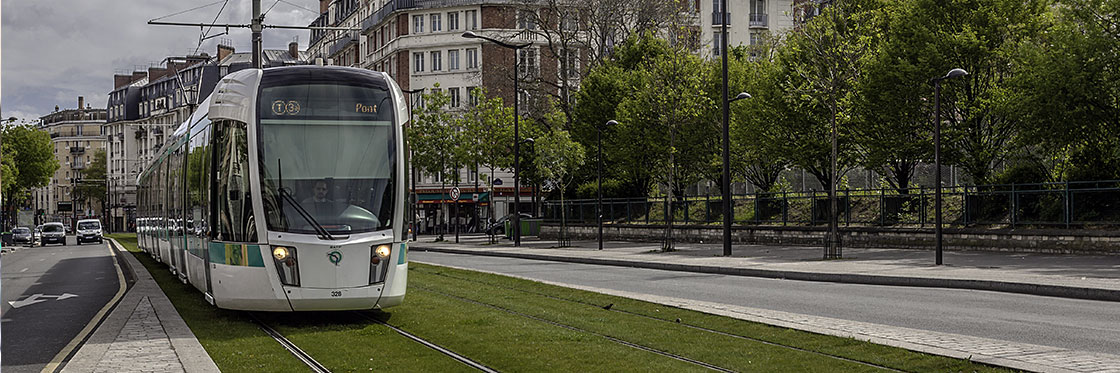
The picture shows classic LRT, not a light-metro tarted up pretending to be LRT, such as is the newly opened Ottawa light rail.
Lawned rights-of-way are both environmentally pleasing and non-user friendly.
The dedicated or reserved rights-of-ways, provide a service almost on par with light-metro operating with on viaduct or in a subway.
Reserved R-o-W’s are also much cheaper to install and maintain, thus one can have a larger network than a light-metro and a larger network means a better chance to attract ridership and service destinations.
This is what the Mayor of Surrey rejected, when he stamped his little feet and flipped flopped from building affordable LRT in favour of the much more expensive light-metro to appease his developer friends.
The problem for Surrey and the disingenuous Mayor is that Covid-19 may mean his prized SkyTrain extension may not be built, and for Langley politicians, you are never going to get SkyTrain.
More and more, Rail for the Valley’s Vancouver to Chilliwack TramTrain style of service is looking better and better, providing an affordable and user friendly ‘rail’ service to Surrey, Langley, Abbotsford and Chilliwack, at a cost less than 7 km of SkyTrain to Fleetwood.
Gatineau’s 26-kilometre, $2.1-billion light rail network is scheduled to be in operation by 2028, and part of it could connect to Ottawa’s Lyon LRT station by running across the Portage Bridge.
The City of Gatineau wants to connect its future light-rail transit system to the Confederation Line using an “urban tram” over the Portage Bridge, but it doesn’t yet have any committed funds from either the provincial or federal governments.
The Société de transport de l’Outaouais (STO) has been working on a rapid transit system for years. Back in 2018, Gatineau officials unveiled an ambitious vision for a 26-kilometre, $2.1-billion light rail line that would bring residents from the growing Aylmer and Plateau areas to downtown by 2028, as well as connect with Ottawa’s LRT.
On Friday, STO officials provided a technical briefing to Ottawa city councillors, where they revealed that Gatineau riders overwhelmingly preferred an “all-tram” solution to rapid transit, as opposed to one that would rely more on buses.
Those electric trams would travel in both directions over the Portage Bridge, connecting with the Lyon LRT station. Before the COVID-19 pandemic hit, about 3,500 bus riders would cross the Portage Bridge every hour during peak periods, and Gatineau expects that to more than double to 7,500 over the next 15 years.
The tramway plan would still require a number of STO connector buses to run on Slater and Albert streets, but the volume of buses should be drastically reduced from pre-pandemic levels.
Gatineau is proposing to run a double-tracked tramway on the Portage Bridge to connect with Ottawa’s LRT. (Provided by STO)
Coun. Myriam Nadeau, who chairs the STO’s board of directors, told Ottawa officials that Gatineau residents also wanted the trams to continue past Lyon station.
To that end, STO is looking at whether there might be an opportunity to run trams either along Wellington Street or in a tunnel under Sparks Street — proposals that come with a number of challenges, including additional costs.
No committed funding
The City of Gatineau is looking for the Quebec government to pay 60 per cent of the multi-billion-dollar project, while the federal government would pick up the rest of the tab.
(The $2.1-billion estimate, which was very preliminary, is for the entire light-rail system. STO officials did not provide an estimate for the part of the project that connects to Ottawa.)
While funds have not been formally committed by either level of government, Nadeau said the project is on the province’s “priority” list. Gatineau has also submitted a formal request for infrastructure funds from the federal government, but it’s not clear when or if that money will be committed.
Ottawa city staff are reviewing Gatineau’s transit analysis, and councillors heard that no decisions will be made until the public on both sides of the river are consulted, which is expected to occur next month.
The issue will ultimately come to the transportation committee and council for final approval.
Gatineau Mayor Maxime Pedneaud-Jobin and Ottawa Mayor Jim Watson said last fall that plans to run rail over the Prince of Wales Bridge, which Ottawa owns, were dead. Instead, the mayors want to see converted into a pedestrian and cyclist access. (Kate Porter/CBC)
Bayview station off the table
STO had looked at connecting over the Champlain or Prince of Wales bridges, but they were considered too far west, as about 80 per cent of Gatineau transit passengers head to and from downtown.
As well, councillors heard Friday that the Bayview station — located at the intersection of the Confederation and Trillium lines, at the south end of the Prince of Wales Bridge — does not have the capacity for an influx of thousands of passengers because it would require the city buy up to 12 additional trains.
Pat Scrimgeour, OC Transpo’s director of systems and planning, told councillors that connecting Gatineau’s rail to Lyon station would allow it to “bypass” the busiest part of the Confederation Line between Bayview and Lyon.
It would also give Ottawa riders a better connection to federal government jobs in Gatineau, he said.
The city of Ottawa bought the Prince of Wales Bridge for $400,000 from Canadian Pacific Railway about 15 years ago for the express purpose of running trains across it one day, and that’s still in the city’s current Transportation Master Plan.
But last fall, the mayors of Ottawa and Gatineau announced that plans for rail over the bridge were off.
“It would congest too much Bayview station, and secondly, Gatineau has been pursuing their LRT project and they too have ruled it out as a bridge that would be used for transit,” Ottawa Mayor Jim Watson said last September.
Both Watson and Gatineau Mayor Maxime-Pedneaud Jobin are hoping to use the bridge instead as a pedestrian and bike crossing.
According to Ontario’s MetroLinx (Metrolinx is a Crown agency that manages and integrates road and public transport in the Canadian province of Ontario) the 50 year cost for the 7 km Expo Line extension just to Fleetwood, will be around $4 billion!
Gives one pause for thought.
It isn’t just the Surrey taxpayer that has little left in the tank.
Surrey taxpayers foot $39M bill for cancelled LRT line; SkyTrain extension questioned
With little in the tank, Surrey will need to find $9.3 million cash
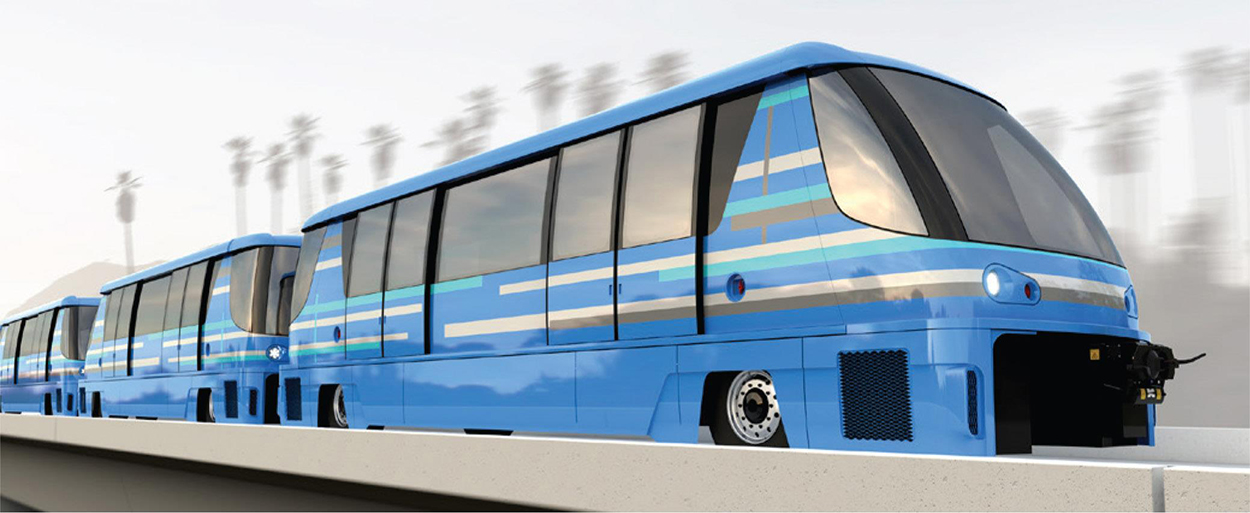
An artist’s rendering of the SkyTrain system Surrey Mayor Doug McCallum wants for his city and Langley
Photograph By SkyTrain for Surrey
Surrey taxpayers will fork over $39 million in city assets to TransLink to compensate the regional transportation authority for planning costs associated with a mothballed light-rail system that has been replaced with a planned SkyTrain extension now facing mounting financial questions due to the pandemic.
The Mayor’s Council announced Friday it had finalized the payment, which is a combination of land and cash.
In November 2018, Surrey City Council unanimously agreed to axe the Guildford-Newton LRT project in favour of a SkyTrain extension to Langley. The $1.6 billion already committed to be spent on the LRT project was transferred to constructing phase one of the $3.1 billion Surrey Langley SkyTrain (SLS) extension. Phase one will only get the line to Fleetwood, at 166 Street, with a further $1.5 billion needed to push the line to Langley City Centre.
TransLink and City of Surrey negotiated the compensation agreement in July 2019, but Friday’s report shows the details of the funds.
Surrey will hand over $11.4 million worth of for the SkyTrain extension and $5.5 million worth of dedicated road, build 300 park and ride spaces for $12.8 million and provide $9.3 million in cash.
The city’s recently released 2019 Annual Financial Statement shows $38.8 million removed from the annual surplus as non-cash charges to operations, meaning the city has yet to account for the cash portion of the payment.
The TransLink payment eats into excess revenue, which supports capital acquisitions and projects and typically contributes to statutory reserve funds. The city’s reserve funds have shrunk from $86 million in 2018 to $57 million in 2019. The city’s operating expenses in 2019 totalled $842 million.
Cost considerations have already seen four eight-figure capital projects cancelled by the current council in 18 months.
The city’s records show a further $5.4 million could be paid to TransLink if city council makes no decision to implement a rapid transit along King George Boulevard by Dec. 31, 2021.
Meanwhile, it’s now no longer certain the SLS line will proceed as once planned, or at least proceed on time.
TransLink is projecting a best-case-scenario loss of $710 million in revenue, because fewer people are taking public transit and, if they are social distancing, measures must be implemented, meaning there will be less room on buses. A 12-month period of physical distancing would see a projected loss of $1.37 billion.
The Mayor’s Council was briefed on the SLS project by Geoff Cross, TransLink’s vice-president for transportation planning and policy.
In April, the Mayor’s Council, which oversees TransLink planning, had postponed the phase two investment plan update due to the impacts of the COVID-19 pandemic. The plan was to outline the remaining investment sources (municipal/regional, provincial and federal) needed to pay the remaining $1.5 billion costs to get to Langley City Centre.
Cross hinted at going cap in hand to the feds.
“Part of what we’re seeking as the region and potentially the province with the federal government is increased federal share around capital programs. That could impact both this particular project and other capital projects,” Cross told the council Friday in an online meeting.
While Cross asserted the business case “is very solid,” his briefing note stated how COVID-19 is producing uncertainties.
“Considering the COVID-19 crisis, there are several outstanding issues that must be addressed for the SLS project to advance,” stated Cross’ brief.
“Once the longer-term economic and public health situation begins to stabilize and becomes more clear, the agency will need to reset its projected revenues and expenditures over the ten-year period, confirm available senior government funding, recapitalize its depleted reserves and re-prioritize its entire existing capital plan,” Cross noted.
Cross did not mention how the SLS business plan depends on increased ridership along the route, and ridership depends on greater residential development, which in turn is dependent on population growth, which in Metro Vancouver is fuelled largely by immigration.
He did state the plan takes a view looking outward to 2050.
More from the South Fraser Community Rail Society.
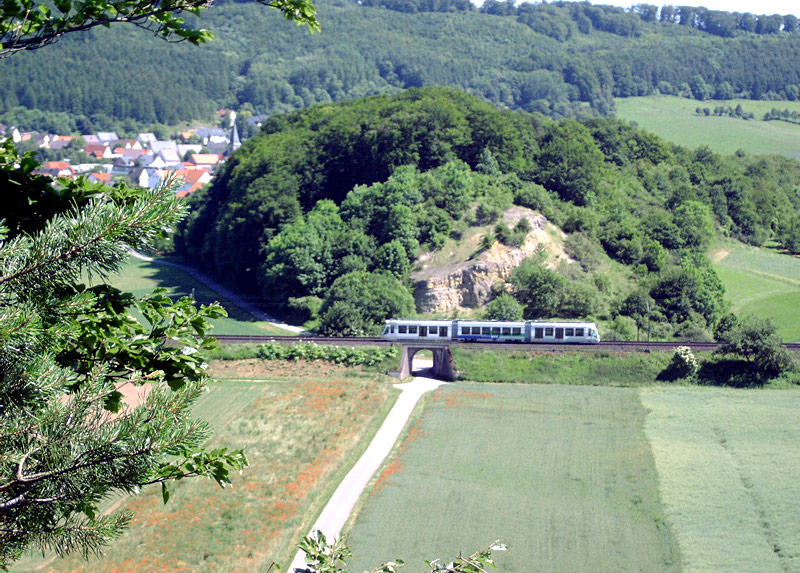
The Zwickau Vogtlandbahn TramTrain
South Fraser Community Rail Society
“Hydrogen iLink PassengerRail, Scott Rd. SkyTrain to Chilliwack” #connect the valley
TransLink’s wrong-headed Fraser Highway to Langley SkyTrain debacle
is starting to be seen for what it is…. WRONG!
Know the FACTS…. This cannot be allowed to continue!
TransLink and the Mayor’s Councils handling of this issue was a sham from the start despite the advent of COVID-19. This Newsletter should remind all decision makers and the public as to why we are in the position we are in, wasting an immeasurable amount of your tax dollars and time with nothing to show for it. All of this to satisfy the wishes of a NEW Mayor who won with 13% of the popular vote! If common sense prevailed, your well-planned LRT line would be well under construction as of today! Consider the following timeline of events that got us to where we are at today –
FACT Through a comprehensive community involved plan over about ten years Surrey secured approval and funding (Federal, Provincial and Regional) for LRT – Guildford down 104th to Surrey Center down King George Blvd to Newton. Proposed in 2012 construction start – 2019.
FACT The original 10.5 KM LRT line was supported as a mode for internal transit for Surrey, designed to build communities within Surrey with an approved senior and regional government funding envelope of $1.65 Billion. This LRT line was Phase 1 of the ten-year plan.
FACT $50 million dollars of regional tax dollars were spent in engineering funding for this LRT project through TransLink!
FACT The 2018 Municipal election campaign was won by the Safe Surrey Coalition, new Mayor Doug McCallum. Two major promises 1) Establish new Surrey Municipal Police Force promising same cost as the RCMP 2) Change the approved and funded LRT project to a Surrey Center to Langley City SkyTrain at same cost of $1.65 Billion and not a penny more.
FACT First TransLink Meeting after election with majority of NEWLY elected Mayors, Surrey Mayor Doug McCallum and Mayor Kennedy Stewart of Vancouver supported each other in a pre-arrangedweighted vote, blindsiding the Mayors around the table, most unaware of what was happening. Vote passed for Vancouver Subway to Arbutus and support for the suspension of the Surrey to Langley LRT, moving forward to develop a draft SkyTrain business plan.
FACT IMPORTANT – The Mayors Council at the urging of TransLink Senior Staff and Mayor McCallum changed support from LRT to SkyTrain based on Mayor McCallum’s well publicized (during the election campaign and to the Mayors Council) assurance that they could do it for the same $1.65 Billion and not one penny more. The Reality, cost will be $3.5 – $4 Billion. Due to this fact the project should NEVER have been approved nor should it go ahead. The promise was not kept! Mayor McCallum’s mis-represented project can only proceed at OUR expense!
FACT IMPORTANT – Mayors Council changed support from LRT to SkyTrain based on Mayor McCallum’s assurance Surrey would repay TransLink the $50 million spent on LRT preliminary engineering and then goes outside the meeting as says he is not going to pay. It has now been agreed that Surrey will provide $30 Million in property plus $9 million in cash?
FACT The change from LRT to SkyTrain initially was justified in that the Surrey to Langley City SkyTrain was Phase 2 of TransLink’s 10-year plan, so in their pronouncements this was just a matter of switching phases. Unfortunately, there were four problems with that position.
FACT First – There was a significant cost difference between the LRT (planned in the financials) and a SkyTrain project (not planned in the financials). The difference? LRT $157,142,857. / km vs SkyTrain $225,000,000. / km. TransLink knew this info from the outset, so why make change?
FACT Second– TransLink’s decision to go with SkyTrain for Phase 2 was decided through a non-public, flawed internal study that looked at one corridor option only. The valuable Interurban corridor was never considered despite its identified value and connection to a far greater population, inter-regional connectivity that was identified and protected by a Provincial Government for passenger use at no cost for its use at a fraction of the cost!
FACT Third – TransLink’s plan for SkyTrain did not consider its negative impact on Green Timbers Urban Forest, plus cost of going through 7 kms with no population (Green Timbers Forest and the Serpentine Flats). Further, they did not consider the high construction cost to build through the Serpentine Flood Plain soil conditions.
FACT Fourth– Surrey (Fleetwood & Clayton), Langley City and the Township of Langley have not appropriately planned for, nor have they adequately informed their residents on what density will be required to justify the high cost of SkyTrain down Fraser Highway to Langley City should it happen. To give residents an idea we offer the following visual taken off of Port Moody’s plan surrounding their Evergreen Line. COVID-19 has changed the game entirely, cost and density.
2,800 homes are being proposed next to Port Moody’s SkyTrain’s Inlet Centre Station. A massive redevelopment could completely transform an existing 13-acre, low-density neighborhood immediately adjacent to SkyTrain’s Inlet Centre Station. According to a city staff report, the developer’s intention for Coronation Park, the tentative name of the project, is to build six towers between 32 and 36 stories, each with a six-story podium and five six-story buildings. If you want to see the reality, check out what has happened to the Brentwood area development in Burnaby, do you want this for your community.
Summary: It is long past time that the TransLink Board of Directors Rethink and review their decisions and planning related to both SkyTrain, LRT and the Interurban South of the Fraser. The decisions to proceed with SkyTrain are wrong on ALL and every count, they are totally disingenuous. Yes, COVID-19 has seriously caused reconsideration, however, are our decision makers going to lead or are they going be led by TransLink staff or because of some internal biases by a few TransLink Board members (more on this at a later date).
It is time for some real leadership by the TransLink Board and the TransLink Mayors Council and an intervention by the Provincial Government if necessary. A review of the staff reports on the Fraser Highway SkyTrain project to the Mayors Council from Geoff Cross Vice-President and comments attributed to Kevin Desmond CEO put a good deal into question. (quotes from local published media) Despite our four points listed above CEO Kevin Desmond comments “Whether ridership levels will recover is a million dollar question” and yet Geoff Cross states “TransLink still believes the project makes business sense and hopes to put forward an investment plan in the fall.” REALLY, in who’s imagination? To CEO Desmond, this is not a million-dollar question, THIS IS A MULTI BILLION DOLLAR QUESTION! Obviously, there are conflicting statements being made by senior TransLink executives!
“There’s an active discussion right now around North America asking – Is this the death knell of public transit” said Councillor Craig Cameron of West Vancouver. “I don’t think it is, but…. Do we believe the new normal that we get to, is going to be significantly lower than Pre-COVID peak? Are we going to have to do transit differently? “… “it would take some time to evaluate the level of ridership that is realistic in the months ahead” said Desmond. In a number of comments TransLink staff are continuing to base their future on a boost in senior government funding which is not even close to be being realistic, especially in view of our NEW normal. Continuation of this debacle will cost all of us responsible transit improvements!
This debacle is the result of TransLink capitulating to the wishes of the Mayor of Surrey who was demanding his election promises be kept – Well they weren’t kept, they were irresponsible and yet our TransLink Mayors Council and Board supported him! Why?
SkyTrain in place of LRT at the same cost – $1.65 Billion and not one penny more! FACT Cost $3.5 – $4 Billion. Promise not kept, should be denied.
Surrey Municipal Police Force in place of RCMP at the same cost! Promise not kept, should be denied.
Rethink – It is not too late to go with the original LRT project and Surrey would not have to pay back the $50 million already spent by TransLink!
Throughout all of this discussion, our transit provider TransLink is still not facing the reality of the fact they are promoting an outdated, highly overpriced, unaffordable, and poorly performing technology at great cost to us taxpayers. We urge the Provincial Government to implement the “South of Fraser Transportation and Housing Study” already promised through this year’s Throne Speech and Budget Announcement before any decisions are made on South Fraser Regional Transit or Inter-Regional Transit.
The escalating cost to build with light metro, due to Covid 19, means there is little money in the pot to further extend the light-metro to Langley.
TransLink is said to be in a state of shock as former customers are leaving transit in droves and not coming back. Over 80% of the Expo and Millennium Lines ridership first take a bus and with the light metro system purposely designed as a “spine” taking all suburban transit traffic into Vancouver by train, the collapse of bus customers means the mini-metro is operating with extremely light loads.
As the light metro system costs about the same to operate with either light or heavy loads, the lack of revenue is severely testing TransLink’s bottom line.
If no additional federal or provincial money is forthcoming, TransLink will be in severe financial distress by summer and hitting up the taxpayer for more money may mean political suicide for the current mayor’s sitting on the Mayor’s Council for Transit.
The Broadway subway is more and more becoming a political and a financial liability and a cut and cover solution to stem the escalation of construction costs, a la the Canada Line, will mean the end of political life for those who support cur and cover subway construction.
The current rumour has it that the subway will be built and what money is left over from the $4.6 billion pot will extend the Expo line East until the money gives out. Present planning shows about 3km of at grade construction, which defies the ‘raisin d’etre’ of a light metro, will create “Berlin Wall” effect on the Fraser Hwy., complete with 3 metre, barbwire topped fencing.
The Berlin Wall effect of at-grade ATC operation, complete with 3 metre, barbwire topped fencing.
The Expo and Millennium lines desperately need a $2 to $3 billion rehab, which again, pushes the financial crisis even further.
It seems the Expo Line extension to Langley has been derailed and one could say, the SkyTrain to Langley has served its purpose for the Mayor of Surrey, with Langley Mayors left at a station, waiting for a train that will never come.
Surrey Langley SkyTrain project stalls due to COVID-19 pandemic
The 16-kilometre rapid transit line from King George SkyTrain Station to Langley City Centre is estimated to cost $3.1 billion. TRANSLINK
Just like almost everything, the COVID-19 pandemic has affected planning for Surrey Langley SkyTrain project.
A report to the Mayors’ Council on Regional Transportation notes that there are “several outstanding issues that must be addressed for the SLS project to advance”.
The report was prepared by Geoff Cross, vice president TransLink for transportation planning and policy, and is included in the council’s agenda Thursday (May 28).
The council directed TransLink to refer the business case to senior governments for approval, which the transportation agency did, according to Cross.
The project would extend the Expo Line 16 kilometres on an elevated guideway from King George Station to Langley City Centre along Fraser Highway.
According to TransLink, the rapid transit line includes eight stations, three bus exchanges, park and ride spaces, 55 SkyTrain vehicles, an operations and maintenance centre, and supporting system upgrades.
There is approximately $1.63 billion in available funding, enough only to extend the line to Fleetwood.
The extension from King George Station to Fleetwood is seven kilometres, and involves four stations.
In his report, Cross noted that before the pandemic, the Surrey-Langley SkyTrain project was the “primary impetus” for an update to the regional transporation’s investment plan.
The updated plan was “targeted for approval in July 2020”.
“However, following the onset of the COVID-19 pandemic in March 2020 it was decided that delivering a Phase Two Investment Plan update in July was no longer feasible due to uncertainties in projecting future revenues,” according to Cross.
Cross noted that the business case for the project is already with senior levels of government, and “scope could readily scale with additional funding”.
“However, it is fiscally prudent to wait until the nature and magnitude of emergency relief and stimulus programs is more certain,” Cross wrote.
According to the City of Surrey, construction for the Surrey Langley SkyTrain was set to begin in early 2022.
It is beginning to sink in, that post Covid-19, many things will change.
The other valley passenger rail, group, the South Fraser Community Rail Society, also sees that the post Covid-19 and post Bombardier world will change the transit landscape dramatically. Light metro is just too expensive for what good it will do; why no one builds with it anymore.
Transit ridership is plummeting and will continue to plummet with universities and colleges turning to off-site education and those working at home, will continue to work at home.
This will put TransLink’s big revenue generator, the U-Pass in jeopardy.
TransLink has badly fumbled the ball with Covid-19 and now must come to terms with the new normal and that new normal is that commuters have abandoned transit and running empty buses on many routes which have become ghost routes, is unsustainable.
What can TransLink do to attract ridership?
TransLink must abandon extending the aging and now obsolete SkyTrain light-metro system. $4.6 billion to extend the light-metro 12.8 km does seem extremely expensive for what it will do.
TransLink must redesign its bus routes to provide seamless (no transfer) journeys to Vancouver and stop using buses to feed the light metro system for people wanting to go to Vancouver. For many, this is transit heresy, but in reality it is what the customer wants and post covid-19, the customer will dictate the fate of TransLink.
The politicians, especially regional mayors should brush up on their history lessons because the Broadway subway will fast become a Fast Ferry fiasco, squandering $3 billion on what will become a damp squib.
Regional rail services, providing a more relaxed, comfortable and spacious journey, will be in demand and that is what “Rail for the Valley” is about, providing affordable and user-friendly transit to a region that has little or no transit operating.
The new reality is now upon us, sadly most politicians are still in tax and spend mode and great effort must be made to send the message that affordable and user-friendly transit options are far more desirable than expensive, election driven rapid transit schemes, so designed to reward political friends and insiders.
Alstom purchase of Bombardier Rail Division and COVID-19 impact on Transit?
South Fraser Community Rail Society
“Hydrogen iLink PassengerRail, Scott Rd. SkyTrain to Chilliwack” #connect the valley
How the Alstom Group purchase of Bombardier Rail Division and the advent of the COVID-19 virus should scuttle TransLink’s SkyTrain expansion plan and the torpedoing of your wallet!
Bi-monthly Newsletter:
The recently announced purchase of Bombardier by the Alstom Group plusCOVID-19 IS A GAME CHANGER for TransLink’s SkyTrain plans that are yet to receive senior government final approval for the Fraser Highway proposal to Fleetwood, let alone Langley City. We urge the Federal and B.C. Provincial Government, TransLink Mayor’s Council and the TransLink Board of Directors to hit PAUSE on any plans to proceed until ALL facts on the Alstom purchase are known and our future transit needs under a NEW normal are understood!
RE Alstom Purchase of Bombardier –
FACT: SkyTrain is Bombardier’s sole surviving system for new system purchases!
FACT: Alstom will be dropping all marginal product lines once the sale has been
approved by the regulatory bodies due to cost of supporting same and
competitive pressures for critical lines of business!
FACT: TransLink must make technology decisions which will determine how
much cash will be pumped from your wallet due to EXPO/Millennium line
rebuilds and the proposed King George-Fleetwood let alone Langley expansion!
FACT: It is imperative the provincial government and TransLink hit the “PAUSE”
button on the proposed Fraser Highway extension until the sale has completed mid-2021 and the consequences of going forward are known and the alternative option is carefully considered!
RE COVID-19 Impact –
Fact: SkyTrain Expo and Millennium Lines are running at 18% of normal, Canada Line is running at 14% of normal, SeaBus is running at 10%, West Coast Express is running at 6% while buses are running at roughly 15% of normal.
Fact: 60% of TransLink revenues that depend on farebox, gas tax and parking revenue have collapsed with NO assurance on their rebounding within any reasonable timeframe.
Fact: Significant additional spending by senior governments was and is essential, on balance they have both done a good job. With a projected Federal Deficit for 2021 of well over $250 Billion and growing plus an additional high cost to the provinces finances, a cautious use of tax dollars is required.
So, to more detail re Alstom purchase of Bombardier and its impact:
France’s Alstom Group has reached an agreement to purchase the Bombardier Transportation Rail Division for about USD$8.2 Billion. Alstom has agreed to maintain the HQ for North American Rail operations in Montreal for at least the next 5 years as the Caisse de dépôt will be the largest external shareholder in this new entity. How will the advent of COVID-19 affect the proposed sale/purchase? Will it be renegotiated, will it go ahead, what is the affect of Bombardier? Huge implications either way.
This agreement is subject to the EU competition regulator’s approval and this is not expected until mid 2021. Until approval has been rendered by the competition regulators, it will be business “as usual” with both parties slugging it out in the marketplace for any, and all new business contracts. It is estimated Bombardier Transportation currently has about C$35Billion in orders on the books which will migrate to the new entity on completion. How will the advent of COVID-19 affect the proposed sale/purchase?
This sale presents ominous clouds to users such as TransLink, of the Bombardier SkyTrain product line.
Once the deal has been blessed by the regulators and formal sale taken place-Alstom Group will have to take a sober look at the various Bombardier technologies they have acquired in terms of their future viability in the marketplace. A major future slugfest is expected as Alstom, Siemens and other rolling stock suppliers sharpen their teeth on dealing with the 800-pound gorilla in the room – the state owned Chinese CRRC with annual revenues of more than $100Billion.
Products such as the LIM powered SkyTrain product could be first on the chopping block. How long will Alstom commit to supporting this sole-source product line with ONE customer for spare parts and new manufacture, especially now with all the focus being on Hydrail (Hydrogen powered transit). Many countries have now mandated the use of Hydrogen to eliminate the use of diesel. Alstom happens to be the acknowledged leader in Hydrail.
In-light of recent events, TransLink will have to very-seriously-reconsider as to whether SkyTrain technology on Fraser Highway is the correct solution for deployment.
If TransLink insists on proceeding using the SkyTrain product, they are still stuck with a sole source supplier, Alstom Group, which will have doubled in size overnight and has even less interest and motivation to be a supplier of this product. Pricing this product line properly to reflect the true cost of maintaining it as a commercially viable product will make it even more expensive than the past.
It may be time that TransLink is forced to make the bold transition to technologies and product lines which can be sourced from multiple vendors. Yes- it will be painful but the sooner they start, they are in a position to entrench/guarantee their supply position for spares/upgrades for old technologies (SkyTrain) as they place orders for new technology (iLint hydrail) as partial compensation for Alstom maintaining the SkyTrain supply chain.
The alternative might be a letter from Alstom Group advising of the total discontinuation of the SkyTrain product line with TransLink having either the option of a final “last buy” of rolling stock/spares or the shotgun “offer” to purchase the rights, licenses and tooling to manufacture the Skytrain product line.
Metro Vancouver and our taxpayers cannot afford the cost and risk of TransLink being in the rolling stock fabrication business?
So, to the economic impact of COVID-19 to the Province of B.C.?
You do not have to look beyond the just announced unemployment numbers for the months of March and April in B.C.. How does close to a 400,000-job loss and an unemployment rate of over 10% look?
So, consider the following –
What will a restart of the economy look like?
What will our NEW normal in Transit look like?
Who, how many and how often will the public be ready to go back to public transit without fear of contracting this deadly virus? What will the public’s trust quotient be?
How many bricks and mortar businesses will reopen? How many will re-engineer their existence?
How many businesses large and small will rethink how they are going to operate in the future i.e. work from home just might be looking more attractive in terms of increased productivity at a reduced cost?
Transit use during this pandemic has been reduced by over 84%, how much of that will come back and/or how long will it take? Will TransLink’s current funding model sustain some form of existing transit operations for 4 months? 6 months? Or 8 months?
How long will it take for gas, parking revenues and fare revenues meet the needs of our NEW transit needs?
What will our new economy look like after potentially a 6 – 10-month, (or more) shutdown?
We recall TransLink’s dismissal of the $50 million previously spent for the planning of the previously approved 11 KM Surrey LRT line on 104th Ave to Surrey Center down King George Blvd to Newton. This is the time to regroup and go back to utilize those previously expended funds and the planning they were used for and move forward with that plan.
We need to support fiscally responsible regional and interregional transit for the lower mainland out to Chilliwack.
We need to support environmentally responsible interregional transit for the lower mainland out to Chilliwack.
Conclusion: At a cost of $200 Million per KM (TransLink numbers), continued expansion of SkyTrain will bleed off the available capital financial resources PLUS the costly operational financial resources to properly expand Transit on the lower mainland, from Lions Bay to Hope. The facts are a 99 Km state-of-the-art South Fraser Hydrogen Community Rail passenger service (at no-cost for its use) will serve 10 times more taxpayers/residents, industrial parks, 14 Post Secondary Institutions and the Abbotsford Intern. Airport AT THE SAME COST as 7 Km. of the Surrey Center to Fleetwood Sky-train.
Our region(s) need fiscally and economically responsible efficient transit that is environmentally friendly and CleanBC appropriate. With very-limited financial resources available from government going forward, lets implement a system that makes sense!






![TransLink trolley bus on West Broadway between Granville and Arbutus streets on June 9, 2020. For Susan Lazaruk story. Credit: Mike Bell/PNG [PNG Merlin Archive]](https://postmediavancouversun2.files.wordpress.com/2020/06/bus4a_256115575-w.jpg?quality=100&strip=all&w=564)


 An artist’s rendering of the SkyTrain system Surrey Mayor Doug McCallum wants for his city and LangleyPhotograph By SkyTrain for Surrey
 The Zwickau Vogtlandbahn TramTrain





Recent Comments