Quizz Time!
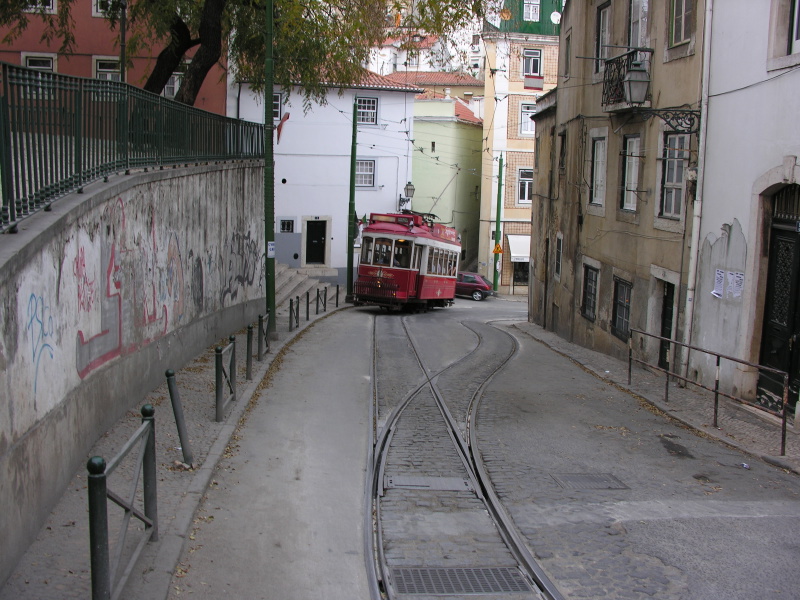
Lisbon tram climbing a steep grade!
Here are ten questions to test your knowledge of transit mode and issues.
Passing grade is 70%.
1) What is Light Rail Transit?
2 ) What is metro?
3 ) What is capacity?
4 ) What grade maximum is now the industry standard for light rail?
5 ) What is the maximum grade that LRT/tram climbs (by adhesion) in revenue service today?
6 ) After the introduction of ‘busways’ in Ottawa, ridership changed by how much?
7 ) Approximately what percentage of operating costs of a transit system can be attributed to wages?
8 ) Approximately how much ridership is lost per transfer?
9 ) Are automated (driverless) transit systems cheaper to operate than non automated transit systems?
10) What is the maximum capacity of the largest light rail vehicle today, calculated at all seats filled and standing passengers at four persons per square metre?
Answers:
1 ) LRT is a transit mode, generally electrically powered, able to operate in mixed traffic, that can economically carry between 2,000 and 20,000 persons per hour per direction.
2 ) Metro is a grade separated transit mode, electrically powered, built for average hourly ridership loads in excess of 15,000 pphpd. LRT can be operated as a metro, though a metro can’t operate as light rail!
3 ) Capacity = vehicle capacity and headway (trains per hour per direction).
4 ) 8%
5 ) 13.8% (Lisbon, Portugal)
6 ) A decline of ridership of 15.7% from 1986 to 1997 (OC Transpo)
7 ) 70%
8 ) 70%
9 ) No, studies have found that LRT is cheaper to operate, when comparing equal systems.
10 ) The URBOS 3 CAF tram holds the world record for being the world’s longest rail runner (55.9 meters) – Capacity 330 people (By comparison, four Mk.1 SkyTrain cars have a capacity of 300 persons!)
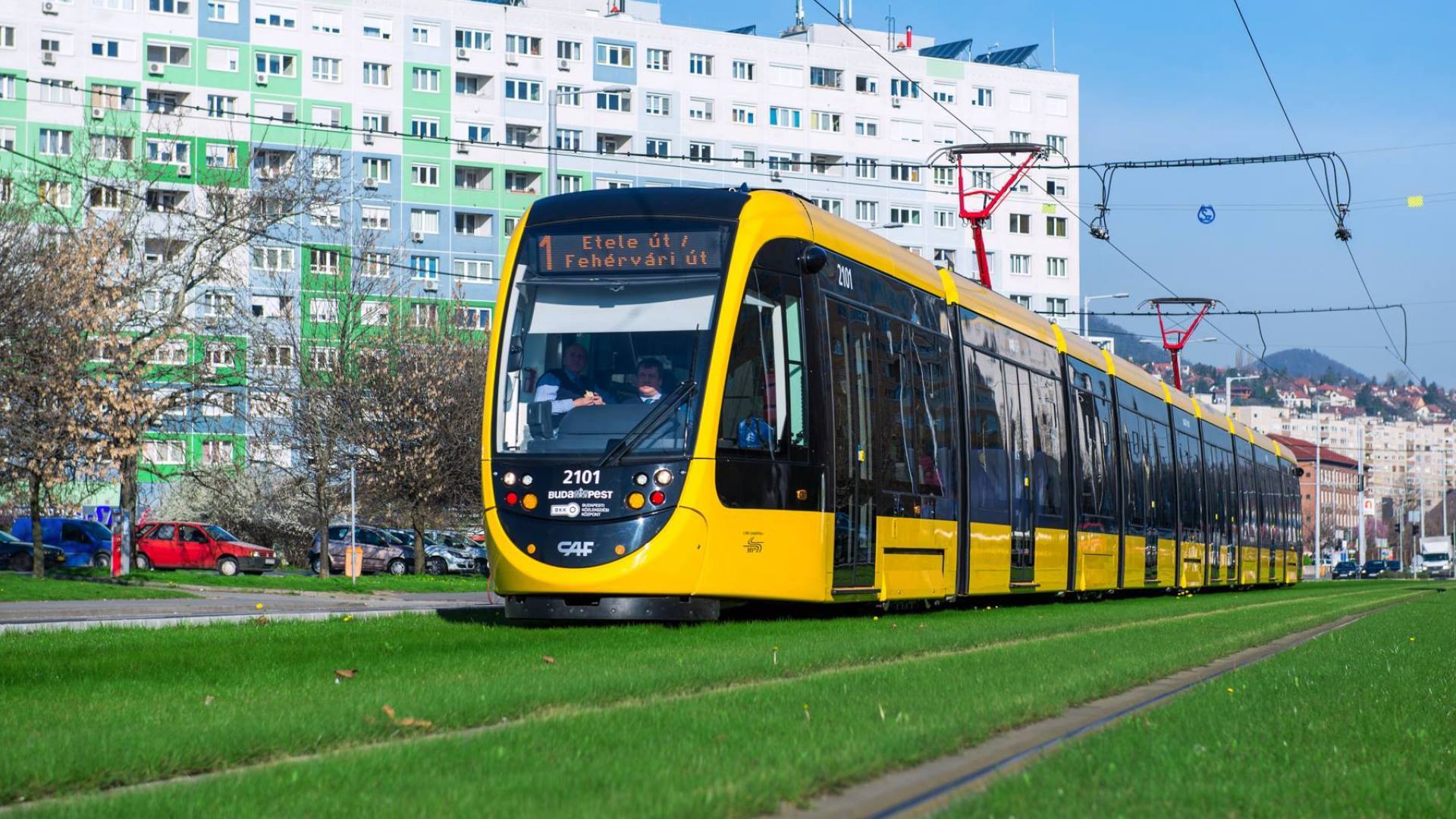 CAF Urbos (Caterpillar), in operation in Budapest.
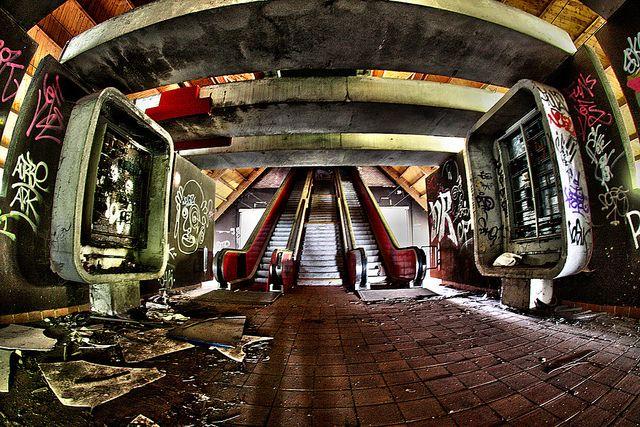
The Charleroi. Could This Be The Fate Of The Broadway Subway?
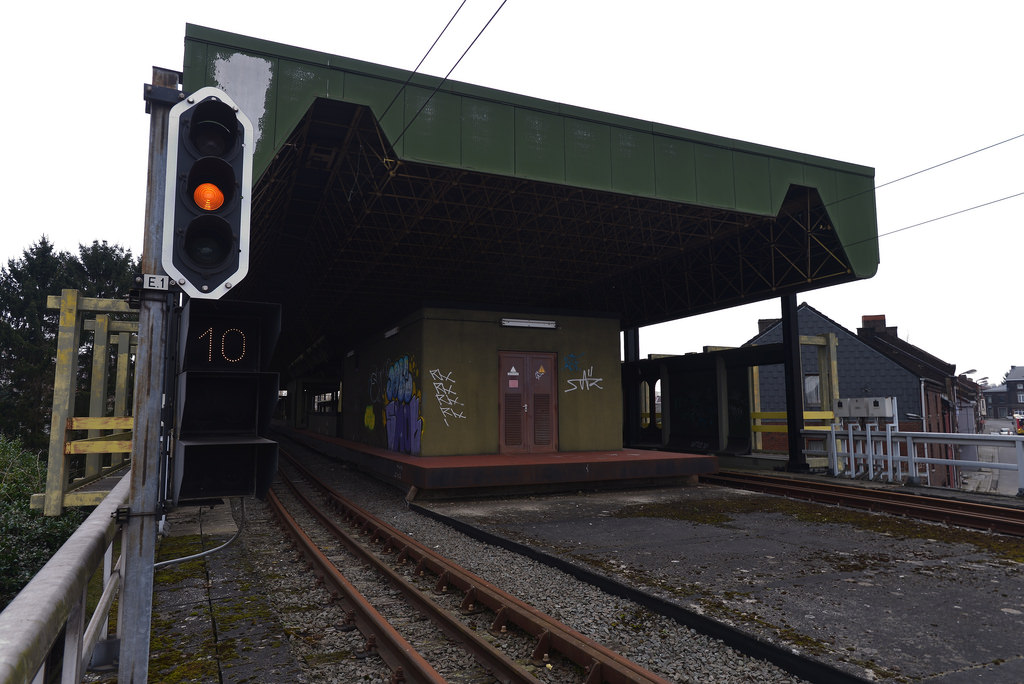
The Charleroi, the metro extension that never was.
Since the story of the Charleroi pre-metro was first posted in 2009 (see story below), nothing has changed and talks of completing the line have come to naught.
Could be the fate of the $3 billion Broadway subway? Built, but far too expensive to operate and portions or the entire line being mothballed.
A similar length subway line in Toronto, is said to cost the TTC an additional $40 million annually in operating costs.
TransLink remains mute on operating costs.
Exactly, what is TransLink afraid of?
Could it be that TransLink treats metro taxpayers as rubes and easy marks to pick pockets?
Well, that was TransLink’s “modus operandai” until a nasty little virus has put the economy in the dustbin.
Post Covid-19 will change peoples travailing habits, their ability to pay both taxes and user fees.
We are now entering a “wartime economy”, as money will be scarce and general taxes will be high and the taxpayer will begin to demand accountability and frugality, not just with municipal governments, but major crown corporations and alike. TransLink will be come a political pariah and the Broadway subway a later and far more costly FastFerry debacle.
Unused or abandoned subway tunnels in Europe are used as mushroom farms or even grow-ops, legal or illegal.
A $3 billion mushroom farm or grow-op under Broadway is just not what the taxpayer paid for!
From 2009:
The Charleroi Pre-metro, the metro that was built and they didn’t come! A short history on failed transit planning.
by zweisystem
One ‘metro‘ system that every proponent of the SkyTrain light-metro ignores is the Charleroi pre-metro. In Belgium traditional LRT is known as ‘trams‘, LRT built as a light-metro is known as pre metro. Pre metro has much in common with SkyTrain, including segregated rights-of-ways and large stations with escalators, etc. The Charleroi Métro is famous for the parts of it which were never built, partially built, or fully completed but not opened. There are many important lessons to be learned, yet one is afraid that the ‘powers that be’ are blind, deaf and dumb, with continued SkyTrain and/or light-metro construction in the Metro Vancouver region. One wonders, with such low ridership numbers, that the Evergreen Line will be Vancouver’s version with the Charleroi.
The Charleroi was planned in the 1960s as a 48-km network, using heavy rail metro trains, consisting of eight branch lines radiating from a central loop downtown. If completed as planned, this would have been the largest metro system in the Benelux region. Funds ran out during construction, however, and only one complete line (to Monument), part of another line (as far as Gilly), and three-quarters of the loop were actually built and opened to traffic, all between 1976 and 1996.
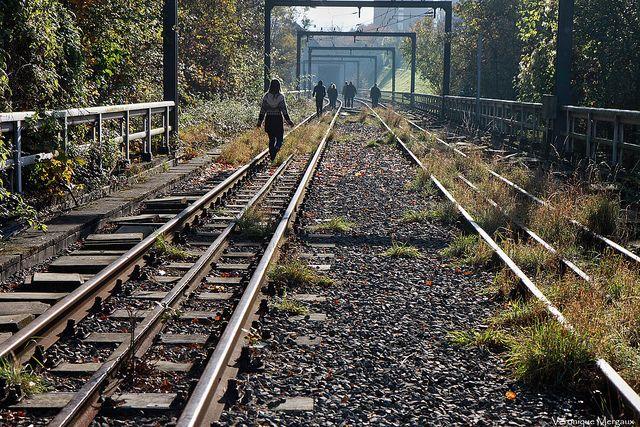
Another branch line towards the suburb of Châtelet (Châtelineau) was almost finished, to the extent of installing track, power cables, escalators and still-working electric signals to the first three stations, but never opened as the expected passenger numbers were too low to pay for the extra staff and rolling stock.
A fourth branch towards Gosselies, on the street following a former Vicinal tram route, is in use as far as the Jumet tram depot but does not carry passengers.
The high costs of construction, together with a decline in Charleroi’s traditional “smokestack” industries, and questioning of the scope of the whole project in proportion to the actual demand for it, are all cited as reasons for the original plan going unfulfilled.
The Expanding World Of TramTrain

TramTrain - what was once old, is new again!
TramTrain, unknown in Canada, mocked by those who have not even researched the mode, is now expanding across the world.
The concept is simple and well understood a century ago, but time has erased the memory of the “interurban” from our present crop of planners.
Until 1992……..
The German City of Karlsruhe opened it’s first true TramTrain Line, which replaced a former commuter line with a modern tram, which had the ability to operate both on the mainline line railways and on city tram tracks. The new service provided a seamless (no transfer journey) from the ‘burbs to the city centre.
The results were extraordinary; not just success but triumphal!
In just six months ridership increased 479% – from 533,600 a week to 2,544,976 a week. Sunday’s ridership on the new TramTrain route increased a massive 3,699%!

Success like this just does not go unnoticed.
Well it has gone unnoticed in Canada and more specifically BC, where the provincial government and the transit authority, still persist in massively expensive light-metro for regional transit.
Affordable transit options like TramTrain are ignored.
And for the naysayers claiming that TramTrain isn’t for long distances,
Karlsruhe’s longest run is 210km (130 miles)
Karlsruhe’s S4 service from Ohringen through central Karlsruhe to Achern, south-west of Baden-Baden. The TramTrain route uses DB mainlines, regional railway lines and on-street running in various cities.
In the 21st century, success is noticed and copied and since 1992, there are now well over 30 new TramTrain services in operation in Europe, the UK, the USA and Asia, with many more on the drawing board.
Compare with our proprietary SkyTrain light-metro system, where since the early 1980’s no one has copied Vancouver’s exclusive use of light-metro for urban transportation, nor the proprietary and now called MALM proprietary mini-metro system. In fact, only seven such proprietary systems have been built since the late 1970’s.
In the expanding world of TramTrain, Metro Vancouver is being left behind at the station.

A Karlsruhe TramTrain in the city centre.
Stadler will supply battery-powered tram-trains to Wales
Swiss rolling stock manufacturer Stadler prepares to start the delivery of the first CityLink tram-trains to Wales. The three-car light rail vehicles will use both electric energy and battery power. 35 tram-trains will serve the cross-city and commuter lines in the capital of Wales, Cardiff, and its surroundings.
“It’s really exciting to know that Cardiff will see the return of a tram operation for the first time in over 70 years,” said Kevin Thomas, CEO of Transport for Wales Rail Services (TfW Rail). The CityLink tram-trains will also serve the commuter routes from Cardiff to Treherbert, Aberdare and Merthyr Tydfil. The bi-mode vehicles will start regular service from 2022 and will be operated by TfW Rail, a Welsh subsidiary of Keolis.
Tri-mode Flirt trains
Besides the battery-powered tram-trains, Stadler will also supply 36 innovative Flirt trains to serve the planning South Wales Metro routes. The batch is divided into two groups. 24 tri-mode units (7 three-car and 17 four-car) will be capable to use overhead electric wires, diesel and battery power. The remaining 11 four-car trains will be diesel-operated. “The tri-modes being built by Stadler will offer an efficient and cost-effective electric drive and battery operation. 2022 can’t come soon enough for us or our passengers,” noted Kevin Thomas.
Stadler in UK
Cardiff will be the third city in the UK to operate the Stadler trams. 12 Variobahn units serve the Croydon Tramlink in London since 2012. The Swiss producer has delivered 7 CityLink vehicles in 2015-2016 to Sheffield. Moreover, Greater Anglia ordered 58 Flirt trains. The rail operator received the first unit on 28 February.
Stadler will supply 52 Class 777 electric multiple units for Merseyrail to be operated on the Liverpool commuter services. The manufacturer has also concluded a contract to deliver 17 trains for Glasgow Subway. The Class 68 and 88 locomotives produced by Stadler are used by the British passenger and freight operators.
Memo to the M.O.T. – Time to Reread The Leewood Study
Now ten years old, the Leewood Study, done by Leewood Projects (UK), to access the viability of reinstating a passenger rail service from downtown Vancouver to Chilliwack via the former BC Electric R.R. route, is worth a revisit.
The Leewood Study brought a fresh set of ideas to the planning table, something the establishment did not like, because the establishment plans for failure.
The Leewood Study brought the word TramTrain into the local lexicon, but the genius of TramTrain has been lost on politicians and bureaucrats who still want to plan for ruinously expensive, get glitzy light metro in Metro Vancouver.
 A modern European diesel TramTrain in operation on a country branch line
This brings us to this weeks release of the Vancouver Island Corridor Study, which gave a sobering cost of renewing the railway, but woefully deficient on providing a sound basis for any sort of passenger rail.
Time wasted on “commuter rail” is almost laughable if it were not so sad as commuter rail is only viable in major conurbations.
To be successful, a new and fresh look must be taken at proven methods of offering an affordable passenger rail service, as the establishment does not want any sort of rail transit, preferring buses and new highways.
In BC, politicians do as lobbyists want!
Vancouver Island Corridor Study
The Vancouver Island Corridor Study is a voluminous tome that lacks a coherent objective.
The study pinpoints the costs of rehabbing the line, but a 50% contingency, points to the fact those doing the study did not do a lot of homework.
The failing of the study lies in the fact it is using 19th century passenger rail solutions to solve 21st century problems.
It won’t work.
Creative thinking was desperately needed, but was absent, as the those doing the study reverted to old methods, tarted up as new.
TramTrain is a solution ready made for the E&N, yet not even a hint of this modern evolution of the interurban, which saw service in Victoria, years ago. Interurban Road in North Victoria/Saanich is a reminder of trams long past.
A tram-train is a light-rail public transport system where trams run through from an urban tramway network to main-line railway lines which are shared with conventional trains. This combines the tram’s flexibility and accessibility with a train’s greater speed, and bridges the distance between main railway stations and a city centre.

Direct (no transfer) service has dramatically proven to attract ridership.
The ability of TramTrain to bring customers direct to the city centre has been a proven winner where used. The bonus is that TramTrain has proven to attract the all important motorist from the car.

New Jersey's River line's TramTrain operation using diesel light rail cars.
A TramTrain service linking downtown Victoria to Langford, through the extremely congested Malahat, to Duncan, Chemainus, Ladysmith and Nanaimo, with on street running in Nanaimo (possibly to Departure Bay) would be a winner.
Future operation would extend to Courtney and Port Alberni!
Using TramTrain would leave plenty of pathways for freight and tourist services.
It would be best that BC’s Ministry of Transport, dust off the Leewood Study and reread it as it gives affordable answers that their overly complicated, yet extremely dated study does not.
Truth And Lies About Transit

It seems that the covid-19 pandemic has made several people busy little beavers with local transit issues.
A new Facebook page has appeared, Truth and Lies About Transit in the Fraser Valley and it is worth a read.
It now seems a certain railway company has called upon a certain political friend to do everything in his/hers power to make sure a Vancouver to Chilliwack passenger service will not happen.
Really? It does not surprise me one bit as the politics involved in providing an affordable rail passenger service from Vancouver to Chilliwack is Byzantine!
As always in BC, the massively expensive illogical transit planning, trumps affordable logical transit plans.
Truth and lies about transit in the Fraser Valley (Click here)
A Letter To Premier Horgan


The SkyTrain roller coaster ride is continuing.
Absolute Madness!
Absolute madness from the Mayor’s Council on Transit.
The game has changed, the taxpayer is broke and cannot pay more. The transit customers are broke and cannot pay higher fares. Covid-19, like it or not has changed the transit game completely.
Spending a budgeted $4.6 billion to extend the Movia Automatic Light Metro lines (Expo and Millennium Lines) 12.8 km is nothing short of criminal.
Covid pandemic has shifted how people work and commute. Many people prefer to continue working from home; many former transit users will stick to the car and not return.
Shopping habits have changed, thus with fewer and larger loads of shopping to carry, the car or home delivery will be the preferred methods in the coming years.
Gas prices have seen a major tumble and one doubts that they will return to the former highers in the near future, this means less gas taxes to fund an extravagant transit system.
In the wide expanse of Metro Vancouver, the age of the light-metro must come to an end, as the public, the taxpayer can no longer afford politically prestigious, gold plated light-metro, especially operating in a subway!
This message must be sent to the mayors of Metro Vancouver, Premier Horgan and Prime Minister Trudeau.
All planning for light-metro expansion must be stopped and alternative transportation plans must make an appearance. We cannot afford what is being planned for today and future generations will be burdened, paying for very bad transit decisions made pre-Covid-19.
The silly notion that by throwing $4.6 billion at light metro will somehow make things better is absurd and grows more absurd with each passing month.
If we do not change or the politicians will not allow change, then only one conclusion can be made,
that the land speculators, land developers, criminal money launderers and their lackeys are dictating how transit is built in Metro Vancouver,
because current transit planning is based on absolute madness.

Can the taxpayer afford Movia Automatic Light Metro in the now post Covid world?
Major Metro Vancouver transit projects expected to proceed as planned
Author of the article:Jennifer Saltman
Cancelling or suspending major infrastructure projects such as two planned SkyTrain extensions is not part of TransLink’s plans to save money during the COVID-19 crisis.
However, if it receives little or no financial aid from the higher levels of government, Metro Vancouver’s transit authority, which expects to lose $75 million per month, could be forced to revisit its big-ticket system expansions and improvements.
“The damage is going to be enormous, and we’re going to still need very, very significant external government support to help have a brighter future, otherwise it’s going to be a very, very difficult budget for 2021 that will affect service and almost certainly elements of our capital program,” TransLink CEO Kevin Desmond said this week.
TransLink has announced a series of cuts that include rolling back service and temporarily laying off almost 1,500 people. It also said that some expenditures planned for 2020 will be deferred, including major road network operations, maintenance and rehabilitation program funding to municipalities, as well as 2020 service expansions, such as adding NightBus service.
Major projects that are outlined in the 10-year plan for regional transit are not on the chopping block, yet.
The three biggest undertakings are the $3.12-billion Surrey-Langley SkyTrain — the first phase of which will cost $1.65 billion — the $2.83-billion Broadway subway in Vancouver, and the Expo and Millennium line upgrade programs, which include buying new rail cars, system upgrades and more.
Desmond said in a recent interview that all of those projects involve significant federal and provincial investments. Ottawa has contributed a set amount toward the capital costs of a number of projects and the B.C. government has committed to contributing 40 per cent of capital costs for major projects.
“If we were to, let’s just say, cancel any of those projects, we might be saving the local share but then we’d be suspending or losing the provincial and federal capital dollars,” Desmond said. “So, at the moment … those types of projects we don’t think make any sense to put on (hold). At the moment.”
The share of capital projects financed by TransLink is mostly debt financed, Desmond said, so the short-term savings would be limited.
“In the longer term, cancelling capital projects, yes, that would help offset longer-term deficits, but at least in the immediate crisis that we have, it actually yields a surprisingly small amount of cash,” Desmond said.
Still, Mayors’ Council chair Jonathan Coté said recently that if TransLink’s difficult financial position continues, it will have to look at all costs and projects.
“There hasn’t been any definitive decisions made on any of those major projects, but I think it’s fair to say that they will all be looked at and there definitely could be some delays with some of these major projects,” Coté said.
By the fall, TransLink will have a better idea of the depth of the crisis and the region’s recovery, along with whether any financial aid is forthcoming. So far, the province has said that it will help TransLink restore normal or near-normal service by September, but Desmond said more is needed.
Chantalle Aubertin, press secretary for federal Minister of Infrastructure and Communities Catherine McKenna, said in an email that public transit plays a vital role in moving British Columbians, and McKenna, the prime minister and deputy prime minister are working with provinces and municipalities to assess immediate needs and priorities.
Surrey Centre Liberal MP Randeep Sarai said Ottawa is committed to TransLink and making sure that it keeps running.
“I think they’re providing essential services and we’re always there to help in every which way that we can,” Sarai said. “I think that Minister McKenna is already in talks and I’m optimistic of some good resolution, with the combined efforts of all levels of government, that will be able to sustain them during this time.”
TransLink does not qualify for the 75-per-cent federal wage subsidy because it is a public body. B.C. Premier John Horgan has suggested that the subsidy should be changed to allow TransLink, B.C. Transit and B.C. Ferries to qualify. Sarai doesn’t believe that will happen, but “all options are on the table.”
“I think we’ve been very nimble in adjusting to virtually every variable that we’ve had to,” Sarai said.
Surrey Mayor Doug McCallum has said he is confident the SkyTrain extension from King George Station in Surrey to Fleetwood and on to the City of Langley will proceed as expected. The provincial and federal governments are reviewing the business case for the project, which was submitted earlier this year.
He said last week that in his discussions with the federal government there have been suggestions that projects like the Surrey-Langley line should be expedited so that work can begin as soon as COVID-19 restrictions are lifted, and that there may be more federal money available to do that.
“I think it’s very positive out there. I’m very positive that they’re going to move very quickly on that end because they do have to stir up the economy, and the best way to do it is create those kind of good-paying jobs to get going and get our economy going again,” McCallum said.
Another part of the capital program that could be on the chopping block is what the agency calls “state of good repair,” which involves making sure the system is maintained. As someone who grew up in New York and witnessed the fallout from deferring maintenance of transportation infrastructure, Desmond has strong feelings about delaying.
“If we start deferring those maintenance projects, all we’re doing is pushing to a later generation of TransLink leaders and maintainers a larger problem that will cause even more effects, and in the meantime you might start seeing implications to the system,” Desmond said. “So we, in my view … should not be thinking about that because that would be cutting off our nose to spite us.”
Reality Hits TransLink Square In The Face

As Zwei has pointed out, the new Covid-19 reality has hit TransLink square in their hypocritical face.
With cap in hand, TransLink went to provincial and federal governments for more handouts but it seems they have had enough and TransLink had to shed employees and unproductive bus routes.
From Radio 1130:
TransLink announces layoffs, other cost-saving measures due to pandemic
From TransLink:
TransLink implements cost saving measures
The problem for TransLink now is that the regional transit service is a very expensive commuter service and as those commuters stayed home, the system all but collapsed.
Less than 75,000 actual people (or is it boarding’s?) are using the transit system today, an 83% collapse of ridership. TransLink is losing over $75 million a month and will be insolvent by summer.
TransLink had no choice in laying off almost 1,500 employees as they were operating mostly empty buses, driving up deficits.
The light-metro system is another story. The driverless (automatic) light-metro system still needs near the same number of people working for it because it has to be kept at 100%, maintenance cannot be deferred, track must be inspected, and vehicles maintained. Reducing frequencies will only bring slight economies and it would make far more sense closing parts of the system, especially on weekends and replace the service with buses.
This puts the question on the table:
Is it wise to continue planning for the $4.6 billion, 12.8 km extensions to the Expo and Millennium lines?
The light-metro system is hugely expensive for what it does and in a changing world, transit wise, is it prudent to continue planning for this obsolete, yet very expensive mini-metro?
Fiscal responsibility will be the keyword for the next decade as taxpayers will have little patience with political inspired mega projects that will do little in improving transit.
It just might be a nasty little virus, covid-19, that will bring down Metro Vancouver’s SkyTrain empire.

More Bad News For TransLink
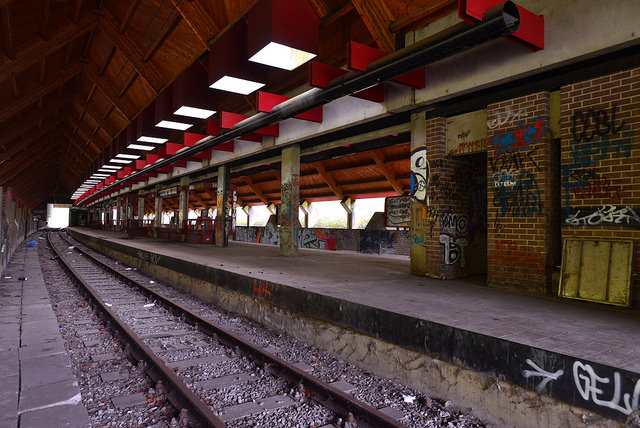
The Charleroi light-metro, built but never used.
While TransLink’s senior bureaucrats are desperately trying to salvage their embarrassingly high stipends, more bad news; people like working from home.
Research Co. says 73 per cent of those polled expect to keep working from home after COVID-19.
If, even 25% of the 73% quoted in the news story, decide to work at home, it will have major implications for public transit in metro Vancouver!
The current $4.6 billion being spent to extend the Millennium and Expo Lines 12.8 km will be a major financial fiasco for TransLink if there is a 25% reduction in ridership. The decline in ridership would mean there will be no funding available to pay for the operation of the new light-metro extensions.
The $3 billion Broadway subway, alone, will add $40 million to TransLink’s already expensive operational budget!
The aging SkyTrain light-metro will consume more and more money to keep it in operation, because of declining ridership, will come from cannibalizing the rest of the bus system, especially in the suburbs.
Forget any plans to extend the subway to UBC or extending the light-metro beyond Fleetwood in Surrey, because it is just not going to happen.
TransLink desperately needs a plan B, but they don’t and are acting as lost babes in the woods. They are not, or seem they cannot, adjust to the new post Covid-19 world.
Memo to Kevin Desmond: Time to come clean and earn that fat salary and tell the Mayor’s Council on Transit extending the Expo and Millennium Lines in today’s Covid-19 world is just not viable!
Declining ridership means that both lines will be a financial drag on TransLink as reduced fare and tax income will mean reduced or discontinued bus service on lightly used routes.
Reduced incomes means taxpayers will not be able to pay higher fares and will vote for politicians who are not afraid to tackle the TransLink behemoth.
TransLink must make public transit both affordable and user friendly, something they are loath to do today, but will be demanded in a post Covid-19 world.
The great fear of Zwei, especially with the Broadway subway, is that it will be built, but there will be no money to operate it and it just becomes a $3 billion hole in the ground, just like the Charleroi, in Belgium.

Could this be the fate of the Fleetwood extension?
Canadians think they’ll continue working from home when pandemic ends: poll
By Robyn Crawford CKNWPosted April 17, 2020
A new poll suggests Canadians think they’ll continue working from home once the pandemic ends.
Research Co. says 73 per cent of those polled expect to keep working from home after COVID-19.
On top of that, 63 per cent say business travel can be phased out and replaced by video chat.
Research Co. president Mario Canseco said the pandemic is changing the way Canadians view their jobs.
“I think there’s definitely some wake-up calls for industries,” he said.
“It also has some implications for real estate, we may not need the offices to be as big as they are right now if we have people working from their homes.”Four-in-five “provisional home workers,” feel their company trusts they are doing their work from home, and almost seven-in-ten believe their company is perfectly equipped for them to carry on with their duties from home.
However, people do miss the grind.
Sixty-seven per cent of those polled miss interacting with their co workers, and 44 per cent miss their commute.
Research Co. conducted an online study conducted from April 9 to April 11, 2020, among 1,000 adults in Canada. The data has been statistically weighted according to Canadian census figures for age, gender and region. The margin of error—which measures sample variability—is +/- 3.1 percentage points, nineteen times out of twenty.

Built but never used the Charleroi light metro stands abandoned!
Did I just hear “Shovel Ready”?

Two transit projects in BC are “shovel ready”.
1) Rail for the Valley’s plan for regional railway connecting, Chilliwack, Sardis, Abbotsford, Langley, Cloverdale and North Delta to Vancouver and
2) The E & N Railway connecting Courtney, Qualicum Nanaimo Chemainus, Duncan, Langford to Victoria, with a future connection to Port Alberni.
All is needed is funding.
Secure the funding and the lines can be rehabilitated for use as a modern regional railway.
Both lines are in use, with the E&N having only partial usage and both are in need of major refurbishment.
Both projects would bring major major transportation benefits, the transit starved Fraser Valley and the equally transit starved Vancouver Island.
Both rail projects would employ many more local people; far more than metro Vancouver’s highly specialized Movia Automatic Light Metro (SkyTrain), which needs offshore workers.
Sadly, our metro and provincial politicians are still thinking transit is to be a prestige project and built to cut ribbons at election time and damn the cost.
Tram-Train is the answer for both railways and its time our planers drag themselves from the 1950’s and into the 21st century and plan for what works.
A tram-train is a light-rail public transport system where trams run through from an urban tramway network to main-line railway lines which are shared with conventional trains. This combines the tram’s flexibility and accessibility with a train’s greater speed, and bridges the distance between main railway stations and a city centre.
Both projects would reduce car use by giving a viable transit alternative to highways crowded with auto traffic.
Unlike the $4.6 billion 12.8 km extensions to the Expo and Millennium Lines, which will do little in attracting ridership or reducing car usage in Vancouver and Surrey, a regional railway will provide transit customers with many destinations.
A billion dollars invested on Fraser Valley Rail and on E&N, would provide a solid basis for providing a regional rail service, attracting customers and providing plenty of scope for future growth.
The covid-19 disaster could be the silver lining, with BC adopting affordable regional railways, instead of unafordable, multi billion dollar rapid transit lines, as a tool to reduce congestion and pollution.

Ottawa seeks ‘shovel-ready’ projects for post shutdown stimulus plan
OttawaFederal Infrastructure Minister Catherine McKenna is preparing plans to rush out billions of dollars in budgeted – but so far largely unspent – infrastructure funds as a way to stimulate the Canadian economy once current pandemic restrictions are lifted.
The immediate focus of cabinet and the Prime Minister’s Office is on containing the COVID-19 health crisis and preventing bankruptcies, but ministers and officials are also starting to consult experts on how to gradually reopen the economy.
Borrowing a phrase from the Harper government’s “Economic Action Plan” spending spree after the 2008-09 financial crisis, the term “shovel ready” is back in use as Ottawa seeks out smaller projects – such as recreation-centre repairs – that can be approved quickly and create immediate jobs.
In an interview with The Globe and Mail, Ms. McKenna said she’s been reading up on former U.S. President Franklin Roosevelt’s New Deal, which included major infrastructure spending as part of the U.S. response to the Great Depression in the 1930s.
She is also reaching out to people who played key roles in responding to the 2008-09 economic crisis, including former Bank of Canada governor Mark Carney, former Conservative minister John Baird and former parliamentary budget officer Kevin Page.
Ms. McKenna said the scope of a future stimulus plan will depend on the scale of the economic damage created by COVID-19, which is currently unknown. But she said her current focus is on speeding up the more than $180-billion in infrastructure spending that has been approved through to 2028 but is mostly unspent.
“How do we get the money out the door this construction season? I think that’s going to be incredibly important,” she said.
A senior government official, who The Globe is not identifying because they were not authorized to speak publicly on the matter, said the government has not yet created a formal team internally to work specifically on a recovery plan. Rather, ministers such as Ms. McKenna, Industry Minister Navdeep Bains, Small Business Minister Mary Ng, Natural Resources Minister Seamus O’Regan and others have been encouraged to reach out to business leaders and other stakeholders to gather suggestions for a phased-in return to normal.
The official said there is still too much uncertainty over the length and breadth of the current shutdown to make concrete policy plans for the recovery phase.
Prime Minister Justin Trudeau said Wednesday that it would be “terrible” if current restrictions were lifted too soon. He repeated that it will be weeks before a phased-in return can begin and that the gradual process will vary by region and by industrial sector.
“We are not there yet,” he said. “We’re still a number of weeks away from that.”
The Liberal government came to power in 2015 on a platform that promised major increases to the federal infrastructure budget. Later labelled the “Investing In Canada” plan, the more than $180-billion program includes specific allotments to provinces and lays out priority areas such as public transit, green infrastructure, social infrastructure, including affordable housing, and trade and transportation.
Current Parliamentary Budget Officer Yves Giroux has reported that infrastructure funds have not been spent on schedule. Mr. Giroux has also noted that provinces appear to have scaled back their own infrastructure spending plans in response to increased federal transfers.
Federal infrastructure transfers are usually contingent on contributions from provincial and municipal governments, which are now facing major budget shortfalls because of the pandemic.
Ms. McKenna said Ottawa is prepared to be “flexible” with its program rules in order to get money out the door.
“I know that the Prime Minister, the Deputy Prime Minister, had good conversations with premiers about infrastructure money, which everyone actually sees as very important,” she said.
Former PBO Kevin Page said Ottawa will likely have to assume all or most of project construction costs, given that provinces will be especially hard hit financially by COVID-19.
“They’re pretty much going to be broke,” said Mr. Page, who now heads the University of Ottawa’s Institute of Fiscal Studies and Democracy. Mr. Page said Ottawa will also need to contribute new money to infrastructure to stimulate the economy, given that the Bank of Canada has already lowered interest rates to near zero.
“There’s going to be an important role for the federal government and infrastructure will be a big part of it,” he said.
The government is expecting the Canada Infrastructure Bank to play a significant role in stimulating the economy. The Liberal government created the bank in 2017 with a $35-billion budget and a mandate to attract large institutional investors, such as pension funds, to invest in Canadian infrastructure projects.
Ms. McKenna recently announced the departure of bank chair Janice Fukakusa and bank chief executive Pierre Lavallée, and the government has named Michael Sabia as the new chair of the bank. Mr. Sabia stepped down in February as the president and CEO of the Caisse de dépôt et placement du Québec. He is a former member of the federal government’s economic advisory council, which recommended the creation of a federal infrastructure bank.
Ms. McKenna said she is speaking with Mr. Sabia for advice on broader infrastructure issues in addition to how the bank will play a role in the recovery.
“Someone of his expertise and knowledge and experience is extraordinarily helpful and we’ve already had very good conversations,” she said. The minister said Mr. Sabia is considering how the bank could support short-term projects, in addition to longer-term projects that the bank is already studying, such as Via Rail’s plan for a new dedicated passenger rail line between Quebec City and Toronto.
“We need to do big projects. We need to think big,” she said. “If we are going to be competitive, if we’re going to improve the quality of life for people, also, if we’re going to transition to a clean economy, projects like that are incredibly important.”



Recent Comments