Fiscal reality is now hitting TransLink and the Mayor’s Council on Transit square in the face.
Memo to the Mayor’s council on Transit: It is time to rethink your transit priorities, especially that $4.6 billion price tag to extend the MALM system (Expo & Millennium Lines) 12.8 km.
The estimated added $40 million annual operating costs for the Broadway subway will further create fiscal chaos for the region, as post Covid-19 taxpayer will have little sympathy for politicians and bureaucrats who want more money to fund their “prestige” projects and will take out their frustrations at the very next election.
Memo to TransLink: Get real, the public has grown very tired of your demands for more and more money. TransLink is the most unaccountable and bloated bureaucracy in BC, and it is time for this bureaucratic nightmare to drastically down size.
Really, the deceit and deception by TransLink knows no bounds. The often repeated claim that Broadway was the busiest transit corridor in Canada, no North America, was easily debunked because TransLink could not provide the data. Oh yes, when faced with possible legal action over the claim, TransLink folded like a cheap deck chair and said “Broadway was their most congested bus route”.
TransLink’s deceit about the now called proprietary Movia Automatic Light Metro, is almost legendary and ranks right up their with Herr Goebbels; “repeat a lie often enough………”.
The lollipop ride has ended with Covid-19!
Memo to Premier Horgan and Prime Minister Trudeau: Do not, under any circumstances give any additional money to TransLink. The utter mismanagement of the organization is breathtaking. TransLink would happily tax the people to death so their overpaid and inept bureaucracy can trundle out more useless plans. Just say no.
That TransLink, with its massive bureaucracy, did not have an emergency plan is telling,; no one should be surprised as this ‘ship of fools’ doesn’t even have a coherent snow plan, as evidenced in Metro Vancouver after every snow fall. Giving TransLink more money, would be like giving an alcoholic more drink.
It is so sad, that the best TransLink can do is whinge for more money. Like the rest of the hoi pollio, TransLink must learn to live within its means, because post Covid-19 will see vast changes and the failure of TransLink to address this may just see some politicians brave enough to “bell this spendthrift cat”.
COVID-19: TransLink seeks emergency funds to offset loss of $75 million per month
TransLink is asking the provincial and federal governments for emergency funding to cover mounting losses due to the COVID-19 pandemic.
The transit authority said in a news release on Tuesday that it’s been shedding $75 million per month because of a massive drop in ridership, ever since the province enacted strict measures around physical-distancing to curb the spread of the virus.
Bus, SkyTrain, West Coast Express and SeaBus are essential services, and revenues have dropped by half since mid-March.
“We’ve done the best we can to keep essential services operating for those workers who need it, to get to their workplaces, but … on our current trajectory, we will face cashflow issues within weeks,” TransLink CEO Kevin Desmond said.
“It’s a dire situation which will force us to cancel entire routes and significantly reduce service levels on all transit modes, meaning far longer wait times and much more crowding for customers.”
TransLink recently revealed that boardings across its entire network in Metro Vancouver have declined 83 per cent since mid-March. Bus ridership is down 82 per cent, SeaBus is down 90 per cent, and the West Coast Express is down 95 per cent.
The transit authority suspended bus fares on March 19 to allow for only rear-door boarding to abide by social-distancing rules as directed by public health officers. A fare increase scheduled for July 1 has been delayed.
It has also limited seating capacity, increased cleaning and sanitization measures, and sped up the installation of more driver barriers.
“We need an emergency funding package from the provincial or federal government if reliable transit services are to continue for more than 75,000 people,” said Jonathan Cote, New Westminster mayor and chair of the regional mayors’ council.
“Our transit system will also be critical during the COVID-19 recovery phase and we must ensure that it’s able to quickly shift back to full-service capacity when people start returning to work.”
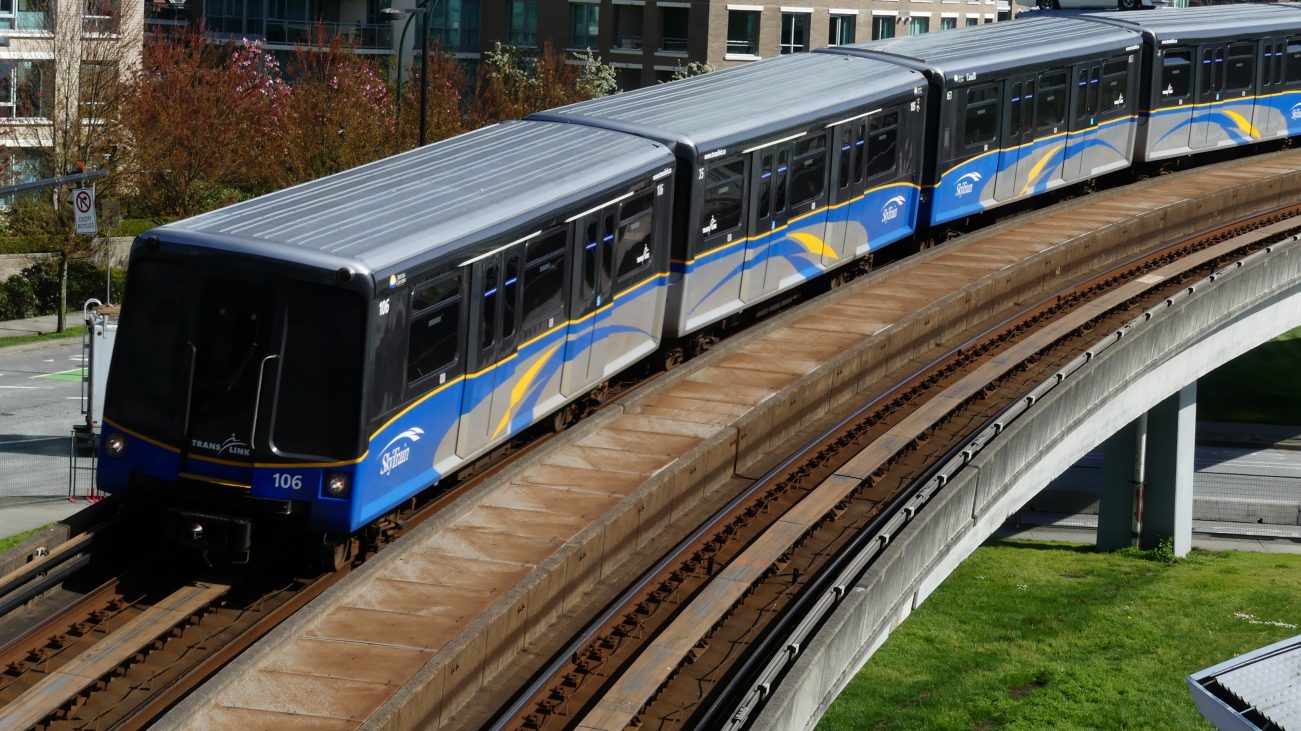
The SkyTrain Light-Metro, annual subsidy is near $400 million and a huge financial burden on TransLink.
The following is from the Toronto Star.
Losing millions with no relief in sight, Vancouver leads Canadian transit agencies in announcing ‘profound’ service cut plans
By Alex McKeenVancouver Bureau Tues., April 14, 2020
VANCOUVER—The next consequence of the COVID-19 pandemic in Canada could be “profound” cuts to the transit systems that some critical workers use to commute — changes that may persist even after social-distancing restrictions are lifted.
Transit agencies across the country, already scaling back services as people stay home and ridership declines as much as 80 per cent, are facing the “dilemma” of either cutting essential services or risking their ability to keep operating as the coronavirus pandemic wears on for an unknown length of time.
Metro Vancouver’s regional transit authority this week announced it’s in the process of making cuts amid the crisis — a move other transit authorities will likely have to follow unless the government provides a cash bailout.
In an interview with the Star, TransLink CEO Kevin Desmond revealed the organization is losing $2.5 million a day operating on a reduced schedule that adheres to social-distancing rules — and it hasn’t gotten any help from the government. Some 75,000 people are still using the service daily, according to the agency.
“It’s been an enormously difficult situation for us,” Desmond said. “The balancing act we’ve had was: How do we recreate a mass transit system under very firm public health guidance for social distancing?”
The combination of depleted fare revenues, the need to continue operating largely empty routes to transport essential workers, and no secured relief funding from government has TransLink starting to negotiate significant service reductions with its trade unions. It went into those talks Monday, and expects to be negotiating for the next month before widespread service reductions are implemented.
As of Monday, the transit agency had already reduced bus trips by 15-20 per cent, and taken trains and SeaBus vessels out of service to save on costs.
“We actually have to formally schedule out significant service reductions,” Desmond said. “That takes time to work out with our labour unions and the time it takes to put in place a brand-new schedule.”
All transit authorities are facing similar financial hardships during the COVID-19 crisis. The TTC said at the end of March that it was losing $18 million each week, and both the TTC and Metrolinx have reduced traffic on their regular routes.
The Canadian Urban Transit Association (CUTA), the advocacy group representing all major public transport providers in the country, this week made calls for the federal government to provide $400 million per month in relief funding, and $1.2 billion in bridge funding for member organizations — a figure it says is in line with the U.S.’s $25-billion relief package for transit agencies.
“Until ridership is coming back, we need urgent federal government support to make transit systems whole,” said Marco D’Angelo, president of CUTA. “There’s an interim gap that’s there that a municipal government or a transit agency can’t take on its own.”
Part of the reason transit agencies haven’t already received aid is because, as a part of the public sector, they don’t qualify for the federal government’s 75 per cent wage subsidy, passed in legislation last weekend.
Desmond and other members of CUTA had been actively lobbying the government to change the legislation to make transit agencies eligible, since they’re so reliant on fares to operate. But Desmond was told Friday it wasn’t going to happen.
Now he estimates TransLink needs as much as $250 million for the year 2020 to save the agency from having to cut service so much that riders would be at risk of crowding or being passed over.
As a member of CUTA, Desmond hopes the federal government will heed the call for relief funding, and said he’s also asking federal and provincial funders to be “flexible” with allowing money earmarked for capital projects such as the Broadway subway in Vancouver to temporarily go toward operating expenses.
But he said it’s too soon to say major projects such as the Broadway Subway should be cancelled outright.
“It’s needed now and it’s going to be needed five years from now and 10 years from now,” he said. “We don’t want to make mistakes and start undermining the future prosperity of the region.”
D’Angelo said big infrastructure projects such as Broadway and the Scarborough subway in Toronto could play an important role in Canada’s economic recovery from COVID-19, with the construction jobs required acting as useful stimulus.
But that could be a way off. In the worst-case scenario TransLink modelled, it wouldn’t be out of the red until late 2021. And there’s still the question of restoring public trust in a system that requires people to be packed close together on trains and buses.
“If that is no longer viewed as socially acceptable, then cities are going to have a big problem,” he said. “How do we rebuild the confidence of the public to ride public transit? I don’t know.”
Patrick Condon, an urban design expert at the University of British Columbia, said the pandemic could have wide-ranging impacts on demand for public transit well into the future.
“There’s a new propensity for people to be working from home,” he said. “I suspect that’s a situation that’s going to persist which is probably going to reduce the demands for transportation of all time.”
That, combined with the financial pressures, could send TransLink and other agencies back to the drawing board on its medium- and long-term goals, Condon said.
The one big problem is that the SkyTrain light metro network needs about the same compliment of workers whether it operates at peak capacity or at a much reduced capacity.
Unlike buses, where service can be reduced, with drivers laid off, the light-metro system needs a full workforce to keep it in operation.
Thus the SkyTrain light-metro’s already costly operation and maintenance schedule does not reduce with reduced service as preventative maintenance must be carried on to ensure smooth driverless operation; stations must be policed for passenger safety; and the same number of control staff is needed for operation.
Just another reason why light metro has seen better times and is considered obsolete by today’s knowledgeable planners.
Time for a rethink on how Translink provides transit.
TransLink losing $75-million a month amid COVID-19 pandemic
VANCOUVER (NEWS 1130) — NEWS 1130 has learned the transportation authority is taking a financial hit to the tune of $75-million monthly amid the slowdown in movement due to COVID-19.
Further details are expected to be shared by the Chair of the TransLink Mayors’ Council Tuesday.
As Covid-19 wrecks havoc with BC’s economy, it is time to rethink the provincial policy of building more light-metro, highways and bridges and instead concentrate on “rail” transport. The Provincial Ministry of Transportation should refrain from building mega projects like subways and massive 10 lane bridges and concentrate on providing proven modes of alternative transportation.
This not to say that the Patullo Bridge should not be replaced, but a government that thinks into the future would have offered a combined road/rail bridge replacing two very dated bridges, the Patullo and the Fraser River Rail Bridge.
The 1970's GVRD plan for a road/rail bridge replacing the aged Patullo and downright decrepit Fraser River Rail Bridge, shows far more forward thinking when compared to the MoT and TransLink today.
Both the NDP and the BC Liberals have discounted rail transit and concentrated on “rubber on asphalt” solutions, simply because “rubber on asphalt” tends to win voted from the motoring crowd.
In the frugal post Covid-19 world, politically prestigious mega bridges and multi lane highways will cease becoming vote getters, rather they will shackle political parties to defeat, as the tax exhausted taxpayer will demand major economies!
Despite the hype and hoopla from the usual suspects, the roads, cycle and bus lobby’s; it is rail that has any hope of achieving the modal shift in reducing autos on the roads and highways.
Trying to drag TransLink and the Mayor’s Council on Transit into the 21st century is near impossible as they stick like glue to 1970”s style of very expensive light-metro. Sadly the world has moved on as light-metro was made obsolete by LRT since the early 80’s simply because it cost more to build, operate and maintain, and lacked operational flexibility! Today there is a very thin line defining light rail and light-metro and is based on the quality of rights-of-ways (grade separated or not) and not the vehicle.
Universality and flexibility is the keyword for 21st century “rail” transit.
Modern light-metro lines like Ottawa and Seattle, use light rail vehicles due to there cost effectiveness and the ability to operate on lesser rights-of-ways at the the outer ends of the the line. This is called “flexibility”, a trait metro Vancouver’s MALM light-metro lacks.
Ottawa's LRT is really a light metro line, complete with automatic train control, that uses light rail vehicles.
There is one transit mode that is ignored in Canada, despite over 30 years of development and that is TramTrain.
A tram-train is a light-rail public transport system where trams run through from an urban tramway network to main-line railway lines which are shared with conventional trains. This combines the tram’s flexibility and accessibility with a train’s greater speed, and bridges the distance between main railway stations and a city centre.
One can board a modern TramTrain, on-street, in a city or town centre and travel far into the suburbs or nearby towns with the TramTrain operating as a streetcar, light rail and commuter train, all in one journey!
Three potential TramTrain projects come to mind in British Columbia:
The reinstatement of a Vancouver to Chilliwack passenger service using the former BC Electric route.
Reestablishing passenger service on the E&N from Victoria to Port Alberni and Courtney.
The Okanagan rail connector, linking Salmon Arm to Kelowna via Vernon.
With costs as low as $6 million/km to install, TramTrain is a proven economic mode that has had stunning results. The first TramTrain to operate in Karlsruhe Germany saw a stunning 479% increase in ridership over 6 months.
Karlsruhe, Germany saw a stunning 479% increase in ridership, over 6 months, on their first TramTrain line!
TramTrain is now used on over 30 lines around the worlds, with at least 30 more being actively planned for. Not bad, especially compared to the SkyTrain light-metro, where only 7 such systems have been build in the past 40 years and no one is asking for it or planning for it anymore – except Vancouver!
A TramTrain in the European countryside.
TramTrain can help solve our endemic traffic issues in metro Vancouver, Vancouver Island and the Okanagan.
TramTrains come in various sizes from small articulated diesel powered vehicles for light service…..
……..to large articulated vehicles electrically powered to cope with ridership demands in urban areas.
Currently TransLink is spending $4.6 billion to extend the Movia Automatic Light metro Lines (Expo and Millennium Lines) 12.8 km. One extension includes a 5.8 km subway under Broadway. Both extensions will not attract new ridership because they do not solve any transit choke point issues, rather they just moved the choke points to anew location.
The cost to the taxpayer over 50 years, just for the 12.8 km extension will be in excess of $10 billion!
Can the region afford this prestige project in light of the Covid-19 pandemic fiasco?
A better option would be to invest the $4.6 billion on the Fraser Valley, Vancouver Island and Okanagan TramTrain lines, bringing 21st century public transport to the entire province, instead of metro Vancouver and its very spoiled politicians.
It is time for the provincial government to rethink regional transportation planning and rise from the petty rubber on asphalt politics that have driven political policies in the past and plan for an affordable future for regional transportation.
It is time, during this pandemic crisis and the billions of dollars being spent for the security of Canada and Canadians, it is time TransLink and the Mayor’s Council on Transit rethink their stand on light rail.
It is time that TransLink and the Mayor’s Council on Transit show fiscal responsibility for public transit and refrain from burdening the taxpayer with huge future costs, for political prestige today with the SkyTrain extension.
TransLink and the Mayor’s Council on Transit must accept the fact that there will be no funding, for decades, after they complete the current $4.6 billion, 12.8 km SkyTrain light-metro extensions to Arbutus and Fleetwood. Any thought of an additional estimated $7 billion to complete the SkyTrain light metro system to UBC and Langley, boarders on the delusional.
TransLink and the Mayor’s Council on Transit must be honest with the public with the public that building light-metro was more for political prestige than providing good and affordable public transport. Metro Vancouver is now the only city in the world, pursuing a strictly light-metro transit policy, largely using the proprietary and now called Movia Automatic Light Metro.
It seems the only reason MALM has been built abroad is by generous payment of “success fees” or close relations of, to local lobbyists, who in-turn feed politicians with pro SkyTrain bumf.
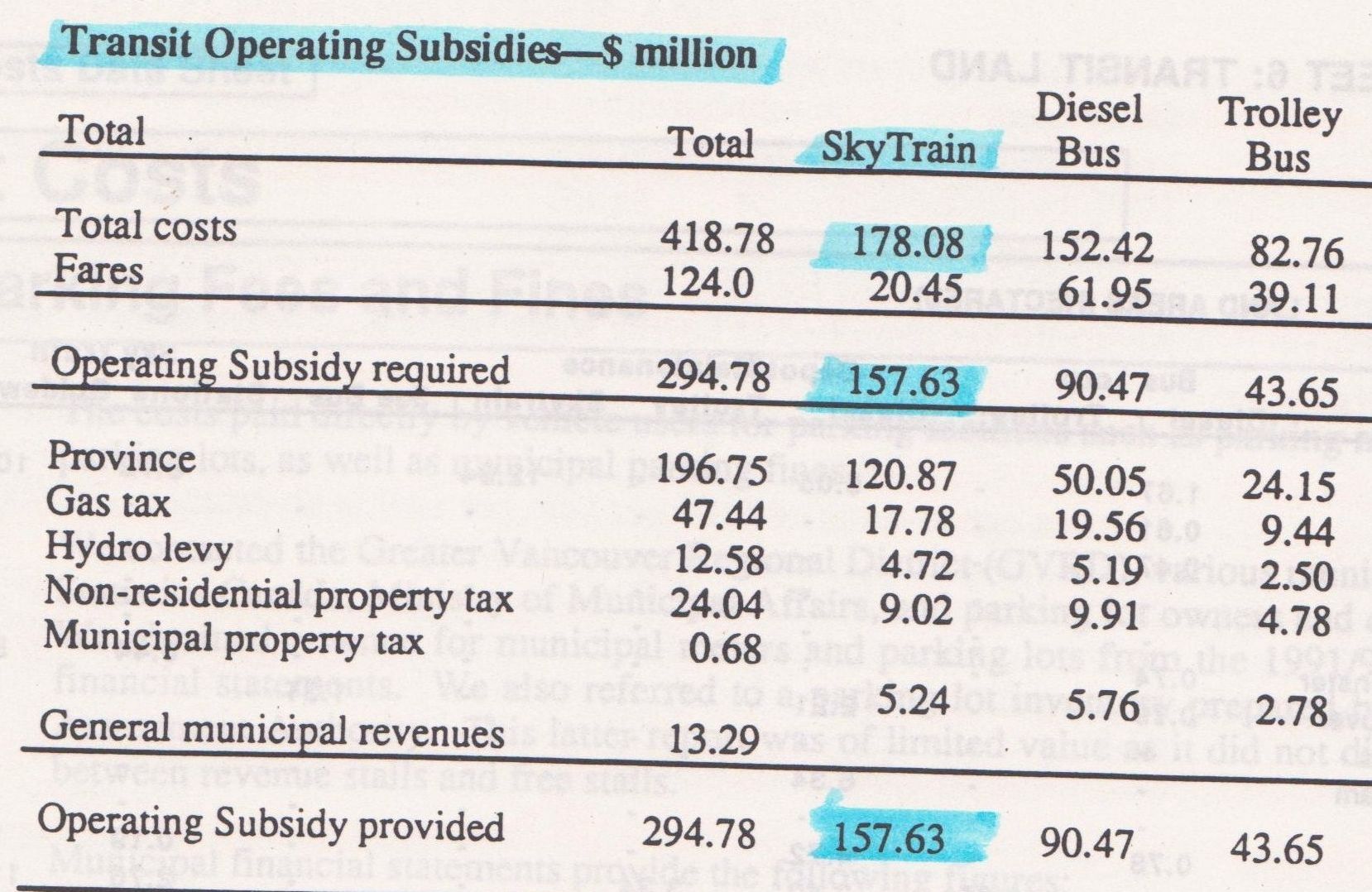
The then GVRD knew by 1992, that SkyTrain was hugely expensive and required vast sums of tax monies in the form of subsidies to keep it operational, yet this has fallen on deaf ears.
From the GVRD’s 1993 Study – The cost of Transporting People….
BC universities have created doctrines, insidious Lysenkoism, to keep building with “rapid transit” or “SkyTrain”, yet do not offer courses in defining transit or what transit mode is.
Definition of Lysenkoism: metaphorically describes the manipulation or distortion of the scientific process as a way to reach a predetermined conclusion as dictated by an ideological bias, often related to social or political objectives.
Yet despite this vast wave of pro SkyTrain propaganda, only seven such systems have been built over the past 40 years and not one new build system sold in the past 15 years; what do transit planners elsewhere know that our planners don’t?
Or is it that our planners have been c0-opted by those lobbyists and politicians who have been “bought”, so to speak?
Covid-19 must bring this charade of planning to a stop, as the taxpayer cannot afford this magical mystery tour of building SkyTrain for the benefit land speculators and land developers at great taxpayer’s expense. The approved $4.6 billion, 12.8 km SkyTrain light metro extensions will not take a car off the road.
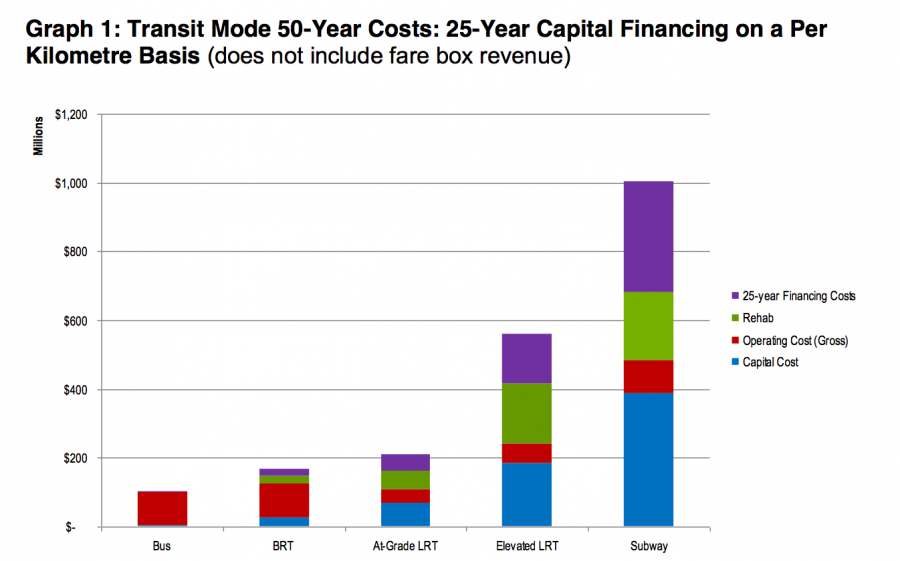
The new reality is not the actual cost of a transportation project, but the total costs over a 50 year period including debt servi9cng, long term maintenance and rehab.
From MetroLinx in Ontario
Thus the overall cost of at-grade LRT, after 50 years is $200 million/km, slightly more than Bus Rapid Transit, while in comparison, the cost for grade separated SkyTrain light-metro is around $600 million per km and a subway a massive $1 billion/km!
Building SkyTrain will cost taxpayers $400 to $800 a kilometre more than LRT over a 50 year period!
With the Covid-19 pandemic, it will be extremely difficult, if not impossible to maintain the current light metro system and its extensions. This means Metro Vancouver’s light metro system will slowly become more and more unreliable due to lack of money for essential maintenance.
TransLink’s CEO must know this; the TransLink Board should know this; and regional mayors better know this because the taxpayer will be in little mood to extend the light metro system or improve transit and instead, find it easier to replace politicans.
There is an answer, but politicians and bureaucrats, with decades of peddling anti LRT rhetoric are loath to do and that is to be honest with the taxpayers and transit users that our SkyTrain light-metro system is an aberration, continued by political intrigue and bureaucratic ineptitude.
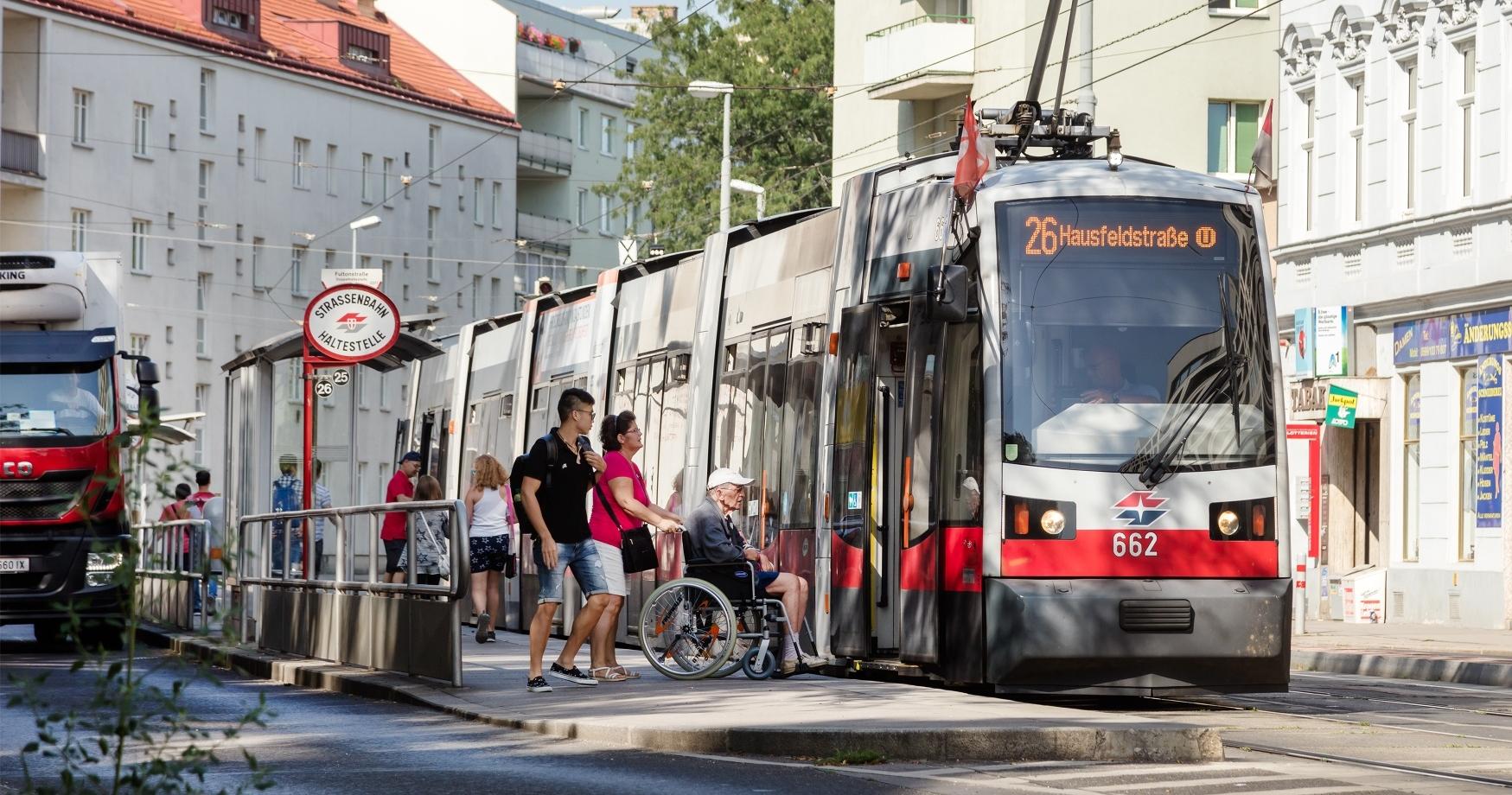
There is a solution that is used around the world in almost 600 cities and that is light rail.
The question for metro Vancouver is: Do our politicians have the moral fortitude to admit that building light metro has been a mistake and abandon all planning for SkyTrain and instead plan for LRT?
As reported, the ongoing Covid-19 epidemic has greatly reduced transit ridership.
A 52% drop in boarding’s from March 19, 2019 to March 19, 2020 is greatly affecting TransLink’s bottom line. With over 80% of SkyTrain’s ridership first take a bus, the collapse of ridership must be dealing a vast economic blow to TransLink!
The SkyTrain light metro network, because it is driverless, is expensive to operate as the system needs the same amount of employees whether operating at capacity or at minimal service. LRT is different, as it does not need the large technical staff that the automatic light-metro needs, to keep operating. That’s why LRT operating in major cities can offer all night service on select routes, where demand warrants.
Subways are especially expensive to operate and maintain and they spread disease rapidly because of the piston like action in subway tunnel;s caused by trains pulsing air up and down the line.
Something to think about in the post pandemic world.
Currently, there is $4.6 billion in public spending approved for building a mere 12.8 km of SkyTrain light-metro, including the 5.8 km Broadway subway.
For the same about of money we could build a BCIT to UBC/Stanley park LRT (European tramway style) for under $1.5 billion; an hourly downtown Vancouver to Chilliwack light DMU/TramTrain service for under $1 billion; Rehab the E&N From Victoria to Port Alberni and Courtney using light DMU/TramTrain for under $1 billion and still leave $1 billion and change for improving public transport elsewhere around the province.
With tens of billions of dollars being spent supporting the social fabric furring the current crisis, there will be little or no money for transit projects for the foreseeable future and it is time for all levels of government to rethink transit planning and invest in good transit instead of hugely expensive politically prestigious light metro and subways so favoured as “vote getters” at election time.
Time to think out of the box!
LRT will make a far better investment for regional transit for the future.
A significant drop in ridership caused by the COVID-19 pandemic has led TransLink to reduce its bus, SeaBus and SkyTrain service.
SeaBus, which has been running between downtown and North Vancouver every 10 minutes during weekday rush hours, will now run every 15 minutes.
Meanwhile, certain bus routes which have excess capacity, including those with empty buses, will see frequencies reduced.
Expo and Millennium Lines will also see slight frequency reductions, with first and last train schedules remaining in place.
“Passenger levels will be carefully monitored in order to balance lower ridership with the need to maintain social distancing,” TransLinks said.
The transit authority advises customers to check its online Trip Planner or Transit Alerts before travelling to ensure their route is not impacted by service reductions.
On Thursday, March 12, the boardings were down seven per cent from Thursday, March 14, 2019, but on Tuesday, boardings were down 52 per cent compared to Tuesday, March 19, 2019.
What the following article is talking about is not light rail, rather a tramway or streetcar. Light rail is a streetcar operating on a reserved or dedicated rights-of-way and by doing so, offers a service superior to that of a light metro and close to that of a heavy-rail metro.
Building a tramway is far cheaper than building a light-metro on a grade separated rights-of-way; up to ten times cheaper!
Thus for the cost of 1 km of our elevated SkyTrain light-metro, we can build up to twenty km of a tramway.
Capacity for both modes are about the same and commercial speed is conditional on the amount of stations or stops and priority signalling.
And if capacity needs to increase, the tramway can be upgraded to light rail by converting the route to a reserved or dedicated R-o-W standard.
Also, capacity can be increased by building new tramways! For one km of the SkyTrain Broadway subway, we could build three 20 km tramways, with a combined capacity at least three times higher than the Broadway SkyTrain subway!
Time to a rethink on transit, isn’t that so TransLink and the Mayor’s council on Transit?
For growing cities in search of a clean, comfortable long-term solution to mobility problems, the tramway is part of the natural solutions. Alstom is an ideal partner capable of providing them within a fully operational turnkey system: Attractis. Our expertise in all areas of tramway technology combines to deliver an efficient, cost-effective and attractive transport solution that reshapes cities and enchants their inhabitants.
Fast implementation, reduced costs
A turnkey Attractis solution offers shorter lead times throughout the project compared to lot-by-lot delivery. Not only does the client only have one tender to manage instead of several, but our integrated system approach means optimized interfaces and smoother coordination. Building work is phased to keep disruption to a minimum for city centre and businesses, while tram drivers can be initially trained on 3D simulators and require less time in the cab before operations start-up. The overall result is that an average 10-km line can take as little as 30 months to build and commission!
At Alstom we additionally design tramways in a perspective of optimized total cost of ownership. Investment costs are 20% lower than a typical lot-by-lot line of similar capacity, and our system maintenance costs are among the lowest on the market.
Accompanying cities as they grow
Our tram systems are easily expandable as demand for city centre transport grows. Our Citadis trams can be extended by adding modules in the depot without any further modification to infrastructure, as successfully achieved in cities such as Bordeaux, Nice and Dublin. Trams can also run in double formation for maximum capacity, without the need to recruit extra drivers. Our fluid-boarding trams keep dwell time to a minimum thanks to their wide doors, and our operating system offers headway’s down to three minutes. The capacity of a tram system can therefore vary from under 4,000 pphpd to 14,000.
Interoperability and flexibility
Alstom has also adopted ITxPT (Information Technology for Public Transport) “open architecture” standard in IT systems, which facilitates the provision of improved services in areas such as automatic fare collection, passenger information and multi-modal connections.
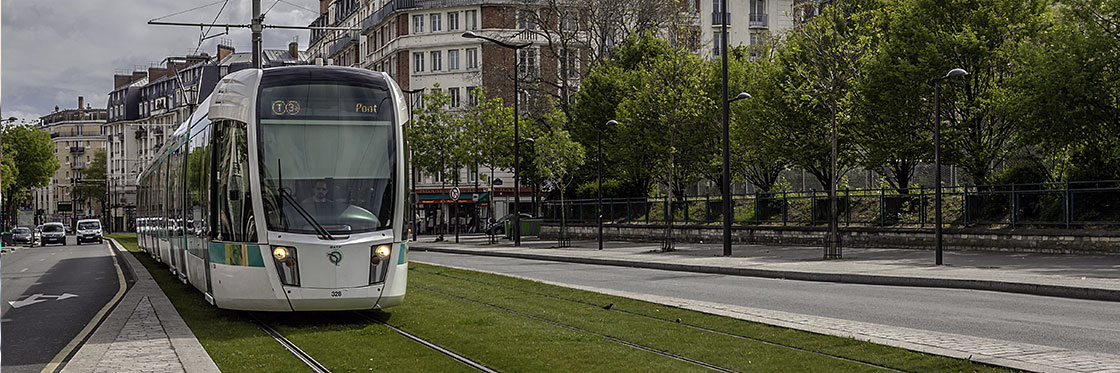
Upgraded tramway operating as LRT on a reserved rights-of-way.
More interesting insight on how Bombardier does business selling it proprietary rapid transit system abroad and please remember both BC Transit and TransLink were in partnership with bombardier to sell the now called Movia Automatic Light Metro Abroad!
The Kelana Jaya line operates with the now called Movia Automatic Light metro system is is one of the three rapid transit lines operating in Kuala Lumpur. The other two rapid transit lines are a conventional light metro system and a monorail.
The whistle-blower said he worked on the Kelana Jaya bid and knows firsthand that a “success fee” was paid on that contract, too.
We see again, Bombardier’s murky business dealings are involved with another MALM light metro system.
Tan Sri Datuk, Mohamed Khatib Abdul Hamid, who earned the title as a long-time senior Malaysian diplomat and adviser to Prime Minister Najib Razak.
Former Prime Minister Najib Razak is involved in a massive multi billion dollar scandal, which includes Bombardier and SNC Lavalin.
Again, where SkyTrain is built, scandal follows. With such a pedigree, one would think the RCMP would be investigating the province’s and metro Vancouver’s continued building with a obsolete proprietary light metro system, which only seven have been built in the past 40 years and only three seriously used for urban transport.
Like the Casino scandal, local politicians remain largely blind, deaf and dumb.
Since the late 1990s, the Bombardier brand has been ubiquitous in Kuala Lumpur, the Malaysian capital. But there has been no local investigation of how the company won its lucrative Malaysian contracts.
Kuala Lumpur, Malaysia
The whistle-blower who spoke to The Globe says that he never heard the name Youssef Zarrouk while he was working for Bombardier. He says he never knew who received the success fees that he was told had to be fit within the overall cost of the bid.
He certainly doesn’t know who Mr. Zarrouk’s equivalent in Asia might be, although he does remember a colleague being told in the early 2000s that they had to fly to Taiwan to hand-deliver an envelope to someone there. The colleague described the recipient as someone who was “extremely wealthy, and obviously moved in influential circles.”
Shortly after that trip, Bombardier landed both the EverLine deal in South Korea and a 2006 deal to deliver new rail cars for the Kelana Jaya light-rail line in Malaysia’s bustling capital, Kuala Lumpur. The whistle-blower said he worked on the Kelana Jaya bid and knows firsthand that a “success fee” was paid on that contract, too.
The Bombardier logo is almost everywhere you look in Malaysia’s transportation sector. The train connecting the main terminals of Kuala Lumpur International Airport is branded “Made by Bombardier” in large black letters. The driverless light-rail cars that run along the capital city’s Kelana Jaya line are produced by Bombardier and its local partner, a company called Hartasuma. Kuala Lumpur’s second airport, SkyPark Subang, is the regional hub for the Switzerland-based VistaJet and its fleet of Bombardier-made private jets.
Bombardier signs on the shuttle train between terminals at Kuala Lumpur International Airport. MARK MacKINNON/THE GLOBE AND MAIL
Bombardier’s long track record of winning deals in Malaysia dates back to when the company won the bidding to build a light-rail line in Kuala Lumpur ahead of the 1998 Commonwealth Games. The relationship continued through March of this year, when the company won a contract to deliver 27 new rail cars to the same LRT system.
The winning streak included the 2006 deal that saw Bombardier, in consortium with Hartasuma, awarded a $320-million deal to deliver another 140 rail cars for the Kelana Jaya line.
In contrast with South Africa and South Korea, there has been no local investigation into how Bombardier won its contracts in Malaysia, although there was a brief public uproar around a 2011 contract that the government reportedly considered awarding to Bombardier over the advice of its own experts.
The key to Bombardier’s success in Malaysia, local analysts say, is its partnership with Hartasuma and the company’s politically connected executive director, Tan Sri Datuk Ravindran Menon, a leading figure in the Malaysia’s ethnic Indian community. (The title “Tan Sri Datuk” is the Malaysian equivalent of a lordship or knighthood.) Mr. Menon is also the founder and executive director of the SkyPark Group, the company that manages the SkyPark Subang terminal.
Hartasuma is itself part of a conglomerate called the ARA Group, which counts among its board members another Tan Sri Datuk, Mohamed Khatib Abdul Hamid, who earned the title as a long-time senior Malaysian diplomat and adviser to Prime Minister Najib Razak.
While there was no information available on Malaysia’s company register about the ownership of ARA Group, it is frequently linked to Khairy Jamaluddin, a cabinet minister who is also the son-in-law of Abdullah Badawi, Mr. Najib’s predecessor as prime minister and finance minister.
Mr. Marcil, the vice-president at Bombardier, said that the company partnered with Hartasuma in order to fulfill local content quotas, as required under Malaysian law. “Bombardier Transportation’s bids and contracts are entered into only after a thorough and rigorous review process that includes an examination of our local partners,” he said, directing all further questions to Hartasuma.
“It’s very clear that Ravindran Menon is not your regular Joe Businessman,” said Rafizi Ramli, a prominent Opposition politician. “It’s very obvious that he’s connected to Abdullah Badawi’s clan.” Mr. Rafizi said that at the time the Kelana Jaya contract was awarded to Bombardier and Hartasuma in 2006, Mr. Khairy was the second-most powerful man in the country after his father-in-law.
Mr. Rafizi said he believed it would be impossible for a foreign company to win a large infrastructure contract in Malaysia without paying into the country’s system of corruption and patronage. To support his argument, he pointed to the scandal surrounding the massive 1Malaysia Development Berhad fund. According to the U.S. Department of Justice, the fund has seen hundreds of millions of dollars that were marked for development projects redirected into the personal accounts of top Malaysian government officials.
The man who formally awarded the 2006 Kelana Jaya contract to Bombardier and Hartasuma was Shaipudin Shah Harun, a civil servant who headed Prasarana, the government body – under the Ministry of Finance – that manages the country’s transportation assets. Mr. Shaipudin, who resigned from the job two years after the Kelana Jaya contract was awarded, told The Globe the bidding process was fair and that Bombardier and Hartasuma won the deal because “they met all the criteria.”
He said he didn’t know of any success fee or commission payment on the deal, but added that even he wasn’t privy to the entire selection process. “We tried to make it as transparent as possible,” he said, when reached on his mobile phone. “But whatever goes on behind the scenes, we’re not party to it and would not be aware.”
Mr. Shaipudin said he didn’t know how Bombardier ended up in partnership with Hartasuma. “I don’t think it’s wise for me to comment on that.”
The Bombardier-Hartasuma relationship is consummated at a factory in an industrial park on Pulau Indah, a small island off of Malaysia’s west coast. Near-complete Bombardier trains arrive by sea, and Hartasuma employees – the majority of whom appear to be migrant workers from Bangladesh – install plastic seats and other finishing touches before the trains are put into service.
A security guard at the facility said that Mr. Menon and the other directors are rarely seen at the factory. But The Globe encountered two Hartasuma executives when a reporter visited Bombardier’s local headquarters on the 25th floor of an office tower in central Kuala Lumpur.
They deflected questions about how and why the Bombardier-Hartasuma consortium had been so successful in procuring infrastructure contracts. “Why in Canada would they care about how a contract is awarded in Malaysia?” said Jayasri Menon, whose LinkedIn profile identifies her as a management consultant at Hartasuma. She added that only Mr. Menon could answer The Globe’s questions.
Mr. Menon did not reply to e-mailed questions, however.
“You are touching a very sensitive topic,” Ms. Menon said. “You are touching a very sensitive line.”
Except for brief mentions of our local SkyTrain Lobby, we do not hear about the now called Movia Automatic Light metro system in Youngin and for very good reason, as it has mired Bombardier into a massive local scandal.
The local prosecution office is more blunt: EverLine, a lead prosecutor says, was built after Bombardier engaged in corrupt practices to win the 2004 contract for its construction.
The evidence his office gathered showed that Bombardier supplied its South Korean representative, Henry Kim, with lobbying fees totalling $1.8-million over a five-year period. Bombardier sent gifts to the homes of local politicians, as well as to researchers tasked with creating the ridership forecasts that would underpin construction of the new light-rail line, the prosecutors found. Mr. Kim received a further $4.7-million in advanced payment incentives that were deposited into a Swiss bank, under the name of Mr. Kim’s wife, Mr. Cha said.
One wonders what gifts and lobbying fees were given or paid locally to in Metro Vancouver to continue planning for the now obsolete MALM system?
Why do local politicians still strongly support building with it, when expert opinion, in Canada and abroad, has deemed our SkyTrain light-metro system obsolete?
Why do local politicians never explain that only seven such systems have been built in the previous 40 years and only three are seriously used for urban transport?
why do local politicians sidestep any question about the light metro system with inaccurate or misleading statements?
In Canada, politicians and police don’t care to know!
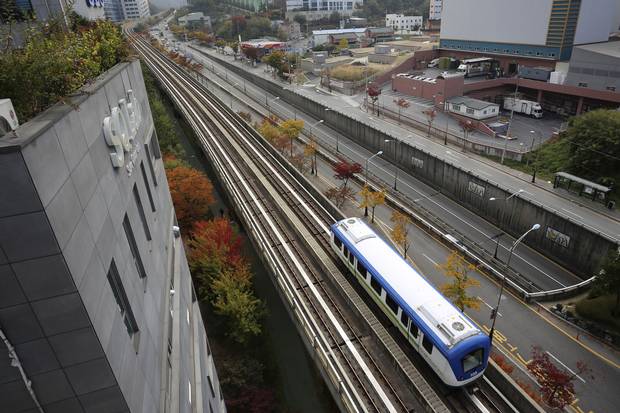
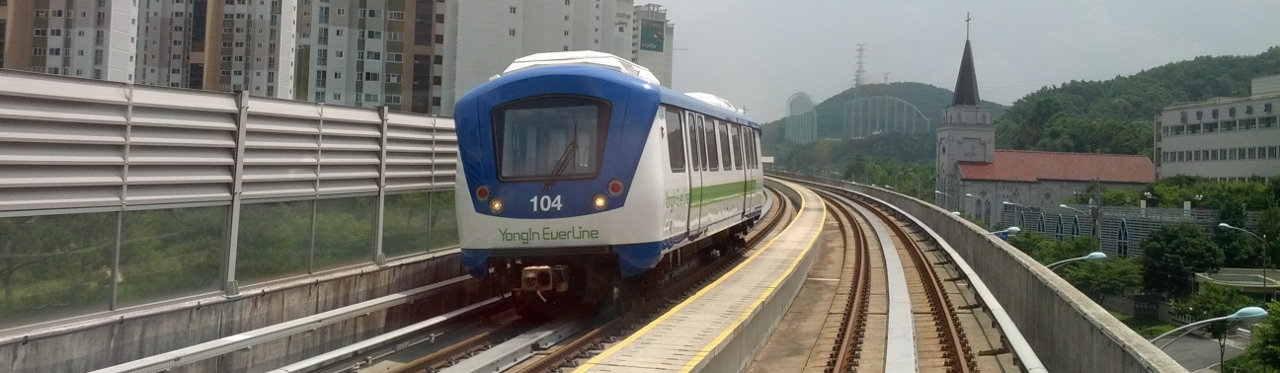
The Bombardier-built EverLine, which runs along an 18-kilometre track in Yongin, South Korea, was sold to local leaders as a vision of the future, but is now derided by locals as a bus on rails.NATHAN VANDERKLIPPE/THE GLOBE AND MAIL
Every few minutes, a single car passes by Chodang station, one of the stops on 18 kilometres of elevated track that wind through Yongin, a small city 40 kilometres south of Seoul. When the EverLine was sold to local leaders, it was a vision of the future – driverless cars that would swiftly transport tens of thousands of passengers a day.
Today, locals mockingly call it a bus on rails, slower on some routes than taking an actual bus, and, for the city that built it, far more expensive. The local prosecution office is more blunt: EverLine, a lead prosecutor says, was built after Bombardier engaged in corrupt practices to win the 2004 contract for its construction.
The project’s one-trillion-Korean-won price tag, equivalent to $940-million in today’s dollars, was based on initial expectations that some 160,000 people would ride the EverLine every day. But even three years after operations began in 2013 – a start date delayed by legal wrangling between Yongin and the Bombardier-led consortium that built the line – actual ridership was less than a fifth of that figure. The resulting financial shortfalls have saddled Yongin with so much debt that the municipal government was forced into austerity measures around the time the line entered service.
The problems have brought intense scrutiny to how a consortium led by Bombardier won the right to build the project. A special investigation by Yongin prosecutors concluded that the company operated a slush fund and bribed researchers and decision-makers with gifts and trips. For half a year, a team of six South Korean prosecutors, 14 investigators and two certified public accountants worked together. They examined the records of 52 fixed phones, analyzed 115 cellphones and computers, scoured 725 bank accounts and accumulated 285 boxes of documents. “We were aiming to hold people responsible for this wrongful private-sector investment project,” prosecutor Cha Maeng-ki told The Globe.
In Yongin, lawyer Hyun Geun-taek is surrounded by more than
10,000 pages of paper, the accumulated record of legal challenges
to the Bombardier-backed Everline.
NATHAN VANDERKLIPPE/THE GLOBE AND MAIL
The evidence his office gathered showed that Bombardier supplied its South Korean representative, Henry Kim, with lobbying fees totalling $1.8-million over a five-year period. Bombardier sent gifts to the homes of local politicians, as well as to researchers tasked with creating the ridership forecasts that would underpin construction of the new light-rail line, the prosecutors found. Mr. Kim received a further $4.7-million in advanced payment incentives that were deposited into a Swiss bank, under the name of Mr. Kim’s wife, Mr. Cha said. Some of that money, Mr. Cha said, was used to buy real estate in South Korea.
The company also flew 37 people, including 18 city councillors, to Canada, where it “paid their full expenses, put them up in luxury hotels, and provided them with golfing trips, a trip to Niagara Falls and other luxuries,” he said. “These trips took place at the time during which Yongin city and Bombardier were going through negotiations for their business conditions.”
Mr. Cha said, “Providing gifts or funding trips to civil servants in the line of duty constitutes bribery.”
The results of Mr. Cha’s investigation were made public in 2012 and, in the years that followed, local courts found Lee Jeong-moon, the former mayor of Yongin, guilty of corruption on charges related to the EverLine construction. He was sentenced to prison for bribery related to the selection of subcontractors, including his younger brother and friends, for the rail-construction project.
Mr. Kim was found guilty of embezzling funds from the Bombardier-led consortium, where he had served as CEO. But the Bombardier representative did not face trial on charges of corrupting officials nor was the company itself charged with wrongdoing. By the time prosecutors began digging into the company’s South Korean project, it was too late for charges. “The statute of limitations at the time was five years,” Mr. Cha explained.
Canada’s toughened anti-corruption law contains no such statute of limitations.
(Mr. Kim’s phone number in South Korea has been disconnected, and The Globe was unable to reach him for comment.)
Bombardier’s Mr. Marcil, however, contested Mr. Cha’s interpretation of events. “We reject the insinuation that we, in any way, acted wrongfully in the Yongin project, or that we unduly influenced either the choice of technology or the decision to build the transit system,” Mr. Marcil said. “After our full cooperation in their investigation, South Korean investigators determined that there was no cause for charges against Bombardier.”
Mr. Lee, the former mayor sentenced to jail on corruption charges, also defends the EverLine – and the company that built it. He is “completely in favour of them,” he said in an interview. “Bombardier didn’t hurt Yongin City the tiniest bit. Not one bit.”
Bombardier had been given preferential status in bidding for the Yongin project, and was the sole company to submit a bid, according to a local lawmaker.
But the company has since gained many detractors in a city where the EverLine has grown into a symbol of extravagance and waste. The lower-than-forecast number of riders has meant less revenue than initially expected and has sparked a dizzying number of efforts to assign blame. Prosecutors charged 10 people, accusing them of bribery and violating construction safety laws. A citizens group has sued Yongin for damage compensation.
The city and the Bombardier-backed consortium faced off twice before the International Court of Arbitration, or ICA, after Yongin accused the consortium of safety flaws and noise issues. The consortium then sued over delays in opening the line, and won. In two judgments, the ICA awarded the consortium a total of 778.6 billion Korean won, an amount roughly 22-per-cent greater than the consortium’s share of construction costs. Because the city could not afford to pay the entire sum at once, it agreed to continue payments until 2043. After a contractual change, Bombardier no longer operates the rail project that it helped bring to Yongin, where the project continues to raise local passions.
Lee Sang-cheol, one of the 18 councillors who travelled to Canada with Bombardier, acknowledged that the company gave him gifts, although he down-played them as “nothing out of the ordinary.” He also defended the trip he took to Canada on Bombardier’s dime. “If they want to sell us machines, they have to show us those things,” he said. And he added that “stopping by some tourist attractions shouldn’t be such a big deal. How can we just see light rail and nothing else?”
Still, he has come to regret the company’s involvement. “Bombardier made zero losses in this transaction. Bombardier lost absolutely nothing. It took everything it wanted to take,” he said. And he resents the financial duress that the EverLine project inflicted on his city. “Honestly, what Bombardier did, it caused massive harm to Yongin city.”
I think the senior management at TransLink are worried, very worried.
Bombardier is in serious finical trouble and is wanting to sell its rail division.
With Covid-19, all deals are off, as transportation conglomerates cut operations to suit their immediate financial needs.
Bombardier has now ceased all production and it is doubtful that Bombardier continue producing transit designed for niche markets, such a Movia Automatic Light Metro.
The immediate effects are that delivery dates for new MK III cars will be pushed back and spare parts will become even more scarce.
If the covid-19 scare lasts several months, the SkyTrain lobby had better be prepared for some sobering news as other transit companies may not want to produce vehicles and parts for a niche railway system that no one wants.
Ever try sourcing spare parts for an Edsel today?
Bombardier temporarily ceases work at its Canadian facilities
*
Posted on March 24, 2020
*
Employees impacted by these temporary shutdowns will be placed on furlough, as will corporate office employees whose support functions are
less critical in the short-term. Bombardier Bombardier announced that in support of the recent mandates from the Governments of Quebec and Ontario to help slow the spread of the COVID-19 pandemic, it will suspend all non-essential work at most of its Canadian-based operations starting this evening at 11:59 pm until April 26, 2020, inclusively. The suspension includes Bombardier’s aircraft and rail production activities in the provinces of Quebec and Ontario.
*
Employees impacted by these temporary shutdowns will be placed on furlough, as will corporate office employees whose support functions are
less critical in the short-term. During this furlough period, Bombardier’s CEO and senior leadership team will forgo their pay, and the chairman and members of the board have agreed to forgo board compensation for the remainder of 2020.
*
Bombardier is also suspending its 2020 financial outlook as it evaluates the impact of temporarily closing its Canadian operations, as well as other actions being taken in response to the COVID-19 pandemic. “Since the corona virus outbreak, the company has been focused on keeping our employees safe, serving our customers to the best of our ability during these difficult times and taking the necessary actions to protect our business for the long term,” said Pierre Beaudoin, chairman of the board of directors at Bombardier Inc. “In addition to the actions announced today, Bombardier has cut all discretionary
spending, is continuing the work on closing the previously announced transactions, and is pursuing additional measures to enhance liquidity.”
In late May, the Valley Metro Regional Public Transportation Authority of the Phoenix metropolitan area opened a $1.9-million extension to the area’s light rail transit line.PHOTO COURTESY WSP
June 17, 2019
Roundabout for Light Rail Is One of First in the U.S.
In late May, the Valley Metro Regional Public Transportation Authority of the Phoenix metropolitan area opened a $1.9-million extension to the area’s light rail transit line. The new line extends service along Main Street from Mesa Drive to Gilbert Road in downtown Mesa. The project created the second roundabout in the U.S. to be incorporated into a light rail system at East Main Street and South Horne, says the construction manager, a joint venture of WSP USA and PGH Wong. A joint venture between Stacy & Witbeck and Sundt is the contractor. As a train approaches the roundabout, crossing gates with flashing lights and bells will come down to block vehicles in the left lane of the roundabout. Drivers wishing to cross the light rail tracks queue in the lane. Vehicles traveling east or westbound on Main Street can continue their travel while the train is crossing through the intersection.
RTC Southern Nevada Goes All In on Infrastructure Week
The Regional Transportation Commission of Southern Nevada celebrated National Infrastructure Week by hosting three events with a focus on engaging and educating stakeholders, policymakers and community members. With a theme of “Technology and Innovation: The New Infrastructure of Tomorrow,” the RTC-hosted Las Vegas events were one of only four national summits. On May 15, RTC hosted a Careers in Motion event at Texas Station Hotel and Casino that attracted more than 120 attendees and 50 vendors. “Careers in Motion is one of the building blocks, I believe, to solving the workforce issue that the construction industry has,” says Guy Martin, president of Martin-Harris Construction. “This is bringing our needs directly to the community.




 From the GVRD’s 1993 Study – The cost of Transporting People….
 From MetroLinx in Ontario
 There is a solution that is used around the world in almost 600 cities and that is light rail.

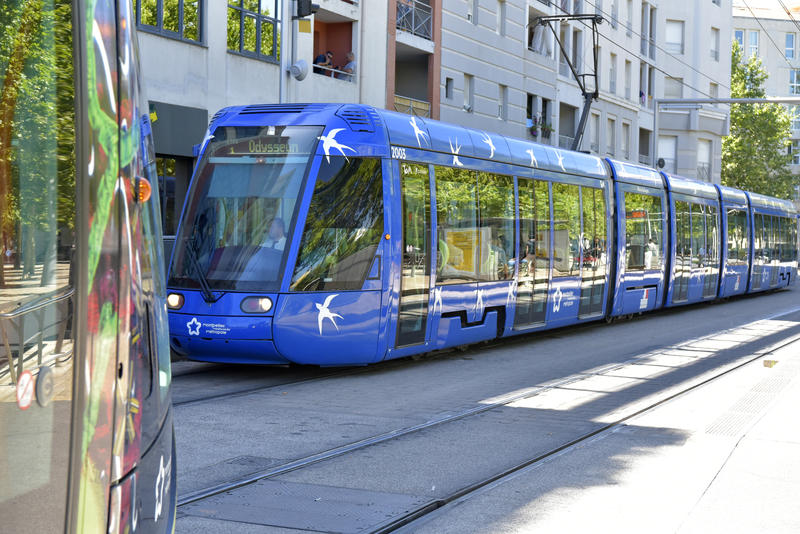 Montpelier, France
 Caen, France, Tramway on a reserved R-o-W.
 Upgraded tramway operating as LRT on a reserved rights-of-way.




 Large-roundabout on Marszalkowska Street near Central tram station in Warsaw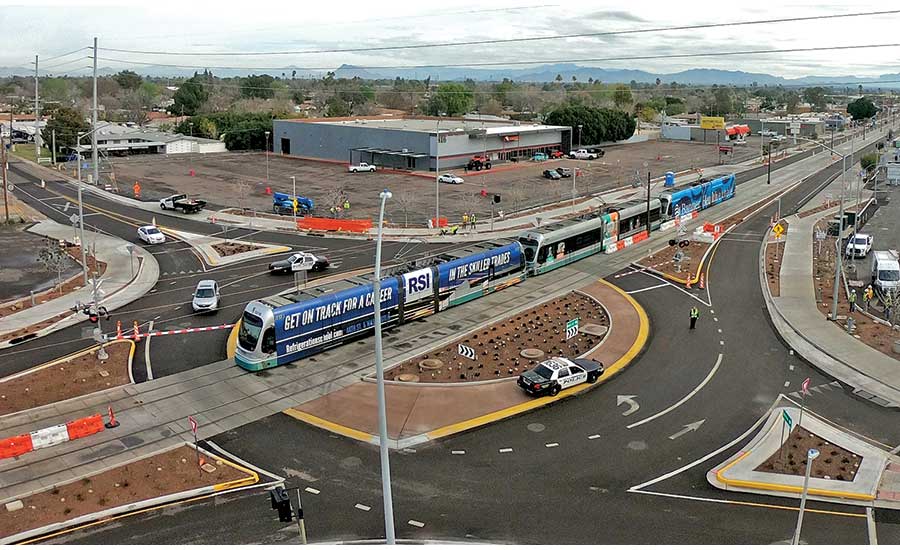



Recent Comments