As ridership plummets on TransLink, it will be ever harder to implement the $4.6 billion extensions to the SkyTrain light-metro network as monies will be needed to shore up a collapsing transit network. Remember, the SkyTrain light-metro network is very expensive to maintain and operate.
How can TransLink defend a $4.6 billion investment in an obsolete light-metro system, while the transit system itself shrinks due to lack of funding.
The taxpayer will have absolutely no time for tax increases and civic of provincial politicians who defend tax increases will find themselves out of office.
Mayor “Dithers” of Vancouver and the Mayor’s Council on Transit will face a rather nasty choice about continuing with Translink’s future planning.
After the Corvid-19 epidemic, the taxpayer may want to question TransLink’s gold plated, yet dated planning and if the politicians object, chances are they feel it at the ballot boxes.
Coronavirus May Have a Lasting Impact on Public Transit Funding
Ridership is likely going to plummet, which will make it harder on local transit agencies
Coronavirus is beginning to upend American life. The stock market is crashing, universities are cancelling classes or moving them online, conferences are being canceled, and airlines are struggling. Unsurprisingly, public transportation is also going to be greatly impacted. It’s still early to know exactly how this will unfold, but without proper mitigation efforts from local governments, we could be feeling the effects of coronavirus on public transportation service for years to come.
In the short term, we can expect fewer people to use public transportation as part of a broader policy of avoiding public gatherings. We don’t have a great idea how most transit systems have been affected yet, because most report ridership numbers monthly and, believe it or not, we’re still really early into the US’s exposure.
But we do know this is already happening in San Francisco, where BART lost eight percent of ridership between the last week of February and the first week of March, a massive drop by public transportation standards. And it certainly stands to reason other transit systems will experience something similar, given that universities are cancelling classes and many workplaces are instituting work-from-home policies (not to mention some transit agencies themselves like New York’s MTA are encouraging people to avoid it if possible).
Taking these precautions, such as limiting public gatherings, in the name of public health is obviously worth doing. But not only must we prepare for coronavirus itself, so too must we prepare for the effect those precautions will have. And for public transportation, which is always in a financially precarious position, those precautions could really screw things up if other measures aren’t taken.
We’re talking about money here. Transit agencies are going to lose a lot of money. They get most of their money from two sources: fares and government subsidies, and both could be impacted by coronavirus. Some agencies depend on fare revenue more than others. On average, fares fund 32 percent of transit operations in the US, according to the Department of Transportation, and it is almost unheard of for an agency to get more than 50 percent of its operating budget through fares alone.
To just ballpark some figures for a moment, let’s consider New York’s MTA, which estimated it will receive $6.5 billion in fares this year out of a total budget of $17 billion. An eight percent reduction in fares would result in a $520 million shortfall, which is no joke for a transit agency already struggling to balance its budget. (I know that an eight percent reduction in ridership, to use BART’s figure, is not equal to an eight percent reduction in fares, especially for the MTA where fares vary wildly between commuter rail and the subway and bus system, but we don’t have any better figures at this stage.) The story is similar around the country, where even small revenue drops of a percentage point or two often force transit agencies to make tough decisions about whether to cut service or amenities.
Transit agencies are also spending more money during the coronavirus outbreak cleaning their trains, buses, and facilities more often, which is not tremendously expensive for a few weeks, but if they have to do it for months it could add to the financial pressure.
Not only will people be taking fewer transit trips because they have fewer places they need to go, but also because the alternatives are getting cheaper. Oil prices, and therefore gas prices, are tanking. Outside of New York, where most people own cars, this will make driving even more attractive. So too will the fact that most people drive in their cars alone or with friends and family they’re regularly exposed to anyway, which has its benefits during a virus outbreak.
Of course, it’s too early to tell the magnitude of any of these shifts. But it’s likely transit agencies and their advocates will have tougher cases to make when budget season rolls around.
On average, 56 percent of a transit agency’s budget comes from state or local subsidies, according to that same Department of Transportation report—the rest comes from the federal government or is directly generated by the agency through advertising or other initiatives—and a big part of convincing politicians those subsidies are worthwhile is by demonstrating people use the system with, you guessed it, ridership figures.
So, if ridership plummets, that argument becomes harder, especially if government budgets become stressed bailing out all the other at-risk businesses and populations that need more money. When it comes to governments at all levels, transit has a long history of taking the back seat during crunch time. And if people abandon it in droves due to coronavirus, history may repeat itself once again.
Hats off to Optimist reporter, Sandor Gyarmati as he correctly states:
A Boarding represents each time a passenger enters a fare paid zone using Compass fare media or other proof of payment. Transfers are counted as additional boarding’s.
This is the first time in the print or electronic media that a reporter has stated this. This is important because with over 80% of SkyTrain’s ridership first taking a bus, means boarding numbers do not relate to the actual number of people taking transit.
This translates to over 80% of SkyTrain’s ridership effectively counts as a minimum of four boarding’s a day per customer!
Thousands of people have avoided taking transit amid the coronavirus pandemic.
The province, for now, has exempted buses and SeaBus from the 50-person gathering limit with TransLink saying there’s “no indication that shutting down public transit in Metro Vancouver would be an appropriate course of action at this stage.”
Dr. Bonnie Henry has called on TransLink to impose regulations to limit the amount of people on buses.
The transit authority has hit social media with advertisements with the message it is closely monitoring the situation and remains in contact with regional health authorities and other transit agencies in order to determine best practices and ensure the response is appropriate.
“At this time, we have not been directed to make any operational changes, however, we are all taking steps to ensure a high standard of cleanliness is maintained in order to reduce any potential risk of viral spread,” TransLink states.
Starting today, bus passengers are asked to board buses using rear doors only.
TransLink also says bus riders won’t have to pay fares until further notice, but fares still apply to other modes of transit including SeaBus.
Here’s recent system-wide numbers provided by TransLink:
Tuesday, March 17
-52% below the same day in 2019
Total boardings on Tuesday, March 17: 684,000
Monday, March 16
-38% below the same day in 2019
Total boardings on Monday, March 16: 843,000
Sunday, March 15
-29% below the same day in 2019
Total boardings on Sunday, March 15: 552,000
Saturday, March 14
-23% below the same day in 2019
Total boardings on Saturday, March 14: 726,000
Friday, March 13
-17% below the same day in 2019
Total boardings on Friday, March 13: 1,213,000
Thursday, March 12
-7% below the same day in 2019
Total boardings on Thursday, March 12: 1,312,000
Specifically for Tuesday, March 17:
Total Boardings were -52% below the same day in 2019
Total Bus Boardings were -48% below same day in 2019
Total Expo/Millennium Line Boardings were -54% below the same day in 2019
Total Canada Line Boardings were -59% below the same day in 2019
Total SeaBus Boardings were -69% below the same day in 2019
Total WCE Boardings were -70% below the same day in 2019
PLEASE NOTE: A Boarding represents each time a passenger enters a fare paid zone using Compass fare media or other proof of payment. Transfers are counted as additional boardings.
Boardings are available as a system total and by transit mode. This does not represent an amount of people, given that most riders have more than one boarding per journey and more than one journey per day.
Sadly, I have been attending several funerals this year, but just few weeks back at a funeral for an acquaintance I bumped in to an old BC Transit type, who I dueled with back in the 80’s and early 90’s.
Having a coffee after the service, he said something quite astounding;
“You know, you were right all along“.
He went on;
“We were so bedazzled by all the modern kit, flashing lights and gadgets, we forgot about the cost“.
Then he added the bombshell:
“TransLink was created to keep building with SkyTrain because BC Transit wanted to wash their hands of it.”
He smiled and said;
“The predictions of the high cost of the system, when compared to other modes, is just staggering and we were ready to ‘draw a line in the sand’, but the SkyTrain boys and girls did an end run, by getting the government to create TransLink“
Then came the punch line;
“You know that TransLink is the City of Vancouver’s baby and they control itand the rest of you pay for it, that’s the NDP’s legacy on transit“
With my jaw firmly on floor, the conversation meandered with valley rail and other niceties one observes at a funeral.
When politicians get involved with transit, fiasco happens.
When light-metro pretends to be light rail, fiasco happens.
When the media’s ignorance of light-metro and light rail is so evident and they fail to ask important questions, fiasco happens.
This article about the operational ills of Ottawa’s new light metro system (though the Ottawa light-metro uses modern light rail vehicles, it operates over on a fully grade separated rights-of-way and has automatic train control) is worth reading.
The media on our side of the Rockies are now pointing out to all who can read and hear, that LRT is a failure.
It best to understand the problem and how politicians exacerbated the operational ills of Ottawa’s new light metro system.
No, the people wearing this embarrassing launch are the politicians and city staff who, much to their frustration, have relatively little control over how the fixes are being applied.
Then there is the blinkered thinking of the metro mania cult and their mantra; “subways cure gridlock” – NOT!
“I was puzzled by Chiarelli’s choice of the route,” says O’Brien, “and I knew the system needed a downtown tunnel to really be effective.”
Modern light rail negates the need for a subway unless ridership exceeds 20,000 pphpd. In Karlsruhe, Germany, a subway was built under a very congested tram route which as seeing a peek our capacity greatly in excess of 30,000 pphpd!
The city of Vancouver and TransLink want a subway under Broadway, yet the peek hour capacity is well under 5,000 pphpd!
Subways add greatly to construction and maintenance costs, yet do little in alleviating congestion.
Our correspondent from Ottawa, Haveacow, will probably add his take, but I am certain that the Automatic Train Control signalling system, could be one of the main contributing causes of Ottawa’s transit woes.
ATC or Automatic Train control, just does not operate well in adverse conditions as we know so well with out SkyTrain light-metro system.
The more complicated a public transit system is, the more that can and does go wrong.
Keeping it simple should be on the very top of the list for public transport planning and operation, to keep the system functioning for those who depend on public transport.
Nearly six months after the launch, the city is exhausted. Commuters can cite by rote the many ways a rail car can be disabled — jammed doors, hobbled communications, unpredictable rail switches, disconnected power cables, disabled brakes and more.
In the end, they set aside what complicated stuff this was, and went with their gut — because at some point, you have to trust your hired guns.
But when the City of Ottawa finally launched the first of its approved two-phase, $9 billion-plus light rail system last Sept. 14, those with deep knowledge of the decade-long project were understandably nervous.
It wasn’t just that large construction projects like this are inherently unpredictable. Everyone understood that trying to mesh together so many trades, technologies and timelines is more art than science. It’s why contingency payments were built into the contracts.
The problem was, this project also harboured additional layers of risk that cascaded in a manner rarely seen in the launch of a major transportation system. An investigation by this newspaper — based on interviews with city officials, politicians, light rail experts and procurement specialists, along with an examination of thousands of pages of documentation filed with the city and other regulatory authorities over the past decade — reveals no single issue was at fault in this problem-plagued rollout. Rather, this was a case of seemingly reasonable risks compounding in unpredictable ways thanks in part to compressed budgets and timetables.
This is the story of how myriad parts of the project failed to come together as promised.
Classic political bait and switch; bait the public into thinking that the province is really doing something, but in reality, doing nothing.
The key is funding and of course funding is never mentioned.
Without having each option showing cost, means the study is next to useless as people don’t have real information.
Before everyone jumps on the rapid transit train, we must define light rail and cost; then define light metro and cost. Then look at the costs over 50 years for both modes.
Just what is the province’s definition of light rail?
This has not been done.
In truth, the federal, provincial and civic politicians do not know. TransLink does not know.
Despite the hype and hoopla, the North Shore transit plans have no validity without these costs included. What we have now is classic Provincial bait and switch; baiting the public with meaningless planning, and switching, doing nothing.
What have the taxpayer not been told?
Today, we have funded $4.6 billion to extend the Millennium and Expo lines 12.8 km. This cost could escalate, if Alstom, who is currently buying Bombardier Inc. were to cease production of the proprietary Movia Automatic Light Metro, used on the Expo and Millennium Lines; including spare parts.
They have done before with other obsolete product lines.
Hint: Vancouver is the sole customer for MALM.
As mentioned, we have funded $4.6 billion to build 12.8 km of what is now MALM, with 5.8 km in a subway.
*
Unfunded costs for planned rapid transit extensions and needed rehab.
1) Expo & Millennium Line rehab – $2 to $3 billion, needed before extensions to Langley and UBC.
2) Extension to Langley – near $2 billion
3) Extension to UBC – over $4 billion
The wish list, with estimated costs
1) SkyTrain to Abbotsford – $8 billion to $12 billion.
2) SkyTrain to the North Shore – $5 billion plus
3) Canada Line (not compatible with the Expo & Millennium Lines) rehab needed after the end of the P-3 and to increase capacity – minimum $2 billion.
4) Extending the Canada line to Steveston and Ironwood mall, up to $5 billion. South across the Fraser, another $5 billion.
Total cost to date to the taxpayer of the present light metro network $11 billion; 50 year costs of the network, including mid life rehab, $600 million/km grade separated, $1 billion/km for subways.
By comparison, the 50 year costs for light rail is about $200 million/km and LRT has more capacity!
SO TELL ME PLEASE, WHAT ARE THE COSTS AND WHERE IS THE FUNDING FOR ANY RAIL SERVICE TO THE NORTH SHORE IN THE NEXT 40 YEARS?
There are six potential routes for a rapid transit line linking the North Shore to the other side of Burrard Inlet. image supplied
The province has long-listed six potential routes for a rapid transit line connecting the North Shore to the other side of Burrard Inlet.
After hiring Mott MacDonald Ltd. in October 2019, the Ministry of Transportation and Infrastructure released an interim update on the Burrard Inlet Rapid Transit study Monday, as the first phase of the research is completed.
After months of studying the physical geography and topography, structural requirements, ridership projections/needs, traffic models, weather and climate change impacts, as well as notional costs to construct, operate and maintain infrastructure, the engineers say there are at least six projects worth a serious look:
• Downtown Vancouver to Lonsdale via First Narrows (tunnel crossing)
• Downtown Vancouver to Lonsdale via Brockton Point (tunnel crossing)
• Downtown Vancouver to West Vancouver via Lonsdale (tunnel crossing)
• Downtown Vancouver to Lonsdale via Second Narrows (new bridge crossing)
• Burnaby to Lonsdale via Second Narrows (new bridge crossing)
• Burnaby to Lonsdale via Second Narrows (existing bridge crossing)
“I think, honestly, any movement towards the rapid transit solution for the North Shore is extremely exciting,” said North Vancouver-Lonsdale NDP MLA Bowinn Ma. “These are more than just lines on a drawing where somebody has said ‘It would be great if we had a crossing over the Burrard Inlet here. … Instead, what’s happening under the Burrard technical feasibility study is that we’re actually looking at whether we can make this work.”
Connecting the Lonsdale core to Vancouver via a rapid transit line was one of the recommendations of the Integrated North Shore Transportation Planning Project, led by Ma in 2018. All three North Shore municipalities and the City of Vancouver chipped in $50,000 for the $450,000-rapid transit study, along with the province, which put in $250,000.
While all six alignments performed well when it came to ridership and greenhouse gas reduction modelling, given current and predicted land use and commuting patterns, options 1 and 4 showed the best results, Ma said.
The study considered rapid transit bridges and tunnels, a gondola crossing and more cross-inlet ferries.
Previous studies have found the existing Ironworkers Memorial Second Narrows Crossing cannot be expanded due to structural limitations, but Ma said she was particularly interested to learn it may be at least technically possible to run a transit line under the existing bridge deck through the bridge’s trusses.
Ma said the ministry won’t be releasing more details, including the cost estimates, until completion of Phase 2 of the study this summer. She did say that that all six options came with cost estimates in the same ballpark.
“And it will definitely be in the billions,” she said.
Phase 2 of the study, which will involve engineers drilling down into much more technical detail, is expected to last another three months. Once Phase 2 is complete, Ma said she expects the current list to be narrowed down to just three options for TransLink to consider.
Exciting as it may be to see some tangible options, Ma cautioned the BIRT still has some rather large hurdles to clear. In order to get built, it must be approved by the TransLink Mayors’ Council as part of TransLink 2050, the next major phase in transit expansion.
Ma acknowledged that a traffic-weary constituency may be running out of patience; however, the study is both prudent and necessary before anyone will commit money to the project, she said.
“We’re building credibility. We’re building a case for a rapid transit solution to the North Shore. And that can only be accomplished if the entire region pulls together and that’s what INSTPP is about. And that’s what this study is about,” she said.
Vancouver politicians live in “The Land of the Loyus Eaters”, when it comes to transit.
In Greek mythology the lotus-eaters, were a race of people living on an island dominated by the Lotus tree. The lotus fruits and flowers were the primary food of the island and were a narcotic, causing the inhabitants to sleep in peaceful apathy.
As TransLink, Vancouver Council, UBC, and the Mayor’s Council on Transit sleep in peaceful apathy, the realities of the real cost of the subway are ignored.
According to Metrolinx’s study, the real cost of the 5.8 km Broadway subway will be more like $6 billion over 50 years.
As costs mount ever higher elsewhere for subways, our politicians and bureaucrats remain ignorant of escalating costs for subway construction, continue to misinform the public as to the real cost of Broadway’s subway.
In Metro Toronto, Metrolinx has finally admitted that:”
“……the Scarborough subway costs simply aren’t worth it,” he said. “It’s been years that Scarborough subway advocates haven’t been telling the truth to Scarborough residents and people across the city.”
And for years now, Translink: the City of Vancouver, UBC, the Ministry of Transportation, the Minister of Transportation, the Minister responsible for TransLink, the Mayor’s Council on Transit and the subway lobby haven’t been telling the truth about the high costs of subway construction to taxpayers in metro Vancouver. Is the $6 billion. plus, cost over 50 years, giving good value?
Is it not time that the province steps in for a fiscal reality check? Is there the moral fibre in Victoria to do this?
Interesting that the numbers for LRT came via the TTC and the numbers for the subwaycame from the provincial government who wanted the subway.
The subway project in Scarborough has been hotly debated in Toronto since 2013, when its backers won council support for cancelling a light-rail line in the area and replacing it with an extension – the Toronto-York Spadina Subway Extension seen here in 2016 – of the subway to Scarborough Town Centre mall.
Kevin Van Paassen/The Globe and Mail
Two of Ontario’s marquee transit projects have costs that far exceed their benefits, according to a pair of analyses prepared for the regional transit agency Metrolinx.
The reports, released Friday afternoon, show that the Scarborough subway extension proposed for east-end Toronto and the westward extension of the Crosstown Eglinton light rail line across the city could, together, cost nearly $10-billion to build while producing benefits amounting to billions less. In spite of this, Metrolinx has recommended both projects be advanced.
The analysis deliberately errs on the side of caution and Metrolinx hopes to improve the benefits of these projects over time, agency CEO Phil Verster said in a statement.
The benefits are calculated by assigning a monetary value to such things as removing cars from the road and saving commuters time.
Shelagh Pizey-Allen, spokesperson for the advocacy group TTCRiders, said the projects were examples of proposals pitched with a modest price tag, but costs rose and value diminished over time.
The Metrolinx board received these reports at an in-camera meeting in January and, at the time, quietly approved pushing ahead with the projects. The agency refused to release the reports when asked earlier this month.
Both projects are being overseen by the provincial government, which struck a deal with the city of Toronto that handed over control and financial responsibility for major rail construction to Metrolinx.
A spokeswoman for Transportation Minister Caroline Mulroney said the government would continue to support both projects.
“These [reports] represent Metrolinx’s best understanding of the projects at a given moment in time and are inevitably subject to change during the projects’ life cycles,” Christina Salituro said in an e-mail.
“These documents are key elements in ensuring Metrolinx continues to make the most informed decisions going forward and are just one of a number of factors used in making a final decision.”
The subway project in Scarborough has been hotly debated in Toronto since 2013, when its backers won council support for cancelling a light-rail line in the area and replacing it with an extension of the subway to Scarborough Town Centre mall.
The analysis released Friday of the subway extension concluded it would bring $2.8-billion in benefits over a 60-year period, and cost about $5.5-billion to build. The Ontario government had last year pegged the cost at this level, which is about $2-billion more than the amount budgeted by the city when it was in charge of an earlier version of project.
“That subway is not going to be cost-effective,” said Brenda Thompson, with the advocacy group Scarborough Transit Action, adding that such a high price tag would preclude building anything else in that part of the city.
“I think this is going to suck up all of the money and I think politicians should be upfront about that. This is what we’re going to end up with, if at all.”
Toronto Councillor Josh Matlow, who has long advocated for the original plan for light rail instead in Scarborough, said that the report is another example of the claims of subway boosters being proved wrong.
“Today Metrolinx finally admitted that the Scarborough subway costs simply aren’t worth it,” he said. “It’s been years that Scarborough subway advocates haven’t been telling the truth to Scarborough residents and people across the city.”
The city had budgeted $3.56-billion for a one-stop Scarborough subway extension. During the last election campaign, now Premier Doug Ford pledged to add two more stations. The version being studied by Metrolinx includes the additional stations.
The newly released analysis for a light-rail extension of the Crosstown to Pearson International Airport shows that it will cost up to $4.4-billion, net present value, in 2019 dollars, if it has nine stops and is substantially below ground. In that form it would bring benefits of $1.4-billion over 60 years.
The project’s capital cost could be reduced to about $2.8-billion if most of the stops were removed, the analysis notes, or to as little as $2.1-billion if it was built on the surface.
Mr. Ford has pledged to bury as much of the Crosstown extension as possible.
The minister responsible for TransLink, Selina Robinson, either doesn’t have a clue about public transport or does not care.
Most likely a lot of both, because TransLink is on a crash course of;
“When you have idiots in charge, do not be surprised at the results”.
Harsh, I think not.
Operating a public transit service is complicated at best, but TransLink has taken complication to a new level as TransLink has now become a plaything for regional mayors, to build their own prestige projects.
Example: Vancouver wants a $3 billion subway strictly for political prestige, so Vancouver’s mayor, sitting on the Mayor’s Council for Transit, supports Burnaby’s $300 million prestige gondola to SFU; Surrey’s mayor wants much more expensive SkyTrain, so he supports both Vancouver’s and Burnaby’s mayors with their prestige projects; New Westminster’s mayor wants a 4-lane bridge to replace the decrepit Patullo Bridge, so he supports, Vancouver’s over built subway, Burnaby’s daft plan for a gondola and Surrey’s flip-flop from LRT to SkyTrain and on and on it goes.
User friendly transit, forget it, transit has now become a racket where photo-op projects are now the new transit norm and the transit customer can go to hell, for all the mayor’s care.
Here is a case in point, bus service, from South Delta and South Surrey.
Prior to the Canada line opening a decade ago, transit customers from South Delta and South Surrey enjoyed direct bus service to downtown Vancouver, or a one transfer journey to UBC. After the Canada line opened all South Delta and South Surrey buses terminated at Bridgeport Station and forced their customers to inconveniently transfer to the metro.
Not only did this force an unwanted transfer onto transit customers, it increased journey times.
Ridership dropped and despite predictions of higher ridership, the opposite happened and people voted with the car. All the extra bus service from South Delta were abandoned within a year and today, South Delta residents have a bus service worse than before the Canada line opened.
It was much the same in South Surrey, but with a massive house building program, this has been masqueraded by population increase. A $2 million park and ride lot built for the expected increase in customers, remains almost unused today, a decade later!
Currently the Massey Tunnel provides a major “choke point” that TransLink, in its sheer incompetence has not taken advantage of as they refuse to provide a transit service the transit customer wants, a seamless or no transfer journey to Vancouver.
With the Massey tunnel “choke point”, TransLink could offer a variety of services, such a 30 minute 602 service, with direct service to downtown Vancouver; the 405 or 404 service, from Tsawwassen Ferry terminal to central Richmond (as the service once ran), providing a direct link to Richmond; and the 640 to Scott Road to once again terminate at the BC Ferry terminal, as it once did, providing a direct service from North Delta and North Surrey.
TransLink remains oblivious on what is needed and continues their $4.6 billion in prestige light metro projects that will not take a car off the road!
No one seems to care as regional politicians, abetted by their provincial counterparts, still us major transit projects as reelection gimmicks, nothing more and TransLink’s six figured salaried managers sit back and watch as:
“the Minister in charge of TransLink has left the building!”
I have always wondered about the true intentions of the stout supporters of the SkyTrain light metro system and TransLink. Despite overwhelming evidence that the proprietary Movia Automatic Light Metro (MALM) system is dated and extremely expensive to operate, they champion the museum piece with invented issues like delaying cars at intersections or even worse, causing congestion. For the SkyTrain Lobby, grade separated is the only way to go and damn the costs.
The reserved or dedicated rights-of-way enables the modern tram to give a service comparable to the much more expensive light metro, operating on viaducts or in subways. The lawned reservations makes already "green" transit much more "green".
The SkyTrain lobby never has been concerned with costs and for many, the option is just tax the taxpayer more!
We can build up to ten times more light rail (TTC, ART Study) for the same cost of building with MALM light-metro, yet this has fallen on deaf ears at all levels of government.
Something to think about; the 50 year costs for elevated light metro are about three times (subways are a staggering five times more!) more than light rail, thus building with light-metro, future generations will be burdened by extra high costs, siphoning money away from expanding the system.
The SkyTrain Lobby remain mute about costs, both short term and long term.
Despite the shrill claims that SkyTrain is the ultimate transit system, history has been less kind. Only seven such systems built since the 1970’s and only three seriously used for “public transport”.
Toronto’s ICTS is soon to abandon their system when it becomes life expired.
JFK’s ART Airtrain will revert to a heavy rail metro when it becomes life expired.
Detroit is nothing more than a demonstration line on life support.
Kuala Lumpur ART system has embroiled Bombardier and SNC Lavalin in a national corruption case and no more will be built.
The Korean ART system which services a theme park is in legal action against Bombardier and no new lines to be built.
China built one ART line to obtain technology and have not built more.
With such a lackluster past, one wonders who the SkyTrain Lobby really supports; the transit customer or the roads and auto lobbies?
My guess is the latter, because the evidence points that way.

 Luxembourg’s new tramway, classic modern light rial
 Edinburgh’s newer tramway. Lot’s of teething problems but now a solid performer.
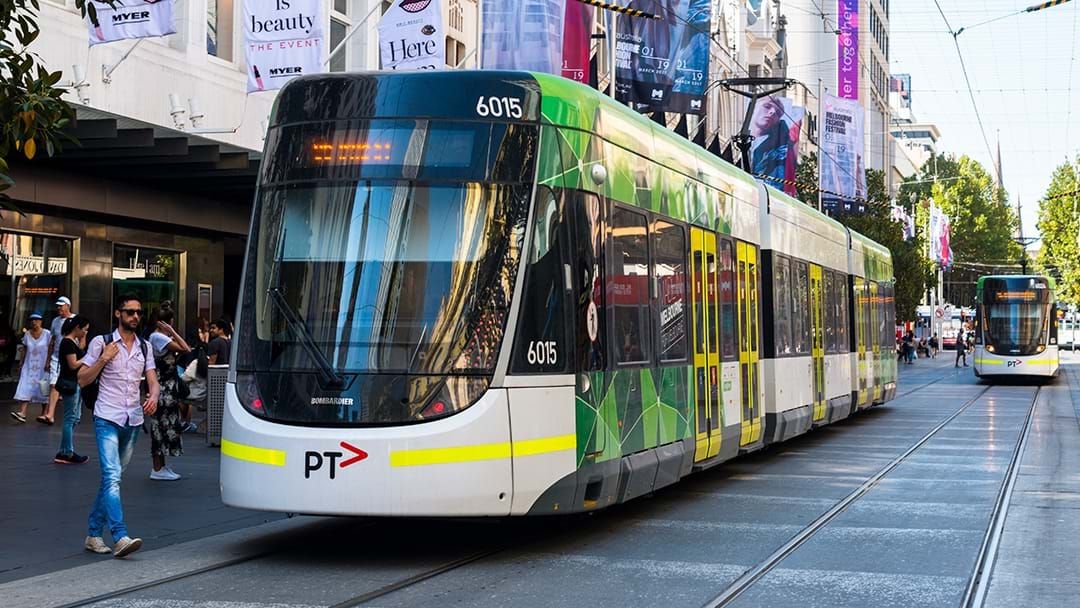 Melbourne’s streetcar/tram system, now being slowly upgraded to light rail status.
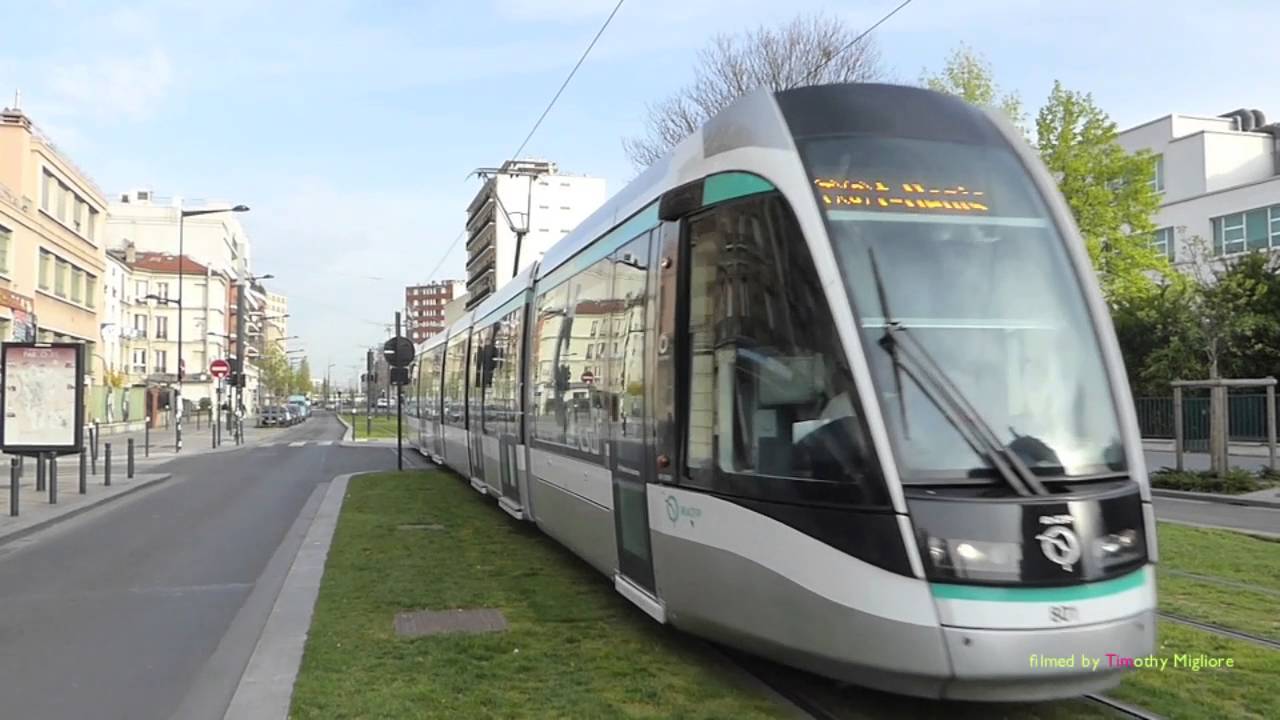 Trams have now returned to Paris, modern light rail at its best!
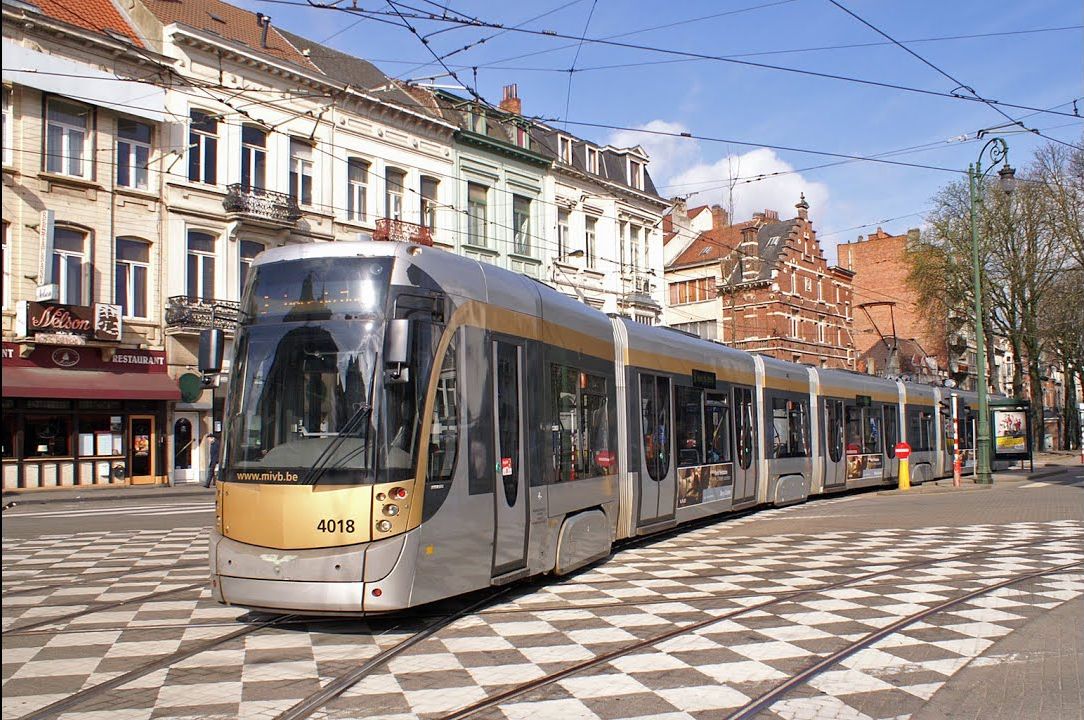 Brussels’ famous tramways, slowly upgrading to light rail status with new cars and dedicated rights-of-ways.


 There are six potential routes for a rapid transit line linking the North Shore to the other side of Burrard Inlet. image supplied
 Interesting that the numbers for LRT came via the TTC and the numbers for the subwaycame from the provincial government who wanted the subway.
/arc-anglerfish-tgam-prod-tgam.s3.amazonaws.com/public/M35ZOHK4KRDBBM2CUU4KLEBRT4.JPG)





Recent Comments