Today’s photo-op with Premier Horgan and Prime Minister Trudeau was nothing more than an attempt to try to boost their flagging political base. Nothing like a re-announcement of a re-announcement to get the rubes all excited.
It is also a subtle message to the SkyTrain Lobby in Surrey and the LRT lobby in Vancouver, that the money is dedicated for these two projects only.
I believe the SkyTrain Lobby’s continued ranting for extending SkyTrain, without any sort of financial plan has compelled federal and provincial politicians to make a start on at least one “rail” project, with, photo-op ready, shovels in the ground for next years round of federal elections.
With civic elections this fall, the makeup of the Mayor’s Council on Transit could change radically, it even could be an anti transit, questioning every decision TransLink makes.
With light rail in Surrey, TransLink will try make a fresh start with 21st century public transport philosophy, sadly though, this outfit couldn’t hold a “piss-up in a beer tent”.
What is apparent is that TransLink and the provincial government are keeping mum on the huge costs associated with upgrading the Innovia Lines (Expo & Millennium/Evergreen Lines) until the next election cycle.
Winds of change and increased taxes are coming soon.
As for former Vancouver Councillor Gordon Price, he is no transit expert, never was, but he is protecting his vision of “hub and spoke” transit, made possible by SkyTrain and SFU.
SURREY (NEWS 1130) — Speaking in Surrey, Prime Minister Justin Trudeau reaffirmed the federal government’s commitment to complete two big transportation projects around the region.
The feds are committing $1.37 billion to build the Broadway subway line in Vancouver and the Surrey-Newton-Guildford light rail project.
Trudeau says having spent some time at UBC, he knows how frustrating it can be to be stuck in traffic.
“The expansion of the Broadway line will add 5.7 km and six stations to the line,” the prime minister said about the new projects in Metro Vancouver. “These will include a stop at UBC’s Point Grey campus, which many students have been asking for for years.”
Vancouver Mayor Gregor Robertson says transportation was one of the key election issues four years ago when he was seeking re-election.
“Having it come to fruition before the end of the term at the buzzer is particularly rewarding,” Robertson says, referring to the end of his tenure as mayor of Vancouver.
Surrey Mayor Linda Hepner is thanking Trudeau and Premier John Horgan for agreeing to a plan.
“We worked on this for a decade and until everybody came to the table and was prepared to have a real conversation with us, and with the Mayor’s Council, it was going nowhere,” Hepner added.
Transportation expert Gord Price with SFU’s Centre for Dialogue says there could be a desire to provide more clarity on the plan to build an LRT line in Surrey.
“It may be that Surrey council in particular wants this nailed down before the municipal election,” says Price. “Because one thing you can always count on is that people will run in opposition to whatever the current proposal is.”
The expansion of the SkyTrain’s Millennium Line and adding light-rail transit in Surrey is part of Metro Vancouver’s 10-year transit plan to move people around the region as the population increase.
I think the author, a PHD candidate, seems unread on what modern light rail is. He still defines light rail vehicles, different than a streetcar
Memo to PHD candidate: it is not the vehicle, but the quality of rights-of-way, that defines LRT.
His comment; “And though cheaper to build, light rail lines are often too slow and have too low capacity to make a truly meaningful dent in a city’s auto orientation.”show’s he is utterly out of touch with the concept of modern light rail, which when well designed and built, has comparable commercial speeds, but with somewhat less capacity than a modern metro.
Sadly, in North America, so called exports get lost in the theory of transit and ignore the practicalities of urban transport.
No wonder public transit is failing in the USA, where bigger and more expensive is deemed better.
So here is what made the French Renaissance of light rail so successful in France.
Ensure that at least 60% of a transit route is in a dedicated formation or reserved rights-of-way.
Grass or lawn the dedicated R-o-W’s to make them appealing to the non-transit user.
Modular low-floor articulated cars to allow an almost universal use by all customers, including the mobility impaired.
Stops every 500m to 600m apart to provide good customer access.
Make ticketing and fare collection easy and simple.
Build transit to the Push-Pull theory of public transit, by building new tram lines on road lanes, which constricts road capacity, pushing people onto transit, while at the same time, offering a quality transit servcie on the route, that customers like to use.
Real consultation with both residents of areas served and transit consumers and not politically inspired dog an pony shows, so favoured by politicians and bureaucrats.
Provide inventive and affordable transit solutions to transportation issues, such as TramTrain.
Always remember that public transit is a product and if the product is good, people will use it, but if the product is bad, people will not.
What has proven over and over again to work is the network, the ability to take transit from where one lives to one’s destination in a reasonable time, preferably without transfer. Designing such a system is a challenge, but in Europe, planners have accepted this challenge and have provided solutions, while in North Almeria, planners are lost in an ennui of pipe dreams, ever planning, nostalgic, unaffordable and unworkable transit solutions, that tend to fail more often than not.
*
A final quote, “When cities like Paris, London, and Berlin eliminated their streetcar networks, they replaced them with comparable bus service.” is not quite correct. Berlin is expanding their tram lines as buses seem not to attract motorists; Paris is investing huge amounts on new LRT projects as buses again fail to attract the all important motorist from the car.; leaving London, fighting a huge anti-tram resistance by special interest groups, with their public transport planning.
*
America isn’t killing transit, rather its academic hubris and a general ignorance of the development of public transport in the rest of the world is killing transit in the USA.
Modern LRT in an urban setting, lawned rights-of-ways, simple yet effective stations, and both user-friendly and non-user friendly.
Jonathan English is a PhD candidate in urban planning at Columbia University.
Streetcar, bus, and metro systems have been ignoring one lesson for 100 years: Service drives demand.
One hundred years ago, the United States had a public transportation system that was the envy of the world. Today, outside a few major urban centers, it is barely on life support. Even in New York City, subway ridership is well below its 1946 peak. Annual per capita transit trips in the U.S. plummeted from 115.8 in 1950 to 36.1 in 1970, where they have roughly remained since, even as population has grown.This has not happened in much of the rest of the world.
While a decline in transit use in the face of fierce competition from the private automobile throughout the 20th century was inevitable, near-total collapse was not. At the turn of the 20th century, when transit companies’ only competition were the legs of a person or a horse, they worked reasonably well, even if they faced challenges. Once cars arrived, nearly every U.S. transit agency slashed service to cut costs, instead of improving service to stay competitive. This drove even more riders away, producing a vicious cycle that led to the point where today, few Americans with a viable alternative ride buses or trains.
Now, when the federal government steps in to provide funding, it is limited to big capital projects. (Under the Trump administration, even those funds are in question.) Operations—the actual running of buses and trains frequently enough to appeal to people with an alternative—are perpetually starved for cash. Even transit advocates have internalized the idea that transit cannot be successful outside the highest-density urban centers.
It seems our politicians and political wannabees are living in a financial ennui.
The massive costs of our current transit planning are being ignored, with the rah, rah rant of the various rapid transit promoters glossing over the real costs of their various pet projects.
Our so called experts ignore the costs and it is now all to clear that TransLink and its various cheerleaders desperately need and want “road-pricing” to save their fantastic plans.
A couple of billion here and a couple a billion there and now you are talking real money.
$11 billion in unfunded transit projects.
Again, where are our prudent politicians or our ever so sharp bean counters who are given prominence in our local electronic media? What about the mainstream media, T.V. and newspaper where are they?
I’m afraid the taxpayer has been abandoned by the chattering classes, who fall mute at the mere mention of “rapid transit” and prostrate themselves before their golden idol, SkyTrain.
I’m afraid our transit planning is the stuff of fast ferries, sparkle ponies and Lucy in the sky with diamonds.
From Mr. Cow!
I see your issues this way!
*
The 10 Year Plan for Transit by Translink is really the only source of major capital transit funding your are going to get for the next little while. The plan has been divided into 3 phases with specific time lines.
*
Phase 1 2017-2020, $3.6 Billion (funding secure)
*
This is essentially for boring but badly needed maintenance issues, new trains and buses, upgraded service and equipment purchases. Design money for 2 rapid transit projects is also included. In fact, you could sink the entire 10 year plan funding and you guys will still only get about half of what needs to be spent on the boring non sexy upkeep capital funding IMHO! So far so good!
*
Phase 2, 2019-2024, $7.3 Billion (funding secure). It breaks down as $4.48 Billion for Rapid Transit Projects and roughly $2.82 Billion for other capital funding again for system upkeep, new vehicle funding and bus system expansion.
*
This covers phase 1 of the Broadway Skytrain extension and phase 1 of the Surrey LRT project. The federal portion of this money is paid through the infrastructure Bank and Build Canada funding. Federal funding is P3 ONLY, no P3 no federal money, so get used to it. By the way P3 doesn’t have to be a curse, so far (fingers crossed) its actually lowered the cost for most of Ontario’s LRT projects by up to 15-20%.
*
ANTI SURREY LRT PEOPLE PLEASE READ
*
MOST IMPORTANTLY, this funding is program specific, not just the rapid transit projects but many other important maintenance projects of Translink as well, in this 10 year plan. Due to it being PROGRAM SPECIFIC and due to the nature of the private funding that companies must have in P3’s structures, the cash is tied to that specific project and can’t be transferred to another. Doing so will get the federal government and Translink sued by private companies who had to go out and get private funding from real banks, to qualify for the P3 program! So that money for the Surrey LRT (phase 1) is a go and the Broadway Millennium Line Extension is a go, good or bad your stuck with it now!
*
Phase 3, 2020/21-2027, at least $1.9 Billion for Phase 2 Surrey LRT and more system up keep funding. Total anywhere between $2-4 Billion (no secure funding yet)
The only capital funding for rapid transit planned in the last phase of the program (phase 3 of the 10 Year Plan) is for the Surrey’s LRT line to Langley! The rest is for more capital upkeep projects and new trains and bus service. This part has no secure funding yet but any rapid transit expansion spending beyond the Surrey LRT project will have to go through a planning process as well as an environmental assessment process (both federal and provincial). Anything beyond the second phase of the Surrey LRT project will also require new funding, Remember, the federal portion can’t be transferred to another project once it has been connected to an existing project.So any expansion of the existing Skytrain Line to Langley will require not only a billion more in funding than Translink has been asking for to this point but, a full environmental assessment will still be needed to be done to get federal or provincial funding! This has not been done yet and takes a really long time.
*
The Conclusion
*
Any change to the Surrey LRT Phase 2 LRT line to Langley (as in a change of operating technology to Skytrain) will require an actual a joint federal provincial EA process to be completed by Translink. Which means nothing to Langley before 2027/28 at the earliest. The Broadway Line and Phase 1 LRT line are a go and that’s it! Any change and up to 38% of your capital funding you currently have (roughly $2.7 Billion) disappears and is most likely replaced by court cases, the likes of which you have never seen before! Unfortunately, due to past government choices we have in Ontario, its messy and expensive. By the way you can’t use the federal and or the provincial portion of the funding for the court costs!
*
Here are some of my Cost estimates!
*
Expo Line Upgrade: Costs: 6 car trains 100 metre platforms, upgraded electrics, upgraded track and right of way signalling infrastructure (not covered at all in existing funding by the way) and above grade concrete right of way upgrades and rebuilds (between the stations) and downtown tunnel upgrades, $3-$3.3 Billion
*
Phase 2 Broadway Line to UBC $3.6-$4.2 Billion
*
Skytrain Extension to Langley $2.9-$3.2 Billion
*
That’s a total cost of somewhere between $9.5-$10.7 Billionnot covered by any plan for funding.
*
The only new funding that is coming is the Translink 10 Year Plan, phase 3 funding of somewhere between $2-$4 Billion, only $1.9-$2 Billion being rapid transit capital funding! Any dropping of the LRT at this point (still possible for the phase 2 to Langley portion) will delay that small amount of rapid transit funding by a minimum of 4-6 years (includes EA time). Even if you can get extra funding for the Langley Skytrain extension, there is still $6.6 Billion to $7.4 Billion outstanding for other needed Skytrain projects. This funding for a Langley line will most likely not arrive until sometime around 2024/25. Guaranteeing construction starting at the earliest around 2026-2028, with completion around 2031-2033!
*
Any new funding after 2020 will have to compete for funding construction of the phase 2 of the Broadway line to UBC. This is the region’s clear leading Skytrain extension choice unless, the Expo Line has deteriorated to the point that its upgrades are critically needed to keep the line operating. Surrey will wait quite a while for the Skytrain extension to Langley if that is their choice!
Comments from real experts, you know they type, guys and gals who plan, design and operate transit systems, have all said, almost in union, that SkyTrain will not be built to Langley.
The terse comments by people who actually know what they are talking about, should give cause to reflect upon what will happen if incompetent politicians forces a change from LRT to SkyTrain to go to Langley.
Oh yes, let us not forget that $3 billion upgrade needed for the Innovia SkyTrain Lines before such an extension could be possible.
From Mr. Haveacow:
There will be no Skytrain line to Langley because the federal infrastructure money for the LRT project isn’t transferable to another project because of the PPP (Public, Public Partnership) program that grants all federal transit dollars, makes that illegal! Whether you realized it or not, Translink has already accepting design/engineering tenders from interested consortia for the LRT design. Changing now means everyone involved on the Federal and Translink side of the competitive process can be sued for bad faith negotiating. I have been involved in one such lawsuit, it’s messy and the tax payers always get killed! The involved companies in each consortium are now going out and getting private loans and financing (a major responsibility in their requirements of the Federal PPP program) to take on all the expected building costs as well as all legal liability costs for the project(which can add up to 25% of the entire project’s cost). If a politician or a group of them tries to change the project scope now, wow, watch the lawsuits fly!
It is now time to get very real with current planning and stop relying on hearsay and gossip on the Skyscraper and/or Hive web pages.
In the UK, there is a plan to service Heathrow Airport with another rail link and one of the contenders is the London Air Rail Transit System or “LarTs”.
The Buckley family are heavily involved with LarTs and includes:
Captain Peter Buckley – Airline Pilot
Hugh Buckley – P Eng, MPTIC – Vancouver SkyTrain Executive Committee (more on this later)
Several things intrigued old Zwei, the first being, Vancouver’s SkyTrain, which is mentioned a few times, is not light rail, though once called Advanced Light Rail Transit, fails the definition of LRT and is considered a proprietary light-metro.
*
What we see in the brochure is surprisingly look alike Bombardier MK.2 Innovia cars, operating in married pairs, just like Vancouver, JFK Airport and Kuala Lumpor.
*
What really caught Zwei’s attention was the The Vancouver SkyTrain Executive Committee.
*
Just what is the The Vancouver SkyTrain Executive Committee?
Was it a part of TransLink or the Mayor’s Council on transit? Was it a Ministry of Transportation committee, either federal or provincial? Or, is it a add-hoc affair that looks good in a brochure.
*
Well the latter seems true because after extensive research, I could not find any evidence of such a committee and the only conclusion I can make is that the The Vancouver SkyTrain Executive Committee is an add-hoc committee that looks good in a brochure to fool politicians in another country.
*
The only way to try to sell SkyTrain abroad is by stealth and not the truth or facts, a very sad commentary of our rapid transit system.
Why do politicians always think they are transit geniuses?
Mostly because they are too stupid to understand the basics of transit planning and the application of modern public transit philosophy.
Doug McCallum is one, a former Surrey Mayor who was and still is completely out of touch with regional transit planning, now claims if elected, will cancel current current light rial planning and development in favour of SkyTrain.
Simple yes?
No. If McCallum does succeed, all he will achieve is delaying rapid transit in Surrey until the late 2030’s and by that time, Innovia ART will have passed long into the history books and planners will be dusting off the old LRT planning and restart the process.
Mr.Haveacow, a contributor to the blog has been very detailed about the problems and issues of switching from LRT to SkyTrain, so the following is just a recap of the many hurdles a Langley SkyTrain would face and with no cost estimate or budget, it will be the late 2013’s before Langley will be serviced with transit, which makes the Rail for the Valley/Leewood TramTrain plan more viable than ever.
A recent comment from Mr. Cow, who has studied our SkyTrain system and has for the past several years advised of the perils of extending SkyTrain to Langley. By switching from LRT to SkyTrain, it will delay rapid transit in Surrey/Langley until the mid to late 2030’s
They (TransLink) don’t even fully know what they have to do yet, to begin an actual upgrade. This is a brief survey of the components needing work. The actual full list would take too long to type. Many if not nearly all of the costs for these aren’t part of the current 10 year plan. Meaning, they won’t see a lot of attention until 2024 or later when most of the current work in the 3 stages of Translink’s 10 year plan is either fully complete or is well along the path to completion. The Expo Line’s original section will be around 40 years old by then.
1. The Expo Line’s power systems must be upgraded or they can’t exceed the number of trains per hour they are currently running! All the running way electric transformers have to be upgraded or the increased number of trains will cause the electric current level to drop below the operating threshold and they all stop. If they had even begun this process yet they have to show you the environment assessment that they did. Electrical transformers have PCB’s in them you just can’t swap old and new ones with each other. They are also very large, usually in one of those huge locked rooms in the stations, it will take a few weeks to do just one!
2 Much of the power cables which connect from the electric system to the third rails and the induction rail need to be either replaced or have the current connection ripped out entirely and relaid with new technology. A friend who did get the contract for some of this work from TransLink won’t be finished his assessment for weeks. What he has said so far is no less than a few months of work if they shut the line down completely, much longer if they want to keep the Expo running while they do the work.
3. Yes they are doing upgrade work on a few stations, but the whole viaduct structure of the Expo Line, about 18-20 km worth between the stations is 3 and half decades old and aging rapidly. Concrete ages at a geometric rate and you guys are right at the point of the geometric curve were the costs are about to take off. There is no budget for this work, there isn’t even an official assessment of the full costs yet. This work will take year or more, depending on the amount of concrete degradation. Would you like to see the pictures of the pieces of the viaduct that fell from the structure when the planning/engineering firm I was consulting with got a tour of the Skytrain system. One of the engineers I worked with confirmed advanced concrete degradation was occuring. She’s on maternity leave right now, twins very very cute!
4. All of the mainline turnouts (track switches) need to be changed from the shorter slow speed variety to the much longer higher speed variety. This makes running more trains possible because you don’t have to slow down as much when you run through them. I believe many people have been complaining about this phenomena lately. I know they did an assessment but the work will takes months if not years and may require certain track sections to be shut down on the weekends or at the least, early closing of affected sections during the week. The motors and all the cabling between the motors, power supply and signal boxes of the turnouts which allow the control room staff to remotely activate the turnouts need work immediately. Many of the mentioned turnout components need replacement as well.
5. As I mentioned before, many components of the signaling system on the main line have to be replaced. Thales, the company that made most of them knows their supply of spare parts is running out! Like Zwei said, Automatic Train Control, is all about the signaling. Their cable connections, remote antenna control units, tower supports and other components determine the how well the Citiflo 650 operating system runs your trains. The hardware which gets ignored often in these systems, is quickly approaching end of it’s useful lifespan. This work is extremely time consuming and will take months or longer if the system is kept running during the upgrades/replacement!
6. When all this work is done, TransLink then sends a report to both Transport Canada and the Canadian Transportation Agency, which then spend a year or more monitoring Skytrain and it’s repairs as well as Translink’s operating procedures. They make observations, requests and change orders for TransLink to implement. After they are implemented, they do on site inspections, conduct tests and drills. If all is good, they recommend changes to Skytrain’s Operating Certificate, a large set of legal documents that take up multiple shelves actually, it’s signed by the minister, given a rubber stamp by BC’s Ministry of Transportation and only then will TransLink be able to operate more trains then they do now!
To recap, over $3 billion in unbudgeted costs need to be done in order to extend SkyTrain to Surrey!
When a heritage streetcar route is upgraded to light rail standards, simply by giving it priority over autos, reliability increases dramatically as does ridership.
The lesson to be learned is indeed very simple.
One need not segregate transit in a subway or on a viaduct, to increase ridership, one only needs to operate portions of the route with priority over autos, either by reserved rights-of-ways and/or priority signalling.
This simple lesson is well understood in Europe, but not so in Canada, where expensive infrastructure is the norm, with the belief that massive investments in infrastructure alone will guarantee new ridership.
A simple HOV Lane with rails can offer a service on par with a $600 million/km subway. A lesson TransLink and the City of Vancouver ignore.
The Globe and Mail newspaper on its website reports that the latest data shows that the King Street pilot project to speed streetcar travel has increased ridership and imporved service reliability:
King Street pilot project: Latest data shows increase in ridership, streetcar reliability
By Nick WestollDigital Broadcast Journalist Global News
August 15, 2018
The City of Toronto says the King Street pilot project, which gives streetcars priority on a portion of the busy downtown corridor, has resulted in increased ridership and improved reliability.
The pilot project area, which runs along King Street between Bathurst and Jarvis streets, launched in November. According to data from May and June that was released by officials Wednesday evening, there has been an 11 per cent increase in all-day weekday ridership. During the morning weekday commute, there has been an increase of 35 per cent, while the evening commute has seen a ridership increase of 27 per cent.
READ MORE: Toronto police face ‘unique challenge’ when it comes to issuing tickets on King Street.
Officials also said there has been a sharp increase in transit reliability with vehicles arriving within four minutes 85 per cent of the time during the morning weekday commute. Of the slowest streetcar time during the afternoon commute, city staff said there has been a four- to five-minute improvement in travel times.
However, during May and June, officials said there was a small increase of plus or minus one minute in westbound vehicle travel times compared to data collected before the pilot project began. City staff said the increase counters data collected since the launch of the project, adding it may coincide with emergency sewer and utility work in May on Richmond Street and in June on Queen Street.
The King Street pilot project prioritizes transit by making a designated section of the street local traffic access only. Vehicles are restricted from turning left and only right-turn “loops” are allowed. East-west through traffic isn’t allowed at key intersections.
The City of Toronto says the King Street pilot project, which gives streetcars priority on a portion of the busy downtown corridor, has resulted in increased ridership and improved reliability.
The pilot project area, which runs along King Street between Bathurst and Jarvis streets, launched in November. According to data from May and June that was released by officials Wednesday evening, there has been an 11 per cent increase in all-day weekday ridership. During the morning weekday commute, there has been an increase of 35 per cent, while the evening commute has seen a ridership increase of 27 per cent.
READ MORE: Toronto police face ‘unique challenge’ when it comes to issuing tickets on King Street
Officials also said there has been a sharp increase in transit reliability with vehicles arriving within four minutes 85 per cent of the time during the morning weekday commute. Of the slowest streetcar time during the afternoon commute, city staff said there has been a four- to five-minute improvement in travel times.
However, during May and June, officials said there was a small increase of plus or minus one minute in westbound vehicle travel times compared to data collected before the pilot project began. City staff said the increase counters data collected since the launch of the project, adding it may coincide with emergency sewer and utility work in May on Richmond Street and in June on Queen Street.
The King Street pilot project prioritizes transit by making a designated section of the street local traffic access only. Vehicles are restricted from turning left and only right-turn “loops” are allowed. East-west through traffic isn’t allowed at key intersections.
READ MORE: Toronto’s King St. pilot project data shows improvement of afternoon streetcar travel times
The data comes amid complaints from part of the business community along the pilot project route about a decline in customer spending due to vehicle restrictions. According to the report, there was a 0.3 per cent increase in spending in May and June compared to the same months in 2017.
Mayor John Tory praised the pilot project on Twitter Wednesday night, saying it shows that the City of Toronto “can move a larger number of people on the City’s busiest surface route, quickly and reliably.” He said city staff will continue to monitor ridership and traffic impacts as the project continues.
€300 converts to CAD $455 million for 24km of tram line or about CAD $18.2km per km to build.
This of course does not include vehicles or a maintenance depot, but does give a good indication of the cost for an economy light rail line to be built in Metro Vancouver.
Even if the total cost, including stops, trams and maintenance/storage yards is double this cost, it still offers far more transit to the region, serving many more destinations, that what is being planned for today.
This poses many questions, including why is new LRT being planned in Surrey so expensive?
Or…..
Is TransLink vastly gold plating new light rail planning to drive up the price so as not to show how expensive SkyTrain is?
It is interesting to note that a BCIT to UBC/Stanley Park LRT is also about 25 km and the $455 price tag for 25km of line looks very good when compared to a $3.5 billion, 5.5 km subway under Broadway.
I guess the politicians want $3.5 billion of ribbon cutting.
July 31, 2018
Contract awarded for Germany’s longest new tram line
Written by Keith Fender
The proposed line will be an extension to the current Nuremberg tram network.
A detailed planning contract for the proposed 25km Stadt-Umland-Bahn Nuremberg tram line, the longest light rail route currently planned anywhere in Germany, was agreed in late June.
The special purpose planning organisation Zweckverband Stadt-Umland-Bahn, formed in March 2016 to bring together the local authorities in Erlangen, Herzogenaurach and Nuremberg, awarded the contract to a consortium of specialist consultancies: Gauff Rail Engineering, Rambøll and Obermeyer Planen & Beraten.The contract covers the planning of the Erlangen and Herzogenaurach sections to the level required to enable final planning permission to be awarded in 2021.The proposed light rail line will form a western extension of the existing Nuremberg tram network starting at the current ‘Am Wegfeld’ terminus of Line 4 serving the towns of Erlangen and Herzogenaurach northwest of Nuremberg.
If the project, currently estimated to cost €300m, gains planning permission in 2021, construction could begin in 2023 with services starting by 2027. It is envisaged services will be operated by Nuremberg tram operator VAG.
Tram-train or heavy rail operations were considered by using part of the Nuremberg S-Bahn system on part of the Fürth to Bamberg line south of Erlangen and re-opening of the former branch line from Erlangen-Bruck to Herzogenaurach. However, the idea was discounted earlier this year due to the number of conflicting movements this would impose on other trains south of Erlangen.
The planned light rail route will instead serve the area around the old station in Herzogenaurach but will use an entirely new alignment to the north of the old railway route from Erlangen city centre via Erlangen-Büchenbach.
A planned eastern branch of the new network was dropped earlier in the planning phase after local residents in one area to be served by it voted against funding its construction in a local referendum in 2015.
The Canada Line morning rush hour fiasco, last Friday was and is completely unacceptable and demonstrates TransLink completely inane policy of forcing as many bus riders as they can onto the light-metro system.
What happened Friday, demonstrates the Achilles heel of TransLink’s lack of management and the photo-op CEO’s disdain of the traveling public.
Maybe in the USA, such operation is tolerated, but not in Canada, where many more people per capita depend on public transport for their personal mobility.
The bus bridge was all but non existent and the fiasco at Bridgeport station was intolerable; lack of any direction by official, was akin to the captain and crew taking to the lifeboats and letting the passengers of a sinking ship fend for themselves.
Unacceptable!
User friendliness is the number one reason people take transit and TransLink, despite its “Seth Rogan” PR stunt, is definitely not user friendly. What’s more, TransLink does not give a damn about the traveling public.
Wholesale changes are needed at TransLink, but I am afraid that Premier John Horgan and the Minister in charge of public transit, don’t have the stomach for it and let the shambling TransLink lurch from one fiasco to another without any public accountability.
Unacceptable!
Track issue resolved on Vancouver’s Canada Line SkyTrain, still some delays
A train moves along the Canada Line at No. 3 Road and Capstan Way in Richmond. Gerry Kahrmann / PNG
A track issue that caused lengthy delays on the Canada Line SkyTrain in Vancouver this morning has been resolved.
Shortly after 9 a.m., TransLink said the Canada Line had resumed full service but that it will take some tie to return to normal spacing and frequency.
Earlier Friday, TransLink said there was significantly reduced service between Langara-49th and Broadway-City Hall stations. A bus bridge carried passengers between Marine and Broadway stations.
#SkyTrain Canada Line track issue has been resolved. Trains resuming normal service with delays. Please allow extra time as trains return to normal spacing and frequency. ^AR
The old fogies of politics are now driving the change from LRT to SkyTrain in Surrey.
The same old lies.
The same old deceit.
The same old ignorance is now gaining control of regional transit south of the Fraser, as it has done in the rest of Metro Vancouver.
The SkyTrain Lobby doesn’t care about facts, hell no, they just invent their own facts to suit the occasion.
Oh they love to link; accident here, a death there and woe to those who want light rail.
TransLink, on the other hand, hides the facts and they certainly know how to spin the truth to suit their needs.
The following statement from the Daily Hive, an electronic news paper, demonstrates how the SkyTrain delusion has gotten hold of Langley City Council.
“Langley City Council concludes that the SkyTrain technology for Stage 2 – Fraser Highway Corridor between King George Station and Langley is superior to Light Rapid Transit (LRT) based on the perspective of safety, travel time, reliability and potential for future extensions,” reads the December 2017 resolution, which was released publicly for the first time this week.
Here is some news for Langley Council:
Actually, LRT is more safe than SkyTrain, when a one on one comparison is made between ALRT/ART and LRT.
Travel time is mostly dependent on the number of stations or stops per route km. Quality of rights-of-ways is also important but LRT’s reserved rights-of-ways, are of the same quality of R-o-W as SkyTrain’s elevated R-o-W. Both modes will have almost equal travel times. As well, SkyTrain performs poorly in the snow and it snows in Langley!
As SkyTrain is a proprietary railway and Vancouver and Kuala Lumpor are the only two cities in the world that operates SkyTrain as an urban railway, it seems quite probable that Bombardier will abandon production of SkyTrain in the very near future, maybe even before the funding is in place for a SkyTrain extension to Langley. Only seven sold in 40 years tells the tale.
Then of course, there is no mention of the around $3 billion upgrade to the present ALR/ART Innovia SkyTrain system before any extension to Langley can be made!
Yes delusion is driving transit transit south of the Fraser and delusion is the only real currency of the SkyTrain Lobby.

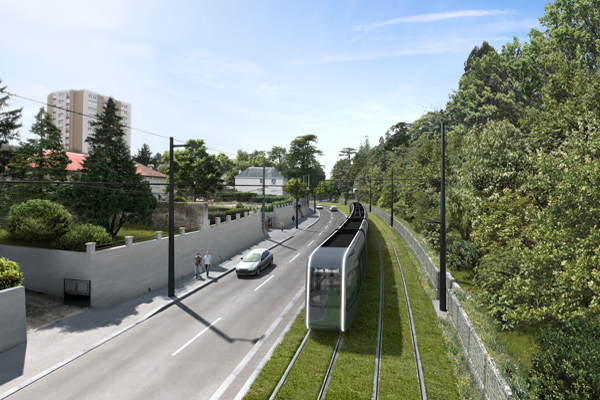
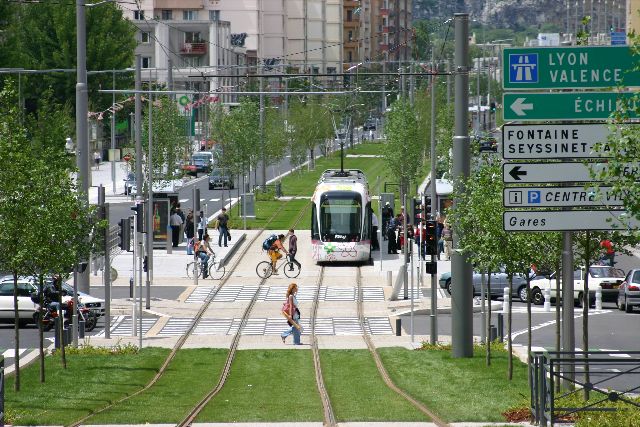


The proposed line will be an extension to the current Nuremberg tram network.


 Tiffany Crawford More from Tiffany Crawford




Recent Comments