TransLink Useless?
There is nothing so useless as doing efficiently that which should not be done at all.
Peter Drucker

After attending a large commercial event, the recurring complaint was how badly the were operated and how deaf TransLink was for change. As the annual event runs on the August long weekend, bus service to South Delta is minimal with a bus every 30 minutes, a very poor service by anyone’s standard.
Yet TransLink operates three bus services in South Delta on Sunday; the 609 Wally-Wagon,Ai?? (so named after former BC Attorney General, Wally Opal, who lived on the route and which is daughter used to get to high school, if she did not drive); the C-89, and the C-84, which also operate an hourly service on Sundays and holidays, and are noticeably unused. The three buses are nothing more than a phantom service, that carry virtually no one, yet still operate seven days a week.
Here lies TransLink’s problem, it doesn’t provide the transit the consumer wants, yet provides transit that the consumer doesn’t want. The result is easy to understand, transit is used by only those who do not have a choice in the matter.
TransLink has said that transit improvements for South Delta are a decade away, oh I can hardly wait, more buses, operating on routes that no one wants to use.
There is a transit service that the public does want and wants badly; the return of the South Delta to downtown Vancouver express buses that go straight to Vancouver and not force an unwanted transfer on the transit customer to continue his or hers journey into town. It is the one transit service that would attract new customers, but of course TransLink remains blind, deaf and dumb on the issue, as all new bus services are so designed to feed the Canada and SkyTrain Lines.
TransLink is fast becoming a dirty word for incompetence (example: David Berner’s Transclunk), stupidity, and arrogance and with calls from the South Fraser cities and municipalities to abandon TransLink and start anew, it seems TransLink’s time maybe drawing to an end. I predict thatAi?? TransLink, as we know it, will soon come to a sad end and the region will have a new South Fraser transit authority. This is not to say that a new South Fraser Transit Authority would be any better, but hopefully we could design such an authority to actually provide the transit what the transit consumer wants and no longer be held thrall to the notion that all buses lead to SkyTrain.
Change is needed, yet TransLink remains aloof to any real change and is now playing a very dangerous game by providing substandard transit, hopefully trying to convince the taxpayers to shell out more money to keep fat-cat bureaucrats up to date with their pension plans, oops, I meant transit planning.
Bring It On!
TransLink plays trains, while the regional transit system collapses!
It seems the message is getting through and the recent pouts and threats from TransLink officials about drastic cuts to local transit services, if road pricing is not implemented, is falling on rather deaf ears, especially south of the Fraser River.
TransLink’s ponderous bureaucracy just cannot provide a decent transit service now, how can the taxpayer even think of giving this provincial version of a “black hole” any more monies with the same lot at the helm.
The problem with TransLink is simple; the management are not transit experts, rather accountants and have little knowledge of modern public transit practice. In short, transit is being provided like it was still the 1950’s because the books look good. We are now well it is the 21st century and until TransLink can adapt which, considering the management, can’t, a new and more vibrant South Fraser Transit Authority, maybe a reality.
It is time to say adios to TransLink and the North Fraser Mayors who sail in her and welcome a new SFTA, with duly elected members who can provide real local input and control.
From the Surrey Leader
Updated: August 01, 2013
Once again, south-of-the-Fraser transit users are being shafted by TransLink.
The transportation agency, not well-loved in Surrey or Delta, announced Tuesday that it is scrapping a number of pass and discountAi??programs, claiming this makesAi??the system ai???more equitable.ai??? Among the programs cut are FareSaver tickets, the books of 10 tickets which have been well-utilized by many transit users from this area.
TransLink says the discount programs will be replaced by discounts that will be available with the new Compass Card system, to be introduced later this year.
The current discount programs end on Jan. 1, 2014. FareSaver ticket users have been getting a 21-per-cent discount in the past year, as the cost of fares rose while the FareSaver prices stayed the same. That discount will drop to 14 per cent with Compass Cards.
It sounds fair on the surface. But it doesnai??i??t add up when the impact of the three-zone fare system is added to the mix.
Transit riders who get on the system in Surrey, Delta or Langley must pay for three-zone travel to get to Vancouver. This applies even if they get on SkyTrain at Scott Road Station, just across the Fraser from New Westminster.
The only other area of the region where three-zone fares apply is in the Tri-City and Maple Ridge/Pitt Meadows areas. It is not coincidental that all areas subject to three-zone fares have the worst transit service.
TransLink collects an inordinate amount of fare money per passenger in Surrey, Delta and other three-zone communities. Yet at the same time, it provides a level of service that is far below what is offered in Vancouver, New Westminster, Burnaby or Richmond.
The difference between a one-zone and three-zone fare is substantial. To ride the bus or SkyTrain within Vancouver, where service is most frequent, it costs a transit rider (without any discounts for student, senior or child) $2.75. The same rider in Surrey, travelling to the edge of Vancouver at Joyce or Renfrew stations on SkyTrain, pays $5.50.
Despite steady growth and a higher density in urban areas than Burnabyai??i??s, transit service in Surrey is not being expanded.
There is still no express bus service for Surrey riders across the Port Mann Bridge, as promised as a condition of the Port Mann Bridge becoming a toll bridge.
And many bus users in Surrey frequently get passed by when waiting for a bus, and often wait up to half an hour to get on a bus at all.
This level of service and blatant discrimination against Surrey and Delta residents is completely unacceptable. People in this area are already contributing disproportionately to TransLink, through the higher fares, and being forced to buy more gas (and thus pay more gas tax). TransLink property taxes in this area are not discounted in any way, despite a lower level of service.
While a referendum on new sources of funding for TransLink is scheduled for some time early in 2014, Surrey, Delta and White Rock residents need to ask themselves if they want to continue paying disproportionately.
While few politicians even want to talk about it, we likely would be better off with our own regional transit system south of the Fraser, as long as it retains good links with the rest of the system.
Frank Bucholtz is the editor of The Langley Times. He writes weekly for The Leader.
Editor’s note: A spokesperson from TransLink responded to this column by pointing out that in December 2012, “TransLink launched the 555 Express Bus that runs between the Carvolth Transit Exchange on 202nd Street in Langley and Braid SkyTrain Station in New Westminster. This express bus was specifically designed to ride over the Port Mann Bridge.”
However, the bus does not stop in Surrey, despite an expensive 156 Street exit built to accommodate it, and therefore provides no express service to riders in Surrey.
http://www.surreyleader.com/opinion/217835841.html
And now a response from long time light rail advocate, Malcolm Johnston
TransLink is not for us
Published: August 07, 2013
The TransLink message is finally getting through.
TransLink does not benefit South-of-the-Fraser cities and municipalities, only those who live north of the Fraser River.
We have to remember, then-GVRD chair and soon-to-be TransLink chair, former Vancouver councillor George Puil, only inked the TransLink deal when the province promised to pay two-thirds of SkyTrain construction, west of Commercial Drive in Vancouver.
From the start, TransLink was only about Vancouver and how everyone else must pay for Vancouverai??i??s grand metro schemes.
Fast forward to 2013: TransLink now hovers near bankruptcy, demanding massive new tax hikes and user fees to fund SkyTrain subway construction in Vancouver, not caring a wit about transit, nor transit customers, in Surrey, Delta, and Langley.
A South Fraser transportation authority, made up of people directly elected to the board, would add some democracy and desperately needed fresh thinking, to the organization.
A separate South Fraser transit authority would add some much-needed competition to transit planning and show the ossified central command at TransLink that there are cheaper and just as efficient ways in moving people.
A good example is the Leewood/Rail for the Valley interurban plan, which shows that a Vancouver and Richmond to Chilliwack interurban route could be put into operation for less than $1 billion; not bad when one considers the 11-kilometre Evergreen SkyTrain costs over $1.4 billion.
The time has come to talk about Surrey and the rest of the South Fraser municipalities leaving Vancouverai??i??s sphere of influence and plan for transit that best benefits transit customers on our side of the Fraser. We have grown up.
http://www.surreyleader.com/opinion/letters/218736111.html
Malcolm Johnston
Delta
A tram in the snow!
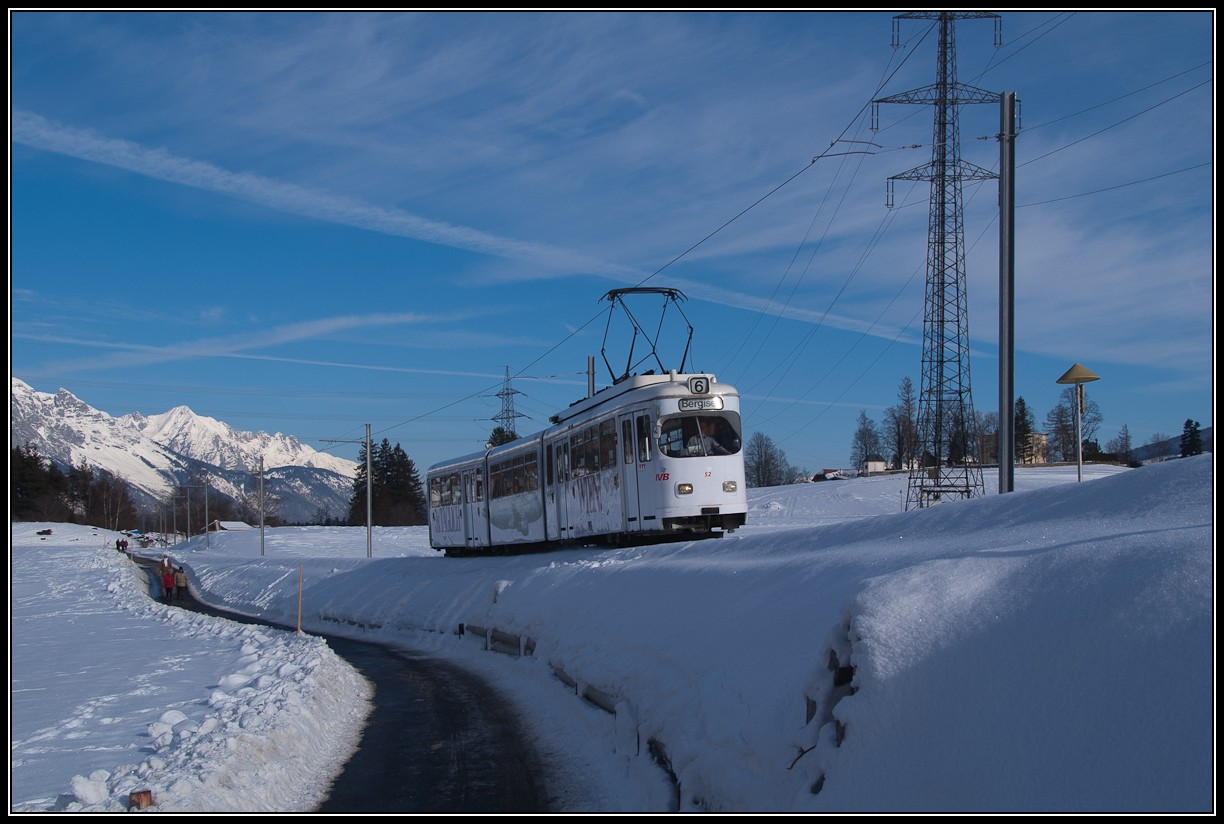 An Innsbruck to Igls tram in 2009, a cool picture for a hot summers day!
Almost could be a tram leaving Chilliwack for Vancouver in winter.
Eric Chris Writes a Letter to the Times.

TransLink and The Sun Sing The Same Old Transit Blues
The Vancouver Sun is back shilling for TransLink and ‘road-pricing’; too bad, because TransLink seems to be wanting to do the same old expensive and unworkable transit planning, which has failed in the past; expecting different results this time. Not going to happen.
Throwing more money at TransLink will not bring change, only higher wage packets for TransLink’s ponderous bureaucracy. What is needed is a change of transit philosophy. TransLink is still enthralled with the SkyTrain & density routine, when a customer based, light rail transit philosophy is needed instead. The dated Skytrain (light-metro) philosophy mostly benefits SNC Lavalin, Bombardier Inc. and developers, not the transit customer!
All Translink is doing is setting up the taxpayer for a wild roller-coaster tax ride that has no end.
Metro Vancouver transit options not meeting demand, some say
Cities facing a ai???shape or serveai??i?? dilemma
When Coquitlam began developing Burke Mountain four years ago, it had big plans for a transit-oriented community.
Homes with one-car garages were packed tightly together on streets so narrow that parking was only allowed on one side. New families moving in were promised they could walk, take transit or share a car to get to work, school or other destinations.
But there was a huge flaw in the cityai??i??s otherwise sustainable plan: The buses never made it to Burke Mountain, and now those narrow streets are overrun with cars.
It is a situation being faced across Metro Vancouver, not only in fast-growing areas such as Surrey and Coquitlam, but in transit-rich cities like Vancouver that are consciously building denser communities in the belief that transit options will be there when they are needed.
Yet many communities are still waiting for even a single bus, as TransLink struggles to come up with the money required to expand the system.
ai???This is the ai???shape or serveai??i?? dilemma,ai??? said Gordon Price of Simon Fraser Universityai??i??s urban planning and sustainable community development program. ai???In other words, should you invest in transit where it can serve people (currently), or do you put the transit in to (help) shape growth? If you have limited service, you shouldnai??i??t run empty buses in a cul-de-sac.ai???
TransLink often waits until there are enough potential passengers in an area before adding buses or rapid transit, noting it must have the ridership numbers to be cost-effective.
But in many cases, providing transit options early has triggered development growth across Metro, particularly along the Millennium and Expo SkyTrain lines and Canada Line.
Burnabyai??i??s Brentwood Town Centre, on the Millennium Line, is experiencing rapid development, while Vancouverai??i??s Oakridge neighbourhood, located along the Canada Line, is also designated for much higher density.
But other cities are experiencing the reverse. Surreyai??i??s Clayton Heights, with its maze of cookie-cutter townhouses, is also a prime candidate for transit services, but options are still fairly limited.
Simon Cunningham, who lives in nearby Cloverdale, said it takes him 45 minutes to drive to work in Metrotown, but the trip would take at least 15 minutes longer using transit.
ai???It takes me just as long to take a bus and SkyTrain as it does to drive to Metrotown,ai??? said Cunningham, a public relations officer at Metro Vancouver. ai???If it was easier and a shorter time, Iai??i??d do it for sure.ai???
Surrey Mayor Dianne Watts said Morgan Crossing, in South Surrey, could also use a bus for its growing population.
ai???Weai??i??re seeing it in every single community. You put the density in and now we need the connections,ai??? Watts said. ai???I had hoped weai??i??d be further down the road, but now itai??i??s delayed even further.ai???
Metro mayors complain they are repeatedly hamstrung by TransLinkai??i??s chronic funding woes, and are calling for more control over how money is raised and spent in the region.
One of those financing options, they say, is road pricing, which could include everything from tolls on roads and bridges, a vehicle tax, or a charge per distance travelled.
This would serve not only commuter traffic, Watts said, but also the trucks that are shipping goods and rely on the roads to get around.
TransLink has thrown its support behind the municipalities, and maintains it is working with them to reach the goals of the regional growth strategy, which calls for denser communities built around rapid transit stops or bus loops.
Bob Paddon, TransLinkai??i??s executive vice-president of strategic planning, told the Metro board last week that the transportation authority wants to see trip distances and travel times reduced by one-third, with the number of trips by transit, cycling and walking rising from 27 per cent today to 50 per cent by 2040.
The goal is to be able to deal with another million people expected to live within Metro Vancouver in the next 30 years, with all of them criss-crossing the region to get to jobs, particularly south of the Fraser and in the Tri-Cities.
North Vancouver District Mayor Richard Walton, chairman of the mayorsai??i?? council on regional transportation, said that while municipalities embrace the same principles, ai???our ability for transit to supply what we need is lagging.ai???
The situation has led to significant pushback in Lynn Valley against density, he said, ai???because theyai??i??re saying, ai???You canai??i??t guarantee us more busesai??i??.ai???
A few years ago, Port Moody temporarily postponed development in its city centre when planning for the Evergreen Line was delayed.
On Burke Mountain, the first bus is finally expected to arrive this fall, but it will likely only touch the edge of a community that was established four years ago ai??i?? running from the Town Centre to Coast Meridian and David Drive and into Port Coquitlam ai??i?? with no access to the newer developments a kilometre-and-a-half away.
City officials say that could have a huge impact on the neighbourhood, which already has 3,000 residents and expects a total of 30,000 when it is eventually built out.
ai???Itai??i??s meant to be served by transit,ai??? Mayor Richard Stewart said. ai???Weai??i??re looking at, potentially, a year from now when we get a bus. Those are the demand-shaping years ai??i?? in the first two months after you move into a new home, you either demand transit or you drive a car.ai???
Coun. Craig Hodge, who lives on Burke Mountain, said the communityai??i??s streets are ai???literally bumper to bumper. Once (those residents) come home, those streets are all packed.ai???
The same can be said even for some established areas across the region. Vancouverai??i??s transportation plan assumes it will have the same number of cars moving around the city 30 years from now as it does today, with the population growth managed by increased walking, cycling or transit.
Yet the city is already struggling to serve its transit needs along the Broadway corridor, with many riders left stranded by full buses. At the same time, First Avenue around Commercial is seeing increased traffic congestion, said Coun. Geoff Meggs, likely because some east-west commuters will not have transit options until the Evergreen Line arrives.
ai???First Avenue is really rough. Itai??i??s noisy and intense and wasnai??i??t really built for this kind of traffic,ai??? Meggs said. ai???Thereai??i??s certainly a lot of pressure there.
ai???Whatai??i??s been missing in the debate is that most people will be using all types of transit, but will use their car as the first option. Not having access to any other form of transportation makes it more likely people will want to drive.ai???
Sarah Ross, director of strategy and planning development for TransLink, wouldnai??i??t speak specifically about areas like Burke Mountain, but said the transportation authority tries to work with municipalities to determine specifically where the growth is going and identify transit needs for each area.
ai???We have to make sure we have some level of assurance that the services we put out will be well used,ai??? she said. ai???We always have limited resources, and we have a big region with very different needs.ai???
But Stewart warns that the region is already at a tipping point. If the referendum on road pricing fails, which is likely, he said, the public will face even higher costs because without transit, more roads will have to be built.
ai???The whole system will crash,ai??? he said. ai???We could build wider roads and lots of parking and let (Burke Mountain) become a car-dependent neighbourhood. But we made the decision that weai??i??re going to try to create a livable region.
ai???We have an important decision to make. Itai??i??s not a choice of spending or not spending. Itai??i??s a choice of spending on transit or (spending) a lot more on roads.ai???
Ai?? Copyright (c) The Vancouver Sun
Letters to the Editor – The Return of the Interurban
Tuesday, July 23: All aboard! Bring back the InterurbanVancouver
Sun

Terry Nichols of the Fraser Valley Heritage Railway Society operates the societyai??i??s recently restored BC Elecrtric Railway 1225 Interurban railcar at the Cloverdale Station in Surrey on Wednesday, July 17, 2013.
Photograph by: Ric Ernst, Vancouver Sun
Re: The return of the Interurban, Pete McMartin column, July 18
The Rail for the Valley group engaged Leewood Projects of the UK to do a viability study of the return of the interurban service for the Fraser Valley in 2010. The Leewood RftV study, not only showed that a new interurban service was viable, it would be quite cheap compared to recent rapid transit projects in the region.
A basic diesel light Rail service from Scott Road Station to Chilliwack could be had for around $500 million and a deluxe, full-build Vancouver/Richmond to Chilliwack, electric interurban/tram train service could be built for just under $1 billion dollars. Not bad, if one compares the cost of the Leewood/RftV interurban with the $1.4 billion,11-kilometre Evergreen Line, now under construction.
Rail for the Valley, at no expense to the taxpayer has a ai???shovel readyai??i?? plan to provide much needed ai???railai??i?? transit for the Fraser Valley, which to date has been ignored by most provincial and civic politicians.
The Leewood/RftV study can be seen on the Rail for the Valley web siteAi?? http://www.railforthevalley.com/Ai?? under the heading ai???Need for Passenger Railai???, then ai???Important Studies.
The return of the interurban, providing rail transit from Vancouver to Chilliwack is within our grasp, if only we had the political will to make it happen.
D. Malcolm Johnston, Rail for the Valley, Delta
Peter McMartinai??i??s excellent Thursday article on the resurrection of the Interurban rail line from Chilliwack serving many Fraser South shore towns indicates to me (and many others) that all local and provincial politicians in the Lower Mainland must accept the potential role of the Interurban system for the Fraser Valley, using present infrastructure already in place — thus saving the substantial capital costs of yet another horrendously expensive skytrain system (ie to South Surrey and Langley). Much of the original track is still in place and Victoria (Translink) can always arrange for the capital funds for stations to be provided for by property developers, using park-and-pay and stations, with connecting bus loops, incorporated into major retail mini-malls.
Politicians in the Lower Mainland and Victoria no longer have any choice over setting up major public transit routes as the taxpayer will not countenance more multi-billion-dollar systems like Skytrain, when more common sense alternatives such as the South Urban line and the Broadway tram routes are available. Why do we have to build more $2-billion tunnels under Broadway when the original Broadway tram system serviced five routes to and from Commercial Drive to UBC right upto the 1950s. Major European cities have tram systems to provide fast efficient public transit with regional rail connections to outlying towns. What is our problem that the provincial government is totally incapable of providing tram and regional rail systems. Toronto, Winnipeg and Calgary have at grade tram systems – so why canai??i??t Metro Vancouver?
Bob Tarplett, West Vancouver
Stadler LRV’s – Croydon [London] Tramlink
An official video promoting the new Stadler trams and Croydon Tramlink.
http://www.youtube.com/watch?v=mR-paeQhIXU
and http://www.youtube.com/watch?v=cRMvP-WC0ms

Toronto TTC – New Streetcar Implementation Plan
TorontoAi??TTC new streetcar implementation
http://www.ttc.ca/About_the_TTC/Commission_reports_and_information/Commission_meetings/2013/June_24/Reports/New_Streetcar_Implem.pdf
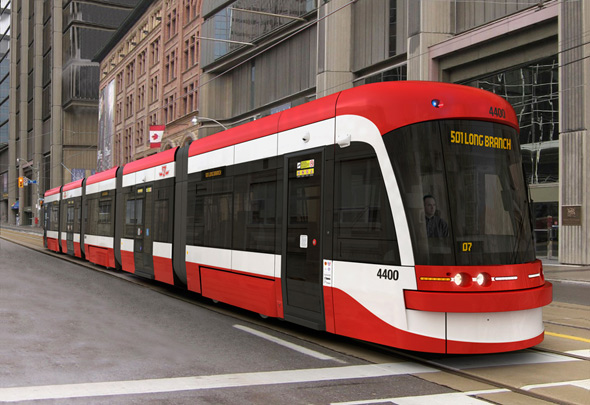
TTC Low Floor LRV Roll Out Plan Released (Update 3)
Updated June 25, 2013:Ai?? At the June 24 Commission meeting, CEO Andy Byford presented further details of the roll out plan.Ai?? This information is added to the end of the article along with additional information I received from TTC staff.
Updated June 23, 2013:Ai?? A section has been added at the end of the article discussing service levels and fleet planning during the transition from CLRV to LFLRV operation on routes.
The TTC has released its roll out plan for the new fleet of low floor light rail vehicles.
The TTC proposes to increase capacity on all routes during peak periods, although by varying amounts.Ai?? Off peak headways will be almost unchanged with an effective doubling of capacity on all routes using the 50-foot CLRVs, and a 1/3 improvement on routes with the 75-foot ALRVs.Ai?? As a general policy, this is a very good start because it avoids replacing capacity-for-capacity with concurrent widening of headways and degradation of service.
The new service levels are shown on the presentation at pages 7-8, and the changes in peak period capacity are summarized in the following table.
http://stevemunro.ca/wp-content/uploads/2013/06/LVLRVCap201306.pdf
Ai??koda 30T – a new LRV in Europe
Ai??koda Transportation won the tram tender in Bratislava
PlzeA?/Bratislava, 18. 7. 2013 ai??i?? Today, the company Ai??koda Transportation signed the contract for the supply of trams for the Slovakian metropolis Bratislava. It concerns fifteen two-way modern trams for the price of 39 millions of Euros (975 millions of Czech crowns). The tender also includes the option for the supply of other fifteen trams and the option for maintenance of the vehicles for the period of 15 years.
http://www.skoda.cz/en/press-room/news/skoda-transportation-won-the-tram-tender-in-bratislava/

The new Skoda 30T would look veryAi??good, on the roadsAi??in the City of Surrey and travellingAi?? outAi??to Langley & ChilliwackAi??via the former Interurban
The return of the Interurban

Pete McMartin: The return of the Interurban rail system (with video)
An era, and a piece of the Fraser Valleyai??i??s history, ended with that trip. The Interurban ai??i?? the beloved web of track and tram cars that connected Vancouver to Chilliwack and points in between ai??i?? had made its last run. The reign of rail had ended: The Age of the Car had begun.
But a group of volunteers, backed by a consortium that includes the City of Surrey, BC Hydro and Southern Rail of B.C., have brought a working portion of the old Interurban back, complete with rail car #1225, now 100 years old.
The result is, in a word, spectacular.
The 7.4-kilometre track is on an original portion of the Interurban line, from 176A Street near Highway 10 in Cloverdale to the intersection of 64th Avenue and 152nd Street, in the old Surrey neighbourhood of Sullivan. It runs through some of Surreyai??i??s busiest areas to some of its most bucolic. And at each terminus are working copies of the Cloverdale and Sullivan rail stations, built from historical records to be exact replicas of the originals (with some modern touches added, like wheelchair accessibility).
And rail car #1255, rescued from the Orange Empire Railway Museum, in Perris, Calif., where it had languished for years, has been restored to pristine condition, with its original bright red and buttermilk colour scheme. The restoration took four years and 20,000 man-hours, all of them volunteer.
The line, dedicated in late June, opened for business two weekends ago, and in four working days has already carried more than 1,000 passengers. It operates only on Saturdays and Sundays between 10 a.m. and 3 p.m., and the round trip ai??i?? $10 for adults and $5 for children ai??i?? takes just under an hour. It travels at a stately 25 km/h.
ai???The old rail cars,ai??? said Henry Ewert, a local historian whoai??i??s written four books on the Interurban, ai???could go 80 km/h easily, and often did.
ai???The first Interurbans began in 1891, between Vancouver and New Westminster, and the line out to Chilliwack began in 1910. That line was the first, real transit option open to people then, and the building of the line in 1910 absolutely opened up the Fraser Valley. For the first time, people could take day trips, visit between city and country, buy property. It was an integral part of the development of the valley. It was phenomenal.ai???
Ewert himself remembers riding the Interurban in the 1940s with his parents, going from Mount Pleasant to Chilliwack to visit his Mennonite relatives. The 120-kilometre trip would take just over three hours, with the windows of the tram car wide open and the countryside rolling by. Theyai??i??d stop at stations with names like Warwhoop, Bradner, Dennison, Evans Thomas, Sardis.
ai???Youai??i??d cross the bridge at New Westminster ai??i?? which was a big deal even then ai??i?? and youai??i??d climb up Scott Road, and after Newton, you were gone, you were out in the valley. Oh, it was wonderful. Suddenly, youai??i??d see Mount Baker, and for a boy living in Mount Pleasant, it was like climbing a stairway to heaven.ai???
At its height, the BCER operated 500 streetcars and 73 Interurban cars on almost 500 kilometres of track. During the war years, when rationing made driving difficult, the BCER carried over 140 million passengers annually. (In 1945, its peak year, the BCER carried 144.4 million passengers, and carried 833,000 tonnes of freight to boot. As comparison, the entire SkyTrain system in 2010, the Olympic year, carried 117.4 million passengers.)
With the warai??i??s end, the long decline of electric rail began. But the fondness for the BCER survived, and in 1996, the Surrey Heritage Advisory Commission came up with the idea of the possible restoration of part of the line.
Following a four-year feasibility study, the Fraser Valley Heritage Railway Society was formed. The society acquired two Interurban cars ai??i?? the aforementioned BCER #1225, and BCER #1304, an original Chilliwack rail car the society found in the Oregon Electric Railway Museum in Glenwood, Ore. (The society has since acquired a third tram, a BCER streetcar which was last doing active duty in Lisbon, Portugal.) When BCER #1304 is restored, there are plans to incrementally expand the rail line west to Newton, Kennedy and Scott Road, where it will link up to the SkyTrain station there. The society hopes to be at Scott Road in five to six years, with both cars and three more stations operating on the line.
ai???The value of this project,ai??? said Allen Aubert, secretary of the society and chair of the original feasibility study, ai???is about $7.5 million in cash donations, volunteer work and in kind services. I would say thereai??i??s probably in excess of 250 corporate and individual donors, a core group of about 50 to 60 volunteers and a membership of 380.ai???
Riding the existing line is, simply, a delight. The interior of BCER #1225 is pristine, with the leaf green painted interior contrasting with the bright yellow replicas of the original BCER rattan benches (with imported Indonesian rattan woven in a ai???railwayai??? weave). There is dark wood and bright brass fixtures throughout, and the wood windows open to let in the breeze. The car even has a ai???smoking areaai??? ai??i?? with wood benches and inlaid match strikes ai??i?? and original advertisements overhead. (ai???Burnettai??i??s Vanilla,ai??? ai???Rest-Arch Shoes For Women,ai??? ai???HomeKraft Bread.ai???)
And when it moves down the track, you can hear not only the sound of the rails but the creak and groan of wood. It is sweetly pleasant, with something organic about it, if thatai??i??s the right word. Itai??i??s moving, this moving bit of history, a remembrance of a slower time.
Aubert was asked if people ever ask him why we readily gave up something so pleasant.
ai???Oh,ai??? he said, ai???we get that. We get that all the time.ai???



Recent Comments