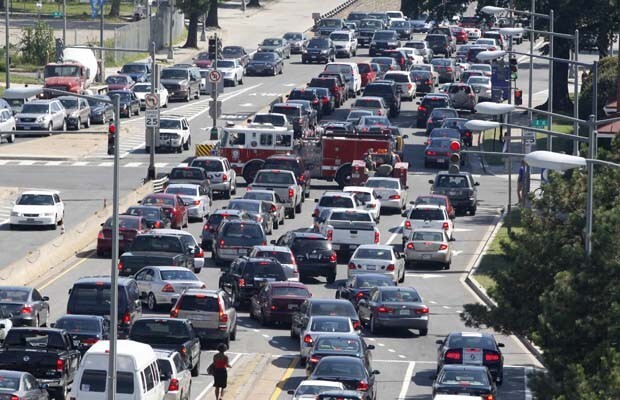
Let’s build more highways and bigger tunnels and bridges to cure congestion. Let us build 10 lane tunnels and bridges; let us build ten lane highways: let us build ourselves out of gridlock.
Sorry, facts show that one cannot build oneself out of congestion and gridlock as building bigger bridges and tunnels and wider highways does not cure congestion and the opposite happens, congestion and gridlock gets worse.
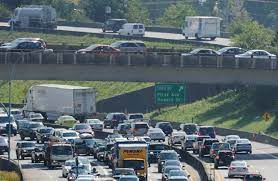
Gordon Campbell’s multi lane Port Mann bridge replacement has not cured congestion and in fact has made congestion worse, with Highway 1 gridlocked from Chilliwack to Vancouver.
The Massey Tunnel replacement is more of the same with politicians wanting bigger and wider bridges and tunnels to solve gridlock but the opposite will happen, as it has done over and over again, congestion will increase and gridlock continues.
Thus Metro Vancouver’s bridge, tunnel and highway expansion craze, costing billions of dollars, will not solve congestion, but make it worse.
Why then all those cars on the road? Why are they not using SkyTrain?
Simple answer is, SkyTrain does not go where they want to go. The transit system is wedded to an extremely dated hub and spoke, transportation philosophy where buses meet rapid transit at hubs and customers transfer and transfer again at the next hub.
Unlike much cheaper light rail (up to ten time cheaper), SkyTrain is stuck in a 1970’s bubble in a 2020’s world and customers are voting with their cars their dislike of transit.
The big problem is that regional, provincial, and federal politicians still believe that transit is a side show, a distraction and the real vote getter is bigger and bigger bridges, tunnels and highways with affordable transit options quietly ignored.
U.S. transportation authorities have spent billions widening urban freeways to fight traffic delays. What makes the “iron law of congestion” so hard to defeat?
Twelve lanes of Interstate 35 slice through the heart of the city of Austin. But that doesn’t appear to be enough: The highway is often choked with truck and commuter traffic, which is only thickening as the regional population balloons. A recent study named Austin’s section of I-35 the worst bottleneck in Texas.
The Texas Department of Transportation, known as TxDOT, says it knows what to do: Widen the freeway. The agency proposes adding eight more lanes, at a projected cost of $7.9 billion.
Many Austinites are skeptical. The plan would require destroying an estimated 150 homes and businesses and further embed an infrastructural barrier that has served as a racial dividing line since the 1940s. It would also increase vehicle emissions at a time when Austin is struggling to reach its climate goals. But TxDOT maintains that environmentally friendly alternatives to road widening, like investing in transit, are off the table. “We are allowed, right now, to be furious, to break things, to do what is needed to demand to be heard,” Austin Chronicle columnist Mike Clark-Madison recently wrote.
Beyond the damage that a bigger I-35 would do to racial and environmental equity, many city officials doubt that TxDOT’s proposal would achieve its stated goal of reducing congestion. “We know from experience, in Texas city after city, that a simple addition of lanes will not fix our traffic woes,” wrote Austin city council member Gregorio Casar, in a letter to TxDOT.
There’s a name for the principle behind that apparent paradox: induced demand. Economist Anthony Downs is often credited with first articulating this “iron law of congestion” in 1962, as construction crews were hacking interstates through American cities. Downs published a seminal paper with a stark warning: “On urban commuter expressways, peak-hour traffic congestion rises to meet maximum capacity.” In other words, adding lanes won’t cure snarled traffic; the additional car space inevitably invites more trips, until gridlock is as bad as ever.
Downs was not the first to sound an alarm about the futility of expanding urban roadways — not by a long shot. In 1932, an association representing streetcars warned that “as fast as improvements are made in existing arteries of travel … they are saturated by an increasing volume of traffic.” In 1955, urban observer Lewis Mumford wrote a series of essays in the New Yorker titled “The Roaring Traffic’s Boom,” in which he memorably compared a highway planner widening a congested highway to “the tailor’s remedy for obesity — letting out the seams of trousers and loosening the belt. [T]his does nothing to curb the greedy appetites that have caused the fat to accumulate.”
Downs’ iron law applies not only to U.S. cities, which have grown more traffic-jammed despite billions of dollars in fresh pavement, but also to those around the world. Highway expansions in Norway and Britain haven’t reduced congestion there, either. The principle now meets little opposition among economists and urban planners. “It’s widely accepted,” says John Caskey, who teaches induced demand as part of his urban economics course at Swarthmore College. “For economists interested in urban transportation, there isn’t really any debate.”
But a scan of current headlines reveals that a sizable chunk of the U.S. transportation sector still believes otherwise. South Carolina wants to spend $3 billion (and displace a minority neighborhood) to widen a freeway interchange “choked with traffic” near Charleston. In Los Angeles, Metro lists several highway expansion projects on its website under the heading “Less Traffic.” Maryland’s “Traffic Relief Plan” revolves around widening I-270 in suburban Montgomery County. The budget for Portland, Oregon’s Rose Quarter freeway expansion, which promises to both smooth the state’s biggest bottleneck and boost economic development in the predominantly Black neighborhood decimated by the original freeway’s construction, is now north of $1 billion.
If the definition of insanity is doing the same thing over and over and expecting a different result, then these transportation agencies seem certifiably nuts. Why is it taking so long — and why has it been so hard — for officials to recognize the futility of urban roadway expansion?
Highway planners aren’t crazy. But they are operating within a political and financial system that rewards new construction, despite its consistent failures to reduce congestion. A stroll through transportation history suggests that, unless those underlying incentives change, we’re likely doomed to continue repeating the same predictable, costly mistakes.
For over 12 years, Rail for the Valley has been advocating the reinstatement of the Vancouver to Chilliwack interurban service and in doing so, are being advised by professionals and engineers who have a sound knowledge of public transit systems and transportation modes.
The following are pertinent facts being overlooked by local, provincial and federal politicians.
Prior to the 2018 civic elections, the current mayor of Surrey claimed he was an expert and that the SkyTrain could be built to Langley for $1.65 billion.
The current estimated cost for the 16 kilometre Expo Line extension to Langley is in excess of $4 billion.
The name of the actual proprietary railway used on the Expo line is the Movia Automatic Light Metro (MALM)
MALM is the sixth rebranding of the proprietary railway and is now owned by Alstom after it purchased Bombardier’s rail division. Previous brands were Innovia Light Metro; Advanced Rapid Transit; Automatic Light Metro; Advanced Light Rail Transit; Intermediate Capacity Transit System.
Due to the flip flop from LRT to MALM, a new business case must be presented and a two year bidding process must be restarted from scratch.
The Expo Line extension to Langley is now underfunded by over $1 billion.
There has been no planning for building a cement viaduct over the Serpentine Valley and this will greatly increase the cost of the project.
The cost of cement and specialty steel needed for light metro construction is rising 2 to 3 times that of the rate of inflation. Inflation is projected to be 2.2 per cent in Canada in 2022.
To operate more trains on the Expo and Millennium Lines, a $3 billion rehab must be done to: replace and increase the electrical supply; replace the Citiflow automatic train control system as Bombardier Inc. is no longer supporting it; all switches must be replaced to permit faster running to increase headways, needed to increase capacity; all stations must be refitted to permit higher customer flows (is being done piecemeal).
As Vancouver is now the only customer for MALM and as Alstom will complete outstanding (paid for orders) by 2025, they may cease production altogether. This also coincides with the closure of two (Detroit & Toronto’s SRT) of the seven systems built around the world.
Two of the now called MALM systems in Yongin, Korea and Kuala Lumpor in Malaysia have involved both Bombardier Inc. and SNC Lavalin in court battles involving misinformation and corruption.
The cost for a 130 km, Vancouver to Chilliwack passenger service connecting Vancouver to North Delta, Cloverdale, Langley, Abbotsford, Vedder/Sardis and Chilliwack, with a maximum of three trains per hour per direction is $1.221 billion.
Rail for the Valley
Delta Optimist
Letter: Better transit for Delta?
Public transit in Metro Vancouver is designed to meet political agendas and not customer needs
Editor:
“Delta, TFN need improved transit service levels, says Harvie,” reads the headline in a recent Optimist story, but Mayor Harvie is dreaming because Delta’s transit situation will not change for a long time.
Here are two reasons why:
What was going to be a $1.65 billion extension of the Expo Line to Langley, as promised by the current Mayor of Surrey, has now turned into a $4 billion plus boondoggle, with a financial shortfall of over $1 billion!
Inflation will cause more impressive cost overruns on the Expo Line extension to Langley and the now $3 billion Broadway Subway.
The Expo and Millennium Lines desperately needs a $3 billion rehab, largely unfunded, but needed to operate more trains.
Secondly, to attract customers, transit needs to be user-friendly and the product TransLink offers is definitely not. COVID has shown that those who switched from transit to the car are reluctant to switch back, because the transit option seems third rate.
Public transit in Metro Vancouver is designed to meet political agendas and not customer needs, thus continues to grow in unpopularity, with TransLink remaining in high odour with the taxpayer.
$10 billion is needed from all levels of government (one taxpayer) to complete two light metro extensions (not to mention the $70 million to $80 million increase in annual operating costs) that will do little or nothing relieving congestion and pollution.
SkyTrain light-metro is notorious for not attracting the motorist from the car and why the proprietary railway has failed miserably internationally, with a total of seven such systems sold in the past 41 years and only five remaining after 2025.
SkyTrain’s current financial obligations means transit customers will be waiting a long time for local bus improvements, as Vancouver, Surrey and Langley are getting politically prestigious, platinum-plated rapid-transit at the expense of everyone else!
Rail for the Valley
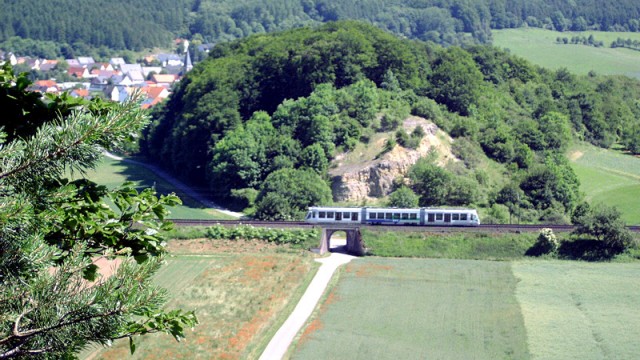
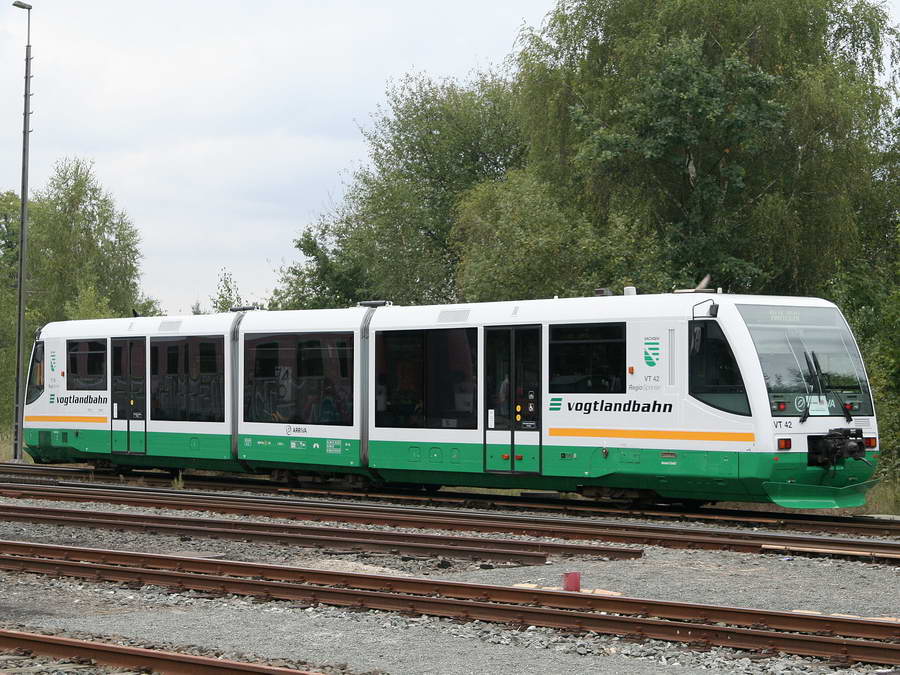
TramTrain as used in Zwikau, Germany.
Chilliwack Progress
LETTER: SkyTrain announcement condemns Fraser Valley to more congestion
$1.5-billion investment could create communities with a modern 130-kilometre regional railway
Jul. 16, 2021
Friday’s federal funding photo-op for the $3.95 billion, 18-kilometre Expo Line extension to Langley, didn’t mention that the project is almost $1 billion short of funding and the shortfall must be made up by the province and TransLink, with higher user fees, transit fares, gas taxes and many more hidden taxes that subsidize the present SkyTrain light metro system.
That does not make for good photo-ops. If Justin Trudeau and John Horgan really want to reduce pollution and congestion, SkyTrain light-metro is the wrong way to go, because it doesn’t. It has been recognized for decades that light-metro is very poor in reducing congestion and associated pollution, as Vancouver has demonstrated.
Secondly, to attract customers, transit needs to be user-friendly and the product TransLink offers is definitely not. COVID has shown that those who switched from transit to the car are reluctant to switch back, because the transit option seems third rate.
Public transit in Metro Vancouver is designed to meet political agendas and not customer needs, thus continues to grow in unpopularity, with TransLink remaining in high odour with the taxpayer.
$10 billion is needed from all levels of government (one taxpayer) to complete two light metro extensions (not to mention the $70 million to $80 million increase in annual operating costs) that will do little or nothing relieving congestion and pollution.
SkyTrain light-metro is notorious for not attracting the motorist from the car and why the proprietary railway has failed miserably internationally, with a total of seven such systems sold in the past 41 years and only five remaining after 2025.
SkyTrain’s current financial obligations means transit customers will be waiting a long time for local bus improvements, as Vancouver, Surrey and Langley are getting politically prestigious, platinum-plated rapid-transit at the expense of everyone else!
City manager Steve Kanellakos said Rideau Transit Group reported on the root cause of the derailment: a gearbox came loose and dragged along the tracks. Kanellakos said RTG learned the gearbox bolts weren’t torqued properly.
What was going to be a showcase LRT has turned into a Light Metro fiasco.
When politicians get involved with a transit project, especially a rail projects, things get derailed quite easily.
Some historical context:
In September 2009, the City of Ottawa paid Siemens Canada Limited, PCL Constructors Canada Inc., Ottawa LRT Corp. and St. Lawrence Cement Inc. the sum of $36,718,500.00 in order to settle their lawsuit for the wrongful termination of a contract for the design, construction and maintenance of a light rail transit system in Ottawa.
The project consisted of 27 kms of electrified track, 21 specially designed and built vehicles, associated mechanical and electrical equipment and various buildings. Construction was to begin on October 15, 2006. The project was a public-private partnership between the Province of Ontario and the Government of Canada each agreeing to contribute $200 million in funding.
In October 2006, the Government of Canada announced that its funding contribution was conditional upon receiving a notice of support for the project from the newly elected City Council following the November 2006 municipal election. Following the municipal election, the newly elected council voted to change the scope of the project. The Federal and Provincial governments would not guarantee funding for the changed scope. In response, Ottawa terminated the contract on the basis that the condition precedent of funding from Provincial and Federal government had not been satisfied. The Project Agreement had limitation of liability clauses which purported to cap the plaintiff’s recovery at $2 million.
In June 2007, the plaintiffs commenced an action in Superior Court in Brampton, alleging fundamental breach and breach of the obligation to perform the Project Agreement in good faith. Brampton is the jurisdiction in which the lead plaintiffs were headquartered. In September 2008, the City of Ottawa’s motion for a change of venue from Brampton to Ottawa was dismissed. In September 2009 a settlement of the action was reached on the basis of a payment of $36, 718,500.00. Siemens Canada Limited, PCL Constructors and the Ottawa LRT Corp. were represented by McCarthy Tétrault LLP, Dean Novak, Siemens Canada Limited’s Assistant General Counsel, and Douglas Stollery, Q.C. General Counsel of PCL Constructors.
That’s right, Siemens was going to build a 27 km LRT system for $1 billion and a change of government, changed it to a $2.1 billion 12.5 km light metro.
So, the politicians in Ottawa built a light metro instead, but by using modern trams, they could call it LRT.
Sounds very familiar doesn’t it. Well it should because after the 2018 civic elections, the new Surrey mayor rejected a $1.63 billion LRT to Newton and Langley, for a now over $4 billion, 16km light-metro extension to Langley instead!
The following is a long read and Zwei will comment where deemed necessary.
Why the bumpy, two-year ride of Ottawa’s multi billion-dollar LRT system is sparking calls for a public inquiry
By Tom SpearsSpecial to the Star
Sun., Sept. 26, 2021
On an October morning in 2019, Ottawa’s shiny, new, red and white trains started full service.
And as the city held its breath, its long-awaited $2.2-billion Light Rail Transit system ran smoothly.
It was a Monday when people actually seemed to enjoy going to work. They streamed off buses onto platforms, waved along by volunteer “ambassadors” in red vests. They watched the overhead displays showing how long it would be until the next arrival, as the trains, comprised of two cars that hold nearly 300 people each, slid into their stations with a quiet electric hum.
Passengers talked happily to reporters. And the trains ran flawlessly all day east and west from downtown Ottawa on 12.5 kilometres of new track.
Commuter Kari Glynes Elliott recalls watching the first train with friends.
“We looked at each other and said: This is a game-changer. This is amazing,” Elliott says.
“We were wrong.”
The next day, the new system broke down for a while. And the next day, it happened again. And the next, yet again.
Zwei replies: We forget that the Expo Line had reliability problems for the first year of operation, with new wheels wearing out so fast that new wheel-sets were being air shipped to Vancouver.
It faltered repeatedly in the weeks that followed, as long lines of public servants got off buses whose routes now stopped before reaching downtown and walked the final two kilometres to Parliament Hill (or farther for stranded University of Ottawa students). Luckily the weather was nice, but that would soon change to a winter of discontent.
Breakdowns were a common occurrence in the LRT’s first year of operation, then things seemed to settle down. Until recently, that is. Two derailments in six weeks have sparked concerns once more about the system’s reliability.
And as the LRT’s anniversary approaches, no one is baking any birthday cakes.
The $2.2-billion LRT built so far is, in fact, just Phase 1. The trigovernment project is set to stretch into the suburbs, with Ontario and the federal government each pledging more than a $1 billion toward the next phase, on top of $600 million each for the first. But with critics pointing to the problems experienced, from quick timelines, to maintenance issues, to a lack of local experts on staff, the system that had once promised to transform commuting in the nation’s capital has become, in the view of those critics, a cautionary tale, and a legacy project for the city’s mayor has turned into a bumpier ride than anyone expected.
The past week began with a derailment and an emergency meeting of the transit commission, where a downtown city councillor, Catherine McKenney, called for a public inquiry into the LRT’s full history.
The train last Sunday derailed as it approached Tremblay station, near the city’s VIA Rail station, but its sensors didn’t notice. The train departed the station with 12 passengers and traveled a few hundred metres “in a derailed condition,” according to investigators. It crossed a bridge over a six-lane street before banging into a pole and stopping, with one car jackknifed. Track and controls were damaged all the way along, and the entire LRT has been shut down for an estimated three weeks.
The derailment on a bridge “could have been catastrophic,” tweeted Shawn Menard, another Councillor, who is backing the call for an inquiry.
Zwei replies: Actually no, as rail ridge are so designed to prevent this sort of accident with guard rails, articulated vehicles tend to to go straight.
Ridership has been about a quarter of the norm during the pandemic and its work-from-home conditions, but a return to old-style commuting with full trains may raise pressure on the system.
This light rail system has been Mayor Jim Watson’s baby, with the mayor personally rallying support for years as the project took shape.
Zwei has always maintained that the Ottawa LRT is in fact a light-metro as it operates on a totally segregated R-o-W and the trains run automatically from a central computer.
The train that derailed last Sunday was the very same train that hosted Watson and the city’s media for an opening ride in 2019. On that occasion, photographers were everywhere. But when it derailed, a transit official threatened to call police to keep photographers from shooting the scene.
Watson maintains the rail system’s challenges can be dealt with. He has also acknowledged the problems, and proposed giving residents a free transit pass for one month for the inconvenience they’ve experienced.
And he told council this week: “I don’t support never-ending meetings, which quite frankly may be good political theatre. … Our staff need to spend their scarce time resources on fixing the problem.”
Key to the rolling story of Ottawa’s LRT is that it never seems to be the same problem for long.
It’s been a laundry list of glitches, big and smell. Er, small.
Zwei replies: The big problem was that there was no commissioning time for the new light-metro, no proper run-in of equipment.
Early on it was “door faults.” If a passenger held a door open, it would refuse to close again, and the train would remain stopped until somebody overrode the sensor. This kept stalling service until passengers learned and OC Transpo adjusted the sensors to be less skittish.
Zwei replies: This has been an early and ongoing complaint of Vancouver’s SkyTrain light-metro and there is always door problems in freezing weather or snow.
Sometimes an onboard computer won’t talk to the systemwide computer, and the train stops.
Zwei replies: This is extremely common with Vancouver’s SkyTrain light-metro.
Switches that direct trains to the right track were designed with heaters for Ottawa winters, but the heaters weren’t powerful enough, so the switches froze. This happened during winter testing before LRT opened for service, but it kept happening a year later, with passengers on board. Workers with blowtorches had to melt the ice. (There are stronger heaters now.)
Zwei replies: This is an engineering fault and not a LRT fault.
Wheels developed flat spots — something that’s normal over many years but not typically in the first year of service.
Zwei replies: Wheels and track have always been a problem on Vancouver’s SkyTrain, the corrugations on the railhead need constant grinding.
Last December came more bad news: cracked wheel hubs. Alstom SA, the train’s French manufacturer, has been supplying new wheels to all the cars.
And then there’s that smell.
A strong sewage odour in the underground Parliament and Rideau stations downtown, of unknown source. Passengers with more sensitive palates say the stations smell slightly different, but both are foul.
Zwei replies: This is again, an engineering/contractor problem and not a light rail problem.
Finally came derailments in August and September, with no injuries.
In the first, technicians found that an assembly connecting an axle to a wheel wasn’t tight, and the resulting movement caused wear and eventually failure. Checks revealed nine train cars — about a quarter of the fleet — had similar problems and needed repairs.
The cause of the latest derailment is still unknown.
Zwei replies: One should wait for the official investigation to be complete before condemning the the system or vehicle.
Transportation Safety Board investigators are now looking into the wheel cracks and two derailments.
The early days when the city got on well with the private construction consortium Rideau Transit Group appear to be over.
The city has periodically withheld its monthly maintenance fee of more than $4 million. The Rideau Transit Maintenance consortium has a 30-year contract to keep the system running.
The consortium rarely makes public statements, but did issue a news release following the recent derailment.
“We understand how much the people of Ottawa rely on the Confederation Line and we recognize and regret the inconvenience caused by this week’s closure,” it read. “Our team worked tirelessly this week to restore service this morning. Our first commitment is to the safety of our riders, staff and community.”
Frustrations from riders and advocates, however, remain.
“I’m just all sorts of angry,” said Sarah Wright-Gilbert, a transit commissioner who has emerged as the most public critic of LRT operations. (She’s not a city Councillor, but rather one of four ordinary citizens chosen by the city from among applicants for a four-year term.)
Zwei replies: This is unheard of in Metro Vancouver a common citizen chosen for being a transit commissioner.
She says that in her opinion Ottawa bought unproven trains.
“People are like: Aren’t these trains running in Russia and Paris?” she said.
Not quite. Alstom has had success with its Citadis light train in Europe and Asia. But Ottawa is the first buyer of a new model, the Citadis Spirit, redesigned for cold weather.
“It’s apples and oranges. You cannot compare them,” Wright-Gilbert said.
The Citadis Spirit has been chosen for the Greater Toronto Area’s new Finch West and Hurontario LRT lines.
“When the train is not working properly and there are so many delays … it’s not even reliable,” she said.
But there can be trouble even when the trains run on time. To make way for trains, Ottawa carved away many bus routes. People who used to take one long bus ride from the suburbs to downtown now take a bus, then a train, and sometimes a bus again to continue west of downtown.
Zwei replies: This is also true in Vancouver where major bus routes feed into the SkyTrain light metro system, with over 80% of SkyTrain’s ridership first taking the bus.
Commuter Glynes Elliott, who had great hopes on Day 1, has one son at college and one in high school. The college student has one class online followed by one in person, and sometimes the bus can get him to class on time, but not always, “which is absurd because it’s not a great distance. This is a small city. We could be able to get around with the snap of a finger,” she said.
Her younger son has a three-part commute. A bus, then two stops by train, and another bus. (He prefers to cycle instead.)
Zwei replies: This is the same complaint in metro Vancouver, where transit customers are tired of transferring and either return to the car or find other means to travel.
“This is the design of the Ottawa system now. Even for very short distances you often, if you are anywhere near the train, are sort of forced onto the train,” she said.
This week, when Coun. McKenney, at the emergency transit meeting, called for a public inquiry into the LRT troubles, the call was met with support from colleagues.
“We’re bleeding riders,” said another Councillor, Diane Deans. “People are just deciding that the transit system in Ottawa is not cutting it and they need to make alternative arrangements. It’s going to be a long time getting faith back in that system.”
“I think we bought a lemon.”
Zwei replies: I hardly say a lemon with over 600 light rail/tram operations around the world. If the Citadis Spirit trams are found to be problematic, there are many companies who can supply replacements. With SkyTrain, there is only one supplier, Alstom.
Anything can be fixed, Deans says, but OC Transpo needs to develop a strong base of rail experts rather than flying in experts from other places at crisis times.
“No one goes out and intentionally buys a lemon of anything,” a visibly frustrated Watson told reporters this week after Deans tweeted out a picture of a lemon.
He said the trains had run reliably for the past year and a half, until the derailments.
“The fact is, the system, fundamentally, is a very good system and Phase 2 will make it an even better system,” he said.
But he said Transpo must return to being reliable.
“We can’t sort of go for a few months and then have another problem and then go for a few months. That will erode the public’s confidence deeply in the system. And we have to regain their confidence because by and large we’ve lost it” through mechanical breakdowns.
He called this summer’s incidents “totally unacceptable.”
“I still have confidence that it was the right decision (to build this LRT). As you know, it was voted on unanimously. It’s always easy to second-guess, but I think it’s the right system, the right route,” he said.
Critics of the LRT say it’s hard to get information about it. Ken Rubin, a private researcher and access-to-information expert, has launched many requests about construction and operation only to see most of them stall. The problem: the private companies, RTG and Alstom, often object that the information is their confidential property. It’s “very difficult” to get information, he said. “Sometimes it takes years and sometimes it takes court decisions.”
Zwei replies: This is true of TransLink, where F.O.I’s about SkyTrain are returned heavily redacted due to it being proprietary or confidential information.
At an emergency transit commission meeting Monday, Transpo’s general manager John Manconi, who retires at the end of this month, said Alstom needs to “send an army of people in. Enough is enough. Fix the vehicle and get it consistently reliable.”
Wright-Gilbert says the view of most city Councillors “is that nothing is unfixable.”
“My response,” she counters “is public confidence is unfixable if you get to a certain point.”
Zwei replies: The public soon forget.
Tom Spears is a veteran journalist who has extensively covered the LRT in Ottawa.
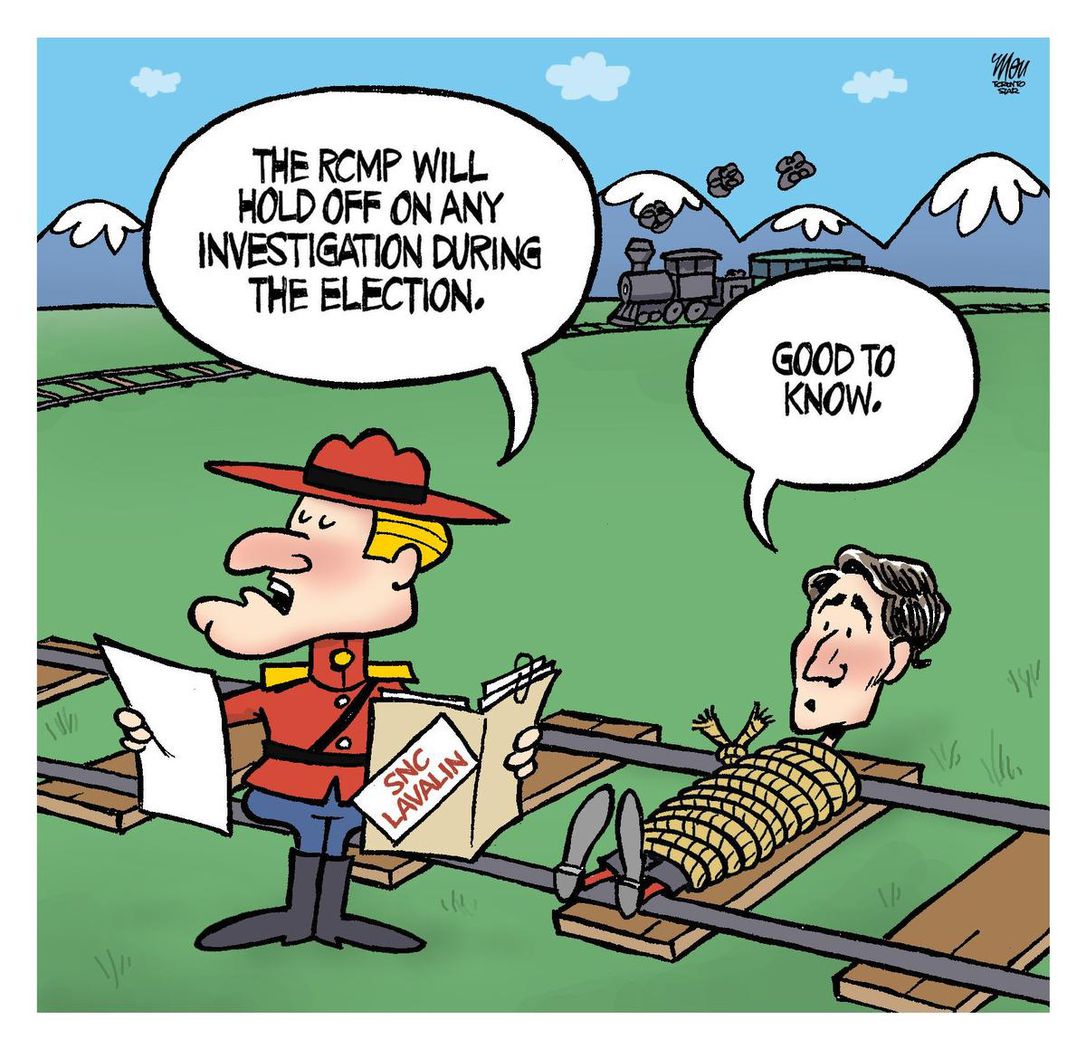
Jjust a few days after Justin Trudeau’s $600 million cabinet shuffle, SNC Lavalin raised it’s dirty head out of the swamp, like a monster that refuses to die.
SNC Lavalin is one of the biggest movers and shakers with Metro Vancouver transit projects and many former employees working for TransLink, civic government and at the Ministry of Transportation.
It is safe to say, SNC lavalin has tremendous influence in Metro Vancouver and BC.
SNC Lavalin is the lead company of the P-3 consortium that operates the Canada Line and in the final bidding,SNC Lavalin bid against SNC Lavalin! for the P-3 and to no one surprise, SNC Lavalin won!
The judge, overseeing the Susan Heyes lawsuit (She won but the judgment was overturned on appeal) against TransLink called the bidding process for the P-3 a “charade”!
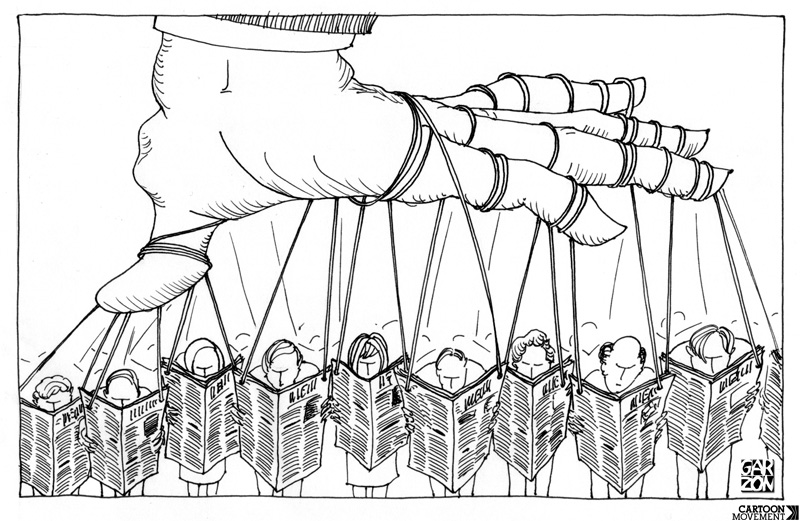
The mainstream media, compliant as always, never raised an eyebrow.
Maybe the RCMP should take a look?
2 former SNC-Lavalin execs arrested, charged with fraud and forgery
Charges relate to bribes that RCMP allege were paid in exchange for obtaining contracts
CBC News ·
Two former executives at SNC-Lavalin have been charged with fraud and forgery by the RCMP as part of an ongoing criminal investigation into the Montreal-based engineering company.
Known as Project Agrafe, the investigation into various SNC subsidiaries and employees is related to bribes that RCMP allege were paid in exchange for obtaining contracts.
On September 23, the RCMP arrested Normand Morin, a former vice-president of SNC-Lavalin, and Kamal Francis, a former vice-president at SNC-Lavalin International Inc.
The men were arrested in the Montreal area, where they both live. They, along with their former companies, have been charged under the Criminal Code of Canada with the following offences:
Forgery.
Conspiracy to commit forgery.
Fraud.
Conspiracy to commit fraud.
Fraud against the government.
Conspiracy to commit fraud against the government.
“We remain committed to disrupting, deterring and preventing both domestic and foreign corruption, and aim to bring individuals and companies involved in these types of crimes to justice, regardless of when they were committed,” Inspector Denis Beaudoin of the National Division RCMP Sensitive and International Investigations section said in a release.
Both men were released from custody and are scheduled to appear in a Montreal court on Sept. 27, along with representatives for SNC-Lavalin Inc. and SNC-Lavalin International Inc.
None of the charges against the men or the companies has been proven or tested in court.
It is also coming to light that both the Broadway subway and the Expo Line extension will increase house and accommodation prices, who would have thought!
“Our biggest transit investments have inadvertently displaced affordable rental with market condos,”
Good old Zwei has been telling people the same thing for almost 10 years and it is no coincidence that the term “demoviction” was coined in Vancouver.
SkyTrain is being built strictly for land use or in laymen terms, SkyTrain construction is the driver for land assembly, land speculation, the demolition of affordable housing and enriching land developers who get the same land up-zoned to higher densities to build unaffordable high rise condos for the monied set, especially overseas.
Building SkyTrain has nothing to do about good public transportation.
Election 2021: Liberal campaign promises may not achieve housing, transportation goals of British Colombians
The Liberals have promised to address housing affordability with first-time home buyer tax credits and savings accounts
Lisa Cordasco
Publishing date: Sep 22, 2021
Federal promises to increase affordable housing and expand rapid transit in the Lower Mainland could result in a higher cost of living, less-affordable housing and more climate destruction, according to some analysts and advocates.
During the recent election campaign, the Liberals made promises to address housing affordability with first-time homebuyer tax credits and savings accounts. They made other pre-election commitments to contribute up to $1.3 billion toward the construction of the Surrey-Langley SkyTrain expansion.
But housing and climate experts say neither set of initiatives will achieve its goals without integration.
“Our biggest transit investments have inadvertently displaced affordable rental with market condos,” said Alex Boston, executive director of Renewable Cities, a policy and planning think-tank at Simon Fraser University’s Morris J. Wosk Centre for Dialogue. “The Surrey-Langley SkyTrain project will actually increase carbon and congestion because it is facilitating urban sprawl.”
Jill Atkey of the B.C. Non-Profit Housing Association agrees.
“We have dislocated policies. Transportation planning is separate from housing planning and housing planning is separate from school planning, even with health care, we’re building a giant hospital at St. Paul’s with no new housing planned, around it,” she said.
Both Atkey and Boston believe a new approach is needed where groups like TransLink work with municipalities, developers and the province to create housing alongside transit corridors, and for the federal government to demand such links before providing funding.
Atkey said she is disappointed that the election promises made by the Liberals have focused more on new-home ownership.
“We were hoping to see increased investment in affordable housing, but we didn’t see much of that in the Liberal platform. There was more of an emphasis on new-home ownership, which a lot of economists say is not a good idea because it simply stokes the demand for unaffordable housing,” said Atkey. “Even with those incentives for first-time homebuyers, unless you have an inheritance, you don’t have much chance of getting into the market, so what about the rest of us?”
Boston said first-time homeowners are being pushed to the suburbs, where their costs for transportation will increase. He said vehicle growth is 2 1/2 times the rate of housing growth.
“The further you are from employment hubs and services, the more you drive. Housing developments in places like Surrey, Langley and the Tri-Cities, for example, are being created to accommodate cars. They are not transit-oriented and they are not walkable. Instead, they need to create neighbourhoods around transportation corridors.”
Boston suggests TransLink partner with developers or non-profits to build affordable housing on transit-owned property, where SkyTrain stations and transit hubs are built, and he adds the federal and provincial governments must make that a requirement to receive transit funding.
“Single-family housing developments never pay for the cost of the infrastructure they need,” said Boston. “Densely populated neighbourhoods actually subsidize those costs.”
Atkey said the Liberals did make some election promises aimed at affordable rental housing but they’re not new initiatives. Most are enhancements to the continuing National Housing Strategy.
“They plan to double the existing Co-Investment Fund, but that is not a fund that has taken off here in British Columbia. We’d rather see a complete retooling of that program,” she said.
The Co-Investment Fund offers loans to underwrite housing developments, but Atkey said the requirements cut out most non-profit and co-op housing proposals.
“You need to get municipal approval processes before getting the federal funding committed, but municipalities want funding commitments before they will entertain approval processes, so it’s a catch-22,” said Atkey. “To get though the approvals process, a non-profit would have to put up close to $500,000 and that is a huge risk to take without the certainty of that final approval.”
Atkey says groups like hers will be watching with interest a new federal promise to examine the tax regime for large corporate owners of residential properties.
“For every unit of affordable housing we are building, we are losing two affordable housing units, so the solution is not just to build, but to preserve what we already have,” she said. “We don’t have a lot of details on this yet, but this could limit the excessive profits that result from rennovictions. We’d like to see assistance for non-profits to take over these properties. The provincial government is interested, but we haven’t heard much from the federal government.”
Atkey is also interested in a federal promise of a rent-to-own program, which the province already has.
Analysts like Boston and advocates like Atkey agree more integration is needed between programs that target health, transportation and housing plans along with more co-operation among governments to align their programs and funding priorities.
“The disconnect is we have strong provincial housing programs rolling out right now and they don’t really align with the federal programs,” concluded Atkey.
Boston said there are signs that various levels of government are understanding that integration is crucial: “There is big support provincially for strengthening sustainable land use and transportation policies. The UBCM has identified it as a priority, Infrastructure Canada is internally recognizing these linkages and that’s hopeful.”
Before reading on, please remember this figure of $1.3 billion, as it represents an updated (2021) cost for Rail for the Valley’s Leewood Study, offering a three trains per hour per direction from Vancouver to Chilliwack.
Doing the Rail for the Valley blog for the past 12 years has been an interesting experience and I have learned a tremendous amount. To keep the RftV blog credible, I had to reach out to real professionals to get an accurate account of our transit situation in Metro Vancouver. Their comments are gob-smacking!
The following is from RftV’s old friend, a transportation engineer from Ottawa, who uses the avatar Haveacow.
Mr. Cow wishes to remain anonymous due to the small and arcane world of transit planning in Canada, which for telling the truth, could mean being blackballed or worse.
This from another engineer commenting why Mr. Cow uses an avatar.
…… can understand the reason for the pseudonym I know they once found out what they thought was mine (it was) and I paid dearly for it.
The SkyTrain lobby just love to get even with those who deal in fact.
The main takeaways are from this fact filled essay on the future of the Expo Line reaching Langley:
The Expo line extension is no longer a TransLink project, it is a provincial project being driven by the premier’s office.
Surrey Mayor McCallum’s claim that the Expo Line extension to Langley would cost $1.63 billion was wildly wrong, yet no one, except Rail for the Valley, said anything! Where was the Mayor’s Council on Transit; where was the ministry of Transportation; where was TransLink’s CEO; who was protecting the taxpayer?
There is currently no funding agreement, no business plan, no direction at all.
The cost of the completion of the Broadway subway will cost $4.98 to $5.12 Billion and will take precedence over the Expo Line extension to Langley.
Structural concrete prices increases alone, could add anywhere from $36 Million to $55 million per year on top of just the basic inflation for both projects.
No mention of the much needed $3 billion rehab.
TransLink has serious financial issues.
Dismal reading, as premier Horgan seems to be following the path of former premier Glen Clark and his liking of FastFerry boondoggles. We all know what happened afterwards, the NDP were unelectable for 19 years.
Premier Horgan is playing with fiscal fire a la the dread FastFerry fiasco!
It is extremely scary for both the taxpayer and the transit customer that the premier’s office is driving the expansion of SkyTrain, especially to Langley because we all know, when the premier of the province gets involve, common sense fiscal responsibility are thrown out the window, as the projects becomes a personal ego trip and we all know, premiers cannot seem to be wrong, especially at election time.
First, let us be honest with ourselves folks. I have crunched some numbers. The change in scope for the Surrey to Langley Skytrain Expo Line Extension Project (The SLS), from 2 stages into a single stage project was because of cost and nothing else. The cost to go 7 km to Fleetwood was around $1.69 Billion to $1.72 Billion, exceeding the $1.63 Billion budget. This is why they combined the 2 stages into a single stage project. The project to Fleetwood died months ago.
According to the second stage of Translink’s 10 year funding plan and the Rapid Transit Funding Agreement for the Surrey LRT Line, roughly $165 Million of that $1.63 Billion was coming from some past but mostly future tax and fee revenues (2018-2028 period). Translink’s local fuel taxes, development charges, parking fees, property tax increases as well as targeted amounts of Translink’s own passenger revenues were to help fund roughly 8.6% of the $7.3 Billion Second Stage of the 10 year funding plan, roughly $627.8 Million in total. This plan included the Broadway Millennium Line Extension to Arbutus, the Surrey LRT Line and many, many other smaller capital programs.
So far, the Translink funding for the Broadway extension is unaffected (no surprise). However, because of the pandemic, Translink is short $78.8 Million in planned revenues from 2019 and 2020 (their figures not mine), 2021 is not done yet and it may take years for Translink revenues to return to pre-pandemic levels. So it’s not $1.63 Billion in existing rapid transit funding, it’s actually around $1.55 Billion and dropping. If you don’t want to touch rapid transit funding, no less than $78.8 million must be taken out of the remaining $2.88 Billion in capital funding for the many other projects of the second stage of Translink’s 10 year capital funding plan.
My point, turning the Surrey to Langley Skytrain extension plan from a 2 stage plan to single stage plan was no gift to the public, the finances around the original 2 stage funding plan for the extension, quietly died. The massive increase in construction costs and the loss of Translink revenue from the pandemic, killed it.
Not only is a new business case needed but a whole new funding plan as well and it’s going to take 2 to 3 years to redo this process. So let’s be honest, currently, there isn’t enough funding for this $3.95 Billion extension. No business case, no funding plan, Translink isn’t even involved in the project management anymore, this is now a completely provincially run project. Translink may not be capable of being a full financial partner in this project or any other large capital project for some time, due to its current budget issues.
You have a PROMISE of $1.3 Billion but no specific formal funding agreement from the federal government as of yet (you guys are so lucky the Conservatives didn’t get elected).
The province of BC is now completely running the Surrey to Langley Extension. The project is $3.95 Billion and they could be having to kick in the entire remaining, $2.65 Billion, assuming there are no other cost increases in the coming months and the Liberals make good on their pre-election funding promise. This is not a good thing for the Surrey Extension.
The dark cloud on the horizon is beginning to show itself. According to the last information I had, Translink had to begin serious final planning and engineering on the second stage of the Broadway Millennium Line extension from Arbutus to UBC by 2024, if construction was to begin in 2026.
Again I crunched the numbers, as of today (in 2021 dollars), I estimate this extension project to cost between $4.98 to $5.12 Billion for the planned 7.3 km long tunnel and above grade structure into UBC, that’s right now, 2021. Zwei, can tell you about my accuracy in these matters if you don’t believe me. The actual date of final bidding and procurement will determine its actual final cost, when that is complete the final total will be known.
Again, I predict the cost of the Broadway Millennium Line extension from Arbutus to UBC to be between $4.98 and $5.12 Billion and the cost is growing between $158 to $164 Million every year due to the current estimate of inflation. That cost figure range I just gave you doesn’t include inflationary costs of construction materials, which is usually considerably higher than the basic inflation rate. Structural concrete prices increases alone, could add anywhere from $36 Million to $55 Million per year on top of just the basic inflation.
With the BC Ministry of Transportation and Infrastructure in control and probably having to kick in most if not all of the remaining $2.65 Billion for the Skytrain to Langley as well as the coming political pressure to fund the UBC extension, assuming they again have to pick up almost 2/3 of that project in 2024, (to finish it around 2031), this leaves a total cost for the UBC project in 2024, to be around $5.62 Billion. Which means, a roughly 2/3 funding portion of $3.77 Billion for the BC government.
In a fight for just British Columbia’s portion of 2 Skytrain line extensions, whether they pay $2.65 Billion for the Langley project or wait and fund $3.77 Billion for UBC extension, both will not be funded at the same time. I believe Langley will lose out in this choice. Unless something drastically changes soon, the current Langley Skytrain extension project in its present form is dying and may be put off, well into the next decade.
Even when experts told people during your last civic election he was dead wrong, Surrey’sMayor’s claim of $1.63 billion was wildly wrong. The current Mayor said he could build this entire Skytrain project to Langley for just $1.63 Billion! Fun times! I warned everybody then, kill the LRT line, you are going to get nothing until the 2030’s.
And to think, we could have had Rail for the Valley’s Vancouver to Chilliwack passenger rail service, with a maximum of three trains per hour per direction, connecting Vancouver and Chillwack to Sadrdis/Vedder, Abbotsford, Langley, Cloverdale, and North Delta/Surrey for $1.3 billion!
So the opening of the Expo Line extension to Langley has been delayed to 2028, well don’t bet the farm on it as a more realistic date is 2030, if ever!
One just has to laugh at the politicians and bureaucrats circling the wagons defending the Expo Line extension to Langley. The truth has seemed to take a holiday with the various comments.
Cut through the politcal blather and the reality is that this 16 km, now over $4 billion light metro projects will probably not take a car off the road.
Remember the nonsense touted by politicians with the Canada line that over 200,000 car journey’s will be taken off the road?
Well, it never happened and all we get is typical TransLink spin. The limited capacity Canada Line, has not shown any modal shift from car to transit. I can also say from personal experience, that driving to Richmond to collect family members after 8 PM,when buses only ran hourly, became a two to three time weekly event, pre Covid!
In 2017, mode share for transit in the metro Vancouver region was dropping from about 14% to 12%.
This is hardly indicative of a successful public transit system.
The many problems associated with the Expo Line extension to Langley has been discussed before including, wrong technology, obsolete technology, huge cost (now past $4 billion), lack of operational flexibility, change of commuter driving habits, the Serpentine Valley, possible abandonment of production of the Movia Automatic Light Metro now owned by by Alstom, the escalating $1 billion shortfall in funding and more.
The true believers will still shout their support for SkyTrain, but ignore the real issues such has funding the $1 billion funding shortfall and the never mentioned but most needed $3 billion rehab of the Expo and Millennium Lines.
As TransLink is still held in high odor by the taxpayer, increasing taxes to fund an obsolete light metro system, on a route it is ill suited for, will make for an interesting civic election in 2022!
The SkyTrain wall of transit, coming to Langley, well maybe!
Surrey-to-Langley SkyTrain won’t be up and running until 2028
The Surrey-to-Langley SkyTrain won’t be up and running until 2028, says a new report that will be presented to TransLink’s board of directors this week.
“Opening day” for the much-anticipated, 16-kilometre line has been delayed three years from the projected completion date of 2025, according to the update that will go before the board on Sept. 23.
The report says federal funding for the project, which permits an expansion of the project’s initial scope, “introduces additional requirements.”
In July, the federal government committed up to $1.3 billion in additional funds for the project, allowing it to extend from six stops to eight, beginning at King George Station in Surrey City Centre and ending at Langley Centre.
On Tuesday, Surrey Mayor Doug McCallum sent a statement express frustration with the delays, calling them “disconcerting.”
“It has been close to 30 years since the last rapid transit expansion in Surrey,” he said.
“For a city that is home to close to 600,000 people, rapid transit is long overdue and is of critical need now.
When completed, the Surrey-Langley SkyTrain is expected to increase the size of the Expo and Millennium Line network by 24 per cent, bringing the total track length from 66 to 82 kilometres.
Langley Mayor Val van den Broek has also said the project could bring “more than 25,000,000 active transportation trips” by the date of its completion.
In his statement, McCallum lamented that the jobs the project would create will also be punted further into the future.
“The time of talk and promises must come to an end,” he wrote.
“What we need now is the political will by all levels of government to get this long talked about project off the drawing board and to get shovels into the ground.”
Some additional funding must still be identified in order to pay the $3.94-billion tab for the line, and the report lists other action items, including clarifying TransLink’s responsibilities for the project.
An investment plan must also be developed, the report says, to account for the line’s finances, ridership and other outcomes.
In the first week of July’s record heat and the fireball that turned the Village of Lytton, which for the previous three days recorded the highest temperatures in Canada, to ash, our politicians stood mute. Oh, there were those 10 second sound bites and photo-ops of care, but the lesson did not sink in.
It seemed not one politician seemed to grasp the real meaning of Global Warming and continued to treat the subject as a talking point in photo-ops, but nothing more.
Federally, $10 a day daycare is more important to politicians and the media than BC changing climate and how to deal with it.
The provincial government seems utterly inept in handling the Global Warming crisis, with the premier actually going on a holiday in the middle of this summer’s wildfire crisis. If the NDP are inept at handling this major emergency, how can they tackle the massive global warming issue?
What is the government doing to mitigate global warming?
Not much!
Government increased the carbon tax and other user fees, but that is a bureaucratic/photo-op solution that taxes the poor but in reality does nothing. The bureaucratic/photo-op solution tries to portray that to fight global warming, the taxpayer must feel pain.
No pain, no gain!
It also gives the government more money to had out to politcal friends and insiders.
Oh, the federal, provincial, and regional governments are funding a $4.8 km extensions to the Expo and Millennium light-metro lines, but again, great for photo-ops at election time, but as a solution, not even close.
Even though over $15 billion of the taxpayer’s monies have been invested on light metro in Metro Vancouver, pre Covid, mode share for transit is dropping!
Yet, the government continues to do the same things over again, hoping for different results.
Global warming is a fact, yet government will not take the real steps needed to help mitigate the many issues associated with a warming earth. The government spends billions of dollars building bigger tunnels and bridges for cars and trucks, yet ignores any sort of rail alternative for carrying freight and passengers. The government spends billions of dollars on prestige rapid transit projects, not ignores cheaper and more viable rail solutions.
Better politically to invest $4 billion on a 16 km, photo-op ready extension of the Expo line, than spend $1.4 billion reinstating a Vancouver to Chilliwack rail service or $1 billion rehabbing the E&N railway and operate regional railway as other countries are quickly doing.
Civic, provincial and federal governments, by paving over paradise, building bigger and more expensive parking lots are also paving over our children’s future and our children know it!
These excerpts are from a comment by Haveacow, our expert from back east, which must give one pause, because TransLink is about $1 billion short to extend the Expo line to Langley!
But TransLink is also short of train storage and maintenance space. They desperately need to build the extension of the Expo Line to Langley, which includes the much fabled Operations and Maintenance Centre #4. The problem, they are now $1 Billion short to on the Langley Extension, due to the higher than expected cost of $3.95 Billion.
I also have been told that the final cost for the Expo line extension to Langley could be as high as $4.5 billion.
What also is intriguing, is that production of the MK.3/4 MALM cars may cease after current orders are filled.
Once all these SkyTrain orders come through by 2024-2025, there are no more new upcoming orders for Alstom from the 6 other operations which use the driverless Bombardier LIM propulsion technology. Some Japanese use a similar technology but are tied through the Japanese government, to only use Hitachi products. The same for the lone Chinese operator, which bought the technology from Bombardier but must use Chinese built vehicles for future orders. The only other rapid transit operation that uses this technology as a functional rapid transit train is Kuala Lumpur, Malaysia and they might buy from Japanese or Chinese companies due to the fact that, Bombardier is connected to a corruption scandal investigation of the former Prime Minister. Their last Mk 3 car order (27/4- section Trainsets) is expected to be filled next year (2022).
The future for the proprietary Movia Automatic Light Metro is quite gloomy and only three of the current seven systems built may be in existence by the late 2020’s.
lf other operators plan to stop using their SkyTrain technology. Toronto is replacing the Scarborough RT with a subway extension, which is now under construction.
Detroit will never replace its People Mover and plans to stop operating it in 2025.
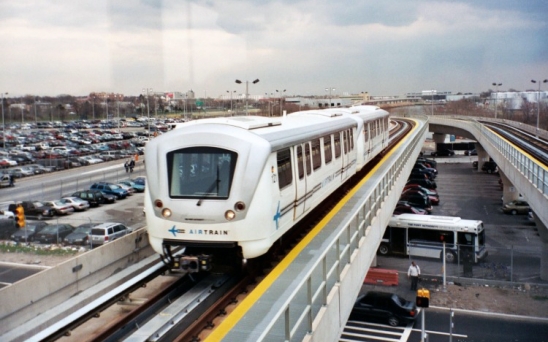
New York’s Kennedy Airport, the JFK Air-Train operation, although now successful due to its low fair cost compared to a $52 cab ride was a 1 time only airport express line, same as Beijing China’s, Airport Express. The debate at Kennedy Airport is either to buy a small amount of new 2 section trainsets or extend either the subway and or the Long Island Railway directly to the airport instead.
Yongin, South Korea, a suburb of Seoul, has had an ongoing court battle with Bombardier over its Everline (a Skytrain like line from the end of a Metro Line to an Amusement Park) which may never get to its promised 75000 people a day break even point. This has forced the city to subsidize the Everline’s daily operation and through associated budgetary shortfalls cut back or cut off many city services.
Only Vancouver and maybe Kuala Lumpur (if it can forget the technology’s corruption tag) and a possible small order from New York will ever use this technology again. This not enough customers in long term for Alstom. They need hundreds if not, 1000+ orders for the technology to remain useful. It also directly competes with a purely Alstom designed train product, being used in several Metro and Light Metro operations including, the upcoming REM system in Montreal.
Two notes about the JFK AirTrain, which was a private venture including Bombardier, SNC Lavalin, the Port Authority and was part funded by Canada’s International Development Agency (CIDA). The line is subsidized by a $7 departure tax and to conform to New York law, the elevated line was designed to operate regular subway cars.
The JFK Airtrain's guideway was designed to operate regular metro or subway trains.
As MALM is a proprietary light metro system, despite the snake oil TransLink, the provincial government and the mayor’s council on Transit tries to sell, I would doubt any other company would design a LIM powered vehicle for the remaining three lines, unless the operating authorities paid the full cost!
Like Germany’s Wuppertal Schwebeban (monorail), future car orders will need to be custom made. This is also the problem with Seattle’s 60 year old Alweg monorail, which original manufacturer is long gone!
Despite premier Horgans election promise of extending SkyTrain to Langley, cost and availability of LIM powered vehicles, may put an end to SkyTrain expansion, once and for all.
What then?
Te Expo Line will probably be extended to Fleetwood, with the completing leg to Langley promised to come at a later date, a la the Evergreen Line, which was the uncompleted portion of the the old Broadway Lougheed rapid transit project.
The competing Broadway subway, which I have been told is also over budget, has so many politicians, bureaucrats, and academics who have placed their personal and career credibility on, that it would be easy for all blame the failure of the Expo Line reaching Langley on the present mayor of Surrey. His fibbing about the $1.65 billion cost building the line to Langley, which has now escalated to over $4 billion will not go well with taxpayers, who have to ante up another billion dollars on top of much higher living costs and taxes, due to Covid, already stretching people’s paychecks.
This begs the question; Will SkyTrain Light Metro Ever Reach Langley?
BC politics at its best, rubber on asphalt is always a sure vote getter at election time.
Funding for this $235.5 million highway upgrade was announced in 2019, with the federal government committing $109 million, the provincial government with $99.5 million, and the Township of Langley with $27 million.
The 12 km project will include:
Widen Highway 1 to accommodate eastbound and westbound high occupancy vehicle (HOV) lanes in the median between the 216 Street and 264 Street Interchanges
Construction of a new crossing at Glover Road, which will include dedicated 2.5-metre wide cycling lanes on either side and a separate two-metre wide sidewalk
Reconfiguration of the existing 232 Street Interchange and the replacement of the existing crossing, including a three-metre wide multi-use pathway on either side
Replacing the existing railway crossing immediately east of Glover Road
$235.5 million for a mere 12 km of highway upgrading, makes Rail for the Valley’s Leewood Study plan for a 138 km., Vancouver to Rosedale passenger service, costing $1,207,692,027.00) or $8.71 million per km in 2021 dollars a very good bargain indeed!
For a cost of just five times more one gets eleven and a half times more transit route, serving major valley cities and providing an alternative transit route, completely devoid of gridlock and congestion.
In BC, blacktop politics wins votes; elevated transit , keeping lanes open for cars wins votes. A coherent and affordable long term transportation plan for the Fraser Valley is a big yawn with local politicians, the premier and the prime minister and thus will be ignored as rubber on asphalt solutions always win elections.
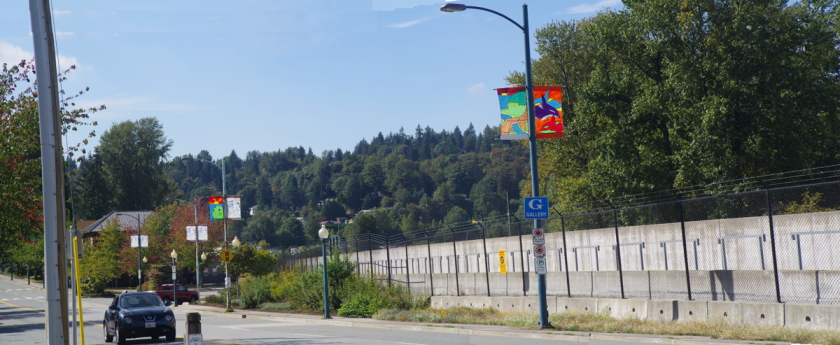
Trans-Canada Highway, seen here at the 216th Street interchange in Langley. (Langley Advance Times file)
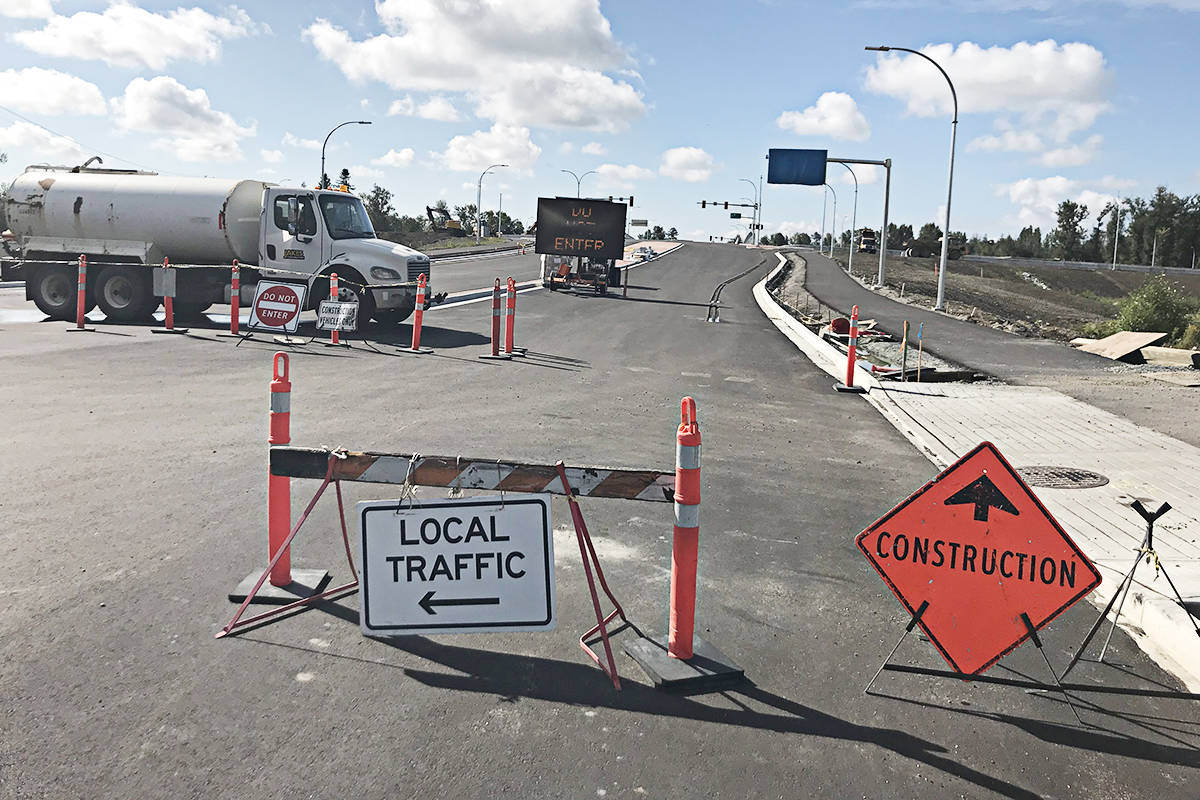
Beginning next week, those moving through Langley on the Trans-Canada Highway can expect more than the typical commuter delays drivers have become accustom to in the area.
On Tuesday (Sept. 7), crews will begin construction work in preparation for the Highway 1 widening project from 216th to 264th streets. Overnight lane closures will be in effect in the area between 8:30 p.m. to 5:30 a.m. Monday to Friday, and 8:30 p.m. to 8 a.m. on weekends until summer 2022.
Drivers may also see daytime work in the median, but there will be no daytime lane closures or traffic disruptions, the Ministry of Transportation noted.
This post is from 2015 and Bombardier’s rail division, including MALM (SkyTrain) is now owned by Alstom and if there is a Conservative victory in the federal election, say goodbye to the Broadway subway and the Expo Line extension to Langley.
Rumour has it that the Conservatives are going to solve regional congestion with new highways and 10 lane bridges.
If true, say adios to SkyTrain, they don’t make it any more.
Our friend Haveacow is a Canadian Transportation Engineer and when he says something, we should be listening.
*
Zwei is not an engineer, but under the tutelage of the late Des Turner (Des was a chemical engineer who worked at Shell Oil, who took early retirement and went back to university and earned a master’s degree in urban planning) with his meticulous investigation of SkyTrain, light rail, and transit planning in general, I gained more than a passing knowledge of the transit issue.
*
From his correspondence with just about all the major players in urban transit in the 1980’s and 90’s, I learned a great deal about urban transit with a special focus on SkyTrain and light rail. It was Des, who finally made the provincial Social Credit government, after a stinging rebuke to then Minister Grace McCarthy at a public forum, to divulge the true cost of the original Expo Line and to New Westminster, which was different from what was said by the very same Minister in the legislature.
*
Des studied LIM’s and had much correspondence from Professor Laithwaite of the UK, who won a ‘gold medal’ for his endeavors with Linear Induction Motors. The good prof said that the ICTS was using the wrong kind of LIM, attractive, instead of repulsive.
*
All of the professional of the day, said the same thing about our ALRT/SkyTrain system, that; “it was terribly expensive for what it will do” and “the high costs of the system will come back and haunt us in the future”.
*
“If it is not in stock, don’t buy it” was a lesson that BC Transit and now TransLink refuse to learn and from what I hear in the news, the current minister in charge of regional transit, Mr. Fassbender (Factbender) seems deaf to any change and wants to continue to build with the very dated and very expensive SkyTrain proprietary light metro system.
*
Factbender seems to have been asleep during the last plebiscite and blunders ahead with a business as usual attitude.
*
Over to you, Mr. Haveacow……..
I found these two adds while I was looking on older Twitter feeds. These two adds are from this year’s UITP Conference in Brussels back in September. The first is a add featuring one of the 220 Flexity LRV’s serving in the host city. The same class of LRV’s that ran in Vancouver in 2010 for the Olympics. Looks pretty nice in a faux cityscape doesn’t it?
*
The second add is showing the numbers of current ORDERS for Bombardier Flexity LRV’s and Trams, again THIS IS LRV’S ORDERED NOT DELEIVERED which by the way, is over 2000. It doesn’t even show the 220 + orders for Ontario based LRT Lines.
*
The add shows a point I have tried to drill into SkyTrain supporters heads until I have been blue in the face. If you want your rail public transit vehicle design to survive, these are the kind of numbers you have to produce for it to be considered successful. Bombardier’s Innovia ART 200 & 300 numbers don’t even come anywhere close to this!
*
Cheers
Mr. Cows comment on his post.
Opps I goofed! The Toronto and Waterloo orders are in the add however, the Hamilton B Line and Hurontario Line (Just Mississauga, no Brampton) LRV’s are not.
However, even though the TTC’s 204 LRV/Streetcar order replacing their legacy streetcars, is late the cars are in great shape when they do arrive. A Colleague of mine John, (his real name) who just retired from Bombardier’s Transportation (Rail Vehicles) division had an interesting story about the relative financial health of the division. It presently has $30 Billion (US) in back orders roughly 40% is a Flexity family LRV product order. The numbers of orders for LRV and Movia Metro products keeps growing. Their biggest problem is which European factories to shutdown (39+ factories in Europe which is way too many) and when to do it considering, their growing numbers of back orders for Rail products.
One of the few lines unfortunately that doesn’t have an increasing number of orders is the INNOVIA Automatic Metro Model 300, those are the Skytrain’s, if you were not aware. Bombardier has a 28, (4 car train sets) order for Vancouver and a 56 (4 car train set order) for Kuala Lumpur all being built in their Kingston plant. However, once the end of 2017 rolls around that will be it. Riyadh, Saudi Arabia has a possible future order for 47 (2 cat train sets) order but they want it built there in Saudi Arabia. It’s a simple order that may not require the Kingston Plant because the Saudi’s want standard electric rotary motors not the LIM propulsion units, The rest of the existing Metro fleet in Riyadh, uses standard motors and they don’t want to complicate things, which as a customer is their right! Remember John told me, “The LIM units are just a design option, they are not tied to the product anymore”. The people at Kingston are worried!
The real embarrassing thing is what happened with Bombardier’s website. I have been pointing out to anyone who had been willing to listen that, the INNOVIA Automatic Metro line section of Bombardier’s website was moved out of the rail vehicle section into transportation systems section. Well just before John retired a big s***storm about the website had occurred. Turns out that, both representatives from Kuala Lampur and Vancouver had both been wanting to ask why their rail vehicles were not in the rail vehicle section of the website. They were told that, even though they were both highly valued long time customers and Bombardier would always be willing to design a replacement vehicle for them. It was just more advantageous for them to have the INNOVIA product as a stand alone complete transportation system product because so few people had ordered the technology compared to Bombardier’s other rail vehicle lines. Very few would be looking for just replacement vehicles and they (Bombardier) assumed that your transit people would just call them directly because there are no other compatible technologies that you would be able to order, technically. The simple translation, you can’t call anyone else our propulsion technology only works with our vehicle designs although, there are others that use LIM propulsion it would be a very expensive option. John was not sure and seriously doubts that, there was a legal requirement that the current users must order from Bombardier unless, they Bombardier does not offer an equivalent product! However, it wouldn’t surprise him if their was. I will say again, he doesn’t think their is a no foreign product order on the contract but it wouldn’t surprise him if there was one. Guess what, the INNOVIA Metro 300 product is again back in the rail vehicle section of Bombardier’s website. So someone scarred Bombardier to change their website because the Skytrain technology sure wasn’t there in that section of the website 4 months ago. I always check!

/https://www.thestar.com/content/dam/thestar/news/canada/2021/09/26/why-the-bumpy-two-year-ride-of-ottawas-multibillion-dollar-lrt-system-is-sparking-calls-for-a-public-inquiry/_main_na_fea_ott_lrt_5_.jpg)
/https://www.thestar.com/content/dam/thestar/news/canada/2021/09/26/why-the-bumpy-two-year-ride-of-ottawas-multibillion-dollar-lrt-system-is-sparking-calls-for-a-public-inquiry/na_fea_ott_lrt_2_.jpg)
/https://www.thestar.com/content/dam/thestar/news/canada/2021/09/26/why-the-bumpy-two-year-ride-of-ottawas-multibillion-dollar-lrt-system-is-sparking-calls-for-a-public-inquiry/na_fea_ott_lrt_7_.jpg)
/https://www.thestar.com/content/dam/thestar/news/canada/2021/09/26/why-the-bumpy-two-year-ride-of-ottawas-multibillion-dollar-lrt-system-is-sparking-calls-for-a-public-inquiry/na_fea_ott_lrt_4_.jpg)






 Trans-Canada Highway, seen here at the 216th Street interchange in Langley. (Langley Advance Times file)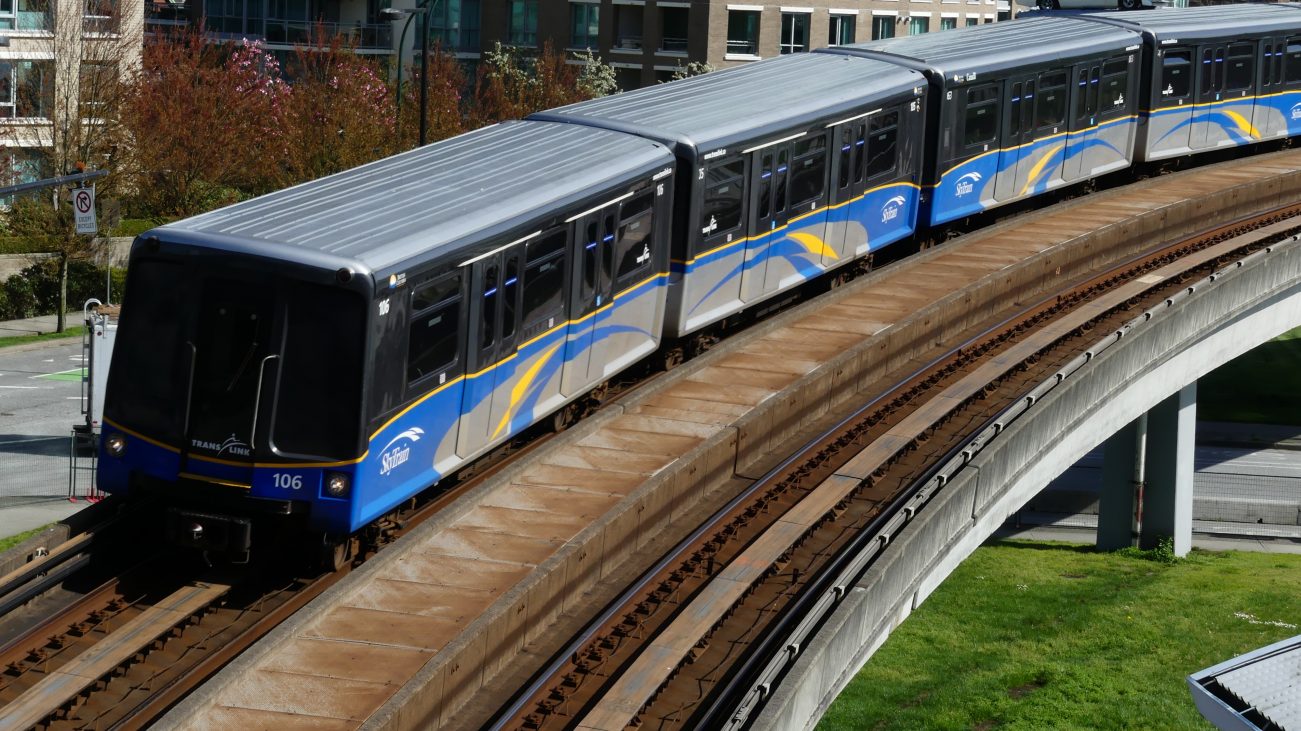





Recent Comments