Reinstating passenger services on regional railways, it is what government should be doing, to deal with traffic congestion and pollution, but they are not, as government would rather spend money on prestigious “rapid transit” monuments to cut for photo-ops at election time.
The E&N, the RftV TramTain from Vancouver to Chilliwack; and the Okanagan corridor from Salmon Arm to Kelowna are all candidates for regional passenger rail.
The former BC Rail line to Prince George and beyond should also have passenger rail service reinstated.
Government refuses and instead, invests billions of dollars on a glitzy mass transit system, which have proven in the past not very good in attracting the motorist from the car, nor will it be, at a cost of over $200 million/km to build!
With the current $4.6 billion investment to extend the light-metro system a mere 12.8 km, brings the total of direct taxpayer investment in the light-metro system to over $15 billion, yet mode share for transit is dropping in the region.
Mode share for the GVRD in 2017. Despite over $15 billion in investment on the SkyTrain light-metro system, mode share for transit is slowly decreasing.
The rails to trails lobby, abetted by the various cycle lobbies, who have attached themselves to both major provincial parties, have become selfish, self-absorbed anti-rail cynics and, have done everything they can to thwart any sort of modern use on rail corridors.
The refusal of government to deal with 21st century transit and transportation issues, with 21st century transit solutions and instead rely on obsolete transit solutions born in the 60’s and 70’s only demonstrates how ossified government and the bureaucracy have become.
With no tangible improvement in the future, except greatly increased congestion on highways, more pollution and ever higher taxes to pay for governments grand mistakes. Using existing railways or former rail routes to provide a cost effective rail transport only makes sense.
Global warming is only a theme, which the current government has paid lip service too as they pander to environmental groups but in the end are not serious.
Government at all levels, do not care!
As stated before in a previous post:
The NDP are paving paradise and turning it into a parking lot.
A French regional rail service has boosted tourism in areas it serves.
By Patrick Carnahan, Co-Executive Director, All Aboard Washington and Tim Gould, Transportation & Land Use Committee Chair, Sierra Club Washington
Rail is the only form of mechanized ground transportation that does not contribute to tire-related massive salmon die-off. Yet, news of University of Washington research on tire dust toxicity to coho salmon coincides with the state virtually freezing intercity passenger train service. The toxic effects to salmon, caused by a compound in rubber tire dust that runs off roadways into streams, do not occur with steel-wheeled trains. How frustrating that the energy efficiency advantage of steel wheels on rail, and the mobility access provided by the rail network are ignored as solutions to pressing environmental and transportation challenges.
Amtrak Cascades has connected the Vancouver-Seattle-Portland corridor since 1995, offering a green travel alternative to I-5. Cascades handled over 800,000 annual riders in 2018 and 2019. However, in response to the pandemic, service has been curtailed to only one train per day. Worse yet, due to an equipment shortage, the Washington State Department of Transportation (WSDOT) does not envision a full return of service for up to five years. Our best hope for a sustainable, equitable transportation network is being terribly neglected at this critical moment in the fight against climate change.
Passenger trains can make a difference in reducing greenhouse gas (GHG) emissions during the next decade, the critical time to avoid climate change tipping points. WSDOT has had plans since 2006 to improve and expand service. Hourly train trips between Portland and Seattle would divert three million people annually from aircraft and highways to curtail GHG emissions. However, this plan has been neglected and is not even available on WSDOT’s website (find it on All Aboard Washington’s [AAWA’s] website).
Time is of the essence. Within a decade, we need to leverage the sustainable transportation alternative we already have: Amtrak Cascades. AAWA and Sierra Club recognize the pandemic-induced budget limitations that the Legislature faces. Yet, the state’s economic recovery and environmental goals can be advanced using existing rail infrastructure to restart and enhance Amtrak Cascades service.
To fight for our salmon and climate today, five Cascades projects are needed:
Restore North Sound Service
Cascades train service north of Seattle has been discontinued during the pandemic due to the Canadian border closure, eliminating twice-daily round-trips that serve Edmonds, Everett, Stanwood, Mount Vernon, and Bellingham. WSDOT should restore North Sound service, and extend it to Vancouver when the border re-opens.
Complete the Cascades Long Range Plan (LRP)
Realizing the vision presented by the 2006 Cascades LRP will be critical in our efforts to combat climate change. An update this year to the LRP will position the Cascades to seek federal grant money, implement shovel-ready projects, and acquire new train equipment with sufficient funding.
Secure Stable Funding
Rail needs consistent, robust funding in order to become our accessible, equitable, and climate-friendly transportation backbone. Let’s support creative revenue sources such as land value recapture and county rail districts.
Strengthen Local, Regional, and Federal Partnerships
Cascades service, supported by Oregon and Washington, can be more successful with closer cooperation between the states, the province of British Columbia, and stakeholders. Streamlined governance relationships, regional rail commissions, and rail advisory committees can facilitate better cooperation.
Expand Service Statewide
Washington’s commitment to equitable, sustainable mobility for rural and urban communities across the state requires more intercity rail service to complement other transportation modes. The Legislature needs to embrace a bold vision of mobility justice with passenger trains serving more of Washington.
The NDP government is going to try to blacktop its way out of congestion despite the fact that added road space only attracts more vehicles, thus adding to congestion and gridlock at choke points.
You cannot blacktop your way out of congestion!
The updated cost for the the full build Leewood Study is now $1,5 billion for 130 km stretch of line, connecting Vancouver to Chilliwack, providing a maximum of three trains per hour.
Today’s cost for a Fraser Valley TramTrain or light DMU service is $11.5 million per km to build and provide a potential maximum capacity of around 3,000 persons per hour per direction, depending on vehicle size and number of vehicles used (max.2).
As stated in the article, adding one or two lanes to the number 1 will cost anywhere from $33 million/km to $38 million/km and at best, provide an additional capacity of around 1,000 to 2,000 pphpd!
So there you have it, the oh so Green NDP will spend a lot more per km for road expansion, that to reinstate a badly needed Passenger rail service, connecting Vancouver to North Delta, Cloverdale, Langley, Abbotsford, Yarrow/Sardis, and Chilliwack.
The Leewood Study/Rail for the Valley plan provides more capacity at a third less cost per kilometre than expanding Hwy.1!
Widening Highway 1 to Whatcom Road in Abbotsford could cost more than $1 billion, according to an internal government estimate obtained exclusively by The Current.
The megaproject would span 24 kilometres, but nearly half the projected cost could be consumed by a short 5-kilometre stretch of road with a potential half-billion-dollar price tag, the documents show.
The figures are included in a memo prepared in April of 2019 by the deputy director of the Ministry of Transportation’s south coast regional office. The projections were completed prior to the NDP’s promise in 2020 to widen the highway to Abbotsford, and before the Whatcom Road terminus was included in the mandate letter of Bowinn Ma, BC’s minister of state for infrastructure. The Current reported last week that the province has set an ambitious 2026 completion goal for the project.
Work is already underway to widen the highway to 264th Street, but the billion-dollar figures don’t include that stretch of road. The 2019 documents caution that only “initial planning” for the Abbotsford segment had been completed. In response to questions by The Current, a provincial spokesperson said planning work currently underway would determine the project’s final budget and projected cost.
The documents predict it could cost around $400 million to widen the highway from 264th to Mt. Lehman Road. That works out to about $33 million per kilometre.
The next segment, a 6.5km stretch between Mt. Lehman and McCallum roads, could cost $250 million—about $38 million per kilometre. That would include replacing the Peardonville overpass.
But it was the final stretch, between McCallum and Whatcom roads, that seems likely to drive the price beyond the billion-dollar mark.
That 5km stretch could cost a staggering $500 million to upgrade—a cost of $100 million each kilometre. The figure reflects the need to replace the Whatcom overpass, the interchange with Highway 11/Sumas Way, and the nearby overpass across two rail lines. The combined projected total for the entire length of the project adds up to about $1.1 billion.
The widening also means a large bill will be on the way for the City of Abbotsford—and its taxpayers—because municipalities are asked to fund the cost of interchanges. Although the city will avoid the bill for the Sumas Way interchange because it involves two provincial highways, it will still have to cover the cost of a new interchange at Whatcom Road and a new Peardonville overpass. Each overpass is likely to cost the city tens of millions of dollars.
The province has not promised to widen the highway for another 31km to Chilliwack, but the cost projections hint at the large cost of doing so. (Any such expansion would also require a new Vedder Canal crossing.)
The UK, as well as many European countries, are reopening long abandoned rail routes for passenger service.
The lesson is simple, if you want to attract the motorist from the car, you must develop a user friendly alternative. The railway is a proven user friendly alternative to the car.
In BC, politicians have not learned this lesson and continue to squander large sums of money on politically prestigious transit projects, like the Broadway subway.
The Valley rail project and the E&N railway are two rail routes, begging to have a modern rail alternative to the car. Our politicians remain blind and deaf about quality rail, while singing hosannas for a $3 billion subway that will not take a car off the road. That $3 billion for 5.8 km of subway could fund a quality rail system both for the Fraser Valley and Vancouver island.
Maybe Premier Horgan best refrain from making nasty comments about certain groups in BC for his politcal party’s shortcomings and instead focus his efforts on providing a proven affordable quality and user friendly transportation for the Fraser Valley and Vancouver Island.
The $3 billion that will be spent on the 5.8 km Broadway subway, could fund a over 350 km of a regional rail service for the Fraser Valley and Vancouver island. Something to think about.
Ottawa's O-Train, an affordable light DMU service that has proven very successful.
Cash available for railway projects in Wales would have been “significantly higher if it had been devolved,” according to a new report, and could have paid the majority of money towards reopening the Aberystwyth to Carmarthen line.
The report from Cardiff University’s Wales Governance Centre finds that under a fully devolved system, Wales could have received an extra £514m investment in its rail infrastructure between 2011-12 and 2019-20 compared to what it received, with several projects called for in Ceredigion, including the return of the Aberystwyth to Carmarthen railway, closed in the 1960s under the Beeching cuts.
A 2018 feasibility study into the reopening of the line found that it was “a realistic prospect”, but cost estimates reached £620m – with no form of funding identified to move the project forward.
Campaigners have called for the return of the railway for more than a decade.
The scheme was included in the Welsh Government’s rail strategy document ‘A Railway for Wales – Meeting the needs of future generations’, in which it said that it wants to ‘improve connectivity on the nation’s key corridors – especially the western corridor from Ynys Môn to Aberystwyth, Carmarthen and Swansea Bay’.
The new report estimates that the Welsh Government is set to lose out on another £505m over the next five years – cash that could have been used for such major projects.
The report finds: “These amounts can be compared to the cost of several major Welsh rail infrastructure projects that have been estimated by external sources, including the Carmarthen to Aberystwyth line (£620-775m), electrification of the North Wales Coast mainline (£764m), and electrification of the South Wales mainline between Cardiff and Swansea (£433m).”
Although operations of the railway in Wales are a Welsh Government responsibility through its rail operator Transport for Wales, railway infrastructure remains the responsibility of the UK Government.
The Welsh Government can spend its own resources to fund railway schemes, but because infrastructure is not devolved to Wales, it is not provided with extra resources to do this through the Barnett Formula.
Wales Fiscal Analysis researcher Guto Ifan said: “When it comes to the Welsh railways, the evidence is clear that funding would have been substantially higher under a fully devolved system – to the tune of £500m since 2011.
“That funding over the course of eight years would have enabled significant improvement projects to take place.
“Wales is also set to lose out on transport funding when the Treasury next sets multi-year budgets, due to technical changes in Barnett formula calculations.
“This is a double whammy for Wales, with the historic under-funding being baked in to the system.
“It is now clear that only full devolution of rail infrastructure – similar to Scotland – will address the underfunding of Welsh railways.”
The full report from the Wales Governance Centre has been submitted as evidence to the Welsh Affairs Committee’s ongoing inquiry into rail infrastructure in Wales.
According to Suetonius, Caesar uttered the famous phrase ālea iacta est (“the die has been cast”). The phrase “crossing the Rubicon” has survived to refer to any individual or group committing itself irrevocably to a risky or revolutionary course of action, similar to the modern phrase “passing the point of no return”
In the late 1990’s, Vancouver’s lust for a subway under Broadway began and today TransLink, regional, provincial, and federal politician s will be at the required 2 metre distanced apart, singing hosannas with the $4.6 billion sod turnings, for the 12.8km extensions to the Expo and Millennium Lines.
A 5.8 km subway under Broadway or a 7 km extension to Fleetwood, will attract little new customers and for many, with bus routes altered to force bus customers to ride the extensions, a la the Canada Line, may just force more people off the light-metro than it will attract.
The forced transfer of Expo Line’s customers to the Millennium Line at Broadway Station, adding one more transfer before again transferring to the B-Line bus at Arbutus to continue West, will also deter ridership.
As Mr. Cow has stated, it will be at least 2030 before there will be funding for further extensions, which was predicted by American transportation engineer and consultant, Gerald Fox;
But, eventually, Vancouver will need to adopt lower-cost LRT in its lesser corridors, or else limit the extent of its rail system. And that seems to make some TransLink people very nervous.
By 2030, road and highway congestion will reach unbelievable levels, yet the current light metro network will be unable to deal with the burgeoning number of cars. Light-metro, now costing well over $200 million/km and the is not including cars, is impractical to create a user friendly network.
Since the early eighties, when the Expo Line construction started, the region has been able to afford and fund a light metro line every decade.
Expo line and Extensions – 1980/90’s
Millennium Line – 1990’s/2000
Canada Line – 20o4/2010
Evergreen line (uncompleted Millennium Line) 2010’s
For the 2020’s The Broadway and Fleetwood extensions and the 2030’s, the much needed $3 billion Expo and Millennium line rehab and possibly an extension of the Expo Line to Langley.
Not nearly enough to attract the motorist from the car!
Has the region crossed the Rubicon for transit planning? Has the die been cast for endemic congestion and gridlock?
No matter how much money the region invests for future light-metro expansion, it will not be enough to change Metro Vancouver’s collision course to endemic congestion and gridlock, which will lay the groundwork for a major expansion of the regional highway system.
Rail for the Valley has a solution, the Leewood Study, offering a realistic and affordable transportation network, connecting Vancouver to North Delta, Cloverdale, Langley, Abbotsford, Sardis/Yarrow and Chilliwack for less than the cost of a 7 km extension of the Expo Line to Fleetwwod. A Vancouver to Chilliwack regional rail service could offer an affordable transit option for the Fraser Valley and metro Vancouver, by offering many more destinations at a far cheaper cost. A under two hour journey time from Chilliwack to Vancouver may look very good if the alternative is idling in gridlock for two to three hours.
It seems Rail for the Valley’s solution seems to embarrass the almost 1,000 employees who work for TransLink who earn over $100,000.00 a year because Rail for the Valley offered the Leewood Study for free, which begs the question, what the hell do almost of those 1,000 employees, earning over $100,000 a year actually do?
Really, $4.6 billion to build 12.8 km of light-metro is an awful lot of money for so small increase in a rail route; 5.8 km to extend the Millennium Line in Vancouver and 7 km in Surrey.
By comparison, $1.5 billion would provide a 130 km Vancouver to Chilliwack service, with three trains per hour per direction, connecting Vancouver to North Delta, Cloverdale, Langley, Abbotsford, Sardis/Yarrow, and Chilliwack.
About 117 km more rail route for about one third the cost!
In other countries this would be a no brainer, but not in BC, as hugely expensive SkyTrain light-metro has enthralled politicians, but improving transit, no so much.
In the UK and Europe, former rail lines are now being rebuilt and reopened for passenger service. TramTrain, a concept now almost 30 years old, where trams share tracks with the mainline railways, has brought new transit options to connect regional cities at a cost almost on par with new highway construction.
The TramTrain option has been ignored in Canada, as it seems Canadian planners don’t read books printed after 1990.
In the UK, no fewer than 65 former rail routes are being investigated for reopening, while in BC, none.
The E&N is slowly rotting to death; there is no interest in reinstating the Vancouver to Chilliwack Interurban, and the province did nothing in keeping and restoring a passenger service from Vernon to Kelowna, but there is a lot of support for a $4.6 billion, 12.8 km extension of the Millennium and Expo Lines, through voter rich metro Vancouver.
It seems the current provincial government doesn’t give a damn for those who reside outside the Metro Vancouver bubble, rather very expensive to build and operate rapid transit (read light-metro) is being built mainly for photo-ops at election time as Premier Horgan has recently demonstrated, as will Justin Trudeau sometime in 2021.
Disused station at Firsby. Will a passenger service soon reappear?
Restoration of a section of the former East Lincolnshire railway from Firsby to Louth could be a step closer thanks to an application submitted by East Lindsey District Council.
The council has submitted an application to the Department of Transport for a £50,000 feasibility study for the ‘Restoring Your Railway Fund’, and included in that is for further consideration of the Willoughby to Mablethorpe loop.
The application has been driven by Portfolio Holder for Planning Councillor Tom Ashton and Mablethorpe Councillor Adrian Benjamin, and is supported by both Victoria Atkins MP and Matt Warman MP.
Support for the restoration has also gathered pace in the community with a petition gaining more than 2,400 signatures already.
The proposal endeavours to make the case for considering the reinstatement of the East Lincolnshire Line as the optimal sustainable transport solution for encouraging further economic growth and opportunity in East Lindsey.
Based on 2011 Census information, the route would serve the settlements of Louth, Legbourne, Alford and Willoughby – a population of over 20,000 – while the Willoughby to Mablethorpe section would serve over 13,000 people across Mablethorpe, Sutton and Theddlethorpe.
Councillor Tom Ashton, said: “East Lindsey is a great place to live and to visit and developing both these aspects is essential for future growth and economic prosperity.
“Enjoying the extensive Wolds Area of Outstanding Natural Beauty, a settlement geography of market towns, rural villages, wild coast, seaside resorts, and an excellent education offer which still includes grammar schools, East Lindsey should be incredibly attractive for people to choose to locate themselves, their businesses, and families.”
Councillor Adrian Benjamin added: “A green and sustainable rail corridor would be a natural place to look, to ensure communities are connected and reliance on cars is reduced.
“Whether that is the growth of existing settlements or the creation of new ones is beyond the scope of this application, however it does point to a greener, lower carbon future that allows this area to grow in a considered way, without engendering the harm which would come from scything through the countryside with major road projects. It enhances without harming.”
Just like the Canada Line, politics and profits; REM is the Canada line on steroids.
Just like transit planning in Metro Vancouver, it isn’t about providing better transit options, it is all about profit and politics, rezoning, demovictions, and building high rent towers and high rise condos.
And like Vancouver, Montreal calls it’s light metro project, light rail simply to fool the public, as politicians and bureaucrats are afraid to tell the truth. In Vancouver, politicians go to great lengths to misinform the public, such as SkyTrain is light rail; SkyTrain is the brand name; and SkyTrain is not proprietary.
Today, light-metro is seen as a 1970’s transit mode, designed to be grade separated so the roads can be clear for cars.
The problem for light metro is that Light rail can do everything a light metro can do and much more and much cheaper. The inherent flexibility of light rail as made light-metro obsolete.
Truth is not in the lexicon of Metro Vancouver mayors and bureaucrats.
Affordable and efficient transit, is just not wanted by politicians and their bureaucratic henchmen; affordable transit doesn’t make a good background for photo-ops at election time.
The plan to extend the REM east is raising questions about who is driving transit planning Jonathan Montpetit · CBC News
A light rail car on a test run south of Montreal. The first section of the REM network is scheduled to be operational next year. (Jean-Claude Taliana/CBC)
When Quebec’s pension fund manager announced in 2016 that it was going to build a state-of-the-art, 67-kilometre light rail network around Montreal, it seemed like a miracle solution for the city’s cash-starved transit system.
It had been decades since the last major investment in Montreal public transit. The Caisse de dépôt et placement du Québec appeared out of nowhere, offering to shoulder most of the up-front costs for connecting the western half of the metropolitan area to downtown.
In exchange, it would get the revenues generated from operating the network.
“It’s probably one of the greatest projects we’ve seen in [public transit] in the last 50 years,” gushed the mayor at the time, Denis Coderre.
Late last year, the Caisse announced it was expanding its light rail network, now dubbed the REM, into Montreal’s east end. But the reception, this time, was decidedly less enthusiastic.
Architects and urban planners have publicly criticized the plans. Neighbourhood groups are lobbying for changes. A petition has attracted nearly 2,000 signatures. Even city hall has expressed reservations.
The REM will run for long stretches along an elevated track supported by massive concrete columns. These are being built in Montreal West Island. (Ivanoh Demers/Radio-Canada)
They all share concerns about the current design plan for the project, which features an elevated track supported by massive concrete pillars running through some of the most densely populated areas of the island of Montreal.
“We’re scared about what will happen to our neighbourhoods with this immense structure,” said Catherine Miron, a spokesperson for a group of concerned east-end residents called REM et citoyen-nes de l’Est de Montréal.
CDPQ Infra, the arm of the Caisse that oversees the REM, maintains the elevated track is the only way the east-end network can be built on time and on budget.
Those are important considerations for the provincial government, which campaigned on a promise to connect the island’s east-end suburbs to downtown.
And, so far, CDPQ Infra has proved its alternative model for funding infrastructure can deliver. While other transit projects backed by municipal governments and transit authorities have stalled on the drawing board for years, the west-end REM is nearing completion and in the ballpark of its original budget.
But it sped ahead with only marginal input from independent experts and citizens, say observers of the process. They fear a similar dynamic is emerging as the REM expands east, leading to a project that will scar neighbourhoods in the interest of profit and politics.
“It might not be the right mode of transit in the right place,” said François Pepin, president of the public transit advocacy group Trajectoire Québec.
Lukewarm reception from region
There is not much debate that the east end of Montreal needs better transit connections with downtown Montreal. Much of that territory only has bus service, which is usually crowded and slow during rush hour.
In May 2019, the Coalition Avenir Québec government asked CDPQ Infra, as opposed to the co-ordinating transit authority for the Montreal area (known by its French initials as ARTM), to look at meeting that demand.
That CDPQ Infra ended up proposing a light rail network was no surprise. It’s the only transit technology it has on offer, though transit experts have in the past suggested other solutions for the east end, such as bus-rapid transit or tramways.
The elevated track being built in Montreal’s West Island runs along highways, and hasn’t stirred much public concern. But in the east end, large stretches of the REM network would run along boulevards in mixed residential-commercial neighbourhoods.
An artist’s conception of the type of REM station that will be built on Notre-Dame Street. (Caisse de dépôt et placement du Québec)
As well, the prospect of noise, shadows, and a lot of concrete has urban planners worried.
“It’s a big structure going through areas where people live. It risks destroying their quality of life,” said Sylvain Gariépy, president of the Quebec Order of Urban Planners.
Gariépy expressed frustration at the lack of detailed information CDPQ Infra has provided about the proposed structures, making it difficult to evaluate the project.
Citizen groups have also struggled to get more information about the project, and to offer their feedback. Miron said she has attended two meetings with CDPQ Infra in recent weeks, but they resembled marketing sessions rather than consultations.
“They gave the same PowerPoint presentation at both of them and couldn’t answer our technical questions,” Miron said.
CDPQ Infra stresses the proposal it has made public is a work in progress. It is promising to spend the next two years consulting extensively with the public as well as an independent group of experts.
Virginie Cousineau, the organization’s public affairs director, said consultations will play a larger role in the final design of the REM’s extension compared with the consultations that were done ahead of the first phase of the project.
“There are things we’re doing differently in the REM East, things we didn’t do in the REM 1.0,” Cousineau said in a recent interview.
But she also acknowledged that certain elements of the project are non-negotiable. Many have called for the track to go underground as it approaches downtown. Cousineau said while that option was studied, existing subway lines and old sewers threaten to escalate costs to prohibitive levels.
“The Caisse can’t endanger the pensions of Quebecers with a project where we are unable to control the risks,” she said.
The politics behind mass transit choices
The concerns about the REM’s east-end extension are not just technical matters about an engineering project, however. They are part of a larger debate about which institutions ought to be shaping the future of Quebec’s cities.
Provincial funding for Quebec City’s tramway project was held up when the CAQ government began demanding last-minute changes to the route, even though it had been the subject of extensiveconsultation since 2018 and had widespread local backing.
The REM’s proposed east-end extension would reach parts of Montreal that have long been underserved by public transit, allowing residents to reach downtown faster than by car or bus. (Submitted by CDPQ Infra)
Premier François Legault said the project needed to better serve the suburbs in order to get his government’s approval. Community groups in Quebec City, and the mayor, accused him of meddling for political gain.
In the case of both the Quebec City tramway, and the REM in Montreal, local transit authorities seemed to be sidelined at key stages of the decision-making process.
That’s a shame, said Pepin, given that transit authorities, like the ARTM, were created with the intention of limiting the influence of politicians on major projects and making public consultation routine.
They are meant to be relatively independent bodies that have the expertise required to plan a transit network with the interests of the public in mind.
“It’s a science,” Pepin said of public transit planning. “We talk about it for the vaccine; maybe we should do the same thing for public transit and listen to the science.”
Transit authorities, though, often operate too slowly for politicians. That makes alternative funding models that can fast-track projects, like CDPQ Infra, appealing.
“The idea, of course, is to get a project shovel-ready before the next election,” said Pierre Barrieau, president of Gris Orange, a Montreal-based urban transit consulting firm.
Mayor Régis Labeaume says many elements already included in Quebec City’s tramway project won’t need to be revised. (Ville de Québec)
At the same time, community groups in Montreal have adapted to CDPQ Infra’s pace.
They learned from the first phase of the REM, Barrieau said, and are mobilizing at the outset of the second phase to demand more input.
“We should expect a project that will take comments from the public into greater consideration,” he said. “I think the Caisse understands that what they did for the first time isn’t going to fly for the second time.”
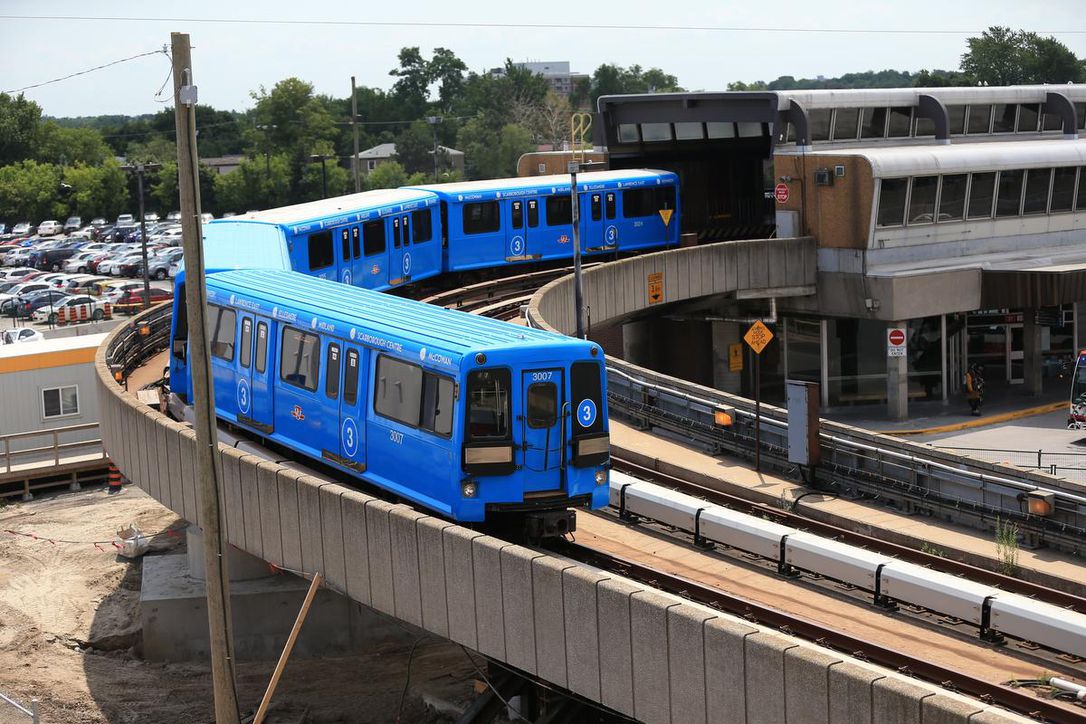
The end of ‘SkyTrain’ service in Toronto is nearing and it seems the subway replacement is now treading on financial thin ice.
LRT is the big bogey man of both light and heavy metro supporters, simply because LRT has proven far more economic to operate than light metro and can economically cater to loads at the lighter end of the scale of heavy rail (read subway) planning.
Politicians definitely don’t like that, especially when they have pinned their election hopes on a multi billion dollar subways and all the billions of dollars of taxpayer’s money funneling to politcal corporate friends and insiders.
In Canada, building subways is a sure thing to get elected and when it is time to pay the piper, the politicians involved are all sunning themselves in retirement with a taxpayer paid six figure pension!
Toronto council rejects attempt to get more information about returning to the Scarborough LRT plan
It’s been 2,710 days since Toronto city council voted to kill the only fully funded rapid transit plan for Scarborough, and Josh Matlow sounds tired.
The Ward 12 (Toronto-St. Paul’s) councillor, who has led what some have seen as a quixoticpush to build a network of LRTs in the eastern suburb, was again voted down by council on Wednesday evening.
Council voted 15 to 7 to scrap his attempt at getting more information about returning to the LRT plan to replace the aging Scarborough RT.
Matlow’s motion came after the TTC reported in February that commuters would be subject to at least seven years of shuttle buses based on the necessary closure of the SRT in 2023.
A three-stop subway plan, resurrected by Premier Doug Ford, is still not fully funded. If built as planned, the current schedule for completion is 2030.
“This isn’t a transit debate anymore,” Matlow told the Star just ahead of the vote. He directed his comments to his colleagues. “You know what the outcome is: That Scarborough residents get screwed. So given that knowledge are you now ready to do the right thing?”
The debate over Scarborough transit took a significant turn on Oct. 8, 2013, when a majority of council members under Mayor Rob Ford’s administration voted to scrap a seven-stop LRT that was fully funded by the provincial government in favour of a more expensive three-stop subway the city couldn’t yet afford, and for which planning justification was lacking.
Taxes for every Toronto homeowner were raised to cover the difference.
After Mayor John Tory took office, he pushed for a one-stop alternative that was hoped to be cheaper as costs for a three-stop exceeded the available funds.
But after Premier Ford, previously a city councillor in favour of the subway, took office, he brought back the three-stop subway and superseded city plans
Matlow described his feelings ahead of Wednesday’s decision as simply “sadness.”
Sadness, he said, for the lack of information that has been provided to council and members of the public, for councillors he said who know what the right decision is and for commuters.
Coun. Paul Ainslie, who seconded the motion and who is the only Scarborough-area councillor to support subway alternatives, challenged what he said was “rhetoric” from his colleagues who wrongly claimed Wednesday the subway plan was essentially ready to go.
“We’re on a merry-go-round in Scarborough and part of that merry-go-round exists because we never get accurate information,” he said.
The failed motion also asked for the release of consultants’ reports on the life extension of the SRT — which have only been provided largely redacted to the Star through a Freedom of Information request.
“What I would like to see is that I don’t have to learn what’s happening about Scarborough transit because a reporter filed an FOI and within the FOI material that they write an article on there’s a whole lot of black lines,” said Ainslie (Ward 24 Scarborough-Guildwood).
Other councillors challenged their subway-supporting colleagues for their responsibility for the years of buses to come.
“It’s time for the advocates for these fantasy transit systems to own up to it,” said Coun. Gord Perks (Ward 4 Parkdale-High Park).
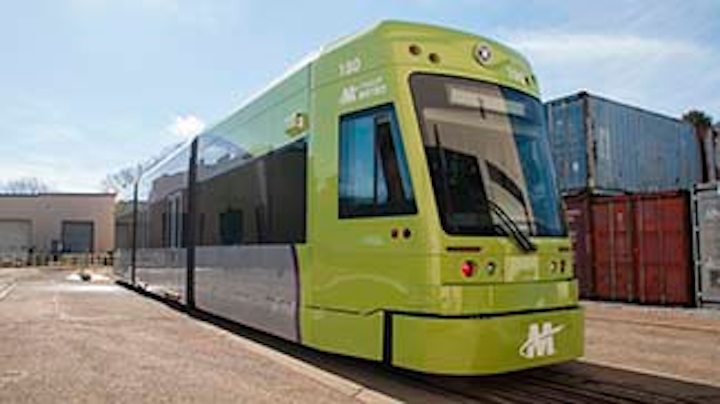
The Liberty NXT Streetcars feature a three-section articulated car with more than 70% available low-floor standing area, station-level easy boarding achieved through an automatic load leveling system, seating for 40 passengers and the ability to comfortably transport 120 passengers.
The streetcar is a 70% low-floor design that measures 66.5 feet (20.27 m) in length and can seat 32 passengers; it is also capable of accommodating between 125 and 150 people while fully loaded. Empty, each car weighs 79,000 pounds (35,800 kg). The streetcar rides on Brookville’s Soft-Ride trucks on standard-gauge track, and can reach a top speed of 35 to 44 miles per hour (56 to 71 km/h). The streetcar’s loading gauge varies between 96 inches (2,438 mm), in Dallas, and 104 inches (2,642 mm), in Detroit and Milwaukee.
What is important is this is a North American designed low-floor tram, for the American market. Somewhat pricey today, but the future looks good as Brookville is obtaining more and more orders fro the tram.
Zwei’s only comment is the American anathema towards longer modular cars, which have proven popular on the continent, will cost operators more money in the long term as longer cars are much cheaper to operate than coupled sets of trams.
Brookville delivers first of six off-wire capable Liberty NXT streetcars to Valley Metro’s Tempe Streetcar System
The 72-foot vehicles are part of a $33-million (CAD $41.16 million)contract for the design, build and test of six streetcar vehicles for the three-mile system.
The first of six all new Liberty® NXT Streetcar vehicles from Brookville Equipment Corporation (Brookville) have been delivered to Valley Metro for its Tempe Streetcar System, which is slated to open later this year.
The 72-foot vehicles are part of a $33-million contract for the design, build and test of six streetcar vehicles for the three-mile system, which will connect Tempe residents and visitors, as well as Arizona State University (ASU) students, with current and emerging local destinations.
“We are elated to deliver the first Liberty NXT Streetcar vehicle to our friends at Valley Metro Rail,” said Brookville Vice President of Business Development Joel McNeil. “These vehicles integrate the latest in rail technology systems and are designed and manufactured by an American workforce to provide a long-term transit solution for one of the most prestigious transit agencies in the United States – Valley Metro Rail. We look forward to continuing to support Valley Metro with the delivery of five additional Liberty NXT Streetcar vehicles and assisting their team as they strive towards the monumental achievement of revenue service for this all-new system later this year.”
Like the previous iteration of the Liberty Streetcar, the Liberty NXT Streetcars for Tempe Streetcar will utilize a lithium-ion battery onboard energy storage system (OESS) to traverse sections of the alignment without dependence on an overhead catenary system (OCS). The streetcar batteries will recharge while connected to areas where there is overhead wire.
“It’s an exciting time for us,” said Scott Smith, Valley Metro CEO. “The delivery of the first streetcar vehicle opens up a new chapter for regional transit in the Valley.”
The Liberty NXT Streetcars feature a three-section car body connected by two articulation joints with more than 70 percent available low-floor standing area, station-level easy boarding achieved through an automatic load leveling system, seating for 40 passengers and the ability to comfortably transport 120 passengers.
The Liberty NXT Streetcars also include a crashworthy frame, designed in compliance with ASME RT-1 standards for streetcar vehicles and California Public Utilities Commission (CPUC) buff strength requirements. The Liberty NXT also complies with Buy America requirements of 70 percent or greater US content.
……..Of What We Call SkyTrain And It Is A Proprietary Light Metro! Get Over It!
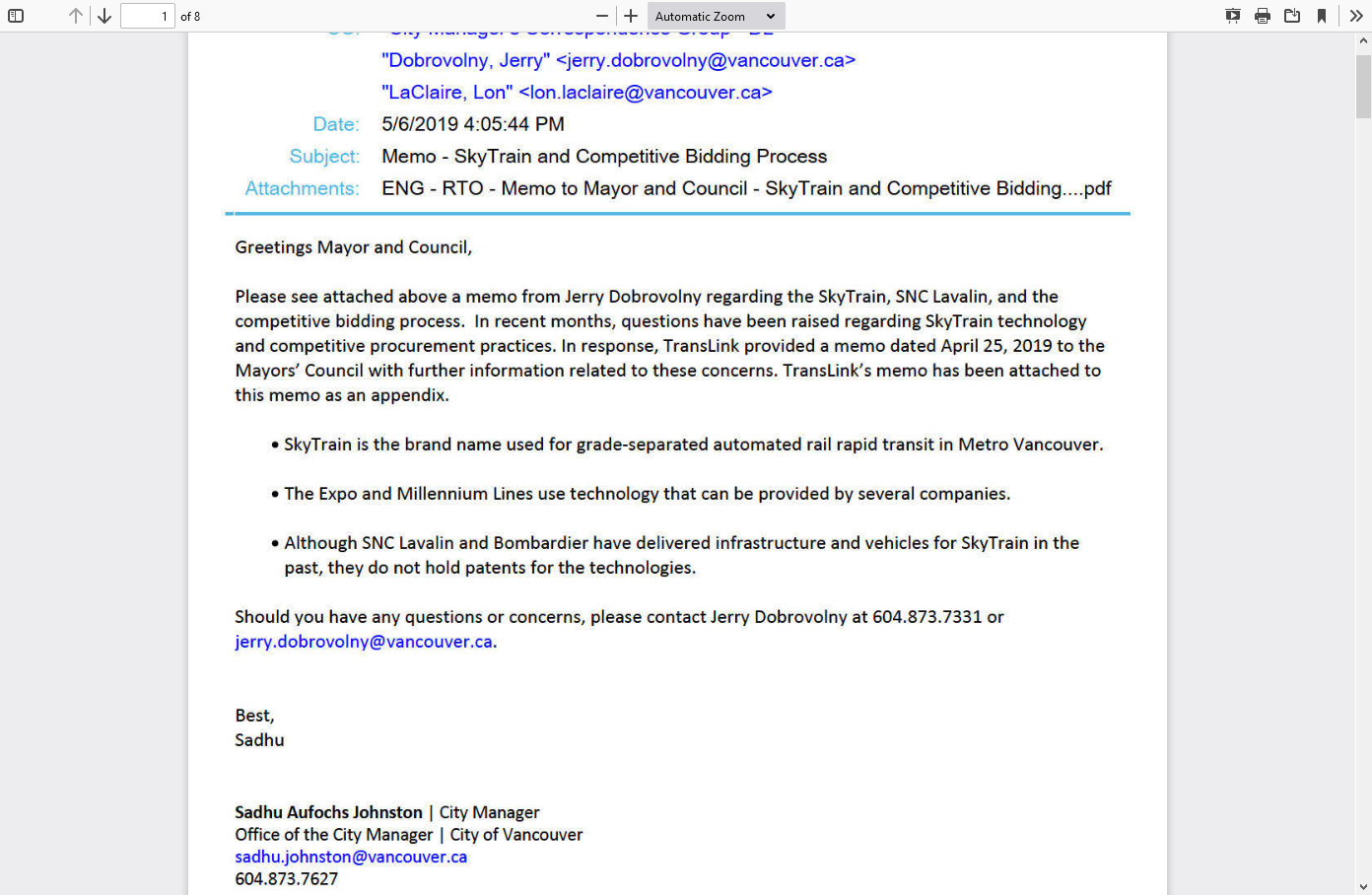
Mr. Burgess brought up a interesting point, the city of Vancouver claims that SkyTrain is not proprietary and SkyTrain is the “brand” name.
Really? Really, really?
The term SkyTrain is used on a lot of elevated transit systems, notably Vancouver and Bangkok.
BTS Bangkok is a conventional railway, operating as a regional metro system and is no relation to the proprietary “SkyTrain” light-metro system in Vancouver.
The Kuranda SkyTrain or Sky-rail in Australia, is an aerial tramway.
What is the city of Vancouver playing at? Why the deliberate misinformation?
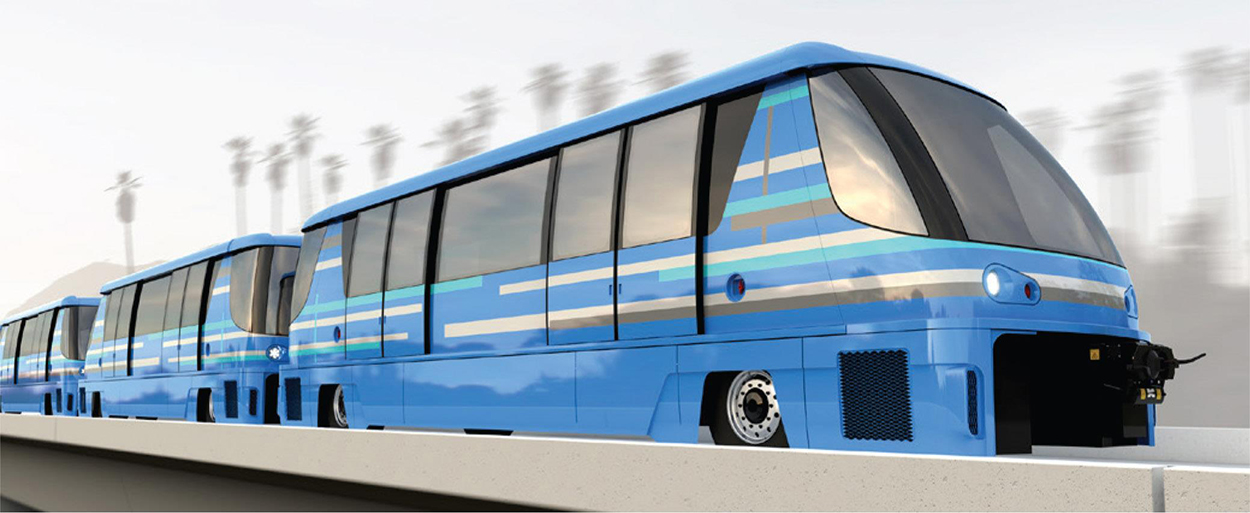
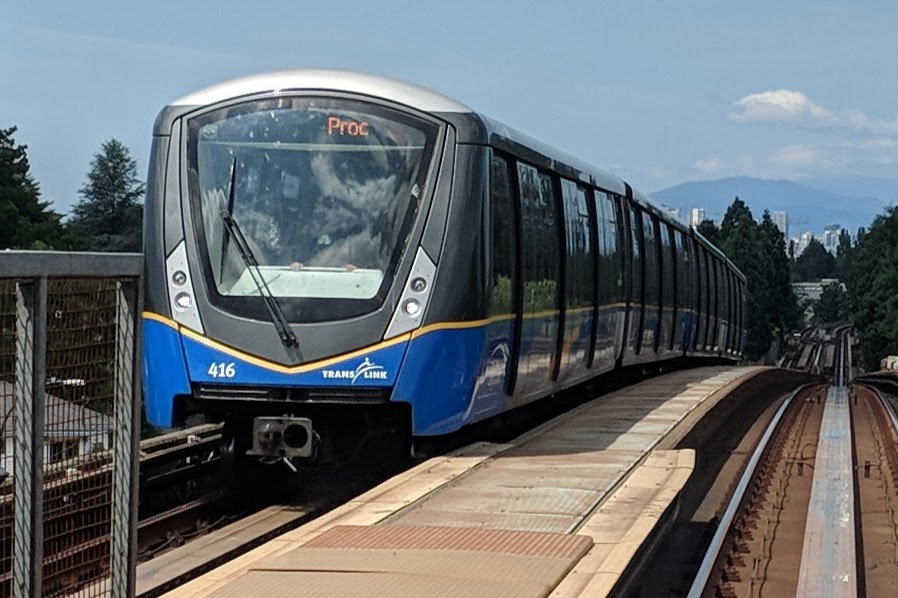
What they are calling the SkyTrain brand in Vancouver, is not a brand, rather the name of the regional light-metro system and Bombardier Inc. and Bombardier appropriated the name for their proprietary airport people mover system.
So, as a refresher, I will start with the brands that our light-metro system has been marketed under.
Intermediate Capacity Transit System (ICTS)
Advanced Light Rail Transit (ALRT)
Advanced Light Metro (ALM)
Advanced Rapid Transit (ART)
Innovia Rapid Transit
Movia Automatic Light Metro (MALM)
The various brands have been owned by four companies:
The Urban Transit Development Corporation (UTDC)
Lavalin
Bombardier Inc.
Alstom
As for MALM being proprietary, being powered by Linear Induction Motors, MALM certainly is, as most unconventional railways are. The MALM system is not compatible in operation on any other railway, other than its family of seven systems and no other company has ‘off the shelf’ vehicles that can be used on the MALM system.
As stated before, Alstom now hold the technical patents and SNC Lavalin hold engineering patents.
The city of Vancouver should be wary, as this blatant attempt to mislead the public could come back and haunt them legally in the future.
Thanks to Mr. Cow, Rail for the Valley knew about this over five years ago. RftV knew that the current Edmonds yard was near capacity and a new yard had to be built to accommodate the new cars as far back as 2016.
Couple of items ignored with this story, which is nothing more than the Daily Hive treating TransLink’s news releases as real news.
*
Alstom has now bought Bombardier’s rail division, thus they are the new owners of the proprietary railway and it is unclear whether Alstom has acquired the technical patents owned by Bombardier or the engineering patents from SNC Lavalin.
*
Bombardier is the sole builder and supplier of what is now called Movia Automatic Light Metro (MALM), which has been marketed under five previous names (Movia > Innovia > ART > ALM > ALRT > ICTS. Thus, it is no surprise that they won the contract, but that means nothing, the real story is, how many of these cars have been paid for as Alstom, a French company, has indicated they will only honour the contract for paid cars and it is unclear how many of the replacement cars have been paid for.
For those who protest that MALM is not proprietary, the big question is, who was the under bidder and what was the under bidder’s bid? If the the bid was more than 20% higher, then MALm is indeed proprietary and the bidding process was nothing more than a “mock auction.”
A mock auction is a scam usually operated in a street market, disposal sale or similar environment, where cheap and low quality goods are sold at high prices by a team of confidence tricksters.
The other big issue is that the Expo line desperately needs to be rehabbed before capacity can be increased beyond 15,000 pphpd. The cost form this is around $2 billion for a “cheap-jack” job to $3 billion and includes a new electrical supply; a new singling system as Bombardier has stopped supporting their proprietary Citiflow automatic train control system; a complete overhaul of the guideway and new high speed switches.
*
We must remember, that in an age of unprecedented investment in regional rail transit, only 7 such systems have been sold and built in the past 40 years; only three and soon to be two, systems were actually built for urban transit; two were built as airport people movers (heavily subsidized by the Canadian government); two have involved Bombardier and SNC Lavalin in corruption scandals; one is a one car operation connecting to a theme park and one is a single track demonstration line.
The big question everyone is tiptoeing around is funding. From Zwei’s viewpoint, politcal promises have been made; photo-ops have happened; and ribbons and shovels at the ready for the next election, but there has been no follow with actual funding!
Today, the MALM and extending MALM is the great election gambit, which has worked for now, almost 40 years and looks good for about two more election cycles.
It is time the Daily Hive stop reporting TransLink puff stories and start being a real newspaper doing investigative reporting.
The cost of the Skytrain light-metro is now over $200 mil/km to build.
TransLink planning $300 million SkyTrain maintenance centre in Coquitlam
The region’s expanding SkyTrain car fleet demands the use of more real estate immediately adjacent to the train lines to fulfill growing storage and maintenance requirements.
To that end, Coquitlam has been identified by TransLink as the location of one of two new additional SkyTrain operations and maintenance centres (OMC) that will be built this decade. TransLink is estimating the significant new train yard and maintenance hub will cost about $300 million.
This Coquitlam OMC (OMC 4) is in addition to the planned major OMC on a roughly five-acre site in eastern Surrey or Langley for the second stage of the Surrey-Langley SkyTrain (SLS) extension of the Expo Line.
A spokesperson for TransLink told Daily Hive Urbanized that both facilities are needed, with the Coquitlam OMC used to support the new SkyTrain cars on order for the Millennium Line and the first stage of the Surrey-Langley SkyTrain Expo Line extension reaching Fleetwood.
The fully built SLS project will add 55 cars (11 five-car trains) to the Expo Line, with 25 cars (five five-car trains) set for the first stage reaching Fleetwood if the extension ending in Langley Centre is built in two stages.
Both precise locations for the new OMCs have not been disclosed at this time.
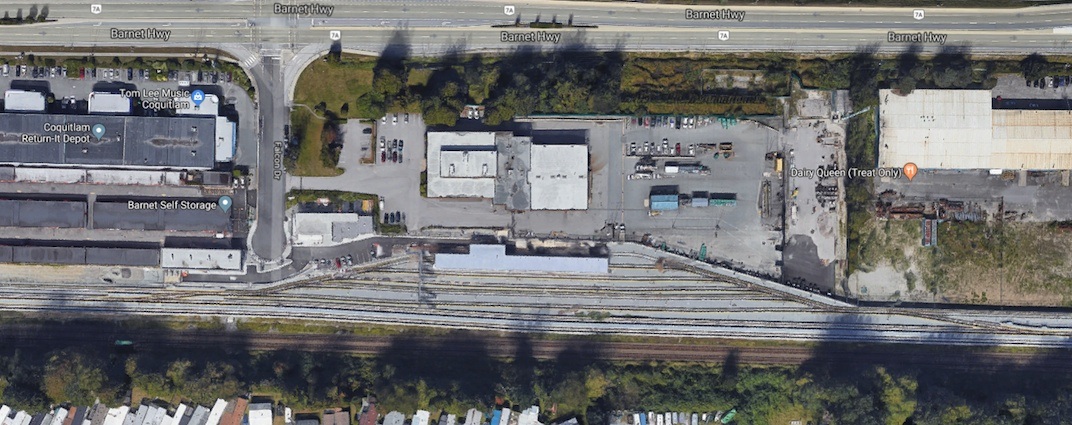
It is unclear whether the new OMC in Coquitlam could be an expansion of the existing small OMC at Falcon Drive (OMC 3) — between Inlet Centre Station and Coquitlam Central Station — built for the Evergreen Extension. Last year, TransLink completed a minor expansion of this OMC to the west of the existing facility at a cost of $21 million, increasing its storage capacity by up to approximately 30 cars.
The area immediately north of OMC 3, owned by BC Hydro, is largely undeveloped with only a minor office building and surface parking. The adjacent industrial sites are occupied by warehouse-type structures.


 The Liberty NXT Streetcars feature a three-section articulated car with more than 70% available low-floor standing area, station-level easy boarding achieved through an automatic load leveling system, seating for 40 passengers and the ability to comfortably transport 120 passengers.

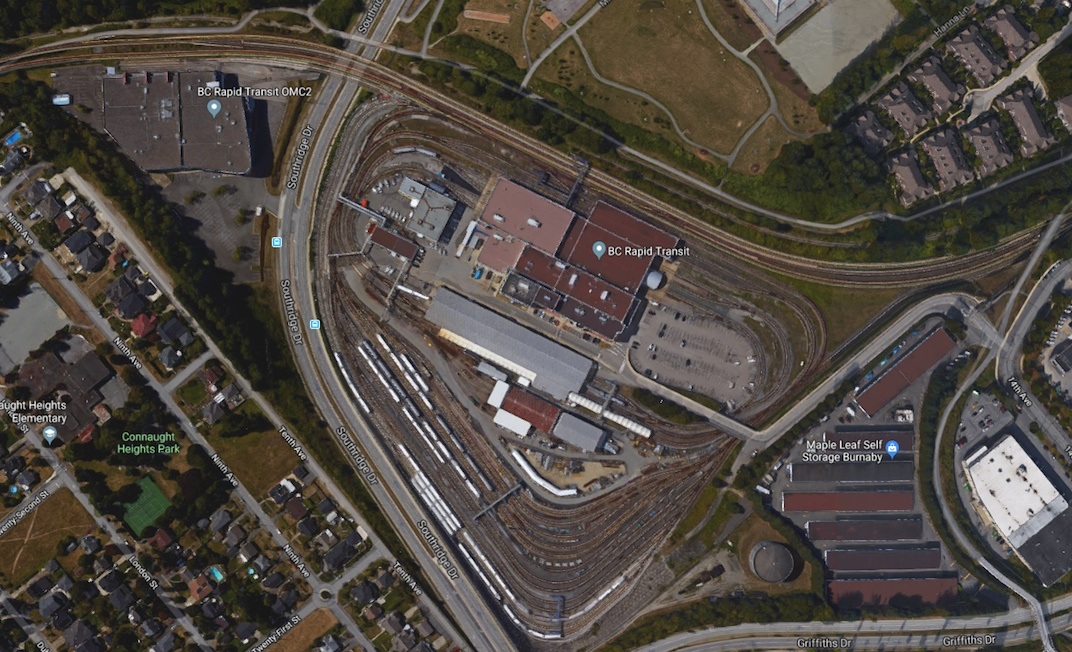
Aerial view of Edmonds OMC (OMC1
Aerial view of the existing Falcon Drive OMC3 on the Millennium Line’s Evergreen extension in Coquitlam. (Google Maps)



Recent Comments