Island Corridor Foundation’s Letter to Minister Claire Trevena
After years of indifference by the Island Corridor Foundation, a new provincial government seems to have brought some life to the Island Corridor Foundation.
Now the ICF is a political creature, which was believed by many, to oversee the demise of the E&N Railway on Vancouver island.
Enter the NDP and Vancouver Island MLA and premier, John Horgan.
The ICF has come to life, like a bear out of hibernation.
I guess those receiving stipends for being on the ICF board want to continue receiving a stipend under the new administration and with talk of a commuter style rail servcie, the ICF has miraculously risen from the dead.

ICF Letter to Minister Claire Trevena
Posted November 15, 2017Minister of Transportation & Infrastructure
The Honourable Claire Trevena
Victoria, B.C.
Via Email: Minister.Transportation@gov.bc.ca
Dear Minister
Re: Island Rail Train Service & Infrastructure Plan
Thank you for meeting with the Island Corridor Foundation and Southern Rail delegation November 9th.
We presented to you a plan that would provide significant train service to the people of Vancouver Island through a modest track infrastructure investment by your government and by Canada.
We know you are specifically focused on the section of rail between Langford and Victoria. Our plan provides a path to satisfy the western communityai??i??s transportation needs and also communities north of the Malahat.
As mentioned it is imperative that track infrastructure improvements are made so we donai??i??t lose this wonderful Island asset.
You also heard of the commitment that our rail operator has to Island rail. To assist them and the Foundation in planning for the future we asked four specific questions;
1.Ai??Ai??Ai??Ai??Ai??Ai?? Does the provincial government support Island train service?
2.Ai??Ai??Ai??Ai??Ai??Ai?? What is the government response to the SVI/ICF Train Service & Infrastructure Plan?
3.Ai??Ai??Ai??Ai??Ai??Ai?? Should SVI/ICF make a formal submission?
4.Ai??Ai??Ai??Ai??Ai??Ai?? Will the province support the submission?
We respectfully request a timely response to these questions.
Madam Minister the Island Corridor Foundation and Southern Rail of Vancouver Island are keen to assist you in whatever way we can. Please let us know how we can help.
Yours Truly
Dr. Judith Sayers
Chair
Toronto’s King Street – A Template For Broadway?
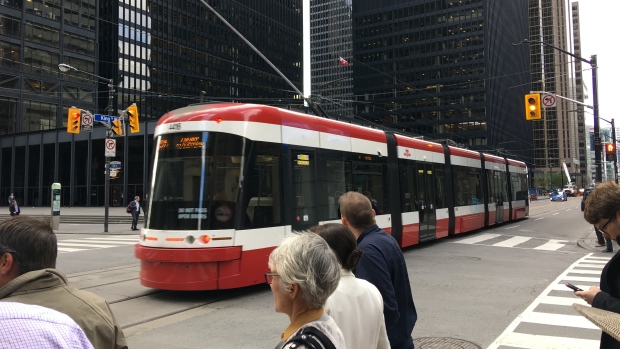
The European light rail Renaissance in Toronto seems to be successful.
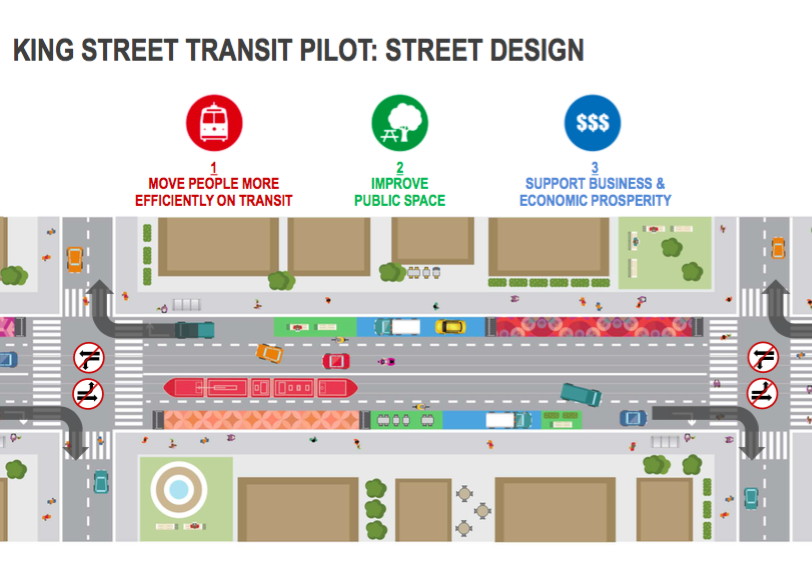
Active traffic calming will both improve transit service, while at the same time pull more people to transit, a lesson that TansLink and Vancouver traffic engineers refuses to learn. Putting transit underground, may make local improvements, but the high costs hurts transit operations elsewhere.
In Europe, the simple reserved rights-of-way for trams (LRT) gives a servcie comparable to a subway at a fraction of the cost. Unless traffic flows are in the order of 20,000 pphpd plus, there are far more befits for transit customers, local businesses, and the taxpayer, with light rail.
Unlike subways, modern light rail is both user friendly and non-user friendly and demonstrates the reason why LRT is the first choice of transit planners around the world.
Sadly, not in Metro Vancouver….pity.
Marcus Gee
King Street pilot project: Toronto finally finds the courage to address its commuting mess
Rush hour on Toronto’s King streetcar is usually hell on steel wheels. The packed streetcars that travel the city’s busiest above-ground public transit route trundle along at the pace of a Victorian landau, stuck in traffic like everyone else. Walking is often faster. Cyclists fly past.
So commuters who boarded the King car on Monday, the first weekday of a year-long experiment in getting the lead out, were amazed, even a little bewildered, when they looked out the front windshield and saw, well, nothing. No line of stop-and-go traffic. No big delivery truck blocking the road ahead. No old beater stopping to turn left, causing a mass transit vehicle with scores of people on board to shudder to a halt while waiting for a single car to get out of the way.
Just a long stretch of clear road, free of obstacles, even at the height of the afternoon rush. It was such an unfamiliar sight that it was hard not just to gawp, like a yokel seeing his first elevator.
Here was a vision of the future, and, you know, it seems to work. Freed of its four-wheeled competitors, the big red-and-white streetcars fairly sail along the open street, making that sweet electrical hum that they do when they get going.
Toronto transit riders never speak to each other ai??i?? the riders’ code forbids human interaction ai??i?? but on this day, a man in a fashion-forward version of one of those winter hats with the strings dangling past the ears couldn’t help turning to a couple of women beside him and remarking, “It’s almost like travelling at warp speed today.” He shook his head in wonder. “Toronto is putting on its big city pants and growing up.”That put it nicely. Finally, after years of chin stroking, the city has found the courage to do something bold about its commuting mess. Finally, it is coming to understand that cities that want to avoid strangling on their own growth have to change how they move people around. At last it has seen the sense in giving big vehicles with lots of people an advantage over small vehicles with one or two. At last it is struggling to loosen the tyranny of the car.
The King Street project gives streetcars precedence on the busy stretch of King between Bathurst Street in the west and Jarvis Street in the east. Motor vehicles won’t be able to drive through any more. They won’t be able to turn left, either. If they come onto that stretch of King, they must turn off at most intersections and get out of the way.
Vehicles operated by emergency services, road crews and the Toronto Transit Commission will get an exception, as will taxis after 10 at night. Cyclists can ride right through as before. Apart from that, streetcars will have the run of the road.
It is about time. This should have happened a decade, two decades ago. The King car is the third-busiest transit service in the city, trailing only the two main subway lines. It carries more than 65,000 people a day. That compares with the 20,000 vehicles that use the street. It is obvious who should get priority.
City leaders hesitated because they feared being accused of launching a “war on the car,” a familiar battle cry of the Rob Ford era. For years, nothing happened. The King car kept on trundling, full to the fogged-up windows with the thousands of new workers who are commuting to Toronto’s thriving downtown and the thousands of people who have moved to teeming condo communities such as Liberty Village. Change had to come. So Toronto bit the bullet. City council voted to authorize a pilot project. It started on Sunday.
Naturally, there have been problems. No one expected otherwise. That is what the pilot is for: to see how this can work. Some motorists are ignoring the signs forbidding them from driving straight into the streetcar zone. Cop cars with lights flashing were pulling many of them over on Monday and giving them a warning. Some commuters were confused when they found that their old streetcar stops have been moved. Instead of stopping at the traffic light at big intersections, the streetcars stop after the light. There are sure to be other hang-ups. This is all very new and it’s going to take time to get used to it.
But, at least at first, the streetcar zone seems to be making a real difference. With planters on the road at stops and colourful barriers at intersections, the King car seems not just faster, but safer. This looks and feels like a real transit zone, where transit riders are not battling for a space on the street and hoping to avoid getting knocked over by a car when they step out the streetcar door. For once, they are being treated as if they matter. For the battle-weary Toronto strap hanger, that is a delicious feeling.
The whole thing makes the city feel a little bit different, too. A little more sophisticated, a little more modern, a bit more like the international city that Toronto has come to be. Those big-boy pants look good.
A Broadway Tram – Under $5 Million Per Kilometre To Build!
What is the cost for light rail?
In Budapest, Hungary, aAi?? 1Ai??7Ai??km extension of Budapest tram Route 1, will cost HF8Ai??6bn.
Wow! 8.6 billion Hungarian Florints to build?
But wait, HUF 8.6 billion, converts to CAD $7,690,959!
What is more, the 1.7 km extension is costing CAD $4,524,093 per kilometre to build.
I know, that the headline is a little misleading and of course the cost does not include trams or land acquisition, but it does include track and OHE,Ai??(over head equipment) but not substations.
So when TransLink beats the drum, claiming LRT is very expensive to build, with costs of the Surrey LRT now exceeding CAD $100 million/km to build and too expensive for Broadway, TransLink should be reminded that in Budapest, new tramway construction and OHEAi?? is under $5 million/km and on Broadway OHE is already in place!
$5 million/km is a great base cost to start planning for light rail.
It is time to remind, not only the mayor of Vancouver and Surrey of this, but the Mayor’s Council on Transit, TransLink, Premier Horgan and the Minister for Transportation, that modern LRT can be built a lot cheaper than TransLink claims!

Budapest, Hungary: Work begins on Budapest tram extension
Work begins on Budapest tram extension
Metro Report. 14 Nov 2017
HUNGARY: Work has started on a 1Ai??7Ai??km extension of Budapest tram Route 1. The western extension from Etele A?t/FehAi??rvA?ri A?t to KelenfAi??ld railway station will include two intermediate stations. Interchange with metro line M4 will be provided at BikA?s Park and KelenfAi??ld.
The HF8Ai??6bn project is 98Ai??5% financed by EU funds, with the remainder coming from Budapest municipality. Revenue services are planned to start in early 2019.
A Novices Guide To Transit – Updated

ai??i??ai??i??ai??i?? or cutting through the BS about light rail, SkyTrain and BRT.
The following is a guide plus definitions about ai???railai??? transit.
ALM: Automatic Light metro, the fourthAi??marketing name given for the SkyTrain family of light-metros, when Lavalin briefly ownedAi??SkyTrain before going bankrupt.
ALRT (1): Advanced Light Rail Transit, the secondAi??marketing name for SkyTrain.
ALRT (2): Advanced Light Rapid Transit, the third marketing name for SkyTrain, when Advanced Light Rail Transit failed to find a market.
ART: Advanced Rapid Transit, the fifth marketing name for SkyTrain, used by its current owners, Bombardier Inc. & SNC Lavalin.
Automatic (Driverless) Operation: A signaling system that permits train operation without drivers. Contrary to popular myth, automatic operation does not reduce operating costs because there are no drivers, because attendants must be hired insteadAi??to permit safe operation. Automatic signaling was designed to reduce signaling staff, not operation staff.
 Bus Rapid Transit (BRT): Generally means ai???Express Busesai???, a true BRT needs a very expensive and land consuming busway or highway or be guided. Some pundits have coined the term BRT a Build Rail Transit.
Bored tunnel: A tunnel boring machine also known as a “mole”, is a machine used to excavate tunnels with a circular cross section through a variety of soil and rock strata. They can bore through anything from hard rock to sand.
Broadway Subway: A proposed $3 billion to $4 billion 7 km. SkyTrain subway to Arbutus Street.
Busway: A route needed for BRT. Busways can be conventional HOV lanes or exclusive roads for buses. Busways can be equipped with raised curbs or rails for bus guidance.
Canada Line: Vancouverai??i??s third metro line which is a grade separated EMU operation and is not compatible with the rest of the ALRT/ART SkyTrain systemAi??in operation.
Capacity: A function of headway multiplied by vehicle capacity, which in turn is dependent on station station platform lengthAi?? measured in persons per hour per direction.
Consultation: To sell a transit decision to the public after the decision has been made.
C-Train: The Calgary light rail system.
Cut and cover: A method of building a tunnel by making a cutting, which is then lined and covered over. (Civil Engineering) designating a method of constructing a tunnel by excavating a cutting to the required depth and then backfilling the excavation over the tunnel roof.
Demoviction: Where those who live in affordable housing are evicted because the housing is demolished to build high density housing, usually too expensive for those evicted to rent.
Evergreen Line: The 11.4 km newly finished portion of the old Broadway/Lougheed Rapid Transit Project. When the NDP forced the SkyTrain Millennium Line onto TransLink, there was not the money left order to complete the line to the Tri-Cities. Now completed.
Expo Line: The first SkyTrain line built, completed in late 1985. The ExpoAi??was built inAi??in three sections. The Waterfront to New Westminster section (cost a much as LRT from Vancouver to Whalley, Lougheed Mall and Richmond Centre), theAi??SkybridgeAi??section across the Fraser river to Scott road Station, and the final section to Whalley in Surrey.
 Grade: The vertical rise of a railway track, normally given in a percentage (1% grade = a 1 metre rise in 100 metres). Industry standard grade for LRT is 8%; Sheffieldai??i??s LRTAi??operates onAi??10% grades; the maximum grade for a tramway is located in Lisbon, where the streetcars operate, unassisted, on 13.8% grades.
Goebbels Gambit: The fine art of repeating a lie often enough that it is perceived as the truth.
Guided Bus: A BRT that is physically guided by either a raised curb or a central rail. Some guided buses are considered monorails.
Headway: The time interval between trains on a transit route.
Hybrid: A transit system that is designed operated asAi??a LRT/light metro mix. Generally very expensive as it uses the most expensive features of both modes.
 ICTS: Intermediate Capacity Transit system, the first name SkyTrain was marketed by.
Interurban: An early streetcar which operated at speed on its own R-o-W connecting urban centres.
 Light Rail Transit (LRT): A steel wheel on steel rail transit system that can operate economically on transit routes with traffic flows between 2,000 pphpd to over 20,000 pphpd, thus bridging the gap on what buses can carry and that which needs a metro. A streetcar is considered LRT when it operates on reserved rights-of-ways or R-o-Wai??i??s for the exclusive use of the streetcar/tram. Number of LRT/tramways in operation around the world is now almost 600; light railways (many use LRVai??i??s) ai??i?? over 120; heritage lines ai??i?? over 60.
Light Metro: A transit mode, generally a proprietary transit system, that has the capacity of LRT,Ai??at the cost of a heavy-rail metro. Light metro was originally conceived to bridge the gap from what old streetcars could carry and that of a heavy-rail metro.
Light Rail Vehicle (LRV): A vehicle that operates on a LRT or streetcar line. Also called a streetcar, tram, TramTrain or interurban.
Lysenkoism: used metaphorically to describe the manipulation or distortion of the scientific process as a way to reach a predetermined conclusion as dictated by an ideological bias, often related to social or political objectives.
Mass Transit: A generic term for heavy-rail metro. See rapid transit.
MAX: The Portland Tri-Met LRT system.
Mayor’s Council On Transit: A group of metro Vancouver’s mayors who are not transit experts, who think they are. The results of their endeavors proves the adage; “The blind leading the blind.”
Metro: An urban/suburban railway that operates on a segregated R-o-W, either in a subway or on a viaduct, due to long trains (5 cars+) and close headways. There are 174 heavy/light metros in operation around the world.
Millennium Line:Ai?? The second SkyTrain Line built, using the new Bombardier ART cars.
 Monorail: A transit mode that operates on one rail. There are two general types of monorail: 1) hanging monorail and 2) straddle beam monorail (not a true monorail). Some proprietary BRT systems are also classed as monorail.
Priority Signaling: A signaling system that gives priority to transit vehicles at intersections.
Proprietary Transit System: A transit system who rights are exclusively owned by one company. Transit operations who operate proprietary transit systems must deal with only one supplier.
Rapid Transit: A generic term for metro. See mass transit.
Reserved Rights of Way: An exclusive R-o-W for use of transit vehicles, can be as simple as a HOV lane (with rails for LRT) or as elaborate a a lawned boulevard or a linear park complete with shrubs.
 SkyTrain: An unconventional proprietary light-metro, powered by Linear Induction motors, marketed by Bombardier Inc. Currently there are 7 SkyTrain type transit systems in operation around the world. ICTS ai??i?? 2; ALRT (1 & 2) ai??i?? 1; ART 4.
 Streetcar: A steel wheel, on steel rail electric (also can be diesel powered) vehicle that operates in mixed traffic, with little or no priority at intersections. Also known as a tram in Europe. Streetcars become LRT when operating on reserved R-o-Wai??i??s.
Subway: An underground portion of a rapid transit line. Subways may either be bored or cut and cover or a combination of both construction methods.
TTC: The Toronto Transit commission.
T.O.D. or Transit Oriented Development: A local political doctrine which sees massive development along rapid transit routes. T.O.D. favours land developers and land speculators at the expense of affordable housing. T.O.D. works like this, over priced rapid transit is built on a line and land speculators rush in and assemble land along the route, especially a proposed station sites. The land is promptly sold to land developers who tear down affordable housing and build high density condos in there place. The high rents compel those evicted from affordable housing (see demoviction) seek accommodation in areas not well serve by transit. In the end, the new condos are sold to overseas buyers. T.O.. is favoured by planners, especially planners from S.F.U.
Tram: European term for streetcar, as the Europeans do not use the term LRT.
 TramTrain: A streetcar that can operate on the mainline railways, operating as a passenger train.
TransLink Speak: The lexicon used by TransLink to mask problems. Example: medial emergency on SkyTrain means a suicide.
 Viaduct: A viaduct isAi??a bridgeAi??composed of several small spans.
Vision Vancouver: The current political party running Vancouver, better known as “Visionless Vancouver”. Want subways for Vancouver, as long everyone else pays for it.
Thoughts For November
As 2017 wanes in the days of September and October andAi?? now the chill winds of November are upon us , the unprecedented dry spell, reeks of global warming. 7mm of rain in July and August must be setting off alarm bells in the various forestry and environmental ministries.
This summer and autumn I had the pleasure of talking to a great many people about our current transit mess, TransLink and their thoughts on the mess.
To try to get a measure of peoples feelings, I have condensed the answers to something that is certainly not scientific, but I believe gives a good insight on our current regional transportation situation.
And please, don’t shoot the messenger.

TransLink: Almost universally hated by all, with very few defending it. It seems TransLink has alienated itself from almost everyone, which is a sad commentary on the organization.
Politicians: They follow party lines with the Liberals supporting highways and the NDP/Greens supporting transit. There is a general distrust of all politicians.
SkyTrain: All rail transit is called SkyTrain with not people not knowing of mode. Build more is the theme.
The Massey Tunnel replacement bridge: This is a 50/50 split, but with the majority voicing the need for either better transit or more bridges into Vancouver/Burnaby
Tolls: Almost unanimous that should be tolling of bridges and tunnels, but including the major bridges in the City of Vancouver and the Sea to Sky Highway and the Coquihalla Highway, but with a caveat, tolls should not be more than a$1.00 a crossing and surprising, no electronic tolling.
Road pricing: Almost a universal nyet! Unlike tolling, road pricing is seen as a massive tax gab and a tax grab by TransLink is seen as money completely wasted.
Rail transit south of the Fraser: There is general support by all I talked to for this link, many people are unaware that there is an existing rail line and are surprised that it is not being used.
Broadway subway: It is strange that except for a few, the Broadway subway is seen to be a transit “overkill”. Many people think that subways the “gold standard” of transit and unaware of the vast costs involved. The few merchants I talked to were dead set against a subway, probably because of the Canada Line/Cambie St. fiasco.
Traffic: Almost unanimous that traffic is seen as a problem, but what is is great interest, many people I talked to are planning to leave or have already purchased a retirement house outside of metro Vancouver, with traffic being one of the reasons why. Expanding on this, many people who would use transit are leaving Metro Vancouver to live in areas with no transit at all.
New highway construction: Bring it on, as almost everyone I talked to wants new highways.
The Arbutus Corridor: It’s for light rail, silly. The Arbutus, once used for “rail” transit is still seen as a future route for “rail” transit.
Surrey LRT: This is a strange one indeed, those who live in Surrey hate the project and those who live outside Surrey like the project, with a SkyTrain for Vancouver and LRT for Surrey theme.
Bus Rapid Transit: A lot of people like the idea of BRT, but would not take it. BRT is seen as “someone else’s” transit.
Light Rail: Most people perceive that LRT is an inferior mode and are surprised to learn that it has a higher capacity than our SkyTrain and a lot more LRT lines have been built when compared to SkyTrain. I guess forty years of anti-LRT rhetoric by the media, BC Transit, TransLink, and the various political parties has done its work.
To sum up, people want better transit, but do not want to pay more. Many people are voting with their feet, leaving Metro Vancouver. The general dislike of TransLink is a constant theme and if there is to be any improvement to regional transit or to curb any major electoral push-back with TransLink’s planning, Horgan’s NDP must make changes and fast. If not, the public just might perceive TransLink and its next round of projects as another FastFerry fiasco.
Scarborough ……… Or Should We Say Broadway Subway ai???Not A Worthwhile Use Of Moneyai??i??
No real surprise here.
What is very odious is that the Mayor of Toronto wants a subway, purely for political purposes and the taxpayer be damned!
The same is true about the proposed Broadway SkyTrain subway, where the traffic flows just do not warrant a now almost $4 billion subway, yet the Mayor of Vancouver demands a subway!
The results for both cities will be the same with a subway, higher fares, higher taxes to pay higher subway subsidies and the politicians see absolutely nothing wrong with this.
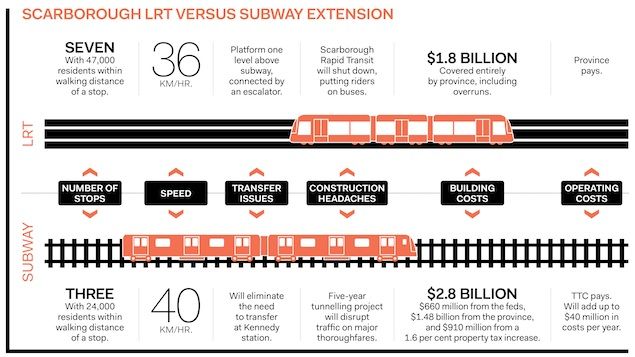
Internal Metrolinx report found Scarborough subway ai???not a worthwhile use of money.
Council to consider push for auditor general to conduct value-for-money comparison of the costs and benefits of transit options in Scarborough.
ByAi??JENNIFER PAGLIAROCity Hall reporterTues., Nov. 7, 2017Is the Scarborough subway a waste of money?
That essential question will again be raised at council this week after audit committee denied a motion from Councillor Josh Matlow last month to have a city watchdog provide the answer.
In 2013, council scrapped a fully-funded, seven-stop light rail transit (LRT) line to replace the aging Scarborough RT and voted instead to build a three-stop subway that at the time would cost at least $2 billion more, there has never been a comprehensive comparison of the costs and benefits between the two options.
But a secret report obtained by the Star through a freedom of information request provides a glimpse of what that kind of analysis might find: That a subway is ai???not a worthwhile use of money.ai???
Ahead of this weekai??i??s council meeting, Mayor John Tory remains firm that the subway project should move forward without a cost-comparison study ai??i?? something that has never been requested or provided by staff.
ai???This is the most voted upon project, I think, thatai??i??s probably ever gone through the city council,ai??? Tory told the Star on Friday. He said if councillors believed requesting that kind of analysis was in the public interest theyai??i??d vote for it.
ai???In the meantime my objective has been what itai??i??s always been: Get on with this project.ai???
After the plan for a subway was revised last year to just a single-stop extension at $3.35 billion, Matlow continued to challenge his colleagues to request such a study.
ai???If you would prefer the one-stop subway and if the information comes back to support that argument, in fact, if you always believed it would, then what do you have to be afraid of?ai??? he asked last month.
TheAi??switchAi??from an LRT to a subway took place over three separate council meetings, culminating in an October 2013 vote.
Behind-the-scenes at that time, emails show senior Metrolinx officials were trying to make sense of the political machinations since the city had already signed a master agreement with the province to build an LRT with provincial money, then estimated at $1.8 billion.
In the midst of that confusion, Metrolinx analysts drafted an internal report assessing whether the subway or the LRT provided the best value for money. The report obtained by the Star, dated September 2013, is clearly marked ai???draft.ai??? It was never published.
The Star received the report in 2015 as part of a broad request to Metrolinx for records dating back to 2013. Years after the 2013 debate and before a new subway proposal was pitched under Toryai??i??s administration, the significance of the Metrolinx analysis was overlooked.
Today, it remains relevant.
Hawthorne Park – Premier Horgan, Are You Listening?
Surrey’s Hawthorne Park debacle clearly illustrates that something is wrong with our regional transit planning.
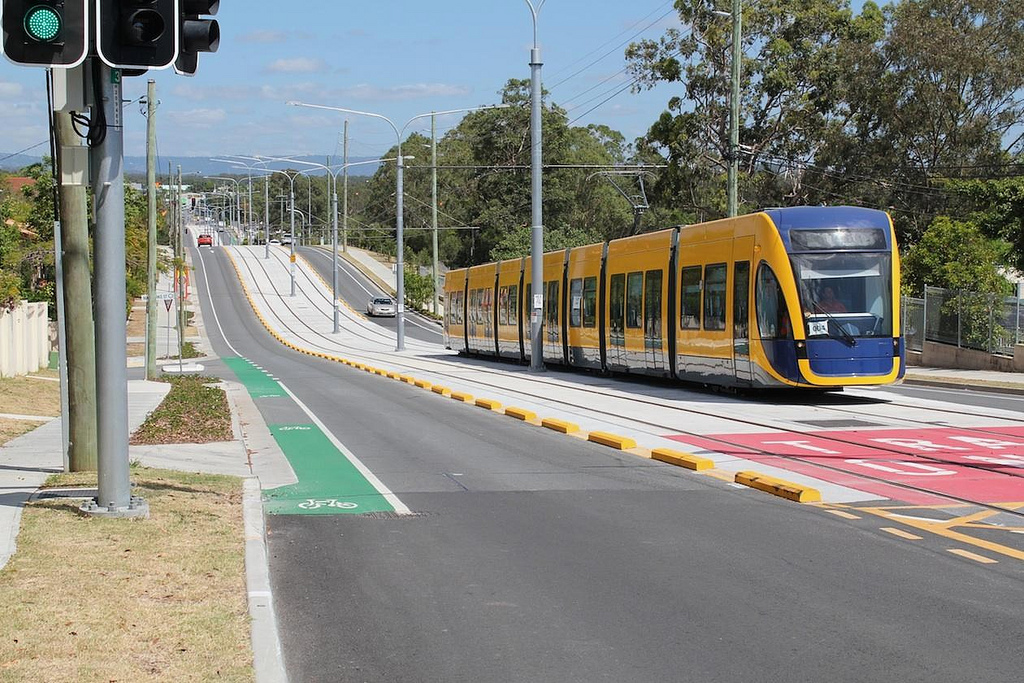
When You Really Need It – SkyTrain Craps out!
Again, SkyTrain never fails to, well fail!

CKNW NEWS ALERT Ai?? Ai?? Ai?? Ai?? Ai?? Ai?? Ai?? Ai?? Ai?? Ai?? Ai?? Ai?? Ai?? Ai?? Ai?? Ai?? Ai?? Ai?? Ai?? Ai?? Ai?? Ai?? Ai??Ai??
Ai?? Ai?? Ai?? Ai?? Ai?? Ai?? Ai?? Ai?? Ai?? Ai?? Ai?? Ai?? Ai?? Ai?? Ai?? Ai?? Ai?? Ai?? Ai?? Ai?? Ai?? Ai?? Ai?? Ai?? Ai?? Ai?? Ai?? Ai?? Ai?? Ai?? Ai?? Ai?? Ai??Delays on the Expo Skytrain line are getting longer, as TransLink deals with a track issue between the Edmonds and 22nd Street Stations.Ai?? Ai??A shuttle bus bridge has not been able to keep up.Ai?? The Millennium and Canada Lines are not affected.Ai?? TransLink says the problem has nothing to do with the cold, snowy weather.
Mebourne: Trams Far Cheaper To Operate Than Buses
Interesting numbers from Melbourne Australia, where the subsidy for a tram, per customer, is $7.18 less than for a bus, per customer!
Something to think about, isn’t it.

Costs per passenger in Melbourne Tram vs Bus
30-Oct-2017Ai?? Ai?? Mal RoweI came across the PTV annual report for last year (2015/16) with some remarkable figures.
On page 16 there is a chart and some numbers for payments to transport service providers and on pages 20-21 there are details of loading.
* Trams got $200M to carry 203.9M passengers – a subsidy of about 98c
per passenger
* Metropolitan Buses got $900M to carry 122.5M passengers – subsidy of
about $7.35 per passengerThe equivalent statement in 2016/17 says:
“PTVai??i??s total operating expenses in 2016-17 were $4.7 billion. The majority of PTVai??i??s expenditure was for payments to the transport service providers including $1.2 billion for metropolitan and regional train services, $0.2 billion for metropolitan tram services, $1.9 billion for the governmentai??i??s capital assets charge for rail infrastructure and $1.0 billion for bus services.”
Trams had a small increase in passenger numbers (0.2% to 204M) and buses had reduced numbers (down 4% to 118M).
So the comparable statement for the latest year would be:
* Trams got $200M to carry 204M passengers – a subsidy of about 98c per
passenger
* Metropolitan Buses got $1000M to carry 122.5M passengers – subsidy
of about $8.16 per passengerA proportion of the capital assets charge for rail infrastructure would be additional to the tram subsidy, but, on the other hand, the buses get an equivalent additional taxpayer subsidy (not accounted) through free access to the road network.
I do realize that buses in Melbourne often are on low patronage routes, but the comparison is staggering.
Figures for trains are not so easily worked out as the metropolitan and regional services are not separated.
Mal Rowe – happy to be advised if he has missed something

The BRT And LRT Saga Continues
What is missing from this LRT/BRT study is very important, the cost of operating the BRT or LRT line.
In Mexico, South America and the Middle East, wages paid to drivers, mechanics, managers and maintenance workers are much, much less than North America and Europe.
As well, in third world countries, the world bank balks at funding “rail” transit projects, but is overly generous funding with new highway construction and BRT needs new highways.
Of course in Asia, large populated cities need metros because of the capacity needed to move massive volumes of customers daily and in monsoon regions, transit needed to be elevated because of annual flooding.
So, with a select few cities with BRT, the mode tends to look better than it really is.
With operating costs downplayed or politely ignored this study lacks the validity of a proper route by route LRT/BRT study, with all factors included. In North America and Europe, when the proper studies are done, LRT tends to come out on top.
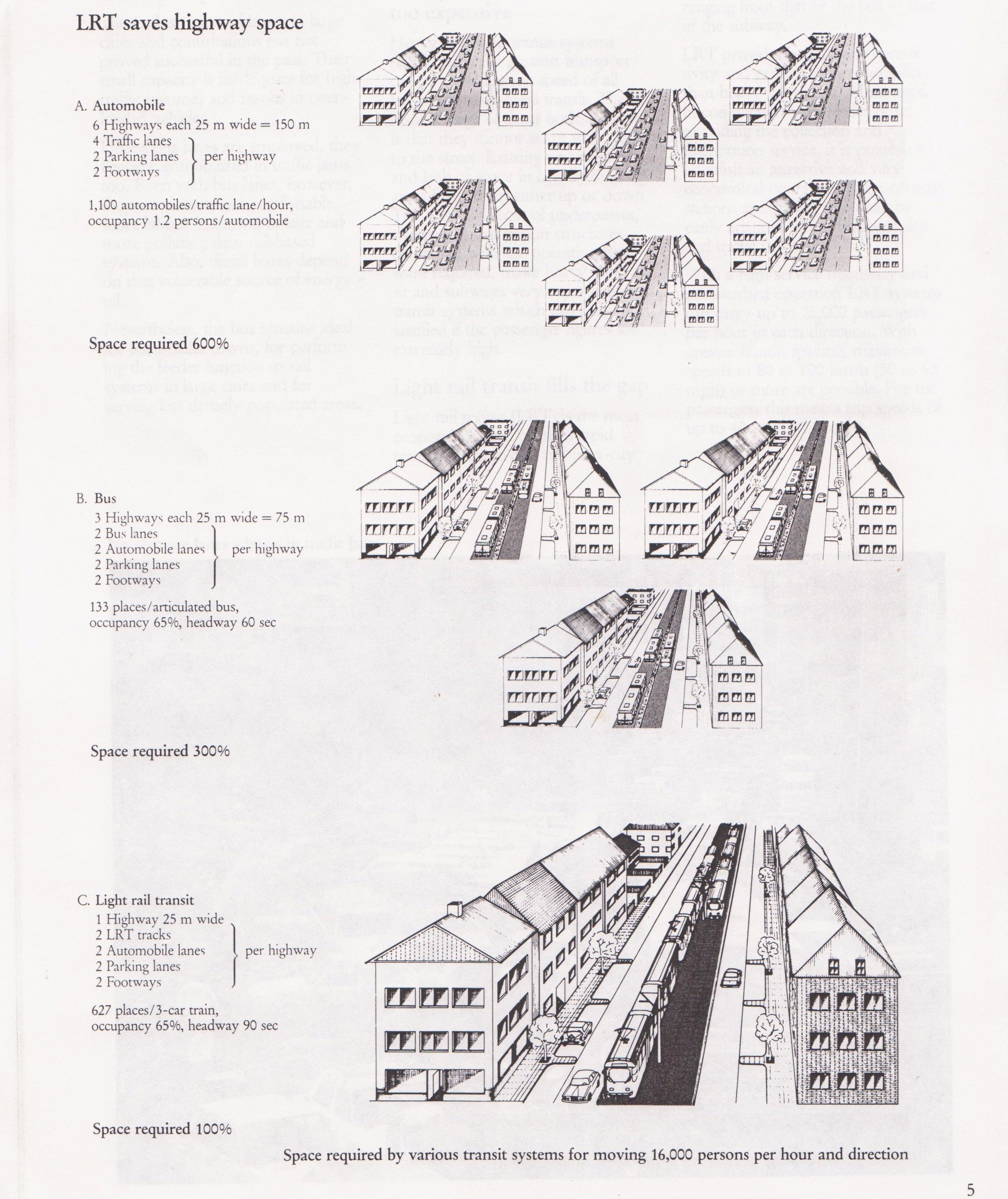
The question of whether trains are superior to bus rapid transit [BRT] is examined in an op-ed commentary Monday by “the city fix dot com” site:
<https://tinyurl.com/y8d8sego>
Are Trains Better Than Bus Rapid Transit Systems? A Look at the EvidenceAi??
(No superior system worldwide)
By Dario Hidalgo
October 23, 2017
The worldai??i??s great public transit systems: Tokyoai??i??s Metro, Londonai??i??s Tube, Honk Kongai??i??s MTRai??i??andAi??Mexico Cityai??i??s bus rapid transit corridors? Trains are often seen as the pinnacle of modern urban transport infrastructure. Theyai??i??re green and efficient, supported by permanent, complex track infrastructure. Bus rapid transit systems, on the other hand, are less flashy and often associated with their slow cousins, the local buses.
But in a new study published inAi??Transport ReviewsAi??researchersAi??Jesper IngvardsonAi??andAi??Otto NielsenAi??from the Technical University of Denmark point to data that suggests thereai??i??s little that separates the two approaches in many contexts.
Ingvardson and Nielsen compare 86 metro, light rail transit (LRT) and bus rapid transit (BRT) corridors using several variables: travel time savings, increase in demand from riders, modal shift, and land use and urban development changes. In some cases, the much more economical BRTs matched and even outperformed rail.
Travel Time and Ridership
The study starts by looking just at whether BRT can reduce travel times and improve mass transit ridership on its own.
There are large variations across BRT systems regarding travel time, making it difficult to draw broad conclusions, but overall they saw declines. WhileAi??MetrobA?sAi??in Istanbul produced travel time savings of 65 percent compared to previous commutes, theAi??Bus-VAOAi??lane in Madrid led to 33 percent savings and theAi??South Miami-Dade BuswayAi??just 10 percent.
Ridership gains after a new BRT corridor also varied: 150 percent in Istanbul, 85 percent in Madrid and 50 percent in Miami. Ridership gains are associated with travel time savings, but also derived from other factors such as the frequency of buses, station quality, vehicle type and user information systems.
Converting Drivers to Mass Transit
An interesting impact of mass transit implementation is its effect on drivers. In the 13 cities where Ingvardson and Nielsen studied BRTs, the number of riders who shifted from car trips ranged from 5 percent (Stockholm) to 40 percent (Adelaide), with a simple average of 17 percent. This figure is similar for the 24 LRTs (average 16 percent) and slightly lower than for the two metro systems included in the study (average 23 percent).
One caveat to these conclusions is that BRT and LRT corridors tend to be much smaller than metro corridors in terms of total volume of riders. The notable exception is Istanbulai??i??s MetrobA?s, which serves more than 600,000 passengers a day, 4 to 9 percent of which would otherwise be car users.
Land Values and Development
Despite the permanence of train tracks, Ingvardson and Nielsen found no significant difference in how BRTs, LRTs or metro impact land value. Land value increases ranged as high as 30 percent for BRT corridors; 32 percent for LRT; and 20 percent for regional rail and metro corridors. In several BRT and LRT cases, no increase in land value was observed; for the Coaster rail corridor in San Diego, a negative value was recorded.
Land value comparisons are difficult, however, because of varying assessment methodologies, distances to stations, and before and after time periods. Itai??i??s likely these conclusions should be taken with a grain of salt. The particular mass transit mode is less important than other factors, like access conditions, the urban environment, and service characteristics (e.g., frequency, speed, comfort and pricing). For the 41 projects with quantitative data, the differences in land values achieved by the different modes are not significant.
BRT, LRT and regional rail also show increased residential and commercial development around stations. Nevertheless, the improved access provided by transit is an insufficient driver of better land use. Other complementary activities, like changes in regulations, government support for investment in real estate, and investment in pedestrian connectivity, are required to achieve urban development goals. The most recognized case isAi??Curitiba, Brazil, where 45 percent of the long-distance motorized trips in the BRT vicinity use the buses. There is also evidence of positive urban development impacts from the BRTs inAi??Ottawa, Boston, Cleveland and Los Angeles.
There Is No Superior System
Ingvardson and Nielsen recognize that there are limitations in the data collected, analytical methodologies and even in the distinction between transit modes. There isnai??i??t always a clear difference between light, regional or metro rail, for example, or between bus rapid transit and bus priority corridors.
Despite these limitations, the researchers conclude that BRTs can improve travel times, modal share and urban development at rates similar to those reported for light rail and metro. This evidence contradicts conventional wisdom. It is not possible to categorically say trains have greater benefits than BRT; they are not always superior. Context matters, not just the material of the wheels or the permanence of the tracks.
Dario HidalgoAi??is Director of the Integrated Transport Practice for WRI Ross Center for Sustainable Cities.
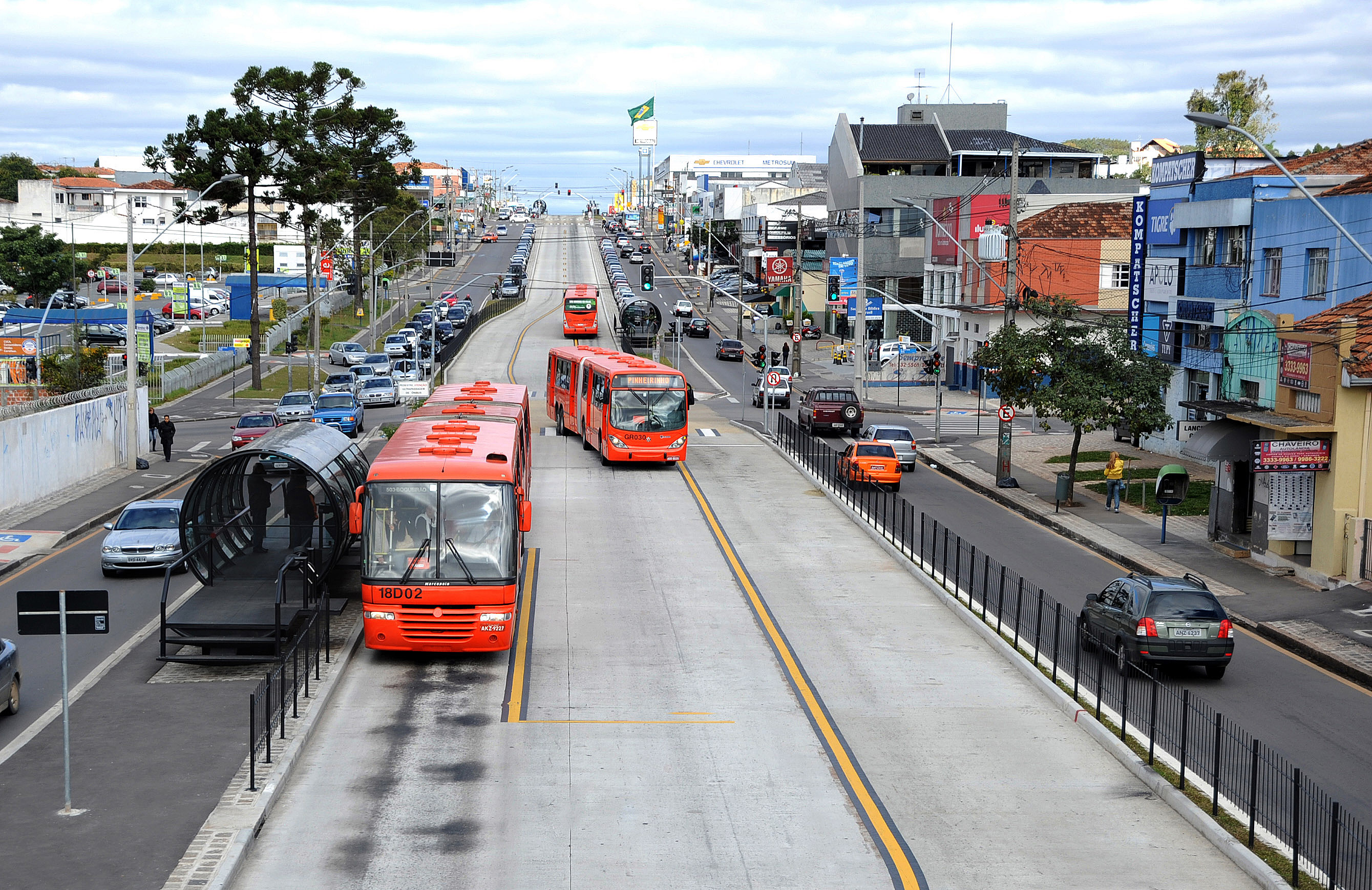 Or
Or
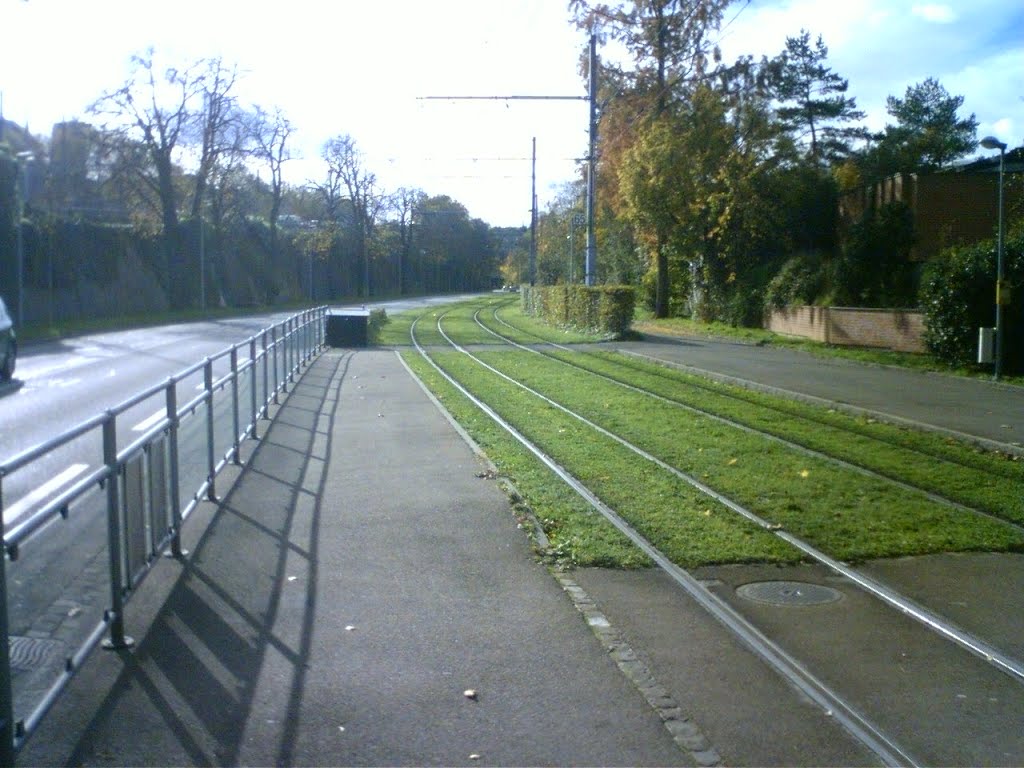 Sometimes it is not just operational costs that determine the choice for light rail.



Recent Comments