The reason for ending 24 hour subway servcie in New York is……
Ai??that it would allow for longer windows to perform maintenance work needed to keep the system in good repair for daytime commutes.
….is the same as TransLink’s maintenance needs for its light-metro lines.
The real problem is that those who call for 24 hour servcie on subways or light-metro, haven’t a clue about the costs of metro operation, nor the time needed for proper maintenance.
Trains just don’t magically operate, yet many politicians and the public think they do.
Subways are just very expensive, any way you look at them.
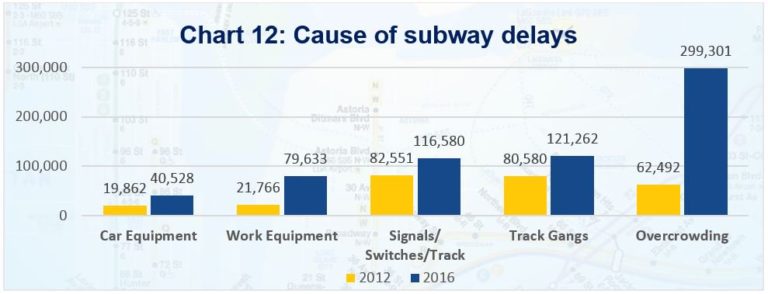
Preventative maintenance is essential to prevent delays on transit.
A new, greatly expanded Penn Station complex. Linking Metro-North, New Jersey Transit and the Long Island Railroad into one regional commuter rail system. Ending overnight subway service. Moving Madison Square Garden.
These are just some of the radical infrastructure changes recommended in the influential Regional Plan Associationai??i??s long-ranging blueprint for the future of transportation in the tri-state area, released Thursday.
The recommendations, part of a nearly 400-page document called The Fourth Regional Plan, outline potential fixes for not only the cityai??i??s transit woes but everything from coping with climate change to increasing the quality of life and economic prowess of the region as it moves into the 21st century.
And these arenai??i??t necessarily pie-in-the-sky ideas: the Regional Plan Associationai??i??s previous three plans, released in 1929, 1960 and 1996, all included many recommendations that were later adopted by city, state and federal governments and bodies in the years that followed.
Hereai??i??s some of the biggest things to look out for in the transportation portion of the Fourth Regional Plan:
Ending overnight subway service, adding new subway lines and modernizing the mass-transit system under new management
For any New Yorker who has grabbed an early-morning train home from a late night at work or out on the town, this one could hurt: The Fourth Regional Plan calls for an end to 24-hour subway service, replacing overnight trains with bus service. The reasoning behind the move is that it would allow for longer windows to perform maintenance work needed to keep the system in good repair for daytime commutes.
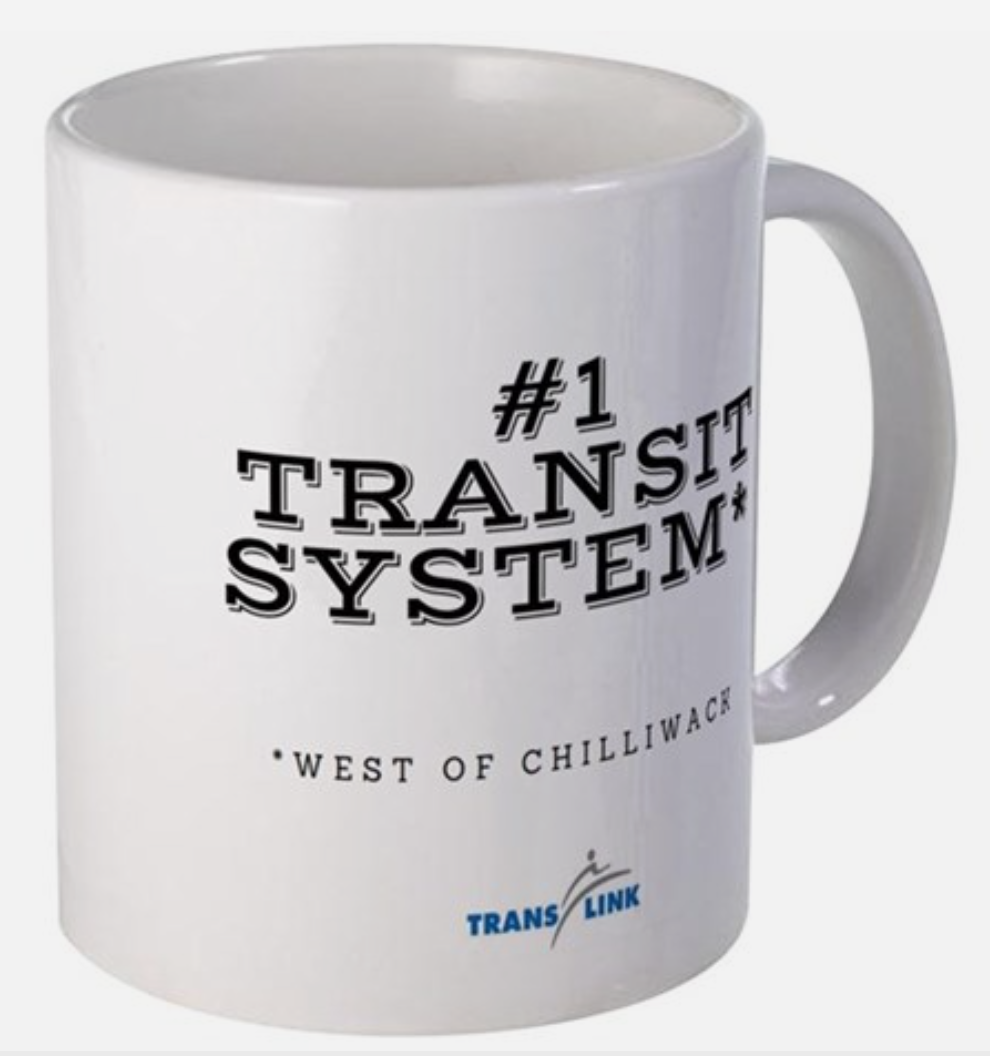
News item: Just in time for Christmas, TransLink opens an online souvenir store.Ai??
Coffee mug, for that superior joe. (theBreaker)
Buy a wayfinding throw pillow ($59), SeaBus bottle ($25.95) or SkyTrain scale model ($20) to remind yourself of all the times the Metro Vancouver transit system has been out of service and the shock you get when that tax bill to pay for it comes.Ai??
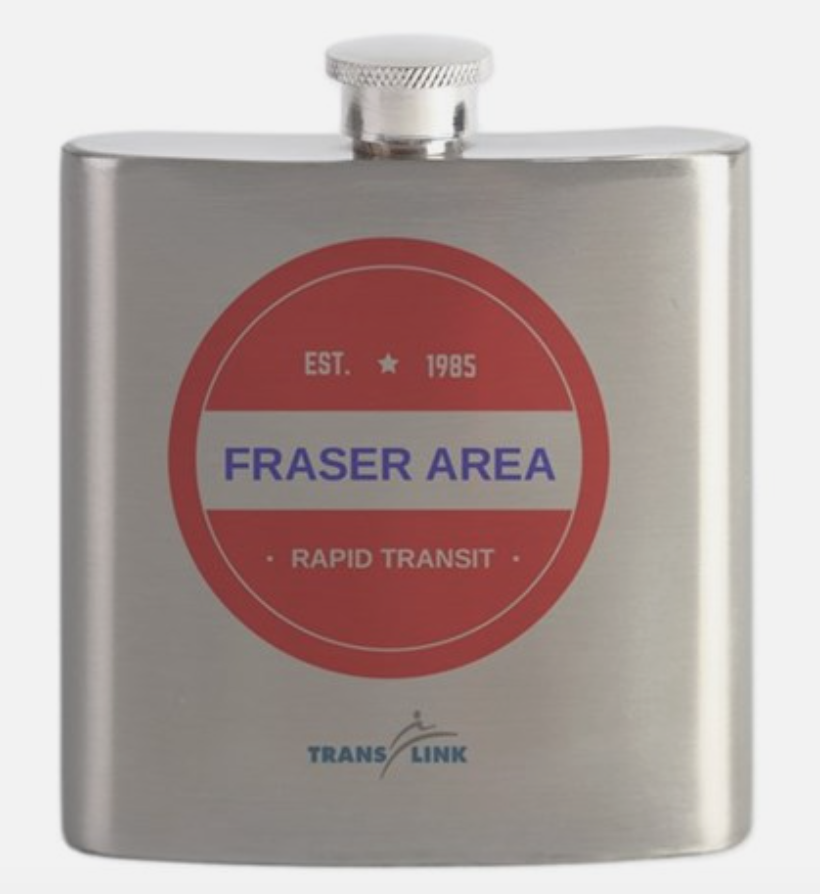
theBreaker suggests TransLink offer even more designs, like the following.Ai??
The Bus Bridge T-shirt, when you really need it. (theBreaker)
Keep your spirits up. A flask, to hide your hooch from the Transit Police. (theBreaker)
A soft pillow, for the end of a long day of riding TransLink. (theBreaker)
Toronto’s King Street experiment, bringing 21st century tram philosophy to Toronto and has opened a great many eyes.
What has happened is simple, on portions of King Street, the streetcar has been turned into light rail at very little cost.
There is no war on the car, rather priority has been given to transit customers over the car. This is mature transit planning, something that is missing in Vancouver, where sometime ago a senior consultant of an overseas transportation company told me that; “Sadly, Vancouver was not mature enough to embrace light rail”.
What Vancouver has been doing is building obsolete metro systems and perverting statistics to show that light-metro really, really works because it is world class.
This is not world class, rather third world thinking.
Toronto’s King Street should be a template for Broadway, where on selected portions of route, priority is given to trams. Sadly, those in power prefer to play trains and build $3 billion plus subway to nowhere.
As much as the King St. pilot project will help bring Torontoai??i??s wholly inadequate transit system into the 21st century, more important, it will enable the city to establish contact with reality, albeit to a limited degree.
Since 1998, when the province forcibly amalgamated Toronto and its surrounding suburbs, the mega-city, as it was then known, has existed in an infantilized state. Rather than acknowledge the facts of life in a growing city, Toronto has buried its head in the sand and resorted to the tired rhetoric of the ai???War on the Car.ai???
Fueled by these nonsensical notions, Mayor John Tory has launched a series of minor traffic fixes. Some have promise ai??i?? why shouldnai??i??t deliveries be made before or after rush hour? ai??i?? others are more symbolic. Does anyone really believe we can eliminate illegal parking? Still, in a city that never lets reason get in the way of transit planning, these tweaks matter enormously.
But now, for the first time in living memory, the city has taken a step that prioritizes public transit over the private vehicle, streetcars over cars, truth over illusion. This represents a huge change, a paradigm shift of monumental proportions.
Of course, the stretch of King included in the pilot is too short. Toronto never does in full measure what it can do by half. The Bloor bike lanes are another example of a city trapped in its own timidity. The lanes are too short, but 2.4 kilometres was as far as council could see.
The real issue ai??i?? mobility ai??i?? has historically been equated with vehicular traffic. But the automobile is only one of many forms of mobility. This is a point that civic and provincial politicos have difficulty grasping. For them, getting around the city begins and ends with the car. Itai??i??s no surprise, then, that Toronto transit has fallen two or three decades behind much of the advanced world.
The King St. experiment accepts that transit isnai??i??t simply an alternative to the internal congestion machine, but is actually preferable. Accordingly, it gives streetcars precedence. Cars can still use King, but only a block at a time. Streetcars fly along the street. If the 504 route carried 65,000 passengers daily in the bad old days, how many will ride it now? The big problem remains lack of rolling stock.
The real test wonai??i??t come, however, until police arenai??i??t on the spot daily writing tickets. Just as Toronto drivers routinely ignore bus and bike lanes, police routinely ignore offending drivers. The story of the cityai??i??s favourite cop, Const. Kyle Ashley, is instructive: he came to prominence tweeting his struggles to keep bike lanes free of illegally parked vehicles only to be silenced, ominously, by police brass.
In its willingness to go against history, the King St. project is a reminder of how poor transit planning has become in these parts. Even the Vaughan subway extension that opens next month is fundamentally flawed. It will attract more riders, but without increasing the systemai??i??s capacity to handle them.
This and the failure to create network connectivity have been transitai??i??s tale since the Bloor line was built in the 1960s. The Sheppard line loses money with every ride. Toryai??i??s proposed Scarborough line is already recognized internationally as a white elephant of global proportions. The only exception to this record of failure, the Eglinton Crosstown, an underground LRT, should have been a subway. And letai??i??s not get into the lack of funding for the eastern portion of the line.
But now Torontonians have King St. as a reminder of what transit could be. It offers a glimpse of a different, smarter, more humane city. Of all the numerous problems the TTC faces, the most pressing is the need to be taken seriously, not treated as a goody handed out by vote-hungry politicians, municipal and provincial. For Tory, whose dismal transit record includes the Scarborough subway and SmartTrack, the pilot offers a desperately needed win. Most likely he will gain more votes in next yearai??i??s election by dealing with the reality of downtown transit than promising subways to nowhere.
Meanwhile, several weeks ago, the city quietly requested proposals for tunneling sections of the relief line. Though this marks another move in the right direction, construction isnai??i??t scheduled to start until 2025. Thatai??i??s a long time to hold your breath.
Zwei was not kidding about the issue of cleaning subway lines.
Due to the nature of train action in a subway, the piston like force of air that is in front of every train as it traverses the tunnel, creates a sandblasting effect on the electrics and signalling.
Then, the oily dirt and debris coming from the passengers themselves has now formed a dangerous coating on the electrical supply over time.
This combination may cause fires and fires in a subway tend to be extremely dangerous.
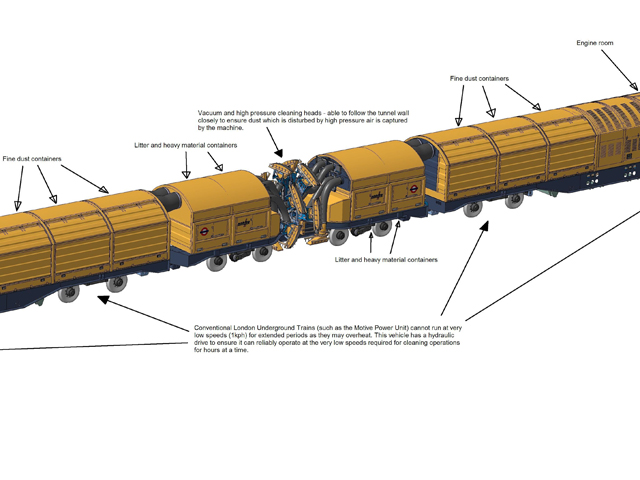
Many subway systems like London’s Tube, operate vacuum trains onAi?? a regular basis to help control dirt.
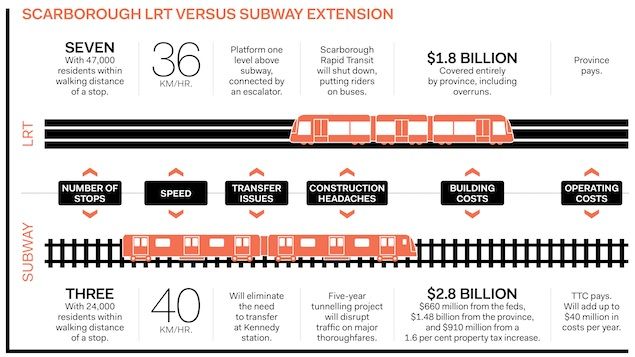
This adds to the already expensive nature of operating a subway and in Toronto Canada, the estimated cost to operate just 7 km of subway line is $40 million annually!
I wonder if TransLink is up to speed on the problems and costs of operating a subway?
Somehow I think not.
Hairy situation: DCai??i??s rail system may be taken down by human shedding
The fuzzy coating from riders’ heads could cause electrical sparks and fires.
For residents of our nationai??i??s capital, news of a fire on the cityai??i??s rapid transit systemai??i??the Washington Metroai??i??is not surprising. It catches fire and smokes quite regularly. At some points last year, there were reports of more than four fires per week (although thereai??i??s some dispute about that rate). Thereai??i??s even the handy siteai??i??IsMetroOnFire.comai??i??to check the current blaze status.
Yet, despite the common occurrence, residents may be surprised to learn a potential contributor to the system-wide sizzling: their own hair.
According to a safety specialist with the Amalgamated Transit Union (ATU), a thick, felt-like layer of human hair, skin, and other debris has collected on the aging tracks of the cityai??i??s rails. In particular, hair has built up on insulators supporting the transit systemai??i??s electrified third rails, which run cables carrying 750 Volts of electricity to power the trains. The hair coating delivers a real threat of electrical sparks and fire.
ai???I was flabbergastedai??? at the amount of hair in the Metro, ATU specialist Brian Sherlock told a local NBC news station. ai???The amount of debris is just beyond vulgar to think of.ai???Arcing and smoking insulators is a problem that has dogged Metro for years. In 2015, an arcing insulator was linked to a smoke incident that left one passenger dead and more than 80 others sickened by thick smog.
ai???A lot of the issues with the insulators is actually fiber and hair that literally comes off of people and clothing, and gets sucked upai??? and into the tunnels, Paul Wiedefeld, general manager of Washington Metropolitan Area Transit Authority, told NBC News.
However gross, the collection of hair from riders may not be that surprising. The system provided 97 million rides in 2016. A single healthy person sheds anywhere from 10 to 200 hairs per day. But those with health issues or hair loss can shed far more. Stressai??i??a common problem around DCai??i??can also up the head shedding.
In addition to hair, riders also let loose dead skin cells as they commute on the rails. A healthy person sheds about a thousand skin cells per centimeter squared of skin every hour. That works out to about 500 million cells a day. And each one of us sheds our entire outer layer of skin every two to four weeks.
Metro spokesperson Dan Stessel told NBC that Metro is working to boost track cleaning considering the hairy situation.
As our politicians, planners and selected academics, offer more and more studies, in an attempt of achieving nothing, by spending a great amount of time doing studies.
The railway fraternity in the UK, don’t study, they do!
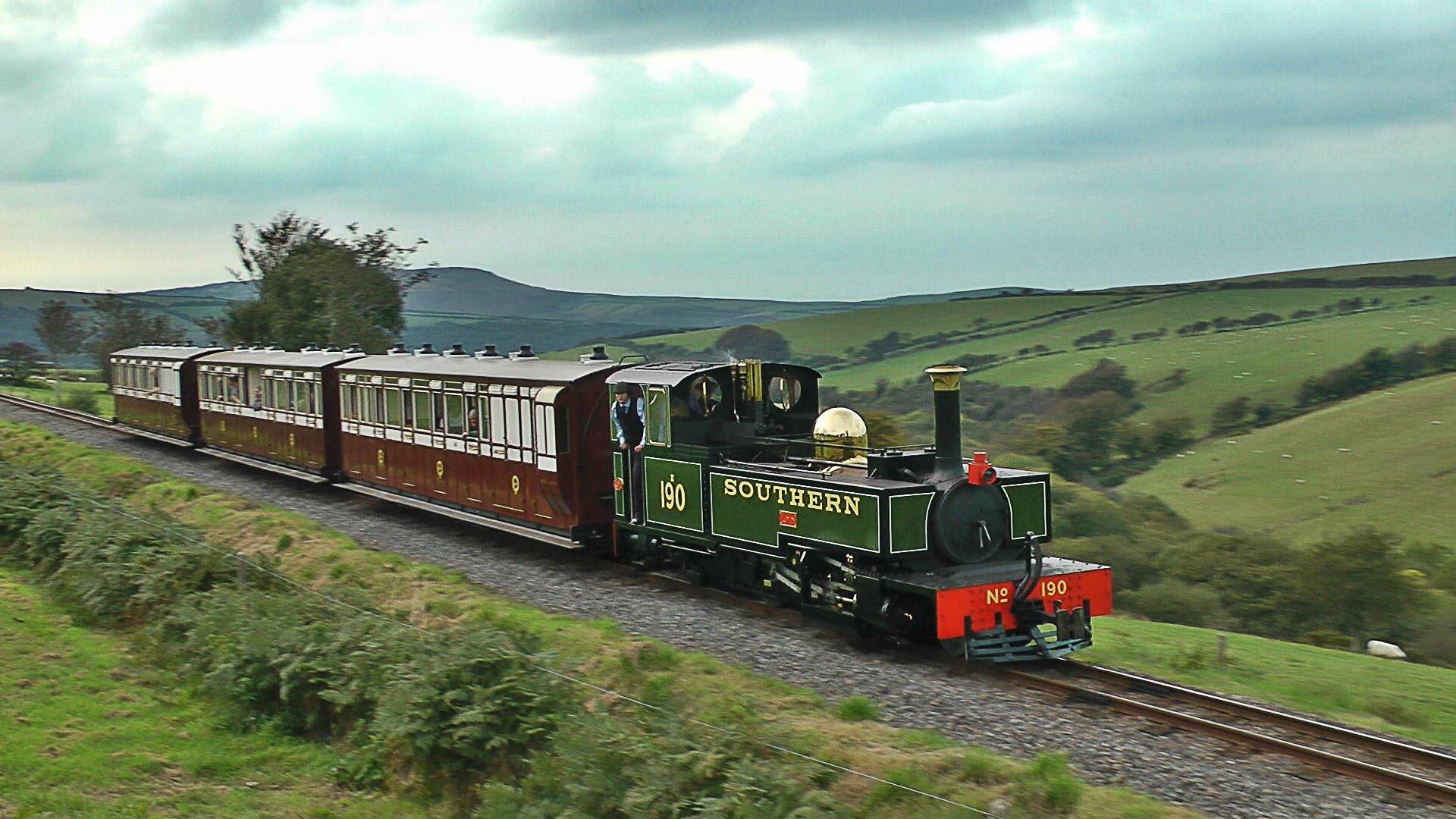
The Lynton and Barnstaple Railway has reopened after being abandoned and scrapped over 80 years ago. The narrow gauge railway has now returned to her former glory after only 17 years of hard work!
Then think of the E&N Railway and the Rail for the Valley TramTrain scheme for the Fraser Valley; two railways in existence and yet the Provincial government ignores any attempt to restore any form of passenger servcie on the two lines connecting major town centres on their respective routes.
The lesson is simple, in the UK, they do and in BC, they don’t.
Baldwin 2-4-2T No. 762 Lyn at Woody Bay station on September 29. CHRIS LEIGH
I kept thinking I would wake up. After all, it must be a dream, surely? I was at Woody Bay station on the Lynton & Barnstaple Railway, on September 29 and there in front of me was a four-coach L&B train headed by the Baldwin 2-4-2T Lyn. But, I had come by VW Tiguan not Tardis, and if Iai??i??d gone back in time I would have surely travelled by the Southern from Waterloo…
September 29 is etched in the mind of any L&B enthusiast. On that day, the final Saturday of the 1935 summer timetable, the last L&B train ran. Yeo and Lew, the railwayai??i??s first and last locomotives, headed the final train on its return journey from Barnstaple Town to Lynton. The railwayai??i??s famous epitaph comes from a wreath placed on the Barnstaple stop block on the Monday: ai???Perchance it is not dead but sleepeth.ai???
In the subsequent weeks, North Devonai??i??s unique narrow gauge railway was reduced to scrap. Two carriages, a handful of bits of carriages and five habitable station buildings were about all that was left. Oh, and Lew escaped immediate destruction, having been exiled to a coffee plantation in Brazil, never to be seen or heard of again.
In 1982, as custodian of Ian Allanai??i??s photographic library, it was part of my role to buy negatives to expand the collection. One morning my post tray arrived and among the usual mail was a battered envelope containing an old-style negative wallet with 100 pockets, each containing a 31/2in by 21/4in negative of the Lynton & Barnstaple Railway. Each negative was marked in the corner ai???FEBai??i??, which I recognised as the initials of Frank Box, a well-known 1930s railway photographer and fan of the L&BR. I had to request permission from above to spend money on these gems. The response was along the lines of: ai???If youai??i??re going to spend all of that money, youai??i??d better make a book out of them.ai???
And so followed some fascinating conversations with my IA Library colleague A B MacLeod who, as Locomotive Running Superintendent at Waterloo in the mid-1930s, had included the L&B in his area of responsibility. He had ridden on a couple of the locomotives and – judging by his comments about the position of the firehole ai??i?? had fired them too. I had already made a point of going to Clannaborough Rectory to photograph carriage No. 2 in the garden there, and I had taken holidays in the station buildings at Lynmouth (1972) and Bratton Fleming (1976).
Even as I was writing my text, there were stirrings of preservation down in North Devon. It was difficult to believe that any part of the L&B might be revived and I noted in the book my concern that a spluttering petrol tractor on a few yards of industrial track would not do the L&B justice. Thirty-five years on from that book, Iai??i??m delighted to admit that my fears were unfounded. The present Lynton & Barnstaple Railway Association may only have a short section of the railway restored to operation, but itai??i??s every inch pure L&B. Whatai??i??s more, at Snapper Halt and Chelfham they have made big strides in renovating the stations, and they are gathering more sections of original railway as it becomes available.
The Lynton & Barnstaple Railway is awakening and itai??i??s every bit as great as Iai??i??d always imagined!
As expected, the costs for the Scarborough subway, the subway that is replacing the Scarborough ICTS Rapid Transit line, is escalating. Toronto’s ICTSAi?? or locally called SRTAi?? is a very close cousin to Vancouver’s ALRT/ART system, which we collectively named SkyTrain.
What should interest Metro Vancouver residents is the final cost of the 6.4 km Scarborough subway in 2018 dollars, because the proposed Broadway SkyTrain subway is about the same length.
While TransLink has budgeted the subway at $2 billion in 2015 dollars ($2.1 billion in 2017 dollars), independent estimates for the subway project, put the cost in excess of $3 billion, with one estimate as high as $4 billion!
It is quite possible that civic politicians in Metro Vancouver, like their brethren in Toronto, will postpone the final cost estimates after the next round of civic elections.
Senior city officials will know the updated cost of the Scarborough subway in 2018.
Exactly when that estimate will be ready is still unclear. But the Star has confirmed the public wonai??i??t be told until the first quarter of 2019, when a staff report to council is expected ai??i?? well after the next municipal election.
ai???I donai??i??t see why the government of the City of Toronto would sit on information for three quarters of the year and not make it available to Torontonians as they go to polls,ai??? said Councillor Gord Perks, who has been critical of the subway plan.
With only very preliminary design done, the current estimate for a single-stop subway extension of the Bloor-Danforth line to the Scarborough Town Centre is $3.35 billion. That number comes with a very wide margin of error and does not include the costs necessary to finance a large infrastructure project.
The last time there was a cost update, the price of the subway increased by $1 billion.
As he announced his resignation Tuesday, outgoing TTC CEO Andy Byford said that if costs of the subway rise ai???way beyondai??? todayai??i??s estimate the project ai???will need to be revisited.ai???
The TTC earlier confirmed to the Star the subway will be at 30 per cent design by ai???mid-2018.ai???
But in email Wednesday, TTC spokesperson Brad Ross clarified that the work will happen in phases and that an actual cost estimate is not expected to be ready until ai???late 2018.ai???
Council was told in March that ai???city and TTC staff plan to report at the next key decision milestone for this project in late 2018ai??? with a cost update, once the subway has advanced to 30 per cent design, according to a staff report.
But a change in that reporting date is buried in an attachment to a new, unrelated report from staff released on Tuesday about the mayorai??i??s ai???SmartTrackai??? transit plan.
A letter from city manager Peter Wallace to the head of the provincial transit agency Metrolinx dated Nov. 20 outlines the cityai??i??s position on a regional transportation plan being drafted by the agency. At the end is a chart updating the status of the cityai??i??s priority transit projects.
The chart notes that the TTC is ai???currently advancing both tunnel and station design work from 10 per cent to 30 per centai??? with ai???expected completion end of 2018.ai??? It notes the ai???next milestoneai??? is a report to council on the updated cost estimates in ai???Q1 2019.ai???
City spokesperson Wynna Brown told the Star that while an updated cost estimate is expected ai???Q3/Q4 2018ai??? there is no council meeting until January 2019 ai???so the first opportunity to report out is Q1 2019.ai???
The last council meeting where city business can be dealt with next year is scheduled from July 23 to 25.
The nomination period for the election runs from May 1 to July 27 next year. Election day is Oct. 22.
Last month, council debated the schedule of meetings for 2018.
Though some councillors requested there be a meeting at the end of August in the election year, which is typical, others sided with the staff-recommended scheduling that ended all meetings in July.
ai???I donai??i??t think we should be meeting in the month of August while we are at the same time campaigning,ai??? said Councillor Glenn De Baeremaeker, who moved to have no meetings after the summer break.
Perks, at the time, objected, telling his colleagues: ai???Weai??i??re elected for a four-year term, not a three-and-a-half year term.ai???
Council voted 22 to 17 to end meetings in July. Mayor John Tory was absent for the vote.
The Star asked Toryai??i??s office for comment on whether the mayor thought it was reasonable to not inform the public of the cost until after the election and if he would work to ensure that update was provided.
In a short statement, Toryai??i??s spokesperson Don Peat wrote: ai???The timing of the release of that information will be up to city staff.ai???
Council still has to vote on whether to proceed with construction of the subway once the costs are updated.
For those who think the driverless car will usher in the demise if “rail” transit, think again.
Quote: “A growing number of metro regions, including the Bay Area, Washington, D.C., Philadelphia, Boston, Dallas, Houston, Miami, Atlanta, and Toronto, have now reached the physical point where the car is no longer an effective technology for moving people long distances.”
There lays the problem for Vancouver, our roads have reached a saturation point for auto’s, yet politicians and city engineers have sneered at proven methods of reducing the dependency on cars, they have collectively sneered at the simple tram.
A modern tram, operating on a user friendly transit route (user friendly in that the route is so designed for the transit customer and not land developers), part of a user friendly tram network, has proven to make a modal shift (from car to tram) of up to 35%.
Such a modal shift can only be dreamed of by TransLink, where they cannot show much of, if any modal shift from car to SkyTrain.
It will not be driverless cars or SkyTrain that will curb congestion in Metro Vancouver, but the simple tram.
In fact, theyai??i??ll do the opposite of what techno-optimists hope, and worsenai??i??not easeai??i??inequality.
For a growing chorus of techno-optimists and even urbanists, driverless cars are the solution to everything from traffic congestion to high housing prices.
By providing an easy, flexible, hands-free commute, during which people can watch videos, talk, or get work done, they will stretch the current boundaries of our crowded metro areas, and enable more and more people, especially the affluent and the advantaged, to live in far-off suburbs and exurbs.
To this way of thinking, driverless cars are the most recent in a long line of technologiesai??i??from the horse-drawn carriage and the streetcar to subways, trains, and the automobile itselfai??i??that have allowed us to escape the clutches of geography and the constraints of distance.
But the reality of driverless cars is likely to be rather different.
The vision of millions of workers logging hours from their comfortable offices on wheels can be intoxicating.
And, yes, it is true that the desire to avoid long commutes is one of the things that has sent affluent Americans streaming back to cities over the past decade and a half.
But a driverless car is still a car.
A growing number of metro regions, including the Bay Area, Washington, D.C., Philadelphia, Boston, Dallas, Houston, Miami, Atlanta, and Toronto, have now reached the physical point where the car is no longer an effective technology for moving people long distances.
This is a limit that the new technology will not overcome.
The basic law of traffic congestion is that as more new roads get built, they quickly fill up with more cars, and congestion remains.
Although you wonai??i??t be driving them yourself, driverless cars wonai??i??t be able to overcome the reality of congested roads, occasional accidents, and unpredictable commutes.
Ai??Higher-income people who want to avoid such commutes will continue to use their money to avoid them by living closer to the urban center.
Weai??i??ve seen endless predictions about how new transportation technology would lead to the death of distance. Every one of them has been wrong.
While cutting down on long commutes has mattered to the back-to-the-city movement, this is not the only factorai??i??and not the most important oneai??i??that has shaped the return of advantaged people to the urban center.
Two other factors have mattered as much, or more.
For one, knowledge workers have flocked back to cities because that is where the best, highest-paying professional, tech, and creative jobs are, and where their dense professional networks occur.
On top of this, people have been drawn to the unique amenitiesai??i??museums, art galleries, restaurants, theaters, nightlife, and much, much moreai??i??that cities offer.
In fact, according to several econometricAi??studies, dense concentrations of these amenities are a motivating factor in the back-to-the-city movement of the affluent and the educated.
Driverless cars will do little to change either of these factors.
Truliaai??i??s chief economist Ralph McLaughlinAi??rightly arguesAi??that driverless cars will accentuate geographic inequality.
But he sees this happening as both affluent people and businesses are able to locate farther and farther out in the green exurban fringe, while urban centers lose their current value and allure, and once again become home to less advantaged groups.
I fully agree that driverless cars will exacerbate spatial inequality. But I see it occurring in almost exactly the opposite way.
Driverless cars will do little to alter the basic factors and forces that have brought affluent people back to cities.
What they will do instead is free up space on the urban periphery to house less advantaged groups and classes there.
Driverless cars will open up cheap outer-edge land for low-cost development and make todayai??i??s ai???drive ai??i??til you qualifyai??? commutes look like a breeze.
Rather than being used by a re-suburbanizing rich headed to far-flung luxury developments, driverless carsai??i??or more likely, driverless bussesai??i??will extend the commuting range of blue-collar workers, service workers, and the poor. Americaai??i??s metropolitan geography will come to look more like that of Europe or the developing world, with the rich clustered on the increasingly valuable land in and around the city center, and the low-income warehoused in the much cheaper land at the suburban and exurban fringe.
Over the past several decades, weai??i??ve seen endless predictions about how new transportation, information, or communications technology would lead to the death of distanceai??i??the end of geography and the flattening of the world.
And every one of them has been wrong. The world has become spikier. Superstar cities have become more prosperous.
And the affluent have used their resources to colonize the most economically functional and amenity-rich areas near the urban center.
Driverless cars will do nothing to change that. In fact, they are only likely to make our current geographic divides even worse.
The following is so silly and juvenile because it is all hearsay and opinion, not fact. But facts have never bothered the SkyTrain Lobby as they try once again try to fool the public about SkyTrain. They treat everyone like rubes at a country fair.
This is from the Daily Hive, written by anonymous. Forgetting the fact no one builds with SkyTrain anymore and only seven such systems have ever been built in the past 40 years, Zwei is going to explore the following claims.
Offer a low ultimate capacity that is only 27% that of the Canada Line’s
Be much slower and less frequent than SkyTrain
Potentially be unreliable and prone to collision
Cost comparable to a SkyTrain extension to build but generate less ridership, and
Have operating cost shortfalls for decades
1)Offer a low ultimate capacity that is only 27% that of the Canada Line’s
Not true.
Capacity is a function of train size and headway.Ai?? As the Canada Line’s station platforms are a mere 40 metres long, it can only accommodate trains 41 metres long.
The capacity of the Canada Line is extremely limited, around 9,000 pphpd.
Modern LRT can carry in excess of 20,000 pphpd and in extreme circumstances much more.
In Karlsruhe Germany, due to the success of the regional tramtrain system, the traffic flows along Kaiserstrasse to trams and tramtrains operating at 40 second headway’s, offering a capacity in excess of 35,000 pphpd.
More local to home, in Toronto in the 1950’s, couple sets of PCC trams, were carrying 12,000 persons per hour on the old Bloor – Danforth route.
Currently, the operating certificate for the ALRT/ART proprietary light-metro lines limits capacity to 15,000 pphpd, one third that was carried on Kaiserstrasse in Karlsruhe Germany.
LRT operating on a reserved R-o-W, offers the benefits of a metro at a fraction the cost.
2)Be much slower and less frequent than SkyTrain
Not true.
LRT operating on-street, in mixed traffic, has it’s speed limited by posted speed limits and we call this a streetcar in North America. Not so, if LRT operates on a reserved rights-of-way, with no interfering traffic, LRT can match if not surpass the commercial speed of SkyTrain.
In Europe, peak hour headway’s can be as much as 30 seconds, on major routes.
3)Potentially be unreliable and prone to collision
Not true, but with a caveat.
LRT is extremely reliable when compared to automatic railways like SkyTrain.
LRT does have collisions with cars and or trucks, but 99.9% of tram auto/truck accidents are the fault of the car/truck drive, disobeying signs and signalling. In many European countries there are harsh penalties for drivers who are found at fault causing an accident with a tram.
More people die by SkyTrain in Vancouver annually, than by tram in Calgary.
4)Cost comparable to a SkyTrain extension to build but generate less ridership
Not true.
If LRT is being built as a light-metro on a segregated R-o-W, then yes the costs are comparable, like in Seattle where their LRT is being built as a light-metro with over 90% of its route operating on viaduct or in a subway. But then it is not LRT, but a light metro.
Costs for LRT start as low as $5 million/km for tramtrain; $15 mi./km to $25 mil./km for a streetcar; and $25 mil./km to $45 mil.km for LRT. Now if extra engineering for LRT includes complete street reconstruction and landscaping or new road construction, the costs will escalate.
The last cost estimate for SkyTrain (elevated) is $130 million/km. ; the cost of the proposed 7 km. Broadway SkyTrain subway is now well over $3 billion!
At-grade transit has proven to generate more new ridership than elevated or underground transit and one of the reasons LRT is so popular!
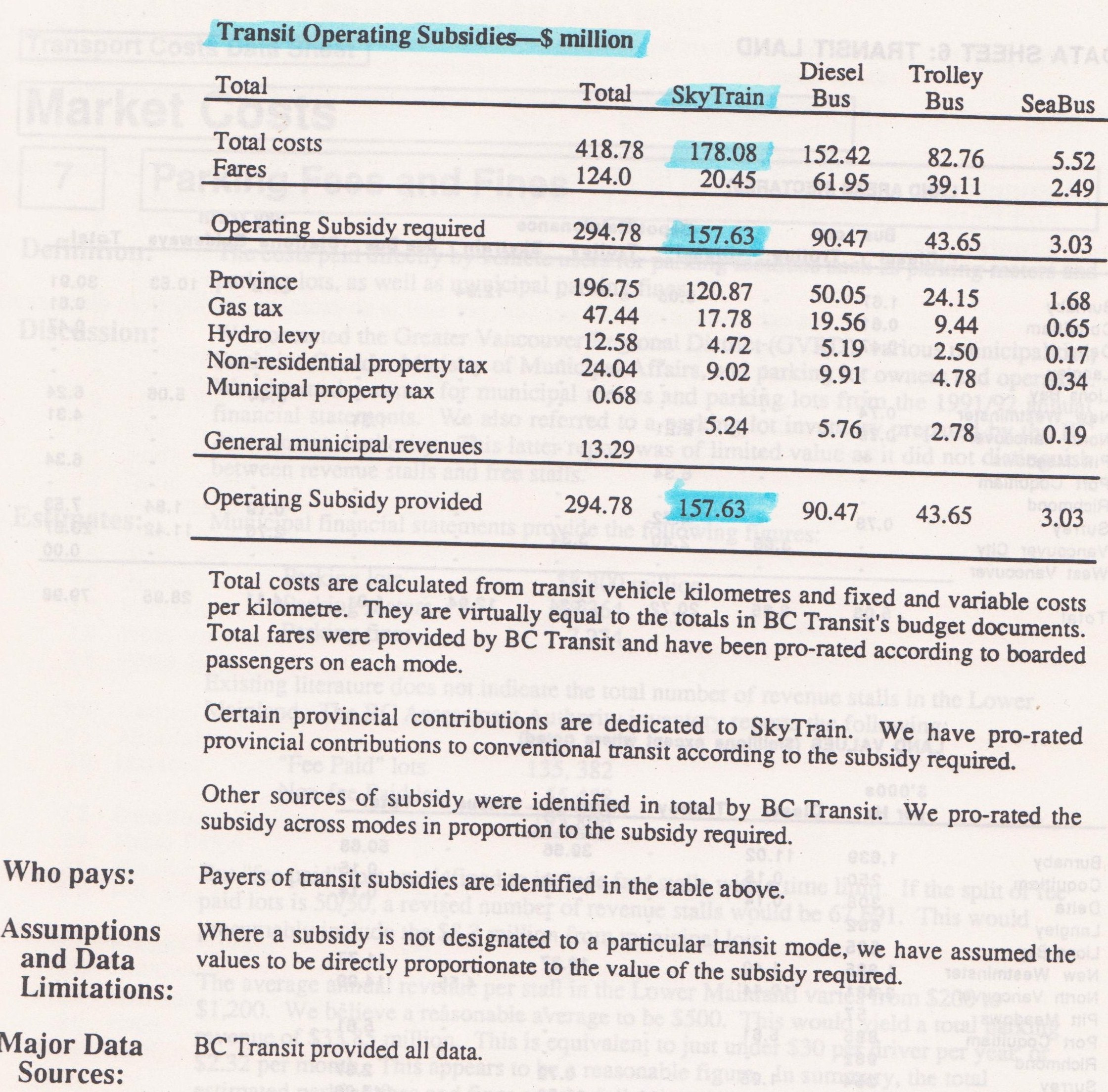
In1992, the annual subsidy for SkyTrain was $157 million, more than the bus system!
5)Have operating cost shortfalls for decades
Not true.
As LRT is much cheaper to build and operate than SkyTrain, will have much less operating and cost short falls than SkyTrain.
The subsidy to operate the ALRT/ART SkyTrain system, is now well over $250 million annually and then there is the Canada Line.
The Canada Line is not ALRT/ART SkyTrain, but a conventional heavy-rail metro built as a light metro, the result of a Gordon Campbell, BC Liberal faux P-3 project. The SNC Lavalin lead consortium receives about $110 million annually from TransLink to operate the line, about three times more than a conventional LRT line to operate.
What stands out with the SkyTrain Lobby’s cacophony of deceit, massive exaggerations of the truth, fake news and alternative facts, is the number seven (7), because only 7 SkyTrain type systems have been built under three names in the past 40 years, compared with over 200 new LRT systems built during the same time, adding to the already existing 350 tram/LRT networks operating around the world.
What is the SkyTrain Lobby really up to? Who are the SkyTrain Lobby working for? Who benefits with hugely expensive SkyTrain construction and operation; certainly not the transit customer or taxpayer.
As the saying goes , with SkyTrain “follow the money!”
The combined arrogance and ineptitude of TransLink just makes one’s head shake.
TransLink has just sent out 400,000 invitations for people to do a trip diary, with all sort of silly incentives to get people on board.
What will happen is this:
1) People who do not take transit will toss the invitation aside.
2) Very few people who do take transit, will bother filling it out.
3) The information from the trip diaries will be of little use.
The problem with TransLink is that it doesn’t listen to what the public really want.
A good example is South Delta, where transit ridership is flagging. People want their direct South Delta to Downtown Vancouver bus back as there is a general dislike of the forced transfer to the Canada Line. TransLink does nothing and people vote with their cars.
The same sort of issues are happening throughout the region and the vast majority feels that TransLink does not listen or do they care.
No trip diary will solve this and instead TransLink needs to deal with real issues.
It seems TransLink cannot deal with any issue at all and has a vast propaganda machine at work, manipulating statistics to convince politicians that everything is OK.
A recent example was the news release that TransLink was carrying one million people daily, strange that TransLink just recently said 15% of the Metro Vancouver (Approximately 2.5 million), use transit. The fact is there could have been one million boarding’s, but as most people make 2 or more boarding’s a trip, let alone each day, the real number of people using transit each day is more like 375,000 or less.
Now TransLink has a very accurate tool in measuring ridership and it is called the compass card and the Compass Card can easily calculate the number of “unique” transactions made by the card, giving a fairly accurate number of people using transit on any given day.
TransLink refuses to use this data, which makes one think; “What is TransLink trying to hide?”
All very easy for TransLink to make claims, when they do not release the numbers to back their claims!
TransLink wants your help to better plan transit in the Lower Mainland
NEW WESTMINSTER (NEWS 1130) ai??i?? From driving to cycling to transit service, TransLink wants to hear from you to help improve the transportation system for both Metro Vancouver and the Fraser Valley.
The Regional Trip Diary survey has been arriving on doorsteps and itai??i??s one of the key tools used to revamp the way we get around.
Chris Bryan with TransLink says this was last done in 2011 and it inspired many changes. ai???Anytime weai??i??re increasing bus service or weai??i??re providing funding through the Major Road Network Funding to municipalities to improve roads, anything like bike baths, walking paths ai??i?? those investments are determined based upon the kind of information we receive from the Trip Diary.ai???
He explains itai??i??s not just about transit, but overall, how you get around the region. ai???If you can just take those few minutes to fill this out, itai??i??s going to go a long way to helping us plan the region better.ai???
Those filling out the survey will be asked for demographic information including age and gender and to detail the kind of trips made by people in the household and on what days. ai???Once collected, all personal information is aggregated to protect individualsai??i?? privacy, and is used in strict accordance with BCai??i??s Freedom of Information and Privacy Act.ai???
Bryan adds this survey is similar to a census and is delivered to more than 400,000 homes around the region.
One has to laugh at the armchair experts, who think it’s so simple to offer a 24 hour servcie on the SkyTrain light metro system. The ignorance about the SkyTrain light-metro system operation is endemic.
SkyTrain does not magically move people from point A to point B, rather a lot of man-hours are spent ensuring safe operation of the light-metro system and it comes at a cost.
SkyTrain costs about 40% more to operate than comparable LRT lines.
The notion that TransLink runs; “a world class transit system”, is a fiction. TransLink repeats this fiction to try to get the public to believe it (repeat a lie often enough the public will come around to believing it.).
No one has copied Vancouver’s transit planning, nor its exclusive use of light metro.
TransLink operated three light-metro lines:
The Expo Line, Advanced Light Rail Transit System.
The Millennium and Evergreen Line Bombardier Inc. and SNC Lavalin’s rebuilt and revampedAi?? ALRT system now marketed as Advanced Rapid Transit. (ALRT/ART is compatible in operation, though the trains cannot operate coupled together.)
The Canada Line, the worlds only heavy-rail metro, built as a light metro and has less capacity than a simple LRT system costing a fraction to build. The Canada Line vehicles cannot operate on the ALRT/ART Lines. The Canada Line is recognized internationally as classic “White Elephant”.
The cost to operate the faux P-3 Canada line is around $110 million annually, at least twice as much as comparable LRT operations.
Automatic transit systems are expensive to maintain, because they must be at 100% to operate or the signalling system will shut it down. Automatic railways need 4 to 5 hours of downtime daily to do preventative maintenance to ensure problem free running as even the simplest of problem requires the system to shut down, with obvious results. This is expensive.
A full complement of transit police, attendants and control room staff must be on duty during ours of operation, which again adds to the operating costs if the light metro were to operate around the clock.
The question boils down to this: “Will the cash strapped TransLink finance 24 hour operation of the light-metro system which will cater to a very few people, by curtailing transit servcie elsewhere?”
In comparison, many cities that operate trams or light rail, do offer 24 hour servcie on important routes. Unlike automatic light-metro, signalling is not centralized, but local and much simpler; stations/stops do not need staff; with a driver, a problem can be assessed on the fly, and operations are not stopped; maintenance can be done while the route is in operation; and there are no excessive operational costs.
Those who want 24 hour servcie for Vancouver, should think trams and not SkyTrain.
TransLink could offer 24-hour SkyTrain service, but thereai??i??s a catch: official
Members of the downtown Vancouver entertainment industry are renewing calls for TransLink to operate late-night SkyTrain service on the weekends.
It comes after an official with the transit agency appeared to suggest to a CTV reporter that all night service, along the lines of that in other major world cities, was ai???feasible.ai???
But speaking with CKNWai??i??s Steele & Drex, a TransLink spokesperson said the situation isnai??i??t quite so simple.
ai???If youai??i??re running a world class transit system and youai??i??re not able to supply the people that use the system with safe transportation for an extra hour-and-a-half or an hour-and-45-minutes on Friday or Saturday nightsai??i?? I donai??i??t buy it in the least,ai??? said Curtis Robinson.
Heai??i??s a former Vancouver police officer, and currently the chair of BarWatch, an association for safe bars and nightclubs in the city.
The following gives an insight with the high cost of the SkyTrain light-metro. Even though this is from 1993, it only gives the cost for the Expo Line. Just the Expo Line cost $23.51 million more to subsidize than the entire bus system!








Recent Comments