Incresing Transit Capacity By Reducing Transit Stops – A New Stragety For Broadway
The following table from Bus or Light Rail – Making The Right Choice, shows that in Germany, the distance between bus stops is far greater than that of the City of Vancouver. On Broadway, from Granville Street to Alma, on average there is a bus stop every 260 metres, making bus stops very much closer in Vancouver than comparable European transit systems.
Many European transit systems also offer exclusive rights-of-way’s for buses, especially through choke points.
By reducing the number of bus stops along Broadway by over a third, thus making the the average distance between bus stops every 400 metres to 450 metres and having exclusive rights of ways or bus lanes at strategic points along the transit route, TransLink could speed up trolleybus commercial speeds on Broadway and by doing so, increase capacity on the trolleybus routes with the same number of buses presently used, with very little new investment needed. With proper planning, TransLink make the 99B Line buses only stop at Fraser, Kingsway, Granville, and Alma, with the new faster trolleybus service able to provide fast journeys to UBC West of Granville Street.
 How so?
Fewer bus stops means faster commercial speeds and faster commercial speeds means that the us can complete its journey faster thus able to run more trips on a transit route per day. With strategically placed bus lanes, avoiding choke points, would ensure punctual service.
With the trolleybuses having faster commercial speeds, a lot of pressure would be taken off the 99B-line limited stop express buses, by offering a faster service, while at the same time capacity along Broadway would be increased because of the faster ‘turn around’ time of the buses.
This begs the question:
“Has TransLink purposely kept trolleybus service on Broadway as well as other trolleybus services slow, to ‘show-case’ the B-Line express buses and to keep the illusion of overcrowding to make customers think that the only recourse is a multi-billion dollar subway?”
What is Translink Afraid Of?
I can see with the TransLink referendum, that the SkyTrain lobby is claiming all sorts of misleading information about SkyTrain; a SkyTrain subway and SkyTrain fiances.
The following is from the GVRD’s 1993 The cost of Transporting People in the British Columbia Lower Mainland.
Please note that the annual subsidy for one SkyTrain line was $53.54 million higher than the diesel buses, the trolleybuses and Seabus combined! One is staggered at though of the SkyTrain and Canada Line’s subsidy today.
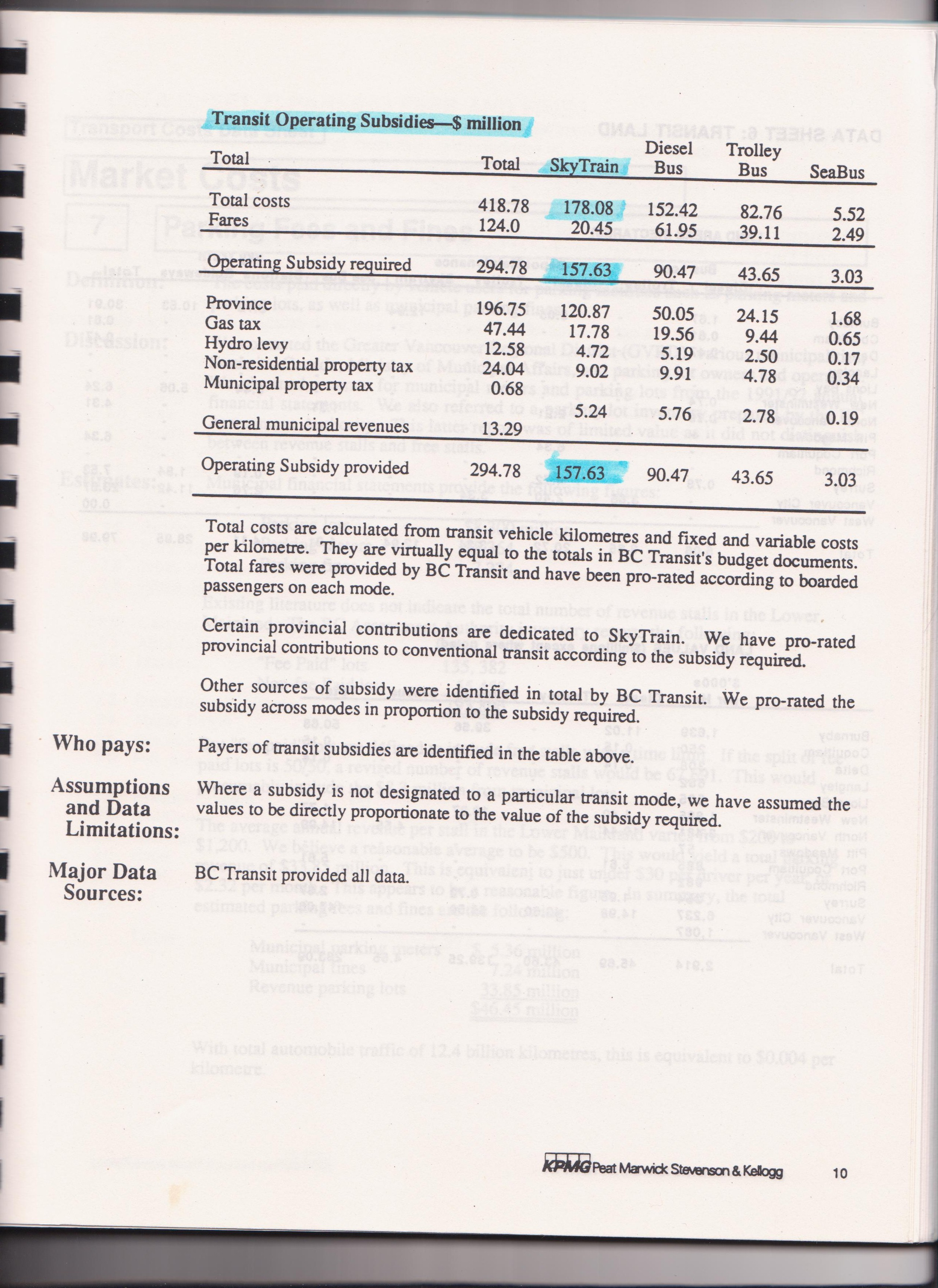 The table clearly shows the $157 million operating subsidy for that year and now twenty-one years later, TransLink and Metro Vancouver are loath to enter an updated table showing the the annual subsidy for the SkyTrain and Canada line systems. Before next years referendum, the public should demand a concise table as like the one above, showing the transit operating subsides for transit in 2014.
What is TransLink afraid of?
The truth?
The GVRD’s 1978 LRT/Rail/Road Bridge – A Bridge Too Practical
In 1978, the GVRD were poised to install a three leg light rail system on the region and to cross the Fraser river a new bridge would have to be built.
Demonstrating the forward thinking of the era, GVRD planners conceived a multi-use bridge for ‘rapid transit’; the mainline railways; a cycle path; and when the Pattullo finally went kaput; a four lane vehicle bridge.
The LRT lines were so designed to have a two lane car deck above when needed and a ‘fast’ lift span would have two railway tracks, giving ample capacity, including a Vancouver to Chilliwack rail service which was envisaged at the time.
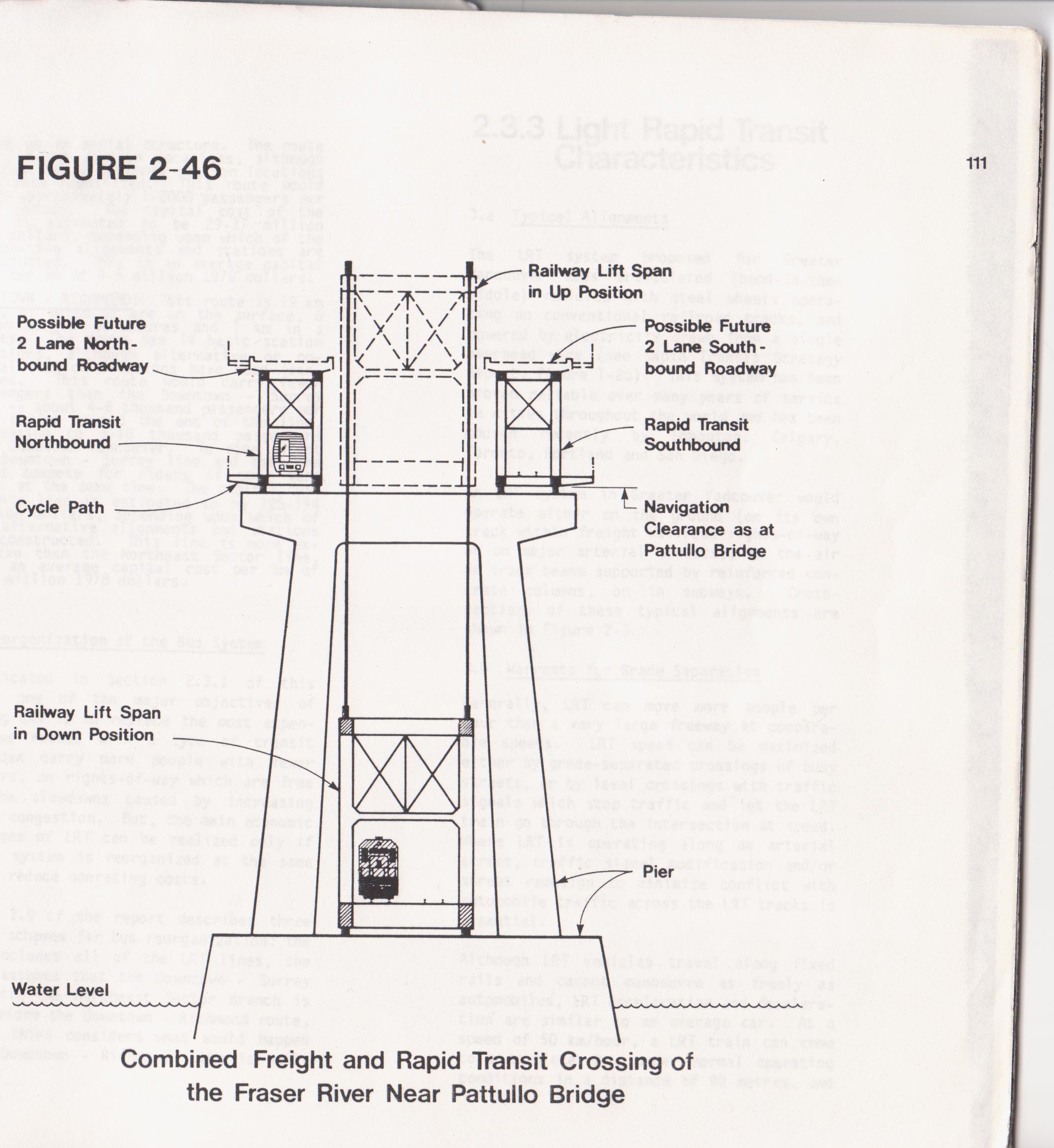 It is now history, as the provincial government imposed SkyTrain on the region and a stand alone SkyTrain, Sky Bridge was built instead and a replacement for the badly aging Pattullo Bridge is about a decade away and a replacement for the absolutely decrepit Fraser River Rail Bridge is no where in sight.
Maybe metro Vancouver should dust off the 1978 rail/road bridge and build it to replace both decaying bridges.
Capacity and speed of transit vehicles in the city

In the past few weeks, the merchants of misinformation have been busy spreading their anti tram rhetoric in a vain attempt to justify a Broadway subway.
Unfortunately the mainstream media have repeated the same misinformation without any independent research done.
The following charts come from Bus or Light Rail Making the Right Choice, Second Edition, by Prof. Carmen Haas-Klau, Graham Crampton, Carsten Biereth, and Volker Deutch, published in 2003. Bus or Light Rail Making the Right Choice, was a very important international study of public transit systems, focusing on buses and trams.
Table#7 gives an accurate capacity numbers of various kinds of buses and LRT and table #8 gives the commercial speed of trams and buses in mixed traffic and on its own rights-of-ways.
 It can be easily seen that trams generally have faster commercial speeds than buses in mixed traffic and trams operating on their own rights-of-ways have higher commercial speeds than buses operating on exclusive rights-of-ways as well, with the exception of the Ottawa and Pittsburgh busways.
When the anti-LRT crowd claim that trams are only as fast as buses in the city or that trams can only carry as many passengers as a bus, please refer them here.
TransLink Incompetence Continues – Again Another Fail
Incompetence, thy name is TransLink. Suffice to say, if this happened in Europe and passengers were trapped in a bus for two hours because of a downed trolley line, management would have been fired the next day. All (except for Vancouver maybe) transit services that operate trolley buses or trams have a “crash crew” on duty to deal with such events in a timely matter.
It is clearly evident that TransLink’s management cannot cope with the existing transit system in emergencies and the organization has taken no steps to make improvements in this department, why then would our regional mayors trust TransLink with more monies to fund transit projects they will not be able to cope with in the future.
Senior TransLink management should take time from attending their important meetings and drive their taxpayer paid for cars and observe in person why TransLink should get no further monies from the taxpayer.
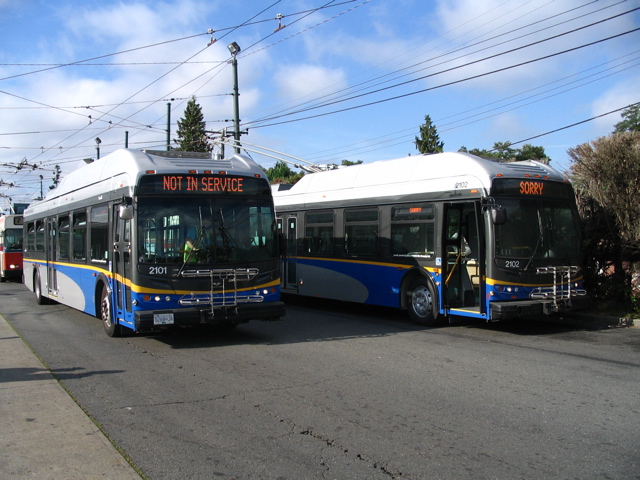
From Eric Chris.
TransLink train wreck:
https://www.youtube.com/watch?v=vrZxt476ef4
Hereai??i??s an update on the potential tragedy and loss of life incident on the 99 B-Line from about 5 pm to 7 pm on Friday December 12, 2014. I contacted the CBC and Vancouver Sun by email to let them know what was happening. No surprise, ai???Vancouver Sunai??? receiving massive amounts of advertising revenue and complicit in the campaign to dupe taxpayers for more funding for TransLink ignored my email, like all the rest in the past.
However, the CBC responded and rushed a crew out but the crew arrived too late. Passengers were let off the bus at about 7 pm and quickly dispersed by TransLink before the reporters arrived:
ai???From: cbc.ca On Behalf Of Cbc News Vancouver
Sent: Friday, December 12, 2014 7:15 PM
To: eric chris
Subject: Re: unfolding B8031 B-Line disaster ai??i?? where are the cameras and reporters?
Hi Eric
Are you on board the bus? Or know someone who is?
ThanksOn Fri, Dec 12, 2014 at 6:50 PM, eric chris wrote:
For the last two hours, dozens of transit users have been trapped inside a 99 B-Line diesel bus with a high voltage wire on it from the broken trolleybus line which snared the bus. It is at the corner of Blanca Street and West 10th Avenue in Vancouver. Is this not news?Does TransLink have a preventative maintenance program? Do the buffoons who get paid too much at TransLink run things until they break? Shouldnai??i??t TransLink be informing the reporters when this crap happens rather than keep a lid on it?ai???
I had an appointment at UBC for 8 pm and cycled the two kilometres to UBC after the passengers alighted the stricken 99 B-Line bus ai??i?? I never drive to UBC but couldnai??i??t in any case as my driveway was blocked off by the B-Line incident. When I returned, the line crew was splicing the trolleybus line. I didnai??i??t see any engineers inspecting the wires to determine what caused the trolleybus to pull down the wire. As soon as the wire was up, the crew left.
Trolleybus service resumed right away without any analysis or safety inspection: sure enough, every trolleybus snagged the wire and the trolleybus pole dislodged at the exact location where the trolleybus at about 5 pm tore down the wires! Today, trolleybus service is ai???downai??? and diesel bus service has replaced the trolleybuses on the No. 14 ai???trolleybus routeai???. For TransLink to put the trolleybuses back into service without the proper engineering analysis was pure stupidity. It shows a complete lack of competence on the part of the idiots running TransLink. It also reflects badly on the COV engineers who arenai??i??t insisting on a preventative maintenance program for trolleybus infrastructure to replace aged wires and to keep the public safe.
What is additionally vexing is that, there is little to no demand for transit today ai??i?? UBC is mostly shut down for exams. TransLink can suspend transit service for one block, to investigate. TransLink is not. There is a steady stream of ai???hub to hubai??? express transit (99 B-Line) and regular No. 14 bus service with no effort to do anything this weekend. Pollution from the soot blowing diesel bus service every minute is extreme and the noise is harrowing. This bothers no one at TransLink or the COV.
TransLink canai??i??t maintain its current transit system and is out seeking $7.5 billion to expand its lousy hub to hub transit which has no hope of alleviating road congestion. Weai??i??ll be back where we are now in 10 years after TransLink pisses away the money. TransLink wants to add 11 more B-Line routes, 80% more nighttime service (boy there sure is lots of road congestion for transit to overcome at 3 am and those virtually empty diesel buses after about 10 pm sure do reduce CO2 emissions) and another subway? Theyai??i??ll eat through the $7.5 billion in no time and add billions of dollars of future debt.
ai???What caused this?ai???
Express hub to hub transport (B-Line and s-train service) caused this. That is, all the money spent for the B-Line and s-train routes has meant that TransLink canai??i??t afford to maintain its transit network in good working order.
ai???Hub to hub transport train-wreck by talking fools at TransLinkai???
In Metro Vancouver as in all other cities in Canada, there is a serious rift in the expectation of commuters who demand convenient and safe ai???point to pointai??? transport (travel by car) and politicians trying to get drivers to adopt ai???hub to hubai??? transport, wrongly believing that it reduces the need for more roads, which the transit buses require to shuttle riders for hub to hub transit. Drivers are not flocking to use inconvenient and unsafe ai???hub to hubai??? transport (s-train and B-Line with distantly spaced stops and creep infested stops). To remedy this, TransLink has relied on handing out much discounted transit passes to students and has set up B-Line routes to get students to the s-train lines, having serious drawbacks for drivers who can afford to stay off the s-trains:
https://ca.news.yahoo.com/ttc-leprechaun-spurs-outrage-legal-220100049.html
https://translinkharassment.wordpress.com/2014/09/30/raceist-to-the-bottom-29f/
There are only about 50 s-train stations located in Metro Vancouver. TransLink made the fatal flaw or blunder in spending billions of dollars on ai???hub to hubai??? transport which is a total flop. Buffoons at TransLink are not willing to give up on the ai???hub to hubai??? train-wreck and are bribing newspapers with advertising revenue to keep reporters loyal to TransLink. Reporters are not educating the mostly clueless public which is being bamboozled with propaganda for them to accept more taxes for ai???hub to hubai??? transit which has no hope of ever relieving road congestion. It will do the opposite to worsen road congestion ai??i?? only a step back into the future with trams to ai???approach point to point transportai??? will attract drivers.
TransLink train-wreck, to be continuedai??i??
Let The fools Rush In, The Regional Maryors 0.5% Transit Sales Tax
After a considerable time of wailing and gnashing of teeth, the regional mayors have come up with a question for the upcoming TransLink referendum.
What the mayors did not do was to try to understand why TransLink is hemorrhaging money and will continue to do so even if the referendum passes. It’s all tax and spend, the political cowards way out!
The following question will be mailed out to voters and returned by mail to be tabulated.
ai???Do you support a one half percentage point (0.5%) increase to the Provincial Sales Tax in Metro Vancouver, dedicated to the Mayorai??i??s Transportation and Transit Plan, with independent audits and public reporting?ai???
The mayors council did not even question the need for economy or a change in direction, instead it was full steam ahead to the same thing again and hoping for different results.
Insanity: doing the same thing over and over again and expecting different results. Albert Einstein
Zwei lives in south Delta and the following three bus services, the 609, the C-84, and the C-89 that combined, carry fewer than 30 people a day.
The 609 runs a hourly weekday service from 5 a.m. to 11 p.m. and a slightly abridged service on weekends.
The C-84 runs a hourly weekday serviceAi?? from 9 a.m. to 9:40 pm and a slightly abridges service on weekends.
The C-89 runs a hourly serviceAi?? weekdays from 9 a.m. to 9:10 pm and a slightly abridged service on weekends.
Three bus services which combined carry fewer than 30 people a day. This example sums up part of TransLink’s problems, as it is operating a social service, not a bus service.
How many bus routes mirror the extremely poor ridership on the 609, C-84 and C-89 bus routes? Far too many I’ll wager.
The other problem that has been brought to my attention is that TransLink is planning transit on a 1980’s SkyTrain model, rather on a customer friendly transit model for the aging boomers. Older people like their transit on the pavement, ready to use and not in a hole in the ground accessible only by stairs, escalators and/or elevators. Older people do not like cavernous underground stations nor cold windswept elevated ones and older customers do not like forced transfers.
It has been noticeable in South Delta that older transit customers have all but disappeared as they hate the forced transfer onto the Canada line and the chaotic subway trip into Vancouver. Except for a very few rush hour services, most buses still have seats available after departing from SDRC stop, something unheard of before the Canada line opened.
The regional Mayors have badly blundered the referendum and I’m afraid their unwillingness to listen to the public or plan for the real future, will see the referendum fail.
Addendum:
Radio Polls. Though radio polls are highly inaccurate and can be manipulated; at 5 p.m., the CKNW poll shows only a 38% support for a yes vote and the CKWX (News 1130) poll shows an even more dismal 26% support.
Referendum Angst
It will all about the TransLink Referendum in the coming months and regional mayors who haven’t a clue about modern public transit will try to force another tax upon the beleaguered taxpayer to fund questionable transit projects, that will do little to alleviate congestion and gridlock in the lower mainland.
The following is a reminder why LRT is built.
There are many aspects (wth LRT) to efficiency both in operating costs, the use of street space.”
” TriMetai??i??s first batch of railcars are still in service after 22 years. This has interesting cost consequences. In 2008, a railcar cost about $4,000,000. A bus costs about $300,000. If the railcar can do the work of 4 buses, it would replace about $1,200,000 worth of buses. But after about 14 years, these buses would need to be replaced by four more. And with 14 years of inflation, these will cost almost twice as much, say $500,000 each, or $2,000,000 total. So the $4,000,000 railcar saved $3,000,000 worth of bus purchases over its life. Not to mention all the operating efficiencies.”
There are no such savings with SkyTrain and/or light metro, as they operate on independent routes, which require many more buses to feed the beast. The following comment about the referendum states the situation very well.
Mayors confirm hike to PST could be proposed in transit referendumMayors met on Friday ahead of a vote on the actual wording of the referendum questionThe problem with the referendum is that it is based on a false premise that a Broadway subway and three poorly designed LRT lines will solve our congestion problems, they won’t and will only exacerbate the situation. After $9 billion spent on SkyTrain and light metro, the mode share by auto in the region has remained at 57%
Transit is not reducing congestion in North America, it hasn’t and a multi-billion dollar subway will not reduce congestion.
The Europeans found this out in the 70’s and 80’s where congestion actually increased after a subway was built. This is why active traffic calming is part and parcel of every new LRT line built across the pond. Road-space is reduced by having tracks on-street, which causes the “push-pull effect” which the transit pushes motorists to transit for lack of road-space and the quality of tram service attracts or pulls new customers to transit.
We use the extremely dated “carrot and stick” approach where motorists are taxed onto transit, which is a failed transit philosophy because there is always too much ‘stick’ and not enough ‘carrot’.
Traffic calming can be as simple as taking up two traffic lanes for the tram or creating pedestrian malls which has a tram operating through it.
A BCIT to UBC tram service with stops every 500 to 600 metres, would replace all bus service on Broadway and reduce operating costs by half yet would have the potential to convey more passengers than a SkyTrain subway (those short 80 metre long Skytrain station platforms constrict capacity) at about one quarter the cost of a subway! And as a bonus, by its very nature of construction, reduce auto congestion.
In Surrey, LRT is being designed as a poor man’s SkyTrain, dooming it to failure.
The real question is; “do our planners and politicians have the maturity to build with modern LRT!”
“

NEW WESTMINSTER (NEWS1130) ai??i?? In less than a week, weai??i??ll learn more about the referendum question that will be put to Lower Mainland voters over the regionai??i??s transportation priorities.
The regionai??i??s mayors met on Friday, ahead of a vote on the actual wording of the referendum question.
In an emailed statement after the in-camera meeting, the mayors confirm that a hike in the carbon tax, an increase in the PST in the region, an annual vehicle registration fee or a combination off all three are being considered as sources of funding to get their proposed ten-year transportation plan off the ground.
Jordan Bateman with the Canadian Taxpayers Federation, which has been critical of TransLink spending, believes the mayors have already decided where the money should come from.
ai???The mayors are playing games. They are hiding what the final wording is. Chances are, theyai??i??ve already come to a consensus. The next six days is about how they are going to spin it to the public, to try to convince us to give TransLink more money.ai???
He doesnai??i??t think the people of Metro Vancouver will accept any of the funding options.
ai???The vehicle levy was rejected ten years ago. A sales tax increase is an ugly proposition. We just had a province-wide debate on sales taxes. An increase in the carbon tax just reinforces reliance on a failed policy.ai???
In order for the ten-year transit plan to be realized, the region needs to come up with $7.5 billion.
The Tours Tramway
The newly opened tours tramway, classic French design.
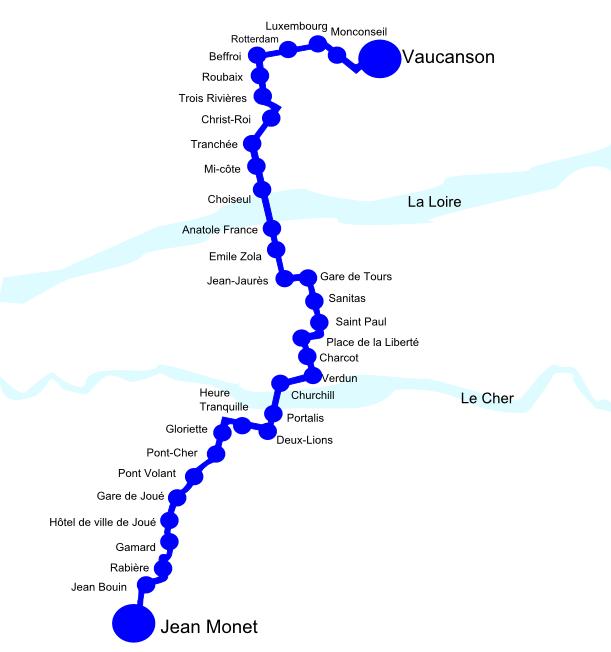
Tours:Ai?? Population:Ai?? City 136,000; Metro Area 400,000
Distance:Ai?? 150 miles southwest of Paris, 1A? hours
System Length:Ai?? 14.5 kilometres
No. Lines:Ai?? 1
No. Stations:Ai?? 29
Year Opened:Ai?? 2013
Rolling Stock:Ai?? 21 Citadis 402
Passengers: 45,000 a day
Cost: ai??i??369.1 million Euros (2009) CAD $518.595 (20014)
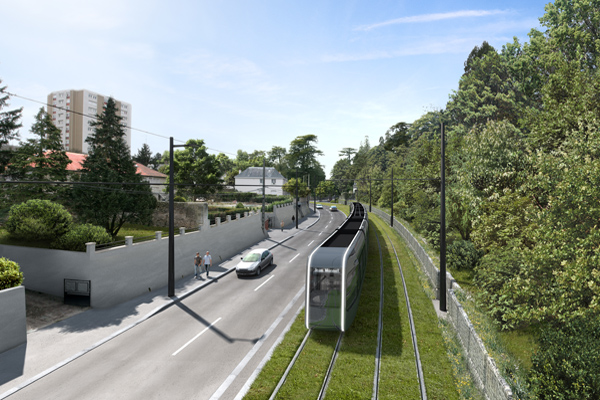 An Artist rendering of the tours tramway
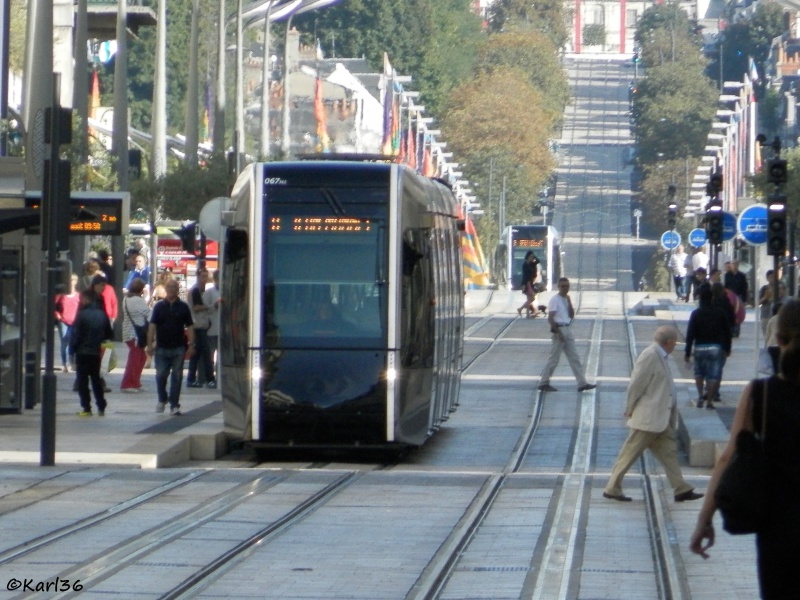 Classic street view of the tours tramway
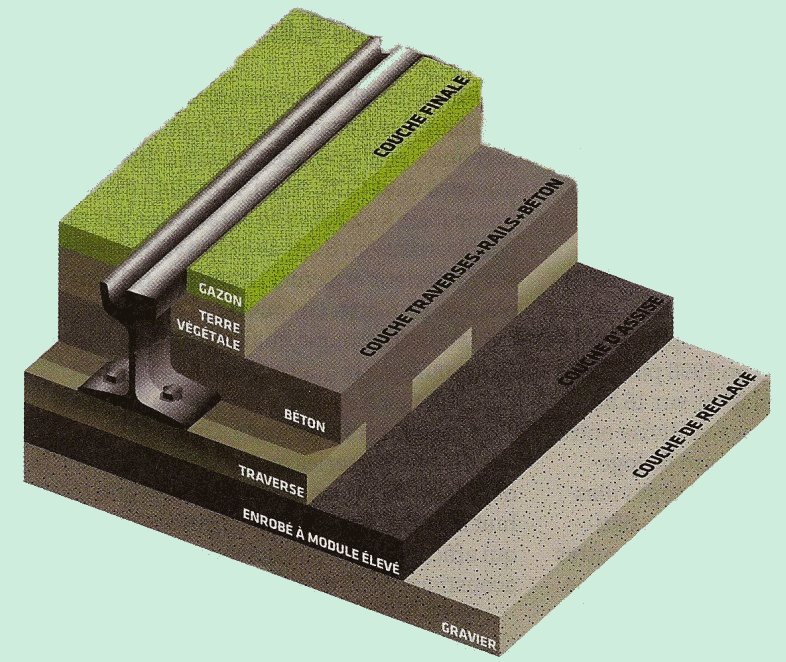 The foundation for lawned rights-of-ways
A Letter To The Mayor’s Council
My name is (Name withheld) and I have been involved advocating for improved public transit in the region since 1986. I have been a member of the international Light Rail Transit Association since 1984 and being a member in good standing for thirty years, I have had much correspondence and meetings with transit professionals in both North America and Europe. It was my connection with the LRTA, that I was able to secure the funding to engage Leewood Projects of the UK to do a study of the feasibility of once again operating a Vancouver to Chilliwack interurban style rail service, for the Rail for the Valley group.
The Leewood/Rail for the Valley study showed that a Vancouver to Chilliwack TramTrain (a streetcar that can operate on the mainline railway) offering a peak three trip an hour service, could be had for about $1 billion. An hourly Vancouver to Chilliwack service using diesel light rail could be installed for about $750 million.
TransLink was not interested.
Next spring, voters in the Metro Vancouver are going to be asked to vote in a referendum to further fund TransLink by various means of taxation or user fees. It is my opinion that regardless of the question asked, the referendum will fail for many reasons.
The main reasons that TransLink is held to such high odor by the public, is the apparent incompetence of the organization; it’s blind adherence to an outdated and very expensive transit mode, light-metro; and general user unfriendliness of the transit system.
Our SkyTrain system is part of a family of unconventional proprietary transit systems, that were the flavour of the 1970’s and 80’s. In1978, as development of our SkyTrain light-metro progressed, what we now call Light Rail or LRT started a new era of city transport with the opening of Edmonton’s new light rail line. In just over a decade LRT had made light-metro obsolete, as modern LRT could be built to be faster, carry more people, at one quarter to one half the cost of light-metro. LRT could also be built as a light metro, on a fully segregated rights-of-ways at a cheaper cost than SkyTrain ALRT/ART. Fiscally prudent transit authorities rejected Skytrain out of hand and still do today, with Vancouver’s Skytrain being a lesson of doing it wrong.

Today, over 150 new build light-rail systems have been built and a further 50 are either under construction or have been approve for construction. During the same period, only seven SkyTrain type systems have been built (one to torn down within the next five years) and only three seriously used for urban transit, with the remaining four being a demonstration line, and three theme park/airport people movers. All seven SkyTrain lines built have been financed by secret deals and LRT was never allowed to compete against any of the SkyTrain’s built.
Strange then that TransLink keeps building with SkyTrain?
Not exactly, because the Canada line is not SkyTrain at all but a heavy-rail metro, dumbed down as a light-metro which is not compatible with the rest of the SkyTrain network.
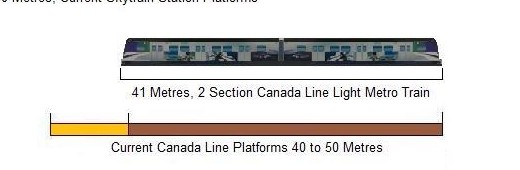
As the Canada Line’s construction costs began to spiral out of control at a pace greater than the decade earlier Fast Ferry fiasco, the scope of the project was greatly reduced. The Canada Line construction was truncated to such an extent that it has 40 metre to 50 metre station platforms that only large enough to accommodate two car trains. The Canada line was at capacity since the day it was built and only gives an illusion of high ridership. The Canada line, as built, has less capacity than a simple streetcar line built at a fraction of the cost.
A Freedom of Information request has shown that in 2012 TransLink paid a SNC Lavalin lead consortium $145 million to operate and maintain the line, which is two to three times higher than comparable transit lines.
This extremely high operating cost is part in due to the line being in a subway in Vancouver.
The UBC Sauder School of Business recently reported that the three light-metro lines have cost the taxpayer over $9 billion dollars to date, yet there is no proof that this $9 billion in investment has taken any cars off the road at all. In fact, the inconvenience of the three light-metro lines may have forced transit customers off transit and back into cars as the mode share for cars in the region has remained at 57%.
Now TransLink has announced two more big projects, the Broadway subway and the Surrey LRT.
A Broadway subway may bankrupt TransLink in the future because there isn’t the ridership today or in the foreseeable future to sustain underground operation. Even TransLink’s own modelling shows rather dismal ridership on a UBC subway, which leads to only one conclusion, massive subsidies must be paid to maintain and operate the subway and by extension taxes and fares must be raised to dizzying heights to pay for and maintain the subway.
Subways tend to be “black holes” for the taxpayer as the expense to just operate a subway with lighting, escalators & elevators, signalling, ventilation, pumps, etc., which cost much more than operating the vehicles themselves. Then there is the structure itself as subways age very poorly and need an ongoing program of expensive preventative maintenance.
These added expenses do not exist with modern light rail.
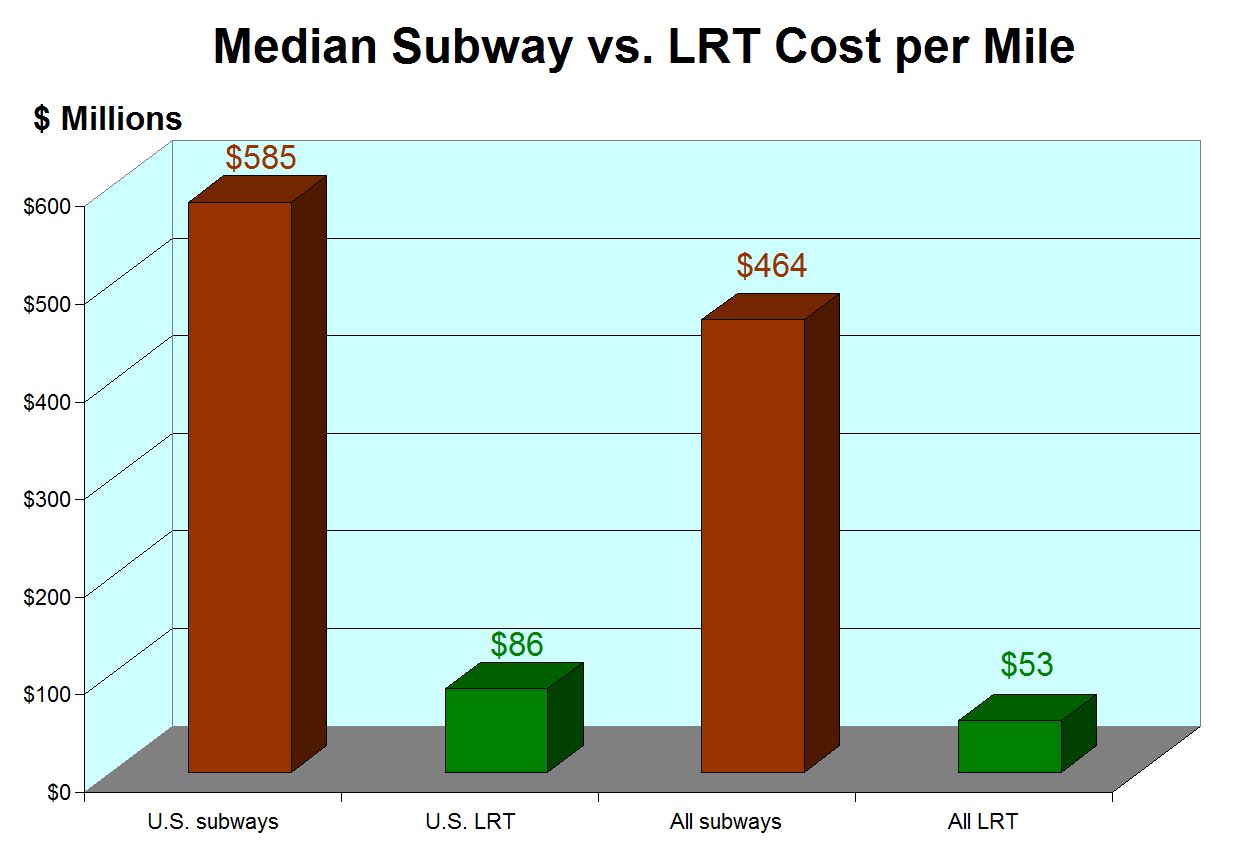
A simple European tram or streetcar can carry upwards of 20,000 pphpd at a much cheaper cost.
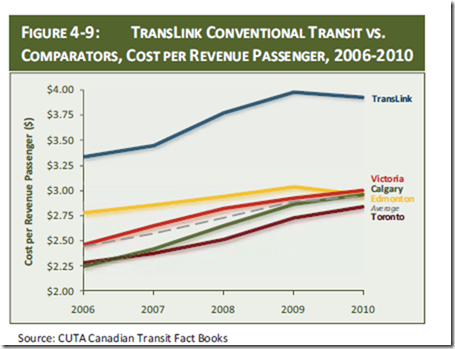
Surrey’s planned LRT is doomed to failure because TransLink, with no experience planning or building with modern LRT and with no desire to build with the mode has designed the Surrey LRT as a poor-man’s SkyTrain and repeats every transit mistake it has made with SkyTrain. Hugely costly to build, Surrey’s proposed LRT act strictly as a feeder to the SkyTrain line and really doesn’t offer any incentive to use otherwise.
This is not a modal problem, rather a management and design problem and TransLink seems to have a lot of management problems of late.

The regional mayors must reevaluate their support for TransLink’s planning and even for TransLink itself, which its stumbling and fumbling bureaucracy seems only wanting to do the same thing over and over again, ever hoping for different outcomes, all on the taxpayer’s dime.
The Usual Suspects Shill for a Yes Vote for the Upcoming TransLink Referendum
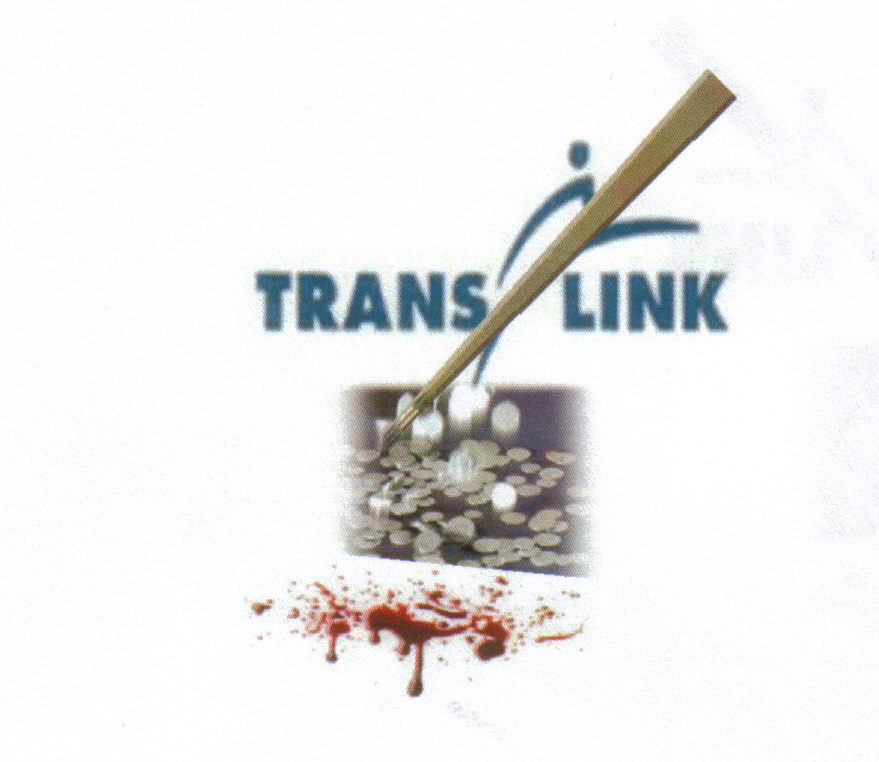
Yikes, the Vancouver Sun is at it again, blindly shilling for a yes vote in the not yet announced TransLink referendum. This only makes me guess that internal polling shows that a yes vote is far from certain.
All the usual suspects, the B.C. Federation of Labour; The B.C. Board of Trade; and the various post secondary student societies are on the stump begging voters to approve the TransLink referendum, even before anyone knows what the question will be. Even the University of Victoria’s Norman Ruff displays his naivety about transit and transit issues, talking about American transit referendums.
Note to Ruff: In the USA all financing for transit investment is approved by voters on a regular basis; all transit referendums or ballots, first go through the scrutiny of honest public debate and many do not pass. Transit referendums in the USA are not a one shot deal as the TransLink referendum will be.
But the chorus of big business and big labour, supporting the referendum is one of self interest as many members of B.C. board of Trade stand to make handsome profits from a yes vote and big labour will get more members and more union money onAi?? major transitAi?? investment. The students of course, get almost free transit with the U-pass, with now over 110,000 issued.
Oh, by the way, is this the same B.C. Board of Trade which shilled for the Canada Line, which costs were spiraling so out of control and that the line was so truncated that stations are small with 40 metre to 50 metre long platforms which can only accommodate two car trains and was at capacity when built?
That the Canada line is well patronized is an illusion as bus customers are forced to transfer onto short 2 car trains. Let us not forget that the Canada line is operating standard heavy-rail multiple unites or EMU’s on a grade separated railway and is not compatible in operation with the Expo and Millennium Lines.
 The Canada Line’s capacity is restricted
due to 40m to 50m long station platforms
which can only accommodate 2 car trains.
Note to the B.C. board of Trade: From documents in the Susan Heyes lawsuit against TransLink; the Canada Line’s real cost was in excess of $2.5 billion and that the presiding judge, Pittfield, called the Canada Line P-3 a “charade”. An F.O.I. from 2012 shows that TransLink paid the operating consortium $145 million in annual operating costs, operating costs that are two to three times higher than comparable transit lines.
Speaking of the U-Pass, TransLink never discloses how many are actually being used and what is the cost to the taxpayer? It is also a strange coincidence that TransLink’s cash flow problems started with the U-pass!
So here is what the Vancouver Sun; The BC Board of Trade; the B.C. Federation of Labour; and post secondary students do not tell you, that the main reasons for TransLink’s financial malaise is an adherence to the light-metro operating philosophy and the continued planning with SkyTrain and/or light metro, which is proven to cost more to build, maintain and operate, than LRT and a plethora of cheap fare U-Passes, without any audit what so ever determining the cost to the taxpayer.
TransLink and the usual suspects want the status quo: screw the taxpayer for more money and keep doing the same thing over and over again, expecting different results.



Recent Comments