All Quiet on the Transit Front?

With civic elections only weeks away, there has been a lull with transit issues and stories.
The city of Vancouver, which considers itself the centre of the universe, provides us with some mirth as the elections draw near.
The left leaning C.O.P.E. political party is proposing that all Vancouver residents should have universal transit for a $1.00 a day. No plan on how to fund this proposal or getting regional mayors approval or increasing transit services, none the less C.O.P.E. continues to bang the drum for very heavily subsidized universal transit passes for Vancouver citizens.
Vision(less) Vancouver and the N.P.A. right of centre political parties, still champion a Broadway subway and like C.O.P.E. have no plan to pay for it except having regional taxpayers foot the bill.
From Quebec, it has been revealed that Bombardier and SNC Lavalin are heavily funding a citizens group to demand politicians build a ART SkyTrain across the new Champlain Bridge. What is bizarre is that Bombardier and SNC are claiming both that ART (SkyTrain) is more cost effective and can carry more people than LRT and that ART is cost effective at carrying less people than what LRT can carry. An obvious case of having your cake and eating it too!
As Ottawa has shown, modern light rail has the edge over SkyTrain in capacity and that it is cheaper to build.
There is a persistent rumor is that corporate managers in Europe want Bombardier, in essence a German Company, to scrap its ART Skytrain program to save money and concentrate on airport people movers and light rail. What is happening in Montreal could be seen as SkyTrain’s last kick at the can, so to speak, as the Skytrain gravy train may run out of track.
There is also evidence of this in Vancouver, where the SkyTrain Lobby are desperately trying to get Skytrain on track again in the metro Vancouver area.
It will not be until after the November election, when transit issues will be sensibly debated.
Aubagne Tram – The Economy Tram

Light Rail can be built cheaply, if there is the political and bureaucratic will is there to ensure LRT is built economically.
At first glance the Aubagne tramway is very expensive, costing ai??i??166 million or CAD $235 million to build, but only for 2.7 km., which works out to an expensive $87 million/km. to build. The original length of the Aubagne tramway was to be 14 km. long, but politics, Conservative politicians greatly reduced the scope of construction.
Sound familiar, a la the Canada Line?
If one extrapolated the cost over a full 14 km. of line, including the cost of new track and overhead at CAD $15 million/km. ;CAD $109 million and the addition of eight more cars at a cost ofAi?? USD $18.3 million or CAD $20.54 million, the cost of a $14 km. line could be as low as $364.5 million or $26 million/km.; a very reasonable and affordable cost indeed!
Affordable LRT, something that TransLink in Vancouver or BC Transit in Victoria does not want the public to know.
Addendum:
The Citadis cars mentioned in the article are modular cars and capacity can be increased by adding more modules, which is cheaper than buying new cars.
FRANCE: The Aubagne tramway entered commercial service on September 1.
The 2Ai??7 km (1.67 mile) line runs from Le Charrel to the main railway station with seven stops.
Aubagne is the first city to use Alstoms Citadis Compact tram.
According to the manufacturer, this is specially designed to meet the needs of medium-sized networks in cities of 50 000 to 100 000, and
secondary lines.
The 22 m (72.1 foot) long vehicles have a capacity of 146 passengers.
The Pays dAubagne et de lEtoile region ordered a fleet of eight trams, with an option for five to 10 more, for 14m (USD $18.3 million) in October
2011.
The original plan was for a 14-kilometre (8.69 mile) network but the victory of conservative elements in the March 2014 city election resulted in everything besides the starter lien being shelved. Here is the “international railway journal” story:
http://tinyurl.com/qd2d6we <http://tinyurl.com/qd2d6weTuesday, September 02, 2014
Aubagne opens zero-fare tramway Written by Keith Barrow
http://www.railjournal.com/index.php/blog/Keith-Barrow.htmlAUBAGNE, a town of 46,000 inhabitants situated east of Marseille, inaugurated its first light rail line on September 1.
Like the town’s bus network, no fares are charged for travel on the tram line, making it the first free-to-use light rail system in France and one of the first in Europe.
The 2.7km (1.67 mile) line has seven stations and links the main line station in Aubagne with Charrel. Construction began in early 2013 and the project had a budget of ai??i??166m (CAD $235 million) including rolling stock.Zwei notes: This works out to CAD $87 million/km to build, including rolling stock, engineering and service depot. A longer line would incrementally cost less.
Services operate at 10-minute intervals using a fleet of 10 Citadis Compact low-floor LRVs.
The 22m-long (72.1 foot)) three-section vehicles accommodate up to 125 passengers.
The Urban Community of Pays d’Aubagne et de l’Etoile decided in April that it would not proceed with construction of the second or third phase of the network, although the community’s president Mrs Sylvia BarthAi??lAi??my announced at the opening ceremony that the municipal government will study the reopening of the 14km (8.69 mile) Valdonne railway north of Aubagne as a light rail line.
The proposed line would serve an area with a population of 60,000, linking Aubagne with Roquevaire, Auriol, La Destrouse, and La Bouilladisse.
At present there are around 18,000 car journeys a day on the road between Aubagne and La Bouilladisse, and 110,000 vehicles per day use the motorway linking the area with Marseille.
Light Rail In Victoria Before Vancouver?
Interesting news from Victoria, BC Transit is recommending LRT for Greater Victoria.
Though BC Transit doesn’t have much competence with modern LRT, the organization certainly has more experience than TransLink, with the historic LRT planning for the Broadway-Lougheed Rapid Transit project before the provincial NDP did their infamous flip-flopAi?? to SkyTrain.
Zwei also questions the $950 million price tag for LRT, as there are many examples of economy LRT being built in Europe.
Then there is TramTrain and the E&N; has BC Transit factored in TramTrain using the E&N’s tracks? I doubt it; I doubt that BC Transit’s planners have ever heard of TramTrain.
Wouldn’t it be delightful that Victoria was the first city in North America to build a true TramTrain service, combining economy operation and track sharing, draggingAi?? BC’s transit planning kicking and screaming into the 21st century.
B.C. Transit recommends light rail for Capital Region
Electric light-rail rapid transit is B.C. Transit’s recommended choice for the future of moving people between Victoria and the West Shore.
Construction of a fully built light-rail system would cost about $950 million, including the right-of-way, track and electrical systems, stations and vehicles.
Total cost for the life of the system, including capital and operating expenses,Ai??is estimated at $1.2 billion.
Depending on if and how the price tag can be shared between the municipalities, the province and the federal government, Greater Victoria residential property owners could be required to pay an additional $130 to $265 for the new system each year. They currently pay $92.50 for transit, though that will increase to $120.50Ai??starting May 15.
Business owners would face a sharper increase of between $1,300 and $2,650, depending on the funding formula. They currently pay $356 annually for transit, though that is also going to jump by $28.
Transit is currently covered by fares, the province, property taxes, fuel taxes and advertising. However, the transit company is not ruling out exploring other methods to offset project costs.
Transit officials say theAi??two other regional transit options that were considered – bus rapid transit and maintaining the status quo – would also be expensive. Bus rapid transit start-up costs are estimated at $520 million, and $250 million would be needed to maintain the current transit system.
A new bus rapid transit system would be cheaper in the short term, say transit officials, but anticipate it would be at capacity after 10 to 15 years and require replacement with light rail.
B.C. Transit’s recommendation, kept under tight wraps until Tuesday afternoon, is an important next step in bringing rapid transit to the traffic-burdened region. Last October key municipalities along the rapid-transit corridor endorsed the right-of-way route, including Victoria, Saanich, View Royal, Colwood and Langford.
There would be stations in downtown Victoria and at Uptown in Saanich. The electric trainAi??would run along a track next to the Trans-Canada Highway to the 6 Mile/Colwood interchange, along Island Highway in View Royal to Colwood, continue along Goldstream Avenue before reaching its final Station Avenue stop in Langford.
There is still a check list of things to do before B.C. Transit’s rapid transit business case is completed.
To solicit community feedback, the plan will be presented in detail during two public open houses May 4 and 5.
The light-rail transit plan isAi??expected to go before the B.C. Transit board of directors and the Victoria Regional Transit Commission in May. If approved, the business case would be submitted in June for the province’s consideration.
– more to come
emccracken@vicnews.com
Politics of Fear – Vancouver Earmarks $400K to Dismantantle the Olympic Line!

Vision Vancouver has earmarked $400,000 in their next capital plan to dismantle the False Creek heritage railway, commonly known as the Olympic Line.
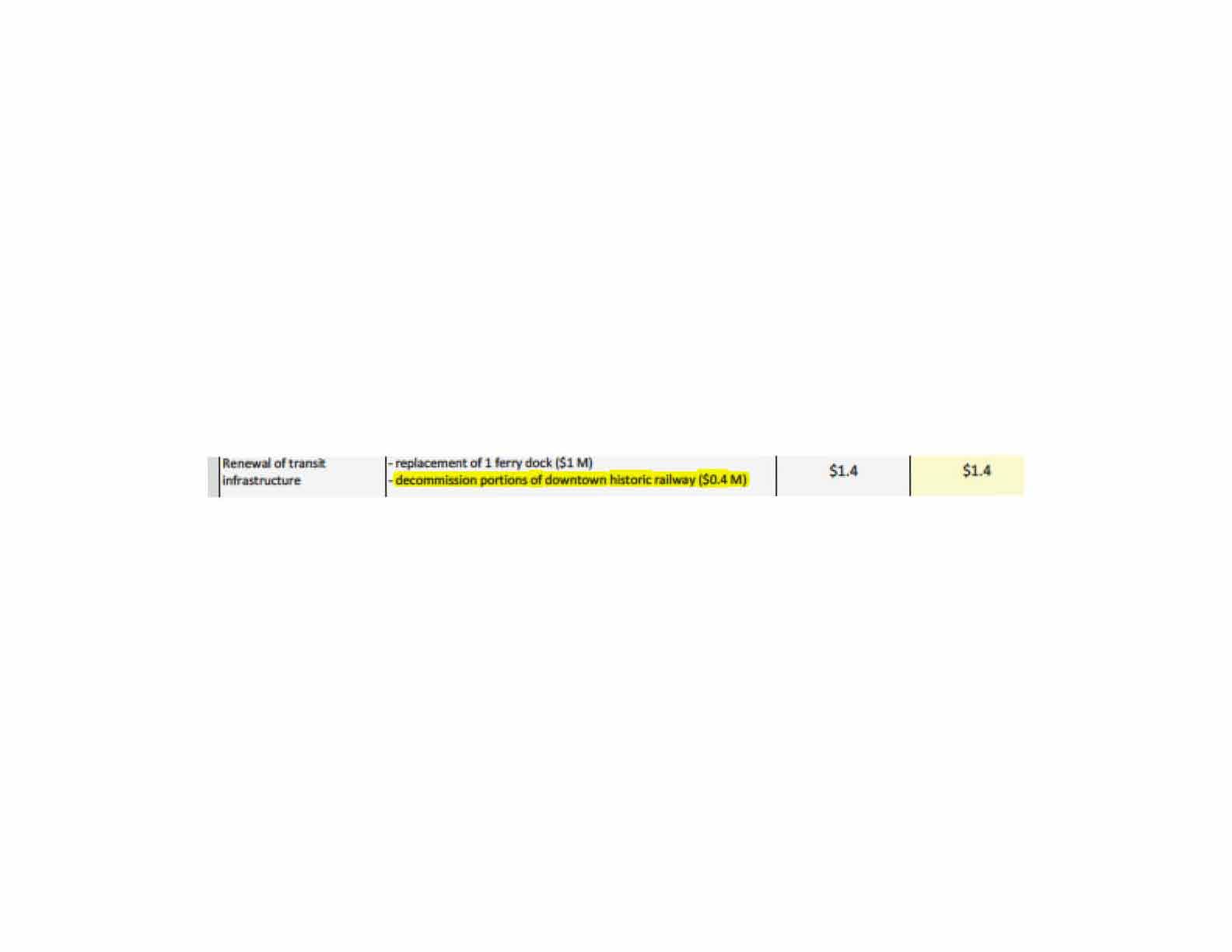 This should come as no surprise, as Vision Vancouver is afraid of the Olympic Line, because they are afraid of LRT. Vision is afraid of LRT because having an operating light rail line will expose their disingenuous demand for a Broadway Subway.
Vision Vancouver needs the Broadway subway because the political party’s developer backers have assembled lands at proposed subway stations along Broadway and they want to see massive profits on their investments by Vision Vancouver majority on council up-zoning the land to higher densities.
Vision(less) Vancouver’s politics of fear, they are afraid of LRT; they are afraid their deceptions will unravel.
Oh what tangled webs we weave, when Vision Vancouver practices to deceive.
Apologies to Mr. Burns
You Just Got to Be Kidding!

I am speechless! Is this the best that TransLink can do?
SkyTrain delays good time to support the economy:
TransLink Spokesperson says grab a coffee or a bite to eat while waiting
Ai??Anita Bathe
VANCOUVER (NEWS1130) ai??i?? TransLink is trying to turn a negative into a positive.
It says lengthy SkyTrain shutdowns are a good way for passengers to spend money throughout the Lower Mainland.
ai???Maybe itai??i??s a good opportunity to stop and have a coffee or a bite to eat, support the local economy until trains resume again,ai??? says TransLinkai??i??s Cheryl Ziola.
When News1130 asked if customers should expect long delays Ziola said absolutely. ai???Delays are very common place on any major transit system.ai???
On Tuesday, passengers were delayed for hours because of a modem problem and thatai??i??s the fourth shutdown in just three months. Many have raised questions about contingency planning.
ai???People very commonly throw out the notion of a backup system but when you look at thatai??i??are we talking about a completely redundant train system? If weai??i??re talking about that youai??i??re looking at billions of dollars in infrastructure costs.ai???
Ziola says 95 per cent of the time the system is reliable and she understands that people are frustrated but they canai??i??t control some things.
Nathan Woods with the Bus Driverai??i??s Union feels that was ai???not a well thought-out statement.ai???
He says if you look at the overall picture, the fourth SkyTrain breakdown of the year is a major inconvenience to people.
ai???Having a cavalier attitude toward it isnai??i??t creating a favourable impression toward TransLink,ai??? Woods says.
Response to Ziolaai??i??s comments on Twitter has been explosive with most people in shock.
SkyTrain fizzles Once Again
What can I say, Skytrain grinds to a halt again!
Until the SkyTrain Lobby stops claiming that SkyTrain almost never stops due to unforeseen problems, Zwei will keep posting when SkyTrain does stop due to a mechanical failure to prove otherwise.
Portland’s LRT has come to grief several times this summer, but at least Tri-Met is honest with its customers as they admitted that the many operating problems this summer were due to over $75 million in deferred maintenance, done as an economy measure. I wonder if deferred maintenance is the real culprit here as well?
Switch problem leads to more SkyTrain delays
By Matthew Robinson, Vancouver Sun September 30, 2014TransLink’s SkyTrain is down yet again, subjecting Lower Mainland commuters to the latest round of packed stations, delayed trips and long waits.
The transit authority first reported the system outage ai??i?? the second of the day – on its Twitter account just after 6 p.m. Staff then updated TransLink’s followers every few minutes in keeping with its new push to better communicate with passengers during system outages.
“Expo and Millennium Line delays due to an issue at Metrotown Stn/Royal Oak Stn area, “read a tweet around 6:15 p.m. “Canada Line not affected.”
Not long after that, TransLink found the culprit. It was a problem switch.
Reporting that its tech staff was en route, TransLink sent buses out to transfer passengers between problem stations.
By 7 p.m., SkyTrains were running between Waterfront Station and Nanaimo Station and from Edmonds Station to King George Station on the Expo line, according to TransLink, and Millennium Line trains were running from Columbia Station and VCC Clark Station.
But despite the best efforts of TransLinkai??i??s communications staff, stations soon crowded with commuters, and they and others took to social media to air their own thoughts about the problem.
“You could take a ferry to Nanaimo, then to Vancouver before you could skytrain to Vancouver,ai??? tweeted user BrowntoBure.
Sukhreet Chahal had perhaps the saddest thing to say about the system outage, tweeting ai???I was so happy that my class ended early but now theres a problem with the sky train service.ai???
Some outside the Lower Mainland commiserated with the delayed commuters.
“Hell, I don’t even live in Vancouver & I’m sick of hearing about these #Skytrain delays. Pity the users,ai??? tweeted Victoria resident Louise Alexander.
And speculating as to why the delay was taking so long to fix, Aiden tweeted, “I bet the tech support is taking SkyTrain too lmao.”
Itai??i??s been nearly four weeks since the last major system-wide delays hit the SkyTrain. That shutdown was caused by a technical problem near Surreyai??i??s Gateway Station, but prolonged when passengers opened the train doors and walked to the nearest station exited two trains on the guideway.
Transit police have warned passengers in the past not to force open SkyTrain doors during a system shutdown, saying they could face fines if they do so.
The earlier September shutdown follows two other lengthy system outages in July. TransLink brass ordered an independent review after those shutdowns that is ongoing. Gary McNeil, an industry expert, has until the end of October to report on TransLinkai??i??s response to major system outages and determine what can be done to prevent them from happening.
A Letter in the Courier

A letter in the Vancouver Courier.
Letter: Transit planners are on the wrong track
Re: ai???Mayorsai??i?? Council may expect Vancouver to fund Broadway line,ai??? Sept. 24.
September 30, 2014 11:28 AM

To the editor:
Re: ai???Mayorsai??i?? Council may expect Vancouver to fund Broadway line,ai??? Sept. 24.
Mr. Gellerai??i??s articleAi?? illustrates a very important point, the region does not have experts in ai???railai??? for rail-based transit systems. Our universities, unlike Europe, do not have faculties of Urban Transport; there are no graduate courses in urban transportation nor is the history of public transportation taught. Currently we have mere amateurs planning our regional rapid transit and TransLinkai??i??s operation certainly reflects this.
The first mistake of an amateur transit planner is believing that a transit system only gets better by throwing more money at it. The success of a public transit system is dependent on how user-friendly the transit system is and our current transit system is far from user friendly evidenced from events this summer when SkyTrain stopped working and thousands of customers abandoned SkyTrain like rats leaving a sinking ship.
TransLinkai??i??s current financial ill-health can be traced back directly to the SkyTrain mini-metro system, which despite local hype and hoopla, is more expensive to build and operate than its chief competitor: modern light rail transit (LRT). For added insult, modern LRT also has and always had a higher capacity than SkyTrain and, combined with higher construction and operation costs, is the main reason only seven such systems have been built in the past 36 years!
Putting SkyTrain (which was first designed to mitigate the high cost of subway construction) in a subway will only increase construction and operation costs but will not increase efficiency. Increase operating costs, which combined with the fact that subway are very poor in attracting new ridership, will make a Broadway subway a very heavy finical millstone around TransLinkai??i??s neck.
The City of Vancouver by demanding a SkyTrain subway may be putting its taxpayers at risk as the cost difference between subway construction could be as much as 10 times more than on-street/at-grade LRT.
Instead of Vancouver taxpayerai??i??s anteing up $500 million (a figure presented by amateur transit planners), they could be on the hook for billions of dollars more!
It should be of interest that despite SkyTrain being in operation in metro Vancouver since 1985, no city in North America and Europe has copied Vancouverai??i??s transit planning, nor have they copied using the proprietary SkyTrain mini-metro.
But then, our amateur transit planners tend to gloss over that singular fact when campaigning for a SkyTrain subway under Broadway.
Malcolm Johnston,
Delta
More sense from Ottawa
Our friend from Ottawa, Haveacow, is a transit consultant from Ottawa, he also has studied Vancouver’s transit scene and is a worthwhile read as he makes too much sense.
The following is a reply from Mr. Cow, which I think deserves a post of its own!

I agree that tunneling any rail based transit system very greatly raises its cost of construction. The question that people in Vancouver really need to be asking is about the long term viability of the Rapid Transit system.
1. Translink currently canai??i??t afford even a one third share of funding of the capital costs on any new rapid transit line, be it Light Metro Skytrain, LRT or even Zweiai??i??s current medium and high end Tram-Train proposals, for that matter. New funding sources are desperately needed no matter the rail transit technology choice, or whomever runs the transit agency, the form of the transit agency, regardless if said agency is publicly or privately run or a combination of the two. Translinkai??i??s capital and operating funding is actually declining relative to inflation. To afford Translinkai??i??s share of the current Skytrain extension, the agency had to seriously divert funding from operational sources to the capital program. Leaving very little money for service improvements anywhere till at least 2016. The current situation is unsustainable not only in the long term but medium term as well. Arguments can be made that yes, the Skytrain and the Canada Line are key culprits historically and currently in the high level of costs associated with the entire transit system but they exist, they are running and have to be dealt with. You could pay all transit employees near slave level wages and run them with the leanest and most efficient management people (public or private) on the planet and it wonai??i??t change the fact that, the basic transit systemai??i??s operating and capital costs are rising faster than inflation and that the current funding model is increasing revenue slowly but at levels below the rate of inflation.
2. Taxpayers are always claim to be overtaxed but if you want a service you have to pay for it. New funding tools are needed and if you want any money for expansion of the transit system, regardless of the technology its going to increasingly have to come from local tax sources because the amount of money available as grants for rapid transit projects from the province and the federal government are going to decline in the future.
3. Privatizing transit rarely works in the short term and has always failed in the medium and long terms for various reasons (I wonai??i??t bore you and bother repeating them again). Most private transit schemes usually end up costing more for the same or declining levels of service.
4. Itai??i??s now too late to force a transit funding referendum question to be put on the ballot for the BC Municipal election in November 2014. Your provincial government can now waffle back and forth for at the least 2 more years, on this issue. Regardless of your opinion on whether you want to pay more transit or not, the opportunity to move the whole process forwards is now lost. So whatever direction and answers the vote would have produced regarding the future of transit in the province is delayed. This means nothing can happen and I mean nothing can happen, until the provincial government decides on a promised referendum question and what if any answer they want to provide to it. The entire process for updating and changing the way transit is funded and delivered in the lower mainland of BC is now dead! For the next 2 years at least (or however long the province can legally wait), politicians, companies and locals, like Zwei, can endlessly promote their transit ideas and proposals all they want. Also for the next 2 years, those same people can also endlessly debate what is the best of choice transit technology secure in the knowledge, none of it means anything because the process to decide on a direction canai??i??t move forward till there is a vote. When the public see the opening of the Evergreen Line in 2016 they will ask, whatai??i??s next? All your beloved provincial government has to say is ai???nothingai???, because you guys wouldnai??i??t give us any real input on a transit referendum question when we asked about funding transit 2 years ago. The province and feds can throw away any request for capital funding from any lower mainland transit agency (regardless whom it is) because we canai??i??t give you money till you decide how you are going to pay for it!
5. Bombardier has admitted recently that it has too much excess rail production capacity. Although it has not announced it yet, Bombardier will probably be closing many production facilities including their dedicated production facility they have for their Skytrain and Monorail systems division, the Innovia Line of products (the Skytrain and Monorail technology share many common systems and are generally grouped together). Soon after the Mark 3 Skytrainai??i??s are delivered for the Evergreen project (2016) and the extension in Kuala Lampur (2016-17) to their Skytrain like line is complete as well as the new Monorail project in Brazil is delivered (2015-16), the division will most likely be closing down due to the need to rationalize and downsize Bombardierai??i??s massive amount of excess rail production capacity. The Bombardier production facility, several facilities actually, that produce these products donai??i??t have enough future orders coming in compared to other Bombardier product lines (Light Rail, Metro, as well as commuter and long distance mainline passenger railway vehicles) to keep them open as an independent production line. That doesnai??i??t mean that they arenai??i??t going to build these products anymore but it does mean that, any future orders of say Skytrain technology (Innovia products), will have to wait for a open spot in the production schedule inside the remaining Bombardier rail production facilities. This will increase the cost of future Skytrains because each time a production line changes from another rail product to say a different rail technology like the Skytrain, the effected production line that has been chosen will close down and have to be retooled before work on the new order can begin. These shutdowns can take days or weeks depending on the individual changes needed to the production equipment.
Proposal: As a consultant I can only propose an idea. Since you have in my opinion, a considerable amount of time before the provincial government needs to respond or do anything for that matter, I suggest a summit of internet transit people and other groups like your own. The idea being that, there are many people and groups that promote urban and regional based transit (regardless of the technology choice), I suggest you group together for a common cause. Nothing overly dramatic but a simple task, to force the provincial government to move forward on transit funding by presenting a large wide ranging united front. Get together with Daryl (Skytrain for Surrey) Transport Action Canada (formerly Transport 2000) and anyone who Blogs, complains or writes about transit issues on line, in your region, for a simple but straight forward, positive proposal or series of proposals on transit funding. The local PTBai??i??s and the province are delaying any action to move transit funding forward, I say you should force the issue. Get local papers and radio, especially talk radio involved (they are all dying for content). Have everyone involved contact local TV people and bombard them a message that whatever the transit mode it is time the provincial government act and do something. Just an idea!
Cheers
Addendum: With the premier’s LNG promises disappearing faster than bad comedy act, all transit and bridge promises will soon be dust in the wind. Look for higher fares and a truncated transit system and massive congestion.
Roads & Rails = Dumb & Dumber
In BC, we are backward.
In fact, we are not just backward, we are literally stone age when it comes to transit planning.
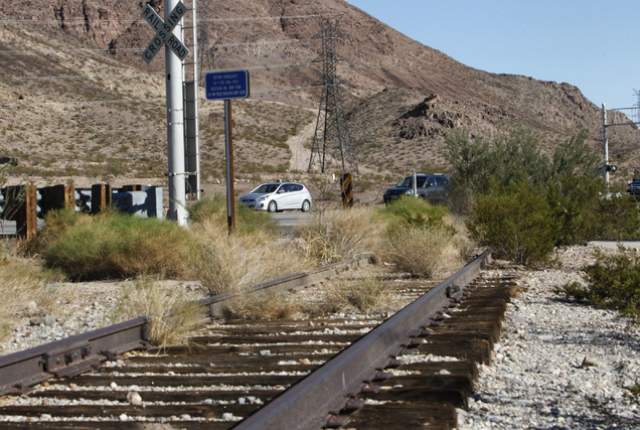
Two stories; in Nevada the Boulder rail extension is part of the cost of a new highway and that the CNR sold Georgetown-Kitchener, Ont., rail line to Metrolinx for GO Transit commuter rail service for $76 million, shows that governments in other jurisdictions actually think and plan ahead when trying to solve ongoing transit issues.
Meanwhile, back in the land where time stood still, two rail (one a former rapid transit line) routes in the Metro Vancouver are for sale; the Arbutus Corridor for $100 million and the CNR line in Richmond for $65 million, yet our transit planners remain deaf, blind and dumb about acquiring these railway lines for future transit growth and continue to plan for $200 million/km. plus subways for Vancouver and $100 million/km. plus LRT for Surrey. A bargain in any other city, but not so in Metro Vancouver!
The saddest part of the story is that our regional politicians remain largely ignorant about modern public transit and the role of modern LRT and continue to support dated mini-metro expansion to the detriment of both the transit customer and the taxpayer.
On the island, the same is true for the E&N folks who are working overtime just trying to secure $20 million to they can pay for track improvements do Via can operate a passenger service!
Yet politicians have no qualms what so ever in spending $5 billion on the dangerous and badly planned and built SFPR and a new Port Mann Bridge, replacing the recently refurbished old Port Mann Bridge (at the same time letting the decrepit Patullo Bridge rot!), so friends of the government can collect tolls!
Until the public demand regime change with out current transit planning, stone-age transit planning will continue by the Neanderthals at Ministry of Transportation, TransLink, and the many municipal engineering and planning departments in metro Vancouver.
Is Vision Vancouver’s Subway Fantasy Putting City Taxpayer’s At Risk?
 Courtesy Light Rail Now
Micheal Geller has an interesting item in the Vancouver Courier which indicates that Vancouver taxpayers maybe on the hook for a minimum of $500 million for demanding a SkyTrain subway under Broadway.
Predictably, Geller still follows the local line about transit and growth, while ignoring the fact that transit use mainly increases with population growth and the regional transit system has done a very poor job in attracting new customers. The U-Pass is a symptom of this failure by giving deep discounted, ride a will tickets to post secondary students, in a vain attempt to bolster ridership. Well, ridership is at or near capacity on main transit routes during peak hours but after the morning and evening rush hours, transit ridership is, at best, sparse.
The key passage in Geller’s piece…
What most of the audience did not know is that while the Mayorsai??i?? Council endorsed a tunnelled line along Broadway, it is contingent upon a partnership agreement with the City of Vancouver, which would be responsible for the incremental cost associated with tunneling ai???beyond that which was technically or functionally required.ai???
Stated another way, if an underground line is preferred for aesthetic reasons, something most of us would endorse, the City of Vancouver will be responsible for the additional cost, currently estimated at $500 million.
The mayors, especially those from Burnaby, Richmond and New Westminster, adopted this position since they had to live with elevated lines in their municipalities and questioned why Vancouver should get special treatment.
….. reveals that the Vancouver taxpayer must ante up the difference between elevated and underground or subway construction!
- The cost of subway construction is about double that of elevated construction and if the Vancouver taxpayer were forced to pay the difference, the cost to the taxpayer would be considerably more than $500 million.
- The $100 million the CPR wants for the 11 km. Arbutus corridor looks better and better for transit, when compared to the massive costs of a Broadway subway.
- Should not municipalities who want SkyTrain and/or automated transit pay the difference of the cost of at-grade/on-street LRT and grade separated light-metro?
If the taxpayer were forced to pay the difference between elevated and subway construction, the cost to the taxpayer would be well over $1 billion. It would be a better investment to build a BCIT to UBC LRT on Broadway and a Marpole to downtown LRT, using the Arbutus Corridor, using modern LRT than building a a short 5 km. SkyTrain subway.
I think it is time Vision Vancouver have a frank discussion with the city taxpayers on the subject of LRT, SkyTrain and subways or they may find the city of Vancouver, like most other cities that rashly built subways for vanity reasons, being on the verge of bankruptcy.
 Courtesy of Light Rail Now



Recent Comments