Tunnel Vision vs. Green vision
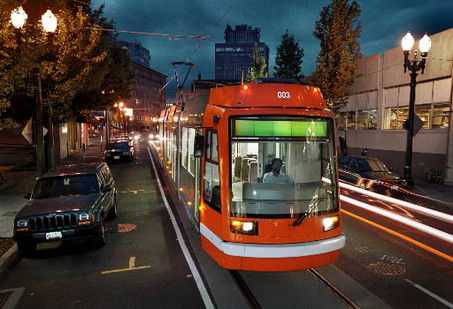
The following power point presentation comes from Adam Fitch and succinctly shows the difference between light rail and a Skytrain subway under Broadway.
Click and view.
UPDATE: WE HAVE TECHNICAL PROBLEMS, MY APOLOGIES
BCIT to UBC and Picnics in the Park, by tram
First published in 2009. Updated 2014.
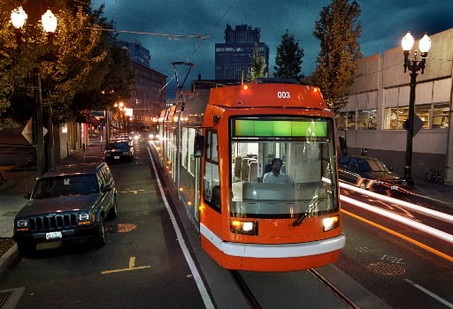
A Wee Bit Of Local History
In early 1996, during BC Transitai??i??s meaningless public consultation period for the Broadway Lougheed Rapid Transit Project which later morphed into the Millennium Line, Zweisystem received a phone call from an European Transit specialist, who worked for Asea Brown Boverai (later absorbed by Bombardier Inc.) regarding the project.
The European transit specialist, wanting to make contact with those planning for light-rail, had phoned BC Transit to arrange a meeting regarding the then proposed Broadway/LougheedAi?? LRT project and was given Zweiai??i??s phone number instead!
After his initial shock and displeasure being fobbed-off by BC Transit, the transit specialist entered into a long conversation with me on transit issues in the region and how modern light rail could help solve them. To make a long story short, he proposed a classic European style tramway for Broadway, with stops every 500m to 600m, going from BCIT to UBC, replacing all Broadway bus services and a second line via Main Street, Hastings St. to Stanley Park, that, he claimed would double present bus ridership on the two routes within two years, providing enough fare revenue for the tram to operate without any subsidy, with fares covering not only operating costs but debt servicing costs as well. By doing so, a private company could build and operate the light rail line at no cost to the taxpayer.
The rest is history as they say and the SkyTrain Millennium Line was built instead and is subsidized by over $80 million annually!
The Light Rail Committee Proposes the BCIT to UBC and Stanley Park Light Rail Project.
In late 1996 the Light Rail Committee (now defunct) proposed a bold Broadway light rail plan: a tram/light rail line from BCIT to UBC via the Lougheed Hwy., Broadway, 10th Ave. and University Blvd. with a second line via Main street to Hastings Street to the Aquarium in Stanley Park. The plan consisted of lawned reserved rights-of-ways and on-street running; priority signaling on traffic calmed Broadway and Hastings Streets; tram/streetcar stops every 500 metres; a single track Vancouver General Hospital Loop via Fraser St., 10th Ave. and Cambie St., providing front door service to the hospital.
Commercial speed would be about 20 kph to 25 kph (depending on the number or tram-stops per km.) and the construction costs in the region of $25 million/km to $35 million/km; maximum hourly capacity 18,000 to 20,000 persons per hour per direction using modern low-floor trams.
Signaling would be line of sight with intersections and switches protected by local signaling. Headway’s could be as low as 60 seconds in peak hours.
What the LRCai??i??s plan would do is service many important transit destinations (UBC, BCIT, VGH, downtown Vancouver, Stanley Park, etc.), while providing economy of operation by replacing all bus services on Broadway and many in Vancouver, thus reducing operating costs by about half. Further economies are made by using existing masts and span wires along the proposed transit routes. The new LRT would be merely seen as the reinstatement of ai???railai??i?? service by modern streetcars, operating on 21st century rights-of-ways.
The concept of a private operator, by securing financingAi?? to build the line at no or little cost to the taxpayer must be looked at by politicians. This type of P-3, not to be confused with the Canada Line scam, would see little or no subsides from government, unlike the Canada line which in 2012 TransLink paid the SNC Lavalin lead consortium operating the mini-metro line $145 million!
The plan would reduce Broadway to one lane of traffic in each direction (passive traffic calming) except in areas of mixed operation, while keeping the all important on-street parking for local merchants. The plan would have offered a minimum of five transit routes: BCIT to UBC; BCIT to Stanley Park; UBC to Stanley Park; UBC and BCIT to VGH loop.
The plan incorporated modern European light rail and tram philosophy of the day; lawned reserved rights-of-ways, modular cars, high capacity, passenger comfort, and affordable cost. It was not to be, as the Glen Clark NDP government, for reasons that can only be speculated, dismissed LRT out-of-hand and went for a truncated SkyTrain light metro line, the only metro in the world that went nowhere to nowhere.
In 2014, the Millennium Line is seeing another $1.4 billion spent on it, in the guise of the Evergreen Line, to see its completion.
In 2014 there is no rumour of a SkyTrain subway to UBC instead both the City of Vancouver and TransLink are demanding a multi-billion dollar subway under Broadway.
It is time to again to consider again a BCIT ai??i?? UBC ai??i?? Stanley Park light-rail network, that could cost the taxpayer little or no money instead of a $3 billion subway to Arbutus or a $5 billion plus subway to UBC that ignores transit concerns East of commercial Drive.

Surrey Light Rail Map
As requested, the map for the proposed LRT network.

Surrey’s Proposed LRT Advances

Looks like the proposed three line LRT network in Surrey, is advancing.
The old anti-LRT rhetoric continues, despite well over thirty years of commercial operation by over 500 tram/LRT lines around the world that disproves this nonsense.
No mention that only seven Skytrain systems have been built since the late 1970’s mind you, demonstrates that the SkyTrain Lobby would prefer for that statistic to quietly fade away.
Zwei believes the costs for LRT are much too high, but with TransLink in charge, planners may wish to gouge the taxpayer, rather than lose face that modern LRT is a considerably cheaper to build than SkyTrain, especially when Vancouver wants a $4 billion subway under Broadway.
Surrey LRT plan passes key federal hurdle
Adrian MacNair / Now Staff
October 31, 2014SURREY ai??i?? A federal agency overseeing public-private infrastructure projects in Canada has given preliminary approval to Surrey’s application to help fund Light Rail Transit.
According to a press release by the city issued Thursday (Oct. 30), the P3 Canada Fund has granted “screened in” status to the application, meaning it will move on to the next phase for further funding consideration.
ai???With Surreyai??i??s population growing so quickly, securing new rapid transit options have been a top priority of mine,ai??? said Mayor Dianne Watts in the release. ai???This decision to have Surreyai??i??s application for federal funding move on to the next stage is a significant step forward in making a Light Rail Transit system a reality in our city.ai???
City staff are working with TransLink, the regional transportation agency that would administer the LRT network, to refine the design and cost estimates for the project. The design work is also necessary to enable the preparation of a business case for federal funding.
Surrey’s objective is a funding arrangement composed of one-third federal, one-third provincial and one-third regional. The regional support already exists in the form of the Mayorsai??i?? Councilai??i??s Regional Transportation Plan, which has identified Surrey’s LRT plan for 27 kilometres of track as a top priority. However, any such funding will depend heavily on the results of a TransLink referendum expected in the spring of 2015.
P3 projects (or public-private partnerships) involves a contract between a public sector entity and a private company, in which the private contractor usually assumes the financial, technical and operational risk in the project to reduce the cost to the taxpayer.
The City of Abbotsford received P3 approval from the federal government in 2011 for a $291 million water project intended to meet municipal growth projections. But after overwhelming public opposition, a plebiscite overturned the decision.
However, there are several successful examples of P3 projects in Canada, including transportation infrastructure. Seven projects have been approved by P3 Canada, including 13.2 km of LRT track in Edmonton, and closer to home, Lincoln Station on the Evergreen Line in Coquitlam.
Mayoral candidate Linda Hepner, a member of Surrey First’s near-unanimous majority on council, has already committed to seeing phase one of an LRT system in the city by 2018. She said she would commit land and development revenues along the route to help pay for the system.
Even if the plan is voted down in the referendum, Surrey can apply to the New Building Canada Fund, a $14 billion federal infrastructure program.
Doug McCallum’s Safe Surrey Coalition has also committed to starting work on an LRT system within a year, and for construction to begin within two years.
Mayoral hopefuls Barinder Rasode and John Wolanski have also spoken in favour of LRT, although some candidates like Grant Rice (who said he’s a regular SkyTrain rider) would like to focus on getting more buses in the city.
Not everyone favours the idea. One Surrey candidate Brian Young said a ground-level LRT system would make road congestion even worse.
But proponents for the plan say LRT is more cost-effective than a SkyTrain extension, with 27 kilometres of LRT track costing the same as 16 kilometres of SkyTrain. Studies estimate that a SkyTrain from Surrey City Centre to Langley would only be five minutes faster than light rail, and that number might decrease once more detailed technical work is completed on the track’s location.
As well, LRT trains can carry more passengers than B-Line buses and, according to the city, would be able to meet future population growth projections and needs for transit.
ai??i??with file from Amy Reid
– See more at: http://www.thenownewspaper.com/news/surrey-lrt-plan-passes-key-federal-hurdle-with-video-1.1490203#sthash.yflR3QlU.dpuf
Compass Card Fiasco
 Installed but not working. Until the compass Card becomes operational
the turnstiles stay idle, paying silent testament to TransLink’s incompetence.
As expected, TransLink’s new Compass Card is turning into a fiasco and now the transit agency is contemplating a single zone for buses.
Because of TransLink’s simple three zone fare system and full fare/concession fare ticket system, there was no need for a very complicated fare card system.
The mainstream media, coupled with a former well known radio host banged the drum for turnstiles because of perceived rampant fare evasion, even though fare evasion was well within industry norms.
The annual operating costs, coupled with the set costs of the new fare card/turnstile system cost more than what was lost due to fare evasion!
Enter former TransLink CEO and good pal of former Premier Gordon Campbell, Ken Dobell, who was acting as a lobbyist for Cubit Industries, flogging an outdated fare card/turnstile system and TransLink was compelled to buy.
After almost $200 hundred million or so dollars spent, the turnstiles are installed but the Compass Card is not workable and now TransLink is contemplating a one zone fare for all buses to make the compass Card work.
The kicker is, if there is only one zone for buses there is really no need for a fare card as all that is needed is a transfer to prove that a fare was paid, which is very easy for anyone checking fares to see.
Stay tuned, the sitcom called TransLink is set to continue; a boring little show, with little comedy but a lot of pathos.
Lies, Damned Lies and the Vancouver Sun
So, Calgary’s Nenshi backs Gregor Robertson’s Broadway subway plans. Well not exactly, he supports better urban transit funding and all Mr. Nenshi said was “So I imagine there is a scramble right now in Ottawa precisely to figure out how to fund Vancouver’s next Skytrain expansion.”
How the Vancouver sun can construe this as support for a Broadway subway is mind boggling!
The Vancouver Sun, a long supporter of SkyTrain, again distorts the facts to pervert the truth when it comes to regional transit in the region.
There are lies, damned lies and The Vancouver Sun!
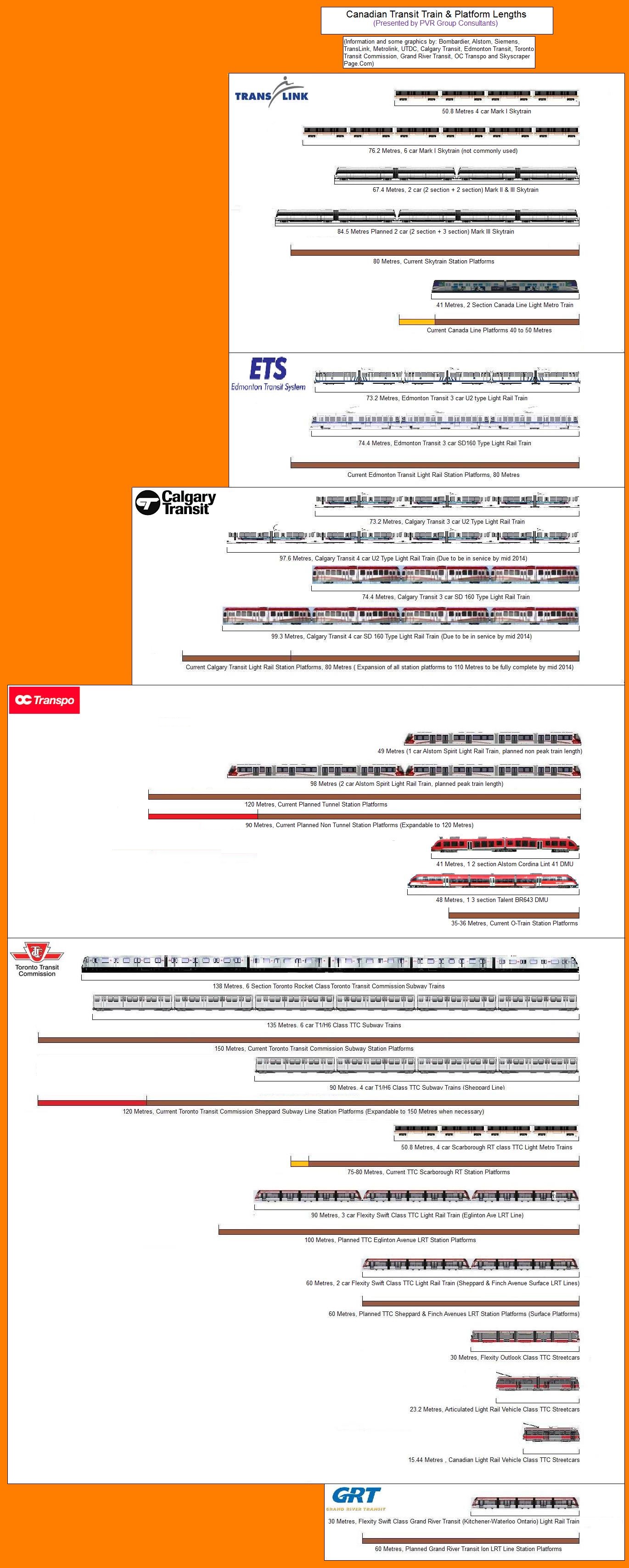
Just to refresh everyone’s memory, the Expo and Millennium Lines (and the Evergreen Line) have 80 metre long station platforms limiting trains to about 80 metres. The Canada line has station platforms between 40 metres and 50 metres long, limiting trains to around 40 metres. Short station platforms limit the capacity of the Canada line to about 7,500 pphpd and the Skytrain lines to about 15,000 pphpd. to increase capacity, very expensive station and electrical renovations must take place. Estimated cost $2 billion to $3 billion.
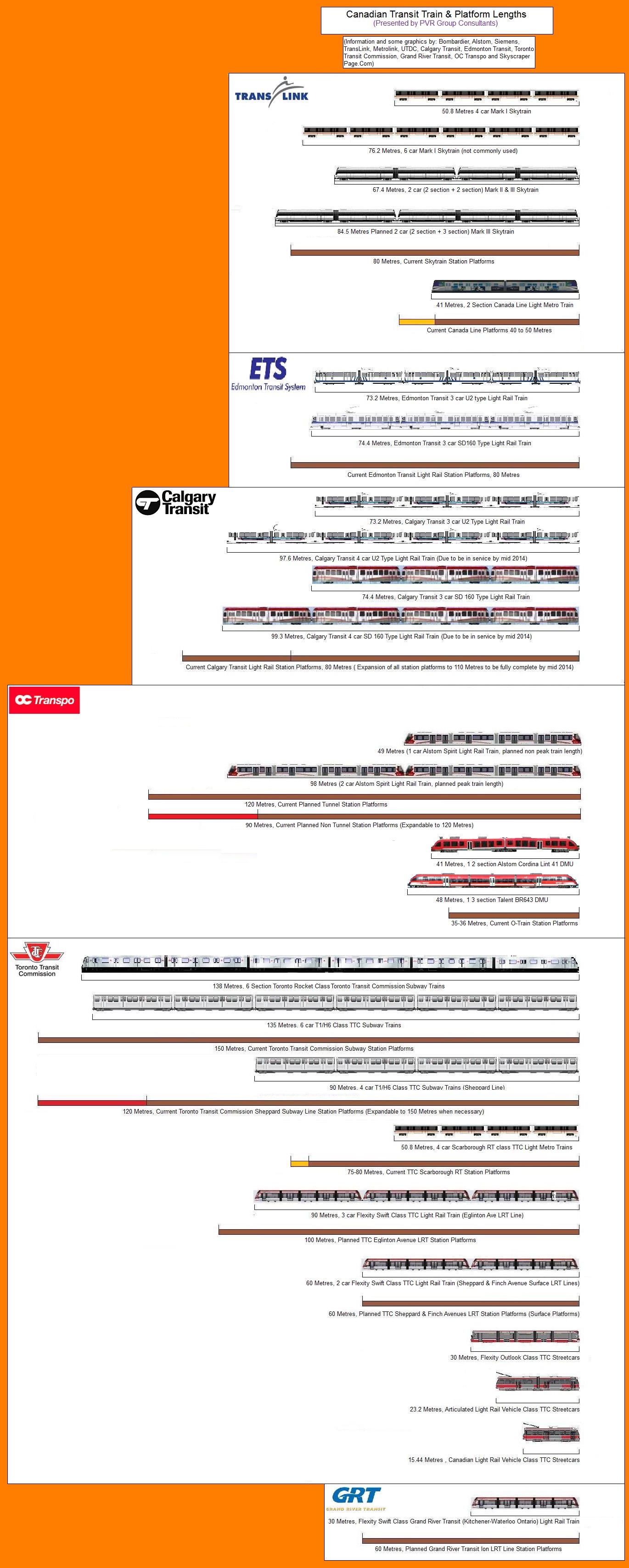
Meanwhile in Calgary, stations have been renovated and platform lengths extended to 110 metres in length so they can accept four car (99 .3 metre long) coupled sets of trams.
News Flash:
Calgary can run 99 metre long trains versus Vancouver ability to only run 80 metre long trains
Calgary can operate trains up to 110 metres long, which Vancouver cannot.
Calgary’s LRT has a higher capacity than SkyTrain.
Subways do not increase capacity, they just keep surface roads clear for motorists.
SkyTrain Switch Excuse Grows Very Thin
Like the old fable; “The boy who cried wolf“, the ongoing TransLink excuse for problems on the Skytrain system is growing very thin.
Again, SkyTrain goes kaput on the tail end of the morning rush and again TransLink blames a “switch problem” as the reason.
Sorry, I just do not buy that excuse anymore and from the feedback from transit customers, nor do they.
Zwei thinks TransLink has deferred maintenance to cover financial shortfalls and like all transit systems that defer important maintenance as an economy measure, the results come back to haunt the operator big time,Ai?? just like what happened in Portland!
Vancouver commuters really donai??i??t care for these SkyTrainAi??disruptions
October 28, 2014.
Vancouver commuters faced another obstacle today on TransLinkai??i??s SkyTrain service which has been beset byAi??delays and disruptionsAi??in recent months.
A switch problem caused delays on the line between Joyce Station and Metrotown this morning. TransLink posted on its websiteAi??at 9:59 a.m that a service disruption of minor severity on both the Expo and Millenium Lines was due to a problem train in the Metrotown area thatAi??has since been cleared.
The disruption led to over-flowing crowds at SkytrainAi??stations across Metro Vancouver. Angry commuters vented their frustrations on Twitter.

The SkyTrain Subsidy Revisited
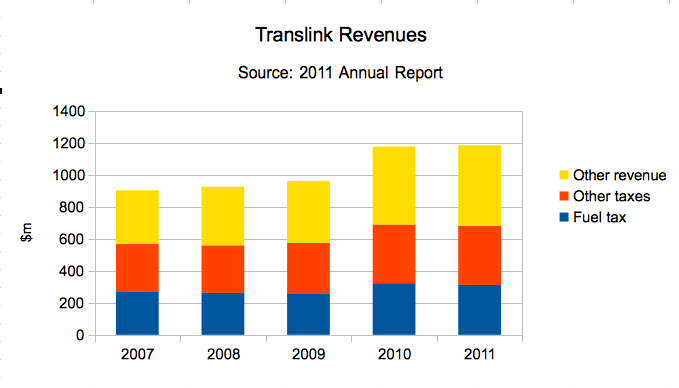
The SkyTrain and Canada Line light-metro are bleeding over
$350 million from TransLink’s $1.2 billion budget!
In 1993, the GVRD (now Metro) and Transport 2021, published the study, “The Cost of Transporting People in the BC Lower Mainland” and for the first time the annual SkyTrain subsidy was mentioned. In 1991, SkyTrain was subsidized to the tune of$157.6 million, more than half of the total subsidy paid for public transit in the Lower Mainland. BC Transit then, as TransLink does today, ignores this vast sum of taxpayer’s dollars subsidizing the metro and make erroneous statements that SkyTrain pays its operating costs, etc.
The portion of the SkyTrain subsidy is thus:
Gas taxAi?? – Ai??Ai?? $17.8 mil. out of $47.4 mil. collected
Hydro LevyAi?? -Ai?? $4.7 mil. out of $12.6 mil. collected
Commercial Property TaxAi?? -Ai?? $9 mil. out of $24 mil. collected
Residential Property TaxAi?? -Ai?? $5.2 mil. out of $14 mil collected
Provincial GovernmentAi?? -Ai?? $120.9 mil. out of $196.8 mil. paid
TotalAi?? –Ai?? $157.6 out of $294.8 paid
With the opening of the Millennium Line, SkyTrain’s annual subsidy increased past $200 million and with the Canada Line metro, the subsidy has again increased. In 2012 TransLink paid the consortium which operates the Canada Line $145 million which is two to three times more than would have been paid to comparable light rail operations.
What is interesting to note, just two years worth of SkyTrain’s annual subsidy could fund a basic Vancouver to Chilliwack Interurban demonstration service; four years worth of SkyTrain’s annual subsidy could fund the full build Leewood/RftV interurban!
For the likes of Daryl, Rico, or the rest of the SkyTrain Lobby, who think that SkyTrain operates for free, think again. Skytrain is very expensive for the job it does and to ignore the correlation between TransLink’s financial mess and continued light-metro construction, is sheer folly.
There is a good reason why no one builds with SkyTrain and for TransLink to even contemplate building more, especially a Skytrain subway under Broadway, clearly demonstrates the organizations total disregard towards its finances.
Horse manure from Vision(less) Vancouver and the N.P.A.
Wow, such BS from Vancouver Mayor Gregor Robertson and mayor wannabeAi??Kirk LaPointe, saying he is going to build an affordable subway is laughable.
Robertson has no proof to back up his claim that a subway will be; “taking 50,000 cars off the road”. One should remember the empty claim that the Canada line would take 200,000 car journeys of the road a day, which it never did and today, there are more cars on the road than ever!
The NPA’s Kirk LaPointe promises of counter-flow lanes and a affordable subway are so bizarre, one wonders if he is a left over from the X-files.
The royal fool, Geoff Meggs, is also in on the act and it is all so embarrassing as neither Vision(less) Vancouver or the NPA have a clue about transit and transit mode and if either party gains control of city hall, Municipalities and cities south of the Fraser should seriously consider leaving TransLink and forming a south Fraser Transit Authority and let Vancouver bankrupt TransLink with subway mania.
 Traffic flows along Broadway do not warrant a subway; in fact
they barely warrant a streetcar line!
Mayor Gregor Robertson and Kirk LaPointe trade barbs over transit plan
Mayor Gregor Robertson addressed reporters at the VCC-Clark SkyTrain station to reinforce their commitment to improving the cityai??i??s transit system.
His party’s transit system plan involves upgrading bus stops, sustaining enhanced transportation services for seniors and supporting the 10-year TransLink plan in the referendum. This will include the new B-Line services, more night buses and the early stages of the Broadway subway to Arbutus.
ai???That subway is the single best thing that you can do for our economy and environment, taking 50,000 cars off the road,ai??? said Robertson.
ai???We will also advocate strongly in support of the referendum. We will not waiver on that one bit, because winning a transit referendum isnai??i??t just about the Broadway subway; itai??i??s about massive improvements to transit across the region.ai???
Phase one of the Broadway Corridor Rapid Transit Project would be a 5.1 km extension of the Millenium Line SkyTrain from VCC-Clark to Arbutus with a projected cost of $2 billion. The line will eventually route to UBC in the future second phase.
At a news conference on Tuesday, Non-Partisan Association mayoral candidate Kirk LaPointe announced that he would deliver an ai???affordable, underground Broadway subwayai??? to UBC in addition to creating counterflow lanes on major roads and adding capacity to the 99 B-Line bus route.
Robertson responded by saying NPAai??i??s ai???lack of understanding when it comes to major issues like transitai??? puts the city at risk. LaPointe is always ai???evolvingai??? and changing his mind on the Broadway subway, and he is proposing drastic changes but is weary with the details, added Vision city councillor Geoff Meggs.
ai???Mr. LaPointeai??i??s plan seems to be to make our main streets more like freeways,ai??? Meggs said in a press release.
The lanes should not be viewed as creating a freeway within the cityai??i??s boundaries, LaPointe acknowledged at his news conference, but rather an opportunity to ease congestion during rush hours.
ai???Gregor Robertson has jacked up parking rates, heai??i??s taken away car lanes and heai??i??s shown no respect for drivers, at all,ai??? LaPointe said. ai???He doesnai??i??t get the fact that sometimes ai??i?? sometimes ai??i?? a car is the only option that works.ai???
During Vancouverai??i??s first mayoral debate of the election season yesterday, LaPointe also called out Robertson lack of leadership suggesting that he had nothing to show for six years of commitment to the transit plan.
ai???I could grab your pen and do a sketch on paper and thatai??i??s as far as we have gone,ai??? said LaPointe. ai???You are not doing your job as mayor,ai??? LaPointe told Robertson. ai???Youai??i??ve had six years to get the job done. This was your No. 1 transit priority from day one. Howai??i??s priority number 11 going?ai???
In Toronto – A $3 Billion Subway Carries Fewer Customers Than A Streetcar Line!
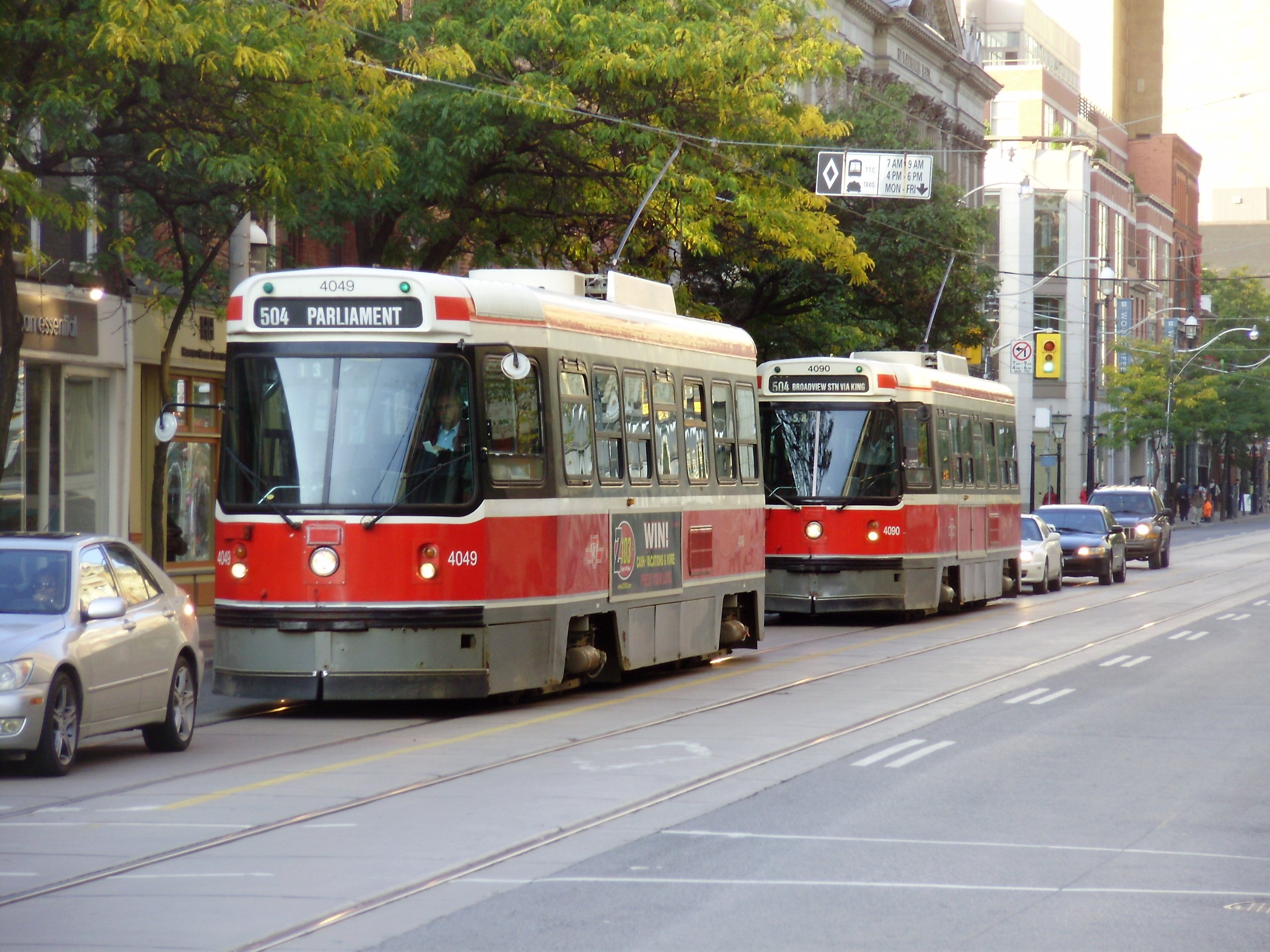
Those who promote a Broadway subway had better beware, subways are not the magic elixir in attracting ridership.
A Toronto CBC news story giving mayoralty hopeful Doug Ford (brother of the discredited Rob Ford) an “F” for his subway plans contains an interesting item:
“The Sheppard subway is a classic example,” said Bedford. “It cost $3Ai??billion to build and only carries 50 toAi??55,000 riders a day. The King streetcar alone carries over 60,000 riders a day.Ai??ai??ZWe need to learn from this and not repeat these mistakes all over the city.”
And that is 60,000 customers a day using the now vintage four axle CLRV’s, not more modern articulated stock.
A Broadway Skytrain subway is not guaranteed to attracted more customers than an at-grade/on-street light rail/streetcar system, in fact, the inconvenience of a subway, with widely spaced stations needing an expensive shadow bus service, maybe the final financial straw that may break TransLink’s back!



Recent Comments