Eric Chris on the West Coast Express and TransLink Ridership in General
Eric Chris takes on TransLink’s appalling history of exaggerating ridership on Vancouver’s metro transit system.
Zwei has known since the mid 1980’s that BC Transit exaggerated ridership on the SkyTrain Expo Line to impress visiting transit types, but they were not fooled as they could see that the light loadings on the mini-metro did not match what they were told. Even Zwei had a personal experience when a BC Transit official told him that car counters were told to report 100 persons per car, regardless of actual capacity. At the time the MK.1 cars had a maximum capacity of 70 persons.
TransLink carries on the tradition, over-estimating ridership to put the transit system, especially on the metro system. One problem arising out of this is that receipts do not match reported ridership and thus the myth of massive fare evasion was born. The mainstream media, especially one local radio station has bitten in this kool-aide and has done a radio soap opera on the issue, doing TransLink a great service promoting the $171 million fare-gate installation because it is hoped it will stop fare evasion. Trouble with that, is that fare-gates, unless they are manned by attendants, will do little mitigating fare evasion and the cost of installation, maintenance and operation of the fare-gates will cost TransLink more than it was losing from fare evasion!
The TransLink saga continues…………………………………….
Eric Chris’s letter.

Apparently, the West Coast Express (WCE) only operates on weekdays (260 days per year) and the 3,077 daily ridership previously given for the WCE is a little low.Ai?? Still, ridership on the WCE is not 6,000 people, commuters or passengers daily as TransLink contends.
Ridership on the WCE is around 4,300 people daily (2.25 million trips per year / 260 operating days per year / 2 trips per person daily on average).Ai?? By not correcting the false ridership stated by TransLink in the Vancouver Sun and The Province, you are allowing TransLink to lie and get away with it.
This is to trick the average reader into thinking that transit by TransLink moves far more people than it really does.Ai?? It is to gain sympathy for more transit funding when TransLink already spends far more than any other transit organization in Canada (refer to Figure 4-9 on page 27 of the TransLink efficiency review by Shirocca Consulting completed for the TransLink Commissioner, Martin Crilly, March 2012):
http://translinkcommission.org/TransLink_Efficiency_Review_Mar_21-12_FINAL.pdf
TransLink is basket case and in a class of its own when it comes to spending per rider.Ai?? Yet, you and the rest of the reporters in Vancouver appear too scared to take on TransLink and do not seem interested in pointing how awful transit by TransLink is to your readers.Ai?? In fact, you bend over backwards for TransLink to write stories persuading readers to fund more SkyTrain transit which is the root cause of the poor efficiency of transit by TransLink.
Generally, TransLink reports two to three times the real number of people on buses and SkyTrain cars.Ai?? You have to take ridership figures presented by TransLink with a grain of salt.Ai?? Approximately 264,000 people ride transit on average throughout the week in Metro Vancouver (11% of the 2.4Ai?? million population in Metro Vancouver).
Incidentally, how many times a transit user boards transit is irrelevant, and the average transit user boards transit many times daily, just like the average driver gets into and out of his or her car many times daily.Ai?? Most serious and regular transit users have a transit pass.Ai?? If TransLink is able to say how many people hold transit passes, it will give you a very good idea of how many people truly use transit regularly, surely.Ai?? Hope this clarifies things for you.
ec
TramTrain Trial OK’ed in the UK
TramTrain is coming to South Yorkshire, in the UK.
If TramTrain passes muster with her Majesty’s Railway Inspectorate, it would past muster in BC for operation in metro Vancouver.
The real question, of course, is why TransLink must be forced kicking and screaming to accept TramTrain as a 21st century transit mode?
From the LRTA website at www.lrta.org
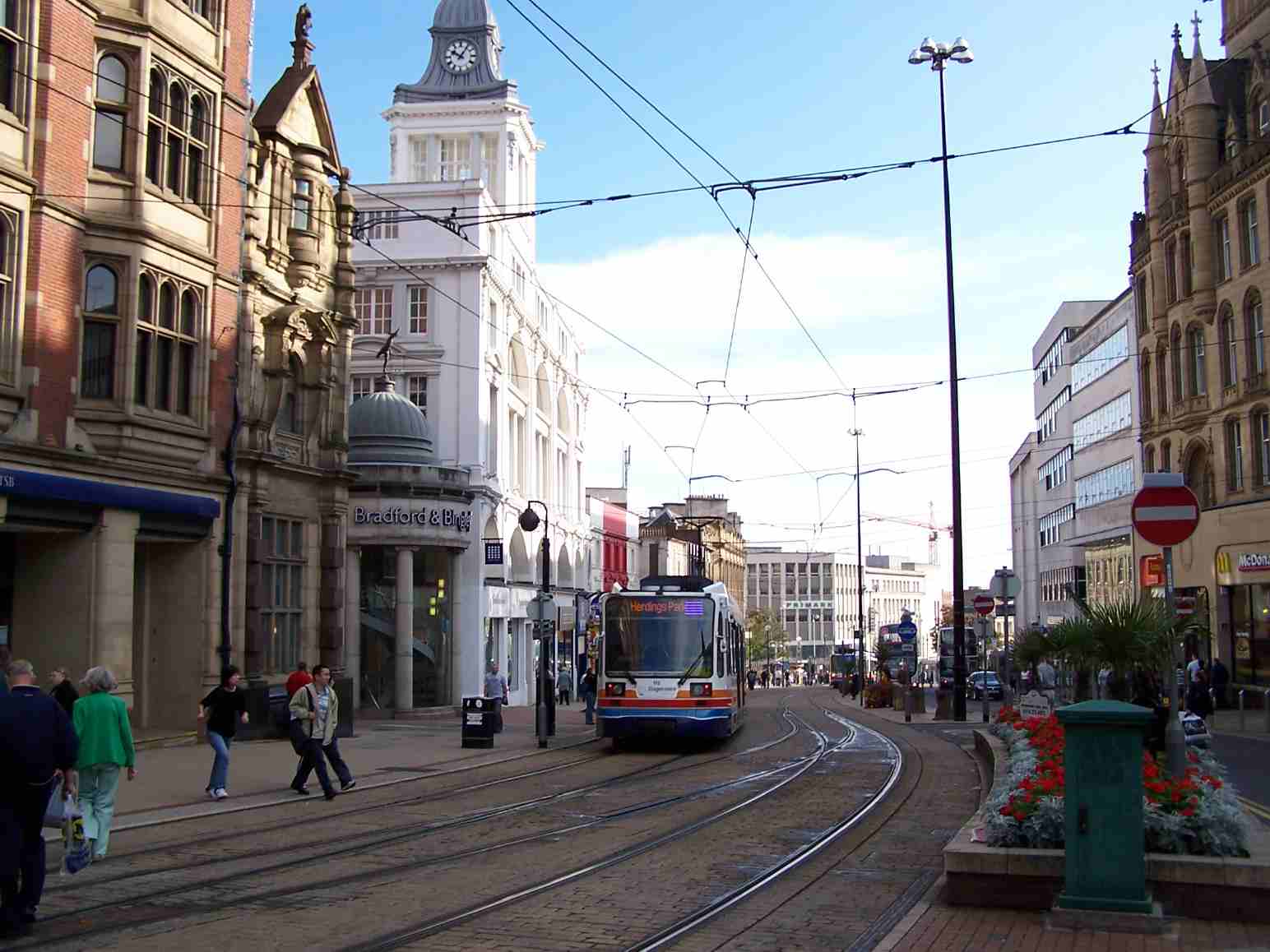
Tram Train pilot to go ahead in South Yorkshire : Transport Minister Norman Baker today gave the green light to a GBP58m (CAD $93.7 million) Tram Train pilot scheme in South Yorkshire. New vehicles will operate from 2015 on Sheffieldai??i??s Supertram network and on part of the national rail network, which will be adapted to allow seamless travel from one to the other.
Tram Train can assist city economies by increasing capacity and releasing space at mainline stations for other commuters or improved long distance services. It can reinvigorate suburban rail routes and bring passengers right into city centre destinations, creating growth and cutting carbon.
Announcing the pilot, Norman Baker said:
The pilot will see the introduction from 2015 of new Tram Train vehicles capable of using both light and heavy rail infrastructure, so providing continuous travel from Sheffieldai??i??s Supertram network onto Network Railai??i??s national rail network, as well as providing more capacity on the Supertram system itself.
The new vehicles will provide three services an hour operating from Parkgate Retail Park in Rotherham, travelling through Rotherham Central Station and joining up to the existing Supertram network at Meadowhall where the services will then continue onwards to Sheffield City Centre. The project is also expected to create 25 new driver jobs locally, plus around 10 additional jobs in maintenance and revenue protection.
The full text of Norman Baker’s speech can be found on the DfT website as can the Dft Press release.
17 May 2012
Provincial Auditors Ignore SkyTrain – TransLink’s Financial Chaos Will Continue
What is interesting about this item in the Vancouver Sun, is that provincial auditors, looking for maintenace cost savings in TransLink, are ingoring the SkyTrain light-metro system and I wonder why?
“The report, which didnai??i??t examine maintenance costs for SkyTrain ai??i?? run by BC Rapid Transit Co. ai??i?? suggested TransLink must ai???re-evaluate maintenance services and modernize its approach given its high and increasing unit costs.ai???
The answer is simple, with TransLink and the provincial government are obsessed with SkyTrain andAi??its higher maintenace cost would prove embarrassing. SkyTrain costs about 40% more to maintain than modern light rail and reporting higher maitenace costs would prove to be embarrassing, especailly when construction onAi??the $1.4 billion Evergreen SkyTrain Line is soon to commence.
No one in TransLink or the provincial government will admit, that the major cause of TransLink’s financial problems is the very expensive SkyTrain and Canada line light metro systems. Until TransLink and the provincial government come clean on the true cost of the light metro network, TransLink will suffer continued major financial distress.

B.C. auditors to examine TransLink for more cost savings
Ai??Bus maintenance and community shuttle also under scanner
Ai??By Kelly Sinoski, Vancouver SunMay 17, 2012TransLink is once again facing increased scrutiny ai??i?? this time by provincial auditors ai??i?? in a bid to find further cost savings at the beleaguered transportation authority.
TransLink spokesman Drew Snider said provincial auditors will search for operating efficiencies across the board, including within the organizationai??i??s bus maintenance program and its subsidized community shuttles. Both were raised in a recent audit report by TransLink Commissioner Martin Crilly as areas where potential cost savings could be found.
In 2010, TransLinkai??i??s total direct maintenance expenditures for conventional bus and community shuttle services totalled $111.5 million and $5.3 million respectively.
The maintenance costs, which total more than service kilometres driven, were higher than other transit organizations across Canada, according to Crillyai??i??s report. They were also the second largest area of spending for TransLink, accounting for about 22.8 per cent of its total operating costs.
TransLinkai??i??s bus operations ai??i?? run by its subsidiary Coast Mountain Bus Co. ai??i?? are considered more expensive to maintain partly because thereAi?? is a mix of significant trolley, diesel-hybrid and compressed natural gas fleets. And unlike other transit cities, Coast Mountain includes some ai???non-wrench timeai??? ai??i?? obtaining parts, tools or documents ai??i?? in its internal labour rate charged to jobs, while offering the highest wage rates for both operators and mechanics.
Between 2006 and 2010, direct maintenance costs for trolley, natural gas and community shuttles experienced average increases for the fleets of 75.3 per cent, 130.3 per cent and 220 per cent respectively.
Direct costs spent on vehicle repairs and maintenance increased by 62 per cent over the five years, which is in excess of service expansion and labour cost growth over the period. Community shuttles were a big driver in the higher maintenance costs, by more than doubling over the five-year period.
ai???If these trends continue, it will be a challenge for CMBC to maintain these fleets within reasonable budget constraints and fleet life cycle costing will have to be revisited,ai??? the report said.
The report, which didnai??i??t examine maintenance costs for SkyTrain ai??i?? run by BC Rapid Transit Co. ai??i?? suggested TransLink must ai???re-evaluate maintenance services and modernize its approach given its high and increasing unit costs.ai???
TransLink officials declined to comment on the high maintenance costs or what was being done to reduce them because the provincial audit was underway.
Langley City Mayor Peter Fassbender, vice-chairman of the Mayorsai??i?? Council on Regional Transportation, said the audit should help shed some light on what can be done to trim TransLinkai??i??s overspending. He noted TransLinkai??i??s board is challenging the transportation authority to also find efficiencies but noted there are implications involved because of union contracts.
The transportation authority has some tough decisions to make, he added. Community shuttles, for instance, are crucial to those who use them but are often criticized by people who see them going around the block only half full.
ai???We have to take a hard look at rationalization of routes … are their routes and services we have that are not cost-efficient?ai??? Fassbender said. ai???There are routes in Vancouver where they have pass-ups because the buses are full and they have other routes where the buses are a quarter full.
ai???The choice has to be made: do you cut it or do you subsidize it? Thatai??i??s a political decision and the mayorsai??i?? council wants to be more involved on that.ai???
The mayorsai??i?? council, which will meet with Transportation Minister Blair Lekstrom next week, has been pushing to have more control over how TransLink spends its money. Lekstrom has tabled legislation, which will allow Fassbender and mayorsai??i?? council chairman Richard Walton to sit at the board table, a move Fassbender says will allow them some weight in the decisions that are made.
Meanwhile, Snider said TransLink is also looking at all of Crillyai??i??s recommendations and will roll out improvements. Earlier this week, TransLink announced it would phase out its TaxiSaver program for HandyDart ai??i?? in which users can receive subsidized taxi services coupons ai??i?? in a bid to put the $1.1 million in savings each year back into the HandyDart program.
ksinoski@vancouversun.com
BC’s Forgotten Streetcar – Nelson’s Streetcar by The Lake!
BC has an almost forgotten heritage streetcar in operation and may be the only heritage streetcar in operation in the province if Vancouver’s heritage streetcar does not operate this year, and that is the charming Nelson streetcar.
Nelson Streetcar rolls out for 20th season on tracks
beginning Wednesday
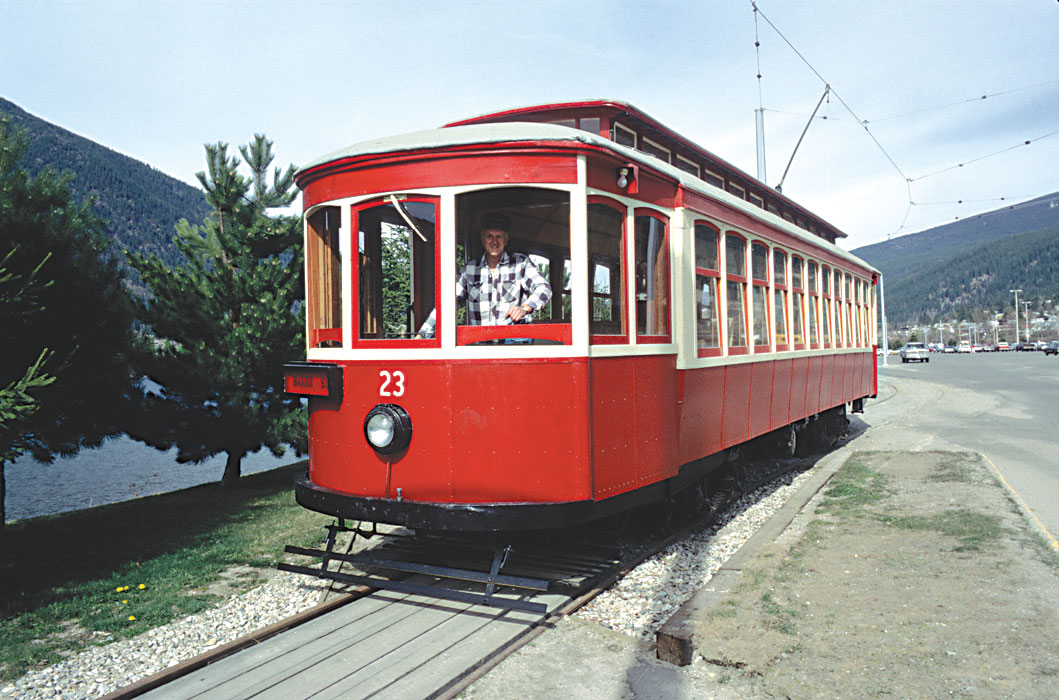
by Nelson Daily staffStreetcar #23 is back for another season on the tracks ai??i?? the 20th campaign for the Nelson Electric Tramway Society.
Just in time for the May long weekend, the Trolley runs weekends until mid-June before switching to a seven-days-a-week operation.
The 2012 season is also a milestone as the society has been in operation for 20 years.
A strong group of volunteers with a train full of passion have been the driving force keeping the society alive and well.
The Society boasts 73 volunteers, motormen (nine of which are ladies), conductors, maintenance, a dispatcher and a secretary.
Ridership is approximately 16,000 passengers per year. Streetcar #23 starts at the Sufferdine Station at the Prestige Inn at 11 a.m. and continuing every half hour to 5 p.m.
Street Car No. 23 was built in 1906 by the Stephenson Car Company of New Jersey for the Forest City Railway in Cleveland Ohio.
This car was purchased by the City of Nelson in 1924 and serviced the City Uphill, main streets and Fairview until June 20,1949 when the City opted to diesel buses.
The entire street car equipment was sold for scrap.
Car No. 23 was used as a change house and later a dog kennel located at the Nasookin subdivision.
In 1982 the Nelson & District Chamber of Commerce, with the help of Selkirk College, Fortis BC, C.P. Rail, City of Nelson and many hours of volunteer labour, rebuilt the car. Mechanical and electrical equipment was brought in from as far away as Brussels and Melbourne.
In 1987 the Chamber relinquished the project to the Nelson Electric Tramway Society.
The only revenue to cover expenses is from in-car advertising and from passenger fares, sale of post cards & pins and donations. Adults pay $3, seniors & youths 6-12, $2, family rate is $8.
The Society has a hidden bonus that everyone should take advantage of, season passes, available for single riders for $30 and a family pass for $50.
The Trolley is also open to events and charters, for more information contact Rudy Boates 250-367-9564 or visit
Urban Compass – Subways wont win Rob Ford Votes
In a meeting room in Scarborough earlier this month, Mayor Rob Fordai??i??s grand plan to ride to re-election on subway promises drift further off track.
It happened deep in the heart of Ford Nation, with a few dozen people gathered in Agincourt for an information session put on by CodeRedTO, a non-partisan group thatai??i??s been active throughout this yearai??i??s transit debate. Theyai??i??ve supported light-rail lines in Torontoai??i??s suburbs over the mayorai??i??s wish for ai???subways, subways, subways.ai??? (He really likes the word ai???subways.ai???)
The mayor and his allies have said that Scarborough doesnai??i??t want the planned LRT lines, which recently won provincial support. But the reception from this Scarborough crowd wasnai??i??t all righteous anger and fury. They were there to learn.
http://metronews.ca/voices/urban-compass-toronto-2/222847/subways-wont-win-rob-ford-scarborough-votes/
CodeRedTO.com was started by three Toronto residents concerned about transit options and fiscal responsibility in transit expansion. There is no outside funding or direction on this group or this website whatsoever. We have not met with any City Councillor, any Transit agency, or any construction or design groups. We do not live along the path of any proposed light rail or subway lines. We work in technology, urban design, and market research
To see the TTC presentation and CodeRedTO’s presentation, visit www.coderedTO.com
Why LRT?
I want subways, not streetcars
http://coderedto.com/why-lrt/

From the BBC – Subways ‘share universal structure’, research suggests
Interesting item from the BBC.
http://www.bbc.co.uk/news/science-environment-18072627
Of course SkyTrain neither being a real subway, or a transit system built by coherent planning, probably would be outside the realms of this study – a one off so to speak.

Subways ‘share universal structure’, research suggests
A study of the world’s largest subway networks has revealed that they are remarkably mathematically similar.
The layouts seem to converge over time to a similar structure regardless of where or over how long they were built.
The study, in the Journal of the Royal Society Interface, analysed 14 subway networks around the world. It found common distributions of stations within the networks, as well as
common proportions of the numbers of lines, stations, and total distances.In some senses, it is unsurprising that the study found that networks tended over time to comprise a dense core of central stations with a number of lines radiating outward from it.
By choosing the world’s largest networks, from Beijing to Barcelona, the results were bound to represent networks that serve city centres with a dense collection of stations and bring commuters inward from more distant stations.
But the analysis shows a number of less obvious similarities across all 14 networks.
It found the total number of stations was proportional to the square of the number of lines – that is, a four-fold increase in station number would result in a doubling of the number of lines.
The dense core of central stations all had the same average number of neighbours in the network, and in all cases, about half the total number of stations were found outside the core.
In addition, the length of any one branch from the core’s centre was about the same as twice the diameter of the core, and the number of stations at a given distance from the centre was proportional to the square of that distance.
The authors analysed how the networks grew and added lines and stations, finding that they all converged over time to these similar structures.
They authors point out that the similarities exist regardless of where the networks were, when they were begun, or how quickly they reached their current layout.
“Although these (networks) might appear to be planned in some centralised manner, it is our contention here that subway systems like many other features of city systems evolve and self-organise themselves as the product of a stream of rational but usually uncoordinated decisions taking place through time,” they wrote.
The authors say that the systems do not appear to be “fractal”. Fractal systems follow mathematical patterns that seem equivalent in a number of physical and social systems ranging from the movements of planets to the movements of depressed people, but they may or may not reflect a deeper, more universal organisational principle.
Nevertheless, the team wrote that some underlying rule is likely to be driving the way subway systems end up worldwide.
“The existence of unique long-time limit topological and spatial features is a universal signature that fundamental mechanisms, independent of historical and geographical differences, contribute to the evolution of these transportation networks,” they wrote.
Eric Chris on Fare Evasion and Opens A Pandoras Box
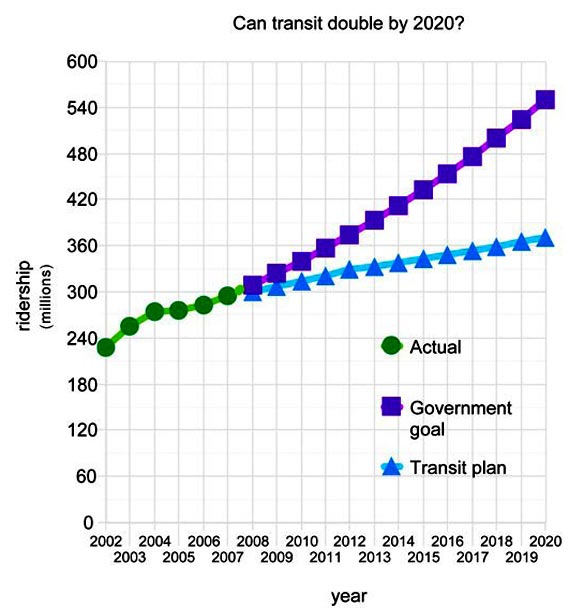
It seems from TransLink’s ownAi??numbers that it will be extremely difficult if not impossible
for TransLink to reach ridership goals set for 2020.
Eric Chris, has done some very good research on the fare evasion issue and heAi??brings up some very important points.
Focusing on the light-metro network, is TransLink doing a good job moving people? Is the SkyTrain network actually catering to the passenger loads that we the public are lead to beleive?
According to TransLink’s figures, the actual number of peopleAi??using by the Canada Line in 2011Ai??wasAi??38,758, Ai??just 30,398 persons less than the rest of the SkyTrain Expo and Millennium Lines combined! If true, it means that ridership on the SkyTrain light-metro system is far less than TransLink would have us think! In fact, theAi??actual number of persons carried by theAi??the SkyTrain light-metro just doesn’t meet the number to justify such expensive light-metro construction. If true, no wonder TransLink has financial problems.
The actual number of persons carried by both the Canada, Expo and Millennium Lines in 2011 is a mere 107,914 persons. Put another way, the taxpayer has spent well over $8 billion to date to carry 107,914 people in 2011! For added insult, just over 80,000 people first tookAi??the bus and transfered to the light-metro system, as TransLink has admitted that over 80% of SkyTrain’s ridership first take a bus the transfer to the metro!
There is something drastically wrong with TransLink’s calculationsAi??and if these figures are to be beleived, Translink is in very serious trouble and will be in the future, as we just do not have the ridership to sustain the current level of servcieAi??on the SkyTrain and Canada line light-metro systems. Yet we plan and build more with the Evergreen Line and the UBC subway!
BC’s Auditor General must step in and do a complete audit of TransLink, West coast Mountain Bus, the three light-metro lines, Handy DartAi??and Seabus, to give a clear and honest picture of the financial viability of TransLink.
Kim,
It is comical for TransLink to make such a spectacle of fare evasion.Ai?? Many fare evaders are bums or teenagers who either ride for free or donai??i??t ride at all.Ai?? So, TransLink might be losing a seat on transit but it isnai??i??t losing much money:
After TransLink hires a collection agency to go after bums and teenagers, rest assured, fare evaders will end up costing taxpayers more than the $170 million for the fare gates and up to $15 million annually to administer the fare gates.Ai?? Mayor Corrigan thinks that TransLink is deceiving the public about fare losses:
Now if you want to report on something substantial andAi?? serious, how about reporting on the fact that TransLink collected $1,382 millionAi?? in revenue to move 317,635 people in 2011?Ai??Ai?? After subtracting $38Ai?? million for toll revenue and $115 million for road, bridge and bicycleAi?? expenditures – transit revenues were about $1,229 million and the administrativeAi?? cost attributed to the deadbeats running TransLink was about $332Ai?? million.Moreover, it cost TransLink $10.60 ($1,229 million / 365 daysAi?? / 317,635 people) to put someone onto transit for one day in 2011.Ai??Ai?? Gulp!How about reporting on the drop in ridership on the CanadaAi?? Line, SeaBus and WCE in 2011?Ai?? See attached ridership which is highlyAi?? inflated for buses in 2011 due to the almost free bus passes handed out toAi?? students in 2011.Ai?? Donai??i??t expect ridership increases of any significance inAi?? 2012.Ai?? TransLink has exhausted all its gimmicks used to inflate ridership – recycling riders and counting them twice when they transfer to the SkyTrain fromAi?? buses, for instance.Ai?? How about reporting on the exploding vehicle useAi?? since the formation of TransLink?Ai?? Transit use is lagging the populationAi?? growth in Metro Vancouver, see attached.ec
“Lightness” of light rail

TransLink, BC Transit, SNC Lavalin, UBC, SFU, and a host of North American Engineering firms, please take note!
ThisAi??”lightness” of light rail – a combination of flexibility, low impact,Ai??modest cost, and environmental softness – is ephemeral. It mustAi??be carefullyAi??guarded. Ignorance orAi??ineptitude during the planning, design, specification writing, engineering, orAi??construction phases of a project can lose the “lightness”. Light rail’s advantages canAi??be diminished orAi??even destroyed with overdesigned overhead; ugly, noisy, orAi??difficult-to-maintain cars; poorly conceived alignments; orAi??simply uneconomicAi??applications.”
Source: Light RailAi??Transit Special Report 221 United States TransportationAi??Research Board NationalAi??Research Council p 92

More on Karlsruhe, new Trams, headway, pedestrians & bicycles
Ai??Germany-based Vossloh has won a ai??i??75m contract from Verkehrsbetriebe Karlsruhe (VBK) and Albtal-Verkehrs-Gesellschaft (AVG) to supply 25 low floor tram trains, with an option for 50 additional trains to be deployed in Karlsruhe, Germany. Under the contract, the company will supply its new tram train, the Citylink NET 2012, equipped with the modern traction system of Vossloh Kiepe. The tram trains are designed to suit the requirements of the city and can carry maximum of 224 passengers. The delivery of the trains will begin in October 2013.
http://www.railway-technology.com/news/newsvossloh-to-deliver-low-floor-trams-to-karlsruhe-city-in-germany/
http://www.tramtrain.org/en/history/history01.html
This comment on the Karlsruhe Tram, Tram-Train system was posted yesterday on the Light Rail Progress Professionals (LRPPro) group forum
KarlsruheAi??is a surface street running railway with 45 second
headway. Whilst the street is pedestrianised , those trams at 45 second
headways are mixing it with quite heavy foot traffic and a considerable number of bicycles.
http://www.youtube.com/watch?v=MibCBCsSYAM
Anywhere other than Germany this would probably be considered
extremely dangerous and operations would have been cut back or even suspended.
The ‘TramTrain’ vehicles that run on the mainline are equipped with
DB’s standard inductive automatic train stop technology, but this would be of little use at such close headways, it’s designed to prevent
‘signal passed at danger’ accidents on a ‘block signalled’ railway –
and the tram only vehicles are not fitted with it away.
The Germans seem to have a different slant on ‘safety’ thatAi??we English
speakers do. They seem to assume some degree of common sense in their workers and public – where as we seem to go out of our way to protect idiots from them selves. (And the German system seems to work – they don’t kill hordes of workers or bystanders with their ‘dangerous’ practices!)
In the outer suburbs of Eastern Berlin there are two ‘interurban’ tram
routes (87 and 88) that are one step from rolling museums – but seem to carry a pretty large load of locals anyway. Both are single track with loops. Both have sections of single track running along roads – and not in the middle, but to one side – so that in one direction the trams are running in the opposite direction to the road traffic!. Suggest that anywhere else and all sorts of traffic engineers, urban planners and who knows who else would have a complete hissy fit meltdown at the mere suggestion!
But in these outer suburbs if a motorist sees a tram approaching them they just pull out onto the wrong side of the road to give the tram space. Motor traffic running in the same direction as the tram just holds back or stops to allow the oncoming traffic to get out the way of the tram. I’ve not seen that level of driver courtesy anywhere else in either Canada or the US!.
Ai??http://www.youtube.com/watch?v=-4ZuIEYcIHY

Eric Chris’s Broadside At TransLink
Transit advovate, Eric Chris, again tackles TransLink on various trolleybus related issues in the City of Vancouver.

Electric buses are quiet, pollution freeAi??and able to tackle steeper grades than diesel buses, are used on many Vancouver transit routes.
Haydn Acheson, President and General Manager, Coast Mountain Bus Company:
Coast Mountain Bus Company (CMBC) under TransLink will no longer operate diesel buses on the designated trolley bus routes in Point Grey.Ai?? I trust that the City of Vancouver Mayor (Gregor Robertson), Point Grey MLA (Christy Clark), Quadra Federal MP (Joyce Murray) and City of Vancouver Chief Engineer (Peter Judd) all agree with the use of trolley buses on the designated trolley bus routes in Point Grey and with the prompt removal of all diesel buses operated by CMBC on the trolley bus routes in Point Grey.
Three roads in the east and west directions are used by CMBC for transit to and from UBC in Point Grey; they are West 4th Avenue, West 10th Avenue and West 16th Avenue.Ai?? Both West 4th Avenue and West 10th Avenue have trolley bus lines installed and are intended to be diesel bus free.Ai?? If any diesel bus service is required to supplement the trolley bus routes in Point Grey, the diesel buses (including the 99 B-Line and N17) to UBC will operate along West 16th Avenue which does not have trolley lines installed.Ai?? Unless, there is a catastrophic event such as the loss of electrical power for the trolley buses – no diesel buses will operate on 4th Avenue or West 10th Avenue.
It is unethical for CMBC to sacrifice not only trolley bus service in Point Grey but also conventional transit service in Surrey, Langley and Delta to spend wildly and foolishly on unconventional SkyTrain such as the proposed Evergreen Line.Ai?? As the attached article on the Edmonton engineers behind LRT shows, engineers in Edmonton choose LRT over BRT (bus rapid transit such as 99 B-Line diesel buses) and SkyTrain (elevated and automated trains, without drivers) to lessen the financial, social and environmental impacts of transit.Ai?? Moreover, as a percentage of the population, Edmonton with LRT which is more user friendly than SkyTrain has more transit users than Metro Vancouver focused on SkyTrain.
Engineers working for the City of Edmonton plan, model and design transit.Ai?? In Edmonton where the climate is harsh resulting in substantial costs for the winterization of transit, it still costs about 33% less for the engineers, running transit in Edmonton, to put someone onto transit than it costs the accountants, economists and others running TransLink (in mild Metro Vancouver) to put someone onto transit (refer to Figure 4-9 on page 27 of the TransLink efficiency review by Shirocca Consulting completed for the TransLink Commissioner, Martin Crilly, in March 2012):
http://translinkcommission.org/TransLink_Efficiency_Review_Mar_21-12_FINAL.pdf
In 2011, TransLink spent approximately $900 million to operate transit, and if engineers were operating LRT, instead, in Metro Vancouver, $300 million would have been saved in 2011.Ai?? Financially, SkyTrain by TransLink is an abysmal failure.
Costing next to nothing, a handful of engineers could easily turn transit around quickly in Metro Vancouver and could accomplish far more than the hundreds of costly administrators at TransLink ever could.Ai??Ai?? Most, if not all, of the existing overhead and administration incurred by TransLink could be done by existing staff of the GVRD under Metro Vancouver to potentially save $300 million annually.Ai?? This would end the financial crisis created by TransLink spending too much to maintain a large group of redundant administrators directed by provincial government to expand SkyTrain.Ai?? Moreover, it would reduce transit expenses sufficiently to make additional taxes (gas or property) unnecessary to fund transit for the foreseeable future:
http://www.metrovancouver.org/about/Pages/default.aspx
Transit would operate smoothly and efficiently if engineers were given the responsibility to plan, model and design transit in Metro Vancouver with the mayors and councillors in Metro Vancouver setting the transit priorities and spending limits of the engineers.Ai?? Councillor Jaimie McEvoy of New Westminster recently alluded to this:
http://www.vancouversun.com/news/Councillor+says+TransLink+should+abolished/6554203/story.html
The efficiency review of TransLink, by Shirocca Consulting, for the TransLink Commissioner makes it clear that at grade transit (LRT, trolley bus or streetcar transit) with frequent stops attracts much more ridership for less money than bus rapid transit with infrequent stops and SkyTrain lines with infrequent stops.Ai?? After the efficiency review by Shirocca Consulting, Martin Crilly was not forthcoming about TransLinkai??i??s performance which is the worst of all the transit organizations compared – by a significant margin.
Martin Crilly danced around the real reason for TransLinkai??i??s pitiful performance – TransLink is operating too many extra diesel buses to shuttle passengers between the distantly spaced stops for SkyTrain and BRT, such as the 99 B-Line.Ai?? SkyTrain and BRT are relatively inaccessible due to their stops being kilometres apart and CMBC must operate extra buses in high frequencies to get passengers to 99 B-Line diesel buses and SkyTrain cars.Ai?? This has resulted in the dreadful utilization rates for CMBC buses and is indicated by plummeting passengers per hour on buses and the rising cost per passenger for buses as shown in Figure 5-4 on page 48 of the efficiency review by Shirocca Consulting:
http://translinkcommission.org/TransLink_Efficiency_Review_Mar_21-12_FINAL.pdf
It is specious of TransLink to claim that express 99 B-Line service or SkyTrain service with distantly spaced stops is faster than LRT, streetcar or regular trolley bus service with closely spaced stops.Ai?? SkyTrain or 99 B-Line service requires transfers from CMBC buses and results in longer overall commuting times for most passengers in relation to LRT, streetcar or trolley bus service (doing away with transfers along the route).
Silly UBC Transit
On April 23rd, 2012 TransLink suspended the #9 trolley bus service along West 10th Avenue to UBC and increased the 99 B-Line diesel bus service along West 10th Avenue to UBC (please refer to the timetables attached).Ai?? Typically, articulated diesel buses pass residences every one to three minutes (either east or west direction) along West 10th Avenue.Ai?? Wailing, shrieking, polluting and unwelcome articulated diesel buses operate 22 hours daily (in service or out of service) from 6 am to 4 am along West 10th Avenue.
Presently, there are 13 transit routes to UBC (#4, #14, N17, #25, #33, #41, #43, #44, #49, #84, 99-Line, #258, #480).Ai?? Along West 10th Avenue, there are empty 99 B-Line buses passing empty #14 trolley buses which donai??i??t even belong on West 10th Avenue in Point Grey and are operating on the #9 trolley bus route.Ai??Ai?? Including the 99 B-Line buses, three-quarters of the seats on all the CMBC buses going to UBC are empty and there is far too much transit capacity even though the 99 B-Line is occasionally over crowded.
Over crowding occurs on the 99 B-Line route because CMBC is operating the 99 B-Line buses at exceedingly high frequencies every two to five minutes, generally, while CMBC operates other buses at low frequencies – every 10 minutes to 15 minutes, for the #14 trolley bus route, for instance (see attached bus timetable).Ai?? This forces transit users onto the 99 B-Line and off the other buses going to UBC to make transit use much greater on the 99 B-Line than on the other bus routes.
If TransLink operated all buses to UBC at the same frequency (10 minutes during daytime and 20 minutes after 7 pm) empty 99 B-Line and other buses would not be prevalent.Ai?? Existing buses would be more than adequate for the demand to UBC and over crowding on the 99 B-Line buses to UBC would not be occurring.
TransLink has cancelled desperately required transit service for Surrey, Langley and Delta to maintain 10 unnecessary diesel bus routes to UBC.Ai?? Approximately 100 diesel buses including all the articulated 99 B-Line diesel buses could be freed up for use in Surrey, Langley and Delta if CMBC operated the trolley buses which TransLink is not using or under utilizing on the trolley bus routes in Point Grey.
Politically, the 99 B-Line service is intentionally being made to operate with too many riders for TransLink to make a spectacle of the over crowding on the 99 B-Line buses in order for TransLink to obtain funding to expand SkyTrain to UBC and elsewhere.Ai?? Over crowding on the 99 B-Line route could be fixed easily by simply tweaking the bus routes to UBC to make better use of the available buses.Ai?? Over crowding on the 99 B-Line route would have been resolved long ago if CMBC and TransLink wanted it resolved.
TransLink Gravy Train
Transit by TransLink is set up to benefit the administrators providing transit rather than the transit users riding transit.Ai?? Almost one-third of the revenue ($1,382 million in 2011) collected by TransLink from taxpayers and transit users goes to pay for TransLink administration and TransLink bureaucracy (refer to pages 81 and 82 of the efficiency review by Shirocca Consulting and Appendix 2A on page 60 of the 2012 Supplemental Plan and Outlook by TransLink):
http://translinkcommission.org/TransLink_Efficiency_Review_Mar_21-12_FINAL.pdf
Transit in Metro Vancouver would definitely be much better and less costly if municipal engineers modeled, designed and planned transit to eliminate TransLink, which is a superfluous organization serving no real purpose in the day to day operation of transit.Ai?? Positively, if TransLink were eliminated, municipalities in Metro Vancouver could easily operate transit directly.Ai?? Of course, the elimination of TransLink does not appeal to TransLink.Ai?? Rather, TransLink is raising transit fares by 10% and canceling transit service to Surrey, Langley and Delta.
Youai??i??d expect the CEO of TransLink or the President and GM of CMBC to be highly qualified, maybe holding an electrical or a mechanical engineering degree requiring tons of calculus, statistics and science as well as a second degree in the humanities for good communication.Ai?? This would allow the CEO at TransLink to evaluate transit specifications intelligently and to pick the best transit for the money while it would allow the President and GM of CMBC to evaluate bus specifications intelligently and to pick the best bus for the money and the application.
Unfortunately, the CEO of TransLink, Ian Jarvis is an inept accountant.Ai?? He is making four times his market value and is bent on mucking up transit further in Metro Vancouver with another SkyTrain line to Coquitlam (Evergreen Line).Ai?? Moreover, you as the President and GM of CMBC are ai???not an engineerai??? and lack the qualifications to operate CMBC efficiently and prudently.
Transit in Point Grey
There are only three roads for transit to UBC in Point Grey.Ai?? Rather than operate 13 transit routes on the three roads to UBC with few riders on most of the buses, for most of the day, CMBC can consolidate the 13 routes into three bus routes along the three roads to UBC (West 4th Avenue, West 10th Avenue and West 16th Avenue) in order to free up buses for use where the buses are required in Surrey, Langley or Delta, for instance.
TransLink is currently by-passing downtown Vancouver to operate the 99 B-Line service.Ai?? TransLink will stop this at once.Ai?? TransLink will operate three trolley bus routes from downtown Vancouver to UBC to provide transit where the transit is required and to make better use of exiting buses going to UBC in order to free up diesel buses for Surrey, Langley and Delta.
Surely, no transit company in Canada other than TransLink operates an express ai???articulatedai??? diesel bus service (99 B-Line) every few minutes late at night until 2:23 am followed by an early morning ai???articulatedai??? diesel bus service until 3:36 am to university in the summer on an existing trolley bus route when the university is in recess and there is no demand for it (see attached 99 B-Line and N17 timetables).Ai?? Is everyone at TransLink daft?
Noise and vibration levels from diesel buses are amplified, at residences, by structures along West 10th Avenue and are too intense.Ai?? Particulate matter emissions from the 99 B-Line and N17 soot blowing diesel buses are trapped by elevated structures along West 10th Avenue are too high.Ai?? If CMBC canai??i??t operate trolley buses 100% of the time on existing trolley bus routes in Point Grey, CMBC can stay out of Point Grey -Ai?? the City of Vancouver engineers can operate transit much better for a lot less money.
Residents in Point Grey are being harassed by diesel bus noise and the health of residents in Point Grey is being impaired by diesel bus emissions.Ai?? This will not continue any longer.Ai?? Remove all the diesel buses operating on the West 4th Avenue and West 10th Avenue trolley bus routes, immediately.
ec



Recent Comments