384510 COM Customer Service Report – Report of low ridership in bus service across the Golden Ears Bridge
Zwei receives many copies letters about transit concerns in Metro Vancouver and the Fraser Valley, but my focus is on the ‘Community‘ Bus Servcies or “C” routes.
It has bee Zwei’s contention that the ‘Community‘ buses or ‘C‘ bus services were a sop for the lower Fraser Valley politicians so they would approve the hugely expensive Canada line in a sort of cake for Vancouver and crumbs for the Fraser Valley routine.
South Delta is another example of Community Bus nonsense as both the local “C” routes and the 609 bus (locally known as the Wally Wagon) carry less than 20 passengers a day,Ai?? yet operate at a hourly or better headways. Why doesAi??TransLink insist in operating the three bus services?
Transit is at a crossroad, does TransLink continue with the dated SkyTrain light metro model with scores of bus routes feeding the metro and a second grade of buses operating ‘community services’, or a ridership based transit servcie operating the appropriate transit mode (LRT or bus) on routes that justify transit such service?
TransLink’s current planning is the status quo, providing a Vancouver centric transit service,Ai??with a new light metro line built every decade and a transit system that is used mainly by students, the elderly and the poor. The rest of TransLink’s little fiefdom get nothing but crumbs.

You are quite correct that bus usage in Langley is abysmally low.Ai?? Whenever I see a bus, I see lots of empty seats, just like you.Ai?? The past three Saturdays, I have taken Route C62 from downtown Langley to Fort Langley, and at every occasion, shared the shuttle bus with 2 other passengers.Ai?? All three of us got on at Logan Crescent and got off at Glover Road and 96 Avenue, so I guess the buses continue empty to Walnut Grove.Ai?? As member of PTAT in 2000-2001, (the Public Transit Advisory Task Force that came up with the idea of shuttle buses for Langley, (all the C-buses), together with Paul Cordeiro of the ToL and Bill Lambert of TransLink), I would like to reiterate my concerns at that time: that ridership would be quite low.Ai?? That may even have been recorded in the Minutes.
Average Load 8 (passengers) is shown on the Attachment for Route C62.Ai?? And Average Load 2 (passengers for Route 61 is even lower – see Attachment.
Last Saturday, the fare box was covered by a tarp; the bus driver said that it was “out or order” and all three passengers had a free ride.Ai??Ai?? Is that their way of doing business?Ai?? So even the new statistics would record that as 0 passengers and 0 revenue.Ai?? Or that run is judt deleted from the date base.Ai?? But it costs money…..
I detect (and detest) the gall that TransLink has to thank you for “taking an interest in the efficiency of the transit network”.Ai?? Just astounding.Ai??Ai?? Why?Ai??Ai?? Because you had clearly commented on their inefficiency, when you wrote:
Gentlemen,
Why are large buses being used to link Langley to Maple Ridge?Ai?? I have seen at most eight passengers on board – at any time of the day.Ai?? Most of the number of passengers is less than six.Ai?? I have seen buses travelling along 2000th Street without any passengers.
Question – does TransLink monitor the usage of their bus services? Is anybody checking whether the use of such large buses is warranted on your routes? Would smaller busses not be more appropriate for this route?
Would a taxi service perhaps be more appropriate?Ai?? I remind you of TransLink’s commitment under the Emission Policy heading -Ai?? *Ai?? TransLink is uniquely positioned to help reduce emission impacts that occur with the transportation of people and goods, andAi?? *Ai?? Implement transportation demand management strategies and programs.
Awaiting a reply, I remain,Ai?? yours truly,Ai?? B.C. (Chris) Schneider
And they, they did not even really respond to your real question, about passenger loads over the Golden Ears Bridge.Ai??Ai?? They only discussed ridership on 200 Street, where the 501 and 590 buses share the route with the 595.Ai?? If anything, the 595 should be a type of “express”, not stopping at all bus stops along that route.Ai?? They stated:
If you look at the route-by-route summaries, youai??i??ll see that the 501, 590, and 595 services along 200th street experience average peak passenger loads in the range of 27 to 32. This is above what can be accommodated on a minibus (~20). While these peaks are generally not reached along 200th street, vehicles on these routes need to be able to accommodate them.
Their statistics about Route 595 did not even show how many people crosssed the mighty Fraser River by bus.Ai?? I think they do not want to share these very low numbers.Ai?? With the Albion Ferry, at least there were statistics – as it was mostly full and there were lineups of cars, lots of bicycles and the odd pedestrian.Ai?? Saturday afternoon, after my 4 hour shift as “Station Agent” at the Fort Langley CN Station, Lydia and I drove down to the south ferry landing.Ai?? The bus shelter that was built there, is still in existence, but almost falling apart.Ai?? If that ferry with good transit connections at both ends had still existed, it would have been nice to go to Maple Ridge by bus/ferry.
I went to Maple Ridge a week or so ago, for the first time in more than a year, and I found the concrete deck of the Golden Ears Bridge less than smooth.Ai?? I do not know if it is deteriorating, as I have only crossed it a total number of 7 times since fares started.
Keep on plodding and eventually, the truth will come out that this Golden Ears Bridge is a “loss leader”.Ai?? The Fort Langley Community Association may also find this interesting – and disturbing.
Editorial: Less parking, more transit a winning duo – The Van Sun’s Editors still do not get it!
Today’s editorial in the Vancouver Sun, may seem to many that the Editors support more transit, but I think not. What we see is the beginning of the soft sell for higher regionalAi??taxes to pay for a Broadway subway and other Vancouver oriented transit investment.
The war on the car and now the reduction of city parking underlines as a means to improve transit, may resound with the Vision Vancouver crowd, but in the long run will do little to improve transit and the war on the car may exacerbate the regional transit fiasco, by driving businesses out of ‘transit rich’ Vancouver to more car friendly, but less accessible realms outside the city.
There is a solution and the solution has proven itself over and over again and it is called light rail. Modern LRT provides both an environmentally sound and a financially affordable solution for our traffic woes in the city. Unlike the hugely expensive SkyTrain and Canada Line min-metros, modern LRT can provide the benefits of ‘rail’ transit, at a cost that the local taxpayer can afford. Being easy to use and providing a quality transit service, modern LRT naturally attracts the motorist from the car.
The problem of course is with the SkyTrain Lobby and Vancouver’s perverse politics, which subscribes to the notion that; “being the centre of the universe (well BC actually), regional taxpayers must be expected to pay for extremely expensive light-metro, operating in subways preferably, to make Vancouver a world class city.” That modern LRT has all but made light-metro obsolete many decades ago is not mentioned in Vancouver’s quest for more and more expensive subway construction.
The Vancouver Sun’s Editorial Board should entertain a mea culpa, with SkyTrain and light metro and offer an editorial something like this; “Modern Light Rail Is The Way to Go“, but like the City of Vancouver, failure to admit to past mistakes, means that the SkyTrain and TransLink shell game will continue, to the detriment of car drivers and the taxpayer.

Editorial: Less parking, more transit a winning duo
Cars are expensive. They are expensive to buy, expensive to drive and expensive to park, especially when land is scarce as it is in the heart of cities.
Increasingly, people who have access to good transit are deciding they can do without a car and all of its related costs.
In addition, cars are losing their status with young people.
A recent study in the U.S. found the percentage of 16-year-olds who have driverai??i??s licences fell by a third between 1983 and 2008, as what was once a near-universal rite of passage has lost some of its urgency.
We think itai??i??s too early to pronounce that what we are seeing is the end of the age of the car, as Vancouver councillor Geoff Meggs hopefully suggests.
But these trends can have significant benefits for Vancouver and the people who live in the Lower Mainland if they are incorporated into city planning.
A recent study conducted by Metro Vancouver found a significant amount ai??i?? 18 to 35 per cent ai??i?? of unused parking in apartment buildings.
Providing parking is expensive. According to the report, a single parking space costs $20,000 to $45,000. In a city with few options for lowering the cost of new housing, that represents a significant opportunity if condominiums can be built and sold without the assumption that every new owner will have a car.
In addition, the report found that renters often do not use available parking since fewer renters than owners have a personal vehicle, but they have to pay for it anyway since it is built into the costs. Thatai??i??s a waste.
The report suggests that developers should be allowed to reduce the amount of parking they are required to provide for a new development, especially in areas that are well served by transit.
That makes sense. Developers report that there is a strong market for units that do not have parking, particularly among young buyers. In a market as expensive as Vancouver, cutting costs at the entry level should be considered a priority.
In Toronto, city council recently approved a condominium tower that has no parking, other than for bicycles.
Weai??i??re not sure weai??i??re there yet. These projects should be looked at on an individual basis, taking into account the effect of available street parking in the neighbourhood and the access to transit.
At the same time changes to parking requirements are being considered, city planners should be looking at harvesting some of the savings that can be realized as a result to pay for the thing that makes them possible ai??i?? access to transit.
TransLink is struggling to come up with the money needed to service the growing demand on existing and new routes.
At the same time, the provision of transit creates value that can be realized by increasing allowable housing density along transit routes.
If the people attracted by the proximity to transit can then get the benefits of not having to pay for a parking stall that they donai??i??t need, that value is multiplied.
While care will be needed not to kill the golden goose, some of that increased value should then be able to be diverted to paying for transit in what can become a virtuous circle.
Better transit should lead to lower costs and higher values. That creates more revenue for transit.
Given the resistance to raising revenue through traditional means, higher fares, property and other taxes, civic politicians should be breaking down doors to get at what could be a winning formula.
Light Rail for Surrey The WKW Line ai??i?? A Rerun from May 2011

It has been over one year since this post was printed and in that year nothing of substance has been done.
In the lower mainland, transit is designed to increase density, thus increasing property values and profits for friends of the government at the expense of the taxpayer.
The same is true forLRT/streetcar for Surrey. Having TransLink do light rail planning is a major mistake, as TransLink has no experience with modern light rail, nor cares to, preferring to plan for much more prestigious SkyTrain and/or light metro. TransLink’s LRT planning for Surrey and for Broadway (in Vancouver)Ai??is extremely weak and seems to be designed to fail from the onset. This would, of course, make the SkyTrain lobby very happy indeed, asAi??the SkyTrain lobbyAi??is growing more and moreAi??desperate because as SkyTrain design has stagnated for the past twenty years, yet modern LRT is evolving with new ideas and applications, such as TramTrain, that makes the grade separated SkyTrain (and Canada Line) mini-metros seemAi??very dated indeed.
What Surrey needs is a bold new vision for modern LRT and I believe the WKW Line or a close variant would provide the impetus to implement a strategic and affordable light rail network for the lower mainland. Failure to do so and continue with the hugely expensive SkyTrain light-metro, will beggar the region, driving out business and residents alike, leaving Metro Vancouver a ghetto for the wealthy and the poor.
LIGHT RAIL FOR SURREY ai??i?? The Whalley ai??i?? King George ai??i?? White Rock (WKW) Line
Posted by zweisystem on Wednesday, May 4, 2011
Surrey wants light rail, but where will the first LRT line go and what line would attract the most customers to the new light rail line?
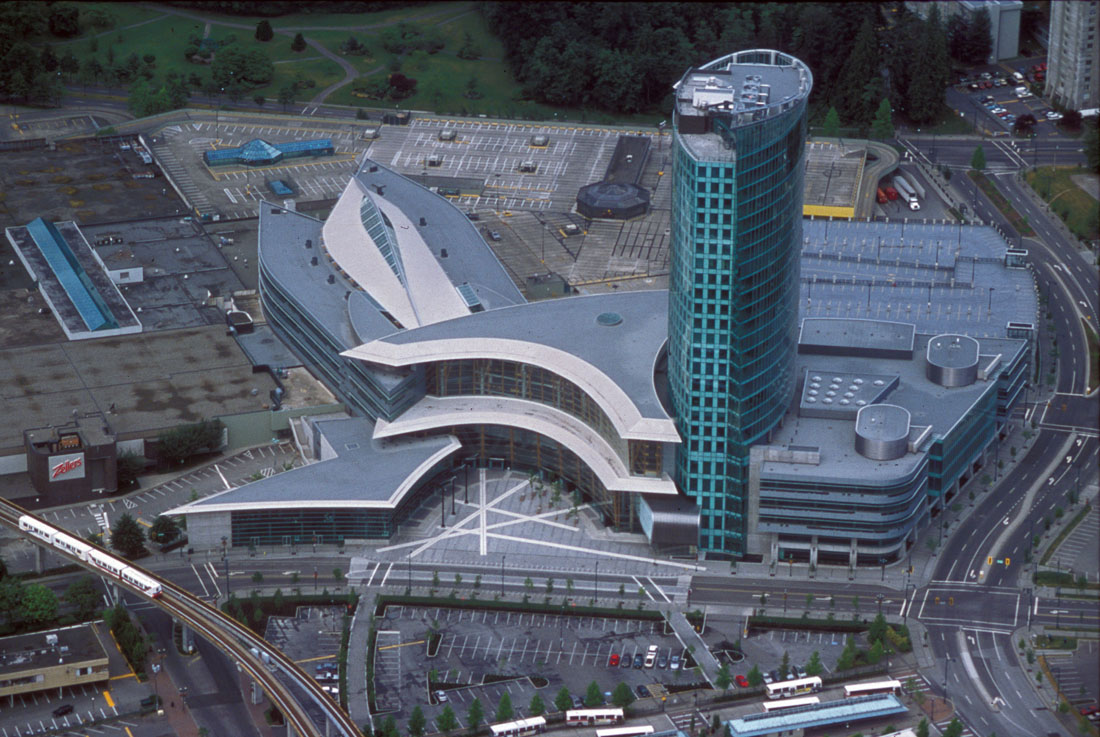
If the goal of the new light rail line is to serve customer needs and offer the ability to provide an attractive alternative to the car, it must serve a multitude of destinations. Those presently planning for LRT doAi??not much expertise and tend to treat the mode as a poor manai??i??s SkyTrain. Building LRT as an extension of the SkyTrain light-metro system will fail to meet expectations as LRT will not be designed to its best advantage. It is not ai???rocket scienceai??i?? to design a transit line to be an attractive alternative to the car and the following plan may prove useful.
The Light Rail Line
The 23 kilometer Whalley ai??i?? King George ai??i?? Rail for the Valley ai??i?? White Rock line (WKW Line for short) may be just the trick in laying a foundation for an attractive light rail system in Surrey. The light rail would be a classic LRT, operating on a ai???reserved rights-of-way’ (RoW) in the median of the roads involved.
The route of the WKW Line would start at Gateway SkyTrain station at 108th Ave & 134th St. and continue a short distance east (500 m) to the King George Highway, From the KGV Hwy and 108th St, the KWK Line would travel South (7.5 km) to the Southern RR of BC (formerly the BC Hydro R.R.), running in the median of the KGV highway. This portion of the route would service the Central City shopping district; Surrey Memorial Hospital; Queen Elizabeth Secondary School; Bear Creek Park; and the Newton shopping district.
The WKW Line would then network south-east along the former BCE interurban and proposed Valley Rail Vancouver to Chilliwack TramTrain route to 152nd (4 km). Traveling mainly through industrial lands, which would provide the ideal location for the Light Rail storage and maintenance yards. The 4 km. of track involved would be double tracked and adequately signaled for safe freight/Interurban/tram operation.
There is the possibility of futureAi??joint operation with the RftV/Leewood interurban, enabling South Surrey and White Rock transit customer’s to continue on the Scott Station or even into downtown Vancouver, if the ai???full buildai??? RftV/Leewood Interurban project is built.
From 152nd Street, the KWK Line would go straight south to White Rock (11 km) crossing the Nicomakle /Serpentine River valley basin. Along here the line must be raised above flood plain and three new bridges across the Superport Railway Line, and the Serpentine and Nicomakle rivers must be built. It is this portion of line that will be the most expensive.
Rising out of the small river valley the KWK Line would continue south along 152nd Ave., terminating in downtown White Rock.
Map of South Surrey & the City of White Rock

In the summer, the light rail line would bring congestion relief to White Rock by providing a quality transit alternative for the many thousands of people who come in cars to the popular beaches. Also close to the KWK Line is the South Surrey Athletic fields, which many fields and arenas are constantly busy with hockey, baseball, soccer, rugby, and football games, twelve months of the year. The KWK Line would also provide an excellent transportation access for the burgeoning housing estates in South Surrey and White Rock.
The Cost
The the total cost of the KWK Line, including bridges and/or viaducts should cost no more than $690 million, based on an average of $30 million/km to build. The high cost of major engineering in the Nicomakle/Serpentine valley, would be mitigated by simple on-street construction on 152nd and the King George Highway and track sharing for 4 km on the Southern Railway of BC Line bisecting Surrey .
It is interesting to note that the total cost for the 98 km RftV/Leewood Chilliwack to Scott Road Interurban using Diesel LRT and the 23 km KWK Line would be under $1.2 billion or put another way we could build 121 km of modern LRT lines in the Fraser Valley for $200 million cheaper than the 11 km Evergreen Line!
Unlike present light rail planning, where development is encouraged to take place along a LRT/SkyTrain route, the KWK Line can pass through sensitive agriculture and ecological areas, without the need to densify along its entire route. By building the KWK Line a potential capacity of 20,000 persons per hour per direction is available to handle future passenger loads, yet still can be built much cheaper than its Skytrain/light-metro competitors. The cost for a SkyTrain along the KWK Line? About $2.3 billion at a conservative cost of $100 million per km to build!
A modern LRT Line in Madrid, Spain ai??i?? A template for the WKW Line?

The WKW Line will provide a high capacity light rail line with a potential of carrying over 20,000 persons per hour per direction, without increasing road space. Using low-floor trams, with convenient stops, ensures an obstacle free journey for all transit customers, including the mobility impaired, without the need of expensive stations and equally expensive to maintain elevators and escalators.
The KWK Line can provide traffic calming where needed, yet still supply ample capacity for future transit needs. By providing a regular and efficient transit service from White Rock to Surrey Central and servicing many destinations along its route, would attract ample ridership, including the all important motorist from the car, to the new light rail line. The KWK Line would also easily integrate with the RftV TramTrain interurban service from Vancouver to Chilliwack and could provide in the not too distant future a direct White Rock to Vancouver TramTrain service, faster than the present bus and Canada line service.
The WKW Line would bring 21st century transit solutions to Surrey, transit solutions that are too long overdo.
A Poll That TransLink Wishes To Suppress
Reprinted from May 2010
A very strange thing happened yesterday with ‘Zwei’. When I was discussing a transit matter with an US transit type about the RAV/Canada line. He told me that TransLink officials claimed that over 80% of Vancouverites supported RAV and if it were not for the high costs of the metro, many more metro type transit systems would have been built in the USA.
I replied that “Well no; TransLink likes to claim 80% support, but their polling results are questionable.”
I have dug up the following 2004 contrary poll from Robbins Research and emailed it to him and I thought it should be posted on RFV as well. What is interesting is that there is such a wide gap between this poll and TransLink’s claims.
With the Broadway Follies now in full swing, it must be remembered that what TransLink claims, isn’t necessarily true and that we should treat what TransLinkAi?? or Vancouver City bureaucrats claim about public support for SkyTrain, the RAV/Canada Line and the upcoming,Ai?? SkyTrain Broadway ‘Rapid Transit’ Line as we would treat a Nigerian Email.
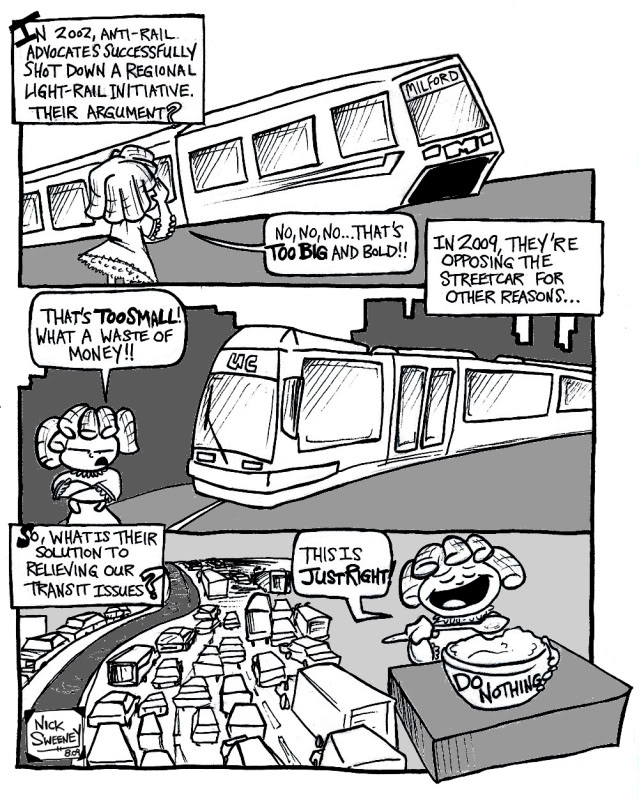
- What the SkyTrain lobby really wants.
From Robbins Sce Research
http://www.robbinssceresearch.com/
| A random sample of 405 Vancouverites on May 14, 2004, It features a margin or error of 4.2%, 18 times out of 20, @97% competency. |
| Question #1Recently, the Board of Directors of Translink voted down RAV, with the opposing votes claiming that it was too costly, and that it may ultimately overburden taxpayers. Do you agree with THIS opposition to RAV? |
| Yes | 72.6 % | |
| No | 27.4 % |
| Question #2Would you regularly use light rapid transit between Vancouver-Richmond and/or the Vancouver Airport? |
| Yes | 35.3% | |
| No | 64.7% |
| Question #3How likely would you be to EVER use a light rapid transit means of transportation between Vancouver/Richmond and/or the Vancouver Airport? |
| Very Likely | 33.6% | |
| Likely | 10.7% | |
| Not very likely at all | 55.8% |
| Question #4The Vancouver Board of Trade, The BC Business Council, Premier Gordon Campbell, and Transportation Minister Kevin Falcon are all demanding that the Translink Board reconsider their vote on RAV. Mayor Larry Campbell voted for RAV, Vancouver City Councilors David Cadman and Raymond Louie voted against the proposed RAV. Whose position do you agree with? |
| Vancouver Mayor Larry Campbell | 31.4% | |
| Vancouver Councilors David Cadman and Raymond Louie | 68.7% |
| Question #5In your opinion, what direction should Translink now take with respect to light rapid transit between Vancouver-Richmond and the Vancouver Airport? |
| Scrap the whole concept, we don’t really need it and its all too expensive | 14.9% | |
| We should construct light rapid transit between Vancouver Richmond and the Airport for under 1 billion dollars with NO cost overruns to be born by the taxpayer | 81.8% | |
| We should construct the original RAV line for between 1.5 billion and 2 billion dollars just as was planned | 3.5% |
Commentary |
| Commentary-No matter how you choose to look at the light rapid transit issue between Vancouver Richmond and the Airport, it is clear that the original E?Cadillac” RAV must be kept off the table for ever. Its too expensive, and taxpayers do not want to be exposed to additional taxes owing to cost overruns. |
| It is obvious there is a need to light rapid transit to the airport; however it remains interesting how many respondents who said they would use RAV want to know what they would do with their luggage. This is the same question which was raised by Airport workers in a previous poll of Richmond residents. |
| Media coverage of last weeks loss on the RAV vote, including Surrey Mayor and Translink Chair Doug McCallum, Vancouver Board of Trade and BC Business Council representatives, Rezac and Lampert, Premier Gordon Campbell and Transportation Minister Kevin Falcon, complaining about the outcome is becoming very offensive to right thinking British Columbians. It is abundantly clear that these individuals are not thinking in the interests of the citizens they purport to represent, or in the case of the two special interest representatives, ANY voting citizens. |
| Why do the media persist in speaking to special interest groups on subjects that those groups or organizations have no democratic interest in? I put the same criticism on the Canadian Taxpayers Association debating with H.E.U. members. This RAV debate if not modified to a dialogue that makes sense to the voter, and the consumer, runs the risk of further turning this province into a political Ozark. Mr. Falcon’s comments that 80% of the public want RAV are dishonest.http://www.robbinssceresearch.com/polls/poll_71.html |
The Fruit of the Poisonous Tree
This post, first appeared in 2010, yet the very same problems exist withAi??Trans Link today.
In the Vancouver regional area, change happens at a glacial pace.
The Fruit of the Poisonous Tree ai??i?? TransLink’s Regional Transit Planning
Posted by zweisystem on Wednesday, October 13, 2010 – reprinted May 30, 2012

Fruit of the poisonous tree is a legal metaphor in the United States used to describe evidence that is obtained illegally.The logic of the terminology is that if the source of the evidence (the ai???treeai???) is tainted, then anything gained from it (the ai???fruitai???) is as well.
TransLinkai??i??s planning officials still maintain that modern light Rail has a limited capacity of about 10,000 persons per hour per direction and refuse to entertain the fact that they are wrong. All of TransLink planning, including the RAV/Canada Line, theAi?? Evergreen line, the Broadway/UBC rapid transit line, and Fraser Valley transportation have assumed LRTai??i??s seemingly inferior capacity and despite the fact that modern LRT can carry in excess of 20,000 pphpd, have portrayed LRT as a poormanai??i??s SkyTrain.
The assumption that light rail has only a capacity of 10,000 pphpd is wrong.
The Light Rail Transit Association [ www.lrta.org ], which can trace its history back 63 years, which has continually campaigned for affordable and efficient public transit, defines light rail transit as:
ai???a steel wheel on steel rail transit mode, that can deal economically with traffic flows of between 2,000 and 20,000 passengers per hour per direction, thus effectively bridging the gap between the maximum flow that can be dealt with using buses and the minimum that justifies a metro.ai???
The following study from the LRTA, shows that even in 1986, it was generally understood that modern LRT could carry 20,000 pphpd.
http://railforthevalley.wordpress.com/2010/05/20/the-1986-lrta-study-bus-lrt-metro-comparison/
More recently, (2006) Calgary Transit LRT Technical Data page claims that the maximum theoretical capacity of the C-Train is 30,700 pphpd!
Maximum THEORETICAL single direction capacity (pass./hr/dir) at 256 pass./car and 2 min. headway:
3-car train 23,040
4-car train 30,720http://www.calgarytransit.com/html/technical_information.html
If TransLinkai??i??s basic assumption about light rail (including streetcar) is wrong, then TransLinkai??i??s entire planning history, regarding bus, LRT, and SkyTrain is wrong and is not worth the paper it is printed on. Yet TransLink, without any public scrutiny and very little political oversight, continues to plan for hugely expensive SkyTrain light-metro projects, which supposed support for, has been heavily biased by questionable studies andAi?? even more questionable tactics ai??i?? all fruit from the poisonous tree!
Noted American transportation expert Gerald Fox, summed up his observations on the TransLink business case for the Evergreen line;
ai???It is interesting how TransLink has used this cunning method of manipulating analysis to justify SkyTrain in corridor after corridor, and has thus succeeded in keeping its proprietary rail system expanding.ai???
Has TransLinkai??i??s regional transit planning over the past ten years nothing more than ai???Fruit of the poisonous tree?ai???, based on the fact that TransLinkai??i??s bureaucrats desired that light rail (LRT) be seen inferior to SkyTrain, on paper, to ensure further planning and building of their cherished light metro system?
Rail for the Valley would welcome TransLinkai??i??s clarification on this issue!
Eric Chris Responds to the SkyTrain Lobby
Eric Chris also respondsAi??to Mr. Cruz’s letter to the Langley Advance.

Lies becoming believable
Langley AdvanceMayAi?? 29, 2012
Dear Editor,
The unbelievable posting [SkyTrain boosting profits, May 24 Letters,Ai?? www.langleyadvance.com] from SkyTrain for Surrey, the friends of TransLink, leftAi?? me disgusted.
Profits for SkyTrain are better than ever, say friends of TransLink, which isAi?? decimated financially and in ruins from spending on SkyTrain.
Friends of TransLink are contradicting the findings of the efficiency reviewAi?? of TransLink by Shirocca Consulting in March 2012.
Have you taken a look at the efficiency review of TransLink by ShiroccaAi?? Consulting? According to Shirocca Consulting, TransLink is the worst performingAi?? transit organization compared in Canada and has disappointing ridership inAi?? relation to other transit organizations in Canada. Moreover, TransLink has theAi?? highest transit fares of all transit organizations compared in Canada.Ai?? SkyTrainAi?? debt by TransLink is such a money drain that TransLink is raising fares by 10%Ai?? as soon as it can despite transit users already paying the highest fares inAi?? Canada.
An inordinate number of transit buses are tied up shuttling passengers to andAi?? from distantly spaced SkyTrain and B-Line stops.Ai?? As a result, there aren’tAi?? enough transit buses to go around in Metro Vancouver.Ai?? This has made transitAi?? service inadequate in Vancouver, Delta, Surrey… Langley.Ai?? Moreover, frequentAi?? transit service in Vancouver means fewer buses for Delta, Surrey… Langley.Ai??Ai?? Too much frequent and late night transit service in Vancouver also results inAi?? many empty buses and increased pollution.
TransLink CEO, Ian Jarvis is steering transit into an abyss with moreAi?? SkyTrain and diesel bus rapid transit (express 99 B-Line, in particular).Ai?? YouAi?? can’t operate an efficient transit organization and take cars off the roads withAi?? SkyTrains and B-Lines which have their stops located 30 minutes apart by foot.Ai??Ai?? Elevated transit (SkyTrain) with distantly spaced stops and express B-LineAi?? service with limited stops are barriers to transit use.Ai?? People prefer not toAi?? transfer from local buses onto regional B-LineAi?? and regional SkyTrain.
Unless you happen to live next to a SkyTrain or B-Line stop (few do), theAi?? overall commuting time is longer on SkyTrain or B-Line transit with the extraAi?? local bus transfer than on LRT, trolley bus transit or streetcar transit withAi?? closely spaced stops to make walking to the transit stop possible.Ai?? You are lessAi?? likely to use transit with SkyTrain or B-Line service than to use transit withAi?? LRT , trolley bus or streetcar service.
The net prevent value cost of SkyTrain is three to five times more than theAi?? net present value cost of at grade LRT when all costs are considered – and notAi?? just the costs considered and reported by TransLink.Ai?? In net present valueAi?? dollars with all costs considered (maintenance, interest, supporting buses_Ai?? control room operators), it costs $100 million per kilometre for LRT and $300Ai?? million to $500 million per kilometre for SkyTrain.Ai?? Inept accounts andAi?? economists at TransLink are not design engineers and do not understand the totalAi?? cost of SkyTrain or are lying to under report the ultimate net present valueAi?? cost of SkyTrain – $5.5 billion or more for the 11 kilometre SkyTrain line toAi?? Coquitlam.
This is the reason for the ongoing financial distress of TransLink -Ai?? TransLink is not reporting the true net present value cost of SkyTrain.Ai??Ai?? Reported SkyTrain costs by TransLink do not include ancillary costs such as allAi?? the diesel buses and drivers necessary to shuttle passengers to the SkyTrainAi?? stations.Ai?? City of Edmonton transportation engineers who are competent andAi?? honest do not consider SkyTrain to be the best choice for transit and preferAi?? LRT.
TransLink is the self-proclaimed greatest transit organization in CanadaAi?? despite being the lousiest in the opinion of most experts who are knowledgeableAi?? about transit.Ai?? How can the accountants and economists at TransLink be rightAi?? about SkyTrain and all the engineers who run transit in the rest of Canada beAi?? wrong?Ai?? Who is more competent and believable, an accountant or economist whoAi?? doesn’t understand how things work or an engineer with 12 calculus courses toAi?? his or her credit?
I do have one question – TransLink has shunned the results of the efficiencyAi?? review by Shirocca Consulting in March 2012 and has been creating distractionsAi?? in the media (fare evasion and transit police costs) to focus attention awayAi?? from TransLink being such a miserable failure.Ai?? Any thoughts on the reason forAi?? this?
I suspect the following – transit by TransLink is a sordid affair.Ai?? Possibly,Ai?? developers with ties to organized crime are using SkyTrain as a tool to tearAi?? down homes for the developers to build condos with laundered drug money.Ai??Ai?? Perhaps, politicians who are supporting TransLink (Mayor Peter Fassbender ofAi?? Langley City, for instance) in the media are either corrupt or dumb.
If you repeat the lie of SkyTrain by TransLink being more economical andAi?? having more ridership than LRT, trolley bus transit or streetcar transit, soonerAi?? or later people start to believe it.
TransLink is one huge sham.
Rail for the Valley Rsponds to the SkyTrain Lobby
Malcolm Johnston, from Rail for the Valley responds to Mr. Cruz’s pro-SkyTrain letter from last week.
Transportation: LRT beats SkyTrain, hands down
Langley AdvanceMayAi?? 29, 2012Dear Editor,
I read in absolute amazement a letter full of invented and twisted facts by aAi?? Mr. Cruz, supporting SkyTrain [SkyTrain boosting profits, May 24 Letters,Ai?? www.langleyadvance.com]. I shouldn’t be surprised, as it is typical SkyTrainAi?? lobby bumf.
The letter was so full of hype and hoopla about SkyTrain that it is hard toAi?? know where to begin, except to point out that modern LRT made SkyTrain obsoleteAi?? two decades ago, and no one buys SkyTrain anymore, due to its extremely highAi?? construction and operating costs.
Only seven SkyTrain type systems have been built, under three marketingAi?? names, Intermediate Capacity Transit System (ICTS), Advanced Light Rail TransitAi?? (ALRT), and now Advanced Rapid Transit (ART).
During the same period almost 150 new LRT systems have been built.
To claim that LRT has higher maintenance and operation costs has noAi?? foundation, and the opposite is true, SkyTrain costs much more to maintain andAi?? operate than LRT.
Instead of drivers, SkyTrain has attendants – more than 250 of them at lastAi?? count.
The SkyTrain cars also cost more to maintain than modern LRV’s. Again, no oneAi?? buys SkyTrain anymore.
To compare SkyTrain with Portland’s LRT shows Mr. Cruz’s extreme bias.Ai?? Portland’s 84 km. MAX LRT with 85 stations, now carries more than 128,000 ridersAi?? daily, less ridership than SkyTrain, due to the different demographics of theAi?? city, and not transit mode.
MAX’s lower commercial speed of 34.1 km/h can be attributed to on-streetAi?? (streetcar) operation through Portland’s downtown, but on portions of line,Ai?? speeds of 90 km/h are permissible.
The lower frequencies for MAX are for off-peak services, and if demandAi?? warrants, more trains can be operated, as in peak-hour service.
In Europe, LRT 30-second headways during peak hours are not uncommon.
It should be remembered that Portland’s transit authorities rejected SkyTrainAi?? and opted to build with LRT because SkyTrain was too expensive to build andAi?? operate.
SkyTrain was designed to replace LRT, but was made obsolete by LRT due toAi?? LRT’s inherent flexibility as it can operate as a simple streetcar, aAi?? light-metro like SkyTrain, and a passenger train, and combine all modes on oneAi?? route.
Mr. Cruz should answer this one question: “After being on the market for overAi?? 33 years and during an era in unprecedented growth of urban transit systems,Ai?? only seven SkyTrain type systems have been built: why?”
The answer is simple, and TransLink is now facing the consequences ofAi?? building SkyTrain, as its huge cost of construction and much higher maintenanceAi?? and operation costs are now beggaring the transit authority.
Malcolm Johnston, Rail for the Valley
Is it time to bring back the streetcar to Vancouver?
Both Stephen Rees http://stephenrees.wordpress.com/2012/04/11/is-it-time-to-bring-back-the-streetcar-to-vancouver/
and Voony http://voony.wordpress.com/2012/04/16/is-it-time-to-bring-back-the-streetcar-to-vancouver/Ai??
The motion has been launchedAi??by Vancouver-based online consultation platform PlaceSpeak https://www.placespeak.com/topic/399/streetcar-city-2050/
Vancouver is currently exploring the use of streetcars as a key element of our transition to more sustainable transportation modes. But if streetcars are to be reintroduced in todayai??i??s economic climate it is important that they are planned in a thoughtful, evidence-based manner that includes public input. With this in mind, PlaceSpeak teamed up with Patrick Condon at the University of British Columbia (UBC) to gauge the publicai??i??s interest in restoring streetcarsai??i??and associated amenitiesai??i??to our city.
Historically, Vancouver began as a streetcar city with electric trams connecting neighbourhoods and the downtown core. By the 1920s, however, the introduction of the car proved so powerful that they quickly became the preferred mode of transportation. In fact, Vancouverai??i??s original streetcar grid left such a strong imprint that many arterial streets continue to thrive. Indeed, if you ask a resident where the heart of their neighbourhood is, they will likely name the former streetcar street at its center.
In recent years, B.C. citizens have been struggling to decrease the amount of carbon dioxide we put into the air. In our province transportation produces more GHG than any other sector, and the bulk of that comes from the ordinary activity of residents travelling through the city each day.
In Vancouver, we have also been figuring out how to incorporate ai???livable densityai??i?? as we plan a sustainable, affordable, and livable future for our residents. Streetcars may be able to help with both. According to Condon, one part of the solution may be returning to our ai???routesai??i?? and reintroducing streetcars to Vancouver:
Vancouver is slowly on track to meet our 2050 goals for reducing GHGs. We walk more, bike more, use transit more, and our cars less and less. But to make the next big leap requires us to think now about electrifying the transit system. It wonai??i??t help if we all use buses if those buses belch diesel fumes. Streetcars are one solution; and for many streets the cheapest one available. Our city grew with the streetcar. It might grow more sustainable with it again.

ai???Density without transit is just denseai???, says PlaceSpeak CEO Colleen Hardwick:
For Vancouver to meet its environmental goals while accommodating forecasted population growth it is crucial that we diversify our transit options. Streetcars are the missing link in our transportation infrastructure.ai???

Surface LRT will “corrupt” rail system
In a letter to the Langley Advance, a spokesman for “SkyTrain for Surrey” says adding surface light rail to the Vancouver area rail transit system will “corrupt” the efficiency and cost recovery of the existing rapid transit system:
http://www.langleyadvance.com/TransLink+SkyTrain+boosting+profits/6672346/story.html
This is the link to the letter that, Daryl Dela Cruz ofAi??SkyTrain for Surrey objects to:
http://www.langleyadvance.com/TransLink+capital+mistake/6364277/story.html
Isn’t it about time TransLink admitted it has backed the wrong horse?
In 1986 when the first section of track was opened on Terminal (how fitting) Avenue for Expo 86, experts predicted a day would come that the SkyTrain system would never pay for itself.
Twenty-six years later TransLink is still trying to break even.
The quandary TransLink is in is obvious: raise fares to the amount necessary to recoup operating and capital costs through “user-pay,” and ridership will drop off dramatically and may, in fact, generate even less revenue.
This means the business/financial model used to justify adoption of the SkyTrain system was faulty out of the gate. Someone did a snow job on the people of Vancouver.
TransLink realizes it, and that is why it is trying every trick in the book to suck money out of Lower Mainland residents to try to make SkyTrain pay.
The truth is, it will never pay for itself. TransLink has admitted as much in its statement that, just to keep the system operating, never mind the Evergreen line costs, it needs to raise another $30 million.
It’s time to do what other cities in the world have done: abandon SkyTrain and move to surface transportation.
The Fraser Valley has a viable rail system for commuter traffic, not only to Vancouver but to other communities in the valley and all the way to the coast.
Super buses can be a part of the new transportation system, electrifying as much as possible and moving away from gas and diesel engines.
Decentralizing transfer points (they don’t have to feed SkyTrain anymore) so they spread the traffic, rather than concentrate it, will lead to increased ridership and decreased pollution.
Then TransLink can stop squeezing blood out of the stones that are already crumbling under the strain of added levies and taxes.
It’s time for someone at TransLink to have the stones to stand up and admit SkyTrain is a loser.

The Emperor has no Clothes and no Transit – First published in March 2011
Zwei has decided to reprint this post from March of last year.
In the ensuing year nothing has changed; the same oldAi??tired cast of characters trundling out the same old tired transit plans,Ai??desperately tryingAi??to convinceAi??the ever increasingly skeptical taxpayerAi??to ante up more and more tax money to fund transit improvements that everyone knows will fail to deliver what is promised.
The regional mayors, act as a collectiveAi??”ship of fools” pretending they want better transit, when most secretly want miles and miles of new blacktop in their municipalities so their political friends can develope ever diminishing ALR lands. The mainstream media,Ai?? desperate to retain advertising revenue form those in power and those who wield power, have acquiredAi??collective amnesia regarding transit and transit news and print, what they are told to print.
Herr Goebbels would be soAi??pleased.
The region has no transit plan and no transit.
The Emperor has no Clothes and no Transit
Posted by Cardinal Fang on Sunday, March 27, 2011
Vancouver is at first glance a beautiful city. It is surrounded by sweeping vistas and a dramatic skyline.
The climate is moderate but spend some time here and scratch the surface and it becomes far less attractive. It is a city that is divided politically; it is parochial, narrow minded and shallow. The people are characterless, flaky and disingenuous. Vancouver is the scam capital of North America, a skill set for which the local population is particularly adept.
There are times when I am certain that Vancouver is something straight out of Conrad’s Heart of Darkness.
It is a cold place, people in the same business do not interact of share information they do not network or help each other. There is an almost a Darwinian or Hobbesian social culture ai??i?? Vancouver is an empty void.
The political environment is polarized and doctrinaire. The left adheres to ideas that are at least a generation out of date. Vancouverites think that Naomi Klein is an intellectual when in reality she is a very silly charlatan. To Vancouverites the secret is a serious work of self help. The right is equally foolish in the banality of their free market ideology.
You don’t meet people of substance here. You meet flakes. The press is dominated by yellow journalism. Rarely if ever have I read a real piece of investigative journalism. You do not meet people who form their opinions based upon facts. When you encounter Vancouverites and engage them in the discussion of social issues the argument usually become circular and they end of talking only about themselves. There is a kind of deep insecurity that comes from profound feeling of self loathing that is hard wired into the political culture here. Narcissism is the dominate religion and worshipping at the Temple of Mammon ai??i?? real estate speculation is the Holy Grail.
People here (generally speaking of course) are stuck up, materialistic yuppies. The downtown scene used to have decent variety, now it’s full of “cookie-cutter” clubs and bars that cater to Armani clones.
Go east of here, or especially south of here, and you’ll find friendlier people that aren’t so consumed with cliques and materialism. If one hails from Harare, Timbuktu, Tripoli, or Darfur then yes, Vancouver appears pretty good, but “the most liveable city on Earth”?Not only is this pretentious, it’s just plain wrong.
No where is the contrast more apparent, than in Coquitlam and Port Moody; cities like Surrey, Delta and Langley, South of the Fraser River and east along the Valley to Abbotsford and Chilliwack.
Politicians, planners, decision makers, wealthy Vancouver suburbanites and the `movers & shakersai??i?? contemptuously dismiss the communities beyond downtown as the boondocks; the disdain for the citizens of the Greater Vancouver Regional District and the Fraser Valley is illustrated in the attitude of the Ministry of Transportation and Infrastructure, BC Transit and TransLink, to public transport in these areas.
The Emperor has no Clothes and no Transit.
In December 2010;
the FRASER VALLEY TRANSIT STUDY http://www.th.gov.bc.ca/FraserValleyTransit/publications.htm
was released and condemned the communities of the Fraser Valley Regional District to a life of perpetuity with no more than a second-rate bus service as an alternative to the private car.
The Rail for the Valley movement has long campaigned against this inequity:
Whereai??i??s The Transit?
http://www.railforthevalley.com/latest-news/zweisystem/wheres-the-transit/
Transit Planning In Metro Vancouver ai??i?? Where Have We Gone Wrong?
Added costs for the Canada Line ai??i?? Has The Taxpayer Assumed Risk?
The truth is now beginning to be realised by the wider community; The Globe & Mail published the two following articles on March 25 & 26th.
Transit a hit-and-miss affair in B.C.ai??i??s Lower Mainland
Transit problems across Canada prompt calls for politicians to address issue
We can only hope that the National Election called on the 2nd May and the end to the ten years of ineptitude, inequality, corruption & nepotism in Gordon Campbell’s BC Liberal administration will improve the outlook; we can but hope and wish.
One should have some basis for comparison before showering such hyperbole on the overpriced, congested, and conceited squalor that is the most liveable city in the world. If any city (or province) is presumptuous enough to put “the best place on Earth” on its license plates; it’d better well be the case, because it’s citizens don’t uphold the credibility.
Vancouver is a poor-man’s version of Seattle that, ironically, costs five times at much. Unlike Seattle, however, Vancouver has a dearth of friendly (and English-speaking) people, good music, and reasonably-priced beer. The self-satisfied smugness Vancouverites have toward their neighbour city to the south (or any metropolis, for that matter) stems from an amalgamation of an inferiority complex coupled with an identity crisis. Canada is like the U.S. in every way, except not quite as good. Nowhere is this exemplified more than in Vancouver.





Recent Comments