Posted by zweisystem on April 15, 2012 · 1 Comment

More unhappy news for TransLink……….
Bad run for TransLink as disasters pile up
By Michael Smyth, The ProvinceApril 13, 2012
http://www.theprovince.com/story_print.html?id=6452292&sponsor=
I doubt the folks at TransLink are worried about the ominous date on the calendar today.
Metro Vancouver’s transit authority has had such a lousy run of late that Friday the 13th could hardly bring any worse news.
TransLink’s losing streak started shortly after April Fool’s Day, when Metro drivers were hit with a new two-cents-a-litre gas tax to pay for SkyTrain’s new Evergreen Line extension.
As drivers grumbled, news broke that eight senior TransLink executives and CEO Ian Jarvis were in line for hefty performance bonuses.
For people responsible for making the trains run on schedule, you’d think they’d have a better sense of timing.
“Inappropriate,” said Transportation Minister Blair Lekstrom, while Premier Christy Clark opined: “They shouldn’t be getting bonuses.”
The fact that the “outraged” politicians claimed to be powerless to stop the executive booty haul just made the public angrier.
Then, after a too-short Easter reprieve, TransLink’s week-from-hell really kicked into high gear.
Lekstrom got things rolling by rejecting TransLink’s request for a vehicle levy to make up a $30-million budget shortfall. He said no to a new carbon tax and toll booths, too.
Then transit commissioner Martin Crilly piled on by rejecting TransLink’s request for a 12.5-per-cent fare hike.
Crilly’s hit was particularly harsh because he threw in a brutal report slamming TransLink for waste and inefficiency. He called on the transit authority to find millions in internal savings.
By the time Thursday rolled around, the embattled TransLink CEO had still not officially responded to Crilly’s report. “He’s still reading it,” came the official word.
Maybe he’s a slow reader. Or maybe he was just hiding out, while the hits just kept on coming.
Up next: An internal security memo, obtained by CKNW reporter Janet Brown, that said SkyTrain police had an eight-a-day quota for writing fare-evasion tickets to transit freeloaders.
Now, I wouldn’t mind a ticket quota so much ai??i?? if TransLink actually collected the fines! It was revealed earlier there was no system to enforce “penalties” imposed by transit cops.
The cherry on top: A SkyTrain “switching problem” that snarled service for morning commuters, who could only do a slow burn because there was not a TransLink official in sight to explain what was happening.
Free advice to Christy Clark: It’s time to blow up TransLink and start over from scratch.
twitter.com/MikeSmythNews
msmyth@theprovince.com
………and when the mainstream media starts reporting the silliness that has become TransLink, the bad news will keep coming in droves.
Posted by zweisystem on April 15, 2012 · 5 Comments
A hint of the shape of things to come.
TransLink is imploding under its weight of inefficiencies and there is more to come; $30 million must be carved from the TransLink budget to cover the loss of the denied fare increases. Zwei has a few hints where these cuts could come from.
- Get rid of the highly paid spokespersons for TransLink, as they are merely professional windbags, who know little or nothing of transit issues and are there merely to put a ‘happy face’ on transit announcements.
- Get rid of the TransLink Board of Experts, as they are experts in doing as little as possible, except increasing their annual stipends.
- Get rid of Translink’s planning department and contract out planning, as the current highly paid regime do little, but provide reams and reams of paper outlining extremely dated material, mostly how to extract more money from the taxpayers.
- Rationalize bus service and bring it up to European standards with minimum bus stop distances. TransLink could reduce the number of bus stops by 50%, improve service and increase headways (capacity), without increasing costs.
- Abandon the Evergreen Line as there is no evidence that SkyTrain has actually attracted the motorist from the car in such numbers that would justify a $1.4 billion light metro.
- Use LRT/streetcar instead of SkyTrain/light-metro for future ‘rail’ transit planning.
- Abandon the new head office being built in New West Minster and instead radically reduce TransLink’s bureaucracy.
Radical change must happen at TransLink as the ponderous bureaucracy, has done little to improve transit, while at the same time done much to improve their personal incomes.

Rapid Bus and B-Line in question south of the Fraser
With funding for transit expansions still being worked out, new bus services could be in limbo
Dave WhiteApr 13, 2012
SURREY (NEWS1130) – It could be a huge blow for Surrey, desperate for new buses. New transit options meant to make your commute south of the Fraser easier later this year could be in jeopardy because of
TransLink‘s financial woes.Major projects all included in
TransLink’s 2012 plan may be delayed or cancelled, like Rapid Bus over the
New Port Mann Bridgeand B-Line service for King George Boulevard and 104 Avenue.We spoke with Paul Hillsdon, who writes for
Civic Surrey.Ai?? He says transit users are caught in a political back and forth game, as mayors, the province, and
TransLink’s commissionerhave differing opinions on where new money is going to come from.”It was supposed to be a property tax, the mayors don’t want a property tax.Ai?? The province says no to a vehicle levy, no to tolls, no to gas tax, and the Commissioner says, essentially, $50-million is going to have to be found through an audit,” Hillsdon points out.
Hillsdon fears folks south of the Fraser are going to be neglected again when it comes to transit expansion.
“The service I’m most concerned about is the King George B-Line,” Hillsdon says.Ai?? “It has been in the plans for over 20 years now.Ai?? We thought it was coming after the Olympics when the buses from the 98 B-Line in Richmond were supposed to be rerouted to Surrey, that didn’t happen.”
“Of course this whole fiasco is disproportionately affecting those of us who need that transit infrastructure in Surrey.Ai?? We don’t have that backbone that Vancouver does, and it takes investments to build that,” Hillsdon adds.
Surrey Mayor Dianne Watts is out of the country at a conference, but City Councillor Marvin Hunt tells News1130 the ordeal is incredibly frustrating.
“We’re stuck until TransLink can figure out the implications of everything that’s been thrown at it in the last couple of days,” Hunt says.Ai?? “It’s extremely frustrating because ultimately, we don’t have a complete transit system on our side of the river.”
He says BC’s second largest city should not have so much trouble getting more buses when 70 per cent of the region’s growth is expected in the area.
Hunt feels the province should not have stepped in to play politics with transit, and should let Mayors and TransLink bring in money how they see fit.
TransLink needs to come up with $30-million annually to pay for new projects and expansion of the system. Mayors had approved options for funding including a vehicle levy earlier this year, but Premier Christy Clark pledged money would be found through an audit of the organization.
Hunt says there’s no timeline on that audit, which means it’s not clear when or if the new bus routes will come to fruition.
TransLink says it needs more time before it knows exactly what will happen.
“Well in the past few days we received [those] decisions that impact our business,” says spokesman Derek Zabel.Ai?? “The commissioner’s decision to reduce our proposed fare increase and the recent mayor’s council motion to eliminate reliance on property tax to fulfill the moving forward plan.”
“We do need time to review the information and understand what these decisions mean for TransLink, our customers, and the public we serve,” Zabel adds.Ai?? “We will share our process publicly in due course as we go through all of this.”
Posted by zweisystem on April 12, 2012 · Leave a Comment
Common sense at last.
Ever since Gordon Campbell and Kevin Falcon and had a hissy fit over the then TransLink Board (made up of local mayors) rejecting the Canada Line metro due to cost concerns, and gutted public oversight for the ponderous bureaucracy and insteadAi??creatingAi??the so called Board of Experts, TransLink has been, to be polite, dysfunctional.Ai??The new board of Experts turned up to beAi??nothing more than a board of rank amateurs.
The new board’s first action? Yup, you got it, greatly increase their stipends! I guess the new board was expert in feathering their new nest!
TransLink is not just dysfunctional, it has completely isolated itself from the public and public opinion and cares little that it has. TransLink would rather hire very expensive spin doctors, toAi??weave the TransLink story, rather than be truthful with the public. The result: A disastrous public relationship.
What most people do not realize, TransLink could disappear entirely tomorrow and not effect transit operations one iota, because TransLink doesn’t run transit directly,Ai??instead separate bureaucracies operate the bus and metro systems. The planning component of TransLink could be eliminated and private consultants could be hired to plan for regional transit, just like Rail for the Valley did three years ago by engaging Leewood Projects of the UK to plan for a regional passenger rail line utilizing the former BC electric Interurban route.
TransLink has all butAi??ignored the RftV/Leewood Study and now claim they are not interested in any rail study unless 10 minute headways can be achieved, strangely the West coat Express doesn’t maintain 10 minute headways either, but then TransLink rules only apply South of the Fraser it seems.
Not only does TransLink need an overhaul, our entire transit philosophy, so entrenched in the 1960’s, needs an overhaul as well.
In the 21st century, public transit is seen as a product and to be successful with the public the transit ‘product‘ needs to satisfy the needs and wants of the public at an affordable cost. To date, TransLink has been utterlyAi??incapableAi??providingAi??this.
 TheAi??sad ship TransLink has hit the finacial iceberg only the capatain and crew are unaware of it.
TransLink needs ‘complete overhaul’: Mayor
TransLink watchdog rejects 12.5 per cent fare hike, but cash fares may still go up
By Staff Reporter, The Province April 11, 2012
Mayors, pundits and the public agree: Itai??i??s time to rethink TransLink.
TransLink Commissioner Martin Crilly has rejected a proposed 12.5 per cent fare increase for 2013, citing the ai???hardshipai??? caused by fare hikes and the likelihood TransLink could raise the money by running more efficiently.
Crilly, TransLinkai??i??s independent regulator, said TransLink could find $40 to $50 million in cost savings between 2013 and 2015, if it rethinks transportation system costs, logistics and maintenance.
ai???Weai??i??ve reached the point where there has to be a complete rethink of TransLink, its governance and its operation, because this model isnai??i??t working,ai??? said Richmond Mayor Malcolm Brodie.
TransLink has been stymied in its bid to find revenue from other sources, such as a vehicle levy or road tax, nor is the Mayorsai??i?? Council, which once ran TransLink, keen to keep funding TransLink from property tax revenue.
Brodie, who chaired TransLink for two years when it was made up of elected mayors, said the current appointed board ai???operates behind closed doors.
ai???We donai??i??t know what theyai??i??re doing and the remuneration they receive is outrageous,ai??? said Brodie, noting the chair gets more than $100,000 annually.
ai???I think TransLink is in a terrible bind. It needs long term funding sources.
ai???You need a complete overhaul of TransLink, you cannot have it lurching along the track from financial crisis to financial crisis.ai???
Gordon Price, director of the City Program at Simon Fraser University and a former Vancouver councillor, said the public has ai???a love-hate relationship with TransLink.
ai???The conclusion people can fairly draw is that the commissioner is saying to TransLink you donai??i??t need more money, that there is waste, find the efficiencies,ai??? said Price.
ai???This appointed board, and they are all top-drawer people, is supposed to run things more efficiently,ai??? said Price, but TransLink lacks a revenue source.
Yet TransLink runs a transportation system Greater Vancouver can be proud of, said Price, noting that visitors are amazed at the breadth of the system and its efficiencies in a metropolitan area of only two million people.
Public criticisms to the Commission cited TransLinkai??i??s flawed fare zone structure, perceived poor service quality and levels, what was seen as ai???escalating and condoned fare evasionai??? and the unfair scale of fare hikes.
TransLink could go ahead and hike cash fares, as it needs no approval to raise individual fares by two per cent annually.
That means single-zone adult fares could go up to $2.75 from $2.50 in 2013, and three-zone fares likely will go up to $5.50 from $5.
FareSaver booklets will become an even better deal, as Crillyai??i??s ruling ensures the costs of those tickets wonai??i??t change.
TransLink CEO Ian Jarvis said ai???we move more than one million passengers each day through the transportation network.ai??? Jarvis said the Commissioner ai???confirmed we are well-runai??? but has refused the proposed fare increases.
Jarvis said TransLink will proceed with ai???an expeditious auditai??? to try to find the money the fare hikes would have provided.
Ai?? Copyright (c) The Province
Posted by John Buker on April 11, 2012 · Leave a Comment
Hi everyone,
TheAi??Friends of Rail For the Valley SocietyAi??will be holding our Annual General Meeting this April 15.
Where:Ai??University of the Fraser Valley, Abbotsford Campus, Room B121
When:Ai??Sunday April 15, 2:00pm
All are welcome to attend the AGM. Membership in our Society costs just $10 per year.
At the meeting, elections will be held for a new Society President, along with various other positions. This year, I have decided that I must take on only a very limited set of Rail For the Valley related tasks, so it is of theAi??utmost importanceAi??that we organize ourselves accordingly, and also gain new blood for this important movement !
At the AGM, we will hear updates on progress from across the Fraser Valley, including the status of the Fraser Valley Heritage Railway Society’s project, to get Interurbans back on the tracks in Surrey and Cloverdale!
Time permitting, Shaw TV’s Interurban documentary will be shown, at the end.
I plan to attend. I hope you do too.
Posted by zweisystem on April 10, 2012 · 12 Comments
A switching problem may happen on a LRT/streetcar Ai??line but would never cause the chaos that happens whenAi??switch fails on a driverless SkyTrain line. The simple design of an at-grade/on-street tram/light rail switch means it can be operated safely manually if need be.

SkyTrain delays this morning were due to switching problem near Nanaimo station
By Gordon Hoekstra, Vancouver Sun – April 10, 2012
METRO VANCOUVER – SkyTrain is beginning to return to normal after delays of 20 to 30 minutes on SkyTrain’s Expo line this morning because due to a switching problem near Nanaimo station.
TransLink is acknowledging 20 to 30 minute delays east of Broadway station.
“Once you’re past there it’s [OK],” tweets TransLink official.
TransLink suggests that passengers needing the Millennium line transfer at Columbia or Commercial streets.
TransLink is informing passengers delays are being caused by switching problem in Nanaimo-station area.
There are reports that delays are 20 to 30 minutes at some stations.
There are some unhappy transit users.
AML tweeted that she woke up at 6 a.m. to get to school early. “NOPE, skytrain delays. I hate you [Skytrain],” she said.
Vancouver blogger Rebecca Bollwitt reported on twitter from King George station that there are massive delays there, people are angry and there are no TransLink officials anywhere.
Karen Jouhal tweeted that even if you get on a SkyTrain expect the train to be stalled at other stations. “Sitting here in silence, no announcements from [TransLink],” she says.
Not all delayed passengers are angry at TransLink.
Ashley Vaughan tweeted a thanks to TransLink “for keeping us up to date on this morning’s craziness!!”
TransLink has been tweeting updates and advising people how to connect with the Millennium line.
A number of passengers noting that the SkyTrain delay comes just after TransLink has proposed a 12.5 per cent fare increase for 2013.
“Going to be a hard sell for that this morning,” tweeted Wendy Leung.
More to come.
Ai?? Copyright (c) The Vancouver Sun
—————————————————————————————————————
Updated
UPDATE: Track problem fixed; still expect delays on SkyTrain
Service on the Expo Line has been restored
UPDATE:Ai?? SkyTrain Expo Line switch problems have been fixed and service is being restored. Continue to expect delays and crowds.
VANCOUVER (NEWS1130) – Brace yourself for big delays if you plan on taking the SkyTrain this morning.
Expo Line trains are running on a single track between Broadway and Nanaimo because of a switching problem.
“This is really starting to back things up, especially at stations like Broadway and Patterson,” explains TransLink‘s Derek Zabel. “We’re starting to see some pretty big delays especially at some stations in Surrey. Anywhere upwards of 30 minutes people are reported to be waiting for trains.”
“One of the options that people can try is to take the Millennium Line,” adds Zabel. “You’re still going to experience some delays on the Millennium Line, but it may not be as bad. You’re going to have to transfer trains at Commercial Station or over at Columbia Station.”
“I do apologize to those people,” says Zabel. “It certainly hasn’t been a very good commute today. You certainly don’t want these problems to happen during the morning commute, and I know that this can frustrate a lot of people. Hopefully we’ve earned the right to serve them again and get this problem rectified quickly.”
Transit riders at the Broadway Station are not very happy with the delay.
“There’s too many hamsters in a hamster cage. Everyone is going nuts and pushing each other. It’s crazy,” says this rider.
This woman says she’s experienced problems for years. “I’ve been riding this system for almost 15 years since I was a kid, and there’s been problems all the time.”
(Zwei comments: The previous statement is telling and indicates that there are far more problems with TransLink than that they would admit too!)
Zabel says at this time, there is no update on when this problem will be fixed.
Posted by zweisystem on April 10, 2012 · Leave a Comment
What is interesting about this story is that there were only 440 respondents to TransLink’s survey, which is hardly a drop in the bucket compare to the numbers of passengers using the transit system on a daily basis.
Why is this so?
Well two answers come to mind;
- The vast majority of people use the car instead of transit and fare hikes mean little or nothing.
- A large portion of TransLink’s riders have discounted fares already, such as the U-Pass and a general fare hike doesn’t hit the pocket book very hard.
If one legitimately can use concession fares using transit, theAi??fare is still quite reasonable, but where the fare increases will hurt are those paying full fare.
Sadly, one has not much faithAi??with Martin Crilly,Ai??TransLink’sAi??Transit Commissioner, as he has little expertise in public transit and this lack of knowledge in the 1990’s, helped build the Millennium Line, which has distinguished itself by doing relatively little, except lumber the taxpayer with about $1.2 billion and growing, in public debt.
Respondents to the questions tend to ridicule TransLink and its employees illustrating the sad state of affairs within TransLink itself. Sadly, nothing will change because no one really cares about public transit, except when a multi billion dollar metro line is opened, then watch all the political glad handing at ribbon cutting time.
The real issue is TransLink itself, something that TransLink’s over paid bureaucratsAi??will not deal with and the provincial government just hasn’t the politicalAi??courage to make changes to TransLink, especially when it was the provincial Liberals, especially one Kevin Falcon, who made the last round of disastrous changes to TransLink.
The Ship of Fools sails on!
 The Vancouver Sun</div>
</blockquote>
<div style=")
Posted by zweisystem on April 9, 2012 · 1 Comment
METRO VANCOUVER ai??i?? Ridership grew on Metro Vancouverai??i??s public transit system last year, but wavering revenues from TransLinkai??i??s gas tax and lower-than-expected use of the Golden Ears Bridge contributed to the transportation authorityai??i??s deficit, according to its annual report.
In all, TransLink took in $1.2 billion in revenue in 2011 ai??i?? but spent $34 million more than that, requiring it to dip into dwindling reserve funds.
Revenue generated from the gas tax in 2011 ai??i?? a total of $312 million ai??i?? was $12.5 million less than anticipated and $11.4 million less than the amount brought in in 2010.
TransLink attributes the shortfall to a 5.9-per-cent decrease in fuel sales volume last year, brought on by high gas prices. Drivers also likely fuelled up in neighbouring regions, such as the Fraser Valley Regional District and Whatcom County, according to the report.
ai???If the trend continues, the impact of this reduction could be in the magnitude of a $450- to $550-million revenue loss in a 10-year period,ai??? the report stated.
Spokesman Derek Zabel acknowledged the problem is cyclical: ai???At the same time, increase in fuel prices result in increased operational costs. More people turn to transit, putting more pressure on the system. We still have to fuel the buses.ai???
The gas tax, which is applied to gasoline and diesel fuel sales in Metro Vancouver, rose two cents to 17 cents per litre on April 1.
Meanwhile, ridership grew 8.6 per cent in 2011, with a total of about 233 million paid tripsAi??Ai?? during the year. That figure is 18.5 million more than the target goal for the year, according to the report.
Prepaid fares, including FareSavers, monthly passes and day passes, generated $31.3 million above budget and were $10.7 million higher than 2010.
ai???The majority of the positive variance is attributed to higher ridership and higher than expected Fare card sales, which is partly attributed to the delay of post-secondary schools transitioning to U-Pass BC,ai??? the report stated.
Meanwhile, the Golden Ears Bridge continued to generate less revenue than anticipated.
The bridge brought in about $34 million, falling $4 million short of TransLinkai??i??s target. There were 9.8 million crossings over the bridge, while the target was 10.5 million.
ai???Although [the bridge] experienced growth in traffic volumes over 2010, it was not to the level assumed in the budget,ai??? the report stated. ai???Another contributing factor to the lower revenues were the toll discounts provided in April and May for off-peak and weekend travel.ai???
The TransLink Golden Ears Bridge Task Force is working on a number of initiatives to increase revenue and ai???enhance customer convenience,ai??? according to the report. They include a public awareness and education program, market research and real-time web monitoring of traffic conditions on the bridge.
While the transportation authority continues to run a deficit, Zabel said it reduced operating costs by $56 million, shrinking the projected shortfall by $25 million.
ai???As demand grows, expenditures are outpacing that revenue,ai??? he said.
ai???At the current rate, our reserve is scheduled to run out in 2016, so each year that we beat budget, it reduces that cost, meaning the less we have to draw on those reserves.ai???
awoo@vancouversun.com
twitter.com/AndreaWoo
Ai?? Copyright (c) The Vancouver Sun
Posted by zweisystem on April 4, 2012 · 1 Comment
Transportation Minister Blair Lekstrom on Tuesday called a TransLink proposal to award nine of its senior executives hefty performance bonuses ai???inappropriateai??? given the financially-troubled agency is struggling to fill funding gaps.
According to TransLink, eight senior executives and CEO Ian Jarvis are eligible for the bonuses, which are part of TransLinkai??i??s incentives plan.
If approved, the senior executives would receive a bonus equal to 15 per cent of their base salary. Jarvis would be handed a bonus equal to about 20 per cent of his base salary, which is around $300,000.
The program has been in place since 2006, but the optics of the current review of bonuses couldnai??i??t be any worse.
Late last month, the government called for an audit of TransLink to help find money to cover an estimated $30 million shortfall the transportation authority needs for system upgrades.
And on Sunday, Metro Vancouver began paying an extra two cents per litre at the pump to help fund TransLinkai??i??s long-awaited Evergreen Line.
ai???As minister of transportation, I think it is inappropriate to award bonuses at a time when TransLink is seeking to fill significant funding shortfalls,ai??? said Lekstrom in a statement to The Province.
ai???I intend to share my concerns with TransLink at the earliest opportunity.ai???
In an email to The Province, Jarvis said the plan consists of a ai???rigorous process to determine award incentives.ai??? He said each personai??i??s performance is tied to ai???corporate goals,ai??? including budget management and customer satisfaction.
ai???If these goals are not achieved, no incentive is paid,ai??? he said, adding the 2012 program is being reviewed.
Transportation critic Harry Bains agreed the timing of the potential bonuses is ai???terrible.ai??? And he also questioned whether employees of government agencies, such as TransLink, should be awarded bonuses at all.
ai???You would think they had a full commitment to the job and that all of those targets are to be met, and that is part of their job,ai??? he said. ai???So why set artificial targets and then try to meet them and then get bonuses? I think itai??i??s the wrong philosophy.ai???
Bains called on the government to investigate if there is a way to stop the bonuses from being awarded without incurring any penalties.
A dollar value for the total amount of bonuses currently on the table was not made available to The Province, but a TransLink spokesperson confirmed that last year the agency paid out an estimated $325,000 in bonuses to its executives.
colivier@theprovince.com
twitter.com/cassidyolivier
Ai?? Copyright (c) The Province
Posted by zweisystem on April 2, 2012 · Leave a Comment
Informative article and one worth reading.
Zwei has always felt that if TramTrain service is to be revived in the Fraser Valley, that the Southern Railway of BC should operate the service and not TransLink.
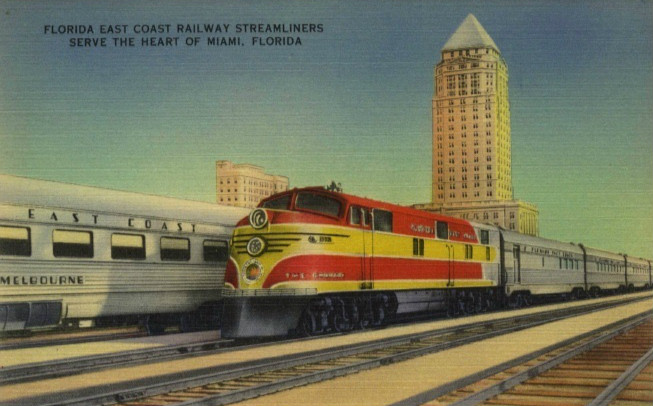
http://www.ibtimes.com/articles/321480/20120329/florida-east-coast-railway-private-passenger-rail.htm
Florida East Coast Industries Announces Ambitious Plan For Private Passenger Rail Service
By STEPHEN SMITH: Subscribe to Stephen’s RSS feed March 29, 2012 12:33 PM EDT
Private companies used to dominate American railroading, but the industry faced rough times as the twentieth century wore on. Private freight rail was eventually revived around 1980 through a series of deregulatory measures, but passenger service hasn’t been profitable in half a century. Amtrak and a bevy of commuter railroads picked up some of the slack, but with mounting pressure from Republicans to staunch deep losses, U.S. passenger rail is in dire straits.
But that narrative might be changing, as Florida East Coast Industries, owner of the storied Florida East Coast Railway, announced plans for “All Aboard Florida” last Thursday. The private, intercity service would initially connect passengers in Miami, Ft. Lauderdale, West Palm Beach, and Orlando, with possible future extensions further west to Tampa, and north to Jacksonville. With a substantial right-of-way and a well-run freight railroad that could be adapted to passenger service more easily than most, the major question that remains is that of funding.
Like us on Facebook 53k Send Like
The announcement at first sounded almost fanciful ai??i?? public transit authorities are hemorrhaging cash, and passenger rail in the U.S. has so far mostly avoided the liberalization that has occurred in Europe and East Asia. But the Florida East Coast (FEC) is no newcomer to the market: From Henry Flagler’s first investments in South Florida in the late 19th century to the violent strikes of the 1960s, the FEC has been at the forefront of Florida railroading for over a century.
The hiring of Eugene Skoropowski also helped. A respected transit veteran who led California’s Capitol Corridor service to record ridership before turning his attention to the private sector, Skoropowski will presumably lead the project as senior vice president for passenger service development, a position created for him by Florida East Coast Industries earlier this month.
Of the 240 miles of track needed to bring Florida East Coast trains from Miami to Orlando, the company’s main line already covers the 200 miles along state’s eastern coast, from Miami to the Space Coast city of Cocoa. Florida East Coast will need to acquire land and build tracks along the last 40 miles to Orlando, with All Aboard Florida spokeswoman Christine Barney saying on Monday, “We expect that it’ll be land that’s already in public use.” Some have speculated that the company could build new tracks in the median of the Bee Line Expressway.
No matter how the Florida East Coast gets passengers to Orlando, freight would surely follow. CSX currently has a monopoly on freight rail in Central Florida, but the FEC is no doubt eager to gain a foothold in Florida’s third-largest metropolitan area. The railroad has made significant investments in South Florida ports in anticipation of the latest Panama canal expansion, which would be made more valuable by a higher capacity double-tracked main line and direct access to Orlando and Tampa.
Florida East Coast Industries emphasizes that the passenger service will be “owned, operated, and maintained” privately with no risk to Florida taxpayers, perhaps seeking to distance itself from Florida’s recently-canceled public high speed rail proposal. The project was championed by the Obama administration and had already won federal funding, but Florida’s newly-elected Republican Governor Rick Scott axed the line after saying he was afraid that state taxpayers would be liable for operating costs.
The project’s backers are less specific about construction costs. Barney said that the “vast majority” of the costs, which the company estimates at $1 billion, will be covered privately, but left open the possibility that the company would seek subsidies or financing for construction.
Randal O’Toole, a senior fellow at the Cato Institute, speculated that the company might look for a loan from the federal government, emulating the strategy of DesertXpress, a privately held company whose $4.9 billion federal loan application decision is due by mid-year. The firm, which envisions building high-speed rail from Las Vegas to Victorville, Calif., has sought a loan from the Federal Railroad Administration’s Railroad Rehabilitation & Improvement Program, which finances public passenger proposals along with projects by non-Class I freight carriers. (The FEC was the smallest Class I railroad until 1992, when a change in the upper bound for annual revenue changed it to a Class II.)
The Florida East Coast is a much smaller railroad than the well-known Class I carriers like CSX and BNSF, but it has a number of attributes that make it uniquely suited for passenger rail. The railway hauls a large amount of time-sensitive multimodal freight ai??i?? that is, goods that are transferred to and from trucks and ships ai??i?? which is operated more like passenger service than the slower bulk freight that dominates the interior of the country.
As a result, the Florida East Coast has some of the most sophisticated signaling of any freight railroad in the United States, allowing cargo to travel at up to 60 miles per hour. Most of the track is currently rated for passenger speeds of up to 80 miles per hour, but further upgrades will be needed to bring the line up to the 110 miles per hour maximum speed touted in All Aboard Florida’s press release.
The railroad also has a history of tough labor relations, which may presage conflict again as the company seeks to profit where labor-heavy American public passenger railroads have not. Beginning in 1963, the railroad was the scene of one of the longest and most violent strikes in modern history, dragging on for more than a decade. Management sought to do away with seniority restrictions and what it considered to be wasteful “featherbedding,” or make-work rules, and strikers responded to the FEC’s use of scab labor by bombing and shooting at freight trains. The FEC eventually prevailed, and the labor savings kept it in business and gave it the ability to invest the capital needed to bring it to up its current “prime” state.
The days of dynamiting and derailments are behind the Florida East Coast, but some in organized labor have reservations about FEC’s plans. Frank Wilner, national spokesman for the United Transportation Union, which represents many FEC workers, warned that “the new operation may be contracted out, and the private contractor may attempt to use non-union labor.” Because the Florida East Coast operates only within the state, Wilner said, it could try to avoid participating in a number of federal railroad worker programs, including the Railroad Retirement Board, the Railway Labor Act, and Federal Employers Liability Act.
He did, however, emphasize the distance between labor relations today and relations in the days of Ed Ball, who owned the company during the strikes. “No one can really draw any similarities between what happened in the 1960s and what’s happening today,” Wilner said. “Ownership is different, all of the players are different, and the UTU and all the other unions have a very cordial relationship with the FEC.”
The announcement of passenger service on the Florida East Coast will also affect existing public transportation throughout Florida. South Florida commuter railroad Tri-Rail has considered shifting its trains from its current line, which the Florida Department of Transportation bought from CSX in 1989, to the the parallel FEC main line, which runs through more densely populated coastal areas. Amtrak has also been eyeing the FEC main line for intercity service all the way up the coast from Miami to Jacksonville, and late last week settled liability issues related to the planned service, though funding does not appear to be forthcoming.
Christine Barney said that the Amtrak and FEC plans, which would run the same route, are “not exclusive,” and that the company “would not see any problem with the line’s capacity,” but that “at this time our project is not involved in any way.”
Steven Abrams, a Palm Beach County Commissioner and vice-chair of Tri-Rail’s governing board, called the proposal “complementary to our commuter service” and said he wished FEC well, pointing out that All Aboard Florida would be a regional service, while Tri-Rail serves a commuter market. Abrams said that he was notified of the plan before the announcement by an executive at the Florida East Coast, but that they were not working in coordination on the new passenger service.
Fellow board member Bruno Barreiro, a Miami-Dade County Commissioner, expressed similar hopes. “I personally believe in some areas, especially going downtown, [the FEC] should have elevated rail,” he added in a phone interview on Friday. “When you have 250 street crossings [in the tri-county area] and you’re putting through a substantial amount of trains, it starts to have a huge impact on the roads.”
In a transit feasibility study done in 2006 on the southernmost 100 miles of FEC’s track, researchers counted an average of two and a half at-grade crossings per mile, with one segment in West Palm Beach having ten crossings in under a mile. Beyond impacts on traffic, grade crossings annoy local residents, who have to endure Federal Railroad Administration-mandated horn blowing at each intersection.
And of the real estate around the railroad that could benefit from passenger service, only one such parcel remains in the hands of FEC shareholders. The property portfolio of the modern-day Flagler Development Company, named after the Florida East Coast founder who turned down the opportunity to name the city of Miami after himself, is concentrated instead in outlying commercial and industrial areas. (Flagler Development was spun off of from the railroad as a real estate investment trust by Fortress Investment Group soon after it purchased the railroad and its land in 2007.)
The only piece of real estate that could benefit from passenger service, Christine Barney said, is a 9-acre strip of land in Miami’s fast-growing historic downtown, which has 2,500,000 square feet of entitled development rights ai??i?? about the same size as the new 1 World Trade Center in lower Manhattan.
Florida East Coast Industries’ passenger proposal is still in its infancy, and much remains to be done before the first passenger tickets are taken. Many of the details are a bit ambitious ai??i?? from the 2014 opening date, to the $1 billion price tag, to the “about three hour” Miami-Orlando travel time ai??i?? and it remains to be seen if the company can come up with financing. But if any freight railroad in the United States can bring profits to passenger rail, it’s hard to think of a better candidate than the Florida East Coast.
Posted by zweisystem on March 29, 2012 · 13 Comments
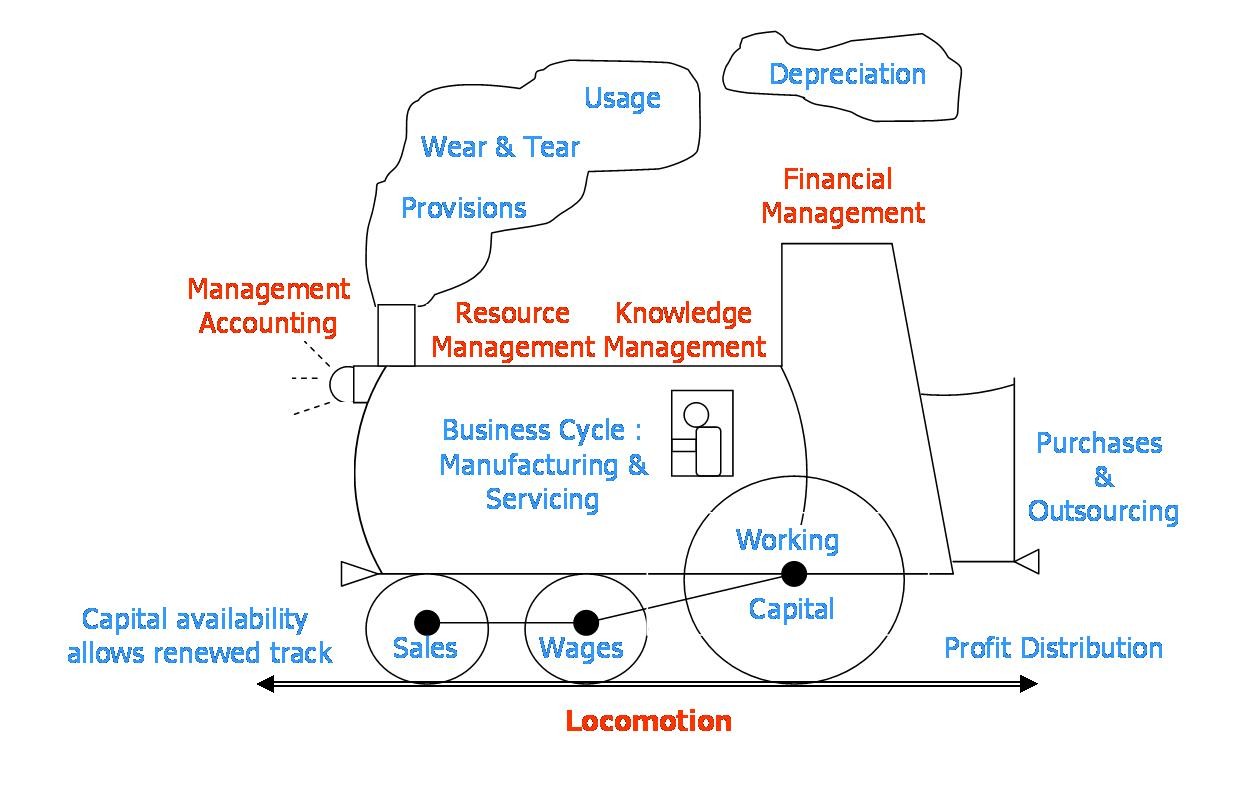
B.C. premier orders audit of TransLink, but will it be the right sort of audit?
Will the BC Auditor General do the Audit?
Will it be a value for money audit?
Two important questions that must be answered before anyAi??credenceAi??is given to Premier Clark’s call for an audit of TransLink.
TransLink is auditedAi??on an annual basis, butAi??this is merely to see if moneyAi??collected forAi??TransLink is spent correctly and gives no indication of actual performance. TransLink’s auditor, does not independently checkAi??ridership, nor does it do a value for service audit, but just insures that TransLink’s numbers add up.
What is needs to be audited is:
- An independent auditAi??of ridership.
- An audit of ridership on each an every transit route.
- An audit of the U-Pass program
- An audit of the West Coast Express, Seabus, and the SkyTrain/Canada Line metro system, giving the real cost of building and operating to the taxpayer.
If the Premier’s proposed audit, is nothing more than a 2 + 2 = 4 type of audit, it will be an expensive nonevent and nothing more than a publicity stunt.
B.C. premier orders audit of TransLink
A budget shortfall spurs the call for tranportation audit
By ANDREA WOO, Vancouver SunMarch 22, 2012
B.C. Premier Christy Clark is calling for an audit of TransLink.
Photograph by: Vancouver Sun, Handout
VANCOUVER — Premier Christy Clark has ordered an audit of TransLink to address a shortfall in funding for the transportation authority.
Clark made the announcement on Thursday at the end of a Port Moody news conference supporting Liberal candidate Dennis Marsden in the April 19 Port Moody-Coquitlam byelection.
The premier had referenced a $30 million shortfall for the Evergreen Line, however it is believed she misspoke.
ai???There is still a funding gap for the Evergreen Line ai??i?? $30 million ai??i?? and we are going to find that through an audit of TransLink,ai??? Clark said.
ai???We are not going to find it through a vehicle levy or other sources; we are going to find it within TransLink.ai???
North Vancouver district Mayor Richard Walton, who chairs the mayorsai??i?? council for regional transportation, said funds for the Evergreen Line are already covered.
ai???The two cent gas tax fully funded the requirements for the Evergreen Line to go ahead, but there were a whole series of other much-needed capital improvements right away throughout the Metro Vancouver region,ai??? he said.
ai???That was the additional $30 million, for the next two years, that was going to be funded through property tax unless we can find an alternative funding source for it.ai???
Those improvement projects include a rapid bus over the Port Mann bridge and a B-Line along King George.
Metro Vancouver mayors had renewed their calls for an audit last month, saying they refuse to raise any more taxes or tolls for transit projects such as the Evergreen Line and buses south of the Fraser River until the transportation authority proves it is running efficiently.
That came after TransLink offered to give $100 to charity for every 170 stakeholders who filled out a survey on how the transportation authority communicates.
ai???When weai??i??re trying to turn over every leaf and every rock for funds … this just flies in the face of what weai??i??re trying to do,ai??? Surrey Mayor Dianne Watts said at the time.
Walton said he is looking forward to connecting with the Ministry of Transportation and the Premierai??i??s office to discuss details of the audit.
ai???The challenge is, weai??i??ve got the clock ticking,ai??? he said. ai???We would be very pleased if those efficiencies could be found within TransLink, so we donai??i??t have to find the $30 million of revenue somewhere.
Clark said the province found ai???very significant savings for taxpayersai??? in an audit of BC Hydro and she expects the same for TransLink.
ai???Whenever youai??i??re looking at a big organization that spends $1 billion a year, you can find savings,ai??? she said.
There is no set date for the audit yet, but Clark said she is hopeful it will begin soon.
The $1.4 billion Evergreen Line, which will connect Coquitlam to Vancouver via Port Moody and Burnaby, is scheduled for completion in 2016.
awoo@vancouversun.com

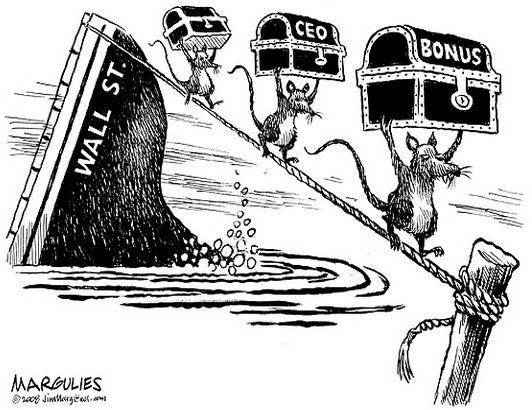 Just change the ship’s name to TransLink and you have got the picture!


Recent Comments