A bad week for Clarkai??i??s fading B.C. Liberals
Another Canadian politico, deep in the doodoo
the sad fact is SkyTrain, the Canada Line and now the the Evergreen SkyTrain Line are big contributors to TransLink’s financial woes. building more SkyTrain only exacerbates the situation.
by Gary Mason – Globe & Mail
It should have been so simple and straightforward ai??i?? a premier announcing two by-elections.
And yet by the time B.C. Premier Christy Clark finished a news conference called on Thursday to reveal the date for by-elections to fill vacancies in the ridings of Port Moody-Coquitlam and Chilliwack-Hope, she had angered Metro Vancouver mayors, mistakenly thrown into doubt the near-term future of a planned rapid transit extension and made her partyai??i??s already uphill odds of winning either vote even more remote.
Today, many B.C. Liberals are wondering if they should just wave the white flag now ai??i?? not just in the two by-elections but the general election that will be called in a yearai??i??s time. It does not look good for the governing Liberals. Hopes that the sunny populist stylings of Ms. Clark might temporarily dazzle an electorate that seems ready to throw her party out of office have long begun to fade.
The by-election call was another example of why.
In the news conference, the Premier was asked about $30-million in funding that Metro Vancouver mayors want to complete a raft of transit-related initiatives. The mayors had said that unless the province passed legislation allowing them to raise that money through means such as a vehicle levy, they would have to raise property taxes
Ai??Ai??Ai??Ai??Ai??Ai??Ai??Ai??Ai??Ai??Ai??Ai??Ai??Ai??Ai??Ai??Ai??Ai??Ai??Ai??Ai??Ai??Ai??Ai??Ai??Ai??Ai??Ai??Ai??Ai??Ai??Ai??Ai??Ai??Ai??Ai??Ai?? 
The Downfall of Rob Ford’s Subway Vision
A rather clever sendup of Canadian Transport Planning & PoliticsA fan of Toronto Mayor Rob Ford takes the news of his failure to extend the Sheppard Subway rather poorly.
Clip from the film ‘Downfall’ aka “Der Untergang” Copyright Ai?? 2004 Constantin
http://www.youtube.com/watch?feature=player_embedded&v=7BrsbAVNrIU
Brillliant!
also TTC: Rob Ford & Transit City
http://www.youtube.com/watch?v=gLHNj3SULS8&feature=related
TTC chief: Subway expansion for downtown relief line has to be discussed ai???right nowai??i??
National Post
http://news.nationalpost.com/2012/03/23/subway-or-lrt-downtown-toronto-needs-a-relief-line-ttc-chief-andy-byford/
The real issue for Ford isn’t subways, it’s keeping the roads LRT-free for cars. He’d rather have no transit whatsoever than build light-rail.
This mayor is all about catering to the single-occupant motorist.
All that SUBWAAAYS bluster was fake.
This man has ZERO respect for the decision of our ELECTED City Council, and continues to behave like a Third World despot intent on getting his childish ways. Ask him to give solids answers about funding, and his only answer is a parroted “SUBWAY”, like a not too bright child in grade three. He and his spoiled brat millionaire brother should pack their bags and get out of City Hall.
It’s time forAi??Ford to do the honourable thing, and step away.
we had a vote, and he lost – Ai??period.
when the leaf’s don’t make the playoffs they go home, they don’t show up and insist they can keep playing.
hopefully Ford will learn from this experience that adults want proper documentation
before they fork over billions of tax payer dollars- which you pledged would not be used to begin with.
do the right thing and move on

Torontoai??i??s Mayor Ford vows to ai???lead the chargeai??i?? in halting light-rail transit
Mayor Rob Ford is pledging to do ai???everything in his powerai??? to stop light-rail lines from running at street level on Eglinton and Sheppard Avenues in Scarborough.
One day after losing the fight to save his subway plan at council, the mayor said he is prepared to ai???lead the charge,ai??? for the taxpayers he says would rather have no new transit than an above-ground line.
the Globe & Mail
by Elizabeth ChurchAi??&Ai??Kelly Grant

Rob Fordai??i??s subway dream dead
The Toronto Star hates Mayor Ford and everything he wants to do. The Star is Liberal and the mayor is conservative. It has never said anything nice about him. The mayor before him ran on an election promise not to build a bridge to the island airport. No wonder the rest of Canada calls it ai???Hog Townai???.
Under Toronto Mayor Rob Ford, the right is wrong
Ai??http://www.thestar.com/news/article/1150572–under-toronto-mayor-rob-ford-the-right-is-wrong
Why does the right always get it so wrong? Since winning the 2010 Toronto electoral war decisively, Mayor Rob Ford has lost every subsequent battle miserably.
City councilai??i??s crushing rejection of his Sheppard subway pipedream on Thursday was the latest nail in the chief magistrateai??i??s coffin. Little wonder thereai??i??s talk of a ai???leadership vacuumai??? in Toronto. At this point one canai??i??t help but wonder how long the ugly fat bastard can last (sic); not only has he lost control of the transit file, he has been abandoned by council and much of the city.
Even fellow conservatives are breaking ranks with the mayor and his noisome brother, Doug Ford, who never fails to get it wrong.
Who will forget the spectacle of the Fordsai??i?? appointed budget chief, Mike Del Grande, publically extolling the virtues of a parking levy. According to him, imposing a $100 tax on non-residential parking spots would bring in $100 million annually.
Under more normal circumstances, the chances this sort of utterance passing the lips of Del Grande would be about the same as Rob Ford riding a bike to work.
But transit, like politics, makes for strange bedfellows. And this bunch of recent tax-and-spend converts is nothing if not strange.
Played out against a backdrop of this bizarre winter-turned-summer, the two-day debate felt as unreal and worrisome as the weather, but in its own way, it was just as enjoyable. If you could overlook the fact that in both cases the future is the issue, councilai??i??s antics were hugely entertaining, or would have been anywhere but here.
Between the two of them, Doug Ford and Giorgio Mammoliti, both classic examples of incompetents too incompetent to realize their incompetence, the conservatives proved themselves not simply inept, but comically so.
At this point, their arguments have become so transparently silly thereai??i??s no need to debunk them. Whatai??i??s more interesting, however, was the rightai??i??s willingness to sell itself out to get what its leader wants ai??i??subways under Sheppard, not light rail transit on Sheppard.
With Del Grande doing the heavy drifting, conservatives ditched the dogma by which they live and die ai??i?? less tax, less government, less deficit ai??i?? to embrace the sort of cash grab that until now they hated.
Still, itai??i??s heartening to watch as councilai??i??s most lead-footed dinosaurs come to a more nuanced understanding of the role taxes play. Ironic, though, that the light should go on as the conservatives struggle to implement a scheme against which the big criticism is expense.
In its rush to take transit off Torontoai??i??s streets, which naturally belong to car and driver, the right wing has discredited itself, and worse still, made itself look foolish. From zealots to zombies to zeroes.
The most glaring deficit in Toronto these days isnai??i??t economic; itai??i??s the absence of leadership at City Hall. The mayor has yet to figure out what his job is let alone how to go about doing it. Though Ford has yet to grasp it, politics begins where slogans end. At this point, his failureai??i??s all but complete. His credibility is in tatters; his policies have been picked apart and discarded.
So what was left for Ford but to launch his permanent re-election campaign? ai???Obviously the campaign starts now,ai??? he declared after his defeat, ai???and Iai??i??m willing to take anyone on, streetcars against subways in the next election. I canai??i??t wait for that.ai???
Alas, he will have to. The vote wonai??i??t be held until 2014, by which time the LRT should be well under way.
For the price of *one* subway you can get *seventeen* tramlines. And a rather different city.

Council vote on Sheppard LRT
Here is a geographical look at how city councillors voted on Glenn De Baeremaeker’s motion confirming that Light Rail Transit (LRT) is the preferred rapid transit mode for Sheppard Ave. E. March 22, 2012.
Green is a ‘Yes’ vote supporting the motion. Red is no. Two councillors were absent (Yellow).
Mayor Rob Ford voted No. The motion was carried 24-19. Click here for motion detail.
You can zoom into or turn off individual wards or council groups with the folders and check boxes, below left.
http://www.thestar.com/news/transportation/article/1150280–will-toronto-s-transit-fight-be-won-today
With Rob Fordai??i??s Sheppard subway dream officially crushed, the increasingly isolated mayor is vowing to carry the fight for underground transit into the next election ai??i?? immediately.
Fordai??i??s leadership has come under increasing scrutiny, even from his council allies in the run-up to Thursdayai??i??s 24-19 council vote approving light rail rather than a subway extension for Sheppard Ave. E.
In the wake of the most recent defeat on his transit agenda, Ford immediately told reporters he will urge Premier Dalton McGuinty not to fund ai???streetcars.ai???
VIDEO: Ford urges province not to fund LRT
ai???Iai??i??m not going to support the LRTs, Iai??i??ll tell you that right now. Iai??i??m going to do everything in my power to try to stop it,ai??? he said.
ai???This is an election issue. Obviously the campaign starts now. Iai??i??m willing to take anyone to fight streetcars against subways in the next election, and I canai??i??t wait for that.ai???
But TTC chair Karen Stintz, who led the support for LRT, said itai??i??s time to get on with spending the $8.4 billion Queenai??i??s Park has pledged to Toronto transit expansion ai??i?? including about $6.5 billion for the Eglinton-Scarborough Crosstown LRT. The remaining money would be split between the LRT on Finch Ave. W. and Sheppard East.
ai???Weai??i??ve come to a solution about how to bring transit to the suburbs,ai??? she said. ai???We do need to send a message to the province that the majority of council supports the plan ai??i?? in fact a majority of Scarborough councillors whose wards will be impacted by the LRT.ai???
At the end of the tense, two-day council meeting, city staff were also directed city staff to report back by the fall on a long-term funding strategy for transit expansion. Councillors also voted to continue pressing senior governments for funding.
Click here to see how each councillor voted
But a motion to implement a $100 million non-residential parking tax, introduced Wednesday by budget chief Michael Del Grande, was not approved.
The last-minute attempt to win subway support, dismissed as ai???desperateai??? by some councillors, wasnai??i??t enough to persuade a majority that the mayor had a viable subway plan and Ford did not speak up to support Del Grandeai??i??s motion.
But many councillors, including Stintz, said it was the beginning of an important conversation about the need to find new funding sources to build transit.
Meantime, ai???We felt it was only responsible to go with the funding plan we have to make sure that we deliver transit to the city,ai??? said Stintz, who was labeled a ai???backstabberai??? and criticized for her ai???lack of leadershipai??? by Councillor Doug Ford, the mayorai??i??s brother.
VIDEO: Doug Ford lashes out at Karen Stintz
But even some of the mayorai??i??s disappointed key supporters said they will respect councilai??i??s decision.
ai???I have fought the fight within my area of jurisdiction. Council has pronounced itself on that. It now goes to the MPPs to decide. All my arguments are out on the table, everything that I could bring to the debate I have already done,ai??? said disappointed Councillor Norm Kelly (Scarborough-Agincourt).
Councillor Paul Ainslie (Scarborough East) said he wonai??i??t argue to undo councilai??i??s decision but would continue to talk up the need for subways.
ai???Iai??i??m going to continue to advocate for subways but also for a regional transportation system,ai??? he said.
While Kelly referred to LRT ai???second-class transit,ai??? other Scarborough councillors said their constituents have come out winners.
ai???We voted overwhelmingly today to invest $4 billion in Scarborough. Weai??i??ve got the biggest transit investment ever in the history of Scarborough. This is spectacular news,ai??? said Councillor Glenn De Baeremaeker (Scarborough Centre).
Ford said residents in Scarborough would prefer no new transit rather than streetcars in the middle of their streets.
Earlier Thursday, the mayor launched into a furious attack on streetcars.
You just couldn’t make it up!!
TTC defies Mayor Rob Ford in favour of Light Rail
TorontoAi??LRT/subway tussle continues
The Toronto City Council Wednesday, in defiance of Mayor Rob Ford, readied a vote to advance light rail transit above ground along Sheppard Ave. and not a subway option.
So what price for the dogma of so many Canadian politicians, from East to West, Ontario, Toronto, Waterloo, Surrey, Vancouver & Victoria.
BC politicians, Translink & their Skytrain followers should heed the painful Ai??lessons being learnt in Toronto

Railway Age March 21st
http://www.railwayage.com/index.php/passenger/light-rail/toronto-lrt-subway-tussle-continues.html?channel=
Late Wednesday evening, in an effort to head off a defeat,Ai??Mayor Ford and council supporters employed a filibuster Wednesday, suspending the debate.
Ford earlier had said that council action favouring light rail transit, and not subway construction, would prompt him to curtail rail transit expansion of any kind within Canada’s largest city.
As the meeting began Wednesday, allies of the mayor supporting subway construction unveiledAi??a call for new taxes to help pay for the option, though Mayor Ford has not said he would adjust his position on taxes to address the issue.
Ontario province has allotted C$8.4 million toward expanding rail transit in Toronto, but is waiting for a final political decision before disbursing any funds.
Mayor Ford was elected mayor in October 2010. His campaign in part included a pledge to end an alleged “war on cars,” which he said included placing streetcars and LRT on city streets at the expense of automotive traffic.
The Toronto City Council already has voted in favor of adding LRT at grade along Elington Ave. and Fitch Ave.
Councillor Josh Matlow was philosophical about the delay.Ai??ai???Itai??i??s going to be the same vote tomorrow as it was today,ai??? he said Wednesday evening.
Vehicle registration fee eyed to generate cash for transit services
They just don’t get it.
The lower mainland’s regional mayors just haven’t a clue about transit and just keeps the money pumping into the bloated TransLink bureaucracy, which has achieved very little since its inception over a decade ago, except that is, for giving Vancouver the hugely expensive Canada line subway, because Vancouver’s politicians did not want light rail down the Arbutus Corridor.
It is TransLink’s (and BC Transit before) legacy of only planning for extremely expensive light metro for ‘rail’ transit in the region that has gotten Translink mired in a financial mess. Light metro, especially when built asAi??a subway costs tens times as much or more to build than light rail, but our transit planners will have none of this, as they continue to plan for pie in the SkyTrain for future rail transit. TransLink has deluded themselves and regional politicians with unreachable goals, funded by tax monies not yet collected.
Regional mayors, many goose-stepping in line with the tax and spend provincial Liberal party want to burden the taxpayer with even more onerous user auto fees, to protect the wealthy in Vancouver types who benefit from three light metro lines, an expensive trolleybus system, and TransLink’s upkeep on expensive bridges, from higher property taxes.
How long is this farce going to be allowed to continue?
With the likes of mayor Walton and Fassbender at the helm, forever it seems.
If TransLink’s planners spent as much time in planning affordable transit solutions for the regions transportation problems, as they do in dreaming up more ways to shake down the taxpayer, there would be no need for this ongoing financial crisis. Affordable is just not in TransLink’s lexicon, nor is it in Mayor Walton’s and Fassbender’s as well.
The utter stupidity that passes for regional transit planning is breathtaking, but the greater stupidity of regional mayors falling for Translink gross ineptitude, is just unimaginable.
It is just like Lemmings jumping off a cliff, one follows the other, without thought or care.
Vehicle registration fee eyed to generate cash for transit services
By Kelly Sinoski, Vancouver Sun March 19, 2012
Ai??Photograph by: Ward Perrin, PNGMetro Vancouver mayors are calling on the B.C. government to allow them to slap drivers with a vehicle registration fee as early as next year in hopes of generating $30 million annually for transit services without having to raise property taxes.
Metro Vancouver drivers face a potential vehicle registration fee next year as mayors look to generate $30 million for TransLink projects in the short term without raising property taxes.
The Mayorsai??i?? Council on Regional Transportation has sent a letter to B.C. Transportation Minister Blair Lekstrom asking him to introduce legislation for a possible vehicle levy or a regional carbon tax, which were cited as ai???short-termai??? funding options to generate money for transit projects, such as the Evergreen Line and rapid bus projects south of the Fraser.
The mayors argue there is ai???relative urgencyai??? in introducing the new legislation this spring in order to avoid a property tax increase in 2013 that would levy an average $27 on Metro homeowners. The mayors have already approved a two-cents-a-litre boost in the gas tax, which is expected to raise $40 million annually for the transit projects.
ai???At the end of the day, no matter what, it seems a user-pay philosophy is the right way to go as long as itai??i??s fair and equitable across the region,ai??? said Langley City Mayor Peter Fassbender.
Fassbender, vice-chairman of the mayorsai??i?? council, said a vehicle levy is already enshrined in legislation but the mayors require enabling legislation to allow the Insurance Corp. of B.C. to collect the fees on their behalf. Itai??i??s not known how much revenue the levy would generate, but the letter suggests it would be based on engine size, fuel consumption or emissions rating and would apply to both commercial and passenger vehicles.
Fassbender said the fee could also be ai???graduatedai??? across the region, meaning drivers in municipalities under-served by transit, like Surrey and Langley, would pay less than those in Vancouver.
ai???The easiest way is a flat fee on every vehicle but weai??i??re not sure thatai??i??s the fairest way,ai??? he said.
A vehicle levy was first proposed in the late 1990s as a way to finance the transportation authority when the agency was created by the provincial government. But it was scrapped by the New Democrats as a result of a huge public outcry. TransLink also tried unsuccessfully to introduce vehicle tax in 2009.
Lekstrom wasnai??i??t available for comment Monday but is expected to meet with the mayors next month.
The mayors are also asking the province to authorize more long-term permanent funding sources, such as a comprehensive system of road pricing ai??i?? which could see tolls on all bridges, roads and tunnels throughout Metro Vancouver, or drivers charged per distance driven in the region. Long-term funding options also include a vehicle fee or regional carbon tax, or a share of restructured revenue from the existing carbon tax, and higher gas taxes.
Fassbender acknowledged the mayors ai???might not get what we wantai??? but said they want to see what tools the government is willing to give them as it will take a few years to develop the permanent funding sources.
ai???We want to sit down and look at a whole suite of long-term issues so we donai??i??t have to talk about this every couple of years,ai??? he said.
The letter to Lekstrom also calls for the province to allow the mayorsai??i?? council to approve both TransLinkai??i??s base and supplementary budgets, and a review of TransLink by the provincial auditor-general or the new auditor-general for local government. The mayors have pressed for ongoing and independent reviews of TransLink.
ksinoski@vancouversun.com
Ai?? Copyright (c) The Vancouver Sun
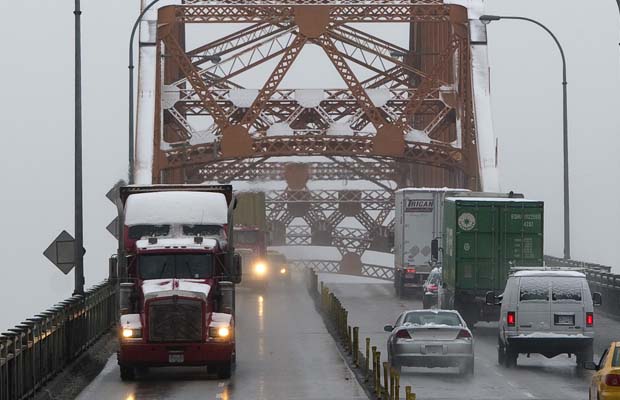
Kirkland city manager stumps for trail project along old rail line
Interesting news from just South of the border, a city manager actually eying a former disused intact railway for future transit use. Such thinking is so hard to imagine on our side of the 49th, where politicos and bureaucrats, mostly run and hide at the thought of using existing infrastructure.
Here is the difference, in Kirkland the city manager is a man of vision, while in Canada his counterparts are so rooted in the 20th century, they fail to comprehend they are now living in the 21st century, except for raising taxes and user feesAi??that is.
Rail for the Valley handed regional mayors, Metro Vancouver, and TransLink a golden opportunityAi??with anAi??affordable plan to reinstate the Vancouver to Chilliwack interurban with the historic Leewood Study and all RftV has got in return is pathetic excuses that it can’t be done or just silence. TransLink’s excuse sums up the utter stupidity that passes for transit planning in the region; “We are not interested in rail transit, if headways are grater than 10 minutes.” The Leewood study put the maximum headways achieved at 20 minutes between trains.
 Instead of building an affordable TramTrain in the region, TransLink squanders tens of millions of dollars on useless metro (SkyTrain) planning for future routes that the taxpayer cannot pay for. This is a sad commentary of the very inept transit and transportation planing being undertaken by career bureaucrats who have absolutely no concept of affordable transit, with the entire ‘ship of fools’ being supported by equally inept regional mayors who just delight in increasing the tax burden on local taxpayers.
A financial iceberg is dead ahead and the unseaworthy TransLink is onAi??a direct collision course.
.
Kirkland city manager stumps for trail project along old rail line
Kirkland’s city manager has been instrumental in bringing about what he hopes will one day be a world-class park, paved trail and transit line in Kirkland.
By Keith Ervin
Standing on a railroad tie on a hillside in Kirkland, City Manager Kurt Triplett sees more than tired old tracks and weeds near a sprawling parking lot.
He sees a 100-foot-wide open space that will someday be a linear park, paved trail and a mass-transit line all rolled into one.
And because the Eastside Rail Corridor connects a key Highway 520 park-and-ride with a Google campus and the city’s future economic center, Totem Lake, Triplett also sees it as a tool to grow and attract businesses.
At Triplett’s urging, the Kirkland City Council has authorized the purchase of 5 A? miles of the corridor in a $5 million deal scheduled to close next month with the Port of Seattle.
The council is now considering whether to ask voters to fund a hard-gravel trail to serve walkers and mountain bikers.
For Triplett, Kirkland’s acquisition of the former BNSF Railway line ai??i?? “our equivalent of the Louisiana Purchase” ai??i?? is a chance to expand public use of a 42-mile rail line he spent years as a King County official trying to bring into public ownership.
Triplett recently showed off a section of the trail above Carillon Point with a majestic view of Lake Washington and Seattle. He calls it the trail’s “front porch” and sees it as one of a number of future public gathering places along the rail line.
“That’s our goal here,” he said, “to have something that is truly world class, not just a Burke-Gilman Trail.”
Triplett began working on a regional deal seven years ago and helped broker the Port’s purchase of the corridor, backed by King County’s promise to buy most of the southern portion.
The deal envisioned continuing freight operations between Woodinville and Snohomish, and eventually both a trail and light-rail line connecting Redmond, Woodinville, Kirkland, Bellevue and Renton.
But “eventually” seemed too long to Triplett and a Kirkland park-funding advisory committee, which is urging the City Council to ask voters in November to make a gravel trail the centerpiece of a parks-levy package next fall.
Whether Kirkland funds trail construction through a levy, Triplett believes the city can find a way to begin moving hikers, bikers and commuters along the route, and to encourage trail and transit uses outside Kirkland.
Job interview
When Triplett was interviewed by Kirkland City Council members two years ago for the city manager post, he said, “Whether you guys hire me or not, you should talk to the Port about buying the corridor.”
It was a message that resonated with council members, who had talked for years ai??i?? but come up with no real plan ai??i?? about someday building a “BNSF Trail” or “Cross-Kirkland Trail.”
Triplett’s suggestion excited Councilmember Amy Walen, who said she shared the same goal but had been discouraged by more veteran members. “Nobody was energized or had the connections or skills that it takes to make a deal like this happen. Kurt had these skills,” she said. …
“He went to work and made it happen.”
Few people knew as much about the politics and economics of the corridor as Triplett, who as chief of staff to then-King County Executive Ron Sims was immersed in a four-year effort to acquire the land from BNSF Railway and build “the granddaddy of trails.”
Under one scheme that ultimately died, the Port would have bought the corridor, swapped it for county-owned Boeing Field, and paid for a paved trail from Renton to Snohomish.
After Sims resigned in 2009 to take a job in the Obama administration, Triplett succeeded him and helped engineer the Port’s $81 million purchase of the corridor.
King County agreed to buy most of the land south of Woodinville from the Port, but hasn’t yet completed the deal. Redmond has bought a 3 A?-mile segment
Sung Yang, County Executive Dow Constantine’s chief of staff, said the county and the Port are making good progress toward a land sale.
Strategic location
The south end of Kirkland’s purchase is adjacent to a planned parking garage at the South Kirkland Park and Ride, where a transit-oriented development will bring 250 multistory homes and shops.
The tracks go right past Google’s growing campus south of downtown and end up at Totem Lake, which has been designated as a future high-density urban center.
Google urged the City Council in December to buy the rail corridor, and Triplett believes its interest shows it would also encourage high-tech employers to locate and stay in Kirkland.
He believes it would be used by future University of Washington students, Google and Evergreen Hospital employees and others seeking to avoid traffic congestion and freeway tolls.
Triplett is hopeful major employers will contribute to development of the corridor, but for now the only funding proposals on the table involve tax dollars.
The city is buying the property with $1 million of surface-water utility reserves and a $4 million loan from city utilities. The loan could be repaid through deferral of other capital projects, a voter-approved levy or councilmanic bonds.
A 50-member Park Funding Exploratory Committee has proposed installing a $3 million hard-gravel trail as part of a broader capital levy, but not to include loan repayment in the ballot measure.
Dissenting committee member Santos Contreras called the corridor “a jewel” but said citizens should be asked to pay for its purchase before a trail is built.
Member Bonnie McLeod doesn’t think a case has been made for buying the rail corridor. “Do I want a cool trail going through our community? Absolutely,” she said. “I was adamant that it remain available for public transit and not just turn into recreation, but why does no other city along the route feel the need to own it? Why do we?”
Seattle Times staff reporter
How the TTC sullied the reputation of LRT (Part II)
How the TTC sullied the reputation of LRT (PartAi?? II)
Ai??March 16,Ai?? 2012
 In Part I of my look at howAi?? the TTC has sullied the reputation of LRT, I focused on the TTC’s communicationsAi?? on surface rail, where “LRT” somehow meant “Streetcar Rapid Transit” but “SRT”Ai?? meant “Scarborough… RT”? Plus, while there were 75 km of streetcars and 6 kmAi?? of RT, only the latter could be found on a map. In confusing light rail with streetcars, and streetcarsAi?? with buses, the TTC soiled the very sound of the letters L-R-T before the cityAi?? even built any “real” Light Rail Transit lines.
But maps and words only matter so much. WhatAi?? about the experiences of actually riding the streetcars and the RT as a transitAi?? user? And as a tourist? How do those factor into the anti-surface rail venomAi?? found in letters to the editor, online forumsAi?? and public meetings? In Toronto of allAi?? places? In an era when dozens of cities are racing to buildnewstreetcar lines and LRTroutes?
Going to Party Like ItsAi?? 1949
One cannot drive around downtown Toronto withoutAi?? at some point staring out the windshield at the back of a streetcar. Similarly, no one can ride a streetcar without soonerAi?? or later fuming at a stuffed transit vehicle being held up by a single-occupantAi?? car double parking or waiting to make a left turn. Mixed-traffic operations areAi?? by their nature infuriating for all. While the planned Transit City lines wouldAi?? have featured separate Right of Way (ROW), the continuing experience along theAi?? traditional mixed-traffic streetcar lines downtown remains a major motivationAi?? for the underground-at-any-cost crowd.
Even so, the TTC has managed to make mattersAi?? worse. While many problems such as traffic enforcement or the narrow width of Toronto’s colonial streets have been beyond theirAi?? control, streetcar operations have remained far too anchored in the 1940s. SomeAi?? examples:
- There are too many stops. The 501 Queen, theAi??Ai?? busiest streetcar, stops three times between Yonge and Church ai??i?? a distance of 300Ai??Ai?? meters. Spadina, a new line, is littleAi??Ai?? better with three stops in 375 m between Queen and King, or 160 m between theAi??Ai?? stops at Harbord and Sussex. This incredibly close spacing cements the imageAi??Ai?? of even an improved streetcar as slow and lumbering.
- Too much time is lost at boarding because ofAi??Ai?? the failure to adopt modern payment systems. While POP has been used on someAi??Ai?? lines, the lack of a smartcard or off-vehicleAi??Ai?? payment has greatly slowed boardingAi??Ai?? times, making streetcars much slower downtown than they might be.
- The TTC has stuck to a single-zone fareAi??Ai?? pricing model that essentially uses short trips (often downtown, often onAi??Ai?? streetcars) to subsidize long distance commuting on the subway, at the highest fares in North America. It costs less to ride the Portland streetcar for a year than it costs to ride a TTC streetcar for aAi??Ai?? month. The TTC should have long ago instituted a free fare zone, timedAi??Ai?? transfers or other differentiated costs for the downtown streetcar network toAi??Ai?? better reflect their optimal hop-on, hop off short-distance nature.
- The TTC simply waited too long to replace theAi??Ai?? fleet. While the CLRV’s were the darling of the ball when they first came outAi??Ai?? in the 1970s, even auditioning for service in other cities, they today lack modern features such as low-floor boarding, airAi??Ai?? conditioning, wide aisles and sliding doors. And when it did finally get around to buying a newAi??Ai?? vehicle, the TTC botched theAi??Ai?? bid ai??i?? resulting in further delay. ItAi??Ai?? is doubtful there would be so much negativity towards streetcars if thoseAi??Ai?? shiny new Bombardier FlexityAi??Ai?? LRVs had been in service BF (BeforeAi??Ai?? Ford).
Bottom line: riding streetcars in Toronto isAi?? more or less the same experience for a financial services worker today as it wasAi?? for that person’s grandmother headed to the munitions plant inAi?? 1940. There is really no excuse forAi?? that.
The Sad, Sorry Tale of theAi?? RT
 Where to begin with the Scarborough RT? This was the original storyAi?? of modern light rail to the suburbs, gone horribly wrong. Extensive histories have been written elsewhere, but the important detail isAi?? that the TTC had a chance to build a “high-speed streetcar” line that wouldAi?? finally demonstrate the true LRT-based potential of the new Canadian Light RailAi?? Vehicles. And they blew it.
Old marketingAi?? materials reveal the original streetcarAi?? intentions of what later became the RT. Had the province not interfered and pressured the TTCAi?? to convert the system toAi?? ITCS, who knows what ScarboroughAi?? residents would think of “streetcars” and LRT today? The elevated trackway toAi?? McCowan could have served as the trunk line that then descended to grade and ledAi?? to extensions in all directions. Instead of a small blue stubway at the end ofAi?? the Bloor-Danforth line, the TTC map could have looked like the western end ofAi?? the Philly SEPTA map where lengthy light rail feeds into 69th St Terminal.Ai?? And it would have all happened years ago, with unlimited future expansionAi?? potential.
But that did not occur, and as a resultAi?? Scarborough transit users today despise the RT as insufficient, unreliableAi?? second-class transportation that only shuttles them from bus to subway ai??i?? furtherAi?? evidence in their minds of why even fully-grade-separated light rail is just aAi?? cheap excuse for “real” rapid transit. Few are aware of the lost streetcar/LRTAi?? potential of the original concept, and still fewer care. Trust in suburbanAi?? surface rail was lost, never to be regained.
Tourism Derailed
 Torontonians are oddly unaware of the symbolism theAi?? streetcars command as an image of the city internationally. Try a google imageAi?? search on “Toronto,” and after you wade through pages of the CN Tower andAi?? skyline, streetcars start to pop up constantly. However, the TTC is famouslyAi?? tone-deaf to tourists, with no official merchandiseAi?? store and no dedicated tourist websiteAi?? (as opposed to those found in, say, New York or Chicago).
This attitude from the city’s own transit agencyAi?? has long extended to the streetcar network. Instead of being treated like the tourist icons theyAi?? are, and despite being one of theAi?? largest such networks in the world, streetcars here are officially considered noAi?? more special than buses. Besides the aforementioned problem with maps, the practical operation of streetcars ignores tourists.Ai?? Compare this lack of attention to New Orleans, where the streetcars are alsoAi?? regular workhorses for commuters but extremely tourist-friendly, or San Francisco, where heritage streetcars have beenAi?? placed on a special surface line downtown with high visibility to tourists.
Yet somehow those rather clear success storiesAi?? were lost on TTC HQ. Instead of, say, creating a tourist-friendly loop aroundAi?? the downtown (as was done inAi?? Melbourne), or just keeping heritageAi?? vehicles in regular service, the TTC sold off its fully functional andAi?? beautifully restored PCC fleet in 1995, just five years after refurbishing themAi?? for the opening of the Harbourfront line (two remain in special charter service only). So while aAi?? tourist today can ride an old Toronto streetcar in San Francisco or Kenosha, Wisconsin, he or she cannot do it in Toronto. Oops.
Although not directly related to LRT expansionsAi?? in the suburbs, the lost goodwill of the TTC’s inactions on tourism stillAi?? matters. Without idolized status, left exposed to political whims, theAi?? streetcars have become easy targets for those who argue against surface rail.Ai?? That it could even be suggested that they be eliminated by a mayoralAi?? candidate was a stunningAi?? revelation.
Summary: A Streetcar NamedAi?? Aspire
Although the above list of miscues isAi?? substantial, to be fair none of the current LRT vs subway vitriol would be getting such a prominent hearing were it notAi?? for the deliberate actions of a certain former councillor from Etobicoke whoAi?? drives an SUV and has stated on multipleAi?? occasions that streetcars “cause pollution“Ai?? and “drive me nuts.” Yet the TTC must still bear responsibility for theAi?? decades it has spent de-valuing the existing streetcars, not following bestAi?? practices as their operation evolved, undermining the very definition of “lightAi?? rail” and missing past opportunities to build new downtown tourist or suburbanAi?? high-speed routes.
With a new chief executive looking for a fresh start, the TTC now has a chance to own up to past mistakes andAi?? take corrective action. An omnibus strategy of restoring lustre to existingAi?? lines by fixing the problems stated in this article would pay long-termAi?? dividends, reduce the chance of ugly PR incidents, and begin to restore the reputation of surface rail inAi?? the GTA. Only then might Toronto be able to move forward into its multi-modalAi?? future in peace.
Writing by LarryAi?? Green
Photos from the City of Toronto Archives, Transit Toronto,Ai?? and KennethAi?? Lai
How the TTC sullied the reputation of LRT (Part I)
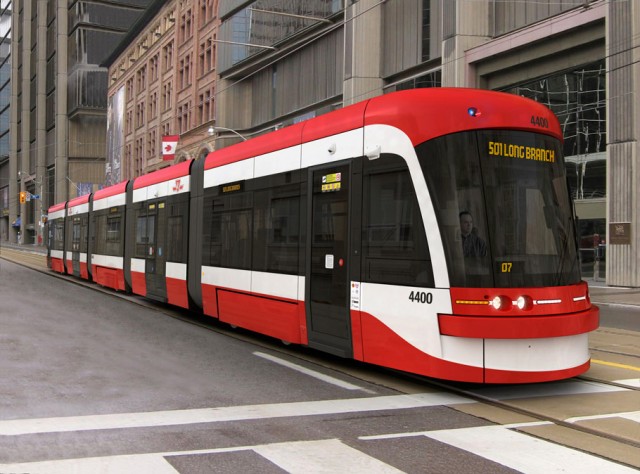
Larry Green, a contributor to the “blog TO” site says Toronto Transit Commission [TTC] tarnished the reputation of light rail, possibly explaining why subways have drawn interest. Below is two parts of this feature story:
http://www.blogto.com/city/\
2012/03/how_the_ttc_sullied_the_reputation_of_lrt_part_i/
“How the TTC sullied the reputation of LRT (Part I)
March 15, 2012
Will Toronto’s transit imbroglio never end? With the Prime Minister now being squeezed for a soundbite, Mayor Ford’s war on streetcars has now spread from town hall meetings to Queens Park to 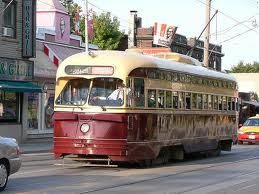 Ottawa. Not since a certain other suburban-oriented Mayor called in the feds to clear a snowdrift has a Toronto issue garnered so much local, regional and national attention.
That said, there is a puzzling and nasty undertone to much of the discussion. It might be one thing for there to be debate over appropriate levels of national or provincial funding for a single city (albeit a city that in turn is an engine for the national and provincial economy). Or perhaps it could be expected to see people argue at length if there were some significant legal or environmental issue involved such as condemnation-property rights or accessibility. But these factors aren’t even on the table ai??i?? instead it’s about subways vs light rail transit, and how much the people who love subways hate LRT. Regardless of how staged and silly it was for a room full of people to boo and jeer the very mention of LRT, the fact that such an event could even occur in Toronto was remarkable.
What happened? How did the very city that is internationally known for its streetcars end up being full of Randall O’Toole clones? Rob Ford could not have singlehandedly created such sentiment in a mere two years; something cleary went horribly wrong over a long period of time to build the kindling that Ford simply put a match to. Here’s Part One of how the TTC itself sullied the reputation of surface rail in Toronto:
Bad Semantics
Public transit terminology could be a thesis topic for linguists. Many “subways” are not entirely underground. Nearly a third of the huge New York subway system, for example, is elevated above the roadway. Some LRT systems like Boston and Newark have historically been called “subways” because of a central tunnel, even though the vehicles later emerge to run on the surface in the medians of streets. Others such as Houston and Minneapolis use the word “metro” even though their LRT systems are nothing of the sort.
Further muddying the waters, some LRT systems have names derived from streetcars, and some streetcar systems have names that sound more like subways. Confused yet?
Canadian cities make the situation even worse. Vancouver has a medium capacity light-metro “Skytrain” that is not a subway, nor a traditional train, nor even necessarily found in the sky (there are extensive underground sections). Calgary and Ottawa call their Light Rail Vehicles “trains.” Montreal has a metro that runs entirely underground, but on rubber wheels . And then there is Toronto.
“Streetcar” is a very old and clearly defined word in Toronto ai??i?? this was never a “trolley” or “tram” town ai??i?? and most of the streetcar lines in the city run very much as they did a century ago, in mixed traffic, in vehicles directly descended from the first streetcars. But as streetcar lines were rebuilt or added in recent decades, the TTC got too clever by half and tried to slap the LRT tag onto lines that were very much still traditional streetcar routes.

Remember the “Harbourfront LRT,” a line so symbolically traditional that it used restored PCC cars? The 510 Spadina has also been called “LRT” at times. The recent rebuilding of St. Clair did not improve matters, being widely branded as LRT at the time despite the fact that the TTC now swears it is not an LRT.
And what do those letters stand for, anyway? The TTC calls its elevated medium-capacity light metro in Scarborough an “RT,” or “Rapid Transit” But this is not the same “RT” as found in “LRT,” which in Toronto has sometimes meant “light rail transit” and sometimes “light rapid transit” and sometimes, pardoxically, “streetcar rapid transit.”
On the rest of the continent, where a city has both LRT and streetcars the linguistic distinction is clear. You have your Portland Light Rail, and your Portland Streetcar. Same goes for the Seattle Light Rail and the Seattle Streetcar. But in Toronto it’s just a jumbled mash-up. Nothing sums this up more than this reference in a tourist guide to the “Spadina LRT Streetcar”. No wonder Transit City’s LRT lines had such a tough time finding acceptance in this tongue-tied town.
Worse Maps
All rails are not created equal, at least in the minds of TTC mapmakers. While subways and the RT have their own simplified map and are clearly highlighted on the overall “System Map”, good luck finding the 75 km of streetcar tracks on any TTC cartographic product. A visitor looking at the TTC’s own Downtown Map blowup would certainly have no idea which thin red line was a bus and which depicted the ten streetcar routes 250,000 people each day ai??i?? they are all the same color and most are the same linetype. The tiny legend should not normally be necessary for someone simply searching for major routes but even this is of little help ai??i?? it only mentions “streetcar rapid transit” (for Spadina/Queen’s Quay and St. Clair) and ignores all other streetcars completely. One would literally have to have prior knowledge to find any surface rail line when traveling on the TTC ai??i?? it simply does not exist on paper, anywhere.
The topographic inertia has been hard to escape. In the early 1990s, the new “Harbourfront LRT” briefly appears on maps as a higher-order transit line, only to disappear a few years later once the line was expanded to include Spadina. Nothing changed in the service itself ai??i?? it just went back into hiding on the map.
This is patently bizarre. No other public transit system in North America with any kind of rail line fails to highlight it as such on a system guide or subway map, even when the rails fall under different modes and agencies. Here are examples from Seattle, Portland, Philadelphia and New Orleans. The suburban streetcar section of the Boston T’s Red Line is lithographically shown as equivalent to the subway it connects to. Clearly the steel wheels in these towns are higher-order transit, even when running in mixed transit.
Which is entirely the point. Besides higher carrying capacity, rails on the ground represent certainty for residents, businesses and property investors. This is why many academic papers have been written on the use of streetcars as an urban development tool. They also are easy to understand for visitors, who can board a vehicle feeling confident about the destination. Pop quiz: have you ever visited a big city as a tourist and hopped on trains or trams but not once boarded a bus? Even though transfers are free and the buses go everywhere, often at comparable speed to a subway for short distances? Think about it for a moment.
If you want a logical, practical, easy-to-understand higher-order Toronto transit map you have to look to hobbyists rather than the TTC. The internet is full of the kind of map that puts all rails on their rightful pedestal. The concept is hardly radical.
Part I Summary
Toronto is blessed with the continent’s largest streetcar system yet can’t figure out how to describe it. Cartographically misrepresented and badged with a lexicon of misleading labels, it’s no wonder light rail had a bad name in Hogtown before the first modern LRT line could even be built. Riders of the steel ribbons may know better, but you can hardly blame a car-commuting citizen of the former boroughs for thinking that any kind of surface rail is nothing better than a bus since every representation from the TTC has equated the two modes. This deeply toxic association has proven very difficult to undo in the minds of those who are less than obsessive about their transit maps and terminology. No matter how many times someone points out that the planned LRT routes on Finch or Sheppard would, say, have more distant station stops or not take up auto lanes, a number of people will nonetheless think of the downtown streetcars. It’s enough to make one want to cry out.
Coming Up in Part Two – Operations, tourism and the sad, sorry tale of the RT



Recent Comments