Transit is about moving people stupid!
Interesting news item, from all places, the SkyTrain friendly CKNW radio station.
VANCOUVER/CKNW(AM980)
10/7/2011
Just as the mayors vote today on funding for the Evergreen Line, a report by the transportation commissioner says TransLink’s ridership predictions may just be wishful thinking.
The Province newspaper reports commissioner Martin Crilly wrote last week that the growth predictions for ridership on the proposed Evergreen Line appear somewhat optimistic, and may not be based on logic.
His skepticism stems from the Evergreen Line being built in the relatively low-density Tri-Cities area.
The problem I have with Mr. Crilly is that he is stuck in the density trap and seems to be of the school that massive densification is needed to justify “rapid transit“, while forgetting the fact that modern LRT being much cheaper to build, would require much less of his cherished density to operate economically.
Being soundly criticized and booted from manyAi??so-called transit friendly blogs becauseAi??IAi??advocate a simple message that “Transit is to move people not create density.”, I have been amazed at the nonsense being passed as good transit philosophy. Ai??Development will happen along transit lines but the massive densification advocated by the rapid transit/SkyTrain types maybe counter productive, especially if the populace of the newly densified areas do not work nor commute anywhere near where the rapid transit lines go and take the car instead.
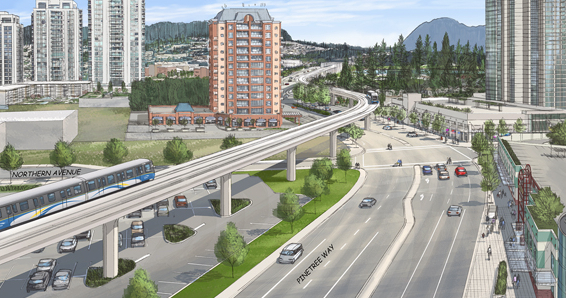 The (N)Evergreen Line is a forgotten spur line of the original Broadway-Lougheed LRT projects and was omitted because we could only afford a much smaller SkyTrain Millennium Line (same was true of the original Expo Line which originally terminated in New Westminster and was much smaller than the original 3 line LRT plan) and now another $1.4 billion is needed to complete it.
The problem with the Millennium Line is that TransLink has been telling ‘Porkies’ about ridershipAi??all along, first exposed by Gerald Fox’s 2008 letter –
From: A North-American Rail Expert (Gerald Fox)
Subject: Comments on the Evergreen Line ai???Business Caseai???
Date: February 6, 2008 12:15:22 PM PST (CA)
Greetings:
The Evergreen Line Report made me curious as to how TransLink could justify continuing to expand SkyTrain, when the rest of the world is building LRT. So I went back and read the alleged ai???Business Caseai??? (BC) report in a little more detail. I found several instances where the analysis had made assumptions that were inaccurate, or had been manipulated to make the case for SkyTrain. If the underlying assumptions are inaccurate, the conclusions may be so too. Specifically:
Capacity. A combination of train size and headway. For instance, TriMetai??i??s new ai???Type 4ai??? Low floor LRVs, arriving later this year, have a rated capacity of 232 per car, or 464 for a 2- car train. (Of course one must also be sure to use the same standee density when comparing car capacity. I donai??i??t know if that was done here). In Portland we operate a frequency of 3 minutes downtown in the peak hour, giving a one way peak hour capacity of 9,280. By next year we will have two routes through downtown, which will eventually load both ways, giving a theoretical peak hour rail capacity of 37,000 into or out of downtown. Of course we also run a lot of buses.
The new Seattle LRT system which opens next year, is designed for 4-car trains, and thus have a peak hour capacity of 18,560. (but doesnai??i??t need this yet, and so shares the tunnel with buses). The Business Case analysis assumes a capacity of 4,080 for LRT, on the Evergreen Line which it states is not enough, and compares it to SkyTrain capacity of 10400.!
Speed. The analysis states the maximum LRT speed is 60 kph. (which would be correct for the street sections) But most LRVs are actually designed for 90 kph. On the Evergreen Line, LRT could operate at up to 90 where conditions permit, such as in the tunnels, and on protected ROW. Most LRT systems pre-empt most intersections, and so experience little delay at grade crossings. (Our policy is that the trains stop only at stations, and seldom experience traffic delays. It seems to work fine, and has little effect on traffic.) There is another element of speed, which is station access time. At-grade stations have less access time. This was overlooked in the analysis.
Also, on the NW alignment, the SkyTrain proposal uses a different, faster, less-costly alignment to LRT proposal. And has 8 rather than 12 stations. If LRT was compared on the alignment now proposed for SkyTrain, it would go faster, and cost less than the Business Case report states!
Cost. Here again, there seems to be some hidden biases. As mentioned above, on the NW Corridor, LRT is costed on a different alignment, with more stations. The cost difference between LRT and SkyTrain presented in the Business Case report is therefore misleading. If they were compared on identical alignments, with the same number of stations, and designed to optimize each mode, the cost advantage of LRT would be far greater. I also suspect that the basic LRT design has been rendered more costly by requirements for tunnels and general design that would not be found on more cost-sensitive LRT projects.
Then there are the car costs. Last time I looked, the cost per unit of capacity was far higher for SkyTrain. Also,it takes about 2 SkyTrain cars to match the capacity of one LRV. And the grade-separated SkyTrain stations are far most costly and complex than LRT stations. Comparing 8 SkyTrain stations with 12 LRT stations also helps blur the distinction.
Ridership. Is a function of many factors. The Business Case report would have you believe that type of rail mode alone, makes a difference (It does in the bus vs rail comparison, according to the latest US federal guidelines). But, on the Evergreen Line, I doubt it. What makes a difference is speed, frequency (but not so much when headways get to 5 minutes), station spacing and amenity etc. Since the speed, frequency and capacity assumptions used in the Business Case are clearly inaccurate, the ridership estimates cannot be correct either. There would be some advantage if SkyTrain could avoid a transfer. If the connecting system has capacity for the extra trains. But the case is way overstated.
And nowhere is it addressed whether the Evergreen Line, at the extremity of the system, has the demand for so much capacity and, if it does, what that would mean on the rest of the system if feeds into?
Innuendos about safety, and traffic impacts, seem to be a big issue for SkyTrain proponents, but are solved by the numerous systems that operate new LRT systems (i.e., they canai??i??t be as bad as the SkyTrain folk would like you to believe).
Iai??i??ve no desire to get drawn into the Vancouver transit wars, and, anyway, most of the rest of the world has moved on. To be fair, there are clear advantages in keeping with one kind of rail technology, and in through-routing service at Lougheed. But, eventually, Vancouver will need to adopt lower-cost LRT in its lesser corridors, or else limit the extent of its rail system. And that seems to make some TransLink people very nervous.
It is interesting how TransLink has used this cunning method of manipulating analysis to justify SkyTrain in corridor after corridor, and has thus succeeded in keeping its proprietary rail system expanding. In the US, all new transit projects that seek federal support are now subjected to scrutiny by a panel of transit peers, selected and monitored by the federal government, to ensure that projects are analyzed honestly, and the taxpayersai??i?? interests are protected. No SkyTrain project has ever passed this scrutiny in the US.
Victoria
But the BIG DEAL for Victoria is: If the Business Case analysis were corrected to fix at least some of the errors outlined above, the COST INCREASE from using SkyTrain on the Evergreen Line will be comparable to the TOTAL COST of a modest starter line in Victoria. This needs to come to the attention of the Province. Victoria really does deserve better. Please share these thoughts as you feel appropriate.
As one can see, TransLink’s business case is on very shaky ground and now Mr. Crilly is sounding alarm bells on the project. The problem with the Evergreen Line is that for transit customers wishing to go toAi?? Vancouver, the West Coast Express is a faster and seamlessAi??ride and those who wish to commute elsewhere, other than Metrotown or Lougheed Mall, will need to inconveniently transfer to another SkyTrain or bus.
Like the Canada Line, for many, the (N)Evergreen Line will be inconvenient and taking the car will just be a better option.
Until we design our regional rail and transit system to cater to customer needs, instead of academic, bureaucratic and political needs, taking the car will be the option for those who can afford to, leaving the rest of the transit system to decay, mainly being for the poor, the elderly and students. Why should the taxpayer ante up two cents more a litre for that?
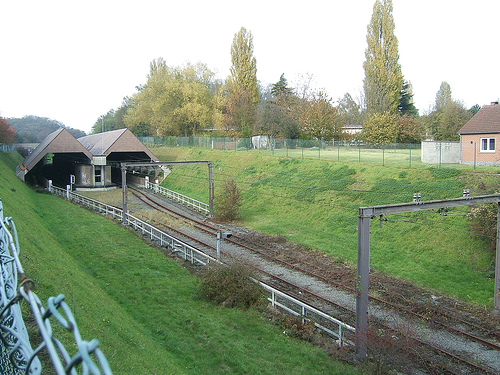
A never used section on the Belgium Charleroi pre-metro.
Over optimistic ridership numbers, doomed some completed lines to rust away, never seeing a paying customer.
P. T. Barnum Was Right – There Is A Sucker Born Every Minute!
Psssst…….hey want to buy some stock in Nose Dive Airlines or a gold mine on Mars, well come to Metro Vancouver because we have city mayors that would.
With absolutely no guarantee, just a promise from TransLink, that the extra two cent a litre tax increase will actually improve transit, several mayors have blundered ahead on stealing more tax monies from beleaguered taxpayer's, without any taxpayer input. "We know better", is the politician's refrain.
Refusing to address the reality that it is the SkyTrain light metro system that is bankrupting TransLink, those voting for a tax increase live in a dreamworld where the regions populace are just dying to give more hard earned money to TransLink.
Me thinks reality will sink in when civic elections are held in November and many who voted for the tax will be without a job, as the taxpayer has grow weary of TransLink's demands.
Majority of Metro Vancouver mayors set to boost gas tax to pay for more transit
Regional mayors (from left to right) Dianne Watts from Surrey, Pam Goldsmith-Jones from West Vancouver, Richard Stewart from Coquitlam, Peter Fassbender from Langley and Gregor Robertson from Vancouver.
Photograph by: Jason Payne, PNG
METRO VANCOUVER – Seven Metro Vancouver mayors, including those in Surrey and Vancouver, will vote in favour of a TransLink plan Friday that calls for a two-cents-a-litre boost in the gas tax to pay for the Evergreen Line and other regional transit projects.
Calling it an “unprecedented show of strength,” the mayors, who represent 70 per cent of Metro’s 2.5-million population, say it’s critical to start building a regional transit system to ease congestion and offer transportation options for the movement of goods and people.
The group, which includes Coquitlam, Langley City, Port Coquitlam, West Vancouver and North Vancouver District, holds enough weighted votes to pass the plan, despite opposition from heavyweights like Burnaby and Richmond. North Vancouver City and Delta are also expected to oppose the plan.
Surrey Mayor Dianne Watts said it wasn’t easy to advocate for any kind of tax increase for transit expansion, but the group felt it had to start planning for the future, especially as Metro Vancouver prepares to welcome another million people by 2040 — most of whom will move to transit-poor areas like Surrey and Langley.
Metro also has one of the busiest border crossings in the country, she noted.
“It’s imperative we start planning now. If we do nothing now and do nothing about the future, we’re going to be in a mess,” Watts told The Vancouver Sun editorial board Tuesday. “We’re going to see an influx of people; we have to get those cars off the road.”
TransLink’s Moving Forward plan aims to raise $40 million annually through a two-cent increase in the gas tax — to take effect next April — and another $30 million through user-pay measures such as a vehicle levy, road congestion charges, carbon tax or tolls.
A potential time-limited property tax increase of an average $23 per homeowner will come into effect in 2013-14 if alternative funding sources can’t be found within the next year.
Mayors of communities south of the Fraser and the Tri-Cities, which have been waiting decades for the Evergreen Line, tend to be more supportive of the plan than other municipalities. Richmond Mayor Malcolm Brodie said while he supports using the gas tax to build the Evergreen Line, he won’t support any plan that includes an increase in property taxes, even as a stopgap measure.
Within two years, TransLink would be back looking for more money, he suggested.
“Ever since its inception, TransLink has faced a funding shortage; it’s been in a critical situation always,” Brodie said. “I believe that we have to have a long-term focus and come up with a permanent solution and not lurch from crisis to crisis.”
Langley Township Mayor Rick Green agreed. He is leaning against supporting the plan, noting that his community has been funnelling money into TransLink and not seeing any returns because the mayors have no control over the projects that TransLink proposes.
“It’s a very tough decision for us out there,” he said.
But the other mayors say they are committed to coming up with alternatives to raising property taxes in 2013, and finally have the opportunity to work with the province to find that long-term funding.
They acknowledge car-dependent communities, such as those south of the Fraser, will pay more for the transit plan in the short term, but vowed to look at making the plan more fair and equitable across the region. This could include tolling existing bridges and roads and a graduated vehicle levy, Langley City Mayor Peter Fassbender said.
The plan calls for building the long-awaited Evergreen Line, as well as major improvements to SkyTrain stations at Metrotown, Main Street, Surrey Central and New Westminster and the Lonsdale SeaBus terminal; a new B-Line along King George Highway from White Rock to Guildford; more bus routes in south Surrey and Langley; Highway 1 rapid transit from Langley to Lougheed station; and road and cycling improvements.
“There’s pressure on the existing transit system, whether it’s pass-ups on buses in Vancouver or congestion south of the Fraser,” Vancouver Mayor Gregor Robertson told The Vancouver Sun editorial board Tuesday. “We simply must invest in a more robust transit system.”
Robertson said people in Vancouver would be willing to pay for the plan because it will provide more access to the rest of the region.
“We’re going to be paying more but we have more to gain,” Coquitlam Mayor Richard Stewart said.
TransLink’s 2040 Strategic Plan aims to have 51 per cent of Metro Vancouver’s daily commuters going to work using public transit, bicycles or on foot as a way to reduce carbon emissions.
ksinoski@vancouversun.com
What Was Once $70 million, Is Now $120 Million! The SFU Gondola Project
As TransLink's is extorting as much tax money as it can from the regional taxpayer, the Simon Fraser University gondola project is in full swing. What is interesting is that the cost of the gondola project has soared from $70 million from this spring to $120 million today.
I wonder if TransLink Board Chair, Nancy Olewiler, Director of the School of Public Policy in the Faculty of Arts and Social Sciences at Simon Fraser University, has anything to do with this questionable project?
I also wonder if chaining the bus tires, in snowy weather, would be a much simpler and very much cheaper solution for transit service to SFU?
Alas, with TransLink, "why spend $1000.00 on chains, when you can spend $120 million for glitzy gondola ride".

Portland's gondola, which carries 3,700 one way trips per day, not per hour!
The tram cost $57 million to build—a nearly fourfold increase over initial cost estimates.
SFU gondola topic of MP's survey
Kennedy Stewart hopes to present findings in six weeks
BURNABY(NEWS1130) – A local politician is looking for your feedback about TransLink's proposed gondola project at SFU.
Up to 4,000 people an hour would be travelling over homes in the Forest Grove neighbourhood if the $120 million TransLink proposal is approved.
"It's something that I want more information on, so I've decided to launch my own consultation process in Burnaby-Douglas; the affected area around the proposed gondola route," explains Burnaby-Douglas MP Kennedy Stewart.
Around 5,000 households will be receiving surveys and phone calls.
"Often for these projects, where currently there's no federal money involved… I think it's responsible to try to get ahead of these issues because I suspect there will be federal money involved at some point and I'd like to have a clear position on the issue when it comes forward."
Some people in the area fear a loss of privacy. "At a height of 160 feet, gondola riders would be able to see through our windows and into our skylights and private rooftop terraces," says Chris Rarinca.
If you live in Forest Grove, Stewart says the surveys should be arriving on your doorstep soon with the phone calls to follow.
Stewart feels the project has a lot of merits and if they can find a workable solution, this might actually save TransLink some money. "It replaces a large number of diesel buses, it's faster for students but the main thing that comes up is how the gondola affects people in Forest Grove."
Stewart is hoping to presenting his findings at a couple of public meetings in about six weeks.
Gondola system quick facts:
- TransLink says it needs to consider this project, as SFU's population is expected to steadily increase in the next 20 years
- The 30 to 35 person gondola cabins would carry 3,000 more people per hour up the mountain
- Gondola cabins would run every 40 seconds
- The system would eliminate weather-related bus cancellations, which happen about 10 days a year
- The system would eliminate 35,000 hours of diesel bus operation
- The recommended route would have the gondola station located at Production Way SkyTrain station
Union urges Vancouver mayors to accept gas taxes to pay for more transit – so they can hire more union bus drivers
The the bus driver union wants regional mayors to vote to increase property taxes to pay for light metro, mainly for Vancouver, comes as no surprise; the light-metro philosophy needs more buses and bus drivers to feed the hugely expensive metro lines. With much cheaper LRT because it can serve more destinations, doesn't such need a vast bus system to feed as light metro system does.
What is politely forgotten by our batch of transit planners is that when modern LRT replaces bus routes, it increases efficiency and productivity. What has been found in Portland and elsewhere, is that when a bus route is converted to a tram/streetcar operation, it became 6 to 8 times more efficient than the old bus operation. To put it another way, one tram/streetcar (1 driver) is as efficient as 6 to 8 buses (6 to 8 bus drivers) and for every tram or bus operated, one needed a minimum of 3 people to manage, maintain, and operate them and with wages accounting to over 70% of operating cost of a transit system, the saving by using tram/streetcar on busy routes is quite high!
The article mentions that the Broadway route sees 110,000 boardings each weekday, which roughly translates into 55,000 actually people using buses on Broadway (most bus users board the buses twice, inbound and outbound). Moving 55,000 people a day on Broadway has stretched bus service to the max, yet installing a modern LRT/streetcar line on Broadway could carry the same amount of ridership using a minimum of one sixth the amount of vehicles greatly reducing the operational costs on the route.
Please note: A modern tram, with a capacity of 250 persons, running at 4 minute headways (15 trips per hour) has a capacity of 3750 persons per hour per direction; two car trains could double this to 7,500 pphpd, more than enough to cater to transit demands on this route and without using additional drivers.
Example: If 100 buses (both trolley and B-Line) are needed on Broadway to move transit customers in peak hours, then only 17 modern trams are needed. To put another way, only 17 tram/streetcar drivers are needed instead of 100 bus drivers.
One can easily see why the transit union wants the expensive SkyTrain/light-metro status quo and increasing property taxes to pay for an inefficient metro system that requires many more drivers doesn't bother them at all.

Union urges Vancouver mayors to accept gas taxes to pay for more transit
The car proposed for use on the Evergreen SkyTrain line.
Photograph by: Vancouver Sun, Handout
The unions representing transit workers are urging Metro Vancouver mayors to accept TransLink's proposed funding supplement plan — including a two-cents-a-litre boost in gas taxes — to pay for transit projects such as the 11-kilometre Evergreen Line.
A City of Vancouver staff report is also recommending approval of the plan, while the Vancouver Board of Trade is polling residents on what they think of the higher fuel tax for transit projects, just days before the mayors vote on it.
The mayors' council on regional transportation will vote Friday on the proposal, which also calls for potential property-tax increases in 2013-14 if alternative funding sources such as road-congestion charges or a vehicle levy can't be secured to pay for future transit projects.
Burnaby, Richmond, North Vancouver District, Delta and Langley Township have said they will probably vote against the plan, which would generate $70 million annually. Surrey, Vancouver and the Tri-Cities are expected to support it.
The vote is weighted, with Surrey, Burnaby, Richmond and Vancouver holding the most votes because of the size of their municipalities. If the plan is accepted, the province will then have to change legislation to allow the increase in the gas tax funding, while negotiations will continue with the government on other long-term funding sources.
Don MacLeod, president of the Canadian Auto Workers Local 111, said the funding is a "small step forward" to meeting the needs of transit riders in Metro Vancouver, by adding 415,000 service hours — a seven-per-cent increase — to bus and SeaBus service by 2014, in addition to getting the Evergreen Line built.
The plan includes major improvements to SkyTrain stations at Metrotown, Main Street, Surrey Central and New Westminster and the Lonsdale SeaBus terminal; a new B-Line along King George Highway from White Rock to Guildford; more bus routes in south Surrey and Langley; Highway 1 rapid transit from Langley to Lougheed station; and road and cycling improvements.
"We're so buried, in the bus system, that any additional services will help," MacLeod said, noting that drivers are constantly passing up riders across the region. "Ridership continues to increase but we haven't put any additional services into buses in some time."
The City of Vancouver is pushing for rapid transit along the Central Broadway corridor to the University of B.C., noting Broadway has the second-highest concentration of employment in the region and the province, second to the downtown core, and is among the busiest bus corridors in North America with more than 110,000 boardings each week day.
The report also says that while there may be a property-tax increase in 2013, it is only a temporary fallback option.
The Evergreen Line, which has been in the works since 1989, was supposed to be operational by 2014. The project has been stalled as TransLink has been unable to come up with its $400-million share of the project, which is being built jointly with the provincial and federal governments.
ksinoski@vancouversun.com
SkyTrain too costly – A letter to the Editor
It not often that a sensible letter about light rail is printed in local papers.
SkyTrain too costly
In his coloum, Grant Granger argued that SkyTrain is a key symbol to the Lower Mainland and a tourist attraction. While this may be true, the trains come at a cost that far outweighs their symbolism.
Granger suggested that we need a greater SkyTrain system with more trains running more frequently to expand ridership. But SkyTrain is part of the problem, not the solution.
SkyTrain has often been promoted as a necessary technology to ferry Vancouverites from one place to the next. Granger’s view is not far off from the governments’ and other pundits’ view that without the SkyTrain Vancouver’s transit needs would be severely underserved.
This argument misses one crucial point. If there was not SkyTrain some transit system would likely be in place.
The cost of using SkyTrain technology is prohibitive. A ground tramline could have been built at a fraction of the cost. Public transportation should be a priority for any government but public transit should be delivered at a lower cost when possible. Vancouverites do not need the latest technologies. Vancouverites need the best system possible to travel around Vancouver.
Another misconception is that SkyTrain is faster. The SkyTrain can travel to about 90 kilometers an hour. Modern trams can travel at a top speed of roughly 90 kilometers an hour or slightly above that mark.
Since trams can be built at a fraction of the cost and travel as fast as SkyTrain, we could have had essentially the same transit system we have today years ago. The cheaper cost of a tram system at grade would have enabled governments to build more lines and trains sooner.
What Vancouver needs is not more SkyTrain, but a realistic idea of what the public purse can afford. By spending taxpayer money wisely, Vancouver’s system could be greatly enhanced in future projects and taxpayer money could go further towards building a top-notch transit system for the locals who ride it on a daily basis.
Matthew Steinbach
Burnabyhttp://www.bclocalnews.com/greater_vancouver/burnabynewsleader/opinion/letters/129462173.html
The Gough coloum
http://www.bclocalnews.com/greater_vancouver/burnabynewsleader/opinion/128021128.html
Transit Blundering in Victoria
Sad to say, transit planners in Victoria have not read the Rail for the Valley/Leewood Report, but then, why should they, they live in a world of gold-plated transit, where any form of rail transit is over-engineered to such an extent that it will be too costly to build. Economy is not in our transit planners lexicon!
The E&N is a logical choice to install diesel LRT, yet this has been completely ignored, or should I say transit planners in Victoria have been willingly ignorant of diesel LRT and the Rail for the Valley/Leewood report, where a 98 KM diesel LRT line from Scott road Station to Chilliwack would cost just under $500 million or just over $5 million a kilometre to build. $500 million is $450 million less than the proposed Victoria LRT, yet give the region a much larger TramTrain network than what has been offered by planners.
The estimate $950 million to build approximately 19 km. of light rail is outrageous and I can see the ghostly hand of the remnants of BC Transit's 'SkyTrain Lobby' at work, gold-plating the project into oblivion.
I would like to remind everyone that the full build, 138 km RftV/Leewood Report, connecting Vancouver and Richmond to Langley, Abbotsford, Chilliwack, and Rosedale was to cost just under $1 billion.
If the light rail types in Victoria really want to see a successful light rail operation, they they must force BC Transit to hire real experts in light rail to plan for a successful and affordable LRT in their region. Using TramTrain on the E&N would go a long way in accomplishing this.

A modern Stadler GTW Diesel light rail vehicle used in New Jersey
Editorial: E&N, light rail and our future
A pilot commuter rail service between Duncan and Victoria would cost up to $40 per passenger, far above the amount that could be recovered through fares. And that’s just operating costs; add in the required infrastructure work on the E&N and the cost per passenger is more like $200.And even then, the service would do little to reduce road traffic.
In other words, this idea is doomed.
The assessment of commuter rail service was done by B.C. Transit and the Island Corridor Foundation, the organization which controls the rail line. It should not be ignored.
But it is only one piece of the transportation puzzle on the southern tip of Vancouver Island. No decision should be made on the E&N’s future without considering the other plans and proposals floating about, or the grim reality of ever-increasing traffic congestion.
Transportation is vital to a thriving community. The choices — often costly — made by local and provincial governments shape our communities.
What’s needed is one cohesive transportation strategy, developed after thorough investigations of all options.
We’re not getting that now. Instead, we have more talk about reviving service on a line that has not seen a train since March 18, when service was suspended because of the track’s poor condition.
Before trains can roll again, the E&N would need $15 million in track improvements and another $1.5 million for other upgrades, and possibly more, depending on B.C. Safety Authority orders.
And before that money is spent, we need to know the E&N has a long-term future. It might have sentimental and historic value, but if it can’t move people quickly and efficiently, perhaps it’s time to admit the Canadian Pacific Railway was right — the line is not viable.
The harsh numbers on the E&N project should also serve as a reality check for B.C. Transit’s plan of a $950-million light rail transit system linking downtown to the West Shore.
Light rail’s appeal is obvious. But the project would require rebuilding Douglas Street, the Trans-Canada Highway and other key routes.
Granted, the LRT would be able to reach into the downtown core and have stops along Douglas, so it would surely attract more riders than the E&N pilot. But if the low-budget version — if $20 million can be called low budget — doesn’t make sense, how can the LRT numbers add up?
Other fixes could make it easier for us to move around the region, but little is being done.
B.C. Transit buses get stuck in traffic with the rest of us. High-occupancy or bus lanes would help to move them along, at a minimal cost, but that idea seems stalled.
University of Victoria students are required to pay for a transit pass, but are learning, because of a lack of buses, that they should not count on the system. Yes, adding buses and drivers would cost money, but not as much money as the E&N would need to resume operations.
Road improvements are also subject to the same hit-and-miss approach, with different governments having different priorities, which too often results in nothing getting done, or worse, a half-finished overpass in Langford.
It’s time to stop thinking in silos, and of treating every idea individually. If it means starting with a clean sheet of paper — or even creating a region-wide transportation authority — then so be it.
It’s time for cohesive planning. Better late than never.
Tomorrow: Setting the region’s infrastructure priorities.
© Copyright (c) The Victoria Times Colonist
The Mufford Crescent Debate.
The Mufford Crescent overpass debate has implications for the proposed Rail for the Valley/Leewood TramTrain. The question Zwei asks is: “Why is a hugely expensive overpass being planned for Mufford Crescent at all, yet the far heavier used Langley Bypass/ Glover Road/Rail intersection/level-crossing remains almost unchanged.
Would it not be better to move the overpass to the Langley bypass/Glover road alignment and then take out the Mufford Road level-crossing altogether? Is it time to be rationalizing local railway level-crossings, when new highway overpasses are built?
More and more the Mufford Road debate looks like a bureaucratic boondoggle, where the planners will force the issue, just to sate their bureaucratic prestige and let common sense and the taxpayer be damned!

Editor;26 Sep 2011
After years of discussion and changes the Mufford Cres. Glover Road
overpass and intersection are still not finalized. Looking back on the
problem it is obvious the problems being experienced are caused by
inappropriate planning and trying to do things that would not be
needed if were doing it right in the first place.
First; we need a Long Range Master Transportation Plan for the Lower
Mainland and all work must fit and be properly coordinated. Second;
as part of the Plan we need to realize that Light Rail up the valley
using the old BCE Right of Way. Third; heavy rail traffic from Delta
Port needs to be rerouted to connect with the main CN double tracked
line up the valley along the Fraser River. Fourth; the development of
a positive Liveable Region Strategy for the Lower Mainland. We must
preserve farmland for food and green space. We do not need another
Los Angeles in the Fraser Valley.
All our present problems have been caused by poor short range planning
that ensures lots of work in the future and waste of tax dollars. For
example if we built light rail overpasses at the Fraser Highway, 200 St
and the Bypass at Glover Road it would really solve the traffic probems
there and would cut the cost in half. Further, most secondary roads would
only require gates, 10 seconds and the train is gone and vehicle traffic
is able to move. The money saved could be used to relocate the heavy
rail and build a new rail bridge over the Fraser at New Westminster. The
railways would save money. And they would not need the nine road
overpasses that are proposed or the double tracking needed on the present
route through Langley City.
One could write a book on the poor and inappropriate planning to date but
the powers that be just do not want to listen to common sense. The main
problem is the Provincial Government who will only agree to wasting our
money and doing things that ensure the railroads do not spend theirs.
A past example of poor planning was the SPI built at 200 St. and the
Freeway about 10 years ago. We told them it would not work and it was
the wrong place to build one but the transportation staff would not listen
and insisted the $15 million they would get from land sales was a good
thing. It now takes up to 20 minutes to get through the intersection during
rush hours and is now going to cost up to $1 billion to improve and allow
for bus service to Vancouver.
We need good leadership, planning and common sense. Everything should
be put on hold until we get it. Solutions to our problem have been solved
in other parts of the world. There is no need to reinvent the wheel when we
could learn from the mistakes and success stories of others. We can have
a wonderful valley with the needed transportation systems. We must insist
that our leaders and managers do what is right.
Eric J Bysouth, Langley CityAi??Ai??Ai??Ai??Ai??Ai??Ai??Ai??
And You Thought Busways Were Cheap – Not in Brisbane Australia
Wow, who said that Bus Rapid Transit is cheap? The cost of Brisbane’s new one kilometreAi??busway is almost the cost of the 98 km. Rail for the Valley/Leewood diesel TramTrain line from Scott Road Station to Chilliwack!
The moral of this story is, when TransLink and politicans promise BRT, do they really know what it costs? SomehowAi??I doubt it!

Brisbane’s busway – the land take needed for BRT is about four time
of than needed for LRT.Ai??
Brisbane’s Eastern Busway set to open after two years of construction
ONE of the most expensive strips of road in the state finally opens on Monday after almost two years of construction, but cars will never drive on it.
The second stage of the bus-only corridor, the Eastern Busway, is little more than a kilometre long and cost $465 (CAD $471.3) million to build – or $442,000 (CAD $448,000) for every metre.
It links Buranda to Coorparoo via two tunnels and sports two new bus stations at Stones Corner and Langlands Park, along with pedestrian and cyclist facilities, but has been criticised over the lack of car parks for commuters.
A community open day today will give commuters a chance to walk the 1.05km length of the completed busway, which has been under construction since August 2009.
“The completion of this busway is extremely significant to the people of Brisbane and I know there will be plenty of people keen to see it up close today,” Premier Anna Bligh said.
Transport Minister Annastacia Palaszczuk said the new section of busway would “vastly improve connection services to and from the eastern suburbs”.
But local councillor Ian McKenzie said the lack of park ‘n’ ride facilities at the stations would create a parking nightmare for residents.
“It is the responsibility of the State Government to find public parking for people who want to use the busway,” Cr McKenzie said.
“I have terrible problems around the Holland Park West busway and the Greenslopes busway with commuters having nowhere to park.”
He also raised concerns about the impact on traffic of the busway on Old Cleveland Rd, Coorparoo.
“The busway will spit buses on to the already congested Old Cleveland Rd, adding another traffic light change to the intersection with Main Ave at Coorparoo,” Cr McKenzie said. “There’ll be more banking up of cars in the afternoon with two schools nearby.”
Opposition Transport spokesman Scott Emerson said the LNP was concerned about the affordability of public transport.
“Commuters already believe public transport has become less affordable since the 15 per cent fare hikes in January, and a lot of people do not realise there are more fare increases planned,” he said.
Vancouver Streetcar Controversy – Facts Please, not Anti-Tram Rhetoric!
The following is typical of the anti streetcar or tram rhetoric that is all too common in Vancouver’s mainstream media. Streetcars are deliberately made to seem inferior to SkyTrain and the SkyTrain Lobby, insure that the blogosphere is filled with anti-LRT/tram nonsense. To make sure this happens, TransLink deliberately inflates the cost of new LRT, while at the same time, artificially reduces the speed and capacity, making streetcars look like a very poor second prize.
If the reporters, columnists took the time to research the subject of streetcars, trams and light rail, they would not print such nonsense, but alas, they don’t.

TransLink and the city of Vancouver tend to compare the SkyTrain mini-metro with streetcars like this
vintage 1940’s PCC car in Vancouver, not the 2011 versions.
Pragmatism, not pie in sky ideas, must rule
By Jon Ferry, The Province September
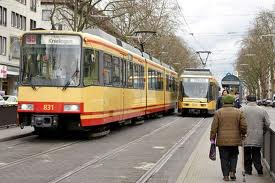
A modern TramTrain, operating on the mainline railway.
The same TramTrain, operating as a streetcar
in downtown Karlsruhe.

Towards financially sustainable mass transit systems
The following was posted to the Light Rail Transit Association's blog and will be well worth a read!
Professor David Levinson http://tinyurl.com/3rl2o68
Human Transit: http://tinyurl.com/3ghdevt response
http://tinyurl.com/3f2pfr4
The Transport Politic: http://tinyurl.com/3dj9kp2 response
http://tinyurl.com/3zqqqz6
2nd Ave. Sagas: http://tinyurl.com/3stumfs response
http://tinyurl.com/3c2gagx
Streetsblog.net: http://tinyurl.com/3lfaaxw
Enviro Boys: http://tinyurl.com/3b7ltb9
Pedestrian Observations http://tinyurl.com/3d949f6



Recent Comments