News item in the Georgia Straight – Light rail, not more SkyTrain, is answer to TransLinkA?ai??i??ai???s cash crunch
Well the Georgia Straight is not afraid to print contrary opinions about our regional transit scene, unlike our mainstream media. It is worth to link to the original story and read the comments, all the usual suspects, spewing their nonsense in a vain attempt to "repeat a lie often enough, it becomes fact".
Some are so puerile and silly to actually use Zweisystem's name, When the SkyTrain lobby stoops to such tactics, you just reinforce the arguments for building LRT as the those supporting SkyTrain have no real argument.
It is interesting to note, that if we had built with LRT as originally intended and invested the same amount of money, we would have had a LRT network at least three times as big as it is now, including a TramTrain to Chilliwack, carrying two to three times more ridership that SkyTrain carries today – pity.
News item in the Georgia Straight – Light rail, not more SkyTrain, is answer to TransLink’s cash crunch
A Portland low-floor LRV ascending the 7% grade to the Steel Bridge across the Willamette River.
September 13, 2011
By Malcolm Johnston
As P.T. Barnum observed, “There is a sucker born every minute,” and with the regional mayors goose-stepping in unison with TransLink’s demand for more money, it seems we are governed by “suckers”.
TransLink’s gambit was to scare regional mayors with dire predictions of transit chaos if new sources of taxpayer’s monies stopped flowing to the “ivory towers” on Kingsway, and it seems TransLink’s predictions of transit Armageddon worked.
What has been not tackled is why TransLink is short on cash. The answer is simple, yet the powers that be just do not want to hear it: it is SkyTrain.
SkyTrain is a proprietary light metro and the taxpayer is paying three to four times more to build it instead of modern light rail. Put another way, for every one kilometre of SkyTrain built, we could have built three to four kilometres of light rail transit.
The following example clearly illustrates the problem.
Portland, for an investment of $3 billion, has 85 kilometres of LRT, operating on four lines, with 85 stations. Portland also has two streetcar lines.
In Vancouver, for an investment of over $8 billion, has 69 kilometres of SkyTrain and Canada Line light metro (the Canada Line is not compatible with SkyTrain in operation), with 47 stations.
For almost one-third the investment, Portland has a larger urban rail network, with more stations, servicing more destinations.
For the anti-LRT crowd, today modern LRT can carry more passengers than SkyTrain and faster, if it is designed to do this, yet it can be built very cheaply if need be.
TransLink has bamboozled regional mayors with their SkyTrain nonsense for so long that they believe it themselves, and the result is ever higher taxes to fund hugely expensive mini-metro projects that again demand even more taxpayer’s monies, which in turn, again increases taxes and so on and so on.
Want to curb TransLink’s tax-and-spend appetite, then stop building SkyTrain and plan for LRT instead!
Malcolm Johnston is the past chair of the Light Rail Committee, a member of Rail for the Valley, and a 26-year member of the Light Rail Transit Association.

A lightrail and streetcar primer.
The silly season has begun in the Vancouver region, with TransLink desperately trying to persuade regional mayors to levy more taxes to mainly pay for the Evergreen SkyTrain light-metro line. The following is a quick primer on streetcars, LRT and SkyTrain for use at upcoming transit dog and pony shows.
Question: What is the difference between LRT and a Streetcar or tram?
Answer: Today the difference between LRT and a streetcar/tram is the quality of rights-of-way, where a streetcar operates on-street in mixed traffic, light rail operates on a reserved rights-of-way (R-O-W), such a boulevard or a streetcar/tram only HOV lane on-street, which gives LRT an unimpeded transit route and faster commercial speeds. Today, there is little difference between a tram/streetcar and light rail vehicle except for motor size.
Q: What is SkyTrain?
A: SkyTrain is a proprietary unconventional light-metro system system first marketed by the Urban Transit Development Corporation of Ontario, which is now owned by Bombardier Inc. SkyTrain is considered an unconventional railway because it is powered by Linear Induction Motors and is incompatible to operate with any other transit system, save itself. The Canada Line metro and SkyTrain are incompatible in operation. there are only 7 "SkyTrain" type systems in operation around the world, despite being first marketed in the late 1970's
Q: What is light metro?
A: Light-metro was originally supposed to bridge the gap of what old streetcars could carry and what ridership would justify a heavy-rail metro. Modern LRT has made light-metro almost obsolete and automatic (driverless) light-metro's obsolete, with its higher construction and operating costs.
Q: Is SkyTrain cheaper to operate than LRT?
A: No, SkyTrain costs about 40% to 60% more to operate than comparable LRT operations. Also the provincial government subsidises SkyTrain at about $250 million annually.
Q: How fast can LRT operate?
A: Generally speaking, LRT can operate as fast as its R-O-W will permit. Streetcars or trams generally have smaller motors giving maximum speeds of 60 to 70 kph, while LRT has larger motors, giving speeds of 80 to 110 kph.
Q; TransLink claims that Skytrain is faster than LRT?
A: SkyTrain seems to be faster than LRT because TransLink has designed SkyTrain to be faster.
Q: How much does LRT cost to build?
A: Light rail can be built as cheaply as $5 to $6 million/km using TramTrain; $15 to $25 million/km. for a streetcar; $20 million/km + for light rail. TransLink has always gold-plated light rail with all sorts of added cost to drive up the cost to be as close to Skytrain it can.
Q: What is the capacity of a light rail vehicle (LRV)?
A: Today, the capacity (all seats occupied and standees at 4 persons per m/2) of a LRV ranges from 200 to 350 persons, In Asia, there are plans for trams to have a capacity of 450 persons.
Q: What is the capacity of LRT and/or streetcar line?
A: The capacity of a tram/streetcar line is dependent on vehicle size and headways. In Karlsruhe Germany, the main tram route through the city is seeing peak hour capacities in excess of 40,000 persons per hour per direction, which is 10,000 more than the maximum theoretical capacity of SkyTrain!
Q: What is TramTrain?
A: TramTrain is a tram/LRT vehicle that has the ability to both operate on mainline railways or streetcar track. Since being introduced in 1994, there are now 3 times as many TramsTrains in service that SkyTrain type systems.

A reserved rights-of-way enables LRT to obtain commercial speeds of that of a metro.
I must go down to the sea again [in ships & trams]
I must go down to the seas again, to the lonely sea and the sky,
And all I ask is a tall ship and a star to steer her by,
And the wheel’s kick and the wind’s song and the white sail’s shaking,
And a grey mist on the sea’s face, and a grey dawn breaking.
Sea Fever, John Masefield
Marseilles’ urban ‘ships’ a public transit delight
http://www.theglobeandmail.com/authors/eric-reguly/
Eric Reguly
Globe and Mail European Business Correspondent
MARSEILLESA?ai??i??ai??? Globe and Mail Blog
Posted on Friday, September 9, 2011 6:36AM EDT
Ai??
Ai??Ai??
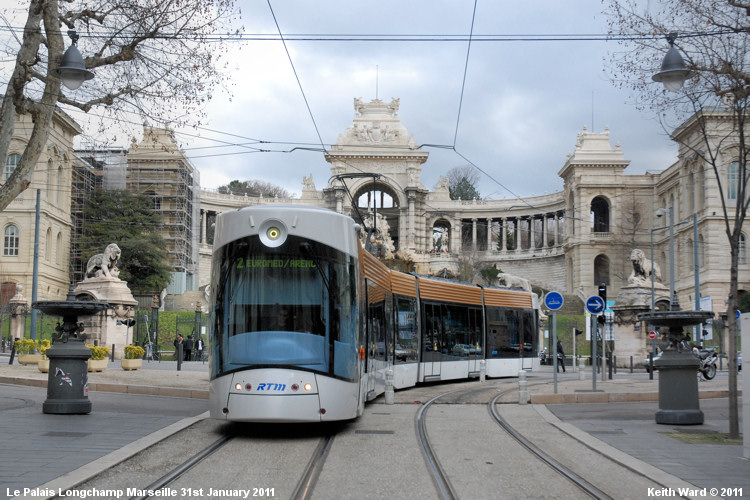
There are a lot of things to like about Marseilles, the host city for the Group of Seven finance ministersA?ai??i??ai??? meeting on Friday and Saturday. The old port is charming, the weather is gorgeous and the street life is vibrant. It also has the most attractive trams — streetcars to you and me — on the planet.
Ai??Ai??
The trams are rolling industrial art, inspired by the cityA?ai??i??ai???s rich maritime heritage, and they were built by CanadaA?ai??i??ai???s own Bombardier. The look like ships on wheels. The front and back ends rise up like the bows of an elegant yacht. The A?ai??i??Ai??hullA?ai??i??A? of the streetcars, like any proper yacht, is white. The windows are enormous, giving the interior a bright, airy feeling. The natural wooden seats and blue interior accentuate the Mediterranean effect and give passengers a panoramic view of the city.
Ai??Ai??
Bombardier built 26 of the low-floor streetcars, each with the capacity for 200 passengers, for Marseilles. Toronto and other cities should take note. Urban transportation machines do not have to look like metal boxes. The trick is pick up on a city theme and let it shape the industrial design. But for Toronto, what would that be? a streetcar that looks like a bank branch or a Tim Hortons
Ai??Ai??
Ai??Ai??
Flexity 2 tram unveiled in Blackpool
Railway Gazette 08 September 2011
http://www.railwaygazette.com/nc/news/single-view/view/flexity-2-tram-unveiled-in-blackpool.htmlAi??Ai??
UK: Bombardier Transportation launched the first of its Flexity 2 trams in the seaside town of Blackpool on September 8. It is the first of 16 ordered by Blackpool Council in 2009 as part of what Lancashire County CouncilA?ai??i??ai???s Director of Transport & Strategic Highways, Mike Kirby, describes as a Ai??A?100m A?ai??i??E?rebirthA?ai??i??ai??? of the townA?ai??i??ai???s 125-year old tramway.
The latest addition to BombardierA?ai??i??ai???s family of low-floor trams A?ai??i??E?combines proven technology with continuous innovationA?ai??i??ai???, according to Bombardier Transportation President AndrA?Ai?? Navarri. It is an evolution of previous designs, incorporating successful features from the 3Ai??Ai??500 light rail vehicles which Bombardier has supplied to 100 cities in 20 countries.
New features include touch-screen controls for the driver. The outer shell of the cab can be specified by the customer, enabling cities to choose their own front end. The interior is designed as an A?ai??i??E?empty roomA?ai??i??ai???, which can be fitted out however the customer wishes; the second customer for Flexity 2 is the Gold Coast light rail project in Queensland, Australia, where 14 longer cars are to be supplied with space for surf boards.
The northern resort of Blackpool is home to the UKA?ai??i??ai???s only surviving first-generation tramway, an iconic part of the townA?ai??i??ai???s attractions. But by the early 2000s it was clear that modernisation was needed, and the effects of an aging population and impending legislation on accessibility meant that traditional high-floor trams could not continue in service indefinitely. A?ai??i??E?If we didnA?ai??i??ai???t secure major investment it would wither and dieA?ai??i??ai???, said Kirby.
But A?ai??i??E?Blackpool continued to keep its faith in this method of transportA?ai??i??ai???, according Simon Blackburn, Leader of Blackpool Council. There had been talk of reducing the line to a short tourist attraction in the town centre, but government funding was secured to cover most of the cost of a Ai??A?100m programme which Kirby says will ensure the line between Blackpool and Fleetwood provides an economic boost by enabling residents to access jobs and services.
Procurement followed a traditional model, with the UK Department for Transport providing funding and Blackpool Council purchasing the 16 vehicles for Ai??A?33m. DLA provided specialist legal support to the council.
The trams are being assembled at Bautzen in Germany, with significant input from BombardierA?ai??i??ai???s plant in Wien. Following commissioning, the new trams will enter service at Easter 2012, when a new timetable based on 10Ai??Ai??min headways is due to be launched.
As well as the new vehicles, the investment programme includes a major rebuild to bring the route up to modern light rail standards. The number of stops is being reduced from 64 to 37 to enable the trams to offer competitive journey times, with the remaining stops rebuilt to provide level boarding.
The traditional double-deck trams are seen as an iconic part of Blackpool and will continue to operate through the town centre. Around 10 are being adapted to meet accessibility requirements, but the most historic vehicles will be kept as a museum fleet. The introduction of new vehicles means the double-deckers are A?ai??i??E?no longer old trams, they are heritage tramsA?ai??i??ai???, according to Blackburn.
The new cars will be housed in a purpose-built depot at Starr Gate, constructed by VolkerFitzpatrick. Design has been informed by the TramStore 21 project, which has compared experience across Europe to improve efficiency.
Operating along the seafront, BlackpoolA?ai??i??ai???s trams can be exposed to harsh maritime conditions. The depot has marine-grade coatings and an aluminium roof to minimise corrosion, while the trams will be kept indoors and washed every day. The new depot is in a prominent location at the southern end of the seafront promenade, and features an external LED display designed to harmonise with the townA?ai??i??ai???s famous illuminations.
The depot has three maintenance roads, one of which is equipped with Eurogamma jacks. An important feature is the Hegenscheidt wheel lathe which will be able to turn all the wheels of a Flexity 2 tram in a day.
http://www.blackpoolgazette.co.uk/news/local/gliding_into_a_new_trams_era_1_3759035

Vancouver’s anti-LRT media and blogs. Don’t diss Portland’s light rail
I don’t like doing this, but the following has struck a nerve.
The statement from Frances Bula’s blog, “The famous streetcar and light-rail transit? Iai??i??ve concluded that that is the only option the city has, since it has about 60,000 fewer people than Vancouver does but spread out over three times the land. They canai??i??t afford anything else.”, is very condescending about light rail. But then Frances Bula has been always anti-LRT and pro-SkyTrain and is how she earned her nickname BS Bula with the Cambie St. crowd during the Canada Line fiasco.
She doesn’t mention that for about a $3 billion investmentAi??with LRT, Portland has four LRT lines, with a total length of 84.3 km and two streetcar lines. By comparison, the Vancouver region has invested over $8 billion in three metro lines with a total length of 68.7 km.
Portland has 85 transit stations versus a meager 47 for SkyTrain. This means there are more stations, serving more potential customers in Portland. Though SkyTrain ridership is almost three times that of Portland’s LRT, 80% of SkyTrain’s ridership are forced to transfer from bus to SkyTrain, as no regional bus now connects to Vancouver’s downtown. Forced transfers certainly increases ridership, but deters many people from using transit.Ai??Portland’s transit officials point to a 20% modal shiftAi?? (or more) from car to LRT, while TransLink, who operate SkyTrain, sidesteps that question completely.
Also quietly ignored with SkyTrain’s ridership figures is the massive use (over 100,000 issued) of the $1.00 a day U-Pass to all post secondary students in the regionAi??and howAi??it effects SkyTrain’s ridership numbers.
Also what is even more laughable isAi??the claimAi??that Vancouver region can afford SkyTrain; well excuse me, isn’t the Evergreen Line debate one of the inability to fund SkyTrain?
So in reality, the Vancouver region has spent almost three as much as Portland for ‘rail’ transit,Ai??for a smaller and less efficient light-metro line.
Yes Ms. Bula, I conclude that you never really have done any research on LRT and anything you write about transit should be read with great caution. Your Cambie Street nick says it all.

Portland’s LRT now and what is planned for the future.
Light Rail for Surrey – A Rerun from May
With LRT in the mix for TransLink consultation process, Zwiesystem is reposting an item from May 4, 2011.
I believe this plan is superior and cheaper to what TransLink is offering, as well, servicing far more people and has the potential to provide a direct line from White Rock to downtown Vancouver.
LIGHT RAIL FOR SURREY ai??i?? The Whalley ai??i?? King George ai??i?? White Rock (WKW) Line
Surrey wants light rail, but where will the first LRT line go and what line would attract the most customers to the new light rail line?
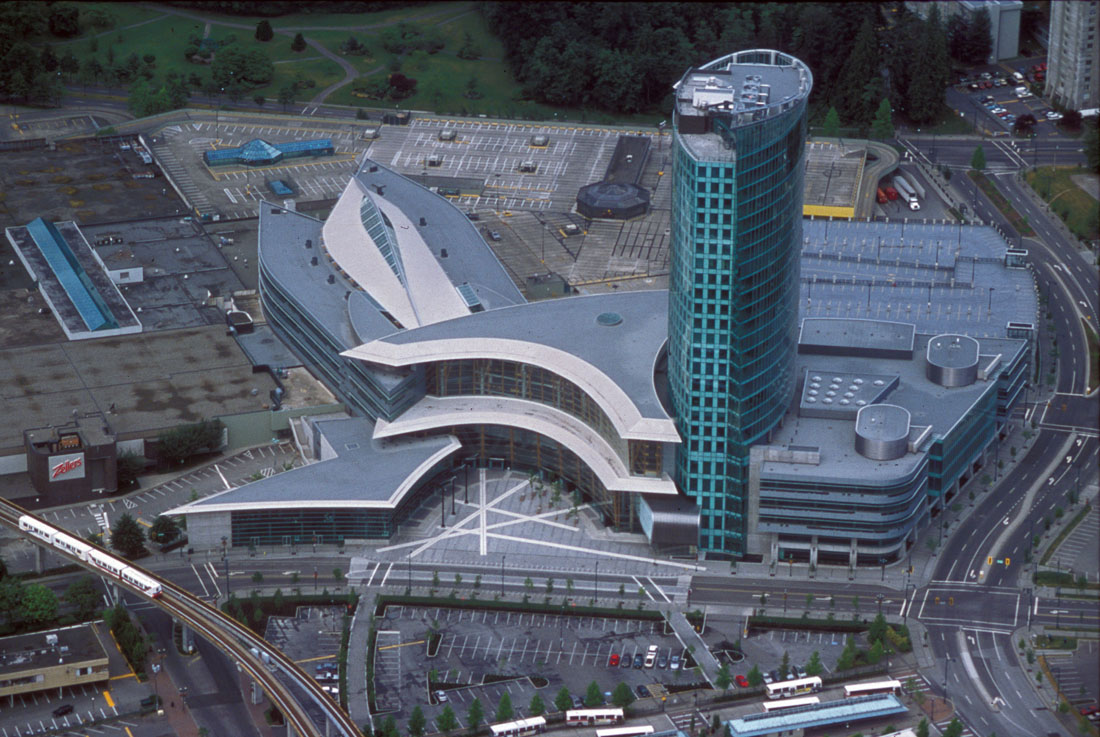
If the goal of the new light rail line is to serve customer needs and offer the ability to provide an attractive alternative to the car, it must serve a multitude of destinations, as well service where people live. Those planning for LRT, presently have not much expertise and tend to treat the mode as a poor man’s SkyTrain. Building LRT as an extension of the SkyTrain light-metro system will fail to meet expectations as LRT will not be designed to its best advantage. It is not ‘rocket science’ to design a transit line to be an attractive alternative to the car and the following plan may prove useful.
The Light Rail Line
The 23 kilometer Whalley ai??i?? King George ai??i?? Rail for the Valley ai??i?? White Rock line (WKW Line for short) may be just the trick in laying a foundation for an attractive light rail system in Surrey. The light rail would be a classic LRT, operating on a ‘reserved rights-of-way (RoW) in the median of the road. The route of the WKW Line would start at Gateway SkyTrain station at 108th Ave & 134th St. and continue a short distance east (500 m) to the King George Highway, From the KGV Hwy and 108th St, the KWK Line would travel South (7.5 km) to the Southern RR of BC (formerly the BC Hydro railway, running in the median of the KGV highway. This portion of the route would service the Central City shopping district; Surrey Memorial Hospital; Queen Elizabeth Secondary School; Bear Creek Park; and the Newton shopping district.
The WKW Line would then network south-east along the former BCE interurban and proposed Valley Rail Vancouver to Chilliwack TramTrain route to 152nd (4 km). Traveling mainly through industrial lands, which would provide the ideal location for the Light Rail storage and maintenance yards. The 4 km. of track involved would be double tracked and adequately signaled for safe freight/Interurban/tram operation.
Included on this line, is the possible joint operation with the RftV/Leewood interurban, enabling South Surrey and White Rock transit customers to continue on the Scott Station or even into downtown Vancouver, if the “full build” Interurban project is built.
From 152nd Street, the KWK Line would go straight south to White Rock (11 km) crossing the Nicomekl /Serpentine River Valley. Along here the line must be raised above flood plain and three new bridges across the Superport Railway Line, and the Serpentine and Nicomekl rivers must be built. It is this portion of line that will be the most expensive. Rising out of the small river valley the KWK Line continues south along 152nd Ave. terminating in downtown White Rock.
Map of South Surrey & the City of White Rock

In the summer, the White Rock the light rail line would bring congestion relief by providing a quality transit alternative for the many thousands of people who come in cars to the popular beaches. Also close to the KWK Line is the South Surrey Athletic fields, which many fields and arenas are constantly busy with hockey, baseball, soccer, rugby, and football games, twelve months of the year. The KWK Line would also provide an excellent transportation access for the burgeoning housing estates in South Surrey and White Rock.
The Cost
The the total cost of the KWK Line, including bridges and/or viaducts should cost no more than $690 million, based on an average of $30 million/km to build. The high cost of major engineering in the Nicomekl/Serpentine valley, would be mitigated by simple on-street construction on 152nd and the King George Highway and track sharing for 4 km on the Southern Railway of BC Line bisecting Surrey .
It is interesting to note that the total cost for the 98 km RftV/Leewood Chilliwack to Scott Road Interurban using Diesel LRT and the 23 km KWK Line would be under $1.2 billion or put another way we could build 121 km of modern LRT lines in the Fraser Valley for $200 million cheaper than the 11 km Evergreen Line!
Unlike present light rail planning, where development is encouraged to take place along a LRT/SkyTrain route, the KWK Line can pass through sensitive agriculture and ecological areas, without the need to densify along its entire route. By building the KWK Line a potential capacity of 20,000 persons per hour per direction is available to handle future passenger loads, yet still can be built much cheaper than its Skytrain/light-metro competitors. The cost for a SkyTrain along the KWK Line? About $2.3 billion at a conservative cost of $100 million per km to build!
A modern LRT Line in Madrid, Spain ai??i?? A template for the WKW Line?

The WKW Line will provide a high capacity light rail line with a potential of carrying over 20,000 persons per hour per direction, without increasing road space. Using low-floor trams, with convenient stops, ensures an obstacle free journey for all transit customers, including the mobility impaired, without the need of expensive stations and equally expensive to maintain elevators and escalators.
The KWK Line can provide traffic calming where needed, yet still supply ample capacity for future transit needs. By providing a regular and efficient transit service from White Rock to Surrey Central and servicing many destinations along its route, would attract ample ridership, including the all important motorist from the car, to the new light rail line. The KWK Line would also easily integrate with the RftV TramTrain interurban service from Vancouver to Chilliwack and could provide in the not too distant future a direct White Rock to Vancouver TramTrain service, faster than the present bus and Canada line service.
The WKW Line would bring 21st century transit solutions to Surrey, transit solutions that are too long overdo.
Aecom wins Canadian light rail contract
Aecom lands early role on Edmonton LRT
Aecom has won a CAD $36m contractAi?? for preliminary engineering on a light rail transit (LRT) expansion scheme in Edmonton, Canada.
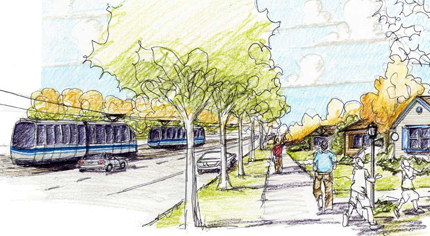
Under the contract for the City of Edmonton, the company will provide preliminary engineering design services for the Southeast LRT line from downtown Edmonton to Mill Woods and for the West LRT line from Lewis Estates to downtown Edmonton.
The new, low-floor LRT system will include 29 stations and approximately 27km of double track with more than 0.8km in tunnels and 1.6km on elevated structures. The project will also include a new light rail vehicle operations and maintenance facility, transit centres and a park-and-ride facility.
The preliminary design is slated for completion by September 2013.
Work progresses on Edmonton light rail extension
Railway Gazette
 Ai??
Ai??CANADA: May 2 marked the start of major construction work on the 3Ai??3 km, three-station light rail extension in Edmonton, running from Churchill to the Northern Alberta Institute of Technology.
The tracks will be at grade except for a 700 m long, 18 m deep tunnel between Churchill and MacEwan. When revenue service begins in the spring of 2014, a new route will be established between Health Sciences and NAIT.
Preliminary work has been underway since last year and a section of tunnel has already been completed as part of work on a new office block. Construction is underway along four blocks of Kingsway, from 102nd Street to 106th Street, with completion set for October. Other 2011 activities, including utility relocation, building demolition and tunnelling on 105 Avenue, are tentatively scheduled to begin in late summer.
The C$755m capital cost includes contributions from the local, provincial and federal governments. The extension, the first part of an ambitious light rail expansion programme, is expected to carry around 13 200 new weekday riders.
Meanwhile, Aecom Technology Corp has been awarded a US$32Ai??5m contract extension to provide project management and engineering services for the NAIT extension. The company recently completed the detailed design phase for the project.
When accidents happen…………
The followingAi??article illustrates two items that many people here, on our side of the pond, are completely unaware of.
The first item is a investigation of a death on the Manchester (UK) LRT by the RAIB or Rail Accident Investigation Branch, an English organization. When a death occurs on SkyTrain, the public is completely unaware as the incident(s) are unduly hushed up. Though the vast majority of accidents and deaths on SkyTrainAi??are suicides or attempted suicides, there is little investigation, except for a shrug of the shoulders and; “Just another track jumper guys“, which has lead to the false belief that SkyTrain is very safe, when in fact it has a much higher death rate than comparable LRT operations.
Zwei believes all deaths that occur on SkyTrain must be investigated by an independent public body and not by police or the coroners office, which both have little expertise in rail matters.
When somebody does fall in front of a tram there is a device called a “life-saver” or “under-run protector” is activated, preventing the body coming in contact with the wheels and hopefully (but not always) preventing death. SkyTrain does not have such a safety system and when a body is run over, they have to literally jack the train off the dismembered body.
When accidents happen with any sort of rail transit, serious injuries occur, but with LRT there are several safety mechanisms that are not available to light-metro systems like SkyTrain.
Investigation into a fatal accident at Piccadilly Gardens, on the Manchester Metrolink tramway, on 5 June 2011
The investigation will seek to understand the mechanism by which the injuries were caused to the pedestrian and the role played by the under-run protector. It will also review the history of accidents of this type on tramways.
The RAIBai??i??s investigation is independent of any investigations by the police and the safety authority (the Office of Rail Regulation).
The RAIB will publish a report, including any recommendations to improve safety, at the conclusion of its investigation. This report will be available on the RAIB website.
http://www.raib.gov.uk/publications/current_investigations_register/110605_piccadilly_gardens.cfm
More trams for Montpelier
The following happier transit news for Montpelier, is courtesy of David Cockle.
As the SkyTrain lobby still dream a Luddites dream of the world being flat and everyone builds with SkyTrain, more light rail is being built in France.
Why is France so important, you ask? Well France also has a proprietary light-metro system, called VAL and despite huge subsidies from the French Government who owned MATRA, who owned VAL, to build with the light-metro, fiscally responsible civic politicians built with LRT instead. Not so with Vancouver, whose politicians still want metro because they think subways and metros make Vancouver a world class city.

Construction of Montpelier Tram Line 3 continues,
http://www.ligne3-montpellier-agglo.com/
http://www.railwaygazette.com/news/single-view/view/montpellier-selects-citadis-for-line-3.html
http://www.caradisiac.com/Montpellier-mettra-en-service-la-ligne-3-du-tramway-en-6386.htm
Line 3 from Juvignac crosses the future of Zac Caunelles and descends towards Montpellier. The first interchange with “line to the swallows” is located at Mosson.
La Mosson Avenue LodA?ve
The route continues to the neighborhood Avenue LodA?ve Celleneuve (Celleneuve station) where the line 3 rises to the Avenue des Moulins via Zamenhof Street and the Rue du Pilory (Pilory station). She joined the Avenue des Moulins (County Hall station) and the Rue d’Alco to serve neighborhoods and small Bard Pergola (station Pergola).Line 3 rejoined the avenue by avenue LodA?ve Paul Bringuier to Plan cabins where it crosses the neighborhoods and Gely-Figuerolles Gambetta. On this stretch, it serves four stations: Arbors, Jules Guesde, Astruc and The Arches.
Servicing the Hotel departement, Sanofi business school and Jean Monnet High School.
Serving the LycAi??e Jules Guesde, the National Gendarmerie, the Bank of France, clinic Clementville, La Merced High School and City University.Avenue LodA?ve to the Gare Saint-Roch
Line 3 down Gambetta serving the neighborhood Figuerolles . After the course, its layout is now single track onto the Boulevard of the Observatory and the Rue de la Republique to the train station (Gare Saint-Roch).
In the other direction, towards Juvignac, it will continue on the Boulevard du Jeu de Paume, after serving Observatory, and take the street to join the Andre Michel Cours Gambetta. At this point, the station serves the St. Denis area.Service station and downtown.
Connection with all TER (regional trains) and TGV.
From Gare Saint-Roch Rives du Lez
From the station, route of line 3 shares the track with line 2 towards Saint-Roch-des-PrAi??s d’ArA?nes.The route of line 3 is directly between Gare Saint-Roch and Rives du Lez via the Boulevard de Strasbourg instead of Line 2 (Station Place Carnot and Voltaire). Where is joins line 1 (Rives du Lez, MoularA?s).
Antigone service, swimming poolRives du Lez Avenue Raymond Dugrand
Line 3 runs in common with line 1 to station Port Marianne and forks to the right place to borrow Ernest Garnier Dugrand Raymond Avenue south neighborhoods Jacques Heart and Port Marianne served by the station Pablo Picasso.
Line 3 crosses the highway passes through the station Trinquat Bridge and arrived at the station Boirargues Lattes.
Serving the school group and the Rauze new City Hall.
Serving high school and shopping center Champollion Deep South.Lattes and to PAi??rols
Line 3 is divided here into two branches at the roundabout of the Mediterranean. One branch goes to Lattes Centre through the stations of the Upper and Lironde Cougourlude.
The other branch continues to PAi??rols in serving 3 stations: Pailletrice, PAi??rols and Exhibition Centre. Line 3 then reaches the terminus PAi??rols-Etang de l’Or.http://www.heraultwhatson.info/travel-info/2011/3/24/update-on-montpellier-tram-line-3.html and
http://www.ligne3-montpellier-agglo.com/la-ligne-3/le-parcours
Future Lines 4, 5 & 6 http://edouard.paris.pagesperso-orange.fr/ligne3.htm#info
Tram line 4 was initially proposed to adopt the route la gare Saint-Roch et desservirait les quartiers de Figuerolles, La Chamberte, Montpellier Village, avant d’atteindre le stade Yves du Manoir Ai??.
Some views of the new Line 4 Trams
http://imageshack.us/photo/my-images/683/p1160631q.jpg/
http://imageshack.us/photo/my-images/695/p1160638.jpg/
http://imageshack.us/photo/my-images/153/p1160645.jpg/
http://imageshack.us/photo/my-images/62/p1160683c.jpg/
Discussions on the route of tram line 5 are still in the early stages.
Georges FrA?che has indicated that he would like to see a Line 6 following this route from Castries to Odysseum : Both Line 5 & 6 are “future wishes” with no finalised programme agreed.
Bank Holliday Essay – “The past is a foreign country; they do things differently there.”
Some background for the following post.
The author is commenting on the current Edinburgh tram fiasco, where cacophony of bad management, bad planning, and a very bad contractor Bilfinger Berger (Remember those chaps, eh?, They were the same crew that screwed up the Seymour water tunnel project!) has all but sunk the much needed tram project. Adding, the UK riots and viola.
The sad fact is, we don't do things differently here, we just keep spending billions of dollars on truncated metro lines that do not offer an attractive alternative to the car and pretend we are doing a great job moving people.
The only difference between the UK and Vancouver, we only seem to burn an loot when Vancouver loses a hockey game, something fun to do in no-fun city, where at least in the UK there seems to be a bit of an political undercurrent for their riots.

I listened to You & Yours on BBC Radio 4 at lunch time today, one of the reports/subjects tackled was the legacy & the sustainability of the 2012 London Olympics.
I was struck with a sense of déjà vous; the number of You & Yours episodes over the past 3 – 4 months that have focussed on the on going twists, trials and ramifications of that singularly unfortunate project.
I will not apologise for cross posting, the two LRTA groups & the Croydon Tramlink group have featured lengthy comments on the Edinburgh debacle and have included innumerable url links to published articles in the:
Scotsman, Herald, the Scotsman on Sunday & also today's Edinburgh Evening News
A comment from today's BBC programme that stuck in my mind was,"The past is a foreign country; they do things differently there."
For those of you, not familiar with this line, it is from the novel, The Go Between by Leslie Poles [L.P.] Hartley
http://www.goodreads.com/author/quotes/51606.L_P_Hartley
which was made into a 1970 film, directed by Joseph Losey with a star cast, in an adaptation by Harold Pinter.
The book's opening sentence & films opening line, "The past is a foreign country: they do things differently there", has become almost proverbial.
The context of this quotation, was the legacy of 2012 on the rest of Britain outside London; a Leeds born BBC journalist commented that in Manchester, Sheffield also Glasgow and Edinburgh as well as Leeds, the 2012 interest & legacy was minimal amongst the locals, even with Olympic teams from across the globe using sporting facilities the length & breadth of Britain for training.
For me, the inclusion of Leeds was particularly pertinent, as Alistair Darling cancelled the tram system there in 2006/07 and only last week he resurfaced in Edinburgh to support the Scottish politicians in their efforts to finish the Edinburgh tram.
Across Britain, 2012 has not at least so far lifted the country from its depression, far from the opposite, though the perceived injustice of the ticket ballot, allocations & sales has not helped.
As with LRT/Tram projects, London 2012 has bought out the Nimby's, with their cries of ` Build Absolutely Nothing Anywhere Near Anything (or Anyone)' BANANA and `Fear of Revitalization Urban-Infill' and Towers FRUIT
Not a Penny More and of course "The past is a foreign country; they do things differently there."
For past read London 1948, anywhere north or south of the border, anywhere on the continent, anywhere in the US or Canada, depending on which side of the border your on.
Reading the various tram articles in the Scotsman, Herald, the Scotsman on Sunday & the Edinburgh Evening News my eyes ran down the on line vox-pop comments.
The working class feel alienated on the matter of trams & Olympics, thus they fervently protest – burn & loot our high streets and claim they are victimised by society.
The middle class feel threatened on the matter of trams & Olympics, thus they fervently protest – write to the papers, write to their MP and claim their life style, taxes & PROPERTY ARE THREATENED
I read the letters in our local papers, following the Olympic cycling test event, the other week and so many inhabitants of SW London & Surrey claimed the event threatened their life style & freedom of association.
Yes, The past is a foreign country; they do things differently there
They do things differently in Glasgow, London, Paris, Berlin, Seattle and Edmonton
Bank Holiday essay over.
Yup, The Mainstream Media Gets It Wrong Again
Trust the mainstream media to get it wrong and with regional transit, they have been on the wrong track for a very long time.
What attracts people to transit?
It’s a complicated question that much time has been taken to study. Not so in TransLink’s world where it is claimed thatAi??SkyTrain’s speed alone will attract the motorist from the car. Following this dictum, TransLink forces as many bus passengers it canAi??onto SkyTrain or the Canada Line as possible (in fact TransLink admits that 80% of SkyTrain’s passengers first take a bus to the mini-metro) claiming both high ridership and mini-metro success; but is it really? Is recycling bus passengers onto a metro good transit practice?
The international Hass-Klau studies, starting with ‘Bus or light rail – making the right choice’ found that to making public transit successful enough to attract the motorist from the car had many factors and speed of the individualAi??bus, LRT, metro alone was only a minor part of a more complicated formula.
The international study found that overall commute time, doorstep to doorstep, had to be somewhat comparable to the car, not speed of the metro alone and something else far more important, the seamless (no-transfer) journey was extremely important in attracting the all important motorist from the car. Forcing bus customers onto SkyTrain, is contrary to what has been found to attract ridership and with TransLink forcing transfers (in the case of the Canada line, needless transfers) deters people, especially car drivers from taking transit. Notice the oft repeated Canada Line slogan that the new metro would take 200,000 car trips off the road per day has been quietly forgotten!
The mainstream media, who have never done much investigating of TransLink and its inept planning, blithely write that “we love our cars“, instead of doing real reporting, with headlinesAi??such as; “Despite $8 billion invested in our metro system alone, TransLink has failed to attract the motorist from the car”.
TransLink has got it wrong, but until it is reported that TransLink has got it wrong, the taxpayer will continue being fleeced of tax monies to fund hugely expensive mini-metro lines that do little or nothing in reducing gridlock and pollution.
Ai??
Editorial: We love our cars, so back off, TransLink
We still love our cars, even with the hassles.
Photograph by: File, Getty Images
Statistics Canada confirmed this week what everyone already knows, but the eco-activists in and out of government wish were not true: a massive majority of us still love our cars. (Well, some of us may not actually love them, but we sure as heck prefer them to riding transit.)
StatsCan found that more than 80 per cent of people still commute by private vehicle. The reason? It takes less than half as much time to get to and from work in a car than it does on transit. And the time spent driving, in a quiet, often air-conditioned space, listening to music rather than being crammed like cattle into steamy, swaying, often stinky boxes with at times unpleasant strangers is also a factor.
No matter how hard it tries, public transit can never be as good as private transportation, where individuals can develop solutions to their unique commuting needs. Socialism-inspired transit planners can never provide better solutions to individual needs no matter how many billions of dollars of our stolen money they throw at their mega-projects.
A generation ago, reasonably, public transit was designed to assist the poorer members of society while most people looked after their own transportation needs. More recent moves by politicians to tax people out of their vehicles to suit the agenda of eco-zealots is an attack on individual rights that must be resisted.



Recent Comments