From the very beginning, building the SkyTrain network demanded new and higher taxes. As the SkyTrain light-metro network is automatic, it must be grade seperated and grade separation is costly. It is the Achilles heel of light-metro as construction is so costly, compared to other modes, that extending the initial line into areas of low population is not cost effective.
Light rail proved this back in the early 80’s when two studies done for the Toronto Transit Commission, the IBI and ART studies showed that:
“ICTS (the first name of the now called Movia Automatic Light Metro, as used on the Expo and Millennium Lines): cost up ten times more to construct, for the same capacity as LRT for about the same capacity”
Thus building with light-metro, create much higher taxes, to pay for the same quality of service operated by light rail.
Our high taxes, in metro Vancouver are, in part, due to the high cost of the SkyTrain light-metro network and building more, especially to lightly populated areas or in a subway, will only increase what is already very high taxes in the region.
American transit engineer and transportation expert, Gerald Fox foresaw this in 2008, when he stated:
But, eventually, Vancouver will need to adopt lower-cost LRT in its lesser corridors, or else limit the extent of its rail system. And that seems to make some TransLink people very nervous.
Commonsense transportation planning and affordable transit is something regional mayors would rather have the taxpayer forget.
Press Release – from Bill Vander Zalm
July 22nd, 2019
Message to the TransLink Mayor’s Council. On July 25th, 2019….
TransLink Taxation and Spending is out of control…. Spending $3,200,000,000 when $252,500,000 provides better service, better value and serves more people in Metro Vancouver?
What are they thinking!
Parking Tax Now 24% (adds 15 cents hr. to aver. $5/hr. Parking Stall)
Property Tax 7% (Incr. 3% per yr. of the TransL. Prop. Tax base per yr.)
Gas Tax 18.5 cents a litre (Highest gas taxes in North America)
Transit User Fees Single use +5 cents to 10 cents/Day Pass +25 cents/monthly passes + $2 – $3.
BC Hydro Transit Levy TransLink brought the regional trans. Levy (utility tax) back in
2006. Today that amount is $0.0624 cents per day for a regular single-family dwelling or $1.87 month. There are 960,890 occupied private dwellings in the region equaling $1,798,786. Per month or $21,585,432. per yr. (on monthly B.C. Hydro Bill)
Develop. Cost Charges effective January 15th 2020effective Jan. 1st, 2021
single family $2,100 unit $2,975 unit
Duplex $1,900 unit $2,470 unit
Townhouse $1,900 unit $2,470 unit
Apartment $1,200 unit $1,545 unit
Retail/Serv $1.25 / ft2 $1.25 / ft2
Office $1.25 / ft2 $1.25 / ft2
Institutional $0.50 / ft2 $0.50 / ft2
Industrial $0.30 / ft2 $0.30 / ft2
NOTE – Introduced in 2018, rates come into effect Jan.15 2020 and increase in 2021. This Development Cost Charge fee is just another tax, which makes housing that much more unaffordable to hard working residents trying to afford their first home.
The approved parking tax funding increase approved last Spring were for major projects, the LRT in Surrey (Not SkyTrain to Langley which is under review for a Business Plan since last December, yet to be voted on.) and the Broadway extension.
Summary on Taxation –
One thing that cannot be challenged by looking at all of these real numbers, TransLink taxation and spending is out of control. When the Mayor of Surrey runs his election campaign under Safe Surrey Coalition on two primary promises 1) A change to a City Police Force from the RCMP stating during the election campaign that it would only be a 10% increase to taxpayers (not going to happen) and 2) he promises a change from the approved LRT Guildford down 104th to Surrey Center South on King George Blvd. to Newton to SkyTrain from Surrey Center to Langley City for the same price – $1.65 Billion (Not going to happen). TransLink has spent over $50 Million in LRT prep costs and Mayor McCallum dismisses it as irrelevant and then TransLink are going to buy into it? That is nothing short of irresponsible! The Mayors TransLink Council has got to put a break on TransLink and their irresponsible taxation, planning and spending.
What are we hearing now – Gondolas up to SFU and now a Bus on call system for Bowen Island. We are in serious need of Provincial Government intervention. We are in serious need of the TransLink Council to back off any more votes (no quorum) so that some common sense can be brought back into some responsible Interregional Transportation improvements.
Take a close look at the TransLink taxation and spending decisions that are currently in effect – we cannot continue in this direction!
Sincerely,
Bill Vander Zalm
Former Premier of British Columbia
Former B.C. Minister for Municipal Affairs and Transit
Former Mayor of the City of Surrey
Media – Connect with Bill Vander Zalm by request through Rick Green
I am continually amazed that an area like the lower mainland of BC, an area that claims to be so high tech, yet can’t get its head around the simplicity of a regional rail line using already available track.
Yet, will spend billions and you guys will be spending billions ($2.9-$3.2 Billion by current estimates) , on a poorly thought out rapid transit line to Langley.
Haveacow, in a comment on July 15, 2019
When one deals with experts, one gets expert answers and when one deals with amateurs … well we know the answer.
NEW WESTMINSTER (NEWS 1130) – A Surrey to Langley SkyTrain would cost significantly more than funding available, TransLink says.
Updated numbers from the transit authority show the project would cost $3.12-billion, when there is only $1.6-billion available.
Given that figure, TransLink has proposed other options that could potentially fit the budget instead of the original plan.
I can now hear the shrill cries of “shock and disbelief from the SkyTrain camp and guess what, we can go from Vancouver to Chilliwack for the same cost as LRT to Langley.
Another News Release from the The South Fraser Community Rail Society.
By using existing railway rights-of-ways, there is little land take for operating the passenger service.
By using existing railway rights-of-ways, reduces the overall cost of providing a passenger service.
By using existing railway rights-of-ways a passenger service can be provide to areas otherwise omitted from the planning process.
The words of Mr Cow ring true.
I am continually amazed that an area like the lower mainland of BC, an area that claims to be so high tech, yet can’t get its head around the simplicity of a regional rail line using already available track. Yet, will spend billions and you guys will be spending billions ($2.9-$3.2 Billion by current estimates) , on a poorly thought out rapid transit line to Langley. Yes, a regional rail line won’t have the operating frequency of the Skytrain but because of the low to medium levels of expected passengers (too low for a Skytrain line, according to Translink itself), the service doesn’t need it, yet. As the need grows the regional line can be cheaply and easily updated, unlike the Skytrain which is horrendously expensive to upgrade. The advantages of this line and operating technology (DMU’s & Battery powered EMU’s) is that, a great many more kilometers of track can be offered for the same amount of money as 17 km of Skytrain.
What is being done around the world, providing an inexpensive transit service using existing railway lines.
Press Release – from Bill Vander Zalm July 18th, 2019
Message to the TransLink Mayor’s Council. On July 25th, 2019
3 Reasons to Vote NO to the Fraser Highway SkyTrain Option
and
3 Reasons to Vote YES for State-of-the-Art Interurban Option!
Protect Agricultural and Park Land in Metro Vancouver!
(Interregional South Fraser Community Rail Protects Agriculture / Parkland all the way to Chilliwack)
The Fraser Highway SkyTrain Option Surrey Center to Langley City will run through 2.5 KMs of Agricultural Land (Serpentine Flats) and will have a peripheral negative impact and affect on agriculture in Surrey!
The Interurban Hydrail Option does not!
The Fraser Highway SkyTrain Option Surrey Center to Langley City will run through 1.5 KMs of Green Timbers Forest and will require the clear cutting of a large swath of Green Timbers Forest down Fraser Highway.
The Interurban Hydrail Option does not!
The State-of-the-art Interurban Hydrail Option protects against the encroachment into agricultural land by utilizing an existing passenger protected rail corridor at a cost that is pennies on the dollar.
Sincerely,
Bill Vander Zalm
Former Premier of British Columbia
Former B.C. Minister for Municipal Affairs and Transit
Former Mayor of the City of Surrey
Media – Connect with Bill Vander Zalm by request through Rick Green
It seems the SkyTrain lobby has not had to face one Bill Vander Zalm, until now. Bill does not treat fools lightly and the deliberate misinformation about the valley rail project is being countered by some breathtaking cost comparisons.
What should make every mayor in the region stop and take note is that the projected cost of extending the Expo line to Surrey is now topping $200 million/km.
This cost will increase in due time!
Press Release – from Bill Vander Zalm
July 17th, 2019
Message to the TransLink Mayor’s Council. On July 25th, 2019….
The following are Metro Vancouver numbers only!
5 Reasons to Vote NO to the Fraser Highway SkyTrain Option
and
5 Reasons to Vote YES for State-of-the-Art Interurban Option!
Interurban Pattullo Bridge SkyTrain Station to Langley City serves 434,531!
N. Delta (Kennedy), Sullivan, Newton, Cloverdale/Clayton, Wh. Rock, S. Surrey and Langley City!
Fraser Highway SkyTrain to Langley serves 157,618!
Fleetwood, Clayton, Langley City, Brookswood/Fernridge, Murrayville and Willoughby!
Interurban Cost – Pattullo Bridge SkyTrain Station to Langley City – 20.2 KMs
@ $12,500,000 KM= $252,500,000.
Fraser Highway SkyTrain, Surrey Center to Langley City – 16 KMs
@ $200,000,000 KM= $3,200,000,000.
25% of the Fraser Highway SkyTrain option goes through a dead zone: Green Timbers 1.5 kms / Serpentine Flats 2.5 kms at $200,000,000 per KM wasting $800,000,000 through the ALR and Green Timbers Forest Dead Zone!
Interurban to Langley City reactivation cost per KM – $12,500,000!
Fraser Highway SkyTrain to Langley City cost per KM – $200,000,000
Interurban to Langley City per capita cost – $581.08
Fraser Highway SkyTrain to Langley City per capita cost – $20,302.25
Vote to protect the environment, fiscal responsibility and responsible governance!
Bill Vander Zalm
Former Premier of British Columbia
Former B.C. Minister for Municipal Affairs and Transit / Former Mayor of Surrey
Media – Connect with Bill Vander Zalm by request through Rick Green
TransLink is up to its old games of deception and fabrication, by repeating lies so often that the public believe them.
Who is not afraid to bell the TransLink Cat?
As a reminder, the South Fraser Community Rail Society is not Rail for the Valley, but we are striving for one goal, to reinstate a passenger service using the former BC Electric rights-of-ways.
South Fraser Community Rail Society
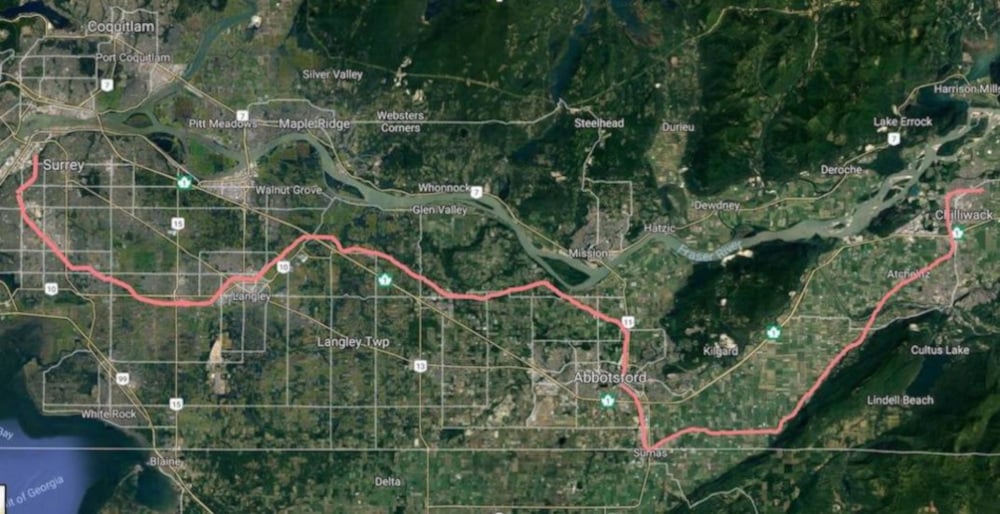
“Hydrogen iLink PassengerRail, Scott Rd. SkyTrain to Chilliwack” #connect the valley
Press Release – from Bill Vander Zalm July 16th, 2019
Message to the TransLink Mayor’s Council. On July 25th, 2019….
10 Ways TransLink is WRONG in their critique of the Interurban Corridor. Vote NO to Fraser Hwy SkyTrain and YES to Interurban!
The following refers to the Metro Vancouver portion of the line only!
TransLink suggests Community Rail is an alternative to SkyTrain, it is not. While it will serve all those Metro Vancouver needs at 1/10th the cost, it would serve the needs of the entire valley – through Interregional Transit.
TransLink states the line owned by CP Rail and Southern Railway – It is NOT!
TransLink suggests Passenger traffic conflicts with Freight Traffic, it would not. The Master Agreement signed by CP Rail has agreed to pay the cost of double tracking if required. That is what we negotiated!
TransLink suggests the Interurban has limited alignment with regional land use plans”. TransLink then is prepared to run through Green Timbers Forest, the lightly populated Fleetwood community and the Serpentine Flats, four KMs in the ALR a dead zone. Our corridor is in place ready to use!
TransLink states that the line “does not directly connect relevant regional destinations (i.e. Surrey Central and Langley City).” They fail to acknowledge the line serves regional destinations such as N. Delta, Sullivan, Newton, Cloverdale, S. Surrey, Wh. Rock as well as Langley City – a much greater population than served by the Fraser Highway option at 1/10th the cost.
TransLink states “the Interurban alignment is indirect through lower density and diverse areas. Directness and density are critical factors of a successful rapid transit corridor.” Their own maps clearly show the Interurban connects key job centers – Scott Road, Delta/Surrey, Newton, Cloverdale and Langley, greater than the proposed SkyTrain Line.
TransLink talks about increasing volumes of freight, they are deliberately ignoring the terms of the Master Agreement and CP Rail’s legal responsibility per a contract that we negotiated in 1988 to double track if required and share the track equally with passenger traffic.
TransLink claims the Interurban requires substantial infrastructure investment comparable to building rapid transit along urban arterials.” How can you compare or suggest building an entire new line with all the property acquisition and cement infrastructure that is required to an existing operating rail line with NO property acquisition, lease, or structure required to build; except for the Joint Section which is covered by the Master Agreement, and owned by the Province of B.C. with passenger rights that we reserved at no cost. Furthermore, apart from the “shared section” discussed above, the line is very lightly and used largely during off hours.
It is clear there is a deep misunderstanding by TransLink staff regarding the interurban proposal. The Interurban is necessary to alleviate the congestion on Highway 1 and protect the Fraser Valley Airshed. The full line Pattullo SkyTrain Station to the City of Chilliwack is all about the absolute necessity of establishing an Interregional Transit Network. The Metro Vancouver portion of the line is clearly superior to that of the Fraser Highway SkyTrain proposal and by extension will be for the Fraser Valley.
The Interurban can be activated much faster, at 1/10th the cost, and would serve almost three times the population than that of SkyTrain within Metro Vancouver’s Boundaries.
Sincerely,
Bill Vander Zalm
Former Premier of British Columbia
Former B.C. Minister for Municipal Affairs and Transit
Former Mayor of the City of Surrey
Media – Connect with Bill Vander Zalm by request through Rick Green
As technology advances, the benefits of a “green” electric rail service will greatly increase. The long distance battery powered train is now upon us.
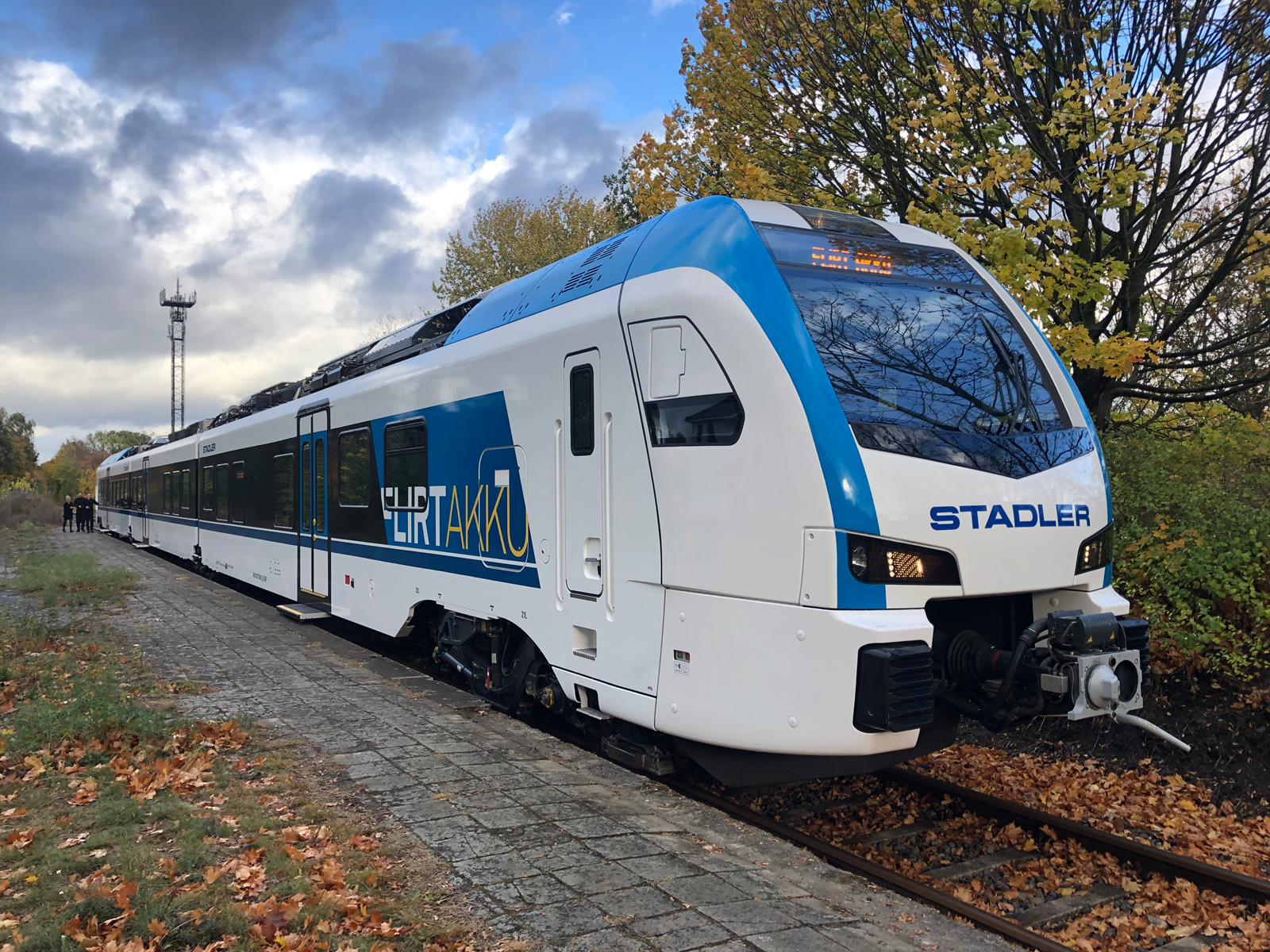
A FLRT Akku battery powered train could be the answer for a regional passenger service in the Fraser Valley as Battery powered trains could be recharged from strategically placed sections of electrical overhead and at major stations, where dwell times could be slightly extended.
It is time that the Metro Region embrace affordable rail solutions for regional transit, than plan for unaffordable and workable solutions, especially when there is no funding in sight for long kilometres of very expensive concrete viaducts needed for the SkyTrain light-metro network.
STADLER SUPPLIES 55 BATTERY-OPERATED FLIRT TRAINS FOR THE SCHLESWIG-HOLSTEIN LOCAL TRANSPORT ASSOCIATION Stadler has emerged as the winner from the call for tenders issued by Schleswig-Holstein’s local transport association for the supply of 55 battery-operated FLIRT Akku trains with an option for 50 additional vehicles. With it, Stadler has successfully asserted itself against other concepts in the first call for green technology tenders (not diesel) for vehicles with alternative drives in Germany. In addition to supplying the trains, the contract also includes the vehicle maintenance for a period of 30 years. The order volume is approximately 600 million euros.
The unit has a maximum speed of 140 km/h and range of 80 km in battery mode. The battery can be charged from the overhead electrification, from a fixed shore supply at termini and from regenerated braking energy. The three-car unit has 154 seats and capacity of 310 passengers, and is quieter than a comparable diesel vehicle.
It is possible to charge the batteries during operations under the overhead line and also at non-electrified end stops. In addition, the batteries can also be charged with energy generated during braking.
Stadler FLIRT (Fast Light Intercity and Regional Train; is a passenger multiple unit trainset made by Stadler of Switzerland. The baseline design of FLIRT is an electric multiple unit articulated trainset that can come in units of two to twelve cars with two to six motorized axles. The maximum speed is 200 km/h (120 mph). Standard floor height is 57 cm (22.4 in), but 78 cm (30.7 in) high floors are also available for platform heights of 76 cm (29.9 in). Bi-mode electro-diesel, diesel, hybrid diesel-battery, or battery versions are essentially baseline design with a power car inserted in the trainset, which contains the electricity generating and storage components such as diesel engines and batteries that would provide electricity to the train to run “off-wire”.
The FLIRT train was originally developed for the Swiss Federal Railways and was first delivered in 2004. The trains quickly became a success and were ordered by operators in Algeria, Azerbaijan, Belarus, the Czech Republic, Estonia, Finland, Germany, Hungary, Italy, Latvia, the Netherlands, Norway, Poland, Serbia, Sweden, Switzerland, the United Kingdom, the United States, and, most recently (2018), Canada. As of 18 April 2018, more than 1,500 units have been sold.
Here we have another try in doing what is the right thing to do, reinstate the Vancouver to Chilliwack rail service, using the former and intact BC Electric rail line.
Using existing tracks greatly reduces the cost of a transit project.
TransLink is going to build a 5.7 km subway under Broadway for a cost of about $3 billion, yet for half of this amount we can have two to three an hour traveling up and down the Fraser Valley providing a good scheduled service connects Vancouver to North Delta, south Surrey, Langley, Abbotsford, Sardis, and Chilliwack.
How many new customers will be attracted to the proposed Broadway subway?
Very few as the subway really does not achieve any benefit for the transit customer and for many, it will be seen as an inconvenience.
Every customer of the Valley Rail servcie will be a new customer to transit and with gridlock and congestion along the Number 1 highway in the Fraser Valley, I think many would consider the rail service as a viable alternative.
It is time to do what is right, transit wise and not squander more money on an obsolete light metro system that is ever so expensive to build, maintain and operate.
A century ago, interurban rail service helped Fraser Valley communities develop — and it could do the same thing today, says a group fighting to resurrect passenger trains running from Surrey to Chilliwack.
Their vision of the future: clean, affordable light rail.
“We’re not talking about a commuter line,” said Rick Green, former mayor of the Township of Langley and a founding member of the group South Fraser Community Rail. “We’re talking about a community line.”
The West Coast Express is a commuter line, shuttling residents from as far as Mission to jobs in Vancouver.
But the new service would provide communities south of the Fraser River, home to about 1.2 million people, with a self-contained transportation system from Surrey to Chilliwack. The group estimates 70 per cent of all trips originating in those communities stay within the region, rather than ending in Vancouver.
Green said the car is king in those communities today.
In the Township of Langley for example, 91 per cent of workers commute in vehicles, according to 2016 census data; the percentage in transit-rich Vancouver is 49 per cent.
There are other familiar local names and advocates of sustainable growth in the south Fraser group, such as former B.C. premier Bill Vander Zalm, Peter Holt, an engineer and former CEO of the Surrey Board of Trade, and Patrick Condon, founding chair of UBC’s urban design program (and occasional Tyee columnist).
They believe that renewed interurban rail service is more ambitious than the planned SkyTrain line between Surrey and Langley, covering more ground.
They want to introduce zero-emission hydrogen trains, inspired by the world’s first which were rolled out in Germany last year.
The interurban rail corridor still exists and is used for freight.
It’s been almost 70 years since the BC Electric Railway ended passenger service, which ran from Vancouver to Chilliwack between 1910 and 1950, making up to four round-trips a day and also carrying freight and mail.
The route of the old interurban line between Vancouver and Chilliwack. South Fraser Community Rail hopes to see a passenger line revived between Surrey and Chilliwack. Map courtesy of South Fraser Community Rail.
As well as providing transportation, one of the goals of the original railway was to bring electricity to the communities along the line. Electric light and telephones only came to the Fraser Valley as the line spread through settlements, allowing them to grow into town centres and cities.
BC Hydro owns the rail corridor and Canadian Pacific and Southern Railway have contracts to use part of it for freight operations.
BC Hydro communications told The Tyee via email that any new operations on the corridor would require approval from BC Hydro and the railway operators. It would be “open to discussing the future use of the right-of-way for transit purposes should the Province or TransLink decide to pursue this option,” the statement added.
But TransLink called the plan to revive passenger service on the line “insufficient” in a report last month.
The report, prepared by TransLink’s vice-president of planning and policy Geoff Cross, found that the interurban proposal isn’t in sync with regional planning, skipping key destinations such as Surrey Central and Langley City.
“Lots of the transportation we’re talking about in our visioning is based on those centres, and connecting those corridors,” said Mayor Jonathan Coté of New Westminster, who chairs TransLink’s Mayors’ Council.
The rail advocacy group says the interurban line would serve and help develop other centres the SkyTrain would skip, such as Newton and Cloverdale; TransLink argues that the rail passes through a significant amount of agricultural land where population growth is limited. Cloverdale, it notes, is “projected to be one of the slowest growing urban centres in the South of Fraser.”
TransLink reports that interurban rail has “less attractive travel times between key destinations”; the group argues that the service would be better because there would be more stops.
TransLink also notes that freight trains are already using the line. Green has said that the group is in “no way trying to cut off the freight part of our economy,” suggesting a second track for passenger trains could be built alongside the stretch of rail where freights operate.
And costs of the rail line would be far lower than the planned SkyTrain expansion, says Green. The SkyTrain line cost is estimated at $3.5 billion for 27 kilometres, which is about $130 million per kilometre.
“We can’t keep spending money the way we’re doing,” said Green, who’s worried about the possibility of SkyTrain going over budget.
The rail group estimates their interurban proposal will cost $1.2 billion for 99 kilometres, which is about $12.5 million per kilometre.
Despite TransLink’s criticisms of the interurban proposal, it noted it would explore the potential of resurrecting old rail corridors for passenger use as part of its strategy for the next 30 years, called Transport 2050.
“There could be some opportunity here,” said Mayor Coté. “But we’re right in the middle of our 10-year plan, and we’re pretty committed… The Transport 2050 process is the opportunity for these groups to say what are the next big projects, the next big ideas for the region.”
Green called TransLink’s consideration “lip service” and said the conversation about large-scale transit investment in the South Fraser region can’t wait.
“When Highway 1 is clogged, the Fraser Valley is clogged.”
Green and the group are continuing to lobby community groups, municipalities and business associations to win support for the idea.
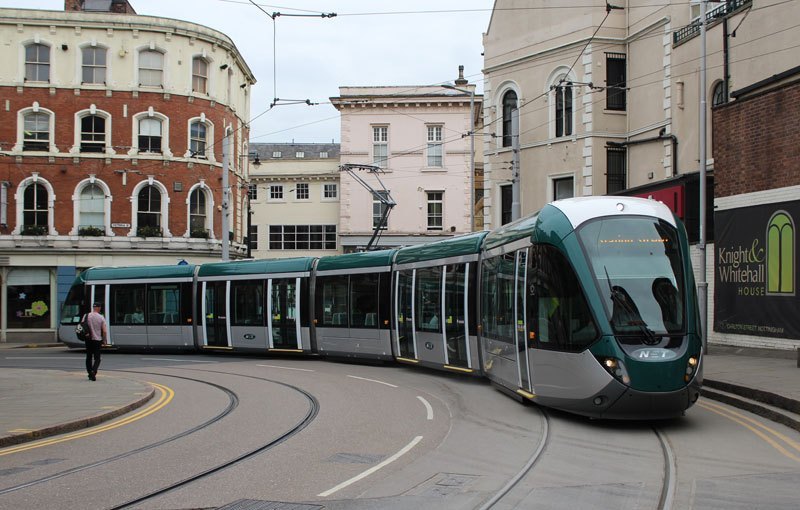
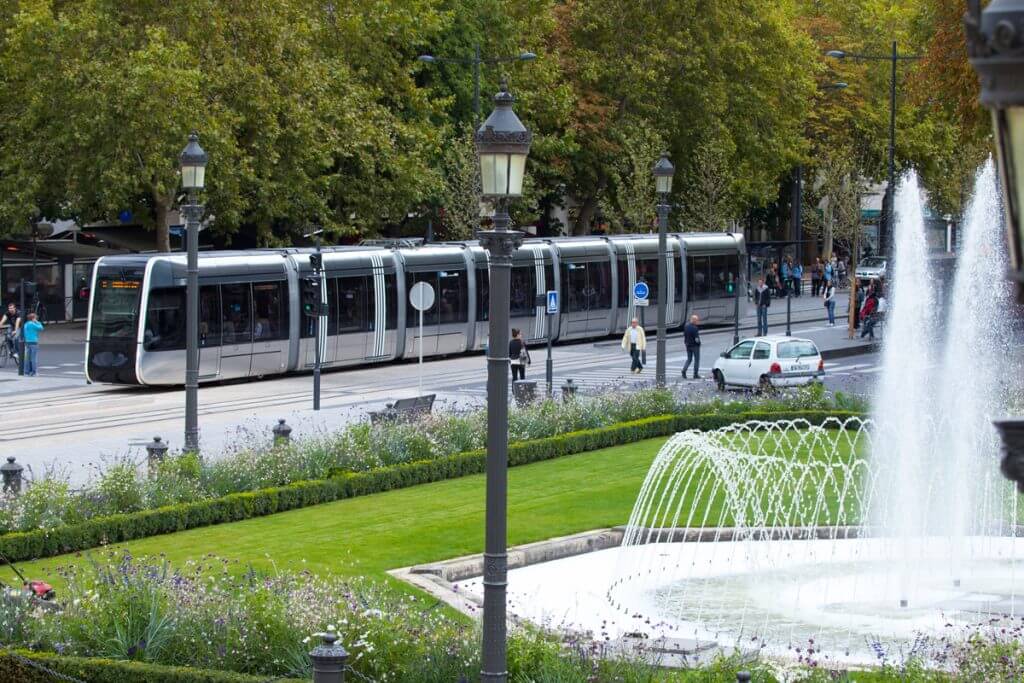
In Metro Vancouver and its surrounds, there is a definite lack of knowledge of the modern tram. This lack of knowledge is illustrated by both politcal leaders and the mainstream media who treat the modern tram with disdain and prefer more photo-op ready light-metro, due to its appeal when ribbon cutting happens.
Sadly there is a price to be had with Vancouver and TransLink’s penchant for light-metro and that is cost.
Simply put, TransLink is paying up to ten times more or even double or treble this with subway construction, yet at the same time, providing a service inferior when compared to the modern tram. Remember, over 80% of the light-metro’s ridership come from bus customers forcibly made to transfer to the light-metro.
Much cheaper costs, yet the tram has the ability to cater to traffic flows much larger than the proprietary ART Movia light-metro, explains why the modern tram has held its own with light and heavy rail metro and with well over six hundred examples in operation around the world, the tram is the number one rail transit choice among knowledgeable planners.
The following is some examples of cities using trams.
Basel Switzerland
City: Basel Switzerland
System length: Metre gauge, 77 km., 9 lines.
Budapest, Hungary
City: Budapest, Hungary
System length: Standard gauge, 157 km, 36 routes.
Customers carried: Over 400 million annually
Grenoble, France
City: Grenoble, France.
System length: Standard gauge, 42, km., 5 lines.
Customers carried. Over 250,000 daily.
Melbourne, Australia
City: Melbourne, Australia
System length: Standard gauge, 250 km., 24 routes.
Ah yes, if we were to believe TransLink and the Mayor’s Council on Transit, Vancouver’s unprogressive mayor, Vancouver is the envy of the transit world with our SkyTrain rapid transit system.
A recent news item listed the top fifteen city transportation systems and twelve of the cities have trams or LRT or both, with some with very extensive networks!
Reality hurts, doesn’t it TransLink or the CoV, not even a honorable mention.
In order, from fifteenth to number 1, the list goes like this:
15 ) Berlin – 22 tram lines serving 377 tram stops and measuring 294 km.
14 ) Stockholm – 35 km tram network.
13 ) Beijing – 13.5 km tram line, more building.
12 ) Prague – 142.5 km of tram line.
11 ) New York – 0 tram lines, 1 tram line in planning stage.
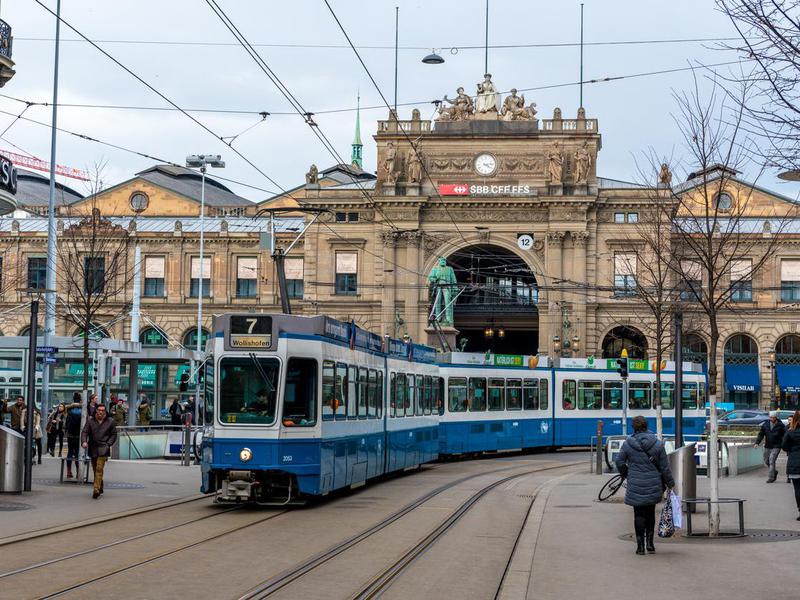
10 ) Zurich – 118 km of tram line.
9 ) Shanghai – 13.9 km of tram line, more being planned.
8 ) Dubai – 10.6 km of tram line, extending.
7 ) Tokyo – 24.4 km of tram/LRT lines.
6 ) Chicago – 0 tram lines LRT in planning stages.
5 ) Madrid – 27.8 km of tram line with one under construction.
4 ) Paris – 107.4 km of tram line
3 ) Hong Kong – 13 km heritage tramway and 36.2 km of LRT
2 ) London – 28 km of tram line
1 ) Singapore – 0
Of the fifteen top transit cities, only three, New York, Chicago and Singapore do not have trams, but both have extensive metro style service.
What is apparent, cities with good public transport have trams in one form or another, something that Vancouver City politicians and its bureaucrats ignore.
Despite the hype and hoopla about SkyTrain, Vancouver’s public transit system, with its penchant for driverless light metro is ignored internationally; yet we plan and build more.
It goes without saying that it’s much easier to enjoy a city when you can easily get around it. That’s why the best tourism cities boast superb public transit systems — publicly-subsidized networks of trains, subways, buses and boats that can quickly and cheaply get you where you want to go.
According to John Fairfield, professor of history and urban development at Xavier University, public transit systems have other benefits too, including a reduced energy footprint and improved safety, since cars are a far more dangerous way to get around. And the best systems have charm and character to boot.
So, which metropolises offer the best public transit systems in the world? It’s a somewhat relative question, since some people value affordability over efficiency or sustainability over ease. But experts agree that the following 15 city systems are among the finest you’ll have the pleasure of using.
Spoiler alert: If you want great public transit, Asia and Europe are the places to go!
Both Montreal and Quebec city are getting new tram lines, yet Vancouver’s politico’s still want the hugely expensive, yet dated ART Movia Light-metro, which one one else around the world wants?
Contrary to what the mayor and councils from Vancouver and Surrey claim, it seems the good mayor of Lachine, Mayor Maja Vodanovic has done her homework well.
By building a tramway, both the cities of Montreal and Quebec city will learn the value of affordable transit and with extension costs, again affordable, both Montreal and Quebec City will have future extension build, way before a subway is completed to UBC or the Expo line completed to Langley.
Memo to The mayor’s Council on Transit: It is not to late to put the breaks on future SkyTrain expansion, either in Surrey or a subway under Broadway. Failure to do so, will lead metro Vancouver to a ruinous LA style freeway region, complete with endemic congestion and pollution.
This is what Montreral is getting, should Vancouver be getting it too?
By Rachel Lau Online Producer – Quebec Global News
Montreal will get a tramway system linking the downtown area to the west-end borough of Lachine, Mayor Valérie Plante announced on Wednesday.
The mayor was all smiles, calling the tramway a first step to her proposed Pink line on the Montreal Metro and pointing out reporters wearing shades of pink at the press conference.
“The Pink line from downtown to Lachine was always supposed to be above ground,” she said.
“This was taken into consideration by the Quebec government. A big tramway in the west — wow.”
The government of Quebec has agreed to invest $800 million in public transit in Montreal. It had previously transferred that same amount of federal money to fund projects in Quebec City.
“The breakthrough was let’s agree on three principles: Quebec is ready, it needs to complete the financing, and we want the federal government to commit,” said Treasury Board president Christian Dubé.
“She [Plante] said: ‘OK, but what do you give me in return?’”
The Montreal mayor said her main concern remains addressing problems of overcrowding.
Whether or not the project will be called the Pink line is yet to be determined.
“It’s not a question of colour, it’s a question of giving service to the people of Montreal,” said junior transport minister Chantal Rouleau.
Lachine Mayor Maja Vodanovic is ecstatic about the plan.
“It is a dream come true,” she said.
The borough had already started feasibility studies to come up with the best form of transportation for the area which is not linked to the metro line and is not part of the REM light rail stops.
Vodanovic says a tramway is better for Lachine than either the metro or the REM, since they don’t have to expropriate land, build underground or build train viaducts.
“Tramways around the world are known to build good quality living. They are accessible, no sound and you can walk to it,” said Vodonavic.
Officials were not able to say where the exact stations would be. As of yet, there is no timeline for the project.
The agreement will be part of the Quebec Infrastructure Plan for 2020 to 2030.





By Rachel Lau Online Producer – Quebec Global News



Recent Comments