Zwei knows that there are huge issues with TransLink’s mega-projects, but does this ponderous bureaucracy have a clue what it is doing?
I don’t think so.
Past comments from Mr. “haveacow” from Ottawa has the cost of the Broadway SkyTrain subway passing the $3 billion mark and two thirds of the Surrey’s $2.5 billion LRT’s costs are in a form of hidden subsidies for land developers and land speculators in the form for street and underground utility renewal, in short, the taxpayer is subsidizing Surrey’s favourite land developers!
All the Vancouver Sun and Province can do is write “puff stories”, but Bob Mackin, independent reporter and his breakernews.com is zeroing in on the TransLink mega-project story. A story that Rail for the Valley has been reporting on for years.
Mr. Horgan and Ms. Trevena will have some tough decision to make in the very near future and let us hope they break the mold and make the right decisions.
The mystery continues, even after the provincial election, ai???clone speechai???, fall of the BC Liberals and the swearing-in of the NDP government.
Surrey secrecy
What are the new cost estimates for TransLinkai??i??s Broadway subway and Surrey LRT megaprojects?
In early 2016, City of Surrey revised the cost of its project, from $2.14 billion to $2.6 billion. The Broadway subway estimate was $1.98 billion.
TransLink chief financial officer Cathy McLay admitted in spring 2016 that costs had risen for both. She blamed the price of real estate and the costs for equipment and materials that would be sourced from the United States. The organization is steadfastly refusing to come clean on the numbers.
Have the projects doubled in price? When government agencies are unreasonable and wonai??i??t be honest to the governed, then it becomes reasonable to pose such a question. Especially in British Columbia, where the phrase ai???on-time, on-budgetai??? isnai??i??t a rule or even an aspiration anymore, but a punchline. It is not entirely a B.C. phenomenon.
ai???Based on the available evidence, we conclude that rail promoters appear to be particularly prone to cost underestimation, followed by promoters of fixed linksai??i?? The average difference between actual and estimated costs for rail projects is substantially and significantly higher than that for roadsai??i?? The average inaccuracy for rail projects is more than twice that for roads, resulting in average cost escalations for rail more than double that for roads.ai???
On Aug. 8, TransLink released two heavily censored reports on the projects to theBreaker, plus its latest direct refusal to comment on the revised cost estimates.
TransLink infrastructure and engineering vice-president Sany Zein cites ai???commercially-sensitive information that should remain confidential in anticipation of commercial negotiationsai??? for refusing to offer an update on the dollars and cents of the megaprojects, which the ruling NDP, their allies in the Green Party and the opposition Liberals all support.
TransLinkai??i??s Sany Zein
Are Zeinai??i??s words just word salad to mask the fear of widespread public sticker shock?
TransLink is withholding more than 1,200 pages of documents about the Broadway subway, which is officially called the Millennium Line Broadway Extension. It disclosed a cover page for a May 5 2017 report called ai???Due Diligence Technical Response,ai??? but it didnai??i??t even show theBreaker a table of contents.
The Surrey project is officially known as South of Fraser Rapid Transit and TransLink gave theBreaker parts of two reports: the October 2016 Newton-Guildford Traffic Modelling Report by Steer Davies Gleave and Hatch and the Phase One: Surrey-Newtown-Guildford LRT project business case, dated Nov. 28, 2016.
The former says Newton-Guildford will be ai???an urban style LRT system, integrated into the existing streetscapes, using modern lower floor Light Rail vehicles.ai??? The second phase could be SkyTrain technology.
ai???Work is ongoing to determine the preferred rapid transit technology for the Surrey-Langley Line, but if LRT is selected as the preferred technology, then the two lines will run on a common section of track in the Surrey City Centre area between King George and 104 Ave.ai???
The latter report is a joint TransLink and PartnershipsBC business case that recommends the Surrey-Newton-Guildford LRT project. The estimated capital cost of the 11-stop, 10.4 kilometre LRT line is censored. The project schedule foresees construction from mid-2019 to the end of 2022, with LRT operations beginning in 2023.
Claire Trevena, the NDP Minister of Transportation and Infrastructure, has not responded to theBreakerai??i??s request for comment. We will let you know if she does.
Stay tuned. theBreaker will not give up trying to get you the cost estimates for these projects. If youai??i??re a TransLink or government insider, theBreaker welcomes your tips, in confidence.Click this contact link.Ai??
Seems some serious corrosion problems are plaguing the TTC’s ICTS cars, which are the same as our SkyTrain Mk.1’s and I hope TransLink will take some time and investigate!
The Mk.1’s do have a history of corrosion, so I would think it would be expedient to check and see.
Ai??Scarborough RT vehicles need repairs to avoid ai???catastrophicai??i?? corrosion failures
TTC asking board’s permission to award $6.8-million sole-source repair contract to Bombardier.
An inspection of the TTC’s aging Scarborough RT vehicles uncovered a corrosion problem. The TTC plans to award Bombardier a sole-sourced $6.8-million contract to repair the decaying fleet.Ai??Ai??(Marcus Oleniuk / Toronto Star file photo)Ai??Ai??
The TTCai??i??s aging fleet of Scarborough RT vehicles has a corrosion problem that could cause ai???catastrophicai??? structural failures if not addressed soon, and the transit agency plans to award embattled rail manufacturer Bombardier a sole-sourced $6.8-million contract to conduct the urgent repairs.
The TTC uncovered the corrosion issue during an inspection of its fleet that it undertook after council voted to extend the life of Line 3 (Scarborough RT) until the Scarborough subway extension opens a decade from now.
ai???When we peeled the floors back, we found that some of the vehicles had holes the size of toonies, and a lot of wear,ai??? said Raffaele Trentadue, the TTCai??i??s head of rail cars and shop.
Trentadue said the problem was caused by decades of snow and salt accumulating near the doorsof the 32-year-old vehicles.
This photo shows corrosion in one of the Scarborough Rapid Transit cars. The TTC has discovered corrosion problems in the cars that need to be repaired, otherwise they could lead to catastrophic structural failures.
The corrosion has affected load-bearing joints of the door post and car-body frames. According to a report going to the TTC board on Thursday requesting funding for the repairs, if the decaying parts arenai??i??t fixed ai???as soon as possibleai??? the corrosion might compromise the vehiclesai??i?? structural integrity. That could ai???potentially lead to catastrophic vehicle failure and put the service plan of operating the system until 2026 at risk.ai???
TTC chief operating officer Mike Palmer said thereai??i??s ai???no questionai??? that the vehicles are safe but the TTC needs to take proactive measures to ensure they remain that way.
ai???From our point of view this is a good news story. This is us not ignoring a problem, and (instead) dealing with it in quality way and in a swift way which also will benefit customers for the next 10 years,ai??? he said.
The TTC first discovered the corrosion in 2015, but Palmer said it took until now to devise a fix for the problem.
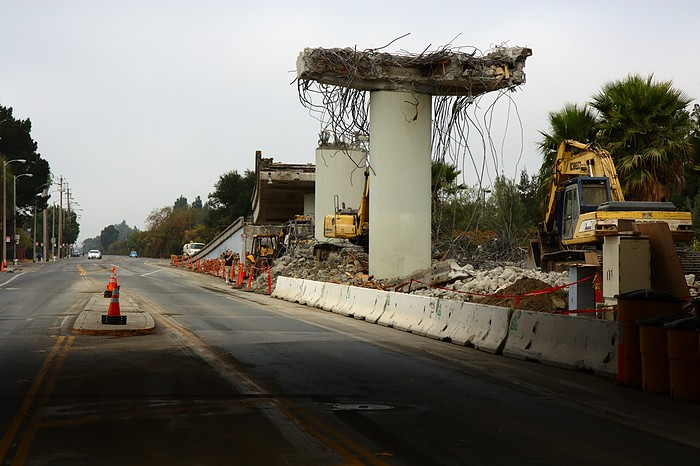
So, are you reading this post because of the photo?
(no one was killed in the accident shown)
If you are, you were drawn in by a “headline grabber”, or a story or picture to ‘grab’ the reader to read further.
Sorry to disappoint , but we continue with so called transit report cards.
Zwei is not a transit or transportation professional and Councillor Pachall is not a transit or transportation professional, yet he pretend to be one by calling himself a “transit researcher”.
Everyone, especially civic politicians, think they are great transit experts, but the vast majority do not even have a basic grounding in transit and solving transit issues, let alone giving childish report card marks, based on questionable grading.
As I stated before, Zwei would never attempt such a stunt.
Mr. Haveacow is a transit professional and has an extremely good foundation in transit history, finances, construction technique and operations; the kind of person who should be CEO of TransLink!
His answer to the Sun’s “Puff Piece” is succinct and to the point; the so called ‘report card’ report is based on questionable data and poorly researched.
Over to you Mr. Cow.
Wow were to start! Always be wary of these types of ai???Transit Report Cardsai??? they are very poorly thought out and constructed.
1. Get the regions right! The Area of Greater Toronto and Hamilton isnai??i??t even the whole Toronto Area Commuting zone. If you are going to use GO Transit as this study does, as one of the areaai??i??s transit agencies it draws data from then,you should use the area it actually covers and all the local transit agencies it connects with. Luckily, the government of Ontario has already an official legally defined planning area FOR THIS EXACT PURPOSE, its called the Greater Golden Horseshoe Region. This region has 9.7 million people, GO Transit and 30 local and or single tier transit agencies, (soon to be reduced to around 24 because of the amalgamation of 6 local and one inter regional transit agency into one single tier Niagara Regional Transit Agency). This region is the basis for provincial funding boundaries and covers the an area of 11,000+sq km. which happens to be, the area currently and soon to be served by GO Transit and its connections to local transit agencies. It centers on Toronto but stretches from Kitchener-Waterloo in the west, Georgian Bay-Barrie area in the north,
Peterborough-Lindsay Area in the north-east and Northumberland County in the east, Brantford in the south-west and Niagara Region in the south. I have no idea why a good responsible researcher would not use this area, CUTA even has all the data for it, through the Ontario Urban Transit Fact Book, which is produced yearly.
The author also got Greater Montreal wrong by not using all the transit agencies inside the Greater Montreal Region. First there are 14 transit agencies inside it, not 4. It covers an area of over 3900 sq km and has an area population in 2015 (the date year of the data used in this report) of 4.14 million. One agency used, the AMT (Agencie Metroploitane deai??i??Transport) which was responsible for the Montreal area Commuter Rail system and regional transit planning coordination doesnai??i??t even exist anymore but did in 2015.
The covering of the National Capital Region might be improved if the 5 to 7 (iai??i??d have to check) suburban private transit agencies were also included that move people from the more rural areas of Ottawa (whoai??i??s total land area is actually 90% rural).
2. If an area is only represented by a single transit agency or a very small number of agencies dominated by a single very large transit agency, it is far more likely mathematically that, these regions will score higher given the very limited group of data points that were used, compared to larger regions with more varied array of transit agencies.
3. Data interpretation is tricky! The study uses fair box recovery of operating costs as a comparative metric, the higher the better. That is not always so! In Toronto the TTC (Toronto Transit Commission) has had very high fair box recovery for a very long time. In fact, throughout individual years in the early 1970ai???s, the TTC was actually operating at a profit. For financial conservatives this is considered a positive result. But compared to other regions and transit agencies operating throughout North America this means that, Toronto receives actually far less support for its operating costs than most North American Transit Agencies. What financial conservatives consider positive, most senior transit officials at the TTC have nightmares about. This means that the TTC is far more sensitive to changes in ridership than most agencies elsewhere. So if ridership goes down because the economy is sluggish either the City of Toronto has to fork over more money or the TTC has to cut service. The TTC hasnai??i??t made an error. Something out of its control has severely effected its ridership, more than most agencies, the TTC now has some very hard choices to make.. But this report card considers this a positive result.
I could go on for many individual points about these types of reports but I trust my point is clear. These types of reports are designed to grab headlines and arenai??i??t really that useful, professionally speaking and just give ammunition for people in each of these areas to bash their local agencies, governments and provincial governments. But in the real sense are nearly meaningless and useless when trying to improve transit. So take the time, do it right, donai??i??t bother with useless regional comparisons which are overly superficial and have little depth to them.
The Vancouver Sun, as always, has embarrassedAi?? itself with another transit “Puff Piece”.
Nathan Pachall is not a transit expert, rather a politician and a seemingly TransLink apologist.
Zwei would never dare to do a report card on transit because there are so many variables involved. No one has copied Merto Vancouver’s TransLink, nor it’s use of the now obsolete proprietary ALRT/ART mini-metro, which by its operating certificate with Transport Canada, has a limited capacity of 15,000 pphpd.
Cost to increase capacity – $3 billion.
Real transit stories would be the grossly expensive, proposed $3 billion Broadway SkyTrain subway, planned a route with less than one third the ridership deemed necessary for subway construction. Or, the $2.5 billion Surrey LRT, where two thirds of the cost is subsidizing land developers and land speculators building along its route!
Nor even a mention of the capacity constipated Canada Line with its 40 metre long station platforms, effectively giving the line a little more than half the capacity of the other mini-metro lines.
Where is Pachal’s research on these important stories, which will cost the taxpayer at least $8.5 billion?
By the way, where is the Vancouver Sun on theses important $8.5 billion stories?
If this report card was done by the likes of Ron Stromberg, Gerald Fox or even Glen Leicester, I might take note, but Nathon who, I just laugh.
Metro Vancouver has the second bestAi??transit system in the nation, according to a transit report card that rates services in six major Canadian regions.
The report card gave Metro Vancouver an overall score of A+, tying the region with Greater Calgary for the second-best grade behind Montrealai??i??s A+++.
Nathan Pachal ai??i?? a transit researcher, founder of South Fraser OnTrax and Langley City councillor ai??i?? wrote the report card,Ai??which reviewed 23 transit authorities in Greater Calgary, Greater Edmonton, Greater Montreal, Toronto and Hamilton, Metro Vancouver and National Capital (Ottawa/Gatineau). It uses data from 2015, which is the most recent available. This is the third year Pachal has released a transit report card.
ai???It really brings visibility on how things actually are, because whether you think the service is fantastic or itai??i??s performing subpar itai??i??s good to have that real information that you can use to compare it to the rest of the nation and see how transit service in Canada and Vancouver is doing,ai??? said Pachal.
Metro Vancouver, which has TransLink as its transit authority, moved from an A to an A+ grade this year.
All metrics stayed the same except for operating cost per service hour, which improved from a C to a B. TransLink still has the highest operating cost per service hour ($186.29), but other regionai??i??s operating costs have increased at a faster rate than in Metro Vancouver, closing the gap.
The region continues to have the best revenue kilometres per service hour ai??i?? meaning transit service is slightly faster than in other regions ai??i?? though the metric has slowly declined over the past three years.
It also has the highest passenger trip intensity grade of all regions measured. Regions with a high score in this area have transit systems that align more closely with transit service demand, meaning they are more efficient.
ai???Interestingly, TransLink has the highest efficiency score in the nation,ai??? said Pachal.
Only Toronto and Hamilton region has better fare box recovery numbers. In Metro Vancouver, 53 per cent of direct operating expenses are covered by transit usersai??i?? fares, versus 64 per cent in Toronto and Hamilton.
Pachal said it will be interesting to see how the grades change when the information from 2016 is available. Thatai??i??s because the federal government, as well as many provincial governments, began investing last year in projects such as Metro Vancouverai??i??s 10-year plan for transit and transportation.
ai???This (2015) was sort of the last year of the TransLink-with-no-new-money metrics,ai??? Pachal said. ai???Next yearai??i??s data will show what itai??i??s like since they started to expand service with the approval of the 10 year plan.ai???
Too many auto deaths in the Fraser Valley this year, but with no alternatives but to drive and ever increasing population growth, leading to more cars and more congestion, more and more accidents and fatalities will occur.
I sorry, only five West Coast Express Trains in and out of Vancouver doesn’t cut it, yet our politicians fret over silly transit projects like the $2.5 billion Surrey LRT which will do nothing and the even sillier $3 billion Broadway subway, which being built, not to reduce congestion, but make Vancouver politicians feel that their city is world class.
The Rail for the Valley/Leewood TramTrain would make a good start providing a viable alternative to the car.
What is world class is the massive congestion in the Fraser Valley, complete with daily accidents and weekly deaths.
Our politicians do nothing and like the proverbial Nero, fiddle, while the region burns with gridlock and death.
Pitt River Bridge reopens westbound to traffic following fatal accident
One person has died in a rollover crash in Pitt Meadows overnight.
It is not yet known how the accident happened just before 2:30 a.m. but the fatal rollover closed the Pitt River Bridge westbound to all traffic for hours during the morning commute.
The Lougheed Highway was also closed westbound from Harris Road to the Pitt River Bridge.
Drivers are still being asked to detour via the Golden Ears Bridge,Ai??Highway 1, and the Port Mann Bridge and to leave extra travel time this morning as the closure has created lots of congestion in the area.
Crews on scene at the crash near the Pitt River Bridge Thursday morning.
On Wednesday last (Aug. 9) the misses and I went to Harrison Hot Springs for some well deserved R & R. The trip to Harrison only confirmed the need for a Vancouver to Chilliwack rail service, to give aAi?? transportation option for those living in the Fraser Valley.
The many accidents, that I passed confirmed that the present Ministry of Transportation planning is non functional and in fact, somewhat delusional.
The first accident, which later turned out to be a fatal, happened on the dangerous Nordel Way/Alex Fraser Bridge complex, which backed traffic all the way to Hwy.17. Two more ‘rear enders’ on the bridge only added to the traffic woes.
The next accident, was on the Number 1 near 232nd St. and involved at least three semi’s and a car. The number one was closed West bound as an air ambulance was called, backing traffic all the way to Bradner Road! The radio reported three more less serious accidents elsewhere on the highway.
To add insult to injury, the Number 1 Hwy. was closed for hours in the late afternoon and evening due to a fire at a lumber mill along side the highway.
Gingerly driving across the Fraser River at Mission, we continued along Hwy 7, a pleasant drive most days.
Again the radio reported two accidents further West, in Maple Ridge, which closed the highway locally for some time. Crossing into Harrison Mills, Hwy 7 was closed due to a fatal accident, again involving two semi’s and a car and traffic was diverted literally through local corn fields, until the police finished their accident investigation.
Since my return Friday afternoon and traveling less known country roads because the Number 1 was closed due to a major accident, the Number 1 has been closed at least tow more times, includingAi?? yesterday’s fatal accident!
What does it take to convince valley politicians to demand reinstating passenger rail service to Vancouver? How many more people must die, before a rail option is built?
Rail for the Valley has the plan and all we need is the political will to make it happen.
The following article demonstrates our current problem in metro Vancouver, a complete and utter lack of understanding public transit and the role of public transit.
Again, for public transit to be successful, it must be user friendly, if not, people will avoid it and they do in droves in Metro Vancouver.
Buses are a hard sell for transit in the best of times, but for any express bus service to be successful in the region, it must provide a better than user-friendly service for the customer.
The following three examples underline the importance of having a Royal Commission on Regional Transportation.
Example #1: TransLink’s bad habit of forcing bus customers to transfer to SkyTrain, especially the extremely user-unfriendly Canada Line, instead of providing a seamless journey into Vancouver.
Example #2: Translink’s planning of a $3 billion SkyTrain subway under Broadway, yet traffic flows on the route are less than a third of what would demand subway construction.
Example #3: The majority of Surrey’s LRT funding will actually be spent to facilitate Utilities for Massive Speculative Development alongside LRT – all this under the guise of public funding of LRT (at a ratio of 2/3 development and 1/3 LRT).
What is needed is a complete rethink on how we plan and provide transit in Metro Vancouver, before another nickle is spent.
It is called a Royal Commission and the region should have a Royal Commission on public transportation.
When Dave Barrett led the NDP to victory and became premier in September 1972, Vancouver was in the midst of a freeway revolt. East Vancouver and Chinatown residents had united against the planned downtown freeway and third crossing to the North Shore. Today, NDP Premier John Horgan faces a similar controversy over the proposal to replace the Massey Tunnel with a 10-lane bridge.
Barrett could have gone for half-measures and tried to sell a more modest freeway into the downtown, combined with modest transit improvements. And the incentive to build for cars was strong; back then climate change wasnai??i??t on anyoneai??i??s political radar and many people thought that a new strip of asphalt was the surest sign of human progress.
He and his cabinet heard the shouts that ai???something has to be doneai??i?? for commuters crossing from the North Shore to Vancouver. So they created the SeaBus, still one of the best-loved parts of Greater Vancouverai??i??s transit system. Freeways never flattened Chinatown or cut off the West End from the waterfront, and only a few think a third road crossing to the North Shore should be a priority. And Barrettai??i??s SeaBus was very inexpensive compared with a freeway bridge or tunnel.
Barrett, and his allies, won in downtown Vancouver. But he also boldly decided to build a region-wide network of rapid-transit lines, instead of building and expanding suburban freeways. To keep costs down and allow a rapid build-out, these light-rail lines would use the old interurban railway right-of-ways and would mostly be at ground level. His vision even extended to considering a single-track light-rail tunnel beside the Massey Tunnel to serve South Delta and Tsawwassen.
He didnai??i??t win re-election, so his ambitious rapid-transit plans were largely forgotten as freeway building became the default response to congestion outside of the downtown core. Even the NDP governments of the 1990s took only half-measures to prioritize transit.
In the ai??i??70s, Barrettai??i??s transit over freeways position was radical. Today, itai??i??s mainstream. Only one mayor supports defeated premier Christy Clarkai??i??s multibillion-dollar plan to build a 10-lane freeway bridge to replace the Massey Tunnel. Horgan sides with the other 20 Metro Vancouver mayors who oppose the Massey Bridge, and favour funding the rapid-transit lines in the regional transportation plan instead.
A key lesson Horgan should learn from Barrett is that cost-effective transit improvements can successfully replace freeway proposals like the third crossing and the Massey Bridge. There is nothing very fancy or expensive about the SeaBus. The name says it all, a bus that runs on water.
Interestingly, the B.C. Liberals once proposed to replace their Massey Tunnel freeway expansion plan with bus lanes and rapid bus. In 2009, then-Transportation Minister Kevin Falcon told the Richmond Review that the bus lanes and tunnel upgrades would be sufficient ai???for easily another 50 years.ai??? The B.C. Liberals built some of the bus lanes, but cut back on bus service through the tunnel instead of providing the frequent, rapid-bus service they promised.
The first step for the B.C. NDP should be to help TransLink and the mayors provide what the B.C. Liberals promised, a major increase in bus service through the Massey Tunnel. Completing the bus lanes to the Canada Line in Richmond is also essential to provide a desirable alternative to the Massey Bridge proposal. Rail transit to Ladner and Tsawwassen, and to the North Shore, may be worthwhile next steps ai??i?? but buses and SeaBuses work.
The much bigger step Horgan needs to take is to reorient transportation priorities across B.C. to reduce the climate pollution that is fuelling ever more destructive wildfires and floods. The B.C. NDP promises to slash greenhouse gas pollution from transportation by 30 per cent in only 13 years, and the federal-provincial Climate Framework commits B.C. to shift infrastructure spending from road expansion to transit to fulfil Canadaai??i??s Paris climate commitments.
To hold the Green-NDP alliance together, the NDP must move decisively on these commitments. And that means urban highway expansion must be the last resort, not the default option.
Eric Doherty is a Victoria-based transportation planning consultant and a member of the Council of Canadians Victoria chapter.
Once the urban freeway was unmistakably part of a vision of the future, one in which personal automobiles zipped through neighborhoods without having to stop or interact with the streets above or below. But over the past two decades, many cities have found that running highways through dense areas has done more harm than goodai??i??and theyai??i??re increasingly opting to tear them down.
Late last month, the Congress for the New Urbanism (CNU) released its latest edition of ai???Freeways Without Futures,ai??? a report on efforts to remove parts of underused highways in ten American cities. The study underscores the role locals are playing in the replacement movement and also outlines the many benefits of having fewer highways running through dense urban areas.
The report contends that the cores of American cities have seen a massive hollowing out since the passing of the Federal-Aid Highway Act in 1956. ai???As highways were built through existing communities,ai??? the report begins, ai???residents were cut off from social and economic centers, key resources and services, and the nearby destinations of their daily lives.ai???
Today, many of those highways are reaching the end of their design life and cities are facing what CNU calls a ai???watershed moment.ai??? Instead of rebuilding and repairing old highways, the report suggests cities should replace them with infrastructure that is pedestrian friendly, density prone, and extremely profitable. ai???Cities are waking up to a simple solution: remove instead of replace.ai???
CNU highlights the replace movements in ten cities across the country, many of them driven by everyday citizens who donai??i??t want to see certain highways expanded or repaired. Suggesting alternatives to expansion isnai??i??t easy. In many cases, activists must conduct their own research, design a replacement plan, and recruit local officials. Then begins the lengthy process of securing funding and ironing out implementation logistics.
Each city included in the report is at a different stage of removal. While activists in Oakland and Dallas are pushing steadily through the research phase, efforts in Detroit are stuck for a lack of funding. Meanwhile, fill-in construction on the Inner Loop in Rochester started last 2014 and should be completed by the end of this year.
Each city included also faces a unique set of challenges. In Denver, citizens are battling their state Department of Transportation to prevent an expansion of I-70. Theyai??i??ve proposed an alternative thatai??i??unlike the cityai??i??s planai??i??would not involve expanding the derelict highway (at a cost of $1.8 billion) or destroying dozens of houses and businesses in one of the cityai??i??s poorest neighborhoods. But the city is fighting back, arguing that the highway is essential for commuters. In Buffalo, efforts have been more successful. The citizen-led initiative to redesign parts of the Scajaquada Expressway earned the attention and financial support of Governor Andrew Cuomo, who directed $30 million towards the effort last March, telling local press it was time to ai???undo a mistake.ai???
Tearing out a highway is costly on many levels. Coordinating various agencies requires political flexibility. Fiscally, replacement proposals cost millions of dollars and require an ability to focus on long-term over short-term gains. Culturally, they require a shift in design priorities: fewer cars on the street, more people. The report explores these struggles, yet also emphasizes the many benefits of replacement.
First, thereai??i??s the potential of significant economic gain. In Dallas, researchers found that replacing parts of I-345 would generate $4 billion for the city over fifteen years and bring 22,550 jobs to the area. In Trenton, if efforts to replace Route 29 with a riverwalk are successful, the cityai??i??s downtown could attract up to $2.25 billion of investment. Replacing highways could also make possible more mixed-use development and affordable housing, desperately needed in places like San Francisco. It could also improve neighborhood safety and decrease pollution.
CNU also suggests that replacing underused highways could be a chance to undo the damage they have wrought upon ai???the physical and economic health of low-income and minority residents.ai??? But while reconciliation is indeed a possibility, so also is displacement. Sam Warlick, the communications director at CNU, acknowledged this possibility. ai???Any kind of positive change in a neighborhood (also) runs the risk of cultural and economic displacement,ai??? he said. Communities that embrace replacement, he explained, could prevent drastic displacement by pairing their infrastructure investment with community investment. ai???We would hope that anti-displacement efforts and initiatives to share the prosperity would be baked into the process from the beginning.ai???
Tiffany Owens, a journalist currently based in Providence, R.I, is a New Yorker at heart.
The Stadler product is gaining traction in North America and now has a manufacturing plant in North America.
Unlike Bombardier, which relies on the government to secure train orders for them in North America, Stadler had to fight hard to sell its product on this side of the pond.
There is a dichotomy between Stadler and Bombardier Inc., Stadler has to please its customers and Bombardier does not and if one has has any doubts on this point, just ask the TTC in Toronto and their very late tram deliveries.
For the Valley TramTrain project, I believe the Stadler option would best suit the Valley TramTrain needs!
Stadler completes first TEX Rail DMU
03 Aug 2017
USA: Stadler has completed the first Flirt multiple-unit to be assembled in the USA at its plant at North Salt Lake in Utah. The DMU for the TEX Rail project will be officially unveiled at the ATPA Expo in Atlanta in October.
In 2015 the Fort Worth Transportation Authority signed a $100m contract with Stadler for the supply of eight DMUs. This was Stadlerai??i??s first contract to include federal funding and was thus subject to Buy America regulations requiring 60% of the contract value to be sourced in the USA. The bodyshells and bogies are being produced in Switzerland, with final assembly taking place in Utah.
Groundbreaking ceremonies for the TEX Rail commuter route were held in August 2016. Due to open in 2018, the 43Ai??km line would link central Fort Worth with Dallas-Fort Worth International Airport. Around half of the $1bn cost, which includes rolling stock, is being met from federal sources.








Recent Comments