A single line in Montpellier, line T1, carriess over 130,000 weekday riders! And thatai??i??s with no tunnels, mostly street running.
Systems in Nantes, Bordeaux and Montpellier have ridership at or near 260,000 riders a day! That exceeds Boston.
The French do it right! What you get is: Simple OCS systems; grassy trackways; frequent headways (7A?>10 minutes or less); most of the important urban trip-generating venues served; most systems connect with the railway stations; much peripheral development along tram lines; tram/pedestrian-only zones; and clean, attractive trams.
Compared to metro Vancouver’s poor planning, it is impressive.
Hello everyone. In this video I talk about the tramway revival in France. What are the strengths of the tram? What it can promote in terms of use of means of transport and the attractiveness of urban centers. Since the 1980s, new tram networks have flourished throughout Europe, over fifty of them. The trend was initially shy, then it has undergone a much faster pace since the 2000s, to the point that it is no exaggeration to speak of real fashion.
It was in France that this phenomenon was born and tram networks have been developed the most over the past two decades, as the graph shows you on the screen. In 1983, there was in France only three tram networks left, or rather three tram lines, one in Lille, one in Marseille and one in Saint-Etienne. There was in 2012, 24 operated networks. The first network to have been achieved is the Nantes network, which was commissioned in 1985. It was followed by the Grenoble network in 1987, and the modern tramway, which was developed in AZle-de-France in 1992, then in 1994, the Strasbourg network was born. It was the first tram networks that have been made in France again.
Why such enthusiasm for the tramway? The modern tram, as rebuilt in many European cities, is part of a double movement. The one that first aims to promote the use of other means of transport that the car as part of everyday life, but also on the other hand, the desire to reclassify urban centers to make them more attractive to frequent, as well as live in. Thus in most urban areas where it was reintroduced, the tram was accompanied by an important urban requalification in the city center and a sharing of the road favorable to other modes of transport than the car.
Research on the introduction of a tram in a public transport network, show that it allows a growing number of users. Tram Assets are indeed many for the user: a much higher speed than the bus, high frequency shift during the day, evening and weekend, a smooth ride that allows to use one’s travel time to deploy activities, provided that we have a seat, usually quality foot paths to go to stops because of efforts to improve the ergonomics of the public space, and finally, easier memorizing the path of the lines due to the materialization of the tramway in the public space via the rails.
In France, in many cities that have reintroduced trams, there is also an increase in the number of inhabitants in the city centers. On the one hand, it appears that the tram favors real estate investments in the city, through the redevelopment of public spaces that accompanies it, on the other hand, there is also that the tram contributes to make more desirable to live in the city because the tram limits the dependence on cars by the quality of transport service it offers to residents. The effect of the introduction of the tram on the use of public transport is however very variable.
Statistics on the use of public transport update consequent differences according to the considered cities, and in particular, these figures show that the increase of the number of users five years after commissioning of a tram overall a network varies for France between + 18% and + 50%. This is what you see for example for a number of cities in the table you have before you. This suggests that the use of the tram is not mechanical. That is to say it is not enough to introduce a tram that it is used, even if in all agglomerations in which it was introduced in France, there is an increase in the use of public transport.
How can we explain these differences in the use of public transport following the commissioning of a tram? There are a number of factors related to the offer and the interaction of the offer with the context and the provisions of the resident population in a city that explains these differences. In the offer, there is first of all the commercial speed, following that it is low, 14 to 16 km / h or higher, more than 20km / h, there are differences in the use of the tram network, and more generally of public transport. There are also differences depending on the frequency if the frequencies are quite low, from 8 to 10 minutes, or high, from 3 to 5 minutes. This is also a factor which has an influence on the use.
The fact that the network is unified in its quality, that is to say, we offer almost the same frequencies, the same amplitude sideboards the evenings and weekends throughout the network, or only on the tram network, and that therefore there would be a public transport offer of two speeds, a high-quality service on tram lines, and a lower quality of service on the bus network, it also has an impact on the use of public transport. Another effect that has an impact on the use of trams: is that the lines are saturated or do they offer the comfort of a seat, This allows using one’s time. This is particularly the case when using public transport during off-peak hours. Finally, the link with urban planning and urban development, the question is also to know if the tram lines that have been developed, serve the agglomeration in which the offer was extended, completely or only partially.
Or in other words: how is made the joint between the public transport system and urbanization, Can we go anywhere with public transport, or otherwise, are only some parts of the metropolitan area available? That is also a factor that plays a central role in the greater or lesser use of public transport, especially when there is introduction of a tram. And of course, last factor that plays a role: the issue of reliability. Does generaly, schedules are respected. You understood through the examples I’ve shown you, tram networks in France were often allowed to revalue cities and it is even often their main function. This is the case for example in Bordeaux, a city that is often considered as exemplary of this view. A high quality in the fields which have been cited in this video makes it possible for people to deploy its lifestyle using public transport and it makes attractive the attendance of urban spaces, whether recreational or for habitat.
In this sense, the redeployment of tramway networks in France as much about the planning issues that of transportation issues, although of course and as I noted in this video, there is also an interest in the field of transport to develop these infrastructures since in all the cities where these networks have been redeployed, there is an increase in the use of public transport.
Given by Vincent Kaufmann est professeur de sociologie urbaine et dai??i??analyse des mobilitAi??s Ai?? lai??i??Ecole Polytechnique FAi??dAi??rale de Lausanne (EPFL).
This could be game changer for Bombardier’s rail division and a big game changer for transit planning in Metro Vancouver.
If the Siemens and Alstom merger goes through, it could mean those expensive ART, monorail, and other proprietary transit modes currently marketed by Bombardier Inc. may be chopped from production as a newAi?? “rail” reality emerges from Europe.
If this merger takes place (I stress if) Metro Vancouver’s and TransLink’s planning for further SkyTrain extensions, especially for the Broadway subway, will be for naught, as Bombardier starts to terminate production of non profitable transit modes to remain competitive.Ai?? Very soon, there maybe may be no SkyTrain cars available, unless custom built (very expensive), for Metro Vancouver’s rapid transit planning.
In essence, with Metro Vancouver and TransLink still planning for ART SkyTrain, it will like planning to buy a new Edsel, trouble is, they don’t make it no more!
French fast-train maker confirms itai??i??s negotiating with Siemens
Franco-German train deal could be announced early next week
Alstom SA said itai??i??s in talks with Germanyai??i??s Siemens AG about a possible combination of their rail businesses, a tie-up that would bring together two former European arch-rivals and leave Canadaai??i??s Bombardier Inc. exposed to cut-throat competition from China.
The boards of Siemens and Alstom are scheduled to meet early next week to approve the deal, which may be announced as early as Tuesday, according to people familiar with the matter, who asked not to be identified because the talks are private. The German company would transfer its rolling material and signaling businesses to its French counterpart in exchange for a stake of about 50 percent in the enlarged Alstom, said the people.
ai???No final decision has been made, discussions are ongoing and no agreement has been reached,ai??? Alstom said in a statement Friday,Ai?? confirming a Bloomberg News report the previous day that the two engineering firms are in talks. Siemens, based in Munich, acknowledged Alstomai??i??s statement and also said that no decision has been reached.
President Emmanuel Macronai??i??sAi??government signaled hours earlier that it supports deeper Franco-German corporate ties, suggesting a potential deal has political backing. The announcement also comes ahead of German elections on Sunday, which Chancellor Angela Merkel has run on a platform of political and economic stability and closer ties across Europe.
Surprise Twist
An agreement between the makers of the French and German TGV and ICE high-speed trains that criss-cross their countries adds a surprise twist to negotiations in the global train industry seeking to consolidate. Montreal-based Bombardier had also been in talks with Siemens about combining the companiesai??i?? rail divisions. Talks had centered on two joint ventures, one on the signaling operations and one on rolling stock, people familiar with the negotiations have said.
ai???Bombardier reiterates that its approach to industry consolidation is to
consider multiple options and to weigh them based on their potential to create
value for shareholders,ai??? the company said in a statement. ai???We will not comment on specific initiatives involving our competitors.ai???
Siemens and Bombardier had been nearing a deal toward the end of August, but those talks stalled over concerns including some perceived challenges faced by the Canadian parent including its plane business, the people said. The Canadian firm still sees the rationale of a rail tie up, which wouldai??i??ve been based in Germany, though it also sees the benefit of retaining the cash flow generated from the rail business, the people said. A Franco-German deal, which had been discussed on and off, has the support of the French and German governments as they seek to create European champions, some of the people said.
Bombardier Falls
Alstom shares rose 4.1 percent to 33.01 euros in Paris, the highest close in 4 1/2 years that took market value to 7.3 billion euros ($8.7 billion). Siemens fell 0.8 percent to 116.55 euros while Bombardier dropped 4.6 percent to C$2.26.
The talks for a tie-up come as all three companies are facing increased competition for contracts from industry leader CRRC Corp. of China, formed from a 2015 merger of the countryai??i??s two main regional train makers. During the past few months, Alstom, Bombardier and Siemens executives have spoken about the need for consolidation in the industry, while declining to comment specifically about any possible agreements.
ai???Weai??i??re watching French-German talks,ai???Ai??French cabinet spokesman Christophe Castaner said Friday when asked about Siemens and Alstom. ai???We have to see the terms but it is important to reinforce our industry with Franco-German unity.ai???
Airbus Model
The model for such cooperation between the euro zoneai??i??s two biggest economies is Airbus SE, the Toulouse-based aircraft manufacturer founded in 1970Ai??and formed from companies from four European countries that went on to become the biggest competitor to Boeing Co. Macron, who won power in May by defending closer European ties, has repeatedly said that cross-border cooperation in the region offers the best way to tackle issues ranging from industrial development to immigration and defense. The French and German governments each own about 11 percent of Airbus.
Closer ties could be in the offing in the banking sector as well, with French lender BNP Paribas among the European banks that could buy Germanyai??i??s Commerzbank AG, according to reports this week.
Merkel also weighed in this year when Franceai??i??s PSA Group acquired German automaker Opel from General Motors Co. After PSA gave assurances that existing labor agreements would be honored, Merkelai??i??s government didnai??i??t stand in the way of the deal, which was completed last month.
ai???We are watching these potential tie-ups,ai??? Castaner said of the possible rail and banking deals. ai???There are no concerns if it is not done to the detriment of jobs.ai??? The German government doesnai??i??t comment on talks or company negotiations as a matter of principle, according to a spokesman for the government in Berlin.
Overlap
Siemens and Bombardierai??i??s rail operations have significant overlap in Europe, especially Germany, where the Bombardier unit is based. An agreement between those two companies would have raised the likelihood of asset sales to allay regulatory concerns, and possible job cuts. Alstom has been under pressure from the French government to retain jobs, and was prevented from halting production at a site in the eastern part of the country last year.
A deal with Alstom would be in keeping with Siemens Chief Executive Officer Joe Kaeserai??i??s moves toward a more holding-like structure for the German conglomerate, giving autonomy to units while still being centrally managed. Siemens is now laying plans to carve out the health-care division called Healthineers after combining its renewables business with that of a Spanish rival to form majority-owned Siemens Gamesa Renewable Energy SA.
Le Monde reported earlier on Friday that Siemensai??i?? rail and signaling assets assets would be valued at around 7 billion euros ($8.3 billion) and Alstom would issue new shares to Siemens as part of the transaction. The two companies are also discussing an option to increase their stakes in the future, one person familiar said.
Alstom became a transport-focused company after selling most of its energy assets to General Electric Co. in 2015. At the time, Siemens had made a counteroffer for Alstom that included combining its train operations.
As part of the GE deal, construction and telecom company Bouygues SA lent a stake of 20 percent to the French state and retained 8.3 percent. Between Oct. 5-17, the government has a one-time option to buy a portion of the borrowed stake — 15 percent — at around market price. Past that period, Bouygues will reclaim the shares the government hasnai??i??t bought.
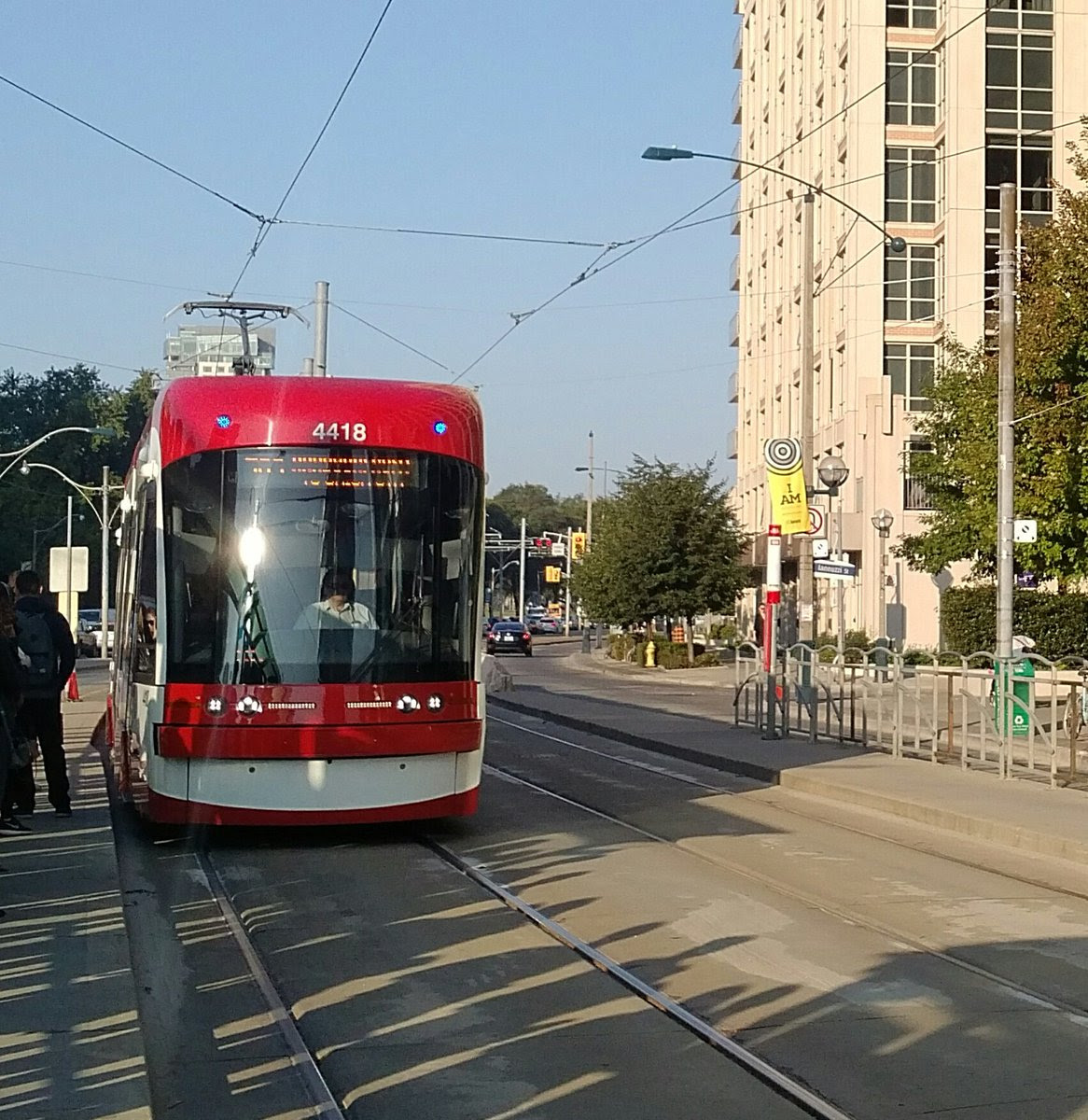
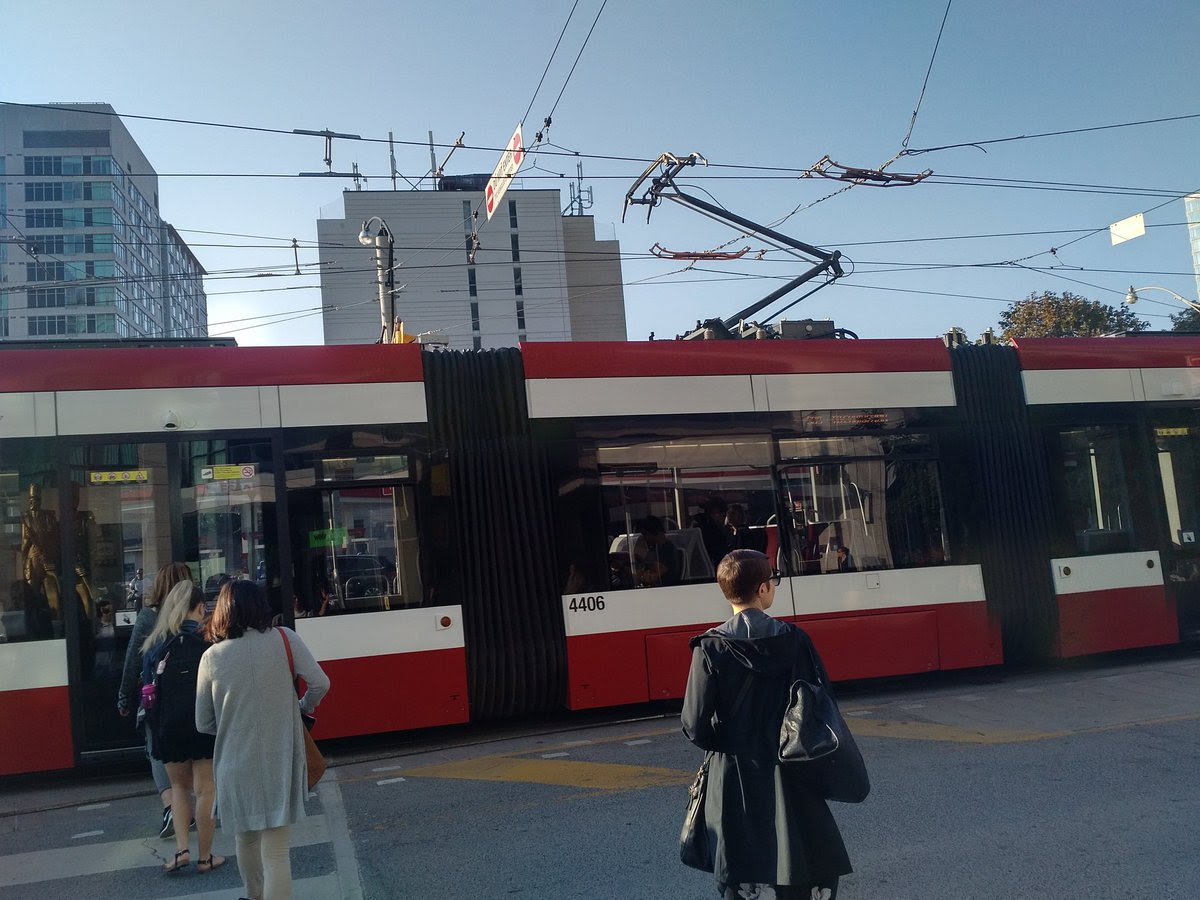
NO, we are not talking ‘pole dancing’ but another kind of ‘pole’ dance happening in Toronto.
The use of panto-graphs or “pans” for the collection of electrical power has been around a long time and now it is Toronto’s turn to switch from the old trolley pole to a modern pan.
Sadly, some of our American friends seem upset at this, as they cherish the old trolley pole. They will light their collective hair on fire if ever an “APS” third rail power collection system is used for trams in American cities!
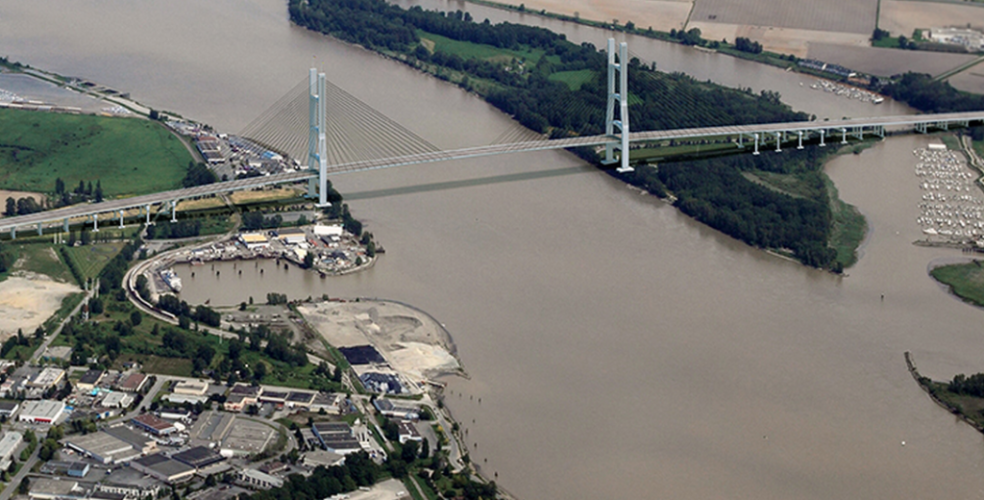
The Massey Tunnel Bridge replacement project is again in the news, as the massively expensive replacement bridge for the Massey tunnel has been mothballed.
Now, the CBC has found hugely expensive financial irregularities with the new Port Mann Bridge, and the air of political corruption hangs heavily in the air.
Was the proposed mega bridge to replace he Massey Tunnel nothing more than Liberal corruption on steroids?
Real reason for span disappears but Delta continues campaign
Delta Optimist
August 30, 2017
Editor:
Delta’s propaganda campaign to garner support for the proposed mega bridge replacing the perfectly safe George Massey Tunnel is in full swing.
Delta’s Politics and Misinformation Must Not Stop. The Bridge campaign is repugnant due to its long list of Trump style fake news and alternative facts.
A proper study for replacing the tunnel with a bridge would take a year or more to do. Delta’s “back of an envelope” review took less than a month to do and is poorly done as a result.
The replacement bridge was never about traffic congestion, rather it was to allow Panama-max tankers and colliers up the Fraser to Surrey Fraser Docks and no plans were made to reduce traffic at the Oak Street Bridge and Knight Street Bridge choke points. If anything, the proposed new bridge would create massive gridlock in Richmond.
As the real reasons for the bridge evaporated, Mayor Lois Jackson doubled down with another “back of an envelope” plan by hijacking the Rail for the Valley’s Leewood Study, for a Vancouver/Richmond to Chilliwack TramTrain service, for her pro-bridge propaganda campaign.
The study released in 2010 took over a year to prepare by real transportation professionals, providing a cost effective Vancouver/Richmond to Chilliwack passenger rail, using TramTrain service for the Lower Mainland.
The study never planned for LRT service across the proposed bridge, nor would a meandering rail line using the proposed bridge be viable.
Unless there was direct service to Vancouver, any rail service using the bridge (which will not have rail built in) would fail miserably.
Instead of a ruinously expensive bridge, the mayor should concern herself with Surrey’s $2.5-billion LRT, where two-thirds of the cost is being spent on roads and utilities for favoured land developers and speculators along the LRT route and the now $3 billion Broadway SkyTrain subway, which the route today has a quarter of traffic flows, needed to justify subway construction. Both are financial time bombs.
The mayor should support practical and cost-effective transit and transportation solutions and not massively expensive vanity projects that will do little real good except pauper the taxpayer.
Due to their high construction and operating costs, subways are only built on the heaviest used transit routes, with traffic flows in excess of 15,000 pphpd. Broadway has transit traffic flows less than 4,000 pphpd!
The new NDP government must reassess TransLink’s grand transit schemes and the lack of any real regional transit planning, except for their two grossly expensive vanity projects.
The Broadway subway, a classic Vancouver “vanity project“, now rumored to cost around $4 billion, will offer no real advantage to transit customers, yet greatly increase the cost of providing transit in the region by sucking money from other transit operations. The Vancouver mayor is already on record saying “subway make world class city“.
Surrey’s LRT, is so badly planned that it has become a “poor man’s” SkyTrain, taking all of the light-metro’s bad points and none of LRT’s positive points. The rumoured cost of Surrey’s LRT is now well over $100 million/km, with two thirds of the cost paying for new road construction and putting utilities underground. Surrey’s LRT is nothing more than a major roads project with rails, built to subsidize land developers and land speculators who acquired properties adjacent to the road/tram project!
TransLink is also planning to reduce the scope of LRT construction by extending SkyTrain to Langley, as it costs only slightly more to build according to planners (but not experts), which will bring a host of new and expensive problems to the at capacity Expo Line.
The many problems facing regional transit, include:
Ai??The Expo Line is at or near its legal capacity of its Transport Canada operating certificate and needs about $3 billion in renovations, station enlargements, new electrical supply and guideway maintenance or replacements.
The bus system forces customers onto SkyTrain, forcing unwanted transfers, which makes the transit user unfriendly and deters ridership.
The Canada Line has effectively half the capacity of the Expo, Millennium/Evergreen Lines and needs a minimum of $1.5 billion investment to increase capacity to match the rest of the ALRT/ART transit system.
TransLink operates the transit system as if it were the 1950’s and ignores 21st century solutions.
The Patullo Bridge replacement only caters to New Westminster’s wishes and not the regions and will have only four lanes and no rail bridge. TransLink again, misses a golden opportunity to meaningfully change peoples commuting habits.
There is no redundancy in the system and as the light-metro system goes down, TransLink is very slow to respond, leaving customers stranded.
TransLink desperately wants to introduce mobility pricing for cars, yet continues to squander billions of dollars on very bad transit planning and dubious transit construction.
TransLink’s senior management remain isolated from the public and spend more time, inventing new fibs to hide their incompetence.
Transit planning is based on political diktat and not consumer based. The transit customer does not like what TransLink forces on them.
There has been no realistic modal shift from car to transit in the past thirty years. Over 80% of SkyTrain’s ridership is recycled bus riders and buses are extremely poor in attracting the motorist from the car.
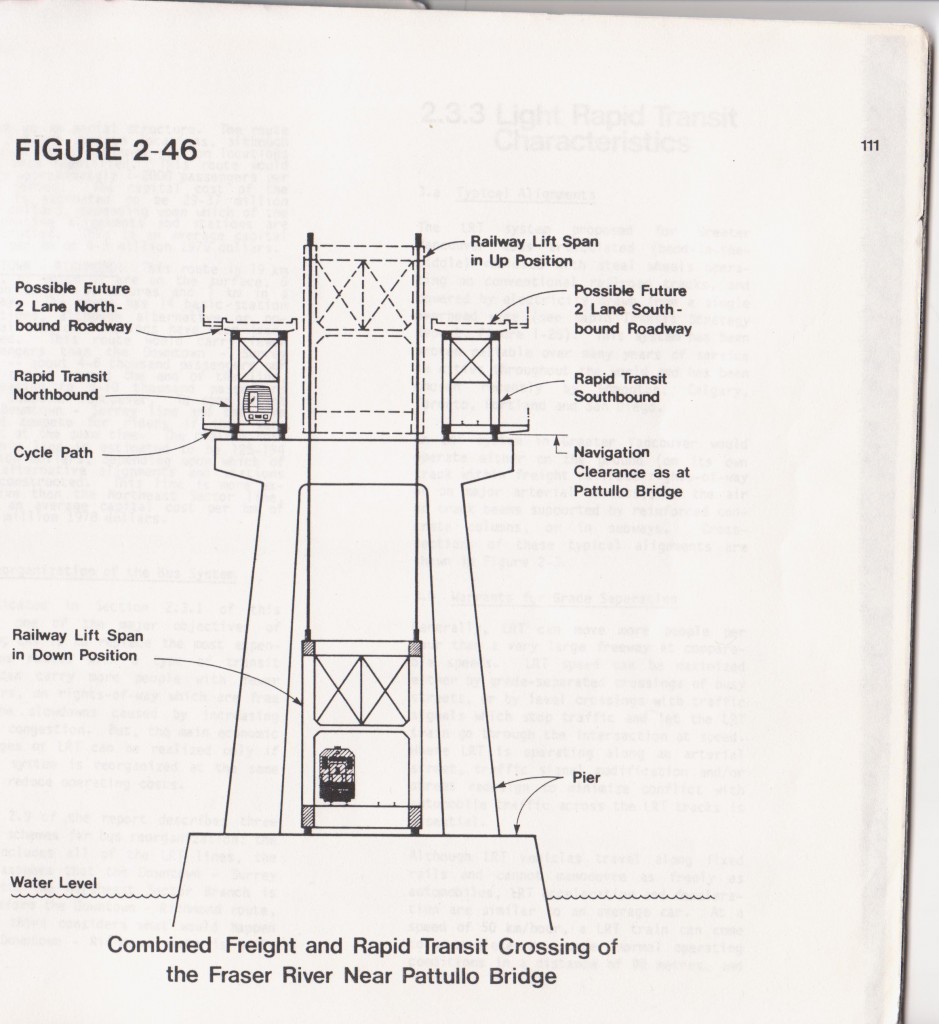
The GVRD planned a road/rail/LRT bridge to replace the Patullo in the late 1970's. There is no such forward thinking today.
And the list goes on and it is no wonder that 65% of the regions taxpayers treat TransLink like a pustular sore.
There is no future for regional transit in Metro Vancouver until provincial and civic politicians, their planners and engineers plan transit to meet the needs of transit consumers and not political friends and insiders including land speculators and land developers.
There is no future for regional transit in Metro Vancouver, until the universities, most notably Simon Fraser University start teaching modern regional transportation and not largely disputed transit theories decades old. If European Universities offer degrees in Urban Transportation, why not UBC and SFU?
In the 21st Century, public transport is seen as a product and if the product is good, people will use it but if the product is bad, people will not; this credo is from one of the most popular and dynamic public transit systems in the world, in Karlsruhe Germany.
It is time the provincial government compels TransLink to do the same.
A "Bistro" TramTrain" in Karlsruhe Germany, meets the customer's demands for longer distant trips.
Most of us have forgotten that Richmond once supported an interurban service from Steveston to Vancouver and New Westminster and now the city of Richmond is investigating a heritage line to operate the interurban.
Rail for the Valley wishes everyone good luck with this endeavor.
With the then new Oak St. Bridge in the background, the Steveston interurban enters it last days of operation.
City councillors have agreed to spend $50,000 to study the possibility of Steveston tram route
September 8, 2017
Steveston Interurban Tram 1220 recently had its roof restored so it can be wheeled outside. File photo.
Ai??City councillors have agreed to spend $50,000 to study the possibility of running the historic Steveston Interurban Tram from its barn on Moncton Street and No. 1 Road to the Gulf of Georgia Cannery.
City planners will now investigate the feasibility of the tram running on one of two routes to the cannery: either along No.1 Road to Bayview Street, or more directly along Moncton Street.
The study will include a business case analysis, transportation and engineering analysis of the scope and costs to retrofit the tram to be operational, and the capital and operating costs required for the tram itself.
Itai??i??s not the first time the city has considered running the tram through Steveston. Between 2002 and 2005, city council mulled several route options in the village and costs were estimated.
In 2004, costs to lay track, provide stations, road crossings, crossing protections and power were estimated at $2.5 million from Moncton and No. 1 Road to the cannery ai??i?? the same route staff will investigate this time around.
A tram route from Britannia Shipyards to Moncton and No. 1 Road was estimated from $1.9 million to $2 million in 2004, and $2.9 million from the London Farm area to Britannia Shipyards.
The new study will also investigate traffic control, alteration of the roadways to permit laying of track, cost of laying the track, safety features of crossings and provision of stations.
In 2005, city council passed a resolution ai???that Council abandon any tram routing options in Steveston.ai???
Today, the tram is being restored and is on display in Steveston Park as a historical artifact in the cityai??i??s collection.
Bought in 1913, Tram 1220 was transferred to the Steveston Interurban Restoration Society from the Royal BC Museum in 1993.
ALRT/ART is what we call a proprietary railway and because Bombardier Inc. hold the technical patents for ART, they are the sole supplier of ART cars, as they can always undercut the competition, who must design a Linear Induction Motor powered car from scratch. Designing a specialty transit vehicle from scratch is a very expensive proposition and may add about $30 million to the cost of companies who bid for ART cars for Vancouver’s ALRT/ART proprietary light metro.
This, of course, gives Bombardier Inc. a great advantage and why the company loves to sell unconventionalAi?? proprietary railways because they have the operators in a”gotcha”situation, being the sole supplier.
It seems complacency is the order of the day at Bombardier Inc., where major trouble with Toronto’s tram procurement program and now Waterloo’s Bombardier built trams are being returned to sender, with the knowledge that the feds will always bail them out.
It is nice to be considered a favoured company by both the governments of Quebec and Canada with billions of dollars in loans, grants, subsidies, and deferments given, but when a producing a simple tram that works seems beyond their ken, it is really time to call it a day.
Funny that Ottawa’s French designed Alstom trams seem to be working fine, yet Bombardier’s trams seem to be duds.
Meanwhile, in Metro Vancouver, we are stuck with Bombardier Inc. and their aged product and that is something TransLink and the regional mayors remain ignorant of. If Bombardier Inc. goes bust, there is no other supplier for ART SkyTrain cars, which will greatly increase costs for an already overpriced proprietary transit system.
CTV Kitchener
Published Saturday, September 2, 2017 7:37PM EDT
Construction for the LRT is nearly complete but Waterloo Region doesnai??i??t have a train to test out the system.
Only one Bombardier train, ordered back in August 2013, has been delivered.
And it doesnai??i??t work.
Officials say the vehicle was sent to test the regionai??i??s storage facility and they knew it wasnai??i??t operational.
The train may now be sent back to Bombardier says regional councilor Tom Galloway.
ai???Theyai??i??ll have to either send it back to Kingston to bring it up to working standard or bring the staff down here.”
Bombardier says all the trains should be delivered by the end of the year, but some still worry that this latest setback may mean Ionai??i??s launch will have to be pushed back.
ai???We always have to be a little cautions about schedules coming from Bombardier because, of course, they are behind,ai??? says Galloway.
Bombardier said in a statement: ai???Manufacturing and assembly of the vehicles in Bombardierai??i??s Kingston [facility] is going very well, with high speed testing on our test track progressing accordingly. The question of the delivery schedule is under discussion between our team and the Regionai??i??s, and so we cannot comment further on this issue for the time being. We assure you that we will keep everyone informed as soon as we have developments.ai???
Officials say if they get a working train by the fall they can begin testing immediately.
Zwei, I am sending you a very telling photograph. Its near Blair Station and the Ottawa LRV is undergoing testing. Notice the complete lack of paint effects and graphics as well as the fact that, many of its portals and access panels are in the down position, so equipment can be accessed during testing. The point being, the size of the 18 meter long articulated bus compared to the 48.5 meter long LRV. Remember, each Ottawa train will have 2 of these LRV’s.
***
One Ottawa tram (1 tram driver) is as efficient as 4 to 5 articulated buses (4 to 5 bus drivers) and a coupled set of Ottawa trams are as efficient as ten to twelve articulated buses (8 to 10 drivers), operating on reserved rights-of-ways.
*
This singular lesson remains unlearned by TransLink, the City of Vancouver and Surrey planners and the Ministry of Transportation.
Ah yes, our honest and hard working and sole supplier of ART cars (SkyTrain) and ALRT/ART parts, Bombardier is back in the news.
One wonders why Metro Vancouver and TransLink keeps planning building with the obsolete proprietary ART mini-metro system, complete with steam roller planning and mock (possibly illegal) bidding?
One wonders why real public debate has never been allowed over the controversial proprietary ART system, by the province, metro Vancouver, and TransLink?
Premier Horgan, can you change the “SkyTrain” culture at TransLink?
Put another way, is your NDP government strong enough to change Metro Vancouver’s SkyTrain culture?
Maybe severing ties with Bombardier and ART would make a good start.
An aggravated bribery trial involving a Bombardier Inc. employee that began on Tuesday is not just about 37-year-old Evgeny Pavlov, but about the culture and behaviour of the company he worked for, Sweden’s top anti-corruption prosecutor says.
Mr. Pavlov pleaded innocent as the prosecution rolled out a case that alleges collusion with officials in Azerbaijan, and side payments to a mysterious company controlled by associates of former Russian Railways boss Vladimir Yakunin.
Mr. Pavlov’s lawyer, Peter Lindqvist, said his client “claims no responsibility” in the case, and asked why Sweden’s National Anti-Corruption Unit had not named Mr. Pavlov’s alleged co-conspirators in the alleged bribery scheme.
“Because there are so many of them,” replied Thomas Forsberg, the senior prosecutor at Sweden’s National Anti-Corruption Unit.
Although only Mr. Pavlov has been charged, the prosecution has named six employees of Bombardier Transportation Sweden as suspects, including Mr. Pavlov and his boss Peter Cedervall, the president of the company’s Stockholm-based Rail Control Solutions division.
Mr. Forsberg said Mr. Pavlov ai??i?? who faces up to six years in jail if found guilty ai??i?? had “offered and promised, and also given, bribes to an official of the Azerbaijan Railways authority” while helping a Bombardier-led consortium win a 2013 contract to install rail-signalling systems in the former Soviet Republic. Mr. Pavlov was head of business development at Bombardier’s Moscow office when the contract was signed. He later moved to Stockholm and the company’s Rail Control Solutions unit as head of sales for Region North.
The Azerbaijan contract was worth $340-million (U.S), 85 per cent of which was provided by the World Bank, which is conducting an audit into the awarding of the Azerbaijan deal.
That could lead to wider problems for one of Canada’s flagship companies.
If Bombardier is found to have won the contract via collusion or corruption, it would be banned from competing for future projects funded by the World Bank, which subsidizes much of the infrastructure construction in the developing world. On Friday, Bombardier rejected the National Anti-Corruption Unit’s allegations in an e-mail to The Globe and Mail.
“Bombardier denies any allegations that it acted improperly,” company spokesman Simon Letendre wrote. “We take these allegations very seriously as they assert conduct that does not reflect our values or the high standards we set for ourselves. We are carefully reviewing the legal filings and support a complete accounting of all the facts and circumstances surrounding this project. As the legal proceedings are ongoing, we cannot and will not comment any further at this stage.”………………….
 Tours
Tours Nice
Nice Paris
Paris A new Toronto tram and its advertising for Sapporo beer.






Recent Comments