They are cheaper to operate than coupled sets of trams.
These cars are multi-section modular cars, 100% low floor with no internal steps.
Budapest Transport Ltd. operates the trams in peak hours at two minute intervals. To ensure quick and convenient passenger flows eight double-leaf doors on each side with a clear width of 1,300 mm and spread over the whole length of the tramcar.
While local politicians squabble about expensive transit planning and gouging the taxpayer to pay for multi billion dollar transportation vanity projects, economic and user friendly TramTrain construction and operation continue to increase.
Stadler Rail Valencia previously supplied electro-diesel tram-trains to Chemnitz.
HUNGARY: National passenger operator MA?V-Start has selected Stadler Rail Valencia to supply eight electro-diesel tram-trains to operate on the planned route between Szeged and HA?dmezAi??vA?sA?rhely. The order announced on April 18 includes an option for four more vehicles.
The project is being fully financed by the EU, with rolling stock estimated to cost HF10bn. Services would run on the current alignment of tram Route 1 in Szeged, before using an 800Ai??m connection that will be built to connect the tram route to the unelectrified Szeged ai??i?? BAi??kAi??scsaba railway line. A new 3Ai??3Ai??km single-track line is also to be built through HA?dmezAi??vA?sA?rhely to take tram-trains to the cityai??i??s main station.
Weaver hasn’t a clue about transit and throwing more money after bad will not improve it.
The “road pricing” issue is nothing more than a wet squib; for road pricing to be publicly accepted and successful one must have a viable and user-friendly transit system.
We don’t, not even close and Weaver throwing an extra paltry $25 million annually at transit, will make bureaucrats happy, but that is about all.
I am tired of tax and spend politicians who want more taxes for transit, but are absolutely clueless at what are transit’s ills.
The problems at TransLink are massive and road pricing will not cure it, as a complete philosophical change in providing public transit is needed.
What is needed are politicians who have taken the time actually studying regional transit issues and have a real knowledge about public transit.
The key word in this article is “rapid transit” whichAi?? indicates Weaver hasn’t a clue what he is talking about.
Tolls and road pricing are a tax and spend politicians best friends.
Road pricing, transit spending take centre stage in Green transportation platform
Widespread road pricing, new transit funding, and de-privatizing B.C. Ferries are all on the menu should the BC Green Party find itself at the head of the table following the May 9 election.
The party is also pledging to press pause on the Massey Tunnel Replacement Project, pending a review of alternatives.
B.C. Green leader Andrew Weaver rolled out the platform Thursday,Ai??which he says would prioritize regional planning and clean transportation.
Public transit
Weaver says a Green government would boost funding for public transit by $25-million a year with the goal of increasing service and keeping fares low.
He says the Greens would also put up a new $152-million in provincial funding to fully match funds the federal Liberals promised last year as a part of a Public Transit Infrastructure fund.
He adds a Green government would match any federal infrastructure funding dollar for dollar.
ai???Itai??i??s good public policy to match federal investment, and we know that for every dollar we spend weai??i??re getting a dolalr from the federal government that would feed into the B.C. economy.ai???
Weaver says the spending would be funded by an increase in the carbon tax $10 per year until it reaches $70/ ton.
On top of that, he says the greens would bring B.C. Ferries back into the fold as a crown corporation, arguing it is a public service and key link in the transportation network.
Tolls
While the B.C. Liberals and BC NDP have been battling it out with duelling toll-slashing policies, the Greens are going the other way.
Weaver says not only would existing tolls be left in place, but that a Green government would toll any new major road project to fund it.
Weaver also opened the door to wider road pricing once better transit is in place, including schemes that look at pricing specific areas (the downtown peninsula, for example), or full network pricing in which all drivers pay, potentially based on how far they drive.
ai???If there are transportation options available. If thereai??i??s rapid transit going all the way out to Abbotsford for example. And you start to recognzie that downtown Vancouver is congested, we could model other jurisdictions. For example, in London, it was incredibly successful to implement congestion taxes.ai???
Regional focus
Arguing that current transportation planning has been piecemeal and overly road and bridge-focused, the Greens are also pitching a ai???10-year integrated transportation plan.ai???
Weaver says the plan would look at any infrastructure upgrades in the context of regional plans and prioritize clean transportation.
That would include the controversial Massey Tunnel Replacement Project, which Weaver says heai??i??d put on hold while it gets a second look.
ai???Why are we talking about a Massey Bridge? Really itai??i??s nothing more than a jobs creation plan that will kick the problem down to the Oak Street bridge and make it much worse. Thatai??i??s not a transportation strategy. What we need is an integrated strategy. Why arenai??i??t we talking about rapid transit from say Tsawwassen?ai???
He says the party will alsoAi??back the mayorsai??i?? ai???10-year-visionai??? and match federal funding for it, support their regional transportation plans, and work together on coming up with a ai???rational tolling system.ai???
Clean transportation
Weaver says the party would promote private sector investment in clean technology and transportation initiatives to spur job creation.
He says it would also introduce initiatives to promote low carbon transportation and encourage people to get out of their cars.
Ideas on the table include breaks on tolls or parking for electric vehicles, more charging stations, better bike and pedestrian infrastructure, and distance-based insurance.
Weaver says the party would also begin to assess future transportation investments in terms of sustainability andAi??their effects on long-term emissions.
As the Scarborough ICTS cars and Vancouver’s MK.1 cars are the same, one would surmise there are corrosion problems with Vancouver’s cars, especially in Vancouver with airborne salt from the sea.
Does the public have the confidence in TransLink to keep them safe?
Scarborough RT vehicles need repairs to avoid ai???catastrophicai??i?? corrosion failures
TTC asking board’s permission to award $6.8-million sole-source repair contract to Bombardier.
An inspection of the TTC’s aging Scarborough RT vehicles uncovered a corrosion problem. The TTC plans to award Bombardier a sole-sourced $6.8-million contract to repair the decaying fleet.Ai??Ai??(Marcus Oleniuk / Toronto Star file photo)Ai??Ai??
The TTCai??i??s aging fleet of Scarborough RT vehicles has a corrosion problem that could cause ai???catastrophicai??? structural failures if not addressed soon, and the transit agency plans to award embattled rail manufacturer Bombardier a sole-sourced $6.8-million contract to conduct the urgent repairs.
The TTC uncovered the corrosion issue during an inspection of its fleet that it undertook after council voted to extend the life of Line 3 (Scarborough RT) until the Scarborough subway extension opens a decade from now.
ai???When we peeled the floors back, we found that some of the vehicles had holes the size of toonies, and a lot of wear,ai??? said Raffaele Trentadue, the TTCai??i??s head of rail cars and shop.
Trentadue said the problem was caused by decades of snow and salt accumulating near the doorsof the 32-year-old vehicles.
This photo shows corrosion in one of the Scarborough Rapid Transit cars. The TTC has discovered corrosion problems in the cars that need to be repaired, otherwise they could lead to catastrophic structural failures.
The corrosion has affected load-bearing joints of the door post and car-body frames. According to a report going to the TTC board on Thursday requesting funding for the repairs, if the decaying parts arenai??i??t fixed ai???as soon as possibleai??? the corrosion might compromise the vehiclesai??i?? structural integrity. That could ai???potentially lead to catastrophic vehicle failure and put the service plan of operating the system until 2026 at risk.ai???
TTC chief operating officer Mike Palmer said thereai??i??s ai???no questionai??? that the vehicles are safe but the TTC needs to take proactive measures to ensure they remain that way.
ai???From our point of view this is a good news story. This is us not ignoring a problem, and (instead) dealing with it in quality way and in a swift way which also will benefit customers for the next 10 years,ai??? he said.
The TTC first discovered the corrosion in 2015, but Palmer said it took until now to devise a fix for the problem.
The TTC sent one car each to Bombardier and a Montreal-based company called CAD Rail to test each vendorai??i??s repair methods. Third-party consultants determined that only Bombardier was capable of developing a repair that would last 10 years, which is why the TTC is recommending awarding the repair contract to the company on a sole-source basis.
A company that Bombardier later bought built the Line 3 cars, and Bombardier still owns proprietary information about the vehicles. Palmer said the company was best positioned for the repair job, and added that the consultant determined that the price Bombardier quoted for the work is fair.
If the TTC board approves the contract, the vehicles will be shipped by truck more than 300 km to a Bombardier facility in Kanona, New York that specializes in refurbishing rail cars.
The Line 3 fleet consists of 28 vehicles, and all 26 that havenai??i??t already undergone repairs will likely need work.
The TTC has few vehicles to spare however, which means there will be reductions in service. Until the repairs are completed sometime next year Line 3, which carries about 3.4 million people annually, will be down to five trains of four cars each, instead of the usual complement of six trains.
The Scarborough RT was originally supposed to be decommissioned and replaced by an LRT line, which would have necessitated replacement bus service for about four years while the LRT was being built.
That changed in 2013 when council voted to build the controversial Scarborough subway extension instead, and to spend $170 million to extend the Scarborough RTai??i??s life and then tear it down once the subway opened.
At the time, the subway extension was expected to enter service in 2023, but that has now been pushed back to 2026, meaning the TTC will have to keep the SRT system running for even longer than expected.
Asked whether the Scarborough RT will last that long, Palmer responded ai???I donai??i??t have a crystal ball.ai??? But he said he was ai???reasonably confidentai??? that the latest round of repairs will keep them in service for a decade.
The TTC has already repaired the vehiclesai??i?? steel-and-fiberglass bodies, overhauled their mechanics, and upgraded the lineai??i??s track, signalling, and civil structures. Palmer said the work is paying off and delay minutes have been reduced by a whopping 79.2 per cent since 2014.
ai???You can keep any vehicle going for as long as you like,ai??? Palmer said, ai???but obviously, the older they get the more you spend, and the more you have to be innovative.ai???
After the “locust years” of the 70’s and 80’s, German tramways have reinvented themselves and very successfully too. German tramways have set the standard for modern efficient and cost effective operation.
The key for this success?
German tramways are very user-friendly!
On another note, buses only made slight gains in ridership, when compared to the tram.
German tramways have done very well attracting the motorist from the car.
Use of both local and long-distance public transport services in Germany grew by 1.5% in 2016 to reach a new record of 11.38 billion journeys, according to provisional results published by the German Federal Statistics Office Destatis, which attributes the growth to an increase in population, employment and students.
Local public transport accounted for the majority of the traffic with 11.2 billion passengers, a 1.4% increase. LRT saw an increase of 2.2% to 3.97 billion passengers, while rail including S-Bahn services also recorded a rise of 2.2% to 2.63 billion journeys. Bus transport was almost stagnant with only a 0.5% increase to 5.3 billion journeys.ai???The number of passengers using local services has steadily increased since 2004, the first year for which comparable data are available,ai??? Distatis says. ai???In 2016, passenger volume was almost 1.3 billion higher (+12.7%) than 12 years earlier. Particularly strong growth was recorded in rail traffic (+34.6%) and in tram transport (+18.1%). On the other hand, local bus services recorded a slight increase of 0.9%.ai???
Long-distance rail transport saw a 5.3% increase to 138 million passengers, which Destatis says is due to an expansion of services and special offers.
The boom in long-distance bus transport, created by the opening up of the market, appears to have come to an abrupt end, with only moderate growth of 4.3% in 2016 to 24 million passengers.
The question Edmonton transit planners are being asked; “Does transit need to be user friendly or auto friendly ?” In Edmonton to be auto friendly means adding at least $220 million to the cost of the project.
What this article illustrates is the cost difference between LRT and a light-metro and I think that the planners are under valuing the cost of building an elevated light-metro.
A fully elevated LRT light-metro would cost at least double of that of an at-grade/on-street LRT. A fully elevated line would also ill serve low-floor cars and a one minute shorter journey time is hardly worth $220 million.
There are hidden costs with elevated construction, including extra maintenance costs toAi?? and fewer stations, thus making an elevated light-metro less user-friendly and user friendliness is the top reason why transit customers take transit.
Is $220 million for a minute faster trip a worth while expense?
For Edmonton, it is the $220 million question.
Edmonton is weaning itself from German style S-Bahn to classic Style of European LRT, complete with low-floor trams
The Valley Line LRT could be elevated from the 83rd Street and 82nd Avenue intersection to 85th Street and 90th Avenue through the Bonnie Doon area. (City of Edmonton)
Plans for a neighbourhood-friendly commuter train running at street level through Bonnie Doon could be at risk if Edmonton city councillors entertain a new proposal to change the Valley Line LRT design.
A report released Thursday presents the option of elevating the track alongAi??83rdAi??Street, east of BonnieAi??DoonAi??mall,Ai??from north ofAi??90thAi??Avenue to south ofAi??WhyteAi??Ai??Avenue at a potential cost of $125 million toAi??$220Ai??million.
Neighbouring communities that would be affected the most by an elevated train include Idylwylde, Holyrood and Strathearn.
The current plan is to build a 27-kilometre low-floor tram-style train running at street level from Mill Woods in the southeast to Lewis Farms inAi??the west.
Dave Sutherland with the Holyrood Community League, pictured on a train in London, England, says a metro-style LRT would be a visual and psychological barrier. (Supplied)
“One of the goals is to have it integrated with the neighbourhoods where you can just walk up to the station and catch the train,” Dave Sutherland, civics director with the Holyrood community league, said Friday.
“Elevating it changes that perception to a metro system where it’s fairly disconnected from the community,” Sutherland argues.
A raised track would look similar to Vancouver’s SkyTrain and create a visual and psychological barrier, Sutherland said.
“It wouldn’t feel like it’s a neighbourhood streetcar anymore, it would feel like you’re getting on to a major metro system.”
The raised track would speed up LRT trips by about one minute and shorten wait times for vehicles at intersections, according to the report.
“The wait times they’re looking at would only vary by 20 seconds or 30 seconds,” Coun. Ben Henderson said.
‘What they’re proposing right nowAi??seems like overkill to me.’ – Coun. Ben Henderson“For that we would be spending up to $220 million.”
Henderson recognizes the ongoing headache of heavy congestion at intersections such as Whyte AvenueAi??and 83rd Street.
“I don’t think we can make that go away by raising the LRT,” he suggested. “I think that’s in the nature of the amount of traffic that tries to goAi??through there at rush hour.”
A big reason to build the LRT, he pointed out, is to give people an easier way to get around the city and reduce the number of vehicles on Edmonton streets.
He suggested only a portion of the track should be raised around the heaviest intersection at Whyte Avenue, not for seven or eight blocks.
“What they’re proposing right now seems like overkill to me.”
Learn from past mistakes, avoid delays
It’s safe to say nobody wants delays and technical problems similar to those that beset the Metro Line, which opened two years after theAi??initial deadline.
Henderson said he wants the city to get the Valley LineAi??right.
“I suspect they’re being extra cautious after the Metro Line decision was made, which was made without good information,” Henderson said of the recent report.
Building the $1.8-billion southeast portion of the Valley Line between Mill Woods and downtown is expected to take another two years.
Adding an elevated track would drag out construction for at least another six months,Ai??Sutherland pointed out.
“Plus it would be much more intensive construction, with building piers and overhead stations and things like that,” he said.
The option to raise the track alongsideAi??Bonnie DoonAi??mall is not in the original budget for the project.
The company building the line, TransEd, said if the city decides to go ahead with the grade separation at Bonnie Doon, the company could finance it and increase monthly payments on the 30-year period.
City councillorsAi??are scheduled toAi??discuss the report at a committee meeting Tuesday.
The Mayors Council on Transit is doing the same thing here, the huge costs of the poorly designed Surrey LRT and the insane and politically prestigious Broadway subway, which will burden the taxpayer with huge tax increases.
The only difference is that the Toronto Star newspaper is actually doing good reporting on the transit issue, unlike our mainstream media which has never offered an honest story on transit and the transportation scene for almost fourty years!
Sadly, our local media would rather support SkyTrain light metro to curry political favour than report the truth.
The taxpayer has been misinformed on transit and ill served by the mainstream media, where a little honesty in reporting transit issues is sorely wanting.
Questions for Postmedia, the Black Press, Glacier, CORUS, CBC, GLOBAL, etc.:
“Why has only seven of the proprietary and often renamedAi?? transit systems have been built in fourty years?
Why has ALRT/ART have been rebranded (ICTS, ALRT, ALM, ART)Ai?? four times in fourty years?
Why has, what the region calls SkyTrain, never been allowed to compete against LRT?
Why has no other transit authority copied Metro Vancouver’s exclusive use of light-metro?
Why has there been no serious public consultation on building with light-metro?
Is everyone in the mainstream media afraid to ask tough questions?
The very government closest to the people has proven to be the one most corrupted by the politics of transit planning. The Scarborough subway is the latest example.
Transit decisions of all kinds, including this weekai??i??s city council vote to push ahead with the Bloor-Danforth line extension to the Scarborough Town Centre, provide further evidence that you canai??i??t fight city hall.
The very government closest to the people and most susceptible to pressure from the masses has proven to be the one most corrupted by the politics of transit planning.
The political apparatus, once ramped up and placed in the hands of a mayor, becomes a marauding force capable of delivering the vilest conclusions in the face of overwhelming evidence to the contrary.
Instead of going where the evidence takes him or her, our mayors declare a position on the campaign trail, get elected, claim the mandate of the electorate, marshal the cityai??i??s compliant bureaucrats, commission studies that support the prevailing position, ignore evidence to the contrary, trumpet every smidgen of supporting document and bury conflicting findings, repeat the campaign dogma ad nauseam until the very falsities become ingrained as fake truths ai??i?? and before long the very citizens believe the lies and clamor for the very solution that is destined to destroy the very enjoyment of their city.
Such is the case of transit planning in Toronto. Itai??i??s been trending this way for decades. It is particularly galling now, in 2017, because the region is on the cusp of a grand transit expansion and massive expenditure. And we are deliberately making critical and costly ai???mistakesai??? that will bedevil commuters for generations.
In a sense, we get what we deserve. But itai??i??s almost as if we are all stuck in this vortex, unable to disentangle, destined to self-destruction. Civic suicide.
Deliverance normally rests with politicians. Or civil society, including opinion leaders and the media ai??i?? dismissed by demagogues as the elite. Or the masses. Or a combination, in desperate times. It will be a while before we fully realize how our guardians spectacularly failed the city region in this critical era of transit building. The extent of the damage depends on how much Torontonians care to learn about their real needs and insist on getting transit right.
The base principles that should guide transit planning are readily available.
Good transit provides a network of options that moves masses of commuters effectively where they need to go. Most jurisdictions canai??i??t afford a subway to everywhere so the wise course is to provide movement along the essential corridors where citizens connect.
In a tight economy, decision makers do cost-benefit analyses and deliver the best bang for the buck.
And they use universal, tried-and-tested measurements to evaluate options, striving to remove partisan and parochial and political influence from polluting the outcome.
Unfortunately, most of our transit debates start and end with technology. Streetcars and bus bad, subways good. This prevailing view forgets a key element of successful transit systems: they provide the appropriate transit mode for the appropriate needs, always looking to future demands and growth. So, for example, at some point in the future, Highway 7 will have a rapid transit system running there ai??i?? either a subway, or the subway equivalent of the year 2095. But, for now, a BRT is the appropriate choice.
To patiently wait for the evolution from bus to rail requires much civic maturity. This is especially difficult, given our history of largesse, political back-scratching, immoral decision-making and brutal choices that force the aggrieved to say, ai???If they can get a subway, what about us. What are we chopped liver?ai???
Sheppard jumped the queue. The line is nowhere near capacity and the promised jobs and densities far from realized.
The University-Spadina extension to Vaughan corporate centre was greased by political patronage and private deal-making, admitted former Ontario deputy premier Greg Sorbara in his memoirs.
Next, watch for this: Richmond Hill and York Region will find a political white knight to propel the Yonge subway extension north of Steeles, ahead of essential fixes downstream that are to alleviate overcrowding on Line 1.
So, what to do?
The agencies (Metrolinx and TTC) and their boards, hired to provide uncontaminated reports, too often succumb to political pressure. And media is too often distracted and prone to reflect public impatience to the point of adopting the attitude of ai???just build something.ai???
Is there a better system? Are there democratic jurisdictions that have managed to plan transit according to real needs, not political exigencies? We need to learn from these.
Driverless trams are coming much sooner than one thinks.
A recent article in Tramways & Urban Transit, illustrates the strides taken with automatic operation of trams and light rail.
For several years tram manufactures have been experimenting with forward, side and rear scanning radar to prevent accidents, in fact most of the modern safety features on today’s automobiles have come from these experiments.
Trams, which are guided by rails would be much safer than an autonomous bus because if something goes wrong with a tram, it stays on its tracks, not so with a bus which can skew and cause an accident.
What may beAi?? of local interest, the autonomous tram will be cheaper to operate than the driverless SkyTrain!
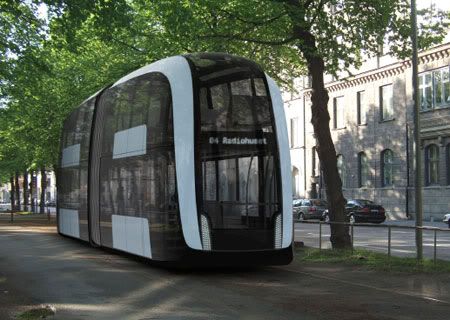
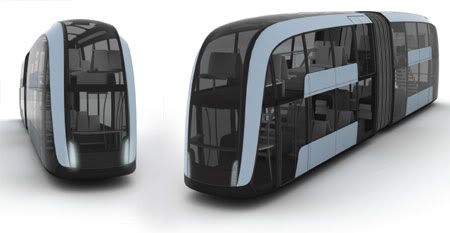
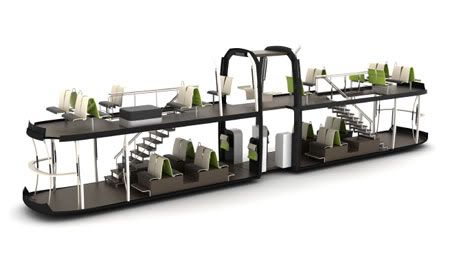
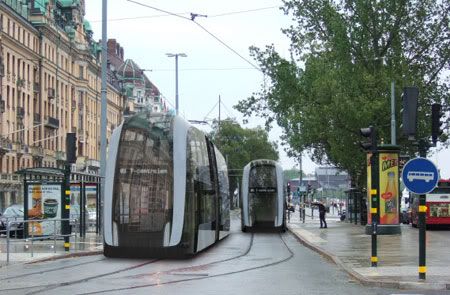
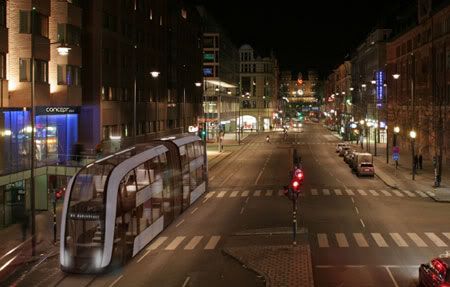
A project sponsored by Alstom to designed a future autonomous tram for Stockholm City, 2025 saw three designers- Vanessa Sattele, Patrik Pettersson & Fredrik Nilsson came up with this double decker tram that designed in a Scandinavian way, being clean, simple and bright at the same time as it is timeless, open and user friendly.
The new double-decker the tram carries about 170 passengers, but on a smaller footprint than standard trams, hence it creates less of a blockade in traffic. It also gives an opportunity to have less seats on the street level floor, creating a more spacious and accessible area for wheelchairs, prams or lots of luggage. Having doors on the second floor opens up new possibilities, not only to speed up the flow of exiting and entering the tram, but also offers instant access to big shopping centers directly from the second floor.
Writer says SkyTrain is obsolete. Ai??Ai??Photograph By file
Editor:
Re: Qualtrough on board with Delta’s call for light rail, March 29
It always amuses me when politicians talk about transit when they know absolutely nothing on the subject. Both Delta MP Carla Qualtrough and Mayor Lois Jackson know almost nothing about transit, except for the politically acceptable catch phrases.
Here is a quick primer: Light rail is a steel wheel on steel rail transit system that has the ability to operate in mixed traffic (streetcar) if need be.
Rapid transit, the Canada Line and the Expo/Millennium lines are not light rail at all, rather they are part of the “heavy” rail family called lightmetro. Both of Metro Vancouver’s lightmetro lines are driverless, thus unable to operate in mixed traffic.
LRT made light metro obsolete in the late 1980s because it is cheaper to build, maintain and operate and has the added benefit of higher capacity.
The Canada Line is really a heavy-rail metro, built as a light metro, and because costs were escalating, the scope of the project was greatly reduced. The Canada Line was built on the cheap and as a result, its truncated stations have platforms only 40 metres long, half the length of the SkyTrain stations.
This means the Canada Line has about half the capacity of the SkyTrain lines and why the Canada Line seems full.
The cost today to increase the capacity of the Canada Line is about $1.5 billion and must be done before any expansion takes place.
The proposed bridge replacing the perfectly good George Massey Tunnel is not being designed for rapid transit at all, for if it were, it must be able to accommodate 300-ton trains and unless tracks are laid, when constructed, rapid transit will never cross the bridge.
Qualtrough and Jackson are the epitome of the problem with regional transit: they know little or nothing about it and instead of admitting to this, they oversee the spending of billions of taxpayers’ dollars on grossly overpriced vanity projects.
TramTrain operation is expanding at a good pace in Europe, where the economy and customer friendliness of the mode is now established.
Is it not time our politicians, planners and especially BC Transit and TransLink have a look at the mode?
I find it disturbing that TransLink is so ready to foist an European road pricing scheme on the lower mainland, but rejects any look and a very successful and affordable European transit mode, such as TramTrain, to improve regional transit.
It seems TransLink is only interested in new taxing scheme to fund their program of grossly incompetent and negligent transit planning.
UK: Non-passenger-carrying tests of the Class 399 tram-train vehicles have started on the Supertram network in Sheffield. Driver training is due to begin shortly, with passenger services on the existing tram network now expected to begin in mid-2017. Testing on the national rail network is currently expected to start next year, with tram-train services between Sheffield and Rotherham now planned for 2018.
Stadler Rail Valencia has delivered seven Citylink tram-trains since late 2015, under a contract awarded in 2013. The eventual service pattern would see three services per hour run from Parkgate Retail Park in Rotherham to Rotherham Central station, before joining the existing Supertram network via a new connection at Meadowhall South and then running to Sheffield city centre.
The tram-train pilot is being led by South Yorkshire Passenger Transport Executive in partnership with the Department for Transport, Network Rail, tram operator Stagecoach Supertram and franchised train operator Arriva Rail North. As well as new rolling stock, it includes infrastructure work to enable the proposed service.


 Widespread road pricing, new transit funding, and de-privatizing B.C. Ferries are all on the menu should the BC Green Party find itself at the head of the table following the May 9 election.


 The Valley Line LRT could be elevated from the 83rd Street and 82nd Avenue intersection to 85th Street and 90th Avenue through the Bonnie Doon area. (City of Edmonton)
 Dave Sutherland with the Holyrood Community League, pictured on a train in London, England, says a metro-style LRT would be a visual and psychological barrier. (Supplied)






Recent Comments