Gondolas are a niche transit system used for solving unique transit problems. While transit servicing SFU mayAi?? present niche transit problems, especially in winter, crossing Burrard inlet does not.
The SFU gondola has been reported in this blog several times; in May 2011; in June 2011; and in October 2011.It is now six years later, 2017 and no funding has been made available for this project.Sadly, the article is inaccurate about the capacity of the La Paz gondola as it can carry only 6,000 pphpd and not the 18,000 pphpd as reported in the article. In Bolivia, the gondolas solve unique transit problems in a city with steep hills and numerous slums as the gondolas just glides over problem areas.In October 2011, the cost for the proposed SFU gondola soared over 50% from $70 million to $120 million and I would assume the cost would be much higher for a gondola to the North Shore in 2017, especially with the weak Canadian dollar.
Gondolas also have unique problems, like emergency evacuations and vulnerable toAi?? high winds; not to mention neighbours would protest vehemently against and aerial tramway.
As I indicated in 2011, spending $1,000 on chains for buses is a lot cheaper and $120 million for a gondola.
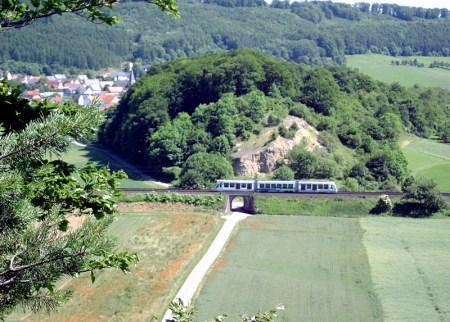
The one solution, of course could be TramTrain or a light Diesel DMU service from the North Shore to Vancouver, using the existing 2nd Narrows Rail Bridge, which could be built and in operation within a year for under $200 million.
Simple solutions are often ignored.
The Ottawa "O" Train is legal to operate on existing railway lines and could provide service to the North Shore
City of North Vancouver Mayor Darrell Mussatto has started an interesting conversation about improving transportation to the North Shore, suggesting the region should consider running rapid transit through a tunnel under Burrard Inlet. But maybe thereai??i??s a better option.
A transit gondola would be a fraction of the cost, easier to build, cheaper to operate and have a lower environmental footprint, forever.
I anticipate that this idea may inspire a certain amount of eye-rolling, but thereai??i??s evidence that a gondola could be a practical and affordable option. Letai??i??s consider both obstacles and possibilities.
The first obstacle is distance: the SeaBus (which connects the two most obvious passenger transportation centres in Vancouver and North Vancouver) plies a 3.24-kilometre crossing. The Sun recently quoted University of B.C. engineering professor Erik Eberhardt, estimating that the cost of tunneling ai???a few kilometresai??? under the habour would be about $1 billion. And that, presumably, is just for the tunnel; never mind the expensive rail links, passenger infrastructure and rolling stock.
But the Peak2Peak gondola at Whistler, which runs 4.4 kilometres with a single span of 3.06 kilometres, cost just $51 million in 2008. It can be done.
What of capacity? The SeaBus daily ridership is around 17,000. Whereas, the $234-million, 11-kilometre Mi Teleferico transit gondola, which opened in 2014 in La Paz, Bolivia, can carry 18,000 passengers an hour.
A better example might be found in the 2011 why-isnai??i??t-that-built-yet business case for an SFU transit gondola, connecting from the Production Way SkyTrain station in Burnaby up to Simon Fraser University and the mountaintop community of UniverCity. In a study conducted for TransLink, the consulting firm CH2M estimated the cost for a 2.7-kilometre ai???cable-propelled transit systemai??? at $120 million. Cabins carrying 35 passengers each would depart every 34 seconds, covering the distance in seven minutes (less than half what it takes a diesel bus to grind up the mountain). That would deliver 3,341 persons per hour per direction, or 48,600 daily boardings. With such a system, you could park all the SeaBuses and triple service to the North Shore. And no waiting. Ever.
What about height? You canai??i??t have gondola cables hanging in front of cruise ships and (heaven save us) oil freighters. Okay, hereai??i??s where it gets tricky, and potentially a lot more expensive. On the plus side, the minimum required height would only be 61 metres, which is the clearance under the Lionai??i??s Gate Bridge, a permanent limiting factor for all Burrard Inlet shipping.Ai?? That doesnai??i??t seem so bad. One of the Peak2Peak towers is 65 metres and Doppelmayr is currently working on a 7.9-kilometre system to Hon Thom Island in Vietnam that has towers as high as 160 metres.
But thereai??i??s the wrinkle; gondola cables sag. And the longer the span, the greater the sag. The Peak2Peak, for example, sags 400 metres.
The Peak2Peak gondola.
So, now you have to start talking about dropping a very tall tower (or two) into Burrard Inlet, which is technically feasible (the inlet is only 45 metres at the deepest point), but unlikely to win any applause from the shippers, the Harbour Air pilots and the port authoritarians who would prefer to keep those waters clear. Still, everyone involved might ultimately find a couple of stationary obstacles easier to manage than having to navigate around an increasing number of SeaBuses running back and forth every 15 minutes.
The bottom line is that, relative to all the alternatives, gondolas are cheap to build and cheaper to run. Annual budget for the Burnaby Mountain version was estimated at between $3 million and $5 million. Compare that to the 2017 SeaBus budget of $11.6 million. CH2M also found that the all-electric, low-resistance gondola system would reduce annual carbon dioxide emissions by 7,000 tonnes, give or take.
So, imagine walking through the old train station on Cordova straight onto a gondola and landing, nine minutes later, on the roof of Lonsdale Quay, for a quick elevator ride down to the buses or a reduced climb up to your condo in Lower Lonsdale. Quick, clean, beautiful and reliable in all weather.
CH2M already identified the SFU gondola as a slam dunk. TransLink might hurry that one into service, and add this one to the list.
Richard Littlemore is a Vancouver writer, consultant and policy analyst.
Is there more to this story? Weai??i??d like to hear from you about this or any other stories you think we should know about. Email vantips@postmedia.com.
The Liberals have always been a “blacktop” political party with “rubber on asphalt” being the big election vote getter. The South Fraser Perimeter Highway and the rebuilt Port Mann Bridge are a testament to this election strategy.
Public transit is no different.
Like he NDP in the 90’s with the Millennium Line, Gordon Campbell built transit to suit his electoral needs. The Canada Line was supposed to be a showcase P-3 project, but instead it is a truncated white elephant, virtually useless as rapid transit as it has increased journey times from Richmond South Delta and Surrey to Vancouver for the hapless customers as they are forced to transfer from bus to the Canada line.
TransLink may chortle about high ridership, but the Canada line has limited ridership and costly to operate, with TransLink paying over $110 million annually to the operating consortium. The Canada Line is no showcase, instead it has become a classic ‘White elephant’.
The present government is not interested in public transit at all and has left a squabbling “Mayor’s Council on Transit”, to fight over which vanity project they want, without any funding for any ‘rail’ project.
The BC Liberals, like their federal brethren will only spend money on transit if they believe it will garner them votes and sadly for BC, the ‘sad sack’ TransLink has made regional transit a vote loser as last years plebiscite showed.
Transit will be all but ignored by the BC Liberals, with only vague promises of rapid transit here or commuter rail there will be heard in the coming election campaign.
The BC Liberals have washed their hands of public transit.
The BC Liberal election BS machine is now in full swing.
The Liberals announced a “commuter rail working group” to confirm the viability of commuter rail for the Capitol Region. This begs the question: “Who has the capability and knowledge to come to an answer on commuter rail?
What should be done, is what Rail for the Valley did and engage a professional, such as Leewood Projects to asses the viability of rail transit, but this will not happen, simply because the BC Liberals don’t want a rail solution for Victoria!
By engaging a transportation professional may give the government an answer they do not want, which is a commuter train would not be viable, but a TramTrain solution would not only be viable but affordable and the BC Liberals do not want affordable LRT in the province.
Added to the electoral BS, the E&N route has been promised to the very powerful cycling lobby, whose sole existence is sucking off the public teat!
Commuter rail working group announced for Greater Victoria
Ryan Price
The BC Government is getting on board to produce a business case for commuter rail in Greater Victoria, due in the summer.
“I’m very pleased to announce that we have formed a working group thatai??i?? the province will lead. We will complete the business case with the goal being to finally get on with commuter rail here on the E&N line from Langford into Vic West.” That was the announcement from Todd Stone as he stood with local mayors beside the currently unused E&N rail line.
There were no details on items such as cost, stops, ridership numbers, or what kind of train would be used. Minister Stone said those are the details they’ll have once the business case is done. If it adds up, the province can take it to the federal government to seek their support.
“We haven’t been at this place… where you have the full support of all the mayors in the region, the province at the table, the federal government interested,” said Stone, “we are on the cusp of something pretty special, but we’ve got to finish the work together.”
Many spectators were hoping for more solid news, not just another study, but Langford Mayor Stew Young told the crowd it is still a big move forward, “the missing link in this whole thing, to move commuter trains forward on this corridor, is the provincial government. This is the first time we’ve actually had the provincial government here saying ‘you know what? We like the idea, we’re going to move forward.ai??i??”
Young also says another piece of the puzzle is that the owner of the E&N rail line, the Island Corridor Foundation, has agreed to let them use the Victoria area stretch of the rail corridor.
This all comes after the developers of the Bayview Place condo project already put their own money into a study of a rail link between the West Shore and the Roundhouse property in Vic-West ai??i?? a property they’re developing. Theyai??i??ve had municipal governments and BC Transit at the table for that study and Bayview Place Development Manager Chris Reiter says what they found is “promising.” Itai??i??s their study that is going to the BC Government and Reiter says itai??i??s part of the reason the province is coming to the table.
While the developer wouldn’t say much more, in the past theyai??i??ve said they think it’ll take about $10-million dollars to repair the tracks and get the service started and that a further three or four million dollars annually would be needed to help subsidize the train.
Now we see if the province also finds the results “promising.”
Why can’t TransLink be honest with its customers and the taxpayer?
Like B.C. Transit before, honesty is not in TransLink’s lexicon, why and why can’t TransLink be honest about SkyTrain?
The answer lies with he fact each SkyTrain Line has been a political decision, with the final decision made by the Premier of the day. Thus SkyTrain has become a political transit system and not a customer oriented transit system.
This continues today with SkyTrain being built to the needs of the government’s friends, including concrete manufacturers, land developers and land speculators.
The federal government loves ALRT/ART SkyTrain because it financially helps two political friends, Bombardier Inc. and the SNC Lavalin as they hold the patents to the proprietary ART system.
By being a political transit system, it is imperative that the public sees it as good investment, as the SkyTrain Lobby tries to do with “man of straw” arguments, “alternate facts”, and pure “fake” news.
Funny then, no one builds with ART (ALRT has been made redundant) and only seven ICTS; ALRT; ALM; ART proprietary light metro’s have been built, with one, the Toronto ICTS Line to be soon torn down because it is “life expired”.
Mr. Haveavow, who is a transportation professional from Ottawa, has been upfront and honestAi?? commenting on our transit scene. We may not see eye to eye on some subjects, he he is a professional and deserves to be listened to.
SkyTrain has some very expensive issues to rectify before it can increase its capacity, something that TransLink is keeping very quiet about. So much so, that I call it dishonest because what renovations needs to be done to the ALRT/ART system, needs to be done before a Broadway SkyTrain subway is built!
As TransLink’s utterly dishonest planning process continues, abetted by Vision Vancouver and the SkyTrain Lobby, the truth is leaking out and it is very bad news for the taxpayer, which in turn, is very bad news for the sitting Premier.
From Mr. Haveacow, with some slight editing.
This cartoon is from 1988 and in 20 years, nothing has changed!
I hate to be the s*** disturber here but many of the needed upgrades are just not going to happen for the Skytrain Network. Currently according to Translink the Expo Line maxes out at around 15,000 passengers/hour/direction. A 75 Second headway is possible but Transport Canada would have to sign off on quite a few improvements before that can happen. The report you mentioned, although sounds exhaustive, is really meant for public or political consumption. Its not a real professional upgrade plan in any serious form. I know after talking with the head of operations during our little tour of the SkyTrain a few years ago, he outlined possibly hundreds of individual upgrades that would be needed. The reality he argued is that, the people who run TransLink really donai??i??t want to implement these upgrades unless a massive wholesale tear-out and tear down from the bottom up is approved and considering the state of transit funding in BC right now, its not likely to occur. Here is a few things off the top of my head that Transport Canada said must be done before any service improvements occur on the Skytrain network from their current operating regime of 109 second headway’s.
1. Translink has to upgrade the electrical carrying capacity of the system, by either adding many new electrical transformers and or improving the others that are already there dramatically. The current handling capacity of the system is the prime limiter right now in regards to increasing passenger capacity. The cost is around $500-800 million, that also includes upgrading the existing 3rd rail power cable connections and adding new ones. Major upgrades are needed to the electrical panel control system in many stations and work is only slowly occurring on this front. At current rate work is progressing, it will take 12-15 years before they are complete. There also has to be a major master electrical panel upgrade so that it can be accessed in many places, right now there is only 2 master panel access points. By the way, it was the short circuiting of the master electrical access panel located at the commercial drive station by a worker using a non insulated screw driver when doing work for connecting the Evergreen Extension in the summer of 2015, that caused one of the large system wide, day long service interruptions on the Expo and Millennium Lines.
2. The Expo Lineai??i??s signaling system needs upgrading and many kmai??i??s of cabling needs replacement and or wholesale upgrades. Much of this cabling is 30+ years old and is desperate need of replacement. Many of the signal units are not working up to specs anymore. They are safe, but they need to be replaced entirely before a 75 second headway is possible.
3. Many of the turnouts (switches) on the main parts of the Expo Line need to be replaced with high speed models not the low to medium speed turnouts that are presently there. The turnout control units will also most likely be needing replacement as well before higher service frequencies are possible. The replacement costs can be excessive if they are not done in a pre planned way. Each turnout conversion can take 3-6 hours per turnout per crew. It is also required to switch out the existing turnout tower and control unit. Keep in mind just one double crossover track area has 4 turnouts. Then the double crossover track centre module (the place where all the tracks cross) will need replacement as well. These can take 5-6 hours by themselves and are very expensive and tricky to switch out. One of the reasons many new LRT and Rail rapid transit systems are reluctant to use double crossovers is the high cost of maintenance and their sensitivity to damage when heavily used.
4. As per an earlier post, the track grinding regime at Translink needs to improve especially on high traffic parts of the system. Translink used to have an asymmetrical grinding profile needed to stop the excessive wheel damage and squeal that is common with the Skytrain system. It was abandoned because it was too troublesome to maintain and continue implementing. Your maintenance staff didnai??i??t like the extra work and Translinkai??i??s management didnai??i??t like the bother of having to schedule and pay for the time consuming work. However, when you stopped doing it your maintenance costs went up and stayed there. I know this because the company that created the rail grinding regime is staffed by some school friends of mine and they were going to sue Translink at one point over this issue. They decided not to due to cost but if frequency of service is going to increase something better be done or maintenance costs will get even higher.
5. Many platform and station capacity upgrades are needed because the existing system just doesnai??i??t have enough capacity, especially at certain key stations. There is very little money for this work but they appeared to be ready to start on one or two stations. They were the last time I was there anyway. I donai??i??t believe any of this work has started yet though. (Zwei replies: Evidently a few stations, including Main Street and Metrotown have been renovated or are being renovated with longer platforms and more entrance/exits)
6. The last Transport Canada Report that was issued when Translink was allowed to operate at 109 second frequency of service, noted that, Translink did not have enough operating funding to increase peak hour service without having to cut weekend and late evening service. This was a great concern to them. They were essentially robbing Peter to pay Paul. They also noted that without an overall increase in maintenance and operational spending as well as other non sexy operational upgrades, any future service upgrades would not be possible to be considered. The age of the Expo Line was also concerning in that, the line could as it ages, suffer from ai???block-obsolescenceai??? in many operational areas and operating components, unless major funding increases for maintenance and equipment upgrades was allowed.
7. As Zwei mentioned before there is no budget to upgrade the Skytrainai??i??s aging concrete above grade right of way between the stations. The current track network configuration is really outmoded and needs upgrades, which is also expensive and extremely time consuming. This will require weekend and or weekday closures for extended periods of time to implement these improvements.
In fact, many of these upgrades I mentioned will require large portions of their respective lines to be temporarily closed during weekday or weekend regular operating hours.
It was a tragic story last year when a dog spooked by fireworks was hit and killed by SkyTrain.
Itai??i??s been almost five months since ai???Maggieai??? died,Ai??but a CKNW investigation reveals many questions remain unanswered.
ai???Weai??i??ve been in the dark for this so much andai??i?? I really just, all I want to know is what happened,ai??? says Ali Fluevog, Maggieai??i??s owner.
Fluevog was shocked to see a Freedom of Information request filed by CKNW about the events leading up to Maggieai??i??s death was returned almost completely blacked out.
ai???I justai??i??I think itai??i??s very strange. I donai??i??t know why, I donai??i??t know what couldai??i??ve happened that we donai??i??t already know, but I donai??i??t knowai??i??it just seems really weird. I guess theyai??i??re just covering themselves really well against any legal ramifications thatai??i??s my guess.ai???
She says TransLink has been outwardly cooperative, but says the trust was broken a while ago.
ai???They must have a good reason for doing this. Their lawyers are probably quite savvy about how to deal with these sorts of things. Iai??i??m not a lawyer, I donai??i??t know how these sorts of things work.ai???
She says her family wonai??i??t have closure until they know what happened.
ai???My job as a dog owner, when I adopted her, is to take care of her and protect her. She protected me and I protected her, and that was our deal. So, Iai??i??m not going to take it lying down.ai???
But Chris Bryan with TransLink says the information was withheld due to an ongoing investigation.
ai???The BC SPCA has its own investigation and in order to protect the integrity in that investigation we have to withhold our report until thatai??i??s finished.ai???
He says theyai??i??ve been updating the family about the progress.
ai???We know that for the family itai??i??s really important that they get the information. We know that they would like a sense of closure with this particular incident, so itai??i??s our hope to get that information to them as soon as possible.ai???
But Fluevog says she doesnai??i??t understand how a BC SPCA investigation changes what happened that night.
She says TransLinkai??i??s internal report was finished months ago, but they still havenai??i??t shared its findings with her.
The BC SPCA says they continue to work on their investigation and will be making recommendations once itai??i??s over.
I see politicians are floating trialAi?? balloons about transit, before the upcoming election and from the North Shore it is extending rapid transit to North Vancouver and beyond.
The cost to extend the Canada Line or the ALRT/ART Lines (both lines are incompatible in operation) to North Vancouver is around $4 billion to $6 billion, yet is there the passenger demand for this investment?
I doubt it.
Yet a 35 km tramtrain could be built, extending as far as Horseshoe Bay for about $500 to $600 million, using, in part,Ai?? existing railway infrastructure.
The most practical transit route is, of course, the Leewood/Rail for the Valley Vancouver/Richmond TramTrain to Chilliwack, which a deluxe version could be built for $1.5 billion and an economy version as low as $750 million.
What is practical and cost effective is seldom done in Metro Vancouver, where transit is built strictly for political prestige.
Chemnitz Electro-Diesel TramTrain
Will rapid transit one day make it across Burrard Inlet? North Van mayor weighs in
NORTH VANCOUVER (NEWS 1130) ai??i?? Should there be a SkyTrain to the North Shore? One local mayor is calling for TransLink to look into adding a crossing.
North Vancouver Mayor Darrell Mussatto is calling for a feasibility study to be done into connecting the network across the Burrard Inlet, from Waterfront Station and Lonsdale Quay.
He says there are several factors to consider.
ai???Is there enough density in the lower-Lonsdale area on the north shore? What would be the options if we were going to do it ai??i?? would we do a tunnel.. cut and cover? Or would we maybe look at doing some rapid transit on the Iron Workers Memorial Bridge?ai??? says Mussatto.
ai???Also, take into consideration the future growth of the Sea to Sky Corridor, which is the Squamish to Whistler area.ai???
He says they havenai??i??t seen an increase in the nine lanes of traffic in and out of North and West Vancouver in 57 years.
Mussatto says SkyTrain options needs to be looked at ahead of a third crossing for vehicles, which would only add to the gridlock on the North Shore.
ai???Weai??i??re seeing a tonne of that traffic coming through our municipalities and we canai??i??t cope with it anymore. So, if we donai??i??t do these kinds of studies and start looking at it now, weai??i??re going to be making poor decisions. And we may be looking at a third crossing, which I donai??i??t think people realize the effects, both positive and negative, that it would have on the North Shore.ai???
As the cost of the Scarborough subway escalates, senior TransLink officials are desperately trying to find money to build Vision Vancouver’s massive “vanity” project, the Broadway SkyTrain Subway.
Subways are hugely costly to build and hugely costly to operate, but the regional Mayor’s Council and Provincial Politicians and TransLink remain absolutely blind to this fact.
TransLink is paying over $110 million in operating fees annually to the Canada line P-3 and the real scope of subway operational costs are lost to the very small print or not released at all.
It is time for real transit experts, to give real opinions on subway operation or light rail operation on Broadway, and not listen to career bureaucrats who fear for their jobs if they offer an honest opinion as what happened to TransLink’s two best planners.
The cost to build a one-stop subway extension in Scarborough has climbed to at least $3.35 billion as the estimate of new people expected to be drawn to the line has fallen.
Those numbers ai??i?? updated in a new city staff report released Tuesday that had previously been delayed for months ai??i?? have drawn fresh questions of value for money and providing the most transit for Scarborough residents as Mayor John Tory continued to defend the project Tuesday.
Though Tory and allies pitched that an additional light rail line could be funded amid accusations the subway was a boondoggle, the updated cost leaves that LRT line $1.4 billion short on funding, putting that promised project in limbo.
According to the new report, the subway extension is now expected to attract 2,300 new daily riders, if aligned as recommended along McCowan Ave., compared to the existing Scarborough RT, which needs to be replaced. That means the city would be paying approximately $1.45 million for every new rider to build the subway extension.
The overall updated cost is a $150 million increase over the earlier $3.2 billion estimate, and doesnai??i??t include the cost of financing.
The new estimate includes significant changes to a planned bus terminal at a new Scarborough Town Centre station which staff said requires 34 bus bays ai??i?? the largest bus terminal in the entire TTC network.
TransLink says the new Evergreen line SkyTrain extension is off to a bumper start, serving more than 30,000 passengers on an average weekday.
Those numbers cover the lineai??i??s first eight weeks in operation, in December and January.
TransLink spokesperson Chris Bryan says those figures already show a 10 per cent boost from opening day, and are expected to go higher.
ai???Thereai??i??s a lot of development happening around SkyTrain, and certainly thatai??i??s happening in Tri Cities as well, so we think itai??i??s a good start, 30,000, but we definitely see ridership rising fairly significantly over time.ai???
READ MORE:Ai??Evergreen Line up and running
That said, Bryan says where it goes from here is up to a number of factors.
TransLink has previously said it hoped to hit a ridership of 70,000 by 2021, but Bryan says it will depend on factors like how development proceeds along the line, and the health of the economy.
ai???In the case of the Canada Line for example, we had a built in high ridership right from day one we had a number of bus lines that used to go back and forth from Richmond into Vancouver. Those people were pushed onto the Canada Line so to speak. In Tri Cities itai??i??s a little bit different.ai???
The Canada Line now sees more than 120,000 passengers on an average day weekday.
Bryan adds bus service improvements, slated for April, are also expected to feed system ridership.
While Surrey’s proposed LRT is topping $100 million/km to build, in Europe new LRT lines are being built much cheaper. In Weisbaden, their new LRT is pegged at $24.5 million/km to build!
Analysis: Fire the Surrey LRT planning team and hire people that actually know what they are doing.
WEISBADEN, a city in west-central Germany with a population of 288,000, is making plans to build its first light rail (modern tramway) line, the “metro report international” site reports:
GERMANY: The municipality of Wiesbaden has approved ai??i??3Ai??4mAi??(CAD $4.72 million) ai??i??of preliminary planning work for the cityai??i??s first tram route.
The Land of Hessen is providing ai??i??465, 000Ai??(CAD $646, 303)ai??i??
.
When complete, the Citybahn light rail line would link Wiesbaden to the existing metre gauge tram network in the neighbouring city of Mainz at one end, and to the tourist-oriented Aartalbahn that runs north from Wiesbaden at the other.
The 12Ai??2Ai??kmAi??ai??i??(7.5 mile) ai??i??first phase, estimated to cost ai??i??165mAi??(CAD $299, 350 million)ai??i??, would connect Hochschule Rhein-Main in the north of Wiesbaden with Theodor-Heuss-BrA?cke to the south.
In Canadian funds, construction would cost $24.5 million/km to build!
Further phases would see the mostly single-track Aartalbahn converted from 1Ai??435Ai??mm
ai??i??(standard) ai??i??to 1Ai??000Ai??mmAi??(meter) ai??i??gauge over the 15Ai??kmAi??(9.3 miles) ai??i??
between Bad Schwalbach and Chausseehaus, from where a new alignment would take the tram line to Otto-Wels-StraAYe in Wiesbaden.
Here the Citybahn alignment would be met by a branch from Hermann-Brill-StraAYe, then serve Wiesbaden Hauptbahnhof and Ostbahnhof.
Crossing the Rhein on the existing road bridge, the route would then continue for 2Ai??5Ai??km
ai??i??(1.5 miles) ai??i??to reach the existing Mainz tram network at Mainz Hbf West. It is envisaged that Citybahn services would run as far as Mainz Hochschule.
There seems to be a general naivete about Light Rail or LRT in the media, due in part to TransLink’s war on LRT, with their well advertised preference for light-metro.
Today, except for “niche transit” solutions, public transport is divided into three modes, bus, tram, and metro; with each mode built to economically deal with traffic flows on an individual transit route. Transit is to move people, not to subsidize development, a grand mistake being made by TransLink, the Ministry of Transportation and the Mayors Council on Transit.
Generally, buses can deal with traffic flows up to 6,000 to 7,000 persons per hour per direction; trams (LRT) can economically cater to traffic flows from 2,000 pphpd to over 20,000 pphpd; and metro with traffic flows exceeding 15,000 pphpd.
Though some pundits point to Bus Rapid Transit (BRT) in South America as a solution. BRT in South America operates on multi-lane highways, many using three section articulated buses (greatly restricted use in Canada due to Transport Canada rules) and are sustained by very cheap wages paid, compared to Canada. There is no comparison.
LRT is built as an economic mode on heavily used transit routes because one modern tram (1 tram driver) is as efficient as four to six buses (4 to 6 bus drivers) and for every bus or tram operated one needs four or more people to drive, manage and maintain them. The modern tram can remain in service for over forty years, while the average bus lasts only fifteen years in revenue service; the scale of savings can easily seen in a long term business plan.
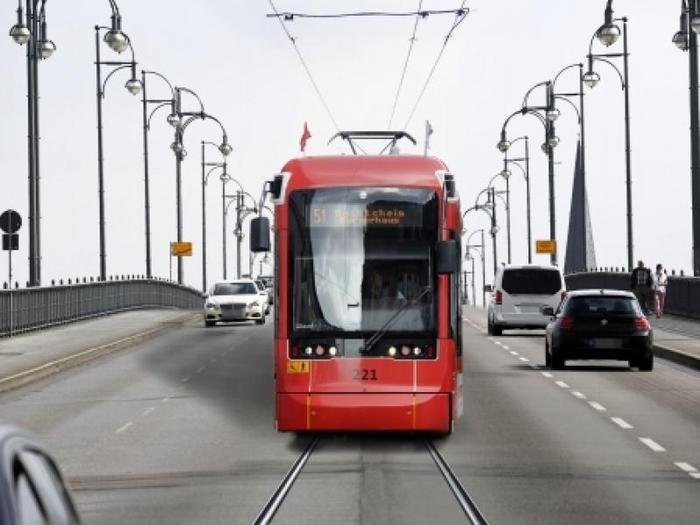
Modern LRT is nothing more than modern trams (the European term for streetcar), which today, have capacities of 250 persons or more, operating on a dedicated or “reserved” rights-of-way. A “reserved” rights-of-way can be as simple as a HOV lane with rails or as elaborate as a lawned, park like route. Properly built, trams drives down operating costs of a transit system.
ai??i??Currently, Metro Vancouver operates both unconventional and conventional light metro, which needs scores of bus lines to feed the light metro customers, this drives up costs because automatic light-metro is more expensive to maintain, as are the buses.
As most light-metro’s today, including our SkyTrain system operate “driverless’ metros, the mode has very high operating costs, even though it has no drivers, there are over 170 full time attendants to see to trouble free operation, as well as TransLink’s use of very expensive to maintain transit police. Light-metro stations are also expensive to maintain, with extra power needed to operate escalators and elevators which alone are very expensive to maintain, with annual maintenance costs now over $6 million annually. Just the Expo Line costs about 60% more to operate than comparable LRT operations.
Maintenance to the grade separated guide-way and subway sections also increase costs as does the maintenance needed to keep the automatic system operating as stoppages are catastrophic to the transit customer.Light metro drives up the cost of transit.
There is a a long time myth that is often repeated that SkyTrain pays it s operating costs out of fares. This is completely untrue as GVRD’s 1993 study “The Cost of Transportation in the Lower Mainland, clearly shows a $157.63 million subsidy paid to just the Expo Line, with more SkyTrain having been built since, this subsidy has greatly increased.
ai??i??
From the Cost of Transportation in the BC Lower Mainland – GVRD
It is no surprise that LRT made light-metro obsolete decades ago, yet the SkyTrain/light-metro lobby keep denying the truth. The SkyTrain Lobby act as a latter day “Cargo Cult“.
Metros are only built when traffic flows along a transit route exceed 15,000 pphpd, where long trains and station with long platforms make at-grade operation very difficult and/or impossible and the transit line needs to be grade separated either in a subway or elevated on a viaduct. By their very nature, metro are extremely expensive to operate and maintain.
Since the ALRT/ART SkyTrain light metro was first marketed, only seven have been built, with only three seriously used for regional public transit; Vancouver, Toronto, and Kuala Lumpor. One, the Detroit (mugger) people mover is a demonstration line; two, JFK and Beijing are airport people movers and one in Korea is a theme park people mover which has the ability to run only single car trains. Toronto’s life expired ICTS system is going to be torn down in the near future and replaced by a metro or LRT or a combination of both.
There is really no such thing as “rapid transit” or “mass transit” as they are a catch all phrases used by people to describe anything other than a bus. Beware of those who say rapid transit can do this or mass transit can do that because, in most cases the transit line is built to suit political and bureaucratic needs and not the customer needs and in most cases, achieves very little.
A good example is our own light-metro network that despite around $10 billion invested, mode share by car in the region has remained at around 57%, for over 20 years.
In Europe, a new LRT or tram line is not built unless many conditions are met, including a minimum modal shift of 20% from car to transit, thus it is imperative that new tram line must meet a transit customer’s needs.
Today, there are close to six hundred transit systems around the world that are in the light rail family and the mode is the first choice of transit planners in providing affordable transit solutions for mobility troubled cities.
ai??i??Ai??Ai??Ai??Ai??Ai??Ai??Ai??Ai?? Modular trams can grow with ridership
Today, modern trams are extremely versatile:
Low-floor trams are 100% accessible by the mobility impaired without the need of expensive lifts, elevators, and escalators to operate and maintain.
The industry standard for trams climbing grades is 8%, though trams can easily handle 10% grades. In Lisbon, their heritage trams climb grades of 13.8%.
Modern modular trams can grow with ridership, thus saving on initial start up costs and new modules can be added when needed
The “reserved” rights-of-way and priority signalling at intersections enables trams to obtain commercial speeds of that of metros.
Today, trams can operate as streetcars in mixed traffic; as light rail on dedicated rights-of-ways; and regional commuter trains, operating on mainline railway tracks, all on one route.
Trams are interchangeable, as one companies tram will work with another companies tram in a coupled set, which is impossible with light-metro.
Historic or heritage trams, restaurant trams, or special use rental trams (weddings, etc.) can be used in with regular service, which is a boon to the tourist industry.
In Dresden, German, special cargo trams were used, carrying standard containers, which helps keeping diesel trucks off city streets. Service has now been discontinued due to factory closure.
Construction costs range from as low as $5 million per km. for TramTrain or as high or higher than SkyTrain if the tram is built as a light metro like in Seattle, Washington or even operate as a metro.
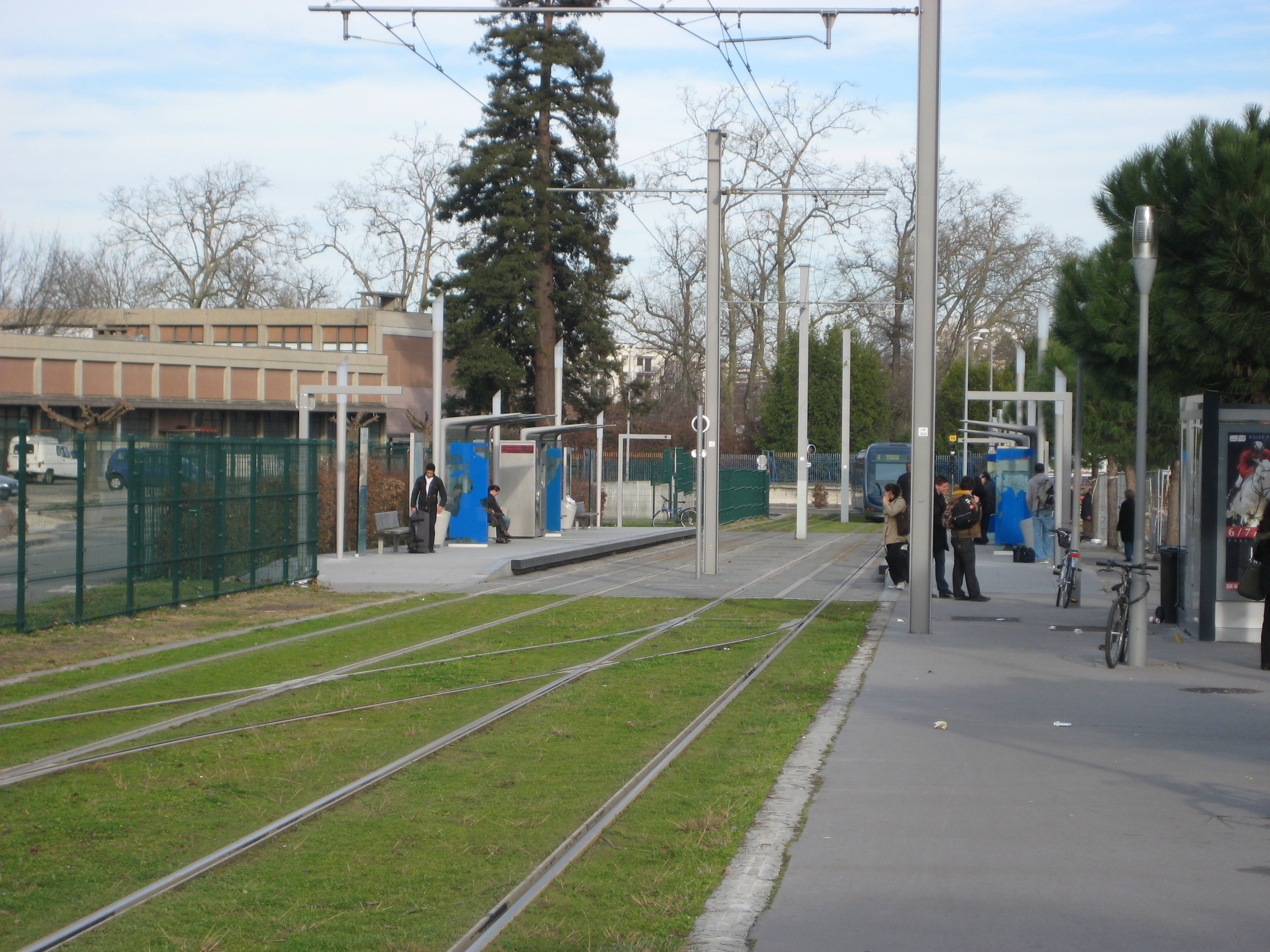
Lawned rights-of-way and simple station
Both of TransLink’s major transit projects are “vanity” projects and both will be very expensive for what they will do. The Broadway subway is being built on a route with traffic flows well under 5,000 pphpd, less than one third the traffic flows needed for a subway, which makes Broadway a candidate for LRT and not a subway.
Surrey’s proposed LRT is nothing more than a poor man’s SkyTrain, designed to feed that already at capacity SkyTrain light-metro system and seemingly designed for failure!
Both projects, the Broadway subway at about $360 million/km to build and the LRT at an astonishing $100 million to build are hugely expensive, yet as built will not reduce traffic congestion, while at the same time drive up the cost of transit in the region!
If the chief goal of LRT development in Surrey is to extend to Langley, there is a much cheaper way in connecting Langley to the Expo Line and that is a diesel multiple unit (DMU) service from Langley to Scott Road Station (via Cloverdale, Johnston Road; King George Highway; and Scott Road) to Scott Road Station. Such a service could be had for under $10 million/km., using Transport Canada approved DMU’s.
This of course makes many at TransLink apprehensive and uneasy as it comes very close in duplicating the Rail for the Valley group’s Leewood Study for the reinstatement of the Vancouver to Chilliwack interurban, only using modern signalling and vehicles. As per the 2010 Leewod study, we could connect. Scott Road Station to Chilliwack for about $500 million; a Vancouver to Chilliwack service would cost about $1 billion.
ai??i??
The Kassel Regiotram TramTrain, enables quality public transit to each lightly populated areas.
I find extremely disturbing that many who complain about light rail are ill informed about LRT and I also find it shocking that many who plan for LRT in the region are equally ill informed about the mode.
The five faux arguments against modern LRT are:
LRT is slow. No, LRT operating in urban areas has stops or stations every 500 metre to 600 metre apart, optimizing customer demand and as such, tends to have lower commercial speeds than comparable metro stations which has stops every kilometre or more, which generally increases total commute times, due longer times to access stations. The maximum speed that LRT or light-metro can operate is about 90 kph.
LRT causes havoc at intersections. No, LRT must adhere to all signals pertaining to intersections and if a tram driver passes a red light and causes an accident, he would be charged criminally and lose his job, while a car driver who ignores a red light and causes an accident, merely gets his wrist slap. Adding ‘red light cameras’ to LRT/road intersections will greatly reduce accidents. U.S. studies show that LRT/road intersections are about ten times safer than road/road intersections.
LRT is expensive to operate. No, the opposite is true, it is light-metro that is expensive to operate.
You need more density to build with LRT. No, this argument is based on the B.C. Crown Corporation’s Secretariat’s appraisal of SkyTrain light-metro and erroneously classified LRT as the same as SkyTrain, as rapid transit.
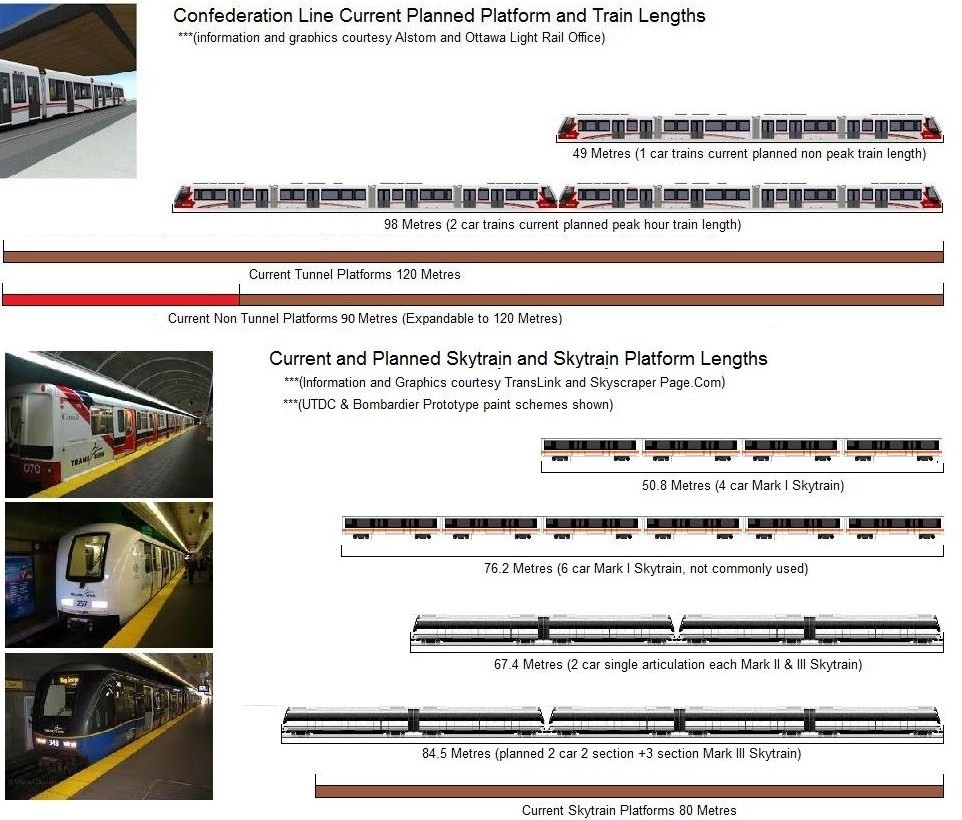
LRT does not have capacity. No, light rail is able carry more people than light-metro. Presently the Expo Line is at capacity, carrying around 15,000 pphpd in peak times; the Canada line, with trains and platforms half the length of the Expo and Millennium Lines, has effectively half the capacity. Light rail, as noted above can handle over 20,000 pphpd if need be.
ai??i??
A comparison of Ottawa’s new LRT and Vancouver’s SkyTrain.
If the Metro Vancouver region wants an affordable public transit alternative to the car, it must abandon all planning for subways and light-metro, as the huge costs involved to build, operate and maintain light-metro greatly increases the cost of ‘rail’ transit, while at the same time, giving the region and customer an expensive and user unfriendly transit system, that will do little to alleviate traffic congestion and pollution in the region. It is the failure of light-metro, in part, that is driving the province into building new bridges and highways to accommodate the expected traffic increases, because the regional transit system is deemed little more than a conveyance for the poor, the elderly and students.
The following quote from American transportation consultant and transit expert, Gerald fox, sums up TransLink’s problem; ” But, eventually, Vancouver will need to adopt lower-cost LRT in its lesser corridors, or else limit the extent of its rail system. And that seems to make some TransLink people very nervous.”


 This cartoon is from 1988 and in 20 years, nothing has changed!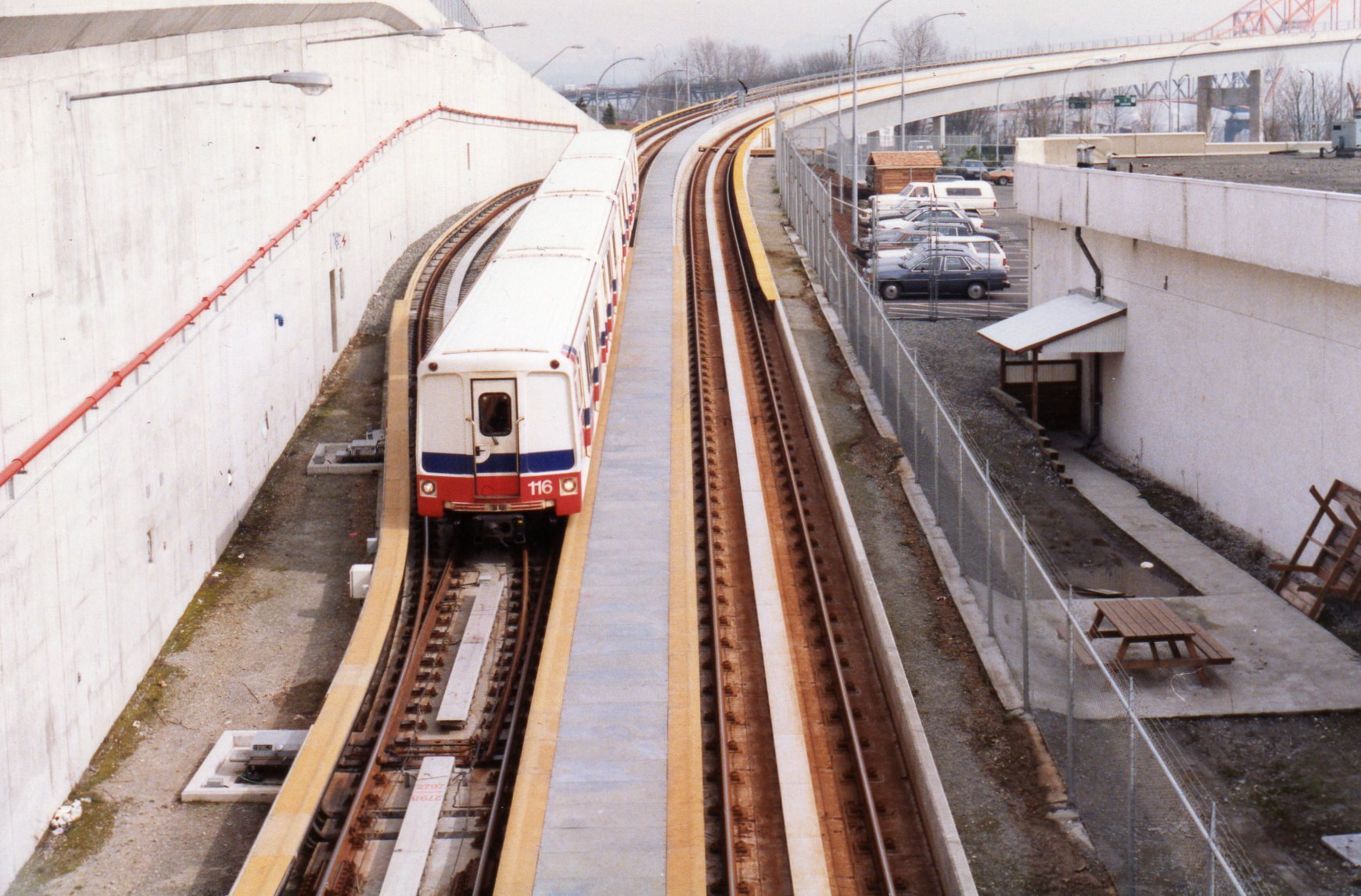

 (Courtesy TransLink)


 Ai??Ai??Ai??Ai??Ai??Ai??Ai??Ai??Ai??Ai??Ai??Ai??Ai??Ai??Ai??Ai??Ai??Ai??Ai??Ai??Ai??Ai??Ai??Ai??Ai??Ai??Ai??Ai??Ai??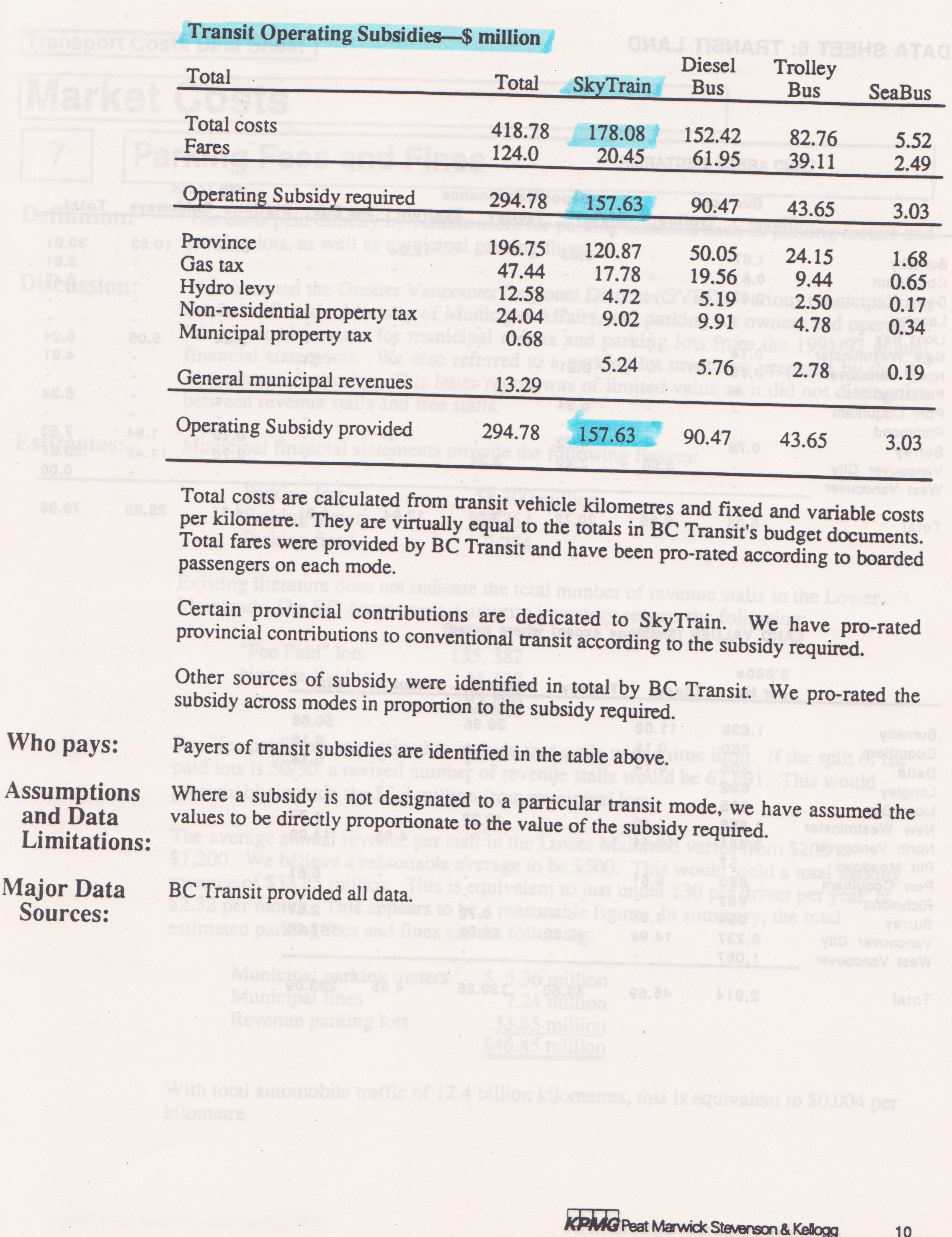




Recent Comments