The 1986 LRTA Study: Bus ai??i?? LRT ai??i?? Metro Comparison

I thought I would again reprint this post from May 20, 2010 as it may clear up some major misconceptions about LRT capacity, especially our friend in Vancouver who are very confused about modern light rail.

There is an ongoing debate today that LRTAi??can only carry a limited number of riders and that the magic number for a subway is about 100,000 riders a day on a transit line. This may have been true in the 1970ai???s, but not the 21st century, where modern mufti-articulated low-floor light rail vehicles (tram is much easier to say!) are able to easily carry three or four times this number, thus negating the need for expensive subway construction, except on the most heavily used routes. If the LRTA found that modern LRT could carry over 20,000 pphpd in 1986, in 2010, in Karlsruhe Germany, one tram or LRT line on Kaisserstrasse was seeing traffic flows around 40,000 pphpd.


The 1986 LRTA Study: Bus ai??i?? LRT ai??i?? Metro Comparison

Posted by on Thursday, May 20, 2010 Ai??

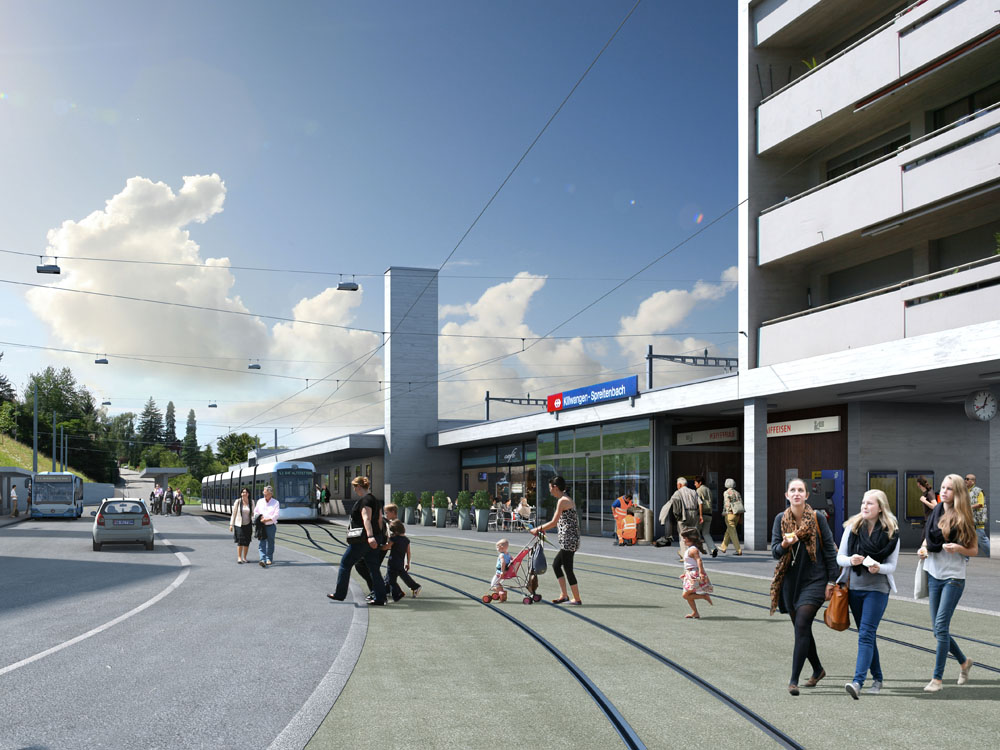
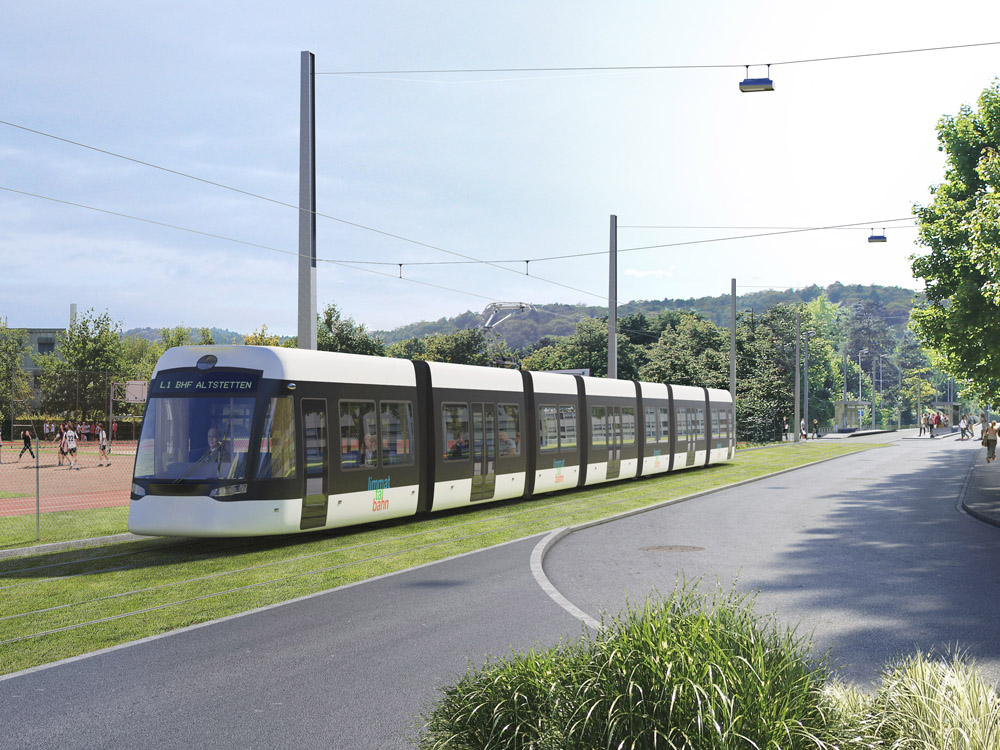
A Vienna tram on a simple reserved rights-of-way.

The following is from the Light Rail Transit Associations hand book Light Rail Transit Today, comparing the operating parameters of bus, light rail, and metro on an unimpeded 8 kilometre route with stations every 450 metres. Using real data based on acceleration, deceleration, dwell time, etc., the study gives real time information for the three transit modes.

Please note: This study has been abridged for brevity and clarity.

The study assumes a vehicle capacity for a bus at 90 persons; LRT 240 persons (running in multiple unit doubles capacity); and metro at 1000 persons.

The time to over the 8 km. route would be:

  1. Bus ai??i?? 22.4 minutes
  2. LRT ai??i?? 18 .6 minutes
  3. Metro ai??i?? 16.3 minutes

The Round trip time, including a 5 minute layover:

  1. Bus ai??i?? 54.8 minutes
  2. LRT ai??i?? 47.2 minutes
  3. Metro ai??i?? 42.6 minutes

The comparative frequency of service in relation to passenger flows would be:

At 2,000 persons per hour per direction:

  1. Bus ai??i?? 2.7 minute headways, with 22 trips.
  2. LRT ai??i?? 7.5Ai?? minute headways, with 8 trips.
  3. LRT (2-car) ai??i?? 15 minute headways, with 4 trips.
  4. Metro ai??i?? 30 minute headways, with 2 trips.

At 6,000 pphpd:

  1. 1 Bus ai??i?? 0.9 minute headways, with 67 trips.
  2. LRT ai??i?? 2.4 minute headways, with 17 trips.
  3. LRT (2-car) ai??i?? 4.8 minutes, with 13 trips.
  4. Metro ai??i?? 10 minute headways with 6 trips.

At 10,000 pphpd:

  1. Bus ai??i?? 30 second headways, with 111 trips (traffic flows above 10,000 pphpd impractical).
  2. LRT ai??i?? 1.4 minute headways, with 42 trips.
  3. LRT (2 car) ai??i?? 2.8 minute headways, 21 trips
  4. Metro ai??i?? 6 minute headways, 10 trips.

At 20,000 pphpd:

  1. LRT ai??i?? 0.7 minute headways, with 83 trips.
  2. LRT (2 car) ai??i?? 1.4 minute headways, with 42 trips.
  3. Metro ai??i?? 3 minute headways, with 20 trips.

Comparative Staff Requirements on vehicles in relation to passenger flows. Station staff in brackets ().

At 2,000 pphpd:

  1. Bus ai??i?? 21 (0)
  2. LRT ai??i?? 7 (0)
  3. LRT (2 car) ai??i?? 4 (0)
  4. metro ai??i?? 2 (up to 38)

At 6,000 pphpd:

  1. Bus ai??i?? 61 (0)
  2. LRT ai??i?? 20 (0)
  3. LRT (2 car) ai??i?? 10 (0)
  4. Metro ai??i?? 5 (up to 38)

At 10,000 pphpd:

  1. Bus ai??i?? 110 (traffic flows above 10,000 pphpd impractical) (0).
  2. LRT ai??i?? 34 (0)
  3. LRT (2 car) ai??i?? 17 (0)
  4. Metro ai??i?? 8 (up to 38)

At 20,000 pphpd:

  1. LRT ai??i?? 69 (0)
  2. LRT (2 car) ai??i?? 34 (0)
  3. Metro ai??i?? 15 (up to 38)

Though the study is 27 years old and completed before the advent of low-floor trams (which decreased dwell times), it still give a good comparison of employee needs for each mode. Metroai??i??s, especially automatic metro systems do require a much larger maintenance staff than for bus or LRT and when one factors in the added high cost of subway or viaduct construction plus higher operational costs, Metro only become a viable proposition when traffic flows exceed 16,000 pphpd to 20,000 pphpd on a transit route.

Claims from other blogs that automatic metros can operate more frequent headways than LRT are untrue; automatic metros can not operate at higher frequencies than LRT, but if Metro is operated at close headways in times of low traffic flows, they do so with a penalty in higher maintenance costs and operational costs.

Taking into account the almost universal use of low-floor trams, operating in reserved rights-of-ways, combined with advances in safe signal priority at intersections; given an identical transit route with equal stations or stops, LRT operating on the surface (on-street) would be just as fast as a metro operating either elevated or in a subway at a fraction of the overall cost grade separated RoWai??i??s. Also, automatic (driverless) metros, though not having drivers have attendants and station staff, which negate any claim that automatic metros use less staff than light rail.

The LRTA study does give good evidence why LRT has made light-metros such a as SkyTrain and VAL obsolete.

http://www.railforthevalley.com/latest-news/zweisystem/the-1986-lrta-study-bus-lrt-metro-comparison/

Is The Canada Line A Classic White Elephant?

From Wiki: A white elephant is an idiom for a valuable but burdensome possession of which its owner cannot dispose and whose cost (particularly cost of upkeep) is out of proportion to its usefulness or worth. The term derives from the story that the kings of Siam (now Thailand) were accustomed to make a present of one of these animals to courtiers who had rendered themselves obnoxious, in order to ruin the recipient by the cost of its maintenance. In modern usage, it is an object, scheme, business venture, facility, etc., considered to be without use or value.

The Gordon Campbell Liberal government in eager haste to reward their political friends in Richmond, Vancouver, and the Vancouver International Airport, cobbled together an expensive SkyTrain subway plan to provide both quick service to YVR and not using the former BC Electric Vancouver to Richmond interurban Arbutus Line, which bisects the more posh west side of Vancouver. To pretend that the subway portion of the Canada Line was viable a P-3 charade was hatched to hide real costs of the project.

It should be noted at this point that the judge overseeing the Susan Heyes/TransLink lawsuit called the Canada Line P-3 process a charade!

To TransLink’s chagrin, a conventional metro was chosen, built as a mini-metro through the charade P-3 process, which was incompatible with the rest of the proprietary SkyTrain mini-metro system. As costs for the mini-metro began to escalate from the original cost of $1.3 billion, the scope of the project was greatly reduced, including cheaper cut & cover construction instead of a bored tunnel; not paying compensation to people badly affected by cut & cover subway construction; omitting some stations; single track operation in Richmond and YVR; and build smaller stations with 40 metre to 50 metre platforms, which could accommodate only 2 car trains.

As built the Canada Line cost about $2.5 billion to build, yet was near capacity soon after it opened. All Vancouver bound South Surrey, South Delta and Richmond bus routes were cascaded onto the Canada Line and forcing transit customers to transfer from bus to mini-metro. Despite dubious claims of record high ridership, the Canada line, as built, has the capacity of a heritage streetcar line such as those operating in Toronto. The Canada line, with 41 metre long trains and 40m to 5om long station platforms, compares very poorly other LRT lines such as Calgary’s C-Train soon to be operating 99.3 long trains, with stations having 110m long platforms.

TransLink has not released figures for how many new transit customers the Canada line has attracted, nor do they mention anything more about the often repeated claim that the Canada line would take 200,000 car journeys off the road each day. Except from a few boasts in the media by Translink or their surrogates who work in the media, there is very little said.

The hugely expensive Canada Line, almost at capacity today and is ruinously expensive to both extend and to increase its capacity!

There has been absolutely no mention by the provincial government of extending the Canada Line across the Fraser into South Delta and South Surrey with the Massey tunnel bridge proposal. The provincial government has seen to have forgotten all about their Canada Line, which they forced upon TransLink. No mention of the Canada Line at all. It has become clear that “rubber on asphalt” is the future for transit in the lower mainland.

This begs the question: “Is the $2.5 billion Canada Line a white elephant, ruining TransLink with large maintenance costs and too expensive to extend and too expensive to increase capacity?

Postscript: TransLink’s official capacity for a 41 metre, 2-car ROTEM metro-set used on the Canada line is 400 persons. Wikipedia gives a full load of 334 per 2 car set (167 per car) and a crush load of 400. The industry definition of a crush load is all seats taken and standees at 6 persons per square metre, impossible to obtain in North America. In comparison, the 49 metre long Spirit Class trams being built for Ottawa have a capacity of 300 persons per car and one wonders if the real capacity for a 41m long ROTEM train-set is much less and capacity figures have been greatly exaggerated to misinform the public.

The Premier Readies For The 2017 Election By Announcing A New Bridge

Premier Christie Clark has started her legacy building by announcing a new 10 lane bridge to replace the George Massey tunnel. The announcement certainly shows that land speculators and developers are running the government as this bridge will not only create more traffic chaos than it will solve, it make it open season on the agriculture Land Reserve, promoting massive new housing developments on former farm land in Delta.

Zwei is in rare agreement with former Vancouver City Councillor, Gordon Price and his prediction that; “it will add more pressure to develop farmland.” In fact this bridge is the death knell of the Agriculture Land Reserve in Delta and will foster urban sprawl on a massive scale.

What is interesting that “rapid transit“, specifically the Canada Line has not been mentioned, yet the scope of investment, including a new bridge begs a rail solution for South of the Fraser, yet nary a mention is made and no rail is shown in the promo’s.

Could it be that it is just too expensive to extend the Canada Line, with the mini-metro looking more and more like the “White Elephant” it is.

All this bridge will do is move gridlock elsewhere andAi?? beggar the poor with onerous tolls and of course, enrich friends of the government with lucrative contracts, all on the taxpayer’s dime.

The Czarina is in charge and this massive new bridge, which planning seems to be cobbled hastily on the back of an envelope, with some spiffy graphics thrown in, is the shape of things to come. Blacktop politics at its worst.

New bridge will replace Massey Tunnel, Premier Clark says

By Jeff Nagel – South Delta Leader
Published: September 20, 2013

A new bridge will replace the aging George Massey Tunnel but the provincial government isn’t yet saying if the span will be tolled.

Premier Christy Clark promised construction will begin in 2017 in her speech Friday at the Union of B.C. Municipalities convention.

Clark said it’s too early to say how improved transit along Highway 99 might fit into the project or whether tolls will be required to pay for it.

If the new bridge is tolled it would join the new Port Mann, the Golden Ears, and possibly the Pattullo ai??i??Ai??where tolls are also an option to pay for replacement ai??i??Ai??as Metro Vancouver bridges that motorists must pay to cross.

The premier said the province is following the advice of the public provided in consultations that a new bridge is best, rather than another tunnel.

The province is also rejecting one controversial alignment that would have crossed the river further upstream and was strongly opposed over concern it would intensify pressure to develop farmland in east Richmond.

“People said the tunnel must be replaced and it must be replaced on the same route,” Clark told UBCM, adding the project will relieve congestion on what is now “the worst bottleneck in the Lower Mainland.”

A newly released report on public feedback found “medium” support for building a new bridge and also keeping the old tunnel.

But decommissioning the 55-year-old tunnel also offers the major advantage of allowing larger ships to sail up the Fraser River, opening up expanded port use of sites in North Delta and Surrey.

Asked if Port Metro Vancouver should contribute to the cost, Clark called that “a good idea.”

The new Port Mann Bridge itself cost $830 million, not counting about $2 billion more to expanding the highway and interchanges.

It’s not yet clear if the province intends similar upgrades along Highway 99 or how many lanes are planned for the new bridge.

But a video released by the transportation ministry depicts a large 10-lane bridge with special HOV and truck lanes.

Some transit advocates have previously said they fear the new bridge will come at the cost of more transit and SFU City Program director Gordon Price predicted Friday it will add more pressure to develop farmland.

Engineering and technical work is underway to develop a project scope and business case for the new bridge and associated Highway 99 corridor upgrades, to be made public next spring.

Meanwhile, the transportation ministry plans to immediately lengthen the Steveston off-ramp at the north end of the tunnel to improve safety and ease traffic congestion there.

The announcement was applauded by Delta mayor Lois Jackson and the B.C. Trucking Association.

Clark first pledged to begin studying options to replace the tunnel at last year’s UBCM convention. The province says the tunnel has about 10 years of useful life left.

Premier announces bridge to replace George Massey Tunnel on Highway 99 corridor – See more at: http://www.delta-optimist.com/premier-announces-bridge-to-replace-george-massey-tunnel-on-highway-99-corridor-1.632404#sthash.iENIGtcA.dpuf

Category: zweisystem · Tags:

Friends of Rail For the Valley – Annual General Meeting

Our Society’s Annual General Meeting is coming up:

Where:Ai??Legal Grounds Coffee House Ai??33775 Essendene Ave., Abbotsford

When: 7:00 PMAi??Wednesday, September 18

All supporters of Rail for the Valley are welcome. There is a yearly $10 membership fee for the Society. Please RSVP info@railforthevalley.com if you plan to come.
Thanks, and hope you can make it!
John Buker
Founder, Rail For the Valley

A comparison of Canadian Rail Transit Systems

Please note station platform lengths, SkyTrain and the Canada Line’s station platforms, as well as the vehicles are smaller than most, which means TransLink’s claimed high capacity for Metro Vancouver’s rail system maybe more of a fairy tale than reality. Pixie dust planning and operation seems to be TransLink’s forte.


A Letter To South Fraser Mayors And Councils

A letter sent this week to South Fraser mayors and councils and to the media.
One wonders how TransLink and its surrogates will respond?
Zwei
The following email was sent out to South Fraser mayors and councils, warning of Translink hyperbole in overstating the success of SkyTrain and the Canada Line.
This letter contains a graphic, courtesy of Ottawa’s transit agency, which should forever correct the notion that SkyTrain has a higher capacity than light rail. In 2013, it is modern light rail that has proven to have a higher capacity at a far less cost than SkyTrain, a fact not lost on transit agencies around the world, which have rejected SkyTrain since the 1980’s. Only with the Canadian government underwriting loans for foreign sales of SkyTrain, has the mode been able to be sold, but today, a total only seven SkyTrain type systems have been built.
The Canada Line is a Pandora’s box of future financial ills, as the truncated heavy-rail metro is notable for only one thing, that it is the only heavy-rail metro in the world that has less capacity than a simple streetcar or tram line.
The following is self explanatory, TransLink has not been a honest broker.
M J
Mayor and Council;

May I introduce myself. My name is Malcolm Johnston and I have been advocating for affordable Transit in Metro Vancouver and Fraser Valley since the mid 1980’s and I am now associated with the Rail for the Valley group. It was because of my knowledge of modern public transit and transit mode, I secured David Cockle and Leewood Projects (UK), to do a study (released three years ago) to see if reinstating the the Vancouver to Chilliwack Interurban was a viable option.

The Leewood Study not only showed that reinstating the Vancouver to Chilliwack interurban service was viable, the full build, 138 km. Vancouver and Richmond, to Chilliwack interurban/tramtrain service could be had for just under one billion dollars; not bad when one considers that the 11.4 km. Evergreen Line has an estimated cost of $1.4 billion in ‘yesterday’s‘ dollars.

Since its inception, TransLink has been less than honest with South Fraser politicians and taxpayers. TransLink’s recent disregard for South Fraser transit customer, by forcing those South of the Fraser transit customers who pay cash fares, to pay twice, when they are forced onto SkyTrain and Canada Line mini-metro systems to complete a paid for three zone journey, clearly demonstrates TransLink is not interested in a resolution to the problem. There is an affordable solution.

To deter fare evasion, fare-gates must be manned, and if fare-gates are manned, then the person watching the fare-gates, can easily operate a gate for non conforming tickets, such as cash fares, as is done on most major metro systems in the world that use fare-gates. It is both simple and effective.

Can TransLink be trusted to tell the truth? Probably not. TransLink’s, senior management and Board think that they are a law unto themselves and have an utter contempt for such issues as double charging fares or just about anything else. Honesty is not in TransLink’s lexicon.

Accompanying this email is a stunning graphic from Ottawa, comparing their under construction light rail system, with Vancouver’s SkyTrain. The Canada line is not mentioned because the Canada Line is not a SkyTrain at all, rather a truncated heavy-rail metro, not compatible in operation with the rest of the SkyTrain mini-metro system. There will be more about the Canada line later.

At first glance, it is easy to discern that Ottawa’s LRT will be able to operate longer trains than SkyTrain, thus will be able to provide much higher capacities than SkyTrain. As the present 80 metre SkyTrain station platforms are much shorter than Ottawa’s 120/150 metre LRT platforms, Ottawa’s LRT will obtain much higher capacities than our SkyTrain, just by using three car trains. With the majority of SkyTrain stations being elevated (with a few underground), it could cost over one billion dollars to retro-fit all the SkyTrain stations with longer platforms, to accept longer trains to increase SkyTrain capacity.

The same expenditure for extending SkyTrain station platforms, could build the Leewood Vancouver/Richmond to Chilliwack Interurban/TramTrain.

The Canada Line is a White Elephant‘ gift from the TransLink and the BC Liberals. The Canada Line’s station platforms are a mere 40 to 50 metres long, depending on the station and today is offering capacities much less than the simplest streetcar line. So bad is the capacity of the Canada Line, it has suffered chronic over crowding almost from the beginning and today, the mini-metro can barely handle the bus customers from South of the Fraser and Richmond that are forced to transfer on to the mini-metro. Claims that the Canada Line carried an average of 288,000 a day during the 2012 Winter Olympics are very doubtful as the small stations and platforms just could not handle such traffic flows.

The scope of the $2.5 billion Canada Line was so reduced to lower spiraling construction costs, it will cost several billions of dollars more to both up grade and extend the Canada Line in the future so it could match the capacity and functionality of light rail.

It would be cheaper to build a new Richmond to Vancouver LRT line, than upgrade the Canada Line!

If TransLink and the City of Vancouver succeed in obtaining funds to build the proposed SkyTrain subway to UBC, they will succeed in building a subway with an inferior performance than a at-grade operating light rail line, unless TransLink rebuilds every one of the Skytrain station platforms to a 150 metres standard! The estimated cost of Broadway subway, built to an “Ottawa” standard would then be $4 billion to $5 billion or enough money to build:

  1. A BCIT to UBC and Stanley Park LRT/tram line.
  2. The full build Vancouver/Richmond to Chilliwack interurban/TramTrain
  3. A new combined road/rail bridge replacing the badly aging Patullo and the downright decrepit Fraser River Rail Bridges. The rail bridge would be replaced with a modern lifting three track span to permit both freight and passenger operation, as well keep an open channel in the river.
  4. Three or more LRT lines in Surrey/Langley.

A newly released study by the Professional Engineer, Mr. Eric ChrisAi?? TransLink Not In Service , shows that “not having transit in Metro Vancouver would most certainly not increase road congestion and would most definitely not result in increased air pollution or carbon emissions“. The Chris study also shows that customer journeys by tram or streetcar are actually faster than journeys by SkyTrain, so why does TransLink still plan for hugely expensive subways and elevated transit lines?

The Ottawa graphic, is compelling evidence that TransLink has been seriously misleading South Fraser politicians and the public about the capacity of both the SkyTrain and Canada Line mini-metros and the ability of the Vancouver centric mini-metro system to cope with ever increasing traffic loads. For added insult, TransLink has seriously mislead politicians, the media and the public about modern LRT. If TransLink has mislead regional politicians about modern light rail, SkyTrain, and the Canada Line, this begs the question; “What else has TransLink and the TransLink Board have mislead politicians and the public about?

Only seven Skytrain type systems have been built since the late 1970’s and only the ART system in Kuala Lumpor, is seriously used as a urban metro.

Except for TransLink’s Canada line, no other transit agency in the world has built a heavy-rail metro in such a way that it has less capacity than a simple streetcar line!

TransLink is wanting more taxpayer’s money to continue its aberrant mini-metro transit planning; monies that will not improve transit in the region, but retro-fit the aging SkyTrain and Canada Line mini-metro systems, North of the Fraser River. South Fraser politicians should consider their options carefully if they are not to become an open wallet for TransLink and its questionable transit planning, either by denying Translink new revenue; or secede from TransLink altogether and operate their own South Fraser Transit Authority, as the status quo is an unsustainable financial nightmare.

TransLink is leading the regional taxpayer into a financial abyss and its time to say no.

Malcolm Johnston

Delta

LRT versus Skytrain - Copy.jpg

LRT versus Skytrain – Copy.jpg 170KAi??Ai?? ViewAi??Ai?? DownloadAi??Ai??

The Bateman Strategy: Killing TransLink and the regional vision – NOT!

Gordon Price has entered the TransLink fray and with gusto, blaming Jordan Bate of having the audacity to ask for “none of the above” on the ballot in the upcoming election. Without a “none of the above” on the ballot means the much ballyhooed TransLink referendum would be nothing more than a wet squib, in effect asking the voter, “death by hanging” or “death by firing squad“.’ the referendum would mean absolutely nothing. A “none of the above” would give the electorate real power in sending TransLink, Metro Vancouver, and the provincial government a real message, if it proved to be in the majority.

One has to remember that Gordon Price was a former Vancouver city Councillor and is now Simon Fraser University professor and he is protecting his turf, for if “none of the above” were to be on the ballot and if the majority voted for “none of the above“, it would change how transit is planned in the region or put another way, his past support for Vancouver centric transit planning would come into question as well as his vision for transit in metro region in the future. A “none of the above” vote my shuffle Price and SFU right out of the regional planning picture.

One can sense the fear and loathing by the TransLink and SkyTrain Lobbies and if they seem to be scared stiff of the “none of the above” option, which makes it a very good option for the public.

A none of the above vote could spell the end of the line

for expensive SkyTrain light-metro planning.

The Bateman Strategy: Killing TransLink and the regional vision

Surrey North Delta Leader

Published: August 29, 2013

By Gordon Price

Not that I want to publicize Jordan Bateman (the local spokesman for the Canadian Taxpayers Federation) even more, since the media do enough of that already (and letai??i??s face it, I get my fair share of coverage too) ai??i?? but in the absence of leadership from local leaders, his strategy regarding the transit referendum may well prevail.

And what strategy is that?Ai?? Why, getting people to vote against their self-interest in order to effectively disable TransLink ai??i?? and with it, the regional vision we have pursued for decades with considerable success.

Not, of course, that Metro citizens will intend to vote against more transit or a more sustainable region.Ai?? But thanks to Jordanai??i??s strategy, thatai??i??s what will happen.

Hereai??i??s how the strategy works.

1. First, discredit government ai??i?? in this case, TransLink, and the collective goods we pay for with taxes.Ai?? Ignore the larger purpose of the organization and concentrate on the ai???bureaucratsai??i??, whom you can dismiss contemptuously.

2. To do that, use small examples, real or manufactured, to tar the entire organization.Ai?? Whether free coffee for staff, bonuses for executives, teething problems for Compass Cards, policing costs (or not enough policing), the installation of fare gates (or not installing fare gates), it doesnai??i??t matter what the examples are ai??i?? so long as there is a steady beat of criticism, amplified for and by the media.

3. Maintain that any new programs can be paid for by eliminating ai???waste, fraud and abuse.ai??i??Ai?? Never give credit for any instances where that actually occurs.Ai?? TransLink has already had three performance reviews and an audit, it has already saved millions in ai???efficienciesai??i?? (often a euphemism for cuts) ai??i?? but never mind.Ai?? Always maintain that spending is ai???out of control.ai??i??

4. Establish the bottom line as ai???No More Taxes.ai??i??Ai?? Do not ever get into a debate about the value and merit of what those taxes purchase.Ai?? Simply repeat, and repeat: NMT.

5. Suggest that voters can ai???send TransLink a messageai??i?? by voting for ai???none of the aboveai??i?? on the transit-funding referendum.Ai?? It matters not that eliminating the entire administration of TransLink (about 4 percent of its budget) would barely pay for a few more bus routes, much less a multi-billion-dollar rapid-transit line.Ai?? Insist that cutting salaries and perks is a necessary condition (though never sufficient) before discussing new revenues.Ai?? At that point, simply assert that weai??i??re taxed out, even if weai??i??re paying less taxes or getting new services.

By aggressively attacking the organization so that those in favour of a new tax will have to defend it before they can argue in favour of its funding, you disarm the proponents before they even begin a ai??i??yesai??i?? campaign.

Meanwhile, time is running out ai??i?? 442 days left til Nov 15 (though itai??i??s possible that the referendum might be held in May or June) ai??i?? and we havenai??i??t even got the wording yet, much less leadership for a yes vote.

One wonders whether the CTF was instrumental in convincing the Premier to go with the referendum idea during the election since it gives them an ideal platform to pursue their agenda.Ai?? Better yet, blame for a No vote can be put on local politicians for their inability to convince the electorate.Ai?? And the subsequent cutbacks on local transit services as other sources of revenue decline thereby justify another round of criticism of TransLink.

It just doesnai??i??t get any better than that.

Eric Chris’s Study – Not having transit is more environmentally sustainable than having transit in Vancouver

Eric Chris, sent the following to all local newspapers and municipal governments. It seems, TransLink and our regional transit planners may have it all wrong.
To view the study in its entirety, please click on the link below.
Transit in Metro Vancouver, Canada recently won the gold award from APTA (American Public Transportation Association) for environmental sustainability in North America.Ai?? Unfortunately, weai??i??ve reached the point where not having transit is more environmentally sustainable than having transit.Ai??Ai?? Too bad APTA doesnai??i??t give out awards to drivers for sustainable commuting.
Attached are calculations showing that not having transit in Metro Vancouver would most certainly not increase road congestion and would most definitely not result in increased air pollution or carbon emissions.Ai?? These calculations have been verified by third party professional engineers.Ai??
They have been received by the engineering association in the province of British Columbia, Canada (APEGBC) and are not in dispute.Ai??Ai?? If driving is more sustainable than transit in Metro Vancouver, driving also has to be more sustainable than transit in other cities which did not win the award for sustainability in North America.
Transit Paradox
Transit moving people who donai??i??t drive and who really depend upon transit to go about their daily lives in their immediate community provides a valuable public service, and I truly do support it.Ai?? Transit intended to lure drivers onto transit to increase ridership without any regard for its social and environmental effects does society a disservice and is counter productive.
Fast transit such as the 99 B-Line (rapid bus) and the Expo SkyTrain line intended to put drivers onto transit in Metro Vancouver makes road congestion and air pollution worse.Ai?? Research shows that creating more road space increases driving.Ai?? This same research shows that putting drivers onto transit does the same thing.Ai??
In other words, transit frees up road space to attract new drivers or makes existing drivers, drive more (U of T, 2009).Ai?? This paradox has foiled attempts by politicians hoping to use transit to reduce road congestion.Ai?? Fast transit only increases transit costs and income taxes.
Marchetti Effect
Fast transit allows people to live farther from their work, school or destination.Ai?? It subsidizes the cost of living of people moving to the suburbs to raise a family in a spacious home – for them to ride transit long distances from their home.Ai?? It also results in urban sprawl creating more demand for roads, water mainsai??i??. power lines.Ai??
Ambitious individuals seeking personal gain are using transit as the catalyst for the development bonanza arising from the urban sprawl along major transit-trunk lines concentrating transit users along a few major transit corridors but taxpayers end up paying increased personal taxes for the new billion dollar transit lines, in particular, to make it happen.Ai?? It is interesting to note that the fast transit catering to the urban sprawl is not decreasing the requirement for roads and is in effect the impetus for new roads to the many distant developments having garages for the vast majority of people who will not use transit.Ai??
This in fact leads to increased driving as drivers making up the majority of residents in the new developments have to travel farther from the distant developments to the city center or elsewhere.Ai?? Urban sprawl induced through the increase in travel speed is explained by the Marchetti effect:
ai???Marchetti showed that Berlinai??i??s expanse grew according to a simple rule of thumb: the distance reachable by current technologies in thirty minutes or less. As travel speeds increased, so too did the distance traversable and the size of the city.ai???Ai??Ai??Ai??
All in all, transit to make developers money or to subsidize the cost of living of individuals isnai??i??t the goal of transit.Ai?? Perhaps a story on how transit no longer reduces road congestion, improves air quality or reduces carbon emissions might be enlightening to your readers and politicians funding transit under the mistaken notion that it benefits society to put drivers onto transit.
Fast transit expands the city.Ai?? When transit users with cars arenai??i??t taking transit, they are driving greater distances and more often.Ai?? TransLink formed in 1999 in Metro Vancouver is a botched attempt to solve road congestion with transit.Ai?? Fast transit by TransLink has worsened road congestion and air pollution.
After only five years of fast transit by TransLink, trips by drivers exploded to 62% from 57%, an increase of 150,000 drivers.Ai?? TransLink operating transit in Metro Vancouver and in a desperate panic offered late night transit until 3:30 am to UBC, for example, and handed out cheap bus passes (presently $30 monthly cost for unlimited travel by university students compared with $170 monthly cost for unlimited travel by other transit users) to university students to offset the increase in trips by drivers.Ai??
This reduced the percentage of trips by drivers to what it was before fast transit but did not take the cars off the roads.Ai?? In Metro Vancouver, demand for transit is saturated and more fast transit such as sky train or rapid bus transit isnai??i??t going to change the percentage of trips by drivers to any extent.
Regards,
Eric Chris, PE
TL NIS  aug 16-2013.pdf Ai??Ai??

BRT = Build Rail Transit

Easy and simple to understand, then why doesn’t TransLink get it? Forget about B-Line buses, which only exacerbates TransLink’s financial woes and build with LRT, replacing heavily used bus services with affordable and efficient light rail.

Despite of cries of doom and gloom about light rail construction, the new First Hill streetcar line in Seattle causes minimal traffic disruption during construction.

Debunking the SkyTrain Myth – A Repost From 2009

Debunking the SkyTrain myth. Rail for the Valley answers the UBC SkyTrain Lobby!

With updates.

It was brought to Zweisystemai??i??s attention yesterday that a blog site was established by the UBC SkyTrain Lobby, critiquing modern LRT.Ai?? Zweisystem responded,Ai?? posting corrections for the many myths, half truths and anti-LRT claptrap so often used by the SkyTrain lobby. The SkyTrain folks removed the comments from said blog and by doing so, fully admit that they are afraid of the truth. Zweisystem is not surprised as this is exactly how the SkyTrain lobby operates: repeat a lie so often that it soon becomes a fact. What is lost in the LRT/SkyTrain debate is that LRT has made SkyTrain light-metro obsolete decades ago,Ai??Ai??something theAi??Ai??SkyTrain lobby fails to admit.

Why should Rail for the Valley supporters be concerned with a UBC SkyTrain? Simple, the $4 billion subway (RAV was to cost a mere $1.3 billion and now itai??i??s direct costAi??Ai??may exceed $2.8 billion) will suck money away from all ai???railai??i?? projects for the Fraser Valley by spending hard earned tax dollars on another needless gold-plated rapid transit project for Vancouver. We must debunk the SkyTrain myth now.

There is no mention who the UBC SkyTrain lobby are and one wonders why they are so afraid of debate?

(Update – The Broadway SkyTrain Lobby is non other than TransLink, The Vision Vancouver political group, the NDP including Adrian Dix and Geoff Meggs, and the City of Vancouver Engineering Department.)

The following is the website of the UBC SkyTrain lobby.

http://ubcskytrain.wordpress.com/22points/

The following is the 22 myths comment, with Zweisystemai??i??s comments in Italics.

Debunking Myths: Our 22 Points

Twenty-two points created by our organization, debunking myths and inaccuracies:

==============
TIME IS MONEY
==============

LRT SUPPORTERS:
It’s okay to have longer travel times (which is what ground-level LRT will bring) in exchange for a community-friendly systemA?.

Zweisystem responds: What is lost, is that a community friendly transit system attracts ridership, something that an unfriendly transit system does not do. Subways are very user unfriendly. Speed of a transit system itself doesnai??i??t attract ridership (Hass Clau) but the time of the total commute (doorstep to doorstep), the overall ambiance and ease of use of a transit system that has proven to attract ridership, especially the motorist from the car.

FACT:
(1) SkyTrain will have 2-3 times more capacity and more than twice the speed of an ground level LRT line due to its private right-of-way. Speed is an important factor for the daily commuter, as shown by bus ridership statistics for the Broadway corridor: 99 B-Line (60,000 passengers per day); other Broadway bus routes (40,000 per-day) = total Broadway bus ridership is 100,000 passengers per day.

There is a reason why a large majority of Broadway transit commuters take the 99 B-Line: speed and convenience. The 99 B-Line is a rapid bus service, and it is at capacity in terms of the number of buses that can be put into service (according to TransLink, over 120 articulated buses were dedicated to the 99 B-Line in 2006; 10% of the entire TransLink bus fleet). Counting the 99 B-Line’s 60,000 daily riders alone, that is more than the ridership of Toronto’s streetcar lines.

Zweisystem responds: SkyTrain does not have 2 to 3 times more capacity than LRT as SkyTrainai??i??s potential capacity is about the same as modern light rail (Gerald Fox). This myth was created by the discredited Delcan and ND Lea studies of the early 90ai???s, whichAi??Ai??arbitrarily claimed that SkyTrain had more capacity than LRT, without any study backing this assertion. Modern LRT/tram, operating on-street/at-grade, can handle over 20,000 persons per hour per direction (LRTA).

The claim that the B-Line carries more than Torontoai??i??s streetcars is pure bunkum. Maybe on a route by route basis, the Broadway buses carry more riders than on some streetcar lines, but not the network!

(Update – the main tram line on Kiaserstrasse in Karlsruhe Germany was seeing 40 second headways with coupled sets of trams during peak hours. This gave a peak hour ridership of between 35,000 to 40,000 persons per hour per direction.)

(2) The 12-km SkyTrain extension from VCC/Clarke Station to UBC via the Broadway corridor will take between 15-20-minutes travel time from terminus to terminus. Stations will be located at Finning, Main/Kingsway, Cambie (vital interchange station with Canada Line), Oak (hospital precinct), Granville, Arbutus, Macdonald, Alma, Sasamat/West Point Grey Village, and UBC transit interchange. All of these stations parallel the existing 99 B-Line service. A SkyTrain would be mainly tunneled, and with its own private right-of-way would be allowed to reach speeds of 80 km/h.

A ground-level LRT line would begin from Commercial/Broadway Station, and would take a travel time of between 30-45-minutes from terminus to terminus. It would have the same stations as the above mentioned SkyTrain with an additional four to six stations. Its higher travel time, on par with the existing 99 B-Line bus service, is a result of the line running through city streets instead of its own private right-of-way; as it runs in city streets, it must abide local traffic laws and speed limit of 50 kms/h. This will no doubt affect the extension’s reliability as a real alternative to the car: peak-hour traffic, road congestion, traffic accidents, etc.

In addition, commuters will be given a one-train ride with SkyTrain: no transfer will be needed, saving significant time. It also offers higher train frequencies and flexible schedule adjustments. On the contrary, LRT tends to have less frequent schedules due to the expense of having drivers and it would require a time-costly transfer from the region’s main transit network: SkyTrain (as it would simply be an extension of the Millennium Line). Such a pointless transfer would also affect ridership.

Zweisystem responds: A light rail/tram line operating on a reserved rights-of-way, with equal number of stops, would have travel times comparable to a SkyTrain light-metro. In Germany, trams operating in mixed traffic (with autos)Ai??Ai??are allowed to travel 10 kph faster than posted auto speeds and if tram/LRT operates on a reserved rights-way (a rights-of-way used exclusively for a tram), could operate at higher speeds quite safely. The authors of the blog conveniently forget that a transfer would have to be made to the proposed UBC SkyTrain from the Expo Line, thus the transfer argument is moot.

One, also questions the validity of recent light rail studies and asks, ai???were they done by qualified experts in LRTai???. To date not one company with a proven expertise in the construction and operation of modern light rail have ever been allowed into the study process. It is also important to know that the various owners of the proprietary SkyTrain light-metro system have never allowed it to compete against modern LRT!

(3) SkyTrain is the region’s main transit network. Such a network should be high in speed, capacity, reliability, and frequency. Metro Vancouver axed a highway expansion plan in the 1970’s in favour of building a competent transit network: we must build a competent transit backbone that makes up for our lack in road capacity.

Zweisystem responds: Many cities around the world happily operate metro with light rail and the argument is again silly. What is not mentioned is that SkyTrain is a proprietary light metro, a mode long made obsolete by modern light rail. Building with SkyTrain today, is like trying to buy a new Edsel, because ai???I already have oneai???. Who buys SkyTrain?

(Update – The authors seem to conveniently forget that the Canada Line is not SkyTrain and is incompatible in operation with the rest of the SkyTrain mini-metro network.)

(4) For such a costly expense, ground-level LRT will be a minor upgrade from the existing 99 B-Line bus service. The 99 B-Line is overflowing with riders, it needs something far greater than that to take its place. LRT is a short-term solution and will simply be a 99 B-Line with steel wheelsA?. On the other hand, SkyTrain will provide a long-term solution for the corridor’s transit needs.

Zweisystem responds: Light Rail will be more expensive to build than upgrading the B-Line service, about 30% more, but it would be much cheaper to operate than buses. One modern light Rail vehicle, with one driver is as efficient as 6 to 8 busses, with 6 to 8 bus drivers and one needs to hireAi??Ai??three or more people per bus or tram to drive, maintain and manage them. Do the math, cities that operate LRT have done so. Ai??Ai??Even operating in mixed traffic, with no reserved rights-of-ways or signal priority, modern trams are about 10% faster than buses. SkyTrain on the other hand, costs a lot more to operate, almost twice as much as Calgaryai??i??s LRT C-Train, which also carries more customers daily! The higher operating costs of SkyTrain and other proprietary light-metros were well understood by the early 1990ai???s and helped in the demise of the mode.

(5) Frequent trolley service will still exist, given the importance of local service along the Broadway corridor. It will complement the SkyTrain service.

Zweisystem responds: Why, after spending up to $4 billion on a subway, would TransLink want to operate trolley buses as well, driving up operating costs of the route; even on Cambie St., the electric trolley buses are now replaced by diesel buses. Modern LRT is built because it is cheaper to operate than buses on a transit route, when ridership exceeds 2,000 pphpd. With LRT operating on-street, with stops every 500 to 600 metres, there would be no need for buses on Broadway.

(6) A 2000 study by the City of Vancouver concluded that an LRT line, with 16 stations from Commercial to UBC along the Broadway corridor, would rake in 140,000 daily riders. However, a SkyTrain extension from VCC/Clarke to Arbutus combined with a rapid bus service from Arbutus to UBC would bring in 150,000 daily riders.

(Update – the author has mistakenly used ‘boardings” as riders, most riders make two or more boardings a day. 150,000 riders is actually 150,000 boardings, which translates to less than 75,000 actual riders using Broadway a day.)

Zweisystem responds: Based on what figures? Subways are notoriously poor in attracting new ridership and that, combined with high operating and maintenance costs, subways are avoided, unless traffic flows are over 500,000 passengers a day. It was predicted in 1980, that SkyTrain would be carrying over 20,000 pphpd, in the peak hour, by the year 2000; presently it is carrying half this number.

Note that the study was completed before the U-Pass was implemented, before record high gas prices, and before the green shift took priority. Following the 2002 implementation of the U-Pass, transit ridership at UBC increased significantly: in 2002 daily ridership was at 29,700 but by 2004 it was 50,000; a 68% increase in ridership in just two years because of the U-Pass! Transit ridership still increased significantly in the years after.

Zweisystem responds: Funny how a bus route, Broadway, operating at capacity can attract 68% more customers. The argument is moot because a LRT line could easily handle 250,000 or more passengers a day.

The study also does not account for the improved transit services since, especially the new Canada Line that will be opening in September 2009.

Taking account that the study was completed nearly ten years ago, and with all the changes to the region since then, ridership for a SkyTrain extension to UBC could rake in more than 200,000 passengers per day.

(Update – As per before, 200,000 BOARDINGS = less than 100,000 riders a day.)

For comparison’s sake, the Expo Line (29-kms) currently has a daily ridership of 185,000; Millennium Line (20-kms) at 75,000; and the projected daily ridership for the Canada Line (19-kms) and Evergreen Line (11-kms) is at 100,000 and 80,000.

Zweisystem responds: SkyTrain, unlike other transit systems around the world, has never had an independent audit of ridership, so the figures presented are questionable; that being said TransLink admits that 80% of SkyTrainai??i??s ridership first take a bus to the light metro and as buses are poor in attracting new ridership, one questions this 200,000 a day figure. But again the argument is moot, because LRT can easily handle such loads!

As there is no independent audit of SkyTrainai??i??s ridership, the numbers are questionable, also Expo Line riders are double counted on the Millennium Line and visa versa. Ridership projections for the Evergreen line and RAV Canada line are speculative at best.

====================================
ROUTE AND CONSTRUCTION METHODOLOGY: LRT
====================================
LRT SUPPORTERS:

Building light rail is fast and painless, unlike building SkyTrain; light rail won’t require digging up the road, while SkyTrain will. Businesses will not be affected. With light rail, parking spaces will not be lost both during the construction process and after construction is complete. LRT can be built on West 4th Avenue, instead of Broadway. LRT will not require tunneling. LRT will cost only a fraction of what SkyTrain would cost.

FACT:
(7) If light rail were the chosen technology for the extension, a trunk sewer underneath Broadway will require a costly removal and relocation. Thus, it will require digging up the entire street, like a large trench, and will be time consumingA?ai??i??Ai??

Zweisystem responds: The sewer trunk is built in the gutter lane, why? Because the old streetcars operated in the median lanes! The argument is thus lost.

(8) In addition to removing the Broadway trunk sewer, ground level light rail construction will require the closure of several lanes and all on-street parking lanes. Traffic will be reduced to two-lanes, similarly to Cambie Canada Line construction.

Zweisystem responds: Modern LRT construction would require street closures on a block by block basis and only for a short period of time, no different when the city tears up roads for utility maintenance.

(9) All in all, with light rail Broadway merchants will still be significantly affected by construction for about 2 years. In comparison, most of Cambie has been closed for about the same period for Canada Line construction. Light rail construction is far painless as claimed. It should also be noted that the construction timeline for an LRT line in the middle of a road should not be confused with the construction timeline for an LRT or streetcar line with its already existing private right-of-way.

Zweisystem responds: More fear mongering as Broadway would be closed on a block by block basis as track laying progressed. Street construction would be completed in about one years time or less.

(10) As Broadway is a narrow street, a ground-level light rail system would result in the permanent removal of the majority of the on-street parking spaces that Broadway merchants hold onto so dearly. Nearly all of Broadway will also be reduced to a two-lane road (one lane in each direction) due to the massive amount of spacing needed for ground level light-rail; a major east-west road artery in the city will be abolished.

Zweisystem responds: Such nonsense, there will no loss of on-street parking, unless the city of Vancouver wishes it, what will happen is that one traffic lane, in each direction, will have capacity increased from a bout 1,600 pphpd to over 20,000 pphpd, with LRT.Ai?? Traffic on Broadway will be reduced by 1 lane in each direction; this is known as traffic calming.

(11) Any mass transit extension would need to be located along the Broadway corridor. West 4th Avenue would not work as it would skip the main employment hubs along Broadway, thus reducing potential ridership significantly.

The Broadway corridor catches 16th Avenue to 4th Avenue; more people live along the upper corridor rather than 4th Avenue

Zweisystem responds: What is ai???mass transitai???? We are dealing with light-rail and light metro and there are pros and cons about each mode. For the cost of a SkyTrain subway to UBC, one could build a 4th Ave. LRT; a Broadway LRT; 41st Ave. LRT, for a combined capacity of over 60,000 pphpd, plus at least 2 North south LRT lines in Vancouver.

(12) LRT would likely require significant tunneling due to the steep grades on the hill west of Alma Street. LRT trains will be unable to climb the hill on such a steep slope.

Zweisystem responds: Not true. The industry standard for LRT climbing grades is 8%; in Sheffield England the maximum grade is 10% and in Lisbon, their trams climb 13.8% grades. The old streetcars climbed the Alma grades and modern LRT can do the same as well.

(13) It is a myth that $2.8-billion could build you 200-kms of light rail. Such a claim would likely mean the routes for these 200-kms of light rail lines already have pre-existing rail right-of-ways: we know that certainly does not exist in Vancouver, especially not for the Broadway mass transit extension.

Zweisystem responds: In Spain, new LRT is being built for under $8 million/km. and in Helsinki, on-street tram construction, including the electrical overhead was about $5 million/km. The $2.8 billion for 200 km. of LRT is very realistic. What the SkyTrain lobby is scared of is that $2.8 billion will buy you less than 28 km. of elevated SkyTrain or less than 9 km. of subway.

Proponents also falsely advocate this claim by cherry-pickingA? the best features of LRT, all of which come with a high price. The real cost of 200-kms of real LRT in the region would likely be at least $12-billion.

Zweisystem responds: More invention and uninformed assertions, showing a complete ignorance of modern light rail.

=======================================
ROUTE AND CONSTRUCTION METHODOLOGY: SkyTrain
=====================================
LRT SUPPORTERS:

SkyTrain construction along the Broadway corridor will devastate local businesses just like Canada Line construction. SkyTrain is also expensive to build and operate.

FACT:
(14) The SkyTrain extension would likely occur under 10th Avenue (and NOT on Broadway), one block/60-metres south of Broadway. Station entrances will still be located on Broadway.

(15) Such an extension under 10th Avenue, bored or cut and cover, would significantly reduce the impact on local businesses.

(16) With the large $2.8-billion budget, a vital long-term investment into the region’s infrastructure, it is likely that planners are planning for a bored tunnel design rather than cut and cover to avert most of the mistakes on Cambie.

Zweisystem responds: $2.8 billion will not buy much of a subway. If the 19 km. RAV/Canada line 50% subway may cost somewhere in the neighborhood of $2.8 billion a Broadway subway will cost a lot more.

(17) With an underground system, built on 10th Avenue and likely a bored tunnel, businesses will not be as affected (compared to a ground-level LRT line or a Cambie-style cut and cover tunnel).

Zweisystem responds: if a bored tunnel is used, properties adjacent to the subway may settle because the surrounding ground will be disturbed. Without costly pre-engineering work, the true cost of subway construction is a guesstimate at best.

(18) Local businesses stand to benefit significantly from the additional foot traffic within SkyTrain station precincts.

Zweisystem responds: Not so, as subways have proven poor in attracting business to local merchants. Modern LRT has a proven record in increasing business by about 10% along routes where LRT runs. Passengers in subways do not see surface businesses.

(19) SkyTrain may cost billions to build, but this is a long-term investment into our region’s infrastructure: an investment that could last up to a century. On the contrary, LRT with its limited capacity and speed is a short-term investment.

Zweisystem responds: Completely untrue. Subways lack operational flexibility and require most customers to use other transport to get to the subway. To date, SkyTrain has yet to match LRTai??i??s capacity and speeds! Lack of stations may provide a faster service, but at the same time deter ridership. Many LRT lines operate on well maintained infrastructure that is over 100 years old; subway on the other hand require constant and expensive maintenance as Londonai??i??s TUBE and Torontoai??i??s subways have well proven.

(20) SkyTrain, with its driverless automation, is cheaper to operate annually compared to driver systems such as LRT. In addition, there are capital cost savings and efficiencies from using the same maintenance yard/facilities, operations centre, and train rolling stock.

Zweisystem responds: Actually it is the other way around, automated transit systems cost a lot more toAi??Ai??operate than LRT. Calgaryai??i??s C-Train LRT costs less than half per annum to operate than SkyTrain and it carries more passengers as well! in 2006, the cost of wages for drivers was $6 million. SkyTrain doesnai??i??t have drivers, rather attendants and SkyTrain police, which cost more than drivers for Calgaryai??i??s LRT system.

(Update – 1in 2013, Translink admitted they had 170 full time attendants and did not give a number of part time attendants. Also not included are the transit police.)

As SkyTrain light-metro cars cost more to purchase than equivalent LRT cars, the last statement loses much of its validity. Also, with SkyTrain, there is only one supplier ofAi?? one style of car:Ai?? Bombardier Inc.; With LRT there are many suppliers and styles of cars to choose from and all are able to operate in conjunction with each other, something that RAV/Canada line and SkyTrain cars canai??i??t do.

============================
A REGIONAL CORRIDOR
===============================
BUILD NOTHING & LRT SUPPORTERS:

There is not enough ridership to support a rapid transit rail line along the Broadway corridor. Any rapid transit rail line’s real purpose would be to solely serve the University of British Columbia.

FACT:
(21) Central Broadway/Cambie UptownA? is the second largest employment centre in the entire region after Vancouver City Centre. According to a 1996 census, there were 40,000 jobs in the area and half of these people live outside of Vancouver making the district a regional centre. We can only assume that the number of jobs in the area has grown significantly since 13 years ago and will continue to grow. In addition, the Broadway corridor is one of the most densely populated areas outside of Downtown Vancouver.

Zweisystem responds: By building LRT down Broadway, it would protect both residents and businesses from escalating taxes to pay for a gold-plated subway project and the need to massively increase density along the route to feed the metro, while at the same time provide high quality transportation to the area.

Central Broadway is also part of the Metropolitan Core, part of Downtown Vancouver; a focus area for population and employment growth.

All of the above only serves to support ridership. And as mentioned above, there are already 100,000 daily bus riders along the Broadway corridor making it the busiest bus corridor in the entire region.

(22) The University of British Columbia is one of the largest employment centres in the entire region. With over 50,000 students and faculty, it will only continue to grow. In addition, the university is developing plans to build new dense residential neighborhoods ai??i?? this will only serve to support ridership.

As already mentioned above, transit ridership at the university was at 50,000 in 2004 we can only assume it will be much more today. It will only grow with additional and improved services.

Zweisystem responds: LRT would be able to service all of UBC and with the inherent flexibility of the mode, could provide a minor LRT network on campus. Also there is the possibility of LRT carrying freight to UBC, as done in other European cities, taking commercial vehicles off city streets. The ridership forecasts certainly point to a light rail solution for UBC and not an expensive subway.