Vancouver and TransLink Get What They Pay For!
Some interesting insight into KPMG, who are not transit consultants, who did a $110,000.00 transit study supporting a subway under Broadway. I guess the city of Vancouver and TransLink got what they paid for.

KPMG: A History of AbettingAi??Fraud
While KPMG has avoided the fate of fellow auditing giant Arthur Anderson, it has primarily done so through quick settlements that prevent its numerous cases of fraud from ever reaching court. Though most of the focus of the financial crisis of 2008 has been placed upon the nation’s big financial institutions such as Goldman Sachs, J.P. Morgan and Citibank, more evidence is arising over the role of auditing firms throughout the subprime loan disaster. KPMG was the first “big-four” firm to be hit with a lawsuit, accused in 2009 of “grossly negligent audits” of home loan provider New Century Financial Corp
In 2005, KPGM settled for $22.5 million with SEC for allowing Xerox to manipulate its accounting practices to close a $3 billion gap between actual and stated earnings between 1997 and 2000. During the time, KPGM explicitly claimed that the copy company had followed established auditing rules and truthfully reported its earnings. The auditing giant would pay a later settlement of $80 million to Xerox investors in 2008.
Conflicts of interest often arise when the same accountants both audit and advise a client at the same time. Often, poor quarterly numbers are overlooked or lied about in order to give the client/audited company a stronger image in the eyes of investors. Between 2001 and 2003, KPMG performed this dual role for Fannie Mae, and was accused by investors of the mortgage giant of 17 counts of “negligance and breach of contract” in November 2006.
KPMG recently settled with the SEC for $24 million over its alleged role in various misstatements and omissions regarding the lending policies of Countrywide Financial. The giant’s failures lead to investors being exposed to undetected risk.
In early 2005, eight top executives at KPMG agreed to pay $456 million in penalties to the U.S. Department of Justice for creating illegal tax shelters that helped rich clients avoid paying over $2.5 billion in taxes. Prosecutors and company officials agreed to a Deferred Prosecution Agreement, in which prosecutors would agree not to seek a grand-jury indictment as long as the company committed no further wrong-doing.
- KPMG executives agree to massive penalities for roles in overshore tax havens
- Investors sue KPMG in response to the tax fraud
http://www.cheatingculture.com/accounting-fraud/2011/1/6/kpmg-a-history-of-abetting-fraud.html
Thursday, January 6, 2011
Rail for the Valley – Saturday March 16 PRE-ELECTION WORKSHOP
To all supporters of Rail for the Valley,
The election is just around the corner! Our Society has been hard at work on some ideas for the provincial election. If you want to get involved and put regional rail service for the Fraser Valley on the map this coming election, please attend this upcoming workshop:

To all friends of Rail for the Valley:
It was agreed at our Friends of Rail for the Valley board meeting onAi??February 20, 2013 that Graham Dalton would arrange forAi??a workshop to help us all become more effective before the BC Election campaignAi??in promoting a light railway from Surrey to Chilliwack. Graham has spoken to Sheila Muxlow and she agreed to do a workshop for us. This will be a seminar for the Rail for the Valley Election campaign. All will be welcome. Sheila is currently Campaign Director for the Water Wealth Project.
Date:Ai??Ai??Saturday, March 16
Time:Ai??9:00am to 12:00
Address: 45668 Storey Avenue, Chilliwack
This is Sheila’s office. (behind 7-11 on Vedder Rd)
Phone:Ai??604-858-8021Ai??(Sheilaai??i??s office)
Topics:
Goals
Tactics
Timetables
Fundraising
Volunteer Recruitment
Power Mapping
Media Strategy
Before the upcoming Provincial Election,
Rail for the Valley wants to reachAi??allAi??the candidates and the voters.
We need everyoneai??i??s input.Ai??Ai??Come, learn and help.
Graham Dalton, TreasurerAi??Ai??Ai??Ai??Ai??Ai??Ai??Ai??Ai??Ai??Ai??Ai??Ai??Ai??Ai??Ai??Ai??Ai??Ai??Ai??Ai??Ai??Ai??Ai??Ai??Ai??Ai??Ai??604-316-6774Ai??Ai??Ai??Ai??Ai??Ai??Ai??Ai??Ai??Ai??Ai??Ai??Ai??Ai??Ai??Ai??Ai??Ai??Ai??Ai??Ai??ghdalton@smartt.comAi??
Myrtle Macdonald, Membership SecretaryAi??Ai??604-795-6390Ai??Ai??Ai??Ai??Ai??Ai??Ai??
John Vissers, PresidentAi??Ai??Ai??Ai??Ai??Ai??Ai??Ai??Ai??Ai??Ai??Ai??Ai??Ai??Ai??Ai??Ai??Ai??Ai??Ai??Ai??
TransLink Decieves Surrey – Planning Flim-Flam Continues
Hey buddy, want to buy a good used car” Then go to ‘Honest‘ TransLink and they will fit you up nicely.
Well it seems that TransLink has fitted up Surrey and Langley nicely with their very questionable “rapid transit plans“. As usual TransLink deceives the public about LRT and one has to ask the question why?
Why is TransLink ignore over thirty years of LRT development including modular cars, TramTrain, freight trams and much more?
Why does TransLink discounts the ability of LRT to carry high volumes of ridership?
Why does TransLink misinform the public about the economy of LRT?
It is truly sad that TransLink’s massive economies of the truth are allowed to stand and South Fraser politicians should demand an independent review of TransLink’s planning.
To quote American transit expert, Gerald Fox, with a review of the Evergreen Line’s business case;
“It is interesting how TransLink has used this cunning method of manipulating analysis to justify SkyTrain in corridor after corridor, and has thus succeeded in keeping its proprietary rail system expanding. In the US, all new transit projects that seek federal support are now subjected to scrutiny by a panel of transit peers, selected and monitored by the federal government, to ensure that projects are analyzed honestly, and the taxpayersai??i?? interests are protected. No SkyTrain project has ever passed this scrutiny in the US.
Post Script: I still see Surrey high school student, Daryl Cruz, is still pretending to be a transit annalist, as Zweisystem has said before, when dealing with TransLink and the SkyTrain lobby it is strictly caveat emptor!
PPS: It is time for the South Surrey municipalities and cities to secede from TransLink.

SkyTrain to Langley top rapid transit option for Surrey: TransLink
By Jeff Nagel – Surrey North Delta Leader
Published: March 06, 2013 12:00 PM
Updated: March 06, 2013 2:57 PM
New rapid transit studies released by TransLink have handed more ammunition to backers of SkyTrain technology through Surrey to Langley as well as on Vancouver’s Broadway corridor toward UBC.
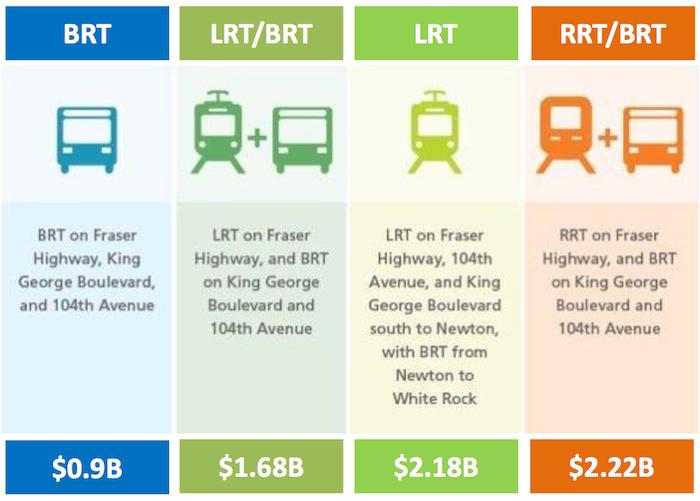
A SkyTrain line running above Fraser Highway from Surrey City Centre to Langley, coupled with Bus Rapid Transit (BRT) lines running south to White Rock on King George Boulevard and east to Guildford on 104 Avenue is the most expensive of four short-listed options at $2.22 billion, but TransLink found it delivers the most transportation benefits and by far the highest ridership.
It would also be the fastest, carrying passengers from Langley to Surrey Central station in just 22 minutes, compared to 29 or 30 minutes for the other three options.
Surrey council has lobbied for a network of ground-level light rail (LRT) lines, rather than BRT or elevated SkyTrain, arguing LRT would be a better fit for the city’s neighbourhoods.
TransLink previously studied a dozen different technology permutations in Surrey before winnowing them to the four front runners.
The option closest to the city’s preference would run light rail trains on all three corridors radiating from downtown Surrey, with BRT rapid buses running on the southern section of King George from Newton to White Rock as light rail isn’t considered justifiable there.
At $2.18 billion, that would be only slightly cheaper than the SkyTrain/BRT option, but is estimated to attract only half the new transit riders as SkyTrain because light rail trains run more slowly and less reliably at street level with traffic.
The main downside of SkyTrain is the elevated guideway down Fraser Highway would be an eyesore, while BRT and LRT offer more scope to improve urban design.
Surrey transit advocate Paul Hillsdon, who previously backed light rail, now prefers the SkyTrain option (with BRT running to Guildford, Newton and White Rock), adding it clearly outperforms LRT at virtually the same cost.
“Based on the cost, there seems to be very little benefit to pursuing the light rail system as the city has advocated,” Hillsdon said.
He added TransLink may have inflated the light rail costs somewhat compared to systems built elsewhere, but he accepts the findings.
“There are huge travel time savings with SkyTrain and double the ridership, for basically the exact same price.”
But he said SkyTrain on Fraser Highway would depend on neighbourhood acceptance of denser development ai??i?? SkyTrain could bring high-rise towers, not just mid-rises, to Fleetwood and Clayton.
Despite the city’s goal of densifying King George, Hillsdon noted that hasn’t happened, while growth has concentrated in areas like Clayton and Grandview instead.
BRT, which delivers the southern leg to South Surrey/White Rock in all options, does not simply mean adding more buses.
A BRT line would run high-capacity articulated buses in their own dedicated lanes, with traffic priority ai??i??Ai??functioning much like a light rail system on rubber wheels instead of tracks.
Surrey Coun. Barinder Rasode said council definitely wants light rail, not just express-bus BRT, on King George to densify that corridor, in line with city plans.
“We’ve been very clear that our option would be LRT, not just because of the cost but because it is less intrusive to the community,” Rasode said.
Light rail passengers riding at street level would be more likely to stop and shop at Surrey businesses, she said, than an overhead Skytrain whisking residents to other cities.
“It’s about economic investment in our own city,” Rasode said. “We don’t want mass rapid transit running right out of the city every time. We don’t want people to just be transported straight out to Langley.”
The $2.18-billion LRT scenario would still require passengers arriving from South Surrey and White Rock on BRT buses to transfer to trains in Newton.
A cheaper option, at $1.68 billion, would run light rail on Fraser Highway to Langley and BRT on the King George and 104 corridors.
The cheapest scenario still on the table is running BRT on all three corridors at a cost of $900 million.
Also released was a study of options for rapid transit on Vancouver’s heavily congested Broadway corridor to UBC.
Again, the most expensive option ai??i??Ai??a $3-billion underground SkyTrain line down Broadway ai??i?? also ranks as having the highest benefit, most ridership and best speed and reliability.
At-grade LRT could be built to UBC for $1.1 billion, while tunnelled LRT or a combo LRT/subway scenario could run $1.4 to $2.7 billion.
TransLink plans to lead regional discussions with the public, elected officials and other stakeholders to examine the trade-offs of the options and decide on preferred options for the Surrey and Vancouver expansions.
“We’re not picking one over the other,” said Bob Paddon, TransLink’s executive vice-president of strategic planning and public affairs. “We’re nowhere near identifying a preference.”
Paddon said the short-listed options perform differently depending on what criteria is considered and the goals of the local communities, adding more detail on TransLink’s findings will be released in the weeks ahead.
Nor is it clear yet how either new transit line will be financed.
Area mayors are pressing the province for new funding sources for TransLink, but Paddon noted there would also have to be large capital contributions to the new linesAi?? from the federal and provincial governments.
“You can’t do rapid transit without senior government involvement.”
No decision has been made on whether a Surrey or Vancouver rapid transit expansion should be built first.

Liz James Finds a Conflict of Interest
Liz James writes a weekly article for the North Shore news, but she finds more real transit stories than all the mainstream media reporters combined.
It is sad, when the architects of TransLink’s financial chaos, are now hired by TransLink as consultants, consulting on TransLink’s financial woes.
Oh woe is to the taxpayer, who must pay over and over again for bureaucrat’s and politician’s stupidity of doing the same thing over and over again, ever hoping for better results after the next tax hike.
As one English transit expert once said, about TransLink’s ineptitude; “Understand the X-files were filmed in your part of the world, maybe that explains it.“
What $110 thousand buys you in planning!
One degree of separation
By Elizabeth James, North Shore News March 6, 2013
“It’s TransLink. It’s a completely dysfunctional organization. They have a board of directors. The provincial government controls the ultimate power. They have the mayors’ council that recommends and the province rejects; and they have a TransLink Commissioner who costs $500,000 a year and nobody knows what he does.”
– Mayor Michael Smith
IT was a beautiful day in the neighbourhood when West Vancouver Mayor Michael Smith told local Chamber of Commerce delegates what many of us had long suspected – the regional Mayors` Council on Regional Transportation is virtually powerless to effect a change for the better at TransLink.
We have waited 15 years to hear that.
On June 18, 2004, at the end of a presentation to that year’s incarnation of the TransLink Board, I said that in my opinion the governance model of TransLink was dysfunctional.
No holds barred, I predicted that if board members couldn’t find a way to improve the organization and decision-making, they would hand then Transportation Minister Kevin Falcon the excuse he needed to disband the semi-elected model and replace it with something more to his liking.
Although it took longer than expected, Falcon did just that in March 2007.
Ten months later, CEO Pat Jacobsen resigned. She had steered the TransLink operation for seven years.
In July 2008, her successor Tom Prendergast arrived in Vancouver with a resume that included management-level experience with both England’s London Underground and the New York Transportation network. It didn’t take him long to see the dysfunctional light and less than 18 months later, he accepted a position as president of New York’s Metropolitan Transportation Authority.
Today, despite numerous appointments and reorganizations, TransLink remains a dysfunctional, multi-billion-dollar albatross around taxpayers’ necks.
But that’s not even half of the tale.
Because it was not until dawn on Feb. 25, when I read an email from light-rail advocate Malcolm Johnston, that I realized I had been so busy fact-checking other conflicts of interest, I’d missed one on TransLink that had been sitting right under my nose since the first of the month.
‘My bad’ as the kids say. So, better late than never, here comes the rest of the story:
Last fall, Transportation Commissioner Martin Crilly said he had set aside $75,000 to fund an “independent analysis” of TransLink’s current efficiency, performance and outlook plans.
Since Crilly himself occupies a position which is independent of TransLink, most people – even columnists like me – could be forgiven for thinking that meant the analysis would be doubly firewalled.
But engrossed in making sure I could include mention of the analysis and recommendations in time for a February column, I did not think to look for the names of the principals of Shirocca Consulting.
Independent? Well you be the judge.
On Dec. 5, 2012, in his Remarks to the mayors’ council document, Crilly introduced “two colleagues”: Bob Irwin, former president and CEO of BC Transit (and soon-to-be Crilly’s successor) and Teresa Watts, president and sole proprietor of Shirocca.
More importantly, and as Crilly explained to the assembled mayors and members of the appointed TransLink Board, Watts was also “deputy project director for building the Millennium Line and a project manager for building the West Coast Express and Expo Line.”
Qualified to express a professional opinion on regional transportation issues? Absolutely.
Independent and without bias as to TransLink’s efficiency and progress?
What do you think? But it doesn’t stop there, because “On (Watts’) team are two other professionals,” Crilly said. One of the two is her husband, “Glen Leicester, who was TransLink’s VP planning before retiring five years ago.”
Does Leicester’s “38 years of transportation planning experience in B.C.” qualify him to express an opinion on regional transportation issues? Absolutely.
Completely independent and without bias as to TransLink and its choices of technology?
What do you think? Is it reasonable for us to expect people who have spent their careers moving from one regional transportation appointment to another, to be completely divorced from that history – especially when the decisions they made in the past may still be influencing the current position of the agency they are now tasked to analyze?
Whether the news items concern less than arms-length consultations, or are emails to me that fail to disclose the writers’ relevant connections – such as to the group Better Environmentally Sensitive Transportation which has benefitted from federal and TransLink funding, or to aspiring election candidates – they are all part of my overall discomfort with the lack of openness and transparency in the entire transit discussion.
Meanwhile, back at the TransLink barn, I had not even decided where to adjourn this ongoing saga when another firestorm reignited.
It seems that, since the province tweaked the rules to enable TransLink to recover $30 million in fines for unpaid fares, the agency has recouped only $1 million.
Not to worry, though. Be happy!
Because, instead of working with his colleagues to sort out the current fiscal mess, the mayor at the Vancouver-centric hub of TransLink’s debt-servicing problems thinks it would be a great idea to dig regional taxpayers even deeper into a hole along Broadway and out to UBC.
Dysfunctional it is Mayor Smith – and then some.
Patrick Condon in the Tyee
Streetcar advocate, Prof. Patrick Condon has a good article in the Tyee.
http://thetyee.ca/Opinion/2013/03/06/Vancouver-Transit-Report/index.html#comment-278124
The Vancouver Sun Shills for a Broadway Subway.
The Vancouver Sun, again embarrasses itself, with a news item that that is nothing more than shilling for a Broadway subway.
This story contains so many red flags, that one would think it was a paid advertisement and not news.
- If Sinoski did his/her homework on subways, which he/she obviously hasn’t, he/she would find that subways, because of their high costs, are always a decision of the last resort. The one exception is that subways are built for political and bureaucratic prestige. The peak hour traffic flows alongAi?? Broadway would barely support a light rail solution, let alone a subway solution.
- The UBC forecast of 320,000 daily boardings is laced with pixie dust, really UBC should be embarrassed, yet modern LRT could easily handle this.
- Toronto has subways already, so the argument that high tech jobs will leave Vancouver is a bad joke. Today both Toronto and San Diego operate dated, smaller first generation trams and in the case of Toronto, even smaller non-articulated trams; modern light rail/trams have far more capacity, with some vehicles designed, having a capacity of 250 persons or more.
- The UBC study shows that the authors are mere amateurs, by putting LRT in a tunnel, thinking that a subway is the modern elixir to improve transit. Sorry, not only do subways tend to deter ridership, they steal money away from other transit priorities.
- TransLink’s costs for rapid bus and light rail are so huge, that one would think that the prices were increased on purpose to make the costs of a Broadway subway look reasonable in comparison. TransLink’s planning reeks of professional misconduct!
What the followingAi?? does illustrate is that TransLink is completely unqualified to plan for “rapid transit” and the authors of the UBC study should hang their collective heads in shame for such unprofessional nonsense. But then this is BC, where stupidity and ignorance reign supreme.
If there was any doubt in the past, there is none now: TransLink must go, they have no function except being very expensive cheerleaders for those who want to burden the regional taxpayers with massive taxes to pay for Vancouver politicians “penis envy” a Broadway subway.
The Vancouver Sun as always, further demonstrates that it has ceased to be a newspaper, rather an infomercial for the highest bidder.
What $110 thousand buys you in planning!
Subway line for Broadway corridor is best option but also most expensive, UBC study says
By Kelly Sinoski, Vancouver SunMarch 5, 2013
TransLink has cited a $3-billion subway line along the Broadway corridor as having the ai???highest acceptability ratingai??? among three potential rapid-transit options.
But the transportation authority noted light rail transit or a partly tunnelled LRT ai??i?? ranging from $1.1 billion to $1.84 billion ai??i?? along with a $2.67-billion combination of subway and LRT are also ai???more acceptable than business as usualai??? on the heavily congested corridor.
Bus or bus rapid transit along the route, meanwhile, has not been recommended for further consideration because ai???they do not have sufficient capacity to meet demand in 2041,ai??? according to a University of B.C. rapid-transit analysis.
The analysis comes less than a week after the city of Vancouver and UBC released a KPMG report and made another pitch for a subway along the Broadway corridor, with Mayor Gregor Robertson suggesting the area is at risk of losing high-tech jobs to other cities such as Toronto, New York or San Diego because of ai???gridlock and over-stretched transit.ai???
According to the UBC rapid-transit analysis, the subway would provide the greatest improvement at the highest cost along the corridor, with a projected 320,000 daily boardings by 2041, and would generate 54,000 additional daily trips in the region.
By comparison, a combination of LRT and subway would have a projected 350,000 daily boardings, generate 44,000 additional transit trips and provide ai???rapid transit benefits to a broader areaai??? because it serves two routes east of Arbutus. LRT is projected to have 160,000 daily boardings with 11,000 additional trips by 2041 but has the option of part of the LRT built in a tunnel where Broadway is busiest.
Meanwhile, TransLink has also narrowed the options for rapid transit in Surrey, including a $900-million bus rapid-transit project on Fraser Highway, King George Boulevard and 104th Avenue; a combination of light rail on Fraser Highway with bus rapid transit ($1.68 billion) on King George and 104th; light rail on Fraser Highway, 104th Avenue and King George to Newton, with rapid bus to White Rock $2.18 billion); and SkyTrain ($2.2 billion) on Fraser Highway and bus rapid transit everywhere else.
Surrey Mayor Dianne Watts said her city will continue to push for light rail on all three routes: Fraser Highway, King George and 104th Avenue. That option is expected to generate 166,000 daily boardings, compared with 180,000 for the first two options and 200,000 for the four alternative.
The options for both rapid transit lines will now be referred to the regional transportation strategy to consider the trade-offs and benefits and determine the preferred option.
A letter to Martin Crilly
What $110 thousand buys you in planning!
Martin Crilly, TransLink Commissioner:Please provide the feasibility study with the cost breakdown of the tram line to UBC and the cost breakdown of the sky train line to UBC.Ai?? Surely COV engineers in collaboration with TransLink did one before they proclaimed sky train to be the ai???best optionai??? for rail transit to UBC.Ai?? Give the current and projected demands for transit to UBC in passengers per hour per direction, also.Last week on behalf of Point Grey residents who asked me to email you, I requested an explanation for all the empty and nearly empty articulated 99 B-Line diesel buses operating as an express and frequent service in parallel to the infrequent trolley buses – during off peak hours.Ai?? You did not reply.If you are working on the reply and have not had sufficient time to reply, fine.Ai?? If you ignored the email last week, and continue to ignore it, the Mayorsai??i?? Council copied will be asked to rid taxpayers of you and your $500,000 annual salary.If TransLink were a logging company, horrendously loud noise disturbances and harmful diesel emissions from its service wreaking havoc on the lives of residents in Point Grey would not be allowed to continue.Ai?? Residents in Point Grey are upset that TransLink is allowed to operate the 99 B-Line service with impunity and want answers from Ian Jarvis and Nancy Olewiler – making the decisions at TransLink.Creative accountingSky train is sold as being fast.Ai?? TransLink contends that savings from its automated sky trains reduce operating costs to make up for the high capital cost of sky train.Ai?? Unfortunately, sky trains would get bogged down if buses operated every 20 minutes to 30 minutes (conventional transit) to get people to the distantly spaced sky train stations.Ai??Ai?? To compensate, TransLink is forced to operate buses on the frequent transit network (FTN) every few minutes.This results in many buses running around empty or nearly empty with massive service hour costs for busing.Ai?? In contrast, trams take buses off the roads to reduce service hours for busing.Ai?? In Metro Vancouver, FTN is analogous to a pail under the faucet being pulled away too quickly before it is full ai??i?? the FTN buses for sky train are operated far to frequently and the FTN buses often depart with few or no passengers on board during off peak hours.In 1999 before TransLink, CMBC running buses for TransLink logged 3.4 million service hours. In 2011 after TransLink expanded sky train, busing service hours increased to 4.7 million.Ai?? Notwithstanding the increase in population and demand for transit which should have been addressed with the sky train service hours which also increased with the Canada Line and Millennium Line (sky train lines built since 1999) – at $115 per service hour for busing, sky trains add about $150 million to the annual operating budget for buses here ai??i??Ai?? to facilitate the operation of sky train.This is the hidden cost of sky train and creative accounting techniques by the accountants at TransLink are concealing it.Ai?? You are the TransLink Commissioner and are being paid big money to be on top of things and you really donai??i??t appear to be.As a result, TransLink uses too many buses on the FTN in Vancouver to avoid delays for passengers taking sky train.Ai?? This means few to no buses for Surrey and Delta.99 B-Line red herringOn West 4th Avenue, the express and frequent No. 84 articulated diesel buses travel about 14 kilometres to UBC, and the No. 84 buses log about 40,000 annual service hours.Ai?? On Broadway, the No. 99 B-Lines travel about 14 kilometres to UBC, too – but log about 120,000 annual service hours (triple the service hours of the No. 84).This is totally intentional and avoidable by TransLink.Ai?? Overcrowding on the 99 B-Lines on Broadway is contrived by TransLink to make the 99 B-Line service one of the busiest in North America while all the supporting bus routes operating in parallel to the 99 B-Line route are typically starved for passengers.If TransLink merely increased service hours on the No. 84 route and reduced service hours on the No 99 route – it would redirect passengers taking the Canada Line and going to UBC onto the No. 84 route on West 4th Avenue to solve the overcrowding on the 99 B-Line buses going to UBC along Broadway.Ai?? Amazingly, solving the overcrowding on the 99 B-Lines is really very easy and inexpensive!Overcrowding on the 99 B-Line route is a red herring to trick the mayors in Metro Vancouver to provide more funding to TransLink.Ai?? We all know that TransLink is essentially insolvent and desperate for cash.Ai?? It canai??i??t manage future sky train costs.Ai?? TransLink is using the expansion of sky train as a ploy to get money to pay for its future sky train losses which it canai??i??t finance with its current funding.Common sense just solved the overcrowding on the supposed busiest route (99 B-Line) in North America.Ai?? How soon can TransLink reduce service hours on the 99 B-Line route and other FTN routes during off peak hours to reduce its cash crunch?RegardsReferencesUrban-LRT in EdmontonTransLink 99 B-Line off peak service increaseU of T research paper on the efficacy of transit – 2009Northwest transportation insightsMetro Vancouver vehicle use from 1999 to 2011Shirocca Consulting transit efficiency review of TransLink – 2012http://translinkcommission.
org/TransLink_Efficiency_ Review_Mar_21-12_FINAL.pdf
Tramways, a tool in a global mobility strategy

THE TRAMWAY REVIVAL IN FRANCE
http://www.developpement-durable.gouv.fr/IMG/pdf/Tramway_GB.pdf
Currently, eighteen French urban areas have at least one tramway line and by 2014, nine more towns will have opened their first lines. In France, the organisation of public transport is based on a decentralised administrative system established in the 1980s. For thirty years, land authorities have had great autonomy to develop their public transport networks in a context of very heavy car use. Today, the car is gradually making way for public transport systems and tramways have been experiencing a revival for several years now. Tramways have been making their mark over the years because they fit into the scheme of urban renewal, transport planning and environmental concerns.
This is a political choice which is firmly rooted in the sustainable development ethos and enables planners to take a new approach to urban mobility and urbanisation projects. Trams have also become a tool for promoting a town, because building a tramway implies a desire to renew the image of the town where it is located.
Many French companies are using their expertise on projects to create tramways and export skills worldwide, ranging from studies and construction to operating tramway systems.
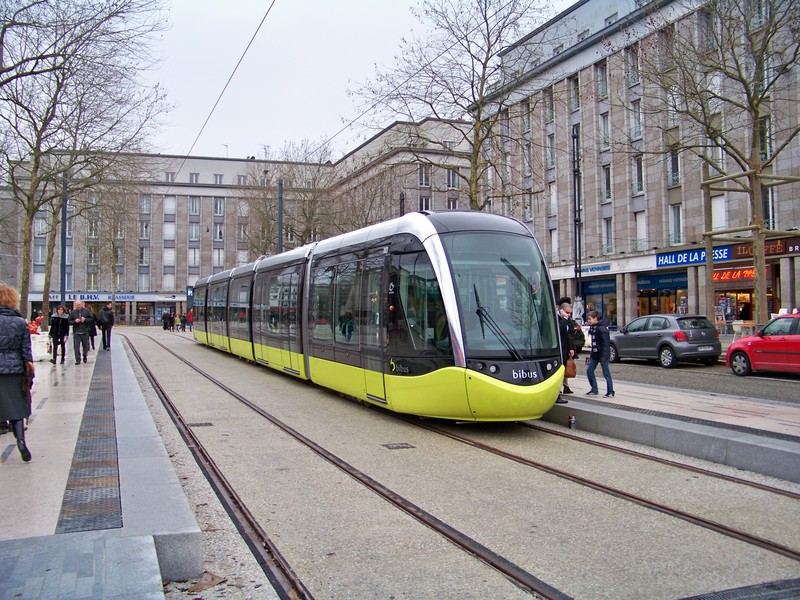
Brest Light Rail
Finacial Reality Surfaces With Regional Transit Plans – Vancouver Mayor Robertson In a Subway Induced Stupor
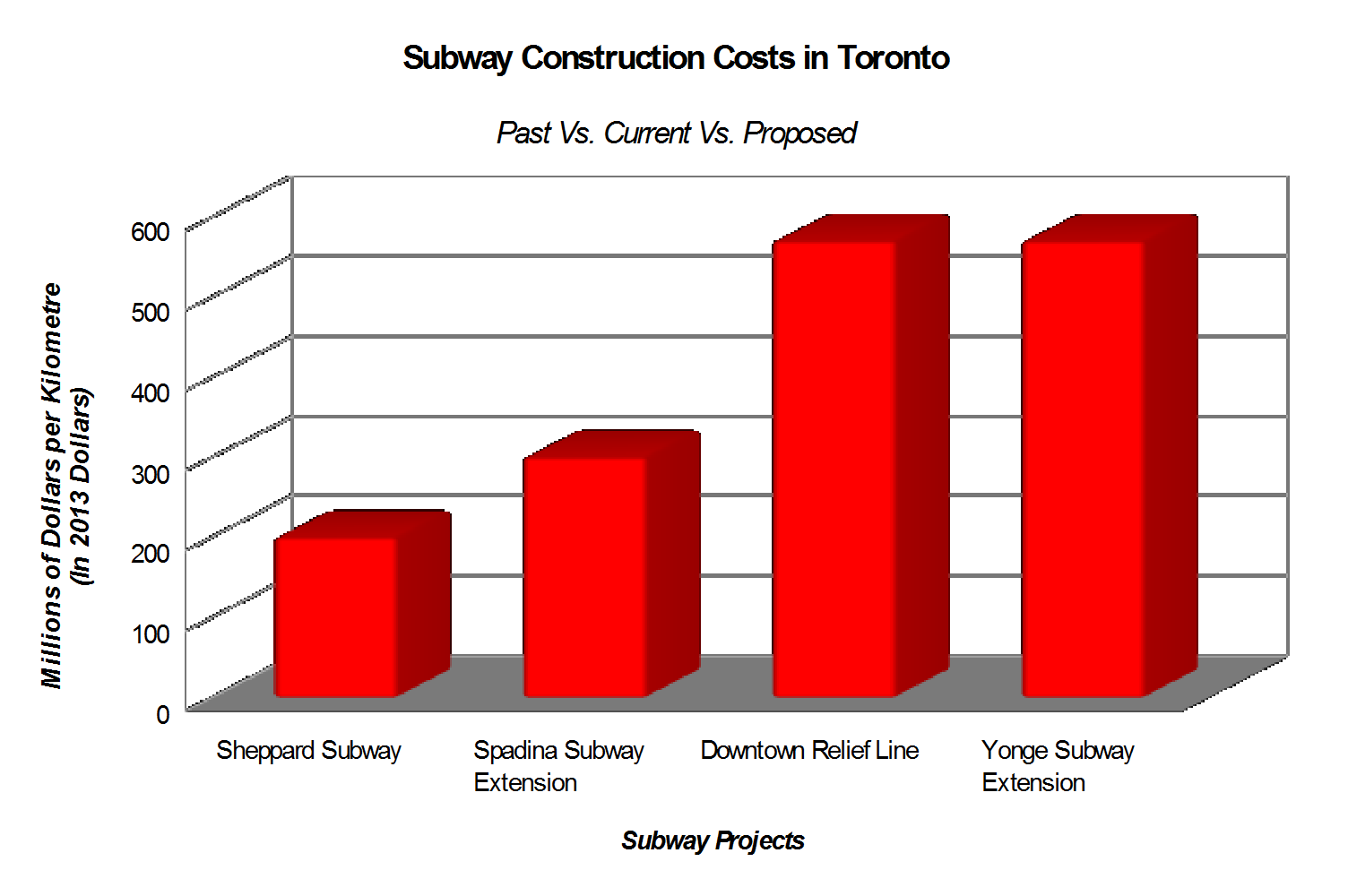
Well now, financial reality has now appeared with regional transit planning and a good thing it has.
TransLink is broke and with the Evergreen Line’s construction starting, TransLink will descend further into a financial morass and unless the province forks over billions more for regional ‘ rail’ transit, nothing will happen.
The subway lobby in Vancouver remain oblivious to the high cost of subway construction and try to gloss over it with quaint phrases of TOD, densification, or innovation. In ‘Lotus Land”s Vancouver and university, reality is a concept best ignored, lest unpleasantness consequences makes one look foolish in front ones contemporaries.
Ai??Ai??Ai??Ai??Ai??Ai??Ai??Ai??Ai??Ai??Ai??Ai??Ai??Ai??Ai??Ai??Ai??Ai??Ai??Ai??Ai??Ai??Ai??Ai??Ai??Ai??Ai??Ai??Ai??Ai??Ai??Ai??Ai??Ai??Ai??Ai??Ai??Ai??Ai??Ai??Ai??Ai??Ai??Ai??Ai??Ai??Ai??Ai??Ai??Ai??Ai??Ai??Ai??Ai??Ai??Ai??Ai??Ai??Ai??Ai??Ai??Ai??Ai??Ai??Ai??Ai??Ai??Ai??Ai??Ai??Ai??Ai??Ai??Ai??Ai??Ai??Ai??Ai??Ai??Ai??Ai??Ai??Ai??Ai??Ai??Ai??Ai??Ai??Ai??Ai??Ai??Ai??Ai??Ai??Ai??Ai??Ai??Ai??Ai??Ai??Ai??Ai??Ai??Ai??Ai??Ai??Ai??Ai??Ai??Ai??Ai??Ai??Ai??Ai??Ai??Ai??Ai??Ai??Ai??Ai??Ai??Ai??Ai??Ai??Ai??Ai??Ai??Ai??Ai??Ai??Ai??Ai??Ai??Ai??Ai??Ai?? You canai??i??t have it all: Polak on transit expansion
Projects wonai??i??t happen in Vancouver and Surrey simultaneously
Jason Howe March 1, 2013
Ai??SURREY (NEWS1130) ai??i?? The back and forth continues between the regionai??i??s mayors and the province over transit funding.
BCai??i??s transportation minister is rejecting claims major expansion can be done in Vancouver and Surrey at the same time.
The mayors in both cities argue it shouldnai??i??t be one or the other; both citiesai??i?? needs should move ahead.
But Transportation Minister Mary Polak doesnai??i??t see it that way.
ai???Itai??i??s not possible to have both of them go forward at the same time. Youai??i??re talking about multi-billion dollar projects. Youai??i??re talking about huge project tasks in terms of just the size and logistics of the projects,ai??? explains Polak.
She plans to meet with Mayorsai??i?? Council reps soon to discuss the next steps on a funding solution.
But Polak says donai??i??t expect a final answer before the May election.
ai???I think thereai??i??s too much work that needs to be done. Unfortunately, thatai??i??s just not the place where the public are right now. I hear reaction and I know the mayors that Iai??i??ve spoken to hear it, the public says ai???Hey, weai??i??re not confident that TransLinkai???s operating efficiently. Weai??i??re not confident that our money is already being used well,ai??i??ai??? Polak adds.
The regionai??i??s mayors have made a number of funding proposals, including a sales tax hike, a vehicle levy, and road pricing.
UBC and Vancouver Embarrass Themselves, Demanding a Subway
Universities used to be a place of learning and education, but today, UBC makes a mockery of education with their support of a Broadway subway. The sheer ignorance of UBC demanding a subway is appalling and one questions the “intelligence” of those making such an expensive demand!
In the real world, subways are only considered for transit routes with traffic flows greater than 2o,ooo pphpd, yet traffic flows along Broadway are much less, more than 15,000 pphpd less. That’s right, peak hour traffic flows along Broadway are less than 5,000 pphpd!
Building a subway will greatly add to TransLink’s financial burden, but then, the well heeled UBC and City of Vancouver types are depending on massive subsidies from taxpayer’s elsewhere (read South of the Fraser), to fund subways in Vancouver.
The ignorance about modern light rail is appalling and it seems professional misconduct with transit planning in Vancouver reigns supreme.
The question that the subway lobby ignore; “will the Broadway subway be designed to cater to high traffic flows?“
The continuing farce, is that the Canada Line subway was so designed to have its capacity constrained by cheaper, smaller stations and has a potential capacity much less than at-grade/on-street streetcars! It would cost about $1 billion more to increase the Canada Line’s capacity.
This kind of “crap” that passes for transit planning in the City of Vancouver, UBC and TransLink is indicative of the large anti-LRT regimes entrenched within their bureaucrats. The hubris, combined with the ignorance about modern LRT, is appalling!
This announcement is a warning for the South Fraser municipalities of massive tax increases to come and South Fraser cities and municipalities must discuss secession from TransLink, lest the insatiable financial demands for SkyTrain and subways bankrupt their taxpayers!
Vancouver, UBC make case for Broadway subway, saying area could become “innovation hub”
By Kelly Sinoski, Vancouver Sun February 28, 2013
VANCOUVER — The City of Vancouver has renewed its push for a $2.8-billion subway along the Broadway corridor, this time highlighting the crucial need for transit to turn the corridor into an ai???innovation hub.ai???
The push, made jointly with the University of B.C., is based on a new KPMG report that suggests Vancouver is growing faster than was anticipated three years ago, and ai???a rail-based line is needed to meet the corridorai??i??s population growth and significant economic potential.ai???
The corridor, stretching from Commercial Drive to UBC and 16th Avenue to False Creek, has been touted as ai???one of North Americaai??i??s fastest-growing life science and technology clustersai??? with commercial and industrial floor space almost equal to that found in Vancouverai??i??s downtown.
But the area is also North Americaai??i??s busiest bus route, and with another 150,000 people expected for the corridor in the next 30 years, Vancouver Mayor Gregor Robertson warned the area is at risk of losing high-tech jobs to other cities such as Toronto, New York or San Diego because of ai???gridlock and over-stretched transit.ai???
ai???What is currently a powerhouse for jobs will suffer and be choked off from the opportunities,ai??? Robertson said. ai???We need to take the transit system to the next level. Without it, the Vancouver and B.C. economy risks falling behind.ai???
The KPMG report, which cost $110,000, suggests that while the Broadway corridor has many strengths, such as a supply of locally trained graduates and proximity and access to hospitals and clinical trial opportunities, it is being constrained by several factors, including lack of access to affordable office/lab space and of superior transit infrastructure.
In order for the corridor to retain its competitive edge as a world-class life sciences and technology hub, the report states, rapid transit, along with more affordable commercial and residential space and a city/university strategy to attract investment, is critical.
The Broadway corridor is one of TransLinkai??i??s top priorities for a rapid-transit line, along with light rail for Surrey, but no decision has been made about which project will go ahead first, or where the funding will come from to pay for it. TransLinkai??i??s mayorsai??i?? council on transportation is in the midst of working with the province to develop new funding sources to generate revenue for transit.
Robertson, who is pushing for a $2.8-billion subway line for the corridor, maintains the latest announcement, made two-and-a-half months ahead of the May 14 provincial election, isnai??i??t an attempt to give Vancouver an edge on Surrey, noting both projects are desperately needed in the region and should go ahead together.
Both projects would take at least five years to design and another five to build, meaning the earliest they could be built would be 2020 to 2022.
Robertson noted that the projects are different ai??i?? with Vancouver needing transit to meet rising demands whereas Surrey wants it to shape growth. ai???These are no either-or choices; they both need to happen,ai??? he said.
But he added Vancouver, with its high ridership base, would be more profitable than the Expo line.
UBC president Stephen Toope said itai??i??s crucial to start the planning now. But he noted itai??i??s premature to say whether UBC would contribute to the cost of the project.



Recent Comments