Why we build with LRT – Updated

Why we build with LRT
First posted by Zweisystem on Friday, December 12, 2008 (updated)
What is Light Rail Transit or more commonly known as LRT?
According to the Light Rail Transit Association (www.lrta.org) Light rail is a mode that can deal economically with traffic flows of between 2,000 and 20,000 passengers per hour per direction, thus effectively bridging the gap between the maximum flow that can be dealt with using buses and the minimum that justifies a metro.
The economics of LRT is very simple to understand, one modern tram or streetcar (1 driver) is as efficient as six to eight buses (6 to 8 bus drivers) and with wages accounting for about 70% of the operating costs of a transit line, modern LRT is about half as much as buses to operate.
It is interesting to note, even though driverless metro systems like SkyTrain and the Canada line have no drivers, they need hundreds of operating staff to keep the driverless metro in operation. A good example is the SkyTrain; even though it does not have drivers it has attendants – over 170 full time attendants at last count and this does not include the extra specialized signalling staff needed for automatic operation.
Today, LRT is much more. Modern LRT is now able to ‘track-share’ with existing railways on the mainline and in doing so, has proven to be able to effectively and affordably service less populated areas, with public transport.

Streetcars also falls in light rail family, but streetcars or trams operate on-street, in mixed traffic, with little or no signal priority at intersections. The main difference between LRT and a streetcar is the quality of rights-of-way, where a streetcar operates on-street, LRT operates on a reserved rights-of-way or a route that is reserved for the sole purpose of the light rail vehicle. A reserved rights-of-way can be as simple as a HOV lane with rails, to a lawned park like route with trees, hedges and flowerbeds. LRT, in itai??i??s various forms is used in over 600 cities around the world and is the first choice of transit planners for affordable, customer friendly public transport.

Inekon/Skoda tram or streetcar.
The German city of Karlsruhe (City population 275,285) has taken light rail to a new standard, by track sharing with mainline railways and operating, what is called tramtrains. In Karlsruhe, one can board a tram, on-street, on the pavement and alight, on-street in Ohringen some 210km (130 mile) later, with the tram acting as a streetcar, light rail vehicle and a passenger train! Karlsruheai??i??s light rail network now extends over 400 km. (250+ mile) of route, servicing scores of small towns and villages with high quality public transit at very little cost simply because the tram can use existing railway tracks.

In British Columbia, TramTrain can be a useful tool for implementing a high quality ai???railai??i?? transit service, not only in Vancouver and the Fraser Valley, but in Victoria (E & N Railway) and the Kelowna/Vernon rail corridor as well.
The question is: Why does TransLink and the BC government reject modern LRT out of hand and continue to build with dated SkyTrain light metro?
EDITORIAL: TransLink faces a mutiny if it doesnai??i??t shape up – From the South Delta Leader
TransLink has a credibility problem, largely because it has not been truthful with its dealings with the public. TransLink is nothing more than a ponderous bureaucracy staffed with career bureaucrats, who live in a dated 1950’s world of public transit. With most of the regional politicians memorized by TransLink speak and where doing nothing is seen as doing something, has given TransLink a free hand in demanding new taxes.
The public though, are beginning to wake up to the fact that TransLink’s conjuring is an old and tired fakir’s smoke and mirrors trick, where doing the same thing over and over again and hoping for a different outcome has become the regional transit doctrine and a rather expensive one at that.
TransLink is well past any hope of redemption as it is held in high odor by too many people, with only those who want to retain this behemoth are those who would benefit, such as the City of Vancouver.
Zwei thinks that TransLink should be split into three entities, the North Shore and Howe Sound; The cities with mini-metro (Vancouver, Burnaby, Richmond, New Westminster and the Tri-Cities); and South of the Fraser and let the taxpayer pay for the transit in their region. Certainly those who reside in the mini-metro served area will soon know the true cost of building with SkyTrain and the Canada Line!
TransLink and transit planning is in a mess, but throwing more money at TransLink will not solve any problems at all, but do the opposite, exacerbate the situation.
EDITORIAL: TransLink faces a mutiny if it doesnai??i??t shape up
By Robert Mangelsdorf Ai?? South Delta Leader
Published: February 22, 2013 9:00 AMAt Mondayai??i??s Delta Council meeting, Mayor Lois Jackson again expressed her position that local residents pay too much for TransLink.
Jackson is right to be upset about how much money Deltans are pumping into TransLink, and how little they are getting in return. At $39.4 million annually, every man, woman, and child in Delta is contributing $400 to the local transit juggernaut, according to the mayor.
TransLink receives close to $600 million of its $1.3 billion in annual funding (2011 figures) from property tax and fuel taxes. That means Delta residents account for 6.6 per cent of this funding, despite making up just 4.3 per cent of Metro Vancouverai??i??s population.
That wouldnai??i??t be so bad if we were receiving good transit service for our hard-earned tax dollars, but that is simply not the case.
TransLink provides more than just bus rides, of course, although 60 per cent of its budget does go to public transit. TransLink is also responsible for maintaining more than 2,200 lane-km of major arterial roadways, including the Knight Street Bridge, Pattullo Bridge, Golden Ears Bridge, and Deltaai??i??s Westham Island Bridge. TransLink also contributes up to half of the costs of municipal capital projects.
But all of this only accounts for seven per cent of its total budget, and much of it is spent outside of Delta, instead going to major population-centres, such as Vancouver, Burnaby, and Surrey.
We have no rapid transit, spotty bus service, and near-constant gridlock.
To put it bluntly, Deltans are getting screwed.
TransLinkai??i??s funding model is skewed, with residents of outlying suburbs paying more for fewer services. If TransLink doesnai??i??t address the issue it will have a mutiny on its hands, with the likes of Delta, Maple Ridge, and Langley all jumping ship because they could be better served on their own.
Transit expenditures in each municipality need to be tied to each municipalityai??i??s contribution, so residents get a fair return on their tax dollar.
TransLinkai??i??s funding issues have been created by years of chronic underfunding and overspending. As a result, TransLink now spends 13 per cent of its budget on interest expenses.
Thatai??i??s why TransLink needs to make getting out of debt itai??i??s No. 1 priority before any further expansion can be planned. And both the provincial and federal governments need to step up and contribute their fair share, not just for capital costs, but for ongoing operating expenses as well.
The people of Metro Vancouver will also have to make sacrifices. The proposed 0.5Ai?? per cent regional sales tax is a sorely needed revenue boost for TransLink, and at a proposed rate of a penny to a nickel on every $10 spent, it will barely be noticed.
Public transportation benefits everyone, and is necessary for a healthy economy. But shouldnai??i??t those who receive the greatest benefit, pay the greatest share?
Because right now, thatai??i??s not happening.
Surrey Citizens Transportation Initiative (Surrey CiTI) is hosting a rally
Cycling and Light Rail – They Do Get Along
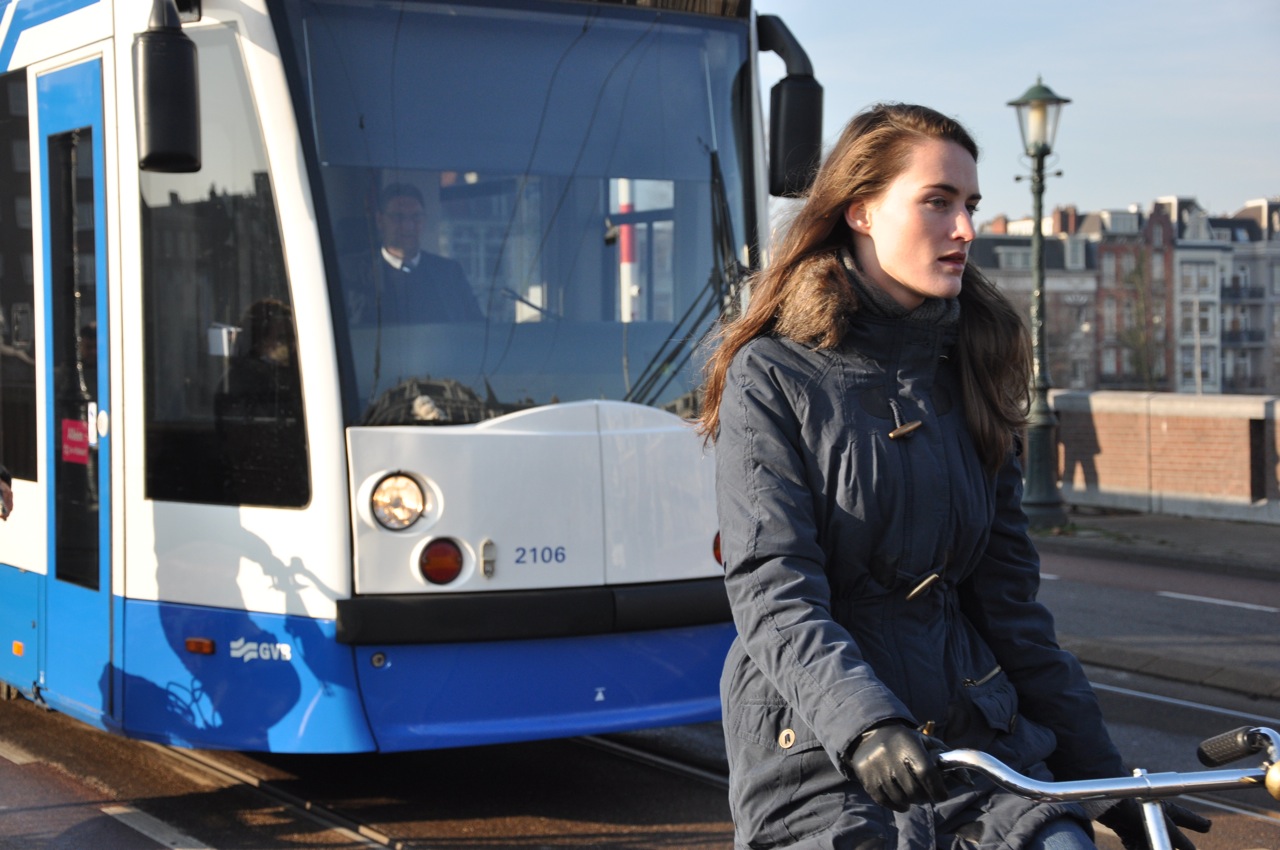
A comment on the previous post about the ability of trams and bicycles to ‘get along’, clearly illustrates the bicycle/tram myth, that bicyclists and trams or streetcars can not cohabit on the same road. The small flange-way does not pose a risk, except for the mostAi?? blind cyclist and the safety claims being made against streetcars or trams is greatly overstated.

Scores of bicycle friendly cities such as Amsterdam, The Hague, Bonn, Heidelberg, have extensive networks of tram/LRT lines with little problems.

Unless a cyclist is pedaling in the trams path, with the bicycle wheels parallel with the tram/LRT tracks, there is little problem and only a fool would ride his bike on a tram/LRT line.
Girder rail, with its small flange-way (small compared with “T” rail with a guard rail), poses little problems for cyclists crossing a right-angles. To help mitigate bicycles crossing tram/LRT tracks, some cities have installed a resilient material in the flange-way to help cushion the bump.
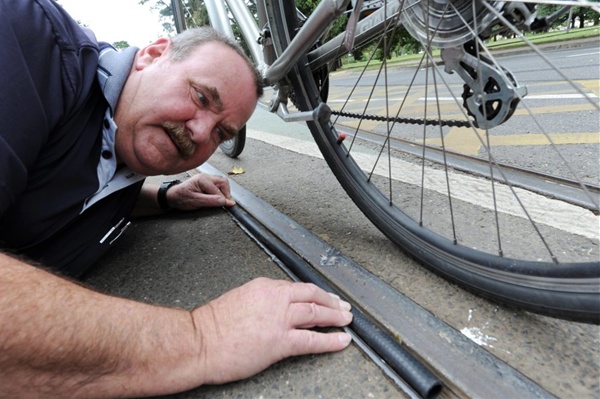 There is some truth with the myth that tram tracks had caused problems for cyclists, but as with all myths what was actually true then has been greatly exaggerated or has disappeared altogether today.
Early tram/streetcar lines had the route set with granite or stone paving setts for ease of maintenance, which would have made for a very bumpy and dangerous ride. Today, most LRT/tram routes are smooth and flush with the road, unless it is lawned rights-of-way or on ballasted track.
Several cities operated cable cars, or had conduit operation (power was picked up underground in a conduit) which required a large and deep slot located in the centre of the track. Such a slot would have been very dangerous for cyclists. Today, there are few cities operating cable cars and funiculars, which because of the steep grades they operate on, pose little danger to cyclists. There are no surviving tram/streetcar lines using conduit systems for power pick-up.
The Great Orme Tramway (cable car), which operates in Llandudno Wales (UK) illustrates the problems of a conduit or slot for cyclists.
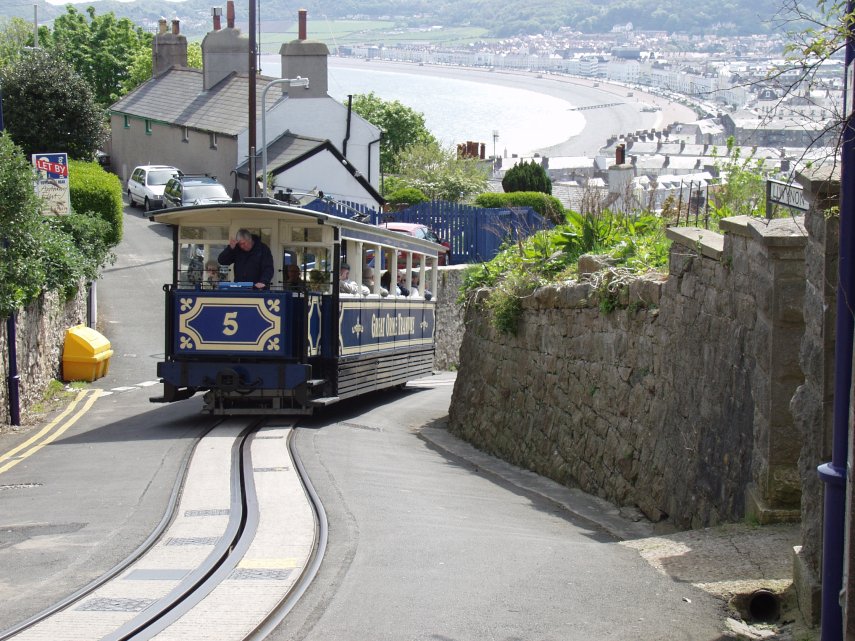 Today, a properly designed LRT/streetcar line poses little risk to cyclists and much of anti-tram rhetoric about the dangers of cyclists running afoul of tram tracks is just that, rhetoric, as in hundreds of cities around the world, cyclists and streetcars/trams operate with little problems.
Calgary may look to streetcar history for future of transit
The city of Vancouver should take note, there are streetcars on tap for Calgary.
What is old is new again and planners in North America are beginning to grasp the importance of simple streetcar.
Streetcars or trams are derided by the SkyTrain lobby who would rather close schools and hospitals to fund kilometres of aerial viaducts or stygian holes in the ground to operate metro.
There are drawbacks, streetcars are stuck in traffic flows, but this can be mitigated by tram priority at intersections and traffic calming measures including short stretches of reserved rights-of-ways. The benefits of tram operation are many, including higher commercial speeds when compared to comparable bus operation; about half the operating costs of buses; and the inherent ability to attract transit customers because transit customers want their transit on the pavement, easy to use.
In Vancouver there is fear and loathing of the lowly streetcar, because operating a properly designed streetcar will explode many SkyTrain myths which are held so dear by so few, to the detriment to so many.
I think Calgary will be successful with their streetcar plans because they already operate with LRT and the only difference between a streetcar and light rail is the quality of rights-of-way they operate on.
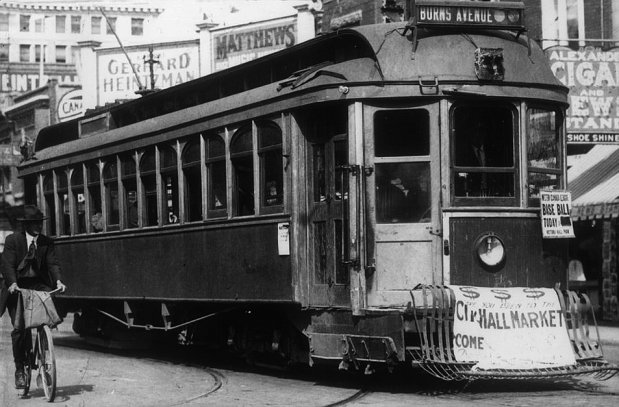
City may look to streetcar history for future of transit
By Jason Markusoff, Calgary Herald February 16, 2013
Inner-city denizensai??i?? dream of a Calgary streetcar system comeback could take a very, very small step forward next week.
It will come in the form of a proposed $100,000 study thatai??i??s very broad and very vague.
The senior transit planner helping plot this look into a potential ai???urban transit loopai??? said the following questions are not yet defined: what areas the loop would cover, what kind of transit mode ai??i?? streetcar or otherwise ai??i?? would be used, what purpose or service gap it would serve, and whether it should be a loop at all.
ai???Do we need something like a loop to feed people to 7th Avenue to get on the LRT, or do we need to connect the buses better in the inner city ai??i?? not just in radial fashion (to downtown), but also connecting those corridors,ai??? Jon Lea of Calgary Transit said.
Beltline community activists have long dreamed of a streetcar loop, similar to the one the neighbourhood is named after. When the draft RouteAhead plan for the next three decades of transit came out late last year, Ald. John Mar urged the city to also study a network of downtown streetcar lines.
His colleagues broadened that to a study of an urban transit loop, suggesting communities outside the core may benefit as well.
Mar envisions not just a new Beltline loop, but also a 17th Avenue streetcar from Westbrook Mall to the Stampede, and a 4th Street S.W. route from Eau Claire to Mission. His idea stems from a trip last decade to Portlandai??i??s Pearl District, where a streetcar helped spur an old warehouse areaai??i??s urban renewal.
ai???Itai??i??s much more about development and redevelopment than mobility, although mobilityai??i??s a part of it too,ai??? he said Friday.
The revised RouteAhead blueprint, coming to a transportation committee Wednesday, includes no streetcar or ai???urban loopai??? system in its $12.9-billion, 30-year capital plan for new LRT lines, bus routes and maintenance garages. But there is a call for council to approve this $100,000 phase-one study into some sort of new inner-city transit upgrade.
The study would determine the what-where-why-when of this ai???loopai??? by early 2014. Following up with a further study to determine land requirements and costs of such a broad plan would cost another $500,000 to $900,000.
Letters in the Tri City News

A sampling ofAi??letters printed in the Tri city News.
Mayors must stop being sucked in on TransLink funding
Published: February 12, 2013 1:00 PM
The Editor,
Re. ai???Polak undecided on proposed taxai??? (The Tri-City News, Feb. 8).
As P.T. Barnum said, ai???There is a sucker born every minute.ai??? And it seems Metro Vancouver mayors are being suckered by TransLinkai??i??s demand for more money.
TransLinkai??i??s shaky fiscal house can be blamed on:
ai??? gross mismanagement, which demands more and more taxpayersai??i?? money to hide;
ai??? building the SkyTrain and Canada Line light-metro instead building with much cheaper LRT;
ai??? senior government interference;
ai??? and lack of public oversight.
This witchai??i??s brew of fiscal and planning incompetence has all but bankrupted TransLink and to send more money into the black hole shows political ennui by regional politicians, who seem to seek political oblivion by forcing more taxes and user fees on an angry public. Do these mayors remember the HST debacle?
Other than eliminating TransLink and starting anew, the regionai??i??s mayors should demand the provincial government, which ultimately controls TransLink:
ai??? Eliminate TransLinkai??i??s planning function and hire transit experts as it will get better transit planning and advice than from career bureaucrats.
ai??? Plan and build modern LRT instead of SkyTrain as itai??i??s both cheaper to build and operate and has the capability to carry more riders. Has anyone noticed at TransLink that no one builds with SkyTrain any more?
ai??? Make TransLink or a new transit authority autonomous from senior politicians and their lobbyists.
ai??? Have the new transit authorityai??i??s operating board made up of elected members, one from each Metro municipality, elected during civic elections.
It is time for Metro Vancouver mayors to find some moral backbone and stand up to TransLink (and for many, their political masters in Victoria) and say no to further taxes and let TransLink collapse under its sheer weight of its incompetence.
It is time for the regionai??i??s mayors to be suckered no more.
Malcolm Johnston, Delta
Levy’s another tax
Published: February 08, 2013 9:00 AM
The Editor,
Re. ai???TransLink vehicle levy back on Metro mayorai??i??s agendaai??? (The Tri-City News, Jan. 23).
We know that TransLink has an insatiable appetite for other peopleai??i??s money. Weai??i??ve seen this play out over the years, with never-ending schemes for new taxes to pay for the thing.
But Belcarra Mayor Ralph Drewai??i??s comments take the prize: ai???Thereai??i??s only one thing not tapped out and thatai??i??s the vehicle levy.ai???
Mayor Drew, maybe this is news to you, but cars donai??i??t pay taxes, taxpayers pay taxes. Those would be the same taxpayers who are tapped out on gas taxes, property taxes, sales taxes, income taxes and so on. Finding yet another tax to throw at taxpayers, and making the disingenuous claim that itai??i??s vehicles that are taxed is beyond belief.
Maybe Mayor Drew thinks taxpayers are really that stupid that they canai??i??t tell the difference between a vehicle tax and all the other taxes being charged, or maybe if you call it a ai???levy,ai??? taxpayers wonai??i??t know itai??i??s really just another tax.
John Holmes, Coquitlam
From the North Shore News – TransLink’s budget woes tied to SkyTrain
Liz James is one of the few media scribes that has actually taken the time to study and understand our “tricky dickey” regional transit, as brought to you by TransLink.
With most of the mainstream media in Translink’s pocket, little real news and views are offered and instead a pablum of regurgitated “tax and spend” TransLink speak is printed or reported, with the ultimate hope that everyone is too bored to care. With added taxes and car levies on the horizon, many of the public are waking up as to how incompetent TransLink is and the demands forAi??new money is being met with ever increasing resistance. Before any new taxes or levies are implemented, a complete audit by BC’s Auditor General must be done.
Oh sorry, our present Auditor General was treated as a leper by the premier and the Liberal caucus and he is soon going to greener pastures.Ai?? I wonder if there was any truth in the rumour that the AG was going to finally sink his teeth into the TransLink/SkyTrain mess?
Back to the big issue, SkyTrain and/or light metro. Does not one civic, regional, provincial, and/or federal politician ponder the question of why Vancouver’s SkyTrain and theAi??Canada Line are orphan transit systems;Ai??that no other city in North America and EuropeAi??seriously uses SkyTrain for urban or regional transit? SkyTrain has been rejected by transit planners for over 35 years andAi??with Vancouver being a SkyTrain example, that no one cas copied,Ai??for 33 years and has anyone bothered to ask; “Why?”

TransLink’s budget woes tied to SkyTrain
By Elizabeth James, Special to North Shore NewsFebruary 13, 2013
“In my view, TransLink should respect the discipline of the planning regimeAi?? set forth in the [South Coast BC Transportation Authority Act s207], whichAi?? requires that TransLink use its best efforts to implement the official plan inAi?? place.”
Martin Crillly, Jan. 11
I am still optimistically hoping for political accountability and integrityAi?? as discussed last week. In that vein, here are the bare bones of a story aboutAi?? accelerating issues at TransLink.
If you are counting along from my last column, this is: ProvincialAi?? #3/Regional #1.
The “official plan” referred to above by Regional Transportation CommissionerAi?? Martin Crilly is this year’s version of the “three-year base plan and seven-yearAi?? outlook report TransLink is required to prepare every year under the South CoastAi?? British Columbia Transportation Authority Act.”
Addressing the need for the agency to carry out its mandate, District ofAi?? North Vancouver Mayor Richard Walton, chairman of the regional mayors’ council,Ai?? told Global TV last Wednesday, “TransLink cannot provide the services if itAi?? doesn’t have the money.”
Fair enough. Problem is taxpayers have been burned once too often.
To alleviate what TransLink refers to as a funding problem, one of the latestAi?? proposals from the mayors is to replace the rejected vehicle levy andAi?? property-tax ideas with a 0.5 per cent hike in the provincial sales tax.
That begs these questions:
? Why does TransLink look everywhere but in the mirror to find the source ofAi?? its financial problems?
? Why not modernize its technology choices to save the millions of dollarsAi?? needed to fund its operation?
? What corporate and political interests have influenced the agency’sAi?? intransigence over the past 15 years?
The answers sit at the feet of the provincial government, because by taking aAi?? hands-off stance in anything but TransLink’s governance structure and capitalAi?? projects, Victoria exerts a direct and detrimental effect on the agency’sAi?? ability to manage its budget.
That began when former NDP premier Glen Clark refused to fill the twoAi?? provincial seats he allowed for when he established the founding board ofAi?? TransLink and it continues to this day.
Recognizing that accountability-avoidance tactic for what it is, manyAi?? taxpayers argue that ongoing provincial governments are entirely responsible forAi?? the dysfunctional operational reality of the agency.
That said, it’s to their detriment that TransLink and its guiding boards,Ai?? committees and councils have never sought the backing of the people in a demandAi?? that the province become a full – and transparent – participant in theAi?? governance structure.
So while the province pulls the strings as to the choice of rapid transitAi?? routes, transit technology, constructors and deadlines, a variety of appointedAi?? executives and elected politicians are left to clean up what remains of theAi?? budget to fund operational costs and service the accumulated debt. How many taxAi?? dollars have been spent since 1998 to support all those boards, committees andAi?? consultants’ reviews?
That takes us back to the Report Card on TransLink’s Efficiency, officiallyAi?? released to the public on Feb. 1, 2013 by Commissioner Crilly.
The Report Card, is backed by a 37-page (Shirocca) consultant’s reportAi?? entitled Progress Report on TransLink Efficiency Review. Readers can find itAi?? under What’s New at translinkcommission.org.
Noting TransLink’s decision to “budget rather conservatively to the tune ofAi?? some $40 million per year,” Crilly explains that is quite different than “costAi?? efficiency.”
Mixing metaphors, what the comment suggests to this laywoman is thatAi?? TransLink can budget expenditures as low as it chooses to paint a nice picture,Ai?? but that means nothing if the organization is unable to cut its clothAi?? accordingly.
So while efficiencies can, indeed, be achieved by optimizing bus routes and transit schedules andAi?? by reducing the need for buses to run empty, there is still no discussion aboutAi?? the costs of the elephant in TransLink’s room: SkyTrain.
Following an earlier column, a young Surrey resident whose opinion is at oddsAi?? with the call for light-rail by Mayor Diane Watts, upbraided me for my ongoingAi?? opposition to SkyTrain technology.
I make no apologies for that. No one connected with TransLink has everAi?? contradicted my comments about the comparative costs of SkyTrain versus theAi?? alternatives – with or without supporting documentation.
Nor, to my knowledge, has anyone disputed similar data in TransLink’s ownAi?? documents – 2001 information received by Peter Boothroyd, a former professorAi?? with the Centre for Human Settlements at the University of British Columbia, inAi?? response to his requests under the Freedom of Information Act.
More recently, UBC professor Patrick Condon, who in the past may have leanedAi?? toward SkyTrain, wrote in his May 2009 Foundational Research Bulletin #8 “. . .Ai?? we found that for the (costs of the Canada Line) the government could finance aAi?? 200-kilometre modern tram network that would place 80 per cent of residents inAi?? Surrey, White Rock, Langley and the Scott Road district of Delta within aAi?? 10-minute walk of a modern, European-style tram.”
After doing some digging, I have discovered it would be possible to have anAi?? arms-length transportation consultant produce a comparative-costs report -Ai?? including mention of the North Shore – for around $6,000.
So to all three councils: Would it be a worthwhile investment to pay $2,000Ai?? each for a report that, among other things, would tell North Shore residentsAi?? whether they are better off continuing to support the increasing costs of anAi?? as-is version of TransLink, or whether they would receive more value for theirAi?? transit dollars by going-it alone?
In the meantime, have a happy Valentine’s Day tomorrow!
Footnote: Links to cited reports can be requested by email to: rimco@ shaw.ca.
Read more: http://www.nsnews.com/columnists/ransLink+budget+woes+tied+SkyTrain/7957678/story.html#ixzz2Kn9JmXSh
Ai?? Copyright (c) North Shore NewsRead more: http://www.nsnews.com/columnists/ransLink+budget+woes+tied+SkyTrain/7957678/story.html#ixzz2Kn8pPYW3
Can TransLink’s business cases be trusted? A Repost from 2008
As construction on the Evergreen Line is now under way, it would be interesting to once again see how a real transit expert views TransLink’s Business Case for the metro line.
Since last spring, the Light Rail Committee has circulated an E-Mail sent by American transit and transportation expert, Gerald Fox to a Victoria transit group that wants to promote LRT and diesel LRT into the Capital Region. Mr. Fox easily shreds TransLinkai??i??s business case for the Evergreen Line which should forewarn transit groups in the Fraser Valley that TransLink easily manipulates statistics to favour SkyTrain to the detriment of light-rail and is not to be trusted with any transit study. The following is the text of the E-Mail and for those lobbying for the return of the Interurban, just substitute the Fraser Valley for Victoria.
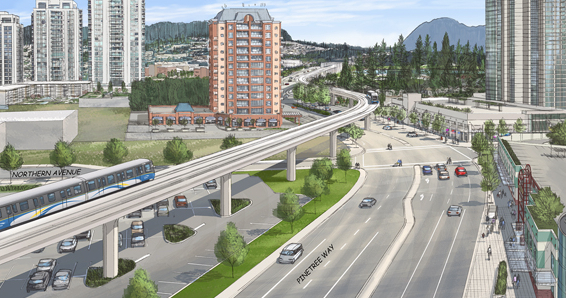
From: A North-American Rail Expert
Subject: Comments on the Evergreen Line ai???Business Caseai???
Date: February 6, 2008 12:15:22 PM PST (CA)
Greetings:
The Evergreen Line Report made me curious as to how TransLink could justify continuing to expand SkyTrain, when the rest of the world is building LRT. So I went back and read the alleged ai???Business Caseai??? (BC) report in a little more detail. I found several instances where the analysis had made assumptions that were inaccurate, or had been manipulated to make the case for SkyTrain. If the underlying assumptions are inaccurate, the conclusions may be so too. Specifically:
Capacity. A combination of train size and headway. For instance, TriMetai??i??s new ai???Type 4ai??? Low floor LRVs, arriving later this year, have a rated capacity of 232 per car, or 464 for a 2- car train. (Of course one must also be sure to use the same standee density when comparing car capacity. I donai??i??t know if that was done here). In Portland we operate a frequency of 3 minutes downtown in the peak hour, giving a one way peak hour capacity of 9,280. By next year we will have two routes through downtown, which will eventually load both ways, giving a theoretical peak hour rail capacity of 37,000 into or out of downtown. Of course we also run a lot of buses.
The new Seattle LRT system which opens next year, is designed for 4-car trains, and thus have a peak hour capacity of 18,560. (but doesnai??i??t need this yet, and so shares the tunnel with buses). The Business Case analysis assumes a capacity of 4,080 for LRT, on the Evergreen Line which it states is not enough, and compares it to SkyTrain capacity of 10400.!
Speed. The analysis states the maximum LRT speed is 60 kph. (which would be correct for the street sections) But most LRVs are actually designed for 90 kph. On the Evergreen Line, LRT could operate at up to 90 where conditions permit, such as in the tunnels, and on protected ROW. Most LRT systems pre-empt most intersections, and so experience little delay at grade crossings. (Our policy is that the trains stop only at stations, and seldom experience traffic delays. It seems to work fine, and has little effect on traffic.) There is another element of speed, which is station access time. At-grade stations have less access time. This was overlooked in the analysis.
Also, on the NW alignment, the SkyTrain proposal uses a different, faster, less-costly alignment to LRT proposal. And has 8 rather than 12 stations. If LRT was compared on the alignment now proposed for SkyTrain, it would go faster, and cost less than the Business Case report states!
Cost. Here again, there seems to be some hidden biases. As mentioned above, on the NW Corridor, LRT is costed on a different alignment, with more stations. The cost difference between LRT and SkyTrain presented in the Business Case report is therefore misleading. If they were compared on identical alignments, with the same number of stations, and designed to optimize each mode, the cost advantage of LRT would be far greater. I also suspect that the basic LRT design has been rendered more costly by requirements for tunnels and general design that would not be found on more cost-sensitive LRT projects.
Then there are the car costs. Last time I looked, the cost per unit of capacity was far higher for SkyTrain. Also,it takes about 2 SkyTrain cars to match the capacity of one LRV. And the grade-separated SkyTrain stations are far most costly and complex than LRT stations. Comparing 8 SkyTrain stations with 12 LRT stations also helps blur the distinction.
Ridership. Is a function of many factors. The Business Case report would have you believe that type of rail mode alone, makes a difference (It does in the bus vs rail comparison, according to the latest US federal guidelines). But, on the Evergreen Line, I doubt it. What makes a difference is speed, frequency (but not so much when headways get to 5 minutes), station spacing and amenity etc. Since the speed, frequency and capacity assumptions used in the Business Case are clearly inaccurate, the ridership estimates cannot be correct either. There would be some advantage if SkyTrain could avoid a transfer. If the connecting system has capacity for the extra trains. But the case is way overstated.
And nowhere is it addressed whether the Evergreen Line, at the extremity of the system, has the demand for so much capacity and, if it does, what that would mean on the rest of the system if feeds into?
Innuedos about safety, and traffic impacts, seem to be a big issue for SkyTrain proponents, but are solved by the numerous systems that operate new LRT systems (i.e., they canai??i??t be as bad as the SkyTrain folk would like you to believe).
Iai??i??ve no desire to get drawn into the Vancouver transit wars, and, anyway, most of the rest of the world has moved on. To be fair, there are clear advantages in keeping with one kind of rail technology, and in through-routing service at Lougheed. But, eventually, Vancouver will need to adopt lower-cost LRT in its lesser corridors, or else limit the extent of its rail system. And that seems to make some TransLink people very nervous.
It is interesting how TransLink has used this cunning method of manipulating analysis to justify SkyTrain in corridor after corridor, and has thus succeeded in keeping its proprietary rail system expanding. In the US, all new transit projects that seek federal support are now subjected to scrutiny by a panel of transit peers, selected and monitored by the federal government, to ensure that projects are analysed honestly, and the taxpayersai??i?? interests are protected. No SkyTrain project has ever passed this scrutiny in the US.
Victoria
But the BIG DEAL for Victoria is: If the Business Case analysis were corrected to fix at least some of the errors outlined above, the COST INCREASE from using SkyTrain on the Evergreen Line will be comparable to the TOTAL COST of a modest starter line in Victoria. This needs to come to the attention of the Province. Victoria really does deserve better. Please share these thoughts as you feel appropriate.
A Question of Capacity ai??i?? A LRTA Topic Sheet

Contrary to the COV and TransLink, modern LRT can obtain high capacities, on transit routes, by being able to operate
at close headways.Ai??Today, the main tram route through the city is being relocated in a subway because the line was
seeing 45 second headways during peak hours, giving an nominal capacity exceeding 40,000 persons per hour per direction!
A repost from 2009.
With TransLink and the City of Vancouver’s Engineering Department deliberately misleading politicans and the public about light rail and light rail capacity, the following is a pimer on capacity as it pertains to LRT and streetcars.
A Question of Capacity ai??i?? A LRTA Topic Sheet
Maximum capacity is only likely to be required for a few hours during peak hours, and even here there are likely to be variations both day by day and within each hour. The capacity required originates from the routeai??i??s social characteristics.
As for the vehicles, buses have a comfort capacity equal to the number of seats, and a maximum capacity equal to seats plus standing load.
In the case of trams, it is more complicated. The nominal maximum capacity is calculated at four passengers per square metre of available floor space (a reasonably comfortable level), plus the number of seats.
As trams are designed to carry a large standing load, the ratio of standees to seats is quite high. The standing area is also important for the carrying of wheelchairs, pushchairs, shopping and sometimes bicycles. Some manufacturers quote maximum capacity using 6p/m2 while a figure of 8p/m 2 is used as a measure of crush capacity. This last figure is also employed to determine the motor rating of the vehicle.
A further complication is that even when there are seats available, some passengers prefer to stand. This may be because they are only travelling for a few stops, that they want to stretch their legs, or may just prefer to stand.
A tramai??i??s comfort capacity can therefore be considered as the number of seats, plus the voluntary standees who may amount to up to 10-15% of the nominal maximum number of standing passengers.
ELASTICITY
It is the difference between the average passenger load for any particular time and the crush load which gives light rail its Elasticity Factor, allowing it to cope with variations in conditions such as sudden surges or emergency conditions.
Standing is made more acceptable by the design of track and vehicle, reducing the forces acting on the passenger to a minimum. This makes for a smooth ride, as well as ensuring ease of access, good support and the ability to see out without having to stoop.
Where a route is mainly urban with short journey times, the number of vehicles required should be calculated on the nominal maximum. On longer journeys outside the central area, a lower level may be more appropriate, dependent on the routeai??i??s characteristics. Even on rural sections, there are likely to be a a number of short distance riders, and the loading factor will increase nearer to the urban area.
COMPRESSIBILITY
While it might be thought desirable to offer every passenger a seat, it is in fact the ability to carry high loadings in a confined area (the Compressibility Factor) which enables light rail to achieve many environmental benefits, allowinglarge numbers of people to be carried withoutharming, and often improving, the features of a city.
It is city centres where several routes combine that the most capacity is required. A typical situation could be a pedestrian street with six routes operating at 10-minute headway giving 36 double coupled trams per hour each with a capacity of 225. This gives a nominal capacity of16 200 passengers per hour which can be increased to 25 200 pph in extremis without extra vehicles. Light rail is unique in this ability to operate on the surface with its capacity without detracting from the amenities which it serves.A further factor in setting the resources required is the need to lure motorists out of cars. The more difficult the traffic conditions, the higher the loadings will be acceptable. It is however important that crush loads are not allowed for morethan the shortest of periods on an infrequent basis, both to maintain customer satisfaction and prevent elasticity of the system being compromised.
It is vital that public transport can cope with sudden changes in demand, such as extreme inclement weather or air quality violations which can cause private traffic to be halted. This is where the elasticity inherent in light rail is so beneficial in enabling an instant response in an economical fashion. A tram may be crowded, but its infinitelybetter than having to wait in the snow of smog untilextra vehicles are brought into service.
It is this unique combination of Capacity, Compressibility and Elasticity rather than capacity alone which makes light rail so successful as an urban transport mode.
Note Statistics are based on Karlsruhe, using GT/8 cars
Metro Vancouver mayors call for new fees, taxes to fund transit
Well they areAi??back at it, the regional mayors (I should say well paid regional mayors) are asking for more of our money to fund SkyTrain. Yes, that what it boils down to, more money to fund SkyTrain.
Our regional mayors tend to think they are transit experts, but with the exception of Burnaby’s Derrek Corrigan (who was once CEO of BC Transit) and Surrey’s Dianne Watts (who actually did read a book on the subject) are expert at throwing good money after bad at TransLink, ever hoping that things will improve.
The big problem with TransLink is SkyTrain and the Canada Line and the huge annual subsidies needed to keep them in operation, subsidies that takes money away from the rest of the transit system.
If regional mayors were honestAi??with their constituents andAi??with themselves, they would demand a complete reorganization of TransLink and a complete rethink on how and why we provide public transit. Sadly, I just do not see any moral fortitude with this lot, as they seem to beAi??hell bent inAi??selling the taxpayer out, when it suits them and for many their political masters in Victoria.
Like a spoiled child, it is time to say no to TransLink.

Metro Vancouver mayors call for new fees, taxes to fund transit
By Kelly Sinoski, Vancouver Sun February 5, 2013
Metro Vancouver mayors have come up with a list of five new funding sourcesAi?? to pay for transit expansion, ranging from a resurrected vehicle registrationAi?? fee to a regional sales tax for transit.
The recommendations ai??i?? which also include a regional carbon tax, land-valueAi?? capture around SkyTrain stations, and road pricing ai??i?? were outlined in a letterAi?? to B.C. Transportation Minister Mary Polak this week.
ai???There is a consensus on the mayorsai??i?? council that economic and politicalAi?? limits have been reached on the rates of existing taxes and fares, so little orAi?? no more funding can be squeezed from established sources,ai??? the letterAi?? states.
The mayorsai??i?? council suggests an annual vehicle registration fee, based onAi?? vehicle emissions or engine size, could reap $50 million.
At the same time, a regional sales tax of 0.5 per cent, collected withinAi?? Metro Vancouver, could yield about $250 million annually, while a $5-per-tonneAi?? regional carbon tax could potentially generate $90 million a year for theAi?? region.
The technical analysis also suggests land capture ai??i?? leveraging the value ofAi?? lands around SkyTrain station development ai??i?? would generate about $30 millionAi?? annually.
As far as road pricing, which is a longer-term measure, the mayorsai??i?? councilAi?? argues it ai???has the greatest potential to achieve our shared vision for theAi?? region.ai??? The letter notes this involves direct pay-by-use charges for roads,Ai?? similar to how riders pay for the transit system.
Mayorsai??i?? council chairman Richard Walton said the group is looking for aAi?? commitment from the province that it would be willing to consider one or all ofAi?? the funding sources and work together on a public consultation process.
They are also asking for the province to enact further legislation for theAi?? vehicle registration fee. Although it has been rejected by the province threeAi?? times, Walton said it is the regionai??i??s best bet for a short-term funding source,Ai?? while other options, such as road pricing, are developed.
Polak said Tuesday that while the mayors have shown ai???good progress,ai??? theyAi?? need to do more to give the public an understanding of why the funding is neededAi?? and where it will be spent. They should start, she said, by coming to aAi?? consensus on the specific regional priorities slated for the near future.
This could include whether the proposed Surrey light rail system, or rapidAi?? transit for the Broadway corridor, is built first, she said, with a ballparkAi?? cost to determine what funding source would work best to cover the cost.
ai???The public gets very frustrated with the idea that they are asked toAi?? continuously pay more tax and more fees without feeling they are gettingAi?? anything more from it,ai??? Polak said. ai???Itai??i??s about building that support … youAi?? have to help them understand what theyai??i??re getting for that increase.ai???
The province has said any funding sources must be affordable for families,Ai?? have regional sourcing, avoid potential negative effects on the economy, andAi?? help TransLink share in the local benefits arising from transit investment.
Walton said the ball is now in the ministerai??i??s court. ai???There is an electionAi?? on, and obviously weai??i??re trying to get some sense if the government is willing toAi?? move on any one of these areas. If the response is no, the public wants to knowAi?? that.ai???



Recent Comments