The Cost of Transporting People in the British Columbia Lower Mainland – Revisited

In 1993 the Greater Vancouver Regional District (GVRD), now known as metro Vancouver,Ai??and the province of British Columbia released a report entitled “Transport 2021“, part of the 2021 study was the study, “The Cost of Transporting People in the British Columbia Lower Mainland“.
On page 15 of the “The Cost of Transporting People in the British Columbia Lower Mainland” study is a chart showing the breakdown of financial studies for public transit in 1991. The chart showed that the total subsidy for SkyTrain was $157.6 million. The huge subsidy for SkyTrain sent howls of “shock and disbelief” from BC Transit and the SkyTrain lobby, which until then maintained the myth that SkyTrain operated without subsidy and in fact suggested that SkyTrain paid its operating costs, a myth that remains today.
In early 2004, the late light rail campaigner, Des Turner, confirmed with TransLink that the annual SkyTrain subsidy, with the opening of the Millennium LineAi??surpassed $200 million a year! Alas, Mr Turner has since passed away and his meticulous records have been lost to the ages.
With the $90 million concessionaire’s fee for the Canada Line and addingAi??provincial debt servicing charges for the metro, the annual subsidy for the mini-metro system has now surpassed $300 million!
When politicians or media types claim that “SkyTrain operates without subsidy“, or “pays its operating costs“, just remind those cheer-leading for mini-metro of “The Cost of Transporting People in the British Columbia Lower Mainland” and that the annual subsidy for mini-metro has surpassed $300 million annually! One can also add, that the $300 million pus annual subsidy has hamstrung financially TransLink and its public transit operations.
The following is reproduced from”The Cost of Transporting People in the British Columbia Lower Mainland“.
Exhibit III-1
Breakdown of financial subsidies for public transit in 1991 ($millions)
SubsidyAi??Ai??Ai??Ai??Ai??Ai??Ai??Ai??Ai??Ai??Ai??Ai??Ai??Ai??Ai??Ai??Ai?? Paid byAi??Ai??Ai??Ai??Ai??Ai??Ai??Ai??Ai??Ai??Ai??Ai?? Diesel BusAi??Ai??Ai??Ai??Ai??Ai?? Trolley BusAi??Ai??Ai??Ai??Ai?? SkyTrainAi??Ai??Ai??Ai??Ai??Ai??Ai??Ai??Ai??Ai??Ai?? SeabusAi??Ai??Ai??Ai??Ai??Ai??Ai??Ai??Ai?? Total
Gas TaxAi??Ai??Ai??Ai??Ai??Ai??Ai??Ai??Ai??Ai??Ai??Ai??Ai?? Auto driversAi??Ai??Ai??Ai??Ai??Ai??Ai??Ai??Ai?? $19.6Ai??Ai??Ai??Ai??Ai??Ai??Ai??Ai??Ai??Ai??Ai??Ai??Ai??Ai??Ai??Ai??Ai??Ai??Ai??Ai??$9.4Ai??Ai??Ai??Ai??Ai??Ai??Ai??Ai??Ai??Ai??Ai??Ai??Ai?? $17.8Ai??Ai??Ai??Ai??Ai??Ai??Ai??Ai??Ai??Ai??Ai??Ai??Ai??Ai??Ai??Ai?? $0.6 Ai??Ai??Ai??Ai??Ai??Ai??Ai??Ai??Ai??Ai?? $47.4
Hydro LevyAi??Ai??Ai??Ai?? HouseholdersAi??Ai??Ai??Ai??Ai??Ai??Ai??Ai??Ai??Ai??Ai??Ai??5.2Ai??Ai??Ai??Ai??Ai??Ai??Ai??Ai??Ai??Ai??Ai??Ai??Ai??Ai??Ai??Ai??Ai??Ai??Ai??Ai??Ai??Ai?? 2.5Ai??Ai??Ai??Ai??Ai??Ai??Ai??Ai??Ai??Ai??Ai??Ai??Ai??Ai??Ai??Ai??Ai??4.7Ai??Ai??Ai??Ai??Ai??Ai??Ai??Ai??Ai??Ai??Ai??Ai??Ai??Ai??Ai??Ai??Ai??Ai??Ai??Ai??Ai??0.2Ai??Ai??Ai??Ai??Ai??Ai??Ai??Ai??Ai??Ai??Ai??Ai??Ai??Ai??$12.6
Commercial
Property TaxAi??Ai??Ai??Ai?? BusinessesAi??Ai??Ai??Ai??Ai??Ai??Ai??Ai??Ai??Ai??Ai??Ai??Ai??Ai??9.9Ai??Ai??Ai??Ai??Ai??Ai??Ai??Ai??Ai??Ai??Ai??Ai??Ai??Ai??Ai??Ai??Ai??Ai??Ai??Ai??Ai??Ai??Ai?? 4.8Ai??Ai??Ai??Ai??Ai??Ai??Ai??Ai??Ai??Ai??Ai??Ai??Ai??Ai??Ai??Ai?? 9.0Ai??Ai??Ai??Ai??Ai??Ai??Ai??Ai??Ai??Ai??Ai??Ai??Ai??Ai??Ai??Ai??Ai??Ai??Ai?? 0.3Ai??Ai??Ai??Ai??Ai??Ai??Ai??Ai??Ai??Ai??Ai??Ai??Ai??Ai??$24.0
Residential
Prop. TaxAi??Ai??Ai??Ai??Ai??Ai??Ai??Ai??Ai??Ai?? Home OwnersAi??Ai??Ai??Ai??Ai??Ai??Ai??5.8Ai??Ai??Ai??Ai??Ai??Ai??Ai??Ai??Ai??Ai??Ai??Ai??Ai??Ai??Ai??Ai??Ai??Ai??Ai??Ai??Ai??Ai??Ai??Ai??2.8Ai??Ai??Ai??Ai??Ai??Ai??Ai??Ai??Ai??Ai??Ai??Ai??Ai??Ai??Ai??Ai??Ai?? 5.2Ai??Ai??Ai??Ai??Ai??Ai??Ai??Ai??Ai??Ai??Ai??Ai??Ai??Ai??Ai??Ai??Ai??Ai??Ai??Ai??Ai??0.2Ai??Ai??Ai??Ai??Ai??Ai??Ai??Ai??Ai??Ai??Ai??Ai??$14.0
Provincial
GovernmentAi??Ai??Ai??Ai??Ai??Provincial
Ai??Ai??Ai??Ai??Ai??Ai??Ai??Ai??Ai??Ai??Ai??Ai??Ai??Ai??Ai??Ai??Ai??Ai??Ai??Ai??Ai??Ai??Ai??Ai??Ai??Ai??TaxpayersAi??Ai??Ai??Ai??Ai??Ai??Ai??Ai??Ai??Ai??Ai??Ai??Ai?? 50.0Ai??Ai??Ai??Ai??Ai??Ai??Ai??Ai??Ai??Ai??Ai??Ai??Ai??Ai??Ai??Ai??Ai??Ai??Ai??Ai??Ai?? 24.2Ai??Ai??Ai??Ai??Ai??Ai??Ai??Ai??Ai??Ai??Ai??Ai?? 120.9Ai??Ai??Ai??Ai??Ai??Ai??Ai??Ai??Ai??Ai??Ai??Ai??Ai??Ai??Ai??Ai??Ai??Ai??Ai??Ai??Ai??1.7Ai??Ai??Ai??Ai??Ai??Ai??Ai??Ai??Ai??Ai??Ai??Ai??Ai?? $196.8Ai??Ai??Ai??Ai??Ai??Ai??Ai??Ai??
Total SubsidyAi??- All SourcesAi??Ai??Ai??Ai??Ai??Ai??Ai??Ai??Ai??Ai?? $90.5Ai??Ai??Ai??Ai??Ai??Ai??Ai??Ai??Ai??Ai??Ai??Ai??Ai??Ai??Ai??Ai??Ai??Ai??Ai?? $43.7Ai??Ai??Ai??Ai??Ai??Ai??Ai??Ai??Ai?? $157.6Ai??Ai??Ai??Ai??Ai??Ai??Ai??Ai??Ai??Ai??Ai??Ai??Ai??Ai??Ai??Ai??Ai??Ai?? $3.0Ai??Ai??Ai??Ai??Ai??Ai??Ai??Ai??Ai??Ai??Ai??Ai?? $294.8
The Noviceai??i??s Guide to ai???Railai??? Transit Orai??i??ai??i??ai??i??ai??i?? (Updated)

ai??i??ai??i??ai??i??ai??i??..cutting through the BS about light rail, SkyTrain and BRT.
The following is a guide plus definitions about “rail” transit for this coming May’s provincial election.
ALM: Automatic Light Metro, the fourth marketing name given for the SkyTrain family of light-metros, when Lavalin briefly owned SkyTrain before gong bankrupt.
ALRT (1): Advanced Light Rail Transit, the second marketing name for SkyTrain.
ALRT (2): Advanced Light Rapid Transit, the third marketing name for SkyTrain, when Advanced Light Rail Transit failed to find a market.
ART: Advanced Rapid Transit, the fifth marketing name for SkyTrain, used by its current owners, Bombardier Inc.
Automatic (Driverless) Operation: A signaling system that permits train operation without drivers. Contrary to popular myth, automatic operation does not reduce operating costs because there are no drivers, because attendants must be hired instead to permit safe operation. Automatic signaling was signed to reduce signaling staff, not operation staff.
 Bus Rapid Transit (BRT): Generally means “Express Buses”, a true BRT needs a very expensive and land consuming busway or highway or be guided.
Busway: A route needed for BRT. Busways can be conventional HOV lanes or exclusive roads for buses. Busways can be equipped with raised curbs or rails for bus guidance.
Canada Line: Vancouver’s third metro line which is a grade separated EMU operation and is not compatible with the rest of the SkyTrain system in operation.
Capacity: A function of headway multiplied by vehicle capacity, measured in persons per hour per direction.
Consultation: To sell a transit decision to the public after the decision has been made.
Evergreen Line: The uncompleted portion of the Millennium Line being sold to the public as a separate metro line by the MSM.
Express Bus: A bus which has limited stops. See Rapid Bus.
Expo Line: The first SkyTrain line built, completed in late 1985. The Expo was built in in three sections. The Waterfront to New Westminster section (cost a much as LRT from Vancouver to Whalley, Lougheed Mall and Richmond Centre), the Skybridge section across the Fraser river to Scott road Station, and the final section to Whalley in Surrey.
 Grade: The vertical rise of a railway track, normally given in a percentage (1% grade = a 1 metre rise in 100 metres). Industry standard grade for LRT is 8%; Sheffield’s LRT operates on 10% grades; the maximum grade for a tramway is located in Lisbon, where the streetcars operate, unassisted, on 13.8% grades.
Goebbels Gambit: The fine art of repeating a lie often enough that it is perceived as the truth.
Guided Bus: A BRT that is physically guided by either a raised curb or a central rail. Some guided buses are considered monorails.
Headway: The time interval between trains on a transit route.
HOV Lane: High Occupancy Vehicle Lane, a lane for exclusive use of high occupancy vehicles, such as carpooling cars, buses and LRT.
Hybrid: A transit system that is designed operated as a LRT/light metro mix. Generally very expensive as it uses the most expensive features of both modes.
 ICTS: Intermediate Capacity Transit system, the first name SkyTrain was marketed by.
Interurban: An early streetcar which operated at speed on its own R-o-W connecting urban centres.
 Light RailAi?? (LRT): A steel wheel on steel rail transit system that can operate economically on transit routes with traffic flows between 2,000 pphpd to over 20,000 pphpd, thus bridging the gap on what buses can carry and that which needs a metro. A streetcar is considered LRT when it operates on reserved rights-of-ways or R-o-W’s for the exclusive use of the streetcar/tram. Number of LRT/tramways in operation around the world 461; light railways (many use LRV’s) ai??i?? 119; heritage lines ai??i?? 60.
Light Metro: A transit mode, generally a proprietary transit system, that has the capacity of LRT, at the cost of a heavy-rail metro.
Light Rail Vehicle (LRV): A vehicle that operates on a LRT or streetcar line. Also called a streetcar, tram, TramTrain or interurban.
Leewood Projects: Leewood Projects Limited was formed in 1999 to provide a comprehensive Project Management and Planning service to the railway industry.
Leewood Report: A study commissioned by Rail for the Valley, reinstating the old BC Electric Vancouver to Chilliwack interurban.
http://www.railforthevalley.com/studies/
Main Stream Media (MSM): Daily print media and electronic media who seldom report on real transit issues: See SkyTrain Lobby and Goebbels Gambit.
Mass Transit: A generic term for heavy-rail metro. See rapid transit.
Metro: An urban/suburban railway that operates on a segregated R-o-W, either in a subway or on a viaduct, due to long trains (8 cars+) and close headways. There are 174 heavy/light metros in operation around the world.
Millennium Line:Ai?? The second SkyTrain Line built, using the new Bombardier ART cars.
 Monorail: A transit mode that operates on one rail. There are two general types of monorail: 1) hanging monorail and 2) straddle beam monorail (not a true monorail). Some proprietary BRT systems are also classed as monorail.
OHE or OHLE: Overhead line equipment.
Priority Signaling: A signaling system that gives priority to transit vehicles at intersections.
Proprietary Transit System: A transit system who rights are exclusively owned by one company. Transit operations who operate proprietary transit systems must deal with only one supplier.
Rail for the Valley: A group of people, living in the Fraser Valley, wanting to reinstate the old BC Electric interurban service.
Rapid Bus: Please see rapid bus.
Rapid Transit: A generic term for metro. See mass transit.
Reserved Rights of Way: An exclusive R-o-w for use of transit vehicles, can be as simple as a HOV lane (with rails for LRT) or as elaborate a a lawned boulevard or a linear park complete with shrubs.
 SkyTrain: An unconventional proprietary light-metro, powered by Linear Induction motors, marketed by Bombardier Inc. Currently there are 7 SkyTrain type transit systems in operation around the world. ICTS ai??i?? 2; ALRT (1 & 2) ai??i?? 1; ART 4.
SkyTrain Lobby: A group of people and politicians who love linking to anti-LRT web sites. Most are ill-read on transit issues.
 Streetcar: A steel wheel, on steel rail electric (also can be diesel powered) vehicle that operates in mixed traffic, with little or no priority at intersections. Also known as a tram in Europe. Streetcars become LRT when operating on reserved R-o-W’s.
Tram: European term for streetcar, as the Europeans do not use the term LRT.
 TramTrain: A streetcar that can operate on the mainline railways, operating as a passenger train.
TransLink Speak: The lexicon used by TransLink to mask problems. Example: medial emergency on SkyTrain means a suicide.
 Viaduct: A viaduct is a bridge composed of several small spans.
Man marries his car
NO, HUMAN MANAGEMENT IS NOT PERFECT but neither is automated management. Records prove the safest way to go is to have automatic safety controls that will override a human mistake, such as 1920 style automatic train stop. It is much safer to rely on an automatic device checking on a human than to have a human checking on an automatic device.
The June 22nd 2009 accident that killed ten on the Washington DC Metro was totally a computer failure. The computer salesman may claim it was a track circuit failure, but an honest system would stop the train when the circuit failed instead of letting it go haywire.
Records are worth a whole lot – automation is not worth the cost but an automatic train stop is in most cases.
The Miami MetroMover, the Detroit Sky-Train, the Las Vegas MonoRail and the Jacksonville MonoRail are all automated and they are all far too expensive to build and operate. Vancouver Sky-Train is just about operationally value for money, what with its fare subsidies and traffic volumes, but it is certainly not cost effective to build; despite what TransLink would have us believe using selective statistics to buttress the pro-ART and pro-highway spending case. There are records on that too. Look at the records, do not argue about it.

Bait and Gate – The Fare Gate Scandal Unfolds

Well, Rail for the Valley told you so, but with the hoopla in the mainstream media and on certain radio station, to a certain lobbyist’s delight, fueledAi??a public frenzyAi??on the subject of fareAi??evasion. So much so, was the public’s anger over fare evasion, the public demanded fare gates be installed at all SkyTrain stations. The fact of the matter was different, the percentage of people avoiding to pay fares was about the same as on other transit systems. Fare evasion is a cost of doing business.
Should not this study have been done before TransLink wasted hundreds of millions of dollars retrofitting the mini-metroAi??stations with fare gates?
The real winners in the fare gate fiasco is Cubic, who supplied the fare gates in a market that is seeing most transit agencies ridding themselvesAi??of them and former premier Gordon Campbell’s good friend and former Vancouver City manager under the Campbell regime (who’s thumbprint is behind many of TransLink’s expensive fiascoes) and Cubic highly paid lobbyist, Ken Dobel!
I think we can call it “bait and gate!”
The fare evasion/fare gate fiasco is just another reason why there should be a full independent audit of TransLink, including the light metro system.
Memo to Adrian Dix: Do you have the moral fortitude to order such an audit?
Study finds transit fare gates don’t curb crime
VANCOUVER/CKNW(AM980)
Janet Brown
1/31/2013Fare gates on public transit systems have very little impact on fare evasion, crime and public disorder.
That’s the finding of a study carried out by Criminologist Darryl Plecas at the University of the Fraser Valley.
Plecas says while the introduction of turnstiles and fare gates is perceived by the public as a panacea to deal with fare evasion it’s really not the answer.
He also says there is little data to suggest the gates have a measurable impact on crime and/or public disorder.
“These gates are very expensive to install and when you look at how long it takes to get the payback from what you lose on fair evasion i think that at least some people conclude that at the end of the day they certainly don’t pay for themselves.”
The study – which cost five-thousand dollars – was commissioned by Transit Police whose role is already being questioned once the fare gates come in.
The first fare gates on Skytrain and Canada Line are expected to up and running in the fall.
Liz James UpsetsThe SkyTrain Lobby
It seems North Shore News weekly columnist, Liz James has upset the SkyTrain Lobby with her most recent article, “No shortage of projects for the new AGLG“.Ai??Ai??So much so, that an email to Ms. James, from a SkyTrain lobbiest comes very close inAi??libeling her good name.” The fact that Ms. James has been on the SkyTrain/TransLink/ Canada line file since the late 90’s is ignored.
The SkyTrain lobby’sAi??main Fraser ValleyAi??voice is a high school student who calls himself an “analyst“, yet has absolutely no credentialsAi??except that heAi??runsAi??the SkyTrain for Surrey web site. This so called analyst was in diapers, when Ms. James first started researching transit issues in the region.
What set the SkyTrain lobby’s hair alight is the following;
If so, they would do themselves an injustice because, as provincial andAi?? federal taxpayers they too are funding the bottomless pit that is TransLink, itsAi?? gold-plated SkyTrain projects and its unwieldy, costly governance structure.
In particular, when it comes to “achieving value for money,” it would be aAi?? relief for your office to settle once and for all the TransLink-manipulatedAi?? comparative cost debate over SkyTrain versus Light Rail Transit technology.
If you were to do that – without political interference – I have no doubt youAi?? could save taxpayers billions of dollars in capital and debt-servicingAi?? costs.
Really, that’s it? The only thing that Zwei could complain about is the claim that SkyTrain and LRT are different technologies – they are not, as both are railways and adhere to the same principles of railway operation.
What makes the SkyTrain lobby go white withAi??panic is an independent audit of the SkyTrain light metro and an apples to apples comparison between SkyTrain and light rail.
Gerald Fox, noted American transit expert, clearlyAi??understood this,Ai??when he wrote:
It is interesting how TransLink has used this cunning method of manipulating analysis to justify SkyTrain in corridor after corridor, and has thus succeeded in keeping its proprietary rail system expanding. In the US, all new transit projects that seek federal support are now subjected to scrutiny by a panel of transit peers, selected and monitored by the federal government, to ensure that projects are analysed honestly, and the taxpayers’ interests are protected. No SkyTrain project has ever passed this scrutiny in the US.
No shortage of projects for the new AGLG
Ai??ByAi?? Elizabeth James, Special to North Shore News January 30, 2013Read more: http://www.nsnews.com/news/shortage+projects+AGLG/7892438/story.html#ixzz2JZ48ulOd
“We are most interested in hearing from members of the public who haveAi?? suggestions of areas where the AGLG can be most helpful to British Columbia’sAi?? local governments by conducting performance audits that may identify ways toAi?? improve value for money or highlight best practices.” aglg.ca
Ms. Basia Ruta, CA Auditor General for Local Government, Surrey, B.C.
Dear Ms. Ruta:
Congratulations on your appointment as British Columbia’s first ever auditorAi?? general for local government.
We have waited a long time for this day and look forward to reading yourAi?? reports, as we do those of B.C. Auditor General John Doyle.
We appreciate your offer to consider our suggestions about your work andAi?? understand that your mandate is to conduct performance audits to evaluateAi?? whether councils are providing good “stewardship of public assets” andAi?? “achieving value for money in their operations.”
In that vein, I offer my own thoughts for your consideration.
A review of the information on your website notes that your first milestoneAi?? will be the release of what will become an annual service plan – the firstAi?? expected sometime in April.
Bearing that in mind, I hope that over the next few weeks you will have timeAi?? to review the Community Charter/Local Government Act – the foundation upon whichAi?? our local government structure is built.
Recent experience here on the North Shore suggests there is an urgent needAi?? for a clarification and strengthening of the legislation that covers conflict ofAi?? interest and the public hearing process.
In that regard, if you should schedule a review of the City and District ofAi?? North Vancouver, I urge you to consider the two municipalities concurrentlyAi?? because, as residents support mirrored councils and staffs for a combinedAi?? population of only 131,000, many of them want to see a facilitated dialogue onAi?? the pros and cons of amalgamation – no matter what some politicians wouldAi?? prefer.
I agree and suggest that a politician who denies citizens that opportunity isAi?? in a direct conflict of interest.
My next suggestion also touches on democratic process.
If British Columbians are to play a meaningful role in determining theirAi?? local destiny, the act must be returned to its pre-charter status with respectAi?? to referendums.
The charter’s “alternative approval process” is unwieldy and nothing moreAi?? than negative-billing: “Council plans to do such-and-such unless enough of youAi?? read this advertisement and tell us not to.”
And now, Ms. Ruta, we come to a long-standing North Shore bug-a-boo: ourAi?? regional transportation authority.
If you compare the Aug. 9, 2001 report and recommendations on TransLink byAi?? former provincial auditor-general Wayne Strelioff to the November-December 2012Ai?? reports of TransLink Commissioner Martin Crilly and the Efficiency Review byAi?? North Vancouver’s Shirocca Consulting, I believe you will find significant roomAi?? for improvement with respect to value for money. Commissioner Crilly notified meAi?? on Sunday that two further reports by Shirocca are due to appear on his websiteAi?? on Feb. 1.
Taxpayers elsewhere in B.C. might believe another review by you would focusAi?? too much on the 22 Lower Mainland municipalities.
If so, they would do themselves an injustice because, as provincial andAi?? federal taxpayers they too are funding the bottomless pit that is TransLink, itsAi?? gold-plated SkyTrain projects and its unwieldy, costly governance structure.
In particular, when it comes to “achieving value for money,” it would be aAi?? relief for your office to settle once and for all the TransLink-manipulatedAi?? comparative cost debate over SkyTrain versus Light Rail Transit technology.
If you were to do that – without political interference – I have no doubt youAi?? could save taxpayers billions of dollars in capital and debt-servicingAi?? costs.
In general terms, council budgets increasingly suffer from the downloading ofAi?? what were previously provincial responsibilities – with insufficient funding toAi?? support the services.
Although that applies throughout the province, the problem is exacerbated forAi?? North Shore residents who are disproportionately burdened by high property-taxAi?? assessments and by Metro Vancouver regional decisions over which they have noAi?? direct control.
No control because the charter does not require members of council to pollAi?? the majority opinion of their colleagues before they vote at the regionalAi?? committee level.
At regional tables it is a case of voting one man’s – or woman’s -Ai?? opinion.
So the final item I would like to see reviewed – before the 2014 municipalAi?? election – would cover the pros and cons of allowing citizens to elect the boardAi?? of the Greater Vancouver Regional District.
Never again do I want to hear that a member of council must “take off his/herAi?? North Shore council hat, when sitting at a regional table” as one councillorAi?? said.
“No taxation without representation” is such an important concept that,Ai?? earlier this month at the inauguration of President Barack Obama, the citizensAi?? of Washington, DC reignited the fight that began in England in the 1700s. Why doAi?? we still tolerate it at the regional level in B.C.?
So thank you for the invitation Ms. Ruta; I hope you will receive suggestionsAi?? from many other British Columbians.
You have my sincere best wishes as you carry out your work in this politicalAi?? viper’s nest of a province.
Footnote: Ms. Basia Ruta began her five-year fixed term on Jan. 15, 2013.
Nominated by an appointed five-person Audit Council, Ruta comes from OntarioAi?? with an impressive resume that includes more than 10 years with the auditorAi?? general of Canada.
How About A TramTrain Link To Abbotsford Internationl Airport
One major destination for the RftV Vancouver to Chilliwack TramTrain is the Abbotsford International Airport and having a TramTrain connections would mean YXX could be directly reached from Vancouver, Surrey,Ai??Langley, Abbotsford, and Chilliwack.
A bonus withAi??a YXX TramTrain connection would be Abbotsford’s Tradex, trade fair complexAi??would also be served by rail.
Reaching the airport could pose some problems, but by TramTrain’s very nature it could operate as a tram or streetcar on single track reserved right’s-of-way on either Vye/HuntingtonAi??Road; King or Clearbrook Road or a combination of all four, from the SRR of BC line to YXX.
Also in the area is the University of the Fraser Valley and Corrections Canada facilities, which would mean good ridership potential for a TramTrain line to YXX.
From Rail Technology Magazine

Tram-train link to airport ai???once in a lifetime opportunityai??i??
The all-party parliamentary light rail group is pushing for a tram-train link from Leeds to Leeds-Bradford International Airport (LBIA), via Horsforth.
At a meeting on Tuesday, the group outlined progress on the project to cross-party MPs, representatives from the DfT, local government, and the light rail industry.
Three local MPs are to lead a campaign to promote the proposal: Greg Mulholland MP (LibDem, Leeds North West); Alec Shelbrooke MP (Con, Elmet and Rothwell); and Gerry Sutcliffe (Lab, Bradford South).
They discussed a strategy for progressing the scheme, which was described as ai???once in a lifetime opportunity for lasting infrastructure benefitai???.
The LBIA link is currently being examined for possible inclusion in the projects to go forward within the proposed A?1bn West Yorkshire Plus Transport Fund.
Shelbrooke said: ai???The APPLRG meeting was invaluable for getting all political parties together as well as the major stakeholders to highlight the united aim we have in securing a tram-train link to LBIA for the benefit of Leeds, Bradford, West Yorkshire and the North. It is crucial we act quickly and with coordination to achieve this outcome and I look forward to leading this with Gerry Sutcliffe and Greg Mulholland in the future.ai???
Quebec Corruption Inquiry: SNC-Lavalin Linked To Scheme To Raise Construction Project Prices
What happens in Quebec must surely happen in BC, asAi??SNC Lavalin has been involved with the heavily engineered SkyTrain and Canada Line light-metros. The question that must be asked; “Has the very expensive SkyTrain and Canada line light metros part of a provincial scheme to ensure healthy profits for corporate friends of the government by building over-engineered rapid transit projects?”
If the answer is yes, then; “Is TransLink deliberately making false statements about modern light rail to ensure that SkyTrain is built, instead of light rail, for regional ‘rail’ projects such as the Evergreen Line and the Broadway subway?”
The followers of this blog know what the correct answers are!
From the Huffington Post……………

Quebec Corruption Inquiry: SNC-Lavalin Linked To Scheme To Raise Construction Project Prices
MONTREAL ai??i?? A number of major engineering firms ai??i?? including global giant SNC-Lavalin ai??i?? participated in a collusion scheme to raise the price of construction projects in Quebec, the head of one company testified Thursday at a provincial inquiry.
The incendiary testimony of Michel Lalonde suggested that big, even publicly traded, engineering firms were complicit in the cartel-like practices previously ascribed to lower-level construction companies in that province.
The president of Genius Conseil Inc. said the group of companies selected him as a go-between with Montreal city officials, and he pointed at firms of varying sizes as participants in the system including: Montreal-based SNC-Lavalin (TSX:SNC), Dessau, CIMA, Genivar (TSX:GNV), Tecsult, SM, BPR and Roche.
He said the companies were expected to cough up donations to the cityai??i??s ruling political party.
ai???We had to talk if we wanted to make sure that we could split up the contracts and assure that we understood the political donation obligations we had,ai??? Lalonde explained to commission counsel Denis Gallant.
The inquiry has heard similar tales about other pockets of the industry conspiring to inflate public contracts, while sharing the illegal profits with political parties, corrupt officials and the Mafia.
Among the engineering firms, Lalonde described himself as a key player in a scheme that ran for roughly five years, between 2004 and mid-2009.
The co-chair of the inquiry, Renaud Lachance, asked him: ai???When you say ai???spokesman,ai??i?? youai??i??re basically saying, ai???collusion co-ordinator?ai??i??ai???
Lalonde replied: ai???I call it spokesman in the name of the firms.ai??? He added that he had a personal interest in the role because it might have helped his own company win some contracts.
Each of the other firms had a representative that would take part in discussions about how contracts would be divided, Lalonde said.
He said his city contact was Bernard Trepanier, a fundraiser for the Union Montreal party at the time. He said Trepanier had connections within the cityai??i??s executive body and would keep him abreast of upcoming contracts. He said he would make political donations to ensure the city selection committee gave him contracts.
Lalonde said he even had a few meetings with Frank Zampino, then the executive committee chairman. He said they would discuss upcoming contracts, in Trepanierai??i??s presence. Zampino and Trepanier now face criminal charges in an alleged fraud scheme.
Lalonde estimated that his firm would give Union Montreal anywhere from $50,000 to $100,000 a year between 2005 and 2009. The scandal-plagued party recently lost power, following a series of defections.
Lalonde said the first cash call came in 2004 when his firm paid Union Montreal $100,000, split into about a half-dozen payments.
Lalonde testified that bigger firms would give double ai??i?? about $200,000.
After that, a three-per-cent rule apparently went into effect: a fixed cut on each contract would go to the cityai??i??s ruling party, he said. Lalonde said most of the money was given through Trepanier, with the presumed blessing of the party.
ai???When someone asks you for a significant amount for political contributions, I guess it has to come from the party,ai??? Lalonde said.
ai???And he (Trepanier) told me, ai???Listen, I set this up with Mr. Zampino, we talked about it.ai??i?? Thatai??i??s why I say it was sanctioned.ai???
On one occasion, Lalonde said he gave money directly to a city official ai??i?? Robert Marcil ai??i?? who headed the public works department.
The practice ended four years ago, he said. Media reports began surfacing about corruption in the industry. Authorities began to crack down, beginning with a provincial police unit called Operation Hammer. It has since made numerous arrests.
He said such practices drove up the price of construction in Montreal by 25 to 30 per cent, which taxpayers had to cover.
Lalonde is back on the stand Monday.
Earlier Thursday, new details have emerged about the events that led to the scandal-propelled resignation of Montrealai??i??s mayor last fall.
It turns out that the witness whose damning allegation at a public inquiry torpedoed the mayorai??i??s career did not originally share it with investigators because, he said, he thought it seemed ai???trivial.ai???
That statement from former mayoral aide Martin Dumont came Thursday as he was back on the witness stand, nearly three months after he shared an anecdote that pushed his ex-boss Gerald Tremblay into political retirement.
Dumontai??i??s earlier testimony has been under attack since he admitted to making up another story during his appearance at the inquiry in October.
At the time, as Tremblay resigned in scandal, he vehemently denied Dumontai??i??s testimony and said he was eager to clear his name.
The former aide had testified that Tremblay was at a meeting in 2004 where he heard his party kept two sets of books ai??i?? one for legal purposes, and an accurate one for illicit cash. Dumont said the mayor promptly stood up and, declaring that he did not want to be involved in such a chat, left the room.
The claim severely damaged Tremblayai??i??s reputation, as he had spent years professing ignorance of any criminal activity within Union Montreal.
Provincial politicians began pressing Tremblay to resign. Within a few days, he was gone.
The inquiry heard Thursday that Dumont actually described the controversial 2004 meeting when he met investigators last Sept. 12 ai??i?? but he left out the mayorai??i??s presence.
He finally mentioned Tremblay when he met investigators a second time, the following month. He soon repeated the story publicly, on the stand, and the mayor quit days later.
Commission chair France Charbonneau questioned how Dumont could have forgotten to share that story the first time he met with investigators, on Sept. 12.
ai???Am I to understand that if you didnai??i??t mention this the first time itai??i??s because you found this incident trivial?ai??? she asked Thursday.
Dumont replied, without hesitation: ai???Yes, it was trivial.ai???
Later Thursday, Dumont explained his ai???trivialai??? comment, saying that what he meant was it wasnai??i??t shocking to see Tremblay at the meeting.
He said it was shocking to see two sets of accounting books.
The explanation didnai??i??t fly with Charbonneau.
She said she couldnai??i??t understand how the mayor being there ai??i?? and not wanting to know about the books ai??i?? could be deemed ai???trivial.ai???
ai???I thought he was already aware of the books,ai??? Dumont explained.
Asked bluntly, under cross-examination by the lawyer for the Union Montreal party, if he invented the story involving the mayor, Dumont maintained the testimony was true.
Lawyer Francois Dorval spent much of the morning attempting to poke holes in Dumontai??i??s testimony. His most serious strike was the revelation about Tremblay.
ai???When it is a fact thatai??i??s as dramatic as revealing before the mayor that youai??i??re over-budget and the official agent produces a document talking about two sets of accounting to get around the law ai??i?? this is a detail you forgot?ai??? an incredulous Dorval asked.
Concerns about Dumontai??i??s credibility have dominated the commission this week, since it returned from its holiday break.
Also, Dumont initially told investigators that heai??i??d described to a colleague how he was threatened by a Mafia-linked businessman. He says the construction boss warned Dumont heai??i??d be buried in concrete if he kept asking questions about inflated costs.
In a subsequent interview, Dumont had the name of that supposed colleague struck from the record. He has admitted to making up another story about a secretary who was forced to count illegal cash donations to Union Montreal.
Also, Dumont was questioned Thursday about his claim that a safe in party offices was stuffed so full of cash it wouldnai??i??t close.
Dorval produced a receipt showing that the safe was actually broken and thatai??i??s why it wouldnai??i??t close.
Tremblay cannot be reached for comment through his former spokesman. But he is expected to respond on the inquiry witness stand.
http://www.huffingtonpost.ca/2013/01/25/snc-lavalin-quebec-corruption-inquiry_n_2550144.html
Regional Politicians Mull Political Oblivion

Well, here we go again!
“Bubble, bubble, toil and trouble“, the dreaded TransLink auto levy again has raised its ugly head. Here we have a largely incompetent transportation agency, which doesn’t run our transit system, which has absolutely no public scrutiny, and is in constant financial peril, demanding more taxpayer’s money. TransLink’s mission statements seems to be; “If it doesn’t work, let’s do it again and hope it works the nextAi??time.”Ai??and “To hell with the taxpayer“, either way I think it is time for TransLink to depart on the next train to oblivion because all these guys seem to do is want to plan forAi??very expensiveAi??SkyTrain, built in even more expensiveAi??subways and the organization seems unable to grasp the meaning of affordability.
There is aAi??general feelingAi??that the well paid bureaucrats whoAi??shuffle aroundAi??at TransLinkAi??think that everyone elseAi??is as well paid as they and fail to grasp the notion that many of the region’s taxpayers are maxed out. Economy just doe not exist in TransLink’s lexicon.
I have a message for TransLink:
“YOU HAVE BEEN SAT TO LONG HERE FOR ANY GOOD YOU HAVE BEEN DOING.Ai?? DEPART, I SAY, AND LET US HAVE DONE WITH YOU. IN THE NAME OF GOD, GO!.”
With the monies saved by the demise of TransLink, we could fund our regional transit system, though I doubt anyone is listening.
TransLink vehicle levy back on mayors’ agenda
By Jeff Nagel – Surrey North Delta Leader
Published: January 18, 2013A yearly levy on each vehicle registered in Metro Vancouver is once again being pursued by area mayors as a short-term solution to TransLink’s financial challenges.
A car levy has been on the books as a legal option since TransLink was formed but the province has blocked its actual use three times ai??i?? once when the NDP was still in power in 2001 and twice more in the past four years under the BC Liberals.
Now mayors ai??i?? increasingly frustrated with Victoria and insistent that fares, gas taxes and property taxes can’t be raised any higher ai??i?? will try again.
“There’s only one thing not tapped out and that’s the vehicle levy,” said Belcarra Mayor Ralph Drew.
“We have no other logical place to go,” said Burnaby Mayor Derek Corrigan, who estimates TransLink is short about $150 to $175 million a year to sustain current service levels, let alone find billions more for projects like new rapid transit lines in Surrey and Vancouver.
“It’s the most easily implemented short-term option people can discern to get through the problems that we’ve got.”
Mayors emerged from a closed-door meeting Friday proclaiming their unity on key issues and their determination to press the provincial political parties to commit to a solution ahead of the May 15 provincial election.
The TransLink mayors’ council intends to spell out its position in a discussion paper within two weeks and press both the government and opposition parties to respond.
Drew chastised Transportation Minister Mary Polak for late last year directing mayors to first come up with a vision for future spending before new controversial funding sources might be considered.
“The vision’s well laid out,” he said, adding all mayors feel Polak’s aim was to “rag the puck until after the election.”
The province has long preferred to see TransLink make more use of property tax instead of any source that might anger drivers.
Drew noted TransLink is automatically permitted to raise an extra three per cent each year from property taxes, which average $230 per Metro home.
“We’ve already made a significant, ongoing, compounding commitment via property tax dollars.”
Mayors also remain committed to exploring road pricing as a long-term source.
“We don’t know what that will look like,” Corrigan said. “Whether it’s congestion taxes in the downtown or additional tolls on bridges or road tolls. We don’t know what’s going to make logical sense yet, but we need some sustainable long-term source.”
Road pricing is seen as a mechanism that is at least tied to transportation and that could help control congestion and encourage motorists to try alternatives to driving.
It’s also held up by some mayors as a necessary discussion now that tolls on the Port Mann Bridge are causing some drivers to divert to free crossings.
Corrigan said a share of the carbon tax ai??i?? as proposed by the NDP ai??i?? is another option, or perhaps the next government may make an altogether different source available.
Both Corrigan and Langley City Mayor Peter Fassbender ai??i?? frequent adversaries on opposite ends of the political spectrum ai??i?? called it a productive meeting with strong agreement on the strategy.
“We need to keep the pressure on ourselves and the government and the opposition parties moving into the election campaign,” Fassbender said.
One precondition for any new deal with the province, both Fassbender and Corrigan said, is that it come with governance reform of TransLink that puts mayors back in charge of setting spending priorities, not just signing off on contentious tax hikes.
“We have very little to say in the governnace of TransLink and yet were told to go find funding options,” Pitt Meadows Mayor Deb Walters said. “Anytime we come up with options they get shot down. It’s extremely frustrating.”
A vehicle levy was last proposed ai??i?? and shot down ai??i?? in 2009.
It would have raised $150 million a year by charging an average of $120 per vehicle.
“You need to look at something you can implement quickly,” Fassbender said. “To me some sort of a vehicle charge starts to fall into that category.”
It could be replaced once a long-term source like road pricing arrives, he added.
Winter Tramway, Light Rail, LRT and ART reliability?
The Cardinal is confident that friends & colleagues in Vancouver will take satisfaction from knowing that European Light Rail & at-grade tramway systems are providing a faultless public service this winter.
Images of Croydon (London) Tramlink Ai??Ai??& Manchester Metrolink, are the evidence.
Ai??

Ai??A video of Croydon Tramlink services this weekend.
Ai??http://www.youtube.com/watch?v=9Zzak2MHvN0
I hope TranLinkai??i??s SkyTrain system will come to the mark in 2013 and confirm that the technical problems experienced in previous winters have been solved.Ai??
Taking to task two commenterai??i??s on the Blog, Daryl Dela Ai??Cruz & Richard Campbell, the pair of you have unfortunately taken to posting spurious comments in order to debase Light Rail and Tramways;
Darylai??i??s post on the SkyTrain for Surrey Blog:
An LRT Risk: Accident causes 90-minute disruption of Calgary LRT during PMAi??rush
http://skytrainforsurrey.org/2013/01/16/accident-causes-90-minute-disruption-of-calgary-lrt-during-pm-rush/
shows a particular level of desperation.
How many minutes of disruption has SkyTrain notched up in the past week, month or year from different causes?
How many delay causing road traffic accidents occur in Calgary daily? The afore mentioned incident is a rare occurence Daryl, don’t try to prove otherwise.
Mainz’s Trams Climbing 9.5% Grades
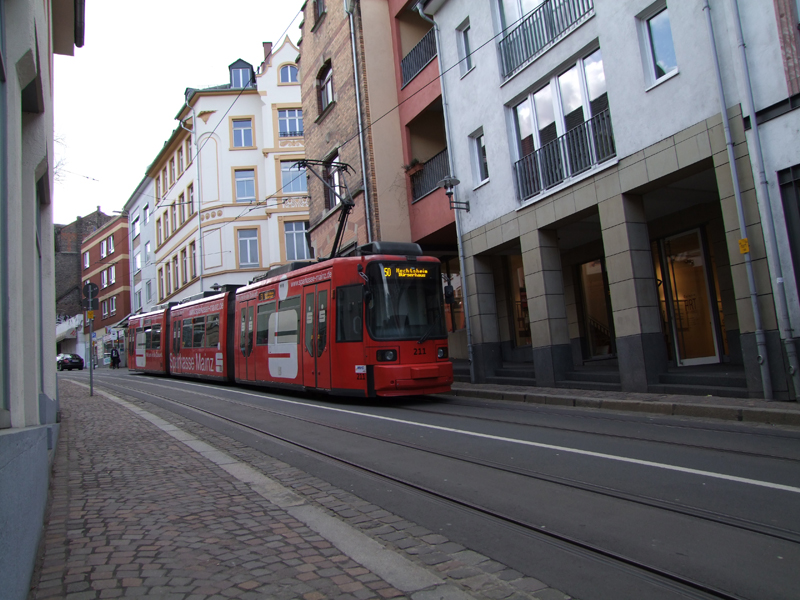
Mainz, Germany has rebuilt its metre gauge tramway as modern LRT, with new low floor cars, etc.
Mainz’s LRT has three route with a total mileage of 20 km.
Please cue to 5:00 on the following U-Tube video of mainz’s trams climbing 9.5% grades with ease.



Recent Comments