News Flash – TransLink trying to pull a fast one? Updated!
Well the masters of flim-flam are trying to pull a fast one over local mayors, why?
The probable answer is that denying proper scrutiny of the 2012 TransLink base plan, indicatesAi??thereAi??must be itemsAi??that TransLink doesn’t want local mayors to see. I hope that the Mayor’s Council has the collective backbone to demand TransLink give proper time for mayors to analyze the 2012 plan or better yet, tell TransLink adiA?s!

Metro Vancouver board members debate over Translink’s 2012 plan
Vancouver (AM980)
Jordan Armstrong
http://www.cknw.com/Channels/Reg/NewsLocal/Story.aspx?ID=1457905
Some Metro Vancouver board members are blasting Translink’s CEO for not giving them enough time to review the transit body’s 2012 base plan. Coquitlam councillor Lou Sekora says it’s ridiculous he’s being asked to approve a 60 page plan… that only arrived on his desk this morning.
“You come in here at 9 o’clock, it’s dropped on you. You get a presentation and you got to vote on it. This is totally unrealistic.”
Board chair Lois Jackson asked Translink CEO Ian Jarvis if it would be possible to delay the vote by two weeks. He said no.
That triggered a fiery response from Burnaby Mayor Derek Corrigan.
“We need more accountability, we need Translink sitting there and answering the questions that all of us have about where of these plans are going in order for Metro Vancouver to approve any kind of base plan or any kind of supplemental plan. I agree entirely with Director Sekora, and I don’t care what their timing is.”
The debate continues this hour…
Updated, Saturday, July 16
It seems that the region’s mayors are fed up with TransLink and the TransLink Board of Amateurs. Stay tuned this story has just begun.
From CKNW radio
NDP tee off on Translink
VANCOUVER – CKNW – AM980
http://www.cknw.com/Channels/Reg/NewsLocal/Story.aspx?ID=1458116
The NDP are wasting no time in getting in line to bash Translink after Metro Vancouver Mayors teed off earlier today.
Harry Bains says says the Translink board is unaccountable and he understands the frustration from Mayors who are left to pick up the pieces..
Bains says the Provincial Government is not respecting mayors and it is time to restructure the Translink board by having it made up of elected municipal officials.
Bains says the NDP will do exactly that if they win the next election and form government in order to make Translink accountable.
He says Mayors are often powerless left to deal with and find funding for whatever Translink drops in their lap.
From CKWX
Board chair likes Evergreen Line referendum idea
http://www.news1130.com/news/local/article/254466–board-chair-likes-evergreen-line-referendum-idea
Lois Jackson supports the idea of a regional referendum
DELTA (NEWS1130) – Metro Vancouver Board Chair Lois Jackson is supporting the idea of a regional referendum on the Evergreen Line.
Jackson, who is also Mayor of Delta, says opinion referendums are often held, so why not for the proposed line to connect Lougheed Mall with the Tri-Cities. “I just don’t think we can have everything. We just can’t afford to have everything. So let’s just take it in pieces here and I think going out to the public – I mean, that is the democratic way.”
She says the problem is a short-time frame to get that done. “We’re wrapped into approvals for certain dates. I continue to have a problem with that. Perhaps it’s an option that people should be looking at.”
She says the suggestion will be bounced off her council and then she will forward it to other Metro Vancouver mayors.
Trinity Western’s Dr. John Redekop says local mayors should jump at the chance, “Because then they won’t be blamed for the consequences and the outcome.”
By that he means the underlying potential of property tax increases if funding gaps for the project can’t be filled.
He adds the region has other important issues to deal with and mayors have other election issues on their agenda. “I would not want to see the November elections really boil down to a referendum on TransLink’s question.”
He says not all taxation issues should go to referendum, but certain controversial issues should including this one that involves a multitude of potential tax increases and transit improvement fees.
Call to dissolve TransLink
There are new calls to see TransLink dissolved and be replaced with an elected board, in light of all the issues surrounding the Evergreen Line.
Lou Sekora is a councillor for the City of Coquitlam and doesn’t like the way things are run. “It’s been running on for years with an unelected board, it’s still not elected. Not responsible to anyone. They just rubber stamp things.”
He says members spend more time fiddling around on their BlackBerries than tackling issues.
Expanding Calgary’s Light Rail
Already emission-free, doubling in size since 2001 and taking delivery of new Siemens SD160NG LRV’s, Canada’s CTrain is a model of sucessful light rail.
http://www.calgarytransit.com/html/technical_information.htm

Light Rail in Calgary is in the midst of a mini revolution. New vehicles, new stations and new routes are all part of a major expansion described by the Canadian city’s then mayor Dave Bronconnier in 2010 as-
`double, double, double’
Ai??Ai??The Light Rail Transit Association LRTA http://www.lrta.org/explain.htmlAi??Ai??Ai??Ai??has published a report in the August 2010 issue of Tramways & Urban Transit TAUT http://www.tramnews.net/default.asp on Calgary’s West LRT expansion:-
http://www.westlrt.ca/Ai??Ai??and http://www.westlrt.ca/contentabout/route_animation.cfm
http://www.calgary.ca/docgallery/bu/engineering_services/emaps/transit_map.pdf
Ai??Ai??Ai??Ai??Ai??Ai??Ai??Ai??Ai??Ai??Ai??Ai??Ai??Ai??Ai??Ai??Ai??Ai??Ai??Ai??Ai??Ai??Ai??Ai??Ai??Ai??Ai??Ai??Ai??Ai??Ai??Ai??Ai??Ai??Ai??Ai??Ai??Ai??
Another letter the media ignores
Another letter from a friend of Rail for the Valley,Ai??which the mainstream media wish to ignore.
HereAi??is the problem with our current financial transit debacle, very few, if any in the region understandsAi??what SkyTrain is and why the Vancouver region has it. Most politicos just repeat TransLink’s bumf ad nauseoum!
SkyTrain, both the Expo and Millennium Lines and the Canada Line were forced on the taxpayer by the provincial government. There were NO honest studies done, rather it was simply; “you are going to get SkyTrain whether you like it or not.“, from the premier of the day.
When SkyTrain was first forced on the region, alarm bells went off with transit experts elsewhere, with the majority foretelling of major financial difficulties down the road if we continued to build with the proprietary Skytrain light-metro. Today, like days past, civic and provincial politicians remain blind, deaf and dumb about regional rail transit and many seem to delight in bringing in more onerous taxes upon us.
There is no Robin Hood in this tale, rather the evil Sheriff is shaking the last ‘groat‘ from the tenants and no one seems to care.
Just a reminder, to date the taxpayer has paid over $8 billion for two Skytrain lines and one truncated metro line, plus the metro system is subsidized by over $250 million annually!
It is time to say adiA?s to SkyTrain, only there isn’t a politician with the moral fibre to do so!
The Editor;
“Vancouver is adopting a non-commercial approach…….I hope they have lots of money.”; Norman Thompson, CBE, FCA, ACMA, English transit consultant and builder of the worlds busiest subway, on the BC Government’s choice for SkyTrain instead of LRT in 1980.
Save us from politicians who think of themselves transit experts and think transit problems can be solved by merely increasing taxes. The current fiscal fiasco with TransLink can be traced back to the SkyTrain mini-metro system and TransLink’s love affair with SkyTrain instead of much cheaper, just as effective light rail. The region has spent about six times more for SkyTrain than if LRT had been built instead and what we have got for our SkyTrain investment is a Pandora’s Box of expenses. Modern LRT is much cheaper to build; much cheaper to operate than SkyTrain, with the added bonus that LRT has a higher capacity than Skytrain!
Can’t our politicians read? LRT is superior to Skytrain, that is why no one buys SkyTrain today!
Adding more taxes and user fees will not improve regional transit, in fact it will exacerbate the situation as SkyTrain has an insatiable appetite for money. Building the Skytrain Evergreen Line will only drive up taxes, which will in turn need more tax money and user fees to maintain.
We need to completely rethink how and why we provide transit, as current politically-correct thinking is leading us to a massive tax fiasco. In Europe, successful transit systems put the customer first and design transit routes to accommodate the customer not political and academic dogma.
If we really want to change how transit is operated and financed, we must rid ourselves of TransLink and it archaic mini-metro mentality and then put an end to hugely expensive Skytrain mini-metro. Hard medicine, but the right prescription.
Lies, damn lies, statistics and ART
From the “You’d better believe it” Department
Although sometimes attributed to Mark Twain ai??i?? because it appears in his posthumously-published Autobiography (1924) ai??i?? this should more properly be ascribed to Disraeli, as indeed Twain took trouble to do: his exact words being, ai???The remark attributed to Disraeli would often apply with justice and force: ai???There are three kinds of lies: lies, damned lies, and statisticsai???.ai??i?? To which we can add a fourth, ART – Advanced Rapid Transit or LMRT – Light Metro Rapid Transit
A week or a month or three is a long time in politics and particularly where public transport is concerned; back then in April the final input from the public was being sought for the phase 2 UBC Rapid transit study.
Amongst all the BC bloggers, the TransLink ai??i?? SkyTrain appreciation society has been lobbying hard for the UBC Line/Millennium Line extensionincluding the controversial $4 billion SkyTrain subway under Broadway, the Evergreen Line to Port Moody and Coquitlam and the Expo line extension from King George Station in Surrey east to Guildford, then along 152 Street to the Fraser Highway to Langley Centre. Worried by the adverse news in the BC press on Translinkai??i??s funding crisis and the hits that the Canada & Evergreen Lines are taking from commentators, journalists, BC Mayors & MLAai??i??s and tax payers, they are retaliating with desperate measures and bizarre plans.
This YouTube video for the Sky Trolley is the latest: http://www.youtube.com/watch?v=ljjNCq8aYeQAi?? and also http://www.innovapedia.org/home/innova-business/sky-trolley-elevated-bus-rapid-system/
Ai??
Has all the disadvantages of traditional BRT systemsAi?? low capacity compared to other systems, combined with almost none of the advantages of traditional BRT.
Ai??
A?Ai?? High initial cost
A?Ai?? Massive support column
A?Ai?? Difficult maintenance
A?Ai?? Stations are very small
A?Ai?? Visably intrusive
Doomed to failure, this one is.
The point made about capacity vs light rail is also a bare faced lie – you are quite restricted in the length of train because of the sheer length of the platform lift, and you can’t run two trains closer than you can lower the platform, empty it, fill it, and lift it back up again. Trams can be run virtually nose to tail (e.g. Melbourne).

To be, or not to be: that is the question:
Whether ’tis nobler in the mind to suffer
The slings and arrows of outrageous fortune,
Or to take arms against a sea of troubles,
And by opposing end them? To die: to sleep;
No more; and by a sleep to say we end
The heart-ache and the thousand natural shocks
That flesh is heir to, ’tis a consummation
Devoutly to be wish’d. To die, to sleep;
To sleep: perchance to dream: ay, there’s the rub;
For in that sleep of death what dreams may come
When we have shuffled off this mortal coil,
Must give us pause: there’s the respect
That makes calamity of so long life;
For who would bear the whips and scorns of time,
The oppressor’s wrong, the proud man’s contumely,
The pangs of despised love, the law’s delay,
The insolence of office and the spurns
That patient merit of the unworthy takes,
Hamlet, Act 3 Scene 1
Taxpayers entitled to better transit: Light rail advocate – News1130
Taxpayers entitled to better transit: Light rail advocate
Call comes as mayors float idea of two-cent-a-litre gas tax
Renee Bernard Jul 08, 2011 20:34:59 PM
FRASER VALLEY (NEWS1130) – If we pay the taxes, we want the transit. The proposed increase in gas taxes to pay for the Evergreen Line has some saying it's time to get serious about transit to the Fraser Valley.
John Buker speaks for the group Rail for the Valley and predicts people who live south of the Fraser will oppose the tax, unless there are some transit improvements for them.
The organization has been pushing for the use of an already established rail line through to Chilliwack for a light rail system. Buker says the time is right for their idea.
"You could have a 100-kilometre line for a third of the cost of the Evergreen Line. We're not saying that there shouldn't be an Evergreen Line, but that the taxes residents south of the Fraser are paying need to go to projects south of the Fraser," he argues.
Surrey mayor Dianne Watts has thrown her support behind light rail, saying it's a cheaper option than SkyTrain.
via Taxpayers entitled to better transit: Light rail advocate – News1130.
Death, taxes and TransLink
We all want better transit options, but are we willing to pay for them? Well our rather confused regional mayors think so.
The root of TransLink's financial woes has been the SkyTrain proprietary mini-metro system and its clone, the Canada Line. Skytrain costs about four to five times more to build than LRT and about fifteen times more to build than light-rail variant TramTrain, yet for all the added cost for a light-metro line, there are few tangible benefits. If the region had invested in light rail network as originally planned for, the region would have had a LRT network about four times the size of our present SkyTrain line network. Instead of 69 km. of light metro lines, we could have a minimum of 276 km. of LRT! The taxpayer has paid at least four times more for SkyTrain!
Contrary to TransLink's spin, modern LRT is much cheaper to build and operate than SkyTrain (don't be confused by the man-of-straw argument that Skytrain is cheaper to operate because it is driverless, which is untrue) and LRT can be faster than SkyTrain if need be and certainly has a higher capacity as well. TransLink's claims that SkyTrain is faster and has a higher capacity than LRT is based on TransLink's planning which arbitrarily made LRT slower and carry fewer people!
Here we have the main cause for TransLink's financial woes, yet regional mayors want to fund more SkyTrain in the guise of the Evergreen Line.
The ongoing financial chaos will continue as long as we squandering more money on questionable politically prestigious SkyTrain lines.
The cure for our current transit woes is not easy, but if we seriously want to deal with escalating taxes, we must stop building with SkyTrain and we must disband TransLink. Hard medicine yes, but needed to stop the escalating financial burdens on the regional taxpayer.

Higher-taxing mayors should be thrown out
News Release from RftV
Media Release
Rail For the Valley demands the Provincial Government get started on building South of Fraser Light Rail, now that residents are being asked to pay more in vehicle and gas taxes.
Chilliwack passenger rail supporters: Volunteers, donations needed!
Rail For the Valley plans to be a major presence at Chilliwack's Party in the Park this summer, and we need volunteers.

How to donate:
Will They Or Won’t They – The (N)Evergreen Line Debate and The 40,000 Person Question
Like a good soap opera, the Evergreen Line debate goes on.
Please let me repeat this for the benefit of TransLink, regional and provincial politicians and especially Ken Hardie LRT can obtain capacities in excess of 40,000 persons per hour per direction in revenue service on simple tram or streetcar lines!
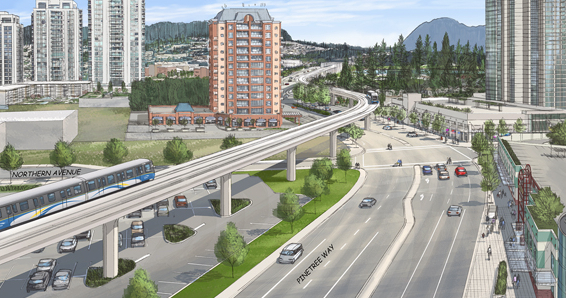
Is the Evergreen Line off the rails?
Meeting to discuss funding options
Both the federal and provincial governments have already committed roughly $1 billion.
Last week Lower Mainland mayors met with Transportation Minister Blair Lekstrom to talk about the possible ways to fill the funding gap. Those options include: raising property taxes, traffic tolls or vehicle levies.
The mayors are not too keen to hike property taxes, especially because municipal elections are coming up in November. They also say that homeowners are paying too much in taxes as it is.
Construction on the Evergreen Line was supposed to begin last year, but has been put on hold because of the funding issues. Lekstrom says he's optimistic that they can break ground on the project sometime this year.
The transit line has been in the works since 1986.
News Flash – SkyTrain down again
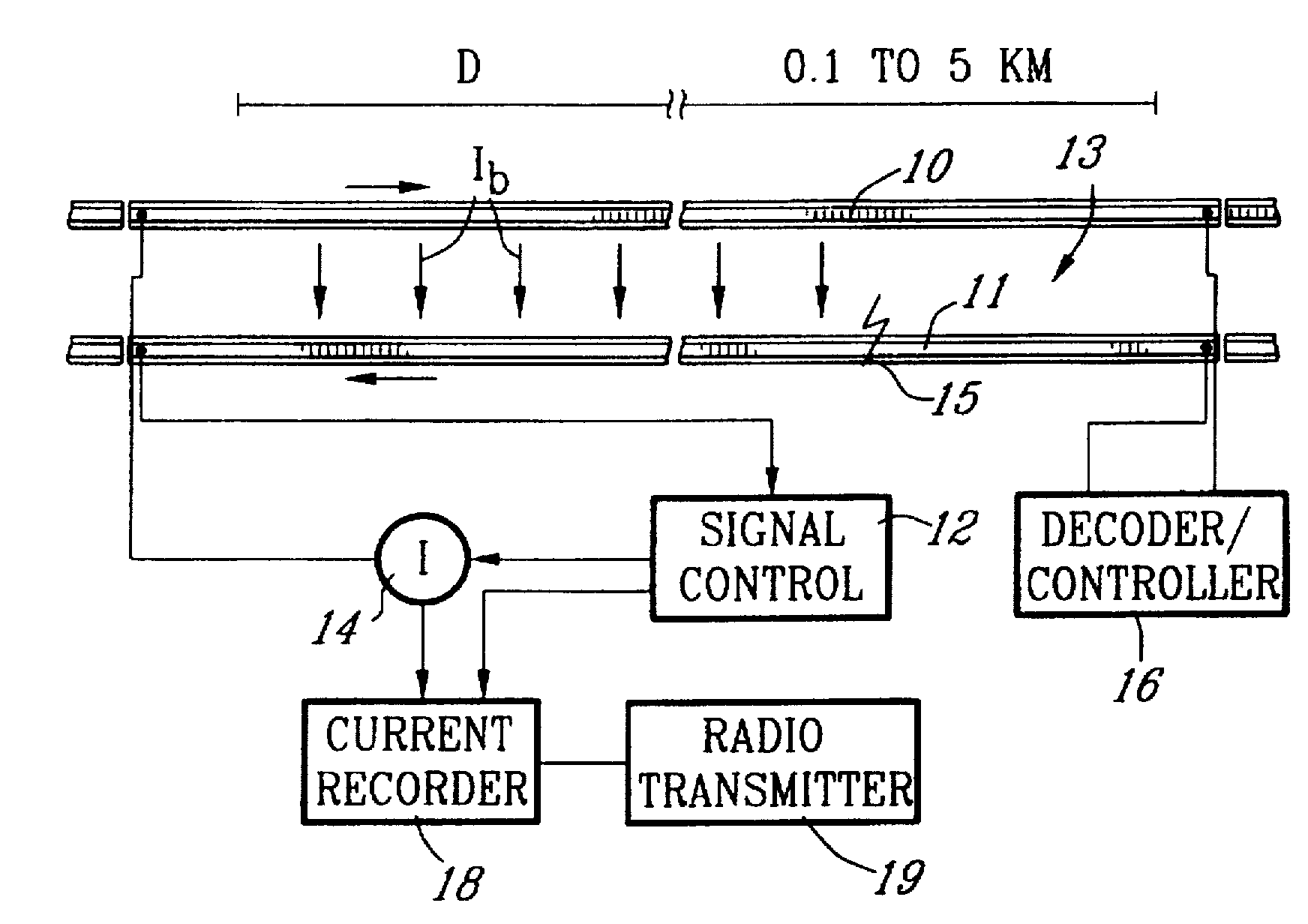
Here we go again. SkyTrain, as with all other automatic metros, has an Achilles heel – they stop working and more frequently as the metro ages. This is not a problem for light rail, as it is designed to operate when there are minor glitches.
But there is another problem with TransLink and its SkyTrain "transit backbone" theory, when all the bus routes that can, feed one SkyTrain line to downtown, when SkyTrain stops working, transit comes to a standstill and buses must be pirated from other routes (mush to the discomfort of more transit customers) to complete a bus bridge to keep a semblance of transit service running.
With LRT, because it is much cheaper, a network is much easier plan for and when a problem arises, trams an be switched onto another route to its destination with little time loss for transit customers.
With SkyTrain's aging infrastructure, "glitches" will happen more and more, greatly increasing the unreliability of a an automatic metro. With LRT, these sort of glitches are rare, because the signaling is more robust and easier to maintain, thus light rail's reliability as it ages is not a great issue.
SkyTrain's problems as it ages have been long predicted, yet the powers that be remain blind, deaf, and dumb on the subject.
From CKNW Radio
Skytrain Delays This Morning
Mike Bothwell
7/4/2011
Major delays on the Skytrain Expo Line this morning.
Translink's Drew Snider says Skytrain service into downtown from Commercial-Broadway came to a halt this morning, due to a technical glitch.
"We had a problem with the loop, with is the communication lifeline between the trains and the central control computer…and when that computer loses communication with the trains, it shuts things down for safety reasons."
Single-track service is running again to Burrard station, but buses will continue to shuttle commuters from commercial drive into the downtown core.
From CKWX Radio
Disruption on SkyTrain line
A technical glitch near Stadium SkyTrain Station
Technicians continue to work on the problem. All trains have been cleared from the westbound line and attempts are being made to get shuttle service running. For the time being, no trains are running between Commercial-Broadway and Waterfront Stations.
Canada Line is running normally and a bus bridge is moving passengers from Commercial-Broadway Station to Broadway-City Hall.
The Millennium Line is operating between VCC Clark and Sapperton Stations with a bus bridge connecting to Columbia Station.



Recent Comments