The great high-speed rail lie
The great high-speed rail lie
Wednesday, August 3, 2011
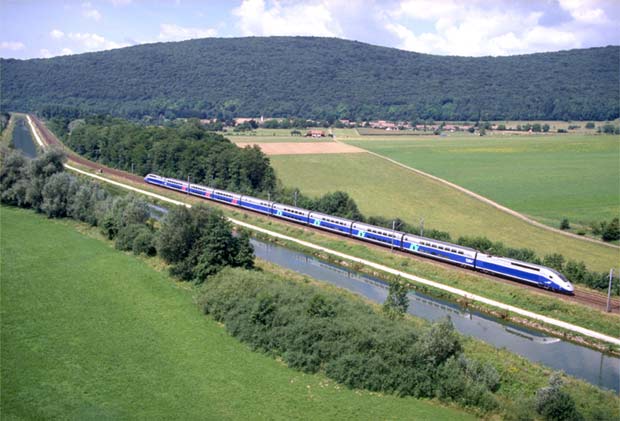
In 2008, voters approved a $10 billion bond to begin construction of a bullet train from Los Angeles to San Francisco that would make that trip in less than three hours. So who knew that by 2011 the general consensus would be that the project is an ill-conceived, mismanaged boondoggle?
Former Amtrak spokesman and Reason Foundation writer Joseph Vranich knew. In 2008, before the state Senate Transportation and Housing Committee, he called the project “science fiction.” He said the train won’t travel from Los Angeles to San Francisco in less than three hours because that exceeds the speed of all existing high-speed rail.
But on French railway schedules, a TGV (Train Ai?? Grande Vitesse) takes two hours, 38 minutes to go from Paris to Avignon. That’s 430 miles. The route for the L.A.-to-San Francisco line is 432.
So what’s going on here?
It’s simple. Vranich makes stuff up. Adrianne Moore, vice president of policy at the Reason Foundation, says the Europeans are abandoning rail in favor of driving and flying. Nonsense.
Transportation market share of European high-speed rail lines has grown steadily and many are near 80 percent. Rick Geddes, a professor at Cornell University who is also on Reason’s payroll, said on National Public Radio that the California system can’t be powered by renewable energy – except that the Hoover Dam generates four times what the train needs.
The Reason Foundation is funded by Chevron, ExxonMobil, Shell Oil, the American Petroleum Institute, Delta Airlines, the National Air Transportation Association and, of course, the Koch Family Foundation. They know what will happen once Americans, furious about gas prices and the way airlines treat them, experience electrically powered 200-mph trains. But big oil and aviation can’t attack high-speed rail directly – that would be an obvious attempt to abort competition. So they hire a “think tank.”
Reason collaborates on research with James Moore III, a transportation engineering professor at University of Southern California. They parrot Reason’s “train to nowhere” nonsense, a phrase they apply to all rail projects. It’s especially absurd in this case, because interim services will have high-speed rail trains slow and reach the Bay Area on existing rail lines. Reason’s minions claim there’s no business plan or ridership figures. Except that anyone can go on the California High-Speed Rail Authority website and download them.
Where does the corporate cash and propaganda end and the legitimate criticism begin? It was impossible to know in Florida, where high-speed rail was killed using the same techniques.
A modern 200-mile-per-hour rail link between Los Angeles and San Francisco will change America’s transportation paradigm. Just like in Europe and Asia, California will develop a profitable system joining all its cities. Nearby states, such as Nevada and Arizona, will link into the network, just like European countries did after France established its network. Jet airplanes will be used for what they were intended: long-distance travel. Automobile use will be reduced. This will save millions of barrels of oil. And that’s the real reason these lobbyists want it stopped.
Roger Christensen is a transit advocate from Los Angeles County (former chairman of the Metro Citizen Advisory Council) who has moved to the Central Valley, where he awaits high-speed rail.
http://sfgate.com/cgi-bin/article.cgi?f=/c/a/2011/08/03/EDTD1KID15.DTL
TransLink urged to clarify tax-and-spend plan – Or is it More Smoke And Mirrors
"Vancouver is adopting a non-commercial approach…….I hope they have lots of money."; Norman Thompson, CBE, FCA, ACMA, English transit consultant and builder of the worlds busiest subway, on the BC Government's choice for SkyTrain instead of LRT in 1980.
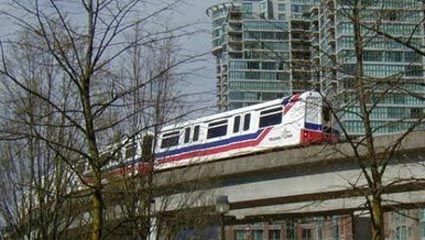
TransLink's precarious financial position has been long predicted because the region was forced, by the then Social Credit government to build a proprietary light-metro (SkyTrain) on a route that just did not have the ridership to sustain it. The smoke and mirrors game played with ridership, where recycled bus riders are used give the perception that the light-metro has high ridership has long confused politicians and the media.
This has created a financial time-bomb, where new metro line after new metro line is built, based on extremely questionable statistics, designed to make SkyTrain look good.
You bet the proposed 2 cent a litre gas tax, as mentioned in the preceding article, is murky and regional politicians must take off their rose coloured glasses and understand this. What they maybe buying is a pig in a poke, where next year TransLink's mandarins come a begging once again for more and more tax money to fund an unsustainable light-metro system – a light metro system that has been largely rejected by transit planners around the world because it is just too expensive for what it does.
TransLink urged to clarify tax-and-spend plan
By Jeff Nagel – BC Local New
http://www.bclocalnews.com/surrey_area/surreyleader/news/126780213.html
TransLink's independent commissioner is warning the plan to finance the Evergreen Line and other transit upgrades with a two-cent gas tax hike plus other yet-to-be-determined fees or taxes may be too murky to accept.
Martin Crilly suggested area mayors insist on a better understanding of how money will be spent if the province fails to enact some of the revenue sources.
"What are the mayors actually buying for sure?" he asked in an interview.
Many motorists and some mayors already oppose raising the TransLink-dedicated gas tax from 15 to 17 cents per litre, an increase the province has pledged to legislate this fall to take effect next April.
But even more uncertainty hangs over the other sources – possibly an annual vehicle levy averaging $24, a second regional carbon tax or even a system of road-use fees, all of which may be at least as controversial as the two-cent gas tax increase. Higher parking taxes and mechanisms to tax property developers are also on the table.
If there's no agreement within a year among mayors and with the province to use an additional source, a temporary property tax hike of $23 per average home kicks in for 2013 and 2014.
Crilly said it's not clear enough what happens next.
If no longer-term revenue solution is in place going into 2015, TransLink and the mayors may be faced with deep cuts or at least shelving many of the priority projects supposed to be paid for through the proposed funding supplement.
"It's important to be clear what happens in that circumstance because it's not beyond the realm of possibility that we might find ourselves in that place," Crilly said.
"You don't want to be in a position of having to make emergency cuts."
If Victoria fails to pass the gas tax hike, he said, the supplement would effectively collapse and TransLink wouldn't deliver its $400-million share of the$1.2-billion Evergreen Line linking Burnaby, Port Moody and Coquitlam.
TransLink spokesperson Erin McConnell said the proposed supplement will be revised in light of Crilly's comments to show the order in which future transit upgrades would proceed if the extra sources don't materialize.
That could open up new splits between the region's politicians depending on how the priorities are phased.
Some projects – like express bus routes on King George Boulevard and Highway 1 through Surrey and a Langley-White Rock route – would enhance South-of-Fraser service, while more frequent SeaBus runs would appeal to the North Shore.
A general lift in bus service, more road and cycling infrastructure and upgrades to several transit stations are also promised.
McConnell said the improvements would deliver an extra 20 million transit trips per year, equivalent to removing 70,000 cars a day from traffic.
"That would have significant benefits in reducing congestion," she said, seeking to soothe angry motorists who feel they will pay for transit service they don't use.
Area mayors, meanwhile, are divided on whether they can accept a plan that leaves a big controversial funding source to be determined with a property tax hike as the fallback mechanism.
"I don't see how property taxes relate to transportation," said Delta Mayor Lois Jackson, one of several mayors who oppose any scenario that could result in higher property taxes.
She noted TransLink already has a built-in ability to collect three per cent more from property taxes each year without mayors' council approval.
Development charges to extract money from businesses near SkyTrain stations would be a better choice for a new source, she said, adding she could also conceivably support a regional carbon tax or an annual levy on vehicles, provided it's for a small amount.
Jackson also wants TransLink to reconsider a previously discarded idea – taxing shipping containers that pass through the port.
"They take up a tremendous volume of road capacity and add to the burden of maintaining roads and highways," she said.
A $20 charge per container would generate $50 million based on the 2.5 million containers a year that go through Metro Vancouver.
In comparison, TransLink's proposed gas tax hike would generate $45 million, while a total of $75 million annually is needed to pay for the entire proposed package.
Jackson said she'd also like to see the spending priorities pared down and the Evergreen Line built for less by scrapping SkyTrain technology.
Port Coquitlam Mayor Greg Moore said he supports the expanded list of transit investments, not just an Evergreen Line-only option that some mayors suggest would be simpler.
"We need better bus service South of the Fraser," he said. "We've got a third Seabus that's just sitting there and not operating."
TransLink has agreed to extend its public consultations to the end of September in response to a request from Metro mayors at Moore's urging.
Mayors are expected to vote on the finalized supplement in early October.
Crilly said a move towards user-pay road fees or tolls is inevitable and would make the entire transportation system more efficient.
A ring of tolled bridges around the region could be a first "easy step" toward road pricing, he said, although he acknowledged it would require the province to revise its policy of only tolling new or upgraded infrastructure.
A haphazard set of bridge tolls is coming anyway, Crilly noted, referring to the Golden Ears Bridge and the tolling of the new Port Mann Bridge when it opens in 16 months.
Winds of Change

LRT operating as a streetcar in downtown Portland
The Vancouver Sun has always been a barometer on the governments standing on regional rail transit. The paper is famous for its pro SkyTrain stance, printing the usual SkyTrain myths as they were facts, but now, with the current TransLink financial morass, the Sun prints a letter that is positive about LRT.
Could it be that the powers that be in Victoria are beginning to realize that SkyTrain is just too expensive for what it does and is the main cause of TransLink's financial woes?
Time will tell.
Light rail is great and affordable
By Lorraine Hardie, Vancouver SunRead more: http://www.vancouversun.com/Light+rail+great+affordable/5203647/story.html#ixzz1U4U8bNGc
Re: Expand services or face gridlock, TransLink warns, July 28
Hurrah for Delta mayor Lois Jackson suggesting we should be pushing for at-grade rail instead of SkyTrain in order to save money.
My husband and I spent several days in Portland, Ore., recently and were very impressed with the at-grade rail rapid transit system they have in that city.
It was fast, efficient, quiet and easy to use.
If people could see for themselves how well these systems work in many cities of the world they would be convinced this is the way to go.
We should be building what we can afford and not expensive SkyTrain and tunnelling systems.
I am sure other taxpayers would agree with me on this.
Lorraine Hardie
Vancouver
More Misleading TransLink Numbers – So What Esle is New?
A letter from a Mr. Rob Kwon certainly shreds TransLink’s CEO, Ian Jervis’s claim that the cost per revenue passenger is a$3.98 is based on questionable book keeping. Well so what else is new!
The Canada line was supposed to cost a mere $1.3 billion, yet it’s final cost exceeds $2.5 billion. Translink never includes the now $250 million annual subsidy from the provincial government that is paid to the three metro lines.
If TransLink were a private company and presented such books to the stock holders, the police would be called.
One wishes TransLink be honest with the regional taxpayers, but after 11 years of operation, TransLink has lost all credibility.
It is time to ditch Translink?
Re: TransLink CEO Ian Jarvis’s letter
Jarvis misleads the public with false numbers. His claim is that the cost per revenue passenger is $3.98. What he fails to tell you is that TransLink does not include security, administration, interest, and capital amortization costs in their numbers.
According to TransLink, revenue from fares was $413 million in 2010. Total expenditures were $1.36 billion.
There are other operations that TransLink oversees but for each dollar generated by fares, there is nearly a $2 subsidy.
This is just another game a publicservice bureaucracy plays. Don’t spell out the facts and let the public be ignorant and in the dark.
Rob Kwon, Vancouver
Read more: http://www.theprovince.com/math/5177708/story.html#ixzz1TVLmxJdb
TransLink CEO, Ian Jarvis Strikes Back
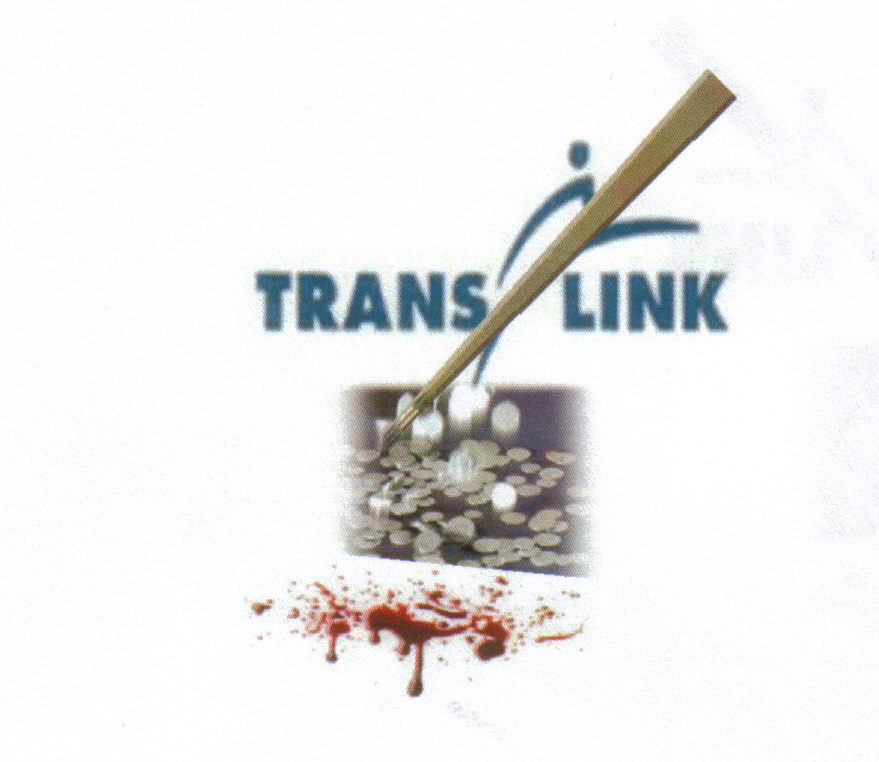
Irked with the Vancouver provinces editorial about Translink and the proposed 2 cent a litre gas tax to fund the Evergreen Line, TransLink's CEO, Ian Jarvis sent an angry letter to the Province.
TransLink's progress
By Ian Jarvis, The Province JulyRead more: http://www.theprovince.com/TransLink+progress/5159297/story.html#ixzz1TE21EMZl
TransLink takes exception to the way in which your editorial of July 22 claims that we should do more with resources that have been entrusted to us. It is true that our total revenues and costs have increased in the past few years, but you neglected to recognize that in turn, we made a significant investment in roads and our transit system during the same period.
The improvements are substantial: the Canada Line went into operation, the Golden Ears Bridge opened, we increased bus service by 19 per cent across the region, we added 48 new SkyTrain vehicles to our fleet and invested significant dollars in other road improvement projects. A more telling comparison would be our cost per revenue passenger, which decreased from $4.04 in 2009 to $3.98 in 2010 in spite of rising fuel costs.
Moving Forward, our regional supplemental plan is based on direct feedback from the public, who have requested more service and increased infrastructure maintenance. Delivering the plan requires additional resources, which are substantial. However, the cost of not continuing to invest means increased congestion, longer commute times, larger GHG emissions and more overcrowding on transit.
Ian Jarvis, CEO, TransLink
What Mr. Jarvis didn't say is that despite the hype and hoopla about the Canada Line, it hasn't taken cars off the road, in fact about 70% of the extra bus service added to Delta was withdrawn after a year because expected ridership did not materialize. Speaking of South Delta, there are three bus routes which run at an hourly or better service which carry in total less than 20 persons a day – why?
We wish we can believe Mr. Jarvis, but TransLink's record on flim-flam is well known, the tall tales that come out of TransLink's 'ivory towers' on Kingsway is breathtaking. For example, TransLink would have us believe that modern LRT can carry only 10,000 persons per hour per direction and streetcars even less, while in Karlsruhe Germany, one route on the city tramway sees a massive capacity of over 40,000 pphpd during peak hours. The transportation authority wasn't boasting about this, rather giving it as an example to relocate the tram route in a subway and rightly so.
TransLink's Broadway rapid transit gong-show is more of the same, dated and arcane planning that doesn't solve transportation problems, rather exacerbates congestion and gridlock and at ever higher prices for the car driver.
I am sorry Mr. Jarvis, your rant has fallen on deaf ears as over a decade of incompetence has made TransLink a laughing stock. Transclunk, as one blog commentator calls the organization, needs to be replaced, by a organization which will design public transportation for both the 21st century and the transit customer. To date, TransLink has done neither.
Broadway rapid transit- Is the SkyTrain subway option a done deal?
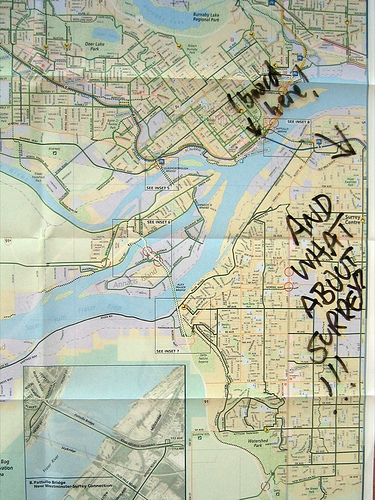
It seems Surrey mayor, Dianne Watts, have a look over her shoulder and see what her counterparts are up to in Vancouver, before she supports a gas tax increase.
It seems a Broadway SkyTrain subway is a done deal and this gas tax money she wants to fund light rail in surrey, will probably not go to fund the stale-dated (N)Evergreen line, but another SkyTrain subway in Vancouver. Any agreement on transit funding must be regarded as a mere scrap of paper that will soon be discarded at the first politically opportune time.
I think it is time for Mayor Watts and the rest of the South Fraser mayors lobby strong and hard for the BC government to cut TransLink in two; those who have SkyTrain and want to continue building with SkyTrain and those who want to build with cheaper transit options.
The refusal of Vancouver politicians to consider modern LRT for Broadway, just confirm that South Fraser taxpayers are regarded as peasants and vassals, country bumpkins, who are nothing more than tax 'milch-cows' to fund Vancouver's ambitious and extremely expensive SkyTrain subway building program.
Vancouver mayoral candidates Push for Broadway tunnel
but business owners, pointing to Cambie Corridor Canada Line experience, fear business loss if subway option is approved.
By Glen Korstrom – Business in Vancouver
Vancouver’s mayoral candidates are pushing for a SkyTrain tunnel link under the Broadway corridor to be the region’s top transit priority once Evergreen Line financing is confirmed.
The proposed link would connect with the Millennium Line and go as far west as Arbutus – a route that will inevitably cause friction given that many Broadway business owners fear any type of tunnel construction along their corridor will kill their enterprise.
TransLink spokesman Ken Hardie told Business in Vancouver that TransLink’s board has yet to determine the top regional priority after the Evergreen Line.
“Everything from Surrey rapid transit to Broadway rapid transit to gondolas going up Burnaby Mountain all fall into the queue,” he said.
Vancouver Mayor Gregor Robertson and his Non-Partisan challenger Susan Anton agree that reducing congestion on the Broadway corridor is vital for the region.
“It’s crucial that we have the Sky-Train technology through the Broadway corridor,” Robertson told BIV in an exclusive interview June 29.
“The growth and population and the traffic challenges in the Broadway corridor are unsustainable, so we’ve got to see the Broadway corridor served by the big pipe.”
Anton described the proposed link as a “regional line with regional importance.”
The Broadway corridor is the second busiest employment centre outside the downtown core, and TransLink estimates that there are 110,000 trips along the Broadway corridor each day.
“In central Broadway, the only way you can manage the number of trips is with SkyTrain technology,” Anton said.
Anton's and Robertson’s mutual belief that SkyTrain is the only viable technology in the Broadway corridor worries business owners and frustrates light-rail advocates. Ray's Beauty school for Hairdressing owner Gina Ray told BIV that she will close her 12-year-old business if regional politicians approve any form of tunnel along Broadway.
She likes the idea of a burrowed tunnel but fears that construction will cause more disruption than authorities say.
“I don’t trust them,” she said. “On Cambie Street there were so many businesses that went bankrupt or had to close. They did not expect to have the cut-and-cover [construction method].”
Indeed, Hazel & Co owner Susan Heyes suffered a drastic drop in customers for her maternity wear store when the Canada Line construction consortium dug a tunnel outside her store.
She lost a B.C. Court of Appeal judgment after she sued to recover $600,000 in damages from the consortium for business losses. Her only hope now is for the Supreme Court of Canada
to agree to hear the case.
The West Broadway Business Improvement Association (WBBIA) officially opposes a tunnel. Its directors have examined TransLink’s seven options for improved transit in the Broadway corridor and decided that at-grade transportation, whether it involves more buses or a light-rail system, is preferable.
“We don’t want a SkyTrain tunnel. Whether it is cut and cover or a bored tunnel doesn't’t matter to us, because bored tunnels take longer and construction would cut off all the east-west traffic on West Broadway for a number of years,” said WBBIA director Donna Dobo, who owns the West Broadway costume store Just Imagine.
Light-rail advocate Malcolm Johnston has been lobbying to build light rail on Broadway for decades. Light rail would not require construction of a tunnel. It would instead run at grade along the existing corridor.
Now part of Rail For The Valley, Johnston spends much of his time lobbying to have light rail in the Fraser Valley. But he still thinks light rail on Broadway is the more practical and a better value than building a subway.
“TransLink’s planning is arcane,” Johnston said. “It’s dated, and they misinform the public. What else can I say? I would’t trust them to build an outhouse.”
Johnston, who is familiar with TransLink’s seven proposals, believes the transportation authority has skewed its figures to make rapid transit appear to be a more viable option than either light rail or buses.
He believes TransLink pulls numbers out of the air, such as its assertion that 110,000 bus trips are made daily in the corridor.
Despite BIV’s repeated requests for details about that figure and estimates, TransLink was unable to provide that data.
“TransLink says SkyTrain attracts more ridership than light rail. This is absolutely unproven,” Johnston said.
“Sit down for this. Light rail has a bigger capacity than SkyTrain. This is contrary to the spin that TransLink has. De facto, a streetcar or even light rail has proven to have higher capacity than a subway unless you build a London-style metro [with multiple lines and longer trains].”
gkorstrom@biv.com
A transit day in the mainstream media
The two Vancouver dailies have offered, surprisingly to, several letters and an editorial about local transit issues.
From the Vancouver Sun, comes a letter from a Mr. Villegas, who seems to know a lot about modern LRT and he is quite correct that a tram would offer a comparable service as a much more expensive SkyTrain light-metro. What is more interesting is that the pro SkyTrain Vancouver Sun printed the letter at all!
http://www.vancouversun.com/opinion/letters/Cities+need+tram+SkyTrain/5136201/story.html
Tri-Cities need a tram, not SkyTrain
By Lewis N. Villegas, Vancouver SunStop the "Evergreen tax" and the lunacy in Port Moody-Coquitlam-Port Coquitlam transit planning. Trans-Link has enough money to build the alternate plan – an Olympic tramstyle system, sleek and modern, just like in Paris or London.
Yet Tri-City leaders want SkyTrain. Why? SkyTrain will blight Port Moody waterfront riding on grade, guarded by barbed-wire fence.
SkyTrain will blight Burquitlam-North Road, where apartment properties will get a new view … SkyTrain elevated track outside their windows, and screeching noise.
On the other hand, Olympic-style trams revitalize corridors they cross: Burquitlam-North Road, will become an "urban village;" St. John's street Port Moody a vibrant heritage district; and Guilford Way a modern, transitoriented neighbourhood.
Tram will deliver twice as many stations as SkyTrain for a fraction of the cost. Walk-on trams are more sustainable than SkyTrain.
Yet, these facts are glossed over as local governments sell density to pay for SkyTrain.
Trams offer the right place, right price tag, and deliver equivalent passenger trips and travel time as SkyTrain.
Lewis N. Villegas
Vancouver
© Copyright (c) The Vancouver Sun
Collecting all fares always made sense
The ProvinceAbout damn time! That's the consistent view of Lower Mainland taxpayers, particularly drivers, to the news that TransLink is finally installing faregates.
For years, TransLink officials made the ridiculous claim that the loss of revenue from using the honour system for fare payments was so little it didn't justify the high cost of gates.
Almost no one agreed, particularly since nearly every other transit system in the world has used faregates for decades.
In explaining the new initiative yesterday, TransLink said it estimates it loses $7.1 million a year to fare cheats. But since TransLink took in more than $413 million in fares last year, that suggests they believe just one in 60 riders cheats. The real losses are likely higher. In 2008, Finance Minister Kevin Falcon suggested they were $40 million a year.
One also hopes that at $171 million for 400 turnstiles, Trans-Link is getting good value. At $427,000 per gate, that's about the price of a two-bedroom condo in Yaletown.
With transit responsible for 60 per cent of TransLink's expenses (compared to nine per cent spent on roads), and motorists providing 36 to 68 per cent of revenue (depending on how much property tax one connects to motorists), it's important that all fares be collected – as they should have been for years.
© Copyright (c) The Province
Sickening waste
By Roy Speers, The ProvinceSo, $170 million for SkyTrain gates, let me think about this . . . are you kidding me?
Maybe we should look at who is going to be set for life after this project. No, wait! Then the government would have to spend another half a million for a study.
Gas taxes, HST, huge pensions for bureaucrats, wasteful overspending – am I the only one getting sick to the stomach of the mismanagement of our money?
Roy Speers, Surrey
© Copyright (c) The ProvinceLesson from London's Tube might have saved us $170m
By Ruth Enns, The Province
TransLink stumbles on
Liz James, who writes for the North Shore news, is one of the very few columnists that who has both researched the regional transit issue and understands transit issues.
As TransLink CEO Ian Jervis, is busy shilling for the very expensive Evergreen Line, he refuses to look a cheaper alternatives, such as light rail. SkyTrain has become a vast bureaucratic pork barrel, where the taxpayer is expected to anti up at Translink's whim. A time of reckoning is soon coming as the regional taxpayer is maxed out and well heeled bureaucrats and politicians just don't seem to comprehend the financial stress the regional taxpayer is under.
If the Evergreen Line is built, Zwei wagers that TransLink will split in two, those with SkyTrain and those who do not, then let the fun begin as the financial realities of a metro only building policy.
No more blood in this stone
"The Mayors' Council and the province have agreed on a funding formula for the plan that includes a 2 cent per litre increase in motor vehicle taxes in April 2012 plus, by 2013, either a property tax increase averaging about $23 per year for the average Metro Vancouver residential property, or a new long-term source of funding."
July 6 TransLink
media release
HOW SWEET IS THAT?
Five days after the latest carbon tax increase, West Vancouver Mayor Pam Goldsmith-Jones announced the decision of the Mayors' Council on Regional Transportation as to how TransLink will fund the region's share of costs for its updated Moving Forward plan – one of two options it first presented in November 2010.
Not a word about regional inequity or value for dollars.
No hint of walking the talk on last year's complaint by City of North Vancouver Mayor Darrell Mussatto to News reporter Benjamin Alldritt that TransLink proposed to build "a Lamborghini" on the Evergreen route "when a Chevy will do."
At the time, North Shore mayors said they opposed the proposals "unequivocally" because both options were based on the premise that funding would come from increased property taxes, and because, as Mussatto told Alldritt, the way the province had structured TransLink was "an absolute disaster."
Sad to say time and the beguiling nature of B.C.
Transportation Minister Blair Lekstrom found a way to cure regional intransigence. So much so that, following council's July 6 announcement, Lekstrom said he wanted "to thank all of the people involved – the Mayors' Council and in particular the chair, Mayor Richard Walton, and vice-chair Mayor Pamela Goldsmith-Jones for all of their efforts."
How nice; the triumvirate must have been bowled over by all that talk of Moving Forward with the increased SeaBus service promised in the more expensive of the two proposals.
I've lost count: How many times have we heard that?
Does anyone really believe that once property taxes have been raided, or vehicle levies are imposed to fund decisions of the disastrous structure, they will ever be rescinded? If so, I have a few – tolled – bridges to sell.
Talking of tolls: If ever TransLink decides to run with the latest chatter and tolls every bridge in the region, any North Shore resident who works beyond the Port Mann Bridge will pay two tolls, each way.
In the first three weeks of this month we have been hit with the HST referendum package, the latest carbon-tax hike and increased Hydro rates.
Fortis BC wants more out of our pockets, and BC Ferries CEO David Hahn and two members of his board of directors think it's OK to ding us nearly $750,000 a year for their pensions.
Small comfort to hear that the me-too ICBC folks are "working hard" to avoid the rate increases it is asking the B.C. Utilities Commission to approve; because we know how that story will end.
Goldsmith-Jones and her Mayors' Council colleagues would do well to heed the public sentiment behind the premier's on-again support for the gas-tax increase, and tell Minister Lekstrom there is no more blood in the stone.
The council should then hire an unbiased transportation consultant to figure out how the longpromised Evergreen Line can be built with the "money we have on the table," to quote an off-again-on-again former city mayor.
If the council and/or TransLink will not do it, North Shore residents might consider mimicking their Fraser Valley neighbours and pool some resources to hire their own apolitical transportation consultant to cost out the transit alternatives. My $100 is on the table to get the ball rolling.
Given the will, a report could be ready before Christmas.
As for funding:
If drivers left their vehicles at home TransLink would collapse. It has insufficient rolling stock to cope with the influx of passengers and without gas-tax revenues, TransLink and the province would drown in red ink.
Update:
News came down last Friday that some Metro directors are standing up to the TransLink board. Annoyed at having their agenda and property-tax ability slammed against the wall by a 62-page report they received only 24 hours before the meeting, Metro chairwoman, Delta Mayor Lois Jackson, led the charge by asking for more time to consider the report.
TransLink CEO Ian Jarvis refused, saying the document had to be presented to the TransLink commissioner by July 31.
So who is in charge – the elected politicians who tax us, or dictatorial provincial appointees?
rimco@shaw.ca
Are modern streetcars the future?
Due to the small backlash to TransLink’s tax increases that were announced on Wednesday, the pro-LRT and pro-streetcar groups were out today promoting surface rail on CTV News as being cheaper and a fitting tribute to a past.Ai??Ai??
http://www.ctvbc.ctv.ca/servlet/an/local/CTVNews/20110708/bc_interurban_tram_110708/20110708/
Are modern streetcars the future?
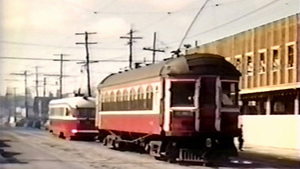
Vancouver’s interurban train system — the first in Canada — started in 1910, and went from the downtown core into south Vancouver, Richmond, Burnaby, New Westminster, Surrey and Langley.
By: ctvbc.ca
Date: Friday Jul. 8, 2011 5:20 PM PT
With too many cars on the road and gas prices creeping higher, the streetcar system of years past may be the answer for Vancouver’s transportation future.
A UBC professor of landscape architecture thinks the time is now or never for Metro Vancouver to implement a low-cost, environmentally friendly and modern streetcar system.
“The problem for TransLink is they already have a 50-year commitment to the system of buses on the one hand and SkyTrain on the other, so I sympathize. It’s very difficult for them to insert a whole new technology, but I think if we don’t do it during this decade, we will never do it and we’ll miss an opportunity,” Patrick Condon told CTV News.
In the midst of a proposed two-cent gas tax increase to fund the high-priced Evergreen Line, Condon believes the streetcar system would be a better value as well.
“SkyTrain along the corridor here is $200 million per kilometre,” he said, “whereas the modern tram could be put in for $20 million per kilometre.”
At one time the streets of Vancouver were interlaced with streetcar lines, and even the outlying communities all the way out to Chilliwack were connected by passenger rail.
Surrey Mayor Dianne Watts wants streetcars to connect her community to decrease traffic congestion, and says more buses alone won’t do it.
“If all you’re going to do is add buses and continually add buses, which we’ve had in Surreyai??i??you’re congesting the roadways,” she said.
But TransLink says rapid transit is more of a priority than community rail these days.
“Everybody wants to go fast; it’s just a matter of how much you want to spend,” Condon said.
With a report from CTV British Columbia’s Lisa Rossington
http://forum.skyscraperpage.com/showthread.php?t=139991&page=416Ai??
|
Although I understand that there are places that can use LRT or streetcar, it’s also worth noting the tradeoffs between types that prevent their use elsewhere. For major corridors like Evergreen and Broadway, road space for LRT and streetcar tracks and stations is already limited without removing / narrowing critical road lanes and sidewalks and thereby causing traffic jams on nearby important roads; alternatively, property acquisition costs to widen these corridors may be prohibitively expensive. In addition, the surface running of trains can make them significantly more prone to disruption from traffic jams, accidents, bad car drivers and jaywalkers unless more protection is added at extra cost. Due to their interactions with the street, trains will also need drivers and cannot follow each other as closely, which reduces the frequency, speed, and resulting capacity at which the network can be run. As you can see, the story in the end is not as rosy: streetcars and LRT may look nice and be cheap to build on paper, but they offer few other compelling advantages that would recommend their use in more demanding situations. This is why Vancouver plans to only run its streetcars around downtown on side streets as a complement to the SkyTrain system. Again, I’m not completely against streetcars or LRT, but there are reasons why SkyTrain, despite being more expensive, has been built alongside many major corridors, and there are also reasons why TransLink and its advisers don’t easily bend to desires and instead have to look through all the options before recommending any system type for any given route. |
The comments on the above Skyscraper forumAi??panel & the public responsesAi??in theAi??link to theAi??CTV article are pretty typical of theAi??illthought outAi??comments published by the retarded inhabitants of metro Vancouver.
- Ai??…he should take a look at the cost of the new West LRT Calgary is currently building. Almost the same cost at Skytrain….but with higher ongoing costs because it requires drivers.Yes, LRT is cheap if the rail is already there, and if you don’t need to build elevated or underground segments. However, that is not practical in a city unless it runs along highways that already intersect cities (ie….the efficient parts of Calgary’s LRT). The rest of the LRT in Calgary is a nightmare…..look at downtown.
- …the surface running of trains can make them significantly more prone to disruption from traffic jams, accidents, bad car drivers and jaywalkers unless more protection is added at extra cost. Due to their interactions with the street, trains will also need drivers and cannot follow each other as closely, which reduces the frequency, speed, and resulting capacity at which the network can be run.
The Delta Optimist gets it!

Somebody gets it!
By building light metro, in the guise of SkyTrain, the taxpayer has spent three to four times more money than a light rail alternative, to get three rather mediocre transit lines. Cut through the hype and hoopla, SkyTrain and the Canada Line's ridership is made up mostly of recycled bus passengers (TransLink claims 80% of SkyTrain's ridership first take a bus to the metro), forced to transfer from bus to metro. There is very little evidence of a modal shift from car to metro and the promised 200,000 car trips a day taken off the road by the Canada line has been quietly forgotten.
We just cant afford doing the same thing over and over again and expect a different result.
The region, and that includes TransLink, must rethink how it plans for 'rail' transit and discard the many LRT myths that it has created. The taxpayer is maxed out and I am glad to see this editorial reflecting fiscal reality, instead of repeating TransLink's flim-flam.
We need to invest in transit we can afford.
Look at the big transit picture
Everyone wants it, but nobody wants to pay for it.
And so goes the perpetual debate over funding transit in Greater Vancouver, with the Evergreen Line and other improvements proposed by TransLink being the latest to undergo the third degree from regional politicians last week.
All the usual cards – vehicle levies, increased taxes on gas, property and parking, tolls and higher fares – are thrown on the table as disagreements continue over how to finance the projects most agree we desperately require.
Make no mistake, whatever is chosen will be unpopular, but if we deem the infrastructure necessary, we need to find a way to pay for it. Having said that, rather than seeking out the fairest, or least politically damaging, way to extract more from overburdened taxpayers, shouldn't greater attention be paid to the rapid transit system itself?
The biggest problem I see is the province and the transportation authority are married to the prohibitively expensive SkyTrain system, which has expanded about as quickly as a supermodel's waistline. It's taken a quarter-century to build three lines on a network that doesn't even begin to service the whole region, keeping thousands and thousands of people in their vehicles every day because rapid transit doesn't come anywhere close to their homes.
I know I've beaten on this issue before, but if we continue to hitch our wagon to SkyTrain, it's inevitable that we're going to have these funding predicament discussions for decades to come.
That's not to say any type of rapid transit comes cheaply, but the one we've got ourselves wed to is one we don't appear to be able to afford. If we could, we'd have a heck of a lot more track in place than what we do after 25 years.
Rather than trying to extract more blood from a stone in this and what will undoubtedly be subsequent debates over transit funding, I think Lower Mainland mayors, as well as our provincial politicians in Victoria, need to take a critical look at the bigger picture.
SkyTrain is fantastic if you're lucky enough to live near it, but this elevated system is just too expensive. If we keep up the current pace, and it appears we might not have the cash flow to even do that, we'd add a whopping three lines in the next quarter century.
Fifty years in and we're not even close to bringing rapid transit to all areas of the Lower Mainland? That hardly seems like the road, elevated or not, we should be following.
http://www.delta-optimist.com/news/Look+transit+picture/5107185/story.html



Recent Comments