Copenhagen to get light-rail network by 2020: transport ministry

LRT in Copenhagen
One welcomes the announcement that Copenhagen will have its first tram/LRT line built by 2020.
In several transit oriented blogs, much has been made that the Danish capital, Copenhagen, opted to have a driverless metro, instead of light rail. Automatic metro is the way of the future, was the clarion call by many people supporting light-metro instead of LRT. Upon closer investigation with those who were nearer to the situation revealed that, like Vancouver, automatic light-metro was supported by city fathers, who thought a metro brought a modern image to the city. The same arguments are used to defend SkyTrain light metro system here in Vancouver as well.
SkyTrain's adherents, supported by TransLink's ramping up construction costs for LRT, ignoring the much greater cost for an automatic metro, claimed light-metro was better than LRT because it was faster than light rail, cheaper to operate than light rail and didn't disrupt auto traffic. Sadly none of which is really true.
TransLink's game has always been to design LRT to be an inferior , etc. than SkyTrain.
Meanwhile back in Copenhagen, financial reality soon took hold as it was soon found that the shiny new metro did not attract the motorist from the car and to build a metro network that would offer an alternative to the car would be cost prohibitive. Sadly the same lesson still remains unlearned by the provincial government and TransLink, who continuing doing the same thing over and over again, each time expecting different and much happier results.
The following is what one gets with about the same amount of money for 'rail' transit investment in Copenhagen. (From the Traffic group Letbaner. dk)
- For the same cost of a metro, one can build up to six light rail lines.
- There is a possibility of private finance for LRT, but not for metro.
- Passenger capacity about the same for both modes.
- With LRT there is a 500 metre distance between stops, compared with 1 km. with a metro.
- The light rail system is 30% faster than the buses, but a metro is only 2% faster than LRT.
- With the full build LRT there will about 180 stops compared with only 16 for a metro.
- LRT has a six times better utilization of road space. but with a metro there is no change.
- A LRT system will take 20% to 25% cars off the road, where a metro will take only 1% of cars off the road,
- With LRT, there will be fewer cars and buses on the road, but with a metro, only fewer buses.
One hopes transit sanity will soon happen in the METRO region, but with 'Metro Madness' still in full swing in Vancouver and Victoria, we will get more and more SkyTrain only planning until the local taxpayer is bankrupted.
out &
Copenhagen to get light-rail network by 2020: transport ministry
http://english.peopledaily.com.cn/90001/90777/90853/7425187.html
Denmark will build a light-rail connection around its capital Copenhagen by 2020, at a cost of 723 million U.S. dollars, the Ministry of Transport said Wednesday.
The 28-kilometer-long railway, which will also link some suburban municipalities, will allow rapid, mass transport of commuters around the city, and help reduce traffic congestion.
The project is estimated to cost 3.75 billion Danish kroner (around 723 million U.S. Dollars), with the Danish government contributing 1.5 billion Danish kroner (around 289 million U.S. Dollars), the ministry said in a press statement.
The rest will be paid for by the Capital Region of Denmark, which includes Copenhagen, and 11 suburban municipalities who have all agreed to the project, it added.
Transport Minister Hans Christian Schmidt said the light-rail would "secure a sensible and future-proofed alternative to the car on an otherwise very trafficked area."
The rail is expected to run along Ring 3, a densely-populated stretch of homes and old industrial areas.
In theory, commuters will be able to switch between the light-rail and other existing public transport infrastructure such as buses and overland trains.
Greater Copenhagen, with around 1.2 million inhabitants, is currently served by trains, underground metro rail and buses. Moreover, some 55 percent of the city's population commutes by bicycle everyday.
Detailed proposals:-
http://www.letbaner.dk/docs/Radiallinie-folder3.3-uk.pdf
and
http://orbit.dtu.dk/getResource?recordId=190793&objectId=1&versionId=1
virtual tram ride
By coincidence
Strange thing that, on the same day the RftV blog exposed certain connections with the TransLink board and Simon Fraser University, the TransLink Board pulled the plug of the Univercity cheap transit passes. One wonders if the same treatment will happen to the SFU aerial tramway as well?
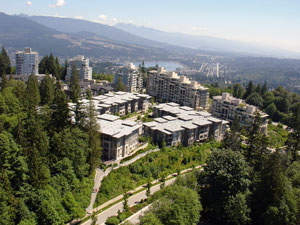
TransLink pulls plug on UniverCity cut-rate pass
TransLink is ending its discounted transit pass program for residents of UniverCity on Burnaby Mountain at the end of this year.
Nearly 900 of the 3,000 residents pay $30 per month for three-zone fare passes under the program, compared to $151 per month for off-the-mountain residents.
The program will end on Dec. 31 and residents have until Jan. 15, 2012, to turn in their passes.
The Community Pass program, unique to UniverCity residents, started in 2006 to boost transit ridership and was largely subsidized by Vancity Financial during its first two years. Since 2008, the program has been jointly subsidized by publicly funded TransLink and the Simon Fraser University Community Trust.
TransLink justified its ongoing subsidies for the residentsai??i?? transit costs by saying Burnaby Mountain is fairly isolated and the cheap fares have helped to fill otherwise empty buses going up and down the mountain after dropping off and collecting students at Simon Fraser.
ai???Itai??i??s based on the fact youai??i??re using capacity that otherwise would be going to waste,ai??? TransLink spokesman Ken Hardie said.
But the TransLink board of directors decided on June 17 to put an end to the subsidization and to cancel the program. An earlier proposal to increase the monthly pass price over two stages, starting with an increase to $46 on Sept. 1, was dismissed.
ai???Recently, TransLink considered an option to increase the pass price in two stages but maintain a portion of the subsidy,ai??? Cathy McLay, CFO and vice-president of financial and corporate services at TransLink, wrote in a letter to residents.
ai???However, in a time when limited funding has made sustaining transit services a challenge, ongoing discounting of the Community Pass cannot be maintained.ai???
Gordon Harris, the trustai??i??s president and chief executive officer, said the trust understands TransLinkai??i??s decision to end the program.
ai???Itai??i??s pretty challenging to provide this kind of transit pass for a single community,ai??? he said.
He said the program had succeeded in its original goal to increase transit use among the mountainai??i??s residents ai??i?? approximately 40 per cent of residents use public transit ai??i?? which is about three times the average in Metro Vancouver.
He said that the community is disappointed by the decision but it should be ai???ready to go without the passai???.
ai???I think people recognize that theyai??i??re living in the larger region of Burnaby and that itai??i??s a community that has benefited a lot in the last five years,ai??? he said. ai???But that was just one of many different programs we launched to become a sustainable community, and now it can stand on its own and people can use transit like everyone else in the region.ai???
http://www.vancouversun.com/TransLink+pulls+plug+UniverCity+rate+pass/5009291/story.html
The Nevergreen Line saga continues
Mayor Trasolini adds his two cents worth in the Evergreen line debate. Nowhere in the letter does he admit that SkyTrain is just too expensive to build and/or that the SkyTrain light-metro system is a dated transit mode, made obsolete by much cheaper and just as effective light rail. Until regional and provincial politicians actually read a book about transit and transit mode, TransLink will stumble from one financial crisis to another.
Mayors’ hands are tied over transit funding

http://www.bclocalnews.com/tri_city_maple_ridge/tricitynews/opinion/letters/123952479.html
The Editor,
In light of MP James Mooreai??i??s admonition that Lower Mainland cities need to provide regional funding in support of the Evergreen Line, it is important to clarify a key fact.
When the provincial government restructured TransLink, it didnai??i??t give the regionai??i??s mayors the power to propose regional funding solutions. The act spells out very strict parameters regarding regional funding for transportation infrastructure.
The act also ties the mayorsai??i?? hands in that funding sources are very narrowly defined. The act includes a detailed approval process that severely limits the mayorsai??i?? role.
The province has given TransLink and a commissioner appointed by the province specific powers relative to the preparation of regional funding proposals (called supplement in the act). Once a supplement has been developed by TransLink and reviewed by the commissioner, only then can the mayors exercise their power to ai???approve or reject any supplement.ai???
Lower Mainland mayors have been given the burden to raise their hand in support of tax increases for regional transportation while bound in the straightjacket of ill-conceived legislation that gives them no influence over TransLinkai??i??s operations and the use of these funds.
Mayor Joe Trasolini, Port Moody
Cutting edge to the cutter’s torch.
What happens to old transportation technology?
It becomes less valuable than scrap!
The Birmingham airport MAGLEV was cutting edge transportation technology in 1984 (two years before the SkyTrain Expo Line opened) but by 1995 was scrapped as obsolete.
This is reminiscent of another cutting edge transportation technology more than a century ago, the atmospheric railway. Touted in the 1840's as a replacement for the new steam railway, a decade later it became but a bad memory for its promoters. The first practical use of the system was on the Dublin and Kingstown Railway's Dalkey Atmospheric Railway between Kingstown (Dún Laoghaire) and Dalkey,  Ireland. This 1.75-mile (2.82 km) line was built by Vignoles and surprisingly operated between 1844 and 1854, only slightly shorter than the eleven year run of the Birmingham Airport MAGLEV. The few other atmospheric railways built barely lasted a year in operation.
The lesson to be learned in this sad tale is that today's 'state of the art' transit system is tomorrow's obsolete transit system, something that TransLink hasn't realized with the automatic proprietary SkyTrain light-metro system.
Birmingham Airport's MAGLEV carriage resold for £100

A magnetic carriage that transported people from Birmingham Airport to its railway station sold for just £100 after a £25,100 eBay bid was not paid.
The airport used a Magnetic Levitation (Maglev) line between 1984 and 1995 before replacing it with cable cars.
The Maglev carriage attracted 35 bids and was sold on the internet auction site eBay in November for £25,100.
The bidder defaulted but Andy Jones from Warwickshire snapped it up and is moving it to his home near Kenilworth.
Mr Jones said: "The Magnetic Levitation Line came out of use back in 1995 and was put to one side by the Birmingham Airport people and at the back end of last year they decided to sell it on eBay.
Maglev memories
"The bidding went up to £25,000 but whoever bought it the deal didn't go through so it went back on eBay again at the start of this year for Help the Heroes and a hospice.
"So I thought I would get things going by putting in an opening bid of £100 and nobody else bid for it.
"As a consequence I've got a five tonne train to get shifted into a field opposite my house and I've now got to find a suitable use for it."
He said he used to be a frequent flyer from Birmingham Airport and remembered riding on the Maglev.
He said: "As a British invention of its day I thought it was absolutely tremendous. It was the forefront of its technology and a high speed Maglev has just been opened up in Shanghai which I think is a direct development of what took place in the old days."
He plans to work with local companies to refurbish it and to install lighting and seating and said he wanted to hear from any groups who thought they could put it to good use.
Metro mayors pitch ideas to keep Evergreen Line from going off the rails
Looks like the regional mayors are trying to save face with the delay in building the Evergreen Line. How about just saying no.
Regional mayors should tell the Minister of Transportation and TransLink this: "If your government compels TransLink to plan and build with the proprietary SkyTrain light-metro system, then your government should pay the full cost of the obsolete SkyTrain light-metro system".
Really, the appalling ignorance shown by regional politicians about SkyTrain and regional transportation has cost the BC taxpayer literally billions of dollars and it is time that they just say no to further Skytrain development.
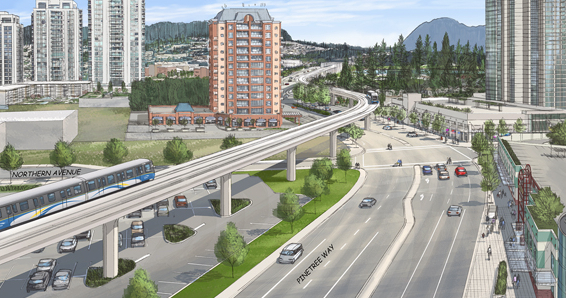
Metro mayors pitch ideas to keep Evergreen Line from going off the rails
By KELLY SINOSKI, Vancouver Sun
Translink and the Interurban
As most of you know, the latest transit proposals from Translink have once again neglected the Interurban. Something had to be said.
Here is my Letter to the Editor, now published in the Surrey Leader and other local papers.
Interurban gets rough ride from TransLink
TransLink’s proposed designs for transit expansion in Surrey are an exercise in behind-the-scenes manipulation.Ten designs are presented, and the public is led to believe that because there are so many options to choose from, TransLink must be listening.
In fact, TransLink has ignored one of the main tenets that experts around the world agree is crucial to building a cost-effective transit network: Utilize existing infrastructure where possible. For Surrey, this means the existing Interurban rail line.
The Interurban line has been the subject of extensive study. Years ago, TransLink itself studied using the corridor for a West Coast Express-style commuter rail system. That study found the corridor to be too narrow and too curvy to be feasible for that type of system. This is not at all surprising, since the Interurban line was originally intended with light rail in mind – the line was designed for small Interurbans, not huge WCE trains.
Since then, the line has been well researched, with numerous studies and technical analyses (viewable at www.railforthevalley.com/studies) all concluding the same thing – that the line has the ability to provide needed light rail for Surrey that is cost-effective and quick to implement.
Not only would Delta and Newton be served by the line, the Interurban would also connect Surrey with Cloverdale, Langley and beyond.
How long must Surrey wait? The Interurban is a valuable piece of the Surrey transit puzzle, but the provincially controlled TransLink continues to turn a blind eye to it, even in the face of expert opinion and the support of Mayor Dianne Watts.
For an organization still struggling to fund the Evergreen Line, now 20 years in the planning, and continuing to beg municipalities for more money, TransLink’s obtuseness on the Interurban is unforgivable.
http://www.bclocalnews.com/surrey_area/surreyleader/opinion/letters/124020899.html
SFU Gondola Update – Ah, the real story emerges
It seems there is interesting political connections with SFU and TransLink, with the gondola project. TransLink Board member, Howard Nemtin, President, Nemtin Consultants Ltd., is also a member of the The SFU Community Corporation board. Could it be that the Trust’s real estate development arm, UniverCity will use the gondola as a sales tool for their development on the mountain; of course paid for by the regional taxpayer through TransLinik?
Other coincidental connections on the SFU Corporation Board include TransLink Board Chair, Nancy Olewiler, who also is the Director of the School of Public Policy in the Faculty of Arts and Social Sciences at Simon Fraser University and a blast from the past, Jane Bird, who is famous for her obfuscation with the Canada Line debacle.
Let us not forget that TransLink subsidizes transit for over 900 Burnaby Mountain residents, with a “community transit pass that gives them unlimited access to the region’s buses and trains for just $30 a month, a perk that seems only to pertain to SFU and its environs.
http://www.railforthevalley.com/wp-admin/post.php?post=5907&action=edit
It seems like again we have foxes in the hen-house, when it comes to the planning for the SFU gondola project and one wonders if the fix is in for a now $120 million (up $50 million from the original $70 million) gondola to SFU.
http://www.univercity.ca/about_us/governance.101.html
http://www.translink.ca/en/About-TransLink/TransLink-Governance-and-Board/Board-of-Directors.aspx
Is the fix in for the SFU gondola?

SFU gondola plan raises concerns in Burnaby
http://www.straight.com/article-399509/vancouver/gondola-plan-raises-concerns-burnaby
The proposed $120-million Burnaby Mountain gondola project poses a dilemma for a group maintaining trails in the environmentally sensitive area.
According to Ron Burton, president of the Burnaby Mountain Biking Association, the construction and operation of a gondola system that would link the Production Way University SkyTrain station to Simon Fraser University could have serious ecological impacts.
They will have to cut and they could cut up Burnaby Mountain in order to put up the gondola and service the towers, Burton, whoa is also a Burnaby school trustee, told the Straight in a phone interview.
Burton pointed out that the gondola infrastructure would slice through the Burnaby Mountain Conservation Area, which includes wetlands, streams, and woods that serve as habitat to various wildlife.
However, Burton noted that the project appears to a make some economic and environmental sense.
According to material put out by TransLink, the gondola system could eliminate 35,000 to 55,000 hours of diesel bus operations going up and down Burnaby Mountain. The transportation authority also claims that the project would save up to two million hours of transit and car travel time by 2021.
Our position is a wait-and-see, Burton said, adding that his organization wants to see more details.
For residents of the Forest Grove community on the lower slopes of Burnaby Mountain, the time has come for action.
Resident Christian Rarinca, a spokesperson for the Citizens Opposing the Gondola, will address members of the Metro Vancouver regional planning committee in a meeting on Friday (June 17).
According to Rarinca, the gondola system would cut across the neighbourhood. They propose to have at rush hour a gondola leaving every 40 seconds, leaving from both sides of Production Way and SFU, which gives us an average of 20 seconds and a gondola will go over our heads, Rarinca told the Straight by phone. It really something that not only destroys the character of the neighbourhood but also it has no benefit for us. The gondola doesn’t stop at Forest Grove to take passengers.
COG’s prepared presentation to the Metro Vancouver planning committee also raises concerns about safety risks. A copy of the paper provided to the Straight by Rarinca states that the construction of towers for the gondola may affect pipelines operated by energy company Kinder Morgan, and this could lead to explosions.
The public has until June 30 to submit comments on the proposed gondola project. TransLink spokesperson Ken Hardie did not return calls from the Straight before deadline.
Appeal Court upholds Canada Line class-action of Cambie Street merchants – From the Vancouver Sun
It seems in BC, justice from the courts depends on the judge presiding over the case and not the law. From the same court of appeal which rejected former Cambie Street merchant Susan Heyes award for ‘nuisance‘ due to Canada line cut-and-cover construction, now upholds a class-action lawsuit by Cambie Street merchants for nuisance for Canada Line cut-and-cover construction. Only in BC you say? Very strange indeed.
It must be noted that no compensation was offered to merchants and businesses along the Canada Line route whose businesses were bankrupted or severely effected by almost four years of cut-and-cover construction. Zwei has yet to find an example where a compensation package has not been offered to merchants affected by transit construction, except for Vancouver that is.
The following comment is from the intrepid Susan Heyes, who has been reduced as a self representative litigant to the Supreme Court of Canada. I for one wish her luck.
ai???But in a ruling released Wednesday, B.C. Court of Appeal Madam Justice Elizabeth Bennett noted that much of Canada Lineai??i??s argument was founded on a finding that there was no nuisance, which she did not accept.ai???
My Application for Leave to Appeal as a self-represented litigant to the Supreme Court of Canada is now filed, and must be heard.
Well done, Elizabeth Bennett. There is hope for justice to prevail at long, long last.
Cheers
Susan
A?Ai??A?
Appeal Court upholds Canada Line class-action of Cambie Street merchants
Photograph by: ian Lindsay, Vancouver Sun Vancouver Sun
VANCOUVER – A class-action lawsuit by Cambie Street merchants over the disruption and nuisance caused by building the Canada Line rapid transit system has been upheld by the B.C. Court of Appeal.
In a ruling released today, three judges of the Appeal Court decided to dismiss an appeal by the builders of the $2-billion line, which runs from downtown Vancouver to the airport.
The question on appeal was whether the lower court judge erred in concluding the claims of businesses and property owners affected by the prolonged construction have common issues that can be resolved in a class-action.
The three-judge appeal panel unanimously ruled that the judge did not err and it is not necessary to consider individual losses in order to determine whether a nuisance was created by the construction of the Canada Line.
“In my view, the chambers judge did not err when he concluded that the class proceeding would advance the litigation in a meaningful way,” Appeal Court Justice Elizabeth Bennett wrote.
“I would not interfere with his conclusion that the class action is the preferable procedure.”
Chief Justice Lance Finch and Justice John Hall both agreed to dismiss the appeal.
The representative plaintiff in the case is Gary Gautam, who ran a business in an area on Cambie Street between 2nd and 25th Avenues known as the “Cambie Village.”
Justice Ian Pitfield decided last February to certify the class-action lawsuit, finding the common allegation is that construction substantially interfered with access to the properties or businesses owned or operated by members of the class.
Construction of the Canada Line was originally proposed as a bored tunnel under Cambie, which was not expected to disrupt businesses in the area, but the builders decided to go with “cut-and-cover” construction, which required a five-storey pit that was loud, dusty and cut off access to businesses.
Construction started in 2005 and lasted until 2009. The Canada Line opened last year before Vancouver hosted the Winter Olympics.
The full judgment is online here: http://bit.ly/jJI337
SkyTrain justifications are way off track
It seems The North Shore News’s Liz James has scored a direct hit with her most recent article andAi??I hope the rest of the Post Media papers pick this up and print it.
BC Transit and now TransLink has made the LRT/SkyTrain debate an idealogicalAi??one and not a debate about what is best for the transit customer. The result is a cacophony of idealogical propaganda from TransLink, the SkyTrain-friendly mainstream media and the provincial government about how fast SkyTrain is; how much more capacity SkyTrain has; how cost effective SkyTrain is; etc., etc. Yet, when it comes to the nuts and bolts with SkyTrain, the mini-metro system is found wanting.
Some unpleasant facts that TransLink keeps hidden from regional politicians.
- SkyTrain is not faster than LRT – it is TransLink that has designed SkyTrain to faster.
- SkyTrain does not have a greater capacity than LRT, it may have done in the 1970’s when it was compared with Toronto’s venerable PCC tramcars, but not with today’s much longer articulated trams, which have effectively tripled the capacity offered without an increase in vehicles.
- SkyTrain does not attract more customers to transit than LRT, in fact the opposite is true, at-grade/on-street LRT has proven to offer a better incentive attracting new customers to transit.
- SkyTrain, despite being driverless, is not cheaper to operate than LRT, in fact SkyTrain costs about 40% moreAi??to operate than comparative LRT lines.
- SkyTrain can cost up to ten times more to install than LRT (20 timesAi??more for TramTrain).
Yet TransLink continues with its anti-LRT planning bias, which has cost the regional taxpayer at least five times more for regional ‘rail’ transit than it should. Planning for more grand SkyTrain mini-metro lines in the region boarders on professional misconduct, by tax and spend bureaucrats and politicians who are locked in a “Tom Swift” era of elevated uranium powered monorails and elevated railways and not the real world which we live today.
Modern LRT, operating on a lawned rights-of-way, making it both user-friendly and non-user friendly.

SkyTrain justifications are way off track
Introduction to Foundational Research Bulletin No. 7, 2009
UBC authors Prof. Patrick M. Condon and Kari Dow were right in 2009 and their data is just as relevant today.
If we were to pick any radius within the boundaries of Metro Vancouver and through the Fraser Valley to Chilliwack, none of our transit routes would exceed international standards for local service.
So why is it that, after 13 years of data that show otherwise, Bowen Island’s Coun. Peter Frinton and other members of the Mayors’ Council are still being told by TransLink that SkyTrain carries more people faster than light rail?
That simply is not true; the misinformation is being force-fed by TransLink to justify the provincial government’s determination to bankrupt the region with SkyTrain.
As Condon and Dow show in their bulletin, the “maximum” and “typical” passenger-carrying capacities of a 90-foot, single articulated light-rail car exceed those of Mark I and Mark II SkyTrain vehicles.
As for speed: for more than 20 years now, light-rail advocate Malcolm Johnston has tried in vain to get TransLink to acknowledge that the functional speed from Points A to B is determined by three things: topography of the route (curves, inclines, etc.), the time-distance separation (headway) between trains, and the number of stops on the route.
Measured on the same track, with the same number of stops, the running speeds of modern light-rail and tram-trains are actually faster than SkyTrain.
Furthermore, the access and boarding speed of light-rail is faster than SkyTrain.
The multi-billion-dollar problems that plague TransLink were created before it was born. They began when Ottawa and Quebec-based Bombardier Inc. persuaded former NDP Premier Glen Clark to stop extolling the benefits of light-rail and to use SkyTrain.
In 1998, when Clark realized the Millennium Line project threatened to become another fast-ferries-style legacy on his books, he downloaded Lower Mainland transit onto the Greater Vancouver Regional District.
A major turning point for the region, TransLink has held municipal taxpayers hostage ever since.
Gordon Campbell himself outlined the crux of TransLink’s problem on October 13, 2000:
“The only reason TransLink needs this extra revenue is because of the higher costs imposed on it by the NDP’s unilateral decision to go ahead with SkyTrain, without any consultation. By imposing SkyTrain, the NDP doubled the cost of rail transit construction, for less service. And now local taxpayers are being forced to pay the price.”
When Pat Jacobsen resigned as TransLink’s second CEO, she was succeeded by Tom Prendergast, who arrived from New Jersey with “over 30 years of experience in transportation operations.”
Prendergast weathered only 15 months before deciding “to take the helm of North America’s largest subway and bus system, New York City Transit Authority,” to quote the TransLink media release.
His parting shot was less diplomatic: “There’s really no impediment,” he said as he discussed transit along Broadway and south of the Fraser River. “It’s overcoming the cultural embracement of SkyTrain that has existed to date.”
Ah, the folly of cultural embracements. Separations after 13 years of entanglement are notoriously expensive and fraught with dissension.
The most believable explanation for TransLink’s determination to ignore the fiscal red flags and to perpetuate the SkyTrain extravagance was provided by Coun. Frinton.
Addressing the possibility that a different technology could be chosen for future transit projects, Frinton wrote, “As to the type of Evergreen Line system, that battle was before my time. . . . There appear to be good arguments for an at-grade light-rail system . . . but because the province has been adamant the system they will fund is the SkyTrain option, at this point I think it best to just get on with it, unless (B.C. Transportation Minister Blair) Lekstrom takes a different view than his predecessors.”
I intend no criticism of Coun. Frinton or his mayors’ council colleagues when I say such passive acceptance of provincial interference is calculated to send me through the roof.
When he appointed the TransLink board, Campbell and his ministers claimed it would take the politics out of regional transit decisions. Then, in answer to citizen complaints that they could not hold the board accountable for in-camera decisions, the Mayors’ Council was given the right to approve or reject board recommendations.
Yet now we have tacit acknowledgement that council members may acquiesce to TransLink’s decision to put a SkyTrain-type Evergreen Line out to bid because that is the only way the province will pay its share of the bill.
They should seek our support for a determined push-back.
The burning question is this: If Victoria, directly or indirectly, is to make the decisions about South Coast regional transit, why in blazes are we paying for the eight other boards, committees and Partnerships B.C. that sit between us and the province?
rimco@shaw.ca
Read more: http://www.nsnews.com/news/SkyTrain+justifications+track/4947237/story.html#ixzz1PM13CKv6
Around Canada
A column published by The National Post says Toronto has a fetish for
streetcars and what the city really needs is more rapid transit subways to
make it a world class urban area. The commentary compares Toronto with London and its Tube system:http://life.nationalpost.com/2011/06/10/kelvin-browne-derailed-by-the-spacehog-streetcar/
Every city with aspirations for greatness insists on good transit, and subways are typically at the top of the wish list – unless it’s Toronto.
We’re burdened with a fetish for streetcars. Visit London and ride the Tube and it’s clear how amateur Toronto is in this department. London is London, of course, a bigger, richer, older city. But this doesn’t excuse Toronto’s transit backwardness, and the squandered millions on dedicated streetcar
lines that make main roads awkward for cars and pedestrians. Ride subways in New York (a bit grungy but efficient), Barcelona and Paris and you wonder where we went wrong. What TTC honcho, mayor or consultant had romantic delusions about streetcars, and inflicted a mode of transit now only popular in second-tier towns and struggling formerly Communist countries?
It’s not only streetcars that have derailed us. There’s our phobia for urban density that has, until recently, made transit less cost efficient; a belief that if we made using cars difficult, people would use transit; and an assumption that bikes could solve our transit deficiencies if streetcars
didn’t.
London’s Tube system is remarkable. The staggering investment being made now to upgrade it prior to the Olympics next year is creating a marvel. Many of the major stations have been rebuilt, most notably St. Pancras, which has had a reported $1-billion investment. Of the 270 stops on the London subway system, most are in good condition, and the ones that aren’t are scheduled
for maintenance. Many of Toronto’s are tawdry by comparison. It’s not all perfect, but it’s easy to get around London on the Tube. Unless you have difficulty with the two or three escalators that take you down to some mineshaft-deep platforms (the underground is really underground), and the
narrowness of the cars (they do feel like tubes), you won’t have an issue
with using transit in London.
London’s transit system helps it be a vital city. Since it’s an old city with narrow streets, it makes it possible for neighbourhoods to be retained because you’re not widening lanes for cars. It also makes it possible for middleclass people to work downtown and commute 30 minutes to an affordable
area, yet not be car-dependant. There are lots of young people on London’s most fashionable streets. I doubt they live there, in the most expensive real estate in the world, but they work and party there, and then take the Tube home. And, yes, they have an “Oyster” card system we haven’t been able
to figure out yet, and The Tube is affordable if you use one. They must be discouraging single-ticket purchase as it is costly.
London’s Tube system expands with efficient buses, new “over ground” rail lines and a commuter train – links that can have you to your country place in Kent in about an hour. Cabs are also part of the system and quite different than the awful experiences you often have in Toronto. London cab
drivers know the city well, and are trained and tested so they do, unlike the cabbie I had last week who didn’t know where a major Toronto intersection was. London cabbies are courteous professionals. Cabs are clean and they have the advantage of being purpose built. No one pretends that regular cars make good cabs.
It’s not too late for us in Toronto. Maybe we’ll transform the King Street streetcar line into a subway and let development intensify along its route. Let’s look to cities that are truly urban for our inspiration, make the enormous and long-term investment in transit that is the prerequisite for future vitality, and discipline the TTC so it stops being an apologist for mediocrity.
“Light rail system nothing new for the capital region
By Jim Hume, Times Colonist, June 12, 2011
It’s “back to the future” in Victoria, the Vancouver Island capital city of the
province of British Columbia. It once had street railway service and now it’s
poised for revival in the form of a $950 million light rail line to link
downtown Victoria with suburban Langford to the west.
I arrived in Victoria in June 1948, just in time to watch the last electric
street car rattle away into the sunset a month later on July 5. With a bit of
luck, I hope to be around when the new breed of tram, hopefully running a little
more silently than its predecessor and now called light rail, rolls down Douglas
Street heading for the western suburbs and – dare we dream? – eventually to the
airport and the Swartz Bay ferry terminal.
If the powers that be can get light rail up and running by 2015, it would mark a
full-circle trip it’s taken 125 years to complete.
Light rail clanked down city streets for the first time on Feb. 22, 1890, the
proud child of the National Electric Tramway and Light Company, a company inspired by none other than Colonist editor David William Higgins. On hand that cool February day were Lt.-Gov. Hugh Nelson and Premier John Robson and a large crowd of civic dignitaries to witness what was one of the most remarkable inventions of the ages – electric power.
Editor Higgins was later to eloquently report in his newspaper that as the
February day folded into a gloomy West Coast evening, “the [tram] cars were
brilliantly illuminated and, filled with passengers, dashed through the streets
in busy metropolitan style, the admiration of all lovers of enterprise,
convenience and progress.” In 2011 we may well smile at such eloquence, but we must remember that what Higgins and others were witnessing was a miracle of the times – with the first electricity-powered public transit vehicle in British
Columbia, proudly ahead of upstart rival cities Vancouver and New Westminster on the mainland.
Vancouver got rolling electrically in June 1890, and New Westminster in October
1891, when the Westminster and Vancouver Tramway company opened its “inter-urban” light rail link through the mostly uninhabited forest and brush
separating the two communities.
But proud though all three cities were to be leaders in the public transit
field, and eager to embrace the latest inventions, they couldn’t weather the
economic downturn that ushered out the 1800s. After just a few years of
operating, all three tramway companies declared bankruptcy and the systems were saved only when Victoria businessman Frank S. Barnard and British financier Robert Horne-Payne reorganized the trio as the Consolidated Railway Company.
That bright moment of salvation took place in 1896 – less than a month before
the disaster of May 26, which saw a street car overloaded with families
celebrating the May 24 holiday plunge from a collapsing Point Ellice Bridge (Bay Street Bridge) into the harbour. Fifty five people died that day, many of them women and children. A coroner’s jury condemned Consolidated for allowing the street car to be overloaded and the city of Victoria for failing to make sure the bridge was safe.
Consolidated declared bankruptcy, but once again emerged under the leadership of Barnard and Horne-Payne as the British Columbia Electric Railway Company, and Vancouver, New Westminster and Victoria were again in the light-rail business with Victoria in expansion mood.
Growth was strong, demand so high that a car construction plant was opened in
New Westminister.
Before that plant got into full operation, the arrival of new street cars was
cause for admiring pride as the Colonist demonstrated when it reported “the new
[tram] car that made its appearance on Fort Street yesterday was a source of
great interest to the travelling public and many were the admiring comments made thereon.” The report went on to praise the new design for keeping two things in mind – “absolute safety and the greatest possible comfort to passengers . the cars are beautifully furnished . the seats being of oak and upholstered in rattan.lights have been placed, one between each two seats to enable passengers to read their newspapers . and there is also at each seat an electric button to call the conductor.”
All very civilized – and all soon to disappear as first the trams gave way to
the bus and the bus to the personal automobile. The streetcar became obsolete and all rail connections (there used to be three) between Victoria and Deep Cove (Sidney) and their original rights of way were allowed to disappear. From our lofty hindsight vantage point, we can only wonder how that was allowed to happen, and consider how wonderful it would be today if we could hop on a
light-rail car downtown and hop off at ferry or air terminals – or any point in
between – a matter of minutes later.
But that day is coming, and if the planners and the politicians get their act
together I might be around to ride on the inaugural run and tell readers how we
“dashed through the streets in busy metropolitan style . lovers of enterprise,
convenience and progress.” Hey, dreams can come true, you know.
British Columbia Electric Railway operated 4-wheel Birneys at Victoria:
http://www.davesrailpix.com/odds/bc/htm/vic07.htm
The system also had larger double-truck cars:
http://www.davesrailpix.com/odds/bc/htm/vic06.htm
One of Victoria’s cars is operational but at Nelson:
http://www.davesrailpix.com/odds/bc/htm/vic12.htm
Here’s a page about the Birney’s preservation:
http://www.nelsonstreetcar.org/nelsonstreetcar.org/Streetcar_400.html
Ai??________________________________
The CPR and Marathon Realty sold off much of this land and made millions in profits
I think you are blaming the wrong people….the E & N railway was supposed to be maintained in perpetuity by the Dunsmuir company and later purchasers in exchange for over 1 million acres of land on the east coast of Vancouver Island. The CPR and Marathon Realty sold off much of this land and made millions in profits all the while ignoring the line and requesting approval for abandonment every few years, showing no profit on the line, etc. until they eventually got approval and then eventually an emotional buyer in the name of our local governments! At least our local treaty group is going after the lands now owned by a timber company. The CPR should not have got away with this so lightly and now we have emotional politicians trying to save the Kinsol trestle and the commuter rail service all under the guise that some tourist out there might like to use it! It’s
too late people, ring the bell, abandon the rail line. For you politicians out there, how about using the transportation budget a little more cleverly and maybe modernly even……commuter train nonsense….even the bus can’t make a go of it!”
http://www2.canada.com/nanaimodailynews/news/story.html?id=c80d7ac8-cb1a-41a4-ae3d-5b60bed9c06b
Walter Cordery: Premier’s E&N idea is lacking
Walter Cordery, The Daily News
Published:Ai??Friday, May 20, 2011
Let’s hope it was just a slip. I’m talking about Premier Christy Clark’s assertion on a televised news report that the proposed Raven Coal Mine in the Comox area “would be a huge source of revenue for the E&N Railway.”
I’m sure that proponents of the Island Corridor Foundation like the Regional District of Nanaimo, the cities of Nanaimo and Parksville and the town of Qualicum Beach, all instrumental in establishing the foundation, found her comment reassuring.
Unfortunately, Clark appears to be more sizzle than substance much like ex-premier Bill Vander Zalm. She also seems to have inherited his penchant from shooting from the lip without knowing what he was talking about.
When it comes to the Raven Mine plan, the railway would have to build a spur line to the proposed site, something the ICF doesn’t have the money for.
Also the company has decided it plans to truck the coal from the mine to Port Alberni. It explains this in its environmental impact statement, saying “trucking has been identified as the preferred option for the transport of coal from the mine site to the port facility.”
The submission goes on to say that a “rail line is not currently technically and economically feasible.”
Not only that but B.C. has yet to determine if the mine’s environmental impact statement can be verified. Raven has yet to receive provincial and federal approval to start operations. And if local opposition to the plan is any indication, that could be a long-time coming. The E&N railway is in need of major repair so how does Clark think it could transport tonnes of coal?
As NDP MLA for Alberni, Pacific Rim Scott Fraser told me: “The Liberals have done nothing to ensure our Island railway remains a viable option for residents, tourists and industry alike.
“The premier’s assertion that a coal mine could somehow help our railway recover from a decade of Liberal neglect is bizarre.”
Unfortunately, I think he’s correct.
Clark’s statement was made while she was talking to residents of the Comox Valley and it appears she believed it was an easy way to score easy political points.
We’ve got an unusable railway line that has shut down the Dayliner’s operations since March 19 and a company that plans to truck its coal to Port Alberni and would need a spur line before it would consider rail. I’ve got to agree with Fraser when he asks: “How will this unapproved coal mine bring huge benefits to the E&N Railway?”
He believes the province must come forward with funding for the ICF in order to persuade Ottawa to contribute to the railway.
If Clark wants to see economic benefits to the E&N, her government is going to have to put some money into it first.



Recent Comments