A letter about light rail, the Vancouver Sun refuses to print.
It is strange that the pro-SkyTrain Vancouver Sun printed an article about the proposed Victoria LRT project, unless the Sun wanted to cool the anti-Evergreen Line, pro-LRT stance taken by many regional mayors, especially mayor Watts of Surrey. The gist of the Victoria story…..
…. is that LRT is also very expensive and that Victoria's regional taxpayers will have to pay up to three times more in taxes to pay for the new LRT.
What is strange, is that the cost per km. to build the Victoria LRT, almost $60 million/km. is almost exactly the same of TransLink's almost $60 million/km.to build a Broadway LRT!
I find it ludicrous that when modern LRT is being built around the world, from between $20 million/km, to $35 million/km. for more deluxe lines, that the cost for LRT is so much higher in BC.
What the Vancouver Sun and Mr. Craig McInnes should be investigating is why BC Transit's and TransLink's costs are two to three times higher than new LRT lines in Europe and the USA!
The following letter was copied to (name withheld on request) Zwei, further questioning the high cost for LRT in Victoria.
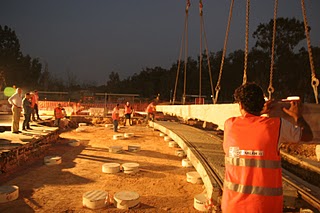
Laying prefabricated track for light rail, greatly reduces the cost of building new lines.
The Editor;
One welcomes the news that Victoria is planning for light rail to ease the regions chronic congestion, but the bad news is that LRT planning in BC is dated and heavily over-engineered, taking the "light" out of light rail.
The problem is simple, local consultants treat LRT as a poor-man's SkyTrain and design it as such, taking away LRT's inherent advantages over the SkyTrain mini-metro system. Today the cost for LRT ranges as low as $5 million/km for the LRT variant TramTrain (LRT which can track-share with regular railways); $15 million/km. for streetcar; and $25 mil/km. for LRT. The cost of almost $60 million/km. for the Victoria LRT is much to high and one wonders if real experts were involved with the LRT planning, the cost of Victoria's LRT would be a fraction of the consultant's cost.
The Rail for the Valley group engaged Leewood Projects of the UK, who have expertise planning for modern LRT, to plan for an affordable LRT option for the old Fraser Valley interurban Line. The cheapest option from Scott Rd. to Chillwack cost $5.02 million/km. and deluxe 'full build' 138 km. option, Vancouver/Richmond to Rosedale cost just under $1 billion or about $7.2 mil/km.!
What is presently being planned for in Victoria is far too expensive and it's time that real experts be brought in to plan for affordable light rail in Victoria.
LRT plan for Victoria has mayor nervously eyeing bill – From the Vancouver Sun
An interesting item in the Vancouver Sun. It should be noted that BC Transit, who oversaw the Victoria light rail planning, has a vested interest in keeping construction costs for LRT high as BC Transit was also the organization thatAi??oversaw the implementation of the first SkyTrain line in Vancouver and their anti-LRT bias has carried on with TransLink.
TransLink, like BC Transit before, has always treated LRT as a poor-man’s SkyTrain and planned it as such, making their version of light rail, expensive and poorly planned. This must change before the Vancouver and Victoria regions will be able to take advantage of modern LRT’s cost effectiveness and general success. Compare Portland’s MAX LRT with Seattle’s SkyTrain clone and it is easy to see that real light rail and not a light-metro clone is the successful way to plan for 21st century transit.
I will add comments to this opinion piece in yellow highlighted italics.
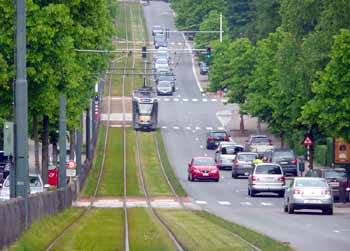
A modern lawned LRT route built on a former road – quality transit, built inexpensively.
Opinion: LRT plan for Victoria has mayor nervously eyeing bill
By -Ai??Craig McInnes, Vancouver Sun
Saanich Mayor Frank Leonard easily concedes he supported light rail over bus service in a motion before council last year.
So why is the mayor of the largest municipality of the 13 that make up the greater Victoria region now warning taxpayers that they need to look askance at light rail after a detailed proposal has finally come down the planning track? Leonard told me that it was an easy decision last year to support a statement of principle that his council would prefer rail to more buses as a solution to what’s known in Victoria as the Colwood crawl. That motion didn’t deal with cost.
Light rail is always a crowdpleaser in principle. Clean, green and even a little bit romantic, the modern versions of street cars have become the symbol of forward-looking urban planning.
This is a triteAi??understatement, modern LRT is the favourite choice of transit planners around the world because it has proven to attract more new customers to transit, especially the motorist from the car, than either bus or metro like SkyTrain. Since SkyTrain was first marketed in the late 1970’s, over 150 new LRT lines have been built or are now under construction around the world, which compares very favourably with onlyAi??7 SkyTrain type systems built in the same time.
Not only does it take cars off the road, but an electrified system does it without the nasty emissions put out by diesel buses. And a single LRT vehicle can ferry twice as many passengers as the biggest bus.
A modern tram or streetcar, both LRT vehicles is as efficient in operation asAi??6 toAi??8 buses or put another way, one tram driver is as efficient as 6 to 8 bus drivers.
Before it gets rolling, however, it has a big hill to climb -the capital cost of building an entirely new system.
The Victoria Regional Rapid Transit Project looked at three options to get more people onto transit between downtown, where the jobs are, and the western communities, where most of the population growth in the capital region is happening.
The consultants picked a light rail system over trying to put more buses on the existing road network and creating a dedicated bus lane. Even though the LRT was the most expensive option, it was judged the best, a recommendation that was subsequently approved by the board of BC Transit, the Crown corporation that owns the bus system in Victoria, the Regional Transit Commission, of which Leonard is a member and the Capital Regional District.
Like the Evergreen Line in Vancouver, however, which everyone seems to like but no one wants to pay for, the proposed 16-kilometre line from downtown Victoria to the western communities comes with a price tag -now estimated at $950 million -that only seems affordable if someone else picks up the bill.
Modern LRT costs anywhere from $6 million/km to build (TramTrain) to about $25 million/km. The cost of $60 million/km. for Victoria’s planned LRT isAi??far too excessive and demonstrates BC Transit’s and TransLink’s anti-LRT bias, where unnecessary costs are added to the project to make it look more expensive than it should be. Old bureaucrats are still very afraid if LRT is built cheaply, that unpleasant questions would be asked about the SkyTrain mini-metro system. In the real world, Victoria’s proposed LRT should not cost more than $25 million/km. to build with a total cost around $400 million.
The estimated tab for the 11-kilometre Evergreen Line at $1.4 billion is higher than for the Victoria line, but the potential ridership is also much higher. The Evergreen Line is anticipating 70,000 trips a day by 2021; the Victoria line would only be generating a third to half that number -if people use it as much as planners hope.
Anticipating is the key word, the Evergreen Line is anticipating 70,000 boardings a day, with many continuing their trip from the present Millennium Line. The real question is: “How many new transit customers will the Evergreen line attract?” This is the same question that TransLink refuses to answer with the Canada Line, where about 90% of its ridership are bus customers now forced to transfer to the Canada Line. Trans Link also admits that at least 80% of the SkyTrain’s ridership first take a bus to the metro. 100,000 boarding a day doesn’t justify the now $2.5 billion price tag of the orphan metro line.
The report recommending the light rail option estimated that if the traditional funding formula were used, under which just over two-thirds of the cost is raised locally, the transit portion of residential taxes would more than triple. “I’m trying to engage taxpayers to pay some attention to this,” Leonard says.
Leonard was part of a delegation from the Regional Transit Authority that met last week with provincial Transportation Minister Blair Lekstrom.
Leonard says Lekstrom told them that the province is still committed to the $14-billion transit plan outlined by then premier Gordon Campbell three years ago, but it depends on local residents coming up with their share of the costs.
As with the Evergreen Line, any carbon taxes that go to pay for a Victoria LRT will be new taxes, above the increases that are already scheduled to go into the province’s general revenues. Leonard is concerned that BC Transit can decide to go ahead with the LRT, without approval from municipalities, and local taxpayers will get stuck with the bill whether or not they favour the transit system.
He raised similar concerns earlier this year when Victoria got new buses that had been purchased for the Olympics, along with increased debt-servicing costs.
Leonard would like to have a plebiscite on the November municipal election ballot, but because of uncertainty about funding he doesn’t know what the question would even be.
As with most projects the provincial government undertakes, there is no requirement that taxpayers approve the Victoria LRT line they will be expected to pay for, either through property taxes or higher gas taxes or more likely a combination of both.
Maybe that should change.
What should change is who you get to plan for LRT in BC and like the Rail for the Valley group, engage real consultants with expertise in modern LRTAi??such asAi??Leewood Projects of the UK and/or LTK from the USA!
Maybe Evergreen Line just isn’t affordable – From the Vancouver Province
Maybe Evergreen Line just isn’t affordable – you think? 11 km. of transit route for over $1.4 billion seems to be just a tad too much especially when it is compared with other transit modes, but Translink has created a lot of spin for the (N)Evergreen Line and it would be truly embarrassing for them if the project were to be mothballed. Certainly transit planners in Vancouver would smile, as it would mean their cherished $4 billion Broadway/UBC subway would be a step closer to reality and we all know that subways built in Vancouver will be affordable because subways will make Vancouver a coveted ‘world class city’!
The debate to build subways has been around a long time.

The Province
BC’s TransLink taking taxpayers for a ride – North Shore News
It seems Ms. James now joins the Georgia Straight's Charlie Smith, with her knowledge on regional transit issues and one hopes other commentators get up to speed on the subject of transit as well.
Yes, TransLink and the provincial government are taking taxpayers for a ride and have done so since 1980 when the then Bill Bennett Social Credit provincial government forced the proprietary SkyTrain mini-metro on the region. There is no logic why we continually build with SkyTrain and only plan for light metro, even when SkyTrain was just too expensive to build for the Canada Line, TransLink and the provincial government foisted a $2.5 billion truncated heavy-rail metro in its stead, hiding its real costs with a very questionable P-3 partnership with SNC Lavalin.
Zwei doesn't see any change in planning direction, with both the present Christy Clark Liberal government, nor with the Adrian Dix lead NDP, who are both fixated on the SkyTrain Evergreen Line. That TransLink's business case for the (N)Evergreen Line is full of holes, as exposed by US transit expert Gerald Fox, is quietly brushed aside as even more grand SkyTrain metro lines are being planned for by provincial and regional bureaucrats.
History is full of examples of hugely expensive metro projects bankrupting their promoters; in Europe in the 1980's, there was about 100 km of uncompleted subway tunnels for phantom metro lines that had run out of money. the Charleroi pre-metro system in Belgium still has a uncompleted metro line with three quarters of the route having track signals and stations installed, which has never seen a train or passenger in revenue operation!
The Evergreen Line debate is a line drawn in the sand, with the taxpayer wanting better 'rail' transit but not wanting to see exorbitant tax increases to fund gold-plated metro lines. As it stands, many of the regional politicians are just too weak to take on the SkyTrain Establishment and their tax and spend ways.
If affordable transit is wanted, then its time to say adiós to SkyTrain.
Though this cartoon is 13 years old, it shows that nothing has changed in the Vancouver METRO Region.

BC's TransLink taking taxpayers for a ride
By Liz James, Special To North Shore News
"In the future, I am open to considering using the carbon tax to support regional initiatives, such as public transit. If we go this route, we must ensure that the allocation of carbon tax revenue respects regions and communities so that one region is not subsidizing investments in another."
Premier Christy Clark, May 6, 2011
How many questions can be raised in 49 words?
Premier Christy Clark believes regions and communities should be respected enough that one is not required to subsidize another.
Does that mean residents of the North Shore, Delta and the Fraser Valley will no longer have to fore go transit solutions as they subsidize multi-billion-dollar investments for Vancouver-centric SkyTrain?
What other initiatives would crowd TransLink for a share of carbon tax revenues?
How far away is our future? Will it only arrive after we have paid $1.4 billion-plus for the oft-delayed Evergreen Line?
And, speaking of Evergreen, who will have the last say? Will it be the premier or B.C. Transportation Minister Blair Lekstrom, who just last week told the legislature that although the province wants to work with the TransLink Mayors' Council, he does not want "to leave a grey area to think that if they don't come up with their $400 million, there's another $400 million from the federal or provincial government. There just isn't."
That sounds like a subsidize-or-else ultimatum to me.
The premier made no mention of the commitment she signed onto in 2001, namely that a BC Liberal government would "require taxpayer approval by regional referendums prior to authorization of any new type of TransLink tax or levy."
Perhaps the Mayors' Council will suggest it might be politic of her to honour that promise.
Because, in addition to the watchful eye of regional transportation commissioner Martin Crilly, TransLink's curtailed spending, particularly its capital spending, warrants a more thorough examination than the agency has ever received in its 13-year history.
At one point in his 2010 report on TransLink's 2009 Funding Stabilization Supplemental Plan, Crilly said: "Part of the Commission's role is to be skeptical. Is TransLink changing its deliverables so as to make its job less difficult?"
TransLink's "job" was to deliver projects and services, as promised, in return for 10 years of fare increases and the higher fuel and parking taxes approved by the Mayors' Council.
The examination might begin by asking how many chiefs TransLink needs.
Once an integral component of the provincial BC Transit system, TransLink must now answer to no less than nine drivers – Crilly; its own BC Liberal-appointed board; the federal and provincial governments; Partnerships BC and the corporations it favours; the Metro Vancouver board, the Mayors' Council and, with the least say of all, municipal councils.
The individuals who make up those groups have access to the most qualified of local and international transportation professionals. Yet decisions about our Lower Mainland transportation system have been largely political — and ruthlessly expensive as a result.
To justify those decisions, we have been consistently misled for more than ten years.
Snowed under by misinformation that claims passenger capacity and speed superiority of SkyTrain over light-rail (to be discussed next week), we continue to pay billions more than necessary for regional transit.
In their 2009 Foundational Research Bulletin No. 7, UBC professor Patrick Condon and Kari Dow confirmed that in total dollar cost per passenger-mile, SkyTrain and bus rapid transit far outstrip six alternative modes of transport.
In 2009 U.S. dollars the numbers were:
SkyTrain — $2.66
Bus rapid transit — $2.01
Light-rail transit — $1.68
Trolley-bus — $1.62
Diesel bus — $1.59
Ford Explorer — $1.35
Modern streetcar — $1.22
Toyota Prius — $0.90
Simply put, we are paying 58 per cent more for SkyTrain than we would for LRT.
And we still have not been told the extent to which capital, operating and, most seriously, the debt-servicing costs of our three rapid transit lines are bedeviling attempts to keep TransLink finances on the rails.
And again with regard to Evergreen: Reached for his comment, Bowen Island councillor and Mayors' Council member Peter Frinton wrote, "Lekstrom is absolutely correct that the primary reason for the delay is the funding gap, and that it is the local government portion — the $400 million — that is the primary missing piece."
Primary because, as Frinton added, "there is a putative $200 million extra needed as well."
So how are regional taxpayers to come up with what Port Moody Mayor Joe Trasolini asserts is their moral obligation?
Frinton believes "some kind of road pricing is the only real viable alternative to increased property taxation."
"What the mayors primarily want from the province," he explained, "is an assurance that ICBC would collect some form of road taxation, if that was approved by the Mayors' Council."
But that is a new type of tax that would require a referendum, right?
There is an easier answer: The premier could repay our $478 million — the first installment of a total $778 million — that the Campbell Liberals heisted from ICBC in order to pad its own general revenues account.
Problem solved?
rimco@shaw.ca
Rail for the Valley
An Interesting video on U-Tube Rail for the Valley well worth watching about rail in the Fraser Valley.

LRT for Dummies – I hope Clark and Dix read this!
From the Atlantic.
Infographic: Light Rail Transit for Dummies
Jun 2 2011
It's a subject that's sparked quite a bit of heated discussion, both in our own offices here at the Watergate and in homes across America. President Obama and his team have promised millions to transform our country's rail system, but several Republican governors have rejected federal funds outright, arguing that we shouldn't be spending more money on a form of transportation that consistently loses money. But "light and high speed rail transportation," when done right, "have the potential to revolutionize urban environments where traffic and pollution are at an all time high," according to the Crisp Green blog, which presents this infographic designed to sway undecided readers in favor of the issue.
The data presented in this graphic are focused around Waterloo, a small city in Ontario, Canada, where Snapsort, the company responsible for the graphic's construction, is based. While not all of the numbers can be applied to any region where light rail is being considered, they do provide a clear look at how trains can alter the transportation options in an urban environment.
Infographics are always a bit of a hodgepodge of statistics culled from a variety of sources. Here, we sort through the clutter and pull out some of our favorite facts and figures:
- LRT will get more people to their destination, faster, and in a more comfortable setting. In Waterloo, the full standing capacity of the proposed light rail trains is 450, compares to only 75 for the buses currently being used.
- The light rail system in Waterloo would cost more to build — and leave residents with a higher tax contribution — but is projected to last three times longer than a bus transit system.
- "The more cities sprawl outward, the more we damage the environment and our health," said David Suzuki. "We need to design communities so that the people who live in them use their cars less and have a much lower impact on the environment, and a better quality of life in return."

The Great TransLink Rip-Off
Zwei doesn't have a problem with discounted bus passes, but they must be available to all. Having deep discounted bus passes available only to a select few is an insult to transit customer and an insult to the taxpayer, especially if TransLink is demanding more money from the regional taxpayer to fund its grand metro schemes because the transit authority claims it doesn't have the money.
This begs the question; "Is TransLink's chronic peak hour over crowding on its bus and metro routes caused by a mass of deep discounted transit passes?"
This is not a foolish or frivolous question, but an economic one; why should a small portion of regular transit customers get a heavily subsidized transit pass that is unavailable to the rest of us?
Zwei lives in South Delta, which TransLink operates three hourly or better bus routes that carry fewer than 20 people a day in total, why then doesn't TransLink offer deep discounted, $30.00 a month, transit passes to South Delta residents for "using capacity that otherwise would be going to waste"?
The transit rah-rah crowd, especially those who expect the taxpayer to pay their fare will be upset at any thought of them paying full fare, but why should certain segments of the population get a free ride on our regional transit system. This is especially true when the provincial government is mulling over adding a second gas tax to the region, to pay for TransLink's dated and ill-thought transit plans.
If TransLink is ever to get its financial house in order and actually operate a fiscally responsible transit system, it must take a serious look of offering deep discounted travel passes to select groups, lest full fare patrons of the transit system give up in disgust and go back using the car instead.
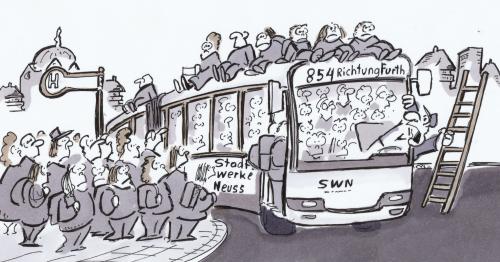
Are cheap transit passes adding to TransLink's chronic overcrowding?
Metro taxpayers foot bill for transit passes
The Great BC Carbon Tax Hoax
Ha, ha, ha; the Liberal carbon tax hoax is now exposed.
With much hype and hoopla, the BC Liberal government imposed a carbon tax on METRO Vancouver residents and with full support of the mainstream media, those who questioned the new BC carbon tax were derided as anti environmental, car loving zealots.
Those who questioned that the carbon tax was not a real carbon tax because tax revenue went into general revenue and not earmarked for carbon reducing transit initiatives like better transit, were given equal treatment. The carbon tax is good for you was the refrain from the higher purpose persons who sang in unison with the BC Liberals.
Well now, it seems our first carbon tax wasn't really a carbon tax at all and a second carbon tax is being mused by Premier Christie Clark is to pay for regional transit.
This poses a question, what was the first so-called carbon tax is in reality? A gas tax silly and now comes the real carbon tax!
The only people smiling about the proposed Liberal carbon tax are gas station owners in Blaine and Bellingham.

Metro Vancouver could be saddled with second carbon tax
As Predicted – Evergreen Line faces another yearA?ai??i??ai???s delay and uncertain future
Another prediction from Zwei has come to pass, The Evergreen or locally called Nevergreen SkyTrain line is in serious trouble.
The truth of the matter is that for $1.4 billion dollars, the Evergreen line would attract very few new transit customers and virtually no motorists to the transit system. Every time problems with the Evergreen Line is in the press, Zwei would like like to remind all that American transit expert, Gerald Fox, shredded the Evergreen Line’s business case.
http://railforthevalley.wordpress.com/2008/12/26/can-translinks-business-cases-be-trusted/
The SkyTrain lobby will wail a great song of discontent, but the reality is and is especially true of the Evergreen Line, the costs of the plannedAi??light metro far outweigh any real benefits the metro would bring to the Tri-City region.
The real solution is of course light rail, but it is not going to happen as far too many politicians, bureaucrats, academics, and media typesAi??have ridden the SkyTrain mini-metro’s coattails for far too long and the embarrassment of admitting that their favourite transit mode and the transportation philosophy that comes with it, had a Ai??foundationAi??of clay. The regionalAi??taxpayer isAi??taxed to the max and unless any increases in transit taxations has a direct inprovementAi??on the local taxpayer and not for gold-plated metros for someone else, I think TransLink will have to make do with what it has.
Real change will only happen, when real democracy happens at TransLink and the people have a real say in how transit is funded and built and until then, the Evergreen line will remain a political promise only.
AdiA?s, the Nevergreen line? As of now it is on life-support.
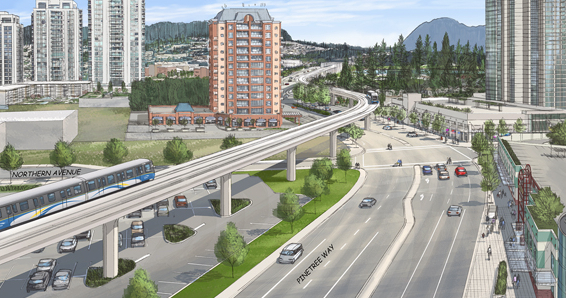
Evergreen Line faces another yearai??i??s delay and uncertain future
It could be canceled outright because of a funding dispute between the province and Metro Vancouver mayors
By KELLY SINOSKI AND JONATHAN FOWLIE, Vancouver Sun
The cost of dithering: Bellevue rail delayed to 2023 – Is This Deja Vu?
Just like TransLink and the METRO region, Seattle’s transit authority is dithering on transit planning, which in the end, delays implementation and drives up the costs of new transit schemes.
The problem in Seattle is almost the same as in Vancouver and this is no coincidence as Seattle’s planners have used Vancouver as a model for urban redevelopment and transit planning. The result is telling, as Seattle has built a multi billion hybrid light metro/rail line which is doing very poorly in attracting new ridership. What Seattle’s planners have ignored or did not understand that 80% of SkyTrain’s ridership is forced onto the metro byAi??compelling bus riders to transfer from bus to metro to complete their journey. The SkyTrain metro itself has done a very poor job in attracting new ridership, especially when one considersAi??over $8 billion has been spent on Vancouver’s three metro lines!
Like Vancouver, Seattle’s powers that be refuse to rethink their transit planning and continue on with their costly ‘metro madness’ planning and like Vancouver, dithering on new transit lines will hobbleAi??transit expansion in both regions. In Vancouver, highway expansion is happening at an ever growing pace, while in Seattle, a multi billion dollar highwayAi??tunnel is replacing a rather decrepit elevated highway. In both cases much cheaper light rail was never considered due to the high cost of both cities light metro lines.
The result of this metro madness is very expensive metro lines, high taxes and a growing reliance on the car as the transit system becomes non-user friendly as money earmarked for future transit lines is spent on a few politically and bureaucratically prestigious mini-metro lines..
When light rail is grade separated, either on viaduct or in a subway
it becomes a light metro, loosing much of the advantages of light rail.

The cost of dithering: Bellevue rail delayed to 2023
Posted by Mike Lindblom
Sound Transit executives broke the bad news Thursday the agency has already lost a year delivering the East Link rail line to Bellevue and Overlake — so the trains won’t arrive until at least 2022, or even 2023 if the route includes a tunnel in downtown Bellevue.
When voters approved a 15-year suburban rail construction plan in 2008, the agency planned to reach Bellevue in 2020 and reach Overlake, near the Microsoft world headquarters, a year later.
But the regional transit agency and the Bellevue city government have failed to agree yet on two crucial issues:
* Bellevue wants a tunnel from about Main Street to Northeast Sixth Street, so trains don’t cross busy east-west streets and worsen the traffic congestion. A tunnel costs about $276 million more than a surface line, raising the total to $2.8 billion ($2010). Sound Transit offered to pay $100 million while Bellevue supposedly would raise $158 million, nearly closing the gap.
* A slim 4-3 City Council majority has wanted the trackway to run along I-405 south of downtown, instead of a shorter route alongside the Surrey Downs neighborhood. Sound Transit engineers think the freeway route would add at least $150 million, mainly because it requires more spans of elevated trackway.
Ric Ilgenfritz, Sound Transit project development director, said talks are productive about tunnel cost-sharing, except that Bellevue won’t finish a deal unless the sides agree on the southern approach route.
To some extent, government officials brought this problem on themselves. Intent on winning the 2008 election, the transit board under then-Chairman Greg Nickels avoided a public, bare-knuckle debate about the downtown and southern routes. Sound Transit staff clearly said thenthat cost estimates assumed an elevated line, so tunneling would require more funds.



Recent Comments