It will be interesting in Quebec, comparing Montreal’s REM light-metro to Quebec city’s European style tram.
Quebec City Tramway details
The Quebec City $4 billion tramway project will involve the construction of tunnel sections and 36 stations, five of which will be underground. The proposal includes incorporating an integrated system of tramways, electric tram bus and reserved bus lanes.
It will have two routes. The first route will be a 23km-long line, connecting Charlesbourg to Cap-Rouge via Parliament Hill. Approximately 3.5km of the tramway will pass through underground sections. The 17km-long second route will be a fully electrified bus rapid transit (BRT) line served by articulated buses.
40 years of SkyTrain light-metro has created a transit planning vacuum in Metro Vancouver, where a world acknowledged affordable and user-friendly transit mode has not only been ignored by local politicians and planners, the tram has been actively libeled and slandered by the mainstream media, Metro Vancouver politicians and brueacrarts and the provincial government.
What is so sad, despite the federal, provincial and civic politcal spin of fake news and alternative facts, if we do not accept the modern tram has a proven tool to fight global warming, we (society) will ,loose the fight to minimize environmental damage to the region.
Until our local politicians grow up and stop playing trains, by planning $3 billion subways to nowhere or a $3.95 billion line into a bog, the environmental fight will be over.
Unlike Calgary or Edmonton, which operate 1980’s LRT, which was based on German Stadtbahn; Ottawa, where its new LRT is more like a light metro than LRT; or Toronto where LRT is planned as a light metro and only now is the streetcar system being updated with modern trams; Quebec is planning a tramway.
Quebec’s new tramway will be a showcase of a 21st century tramway operation and philiosophy.
Quebec City tramway finally gets green light as province gives unconditional approval
Mayor Bruno Marchand says project is needed to reduce emissions, improve mobility
CBC News ·
Quebec City’s tramway project has been in development for years, but the CAQ government had threatened to put conditions on its approval. (Ville de Québec)
The Legault government has finally authorized Quebec City to launch its long-delayed tramway project and Mayor Bruno Marchand says he’s ready to get started.
“We have many environmental issues that we have to address. And we have to deliver solutions. This is a great solution,” Marchand said on Wednesday after cabinet approved decrees without any of the conditions that had previously been discussed.
Quebec Transport Minister François Bonnardel said it is now up to the city’s mayor to better communicate the benefits of the tramway project in order to convince as many citizens as possible.
And that’s just what Marchand began that very afternoon, touting the importance of a project that he said will help carry the city into a more environmentally friendly future by reducing emissions and improving mobility.
“It’s the best way to respond to some of the big environmental challenges that we face,” he said.
Premier François Legault and his government had voiced concerns over the project’s potential impact on vehicular traffic.
The government demanded better social acceptability before authorizing the tramway and was at first saying the adoption of related ministerial decrees would be conditional on the development of shared streets along the route.
Last month, Marchand harshly criticized the Legault government for standing in the way of the project.
Quebec Transport Minister François Bonnardel said on Wednesday that it is now up to Quebec City’s mayor to get support from residents for the tramway project. (Radio-Canada)
Then on Tuesday, Legault said he was not going to interfere in the powers of the city by remodeling “the layout and the detail.”
“It will be up to the mayor of Quebec City to decide how he does that,” he told reporters.
Bonnardel said regardless of the unconditional decrees, the provincial government still expects a certain level of social acceptability for the project. However, he declined to delve further into what that means.
“Everyone can have their own definition of social acceptability. I have mine. I will keep it to myself,” he said.
Clash between city, province
This should put an end to the first head-to-head clash between the Coalition Avenir Québec government and Quebec City’s new mayor, but Marchand says that’s not what’s important.
“It’s not about the ego of the mayor. It’s all about the citizens of Quebec,” said Marchand, who expects the tramway to be up and running on city streets by 2028.
Quebec City Mayor Bruno Marchand says the tramway project is key to improving mobility and addressing urgent environmental concerns. (Radio-Canada)
He said this project is about carrying the city into the future, getting motorists off the road and reducing emissions in a time when environmental issues are urgent.
“We have to act and we have to act quickly,” he said.
The project, which will cost at least $4 billion, has been delayed by several months, and the Liberal opposition said last week that each day of delay costs the project $274,000.
The Quebec government’s decision has unlocked $124 million to begin preparations. Construction is to start in the summer of 2023.
Labeaume’s dream passed down to new mayor
Quebec City’s tramway was longtime mayor Régis Labeaume’s passion project but was passed on to Marchand when Labeaume retired from municipal politics in November 2021.
Quebec City and the province have gone back and forth for years on the proposed route — whether it would be part of an eventual third link between Quebec City and Lévis, and how the tramway would be incorporated into existing city infrastructure.
They finally reached a verbal agreement on a redesign just over a year ago, and since then, it’s just been a matter of these final decrees.
Now with the project moving forward, Marchand said he has work to do when it comes to convincing all Quebec City residents of the project’s importance.
Some residents will never see it his way, he said, but he is determined to make a difference for future generations.
“We greatly appreciate today that we are able to move forward on time to deliver according to the deadlines that we have promised,” Marchand said.
with files from Radio-Canada, La Canadienne presse and CBC’s Émilie Warren
Good old Zwei is getting on and he does not observe the transit system as he once did, but with Covid in mind and “huff and puff” coming from regional mayors about transit, good old Zwei will make an observation; “The Tesla and the current tranche of electric cars now roaming metro Vancouver’s streets and roads, make current billion dollar investments obsolete before the first “yard” of cement is poured for light-metro expansion.
The cheapest electric cars for sale in Canada range between $38,000 to $45,000, not including government grants and exemptions. The electric car is well within the grasp of the middle class. This will only cascade more cars in metro Vancouver.
Watching a main arterial during rush hour the other day, I saw a parade of electric cars pass by, most with one occupant, but when the express buses went by only 5 to 10 seats were filled.
One wonders if those driving electric cars were former transit customers?
My neighbour just purchased an electric car for family use but his daughter is now commuting to UBC from Delta as “it is much faster and safer”; according to him.
“Before with the bus, she had a 2 hour commute with two transfers and that was only if she made the transfer connection on time. It made late night travel dangerous and even longer as buses sometimes did not run to schedule. with the car she can be at UBC in an hour.”
South Delta and South Surrey used to have a direct express bus service to downtown Vancouver, but with the opening of the Canada line and a secret deal inked between the province of BC and TransLink with the operating concessionaires, SNC lavalin and the Caisse du Depot, that all South Fraser bus routes must terminate at Bridgeport Station to forcibly transfer bus customers to the Canada line light metro.
Predicted ridership did not materialize and despite politcal hype and hoopla, the Canada line did not attract the all important driver from the car.
Provincial government meddling with the transit system, slowly making it into a social service rather operating transit as a business, has further degraded the the transit system.
The 8-lane tunnel, replacing the perfectly good Massey Tunnel is testament of TransLink’s complete failure in providing a user friendly bus service South of the Fraser as the major highway expansion associated with the new tunnel is designed to accommodate more cars.
A quote from Facebook sums up the transit problem:
I live in Mt Pleasant and a few years ago my work moved to Delta from East Van. I lasted about 8 months on transit; 3 buses and 1 Skytrain in the hodgepodge of a system, until I ended up getting my first electric car because the commute was so vile. Does anyone who has any say in transit here actually use it?
Who knew, indeed.
From my observations, it seems the electric car has trumped TransLink for those commuting South of the Fraser and makes me wonder if the current multi billion SkyTrain light metro expansion is just flushing transit money down the toilet.
I guess Mass Transit was hard up for a story and I would have given this story a miss, being a technical paper. Except, the last paragraph is a first class example of bureaucratic baffle gab, so typical of TransLink and well worth someone’s six figured salary!
“Building on our extensive 30-plus-year experience, starting from a demonstration project, to being one of the longest automated systems in the world, we generally have an idea of what hasn’t provided value,” added Geoff Morbey, BCRTC’s director of railway infrastructure. “This knowledge is very helpful as we transition from our previous reactive maintenance methodologies, to one that entails a holistic asset management approach, balancing between the life cycle of the assets, the state of good repair and the overall customer experience.”
The Expo Line was not a demonstration project, the Social Credit government forced the GVRD and BC Transit to build with ALRT operating on the Expo Line.
You will get SkyTrain whether you like it or not was the refrain from the social Credit and the also with the NDP, with their flip flop from LRT to light metro, for what became the Millennium Line.
My question as always been and yet always unanswered by those in power:
If SkyTrain is so good, why has no one copied Vancouver’s transit planning and its exclusive use of light metro?
Maintenance teams are taking a holistic asset management approach toward the rail system and balancing asset life cycle, the state of good repair and the overall customer experience.
SkyTrain, Vancouver’s iconic rail transit system, is a system in motion. Since the opening of the original Expo Line, named and timed to coincide with the 1986 World Exposition on Transportation and Communication (Expo 86), SkyTrain, which moves more than 115 million commuters per year pre-COVID-19, has been a story of expansion and growth, and the growing pains that come with it.
Zwei replies: As there is no independent audit of ridership, the 115 million commuters claim is questionable.
A modern system when it opened in 1986, unforeseen wheel and rail wear issues started to appear shortly after startup. A few years of trial and error and hard-won development of innovative rail profile grinding and wheel re-truing programs, along with the introduction of newly developed friction modifiers, normalized wear and stabilized the system. All was good. Unfortunately, as often happens on transit systems, competing priorities and cost reductions led to a lapse in SkyTrain’s focus on rail maintenance practices.
Zwei replies: During Expo 86, wheel wear was so bad the the wheels had to be air freighted, to keep the mini-metro in operation.
SkyTrain is maintained and operated by British Columbia Rapid Transit Company (BCRTC) as part of TransLink, Metro Vancouver’s transportation authority, and is relatively new as urban transit systems go. The 30-km (18.6-mile) Expo Line opened in 1986 and added extensions in the 1990s. The 20-km (12.4-mile) Millennium Line was added in 2002 and the 11-km (6.8-mile) Evergreen extension in 2016. All told, the system is comprised of 121 kilometers (75.2 miles) of standard-gauge, double-track utilizing 115-pound rail with an assortment of resilient rail fasteners on concrete slab track and fully automated train control (GoA4). The system has 39 stations and operates up to 21 hours per day, seven days a week. Most of the system is built on elevated guideway—hence the name SkyTrain –but there are also approximately 18 kilometers (11.2 miles) of underground and at-grade track. The maximum normal operating speed is 80 km/h (approximately 50 mph).
Zwei replies: Commercial speed of SkyTrain is around 42 kph, 80 kph is the maximum speed the train can travel.
Three generations of rolling stock — MK I vehicles built by Urban Transportation Development Corporation Ltd. (UTDC) and MK II and MK III vehicles built by Bombardier (before it was acquired by Alstom) — operate in two-, four- and six-car sets, depending on the line. Vehicles are driven by a linear induction propulsion system with two linear induction motors mounted on the underside of each vehicle 10 mm above the reaction rail, which is installed between the running rails. The wheels do not generate tractive effort. Electricity for the propulsion system is delivered via power rails mounted on the inside of the guideway parapet walls. Solid steel, high-conicity wheels are mounted on self-steering bogies, which are unique in North America.
Zwei replies: The self steering bogies are a huge maintenance problem, an inherent problem that creates higher maintenance costs.
“The steerable bogies can handle very tight curvature with minimal flange contact, so there is very little gauge-face rail wear in curves. This allows BCRTC to use a single rail profile for tangents and curves on the system,” said Matt Doyle, TransLink director of Project Management. “The downside is that we see corrugation and related noise and ride quality issues.”
In addition to corrugation, wear-related issues resurfaced with the capacity expansion for the 2010 Winter Olympics SkyTrain added 48 new cars, representing 24 additional trains — a 20 percent increase in traffic — to the system.
“I don’t think we fully appreciated the impact that the higher frequency service would have on the system, specifically its effect on the rail,” Doyle said.
Zwei replies: Really, the more trains run, the more wear and tear on the system and the more maintenance needed. This is sort of Transit 101 for beginners.
By 2014, the wear and tear from millions of service kilometers manifested itself in rail surface shelling and spalling, noise-generating corrugation and, more significantly, a couple “reportable” rail defects that required intervention — clear indications to management that it was losing the fight.
Zwei replies: These problems were well known in the early 1990’s.
“The system was degrading quicker than we could maintain it,” Doyle said.
Concerned that further degradation of the rail surface could lead to replacing significant amounts of rail if this trend wasn’t addressed more effectively, Doyle, who was BCTRC’s director of railway infrastructure at the time, brought in Advanced Rail Management (ARM) to conduct a comprehensive assessment of rail and wheel conditions throughout the system.
Immediately evident during ARM’s initial inspection and assessment was a broad wheel/rail contact band, indicting a high degree of wheel/rail conformality that contributed to the development and growth of rolling contact fatigue and corrugation, which in turn led to further deterioration and excessive wheel/rail-generated noise on the system.
Zwei replies: the rail corrugations have been an ongoing problem since the light metro opened. Noise complaints from late night grinding and higher maintenance costs, tended to restrict rail grinding, until it was essential to do it.
“The precise operation of SkyTrain’s Automated Train Operation (ATO) system, which ensures that trains accelerate and decelerate at the exact same locations when coming into and leaving stations, tends to generate corrugation on the system, especially on the older, softer rail on the original Expo Line,” said ARM Director of Projects and Business Development Mark Reimer.
Zwei replies: Bombardier Inc. is no longer supporting the CityFlow ATC used.
The most significant type of defect observed was the formation of squats, which are created by high wheel/rail creep forces that stress the rail material just below the surface, producing shelling that results in material breaking out from the rail surface.
“A lot of damage occurred in high-impact areas, such as turnouts,” Reimer said.
Following the assessment, the first order of business was to conduct a corrective grinding program to remove the surface damage and as many defects as possible (some of the shells were too deep to be removed by grinding). The next order of business was to concurrently re-apply the target rail profile, which is designed to perform with SkyTrain’s custom wheel profiles and work as a wheel/rail system.
Ramped up rail grinding
While BCRTC regularly operates an in-house eight-stone switch and crossing grinder, it alone is not sufficient to address the amount of maintenance required of the rail on the system. SkyTrain contracted ARM, which brought in Loram Maintenance of Way, Inc., which operates an eight-stone production grinder with higher horsepower motors, to perform the initial corrective grind (and the subsequent annual grinding program of approximately 40 shifts per year) under the direction of an ARM grinding specialist.
The initial corrective grind focused on the Expo Line, which had the oldest and softest rail on the system and needed the most attention. This was followed by the Millennium and the newer Evergreen lines. With the most serious rail surface damage addressed by the initial corrective grind, BCRTC and ARM directed their efforts toward getting the system into a maintenance mode and ultimately into a preventive mode of grinding. A critical aspect of the ongoing program is to fully utilize the available work windows to maximize productivity.
“Effective contract grinding requires a collaborative effort,” said Peeter Vesik, BCRTC asset integration project manager, who, in his former role as technical analyst in the Rail Maintenance Division, coordinated the contract and in-house grinding programs over the past five years. “We know that grinding is not cheap. We’re always looking for ways to gain efficiency by trying different methods, speeds and stones to complete as much work per shift as possible to maximize our maintenance windows”
Zwei replies: The continual rail grinding drives up maintenance costs.
In addition to managing the nightly grinding effort to ensure that all defects that can be removed are removed and that the target profile and the desired contact band are returned to spec, ARM also advises BCRTC on which segments of track are most effectively covered by the contract grinder and which are best addressed by the in-house grinder. The in-house grinder currently completes 60 to 70 kilometers (37.3 to 43.5 miles) of maintenance grinding per year.
“ARM is really good at listening to us about our needs and finding solutions to problems,” Vesik said. “They track their own grinding progress on a daily basis and provide detailed reporting through their ARMapp software, which also tracks the locations and number of passes and segments completed by our own in-house grinding.”
BCRTC has learned over the years to make the most of the grinding effort by single tracking — grinding on one track while operating revenue trains on the other — where possible. Instead of starting work at 1:00 a.m., as was typically the case, grinding now starts at 11:00 p.m. Single tracking enables BCRTC to better utilize its maintenance windows while still providing sufficient service during hours in which ridership is traditionally lower.
“When your track windows are only two- to three-hours long, the extra grinding time allows us to effectively double the work window. That’s huge,” Vesik said.
Zwei replies: Now we know why the system cannot run 24/7.
BCRTC has also learned to strategically stage the grinding equipment when parking it for the night so that it’s in position to make the most of the available window the following night.
“We make sure that a fuel truck can access the location, grinding stones can be replaced and other daily maintenance can be performed. We do this to minimize non-productive time because every minute of grind time is valuable,” he said.
BCRTC’s “bang-for-the-buck” productivity metric is track meters completed per shift. In each year since 2018, the contracted grinder has incrementally increased the average of completed track meters per shift, from 1,560 track meters per shift in 2018 to 2,007 track meters per shift in 2021. In addition to its dollars-and-cents calculation, the productivity metric also provides a snapshot of the overall rail condition on the system.
“The number of grinding passes required to restore or maintain rail is directly related to its condition,” Vesik said. “The need for fewer passes is an indicator that not only is the rail health improving, but that we are heading toward a preventative state, the goal of all railways.”
“There were some growing pains,” Doyle noted, but added that “we’re now transitioning from a corrective to a preventive grinding program and a state of continuous improvement. We have the ability to maintain our rail (and wheels) to an acceptable level, but we’re looking at how to make that more efficient and more responsive.”
Toward that end, SkyTrain is currently planning to replace its in-house grinders. Increased in-house capacity will enable BCRTC to advance its preventative grind program and balance grinding capacity with future line extensions on the horizon.
Noise: A condition indicator
With the rail surface condition well in hand, BCRTC was able to direct energy and resources toward another high-priority, high-profile issue — one that all rail transit systems face to varying degrees: noise. Specifically, wheel/rail-generated noise.
As a system that operates primarily on an elevated guideway near businesses and densely populated residential communities in Vancouver’s packed urban environment, noise is a genuine problem. And controlling it is a real challenge. But having successfully addressed one formidable challenge, the BCRTC engineering/maintenance team rolled up their sleeves to tackle another.
“Arresting wear and degradation was our problem, but we’ve moved beyond that,” Doyle said. “Noise is now our priority.”
“We don’t just want to mask noise or put a band-aid on the problem,” Vesik added, “We want to address the root cause.”
BCRTC determined that addressing — and ultimately reducing — wheel/rail-generated noise, which can exceed 90 decibels (dBA) on some parts the system, would not only benefit riders and neighbors near the tracks, , it could also serve as a bellwether of improving or degrading track conditions, since noise can be an indicator of track condition.
“Although noise isn’t necessarily a direct indicator of poor condition, we can use noise and impact vibration to home in on locations that may require maintenance,” Vesik said. “We can also look at the assets in these locations to see if we need to improve the materials, like using harder rail or a friction modifier, to reduce corrugation and increase the interval required for maintenance.”
While viewing asset management through a noise lens can be effective from a maintenance perspective, it also makes sense from a business perspective, Vesik says.
“Controlling noise helps improve the state of good repair and extends asset life. Looked at the other way, improving the state of good repair will likely improve ride quality and reduce noise and the number of residents’ complaints,” he explained.
“If we can control the noise to acceptable levels,” Doyle added, “we can be confident that the system is in a state of good repair.”
Since SkyTrain is not regulated by the U.S. Federal Transit Administration, BCRTC refers to a state of good repair as an engineering standard, rather than a legal or regulatory standard.
Zwei replies: And here is a massive problem, without a legal standard, TransLink can claim anything they wish and hide it under it being an “engineering problem”!
“Our goal is 100 percent asset performance when performing scheduled maintenance and being able to predict the end of the useful life of an asset and having a plan to replace it,” Vesik said.
With that in mind, TransLink commissioned a study in 2018 to assess noise on the SkyTrain system and recommend ways to deal with it. The initial report recommended looking into the feasibility and effectiveness of six noise-mitigation measures:
— Improvements to switch maintenance practices
— Investigation of harder rail steel
— Re-introduction of friction modifiers to improve long-term rail condition
— Improvements to rail grinding practices
— Installation of rail dampers to reduce noise radiated from the rails
— Development of guidelines for new residential developments near SkyTrain
BCRTC and its consultant SLR Consulting spent two years investigating these noise-mitigation measures. In each, BCRTC performed in-track prototype testing.
“We weren’t just investigating a theory,” Vesik said. “We collected data from actual field investigations into each of these measures to prove that they were, indeed, effective.”
For switch maintenance, for example, BCRTC replaced switches and monitored and compared impact levels to those from the previous installation to see if it could reduce and maintain a low-impact level. Investigation showed that replacing worn switches reduced noise levels by at least 10 dBA and possibly more. As a result, BCRTC implemented a program to replace turnouts that are approaching the end of their designed service life. On average, 10 of the 123 turnouts on the system will be replaced per year.
Rail dampers installed in areas with corrugated track reduced noise levels by up to six dBA. BCRTC is planning to use rail dampers to treat a total of 3.2 km (approximately two miles) of track in areas where residents are exposed to high noise levels and where other noise mitigation measures may not be effective.
For the friction management tests, BCRTC installed a wayside top-of-rail friction modifier system and monitored its performance for six months.
“We used the data collected at the site to measure friction levels and their effect on rail corrugation and noise with respect to a dry rail baseline,” said Vesik.
Data has also shown that the need for maintenance grinding correlates well to rail hardness. The softer 260-Brinnell (Bhn) rail that was laid when the Expo Line was built in the 1980s tends to corrugate and flatten out and lose its profile faster than harder 350-Bhn to 370-Bhn rails that are being installed on the system today.
“We found that while high-strength rail will still corrugate, we can extend the grinding cycles because it doesn’t corrugate as quickly,” Vesik told delegates at the annual Rail Transit Wheel/Rail Interaction conference in 2021.
The use of 370-Bhn replacement rail is expected to reduce noise levels by five dBA on the Expo Line.
BCRTC has also developed guidelines for acoustic assessment and design of new residential developments along the SkyTrain lines.
“The new development guidelines encourage and provide guidance to city planners and developers to design buildings around the transit system appropriately, and ensure dwellings are comfortable” Vesik said. “We’re working on the things that we can control, such as source noise, but designers also must be responsible.”
“Building on our extensive 30-plus-year experience, starting from a demonstration project, to being one of the longest automated systems in the world, we generally have an idea of what hasn’t provided value,” added Geoff Morbey, BCRTC’s director of railway infrastructure. “This knowledge is very helpful as we transition from our previous reactive maintenance methodologies, to one that entails a holistic asset management approach, balancing between the life cycle of the assets, the state of good repair and the overall customer experience.”
Today, building light metro is a grift simply because for about the same amount of money one could build a heavy rail metro with four times the capacity or build a lot more light rail, with, you guessed it, having more capacity!
Toronto’s Transit commission’s Accelerated Rapid Transit Study (ARTS) found that the then new proprietary ICTS system (the first brand name of what we erroneously call SkyTrain, which was changed to ALRT for sale to Vancouver) was not a good investment:
“ICTS costs anything up to ten times as much as a conventional light-rail line to install, for about the same capacity; or put another way, ICTS costs more than a heavy-rail subway, with four times its capacity.”
When politicians buy into this sort of grift, they cannot escape it for fear of very pointed questions why they want to. Instead they continue digging a financial hole for themselves that grows larger with every questionable project.
“Oh, what a tangled web we weave, when first we practice to deceive!” (Sir Walter Scott, 1808)
Vancouver’s SkyTrain light-metro is a prime example; internationally it is seen as obsolete; a curious historical transit footnote. Not in Metro Vancouver, as it is seen as “world class” or “state of the art” and politicians keep planning and building more, hoping that this time it will do as advertised!
Doing the same thing over and over, expecting different results has not worked well in metro Vancouver’s transit planning.
REM is a clone of the Canada Line “faux” P-3 and like the Canada line, will under perform, but financially, it will be a windfall to the Caisse du Depot, the concessionaire of the light metro system. The Caisse du Depot also happens to be one of the concessionaires with the Canada line P-3, along side of SNC Lavalin!
The following memo is from RftV’s friend in Ottawa, Haveacow on today’s post.
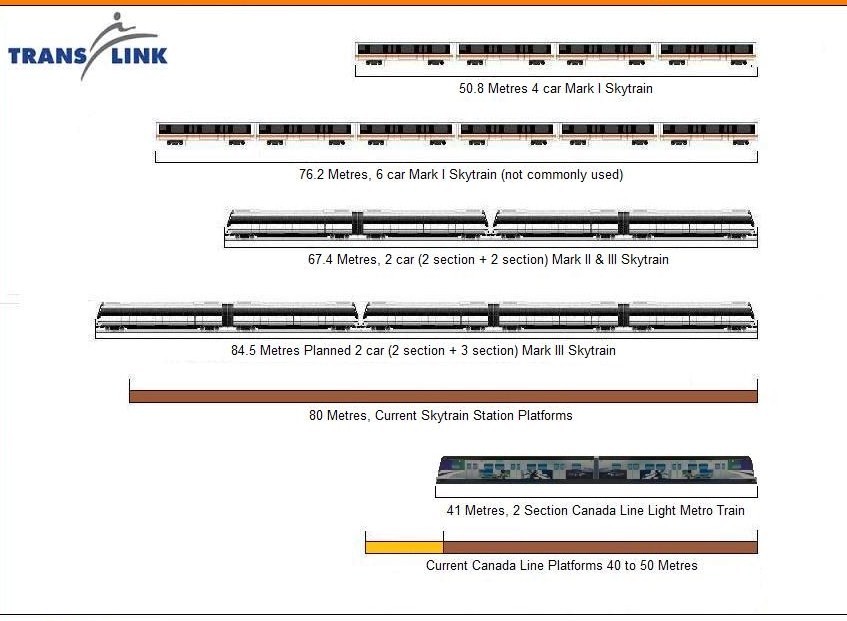
I always tell people that even though the REM is called an LRT Network it really isn’t its an LRT, its actually a Light Metro Network similar to Vancouver’s Skytrain Network. The term LRT in this case is used as marketing name not legal description of a rail based transportation system. The Alstom trainsets being used aren’t LRV,s (Light Rail Vehicles) but are shorter versions of the trainsets being used on Sydney Australia’s brand new, Heavy Rail or full scale Metro Network.
I then tell them what an LRT actually is as defined by Transport Canada. This is a generalized definition from the three page official document that is used. LRT or Light Rail Transit is a rail transport technology that uses electric or diesel powered rail vehicles similar to but usually larger than a traditional streetcar, that generally operates on its own physical segregated ROW (rail right of way), although it can legally operate in mixed traffic as well, if needed.
This ROW can be in a median or curb lane of a road, like a streetcar (where physically segregated ROW’s are preferred), or in a private ROW beside a roadway. It can also be operated on above grade ROW (Like the Skytrain) or in a bellow grade ROW or tunnel.
Stations should be anywhere from 400 metres to 2 km apart and can be as basic as a standard bus stop and don’t have to be expensive or elaborate multi-story structures. The length of the station platform as with any rail system, can limit the length of the LRV (Light Rail Vehicle) Trainset and thus the network’s overall theoretical and practical passenger carrying capacity.
When the ROW travels on a surface roadway, intersections can be crossed with traffic signal preemption systems that favor the rail line over the vehicle traffic or with standard traffic lane blocking railway crossing gates. Both systems can also be used in tandem with each other.
Whereas, Light Metro Systems can’t legally operate in roadways and thus they generally have higher capital costs because the ROW must be on a completely private, at grade path, totally separated and physically segregated from any roadway or intersection. Above grade or below grade tunnels are often prefered ROW’s for Light Metros.
Due to technological and operational limitations, stations should be no closer than 800 metres apart, which is similar to full scale Metro Networks and can be up to 4 to 5 km away (sometimes longer). In practicality operations, it has been found that these individual lines should not exceed 40 km in length in most cases, due to travel time limitations and capital cost issues.
The $10-billion REM de l’Est light rail project for east end Montreal is in jeopardy after a new report from the regional agency responsible for transit planning, the Autorité régionale de transport métropolitain (ARTM), raised several red flags — including the fact that the massive project simply wouldn’t attract many new riders.
But the provincial minister responsible for Montreal, Chantal Rouleau, waved off the concerns Tuesday and insisted the project will go forward.
The REM de l’Est is being built by CDPQ Infra, a subsidiary of Quebec’s pension fund manager the Caisse de dépôt et placement du Québec. It would add 32 kilometres of track and 23 new stations to an area of Montreal traditionally underserved by public transit.
The ARTM says the whole venture is misguided.
“The project will result in only a modest number of new public transit users,” the ARTM said in a statement released Tuesday.
The ARTM report says much of the new project’s ridership would be drawn from existing public transit services such as the Metro green line. (Ivanoh Demers)
“It poses a problematic competition issue with two major services of the existing structural network (the Metro green line and the Mascouche commuter train), which will still have residual capacity by 2031,” the statement continued.
The ARTM report identified a number of potential shortcomings with the project, including:
Only 12 per cent of trips would be destined for downtown.
During peak periods, 94 per cent of ridership would simply be drawn from existing services (Metro green line and Mascouche commuter train).
Increased annual maintenance costs as high as $98 million would be borne by the city and neighbouring municipalities, creating a “significant impact” for public transit funding.
Concerns about integrating REM infrastructure into the urban landscape.
“In light of the findings that emerge, we suggest considering options that would allow for a project better anchored in a principle of complementarity with the existing public transit ecosystem,” Benoît Gendron, head of the ARTM, said in a statement.
Report could scuttle project
The report puts the entire project in jeopardy.
“The support of the City of Montreal and the ARTM is necessary for the REM de l’Est project to proceed, CDPQ Infra will not impose it,” CDPQ Infra said in a statement emailed to CBC Tuesday.
“We were informed last Thursday of the existence of this report, and will take the time to respond point by point,” the statement said.
CDPQ Infra says The REM de l’Est will reach parts of Montreal that have long been underserved by public transit, allowing residents to reach downtown faster than by car or bus. (Submitted by CDPQ Infra)
The city said in a statement Tuesday it would also take time to study the report.
Mayor Valérie Plante met with CDPQ Infra and provincial government officials last Friday to discuss the issue.
“The project must contribute to the development of the mobility on offer in the metropolitan region, to the development of the territory, and to strengthen the public transport network in a global way,” the city statement read.
A coalition of mayors of communities north of Montreal also released a statement Tuesday.
“We are deeply concerned about the CDPQ Infra project which, in its current form, does not take into account the impacts on existing public transit networks,” Denis Martin, mayor of Deux-Montagnes and chairman of the group said in the statement.
The mayors encouraged the province to look at alternatives.
CAQ government insists project will proceed despite concerns
Premier François Legault, asked about the report at a news conference Tuesday, said he was open to changing the project, but he dismissed the ARTM’s concerns and said it was now up to Plante to to make sure the project succeeds.
“We won’t do this project if we didn’t have the support of the mayor of Montreal. The ball is in Madame Plante’s court to present us with a new project that suits her,” Legault said.
Rouleau, the provincial minister responsible for Montreal, told reporters at the National Assembly Tuesday that the project will go ahead.
The CAQ minister responsible for Montreal, Chantal Rouleau, insisted Tuesday that the REM de l’Est will proceed despite the ARTM’s concerns. (Radio-Canada)
“The REM de l’Est is the best project. We believe in this project. It’s very important for the economic development of the east end of Montreal,” Rouleau said.
Rouleau earlier told La Presse the ARTM’s report was “incomplete and not credible”.
The REM de l’Est is a separate project from the rest of the REM network currently under construction west of downtown and on Montreal’s South Shore, also being built by CDPQ Infra.
And what about that pesky $3 billion Expo/Millennium Line midlife rehab?
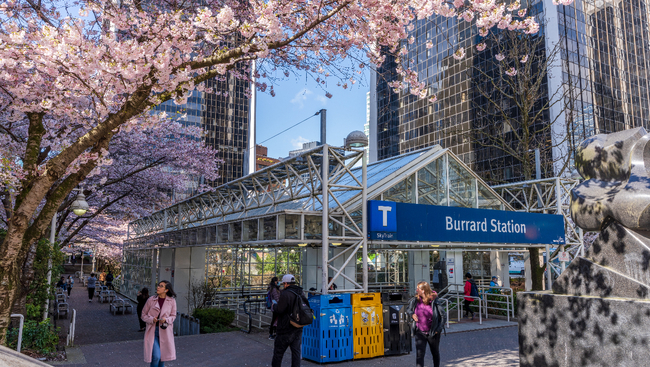
The canceled rehab and upgrade of the Burrard Station maybe the beginning of new fiscal realities post Covid. The former transit customers who used transit pre Covid are not coming back, meaning they are not buying tickets, and Translink is not collecting revenue. Local empty express buses(maybe 5 or 6 seats occupied) in South Delta is certainly testament that something is very wrong.
The upsurge of Tesla and other electric cars maybe badly hurting TransLink chances in recouping ridership.
Why take the bus when I can drive my electric!
What this clearly shows that TransLink is in more than bit of fiscal bother, rather it just be the shape of things to come, operating an extremely expensive light-metro system designed for the 1980’s, just may not be the way to attract customers post covid.
Dated planning; dated infrastructure; and dated operating practices are now showing their hand, yet politicians remain deaf to this, lost in a transit ennui that the bigger and more expensive infrastructure that is built (read Subways), will create transit nirvana.
From my perspective, it is merely doing the same thing over and over again, hoping for different results, which of course is the definition of insanity.
Postscript:
This bodes ill for any upgrade and rehab for the Canada Line, where the estimate cost to upgrade the line to increase capacity past 9,000 pphpd was around $1.5 billion and now certainly to increase past $2 billion!
Two-year Burrard SkyTrain station called off for now, upgrades cancelled
Upgrades to the Burrard SkyTrain Station in Vancouver would have forced the station to shut down for two years will not go ahead as planned.
TransLink says due to higher than anticipated construction bid prices and supply chain issues, it isn’t able to go through with the work it announced last year.
The original plan would have seen the station close starting early this year. The work would have doubled the number of escalators and elevators at the station, as well as relocate the Burrard Street entrance and redesign the station’s outdoor plaza.
TransLink says it’s working with Indigenous Nations and stakeholders to develop a new scope, budget, and timeline.
The Burrard SkyTrain Station was originally built in 1985. TransLink says it has not seen any significant upgrades since then.
It is the fourth busiest SkyTrain station with 7.6 million people passing through every year, according to TransLink.
Zwei gets a lot of Emails and this caught my attention.
Slow-pitched questions and the continued referring that the tunnel is a mistake, the entire show seemed like an infomercial for the BC Liberals.
Why all the angst for the tunnel and why do the Liberals still want a bridge?
The answer probably is that the Port Authority still wants to have Cape Max natural gas & oil tankers and colliers ply the Fraser to Surrey Docks to load dirty Montana coal and volatile Braken oil, transported by the BN&SF Railway, saving wheelage charges paid, for using BC Rail’s Delta Supper Port line.
So much for BC being Green!
I also see that RftV has a fan as he/she quoted our blog.
Global warming; the heat dome; and last November’s destructive monsoon, sent a blunt message to our politicians that we must change and sadly the message has fallen on deaf ears, especially the BC Liberals. The question that should be asked is why we are replacing a perfectly good tunnel with a larger tunnel or bridge that will only attract more cars and create even bigger congestion in Richmond?
Established choke points, reduce traffic and encourage people to take transit, which is a good thing and standard transit planning practice.
It seems the BC Liberals like the evangelical Republicans down south, reject climate change and want to continue with the status quo and continue to build massive monuments like bridges, for photo-ops at election time.
After a “puff” interview with Delta’s “pork pie” vendor and BC Liberal MLA for Delta, Ian Paton, on today’s Mike Smyth Show on CKNW radio, the following post from Rail for the Valley’s blog from 2018, hopefully will correct the propaganda spewed by the BC Liberals.
Mr. Paton deliberately used misleading information in a Fox News, Tucker Carlson type of interview, without any clear rebuttal from the chap on CKNW Radio, is more than shocking.
Is CKNW/Global now resorting to Trumpian or Q’anon fake news and alternative facts to pander to the BC Liberal’s?
Please read Mr George Massey’s letter, included with this post, a letter MLA Ian Paton would not like to again make public.
Massey Tunnel Facts – Facts That No One Wanted The Public To Know
Rail for the Valley
January 17, 2018
The alternative facts and fake news spewed by the BC Liberals, especially sitting MLA and still Delta Councillor, Ian Paton, Delta Mayor, Lois Jackson and the hoi polloi of car and truck drivers wanting a new $3.5 billion to over $5 billion mega bridge to replace the perfectly good George Massey Tunnel, have been shown for what they are: falsehoods or grand economies of the truth.
The bridge was proposed for two reasons:
1) To allow Panama and Cape Max. colliers and tankers to travel up the Fraser River to load dirty Montana Coal; volatile Braken Oil; and LNG at Fraser Surrey Docks, with the coal and oil delivered directly by the BN&SF. By doing so, the BN&SF railway would not have to pay wheelage charges for unit trains to BC Rail, which owns and operated the rail line to the Delta Superport.
2) To divert billions of taxpayer’s monies to political friends via multi billion dollar mega projects. This is called “Pay to Play”.
The new American Trump administration doesn’t care for environmental concerns, thus the American coal and oil will be loaded in the USA and LNG and the BC’s new NDP Government, hopefully will stop “Pay to Play” mega projects.
The proposed Fraser River mega bridge was never about traffic and transportation, it was all about political deals, cut by the BC Liberals with big business.
George Massey Tunnel under construction – 1959
Meeting with ministry gave former Liberal government tunnel options
Delta Optimist January 10, 2018
Much has been said by the former Liberal government and its representatives about getting the facts for the replacement of the George Massey Tunnel.
Transportation and Tunnel Engineering Consultants (TEC) of the Netherlands to update the ministry on the state of the art of immersed tunneling.
The content of the 60-page presentation included introduction of TEC worldwide tunnel projects both recent and proposed, and cost effective options for the George Massey Tunnel. Special attention was given to tunnel safety, earthquake resistance design and comparison with bridge solutions.
The following are quotes taken from that presentation:
1.Tunnels are more suited for various and poor soil conditions.
2. Tunnels are shorter in length than a bridge and have a smaller footprint.
3.Tunnels can be built parallel and close to existing tunnels.
4.Tunnel construction is capable of dealing with severe seismic conditions.
5.Tunnel construction where 80 to 90 per cent of the work could be done by local contractors.
6.Tunnels can be built safer than an open highway.
The last 14 pages of the presentation dealt with TEC’s selection of appropriate options, possible cross sections, layouts and options for future use of the George Massey Tunnel.
TEC recommended the following:
1. To assess the structural integrity and durability of the present tunnel.
2. Increase river depth by replacing riprap with an asphalt mattress.
3.Introduction of longitudinal ventilation and use current ventilation ducts as escape cell and for passage of pedestrians and cyclists.
4.Move ballast concrete to ventilation ducts and increase internal height of the tunnel.
The entire report is available, on request, from me.
The report from TEC was not made available to the public and was not appropriately considered by the former Liberal government. A freedom of information request (FOI) to the Liberals yielded a response of no records. A recent FOI request has released the buried report which reveals viable, safe, cost effective options of upgrading the existing tunnel and adding a second tunnel beside it.
This report has now been made available, by the public, to new Transportation Minister Claire Trevena.
So, you see, the former Liberal government never revealed the true facts or alternatives to the public. Instead, it followed the demands of the Port of Vancouver and wrote fear mongering reports that suited its agenda of removing the George Massey Tunnel and deepening the lower Fraser River to suit present and future industrial interests.
This would destroy not only a perfectly good river crossing, but a bog land and a marshland, known the world over as vital component for a continued healthy ecosystem that supports a migratory food source for all marine and wildfowl life from the headwaters of the Fraser River along migratory routes of the Pacific Coast.
What is good for the car is also good for the tram!
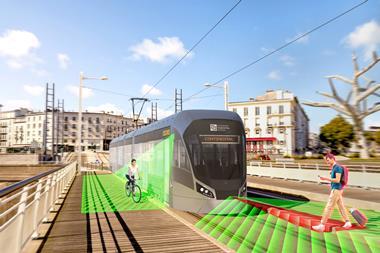
The modern tram is one of the safest transit modes today and with active “heads-up” displays, makes the tram or streetcar much safer.
A head-up display, or heads-up display,also known as a HUD, is any transparent display that presents data without requiring users to look away from their usual viewpoints.
As the above illustration shows, with heads-up displays, the tram driver is made aware of activity around the tram and with automatic braking dangerous situations are made safe.
EUROPE: Head-up display technology originally developed for cars has been adapted for light rail applications by Continental Engineering Services, which is planning a first deployment later this year.
The lesson is just not making public transit safer, it is that modern light rail is continually upgrading and changing to meet today’s challenges. Unlike our SkyTrain light-metro, being proprietary and is slowly being phased out, safety issues are not addressed as they should be, simply because they are not cost effective.
Not cost effective? Yes, as there is no market for the proprietary railway, no investment is being made to make the system safer.
Something to think about, when planning for the future.
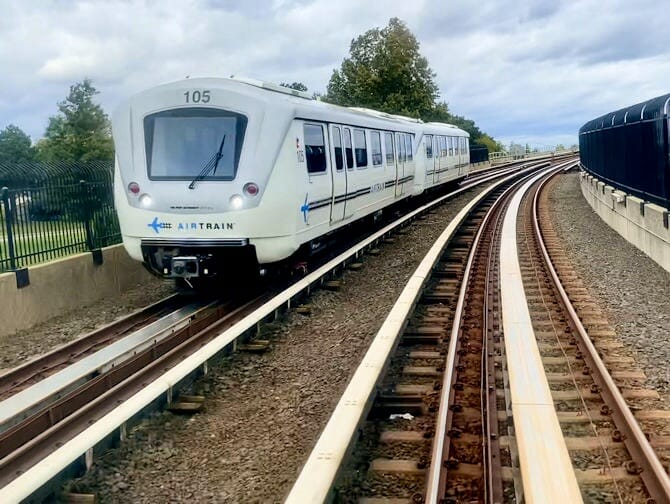
What is now called Movia Automatic Light Metro is known as Airtrain in New York.
AirTrain JFK, is a 13 km elevated, ART system built by Bombardier serving John F. Kennedy International Airport (JFK Airport) in New York City. The system consists of three lines and ten stations within the New York City borough of Queens. It connects the airport’s terminals with the New York City Subway in Howard Beach, Queens, and with the Long Island Rail Road and the subway in Jamaica, Queens. Bombardier Transportation operates AirTrain JFK under contract to the airport’s operator, the Port Authority of New York and New Jersey.
The often rebranded Advanced Rapid Transit (ART) system was owned by Bombardier Inc. and was built with largely Canadian government funding. By doing so, AirTrain escaped scrutiny from the US Federal government.
The system opened on December 17, 2003 and is operated by Bombardier.
All passengers entering or exiting at either Jamaica or Howard Beach must pay a $8.00 (CAD $10.25) fare, while passengers traveling within the airport can ride for free. The system was originally projected to carry 4 million annual paying passengers and 8.4 million annual inter-terminal passengers every year. The AirTrain has consistently exceeded these projections since opening. In 2019, the system had over 8.7 million paying passengers and 12.2 million inter-terminal passengers.
Sound familiar? Surrey’s mayor claimed he could build the Expo Line extension to Langley for $1.65 billion, yet the budgeted cost is now $3.95 billion and is expected to even reach $4.5 billion.
It seems fiscally responsible politicians put a stop to this, unfortunately our local politicians in Metro Vancouver and Victoria are not fiscally responsible and believes the taxpayer has deep pockets and willing to pay higher taxes to fund politically prestigious transit projects.
Like the folks in New York, maybe local folks should start looking at cheaper and just effective transit options, other than the extremely expensive SkyTrain light metro!
JFK AirTrain
After scrapping Cuomo’s AirTrain, Port Authority releases 14 other options
The old AirTrain proposal for LaGuardia Airport, which is now scrapped Courtesy Governor Andrew Cuomo’s Office
One of Governor Kathy Hochul’s first moves in office was to pause her predecessor’s plans for a $2 billion (CAD $2.56 billion) AirTrain at LaGuardia Airport and ask the Port Authority of New York and New Jersey to come up with other options.
On Wednesday, the Port Authority released sketches for 14 alternatives, including light rail, bus routes and subway extensions. It’s now seeking community input before moving forward.
Renderings from the Port Authority showing possible routes to LaGuardia Airport
Port Authority of New York and New Jersey
Renderings from the Port Authority showing possible routes to LaGuardia Airport
Port Authority of New York and New Jersey
The ideas include several new bus routes, which advocates have said are a low-cost, efficient way to move many people to the airport, as long as the routes are clear of traffic. The proposed bus lines to the airport include a new dedicated route along the Q70 line, which connects to the 7 train’s Roosevelt Avenue station in Jackson Heights, a route for the M60 from Manhattan across 125th Street, the RFK Bridge and down Astoria Boulevard to LaGuardia, as well a a dedicated bus lane from Astoria to the airport.
There are other proposals for new bus routes that would connect to existing N/W subway lines in Astoria
Renderings from the Port Authority showing possible routes to LaGuardia Airport
Port Authority of New York and New Jersey
Renderings from the Port Authority showing possible routes to LaGuardia Airport
Port Authority of New York and New Jersey
Transit advocates cheered when Hochul called on the PANYNJ to find an alternative to former Gov. Andrew Cuomo’s AirTrain project. They said, for $2 billion, there are cheaper, more equitable options. And environmentalists were concerned that Jamaica Bay and Corona neighborhoods would be unfairly burdened by the construction of a new AirTrain.
Still, the new options include light rail routes that would run above and below ground through Woodside, Jamaica Station, Astoria and Jackson Heights. Another would connect to the Mets-Willets Point 7 train stop, along a similar route as the original AirTrain proposal.
Renderings from the Port Authority showing possible routes to LaGuardia Airport
Port Authority of New York and New Jersey
Renderings from the Port Authority showing possible routes to LaGuardia Airport
Port Authority of New York and New Jersey
Renderings from the Port Authority showing possible routes to LaGuardia Airport
Port Authority of New York and New Jersey
“It’s so refreshing to see state leaders acknowledge that there actually are options — besides a backwards parking lot shuttle for better transit access to the airport,” Danny Pearlstein, policy and communications director with Riders Alliance, wrote in an email. “Even if the governor ultimately directs the Port Authority or MTA to build a new rail line, she should opt for one or more of the bus priority projects to roll out in the immediate future. Better buses to La Guardia, with multiple rail connections and dedicated lanes, could begin running in a matter of months, for a tiny fraction of the cost of new rail.”
There are no costs pegged to the proposals yet.
“Governor Hochul directed the Port Authority to thoroughly examine alternative mass transit solutions to increase connectivity to LaGuardia Airport, and we look forward to reviewing input on these options to help ensure world-class transportation to our airport,” Hazel Crampton-Hayes, a spokesperson for the Governor said in a statement.
Given the cost of MTA construction, the proposal to extend the N/W line from 30th Street Station, or Astoria-Ditmars Boulevard to LaGuardia would likely be among the most costly.
Renderings from the Port Authority showing possible routes to LaGuardia Airport
Port Authority of New York and New Jersey
Renderings from the Port Authority showing possible routes to LaGuardia Airport
Port Authority of New York and New Jersey
Renderings from the Port Authority showing possible routes to LaGuardia Airport
Port Authority of New York and New Jersey
Renderings from the Port Authority showing possible routes to LaGuardia Airport
Port Authority of New York and New Jersey
Renderings from the Port Authority showing possible routes to LaGuardia Airport
Port Authority of New York and New Jersey
Ferry options are on the table as well. Advocates previously complained the Port Authority “cherry picked” its criteria to favor Cuomo’s plan, excluding options like ferries the first time.
“There are a lot of promising options before us, but I’ll reiterate what I said when we were fighting the original plan: this needs community input,” State Senator Jessica Ramos wrote in an email. “I need to hear more from my neighbors, so before I endorse a particular option, my office will conduct additional outreach and host opportunities for my community to discuss each of the plans in turn.”
Renderings from the Port Authority showing possible routes to LaGuardia Airport
Port Authority of New York and New Jersey
Renderings from the Port Authority showing possible routes to LaGuardia Airport
Port Authority of New York and New Jersey
On the last page of the plans, the Port Authority leaves open the possibility that new technologies, which haven’t been proven effective may still be considered, such as “narrow tunnels with electric vehicles” — an idea pushed by Tesla founder Elon Musk. Other ideas such as autonomous buses are being piloted in other cities, but have yet to be tried in New York City.
The government transparency group Reinvent Albany had released a report analyzing the original AirTrain plans and found that per rider, at $2 billion, it would’ve been one of the most expensive transit projects in the world. But now, Jon Orcutt, a consultant for the group, believes the 14 options are more realistic, and affordable.
“I think if you want to get a lot of people to ride transit to the airport, you keep it simple — and to us, that means fix some bus options now and extend the subway later,” Orcutt said. He said a ferry could work, although it’s not clear how people would walk to their destinations. He said adding a light rail option would be too costly and take too long to complete.
“We have a big transit system, let’s just make use of it, “ he said. “In Washington you can take Metro to National, in San Francisco you can take BART into SFO, that’s how you do it.”
The PANYNJ wrote that a questionnaire was sent to 70 key stakeholders, including elected officials and community organizations about these options. In March, there will be two public meetings to discuss the 14 new options.
The in-person public workshops will be held at the LaGuardia Marriott Hotel in East Elmhurst on Wednesday, March 16, from 6 p.m. to 8 p.m., and on Thursday, March 24, at the Astoria World Manor, from 6 p.m. to 8 pm. Attendees will be able to record comments for consideration in the evaluation process.
Zwei has belonged to the Light Rail Transit Association since 1983 and I first learned about the LRTA while I lived in Nottingham England in 1974/75. I attended a free lecture in Nottingham about bringing trams back to the city, while I was waiting for my girlfriend who was attending night school at Nottingham University.
I was very much interested in public transport and the information from the lecture was such, it was easy to become a supporter of modern tram.
Said girl freind’s father thought I was a daft idiot (well don’t all fathers think that of their daughter’s boyfriend, especially one from the colonies) because trams were old school and no one would use the service.
I thought otherwise.
Today, Nottingham has a Tramway and has recently opened an extension.
Despite the anti-tram/Streetcar/LRT bias in Metro Vancouver and in BC, due to the huge costs of current light metro projects, the region must once again plan for cheaper light rail, including tramways, and tramtrain or do without rail transit altogether and just build more highways and bridges.
American transportation expert, Gerald Fox predicted this back in 2008, with his scathing review of the Evergreen Line business case.
But, eventually, Vancouver will need to adopt lower-cost LRT in its lesser corridors, or else limit the extent of its rail system. And that seems to make some TransLink people very nervous.
The government is now getting very nervous, post Covid inflation and massive rise in energy costs due to the ongoing war in the Ukraine, will make current cost estimates a mere scrap of paper. The $2.8 billion, 5.8 km Broadway subway is now expected to cost over $3.5 billion and the $3.95 billion, 16 km Expo Line extension to Langley is now expected to cost over $4.5 billion!
TransLink is broadly hinting that they do not have the funding and another big financial surprise maybe soon to come.
Alstom is now the owner of the proprietary Movia Automatic Light Metro system, used on the Expo and Millennium Lines. Only seven such systems have been built in the past 42 years, with only three (soon to be two) seriously used for urban transit. One of these two systems, in Malaysia has embroiled Bombardier Inc. and SNC Lavalin is a criminal corruption case, leaving only TransLink as the the last customer for the proprietary railway.
Question:
Will Alstom mothball the MALM production line after the paid for orders of MALM cars are completed, sometime in 2025?
If Alstom does, this would leave TransLink with even higher costs for future procurement for spare parts and vehicles.
As the provincial government, TransLink and regional mayors blunder on, planning for more expensive SkyTrain, while at the same time increasing taxes on a tax weary electorate, many will wonder:
Where did Metro Vancouver go wrong?
The following article from the LRTA may give some insight into our transit woes.
The first Metrolink study tour in 1983 ended in Zürich, where trams, trolleybuses and buses formed a fully-integrated network. Councillors from Manchester were impressed, asking ‘when can we have one?’ Image courtesy of Tony Young
Therevival of the tramway in the later decades of the last century is well-documented, not least in the pages of TAUT and its predecessors. The movement began in the USA and Canada, closely followed by the Netherlands and France and eventually even in the UK. Now it is a worldwide phenomenon with new systems appearing in countries that never had first-generation tramways.
Those working in the tramway field have always been well aware of the wide benefits of this unique form of urban transport, the only mode that is equally at home on railway tracks, along the street, through pedestrian zones or on its own private right-of-way through parks – and even in tunnels. It is by far the least damaging mode to the environment, at the same time supporting and enhancing the local economy.
These obvious benefits should make it the number one choice to meet urban travel needs in this environmentally-challenged era. Most countries have recognised this and are taking action, but Britain is sadly missing out. Why?
In the 1970s and ’80s, planners and engineers were beginning to look at the tramway afresh. Memories of previous systems still haunted politicians and professionals so the new movement had to be clandestine, mainly in the backrooms of the newly-created Passenger Transport Executives (PTEs). The word ‘tram’ was taboo, so the term ‘light rail’ was adopted.
The Tyneside Metro (later Tyne and Wear Metro) was the first to break through in 1980, but it took another 12 years before Manchester crossed the street-running divide in 1992. That sparked a deluge of schemes across the country – everybody saw the benefits and wanted a system of their own. The big cities of Sheffield, Birmingham, Leeds, Liverpool and Bristol were next in the queue, with the London Borough of Croydon not far behind. Sheffield, Birmingham and Croydon eventually got their trams… but Liverpool, Leeds and Bristol are still waiting.
There was a long list of smaller towns and cities where the tram was seen as a valuable part of the transport mix. Many were the subject of feasibility studies during the 1990s, but only two more projects were successful: Nottingham and Edinburgh. Most of the successful schemes were promoted by PTEs, with Nottingham the only one in England to be promoted by a city and county without such a body. Interestingly, Nottingham and Edinburgh are amongst the handful of authorities that still feature municipally-owned bus operators, making integration a practical proposition.
What lessons can we take from failure?
The success of Greater Manchester Metrolink, South Yorkshire Supertram, West Midlands Metro, Croydon (now London) Tramlink, and Nottingham Express Transit is well-known. But why are Leeds, Liverpool, Bristol and several more not up there with them? And what can we learn from their failure?
The reasons are many and complex. There can be little doubt that the actions of then-Secretary of State for Transport Alistair Darling in cancelling the plans for Leeds, Liverpool and South Hampshire in 2005 – and all the Manchester Metrolink extensions – had a devasting effect on all the other potential tramway promoters. His strings may well have been pulled by Her Majesty’s Treasury (as has always been the case in Britain), but the result damaged urban public transport in major cities for generations.
If popular, well-developed tramway projects – which had been approved by the Government at every stage, and were ready to go out to tender – were to be scrapped, then there was no chance for any other scheme. Many millions had been spent by promoting authorities and bidding contractors on design and approvals, including obtaining the necessary Parliamentary Powers – all money down the drain. The pain was felt deeply in both public and private sector pockets.
While Leeds, Liverpool and South Hampshire begrudgingly accepted Darling’s ruling, Great Manchester fought back. Metrolink was already running and proving popular with passengers and the public at large. A massive campaign was led by the media and local authorities demanding that the planned expansion of Metrolink be given approval. Eventually the Government had to give in. All the extensions are now carrying passengers, while Leeds and South Hampshire are left to rely on buses.
At least Liverpool has its Merseyrail network, but the proposed tram routes would have served parts of the conurbation which the trains don’t reach. Leeds is now renowned as the largest conurbation in Europe without a metro, underground, light rail or tramway. Acres of former Ministry of Defence land in the Gosport peninsular could have been profitably developed with improved access from a tramway; the ‘replacement’ busway can only offer a fraction of the service and does not provide the much-needed link
into Portsmouth.
Increased costs were undoubtedly a major cause of the failure of these light rail projects. In reality, however, while the costs of all the cancelled schemes had indeed increased, they were no more than many highway projects – in fact far less than some. Yet no highway schemes were cancelled. It is an inescapable fact that capital costs of major infrastructure schemes increase with time, as evidenced by the Thameslink, Crossrail and HS2 heavy rail projects. But such situations give politicians a cast iron excuse to get rid of projects they don’t like.
Is there an in-built bias?
There is still an innate dislike of tramways in Britain that goes back to the Royal Commission on Transport in 1929. This encouraged their abandonment and replacement with buses, noting that trams ‘if not an obsolete form of transport, are at all events in a state of obsolescence and cause much unnecessary congestion and considerable danger to the public’.
Ambitious plans to upgrade the tramways in Liverpool, Leeds and Glasgow to light rail standards in the post-war years were all thrown out. Even the serious plans of English Electric to build a British PCC car came to nought. That would have been a real game-changer.
Promoters of second-generation schemes in Britain had a hard time getting them accepted by the Department of Transport, who could only see them as far too expensive and unnecessary when you can have buses. The enormous potential benefits of trams over buses were never understood in Marsham Street. It is only when they started carrying passengers that attitudes did a rapid about-turn, as residents of Manchester, Nottingham and Edinburgh can verify.
Why are we afraid to learn from our neighbours?
When Manchester’s Metrolink was in its early planning stages, the Transportation Committee Chair realised that getting approval from the County Council for such an innovative plan would require changes of approach. Many councillors did not understand what a modern tramway looked like. To this end, he initiated a series of study tours to European tramways to see first-hand what could be achieved. Political representatives included key committee chairs, officers came from County and City, and there were engineers and planners with representatives from Greater Manchester’s PTE and British Rail.
The last city visited was Zürich. In the 1960s, it too faced similar pressures to its counterparts in Britain, namely increasing car use and congestion. We had the Buchanan Report which advocated full car ownership and residual public transport. A plan to build urban motorways and underground railways to replace the trams in Zürich was defeated by referendum, the legal process required in Switzerland. It was sold by the authorities as a ‘balanced approach’ but the people of Zürich saw it differently. Transport planning was in limbo for a decade. A new plan for a more extensive metro network was also defeated in 1973. Zürchers love their trams.
A radical plan prepared by a grass-roots ‘peoples initiative’ to upgrade the tramway and trolleybus networks and give them priority over car traffic was approved in 1977. The City Engineer still wanted a car-based plan, but that was defeated. The results were spectacular. Public transport patronage skyrocketed while car commuting declined. Annual trips per capita in Zürich are now more than three times the figure for major British cities.
The aim of the study tour was to show Manchester councillors and officers what a tram system looked like. The reaction on returning to England was an almost unanimous, ‘when can we have one?’. Such initiatives are what we need to convince our Government ministers.
Any radical infrastructure plan needs both a political and a technical champion. Both must be fully committed to a politically achievable project with sound engineering and planning credentials. Maintaining both cross-party and cross-district support is essential, as is robust consultation with a wide group of interests, public and private. Perhaps most of all, close links with the relevant government departments must be maintained throughout the planning process, although, as we have seen, that is no guarantee of success…
We have the expertise and experience
There is no shortage of expertise, experience or enthusiasm in the light rail industry in this country. This is repeatedly demonstrated at the annual UK Light Rail Conference, the copious documents produced by UKTram and its Centre of Excellence, the resources of the Urban Transport Group and the new Light Rail Safety and Standards Board, and the mass of light rail documents produced by the All-Party Parliamentary Light Rail Group.
Many other documents have been produced, for example TramForward’s contribution to COP26. Yet tramways hardly got a mention in Glasgow, even given their close fit with environmental objectives.
Despite the seemingly impossible task of getting tram schemes approved by our Government, there are several promising projects in embryo. Perhaps best-known is the Very Light Rail (VLR) scheme for Coventry which envisages a four-line loop network to link all parts of the city with the centre, rail station, university and hospitals. Although not conventional light rail, this is an attempt to produce a much cheaper rail-based system with a lighter trackform and a lightweight shuttle. A prototype vehicle has been constructed and a research centre is being completed in Dudley.
Another imaginative project is the KenEx Tramway to connect the counties of Kent and Essex from Bluewater to Lakeside with a tube tunnel under the River Thames. This makes much greater environmental sense than the planned Lower Thames Crossing and yet has not been given much prominence. The road tunnel is bound to increase car traffic, and hence pollution and congestion. The tram alternative would attract car users to public transport, a key objective of transport policy.
The conurbations around Bristol and Leeds are still unlikely to achieve their light rail ambitions for at least a decade. Neither have firm plans or any Transport and Work Act powers. The shame is that both had powers in the 1990s. Bristol has suffered over the years from disagreements between its various local government bodies, not helped by the abandonment of Avon County Council which was developing sound light rail plans. An early private sector proposal was ill thought-out and had no chance of being realised.
A local pressure group in Bath which sees trams as the saviour of that historic city has turned its attention to Bristol and appears to be having some success in persuading the regional authority to at least consider the possible role of light rail. Until recently the car and bus lobbies have won the arguments, but perhaps things are changing.
Leeds is the city most in need of a light rail network, and has nearly realised those plans on a number of occasions since the far-sighted tram subway plans of 1945. After a number of failed attempts, it finally received Royal Assent for a tramway in 1993. Another decade later and it was all scrapped. Government response has been: ‘trams are too expensive, get some better buses’. Yet despite investment in new buses, and even some bits of guided busway, patronage has continued its downward trend and current expectations to dramatically increase bus use seem doomed to failure.
The Government’s recent publication of its Integrated Rail Plan, scrapping HS2 to Leeds and abandoning the Northern Powerhouse Rail plan, has caused anger and disbelief across the North and Midlands.
As a consolation prize, current Prime Minister Boris Johnson has said that Leeds can have its mass transit system. It should be noted, however, that the word ‘tram’ is conspicuously absent from any official statement and what has actually been offered is GBP200m (EUR238.6m) for a feasibility study. The Government expects the first phase of this GBP2bn (EUR2.4bn) project ‘to be in service by the second half of this decade’.
There must be drawers full of approved tram plans for Leeds, so why yet another study is needed beggars belief. What West Yorkshire desperately needs is the funds to build a first phase tramway, probably along York Road to Seacroft, or south to Stourton and Middleton.
Why can’t we be like the French?
Five years after the Tyne and Wear Metro brought light rail technology to the UK, Nantes became the first French city to bring trams back to its streets. Seven years later, Manchester followed. In the next 25 years, tramways were built in more than 20 cities in France. In Britain, the figure for the same period was five.
While all these cities in France have been reaping the wide benefits of new tramways, many UK cities which could have seen similar success are instead suffering ever-increasing congestion and pollution, and declining bus patronage. Paris now has no fewer than nine tram and tram-train lines. London, by comparison, still has only one. It could have had more, but they were killed off by Boris Johnson when he was Mayor.
One major difference between the UK and France is devolution. French cities and their mayors have a high degree of control over their own affairs and funding through the ‘Versement Transport’ (now Versement Mobilité) hypothecated taxation system. Dating back to 1972, this has been a consistent policy for half a century. In Britain, policy has ricocheted between extremes but always with steely control from the capital. West Yorkshire’s Mayor, Tracy Brabin, has supported plans for a mass transit system for her region – it remains to be seen if she will succeed.
Tramway extensions are being built in the West Midlands, Edinburgh and Blackpool. More new routes are in the early planning stages. New tram-trains are to be delivered to Cardiff, which is a great step forward, although how they are to be used is still rather uncertain. But there are no shovel-ready new schemes anywhere. It will probably be another ten years at least before any other city sees the benefits of a tramway.
It is good to see investment going into existing systems – including Government packages to support systems as they rebound from the pandemic – but we need massive investment in new schemes to combat climate change and tackle pollution and urban congestion. We have the solutions, some are outlined in this article; there are many more.
But we can’t achieve anything without the backing of the Government. If a fraction of the GBP27bn (EUR2.2bn) to be spent on highways could be diverted to urban tram schemes, the benefits would be enormous.
A TramTrain is a type of light rail vehicle that meets the standards of a light rail system (usually an urban street running tramway), but which also meets national mainline standards permitting operation alongside mainline trains.
Straight forward isn’t it, or is it?
Then, was the interurban an early form of TramTrain?
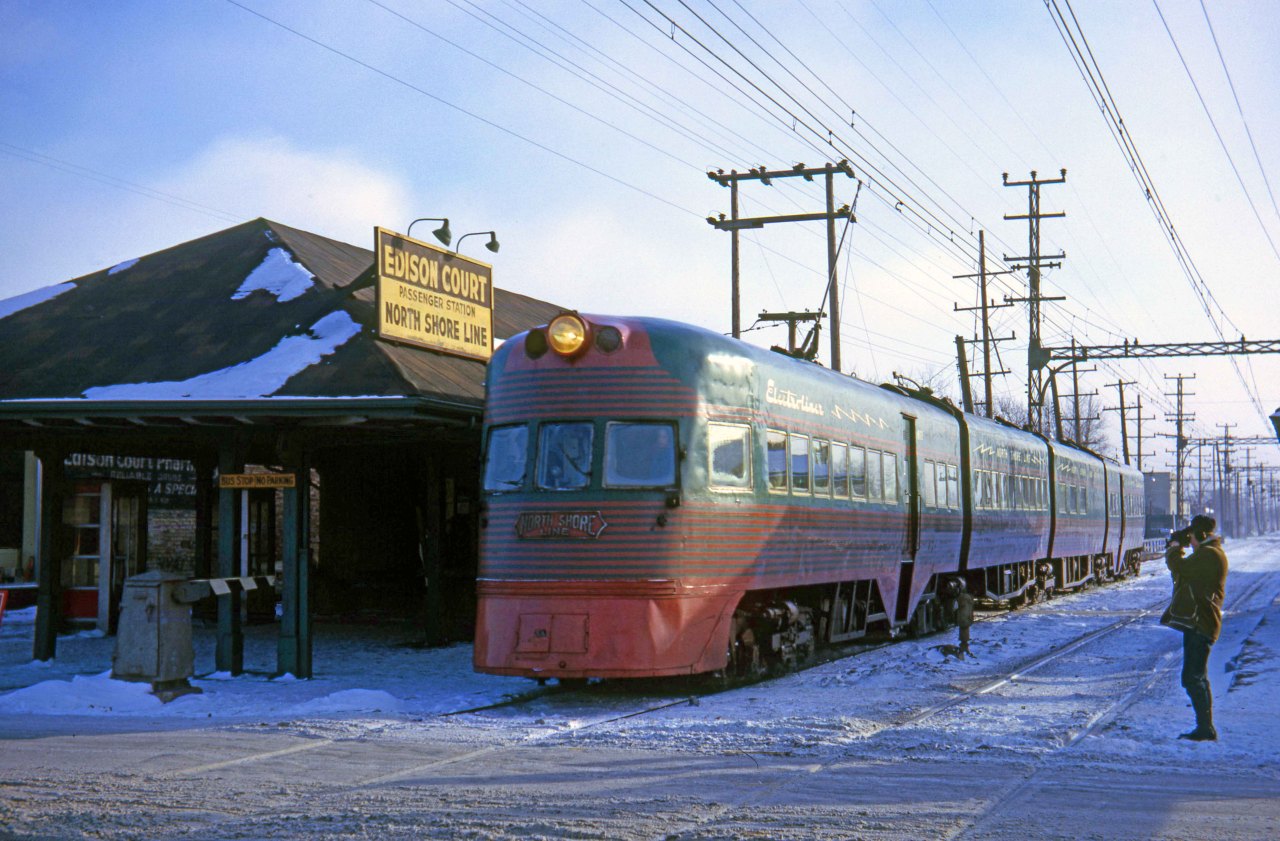
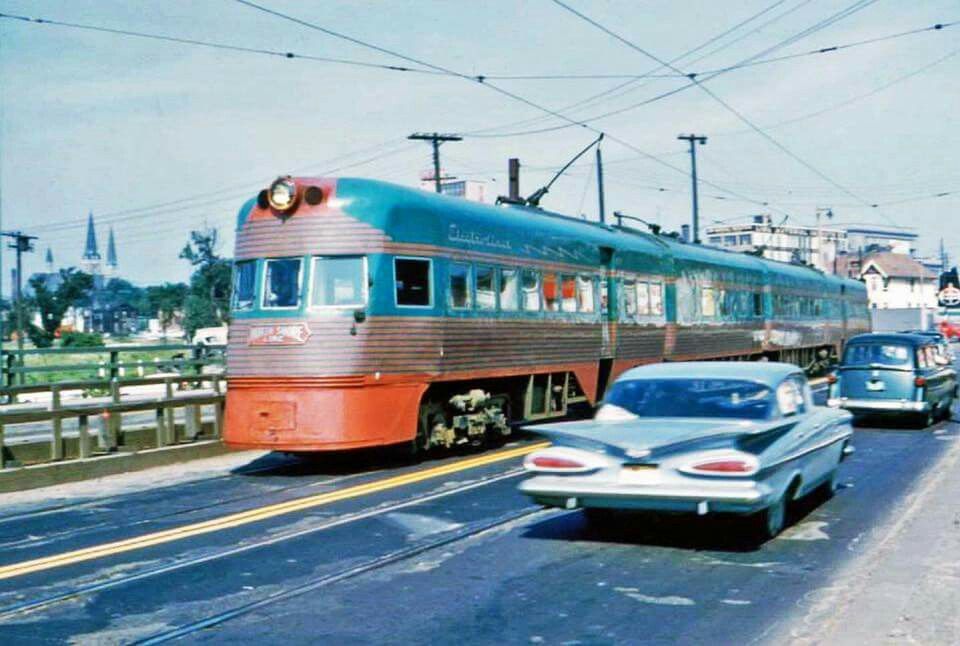
Yes and no. Interurban operated both on their own dedicated rights-of-ways and on city tram/streetcar tracks. Interurban s seldom if ever, track shared with mainline railways. The one exception I can think of were the Electroliners of the Chicago Nouth Shore and Milwaukee Railway which operated from 1941 to 1978, ending their days with SEPT.
Electroliner on the main line
The Electroliners could operate on the main line railways at speeds of 130 kph; on-street in mixed traffic and on Chicago’s famous “EL” with rapid transit .
Electroliner in mixed traffic.
Sadly, interurban’s went the way of the streetcar as the car became the main source of commuting, until, of course congestion, pollution, and now climate change has made commuting by car, expensive and environmentally insensitive.
Fast forward to 1990, Karlsrhue, Germany where the transit authority was investigating how to get trams to service areas otherwise too expensive for classic tram operation. In 1992 a new tram service was inaugurated using modified tram, able to track-share on the mainline railways, reaching customers as far away as Bade Baden, to travel to Karlsruhe’s city center without inconvenient transfers.
The new service was a massive instant success.
In just seven moths ridership increased 479% from the previous commuter trains that were in service. Ridership went from 533,600 a week to an astounding 2,554,976 customers a week!
Success saw a rapid expansion of TramTrain service in Karlsruhre was instant and today there are seventeen Stadtbahn TramTrain routes, serving hundreds of stations and stops.
The key to TramTrain’s success was the simple formula of “user friendliness” where transit customers can be conveyed from where they live to where they want to go without transfer.
In the transit world, success is infectious and today there are 29 cities which transportation authorities operate TramTrain and another 27 cities are proposing or planning to build TramTrain.
With the cost of our SkyTrain light metro system ever unceasing (the 16 km Expo Line extension to Surrey will easily surpass $3.95 billion) a 130 km Leewood Study TramTrain, from Vancouver to Chilliwack costing less than $1.5 billion, our regional planners at all levels of government must rethink urban transportation.
This rethink must include TramTrain, because only a TramTrain like service connecting Fraser Valley communities, colleges, universities and other major destinations will be affordable.