Something that is badly needed in BC and Canada, regional railways.
Local pundits have called for faster and faster rail transit, with some even advocating for high speed rail (HST) for the Fraser Valley as the only way to get people out of their cars.
Today, with gas topping $2.00 a litre is another way I guess, but I digress!
What is needed is a network of user-friendly rail line to entice customers to rail and those willing to try a modern DMU or EMU for a somewhat longer but far more comfortable trip may find a slower train far more enticing.
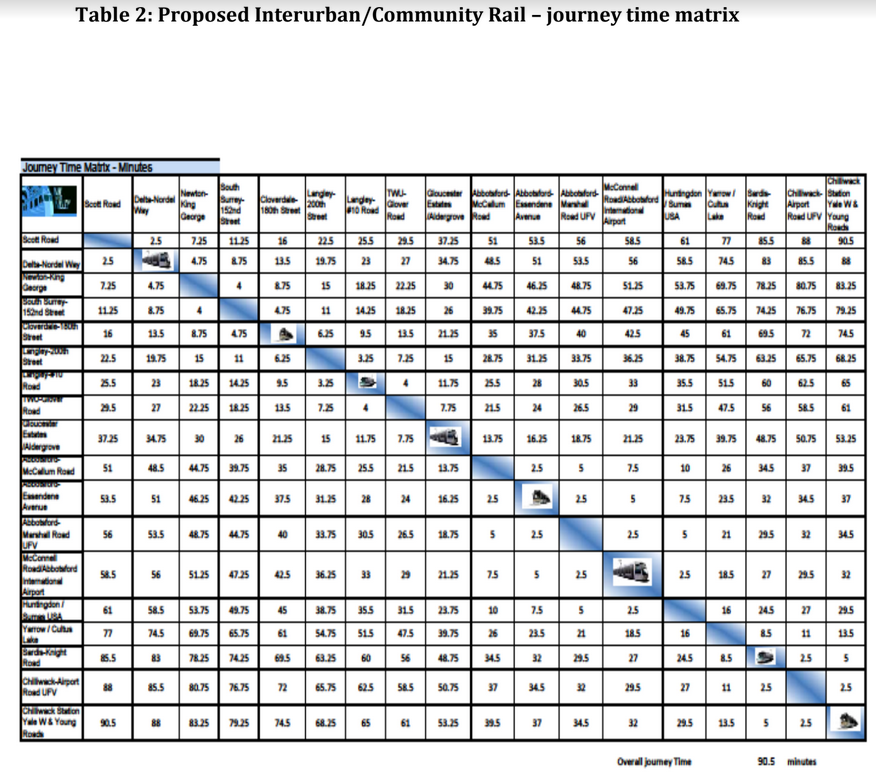
Rail for the Valley’s, Leewood Study sees a 90 minute trip time from Chilliwack to Scott road Station, about 30 minutes slower than taking the car, in perfect conditions.
For many, the extra 30 minutes travel time will be well worth not dealing with gridlock and congestion and just enjoying the journey itself.
A slow train to Chilliwack, just maybe, will be the fast train to success!
Famous for its high-speed TGV trains, France is now seeing the launch of a new rail revolution – slow trains. John Lichfield looks at the ambitious plan to reconnect some of France’s forgotten areas through a rail co-operative and a new philosophy of rail travel.
Published: 26 January 2022
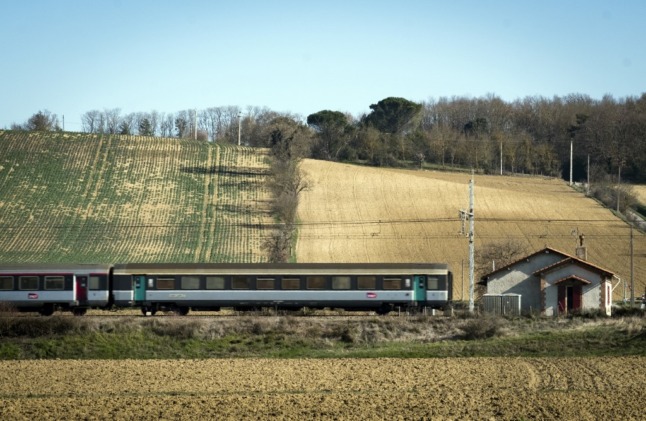
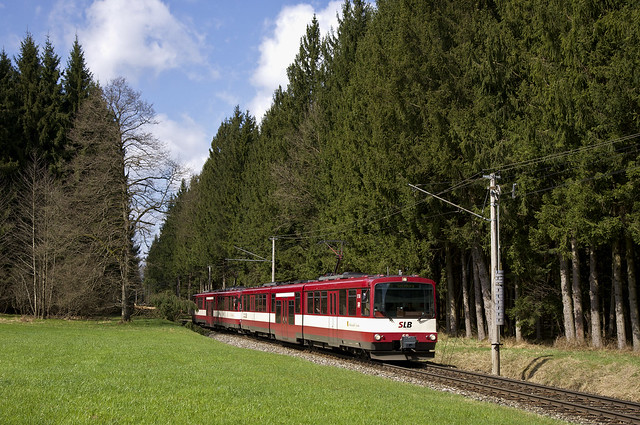
The slow trains would better connect rural France. Photo: Eric Cabanis/AFP
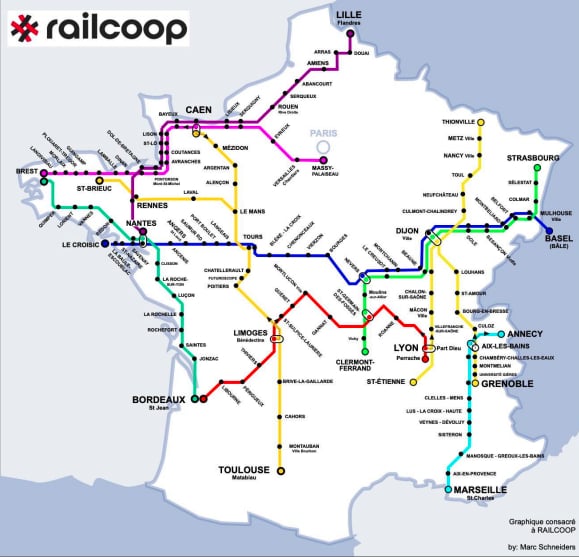
France, the home of the Very Fast Train, is about to rediscover the Slow Train.From the end of this year, a new railway company, actually a cooperative, will offer affordable, long-distance travel between provincial towns and cities. The new trains – Trains à Grande Lenteur(TGL)?– will wander for hours along unused, or under-used, secondary lines.The first service will be from Bordeaux to Lyon, zig-zagging across the broad waist of France through Libourne, Périgueux, Limoges, Guéret, Montluçon and Roanne. Journey time: seven hours and 30 minutes.Other itineraries will eventually include: Caen to Toulouse, via Limoges in nine hours and 43 minutes and Le Croisic, in Brittany, to Basel in Switzerland, with 25 intermediate stops in 11 hours and 13 minutes.
To a railway lover like me such meandering journeys through La France Profonde sound marvellous. Can they possibly be a commercial proposition?
Some of the services, like Bordeaux-Lyon, were abandoned by the state railway company, the SNCF, several years ago. Others will be unbroken train journeys avoiding Paris which have never existed before – not even at the height of French railway boom at the end of the 19th century.
The venture has been made possible by the EU-inspired scrapping of SNCF’s monopoly on French rail passenger services. The Italian rail company Trenitalia is already competing on the high-speed TGV line between Lyon and Paris.
The low-speed trains also grow from an initiative by President Emmanuel Macron and his government to rescue some of France’s under-used, 19th century, local railways – a reversal of the policy adopted in Britain under Dr Richard Beeching from 1963.
The cross-country, slow train idea was formally approved by the rail regulator before Christmas. It has been developed by French public interest company called Railcoop (pronounced Rye-cope), which has already started its own freight service in south west France.
Ticket prices are still being calculated but they are forecast to be similar to the cost of “ride-sharing” on apps like BlaBla Car.
A little research shows that a Caen-Toulouse ticket might therefore be circa €30 for an almost ten-hour journey. SNCF currently demands between €50 and €90 for a seven-and-a-half-hour trip, including crossing Paris by Metro between Gares Saint Lazare and Montparnasse.
Maybe Railcoop is onto something after all.
The company/cooperative has over 11,000 members or “share-holders”, ranging from local authorities, businesses, pressure groups, railwaymen and women to future passengers. The minimum contribution for an individual is €100.
The plan is to reconnect towns ignored, or poorly served, by the Train à Grande Vitesse (TGV) high speed train revolution in France of the last 40 years. Parts of the Bordeaux-Lyon route are already covered by local passenger trains; other parts are now freight only.
In the longer term, Railcoop foresees long-distance night trains; local trains on abandoned routes; and more freight trains. It promises “new technological” solutions, such as “clean” hydrogen-powered trains.
For the time being it plans to lease and rebuild eight three carriage, diesel trains which have been made redundant in the Auvergne-Rhône-Alpes region.
There will be no space for a buffet or restaurant car. Restaurants and shops along the route will be invited to prepare local specialities which will be sold during station stops and eaten on board.
What a wonderful idea: French provincial meals on wheels; traiteurs on trains.
Olivia Wolanin of Railcoop told me: “We want to be part of the transition to a greener future, which is inevitably going to mean more train travel.
“We also want to offer journeys at a reasonable price to people who live in or want to visit parts of France where train services have all but vanished. We see ourselves as a service for people who have no cars – but also for people who DO have cars.”
Full disclosure. I am a fan of railways. I spent much of my childhood at Crewe station in Cheshire closely observing trains.
Three years ago I wrote a column for The Local on the dilemma facing SNCF and the French government on the 9,000 kilometres of underused and under-maintained local railway lines in France. Something like half had been reduced to low speeds because the track was so unreliable. Several dozen lines had been “suspended” but not yet officially axed.
The government commissioned senior civil servant, and rail-lover, François Philizot to study the problem. After many delays, he reported that much of the French rail network was in a state of “collapse”. Far from turning out to be a French Beeching, he recommended that a few lines might have to close but most could and should be saved – either by national government or by regional governments.
Since then the Emmanuel Macron-Jean Castex government has promised a big new chunk of spending on “small lines” as part of its €100 billion three year Covid-recovery plan. Even more spending is needed but, for the first time since the TGV revolution began in 1981, big sums are to be spent on old lines in France as well as new ones.
The Railcoop cross-country network, to be completed by 2024-5, will run (at an average of 90 kph) partly on those tracks. Can it succeed where a similar German scheme failed?
François Philizot suggested in a recent interview with Le Monde that a revival of slow trains might work – so long as we accept that a greener future will also be a less frenetic future.
“When you’re not shooting across the country like an arrow at 300 kph, you can see much more and you can think for much longer,” Philizot said.
Just on the radio, the Expo Line is kaput, but what is interesting is that TransLink has indicated the problem will not be fixed until this evening!
SkyTrain: Expo Line
In Effect03-Mar-2022 05:53 AM — Until further notice
Expo Line delays due to a track issue at Columbia Station. No train service between Columbia and Sapperton. Bus Bridge between Braid Station and New West Station in both directions.
Trains from Production Way will turn around at Sapperton Station.
Bus Bridge locations:
New West Stn: Bay 3 stop 61650 on Columbia St outside bus loop.
Columbia Stn to New West: 52331 westbound on Columbia at Fourth St.
Columbia to Production: Stop 52317 eastbound on Columbia at Fourth St.
Sapperton to New West: Stop 53218 E. Columbia St at Keary St
Sapperton to Braid: Stop 53111 E. Columbia St at Keary St
Braid Stn: HandyDART stop 58709 (in front of Bay 6)
One of the RftV’s many friends, Haveacow is a Canadian transportation specialist. He uses the Avatar Haveacow because in the arcane world of Canadian and American public transportation, speaking the truth may find you out of a job.
An American transportation Engineer who has helped Zwei in the past, found this out when the long arms of SNC Lavalin and Bombardier caused him much worry due to a not to pleasant factoid about our locally venerated SkyTrain light-metro system.
TransLink is seldom honest with the public, but with the TransLink’s new CEO taking to the stump, drumming up support for new taxes for TransLink one can believe that TransLink is in dangerous economic peril.
This, of course , is not new and has been long predicted by experts outside the metro Vancouver/TransLink bubble.
Gerald fox had a terse comment about financial ills in his 2008 critique of the Evergreen Line and stated:
But, eventually, Vancouver will need to adopt lower-cost LRT in its lesser corridors, or else limit the extent of its rail system. And that seems to make some TransLink people very nervous.
TransLink is nervous and Mr. Cow gives detailed insight at TransLink’s financial ills in a comment in the previous post. Insight that the Hive or the mainstream media do not give, nor care to give.
A subsidy of $157.6 million in 1992, translates to $275 million in today’s money.
When you have a regional transit agency like Translink it’s very difficult to not use taxation as a form of operating funding. When I refer to taxation, I mean taxes the transit agency itself can levy against taxpayers. I knew a long time ago that agencies that use this revenue or somewhat dubious private investment funds filled with taxpayer funding to fund not just operating budgets but a portion of future capital budgets as well, are headed for great troubles unless, they are very, very careful. North America is full of regional transit agencies that have done this since the 1960’s and been burned financially, some are still paying for it (SEPTA, MBTA, TriMet, MPAT and PATCO come to mind).
When I saw that a not to small amount of funding from Translink itself was required to fund Stage 1, 2 and 3 of their 10 year capital works funding plan (2018-2028), I started to worry for Translink. This is the current 10 year plan that has several high order projects like, the phase 1 of the Millennium Line extension to Arbutus, the original SNG LRT Line, which were all part of stage 2 of the plan. Projects like phase 2 of the Millennium Line extension to UBC and the LRT extension from Surrey to Langley (which was actually affordable), which were funded in stage 3 of the 10 year plan.
However the most important parts were the hundreds of smaller, state of good repair and operational improvements in all 3 stages of the plan. Many of those were highly dependant on Translink’s funding. Many of these desperately needed items can’t happen without the portion of funding from Translink’s coffers. As early as the implementation of stage 1 of the 10 year plan, Translink’s own financial documents questioned if the planned funding from Translink for stages 1-3 would be enough (about $725 million). These comments were usually in the “financial risk portions” of the documents, at the end of the financial documents. The parts after they would show how great their financing ability was and how “on track” they were going towards their financing goals. These comments are essentially, under the category of “look guys and gals we’re just covering our buts here”. The public and many politicians have been conditioned over the years to ignore these sections but they all said the same thing essentially, “we really need a lot more funding in the future than we currently have but we are ok for now. However, one catastrophe and everything changes, forever”. Without a lot of these little projects being completed many of the big ones become impossible.
The Catastrophe Begins
First, a fool (the current Mayor of Surrey), believed he could fund a 16km long Skytrain line with the same amount of funding for 11 km of surface LRT, a yard and its LRV’s. He didn’t understand that just the concete alone for a 16km long, above grade Skytrain line was going to cost almost as much as the entire LRT Line over the original 11 km distance in phase 1 of the LRT plan. The new Skytrain extension price didn’t include new trains where as the LRT price did. This cost was added into a Skytrain vehicle order which was now costing around $727 million. The final cost of that contract has gone up, believed to be now around $800 million simply due to the length of the contract being extended multiple times let alone inflationary costs and not immediately nailing the cost down at the time of it’s announcement. This is a common error made by agencies. Other cost increases have and will occur because Bombardier was bought out by Alstom
This mayor didn’t realize that, if this line became a Skytrain line a massive new operations and maintenance yard (OMC#5) would be needed, this alone will add $350 – $600 million in cost to the line, depending on the yard’s capacity and capabilities.
He also didn’t know that surface LRT along the highway median through certain portions of the Surrey to Langley LRT line (phase 2) was cheaper because an above grade Skytrain line running at the north side of the highway alignment would mean, building a concrete viaduct through 3 to 4 km’s of wet unstable soil as well as bog and swamp.
There’s a few more cost surprises coming and it all depends on the choices made by Translink in the extension’s final design. So 2 LRT lines costing a combined $3.4-$3.5 Billion covered by 2 different stages of the 10 year plan as well as everything 27 km’s of LRT operations would need is replaced with, 16 km of Skytrain, costing $3.95 Billion and rising, not including the trains or financial risk costs, with the final price rising because none of these costs have been finalised yet.
This forced the Province to take over the project because Translink could no longer afford its portion of the costs. The original LRT money now doesn’t even cover the 7 km long first stage, in the originally 2 stage funding plan. Then the plan became a single stage plan, all 16 km to be built at once, all having to be covered by the provincial government. This maneuver alone will raise the cost of the line not to mention, the extra time costs Translink is now forcing on the project to modify its entire 10 year funding plan. Remember Covid 19 hadn’t hit yet and a reworking of the 10 year funding plan was already needed by late 2019. This means costs for materials that were to be ordered, based in 2021-2023 costs now have to be all budgeted at costs based in 2024 and later, adding at the least, 2 years of increasing inflationary cost to this project, let alone any other inflationary costs. That’s why I know the line cost will continue to go up. The entire $3.95 Billion cost for the Surrey to Langley extension is based in ordering construction materials based on prices for 2021, 2022 and 2023 levels. The line’s new cost benefit analysis being done by the provincial government won’t be complete until late 2022 at the earliest. Then they have to finalize cost estimates. Which aren’t truly, actually known until the tendering process is complete.
Then Covid 19 hit!
Yes the Fed’s bailed out Translink on its operating funding from 2020 through part of 2022 but that doesn’t cover capital costs. Funding that was supposed to go into the existing 10 year plan from their own taxation was extremely degraded because of Covid 19 costing not only the total missing amount of funding for capital project costs versus pre Covid levels but the future potential interest, that holding some of that cash would have provided towards Translink’s portion for stage 3, 10 year plan funding. The federal government is spending $750 Million this year in operating funding relief (operating funding only) to bail out transit agencies but that’s for all Canada not just Vancouver. This continues to put a bigger and bigger hole in capital funding until Translink’s tax levies return to pre Covid levels, sometime between 2024-2028. This may never happen if electric vehicles take hold in a big way because they (Translink) rely on a lot of gas taxes for their funding. Hence the call for new funding sources from Translink’s CEO.
Well, Rail for the Valley has been sounding alarm bells on this issue for at least seven years, but we were mocked and then ignored by the powers that be.
TransLink does not have an income problem, it has a spending problem. The two big transit projects, the $3 billion Broadway subway and the $4 billion Expo Line extension to Langley, both projects are politically driven and ignores much cheaper and more effective transit solutions.
Here we come to the crux of the matter, TransLink is a politcal animal designed to masquerade very questionable politcal transportation decisions made in Victoria, further camouflaged by squabbling regional mayors, who haven’t a clue about regional transit.
In 2015, the taxpayer voted against TransLink profligate spending, but TransLink, metro Vancouver and Victoria chose not to listen, but instead tarted up the previous mega projects to sell to the public and with rising inflation, increasing taxes, the public will have none of it!
TransLink needs to develop long-term funding solutions to stave off reduction of service levels and delaying or cancelling capital projects, its CEO Kevin Quinn told the Mayors Council on Regional Transportation on Thursday.
“We may need to consider difficult decisions in the future,” Quinn said. “This could result in a range of impacts – reduction of service levels, delaying or outright cancellation of capital projects or stalling expansion of much-needed service that we know this region needs.”
“Quite frankly, we simply can’t deliver this without a long-term secure and stable funding source.”
In September 2020 TransLink received a “one-time” funding of $644 million under the provincial and federal government’s safe restart agreement, which helped it keep service levels up through the pandemic, Quinn noted, “but also helped to keep fares affordable.”
TransLink’s revenues are sitting at 17 per cent below budget for January, translating to roughly $7 million. “We fully expect these numbers to improve in the coming months as the economy opens up and we see those health restrictions start to ease and loosen up a bit.”
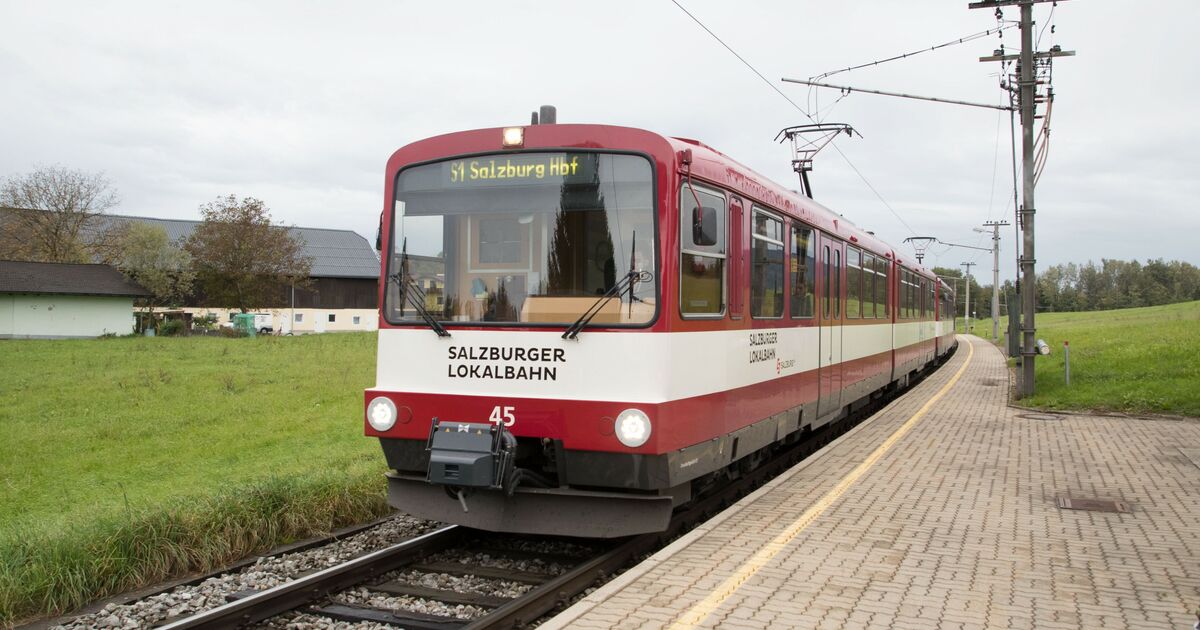
Salzburg Lokalbahn will soon see Karlsruhe style TramTrains
This is big news and certainly shows the European confidence in TramTrain.
The cost per car is somewhat steep (CAD $9.85 million) but it includes 16 years (and up to 32 years) of maintenance. This means the operators would be saved the cost of a mid life rehab!
Also this highlights the advantages of group procurement. Something Vancouver can’t do with the Skytrain but these cities can, with tram-trains.
Unfortunately, TramTrain a logical solution for RftV’s valley rail project and the E&N, is deemed not important by local, provincial and federal politicians who still pander for the photo-op ready SkyTrain light-metro, which looks so nice at election time.
As always, BC and local planners are 30 years behind the times with transit planning and refuse to deal with today’s transit problems using today’s transit solutions.
Salzburg Lokalbahn is participating in the 6-city TramTrain order.
EUROPE: A consortium of six German and Austrian transport bodies has awarded Stadler a framework contract for the supply and maintenance of up 504 tram-trains worth €4bn, the largest contract in the Swiss company’s history.
The long-awaited announcement of the award of a contract for up to 504 tram-trains by the VDV tram-train consortium came on 17 January when Stadler Rail was announced as the supplier for 246 Citylink cars, with an option for up to 258 more.
This is the largest order placed for a single vehicle type this decade (and the largest in Stadler’s history). It includes 16 (and up to 32 years) of maintenance and is worth up to EUR4bn (CAD $7.58billion), with the initial tranche valued at EUR1.7bn (CAD $2,46 billion) (EUR6.91m per car { CAD $9.85 million}).
The selected design is a three-section high-floor base car, fully air-conditioned, but configured for each customer – for instance those for AVG in Karlsruhe will be fitted with toilets to cater for long interurban workings, while those for Schiene Oberösterreich will have a larger luggage-carrying area. Deliveries will run over 12 years from July 2024, with main production taking place in Valencia, Spain.
Although procured under the auspices of the VDV association of public transport undertakings, VBK Karlsruhe has acted as technical lead for the project. End-user customers are Verkehrsbetriebe Karlsruhe (VBK), Albtal-Verkehrs-Gesellschaft (AVG) Karlsruhe, Saarbahn Netz Saarbrücken, Regional-Stadtbahn Neckar-Alb Tübingen, Landesanstalt Schienenfahrzeuge Baden-Württemburg, Land Salzburg (Salzburger Lokalbahn) and Schiene Oberösterreich (Upper Austria local railways).
Dr Alexander Pischon, CEO of VBK/AVG said: “We are very happy that in Stadler we were able to find a reliable and experienced manufacturer for this extraordinary project. A procurement concept like the one we have implemented here is unique in the world to date. Not only do we all benefit economically from scale, we also share our know-how… On average we have saved 20% of the cost per vehicle by ordering together.”
Peter Spuhler, CEO of Stadler, said: “We are proud to have won this international tender with our proven vehicle concept. The Citylink is a product that we have already delivered in numbers reaching 650 for operation in six countries.’
If one took the ‘Way-back’ machine to the late 1980’s, the argument that SkyTrain was cheaper to operate than LRT would show the massive propaganda campaign to give the public a positive view of the proprietary ALRT light-metro. This is because it was forced upon the region by the Social Credit government of the day.
There were no comparative studies done as the orders came directly from the Premiers Office.
The reality was, building the Expo line with ALRT was a horse-trade with the government of Ontario (the UTDC was their Crown corporation) to both sell a very unsalable R/T system and to obtain the services of the then Ontario Conservative governments ‘Blue Machine’ to win the next BC election.
This is the base for Vancouver’s love affair with light-metro.
The Detroit system is closing in 2025,
due to the trains and guideways being “life expired”.
Ever since, the SkyTrain light-metro system has been portrayed as a wonder system, which over time has built up to the current SkyTrain myth. Like Robin Hood or King Arthur, the SkyTrain myth is nothing more than cobbled together claims and cherry picked facts and a myth often repeated tends to become fact in the people’s minds.
It is all “repeat a lie enough times and the people will come to believe” shtick.
It also be remembered that both BC, Transit and TransLink were in partnership to sell Advanced Rapid Transit (ART) or SkyTrain, abroad. This meant that there would be no way for LRT to be built in metro Vancouver.
The Calgary C-Train has traditionally carried more customers than the Expo Line (both being about the same length) and costing less than half to build and much less to operate.
Today, many of the “old gang” at TransLink have retired and the new lot of bureaucrats (many earning six figured salaries”)repeat the old porkies actually believing they are true.
Sadly, never was.
The print and electronic media also fell into this trap as those reporters who did investigative reporting have long retired, with the new crop of reporters,eager to please their corporate bosses, treat TransLink news releases as real news, instead of a well planned propaganda campaign.
Even in the 90’s, then huge subsidies for ALRT, made the mini-metro not cost effective in operation.
Vancouver’s SkyTrain light-metro system has had the transit eyes of the world on it for almost 40 years, yet no one has copied Vancouver and that is a question that the SkyTrain Lobby prefer not to deal with.
In an era of unprecedented investment in public transport, no one has copied the Vancouver model, the exclusive use of a light metro, including a proprietary light-metro system, for urban transport.
Why?
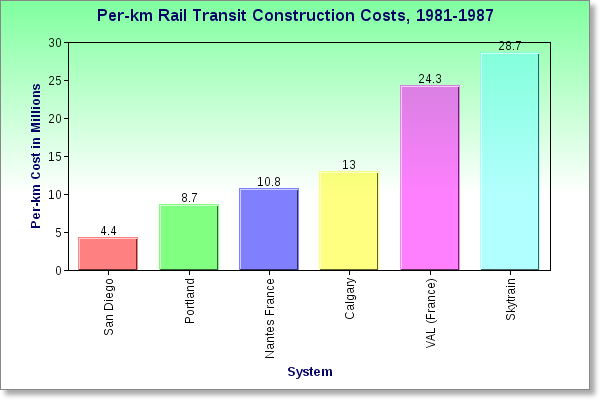
The per km cost of LRT and light-metro, 1981 to 1987.
A Comparrison Of Operating Costs – SkyTrain & Light Rail
The late Des Turner was meticulous with his research with the SkyTrain light metro system and in 1988, embarrassed the then Social Credit Government to release the real costs of the mini-metro.
What is more interesting is comparing the operating costs of the Calgary C-Train light rail and SkyTrain.
Thought the operating costs are a year in difference, it must be noted that the Calgary C-Train has historically carried more customers than the Expo Line, yet its operating costs are more than $12 million less than that of SkyTrain.
BC Transit knew this, but continued the myth that SkyTrain was cheaper to operate. This is called professional misconduct; others may call it more.
TransLink, which was mostly made up of BC Transit bureaucrats jumping ship, knew this, but continued the myth that SkyTrain was cheaper to operate.
COMPARISON OF OPERATING COSTS
The total 1988/89 budget for SkyTrain:
Operations………………… 5,483,863
Maintenance……………. 14,243,092
Administration………….. 7,931,834
Total: $27,658,789
(Rick Krowchuck, Executive V.P. Finance)
Calgary C-Train 1990 Operating Budget
Operators……………………… $2,332,000
Maintenance………………….$4,804,000
(Labour, parts, materials)
LRV Power……………………. $1,384,000
Fixed Operating …….Costs $6,815,000
(administration, cleaning facilities/buildings)
Total: $15,335,000
(Niel Mckendrick Coordinator of Transit Services, Calgary Transit)
The battery-diesel hybrid, seems a far better bet for regional railways than hydrogen fuel cell electric trains.
With battery-electric trains, the trains can operate on diesel in the country and on electric in urban areas. Also important, battery-diesel hybrid trains do not need expense of hydrogen fuel as the cost to make hydrogen is fairly high and the pollution caused by the production of hydrogen fuel.
Only Iceland can economically make hydrogen fuel, because of the ample cheap thermal power available.
In today’s world, simplicity is the best policy and the for medium run rail routes, the diesel electric hybrid train seems to be the best and cost effective way for regional railway needs.
Iceland has ample clean thermal power to produce hydrogen fuel.
The UK’s first 100mph battery-diesel hybrid train is entering passenger service to cut carbon emissions and boost air quality.
It was developed by adding a powerful battery to a 20-year-old diesel train to reduce fuel consumption and CO2 emissions by 25 per cent, according to owner Porterbrook.
The firm added that the two-carriage train, named HybridFLEX, also provides a 75 per cent decrease in noise and a 70 per cent decrease in nitrogen oxide.
The Government has pledged to remove all diesel-only trains from UK railways by 2040.
There are plans to use it between the capital and Oxford in the coming months.
The operator previously had a fully diesel fleet.
Chiltern Railways managing director Richard Allan said: “Chiltern Railways is determined to operate a railway that is as sustainable and environmentally friendly as possible.
“We have worked hard with our partners to fit a powerful battery power pack underneath a 20-year-old diesel train to make the train cleaner, quieter and quicker.
“We are really proud that this concept train is now carrying customers and look forward to assessing its performance in daily service.”
Porterbrook chief executive Mary Grant said the entry into service of HybridFLEX is “a significant first step” in demonstrating how the trains can slash emissions and boost air quality across the rail network.
Warren East chief executive of Rolls-Royce which produced the battery, described the project as “groundbreaking”.
He said: “In this critical decade of climate action, today’s entry into service of the HybridFLEX train demonstrates what we can achieve through technological innovation and agile collaboration.
“This smart piece of engineering enables the acceleration of the UK Government ambition to remove all diesel-only trains from the network by 2040, making rail journeys quieter, cleaner and faster.”
The 16 km Expo Line extension to Langley is now a provincial project.
This is what happens when a TransLink project becomes over one billion dollars short of funding.
This is what happens when the premier of the province makes construction a politcal promise.
This is what happens when bad transit choices become the norm.
Will service begin in 2028?
Don’t bet on it, I do not like the odds, as there is a $5 billion plus subway to UBC to complete!
Oh yes, for well under $1.5 billion, we can build and operate a modern 130 km passenger rail service connecting Vancouver to North Delta, Cloverdale, Langley, Abbotsford, Vedder/Sadris, Chilliwack and points in between, with with quality and reliable regional rail service, that so many countries enjoy today.
The current transit problem in Montreal is REM light metro problem.
REM is more of a financial tool for Quebec’s Caisse de Depot, who have gained much experience with Vancouver’s P-3 Canada Line light-metro, than a user-friendly transit system for Montreal.
Let us remember that the Canada Line, has only 40 metre long station platforms and can operate only 41 metre long 2-car coupled sets of EMU’s, is the only heavy rail metro in the world, built as a light metro, having less capacity than a simple streetcar or tram, costing a fraction to build.
Despite claims from the usual sources that the Canada Line is a great success, much important information is not readily available to the public, due to freedom of information concerns. F.O.I.’s pertaining to the Canada line hare heavily redacted.
The Caisse de depot has learned well from the Canada Line and REM is shrouded in secrecy. All major bus routes will feed REM, forcing unnecessary transfer on to customers and the REM route has been deliberately designed not to feed into the established metro system.
As well, local residents in Montreal are waking up to the fact that elevated railways are not a pretty sight and why they lost favour 100 years ago or so.
“It’s not a project for the people,” said Ronald Daigneault, who is with the Collectif en environnement Mercier-Est citizens’ group.
As it stands, he said, the project is looking less like public transit that serves the population and more like a business proposal aimed at turning a profit for deep-pocketed investors and real estate developers farther east.
The warnings of departing Société de transport de Montréal boss Luc Tremblay confirm what has lately become increasingly apparent: public transit in Greater Montreal is stuck and needs a major overhaul.
When a regional transportation planning and funding body was created in Greater Montreal in 2017, there were high hopes it would end the competition between different agencies, take the politics out of transit planning and lead to a better co-ordination of services.
Fast-forward five years and the Autorité régionale de transport métropolitain has failed to deliver on its potential.
If this has been growing increasingly apparent in recent years with key projects like the extension of the Blue Line of the métro hopelessly stalled, the point was driven home last week by the retirement announcement of Luc Tremblay as director-general of the Société de transport de Montréal.
Tremblay, a 28-year veteran of the STM, decided to end his tenure a few months early, before the agency embarks on its next long-term strategy. But in his parting words, he didn’t hold back on his criticism of the dysfunctional governance of transit in the Montreal region.
He blamed outdated funding models that have been exacerbated by the pandemic. But he also deplored a lack of leadership advocating for and ushering in the changes needed to strengthen public transportation while it is at a critical crossroads.
In other words, the ARTM is not living up to expectations.
Some of this is due to unforeseen circumstances beyond the body’s control.
The pandemic has thrown a spanner in the works of transit systems the world over. With more people working from home and schools shuttered for long periods in the last two years, ridership has plummeted as low as 80 per cent below previous levels at certain points and only partially rebounded at the best of times. This in turn sent revenues tumbling, leaving various operators and the regional funding body scrounging for cash and facing the prospect of devastating service cuts to offset deficits .
Quebec’s decision to turn to the Caisse de dépôt et placement du Québec to build two brand new driverless electric train networks has also sidelined the ARTM as the main body identifying transportation priorities in Greater Montreal. The pension fund has been given unprecedented powers to build the $7-billion REM linking the South Shore, West Island and Deux Montagnes with downtown. A $10-billion second phase to the east end and Montreal North is in the planning stages, though encountering more serious hurdles than the first leg.
Yet the ARTM has also missed opportunities to be a more effective player.
It took four years to draft its big-picture transportation plan for the Montreal region over the next decade. Granted, the pandemic delayed the process, which involved consultations with the public. But when it finally submitted the fruits of its labours to the Quebec government last summer, it failed to actually rank which projects should be prioritized. It read more like a lengthy wish list with a $57-billion price tag than a clear roadmap. The transportation ministry told the ARTM to go back and finish its homework — not exactly the way to bolster its credibility when it finds itself playing second fiddle to CDPQ-Infra.
All this to say, public transit planning has gone off track in Montreal.
Changes to how it is funded are not only overdue, they’re urgent now. The STM, its Longueuil and Laval counterparts, and commuter transit service Exo face unenviable choices in the immediate term that could undermine public transit far into the future. The ARTM not only has to manage partners squabbling over ever more scarce resources — it’s going to have to take a tougher stand with the provincial government, which holds the purse strings.
But the elephant in the room is really governance.
CDPQ Infra is in the driver’s seat, calling all the shots on two of the most costly, significant and transformational transit projects in generations, while the ARTM has been relegated to mere bystander. That’s hardly fair given it will eventually have to contribute $438 million a year to the REM’s operations.
Perhaps it’s hard to fault Quebec for putting the pension fund in charge given the ARTM’s lack of progress getting the Blue Line going . But there’s a power imbalance that must be corrected and a definition of roles that must be clarified.
The pandemic is here to stay for the moment and people’s working habits have changed for good. After the serious concerns voiced by Tremblay, it seems like it’s time for another major rethink of who plans, funds and operates public transit in Montreal.
Traffic calming major streets and having a tramway or streetcar operate on the route is standard practice in Europe, so why not here?
Politics aside, a modern tramway in Ottawa would, I believe, catch on with other major Canadian cities for providing an affordable quality public transit service.
With “Global Warming” and associated climate change, the country must adopt proven and affordable transit solutions instead of the current flavour of hugely expensive subways, exotic battery buses and other gadgetbahnen.
The modern tram is one of the most flexible and successful transit modes in the world and for Canada, it is time to build for the future and not the next election cycle.
A modern tramway in Ottawa, could lead the way for more affordable and user-friendly public transit in Canada.
Building a rail line and banning traffic on Wellington Street is one way to avoid another truck protest in the heart of Ottawa’s Parliamentary Precinct.
The Société de transport de l’Outaouais (STO) continues to plan a tramway between west Gatineau and downtown Ottawa, via the Portage Bridge. One of the options is to build the rail line on Wellington Street and completely remove vehicular traffic from in front of the Parliament Buildings.
While traffic would be pushed to other downtown streets, restricting the ceremonial Confederation Boulevard to only pedestrians, cyclists and transit customers is an idea on the table as multiple organizations consider what’s best for the capital experience, regional transportation and security in a high-risk area.
A larger study led by the National Capital Commission is considering a transit “loop” between downtown Ottawa and Hull in the long term, with the STO tramway project being a potential first phase.
Sen. Vern White has taken an interest in the idea of a transit loop, particularly when it comes with a potential to increase security in the Parliamentary Precinct.
“Having listened to the concerns about traffic there from those who are proponents of the loop, this problem in front of Parliament Hill with these heavy-duty trucks would be alleviated if it were in place,” White said.
Artist’s concept of the tramway loop on Wellington Street.Photo by Rendering supplied /Rendering supplied
White said it makes little sense to have vehicles pass not only in front of the Parliament Buildings, but within metres of the Office of the Prime Minister and Privy Council across the street.
“I’ve always said that should be barricaded from Elgin Street all the way down to Bank Street,” White said. “That should be a no-go zone for vehicles. It should be foot traffic only.”
The ongoing trucker protest hasn’t prompted that thinking, but it has amplified it, White said.
A tunnel under Sparks Street is another option to bring the tramway into downtown Ottawa, but a surface tramway on Wellington Street might be the leading option, especially since it would be much cheaper than digging a second rail tunnel through downtown Ottawa.
While decreasing road congestion by getting people out of cars and into trains has been a main driver of the STO project, it has also provided an opportunity for a complete rethinking of the Parliamentary Precinct and Wellington Street.
The NCC has supported the Wellington Street option for the tramway.
Ottawa city council prefers a Sparks Street tunnel but doesn’t oppose the Wellington Street option. The City of Ottawa isn’t paying for the STO project.
The STO’s study also leaned toward the tunnel, while noting cost and technical challenges could make the Wellington Street option the optimal choice. The project is still under study.
In considering the Wellington Street option, the STO’s study has been looking at a design that would either remove vehicles east of Bank Street, or allow some car lanes.
The federal government will have influence on the final option as a major funding partner. Security around key national assets could play into the feds’ decision.
Phil Gurski, a former CSIS strategic analyst and a Distinguished Fellow in National Security at the UniversityofOttawa ’s Professional Development Institute, said the security threats in the Parliamentary Precinct would be constantly monitored.
Gurski described authorities’ “delicate dance” of allowing people to protest while protecting MPs and other people working on the Hill.
“The mere fact that the trucks have been there since Friday shows to me they’ve made the assessment that allowing them there is not a threat to national security or public safety,” Gurski said. “If they make a decision to open (Wellington Street) up, I think it’s because they want to get back to normalcy as soon as possible.”
The Ottawa Police Service is leading the protest enforcement, with help from other agencies, including the RCMP and OPP.
Ottawa police have allowed the protest to continue, with Chief Peter Sloly saying on Monday, “This demonstration is unique in nature, massive in scale, polarizing in context and dangerous in literally every other aspect of the event itself.”
White, a former Ottawa police chief, said police are doing exactly what they can do until the number of protestors decreases, allowing a dialogue between the two sides.














Recent Comments