With Covid-19, this becomes more important than ever.
Right now we have a Hobson’s choice for regional rail transit, extend the Millennium and Expo Lines and continue using the proprietary Movia Automatic Light Metro or nothing.
This must change and change soon, or the hugely expensive SkyTrain light metro system will become largely irrelevant; a museum piece dedicated to political corruption, professional ennui and public hubris.
The public just cannot afford throwing billions more at rapid transit for so little return.
First posted by zweisystem on Thursday, October 11, 2012
Subways & metros are very expensive to build and operate.
The proposed new tunnel that is planned to replace the George Massey Tunnel is on the back burner. Premier John Horgan cancelled the Liberal vanity project and a more reasonable solution has been made.
Replacing the tunnel with a larger a larger tunnel will only send the gridlock to the next choke point, Steveston Highway and ultimately the Oak Street & Knight Street bridges. This will cause massive congestion if traffic through the tunnelwhen highway traffic is expanded.
What is needed is a a rail transit solution that works and can be readily and affordably extended to meet the needs of the ever growing population South of the Fraser River.
The proprietary SkyTrain light metro system and the light metro philosophy of operation has done very little in attracting the motorist from the car. The light-metro’s high ridership can be attributed mostly to recycling of bus customers who are forced to transfer from bus to metro to complete ones journey to Vancouver/Burnaby.
SkyTrain has done little to ease congestion in the METRO Vancouver area.
The proprietary SkyTrain light-metro system is just too expensive to build and it just cannot be extended affordably into the outer suburbs to attract new customers. The extremely high costs of rapid transit has made rubber on asphalt solutions cheaper than improving regional transportation, as evidenced by the many highway expansion projects underway in the Metro Vancouver region. As new highways are built, auto use increases, with the only barrier against increased auto use being road capacity.
Extremely myopic regional planning, shows Metro Vancouver’s complete ineptitude when it comes to regional transportation as transit planning is based on 70 year old concepts, when fanciful monorails, metros and subways were all the rage.
What was “de rigor” in 1960 is not just passe in 2020, it is obsolete.
Sadly, this short sighted and extremely dated planning, will only lead to more gridlock and traffic chaos.
The Canada Line is a heavy-rail metro, operating ROTEM’s electrical multiple Units (EMU’s), but built as a light metro, with very limited capacity. The Canada Line’s automatic operation, complete with small stations and 40 to 50 metre long platforms gives roughly slightly more than half the capacity of the Expo and Millennium Lines, which stations have 80 metre long platforms. The capacity constrained Canada Line has hamstrung future attempts capacity to meet tomorrow’s transit demands.
To both increase capacity on the Canada Line and to increase its reach into Richmond in an effort to attract more ridership,would cost a minimum of $2 billion.
$2 billion would buy you about 80 km. (at about $25 mil/km.) of modern LRT!
That $2 billion would be put to better use by:
Converting the Canada Line hybrid heavy/light metro to light rail.
Increasing North/South capacity by using the Arbutus Corridor.
With the money saved by much cheaper LRT construction, extend the the new Canada Line LRT across the Fraser river into Delta and South Surrey.
This is not whimsical musings, rather it very well may be a transit solution that TransLink or a future operating authority may seriously consider.
The Canada line is in a conventional railway and most modern light rail vehicles would easily operate within the Rotem EMU’s Kinematic Envelope.
(Kinematic Envelope: the space that a rail vehicle could potentially occupy as it moves laterally and vertically on its suspension.)
The expensive and complicated automatic signalling system should be replaced with much simpler and more robust signalling system, doing away with the higher operating costs of automatic signalling.
Retain third rail power pick on the elevated and underground portions of the line by equipping, as done before on other transit lines, the trams with retractable shoes to collect power from the third rail and using standard pantographs on non-guideway portions of the line. Simply, the first station the tram stops at on the guideway portion of the line the driver drops the pan and deploys the power collection shoes. Several tram varieties on the market today have dual pantograph/shoe for power pick up on APS ground level contact-less power supply.
By converting the Canada Line to LRT would make the cost of extending the Canada Line, first to Steveston and Ironwood Mall an affordable option. It would also be much cheaper to build with LRT for a new crossing of the Fraser River to serve both Ladner and South Delta; then onwards to South Surrey.
The cost to extend the Canada line to Steveston and Ironwood Mall (about 11 .3 km.), should cost no more than $400 million and the CN rail line bisecting Richmond is reported up for sale for $65 million, probably much cheaper if it was used for transit. It is conceivable that for the cost of the Canada Line extending to Steveston and the Ironwood Mall, we could build LRT to both Steveston and the Ironwood Mall, then through a tunnel under the Fraser River to Ladner and the Tsawwassen ferry terminal!
To increase capacity of the capacity limited trunk line to downtown Vancouver, the Canada Line can branch onto the existing and seldom used former interurban route, owned by the CPR to New Westminster, To access downtown Vancouver, using the Arbutus corridor and Granville Street bridge, which was designed for trams. This could be done quite cheaply for under $20 million/km.
It is time for TransLink to start planning for light rail for the region. SkyTrain, with construction costs exceeding $200 million/km. just cannot be built economically into the burbs, but modern LRT, with construction costs as low as $6 million/km. (TramTrain) can. Regional politicians must be made to understand that building with SkyTrain and/or light-metro has been a mistake and that we must plan future transit on the light rail model. The regional politicians who make up METRO Vancouver should tell TransLink either change their transit planning direction and for a start, seriously look at converting the Canada Line to LRT and extend it through Richmond, with plans to build it across the Fraser River to Delta and beyond.
Trial balloon: A tentative measure taken or statement made to see how a new policy will be received.
As the Daily Hive seems to be the official organ of TransLink, it comes as no surprise that a trial balloon is floated regarding an elevated SkyTrain to UBC.
The first problem is that Vancouver City Council, horrified at the ugly elevated guideway in New Westminster, Burnaby and East Vancouver, passed a by-law banning an elevated guideways within the city.
An elevated light-metro guideway would be political suicide for MP’s and MLA’s in the riding’s it passed, it would also be political suicide for any Vancouver Councillor or mayor supporting this option.
What is of interest is the reposting of this almost year old story and I would surmise, it was done to take the spotlight off of the current subway controversy.
Other than a bureaucratic make work project for under employed Translink planners, an elevated SkyTrain trundling to and fro to UBC is a non stater.
It’s a near certainty that if SkyTrain were to be extended all the way to the University of British Columbia, the section between Arbutus Street and Alma Street will be tunnelled under West Broadway.
There will be subway stations at Macdonald Street and Alma Street to serve the immediate areas and provide bus connections.
But west of Alma Street within Point Grey, the University Endowment Lands (UEL), and UBC, the route is far from certain and obvious at this early stage of planning.
According to the findings of the new detailed technical analysis released by TransLink earlier this week, rapid transit west of Arbutus Street to UBC needs to be SkyTrain to ensure the system is built with future-proof capacity. The final decision on rail technology lies with the Mayors’ Council.
However, if SkyTrain is chosen, the report reveals there are several route and built form options SkyTrain could take from Alma Street to the ultimate terminus at UBC’s Point Grey campus.
“The SkyTrain extension would be the one technology that would provide sufficient long-term capacity to meet the needs,” said Geoff Cross, the Vice-President of Planning and Policy for TransLink, during today’s Mayors’ Council meeting.
The main questions are now: “How much of it is elevated versus tunneled and what key land uses do you need to hit? Where are the stations located? What would the exact corridor be?”
TransLink must soon face a very unpleasant truth, Metro Vancouver’s transit system is crap; it is strictly a commuters transit system, with, except for the core of City of Vancouver, there is little off-peak usage.
The transit system is designed to feed the light-metro system and because of this, TransLink, as BC Transit before. has been overstating ridership for decades.
Metro Vancouver’s transit system is user unfriendly, with nothing about the system that attracts ridership.
Then add the Covid-19 fact that people’s work habits are changing, with many working from home or commuting by car to satellite offices, not in the downtown.
People, for health reasons are still commuting by car and for the elderly, they are just avoiding transit altogether.
This is not going to change any time soon, but the politicians, who have drunk their own bathwater for so long, haven’t a clue to the realities of metro Vancouver’s public transit system.
The old finical model for the SkyTrain light-metro network was deferring costs for the next generation to pay, the problem now, the next generation doesn’t want to commute, nor take transit. Trying to shove a square peg into a round hole, best describes current transit planning and the next generation, burdened with the aftermath of Covid-19, will have little sympathy for those who demanded a hugely expensive, inflexible and now obsolete transit system.
By the way, notice how TransLink’s CEO uses percentage and not the real numbers?
My guess is, real numbers would illustrate how devastating ridership has fallen, so much so, to give politicians pause, to rethink $4.6 billion to extend the Expo and Millennium Lines a mere 12.8 km.
User-unfriendly, very expensive to operate and maintain and inflexible in operation will be the final epitaph of Vancouver’s light metro system.
Metro Vancouver transit ridership hasn’t recovered from COVID-19: TransLink CEO
VANCOUVER (NEWS 1130) — Close to half of bus riders have not returned to transit as TransLink resumed full services this past summer after limiting them in the early days of COVID-19.
Even fewer riders got back onboard the West Coast Express and TransLink is expecting revenue losses of $2 billion to $4.5 billion over the next 10 years, CEO Kevin Desmond said during a quarterly board meeting on Monday.
Overall, ridership is still down compared to pre-COVID levels, he added.
“These are probably a lot of people that can very easily work from home and continue to work from home,” Desmond said.
On buses — the most used transit service — ridership is down 43 per cent compared to before the pandemic.
“It has responded somewhat more quickly than the other ones, all the way down to West Coast Express, which has had the weakest ridership return,” Desmond said of buses.
Only 17 per cent of riders returned to the West Coast Express, while that for SkyTrain is about a third of what it was before.The Expo and Millenium lines are at 38 per cent ridership compared to that before COVID-19. The Canada Line is at 31 per cent ridership.
Seabus ridership is down 27 per cent, while that for HandyDart is down 35 per cent.
Ridership varies by region
According to TransLink, ridership varies by region to region, with fewer people in centralized areas — such as Vancouver — returning to transit, compared to the suburbs.
Ridership overall is down 39 per cent in the Vancouver-UBC area. That in Burnaby and New Westminster is down 37 per cent.
Ridership is down 42 per cent in the southwest area, 51 in the southeast, 37 in the northeast, and 55 in Maple Ridge and Pitt Meadows.
TransLink sought financial assistance from governments in April as revenue losses totalled about $75 million a month after introducing several measures to curb transmission of the virus, including read-door boarding and waiving fares.
Mayors look to increase ridership
TransLink initially planned to lay off about 1,500 employees, reduce senior executive salaries, and suspension of transit services, including buses, SkyTrain, SeaBus, and West Coast Express to cope with the revenue losses.
The federal government then provided about $540 million in direct aid to public transit in B.C.
TransLink then announced in August that masks or face-coverings are mandatory onboard transit vehicles.
With more people opting-out of taking transit and getting back into cars amid the pandemic, Metro Vancouver mayors are poised to consider how to increase ridership and decrease traffic.
A report set to be tabled at the Oct. 1 meeting of the Mayors’ Council on Regional Transportation points out some of the challenges TransLink is facing due to the pandemic.
Here are ten questions to test the knowledge of political candidates about LRT & public transit in May’s provincial election. Passing grade is 70%.
What is light rail transit?
What Makes a tram or Streetcar Light Rail
What is a metro?
What is capacity?
What grade maximum is now industry standard for light rail?
What is the maximum grade that LRT/tram climbs (by adhesion) in revenue service today?
What is the capacity of the Broadway B-Line Express Bus?
Approximately what percentage of operating costs of a transit system can be attributed to wages?
Approximately how much ridership is lost per transfer?
Are automated transit systems cheaper to operate than non automated transit systems?
What is the maximum capacity of the largest light rail vehicle today, calculated at all seats filled and standing passengers at four persons per square metre?
How many names has the SkyTrain, as used on the Millennium and Expo Lines, been marketed under?
Before the first subway was built in Toronto, what was the maximum capacity obtained by using trams on the streetcar system?
What is the maximum legal Capacity of the SkyTrain system?
What is considered the maximum capacity obtained by a streetcar or tram route?
A coupled set of PCC cars operating on Toronto's Bloor St.
Answers:
1) LRT is a transit mode, generally electrically powered, able to operate in mixed traffic, that can economically carry between 2,000 and 20,000 persons per hour per direction.
2) The dedicated or “reserved” rights-of-way, enables a modern tram to have an operation almost on par with a heavy rail metro.
3) Metro is a grade separated transit mode, electrically powered, built for average hourly ridership loads in excess of 15,000 pphpd. LRT can be operated as a metro, though a metro can’t operate as light rail!
4) Capacity is a function of headway and car capacity.
5) 8%
6) 13.8% (Lisbon, Portugal) – (Correct if one answers 13% or 14%)
7) Based on TransLink’s schedule of peak hour 3 minute headway’s (20 trips per hour per direction) and bus capacity of around 100 persons, the hourly capacity of the Broadway B-line Express bus is around 2,000 per hour per direction.
8 ) 70%
9) 70%
10) No, studies have found that LRT is cheaper to operate, when comparing equal systems.
11) 350 passengers; the 54 metre long ‘Caterpillar’ modular light rail cars used in Budapest, Hungary. (By comparison, four Mk.1 SkyTrain cars have a capacity of 300 persons!)
12) At least six: Intermediate Capacity Transit system (ICTS); Advanced Light Rail Transit (ALRT); Advanced Light metro (ALM); Advanced Rapid Transit (ART); Innovia Light Metro (ILM) ; Movia Automatic Light Metro (MALM).
13) The old Danforth Boor streetcar route, operating coupled sets of PCC cars obtained a peak hour capacity in excess of 12,500 pphpd.
14) The maximum legal capacity of the Expo and Millennium Lines, according to Transport Canada’s Operating Certificate is 15,000 pphpd.
15) Over 30,000 pphpd on Kaiserstrasse in Karlsruhe Germany. Due to the success of its regional TramTrain network, Kaiserstrasse saw peak hour headways of 40 seconds with coupled sets of trams and TramTrains. So congested was the route it was nicknamed the “gelbe wand” or yellow wall by locals (yellow being the predominate colour of the trams). Soon a new subway will replace the route.
On September 20, 2010, Rail for the Valley unreleased the groundbreaking Leewood Study regarding the reinstatement of a passenger service using the former BC Electric, now Southern Railway of BC route.
Why Groundbreaking?
The Leewood Study was the first and only independent study done on passenger rail for the Fraser Valley, without political or bureaucratic bias.
The Leewood Study shows the way how passenger rail should be reinstated on the former passenger rail route.
Today, more passenger passenger rail services are being restored on previously abandoned passenger routes; more passenger rail services are being restored on routes long abandoned and now rebuilt. Today politicians and planners see both the wisdom and economy of using existing railway infrastructure as a means to affordably extend passenger services to areas otherwise unreachable due to cost.
The vision was there a decade ago and the vision remains for the Fraser Valley, the question is; “Do politicians and planners in Metro Vancouver have the vision beyond there own parochial politics?”
The following is the Leewood Study’s costs for reinstating passenger rail, adjusted to 2020 dollars.
Total capital costs in 2020 dollars:
Stage 1 Phase 1 (Diesel Light Rail) 98 km Scott Rd. – Chilliwack: $578 million
Stage 1 Phase 2 (Electrification) 98 km Scott Rd. – Chilliwack: $134 million
Stage 2 Proposal – 28 km Extension to Downtown Vancouver: $426 million
Stage 3 Proposal – 12 km Extension to Rosedale: $33 million
Total:$1.171 billion!
$2.9 billion less than the estimated cost of the 12.8 km extensions to the Expo and Millennium Lines!
From 2010
Groundbreaking report on Interurban light rail – released TODAY
Surrey Leader Editorial: We should get on track (Frank Bucholtz)
North Shore News: Valley residents on track with light rail
Vancouver Province: Valley light rail all go, twin groups claim
News 1130: Commuter rail service to the Valley is affordable – study
Rail For The Valley is extremely excited to announce the release of a comprehensive independent analysis of the potential for light rail service on the existing and publicly owned Interurban Rail Corridor, connecting communities from Chilliwack to Vancouver with an affordable, sustainable public transportation system. The study, now complete, was performed by Leewood Projects.
About Leewood Projects:
Leewood Projects is a British-based company that has professional expertise in light rail solutions, providing comprehensive project management and planning services to the international railway industry. Leewood Projects has i the past had involvement in prestigious rail projects such as the Channel Tunnel.
Railway stations designed as community gathering points. 10 full stations and 8 Tram Stops.
A detailed Journey Time matrix for stops along the line.
Total journey time between Surrey Scott Rd. SkyTrain Station and downtown Chilliwack: 90.5 minutes.
Future proposed expansions of the line: Downtown Vancouver (Stage 2) and Rosedale (Stage 3).
A detailed capital cost breakdown for the entire project.
Total capital costs (2010):
Stage 1 Phase 1 (Diesel Light Rail) 98 km Scott Rd. – Chilliwack: $492 million
Stage 1 Phase 2 (Electrification) 98 km Scott Rd. – Chilliwack: $114 million
Stage 2 Proposal – 28 km Extension to Downtown Vancouver: $363 million
Stage 3 Proposal – 12 km Extension to Rosedale: $28 million
This is the most comprehensive light rail study ever undertaken in this province, performed by a company with professional expertise in light rail solutions. This report at long last provides us with an honest accounting of the potential for light rail service on the Interurban corridor.
More than a decade later, these lessons have still not been learned. It is sheer negligence on the part of TransLink, the Mayor’s Council on Transit, and the Ministry of Transportation, that they remain ignorant of what was commonly known elsewhere, not just a decade or so ago, rather three decades ago.
Ignorance of the truth, is not a defense.
Lesson #1
In the very early 1980’s, the Ontario Conservative Party (the William Davis Government) tried to force the Toronto Transit Commission (TTC) to build with the new Intermediate Capacity Transit System or ICTS, now known as SkyTrain; produced by the Urban Transit Development Corporation (UTDC) an Ontario crown corporation. The TTC commissioned a comprehensive study comparing streetcars/LRT and metro with ICTS. The results were not encouraging to those wishing to sell ICTS and even gave the City of Hamilton enough ammunition to reject the Ontario provincial government lead, construction of ICTS in the city. The TTC transit study, the Accelerated Rapid Transit Study or ‘ARTS’ found that:
“ICTS costs anything up to ten times as much as a conventional light-rail line to install, for about the same capacity; or put another way, ICTS costs more than a heavy-rail subway, with four times its capacity.”
ICTS was dead in the water as a product, so UTDC did what every other manufacturer does when faced with this dilemma, they changed the name from ICTS to ALRT or Advanced Light Rail Transit and sold the unsalable ICTS to some political rubes out West, namely Bill Bennett and Grace McCarthy, the leader and deputy leader of the British Columbia Social Credit Party and the rest, as they say, is history.
Toronto’s ICTS system, one of two built.
Lesson #2
In the 1980’s there was much debate between modern light-rail and many proprietary transit systems being offered for sale, which included the SkyTrain ICTS/ALRT automatic light-metro. Many claims were made by the owners of various proprietary transit systems being offered for sale, about the effectiveness of their transit systems. In 1991, Gerald Fox a noted American transit specialist, produced a study comparing light-rail and automatic guided transit (AGT) systems including SkyTrain and the French VAL light-metro system. The study concluded that despite the hype and hoopla of the promoters of AGT systems, there was no benefit in building with more expensive AGT. These conclusions were not lost on American and European transit planners, who wanted ‘the best bang for the buck’ and the desire to build prestigious and expensive light-metro systems waned from the mid 90’s until the present day.
Conclusions from Gerald Fox’s A Comparison Between Light Rail And Automated Transit Systems. (1991)
Requiring fully grade separated R-O-W and stations and higher car and equipment costs, total construction costs is higher for AGT than LRT. A city selecting AGT will tend to have a smaller rapid transit network than a city selecting LRT.
There is no evidence that automatic operation saves operating and maintenance costs compared to modern LRT operating on a comparable quality of alignment.
The rigidity imposed on operations by a centralized control system and lack of localized response options have resulted in poor levels of reliability on AGT compared to the more versatile LRT systems.
LRT and AGT have similar capacities capabilities if used on the same quality of alignment. LRT also has the option to branch out on less costly R-O-W.
Being a product of contemporary technology, AGT systems carry with them the seeds of obsolescence.
Transit agencies that buy into proprietary systems should consider their future procurement options, particularly if the original equipment manufacturer were to cease operations.
Today TransLink and the provincial government still make unfounded claims of superior operation for SkyTrain (if it doesn’t snow) and denounces LRT as a poor-man’s rapid transit system. Nothing could be further than the truth and it still seems TransLink and the SkyTrain lobby have failed to read and understand transit lessons, taught almost two decades ago!
France’s VAL system, a commemorate of today’s Movia Automatic Light Metro, a.k.a. SkyTrain.
Yesterday’s NDP pre election telly-op on local television stations of the standard TransLink fare of having five options for rapid transit to the North Shore showed some very strange animations.
Instead of animations of SkyTrain trundling through tunnels, it showed TGV style trains instead.
One wonders if the NDP are going to have surprise announcement of 300 kph TGV trains whisking transit customers from Waterfront Station to Lonsdale?
So, is the NDP secretly planning for TGV or high speed trains or was it all a pre election photo/telly-op, using cheap props because in reality any rapid transit to the North Shore is a minimum of 30 years away?
As with all Metro Vancouver transit projects, they are good for three or four election cycles.
The NDP are just using their tired playbook from the 90’s, nothing more and, shock and disbelief, Parliamentary Secretary for TransLink, Browinn Ma is the do nothing MLA for North Vancouver Lonsdale.
Need I say more.
“Our government is committed to creating greener and more liveable cities and boosting access to transit as much as possible,” Claire Trevena, minister of Transportation.
If the NDP government was really committed to creating a greener and more livable cities, they would dump the $500 million/km plus Broadway subway in favour of $25 million/km LRT and the $200 million/km Expo Line extension in Surrey for $6 million/km Vancouver to Chilliwack TramTrain.
Show us the funding for this $6 billion plus project, then maybe we will get excited.
NORTH VANCOUVER (NEWS 1130) — Rapid transit to the North Shore is one step closer to being delivered after the completion of a technical feasibility study, with five potential crossing options.
The list for a third Burrard Inlet crossing — finalized by the B.C. Ministry of Transportation — includes links to either downtown Vancouver or Burnaby, via a tunnel or bridge.
“We are now able to move forward on some more technical planning around that. That’s the really exciting part, for me. There’s at least five feasible options,” said Linda Buchanan, mayor of the City of North Vancouver.
She’s not saying which option she prefers, though.
“At the end of the day, I just want to make sure that we can do the next phase of the work, and we really are looking at getting a line that starts us to be able to move people and goods and greener and sustainable ways, keeps our cities vibrant and makes us more prosperous.”The Burrard Inlet Rapid Transit study is to help with Transport 2050 planning.
The study was led by Mott MacDonald Canada and listed as crossing options:
Downtown Vancouver to Lonsdale via First Narrows (tunnel crossing);
Downtown Vancouver to Lonsdale via Brockton Point (tunnel crossing);
Downtown Vancouver to West Vancouver via Lonsdale (tunnel crossing);
Downtown Vancouver to Lonsdale via Second Narrows (new bridge crossing);
Burnaby to Lonsdale via Second Narrows (new bridge crossing).
“Our government is committed to creating greener and more liveable cities and boosting access to transit as much as possible,” Claire Trevena, minister of Transportation and Infrastructure, says in a release.
“This study shows possibilities that can be considered in future planning. It’s exciting to look towards a future high-speed connection that will make moving around on the North Shore and Greater Vancouver easier and greener.”
Connecting Lonsdale City Centre with Vancouver’s metropolitan core and the regional rapid transit network, while considering compatibility with existing and future land use, is one of the recommendations put forward by the Integrated North Shore Transportation Planning Project.
“People living in North Vancouver are eager to embrace socially, environmentally responsible ways to travel that allow them to beat the traffic,” says Bowinn Ma, MLA for North Vancouver.
No timeline or start date has been set for the crossing project, nor have costs.
Cutting through TransLink’s hype and hoopla about the proposed aerial tramway to Simon Fraser University and despite their sham public input process, they remain mute on operating costs.
This is a Trojan Horse, because the annual subsidies need to operate it must come from other regions in TransLink’s vast empire, notably the South Fraser.
The initial Expo line was claimed by the boosters and politicians of the day, that it covered its operating costs, but at the same time the operating costs were never revealed.
Extending the Expo line sent off alarm bells in the GVRD, which released a study on the costs of transporting people in the Fraser Valley region, which showed that just the Expo Line to New Westminster was subsidized annually more than the combined diesel and trolley bus systems.
In 1993, the annual subsidy for the Expo Line, just to New Westminster was a massive $157 million annually!
In no way was the Expo Line covering its operating costs and in fact was a massive drain on BC Transit revenue stream!
Today, TransLink keeps secret the annual subsidy for the SkyTrain light metro system but privately it is estimated to be around $400 million, with over $110 million of this sum being paid to the SNC Lavalin lead consortium operating the Canada Line faux P-3 operation!
It is also politely not mentioned, that the proprietary Movia AutomaticLight Metro system, used on the Expo and Millennium lines costs about 45% more to operate than a conventional light rail, because it uses Linear Induction Motors and the wrong type of Linear Induction Motor!
The Broadway MALM operated subway will not only cost 45% more to operate than a system using LRT or even a conventional light metro car, the costs of maintaining the subway itself, based on Toronto’s Metrolinx (which has a lot of experience operating subways) data, will add $40 million more to TransLink’s annual operating costs for the light metro.
Add the 45% premium for operating the LIM equipped MALM system, the total operating cost of the 5.8 km Broadway subway maybe nearer to $60 million!
The regional taxpayer is being taken for a very expensive ride!
Now we come to the last of the trio of vanity projects for metro Vancouver’s three largest cities, the Burnaby aerial tramway going to SFU. What will be the annual operating costs and I mean the real operating costs, not TransLink’s fudged figures that they are so famous for.
The following is the current adult fares for the following aerial tramways:
The 300 metre long Hell’s Gate aerial tramway is $16.00 per adult.
The cost of the 3.03 km Peak to peak aerial Tramway is $75 per adult weekdays and $80 per adult weekends.
The cost of the 885 metre Sea to Sky aerial tramway ranges from 53.95 to 59.95 for adults. (See Stop Press)
The cost for the long running, 1.6 km Grouse Mountain aerial tramway is $29.50 (previously pre-covid) which is 50% off their normal fare.
The fare using the proposed approximately 2.5 km SFU aerial tramway will be the $1 a day U-Pass, allowing for unlimited daily travel.
Despite the many hosanna’s being sung by Burnaby Council, SFU and TransLink, the aerial tramway will be highly subsidized which means higher fares, taxes and the cannibalization of transit south of the Fraser.
Regional Mayors had better wake up and smell the coffee because after this prestige project, TransLink’s cupboard will be bare.
SQUAMISH (NEWS 1130) – Vandals appear to have hit the Sea to Sky Gondola for a second time. This comes just more than a year after cables were deliberately cut, sending dozens of cars crashing to the ground.
The attraction’s general manager says “exactly the same thing” happened Monday morning.
“Something you’d never think would happen, once in a lifetime, has happened twice,” General Manager Kirby Brown tells Mountain FM. “An individual climbed a tower and, despite our security system and all of the measures, rapidly cut through the cable and brought the gondola to the ground.”
Brown says the RCMP is on scene.
The Sea to Sky Gondola brought in additional security following last year’s vandalism. However, that didn’t appear to deter the person responsible.
“We’ve got clear imagery of what happened,” he says, adding most of his team had not been made aware of what happened as of 7:00 a.m. Monday.
“As the light comes on the gondola, it’s perfectly clear to everybody what’s happened, given the experience that we and our town has been through before,” Brown says, adding the investigation is still in its early stages.
The cutting of the cable in 2019 resulted in millions of dollars in damage. The company was forced to bring in about 30 new cabins and a new main haul rope from Europe.
“This is one bad actor who needs to be caught and brought to justice for the protection and safety of us all,” Brown tells Mountain FM, adding the company will do what it can to keep people safe and hopefully rebuild, again.
Spending the morning on the phone with industry partners, Brown says everyone is rallying around the Sea to Sky Gondola to get it back up and running.
“We now know that in addition to all the security measures we put in place before, we’re going to have to put more physical protections in place until this person is caught. That will be the focus of the RCMP,” he says.
The priority now is to get the gondola operating again, he adds.
“We’re not going to let one person bring us or the town down,” Brown affirms. “I know we will rebuild again.”
-With files from Mountain FM, Monika Gul, and Martin MacMahon
Monorails are proprietary railways and suffer the same ills that come with proprietary transit systems. They are expensive to operate and maintain. Spare parts tend to be expensive and hard to get, especially when the manufacturer ceases production.
With the proprietary Movia Automatic Light Metro, TransLink and Metro Vancouver will soon have to relearn the pitfalls of operating an aging proprietary railway.
The Skytrain is an orphan design because fewer and fewer of the options that make up the Skytran as a whole, options that people in Vancouver would recognize as your Skytrain, are being chosen by other cities. The LIM propulsion system of the Skytrain is a prime example. Bombardier offers it as an option instead of the cheaper standard electric propulsion motors. The lack of sales in many of Skytain’s other special features (other than the Citiflo 650 Automation System which is a big seller) is probably why the Skytrain technology was shoved from its own design category into the Movia set of products last year by Bombardier. ~ haveacow
Monorails, which have an ardent lobby, as strong as the SkyTrain lobby are going to have a quick lesson in the pitfalls of building with a gadgetbahnen, but like the SkyTrain lobby, the will remember nothing and they will learn nothing.
Las Vegas Monorail files for Chapter 11 bankruptcy
The Las Vegas Monorail crosses over the Las Vegas Convention Center as viewed on January 4, 2017 in Las Vegas. (Photo by George Rose/Getty Images)
LAS VEGAS (KLAS) — The Las Vegas Monorail Company has filed for Chapter 11 bankruptcy. The company made the announcement Monday, saying it’s doing it as a voluntary petition for protection under Chapter 11 of the U.S. Bankruptcy Code in the United States Bankruptcy Court for the District of Nevada.
The company’s Board of Directors authorized the filing. The following statement was released.
“The Las Vegas Monorail has served a critical mobility need in the resort corridor for over 16 years, carrying over 85 million riders during that time. Like many other companies, we were forced to shut down on March 18 due to the COVID-19 pandemic and are not yet able to reopen,” said Curtis Myles, president & chief executive officer. “As a result, it is in the Las Vegas Monorail company’s best interest to file for bankruptcy and effectuate a sale of the system assets to a party who intends to keep the system in operation and help ensure that the mobility benefits the Monorail provides continue during conventions, events and throughout the year.”
8 News NOW first told you that the Las Vegas Monorail entered into a sales agreement with the Las Vegas Convention and Visitors Authority, which the Monorail will submit to the bankruptcy court under an auction sale. Other qualified bidders are also allowed to participate.
Idled Las Vegas Monorail to be bought by city’s tourist authority
In this 2016 photo, the Las Vegas monorail pulls out of a station.
The idled Las Vegas Monorail is being bought by the local tourism authority, which plans to arrange the system’s second Chapter 11 bankruptcy in 16 years.
The Las Vegas Convention and Visitors Authority on Tuesday approved, by a series of 12-1 votes, spending $24.26 million to acquire the 3.9-mile elevated train system from the not-for-profit Las Vegas Monorail Co., the Las Vegas Review-Journal reported. Las Vegas Mayor Carolyn Goodman voted no.
The elected Clark County Commission also approved the move.
The system, which cost $650 million to build, shut down in March because of the COVID-19 pandemic. It makes six north-south stops, including at the Las Vegas Convention Center and several hotel-casinos east of the Las Vegas Strip.
Officials said management and operations would change after the purchase by the authority, which also owns and operates the convention center.
The monorail workforce of about 120 has been reduced by furloughs to about 15 people. The Review-Journal said it was not immediately clear whether current management and staff would be involved once the buyout closes.
Sep. 2, 2020
Tourism authority chief Steve Hill told the tourism board that the system could be obsolete in the next decade, but the purchase gives the authority a non-compete agreement on the east side of the Las Vegas Boulevard tourist corridor.
Elon Musk’s Boring Co. is due later this month to begin testing an east-west underground people mover designed to whisk conventioneers between exhibit halls at the existing convention center and an expanded facility.
Musk also got the go-ahead from county officials to extend his loop system using driverless cars from the Convention Center to Wynn Resorts’ Encore and the Resorts World project that is nearing completion across the street on the Las Vegas Strip.
Hill said the tourism authority would shelve proposals to build a new monorail station near the Sands Expo and Convention Center and the Venetian and an extension from the MGM Grand to the Mandalay Bay resort and Allegiant Stadium.
The monorail began operations in July 2004. But it shut down two months later amid problems, including parts falling from the elevated track. It resumed operating that December.
Ridership never met builders’ projections, peaking at nearly 8 million annually before the major recession that began in 2007. In recent years, ridership has fallen to less than 5 million a year.
The corporation reorganized after filing Chapter 11 protection in 2010 and emerged from bankruptcy two years later.
Hill said Tuesday that convention customers asked the tourism authority to keep the monorail operating because of its convenience, the Review-Journal reported.


 when highway traffic is expanded.
 power collection shoes. Several tram varieties on the market today have dual pantograph/shoe for power pick up on APS ground level contact-less power supply.


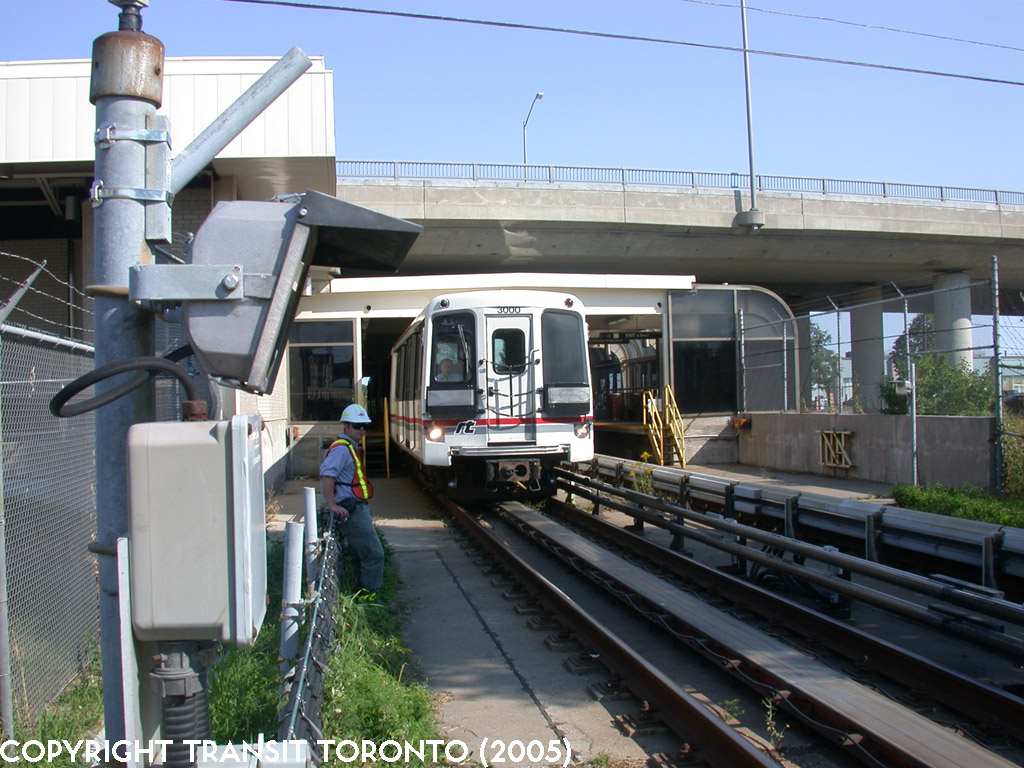 Toronto’s ICTS system, one of two built.
 France’s VAL system, a commemorate of today’s Movia Automatic Light Metro, a.k.a. SkyTrain.
 One wonders if the NDP are going to have surprise announcement of 300 kph TGV trains whisking transit customers from Waterfront Station to Lonsdale?
 So, is the NDP secretly planning for TGV or high speed trains or was it all a pre election photo/telly-op, using cheap props because in reality any rapid transit to the North Shore is a minimum of 30 years away?


In 1993, the annual subsidy for the Expo Line, just to New Westminster was a massive $157 million annually!


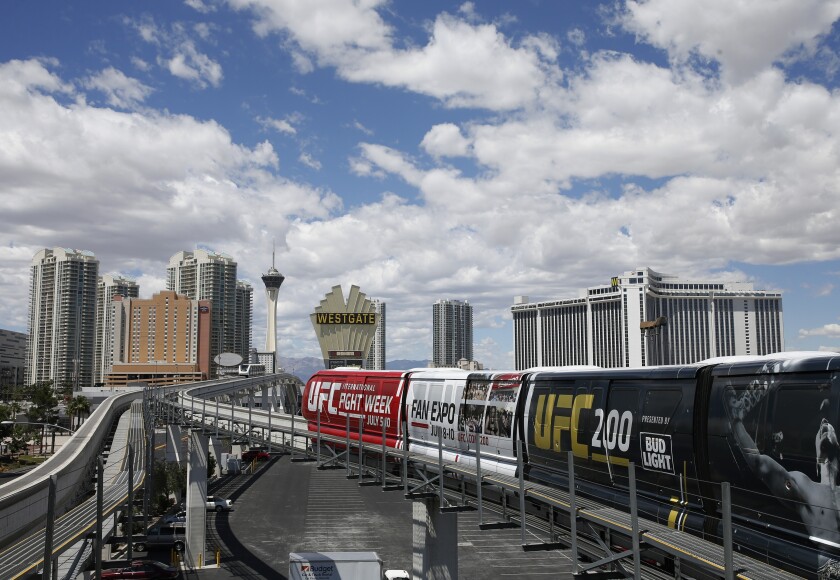 In this 2016 photo, the Las Vegas monorail pulls out of a station.(John Locher / Associated Press)Sep. 3, 20201:57 AM



Recent Comments