Improving Metro Vancouverai??i??s public transit system
It seems you can’t teach an old dog new tricks, especially ex GVRD types.
Mr. Spaeth has, like many other GVRD/Metro Vancouver types, have deluded themselves that transit has taken cars of the road in Vancouver.Ai?? The reason for declining car use is the changing nature of the city, but this has not translated to modal shift from car to transit. For many, downtown Vancouver is a no-go area.
Though Spaeth understands that the proprietary SkyTrain mini-metro is very expensive for what it does, he fails to understand that the Canada Line is more of the same, except that spiraling construction costs, truncated construction resulting in a $2.5 billion mini-metro system, that has less capacity than a modern streetcar line at one tenth the cost! Subways do not guarantee faster service, nor greater capacities, rather it is the quality of R-o-W; the number of stations per route km. and the station platform length, which can accommodate trains, trams, etc. The Canada Line’s 40 to 50 metre station platforms can only accommodate two car trains, which happens to be about the length of a modern tram, the Canada Line can’t operate four car trains, but a modern streetcar could operate in couples sets.
Yet Spaeth seems to be naive about modern light rail and calls it by its American name Light Rapid Transit, which is a misnomer meant to hide the fact that streetcars and LRT are one and the same, with the quality of R-o-W determining the difference between LRT and a streetcar or tram.
Zwei offers his opinion in the following article.

Opinion: How to improve Metro Vancouverai??i??s public transit system
By Douglas Spaeth, Vancouver Sun
It takes less than a busload per minute to replace a whole lane of rush-hour traffic. Our transit is rated the best in North America, and ridership has grown significantly in the last decade, particularly into downtown Vancouver while downtown traffic has decreased. With improved transit more people will ride, but only if there is actually usable service in suburban areas and adequate capacity on the most heavily traveled city routes.
(Zweisystem replies: The fact is transit mode share in Metro Vancouver has not changed much since 1994, with auto use remaining at 57% and transit use a mere 14%, an increase of 3% in 20 years!)
However, before spending more money on transit, TransLinkai??i??s must cut waste, and deliver service cost-effectively.
Three major aspects of transit expenditures should be scrutinized: First, discretionary spending on rapid transit; Second, the operating costs of the bus system; And third, ways to attract more revenue producing riders to fill empty seats on some routes and during the ai???off-peakai??? times.
Rapid transit
The biggest costs looming on the horizon are billions for the Evergreen Line, Broadway Line and potential rapid transit south of the Fraser. SkyTrain, light rapid transit, streetcars and other descriptions are misleading. What is important is how many people a rapid transit line can carry, how fast and how conveniently. The bottom-line is how to get the most lines for the buck.
How much subway we really need? Tunnels are enormously expensive. It is highly unlikely that Metro will go ahead with needed extensions if every NIMBY gets a subway. TransLink in public consultation needs to develop common-sense criteria for when subways are justified. For example, does subway, surface or overhead best support the character of the area served? Is a subway the only way to achieve desired speed and capacity?
(Zweisystem replies: As noted above, subways do not guarantee faster travel times, nor greater capacity than surface transit. The Canada Lines 40-50 metre station platforms mean that only short trains can be used. A simple streetcar line, costing a tenth to build, has a higher capacity than the Canada Line. Subways tend to offer slower point to point travel times due to longer station spacings, transfers, and entrance and exit from subway stations.)
Despite popular perception, surface rapid transit can fit into the community in ways that are functional and attractive. (The old B.C. Electric interurban traveled from Commercial Drive to New Westminster only two to three minutes slower than SkyTrain today, mostly because the tracks had few street crossings.)
(Zweisystem replies: Spaeth fails to take into account that there were 26 stations/stops between Broadway and New Westminster on the old Central Park Interurban Line, versus only 9 stations on the SkyTrain Expo Line. That the Edwardian era Interurban only took a few minutes longer for the same journey, while servicing 17 more stations is a remarkable feat and had little to do with road crossings!)
The Canada Line started a transition away from expensive, 25-year old SkyTrain technology that has not been widely adopted elsewhere. It uses widely available off-the-shelf equipment, rather than the customized technology that locks Metro into a single supplier. Particularly in Surrey and other suburban areas we need to learn from other cities and build inexpensive lines with conventional technology, at-grade tracks, overhead power, traffic priority and other features characteristic of the 20 to 30 systems built or upgraded recently in North America.
(Zweisystem replies: The Canada Line is nothing more than ALRT/ART SkyTrain in drag. Spaeth doesn’t acknowledge that it is light-metro and the light-metro philosophy of operation that has made mini-metro very expensive. It costs almost the same to build and operate a heavy-rail metro, than a light-metro, and of course modern LRT has made light metro like Skytrain and the Canada Line obsolete. Spaeth is out of his depth here.)
Bus operations
Although less obvious, much of TransLinkai??i??s costs go to day-to-day bus operations and there are clearly savings to be had by tightening up this part of its business.
The big potential savings can be achieved by moving buses more smoothly and quickly in traffic with even more bus-only lanes, as well as procedures and equipment to get people on and off the bus faster, investment in off-street ai???mini-lotsai??? to get parked cars off of busy bus routes, enforcement of ai???yield for busesai??? in traffic, and advanced traffic signal technology that always gives buses a green light at intersection. Some of these measures to tighten up bus schedules are being implemented by TransLink acting alone, but the real challenge is for municipalities, Metro and the B.C. Ministry of Transportation to join to make bus priority on Metroai??i??s roads a top job.
(Zweisystem replies: if one wants to increase capacity at no cost, operate the bus system to a European standard with bust stops every 350m to 400m apart. This would effectively remove about 40% of the bus stops in the region, reducing journey times and increasing bus efficiencies.)
Ridership
TransLink can increase ridership on bus routes and at times of day when there are empty seats by learning from transportation providers that are more consumer oriented.
Take the airlines industry for example. Frequent Flyer programs offer privileged membership and demographically targeted benefits as an encouragement to travel on their under-capacity routes. St. Johnai??i??s Metrobus picked up on this idea and claims it is the first transit authority anywhere in the world to partner with AirMiles and reward its passengers with consumer loyalty points for every bus ride. We should be actively attracting riders to fill empty bus seats, particularly police and fire workers who contribute to the safety on the bus.
The broader challenge is for TransLink to move forward from the era of billboard and paint-the-bus advertising to take aggressive advantage of multimedia and social network technology. Online pass purchase, more real-time bus arrival/departure information, better technology for trip planning, targeted advertising via SMS text messaging from shops near a riders stop ai??i?? these are just a few of the ideas that other North American transit authorities are pursuing.
Both public transit and roads are heavily influenced by what kind of urban development occurs in Metro Vancouver. The last article addresses how we can encourage the right kind of development for more affordable transportation.
(Zweisystem replies: To improve transit, TransLink must make the public transit user friendly, which today, with forced transfers and shoddy service it is definitely not. In the 21st century, public transit is seen as a product and if the product is good, people will use it, if not, they will take the car instead.)
Doug Spaeth is the former Transportation and Regional Town Centres Program Manager for the GVRD Livable Region Plan, and subsequently owned an information technology company supplying information systems to public transit authorities in North America and overseas.
Ai?? Copyright (c) The Vancouver Sun

A very merry Christmas
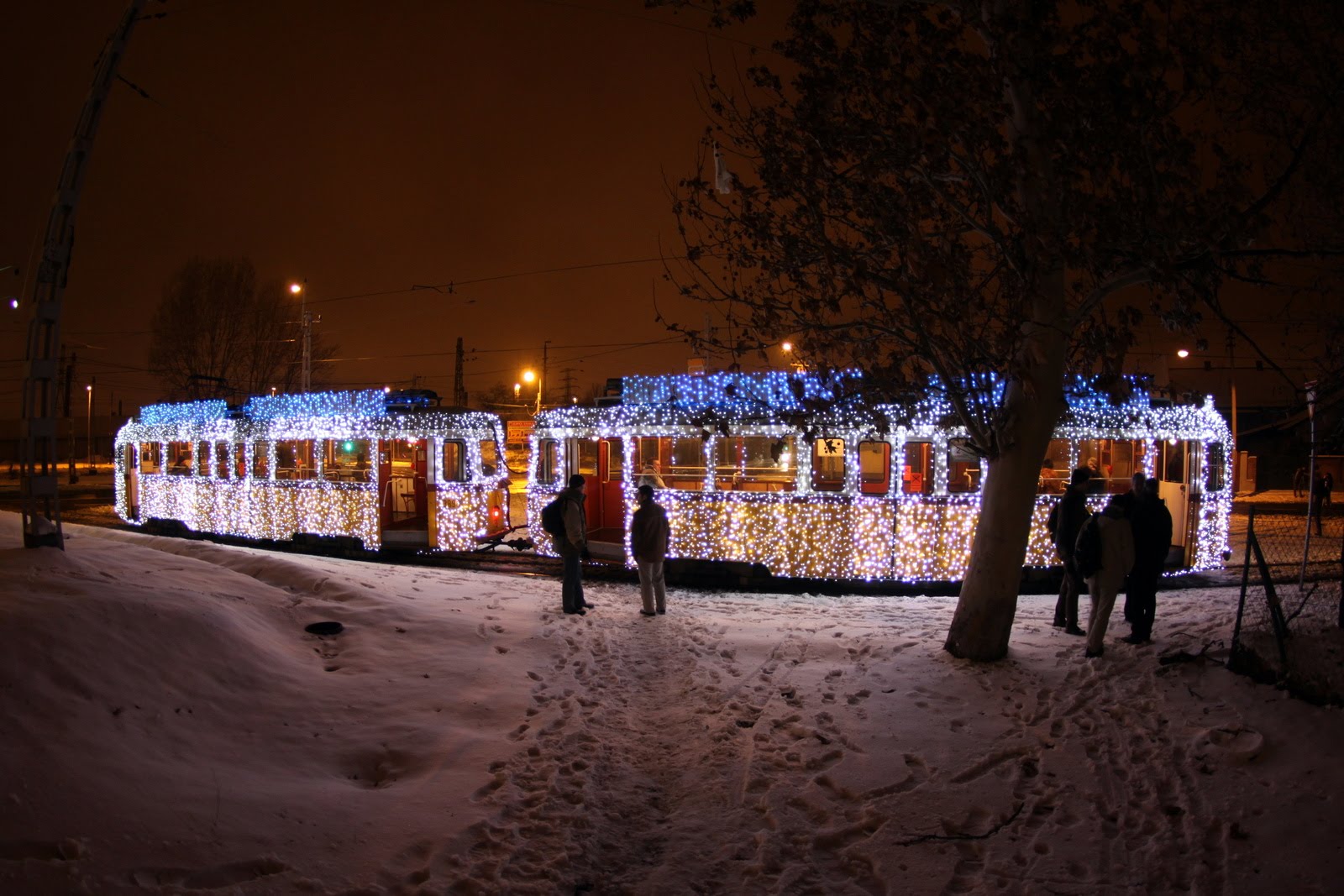 Christmas tram in Budapest
A very merry Christmas from Rail for the Valley
Death By Toll
Is anyone surprised by this?
If you are, you are either residing outside Metro Vancouver or you are living in a bubble, because the taxpayer is maxed out.
The BC Liberal regime of Gordon Campbell has off-loaded so many user fees, taxes and other costs on to the backs of taxpayers that he has all but paupered the average family and tolls on bridges is seen as nothing more than double taxation.
Of course the transit funding referendum is doomed; it was doomed from the start because the Liberal government wants it to failAi?? for their own political reasons, but something more is happening.
The public hate tolls, which translates into “the public hates the government“. A seething hatred of tolls spells big trouble ahead for present government, with grandiose highway and bridge plans, such as the uneeded multi billion dollar Massey tunnel replacement, all planned to be paid for by tolls or road pricing.
As for regional transit, forget it, not going to happen because the ALRT/ART SkyTrain lines needs major refurbishments, costing well in excess of a billion dollars and with the government unwilling to look at much cheaper light rail, the current metropolitan rail network will stagnate because it is much too expensive to build.
The lesson is very clear; Metro Vancouver and TransLink will not be able to afford new transit lines in the near future and it is time the South Fraser Cities and Municipalities realistically at succession from TransLink and go their own merry transit way, using much cheaper, yet just as effective modern LRT. The question is; “Will South Fraser politicians heed the warnings?”
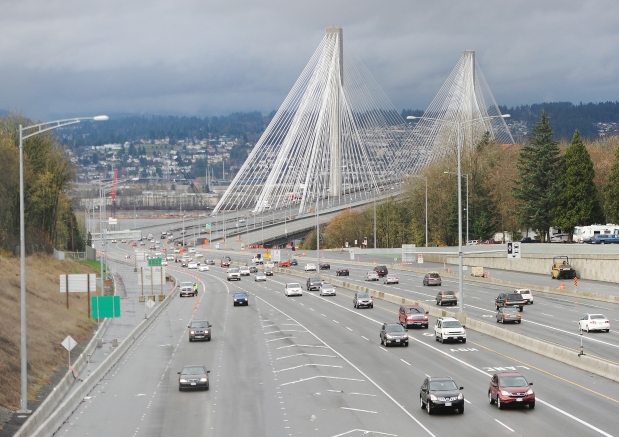
Drivers hate the Port Mann toll more than ever: poll
Mayors argue funding referendum is doomed to fail By Kelly Sinoski, Vancouver Sun
As opposition to the Port Mann Bridge toll intensifies, a referendum to work out payment options for long term transit funding will likely be a hard sell to voters.
New poll results show that opposition to the toll is so great that many people avoid the bridge and use it less now than when it first opened.
Metro Vancouver mayors have long lobbied the provincial government to allow more stable transportation funding options such as a vehicle levy, a regional carbon tax or mobility pricing ai??i?? such as charging drivers per kilometre driven. The money would be used to pay for transportation infrastructure such as rapid transit lines in Surrey and Vancouver and a new or refurbished Pattullo Bridge.
The province has rejected most of their suggestions, with Premier Christy Clark announcing a referendum to gauge public support, slated for the ballot during the Nov. 15, 2014 municipal elections.
But Metro mayors argue the referendum is doomed to fail, noting other successful referendums have involved a broad coalition of all levels of government, as well as years of public education.
Los Angeles, for instance, spent 32 months preparing for its referendum on transportation funding, which was passed at 67 per cent, said Richard Walton, chairman of the TransLink mayorsai??i?? council on regional transportation. Yet the B.C. government hasnai??i??t even come out with a ballot question, with the premier suggesting it will be multiple choice and Transportation Minister Todd Stone insisting it should be a clear and concise yes or no question.
ai???You have to educate the entire region,ai??? Walton said. ai???There has to be something identifiable in each community thatai??i??s going to improve their quality of life. Itai??i??s doable but itai??i??s a complex task that has to be done properly. Thereai??i??s no room for error. If people see it as a tax grab, theyai??i??ll vote against it.ai???
The Insights West survey, released Friday, shows more than half of Metro Vancouver residents are opposed to a $3 toll to cross the Port Mann Bridge next year, while 31 per cent are against paying anything at all.
ai???Despite one year of satisfactory usage of the Port Mann Bridge, the issue of tolling remains contentious and opposition to the tolls has intensified,ai??? Mario Canseco, vice-president of public affairs at Insights West, said.
The online survey of 690 Metro Vancouver and Fraser Valley residents suggests one in four residents are driving over the bridge less often than they did a year ago when the $3.3-billion crossing opened, while almost half of those surveyed still continue to use and pay the toll.
About 31 per cent of those surveyed say they will actively seek new routes in 2014.
About 37 per cent are in favour of the Port Mann Bridge toll rising to $3 from $1.50 per crossing ai??i?? a 14-point drop since a similar Insights West poll conducted in December 2012. At the same time, opposition to the toll has increased to 56 per cent from 45 per cent last year.
Those living south of the Fraser are most unhappy, with 72 per cent of those who use the bridge at least once a week opposed to the toll, along with 57 per cent who rely on the bridge one to three times a month.
ai???Thatai??i??s fairly predictable for anywhere in the world,ai??? Walton said. ai???Itai??i??s an unfair imposition on them. They donai??i??t see fairness in the system … some people can travel a long distance in Metro Vancouver without ever having to cross a bridge. Others drive a shorter distance but have to cross a bridge. There shouldnai??i??t be unreasonable penalties for people.ai???
Many mayors had opposed the idea of a referendum next year, saying it separates transit funding from overall infrastructure for roads and bridges and would further delay priority projects if it fails. They also wanted the referendum to be held before the municipal elections to prevent the issue from becoming a campaign issue.
Walton noted that while TransLink has a strong reputation abroad, some of its decisions have rankled residents and municipal officials. ai???Thereai??i??s no question many will be looking to the election to express their views on TransLink,ai??? he said.
But Stone maintains an election is the best time to hold a referendum because it allows the public to be involved in the debate.
He noted a positive referendum result is crucial in moving both goods and people efficiently, especially as Metro prepares to welcome another one million people in 30 years. He maintains he is working closely with the mayors and the province to ai???define a vision for transit and transportation expansionai??? and, while the details still have to be worked out, he is committed to having a successful referendum.
ai???I completely appreciate that some of the mayors are frustrated by the lack of progress. I count myself in that group,ai??? Stone said. ai???We have a lot riding on this as a province.
ai???We need to make sure the referendum question is a made-in-B.C. model and reflects the different choices. Thereai??i??s a lot of discussion that still needs to take place at the cabinet table. The issue for me is to make sure we assess every funding lever and come together with the mayors on this.ai???
NDP TransLink critic George Heyman said Clark should let Stone do his job, pointing out he is the third minister to be appointed since the province signed a memorandum of understanding on transportation funding with the mayors three years ago.
Canseco noted there may be a way to make the referendum palatable but maintains the issue has similarities to the HST: ai???Youai??i??re reminded youai??i??re paying for the bridge every time your cross,ai??? he said.
The survey had a margin of error of plus or minus 3.7 percentage points, 19 times out of 20.
Why we build with light rail
The following was Zweisystem’s first offering on the Rail for the Valley blog, posted on December 12, 2008.
Five years and some 1,359 posts later, the message has stayed essentially the same; why does the provincial government and TransLink still pursue light metro instead of LRT, especially when light metro has proven inferior in service and for our needs in the Fraser Valley.
 TramTrain in Europe
What is Light Rail Transit, more commonly known as LRT?
According to the Light Rail Transit Association (www.lrta.org) Light rail is a mode that can deal economically with traffic flows of between 2,000 and 20,000 passengers per hour per direction, thus effectively bridging the gap between the maximum flow that can be dealt with using buses and the minimum that justifies a metro.
But there is more. By track-sharing with existing railways on their rights-of-ways, means that LRT can effectively and affordably service less populated areas, with public transport. Streetcars are also light rail, but operate on-street, in mixed traffic, with little or no signal priority at intersections. The main difference between LRT and a streetcar is the quality of rights-of-way, where a streetcar operates on-street, LRT operates on a reserved rights-of-way or a route that is reserved for the sole purpose of the light rail vehicle. A reserved rights-of-way can be as simple as a HOV lane with rails, to a lawned park like route with trees, hedges and flowerbeds. LRT, in it’s various forms is used in over 600 cities around the world and is the first choice of transit planners for affordable, customer friendly public transport.
The German city of Karlsruhe (City population 275,285) has taken light rail to a new standard, by track sharing with mainline railways and operating, what is called tramtrains. In Karlsruhe, one can board a tram, on-street, on the pavement and alight, on-street in Ohringen some 210km (130 mile) later, with the tram acting as a streetcar, light rail vehicle and a passenger train! Karlsruhe’s light rail network now extends over 400 km. (250+ mile) of route, servicing scores of small towns and villages with high quality public transit at very little cost simply because the tram can use existing railway tracks.
In British Columbia, tramtrain can be a useful tool for implementing a high quality ‘rail’ transit service, not only in Vancouver and the Fraser Valley, but in Victoria (E & N Railway) and the Kelowna/Vernon rail corridor as well.
The question is: Why does TransLink and the BC government reject modern LRT out of hand and continue to build with dated SkyTrain light metro?
Addendum
Table of Ridership of the Karlsruhe-Bretton Zweisystem (TramTrain), with operation on the mainline DB
_______________________________________________________________________________________
Ai??Ai??Ai??Ai??Ai??Ai??Ai??Ai??Ai??Ai??Ai??Ai??Ai??Ai??Ai??Ai??Ai??Ai??Ai??Ai??Ai??Ai??Ai??Ai??Ai??Ai??Ai??Ai??Ai??Ai??Ai??Ai??Ai??Ai??Ai??Ai??Ai??Ai??Ai??Ai??Ai??Ai??Ai??Ai??Ai??Ai??Ai??Ai?? Before LRTAi??Ai??Ai??Ai??Ai??Ai??Ai??Ai??Ai??Ai??Ai??Ai??Ai??Ai??Ai??Ai??Ai??Ai??Ai??Ai??Ai??Ai??Ai??Ai??Ai??Ai??Ai??Ai??Ai??Ai??Ai??Ai??Ai??Ai??Ai??Ai??Ai??Ai??Ai??Ai??Ai??Ai??Ai??Ai??Ai??Ai??Ai??Ai??Ai??Ai?? After introductionAi??Ai??Ai??Ai??Ai??Ai??Ai??Ai??Ai??Ai??Ai??Ai??Ai??Ai??Ai??Ai??Ai??Ai??Ai??Ai??Ai??Ai??Ai??Ai??Ai??Ai??Ai??Ai??Ai??Ai??Ai??Ai??Ai??Ai??Ai??Ai??Ai??Ai?? %
Ai??Ai??Ai??Ai??Ai??Ai??Ai??Ai??Ai??Ai??Ai??Ai??Ai??Ai??Ai??Ai??Ai??Ai??Ai??Ai??Ai??Ai??Ai??Ai??Ai??Ai??Ai??Ai??Ai?? Commuter train tram transferAi??Ai??Ai??Ai??Ai??Ai??Ai??Ai??Ai??Ai??Ai??Ai??Ai??Ai??Ai??Ai??Ai??Ai??Ai??Ai??Ai??Ai??Ai??Ai??Ai??Ai??Ai??Ai??Ai??Ai??Ai??Ai??Ai??Ai??Ai?? ofAi?? TramTrainAi??Ai??Ai??Ai??Ai??Ai??Ai??Ai??Ai??Ai??Ai??Ai??Ai??Ai??Ai??Ai??Ai??Ai??Ai??Ai??Ai??Ai??Ai??Ai??Ai??Ai??Ai??Ai??Ai??Ai??Ai??Ai??Ai??Ai??Ai??Ai??Ai??Ai?? increase
Ai??Ai??Ai??Ai??Ai??Ai??Ai??Ai??Ai??Ai??Ai??Ai??Ai??Ai??Ai??Ai??Ai??Ai??Ai??Ai??Ai??Ai??Ai??Ai??Ai??Ai??Ai??Ai??Ai??Ai??Ai??Ai??Ai??Ai??Ai??Ai??Ai??Ai??Ai?? (September 1992)Ai??Ai??Ai??Ai??Ai??Ai??Ai??Ai??Ai??Ai??Ai??Ai??Ai??Ai??Ai??Ai??Ai??Ai??Ai??Ai??Ai??Ai??Ai??Ai??Ai??Ai??Ai??Ai??Ai??Ai??Ai??Ai??Ai??Ai??Ai??Ai??Ai??Ai??Ai??Ai??Ai??Ai??Ai??Ai??Ai??Ai??Ai??Ai?? (March 1993)
______________________________________________________________________________________
WeekdaysAi??Ai??Ai??Ai??Ai??Ai??Ai??Ai??Ai??Ai??Ai??Ai??Ai??Ai??Ai??Ai??Ai??Ai??Ai??Ai??Ai??Ai??Ai??Ai??Ai??Ai?? 488,400Ai??Ai??Ai??Ai??Ai??Ai??Ai??Ai??Ai??Ai??Ai??Ai??Ai??Ai??Ai??Ai??Ai??Ai??Ai??Ai??Ai??Ai??Ai??Ai??Ai??Ai??Ai??Ai??Ai??Ai??Ai??Ai??Ai??Ai??Ai??Ai??Ai??Ai??Ai??Ai??Ai??Ai??Ai??Ai??Ai??Ai??Ai??Ai??Ai??Ai??Ai??Ai??Ai??Ai??Ai??Ai??Ai??Ai??Ai??Ai?? 2,064,378Ai??Ai??Ai??Ai??Ai??Ai??Ai??Ai??Ai??Ai??Ai??Ai??Ai??Ai??Ai??Ai??Ai??Ai??Ai??Ai??Ai??Ai??Ai??Ai??Ai??Ai??Ai??Ai??Ai??Ai??Ai??Ai??Ai??Ai??Ai??Ai??Ai??Ai??Ai??Ai??Ai??Ai??Ai?? 423%
SaturdaysAi??Ai??Ai??Ai??Ai??Ai??Ai??Ai??Ai??Ai??Ai??Ai??Ai??Ai??Ai??Ai??Ai??Ai??Ai??Ai??Ai??Ai??Ai??Ai??Ai??Ai??Ai??Ai?? 39,000Ai??Ai??Ai??Ai??Ai??Ai??Ai??Ai??Ai??Ai??Ai??Ai??Ai??Ai??Ai??Ai??Ai??Ai??Ai??Ai??Ai??Ai??Ai??Ai??Ai??Ai??Ai??Ai??Ai??Ai??Ai??Ai??Ai??Ai??Ai??Ai??Ai??Ai??Ai??Ai??Ai??Ai??Ai??Ai??Ai??Ai??Ai??Ai??Ai??Ai??Ai??Ai??Ai??Ai??Ai??Ai??Ai??Ai??Ai??Ai??Ai??Ai??Ai??Ai??Ai?? 263,120Ai??Ai??Ai??Ai??Ai??Ai??Ai??Ai??Ai??Ai??Ai??Ai??Ai??Ai??Ai??Ai??Ai??Ai??Ai??Ai??Ai??Ai??Ai??Ai??Ai??Ai??Ai??Ai??Ai??Ai??Ai??Ai??Ai??Ai??Ai??Ai??Ai??Ai??Ai??Ai??Ai??Ai??Ai??Ai?? 675%
SundaysAi??Ai??Ai??Ai??Ai??Ai??Ai??Ai??Ai??Ai??Ai??Ai??Ai??Ai??Ai??Ai??Ai??Ai??Ai??Ai??Ai??Ai??Ai??Ai??Ai??Ai??Ai??Ai??Ai??Ai??Ai??Ai??Ai??Ai?? 6,200Ai??Ai??Ai??Ai??Ai??Ai??Ai??Ai??Ai??Ai??Ai??Ai??Ai??Ai??Ai??Ai??Ai??Ai??Ai??Ai??Ai??Ai??Ai??Ai??Ai??Ai??Ai??Ai??Ai??Ai??Ai??Ai??Ai??Ai??Ai??Ai??Ai??Ai??Ai??Ai??Ai??Ai??Ai??Ai??Ai??Ai??Ai??Ai??Ai??Ai??Ai??Ai??Ai??Ai??Ai??Ai??Ai??Ai??Ai??Ai??Ai??Ai??Ai??Ai?? 227,478Ai??Ai??Ai??Ai??Ai??Ai??Ai??Ai??Ai??Ai??Ai??Ai??Ai??Ai??Ai??Ai??Ai??Ai??Ai??Ai??Ai??Ai??Ai??Ai??Ai??Ai??Ai??Ai??Ai??Ai??Ai??Ai??Ai??Ai??Ai??Ai??Ai??Ai??Ai??Ai?? 3,669%
TotalAi??Ai??Ai??Ai??Ai??Ai??Ai??Ai??Ai??Ai??Ai??Ai??Ai??Ai??Ai??Ai??Ai??Ai??Ai??Ai??Ai??Ai??Ai??Ai??Ai??Ai??Ai??Ai??Ai??Ai??Ai??Ai??Ai??Ai??Ai??Ai??Ai?? 533,600Ai??Ai??Ai??Ai??Ai??Ai??Ai??Ai??Ai??Ai??Ai??Ai??Ai??Ai??Ai??Ai??Ai??Ai??Ai??Ai??Ai??Ai??Ai??Ai??Ai??Ai??Ai??Ai??Ai??Ai??Ai??Ai??Ai??Ai??Ai??Ai??Ai??Ai??Ai??Ai??Ai??Ai??Ai??Ai??Ai??Ai??Ai??Ai??Ai??Ai??Ai??Ai??Ai??Ai??Ai??Ai??Ai??Ai??Ai??Ai?? 2,554,976Ai??Ai??Ai??Ai??Ai??Ai??Ai??Ai??Ai??Ai??Ai??Ai??Ai??Ai??Ai??Ai??Ai??Ai??Ai??Ai??Ai??Ai??Ai??Ai??Ai??Ai??Ai??Ai??Ai??Ai??Ai??Ai??Ai??Ai??Ai??Ai??Ai??Ai??Ai??Ai??Ai??Ai??Ai??Ai?? 479%
_______________________________________________________________________________________
(Albtal-Verkehgesellschaft Karlsruhe & ABB Henchel)
Light Rail News from around the World
Hong Kong
Tram operator proposes $2.8b Kai Tak line
http://www.thestandard.com.hk/news_detail.asp?we_cat=4&art_id=140343&sid=41066028&con_type=1&d_str=20131206&fc=8
Hong Kong Tramways has proposed building a HK$2.8 billion tram system for the Kai Tak site.
Under the tram operator’s proposal, there will be 23 stations in the system, which will link Kai Tak pier, Ngau Tau Kok and Kowloon Bay MTR stations in 2018. The fare is expected to be HK$3 a trip.
The tram will be barrier free and able to shuttle along roads, said a spokesman, adding the “modern tramway” is the most efficient road space user.
TURKEY
CNR Tangshan streetcars for Samsun
Samsun tram flown from China to Turkey
The first of five trams which Samsun Metropolitan Municipality ordered from CNR Tangshan Railway Vehicles has been delivered from China to Turkey onboard the world’s largest heavy freight aircraft.
The ai??i??7Ai??5m contract signed on December 17 2012 required the first tram to be delivered by December this year, with the last due by February 2014.
The trams were due to be shipped by sea, however Typhoon Haiyan would have caused the deadline to be missed and so CNR Tangshan selected the faster but more expensive option of flying the initial vehicle from Shijiazhuang Zhengding International Airport to Samsun-Ai??arsamba airport onboard the Antonov Airlines An-225 Mriya, which was originally developed to transport the USSR’s Buran spacecraft.

http://www.railwaygazette.com/news/single-view/view/an-225-flies-samsun-tram-from-china-to-turkey.html
Edinburgh
Edinburgh trams: first Princes Street night test complete
http://www.bbc.co.uk/news/uk-scotland-edinburgh-east-fife-25228776
One of Edinburgh’s new trams has completed the first test run along the city’s most famous shopping street.
Tram 264 made the journey on Princes Street late on Wednesday night, flanked by teams of engineers.
It travelled from the tram depot at Gogar on Edinburgh’s western outskirts to York Place in the city’s east end.
The tram crew and engineers completed the necessary track tests ahead of schedule, returning to the depot in the early hours of the morning.
It was the first time since 1956 that a tram has run on Princes Street.

TransLink Spends on Station Renovations
TransLink is renovating several stations on the Expo Line and as always, the real news is what one reads between the lines.
The Expo Line is near its life expiratory date and no, the Expo Line will not disappear in a cacophony of dust and debris, but extensive and expensive renovations and renewals must be made. One of the factors leading the TTC to replace the Scarborough ICTS Line, was that it is getting close to its life expiratory date and it would be cheaper to replace the ICTS line with LRT in the long term. Recent decision to replace the Scarborough ICTS with a subway was crack smoking Toronto Mayor Rob Ford’s driven decision.
The claim that the renovation is a; “bid to ease platform overcrowding and accommodate an increase in passengers expected when the new Evergreen Line starts rolling in 2016“, is somewhat over stated as the Evergreen Line will not generate the ridership increase that would warrant such an expense. If TransLink really was sincere in increasing capacity, they will have to lengthen the 80 metre station platforms at all SkyTrain stations and that will be a considerable cost.
The claim that peak hour capacity of the Expo Line is 14,000 persons per hour per direction is debatable, butAi?? the contracted capacity of the Expo Line was 15,000 pphpd. The often quoted 30,000 pphpd capacity of the Expo Line was based on rakes of 8-car trains of MK 1 stock, operating with stations having platforms 110 metres long. The maximum theoretical capacity of the Millennium ART Line was claimed to be 26,000 pphpd, by Bombardier literature of the time of construction.
The claim that the Broadway/Commercial stations sees; “150,000 bus and SkyTrain passengers daily“, again is debatable.Ai?? What TransLink should say is that there are 150,000 boardings, which translates to 75,000 actual bus AND SkyTrain passengers a day. TransLink likes to double count SkyTrain customers transferring to buses to give the impression that more people are using SkyTrain and the Broadway B-Line than there really are.
The real story is that TransLink is spending large sums of money to renovate older metro stations, not to increase capacity or customer comfort, but because they have to and with a TransLink referendum coming soon, TransLink is trying to impress the taxpayer, with questionable statics and manipulated figures.
The preceding chart shows the ridership of all bus services going to UBC.Ai?? Note Broadways bus ridership (highlighted).
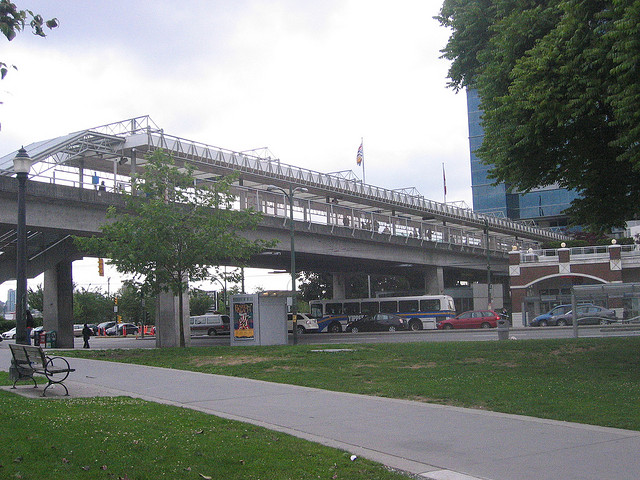 “
“As TransLink builds for a busier future, Main Street station access will be temporarily limited
More Wisdom From Ottawa

Haveacow is a transit professional from Ottawa and his most recent post in the comments section is again worthy of a post of its own. The information contained within this post should give insight to the real transit issues that face TransLink, employee’s costs and the main reason why LRT is built. One modern tram (1 driver) is as efficient as 6 to 8 buses (6 to 8 drivers) and as wages account for about 70% to 80% of operating costs, the savings using LRT over a 25 year business cycle of a transit line may pay for the transit line itself.
Zwei was told that the reason that SkyTrain technology was not included in the Canada Line proposal was because Premier Gordon Campbell wanted a “showcase” transit P-3 and with SkyTrain, no other consortium would have bid on the project. The Canada Line P-3 would be a template for P-3 operation of the transit system if the BC Liberals privatized TransLink. Evidently Campbell did not understand that SkyTrain was a proprietary railway.
I should be noted that both Alstom and Siemens recommended LRT for the Canada Line but LRT was rejected outright by Translink, who were ordered to do so by then Minister of Transportation, Kevin Falcon, under orders from former Premier Gordon Campbell.
The Canada Line was not a true P-3 as the winning consortium never assumed risk for the project.
In the end, SkyTrain proved more expensive to build than a ‘cut-down’ heavy-rail metro, which costs were further reduced by cut-and-cover subway construction; truncated stations; and not paying compensation to businesses who were disrupted by prolonged cut-and-cover construction. The judge overseeing the Susan Heyes lawsuit called the Canada line bidding process a “charade”!
Oh Daryl, hereai??i??s a little information for you to think about. SNC Lavlin. used to own all the vehicle technology and engineering patents for the Skytrain. They bought it from the real creators of it The Urban Transit Development Corporation of Ontario or UTDC (these guys were the ones who also created the bilevel commuter coaches that Bombardier sold to the West Coast Express and many others). SNC LAVLIN then sold the vehicle but not the engineering patents to Bombardier 5 years later because they couldnai??i??t get anyone to buy it. So even if Bombardierai??i??s consortium had won the Canada Line contract and used Skytrain technology, they would have been involved, so either way they were going to make a lot of money.
You are correct the P3 agreement is really about government not wanting to pay the whole deal and spreading the risk, so to speak. It is becoming quite common to do this in North America because it spreads the cost when someone tries to sue you and they win. The lie that this giving better value to taxpayers is something the financial conservatives have been screaming since the 1980ai???s and really is pure bunk! It does not give better value or help taxpayers and often does quite the opposite.
If Skytrain technology was so good and saved so much money, Translink should have included it specifically in the call for proposals process regarding the Canada Line contract. Montreal did that for their new Metro Trains, they had to use the rubber tire technology already in use no other options please. The fact that this was not the case shows that someone along the line when the call for proposals went out really doesnai??i??t have full confidence in the technology. Toronto had to issue the call for proposals twice regarding the new legacy streetcar replacement program when only 2 companies answered the original call (The head of Siemens Transportation Division in North America got fired over it back in 2008 because he did not want to alter a design specification for a mere 204 vehicle contract, while Siemens worldwide was just beginning to recover from their massive restructuring to prevent bankruptcy). So why was the technology not enshrined in the contract proposals by Translink, no was one pointing a gun at their collective heads? They really had many options so whatai??i??s the Deal?
Regarding the manpower issue over route inspectors and their high numbers compared to other options transit operations. This is a huge issue because when it comes to buses and operations manpower requirements are the majority of operating budget. There is a remarkably consistent fact across the whole of the first wordai??i??s transit operations, between 70-80% of the cost of surface transit is the driver. One of the biggest reasons, Ottawa is changing to LRT from BRT is because the manpower costs for moving 10500 people per hour per direction by bus is slowly crushing OC Transpoai??i??s operational budget (between 185-200 buses per hour per during peak periods). Ironically, the Skytrainai??i??s driverless technology should reduce this cost but it doesnai??i??t. The advantages are negated by high maintenance costs and for paying a small army attendants in-case the system breakdown. Not to mention one of the most manpower heavy rail transit operations control room I have ever seen, anywhere.
Daryl its cheaper in the long run to buy more trolley buses for the UBC routes than buying more diesel buses. Trolley buses have a higher purchase cost but a lower system operating and maintenance cost because you already have a huge trolley bus network. The old saying of being, penny wise but pound foolish applies here.
TransLink’s Fiscal House of Cards

Is TransLink’s financial ‘house of cards‘ ready to collapse? It seems the independent commissioner overseeing TransLink thinks so.
Certainly the ‘self proclaimed‘ transit experts are circling TransLink like vultures seem to thinks so, by advocating more onerous taxes on the public with ‘road pricing‘ and even a ‘border toll’.
Zwei has not heard of one academic and very few politicians advocating for a restructuring of TransLink and a rethink how and why we provide public transit.
The cabal of ‘self proclaimed‘ transit experts, really want their day in the sun, like those who advocated for the (non) carbon tax, so they too can pick up lucrative public speaking engagements, extolling the virtues of their pet tax.
TransLink’s problem is simple enough, it is not providing a consumer based product and expects ever increasing subsides to continue to do what doesn’t work. It’s like selling black and white TV’s in the 21st century.
As always, it is the transit customer who is left at the bus stop and the taxpayer taken for a long expensive ride.
TransLinkai??i??s 2014 financial operating plan red-flagged by independent commissioner
Three ‘areas of concern’ identified
At the top of independent commissioner Robert Irwinai??i??s concerns, found in his report of the 10-year-plan, is TransLinkai??i??s reliance on real-estate revenues as a major source of revenue and the timing of some of these sales ai??i?? something he described as not prudent.
Photograph by: Jason Payne, PNG
TransLinkai??i??s independent commissioner has red-flagged three ai???areas of concernai??? in the transit authorityai??i??s 2014 financial operating plan, warning they have the potential to dramatically affect programs, investments and operations.
At the top of commissioner Robert Irwinai??i??s concerns, found in his report of the 10-year-plan, is TransLinkai??i??s reliance on real-estate revenues as a major source of revenue and the timing of some of these sales ai??i?? something he described as not prudent.
Irwin noted that TransLink has pushed back the sale date of major assets ai??i?? like the Oakridge transit station for example ai??i?? by a year and also scaled down total projected revenues by $90 million due in part to ai???a reduction of projected gains on some properties.ai???
ai???Any further delay in the sale of major properties pose a significant risk,ai??? Irwin noted in his report. ai???The commission again points out that the sale of assets to support operations is not prudent fiscal policy, while recognizing that the only other recourse for TransLink would be fare increases or service reductions in the absence of additional funding sources.ai???
Irwin also warned that if TransLink doesnai??i??t continue to receive 100 per cent of the Federal Gas Tax that some $367 million in planned capital expenditures will be put at risk, including the authorityai??i??s vehicle replacement program.
The current deal with Metro Vancouver expires in March 2014 and the Metro Vancouver Board has ai???signalled that it may wish to change the agreement,ai??? Irwin noted.
Labour costs were also underlined by Irwin as something that dramatically impact TransLinkai??i??s finances. Earlier this year, the authorityai??i??s bus drivers and other unionized staff agreed to a three-year deal that will expire in March 2015.
ai???A major portion of TransLinkai??i??s operating costs is labour … the potential impacts of higher labour costs on TransLinkai??i??s future financial results are significant,ai??? Irwin wrote, noting that he otherwise found the plan to be ai???reasonableai??? in its economic assumptions.
TransLinkai??i??s base plan projects total revenues of $1.44 billion in 2014 and $1.6 billion by the end of 2016. The money will come from existing revenue streams such as property tax, fuel tax, transit revenues and tolls.
The funds should allow TransLink to deliver the same level of service as outlined in the 2013 plan, meaning there will be no overall service cuts. However, Irwin noted that current funding levels donai??i??t allow TransLink to keep pace with long-term population growth.
ai???Service hours per capita are projected to decline to 2007 levels by 2016 and continue to decline to 2004 levels by the end of the outlook period,ai??? he wrote.
NDP transportation critic George Heyman said Irwinai??i??s report underscores the need for a new TransLink funding model. And he called on the government to stop delaying. A provincial referendum will be held next year on potential funding options for TransLink.
ai???Every day hears more about the human impact of this waiting game,ai??? Heyman wrote in a statement. ai???The B.C. Liberals need to stop delaying agreement on a new funding model and act now to maintain this critical transportation system.ai???
A statement from the Ministry of Transportation noted Transportation Minister Todd Stone continues to work the Mayorai??i??s Council to find new funding sources. The statement also noted that the government has provided TransLink with $2 billion since 2001.
ai???Metro Vancouver has an excellent transportation network,ai??? the statement said.
twitter.com/cassidyolivier
Ai?? Copyright (c) The Province

Wisdom From Ottawa
Our friend Haveacow, is a transit professional and his comment, I believe’ gets to core of TransLink’s woes. When you add in the extra costs of operating the Canada Line and SkyTrain ALRT/ICTS Lines, one can easily see why TransLink’s costs are a third higher than Edmonton and Calgary.
From Haveacow and please forward this to your mayor and council and provincial MLA’s.
Daryl Delay Cruz, I was told by my friend Scott who actually works for Translink that yes Zweiai??i??s numbers from CUTA are correct. Now before everyone goes all ai???rangyai??? as my wife says, please listen as to why the costs are so high. Remember this is conventional transit costs only, no rapid transit B routes or Skytrain are included. Translink through union agreements has to provide a certain amount of positions that are managerial in nature but are still frontline workers. They go by different names in different transit operations, but the term Driver Route Supervisor or Inspector is often used. Well you guys are loaded with them, he did not give exact numbers but it is about one third more than the national average (ironic isnai??i??t it). They are very expensive because they are all senior positions in the bus driver pay scale. Most are not even visible to the public because they work in your bus garages and depots (whatever you call them there).
Due to the way transit is provided in Vancouver through shell companies and divisions each company, division whatever you want to call it, seems to handle a different transit mode. Unfortunately that means that, each group has its own management and separate physical requirements and therefore very little effort to combine budgets to reduce duplication of certain services. They still have to pay their employees as well but, here you do have commonality with other divisions because of expensive union agreements. I am not against Unions they give workers a fighting chance but it does come at the cost of the public dime. Keep in mind it is actually quite difficult. to drive a bus when you are dealing with the public and bus mechanics are worth their weight gold. Very expensive to train and therefore very expensive to have on hand to fix your buses. Each division or company has to have its own instead of one pool of maintenance people which is what many other transit operations do. Scott (not his real name in case you didnai??i??t figure it out yet) also tells me that the dispatching of buses requires a high number of miles traveled ai???deadheadingai??? and this is the fall out from one group handling bus management. In these types of operations when someone contracts a single company to run all the buses mostly to save money, there is a desire to centralize the control and dispatching of said bus fleet, again to save money. What has often happened is that it actually is cheaper, to have multiple areas each with its own dispatching control because of the control issues and the inefficiency of providing centralized dispatching over a large geographic area. It seems counter intuitive but its often true and again Vancouver with heavily centralized dispatching system fails miserably here.
Lastly, when you have so many divisions handling individual operations, one company is just the buses and another just the Skytrain and so on, you get very poor internal communication. Unless you hardwired a system together that forces certain groups to talk to each other as a matter of operational need, the natural tendency is to stop communicating with each other, especially if problems occur. Think about it, you have a division that just operates the Skytrain network and the Canada Line but, the Canada Line is actually paid and administered through a private consortium. Regardless who physically. runs and staffs the Canada Line resources have to go to the consortium to set up some to administer their side of the agreement for the line. Now you have 2 groups doing administration duties and they are most likely not in the same building so emails, phone calls and text become there main form of communication with each other. Face it, this website shows just how difficult it is to communicate ideas even when there are only small disagreements between people let alone a massive complex agreement to administer.
So, Where Did The $500 Million Go?
Not before another dime is spent on TransLink, some fiscal sanity must come to TransLink.
TransLink has operating expenses which are about one-third greater than the transit industry norm in Canada.Ai?? For the present annual $1.5 billion operating budget of TransLinkAi?? this works out to $500 million annually in unexplained operating expenses.Ai?? How can the taxpayer be expected to pay higher taxes and user fees to fund TransLink when spending far in excess of what the rest of the transit industry in Canada spends?
There is something radically wrong. when TransLink screams poverty, yet spend more money per passenger on a transit system that has not generated a modal shift, from car to transit, in almost 20 years.
How can Metro Mayors condone more taxes and user fees, especially the oft proposed congestion charge or road pricing, when TransLink is seemingly squandering vast amounts of money on a transit system that does not attract much new ridership?
So TransLink, where did the $500 million go?



Recent Comments