Challenge Richard

SkyTrainai??i??s Expo Line was built in 1985 and opened in time for Expo 86 with 20 stations connecting Waterfront Station in Vancouver and King George Station in Surrey.
Between 1985 & 2012; One Hundred & Fifty One full service tramways have been built & opened worldwide, with another 56 under construction or approval.
The full report is in the Light Rail Transit Association (LRTA), International Light Rail magazine Tramways & Urban Transit (TAUT)Ai??for January 2013.
The Cardinal challenges Richard to explain why in the 28 years since 1985, only half a dozen Skytrain systems have been built worldwide.
Quoting Voony
ai???Integrating transit into pedestrian oriented streets, is also the only way to have an extensive and still successful pedestrian friendly streets networkai???

ThreeAi??of the latest street level Light Rail/Tramway/LRT systems, opened in 2012 areAi??not suprisingly,Ai??in France – Ai??Brest, Dijon & Le Harve
Dijon tram route T2 entered service on December 8 2012.

http://www.railwaygazette.com/news/single-view/view/t2-completes-dijon-tram-network/archiv/2012/dezember.html
FRANCE: Dijon’s second tram route entered service on December 8, running for 11Ai??5 km (7.1 miles) from Valmy in the northern suburbs to ChenA?ve Centre in the south and serving a total of 21 stops.
Three stops in the city centre are shared with the 8Ai??5 km (5.3 mile) line T1 from the SNCF station to Quetigny Centre which opened on September 1
Operated by Keolis as part of the Divia network, T1 has carried an average of 36 000 passengers a day during its first two months in service, 6 000 more than the highest forecasts according to the Greater Dijon Authority. Two extra cars are to be deployed to reduce peak headways from 6 m to 5 min on T1, while T2 services now also serve the busiest section between Gare and RAi??publique.
‘The tram has changed the city – for the better – it has transformed our lives’, said FranAi??ois Rebsamen, President of the Greater Dijon Authority, who saw the new network as a tool for the development of Dijon as capital of the Bourgogne region.
Comparative examination of New Start light rail transit, light railway, and bus rapid transit services opened from 2000
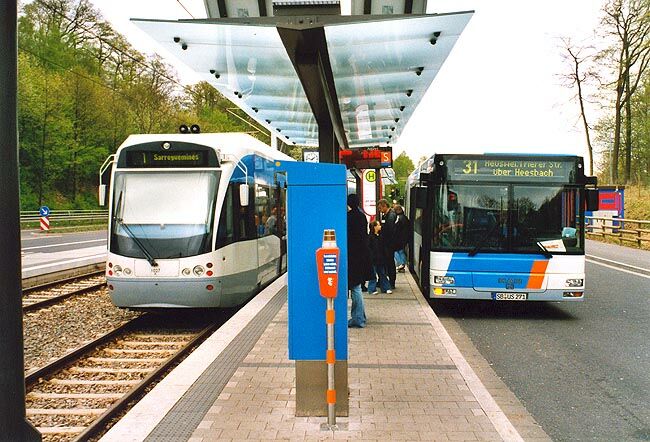
From our friends Lyndon Henry and David Dobbs at Light Rail Now.
A useful document comparing busAi??rapid transit schemes with light rail.
http://onlinepubs.trb.org/onlinepubs/conferences/2012/LRT/LHenry.pdf
The Broadway Follies: Sorry, but Surrey is next in line

And the transit debate keeps going!
Vancouver, which always acts as the proverbial spoiled child, wants a multi billion dollar subway under Broadway and is setting the stage with scare tacticsAi??withAi??a Goebbelesque flavour of lies deceit and deception. The SkyTrain lobby, always adding their own special brand of nonsense, further muddies the debate.
Surrey, with a population approaching that of Vancouver, has only the mostAi??basic of transit services, demands they are next in line for scarce transit dollars, to fund light rail in their city. It is time to invest in better transit South of the Fraser and if Vancouver jumps the queue with another hugely expensive subway, then don’t expect the South Fraser municipalities and cities to stick around. The chances are very good that if the next major transit investment does not take place in Surrey, TransLink will split, with the Fraser River as a divide, leaving Richmond, Burnaby, Vancouver and the Tri-Cities taxpayers alone to pay for massively expensive SkyTrain subways.
EDITORIAL: Sorry, but Surrey is next in line
By Staff Writer – Surrey North Delta Leader
Published: December 10, 2012Thereai??i??s a transit tussle brewing between Metroai??i??s biggest cities.
On one side ai??i?? Vancouver, with Mayor Gregor Robertson and his ambitious pitch for a nearly $3-billion SkyTrain system to the University of B.C.
On the other ai??i?? Surrey Mayor Dianne Watts and her long-standing battle cry for better transit options for her burgeoning city.
At issue is the next TransLink mega-project to go ahead (provided the regional mayorai??i??s council can reach a deal with the province for more funding options).
Surrey is calling for three light rail lines ai??i?? along 104 Avenue to Guildford, down King George Bouelvard toward White Rock, and southeast along Fraser Highway towards Langley, at a cost of about $2 billion ai??i?? far less than it would be if more expensive SkyTrain was used.
Watts is not impressed with Vancouverai??i??s ai???grandioseai??? subway scheme.
ai???I would suggest that the multi-billion-dollar project that theyai??i??re proposing is not going to fly with residents in Surrey…ai???
Thatai??i??s putting it mildly.
Stinging from the news that a Highway 1 express bus over the new Port Mann Bridge wonai??i??t stop in Surrey, and still smarting from years of substandard transit service south of the Fraser, Surrey residents ai??i?? who receive about 90 to 95 cents worth of service from every dollar they contribute to TransLink through gas tax, property tax, and transit fares ai??i?? wonai??i??t move to the back of the bus on this one.
Especially when there are more logical solutions.
Wattsai??i?? idea to open satellite UBC sites rather than carve out a $3-billion SkyTrain to the main campus at the farthest western edge of Vancouver is bang on.
SFUai??i??s Surrey location (the main campus is in Burnaby) ai??i?? with its innovative programs and savvy spot downtown (right next to SkyTrain) ai??i?? is a lesson in success. Celebrating its 10th anniversary this year, the Central City site has reached its capacity of serving 7,000 students and is looking to expand.
Within the next few decades, Surrey will be the largest city on this side of the country ai??i?? and the growth is not going to stop. Sinking $3 billion into a SkyTrain system in a city that is built out and already well served by transit is myopic and unaffordable.
If Vancouver insists on Cadillac transit, then it must wait in line until after Surrey gets its essential system.
Vancouver Take Note – Trams In, Cars Out In Sydney, Australia Transport Planning!
Here isAi??a news itemAi??that should give the City of Vancouver planners and engineers something to think about, make cars defer to trams.
In Vancouver, the hierarchy for transportation is bicycles first, cars second and public transit third. It’s OK to close a city street for cyclists, but its not OK to close a city street for light rail.
In Sydney Australia with a population of 4.5 million, they are providing car drivers with a viable light rail alternative, that links major transit destinations including the central business district, while in Vancouver, providing an affordable transit alternative to major destinations is seen as heresy as transit is built solely to promote high density construction.
This gets Zwei wondering; “Who owns the properties adjacent to proposed SkyTrain subway stations?”
Could it be friends of government and TransLink?
From ABC News – Australia.
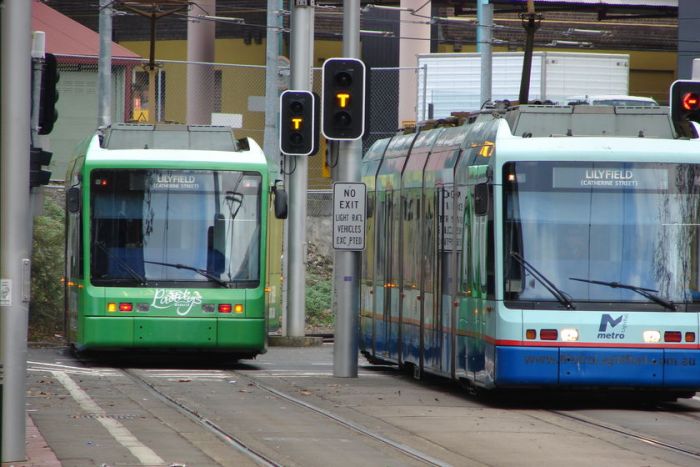
Trams in, cars out in Sydney CBD transport plan
The New South Wales Government has unveiled its final transport master plan, which confirms it will build a light rail line through Sydney’s central business district and ban cars from much of George Street.
A 12 kilometre tram line will link Circular Quay and Central Railway Station to the Sydney Cricket Ground, Randwick Racecourse and the University of New South Wales.
Private cars will be banned from about 40 per cent of George Street, between Bathurst Street and Hunter Street.
The CBD’s bus network will also be redesigned to reduce congestion.
The light rail plan is at odds with the 20-year vision for the state outlined in a report from Infrastructure NSW that was released in October.
The advisory body recommended against reintroducing trams to inner Sydney, instead suggesting bus tunnels beneath George Street to serve the CBD.
The Government says it will support 59 of the 70 recommendations included in the Infrastructure NSW report.
Of the 11 recommendations that are being ignored is advice to preserve land around Badgerys Creek to build a second Sydney airport, and to put off building a second harbour rail crossing.
Premier Barry O’Farrell says the Government expects to invest $300 billion into infrastructure over the next two decades, but some Commonwealth funding will also be needed.
Glenn Byres from the Property Council of Australia says owners of commercial, residential and retail buildings in central Sydney are happy with the light rail plan.
“We think it’s got a great opportunity to overhaul the amenity and urban domain of George Street,” he said.
“Of course the disruption that will be caused during construction will have to be managed sensibly and sensitively, but we think on balance this is a good long-term decision for the future of the city.”
But Opposition Leader John Robertson says it is another plan with no details on how it will be funded.
“New South Wales taxpayers have a right to know how each of these projects is going to be paid for,” Mr Robertson said.
“Are we going to see increased fares for commuters travelling from western Sydney or the central coast to pay for a light rail project in the eastern suburbs?”
Broadway Follies – An Alternative Plan
 First off, I just do not agree with Mr. Fitch nor do I think his plan is not well thought out.
One of the main reasons for building LRT on heavily used transit routes, is the economy gained from using ‘trams‘ instead of buses. As light rail runs on a dedicated rights-of-way with priority signaling at intersections, it is not hampered by traffic and able to travel faster along the street and by doing so becomes far more efficient than buses. One ‘tram‘ (1 tram driver) is as efficient as six buses (6 bus drivers) and as fewer trams are needed, the scale of economy looks like an inverted pyramid. As fewer trams and drivers are needed to provide a comparable service, also there are fewer mechanics and technicians needed to maintain a ‘tram’ fleet. ‘Trams’ operating on Broadway, replacing the current bus services,Ai??would be much cheaper to operate than buses, with today’s current passenger flows.
Mr. Fitch is also not up to date on modern ‘tram’ track construction, especially pre-fab track, which can be laid very fast on Broadway, as the street was already graded for the earlier streetcar operation. Building LRT on Broadway would be merely reinstating streetcars with a modern, more efficient version.
Building LRT on Broadway does come with its unique problems, but if the goal of transit is to move people and provide an economic alternative to the car, then modern LRT fits the bill, far more so than a subway.
What I do agree with Mr. Fitch is that for the cost of a Broadway subway, we can build LRT both down Broadway and in Surrey!
Forget about a Broadway subway, think LRT along West 16th
Opinion: Spread transit facilities along two parallel corridors and there willAi?? be more benefits for more people
The City of Vancouver is wrong, at this time, to advocate for an underground LRT line along West Broadway to the University of British Columbia. Stop calling it the ai???Broadway line,ai??? and start calling it the ai???UBC line,ai??? and you will see my point.
The cityai??i??s report compares a Broadway subway with a Broadway street-level LRT. Of course, a streetcar or street-level light rail along Broadway is going to compare badly with a subway in terms of capacity and speed. West Broadway is already severely congested.
Trying to force the most complex and expensive, highest capacity transit line in Vancouver through one of the most congested arterials in Vancouver is pure folly. It would be easier to squeeze a camel through the eye of a needle. It can be done, but at what cost?
The most appropriate solution, with due consideration for costs, regional transit priorities (i.e. Surrey, etc.) and time frame (10 years from now to build the subway at a minimum) is to build a mainly street-level light rail along the CPR corridor, the Arbutus corridor, and West 16th Avenue to UBC. Compare this route with a Broadway subway on cost, construction time and capacity, and it prevails.
Certainly, this would upset those who live along 16th, and they will oppose it, but letai??i??s be realistic. If a subway is constructed along Broadway and 10th, there would be a massive increase in traffic disruption for several years during construction, and a consequent transfer of traffic to 16th Ave.
Recall the effect on Granville, Main and Oak streets, to name a few, when Cambie Street was closed. Some of those who switch to 16th during construction will never go back to Broadway/10th Ave. afterwards.
A streetcar or LRT along West 16th could dip into short cut-and-cover tunnels at major intersections, as does the SkyTrain between Victoria Drive and Rupert, and as do portions of the Calgary and Edmonton LRTs.
Such a route/technology option would be far less expensive to build than a subway LRT (SkyTrain), and could be built within a much shorter time frame.
If anyone thinks that a Broadway subway can be built for $3 billion, they are dreaming. Look at the cost and disruption of the Canada Line construction. The only extremely congested part of that line (in Vancouver) was the northernmost portion, from King Edward to Downtown ai??i?? a few kilometres.
By comparison, the congested and difficult part of the Broadway line will be practically the whole thing ai??i?? many kilometres ai??i?? from VCC to the UBC Gates.
Vancouver says that if a Broadway subway is constructed with a tunnel boring machine, it will have little disruption on Broadway during construction. This is misleading. Tunnelled subways require massive surface excavations for stations, electrical substations, track switches, ventilation systems, emergency exits, equipment and dirt removal, and so on. If a subway is built along Broadway, even using a TBM, the street will be significantly disrupted (read: closed) for several years, at least.
I fully realize that the City of Vancouverai??i??s position is a negotiating tactic ai??i?? ask for the moon, in hopes of getting something less ai??i?? but can we not be more mature than that?
For goodness sake, TransLink and the province are crying so poor right now that they cannot even afford to finish off a bus rapid transit facility that is partly finished (the 156th Street transit exchange in Surrey), and I am sure the same applies to numerous other projects, programs and initiatives.
So why ask for a $3-billion project (likely to be closer to $5 billion) when there is no chance of it happening in the near future?
Meanwhile, Surrey Mayor Dianne Watts proposes three street-level LRT lines for her city at less cost than the Broadway subway line.
Who looks more reasonable? Chop the Broadway project in half, as Vancouver suggests, and what would we have? Certainly not a UBC line. That would simply move the transfer bottleneck from Commercial to Arbutus. Not worth $1.5 billion. Chop Wattsai??i?? proposal in half, and what would we get? At least one new rapid transit line for Surrey.
If transit facilities are spread along two parallel corridors, rather than squeezed into one, it will provide more benefits to more people. And it will open up new areas for development that may help fund the transit line and other amenities, following the ai???Hong Kong modelai??? of transit finance.
If Vancouver thinks that it can get the province to tunnel the Broadway line, as it did the Canada Line under Cambie, it is living in the past. That was a different era. Lots of provincial money, and lots of hype for the Olympics. When the cupboards are bare, you donai??i??t ask Santa for a gold-plated train set.
Finally, Vancouver quotes Alan Jacobs in its recent presentation: ai???Going underground is the only way to deliver Broadway as a Great Street.ai??? This is surely a misappropriation of Jacobsai??i?? ideas. West Broadway is already a great street. Disrupt it with several years of major construction, and its greatness will be destroyed. Put rapid transit on another street, reduce the number of express buses and traffic congestion on Broadway and 10th, and these streets can become even better.
Adam Fitch is a planning technician for the Thompson Nicola Regional District and lives in Kamloops
Light Rail Fits In
This is a re-post of useful links for those advocating for LRT. In Vancouver, there is a concerted effort to once again force a SkyTrain subway as a transit solution on Broadway, if this is successful there will be no light rail in Surrey, no Rail for the Valley Interurban forAi??at leastAi??30 years!

Zweisystem send a a hearty thank you!
http://citytransport.info/Street.htm
http://citytransport.info/Zones.htm
http://www.citymayors.com/transport/trams-europe.html
http://www.etcproceedings.org/paper/trams-and-bikes-towards-good-practice-in-light-rail-planning
http://www.isocarp.net/Data/case_studies/1592.pdf
http://www.metrocouncil.org/media/CCLRTstreetscapeFeb09.pdf
http://www.vmwp.com/projects/leland-avenue-streetscape.php
http://www.pdc.us/ura/interstate/kenton.asp
http://lightrailjacksonville.webs.com/whylrti.htm
http://www.totallyriviera.com/nice/content/113
http://www.globalmasstransit.net/archive.php?id=1293
http://www.cityofsacramento.org/dsd/planning/environmental-review/eirs/documents/Appendix_B.pdf
http://www.metro.net/news/simple_pr/metro-hold-streetscape-design-workshop-crenshawlax/
The Broadway Follies – The Smear Campaign Begins!

On radio station CKNW, the opening salvos from the SkyTrain Lobby were fired at the public, in the was of getting public opinion to support a $2 billion plus SkyTrain subway under Broadway. The BS meter was running full throttle, when the usual suspects, Frances (BS) Bula, from the Globe and mail; Michael Geller, President, The Geller Group and Adjunct Professor, SFU Centre for Sustainable Community Development (a Gordon Price advocate); Lesli Bolt, President, BoltAi??Communications (a public relations firm who seems to do a lot of work for developers) were oohing and awing about a SkyTrain subway under Broadway.
Have a listen, just cue up to Tuesday, Dec. 11, 9:05 AM.
http://www.cknw.com/news/
What we had was a complete misrepresentation about LRT SkyTrain and subways. Now, we have the defining of the sales campaign for the Broadway SkyTrain subway; we (Vancouver) has the density for a subway and they (Surrey) have yet to justify any “rapid transit” investment.
It is very sad to see players in the mainstream media resort to the Goebbels Gambit, where by ai???If you tell a SkyTrain lie big enough and keep repeating it, people will eventually come to believe the SkyTrain lie. The SkyTrain lie can be maintained only for such time as theAi??Province, the city of VancouverAi??and TransLinkAi??can shield the people from the political, economic and/orAi??long termAi??consequences of the SkyTrainAi??lie. It thus becomes vitally important for theAi??Province, the City of VancouverAi??and TransLinkAi??to use all of its powers to repress dissent, for the truth is the mortal enemy of the SkyTrain lie, and thus by extension, the truth is the greatest enemy of the Province, the City of Vancouver and TransLinkai???.
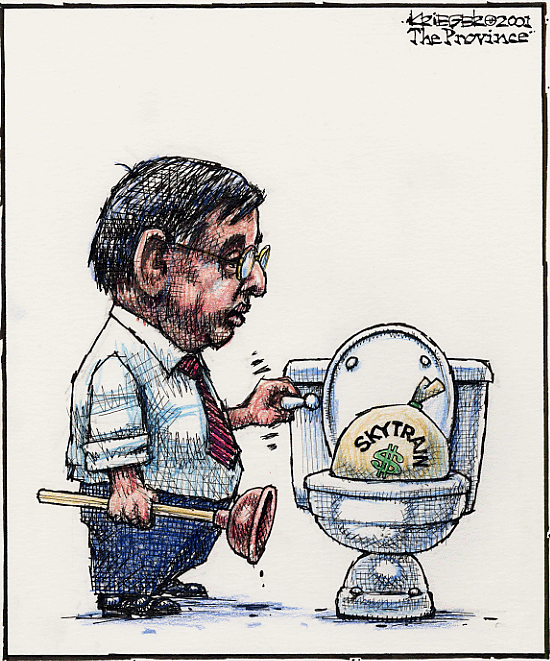
Are The NDP Backing the “SkyTrain” For Transit Expansion?
A recent article in the Black media certainly indicates thatAi??the provincial NDP are going to expand the SkyTrain system in a forlorn hope to improve transit. Bains’s quote; “Besides the need to replace two Fraser River crossings, there’s multi-billion-dollar demands for new rapid transit extensions in Surrey and down the Broadway corridor in Vancouver toward UBC.“
Rapid transit is of course TransLink speak for SkyTrain or light metro.
Rapid transit history in Vancouver repeats itself with every light metro line built, first as political arrogance, second as politicalAi??deceit, thirdly as a farce and now fourthly, ignorance.
But with friends like Joy MacPhail and Mike Harcourt in the backrooms of the NDP, quietly manipulating a regional transit strategy for premier in waiting, Adrian Dix, may also be setting the course for the NDP to be a one term wonder.
Let us not forget the Millennium Line debacle, where the then Glen Clark government did an about face on the Broadway – Lougheed rapid transit project by forcing a SkyTrain solution, now know as the Millennium Line onto the region with little or no meaningful debate. Despite years of hard work by scores of dedicated people, to correct the original SkyTrain mistake, the NDP government, with vague promices of thousands of jobsAi??and the export of SkyTrain abroad, topped with a small fabrication plant along the Expo Line, steamrolled SkyTrain for Vancouver’sAi??second ‘rapid transit’ line., with the perverse motto; “SkyTrain is better than LRT because it carries more people and is faster than a car“.
No surprise then at the next election,Ai??where the NDP were routed and left with only two seats in the legislature.
Today it’s nearly 2013, and there were no mass sales of SkyTrain to Asia; the SkyTrain fabrication plant has been long dismantled and the thousands of jobs promised never materialized. The provincial NDP, if elected,Ai??will haveAi??two options for regional transit:Ai??either to extend the present SkyTrain or dump SkyTrain (and TransLink for that matter) and build with modern light rail. Given the NDP’s dismal track record on regional transit, I think they will take the cowards way out, as they have doneAi??before and it is up to Mr. Dix and Mr. Bains to prove me wrong.
Bains, Polak ride much same road on transport questions
By Jeff Nagel – Surrey North Delta Leader
Published: December 05, 2012
For a while it looked as if the New Democrat who may be B.C.’s next transportation minister if his party takes power would steer clear of the new Port Mann Bridge ai??i?? the province’s biggest infrastructure project.
Opposition transportation critic Harry Bains, MLA for Surrey-Newton, told Black Press last week he didn’t intend to register with the TReO tolling system because he had little cause to use the Port Mann. Most of his duties keep him south of the Fraser or taking SkyTrain to Vancouver, rather than visiting the Tri Cities.
But as his constituents clamoured to register before opening day to get a $30 credit ai??i?? pushing registrations above the half-million mark ai??i?? Bains had a change of heart and signed up as well.
“I finally registered and I’m going to go take a trip,” Bains said Tuesday. “Since it’s free this week, I’ll go take a look.”
The NDP’s critic still has plenty of concerns, notably the expected congestion at the Pattullo Bridge and crossings further south as motorists seek a free alternative.
He also contends the new #555 Port Mann bus service may not have enough capacity to meet demand.
But his views on other transportation issues in the Lower Mainland are not far off those of B.C. Transportation Minister Mary Polak.
Bains insists the tolls introduced by the province on the Port Mann are here to stay, rising to $3 next December when introductory discounts end.
And like Polak, he’s prepared to listen to Metro Vancouver mayors who want to pursue road pricing and other new revenue sources to fund TransLink and address complaints of unfair tolling.
He’s just as cautious as the minister, stressing any controversial new scheme to extend tolls to existing bridges or roads must win public support.
Bains dismisses the province’s announcement of plans to replace the Massey Tunnel as a vague and unfunded “electioneering” ploy
But he wouldn’t call off the consultation and planning process if the NDP is elected next spring, agreeing the tunnel is a key Lower Mainland choke point.
“There is a need to have that crossing improved,” he said. “It is a main trading corridor to the United States. You can’t afford to have trucks lined up in that area.”
Tolls on the Port Mann and perhaps later a replaced Pattullo Bridge may mean even more traffic trying to use the tunnel, he noted.
Bains said government must also be mindful the Lower Mainland will grow by another million people, most of them settling south of the Fraser.
“You have to look ahead and say ‘how are we going to move those people and the goods that are going to serve them south of the Fraser?’
A replaced tunnel could also be a source of new jobs and economic growth in Surrey and North Delta, he said, allowing larger container ships now limited by draft to head further up river to the under-utilized Fraser Surrey Docks, instead of Vancouver terminals.
“If we have an opportunity to move those containers closer to their destination, can you imagine all the trucks you will be removing off Vancouver streets and off those crossings of the river?”
Whether the tunnel must be replaced or can be fixed instead would depend on further engineering advice, he said.
The big challenge for the next government, he said, will be juggling priorities in the face of limited resources.
Besides the need to replace two Fraser River crossings, there’s multi-billion-dollar demands for new rapid transit extensions in Surrey and down the Broadway corridor in Vancouver toward UBC.
There’s a need to upgrade SkyTrain stations and boost bus service throughout the region.
Better transit has to be the top priority, he said, along with TransLink’s need for long-term sustainable funding.
The NDP promises to raise corporate taxes ai??i?? cut to offset the carbon tax ai??i?? back to 2008 levels.
That would free up about $400 million a year for provincial transportation projects, Bains said.
Government would earmark a portion of that for the Lower Mainland, while area mayors would be expected to agree on how they will raise more money from residents.
“I’m willing to sit down with them and look at all options.”
The Broadway Follies – Vancouver Tries Terror Tactics.
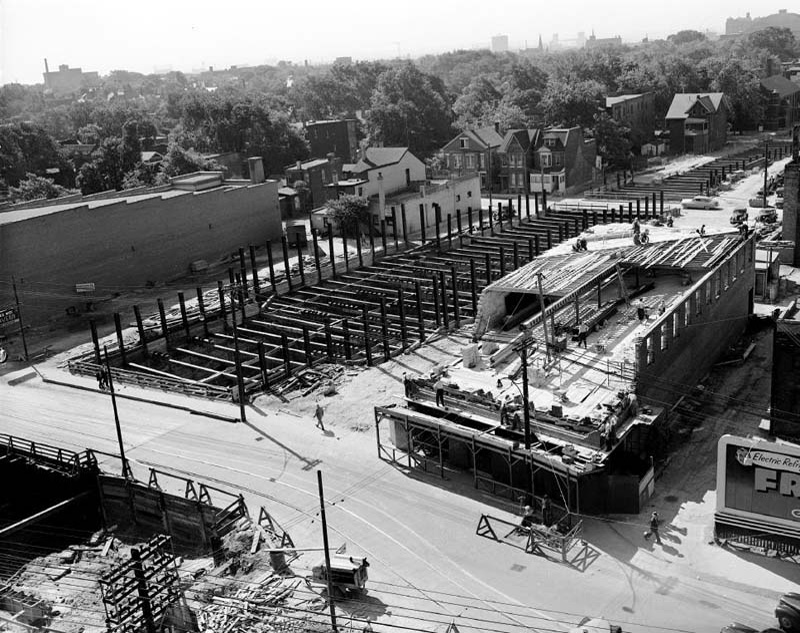
Cut and Cover subway construction
Last week, the City of Vancouver started a long and odious campaign for a multi-billion dollar SkyTrain Subway under Broadway, as far as Arbutus and maybe as far as UBC. In order to secure a favourable public opinion, the city claimed doom and gloom to any and all who would dare advocate for a much cheaper and possibly more effective light rail option.
What should concern the great unwashed who live South of the Fraser, if the spoiled brat that the City of Vancouver has become, gets funding for a subway, kiss goodbye to any transit improvements south of the Fraser river, except for token bus improvements. Also watch for for South Fraser taxpayers more than their fair share of taxes to pay for Vancouver’s extravagance.
The following letter sent to Zwei says it all.
Mayor and council, City of Vancouver;
There are many transit developments that the mayor and council maybe completely unaware or deliberately made unaware by the city Engineering Department and TransLink.
SkyTrain is obsolete and made obsolete by modern light rail over three decades ago. That TransLink keeps wanting to build with with the proprietary SkyTrain system, demonstrates that they are wilfully blind to modern light rail transit.
The huge annual subsidies required by our three mini-metro lines have pauperedTransLink, yet we plan and build more, even though SkyTrain has been rejected by knowledgeable transit planners around the world for almost 30 years. To date, only seven SkyTrain systems have been built and only 3 are used seriously for public transit, the rest being one experimental line and three airport style people movers.
SkyTrain’s decline into obsolescence started in 1982, four years before the opening of the Expo Line. The 1982 IBI Study, done for the Toronto Transit Commission found’“that ICTS/ALRT (SkyTrain) costs anything up to ten times as much as a conventional light rail line to install for about the same capacity; or put another way, ICTS/ALRT cost more than a heavy-rail subway with for times its capacity.” The report killed several major ICTS/ALRT projects in Ontario, the birthplace of SkyTrain, yet the then Social Credit provincial party, like country rubes, bought into the SkyTrain‘kool-ade’, much to the Ontario government owned UTDC’s delight.
Arguments comparing SkyTrain with light rail are moot and the arguments put forward by the province, TransLink, and the City of Vancouver’s Engineering Department today are based on hearsay and false premises.
Subways by nature are very expensive, both to construct and to maintain and unless a transit line has traffic flows in excess of 15,000 persons per hour per direction, a subway line soon becomes a financial millstone around the operating authorities neck. In 1992, just the Expo Line saw an annual subsidy of $157 million, more than the the combined subsidy for diesel and trolleybuses in Metro Vancouver. With two more metro lines built since, this annual subsidy is now well over $300 million annually and goes a long way to explain why TransLink is in the financial mess it finds itself today.
The Evergreen Line and the proposed Broadway subway will all but bankrupt TransLink with their huge burden of costs.
Subways suffer from high maintenance costs and have proven not to be very successful in attracting new ridership and our mini-metro system is a good example. In 1999 when BC Transit ran our regional transit system, 57% of the trips in the were by car drivers yet in 2011 after 12 years of TransLink rule and over $8 billion invested in‘rapid transit’ 57% of the trips in the region were by car drivers; there is no evidence of modal shift from car to transit.
Just a week ago, in what was tantamount to a terror preemptive strike by the City of Vancouver, a vast anti-LRT diatribe, including that “Broadway would be completely ripped up and the trees chopped down………..” was unleashed to soften up any opposition to Broadway subway. The problem with using the old hackneyed anti-LRT rhetoric as used by the City of Vancouver for the past several decades, is that in the 21st century, modern light rail has evolved, unlike SkyTrain, and can happily operate as a streetcar, LRT operating on a reserved rights-of-way, a light-metro, and TramTrain or a commuter train –all on the same route!
Unlike metro or light-metro, which is built to cater to already established large passenger loads on a transit route, modern LRT and even a streetcar can economically handle traffic flows from 2,000 pphpd to over 20,000 pphpd, thus effectively bridging the gap of what buses can carry and that of a metro. Light-metro, such as SkyTrain and the Canada Line, are constrained by their expensive automatic (driverless) method of operation, have comparable capacities.
Modern light rail transit, despite the SkyTrain spin, is very economic to build and operate. One tram (one tram driver) is as efficient in operation as 6 buses (6 bus drivers) and unlike light-metro, which being driverless has a small and expensive army of attendants and maintenance people to ensure smooth operation.
Modern LRT, operating on Broadway, with stops every 500 metres to 600 metres, would replace all bus service on Broadway and give a clear economic benefit to TransLink with reduced operating costs, unlike a subway which is expensive and needs ‘shadow‘ bus service, which again increases operating costs. There is no economy to be had in building a Broadway subway, Skytrain or no.
In 2008, noted American transit expert Gerald Fox, in a letter to a Victoria transportation group, shredded TransLink’s Evergreen Line business case, stating; “I found several instances where the analysis had made assumptions that were inaccurate, or had been manipulated to make the case for SkyTrain. If the underlying assumptions are inaccurate, the conclusions may be so too.”Fox later said; “It is interesting how TransLink has used this cunning method of manipulating analysisto justify SkyTrain in corridor after corridor, and has thus succeeded in keeping it proprietary rail system expanding. In the US, all new transit projects that seek federal support are now subjected to scrutiny by a panel of transit peers, selected and monitored by the
federal government, to ensure that projects are analyzed honestly, and the taxpayersai??i?? interests are protected. No SkyTrain project has ever passed this scrutiny in the US.”It seems that the City of Vancouver is following TransLink’s lead in providing “assumptions that are inaccurate and manipulated” and are “manipulating analysis”to make the case for a hugely expensive Broadway SkyTrain subway, in deference to the overwhelming need for affordable transit South of the Fraser River.
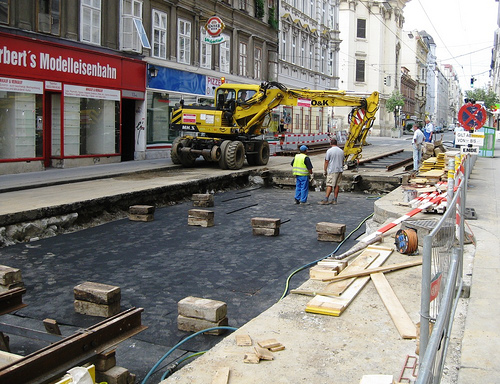
Pre-fab tram/streetcar/LRT track construction
Rail transit must get on right track – From the Vancouver Sun
An interesting piece in the Vancouver Sun and the first time in many years that the Sun has allowed a positive article about light rail!

Rail transit must get on right track
Opinion: But government capital is likely not enough to fund an all-underground system west of Main Street
Surrey is thinking about while Calgary and Edmonton are already building light rail transit (LRT) lines on the surface, as are many cities in the United States. In fact, Edmonton is now planning to construct a surface line from its west end via downtown to Millwoods. All want surface lines because they find going underground too expensive. But then we have the City of Vancouver where nobody is allowed to see rail transit west of Main Street. And those who are more frugal would have to contribute through their federal and/or provincial taxes to cater to Vancouverai??i??s obsession.
The City of Vancouver is going through the usual process with all options on the table, but it has already predetermined that the Broadway line shall be SkyTrain and as a consequence must be all underground. The fact that there is no money for even a bus stop for Surrey on the new express route from Langley, that the Evergreen Line has not been built yet and that everybody else in the country through federal, provincial and regional taxes should pay for this underground line, does not influence anybody in city hall. Frankly, I think since all governments are short of money, senior governments should only contribute to a surface line. If a local community wants to put a line underground, they should raise the money locally to pay for the difference.
There is a rough ratio as regards costs. If a surface line has a cost factor of one, then a line on structure is five or six and underground has a factor of 10 or 12. Let us use 10, in which case, it means with limited funding each year every kilometre of underground line prevents nine kilometres of surface line somewhere else. Or, in other words, if it takes 10 years to build the surface lines we need now, it will take 100 years to put them all underground. Do not expect capital funding for transit to increase that much so that we could afford an all-underground system. Broadway is wide enough to accommodate LRT in the median, all the way from Broadway/Commercial to at least Alma.
The concern about loss of parking is one I do not share. The median would have to be continuous between major cross streets, other side streets would be right turns in and out. Drastic yes, but better than creating more road space for cars.
So what is the stated problem? There are narrow streets west of Alma. Light rail does not prevent a short section of tunnel, but because there is a short section going through a high property value area, does not mean the entire line should be underground. The second problem is that SkyTrain technology forces underground or overhead alignment because no at-grade crossings are possible.
So where do passengers on the Millennium Line go, west to UBC or downtown? Considering the overcrowding west of Broadway on the Expo line, it may well be that downtown is the major destination. If the Millennium line was extended via Main Street to Waterfront, with stops at Terminal Avenue and Hastings, there would be a better SkyTrain network. We would interline the Expo and Evergreen lines and create a Circle Millennium Line.
The success of the Olympic line in 2010 can then be repeated with a second LRT line from the Main/Terminal/Rail/Bus/Science Centre station via Olympic Village to Granville Island and Arbutus.
John J. Bakker is professor emeritus of civil engineering (transportation) at the University of Alberta. He now lives in Surrey.



Recent Comments