CancA?n tram-train feasibility study commissioned
It is so sad that just about every country in North America and Europe are looking a TramTrain (Interurban) to help solve regional transit problems, except Canada andAi??especially BC and Metro Vancouver. That the now obsolete SkyTrain mini-metro is still being planned for the lower mainland only shows how backward and irrelevant our regional transit planning has become.
That TransLink and the any regional mayors refuse to accept the simple fact that modern LRT has made SkyTrain obsolete over two decades ago, just illustrates how delusional regional politicians have become about regional transit planning.
In Metro Vancouver we plan for myths.
From the Railway Gazette
CancA?n tram-train feasibility study commissioned
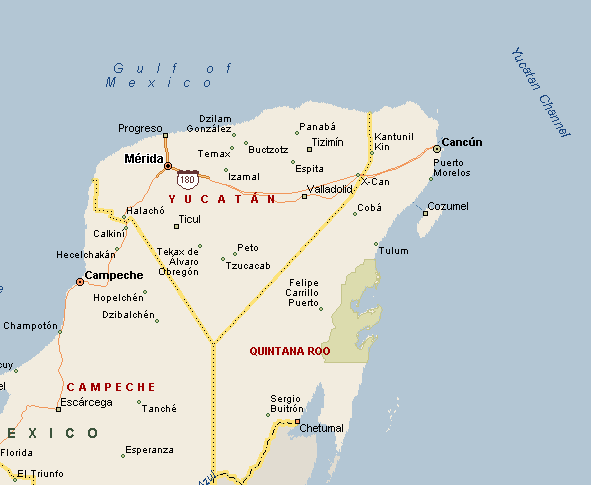
MEXICO: Spanish metre-gauge operator FEVE is to undertake feasibility studies for a new tram-train network serving Caribbean resorts between CancA?n and Tulum.
FEVE is to study a route linking CancA?n with Cozumel, Solidaridad, Benito JuA?rez, Isla Mujeres and Tulum, serving an area containing some of the most important tourist destinations in Mexico.
It says that an efficient, low-cost rail system would improve transport options for tourists and local residents alike, reducing dependency on road transport while minimising environmental impact.
The framework agreement signed by Rodrigo Borge Angulo, Governor of Quintana Roo state, and FEVE President Marcelino Oreja also makes provision for the Spanish company to provide operating and training assistance as well as rolling stock.
Through the past – darkly
A note from Zwei….
This post is for the real transit enthusiast, who understands the nuances of transit history. Ed T., who is mentioned in the post is Ed Tennyson, who just turned 90, is one of the USA’s foremost transit experts.
The following has been making the rounds in the “transit blogs” and is well worth a read.

“Remember that during the depression the government was funding roadbuilding all over this country. so even the worst riding buses were smooth on these brand new “concrete ribbons” as they were advertised and the people building them wanted to drive on them so as soon as they could scrape together the downpayment on that fliver they were off of transit. many found out they couldn’t afford that car but by then the trolley they had abandoned before was gone.
In transit there is a threshold volumne and connectivity that when a system falls below this the whole system essentially collapses except for the captive riders. this was in recent years proven with accessible transit, ridership was very low until about 75% of the system became accessible then ridership practically exploded. this is the same thing with almost all transit in general, Portlands, San Franrciscos, San Diego, Dallas and other new systems of rail have reached that threshold of connectivity and coverage that suddenly ridership explodes, the N
Judah in San Francisco was a heavy but not overloaded line for many years but suddenly in recent years with the additions to the system at the Bay end the ridership is more than even the longest trains and fleet size and tunnel carpacity can handle and they need bus supplements.This worked the same way in reverse when systems were falling apart and the only economic choice the private operator had was to write the worst rail line off for short term survival it reached the level where the system essentially imploded.
Remember that GM and other members of NCL also provided scholarships and often controlled the sylabus in colleges that taught the transit planners and executives of the 50’s 60s and 70s I know because I was one of them and felt like a fish swimming upstream against the tide, Ed T was one of the last old school and I was just the odd guy out that they tolerated. I can pull out my old textbooks, there is maybe a chapter on monorails, PRT and subways. but a year or so ago I looked and could not find a single mention of anything resembling light rail. and this was after the building of the first light rail line (officially in Franfurt a Main, Germany) I had lived in Frankfurt so I had watched and ridden the U lines as they were designated and had photos of them and when brought up in classes they were brushed off as the “dying gasp of those unwilling to face the future”
When I first got involved in accessible transit I was a firm believer in paratransit, but had an open mind, and then I ran a paratransit system and tried as hard as I could and could not make it work, that I started believing in mainstream accessibility.
The basic formulas that Ed T and the old timers knew from the seat of their pants and thru experiences of an open minded educated and experienced transit professional could recognize in the 30,40,50,60s was as accurate then as it is today.
We must learn from the past but use it to build for the future. fortunately the students comming out of even my old alma mater and other transportation engineering and planning programs are learning this but we had to make a lot of mistakes and overcome many years of wrongful teaching by those who were lead by the people only concerned about their own wallets and pie in the sky vision (which was common until about 1963 or so) and then 20 years to come to our senses and actually move forward. Sen M in San Diego was one of these visionaries from the past and linked up with a trained engineer from the past (Ed T) and was willing to fight for what they knew would work until the generation that learned from them matured enough to take over.
enough. crawling off my soapbox”
The Tyee and Transit – Please do More Research!
TransLink is embarrassed because they oversee a rather expensive mini-metro system, a system that has now cost the regional and BC taxpayer nearly $9 billion, yet congestion in Vancouver is so bad, it is rated worst in Canada and second only to Los Angles. This certainly not good advertising for TransLink, especially when it wants more ‘brass’ from regional taxpayers to pay for questionable transit schemes.
So, what to do.
Why not call on some transit types working for the Tyee and have them submit a ‘puff‘ piece on TransLink and howAi??transit ridershipAi??”crushes” Portland and Seattle.
The following is from the tyee.com, an alternative online newspaper of sorts and as expected it is all rah, rah Vancouver, but just wait a second here.
There is no mention of TransLink recycling and double or triple counting bus and SkyTrain riders as they are forced to transfer from one mode to the next, nor is there any mention of the now 100,000 $1.00 a day U-Pass season ticket holders, that get unlimited travel on the transit system for $1.00 a day! (Sources have told Zwei that about 70% of the U-passes are being used, with users making 2 to 6 trips a day and the U-Pass program is hemorrhaging money from the transit system at a rateAi??far more so than fare evasion!)
How about the cost per passenger comparison between Vancouver, Seattle and Portland, to determine which city has invested wisely for public transit options?
Never done by Vancouver’s media is why SkyTrain was rejected by Seattle and Portland, in favour of modern LRT?
The SkyTrain lobby are hard at it, desperately Ai??trying to squander the taxpayer’s money on more SkyTrain Lines and the piece from the Tyee, is nothing more than TransLink speak by a reporter who should do more research.
Transit Geeks Rejoice!
Not only does Vancouver crush Portland and Seattle, but proving it involves nifty analysis and charts.
By Clark Williams-Derry, Today,Ai??Ai??Ai??Sightline.org
When it comes to commuting by transit in the larger cities on North America’s northwest coast, neither Portland nor Seattle can hold a candle to greater Vancouver.
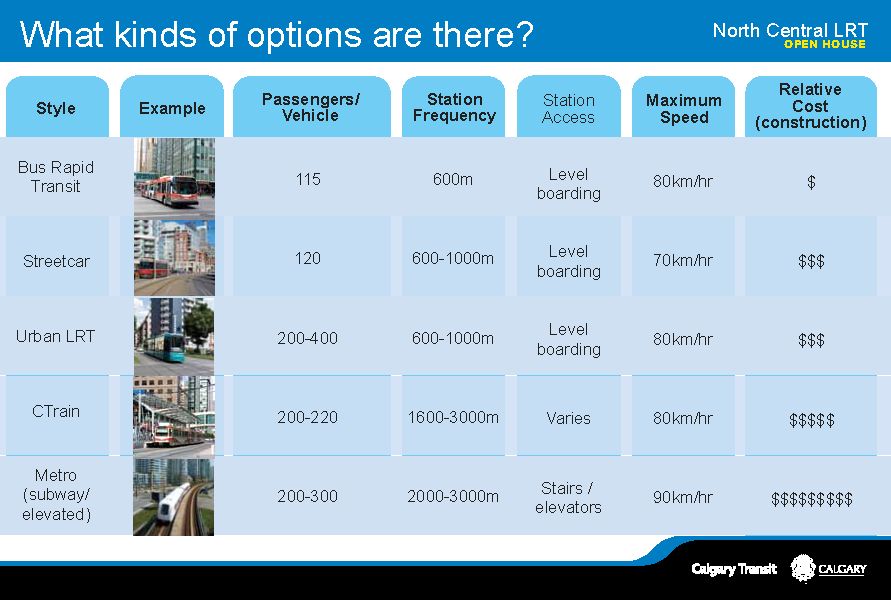
The simplest comparison among the three cities looks at the average number of bus and rail transit boardings per person, per year, in the entire metro area. And on that measure, Vancouver vastly outstrips its two southern neighbors (see chart at top of story).
Unfortunately, the story is somewhat more complicated than this chart suggests. Vancouver’s transit system encourages transfers — and since there’s a single, unified transit agency for metro Vancouver, there’s good data on how many riders actually transfer in the course of a single trip. Seattle, in contrast, has so many overlapping transit systems that it’s very difficult to assess how many transfers there really are.
Still, even if you assume that each transit boarding in Portland and Seattle represents a single trip, but use Vancouver’s data on “trips” rather than “vehicle boardings,” Metro Vancouver still beats the two U.S cities handily:
Using the same “trip” definitions in the chart above, a mode-by-mode breakdown shows that Portland has far more rail riders than Seattle, while greater Seattle edges out greater Portland in bus ridership. But Vancouver still comes out on top in both categories.
Trips per capita, 2010*
By Bus: Vancouver 56, Portland 32, Seattle 43
By Light Rail: Vancouver 33, Portland 21, Seattle 3
By Commuter Rail: Vancouver 1, Portland 0, Seattle
*Note: Vancouver data represent transit “trips,” while data for both Portland and Seattle represent transit “boardings.”
Of course, there’s still more to the story. These charts exclude a number of transit modes, including dial-a-ride transit (which is typically door-to-door service offered to those who are physically unable to use standard transit service), as well as vanpools and ferries. I’ve decided to keep those out of the analysis for now, but I’ll note that after including ferry trips in the total trip count count, Seattle’s per capita transit ridership ties Portland’s; and when you add in vanpools as well as ferries, Seattle narrowly edges Portland.
So perhaps Portland and Seattle are about tied… but tied in a race to see who comes in a distant second to Vancouver.
Notes and Caveats:
For this analysis, we considered all of the transit agencies in the greater Portland and Seattle metropolitan areas, as listed in the National Transit Database. For Seattle, those agencies included King County Metro, Sound Transit, Community Transit (in Snohomish County), Everett Transit, the City of Seattle, and a handful of ferry providers — but not Kitsap Transit. For Portland, it included Trimet, C-Tran in Clark County, the South Metro Area Regional Transit agency in Wilsonville, and the Metro vanpool program.
All data for Metro Vancouver comes from Translink. In Seattle, Light Rail includes the monorail and South Lake Union Trolley. Population for the Seattle metro area includes the full population of King, Snohomish, and Pierce counties. Greater Portland’s population includes Clark County, Washington, and Clackamas, Multnomah, and Washington counties in Oregon. Population for greater Vancouver includes all of Metro Vancouver. Note that Seattle and Portland population totals, as described above, may differ from the populations of the service areas as defined in the National Transit Database

What’s not to love about riding the rails?
What’s not to love about riding the rails?
BY JON FERRY, THE PROVINCE JULY 6, 2012
Photograph by: Graphics , The Province
I have few grand passions in my life, but train travel is one of them. A train journey can be frustrating (I once spent an entire day stranded on a train in Africa). But it’s invariably interesting and often an absolute delight.
Indeed, I don’t understand why improving rail travel in this eco-aware, tourist-dependent part of the world has to be such a slow, laborious grind.
I mean, running regular trains between Vancouver and Seattle, and between Vancouver and Squamish ai??i?? and even down alongside Highway 1 from Chilliwack ai??i?? should be a no-brainer.
Just ask any West Coast Express regular how stress-free train travel can be.
I especially don’t understand why, despite all the high-level talk about “high speed” rail, it still can take nearly 12 hours to go from Vancouver to Eugene, Ore., by train.
I mean we’re not talking about how to find the Higgs boson subatomic particle here.
“The problem we’ve had is that most train discussion is focused around goods movement, which is very important. It hasn’t focused enough on the passenger rail aspects,” said Vancouver Coun. Geoff Meggs, himself a staunch rail booster.
Surrey Mayor Dianne Watts agreed passenger rail in our region is under-utilized.
“There are opportunities,” she told me Thursday. “I mean, if you look at the old inter-urban line, there’s pieces of it that make sense that could be used.”
There has been some progress, though. After years of talks between Canadian and U.S. governments, you can at least go by train from Vancouver to Seattle and back in a day. And the plan is for there to be four round trips by 2023.
What’s needed now is for Lower Mainland rail enthusiasts to get behind the current campaign ai??i?? now supported by Surrey and White Rock councillors and the Surrey Board of Trade ai??i?? to reopen the 100-year-old train station in Blaine, Wash.
This would mean Fraser Valley residents who wanted to take the Amtrak Cascades train to Seattle wouldn’t have to drive all the way to downtown Vancouver to board it. They’d simply cross the border near where they live and park their vehicles at the Blaine station.
“It would serve a catchment area of more than 750,000 people,” noted Bruce Agnew, director of Seattle’s Cascadia Centre, a passenger-rail advocacy group.
Indeed, Agnew told me Thursday that taking flights from Bellingham is now so popular with Lower Mainland residents that Washington state transportation authorities might be persuaded to put in a station there, too.
The only problem is the more stops the train made, the slower the overall Vancouver-to-Seattle journey might become.
And Agnew and others would like to see the time for the trip come down from more than 3A? hours to make it competitive with other travel modes.
With train travel, of course, speed is not everything. As author David Baldacci wrote: “It’s my experience that most folk who ride trains could care less where they’re going. For them, it’s the journey itself and the people they meet along the way.”
Myself, I do like to get where I’m going, and fast. But I also like time for reading, chatting, scenery-viewing and people-watching.
Rail travel is the full meal deal.
jferry@theprovince.com
Ai?? Copyright (c) The Province
via What’s not to love about riding the rails?.
TransLink cuts half the senior executive positions from 2009. Why not just get rid of TransLink?
What most people don’t realize is that much of TransLink does, could be done easily by outside sources;Ai??the TransLinkAi??bureaucracyAi??tends toAi??duplicate what has already been done.
West Coast Mountain Bus and its bureaucracy runs the buses and SeaBus and The BC Rapid Transit Company Ltd. runs the two SkyTrain lines and a private operator runs the Canada Line, which again I must remind people that the Canada line is not SkyTrain. Metro Vancouver is supposed to be doing regional planning and the only job it seems that TransLink has been doing of late is misinforming people about modern LRT in favour of the SkyTrain light-metro system.
If one really wants to save money, do away with TransLink altogether, there is absolutely no need for this ponderous and self absorbed bureaucracy.

TransLink cuts half the senior executive positions from 2009
Efforts aimed at cost savings
By Kelly Sinoski, Vancouver SunJuly 17, 2012
TransLink has halved its senior executive positions since 2009 as part of an organizational restructuring aimed at finding cost savings to pay for transit upgrades across the region.
Ten positions were cut last year, according to a 2011 year-end financial report released Tuesday.
CEO Ian Jarvis would not provide details on the managers who lost their jobs last year, saying only that they had worked at TransLink for between three and 19 months.
However, earlier this year, Michael Shiffer, who moved from Chicago three years ago to become TransLinkai??i??s vice-president of policy and planning, lost his job after his position was also eliminated.
The cuts, along with other changes, are credited with helping TransLink find $30 million in cost savings over the past three years, Jarvis said.
But he also noted the number of staff earning more than $75,000 annually rose in 2011, likely as a result of TransLink absorbing 102 people from Coast Mountain Bus Company ai??i?? a move aimed at streamlining human resources and information technology.
Total staff salaries for 2011 were $48.9 million, according to Tuesdayai??i??s financial report, while employee expenses were $1.07 million.
Jarvis vowed to continue searching for more cost efficiencies through 2012. ai???Funding is our No. 1 priority within the organization now and weai??i??re looking at all areas of the business,ai??? he said. ai???Weai??i??ll continue with our own efforts, by trying to drive more transit fare revenue by allocating transit hours to more productive use.ai???
TransLink, which is the subject of a provincial audit, is under pressure to find another $30 million per year in savings so it can go ahead with transit upgrades across the region. The upgrades have been delayed after regional mayors refused to allow property tax increases to pay for them.
Letters To The Editor

On-street running on Portland’s MAX LRT.Ai??
Malcolm Johnston, erstwhile supporter for modern light rail since the mid 1980’s, again has another letter published in the Surrey Leader newspaper. The letter, which is just a rehash of the operating characteristics of modern LRT, something that most European transit planners take for granted. No wild claims, no nonsense, the letter just states facts…………….
LRT is the best transit for Surrey
Published: July 10, 2012
The column ai???Urgent need for rapid transit in Surreyai??? (The Leader, July 5) includes a mistake commonly made by those comparing SkyTrain with LRT as illustrated by the following quote: ai???However, SkyTrain is separated from road traffic and as such can offer quicker trips and not get tied up by intersection crashes.ai???
The claim that SkyTrain makes quicker trips than LRT is based on the fact that SkyTrain has much fewer stations per route kilometre than LRT. Fewer stations equals quicker times, but fewer stations also deter ridership.
The main differences between streetcars and modern LRT is the concept of the reserved rights-of-way or a rights-of-way for the exclusive use of the tram or streetcar to operate on. The reserved rights-of-way can be as simple as a HOV lane with rails or as complex as a linear park with grass, instead of ballasted or paved, track complete with shrubbery and flowers. The Arbutus corridor in Vancouver is a very good example of a ai???reserved rights-of-wayai??? as well as the former BC Electric interurban route that bisects Surrey.
A reserved rights-of-way enables a tram or streetcar to operate as fast and carry as many passengers as its much more expensive cousin, light-metro (SkyTrain). In fact, modern LRT has made SkyTrain obsolete two decades ago but no one has apparently told TransLink, which continues to squander taxpayerai??i??s money on dated SkyTrain transit planning.
The notion that LRT causes crashes at intersections is nonsense; rather it is car drivers ignoring red light signals that causes crashes at signal controlled LRT/road intersections and studies have shown that a LRT/road intersections are about 10 times as safe as a road/road intersections.
In the 21st century, modern LRT has proven to be faster, able to carry more customers at a far cheaper cost, to more destinations than SkyTrain light-metro and Mayor Dianne Watts is correct in demanding modern LRT for the City of Surrey.
Malcolm Johnston
Rail for the Valley
…………………but facts never get in the way of the SkyTrain lobby, which following letter is full of the standard nonsense that one expects of the SkyTrain lobby. Sadly, comparisons with Portland’s MAX should include that the Portland transit authority doesn’t force bus passengers onto transit, ‘en mass’ like TransLink, nor is there a universal $1 a day U-Pass for post secondary students.
Portland’s transit planners also have to contend not only with the Willamette River which bisects the city and a small mountain range, but also many rivers of concrete and pavement of the many highways and interstates that run northAi??and south and east and west through the city, necessitating many more bridges than most other new “rail’ transit systems.
Portland’s MAX LRT now has five lines and spans 85 km, with 85 stations and now carries 126,000 passengers a day; real transit customers and not recycled bus passengers forced to transfer onto MAX! Yet, the SkyTrain lobby, always mindful of facts ruining a good fairy tale, never tell the whole story, including the fact that Portland’s voters have voted in favour for the finance of each line built, a nicety never offered to Metro Vancouver voters
Transit money better spent on SkyTrain
Published: July 12, 2012
Thereai??i??s no doubt that Surrey needs rapid transit. Surrey is expected to face huge growth in next 30 years. Rapid transit will help manage, accommodate and welcome these newcomers.
We also, however, need to face a single, unchanging fact: There is no one-size-fits-all solution for rapid transit. A system that works somewhere in the world will not necessarily replicate with stunning success elsewhere.
In a 2008 survey of Surrey residents, 88 per cent agreed that ai???transit should be as convenient and attractive as driving a car on city roads.ai???
But letai??i??s look at what the City of Surrey is currently favouring: on-street LRT that cannot and will not be any faster than Surreyai??i??s drivers, with reliability and performance compromises at well.
The city is ignoring the expectations and demands of 88 per cent of Surreyai??i??s population.
The City of Portland has built an 84-kilometre LRT system (MAX).Ai?? However, in spite of servicing a greater population base over a larger area of service, there are fewer weekday boardings on the MAX than on SkyTrainai??i??s Canada Line alone.
Conclusion?
In three years of operation, a single SkyTrain line spanning 20 kilometres has attracted more riders per year than an entire LRT system operating over four times the service area, and for more than 26 years.
Portland had little to gain from LRT.Ai?? The transit commute-to-work mode-share has remained at a standstill for more than 15 years, despite $4 billion in additional LRT-related investment. The service hasn’t made the overall system any stronger though; recently, a cut in overall service came with fare increases and the removal of free downtown transit.
Conversely, TransLinkai??i??s service hours actually increased during this same period. SkyTrain as an attractive, profitable service is part of what makes our system strong. The introduction of the Canada Line has tapped new potential riders and realized operational cost-savings, allowing TransLink to boost revenue and facilitate improvements to service beyond Canada Line. As a result, TransLink maintains a much stronger regional transit network than Portlandai??i??s TriMet.
Leader columnist Frank Bucholtz is right about one thing (ai???Urgent need for rapid transit, The Leader, July 5): It would be difficult to come up with funding for rapid transit.
When we do get it, I would rather see that funding go towards SkyTrain expansion.
Itai??i??s simple: SkyTrain is a competitive rapid transit service that helps truly unlock the potential of Surrey as the regionai??i??s next business centre.Ai?? We must not waste our limited resources on an LRT system that has a poor business case in benefiting our community.
Daryl Dela Cruz
SkyTrain for Surrey Initiative
Now a question for Mr. Cruz, a question that Mr. Cruz continually fails to answer. “Why, after being on the market for over 32 years, transit planners avoid SkyTrain like a plague, with only seven SkyTrain systems built and not one has been allowed to compete against modern light rail?”
To date, there are two SkyTrain Lines built as demonstration lines, Detroit and Toronto (both soon to be abandoned); two built as airport people movers, JFK and Beijing; the Yongin EverLine, built to support a theme park, which is built, but sits dormant because no one wants to operate it, due to high operating costs; and the Vancouver and Kuala Lumpur ALRT/ART urban transit systems. It should be noted that Kuala Lumpur also operates an elevated LRT system and a monorail.
And Mr. Cruz want to continue building with SkyTrain in Surrey? As Barnum observed; “There is a sucker born every minute.”
.
Bombardier’s Gambit, a Streetcar is not light rail: and only in Vancouver.
Interesting, that Bombardier Inc. is stumping in Surrey and Vancouver to drum up interest in their Toronto streetcar, which in reality is a reworked Flexity tram, so it can operate on Toronto’s heritage streetcar lines. After listening to a Bombardier Rep. claim that SkyTrain was cheap to operate because it has no drivers (he didn’t mention the over 250 full time attendants that work on SkyTrain) it is becoming clear of Bombardier’s game; Don’t call trams light rail, but streetcars, because streetcars are a poorman’s SkyTrain.
Bombardier is in a pickle, for over 15 years claims have been made in great quantity that SkyTrain is better than light rail, but now, with Surrey wanting LRT and even Vancouver planning a streetcar, in very short order all those claims about LRT will be seen asAi??a lot of “porkies“, bringing disgrace upon those who repeated them Joesph Goebbels style. Golly gee whiz Bombardier, how are you going to explain that Siemens or Alstom’s trams are LRT but Bombardier’s product is a streetcar.
Bombardier Inc. isAi??desperate to sell light rail vehicles in North America, but all a Siemens or Alstom rep. has to say is that their light rail product is as good as or even better than a Bombardier SkyTrain and the Bombardier rep. will have absolutely no comeback because his product is a mere streetcar, which Bombardier claims is inferior to SkyTrain.
Oh what tangled webs we weave, when we first practice to deceive.
 The Flexity modular tram, is it a tram, LRV or a streetcar?
An updated Rail for the ValleyAi??post from 2008.
With the ongoing transit debate, there is some confusion between streetcars and LRT, so whatai??i??s the difference?
Streetcars are just that, a rail guided transit mode that has the legal right to operate on the public highway. Streetcars in Europe are known collectively as trams, a term dating back over two hundred years, where ai???tramsai??i?? mostly coal carrying rail cars, traveled on a ai???tramwayai??i?? on the public highway. Back then, the public highway was merely a muddy track.
The term streetcar is strictly North American and with a few exceptions (Diesel LRT), describes a steel wheel on steel rail, electrically powered passenger vehicle, that operates strictly on public streets.
During the heyday of streetcars, many operators ran on routes that had few stops between urban centres and operated on an exclusive rights-of-ways, giving a much faster service. This was known as the ai???interurbanai??i?? or a streetcar that ran between urban centres. The interurban could operate on streetcar tracks in city centres and then network on to its own rights-of-ways, giving much faster journey times to its various destinations.
In the 1930ai???s several transit operators in Europe and the USA took the interurban concept and applied it to cities by givingAi?? streetcar lines exclusive or ai???reservedai??i?? rights-of-ways in city centres, giving much higher commercial speeds and faster journey times for customers. The depression, World War 2, and the auto revolution, started a chain of wholesale streetcar abandonments in many cities in North America and Europe and the lessons of the ai???reservedai??i?? rights-of-ways were lost.
By the late 1960ai???s, streetcars had all but disappeared in North America and in Europe abandonments increased, with the old tramwayai??i??s being replaced by metro systems. A few cities in Europe upgraded their tramway systems to smaller pre-metros with large sections of grade-separated rights-of-ways, operating articulated cars. This was very expensive and the results were not all that encouraging. Overall transit ridership in cities with new metro or subway systems declined as the customer perceived that metro and buses (which replaced trams to take the customer the metro station) were not user friendly and it was just easier to take the car instead. As auto congestion increased in urban centres, more subways and metro were planned, with the thought at the time thatAi?? the transit customer wanted fast subways. The customer, as it turned out wanted his or her the tram back.
A crisis of transit philosophy evolved, the transit customer wanted faster trams, but did not want subways (nor did the taxpayer) and one universal and unpleasant fact emerged, the customer did not want to take a bus! In the early 1970ai???s, the idea of the reserved rights-of-way reemerged and the results were encouraging. By giving a tram line even sort sections of reserved rights-of-ways (RRoW), greatly increased commercial speed, which both increased ridership and increased productivity. The success of the reserved rights-of-way was instant and combined with the articulated rail car, the concept of priority signaling, and operating on a reserved rights-of-way gave the tram or streetcar almost the same commercial speeds of a metro at a fraction of the cost. A new name was coined to market the old tram/streetcar/interurban ai??i?? Light Rail Transit or LRT.
Today a tram or streetcar system which operated at least 30% of its route on reserved rights-of-ways is considered LRT. In the USA and Canada, transit planners have tried to reinvent light rail as a light-metro(Vancouver & Seattle) and the streetcar as small trams, operating on marginal routes. It should be noted that Hong Kongai??i??s 1067 mm, gauge tramway, operating small double-deck tram cars, carry over 80 million passengers a year and in France, Strasbourgai??i??s tramwayai??i??s largest cars, called Jumboai??i??s, have a capacity of 350 persons. Any streetcar or LRT system can carry over 20,000 persons per hour per direction, the only difference being, LRT is able to obtain much higher commercial speeds on a RRoW.
A streetcar is considered a rail operated transit vehicle, operating on-street, in mixed traffic, with little or no signal priority at intersections, while Light Rail or LRT is a streetcar that operates on a reserved rights-of-way, which can be as simple as a High Occupancy Vehicle Lane (HOV lane) or on a park like boulevard like the Arbutus Corridor, with priority signaling at intersections, giving it commercial speeds equal to that of a metro.
LRT operating on segregated rights-of-ways such as in a subway or on viaduct is considered a light-metro.
It is not the vehicle that dictates whether a transit line is a streetcar or tram, rather it is the quality of rights-of-way the tram or streetcar operates on.

Siemen’s Avenio Flex tram; is it a streetcar or LRV?
Vision(less) Vancouver May Dump the Heritage Streetcar
It seems Vision Vancouver lacks any vision at all.
There is no debate that the Vancouver heritage streetcar is nothing more than a tourist line and it operates on tracks that never saw any streetcar or interurban service at all. What some within Vision VancouverAi??are afraid of is the line becoming a demonstration line for modern light rail. Vision(less) Vancouver and its mayor have already decided that a SkyTrain subway is in order for the Broadway route to UBC and it would be inconvenient to the extreme to have modern light rail vehicles from various manufacturers showing and operating their wares. Good heavens, the public may want light rail instead of SkyTrain and we can’t have that if Vancouver is to be a world class city.
Calling the heritage streetcar line a “boutique streetcar system” certainly is done to cheapen the system and those calling it so, just shows their ignorance.
The previous post has shown where 32 years of SkyTrain planning has gotten us, but Vision(less) Vancouver will press on promoting a $4 billion or more SkyTrain subway under Broadway.
Such is the state of transit planning in Vancouver and certainly makes the case for South Fraser municipalities to secede from TransLink.
Vancouver may pull plug on funding for boutique streetcar system
By JEFF LEE, Vancouver Sun – July 10, 2012
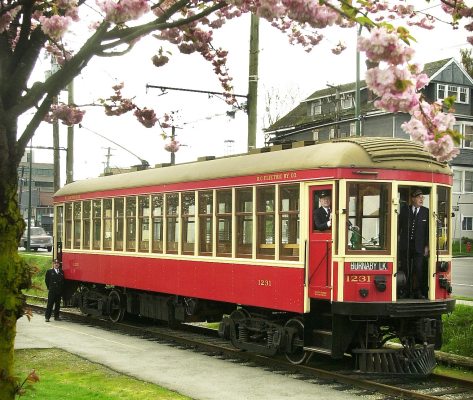
Ai??Ai??Vancouverai??i??s participation in a boutique railway streetcar system linking Granville Island to Science World may be coming to an end.
Photograph by: Ian Lindsay, Sun file photo
Vancouverai??i??s participation in a boutique railway streetcar system linking Granville Island to Science World may be coming to an end.
Although the city bought the right-of-way from the Canadian Pacific Railway 15 years ago as part of a long-term dream to extend grade-level railway service into the downtown and even as far as Stanley Park, the current Vision Vancouver council on Tuesday signalled a waning interest in the project.
At issue is councilai??i??s concern that the line ai??i?? which it considers a local tourist attraction rather than a serious commuter service ai??i?? will detract from the cityai??i??s priority of getting TransLink to put a rapid transit system along the nearby Broadway corridor.
ai???I am increasingly of the view that Vancouver cannot or should not go it alone in terms of regional transportation,ai??? Coun. Geoff Meggs said. ai???If there is an argument for a major investment in light rail here in Vancouver, it has to be done with the rest of the region knowing they have a stake in the outcome.ai???
The city, under former mayor Philip Owenai??i??s administration, bought the line for $8.5 million and invested another $8.5 million in improvements. The track has mostly been used by a historic railway society to operate two vintage restored interurban railway cars. During the 2010 Olympics, Bombardier loaned two of its modern Flexity rapid train cars for a demonstration project that transported sightseers for free.
This year, however, the historic railway society ran into difficulty after the city, in a cost-cutting exercise, withdrew the staff support it offers to maintain the historic cars. The value this year was about $100,000 because of some scheduled maintenance, although in previous years the contribution was about $40,000, according to Dale Laird, a society director.
The society appealed to council to have the support reinstated. But the Vision majority on council opted only for a report back on an assessment of the long-term viability of the operation, and options for getting it restarted this summer.
Non-Partisan Association councillor Elizabeth Ball said the city is missing an opportunity to increase tourism along the south shore of False Creek.
ai???This is a great tourist attraction and the last time I looked tourism was a major part of our economy,ai??? she said.
Ball suggested Vision is also abandoning support in part because former NPA Coun. Suzanne Anton made expanding the system an election promise in her failed bid for the mayorai??i??s office last year. During the 2011 election, Meggs and Mayor Gregor Robertson roundly criticized Antonai??i??s plan, saying the city shouldnai??i??t become involved in transportation issues, especially if it delayed regional improvements such as the Broadway corridor line.
jefflee@vancouversun.com
After Over $8 billion Invested in SkyTrain, Vancouver Is The Most Congested City In Canada
No surprises here, Metro Vancouver has suffered from over 30 years of dreadful transportation planning, highlighted by meddling by the former Social Credit and NDP provincial governments and the meddling continues todayAi??with the provincial Liberal government.
From Zwei’s perspective, the regional taxpayer has invested well over $8 billion on an extremely dated transit system and an equally dated transit philosophy that came with it. In 2012, the chickens have come home to roost, so to speak, and the proprietary SkyTrain light metro system has increased congestion in the Metro Vancouver region, instead of mitigating traffic gridlock.
With light-metro, the thought was that the light-metro itself would attract motorists, but the problem was, many motorists would have to take a bus either too SkyTrain or from SkyTrain to complete their journey. It is widely known in the transit trade that transfers may deter 70% of potential customers from using transit and the more one has to transfer, the greater the loss. Forced transfers are even worse as potential transit customers learn to hate the transit service and do anything to not take the bus.
TransLink’s ruse to boost ridership figures on SkyTrain and the transit system, the U-Pass (a $1.00 a day universal transit pass, issued now to over 100,000 post secondary students in the region) is causing congestion on key transit routes, has further deterred attracting the all important motorist from the car.
The one thing that Zwei has learned from over three decades of consulting with transit experts is that; “Buses do not attract ridership, especially the motorist.”
Light rail is different than light metro because the tram/streetcar route can effectively service urban areas, that is just too expensive for light metro to expand into, thus LRT can offer a seamless or no transfer journey from where potential transit customers live to where customers want to go. The seamless or no transfer journey has proven to attract new ridership to a transit line. TransLink’sAi?? metro Vancouver’s and provincial transit planners are still in the ‘dark ages’ of transit planning and their adherence to the dated SkyTrain light metro and light-metro philosophy is proving to be a financial millstone around the regional taxpayer’s neck. Change is not going to happen anytime soon as local planners still treat modern LRT as a poorman’s SkyTrain and design it as such.
SkyTrain and the transit philosophy that goes with it has made Vancouver L. A. North and get used to it, because there are scores of planning bureaucrats and university academics would rather see the massive tax hikes that will beggar the regional taxpayer to fund grossly outdated transit planning, rather than admit that they got it all wrong!
Vancouver: Canada’s most congested city
By GORDON HOEKSTRA, Vancouver SunJuly 10, 2012Ai??

Vancouver is the most congested city in Canada and the second most congested in North America behind only Los Angeles, says a report by an Amsterdam-based company that produces vehicle-navigation systems. Hereai??i??s a look at traffic congestion on Burrard Street north of Nelson during rush hour Tuesday afternoon.
Photograph by: Gerry Kahrmann, PNG
Vancouver is the most congested city in Canada and the second most congested in North America behind only Los Angeles, says a report by an Amsterdam-based company that produces vehicle-navigation systems.
The first quarterly congestion index by TomTom, which covers 26 major North American cities, found that on average, journey times in Vancouver take 30 per cent longer during peak congestion periods than when traffic is flowing freely.
The company used data from thousands of its navigation-system customers in the Vancouver area, including the North Shore, Burnaby, New Westminster and Richmond, to calculate the increase in time spent in traffic during peak congestion periods.
The report found that vehicle commutes in Vancouver take 65 per cent longer during the one most congested hour of the evening rush period and 51 per cent longer in the most congested hour of the morning rush period.
Nick Cohn, head of congestion research for TomTom, said the data showed the Vancouver regionai??i??s congestion levels are worse on local and arterial roads than on highways.
Choke points in Vancouver include entrance roads to bridges such as the Knight Street, Oak and Lions Gate bridges, as well as downtown roads such as Georgia, Dunsmuir and Seymour, he said.
Cohn said the data the company collects ai??i?? available at routes.tomtom.com and used to market its products ai??i?? can help people plan their commute along less congested routes.
ai???We also hope that it helps city governments understand a little bit about their relative position and see maybe over time whether their efforts to change the mobility situation in their region are really working,ai??? said Cohn.
In Canada, Toronto (No. 9) and Ottawa (No. 10) also made the top 10 most congested list.
In Los Angeles, journeys take 33-per-cent longer during congestion periods on average than when traffic is flowing freely. The commutes take 56-per-cent longer at the morning peak and 77-per-cent longer at the peak of the evening rush hour.
Also in the Top 10 were Miami (No. 3), Seattle (No. 4), Tampa (No. 5) and San Francisco (No. 6). New York was ranked 15th.
Richard Walton, chair of the Metro Vancouver Mayorsai??i?? Council on Regional Transportation, said the TomTom report results appear to indicate that Vancouver has a similar problem to Seattle and San Francisco, cities where bodies of water create choke points.
He cautioned, however, that the data could be skewed if people using the navigation systems are using them because they are on the most congested routes.
But the Lower Mainland will continue to have a traffic congestion problem while its population grows and areas south of the Fraser River and east of Langley are underserviced by rapid transit, said Walton, the mayor of North Vancouver.
City of Vancouver staff noted the number of vehicle trips into downtown Vancouver in the past 15 years have decreased by 20 per cent. Thatai??i??s a result of an increase in transit, cycling and walking.
Russell Cullingworth is not surprised by the findings of the TomTom report.
Cullingworth spent 3-1/2 years commuting between Port Moody and his job at Canuck Place in Vancouver, calculating that he spent an additional 207 eight-hour working days in his car during that time.
Cullingworth needed his car for work, so taking transit was not an option.
In 2010, Cullingworth started his own company and now works from home, a decision he made partly to get back those lost commuting hours.
ai???I tried to listen to audio books and do something useful with the time, but itai??i??s also stressful. You are not relaxed, and the busier it gets, the angrier people get as well. [Thereai??i??s] a lot of road rage and crazy drivers out there,ai??? noted Cullingworth.
Cullingworth suggests one option may be to replace the ai???epidemicai??? of traffic lights with traffic circles or roundabouts popular in Europe.
They would cut down on waiting times at lights and keep traffic moving in a constant flow, he said.
Christine Philips, Cullingworthai??i??s girlfriend, who drives to work in Richmond, said the evening rush hour commute is much worse than the morningai??i??s.
If she leaves even 20 minutes later than 4 p.m. it can add 30 to 45 minutes to her trip home. ai???Thereai??i??s better things to do in life than sit in your car,ai??? said Philips, a human resources adviser for environment services firm Tervita.
She would like to see the lane on the two-lane Barnet Highway restricted to vehicles with two or more people opened up to all cars. While itai??i??s a good idea in theory to encourage people to carpool, generally itai??i??s not practical, she noted.
ghoekstra@vancouversun.com
New But Unused – The Yongin SkyTrain EverLine White Elephant.

The new but unused EverLine white elephant in Yongin Korea
The following item from Railway Gazette International has raised Zweisystems’s eyebrows; “Following arbitration, the South Korean city of Yongin has revised the contract for Bombardier to operate the completed but unused 18Ai??5 km (11.4-mile) EverLine automated light metro. Opening is now planned for April 2013, with Bombardier to run the line for three years and the council to provide an operating subsidy if required.”
According to the SkyTrain Lobby, the Yongin EverLine has been happily working for some time now, carrying many thousands of passengers a day, but it is not.
What is even more laughable is that the SkyTrain for UBC group have since 2009, advertised that the EverLine was in full operation and Zwei has been insulted many times about the great Yongin SkyTrain – A SkyTrain Line that has been built but remained unused up to now!
From Wikipedia:
The EverLine Rapid Transit System will be a fully automated 18.5-kilometre rapid transit system in the city of Yongin, South Korea connecting the Everland amusement park to theAi??Seoul Metropolitan Subway. The new line will serve 15 stations. The mostly elevated system will use Bombardier Advanced Rapid Transit vehicles controlled by Bombardier CITYFLO 650 automatic train control technology.
In July 2004, the city of Yongin awarded the contract for the line to Yongin LRT Consortium, of which Bombardier Transportation is the lead member.
Ground was broken for construction in November 2005.
Since November 2009 the operating company has conducted trial runs of the trains. The line was due to open in July 2010, but was delayed. The current opening date is unknown due to construction, noise complaints, and ongoing litigation in the International Chapter of the International Arbitration Court. The opening was planned to coincide with a southern extension of the Bundang Line creating a transfer station between the two lines.
It can be truly said, they built a SkyTrain in Korea, but nobody came.
As for the SkyTrain Lobby, just another instance of SkyTrain fiction, before fact.



Recent Comments